Category: Nation World News Wires

  • Trump says Ukraine and Russia are ‘closer than ever’ to peace after talks with Zelensky

    Trump says Ukraine and Russia are ‘closer than ever’ to peace after talks with Zelensky

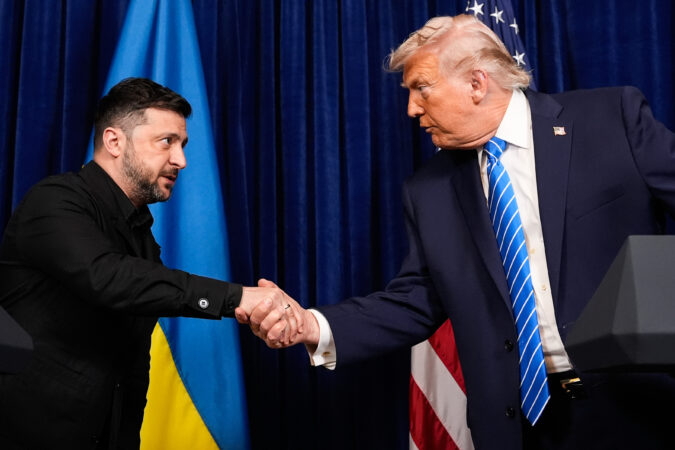
    PALM BEACH, Fla. — President Donald Trump on Sunday insisted Ukraine and Russia are “closer than ever before” to a peace deal as he hosted Ukrainian President Volodymyr Zelensky at his Florida resort, but he acknowledged that negotiations could still break down and leave the war dragging on for years.

    The president’s statements came after the two leaders met for a discussion that took place after what Trump described as an “excellent” 2½-hour phone conversation with Russian President Vladimir Putin, whose invasion of Ukraine launched the war four years ago. Trump insisted he believed Putin still wants peace, even as Russia launched another round of attacks on Ukraine while Zelensky flew to the United States for the latest round of negotiations.

    “Russia wants to see Ukraine succeed,” Trump said during a late afternoon news conference following a meeting with Zelensky, whom he repeatedly praised as “brave.”

    Trump and Zelensky both acknowledged thorny issues remain, including whether Russia can keep Ukrainian territory it controls. After their discussion they called a wide group of European leaders, including Ursula von der Leyen, president of the European Commission, and the leaders of Finland, France, Germany, Great Britain, and Poland.

    Zelensky thanked Trump for his work. “Ukraine is ready for peace,” he said.

    Trump and Putin will speak again

    Trump said he’d follow the meeting with another call to Putin. Earlier Sunday, Putin’s foreign affairs adviser Yuri Ushakov said the Trump-Putin call was initiated by the U.S. side, lasted over an hour, and was “friendly, benevolent and businesslike.” Ushakov said Trump and Putin agreed to speak again “promptly” after Trump’s meeting with Zelensky.

    But Ushakov added that a “bold, responsible, political decision is needed from Kyiv” on the fiercely contested Donbas region in eastern Ukraine and other matters in dispute for there to be a “complete cessation” of hostilities.

    In overnight developments, three guided aerial bombs launched by Russia struck private homes in the eastern city of Sloviansk, according to the head of the local military administration, Vadym Lakh. Three people were injured and one man died, Lakh said in a post on the Telegram messenger app.

    The strike came the day after Russia attacked Ukraine’s capital with ballistic missiles and drones on Saturday, killing at least one person and wounding 27, Ukrainian authorities said. Explosions boomed across Kyiv as the attack began in the early morning and continued for hours.

    Trump said, however, that he still believes Putin is “very serious” about ending the war.

    “I believe Ukraine has made some very strong attacks also,” Trump told reporters as Zelensky stood by his side. “And I don’t say that negatively. I think, you probably have to. I don’t say that negatively. But I think, he hasn’t told me that, but there have been some explosions in various parts of Russia. It looks to me, like, I don’t know. I don’t think it came from the Congo.”

    Trump noted that it was possible that the negotiations will fall apart. “In a few weeks, we will know one way or the other, I think. … But it could also go poorly.”

    The face-to-face sit-down between Trump and Zelensky underscored the apparent progress made by Trump’s top negotiators in recent weeks as the sides traded draft peace plans and continued to shape a proposal to end the fighting. Zelensky told reporters Friday that the 20-point draft proposal negotiators have discussed is “about 90% ready” — echoing a figure, and the optimism, that U.S. officials conveyed when Trump’s chief negotiators met with Zelensky in Berlin earlier this month.

    During the recent talks, the U.S. agreed to offer certain security guarantees to Ukraine similar to those offered to other members of NATO. The proposal came as Zelensky said he was prepared to drop his country’s bid to join the security alliance if Ukraine received NATO-like protection that would be designed to safeguard it against future Russian attacks.

    “Intensive” weeks ahead

    Zelensky also spoke on Christmas Day with U.S. special envoy Steve Witkoff and Jared Kushner, Trump’s son-in-law. The Ukrainian leader said they discussed “certain substantive details” and cautioned “there is still work to be done on sensitive issues” and “the weeks ahead may also be intensive.”

    The U.S. president has been working to end the war in Ukraine for much of his first year back in office, showing irritation with both Zelensky and Putin while publicly acknowledging the difficulty of ending the conflict. Long gone are the days when, as a candidate in 2024, he boasted that he could resolve the fighting in a day.

    After hosting Zelensky at the White House in October, Trump demanded that both Russia and Ukraine halt fighting and “stop at the battle line,” implying that Moscow should be able to keep the territory it has seized from Ukraine.

    Zelensky said last week that he would be willing to withdraw troops from Ukraine’s eastern industrial heartland as part of a plan to end the war, if Russia also pulls back and the area becomes a demilitarized zone monitored by international forces.

    Putin wants Russian gains kept, and more

    Putin has publicly said he wants all the areas in four key regions that have been captured by his forces, as well as the Crimean Peninsula, illegally annexed in 2014, to be recognized as Russian territory. He also has insisted that Ukraine withdraw from some areas in eastern Ukraine that Moscow’s forces haven’t captured. Kyiv has publicly rejected all those demands.

    The Kremlin also wants Ukraine to abandon its bid to join NATO. It warned that it wouldn’t accept the deployment of any troops from members of the military alliance and would view them as a “legitimate target.”

    Putin also has said Ukraine must limit the size of its army and give official status to the Russian language, demands he has made from the outset of the conflict.

    Ushakov told the business daily Kommersant this month that Russian police and national guard would stay in parts of Donetsk — one of the two major areas, along with Luhansk, that make up the Donbas region — even if they become a demilitarized zone under a prospective peace plan.

    Ushakov cautioned that trying to reach a compromise could take a long time. He said U.S. proposals that took into account Russian demands had been “worsened” by alterations proposed by Ukraine and its European allies.

    Trump has been somewhat receptive to Putin’s demands, making the case that the Russian president can be persuaded to end the war if Kyiv agrees to cede Ukrainian land in the Donbas region and if Western powers offer economic incentives to bring Russia back into the global economy.
  • Myanmar holds first election since military seized power but critics say the vote is a sham

    Myanmar holds first election since military seized power but critics say the vote is a sham

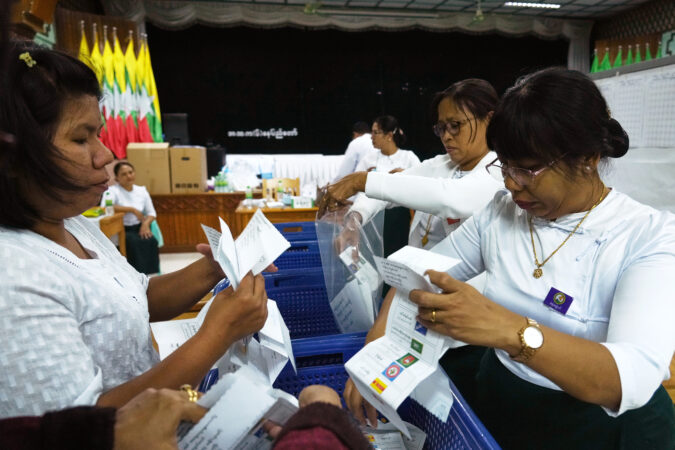
    YANGON, Myanmar — Voters went to the polls Sunday for the initial phase of Myanmar’s first general election in five years, held under the supervision of its military government while a civil war rages throughout much of the country.

    Final results won’t be known until after two more rounds of voting are completed later in January. It’s widely expected that Senior Gen. Min Aung Hlaing, who has governed Myanmar since an army takeover in 2021, will then assume the presidency.

    The military government has presented the vote as a return to democracy, but its bid for legitimacy is marred by the absence of formerly popular opposition parties and reports that soldiers used threats to force voters’ participation.

    Military-backed party favored

    While more than 4,800 candidates from 57 parties are competing for seats in national and regional legislatures, only six are competing nationwide with the possibility to gain political clout in parliament. The military-backed Union Solidarity and Development Party is by far the strongest contender.

    Voting is taking place in three phases, with Sunday’s first round held in 102 of Myanmar’s 330 townships. Subsequent phases will take place on Jan. 11 and Jan. 25, but 65 townships won’t participate in the election because of ongoing armed conflicts.

    Final results are expected to be announced by February. It wasn’t clear if or when the authorities would release aggregate figures of Sunday’s voting, although counts were publicly announced at local polling stations.

    Critics of the current system say that the election is designed to add a facade of legitimacy to the status quo. Military rule began when soldiers ousted the elected government of Aung San Suu Kyi in February 2021. It blocked her National League for Democracy party from serving a second term despite winning a landslide victory in the 2020 election.

    They argue that the results will lack legitimacy because of the exclusion of major parties and government repression.

    “Theater of the absurd”

    The expected victory of the military-backed Union Solidarity and Development Party makes the nominal transition to civilian rule a chimera, say opponents of military rule and independent analysts.

    “An election organized by a junta that continues to bomb civilians, jail political leaders, and criminalize all forms of dissent is not an election — it is a theater of the absurd performed at gunpoint,” Tom Andrews, the U.N.-appointed human rights expert for Myanmar, posted on X.

    However, the election may provide an excuse for neighbors like China, India, and Thailand to say that the vote represents progress toward stability. Western nations have maintained sanctions against Myanmar’s ruling generals because of the military’s anti-democratic actions and the brutal war against opponents.

    According to a count carried out at one polling station in Yangon after the polls closed, only 524 of 1,431 registered voters — just under 37% — cast their ballots.

    Of those, 311 voted for the pro-military Union Solidarity and Development Party, suggesting that opposition calls for a voter boycott may have been heeded.

    Khin Marlar, 51, who cast her ballot in Yangon’s Kyauktada township, said that she felt that she should vote, because she hoped that peace would follow afterward. She explained that she had fled her village in the town of Thaungta in the central Mandalay region because of the fighting.

    “I am voting with the feeling that I will go back to my village when it is peaceful,” she told the Associated Press.

    Voter intimidation reports

    A resident of southern Mon state, who asked to be identified only by her first name, Khin, for fear of arrest by the military, told the AP that she felt compelled to go to a polling station because of pressure from local authorities.

    “I have to go and vote even though I don’t want to, because soldiers showed up with guns to our village to pressure us yesterday,” Khin said, echoing reports from independent media and rights groups.

    Suu Kyi, Myanmar’s 80-year-old former leader, who received the Nobel Peace Prize in 1991, and her party aren’t participating in the polls. She is serving a 27-year prison term on charges widely viewed as spurious and politically motivated. Her party, the National League for Democracy, was dissolved in 2023 after refusing to register under new military rules.

    Other parties also refused to register or declined to run under conditions they deem unfair, and opposition groups have called for a voter boycott.

    Amael Vier, an analyst for the Asian Network for Free Elections, noted a lack of genuine choice, pointing out that 73% of voters in 2020 cast ballots for parties that no longer exist.

    Violence and repression

    According to the Assistance Association for Political Prisoners, more than 22,000 people are currently detained for political offenses, and more than 7,600 civilians have been killed by security forces since 2021.

    Armed resistance arose after the army used lethal force to crush nonviolent protests against its 2021 takeover. The ensuing civil war has left more than 3.6 million people displaced, according to the U.N.

    A new Election Protection Law imposes harsh penalties and restrictions for virtually all public criticism of the polls.

    There were no reports of major interference with the polls, though opposition organizations and armed resistance groups had vowed to disrupt the electoral process.

    Both the military and its opponents believe power is likely to remain with Min Aung Hlaing, who led the 2021 seizure of power.

    “I am the commander in chief. I am a civil servant. I cannot say that I want to serve as a president. I am not the leader of a political party,” he told journalists after casting his vote. “There is a process for electing a president from parliament only when it is convened. I think it is appropriate to speak about it only then.”

  • Thai and Cambodian top diplomats meet in China to solidify ceasefire

    Thai and Cambodian top diplomats meet in China to solidify ceasefire

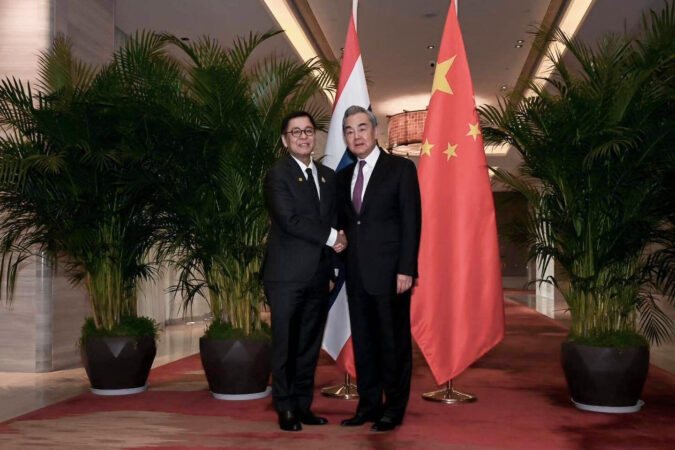
    BEIJING — Top diplomats from Thailand and Cambodia kicked off two days of talks in China on Sunday as Beijing seeks to strengthen its role in mediating the two countries’ border dispute, a day after they signed a new ceasefire.

    The ceasefire agreement calls for a halt to weeks of fighting along their contested border that has killed more than 100 people and displaced over half a million in both countries.

    Thai Foreign Minister Sihasak Phuangketkeow and Cambodian Foreign Minister Prak Sokhonn were set to meet in China’s southwestern Yunnan province for talks mediated by their Chinese counterpart, Wang Yi.

    China has sought to position itself as a mediator in the crisis, along with the United States and Malaysia.

    U.S. President Donald Trump, who threatened to withhold trade privileges unless Thailand and Cambodia agreed to a July ceasefire, suggested Sunday that the fighting between Thailand and Cambodia “will stop momentarily” and boasted that the U.S. “has become the REAL United Nations.”

    In a post on his social media site from his Mar-a-Lago estate in Florida, where he’s been spending the winter holidays, Trump wrote that both sides “will go back to living in PEACE” and referenced his past comments about helping to broker a ceasefire that largely hasn’t held.

    “I want to congratulate both great leaders on their brilliance in coming to this rapid and very fair conclusion. It was FAST & DECISIVE, as all of these situations should be!” Trump wrote.

    The talks in China aim to ensure a sustained ceasefire and promote lasting peace between the countries, according to a statement by Sihasak’s office.

    Wang was scheduled to join both bilateral meetings with each of the diplomats and a trilateral talk on Monday.

    China has welcomed the ceasefire announcement, which freezes the front lines and allows for displaced civilians to return to their homes near the border.

    “China stands ready to continue to provide (the) platform and create conditions for Cambodia and Thailand to have fuller and more detailed communication,” a Chinese Foreign Ministry statement read.

    The ceasefire agreement comes with a 72-hour observation period, at the end of which Thailand agreed to repatriate 18 Cambodian soldiers it has held as prisoners since earlier fighting in July. Their release has been a major demand of the Cambodian side.

    Prak Sokhonn, in a statement after his meeting with Wang, expressed deep appreciation for China’s “vital role” in supporting the ceasefire.

    China also announced 20 million yuan ($2.8 million) of emergency humanitarian aid for Cambodia to assist the displaced.

    The first batch of Chinese aid, including food, tents, and blankets, arrived in Cambodia on Sunday, Wang Wenbin, Chinese ambassador to Cambodia, wrote on Facebook.

    Sihasak said Sunday he hoped the meetings would convey to China that it should both support a sustainable ceasefire and send a signal to Cambodia against reviving the conflict or attempting to create further ones.

    “Thailand does not see China merely as a mediator in our conflict with Cambodia but wants China to play a constructive role in ensuring a sustainable ceasefire by sending such signals to Cambodia as well,” he said.

  • The moon and sun figure big in the new year’s lineup of cosmic wonders

    The moon and sun figure big in the new year’s lineup of cosmic wonders

    CAPE CANAVERAL, Fla. — The moon and sun share top billing in 2026.

    Kicking off the year’s cosmic wonders is the moon, drawing the first astronauts to visit in more than 50 years as well as a caravan of robotic lunar landers including Jeff Bezos’ new supersized Blue Moon. A supermoon looms on Jan. 3 and an astronomical blue moon is on the books for May.

    The sun will also generate buzz with a ring-of-fire eclipse at the bottom of the world in February and a total solar eclipse at the top of the world in August. Expect more auroras in unexpected places, though perhaps not as frequently as in the past couple years.

    And that comet that strayed into our turf from another star? While still visible with powerful backyard telescopes, the recently discovered comet known as 3I/Atlas is fading by the day after swinging past Earth in December. Jupiter is next on its dance card in March. Once the icy outsider departs our solar system a decade from now, it will be back where it belongs in interstellar space.

    It’s our third known interstellar visitor. Scientists anticipate more.

    “I can’t believe it’s taken this long to find three,” said NASA’s Paul Chodas, who’s been on the lookout since the 1980s. And with ever better technology, “the chance of catching another interstellar visitor will increase.”

    Here’s a rundown on what the universe has in store for us in 2026:

    Next stop, moon

    NASA’s upcoming moonshot commander Reid Wiseman said there’s a good chance he and his crew will be the first to lay eyeballs on large swaths of the lunar far side that were missed by the Apollo astronauts a half-century ago. Their observations could be a boon for geologists, he noted, and other experts picking future landing sites.

    Launching early in the year, the three Americans and one Canadian will zip past the moon, do a U-turn behind it, then hustle straight back to Earth to close out their 10-day mission. No stopping for a moonwalk — the boot prints will be left by the next crew in NASA’s Artemis lunar exploration program.

    More robotic moon landings are on the books by China as well as U.S. companies. Early in the year, Amazon founder Bezos is looking for his Blue Origin rocket company to launch a prototype of the lunar lander it’s designing for NASA’s astronauts. This Blue Moon demo will stand 26 feet, taller than the craft that delivered Apollo’s 12 moonwalkers to the lunar surface. The Blue Moon version for crew will be almost double that height.

    Back for another stab at the moon, Astrobotic Technology and Intuitive Machines are also targeting 2026 landings with scientific gear. The only private entity to nail a lunar landing, Firefly Aerospace, will aim for the moon’s far side in 2026.

    China is targeting the south polar region in the new year, sending a rover as well as a so-called hopper to jump into permanently shadowed craters in search of ice.

    Eclipses

    The cosmos pulls out all the stops with a total solar eclipse on Aug. 12 that will begin in the Arctic and cross over Greenland, Iceland, and Spain. Totality will last two minutes and 18 seconds as the moon moves directly between Earth and the sun to blot out the latter. By contrast, the total solar eclipse in 2027 will offer a whopping 6½ minutes of totality and pass over more countries.

    For 2026, the warm-up act will be a ring-of-fire eclipse in the Antarctic on Feb. 17, with only a few research stations in prime viewing position. South Africa and southernmost Chile and Argentina will have partial viewing. A total lunar eclipse will follow two weeks after February’s ring of fire, with a partial lunar eclipse closing out the action at the end of August.

    Parading planets

    Six of the solar system’s eight planets will prance across the sky in a must-see lineup around Feb. 28. A nearly full moon is even getting into the act, appearing alongside Jupiter. Uranus and Neptune will require binoculars or telescopes. But Mercury, Venus, Jupiter, and Saturn should be visible with the naked eye shortly after sunset, weather permitting, though Mercury and Venus will be low on the horizon.

    Mars will be the lone no-show. The good news is that the red planet will join a six-planet parade in August, with Venus the holdout.

    Supermoons

    Three supermoons will lighten up the night skies in 2026, the stunning result when a full moon inches closer to Earth than usual as it orbits in a not-quite-perfect circle. Appearing bigger and brighter, supermoons are a perennial crowd pleaser requiring no equipment, only your eyes.

    The year’s first supermoon in January coincides with a meteor shower, but the moonlight likely will obscure the dimmer fireballs. The second supermoon of 2026 won’t occur until Nov. 24, with the third — the year’s final and closest supermoon — occurring the night of Dec. 23 into Dec. 24. This Christmas Eve supermoon will pass within 221,668 miles of Earth.

    Northern and southern lights

    The sun is expected to churn out more eruptions in 2026 that could lead to geomagnetic storms here on Earth, giving rise to stunning aurora. Solar action should start to ease, however, with the 11-year solar cycle finally on the downslide.

    Space weather forecasters like Rob Steenburgh at the National Oceanic and Atmospheric Administration can’t wait to tap into all the solar wind measurements coming soon from an observatory launched in the fall.

    “2026 will be an exciting year for space weather enthusiasts,” he said in an email, with this new spacecraft and others helping scientists “better understand our nearest star and forecast its impacts.”

  • Winter rain floods Gaza camps as Netanyahu heads for U.S. meeting

    Winter rain floods Gaza camps as Netanyahu heads for U.S. meeting

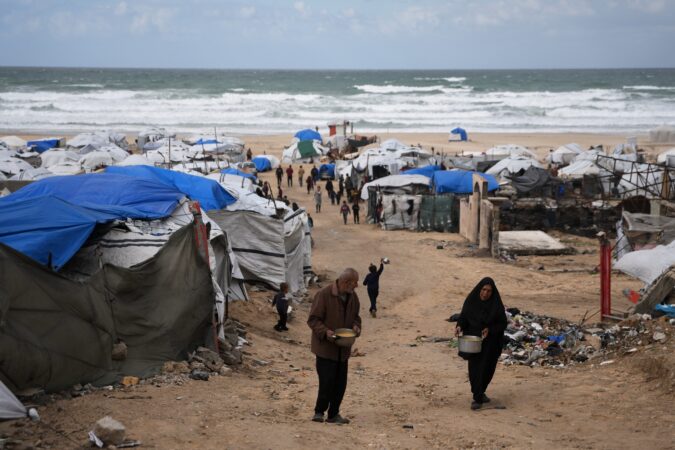
    KHAN YOUNIS, Gaza Strip — Winter rain lashed the Gaza Strip over the weekend, flooding camps with ankle-deep puddles as Palestinians displaced by two years of war attempted to stay dry in tents frayed by months of use.

    Israeli Prime Minister Benjamin Netanyahu traveled for an expected meeting on Monday with U.S. President Donald Trump in Florida about the second phase of the ceasefire. The first phase that took effect on Oct. 10 was meant to bring a surge in humanitarian aid for Gaza, including shelter.

    Netanyahu made no public statement as he departed.

    Nowhere to escape

    In the southern city of Khan Younis, blankets were soaked and clay ovens meant for cooking were swamped. Children wearing flip-flops waded through puddles. Some people used shovels or tin cans to remove water from tents. Others clawed at the ground to pry collapsed shelters from the mud.

    ““Puddles formed, and there was a bad smell,” said Majdoleen Tarabein, displaced from Rafah in southern Gaza. ”The tent flew away. We don’t know what to do or where to go.”

    She and family members tried to wring muddy blankets dry by hand.

    “When we woke up in the morning, we found that the water had entered the tent,” said Eman Abu Riziq, also displaced in Khan Younis. “These are the mattresses. They are all completely soaked.”

    She said her family is still reeling from her husband’s death less than two weeks ago.

    “Where are the mediators? We don’t want food. We don’t want anything. We are exhausted. We just want mattresses and covers,” said Fatima Abu Omar as she tried to prop up a collapsing shelter.

    At least 12 people, including a 2-week-old infant, have died since Dec. 13 from hypothermia or weather-related collapses of war-damaged homes, according to Gaza’s Health Ministry, part of the Hamas-run government.

    Emergency workers have warned people not to stay in damaged buildings, because they could collapse. But with much of the territory in rubble, there are few places to escape the rain. In July, the United Nations estimated that almost 80% of buildings in Gaza have been destroyed or damaged.

    Since the ceasefire between Israel and Hamas began, 414 people have been killed and 1,142 wounded in Gaza, according to the Health Ministry. The overall Palestinian death toll from the war is at least 71,266. The ministry, which does not distinguish between militants and civilians in its count, is staffed by medical professionals and maintains detailed records viewed as generally reliable by the international community.

    The Israel-Hamas war began with the Hamas-led attack in southern Israel on Oct. 7, 2023 that killed about 1,200 people and saw 251 taken hostage,

    Aid groups call for more help

    Humanitarian deliveries into Gaza are falling far short of the amount called for under the U.S.-brokered ceasefire, according to aid organizations and an Associated Press analysis of the Israeli military’s figures.

    The Israeli military body in charge of humanitarian aid said in the past week that 4,200 trucks with aid entered Gaza, plus eight garbage trucks to assist with sanitation, as well as tents and winter clothing. It refused to elaborate on the number of tents. Aid groups have said the need far outstrips the number that have entered.

    Since the ceasefire began, around 72,000 tents and 403,000 tarps have entered, according to Shelter Cluster, an international coalition of aid providers led by the Norwegian Refugee Council.

    “People in Gaza are surviving in flimsy, waterlogged tents and among ruins,” Philippe Lazzarini, commissioner-general of the top U.N. group overseeing aid in Gaza, wrote on social media. “There is nothing inevitable about this. Aid supplies are not being allowed in at the scale required.”

    Ceasefire’s next phase

    Though the ceasefire agreement has mostly held, its progress has slowed.

    Israel has said it refuses to move to the next phase while the remains of the final hostage are still in Gaza. Hamas has said the destruction in Gaza has hampered efforts to find remains.

    Challenges in the next phase include the deployment of an international stabilization force, a technocratic governing body for Gaza, the disarmament of the Hamas militant group, and further Israeli troop withdrawals from the territory.

    Both Israel and Hamas have accused each other of truce violations.

  • New York subway ends its MetroCard era and switches fully to tap-and-go fares

    New York subway ends its MetroCard era and switches fully to tap-and-go fares

    NEW YORK — When the MetroCard replaced the New York City subway token in 1994, the swipeable plastic card infused much-needed modernity into one of the world’s oldest and largest transit systems.

    Now, more than three decades later, the gold-hued fare card and its notoriously finicky magnetic strip are following the token into retirement.

    The last day to buy or refill a MetroCard is Dec. 31, 2025, as the transit system fully transitions to OMNY, a contactless payment system that allows riders to tap their credit card, phone, or other smart device to pay fares, much like they do for other everyday purchases.

    Transit officials say more than 90% of subway and bus trips are now paid using the tap-and-go system, introduced in 2019.

    Major cities around the world, including London and Singapore, have long used similar contactless systems. In the U.S., San Francisco launched a pay-go system earlier this year, joining Chicago and others.

    MetroCards upended how New Yorkers commute

    The humble MetroCard may have outlasted its useful life, but in its day it was revolutionary, says Jodi Shapiro, curator at the New York Transit Museum in Brooklyn, which opened an exhibit earlier this month reflecting on the MetroCard’s legacy.

    Before MetroCards, bus and subway riders relied on tokens, the brass-colored coins introduced in 1953 that were purchased from station booths. When the subway opened in 1904, paper tickets cost just a nickel, or about $1.82 in today’s dollars.

    “There was a resistance to change from tokens to something else because tokens work,” Shapiro said on a recent visit to the museum, housed underground in a decommissioned subway station. “MetroCards introduced a whole other level of thinking for New Yorkers.”

    The Metropolitan Transportation Authority launched public campaigns to teach commuters how to swipe the originally blue-colored cards correctly, hoping to avoid the dreaded error message or lost fares. Officials even briefly toyed with the idea of an quirky mascot, the Cardvaark, before coming to their senses.

    The cards quickly became collectors items as the transit system rolled out special commemorative editions marking major events, such as the “Subway Series” between baseball’s New York Mets and the New York Yankees in the 2000 World Series. At the time, a fare cost $1.50.

    Artists from David Bowie and Olivia Rodrigo to seminal New York hip hop acts, such as Wu-Tang Clan, the Notorious B.I.G., and LL Cool J, have also graced the plastic card over the years, as have iconic New York TV shows like Seinfeld and Law & Order.

    “For me, the most special cards are cards which present New York City to the world,” said Lev Radin, a collector in the Bronx. “Not only photos of landmarks, skylines, but also about people who live and make New York special.”

    Perfecting the correct angle and velocity of the MetroCard swipe also became something of a point of pride separating real New Yorkers from those just visiting.

    During her failed 2016 presidential campaign, Hillary Clinton, a former U.S. Senator from New York, took an excruciating five swipes at a Bronx turnstile. In fairness, her chief Democratic opponent at the time, U.S. Sen. Bernie Sanders of Vermont, a native Brooklynite, didn’t even appear to realize tokens had been discontinued.

    Cost savings and lingering concerns

    Unlike the MetroCard rollout, OMNY has required little adjustment.

    Riders reluctant to use a credit card or smart device can purchase an OMNY card they can reload, similar to a MetroCard. Existing MetroCards will also continue to work into 2026, allowing riders to use remaining balances.

    MTA spokespersons declined to comment, pointing instead to their many public statements as the deadline approaches.

    The agency has said the changeover saves at least $20 million annually in MetroCard-related costs.

    The new system also allows unlimited free rides within a seven-day period because the fare is capped after 12 rides. It’ll max out at $35 a week once the fare rises to $3 in January.

    Still, new changes come with tradeoffs, with some critics raising concerns about data collection and surveillance.

    Near Times Square on a recent morning, Ronald Minor was among the dwindling group of “straphangers” still swiping MetroCards.

    The 70-year-old Manhattan resident said he’s sad to see them go. He has an OMNY card but found the vending machines to reload it more cumbersome.

    “It’s hard for the elders,” Minor said as he caught a train to Brooklyn. “Don’t push us aside and make it like we don’t count. You push these machines away, you push us away.”

    John Sacchetti, another MetroCard user at the Port Authority stop, said he likes being able to see his balance as he swipes through a turnstile so he knows how much he’s been spending on rides.

    “It’s just like everything else, just something to get used to,” he said as he headed uptown. ”Once I get used to it, I think it’ll be OK.”

  • Brigitte Bardot, 1960s French sex symbol turned militant animal rights activist, has died at 91

    Brigitte Bardot, 1960s French sex symbol turned militant animal rights activist, has died at 91

    PARIS — Brigitte Bardot, the French 1960s sex symbol who became one of the greatest screen sirens of the 20th century and later a militant animal rights activist and far-right supporter, has died. She was 91.

    Ms. Bardot died Sunday at her home in southern France, according to Bruno Jacquelin, of the Brigitte Bardot Foundation for the protection of animals. Speaking to the Associated Press, he gave no cause of death, and said that no arrangements had been made for funeral or memorial services. She had been hospitalized last month.

    Ms. Bardot became an international celebrity as a sexualized teen bride in the 1956 movie And God Created Woman. Directed by her then husband Roger Vadim, it triggered a scandal with scenes of the long-legged beauty dancing on tables naked.

    At the height of a cinema career that spanned more than two dozen films and three marriages, Ms. Bardot came to symbolize a nation bursting out of bourgeois respectability. Her tousled blond hair, voluptuous figure, and pouty irreverence made her one of France’s best-known stars, even as she struggled with depression.

    Such was her widespread appeal that in 1969 her features were chosen to be the model for “Marianne,” the national emblem of France and the official Gallic seal. Bardot’s face appeared on statues, postage stamps, and coins.

    ‘’We are mourning a legend,’’ French President Emmanuel Macron said in an X post.

    Ms. Bardot’s second career as an animal rights activist was equally sensational. She traveled to the Arctic to blow the whistle on the slaughter of baby seals. She also condemned the use of animals in laboratory experiments, and she opposed Muslim slaughter rituals.

    “Man is an insatiable predator,” Ms. Bardot told the Associated Press on her 73rd birthday, in 2007. “I don’t care about my past glory. That means nothing in the face of an animal that suffers, since it has no power, no words to defend itself.”

    Her activism earned her compatriots’ respect and, in 1985, she was awarded the Legion of Honor, the nation’s highest recognition.

    Turn to the far right

    Later, however, she fell from public grace as her animal protection diatribes took on a decidedly extremist tone. She frequently decried the influx of immigrants into France, especially Muslims.

    She was convicted and fined five times in French courts of inciting racial hatred, in incidents inspired by her opposition to the Muslim practice of slaughtering sheep during annual religious holidays.

    Ms. Bardot’s 1992 marriage to fourth husband Bernard d’Ormale, a onetime adviser to far-right National Front leader Jean-Marie Le Pen, contributed to her political shift. She described Le Pen, an outspoken nationalist with multiple racism convictions of his own, as a “lovely, intelligent man.”

    In 2012, she supported the presidential bid of Marine Le Pen, who now leads her father’s renamed National Rally party. Le Pen paid homage Sunday to an “exceptional woman” who was “incredibly French.”

    In 2018, at the height of the #MeToo movement, Ms. Bardot said in an interview that most actors protesting sexual harassment in the film industry were “hypocritical,” because many played “the teases” with producers to land parts.

    She said she had never had been a victim of sexual harassment and found it “charming to be told that I was beautiful or that I had a nice little ass.”

    Privileged but ‘difficult’ upbringing

    Brigitte Anne-Marie Bardot was born Sept. 28, 1934, to a wealthy industrialist. A shy child, she studied classical ballet and was discovered by a family friend who put her on the cover of Elle magazine at age 14.

    Bardot once described her childhood as “difficult” and said that her father was a strict disciplinarian who would sometimes punish her with a horse whip.

    Vadim, a French movie producer who she married in 1952, saw her potential and wrote And God Created Woman to showcase her provocative sensuality, an explosive cocktail of childlike innocence and raw sexuality.

    The film, which portrayed Ms. Bardot as a teen who marries to escape an orphanage and then beds her brother-in-law, had a decisive influence on New Wave directors Jean-Luc Godard and François Truffaut, and came to embody the hedonism and sexual freedom of the 1960s.

    The film was a box-office hit, and it made Ms. Bardot a superstar. Her girlish pout, tiny waist and generous bust were often more appreciated than her talent.

    “It’s an embarrassment to have acted so badly,” Ms. Bardot said of her early films. “I suffered a lot in the beginning. I was really treated like someone less than nothing.”

    Ms. Bardot’s unabashed, off-screen love affair with co-star Jean-Louis Trintignant eradicated the boundaries between her public and private life and turned her into a hot prize for paparazzi.

    Ms. Bardot never adjusted to the limelight. She blamed the constant media attention for the suicide attempt that followed 10 months after the birth of her only child, Nicolas. Photographers had broken into her house two weeks before she gave birth to snap a picture of her pregnant.

    Nicolas’ father was Jacques Charrier, a French actor who she married in 1959 but who never felt comfortable in his role as Monsieur Bardot. Ms. Bardot soon gave up her son to his father, and later said she had been chronically depressed and unready for the duties of being a mother.

    “I was looking for roots then,” she said in an interview. “I had none to offer.”

    In her 1996 autobiography Initiales B.B., she likened her pregnancy to “a tumor growing inside me,” and described Charrier as “temperamental and abusive.”

    Ms. Bardot married her third husband, West German millionaire playboy Gunther Sachs, in 1966, and they divorced three years later.

    Among her films were A Parisian (1957); In Case of Misfortune, in which she starred in 1958 with screen legend Jean Gabin; The Truth (1960); Private Life (1962); A Ravishing Idiot (1964); Shalako (1968); Women (1969); The Bear and the Doll (1970); Rum Boulevard (1971); and Don Juan (1973).

    With the exception of 1963’s critically acclaimed Contempt, directed by Godard, Ms. Bardot’s films were rarely complicated by plots. Often they were vehicles to display Ms. Bardot in scanty dresses or frolicking nude in the sun.

    “It was never a great passion of mine,” she said of filmmaking. “And it can be deadly sometimes. Marilyn [Monroe] perished because of it.”

    Ms. Bardot retired to her Riviera villa in St. Tropez at the age of 39 in 1973 after The Woman Grabber. As fans brought flowers to her home Sunday, the local St. Tropez administration called for “respect for the privacy of her family and the serenity of the places where she lived.”

    Middle-aged reinvention

    She emerged a decade later with a new persona: An animal rights lobbyist, her face was wrinkled and her voice was deep following years of heavy smoking. She abandoned her jet-set life and sold off movie memorabilia and jewelry to create a foundation devoted exclusively to the prevention of animal cruelty.

    Depression sometimes dogged her, and she said that she attempted suicide again on her 49th birthday.

    Her activism knew no borders. She urged South Korea to ban the sale of dog meat and once wrote to U.S. President Bill Clinton asking why the U.S. Navy recaptured two dolphins it had released into the wild.

    She attacked centuries-old French and Italian sporting traditions including the Palio, a free-for-all horse race, and campaigned on behalf of wolves, rabbits, kittens, and turtle doves.

    “It’s true that sometimes I get carried away, but when I see how slowly things move forward … my distress takes over,” Ms. Bardot told the AP when asked about her racial hatred convictions and opposition to Muslim ritual slaughter,

    In 1997, several towns removed Bardot-inspired statues of Marianne after the actor voiced anti-immigrant sentiment. Also that year, she received death threats after calling for a ban on the sale of horse meat.

    Environmental campaigner Paul Watson, who was beaten on a seal hunt protest in Canada alongside Ms. Bardot in 1977 and campaigned with her for five decades, acknowledged that “many disagreed with Brigitte’s politics or some of her views.”

    “Her allegiance was not to the world of humans,” he said. “The animals of this world lost a wonderful friend today.”

    Ms. Bardot once said that she identified with the animals that she was trying to save.

    “I can understand hunted animals, because of the way I was treated,” Ms. Bardot said. “What happened to me was inhuman. I was constantly surrounded by the world press.”

  • Winter storm threatens to bring blizzards and ice to parts of the U.S., hampering holiday travel

    Winter storm threatens to bring blizzards and ice to parts of the U.S., hampering holiday travel

    A powerful winter storm was sweeping east from the Plains on Sunday, driven by what meteorologists describe as an intense cyclone, setting off a chain reaction of snow, ice, rain, and severe weather expected to affect much of the country.

    Snow and strengthening winds spread across the Upper Midwest on Sunday, where the National Weather Service warned of whiteout conditions and possible blizzard conditions that could make travel impossible in some areas. Snowfall totals were expected to exceed a foot across parts of the upper Great Lakes, with up to 2 feet possible along the south shore of Lake Superior.

    In the South, meteorologists warn of severe thunderstorms expected to signal the arrival of a sharp cold front — sometimes referred to as a “Blue Norther” — bringing a sudden temperature drop and strong north winds that will end days of record warmth across the region.

    The snowy holiday season in the Upper Midwest and Northeast comes as springlike warmth continues in much of the nation’s midsection and South, where record high temperatures had Santa sweating in recent days.

    The high temperature in Atlanta was forecast to be around 72 degrees Fahrenheit on Sunday, continuing a warming trend after climbing to 78 F to shatter the city’s record high temperature for Christmas Eve, the National Weather Service said. Numerous other record high temperatures were seen across the South and Midwest on the days after Christmas.

    But that record heat is quickly coming to an end, forecasters say.

    A cold front was expected to bring rain to much of the South late Sunday night into Monday, bringing much colder weather on Tuesday. The abrupt change will drop the low temperature in Atlanta to 25 F by early Tuesday morning. The colder temperatures in the South are expected to continue through New Year’s Day.

    Over the next 48 hours, the cyclone is expected to produce heavy snow and blizzard conditions in the Midwest and Great Lakes, freezing rain in New England, thunderstorms across the eastern U.S. and South, and widespread strong winds.

    The storm is expected to intensify as it moves east, drawing energy from a sharp clash between frigid air plunging south from Canada and unusually warm air that has lingered across the southern United States, according to the National Weather Service.

    It follows thousands of flight delays and cancellations across the Northeast and Great Lakes regions over the weekend due to snow, as thousands took to the roads and airports during the busy travel period between Christmas and New Year’s.

    On the other side of the country, California was experiencing a fairly dry weekend after powerful storms battered the state with heavy rains, flash flooding, and mudslides. At least four people were killed including a man who was found dead Friday in a partially submerged car near Lancaster, the Los Angeles County Sheriff’s Department reported.

  • Jeffrey R. Holland, 85, next in line to lead Church of Jesus Christ of Latter-day Saints

    Jeffrey R. Holland, 85, next in line to lead Church of Jesus Christ of Latter-day Saints

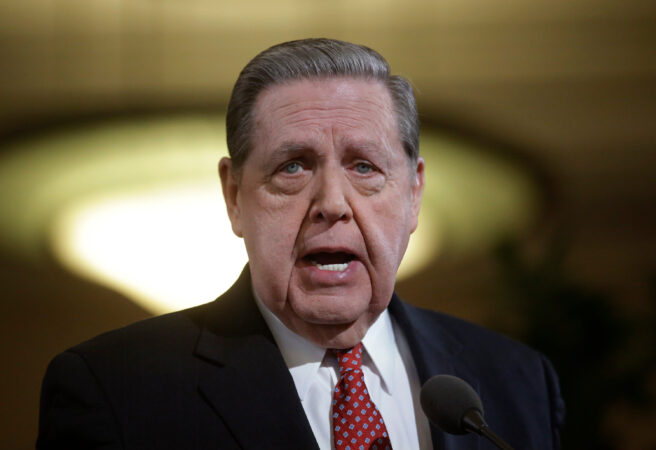
    SALT LAKE CITY — Jeffrey R. Holland, a high-ranking official in the Church of Jesus Christ of Latter-day Saints who was next in line to become the faith’s president, has died. He was 85.

    Holland died early Saturday morning from complications associated with kidney disease, the Church of Jesus Christ of Latter-day Saints announced on its website.

    Holland, who died in Salt Lake City, led a governing body called the Quorum of the Twelve Apostles, which helps set church policy while overseeing the many business interests of what is known widely as the Mormon church.

    He was the next longest-tenured member of the Quorum of the Twelve after President Dallin H. Oaks, making him next in line to lead the church under a long-established succession plan.

    Henry B. Eyring, who is 92 and one of Oaks’ two top counselors, is now next in line for the presidency.

    Holland had been hospitalized during the Christmas holiday for treatment related to ongoing health complications, the church said. Experts on the faith pointed to his declining health in October when Oaks did not select Holland as a counselor. He attended several church events that month in a wheelchair.

    His death leaves a vacancy in the Quorum of the Twelve that Oaks will fill in coming months, likely by calling a new apostle from a lower-tier leadership council. Apostles are all men in accordance with the church’s all-male priesthood.

    Holland grew up in St. George, Utah, and worked for many years in education administration before his call to join the ranks of church leadership. He served as the ninth president of Brigham Young University, the Utah-based faith’s flagship school, from 1980 to 1989 and was a commissioner of the church’s global education system.

    Under his leadership, the Provo university worked to improve interfaith relations and established a satellite campus in Jerusalem. The Anti-Defamation League later honored Holland with its Torch of Liberty Award for helping foster greater understanding between Christian and Jewish communities.

    Holland is widely remembered for a 2021 speech in which he called on church members to take up metaphorical muskets in defense of the faith’s teachings against same-sex marriage. The talk, known colloquially as “the musket fire speech,” became required reading for BYU freshmen in 2024, raising concern among LGBTQ+ students and advocates.

    Holland was preceded in death by his wife, Patricia Terry Holland. He is survived by their three children, 13 grandchildren and several great-grandchildren.

  • Winter storm snarls U.S. holiday travel across Northeast, Great Lakes

    Winter storm snarls U.S. holiday travel across Northeast, Great Lakes

    BOSTON — More than a thousand flights were canceled or delayed across the Northeast and Great Lakes regions due to snow as thousands took to U.S. roads and airports during the busy travel period between Christmas and New Year’s.

    New York City received around 4 inches of snow Friday night into early Saturday — slightly under what some forecasts had predicted. At least 1,500 flights were canceled from Friday night, according to flight-tracking service FlightAware. But by Saturday morning, both the roads and skies were clearing.

    “The storm is definitely winding down, a little bit of flurries across the Northeast this morning,” said Bob Oravec, a Maryland-based forecaster at the National Weather Service.

    Oravec said the storm was quick-moving from the northwest toward the Southeast U.S., with the largest snowfall in the New York City area reaching over 6 inches in central eastern Long Island. Further to the north in the Catskills, communities saw as much as 10 inches of snowfall.

    Newark Liberty International Airport, John F. Kennedy International Airport, and LaGuardia Airport posted snow warnings on the social media platform X on Friday, cautioning that weather conditions could cause flight disruptions.

    The National Weather Service warned of hazardous travel conditions from the Great Lakes through the northern mid-Atlantic and southern New England, with the potential for tree damage and power outages. Forecasters said the storm was expected to weaken by Saturday morning.

    In Times Square on Saturday, workers in red jumpsuits worked to clear the sludge and powder-coated streets and sidewalks using shovels and snowblowers.

    Jennifer Yokley, who was in Times Square on a holiday trip from North Carolina, said she was excited to see snow accumulating as it dusted buildings, trees, and signs throughout the city.

    “I think it was absolutely beautiful,” she said.

    Payton Baker and Kolby Gray, who were visiting New York City from West Virginia on Saturday, said the snow was a Christmas surprise for their third anniversary trip.

    “Well, it’s very cold and it was very unexpected,” Baker said, her breath visible in the winter air. “The city is working pretty well to get all the roads salted and everything, so it’s all right.”

    Ahead of the storm, New York Gov. Kathy Hochul declared a state of emergency for more than half of the state.

    4 dead in California

    On the other side of the country, California was experiencing a fairly dry weekend after powerful storms battered the state with heavy rains, flash flooding, and mudslides. At least four people were killed including a man who was found dead Friday in a partially submerged car near Lancaster, the Los Angeles County Sheriff’s Department reported.

    Some mountainous areas received 10 to 18 inches of rain over three days, peaking on Christmas Eve, National Weather Service meteorologist Rose Schoenfeld said. There were varied amounts of rain in other populated areas, including up to 4 inches across the Los Angeles Basin and many coastal areas.

    There was significant damage to homes and cars in Wrightwood, a 5,000-resident mountain town about 80 miles northeast of Los Angeles, as floods and mudslides turned roads into rivers and buried vehicles in rock and debris.

    Before rain reappears in the forecast later next week, California was expected to experience Santa Ana winds with gusts of over 60 mph in mountainous areas from Sunday night through Tuesday. The winds could uproot saturated trees and cause power outages.