Category: Nation World News Wires

  • Delaware trooper killed at DMV in ‘act of pure evil’ is remembered as dependable, devoted to family

    Delaware trooper killed at DMV in ‘act of pure evil’ is remembered as dependable, devoted to family

    A Delaware state trooper who was shot to death at a DMV office was described Wednesday as dependable and professional on the job and steady and kind at home.

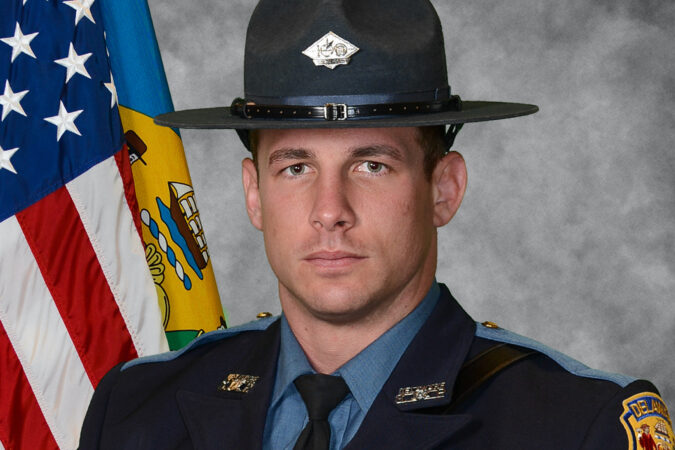
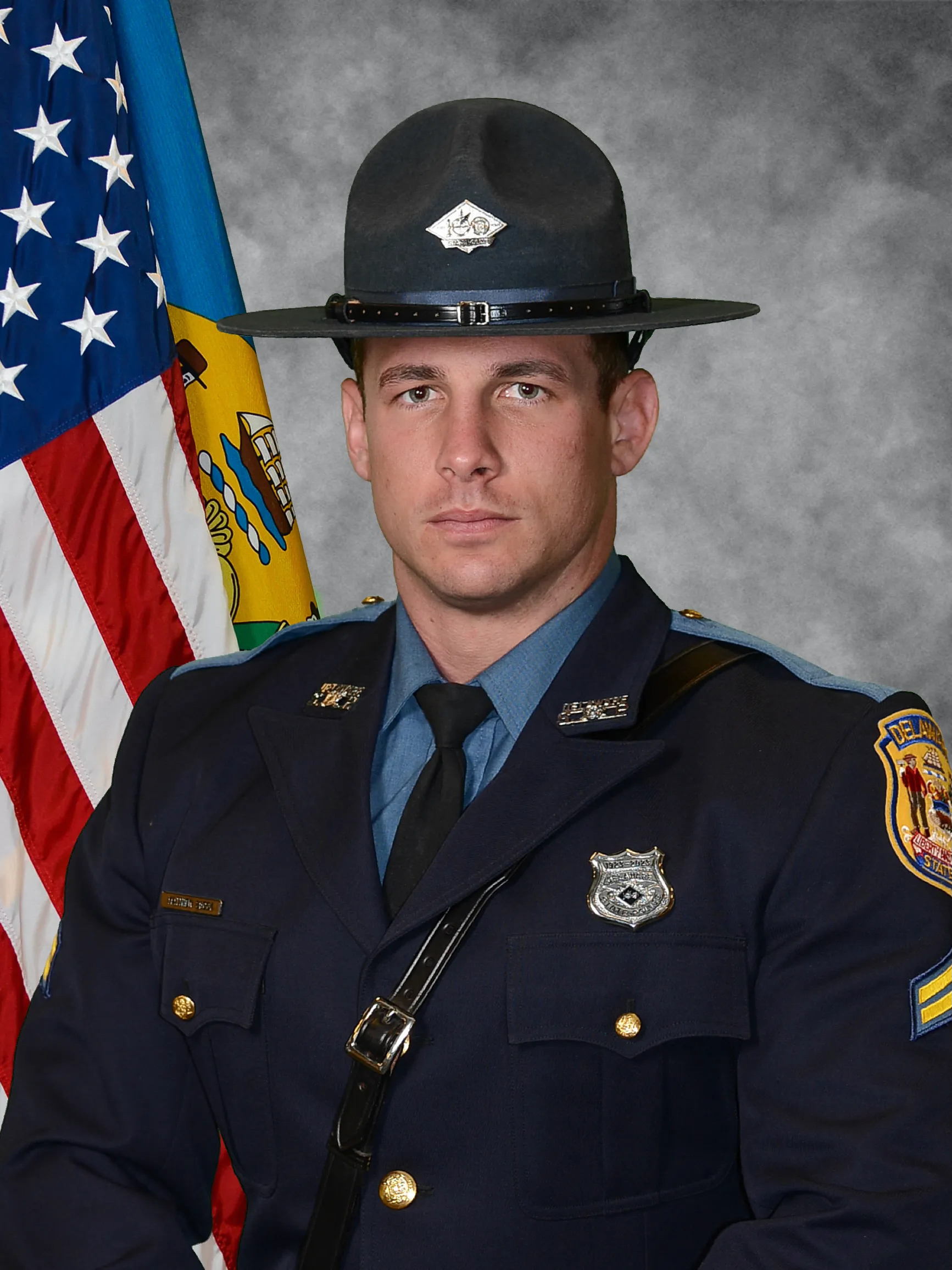
    Cpl. Matthew “Ty” Snook, 34, of Hockessin, was working an overtime assignment at a Delaware Division of Motor Vehicles office near Wilmington on Tuesday when he was shot by a 44-year-old gunman, state police said. Authorities said Snook pushed a nearby employee to safety before he was shot again. He died later at a hospital, as did the gunman, who was shot by another officer.

    Cpl. Matthew “Ty” Snook, 34, of Hockessin, is survived by his wife and their 1-year-old daughter.

    Snook, who is survived by his wife and their 1-year-old daughter, was a Delaware native. He graduated from the University of Maryland, where he was a member of the wrestling team, and had been a trooper for 10 years.

    “He was known as a dependable, professional, and committed trooper,” state police said in a news release that also described him as a trusted partner and beloved community member and extended condolences to Snook’s family.

    “We are forever grateful to them for sharing ‘Ty’ with us and for the sacrifices they made in support of his service to the citizens of Delaware,” the agency said.

    An official fund established to support the family describes the officer as a “loving husband, a devoted father, and a deeply cherished friend.”

    “Those who knew him remember his steady presence, his kindness, and his unwavering commitment to the people he loved,” the fundraiser’s organizer wrote. “Family meant everything to Ty, and he worked every day to provide, protect, and be present for those closest to him.”

    Authorities have not yet publicly identified the gunman or disclosed a possible motive for the shooting.

    “What happened today was an act of pure evil, and if not for the heroism of several troopers and other officers, the consequences could have been so much worse,” Delaware Gov. Matt Meyer said at a news conference.

    The state DMV closed its offices statewide, with all but the site of the shooting scheduled to reopen Monday.

  • After missing deadline, DOJ says it may need a ‘few more weeks’ to finish release of Epstein files

    After missing deadline, DOJ says it may need a ‘few more weeks’ to finish release of Epstein files

    WASHINGTON — The Justice Department said Wednesday that it may need a “few more weeks” to release all of its records on the late sex offender Jeffrey Epstein after suddenly discovering more than a million potentially relevant documents, further delaying compliance with last Friday’s congressionally mandated deadline.

    The Christmas Eve announcement came hours after a dozen U.S. senators called on the Justice Department’s watchdog to examine its failure to meet the deadline. The group, 11 Democrats and a Republican, told acting Inspector General Don Berthiaume in a letter that victims “deserve full disclosure” and the “peace of mind” of an independent audit.

    The Justice Department said in a social media post that federal prosecutors in Manhattan and the FBI “have uncovered over a million more documents” that could be related to the Epstein case — a stunning 11th hour development after department officials suggested months ago that they had undertaken a comprehensive review that accounted for the vast universe of Epstein-related materials.

    In March, Attorney General Pam Bondi told Fox News that a “truckload of evidence” had been delivered to her after she ordered the Justice Department to “deliver the full and complete Epstein files to my office” — a directive she said she made after learning from an unidentified source that the FBI in New York was “in possession of thousands of pages of documents.”

    In July, the FBI and Justice Department indicated in an unsigned memo that they had undertaken an “exhaustive review” and had determined that no additional evidence should be released — an extraordinary about-face from the Trump administration, which for months had pledged maximum transparency. The memo did not raise the possibility that additional evidence existed that officials were unaware of or had not reviewed.

    Wednesday’s post did not say when the Justice Department was informed of the newly uncovered files.

    In a letter last week, Deputy Attorney General Todd Blanche said Manhattan federal prosecutors already had more than 3.6 million records from sex trafficking investigations into Epstein and his longtime confidant Ghislaine Maxwell, though many were copies of material already turned over by the FBI.

    The Justice Department said its lawyers are “working around the clock” to review the documents and remove victims names and other identifying information as required by the Epstein Files Transparency Act, the law enacted last month that requires the government to open its files on Epstein and Maxwell.

    “We will release the documents as soon as possible,” the department said. “Due to the mass volume of material, this process may take a few more weeks.”

    The announcement came amid increasing scrutiny on the Justice Department’s staggered release of Epstein-related records, including from Epstein victims and members of Congress.

    Republican Rep. Thomas Massie, of Kentucky, one of the chief authors of the law mandating the document release, posted Wednesday on X: “DOJ did break the law by making illegal redactions and by missing the deadline.” Another architect of the law, Rep. Ro Khanna (D., Calif.), said he and Massie will “continue to keep the pressure on” and noted that the Justice Department was releasing more documents after lawmakers threatened contempt.

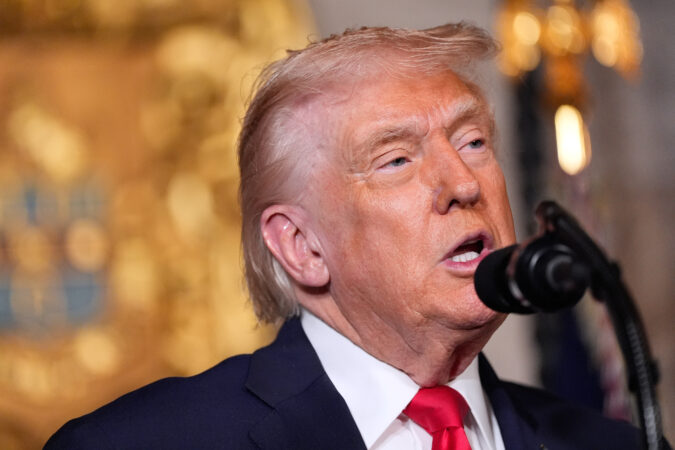
    “A Christmas Eve news dump of ‘a million more files’ only proves what we already know: Trump is engaged in a massive cover-up,” Senate Minority Leader Chuck Schumer (D., N.Y.) said after DOJ’s announcement. “The question Americans deserve answered is simple: WHAT are they hiding — and WHY?”

    The White House on Wednesday defended the Justice Department’s handling of the Epstein records.

    “President Trump has assembled the greatest cabinet in American history, which includes Attorney General Bondi and her team — like Deputy Attorney General Blanche — who are doing a great job implementing the President’s agenda,” spokeswoman Abigail Jackson said in a statement.

    After releasing an initial wave of records on Friday, the Justice Department posted more batches to its website over the weekend and on Tuesday. The Justice Department has not given any notice when more records might arrive.

    Records that have been released, including photographs, interview transcripts, call logs, court records, and other documents, were either already public or heavily blacked out, and many lacked necessary context. Records that hadn’t been seen before include transcripts of grand jury testimony from FBI agents who described interviews they had with several girls and young women who described being paid to perform sex acts for Epstein.

    Other records made public in recent days include a note from a federal prosecutor from January 2020 that said Trump had flown on the financier’s private plane more often than had been previously known and emails between Maxwell and someone who signs off with the initial “A.” They contain other references that suggest the writer was Britain’s former Prince Andrew. In one, “A” writes: “How’s LA? Have you found me some new inappropriate friends?”

    The senators’ call Wednesday for an inspector general audit comes days after Schumer introduced a resolution that, if passed, would direct the Senate to file or join lawsuits aimed at forcing the Justice Department to comply with the disclosure and deadline requirements. In a statement, he called the staggered, heavily redacted release “a blatant cover-up.”

    Republican Sen. Lisa Murkowski of Alaska joined Sens. Richard Blumenthal (D., Conn.) and Jeff Merkley (D., Ore.) in leading the call for an inspector general audit. Others signing the letter were Democratic Sens. Amy Klobuchar of Minnesota; Adam Schiff of California; Dick Durbin of Illinois; Cory Booker and Andy Kim, both of New Jersey; Gary Peters of Michigan; Chris Van Hollen of Maryland; Mazie Hirono of Hawaii; and Sheldon Whitehouse of Rhode Island.

    “Given the (Trump) Administration’s historic hostility to releasing the files, politicization of the Epstein case more broadly, and failure to comply with the Epstein Files Transparency Act, a neutral assessment of its compliance with the statutory disclosure requirements is essential,” the senators wrote. Full transparency, they said, “is essential in identifying members of our society who enabled and participated in Epstein’s crimes.”
  • Judge blocks Trump effort to strip security clearance from attorney who represented whistleblowers

    Judge blocks Trump effort to strip security clearance from attorney who represented whistleblowers

    WASHINGTON — A federal judge has blocked the Trump administration from enforcing a March presidential memorandum to revoke the security clearance of prominent Washington attorney Mark Zaid, ruling that the order — which also targeted 14 other individuals — could not be applied to him.

    The decision marked the administration’s second legal setback on Tuesday, after the Supreme Court declined to allow Trump to deploy National Guard troops in the Chicago area, capping a first year in office in which President Donald Trump’s efforts to impose a sweeping agenda and pursue retribution against political adversaries have been repeatedly slowed by the courts.

    U.S. District Judge Amir Ali in Washington granted Zaid’s request for a preliminary injunction, after he sued the Trump administration in May over the revocation of his security clearance. Zaid’s request called it an act of “improper political retribution” that jeopardized his ability to continue representing clients in sensitive national security cases.

    The March presidential memorandum singled out Zaid and 14 other individuals who the White House asserted were unsuitable to retain their clearances because it was “no longer in the national interest.” The list included targets of Trump’s fury from both the political and legal spheres, including former Deputy Attorney General Lisa Monaco, New York Attorney General Letitia James, former President Joe Biden, and members of his family.

    The action was part of a much broader retribution campaign that Trump has waged since returning to the White House, including directing specific Justice Department investigations against perceived adversaries and issuing sweeping executive orders targeting law firms over legal work he does not like.

    In August, the Trump administration said it was revoking the security clearances of 37 current and former national security officials. Ordering the revocation of clearances has been a favored retributive tactic that Trump has wielded — or at least tried to — against high-profile political figures, lawyers and intelligence officials in his second term.

    Zaid said in his lawsuit that he has represented clients across the political spectrum over nearly 35 years, including government officials, law enforcement and military officials and whistleblowers. In 2019, he represented an intelligence community whistleblower whose account of a conversation between Trump and Ukrainian President Volodymyr Zelensky helped set the stage for the first of two impeachment cases against Trump in his first term.

    “This court joins the several others in this district that have enjoined the government from using the summary revocation of security clearances to penalize lawyers for representing people adverse to it,” Ali wrote in his order.

    Ali emphasized that his order does not prevent the government from revoking or suspending Zaid’s clearance for reasons independent of the presidential memorandum and through normal agency processes. The preliminary injunction does not go into effect until January 13.

    Zaid said in a statement, “This is not just a victory for me, it’s an indictment of the Trump administration’s attempts to intimidate and silence the legal community, especially lawyers who represent people who dare to question or hold this government accountable.”

  • 19 states and D.C. sue the U.S. Department of Health and Human Services over a move that could curtail youth gender-affirming care

    19 states and D.C. sue the U.S. Department of Health and Human Services over a move that could curtail youth gender-affirming care

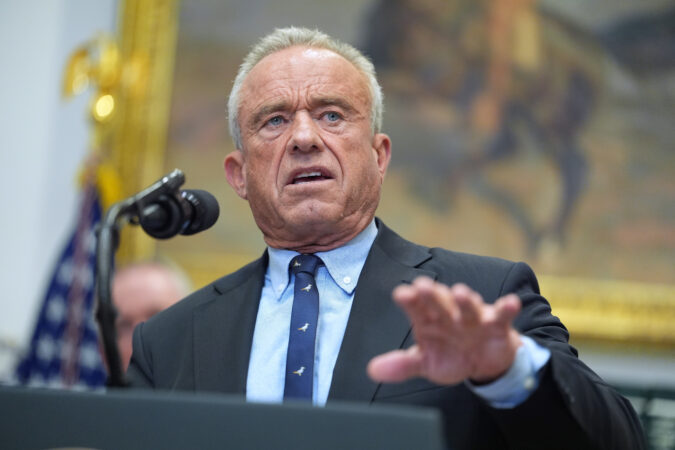
    NEW YORK — Pennsylvania and New Jersey, along with 17 other states and the District of Columbia, on Tuesday sued the U.S. Department of Health and Human Services, its secretary, Robert F. Kennedy Jr., and its inspector general over a declaration that could complicate access to gender-affirming care for young people.

    The declaration issued last Thursday called treatments like puberty blockers, hormone therapy and surgeries unsafe and ineffective for children and adolescents experiencing gender dysphoria, or the distress when someone’s gender expression doesn’t match their sex assigned at birth. It also warned doctors that they could be excluded from federal health programs like Medicare and Medicaid if they provide those types of care.

    The declaration came as HHS also announced proposed rules meant to further curtail gender-affirming care for young people, although the lawsuit doesn’t address those as they are not final.

    Tuesday’s lawsuit, filed in U.S. District Court in Eugene, Ore., alleges that the declaration is inaccurate and unlawful and asks the court to block its enforcement. It’s the latest in a series of clashes between an administration that’s cracking down on transgender healthcare for children, arguing it can be harmful to them, and advocates who say the care is medically necessary and shouldn’t be inhibited.

    “Secretary Kennedy cannot unilaterally change medical standards by posting a document online, and no one should lose access to medically necessary healthcare because their federal government tried to interfere in decisions that belong in doctors’ offices,” New York Attorney General Letitia James, who led the lawsuit, said in a statement Tuesday.

    The lawsuit alleges that HHS’s declaration seeks to coerce providers to stop providing gender-affirming care and circumvent legal requirements for policy changes. It says federal law requires the public to be given notice and an opportunity to comment before substantively changing health policy — neither of which, the suit says, was done before the declaration was issued.

    A spokesperson for HHS declined to comment.

    HHS’s declaration based its conclusions on a peer-reviewed report that the department conducted earlier this year that urged greater reliance on behavioral therapy rather than broad gender-affirming care for youths with gender dysphoria.

    The report questioned standards for the treatment of transgender youth issued by the World Professional Association for Transgender Health and raised concerns that adolescents may be too young to give consent to life-changing treatments that could result in future infertility.

    Major medical groups and those who treat transgender young people have sharply criticized the report as inaccurate, and most major U.S. medical organizations, including the American Medical Association, continue to oppose restrictions on transgender care and services for young people.

    The declaration was announced as part of a multifaceted effort to limit gender-affirming healthcare for children and teenagers — and built on other Trump administration efforts to target the rights of transgender people nationwide.

    HHS on Thursday also unveiled two proposed federal rules — one to cut off federal Medicaid and Medicare funding from hospitals that provide gender-affirming care to children, and another to prohibit federal Medicaid dollars from being used for such procedures.

    The proposals are not yet final or legally binding and must go through a lengthy rulemaking process and public comment before becoming permanent. But they will nonetheless likely further discourage healthcare providers from offering gender-affirming care to children.

    Several major medical providers already have pulled back on gender-affirming care for young patients since Trump returned to office — even in states where the care is legal and protected by state law.

    Medicaid programs in slightly less than half of states currently cover gender-affirming care. At least 27 states have adopted laws restricting or banning the care. The Supreme Court’s recent decision upholding Tennessee’s ban means most other state laws are likely to remain in place.

    Joining James in Tuesday’s lawsuit were Democratic attorneys general from California, Colorado, Connecticut, Delaware, Illinois, Maine, Maryland, Massachusetts, Michigan, Minnesota, New Jersey, New Mexico, Oregon, Rhode Island, Vermont, Wisconsin, Washington and the District of Columbia. Pennsylvania’s Gov. Josh Shapiro also joined.

  • Trump approves deployment of 350 National Guard members to New Orleans

    Trump approves deployment of 350 National Guard members to New Orleans

    The Trump administration is deploying 350 National Guard troops to New Orleans ahead of the New Year, launching another federal deployment in the city at the same time that an immigration crackdown led by Border Patrol is underway.

    Pentagon spokesman Sean Parnell said Tuesday that Guard members, as they have in other deployments in large cities, will be tasked with supporting federal law enforcement partners, including the Department of Justice and the Department of Homeland Security. Parnell added that the National Guard troops will be deployed through February.

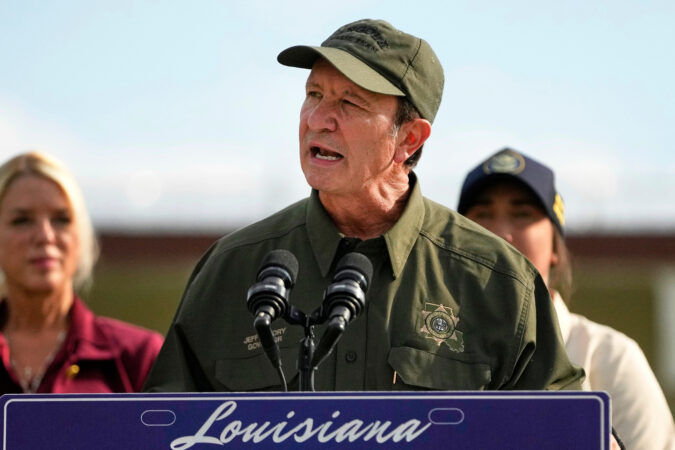
    Louisiana Gov. Jeff Landry, a Republican, praised President Donald Trump and Defense Secretary Pete Hegseth for coordinating the deployment and predicted the Guard’s presence would have a positive impact.

    “It’s going to help us further crack down on the violence here in the city of New Orleans and elsewhere around Louisiana,” Landry said in an appearance on the Fox News’ The Will Cain Show. “And so a big shoutout to both of them.”

    Critics have argued a National Guard deployment is unwarranted and could cause fear in the community, and they point out that New Orleans has actually seen a decrease in violent crime rates.

    The deployment of the National Guard to the Democrat-led city comes as Border Patrol agents have been carrying out an immigration crackdown since the beginning of the month. According to the Department of Homeland Security, agents have arrested several hundred people during the first couple weeks of what is expected to be a months-long operation that has a goal of 5,000 arrests.

    Back in September, Landry asked Trump to send a 1,000 federally funded troops to Louisiana cities, citing concerns about crime. Landry has praised Trump for sending troops to other cities, including Washington and Memphis, Tenn.

    The president has also taken a shine to Landry. Trump on Sunday announced he was appointing the governor to serve as his special envoy to Greenland, the strategic, vast, semi-autonomous territory of Denmark that Trump has said the U.S. needs to take over.

    New Orleans has been on pace for much of the year to have its lowest number of murders in decades, according to preliminary data from the city’s police department. There have been 97 homicides in 2025 as of Nov. 1, including 14 revelers who were killed on New Year’s Day during a truck attack on Bourbon Street.

    A U.S. Army veteran driving a pickup truck that bore the flag of the Islamic State group wrought carnage on New Orleans’ raucous New Year’s celebration as he steered around a police blockade and slammed into revelers before being shot dead by police.

    There were 124 homicides last year and 193 in 2023, according to city figures. Armed robberies, aggravated assaults, carjackings, shootings, and property crimes have also trended downward.

    New Orleans is no stranger to having National Guard members in the city. In January, 100 Guard members were sent to the city to help with security measures following the New Year’s Day truck attack. Guard members were also present for major events in the city this year, including the Super Bowl and Mardi Gras.

  • Venezuela seeks to criminalize oil tanker seizures as Trump puts pressure on Maduro

    Venezuela seeks to criminalize oil tanker seizures as Trump puts pressure on Maduro

    CARACAS, Venezuela — Venezuela’s National Assembly on Tuesday approved a measure that criminalizes a broad range of activities that can hinder navigation and commerce in the South American country, such as the seizure of oil tankers.

    The bill — introduced, debated, and approved within two days — follows this month’s seizures by U.S. forces of two tankers carrying Venezuelan oil in international waters. The seizures are the latest strategy in U.S. President Donald Trump’s four-month pressure campaign on Venezuela’s leader Nicolás Maduro.

    The tankers are part of what the Trump administration has said is a fleet Venezuela uses to evade U.S. economic sanctions.

    The unicameral assembly, which is controlled by Venezuela’s ruling party, did not publish drafts on Tuesday nor the final version of the measure. But as read on the floor, the bill calls for fines and prison sentences of up to 20 years for anyone who promotes, requests, supports, finances, or participates in “acts of piracy, blockades, or other international illegal acts” against commercial entities operating with the South American country.

    Venezuela’s political opposition, including Nobel Peace laureate María Corina Machado, has expressed support for Trump’s Venezuela policy, including the seizure of tankers.

    The bill, which now awaits Maduro’s signature, also instructs the executive branch to come up with “incentives and mechanisms for economic, commercial, and other protections” for national or foreign entities doing business with Venezuela in the event of piracy activities, a maritime blockade or other unlawful acts.

    The U.S. Coast Guard on Saturday seized a Panama-flagged vessel called Centuries that officials said was part of the fleet moving sanctioned cargo. With assistance from the U.S. Navy, it seized a rogue tanker called Skipper on Dec. 10. That ship was registered in Panama.

    Trump, after that first seizure, said the U.S. would carry out a “blockade” of Venezuela. He has repeatedly said that Maduro’s days in power are numbered.

    “If he wants to do something, if he plays tough, it’ll be the last time he’ll ever be able to play tough,” Trump said of Maduro Monday as he took a break from his Florida vacation to announce plans for the Navy to build a new, large warship.

  • Oklahoma college instructor is fired after giving failing grade to a Bible-based essay on gender

    Oklahoma college instructor is fired after giving failing grade to a Bible-based essay on gender

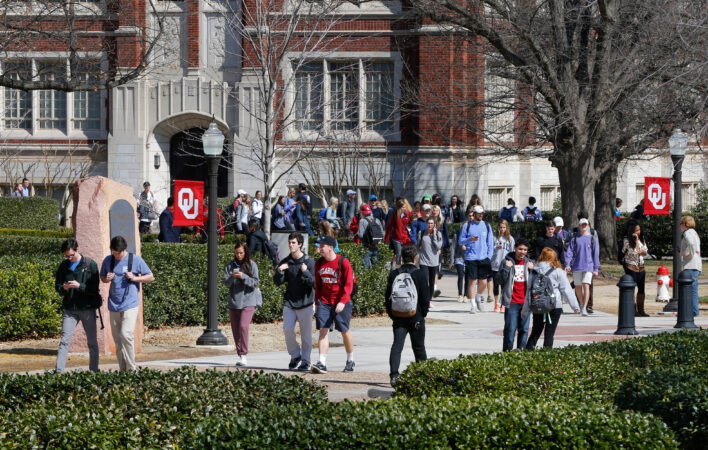
    The University of Oklahoma has fired an instructor who was accused by a student of religious discrimination over a failing grade on a psychology paper in which she cited the Bible and argued that promoting a “belief in multiple genders” was “demonic.”

    The university said in a statement posted Monday on X that its investigation found the graduate teaching assistant had been “arbitrary” in giving 20-year-old junior Samantha Fulnecky zero points on the assignment. The university declined to comment beyond its statement, which said the instructor had been removed from teaching.

    Through her attorney, the instructor, Mel Curth, denied Tuesday that she had “engaged in any arbitrary behavior regarding the student’s work.” The attorney, Brittany Stewart, said in a statement emailed to The Associated Press that Curth is “considering all of her legal remedies.”

    Conservative groups, commentators, and others quickly made Fulnecky’s failing grade an online cause, highlighting her argument that she’d been punished for expressing conservative Christian views. Her case became a flashpoint in the ongoing debate over academic freedom on college campuses as President Donald Trump pushes to end diversity, equity, and inclusion initiatives, and restrict how campuses discuss race, gender, and sexuality.

    Fulnecky appealed her grade on the assignment, which was worth 3% of the final grade in the class, and the university said the assignment would not count. It also placed Curth on leave, and Oklahoma’s conservative Republican governor, Kevin Stitt, declared the situation “deeply concerning.”

    “The University of Oklahoma believes strongly in both its faculty’s rights to teach with academic freedom and integrity and its students’ right to receive an education that is free from a lecturer’s impermissible evaluative standards,” the university’s statement said. “We are committed to teaching students how to think, not what to think.”

    A law approved this year by Oklahoma’s Republican-dominated Legislature and signed by Stitt prohibits state universities from using public funds to finance DEI programs or positions or mandating DEI training. However, the law says it does not apply to scholarly research or “the academic freedom of any individual faculty member.”

    Home telephone listings for Fulnecky in the Springfield, Mo., area had been disconnected, and her mother — an attorney, podcaster, and radio host — did not immediately respond Tuesday to a Facebook message seeking comment about the university’s action.

    Fulnecky’s failing grade came in an assignment for a psychology class on lifespan development. Curth directed students to write a 650-word response to an academic study that examined whether conformity with gender norms was associated with popularity or bullying among middle school students.

    Fulnecky wrote that she was frustrated by the premise of the assignment because she does not believe that there are more than two genders based on her understanding of the Bible, according to a copy of her essay provided to The Oklahoman.

    “Society pushing the lie that there are multiple genders and everyone should be whatever they want to be is demonic and severely harms American youth,” she wrote, adding that it would lead society “farther from God’s original plan for humans.”

    In feedback obtained by the newspaper, Curth said the paper did “not answer the questions for the assignment,” contradicted itself, relied on “personal ideology” over evidence and “is at times offensive.”

    “Please note that I am not deducting points because you have certain beliefs,” Curth wrote.

  • Supreme Court keeps Trump’s National Guard deployment blocked in the Chicago area, for now

    Supreme Court keeps Trump’s National Guard deployment blocked in the Chicago area, for now

    WASHINGTON — The Supreme Court on Tuesday refused to allow the Trump administration to deploy National Guard troops in the Chicago area to support its immigration crackdown.

    The justices declined the Republican administration’s emergency request to overturn a ruling by U.S. District Judge April Perry that had blocked the deployment of troops. An appeals court also had refused to step in. The Supreme Court took more than two months to act.

    Three justices, Samuel Alito, Clarence Thomas and Neil Gorsuch, publicly dissented.

    The high court order is not a final ruling but it could affect other lawsuits challenging President Donald Trump’s attempts to deploy the military in other Democratic-led cities.

    The outcome is a rare Supreme Court setback for Trump, who had won repeated victories in emergency appeals since he took office again in January. The conservative-dominated court has allowed Trump to ban transgender people from the military, claw back billions of dollars of congressionally approved federal spending, move aggressively against immigrants and fire the Senate-confirmed leaders of independent federal agencies.

    The administration had initially sought the order to allow the deployment of troops from Illinois and Texas, but the Texas contingent of about 200 National Guard troops was later sent home from Chicago.

    The Trump administration has argued that the troops are needed “to protect federal personnel and property from violent resistance against the enforcement of federal immigration laws.”

    But Perry wrote that she found no substantial evidence that a “danger of rebellion” is brewing in Illinois and no reason to believe the protests there had gotten in the way of Trump’s immigration crackdown.

    Perry had initially blocked the deployment for two weeks. But in October, she extended the order indefinitely while the Supreme Court reviewed the case.

    The U.S. Immigration and Customs Enforcement facility in the west Chicago suburb of Broadview has been the site of tense protests, where federal agents have previously used tear gas and other chemical agents on protesters and journalists.

    Last week, authorities arrested 21 protesters and said four officers were injured outside the Broadview facility. Local authorities made the arrests.

    The Illinois case is just one of several legal battles over National Guard deployments.

    District of Columbia Attorney General Brian Schwalb is suing to halt the deployments of more than 2,000 guardsmen in the nation’s capital. Forty-five states have entered filings in federal court in that case, with 23 supporting the administration’s actions and 22 supporting the attorney general’s lawsuit.

    More than 2,200 troops from several Republican-led states remain in Washington, although the crime emergency Trump declared in August ended a month later.

    A federal judge in Oregon has permanently blocked the deployment of National Guard troops there, and all 200 troops from California were being sent home from Oregon, an official said.

    A state court in Tennessee ruled in favor of Democratic officials who sued to stop the ongoing Guard deployment in Memphis, which Trump has called a replica of his crackdown on Washington, D.C.

    In California, a judge in September said deployment in the Los Angeles area was illegal. By that point, just 300 of the thousands of troops sent there remained, and the judge did not order them to leave.

    The Trump administration has appealed the California and Oregon rulings to the 9th U.S. Circuit Court of Appeals.

  • Mexican Navy medical flight lost communication for several minutes before Texas crash

    Mexican Navy medical flight lost communication for several minutes before Texas crash

    Air traffic controllers lost communication for about 10 minutes with a small Mexican Navy plane carrying a young medical patient and seven others before it crashed off the Texas coast, killing at least five people, Mexico’s president said Tuesday.

    Authorities initially believed the plane had landed safely at its destination in Galveston, near Houston, before learning it had gone down Monday afternoon, Mexican President Claudia Sheinbaum said. A search-and-rescue operation in waters near Galveston pulled two survivors from the plane’s wreckage, while one remained missing, Mexico’s Navy said.

    U.S. authorities are investigating the cause, but the National Transportation Safety Board said Tuesday that it could take a week or more to recover the aircraft,

    Four Mexican Navy officers and four civilians, including a child, were aboard the plane, according to the country’s military. Two of the passengers were affiliated with a nonprofit that helps transport Mexican children with severe burns to a hospital in Galveston.

    “My condolences to the families of the sailors who unfortunately died in this accident and to the people who were traveling on board,” Sheinbaum said in her morning press briefing, without elaborating on a possible cause. “What happened is very tragic.”

    U.S. Coast Guard Petty Officer Luke Baker said at least five aboard had died but did not identify which passengers.

    The twin turboprop Beech King Air 350i crashed Monday afternoon in a bay near the base of the causeway connecting Galveston Island to the mainland. Emergency responders rushed to the scene near the popular beach destination about 50 miles southeast of Houston.

    Sky Decker, a professional yacht captain who lives about a mile from the crash site, said he jumped in his boat to see if he could help. He picked up two police officers who guided him through thick fog to a nearly submerged plane. Decker jumped into the water and found a badly injured woman trapped beneath chairs and other debris.

    “I couldn’t believe. She had maybe 3 inches of air gap to breathe in,” he said. ”And there was jet fuel in there mixed with the water, fumes real bad. She was really fighting for her life.”

    He said he also pulled out a man seated in front of her who had already died. Both were wearing civilian clothes.

    It’s not immediately clear if weather was a factor. The area was experiencing foggy conditions over the past few days, according to Cameron Batiste, a National Weather Service meteorologist. He said that at about 2:30 p.m. Monday a fog came in that had about a half-mile visibility.

    Teams from the Federal Aviation Administration and National Transportation Safety Board were at the crash site Monday, the Texas Department of Public Safety said. An NTSB spokesperson said in an email that investigators will gather flight track data, recordings of any air traffic control communications and review maintenance records and weather forecasts, with a preliminary report expected within 30 days.

    Mexico’s Navy said the plane was helping with a medical mission in coordination with the Michou and Mau Foundation. In a social media post, the foundation offered condolences to the families and said it shared their grief “with respect and compassion.”

    The charity was founded after a mother died trying to save her kids from a fire. One child succumbed to his injuries because he didn’t receive highly specialized medical care, while another survived after receiving treatment at Shriners Children’s Texas in Galveston. Over 23 years, the foundation has helped transfer more than 2,000 patients to that hospital and other medical facilities with burn expertise, according to the charity’s website.

    The charity’s director didn’t immediately respond to an email from The Associated Press seeking comment.

    Shriners Children’s Texas said in a statement that it learned of the crash with “profound sadness” but wasn’t able to provide any information about the child’s condition because the child hadn’t yet been admitted.

    This latest crash comes amid a year of intense scrutiny on aviation safety after a string of high-profile crashes and the flight disruptions during the government shutdown driven by the shortage of air traffic controllers.

    The January mid-air collision between an Army helicopter and an airliner near Washington D.C. was followed by the crash of a medical transport plane in Philadelphia. This fall’s fiery UPS plane crash only added to the concerns. Still, the total number of crashes in 2025 was actually down a bit from last year and experts say flying remains safe overall.

  • Student loan borrowers in default may see wages garnished in 2026

    Student loan borrowers in default may see wages garnished in 2026

    WASHINGTON — The Trump administration said on Tuesday that it will begin garnishing the wages of student loan borrowers who are in default early next year.

    The department said it will send notices to approximately 1,000 borrowers the week of January 7, with more notices to come at an increasing scale each month.

    Millions of borrowers are considered in default, meaning they are 270 days past due on their payments. The department must give borrowers 30 days notice before their wages can be garnished.

    The department said it will begin collection activities, “only after student and parent borrowers have been provided sufficient notice and opportunity to repay their loans.”

    In May, the Trump administration ended the pandemic-era pause on student loan payments, beginning to collect on defaulted debt through withholding tax refunds and other federal payments to borrowers.

    The move ended a period of leniency for student loan borrowers. Payments restarted in October of 2023, but the Biden administration extended a grace period of one year. Since March 2020, no federal student loans had been referred for collection, including those in default, until the Trump administration’s changes earlier this year.

    The Biden administration tried multiple times to give broad forgiveness to student loans, but those efforts were eventually stopped by courts.

    Persis Yu, deputy executive director for the Student Borrower Protection Center, criticized the decision to begin garnishing wages, and said the department had failed to sufficiently help borrowers find affordable payment options.

    “At a time when families across the country are struggling with stagnant wages and an affordability crisis, this administration’s decision to garnish wages from defaulted student loan borrowers is cruel, unnecessary, and irresponsible,” Yu said in a statement. “As millions of borrowers sit on the precipice of default, this Administration is using its self-inflicted limited resources to seize borrowers’ wages instead of defending borrowers’ right to affordable payments.”

    ___

    The Associated Press’ education coverage receives financial support from multiple private foundations. AP is solely responsible for all content. Find AP’s standards for working with philanthropies, a list of supporters and funded coverage areas at AP.org.