Category: Nation World News Wires

  • Congress acts swiftly to force release of Epstein files, and Trump agrees to sign bill

    Congress acts swiftly to force release of Epstein files, and Trump agrees to sign bill

    WASHINGTON — Both the House and Senate acted decisively Tuesday to pass a bill to force the Justice Department to publicly release its files on the convicted sex offender Jeffrey Epstein, a remarkable display of approval for an effort that had struggled for months to overcome opposition from President Donald Trump and Republican leadership.

    When a small, bipartisan group of House lawmakers introduced a petition in July to maneuver around Speaker Mike Johnson’s control of the House floor, it appeared a longshot effort — especially as Trump urged his supporters to dismiss the matter as a “hoax.”

    But both Trump and Johnson failed to prevent the vote. The president in recent days bowed to political reality, saying he would sign the bill. And just hours after the House vote, senators agreed to approve it unanimously, skipping a formal roll call.

    The decisive, bipartisan work in Congress Tuesday further showed the pressure mounting on lawmakers and the Trump administration to meet long-held demands that the Justice Department release its case files on Epstein, a well-connected financier who killed himself in a Manhattan jail while awaiting trial in 2019 on charges he sexually abused and trafficked underage girls.

    For survivors of Epstein’s abuse, passage of the bill was a watershed moment in a years-long quest for accountability.

    “These women have fought the most horrific fight that no woman should have to fight. And they did it by banding together and never giving up,” said Rep. Marjorie Taylor Greene as she stood with some of the abuse survivors outside the Capitol Tuesday morning.

    “That’s what we did by fighting so hard against the most powerful people in the world, even the president of the United States, in order to make this vote happen today,” added Greene, a Georgia Republican.

    In the end, only one lawmaker in Congress opposed the bill. Rep. Clay Higgins, a Louisiana Republican who is a fervent supporter of Trump, was the only “nay” vote in the House’s 427-1 tally. He said he worried the legislation could lead to the release of information on innocent people mentioned in the federal investigation.

    The bill forces the release within 30 days of all files and communications related to Epstein, as well as any information about the investigation into his death in federal prison. It would allow the Justice Department to redact information about Epstein’s victims or continuing federal investigations, but not information due to “embarrassment, reputational harm, or political sensitivity.”

    Even before the bill’s passage Tuesday, thousands of pages of emails and other documents from Epstein’s estate have been released from an investigation by the House Oversight Committee.

    Those documents show Epstein’s connections to global leaders, Wall Street powerbrokers, influential political figures and Trump himself. In the United Kingdom, King Charles III stripped his disgraced brother Prince Andrew of his remaining titles and evicted him from his royal residence after pressure to act over his relationship with Epstein.

    Trump’s reversal on the Epstein files

    Trump has said he cut ties with Epstein years ago, but tried for months to move past the demands for disclosure.

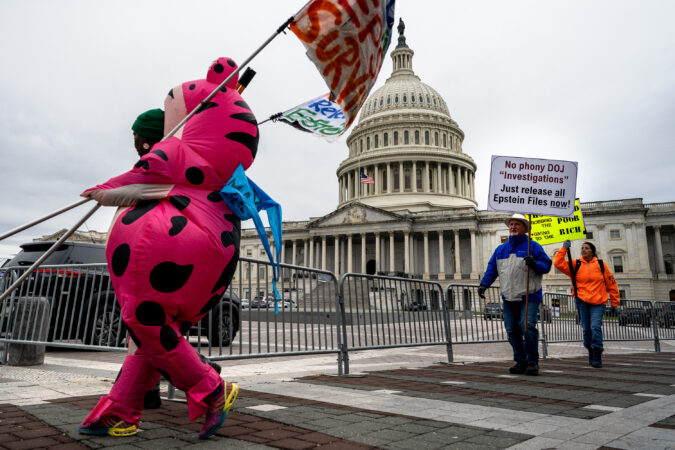
    Still, many in the Republican base continued to demand the release of the files. Adding to that pressure, survivors of Epstein’s abuse rallied outside the Capitol Tuesday morning. Bundled in jackets against the November chill and holding photos of themselves as teenagers, they recounted their stories of abuse.

    “We are exhausted from surviving the trauma and then surviving the politics that swirl around it,” said one of the survivors.

    Another, Jena-Lisa Jones, said she had voted for Trump and had a message for the president: “I beg you Donald Trump, please stop making this political.”

    The group of women also met with Johnson and rallied outside the Capitol in September, but have had to wait months for the vote.

    That’s because Johnson kept the House closed for legislative business for nearly two months and refused to swear-in Democratic Rep. Adelita Grijalva of Arizona during the government shutdown. After winning a special election on Sept. 23, Grijalva had pledged to provide the crucial 218th vote to the petition for the Epstein files bill. But only after she was sworn into office last week could she sign her name to the discharge petition to give it majority support in the 435-member House.

    It quickly became obvious the bill would pass, and both Johnson and Trump began to fold. Trump on Sunday said Republicans should vote for the bill.

    Yet Greene told reporters that Trump’s decision to fight the bill had betrayed his Make America Great Again political movement.

    “Watching this turn into a fight has ripped MAGA apart,” she said.

    How Johnson handled the bill

    Rather than waiting until next week for the discharge position to officially take effect, Johnson held the vote under a procedure that requires a two-thirds majority.

    But Johnson also spent a morning news conference listing off problems that he sees with the legislation. He argued that the bill could have unintended consequences by disclosing parts of federal investigations that are usually kept private, including information on victims.

    “This is a raw and obvious political exercise,” Johnson said.

    Still, he voted for the bill. “None of us want to go on record and in any way be accused of not being for maximum transparency,” he explained.

    Meanwhile, the bipartisan pair who sponsored the bill, Reps. Thomas Massie, R-Ky., and Ro Khanna, D-Calif., warned senators against doing anything that would “muck it up,” saying they would face the same public uproar that forced both Trump and Johnson to back down.

    “We’ve needlessly dragged this out for four months,” Massie said, adding that those raising problems with the bill “are afraid that people will be embarrassed. Well, that’s the whole point here.”

    Senate acts quickly

    Even as the bill cleared his chamber, Johnson pressed for the Senate to amend it to protect the information of “victims and whistleblowers.” But Senate Majority Leader John Thune quickly shut down that notion.

    As senators gathered in the chamber Tuesday evening for the first votes of the week, it became clear no one would object to passing the bill as written.

    Just before Senate Democratic leader Chuck Schumer called to pass the bill by unanimous consent, Oklahoma Sen. Markwayne Mullin, a Republican who is close to Trump, walked in the chamber and gave Schumer a thumbs-up. He then walked over to Schumer and shook his hand.

    “This is about giving the American people the transparency they’ve been crying for,” said Schumer, D-N.Y. “This is about holding accountable all the people in Jeffrey Epstein’s circle who raped, groom, targeted and enabled the abuse of hundreds of girls for years and years.”

  • Court settlement calls for NPR to get $36 million in government funds to operate U.S. public radio system

    Court settlement calls for NPR to get $36 million in government funds to operate U.S. public radio system

    WASHINGTON — National Public Radio will receive approximately $36 million in grant money to operate the nation’s public radio interconnection system under the terms of a court settlement with the federal government’s steward of funding for public broadcasting stations.

    The settlement, announced late Monday, partially resolves a legal dispute in which NPR accused the Corporation for Public Broadcasting of bowing to pressure from President Donald Trump to cut off its funding.

    On March 25, Trump said at a news conference that he would “love to” defund NPR and PBS because he believes they are biased in favor of Democrats.

    NPR accused the CPB of violating its First Amendment free speech rights when it moved to cut off its access to grant money appropriated by Congress. NPR also claims Trump, a Republican, wants to punish it for the content of its journalism.

    On April 2, the CPB’s board initially approved a three-year, roughly $36 million extension of a grant for NPR to operate the “interconnection” satellite system for public radio. NPR has been operating and managing the Public Radio Satellite System since 1985.

    But corporation officials reversed course and announced that the federal funds would go to a entity called Public Media Infrastructure. NPR claimed the CPB was under mounting pressure from the Trump administration when the agency redirected the money to PMI, a media coalition that didn’t exist and wasn’t statutorily authorized to receive the funds.

    CPB attorneys denied that the agency retaliated against NPR to appease Trump. They had argued that NPR’s claims are factually and legally meritless.

    On May 1, Trump issued an executive order that called for federal agencies to stop funding for NPR and PBS. The settlement doesn’t end a lawsuit in which NPR seeks to block any implementation or enforcement of Trump’s executive order. U.S. District Judge Randolph Moss is scheduled to preside over another hearing for the case on Dec. 4.

    The settlement says NPR and CPB agree that the executive order is unconstitutional and that CPB won’t enforce it unless a court orders it to do so.

    NPR, meanwhile, agreed to drop its request for a court order blocking CPB from disbursing funds to PMI under a separate grant agreement.

    Katherine Maher, NPR’s president and CEO, said the settlement is “a victory for editorial independence and a step toward upholding the First Amendment rights of NPR and the public media system.”

    Patricia Harrison, the corporation’s CEO, said CPB is pleased that the litigation is over “and that our investment in the future through PMI marks an exciting new era for public media.”

    On Aug. 1, CPB announced it would take steps toward closing itself down after being defunded by Congress.

  • New analysis shows more U.S. consumers are falling behind on their utility bills

    New analysis shows more U.S. consumers are falling behind on their utility bills

    WASHINGTON — More people are falling behind on paying their bills to keep on the lights and heat their homes, according to a new analysis of consumer data — a warning sign for the U.S. economy and another political headache for President Donald Trump.

    Past-due balances to utility companies jumped 9.7% annually to $789 between the April-June periods of 2024 and 2025, said the Century Foundation, a liberal think tank, and the advocacy group Protect Borrowers. The increase has overlapped with a 12% jump in monthly energy bills during the same period.

    Consumers usually prioritize their utility bills along with their mortgages and auto debt, said Julie Margetta Morgan, the foundation’s president. The increase in both energy costs and delinquencies may suggest that consumers are falling behind on other bills, too.

    “There’s a lot of information out there about rising utility costs, but here we can actually look at what that impact has been on families in terms of how they’re falling behind,” Margetta Morgan said.

    Troubles paying electricity and natural gas bills reflect something of an economic quandary for Trump, who is promoting the build-out of the artificial intelligence industry as a key part of an economic boom he has promised for America. But AI data centers are known for their massive use of electricity, and threaten to further increase utility bills for everyday Americans.

    These troubles also come as Trump faces political pressure from voters fed up with the high cost of living. The president spoke about the economy and affordability issues Monday at an event hosted by the McDonald’s fast food company.

    “We have it almost at the sweet spot and prices are coming down on different things,” Trump said at the event, adding that inflation has been “normalized” at a “low level.”

    Ever since Republicans saw their fortunes sag in off-year elections this month and affordability was identified as the top issue, Trump has been trying to convince the public that prices are falling. Fast-rising electricity bills could be an issue in some congressional battlegrounds in next year’s midterm elections.

    Trump has put a particular emphasis on prices at the pump. Gasoline accounts for about 3% of the Consumer Price Index, slightly less than the share belonging to electricity and natural gas bills — meaning that possible savings on gasoline could be more than offset by higher utility bills.

    The president maintains that any troubling data on inflation is false and that Democrats are simply trying to hurt his administration’s reputation.

    “In fact, costs under the TRUMP ADMINISTRATION are tumbling down, helped greatly by gasoline and ENERGY,” Trump posted on social media Friday. ”Affordability is a lie when used by the Dems,”

    Nearly 6 million households have utility debt “so severe” that it will soon be reported to collection agencies, according to the foundation’s analysis, drawn from the University of California Consumer Credit Panel.

    During Trump’s first six months in office, there was a 3.8% increase in households with severely overdue utility bills.

    “Voters are frustrated and families are hurting because these tech giants are cutting backroom deals with politicians, and it’s causing their power bills to go up,” said Mike Pierce, executive director of Protect Borrowers. “If the Trump administration doesn’t want to do its job and protect families and make life more affordable, I guess that’s its choice.”

    Both Margetta Morgan and Pierce previously worked at the Consumer Financial Protection Bureau, a government agency formed in part to track trends in household borrowing to prevent potential abuses. The Trump administration has essentially shut down the bureau.

    The administration has so far said it has no responsibility for any increases in electricity prices, since those are often regulated by state utility boards. The White House maintains that utility costs are higher in Democratic states that rely on renewable forms of energy.

    “Electricity prices are a state problem,” Treasury Secretary Scott Bessent told ABC News this month. “There are things that the federal government can control. Local electricity prices are not one of them.”

    The new analysis of utility bills by the groups counters that the Trump administration is contributing to higher utility costs “by impeding renewable energy generation” including solar and wind power.

    While that analysis is a warning sign, other economic analyses on consumers suggest their finances are stable despite some emerging pressures.

    The New York Federal Reserve has said delinquency rates of 90 days or more for mortgages, auto loans, and student debt have each increased over the past 12 months, though it said mortgage delinquencies are “relatively low.” An analysis of debit and credit card spending by the Bank of America Institute showed that consumers’ “overall financial health looks sound.”

  • FEMA acting chief David Richardson departs after 6 months on the job

    FEMA acting chief David Richardson departs after 6 months on the job

    SAN DIEGO — The acting chief of the Federal Emergency Management Agency left his job Monday after just six months, according to the Department of Homeland Security, the latest disruption in a year of mass staff departures, program cuts and policy upheaval at the agency charged with managing federal disaster response.

    David Richardson, who in his brief term remained largely out of public sight, is leaving the post after he faced a wave of criticism for his handling of the deadly Texas floods earlier this year. He replaced previous acting head Cameron Hamilton in May.

    DHS did not comment on the details of Richardson’s departure, but a FEMA employee familiar with the matter told The Associated Press that Richardson resigned. The employee spoke on condition of anonymity because they weren’t authorized to discuss the changes with the media.

    “The Federal Emergency Management Agency and the Department of Homeland Security extend their sincere appreciation to the Senior Official Performing the Duties of the Administrator, David Richardson, for his dedicated service and wish him continued success in his return to the private sector,” a DHS spokesperson told The Associated Press.

    The Washington Post first reported the news about Richardson’s resignation.

    A former Marine Corps officer who served in Iraq and Afghanistan and also led the DHS Countering Weapons of Mass Destruction office, Richardson had no previous emergency management experience when he assumed the role of “senior official performing the duties of administrator” in May.

    After replacing Hamilton, who was fired one day after telling a House appropriations committee that he did not think FEMA should be eliminated, Richardson vowed to help fulfill President Donald Trump’s goal to push more disaster recovery responsibilities to the states and told FEMA employees he would ” run right over ” anyone who tried to obstruct that mission.

    But Richardson’s leadership was questioned by members of Congress and FEMA employees, particularly after remaining largely out of sight after the deadly Texas floods last July that killed at least 136 people.

    When asked by a House committee in July why he did not arrive on the ground until one week after the disaster, Richardson said he stayed in Washington, D.C., to “kick down the doors of bureaucracy,” but also said he was camping with his sons for the July 4 weekend when the floods first hit and initially helped manage the response from inside his truck.

    Homeland Security Secretary Kristi Noem has also kept a tight grip on FEMA programs and spending, requiring that she personally approve any agency expenditure over $100,000. Richardson had denied reports that the approval policy slowed down FEMA’s response in Texas.

    FEMA Chief of Staff and former cybersecurity official Karen Evans will assume the role on Dec. 1, according to DHS. The FEMA administrator is required by law to have emergency management experience, but the Trump administration has circumvented those requirements up to now by appointing temporary leaders.

    The agency has undergone major upheaval since Trump returned to office in January promising to vastly overhaul if not eliminate the agency. About 18% of the agency’s permanent full-time employees had departed as of June, including 24 senior-level staffers, according to the Government Accountability Office.

    The Trump administration also has slashed mitigation funding, placed requirements on preparedness grants that compel recipients to comply with Trump’s immigration agenda, and denied several states’ requests for major disaster declaration requests.

    DHS did not respond to questions about whether Richardson will still lead the Countering Weapons of Mass Destruction Office.

    Trump appointed a 12-member review council led by Noem and Defense Secretary Pete Hegseth to deliver recommendations on how to reform FEMA and push more responsibility to the states for disaster preparedness, response and recovery. The council is expected to deliver its recommendations in December.

  • Judge scolds Justice Department for ‘profound investigative missteps’ in James Comey case

    Judge scolds Justice Department for ‘profound investigative missteps’ in James Comey case

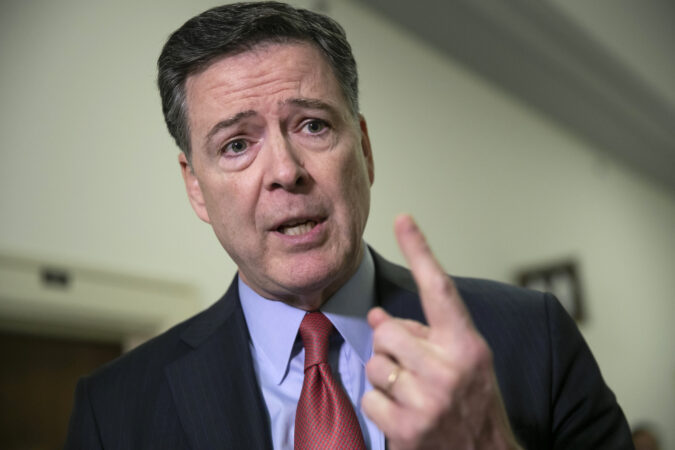
    WASHINGTON — The Justice Department engaged in a “disturbing pattern of profound investigative missteps” in the process of securing an indictment against former FBI Director James Comey, a federal judge ruled Monday in directing prosecutors to provide defense lawyers with all grand jury materials from the case.

    Those problems, wrote Magistrate Judge William Fitzpatrick, include “fundamental misstatements of the law” by a prosecutor to the grand jury that indicted Comey in September, the use of potentially privileged communications during the investigation and unexplained irregularities in the transcript of the grand jury proceedings.

    “The Court recognizes that the relief sought by the defense is rarely granted,” Fitzpatrick wrote “However, the record points to a disturbing pattern of profound investigative missteps, missteps that led an FBI agent and a prosecutor to potentially undermine the integrity of the grand jury proceeding.”

    The 24-page opinion is the most blistering assessment yet by a judge of the Justice Department’s actions leading up to the Comey indictment. It underscores how procedural missteps and prosecutorial inexperience have combined to imperil the prosecution pushed by President Donald Trump for reasons separate and apart from the substance of the disputed allegations against Comey.

    The Comey case and a separate prosecution of New York Attorney General Letitia James have hastened concerns that the Justice Department is being weaponized in pursuit of Trump’s political opponents. Both defendants have filed multiple motions to dismiss the cases against them before trial, arguing that the prosecutions are improperly vindictive and that the prosecutor who filed the charges, Lindsey Halligan, was illegally appointed.

    A different judge is set to decide by Thanksgiving on the challenges by Comey and James to Halligan’s appointment.

    Though grand jury proceedings are presumptively secret, Comey’s lawyers had sought records from the process out of concern that irregularities may have tainted the case. The sole prosecutor who defense lawyers say presented the case to the grand jury was Halligan, a former White House aide with no prior prosecutorial experience who was appointed just days before the indictment to the job of interim U.S. attorney for the Eastern District of Virginia.

    In his order Monday, Fitzpatrick said that after reviewing the grand jury transcript himself, he had come away deeply concerned about the integrity of the case.

    “Here, the procedural and substantive irregularities that occurred before the grand jury, and the manner in which evidence presented to the grand jury was collected and used, may rise to the level of government misconduct resulting in prejudice to Mr. Comey,” Fitzpatrick said.

    The Justice Department responded to the ruling by asking that it be put on hold to give prosecutors time to file objections. The government said it believed Fitzpatrick “may have misinterpreted” some facts in issuing his ruling.

    Fitzpatrick listed, among nearly a dozen irregularities in his ruling, two different comments that a prosecutor — presumably, Halligan — made to the grand jury that he said represented “fundamental misstatements of the law.”

    The actual statements are blacked out, but Fitzpatrick said the prosecutor seems to have ignored the fact that a grand jury may not draw a negative inference about a person who exercises his right not to testify in front of it. He said she also appeared to suggest to grand jurors that they did not need to rely only on what was presented to them and could instead before assured that there was additional evidence that would be presented at trial.

    The judge also drew attention to the jumbled manner in which the indictment was obtained and indicated that a transcript and recording of the proceedings do not provide a full account of what occurred. Halligan initially sought a three-count indictment of Comey, but after the grand jury rejected one of the three proposed counts and found probable cause to indict on the other two counts, a second two-count indictment was prepared and signed.

    But Fitzpatrick said it was not clear to him in reviewing the record that the indictment that Halligan presented in court at the conclusion of the process had been presented to the grand jury for their deliberation.

    “Either way, this unusual series of events, still not fully explained by the prosecutor’s declaration, calls into question the presumption of regularity generally associated with grand jury proceedings, and provides another genuine issue the defense may raise to challenge the manner in which the government obtained the indictment,” he wrote.

    The two-count indictment charges Comey with lying to Congress in September 2020 when he suggested under questioning that he had not authorized FBI leaks of information to the news media. His lawyers say the question he was responding to was vague and confusing but the answer he gave to the Senate Judiciary Committee was true.

    The line of questioning from Sen. Ted Cruz appeared to focus on whether Comey had authorized his former deputy director, Andrew McCabe, to speak with the news media. But since the indictment, prosecutors have made clear that their indictment centers on allegations that Comey permitted a separate person — a close friend and Columbia University law professor, Dan Richman — to serve as an anonymous source in interactions with reporters.

    The FBI executed search warrants in 2019 and 2020 to access messages between Richman and Comey as part of a media leaks investigation that did not result in charges. But Fitzpatrick said he was concerned that communications between the men that might have been protected by attorney-client privilege — Richman was at one point functioning as a lawyer for Comey — were exposed to the grand jury without Comey having had an opportunity to object.

  • FIFA opens second phase of World Cup ticket sales

    FIFA opens second phase of World Cup ticket sales

    FIFA began the process of selling another 1 million tickets for next year’s World Cup on Monday, with the opening of a new ticket draw marking the start of the tournament’s second phase of sales.

    The World Cup will take place this summer in 16 cities across the U.S., Canada, and Mexico, including in Philadelphia, where six matches will be played at Lincoln Financial Field.

    This draw, which runs through 11 a.m. Friday, includes a domestic exclusivity time slot for residents of the three host countries. Fans from those countries, whose entries are selected out of this draw, will have the opportunity to buy single-match tickets for games taking place inside their home nation.

    The phase is open to all fans, regardless of which country they live.

    “We already have seen massive interest from around the world for this tournament, and especially from within the host countries as Canada, Mexico and the United States prepare to host the biggest FIFA World Cup yet,” said Heimo Schirgi, the tournament’s chief operating officer. “This second phase, with its host country domestic exclusivity time slot, will allow us to say ‘thank you’ to these local fans, while ensuring global opportunity as well.”

    Those fans from the U.S, Canada and Mexico who enter the draw before it closes Friday have a chance to receive, through what FIFA says is a randomized process, a time slot during which they can buy tickets starting on Nov. 12. Those slots will be issued through Nov. 15. Fans who win those chances will receive word at least 48 hours before their time slot opens.

    Residents of the three host countries — the U.S., Canada and Mexico, in that order — purchased more tickets than those from any other nation in the initial phase of ticketing. England, Germany, Brazil, Spain, Colombia, Argentina and France, in that order, rounded out the top 10.

    Once the domestic exclusivity time slot ends, more fans will be eligible to obtain a purchasing slot starting on Nov. 17. Additional tickets will be made available in subsequent phases, FIFA said.

    FIFA announced earlier this month that more than 1 million tickets have already been sold for next year’s World Cup, with people from 212 countries and territories having already purchased. So far, 28 of the 48 spots for teams in the field have been filled.

    The start of ticket sales doesn’t take away from how there are unique questions for consumers heading into the tournament, particularly about how they’ll get visas, if necessary, to visit the U.S. as the country cracks down on immigration. An international friendly match between defending World Cup champion Argentina — featuring Lionel Messi — and Puerto Rico was moved from Chicago to Fort Lauderdale, Fla., because of lagging ticket sales that some believe were in response to the immigration crackdown.

    Based on the listed stadium attendance figures, there are roughly 7.1 million seats to fill for the 104 matches for the tournament around 16 North American venues. It is unknown how many of those seats will be available for sale to the public.

    Ticket data has shown that the lowest-priced seats — set at $60 — were available for at least 40 matches. Almost all seats for the vast majority of matches were set at a much higher price. The opening match for the U.S., to be played at Inglewood, Calif., had prices ranging from $560 to $2,735 when sales opened. On the resale site, at least one ticket for that opening U.S. match on June 12 was listed for more than $60,000 earlier this month.

    Fans with the option to purchase could choose seats in one of four categories; Category 1 is what FIFA officials call the best seats, Category 4 is somewhere around the tops of stadiums. Ticket costs are expected to fluctuate as soccer’s biggest event utilizes dynamic pricing for the first time.

  • Trump administration posts notice that no federal food aid will go out Nov. 1

    Trump administration posts notice that no federal food aid will go out Nov. 1

    The U.S. Department of Agriculture has posted a notice on its website saying federal food aid will not go out Nov. 1, raising the stakes for families nationwide as the government shutdown drags on.

    The new notice comes after the Trump administration said it would not tap roughly $5 billion in contingency funds to keep benefits through the Supplemental Nutrition Assistance Program, commonly referred to as SNAP, flowing into November. That program helps about 1 in 8 Americans buy groceries.

    “Bottom line, the well has run dry,” the USDA notice says. “At this time, there will be no benefits issued November 01. We are approaching an inflection point for Senate Democrats.”

    The shutdown, which began Oct. 1, is now the second-longest on record. While the Republican administration took steps leading up to the shutdown to ensure SNAP benefits were paid this month, the cutoff would expand the impact of the impasse to a wider swath of Americans — and some of those most in need — unless a political resolution is found in just a few days.

    The administration blames Democrats, who say they will not agree to reopen the government until Republicans negotiate with them on extending expiring subsidies under the Affordable Care Act. Republicans say Democrats must first agree to reopen the government before negotiation.

    Democratic lawmakers have written to Agriculture Secretary Brooke Rollins requesting to use contingency funds to cover the bulk of next month’s benefits.

    But a USDA memo that surfaced Friday says “contingency funds are not legally available to cover regular benefits.” The document says the money is reserved for such things such as helping people in disaster areas.

    It cited a storm named Melissa, which has strengthened into a major hurricane, as an example of why it’s important to have the money available to mobilize quickly in the event of a disaster.

    The prospect of families not receiving food aid has deeply concerned states run by both parties.

    Some states have pledged to keep SNAP benefits flowing even if the federal program halts payments, but there are questions about whether U.S. government directives may allow that to happen. The USDA memo also says states would not be reimbursed for temporarily picking up the cost.

    Other states are telling SNAP recipients to be ready for the benefits to stop. Arkansas and Oklahoma, for example, are advising recipients to identify food pantries and other groups that help with food.

    Sen. Chris Murphy, D-Conn., accused Republicans and Trump of not agreeing to negotiate.

    “The reality is, if they sat down to try to negotiate, we could probably come up with something pretty quickly,” Murphy said Sunday on CNN’s “State of the Union.” “We could open up the government on Tuesday or Wednesday, and there wouldn’t be any crisis in the food stamp program.”

  • DOJ prepares to send election monitors to California, New Jersey following requests from state GOPs

    DOJ prepares to send election monitors to California, New Jersey following requests from state GOPs

    LOS ANGELES — The Department of Justice is preparing to send federal election observers to California and New Jersey next month, targeting two Democratic states holding off-year elections following requests from state Republican parties.

    The DOJ announced Friday that it is planning to monitor polling sites in Passaic County, New Jersey, and five counties in southern and central California: Los Angeles, Orange, Kern, Riverside, and Fresno. The goal, according to the DOJ, is “to ensure transparency, ballot security, and compliance with federal law.”

    “Transparency at the polls translates into faith in the electoral process, and this Department of Justice is committed to upholding the highest standards of election integrity,” Attorney General Pam Bondi said in a statement to the Associated Press.

    Election monitoring is a routine function of the Justice Department, but the focus on California and New Jersey comes as both states are set to hold closely watched elections with national consequences on Nov. 4. New Jersey has an open seat for governor that has attracted major spending by both parties and California is holding a special election aimed at redrawing the state’s congressional map to counter Republican gerrymandering efforts elsewhere ahead of the 2026 midterms.

    The DOJ’s efforts are also the latest salvo in the GOP’s preoccupation with election integrity after President Donald Trump spent years refusing to accept the results of the 2020 election and falsely railing against mail-in voting as rife with fraud. Democrats fear the new administration will attempt to gain an upper hand in next year’s midterms with similarly unfounded allegations of fraud.

    The announcement comes days after the Republican parties in both states wrote letters to the DOJ requesting their assistance. Some leading Democrats in the states blasted the decision.

    New Jersey Attorney General Matt Platkin called the move “highly inappropriate” and said the DOJ “has not even attempted to identify a legitimate basis for its actions.”

    Rusty Hicks, chair of the California Democratic Party, said in a statement that “No amount of election interference by the California Republican Party is going to silence the voices of California voters.”

    California’s House districts at stake

    The letter from the California GOP, sent Monday and obtained by the AP, asked Harmeet Dhillon, who leads the DOJ’s Civil Rights Division, to provide monitors to observe the election in the five counties.

    “In recent elections, we have received reports of irregularities in these counties that we fear will undermine either the willingness of voters to participate in the election or their confidence in the announced results of the election,” wrote GOP chairwoman Corrin Rankin.

    The state is set to vote Nov. 4 on a redistricting proposition that would dramatically redraw California’s congressional lines to add as many as five additional Democratic seats to its U.S. House delegation.

    Each of the counties named, they alleged, has experienced recent voting issues, such as sending incorrect or duplicate ballots to voters. They also take issue with how Los Angeles and Orange counties maintain their voter rolls.

    California is one of at least eight states the Justice Department has sued as part of a wide-ranging request for detailed voter roll information involving at least half the states. The department has not said why it wants the data.

    Brandon Richards, a spokesman for Gov. Gavin Newsom, said the DOJ has no standing to “interfere” with California’s election because the ballot contains only a state-specific initiative and has no federal races.

    “Deploying these federal forces appears to be an intimidation tactic meant for one thing: suppress the vote,” he said in an email.

    Orange County Registrar of Voters Bob Page said he welcomes anyone who wants to watch the county’s election operations and said it’s common to have local, state, federal and even international observers. He described Orange County’s elections as “accessible, accurate, fair, secure, and transparent.”

    Los Angeles County Clerk Dean Logan said election observers are standard practice across the country and that the county, with 5.8 million registered voters, is continuously updating and verifying its voter records.

    “Voters can have confidence their ballot is handled securely and counted accurately,” he said.

    Most Californians vote using mail ballots returned through the Postal Service, drop boxes or at local voting centers, which typically leaves polling places relatively quiet on Election Day. But in pursuit of accuracy and counting every vote, the nation’s most populous state has gained a reputation for tallies that can drag on for weeks — and sometimes longer.

    In 2024, it took until early December to declare Democrat Adam Gray the winner in his Central Valley district, the final congressional race to be decided in the nation last year.

    Passaic County the target in New Jersey

    California’s request echoed a similar letter sent by New Jersey Republicans asking the DOJ to dispatch election monitors to “oversee the receipt and processing of vote-by-mail ballots” and “monitor access to the Board of Elections around the clock” in suburban Passaic County ahead of the state’s governor’s race.

    The New Jersey Republican State Committee told Dhillon that federal intervention was necessary to ensure an accurate vote count in the heavily Latino county that was once a Democratic stronghold, but shifted to President Donald Trump’s column in last year’s presidential race.

    The county could be critical to GOP gubernatorial nominee Jack Ciattarelli’s hopes against Democrat Mikie Sherrill. But the letter cited previous voter fraud cases in the county and alleged a “long and sordid history” of vote-by-mail shenanigans.

    In 2020, a judge ordered a new election for a city council seat in Paterson — the largest city in Passaic County — after the apparent winner and others were charged with voter fraud.

    Platkin said the state is committed to ensuring its elections are fair and secure. With the DOJ’s announcement, he said the attorney general’s office is “considering all of our options to prevent any effort to intimidate voters or interfere with our elections.”

    Election observers are nothing new

    Local election offices and polling places around the country already have observers from both political parties to ensure rules are followed. The DOJ also has a long history of sending observers to jurisdictions that have histories of voting rights violations to ensure compliance with federal civil rights laws.

    Last year, when the Biden administration was still in power, some Republican-led states said they would not allow federal monitors to access voting locations on Election Day.

    Trump has for years railed against mail voting as part of his repeated false claims that former President Joe Biden’s victory in 2020 was rigged. He alleges it is riddled with fraud, even though numerous studies have found no evidence of widespread fraud in U.S. elections.

    Earlier this year, Trump pledged to ban vote-by-mail across the country, something he has no power to do under the U.S. Constitution.

    The DOJ’s effort will be overseen by Dhillon’s Civil Rights Division, which will deploy personnel in coordination with U.S. attorney’s offices and work closely with state and local officials, the department said

    The department also is soliciting further requests for monitoring in other jurisdictions.

    David Becker, a former DOJ attorney who has served as an election monitor and trained them, said the work is typically done by department lawyers who are prohibited from interfering at polling places.

    But Becker, now executive director of the Center for Election Integrity & Research, said local jurisdictions normally agree to the monitors’ presence.

    If the administration tried to send monitors without a clear legal rationale to a place where local officials didn’t want them, “That could result in chaos,” he said.

  • Pentagon accepts $130 million donation to help pay the military during the government shutdown

    Pentagon accepts $130 million donation to help pay the military during the government shutdown

    WASHINGTON — The Pentagon confirmed Friday that it has accepted an anonymous $130 million gift to help pay members of the military during the government shutdown, raising ethical questions after President Donald Trump had announced that a friend had offered the gift to defray any shortfalls.

    While large and unusual, the gift amounts to a small contribution toward the billions needed to cover service member paychecks. The Trump administration told Congress last week that it used $6.5 billion to make payroll. The next payday is coming within the week, and it is unclear if the administration will again move money around to ensure the military does not go without compensation.

    “That’s what I call a patriot,” Trump said during a White House event Thursday when he disclosed the payment from the donor.

    The president declined to name the person, whom he called “a friend of mine,” saying the man didn’t want the recognition.

    The Pentagon confirmed it had accepted the donation on Thursday “under its general gift acceptance authority.”

    “The donation was made on the condition that it be used to offset the cost of Service members’ salaries and benefits,” said Sean Parnell, chief spokesman for the Pentagon. “We are grateful for this donor’s assistance after Democrats opted to withhold pay from troops.”

    Congress is at a stalemate over the government shutdown, now on track to become one of the longest federal closures ever, in its 24th day. Neither Republicans, who have control of the House and Senate, nor Democrats, in the minority, are willing to budge in their broader standoff over health care funding.

    Payment for service members is a key concern among lawmakers of both parties as well as a point of political leverage. The Trump administration shifted $8 billion from military research and development funds to make payroll last week, ensuring that military compensation did not lapse.

    But it is unclear if the Trump administration will be willing — or able — to shift money again next week as tensions rise over the protracted shutdown.

    While the $130 million is a hefty sum, it would cover just a fraction of the billions needed for military paychecks. Trump said the donation was to cover any “shortfall.”

    What’s unclear, however, is the regulations around such a donation.

    “That’s crazy,” said Max Stier, president and CEO of the Partnership for Public Service, a nonpartisan organization focused on the federal government.

    “It’s treating the payment of our uniformed services as if someone’s picking up your bar tab.”

    He questioned the legality of the donation and called for more transparency around it.

    Pentagon policy says authorities “must consult with their appropriate Ethics Official before accepting such a gift valued in excess of $10,000 to determine whether the donor is involved in any claims, procurement actions, litigation, or other particular matters involving the Department that must be considered prior to gift acceptance.”

  • Social Security recipients get a 2.8% cost-of-living boost in 2026, average of $56 per month

    Social Security recipients get a 2.8% cost-of-living boost in 2026, average of $56 per month

    WASHINGTON — The Social Security Administration’s annual cost-of-living adjustment will go up by 2.8% in 2026, translating to an average increase of more than $56 for retirees every month, agency officials said Friday.

    The benefits increase for nearly 71 million Social Security recipients will go into effect beginning in January. And increased payments to nearly 7.5 million people receiving Supplemental Security Income will begin on Dec. 31.

    Friday’s announcement was meant to be made last week but was delayed because of the federal government shutdown.

    The cost-of-living adjustment, or COLA, for retirees and disabled beneficiaries is financed by payroll taxes collected from workers and their employers, up to a certain annual salary, which is slated to increase to $184,500 in 2026, from $176,100 in 2025.

    Recipients received a 2.5% cost-of-living boost in 2025 and a 3.2% increase in their benefits in 2024, after a historically large 8.7% benefit increase in 2023, brought on by record 40-year-high inflation.

    The smaller increase for 2026 reflects moderating inflation. The agency will notify recipients of their new benefit amount by mail in early December.

    Some seniors say the increase isn’t enough

    Some seniors say the cost-of-living adjustment won’t help much in their ability to pay for their daily expenses. Linda Deas, an 80-year-old Florence, South Carolina, resident said “it does not match the affordability crisis we are having right now.”

    Deas, a retired information systems network operations specialist, moved to South Carolina from New York in 2022 to be closer to family. She says her monthly rent has increased by $400 in the past two years.

    She listed other items that have become more expensive for her in the past two years, including auto insurance and food. “If you have been into the supermarkets lately you will notice how prices are going up, not down,” she said.

    Deas is not alone in feeling that costs are getting out of control. Polling from the AARP shows that older Americans are increasingly struggling to keep up in today’s economy. The poll states that only 22% of Americans over age 50 agree that a COLA of right around 3% for Social Security recipients is enough to keep up with rising prices, while 77% disagree. That sentiment is consistent across political party affiliations, according to the AARP.

    In Deas’ case, the MIT Living Wage Calculator estimates that an adult living alone in Florence, South Carolina, would spend per year $10,184 for housing, $3,053 for medical expenses and $3,839 for food.

    AARP CEO Myechia Minter-Jordan said the COLA is “a lifeline of independence and dignity, for tens of millions of older Americans,” but even with the annual inflation-gauged boost in income, “older adults still face challenges covering basic expenses.”

    Social Security Administration Commissioner Frank Bisignano said in a statement Friday that the annual cost-of-living adjustment “is one way we are working to make sure benefits reflect today’s economic realities and continue to provide a foundation of security.”

    Emerson Sprick, the Bipartisan Policy Center’s director of retirement and labor policy, said in a statement that cost-of-living increases “can’t solve all the financial challenges households face or all the shortcomings of the program.”

    The agency has been in turmoil in recent months

    The latest COLA announcement comes as the Social Security Administration has been navigating almost a year of turmoil, including the termination of thousands of workers as part of the Trump administration’s efforts to shrink the size of the federal workforce. Trump administration officials have also made statements they later walked back that raised concerns about the future of the program.

    Treasury Secretary Scott Bessent said in July that the Republican administration was committed to protecting Social Security hours after he said in an interview that a new children’s savings program President Donald Trump signed into law “is a back door for privatizing Social Security.”

    And in September, Bisignano had to walk back comments that the agency is considering raising the retirement age to shore up Social Security. “Raising the retirement age is not under consideration at this time by the Administration,” Bisignano said at the time in an e-mailed statement to The Associated Press.

    “I think everything’s being considered, will be considered,” Bisignano said in the statement when asked whether raising the retirement age was a possibility to maintain the old age program’s solvency.

    Efforts to boost benefits for seniors

    In addition, the Social Security Administration faces a looming bankruptcy date if it is not addressed by Congress. The June 2025 Social Security and Medicare trustees’ report states that Social Security’s trust funds, which cover old age and disability recipients, will be unable to pay full benefits beginning in 2034. Then, Social Security would only be able to pay 81% of benefits.

    Social Security benefits were last reformed roughly 40 years ago, when the federal government raised the eligibility age for the program from 65 to 67.

    While a permanent solution for shoring up the benefits program has not been passed into law, both the Trump and Biden administrations have recently signed into law new benefits for retirees, which are expected to boost their finances.

    The Trump administration, as part of Republicans’ tax and spending bill, gave tax relief to many seniors through a temporary tax deduction for seniors aged 65 and over, which applies to all income — not just Social Security. However, those who won’t be able to claim the deduction include the lowest-income seniors who already don’t pay taxes on Social Security, those who choose to claim their benefits before they reach age 65 and those above a defined income threshold.

    Additionally, former President Joe Biden in 2024 repealed two federal policies — the Windfall Elimination Provision and the Government Pension Offset — that previously limited Social Security payouts for roughly 2.8 million people, including largely former public workers.

    These measures have accelerated the insolvency of the old-age benefits program.

    Sprick at the Bipartisan Policy Center said “there have been longstanding questions about whether benefits are adequate for low-income seniors, which should inspire urgency among policymakers to work toward broader reforms instead of ignoring Social Security’s long-term solvency.”