Category: New York Times

  • China, Russia and Others Seek to Inflame Debate Over AI Data Centers

    China, Russia and Others Seek to Inflame Debate Over AI Data Centers

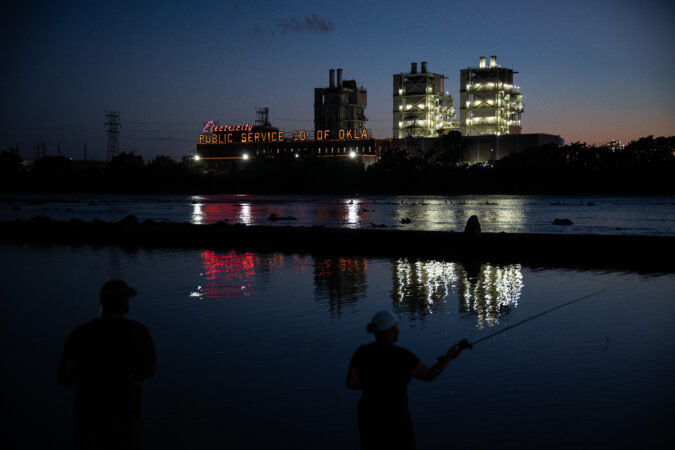
    A state-owned newspaper in China recently published a satellite image of a data center in Gainesville, Virginia, writing in English that the development of artificial intelligence posed a threat to Americans’ physical and financial well-being.

    A comic strip made to look as if it had been published by a Maryland news outlet — created with OpenAI’s ChatGPT by people in China, the tech company said — circulated on social platform X this year, blaming data centers for soaring electricity bills. It showed a tycoon smoking a cigar and clutching bags of cash.

    A video shared on X by a known covert Russian influence operation questioned the viability of a data center that an American company, Firebird, is constructing in Armenia, the small Caucasus nation that has been a focus of Kremlin pressure. “The country’s electrical grid instability may render it useless,” the video’s narrator says.

    All are examples of a push by foreign adversaries to seize on what polls have shown is deep ambivalence — verging at times on hostility — about the spread of the data centers needed to power AI in the United States and elsewhere.

    China, Russia and, to a lesser extent, Iran have sought to use state media outlets to turn the controversy over data centers in the United States into “a domestic fracture point,” according to a new analysis by Alethea, a threat intelligence company, which identified scores of articles and posts on social media this year.

    These campaigns, whose impact on public opinion remains to be seen, have raised alarms in Washington, where AI is seen as a top issue heading into this year’s midterm elections.

    The foreign efforts appear intended to stoke the debate over data centers that has united political figures across the political spectrum — from Sen. Bernie Sanders (I., Vt.), a progressive, to Steve Bannon, the erstwhile adviser to President Donald Trump.

    “Foreign actors aren’t manufacturing American debates over the future of AI, they are exploiting them,” said Jessica Brandt, a former official with the Office of the Director of National Intelligence who tracked foreign influence efforts during the Biden administration.

    The goal, she added, is to “deepen our divisions in order to dent our appeal and weaken us from within.”

    Republicans and business lobbying groups have seized on the role of China, in particular, claiming that the country’s Communist Party wants to undercut U.S. leadership in a field that the Chinese, too, hope to dominate. They argue that China’s propaganda is an effort to slow down America’s development.

    “We can’t allow any effort by foreign adversaries to extort these fears and undermine our technological development,” Sen. Tom Cotton (R., Ark.) wrote to the acting attorney general, Todd Blanche, referring to genuine public concerns.

    The Trump administration, which after taking office dismantled many of the government teams that tracked foreign influence operations, has begun to recognize the political threat of the rising sentiment against AI.

    A Gallup poll in May found that 71% of Americans were somewhat or strongly opposed to having a data center built near them, almost 20 percentage points higher than those who opposed construction of a nearby nuclear power plant. Many have broad concerns about the effects of AI on jobs and the climate, while people who live near data centers complain that they are eyesores and emit annoying sounds. Some cities and counties have enacted temporary or permanent moratoriums on new construction.

    In a recent interview on Fox Business, Interior Secretary Doug Burgum suggested that the outside influence campaigns had succeeded in building opposition to data centers. “I think some of this propaganda is being effective,” he said.

    The foreign campaigns follow a familiar playbook that dates back at least a decade. They often try to leverage official news organizations and social media to fuel domestic discord around hot-button issues like guns, race and vaccines, or even natural disasters like the wildfires in and around Los Angeles last year.

    Between January and June, state media in China, Russia and Iran mentioned data centers roughly 700 times, according to Alethea’s analysis. That was an average of nearly four times a day, though it remained a fraction of overall published content about AI development.

    The outlets have featured articles and posts aimed at an American audience, as well as content highlighting criticism of data centers by prominent Americans, including Tucker Carlson, a conservative commentator. In Iran, state media has also highlighted links between American AI companies and Israel and criticized the race to develop the technology as reckless.

    Covert Russian information operations, previously identified by government officials and researchers, have recently begun to focus on data centers as a wedge issue on social media, but so far their Chinese counterparts have not done so in the same way, according to Alethea.

    OpenAI did disclose last month that a small number of operatives working in China used the company’s ChatGPT platform to generate covert social media campaigns on X, including the comic strip.

    Other posts by the operatives promoted claims that data centers were spiking electricity costs and criticized Trump’s tariffs as a blunt tool used to win the technology race.

    OpenAI, though, found “little to no authentic engagement” with the campaigns, and the accounts at issue were ultimately removed from X. OpenAI did not respond to requests for comment about Chinese or other foreign efforts.

    (The New York Times has sued OpenAI and its partner, Microsoft, accusing them of copyright infringement of news content related to AI systems. They have denied those claims.)

    Lobbyists have also weighed in to insinuate that U.S. opposition has been fomented with support from abroad.

    Power the Future, an energy industry group, argued recently that domestic opposition to data centers was manufactured by environmental groups financed in part by foreign donors such as Hansjörg Wyss, a Swiss philanthropist and conservationist whose foundation is well known for supporting environmental issues.

    In a statement, the Wyss Foundation said it did not provide grants to oppose data centers. “These reports are false, misleading and an attempt by special interests to manipulate the public into accepting data centers,” the statement said.

    A pair of reports by the Bitcoin Policy Institute, a cryptocurrency advocacy group in Washington, detailed what the group’s researchers called an “extensive, multiyear influence campaign” by China to sway the AI race.

    As evidence, the reports cited an invitation by Sanders for two Chinese-government-linked academics to attend a conference on Capitol Hill in April. They also criticized political donations to liberal organizations from Neville Roy Singham, an American tech entrepreneur who is based in Shanghai and has long been a subject of criticism for supporting Chinese propaganda campaigns.

    “There is an organic opposition to data centers,” said the author of the reports, Sam Lyman. “What we are calling for is simply transparency, though, because we’ve been able to document an inorganic element that runs parallel to this specific opposition movement.”

    Sanders and Singham did not respond to a request for comment.

    The Chinese government, through its embassy in Washington, disputed accusations that it was trying to stoke protests in the United States — something it has accused the United States of doing inside China.

    “The allegations are completely unfounded and constitute smears and defamation,” a spokesperson, Liu Chang, said in response to questions, noting that the United States and China needed “to work together to promote the development and improve the governance of AI to make sure it will better contribute to social progress.”

    Not all of the anti-AI content online has an overtly political purpose. Other actors appear to be exploiting the issue simply to build engagement.

    Alethea tracked a network of inauthentic accounts on Facebook that has been posting images appearing to highlight Americans’ opposition to data centers. They include images generated by artificial intelligence showing, for example, a field of crops carved into a massive obscene hand gesture, each tailored to users in different American states. “This is what Oklahoma thinks of data centers,” one says.

    The network has digital traces linking it geographically to Bangladesh, Alethea found. It includes dozens of groups or accounts on Facebook and Instagram that feature names like “Life in Texas” or “I Love Minnesota.” Amid a steady stream of AI “slop” are posts opposing data centers.

    McKenzie Sadeghi, a principal analyst at Alethea, called the posts “rural rage bait.”

    “Data centers are likely the ideal topic for engagement-maximizing operators,” she said. “It is locally salient in all 50 states, fresh, and it maps onto preexisting anti-China, anti-tax, ‘selling America’ grievance.”

  • Palm Beach Airport now bears Trump’s name

    Palm Beach Airport now bears Trump’s name

    Palm Beach International Airport in Florida is now President Donald J. Trump International Airport.

    The name change became official Thursday morning, the Federal Aviation Administration announced. Eric Trump, Trump’s son and the executive vice president of the Trump Organization, shared a video on social media in which an air traffic controller is heard announcing the name change to the pilots of the president’s private Boeing 757 as it approached the airport for a landing just after 5 a.m.

    “As a son, and someone who flies out of this airport nearly every day, I will forever be proud to see the initials ‘DJT’ on my boarding pass,” Eric Trump wrote in a separate post.

    The airport’s three-letter code will not change to DJT from PBI until Aug. 18, according to airport officials.

    Travelers will see the airport’s previous branding and new signage during a transition period that will last several weeks, airport officials said. The rollout of the new name would not disrupt airport operations, they said.

    “We’re working behind the scenes to update our physical signage, terminal spaces, and digital channels to our new name: President Donald J. Trump International Airport,” the airport said on social media.

    The airport sits a few miles from Mar-a-Lago, Trump’s private club and residence in Palm Beach, which has served as a hub for his political operations.

    Florida Gov. Ron DeSantis, a Republican, signed a bill in March clearing the path for the airport to be renamed. Democratic state lawmakers opposed the measure, which the Legislature approved in February, arguing that it would cost about $5 million to update signs, maps and other airport materials to reflect the name change.

    The New York Times reported in February that Trump’s family business had filed trademark applications for potential airport names with the U.S. Patent and Trademark Office. The applications staked a claim to three names: President Donald J. Trump International Airport, Donald J. Trump International Airport and the airport code DJT.

    The applications also sought the right to use the name in connection with a variety of airport-themed merchandise, including luggage, animal carriers and “shoes for protection of airline passengers’ feet during airport security screening.”

    Renaming the airport for Trump attaches his name to a gateway that is used by millions of visitors each year.

    Trump has a long history of putting his name on the things he has built, owns or promotes, a list that includes Trump Tower and his golf resorts and hotels. As president, he has reached beyond his private businesses. For nearly six months starting in December, Trump’s name was added to facade of the John F. Kennedy Center for the Performing Arts in Washington until a judge ordered its removal in May. His signature is expected to appear on U.S. dollars later this year.

  • Platner’s exit sets off scramble for new senate candidate in Maine

    Platner’s exit sets off scramble for new senate candidate in Maine

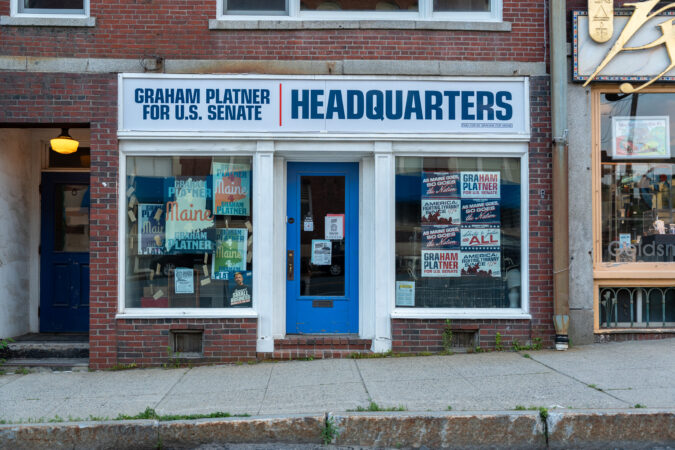
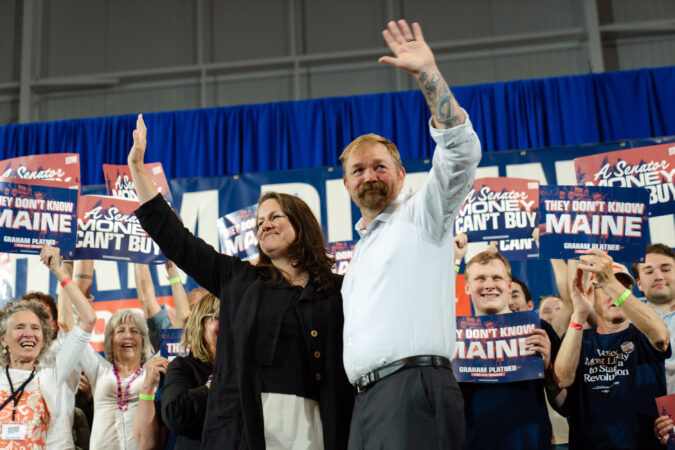
    BAR HARBOR, Maine — Graham Platner’s announcement late Wednesday that he was suspending his Senate run in Maine plunged Democrats into a foggy, fast-paced search for a replacement — with a growing group of contenders already jostling to become the party’s new nominee.

    On Thursday morning, Dr. Nirav Shah, a public health researcher who led Maine’s response to the coronavirus pandemic and finished second in the primary for governor, became the latest Democrat to officially enter the contest, joining a fast-growing field.

    In early June, Platner won the Senate nomination after more than 150,000 Democratic primary voters cast ballots for him. Now, with Platner having dropped out of the race after a rape allegation he denies, the state’s Democratic Party has been left to find a new candidate with a process it is creating on the fly.

    To formally remove himself from the ballot, Platner must submit a signed request to the Maine Secretary of State’s Office by a July 13 deadline. As of Thursday morning, he had not submitted one, said Jana Spaulding, the deputy secretary of state for communications.

    The party has said it will pick a new candidate through a nominating convention before a July 27 deadline set by state law. The timing and specifics of the convention had not been set as of early Thursday. But there was talk of allowing hundreds of Maine Democrats to vote on the nominee.

    The Democrat who emerges from the process will carry the party’s hopes of unseating Sen. Susan Collins, a Republican incumbent, in a race that Democrats see as key to their chances of taking back the Senate in November.

    After Platner, a progressive, populist oysterman, departed the race Wednesday, a small group of ambitious Democrats quickly moved to join the contest to replace him.

    Troy Jackson, a former president of the Maine Senate favored by some progressives, said he was running. He came up short in the Democratic primary for governor in Maine last month.

    “There is a powerful movement of working-class people in the state of Maine, and millions more across America who are ready to send a progressive fighter to the Senate,” Jackson, a fifth-generation logger from Allagash in northern Maine, said in a statement. He added, “I’m in.”

    Hours before he entered, he secured the endorsement of Rep. Ro Khanna, a California progressive who was once one of Platner’s most vocal supporters.

    Jordan Wood, another progressive, also said he was entering the race. A former congressional staff member, Wood narrowly lost in the House primary in northern Maine’s swing congressional district last month.

    “I’m running for U.S. Senate because to beat Susan Collins, Democrats need a candidate who can provide a true contrast and run an unapologetically progressive campaign,” he said in a text message late Wednesday. He had briefly entered the Democratic Senate primary in Maine last year before pivoting to the congressional race.

    Earlier Wednesday, Dan Kleban, a founder of a brewery, said he was joining the contest, writing on Substack that Maine voters “deserve a Senator who will fight for us, not one who enables Trump at every turn.” He also had a short-lived bid for the Senate last year.

    Shah, in his Thursday announcement, wrote on social media that “establishment politicians have failed us” and that “to defeat Susan Collins, we need an outsider.”

    It was not immediately clear how the candidates might distinguish themselves from one another. And they might soon have more company.

    Also weighing a candidacy was Shenna Bellows, the Maine secretary of state and a former state lawmaker. Like Shah and Jackson, Bellows ran for governor of Maine this year and fell short. Others may also join the contest.

    The Maine Democratic Party voted Wednesday to approve the convention in a meeting with more than 100 state party members. Leaders in the state party were expected to meet again Thursday to move toward finalizing the process.

    “We are going to have a nominating convention,” Charles F. Dingman, chair of the Maine Democratic Party, said Wednesday night. “And it is going to be representative.”

    Another question was how involved Platner might be. On Tuesday, he received pushback from the state party, which accused him of trying to intervene in the effort to replace him before he had even exited the campaign.

    “We have repeatedly reiterated to Graham Platner’s team that they have no role in determining our U.S. Senate nominee,” Devon Murphy-Anderson, the party’s executive director, said in a video on social media.

    In a statement made by hand-held video that he issued Wednesday, announcing that he was suspending his candidacy, Platner said he was “not trying to dictate to anyone” who his replacement should be. But he argued that the process should reflect “the will and the values of the people that built” his political movement.

    Many of his supporters said they felt defeated by the turn in the race. “I am hugely disappointed,” said Kat Higgins, 64, a retired nurse. “I really, really liked what he said. I think everything has to change.”

    Platner spent the final hours before his exit holed up with campaign advisers in his faded blue Greek Revival farmhouse in the wooded, seaside hills of Sullivan, Maine. His campaign released his video statement as the sun was setting over the Atlantic coast.

    A half dozen journalists were gathered on the street outside the home, but Platner did not emerge to address them. A single light illuminated a mudroom on the first floor.

  • Status of damaged Manhattan building unclear after crews work overnight

    Status of damaged Manhattan building unclear after crews work overnight

    NEW YORK — The status of a midtown Manhattan office building that suffered structural damage remained unclear early Wednesday, hours after New York City’s buildings commissioner said it was stable for now but warned of tense days ahead.

    “I can say right now the building is stable,” the commissioner, Ahmed Tigani, said late Tuesday. “We feel confident in the emergency plan we have now.”

    Construction crews hammered and welded through the night at the former Pfizer building in midtown, shoring up sections of the failed structure. Officers with the New York Police Department’s Technical Assistance Response Unit flew a drone beside the building, close to the 21st floor, throughout the night. The video captured two workers in hard hats inside the building, inspecting the floor where support beams had buckled.

    Police officers blocked all traffic on East 42nd and 43rd streets between Second and Third avenues, and authorities said early Wednesday that traffic in that area remained restricted. Those who worked or lived in the area would have access, however, unless the buildings were under evacuation orders. Five buildings remained fully or partially evacuated.

    Fire officials received reports Tuesday morning about “a structural issue” at 235 E. 42nd St., the former Pfizer headquarters that is being converted into a housing complex with more than 1,600 apartments. Architects had called the project, scheduled to be completed in 2027, the largest of its kind in the city’s history.

    Two support columns inside the building began buckling, and several upper floors were sagging, the Fire Department said Tuesday. Authorities initially created a “frozen zone” from 40th to 45th streets between First and Third avenues as they worked to stabilize the building. Although the so-called frozen zone has shrunk considerably, Tigani said “the public should not engage with that area.”

    The situation disrupted midtown Manhattan, as construction workers and people in nearby buildings, including tourists and school students, were evacuated. There were no injuries, the Fire Department said.

    Here’s what else to know:

    Developer’s response: Nathan Berman, the founder of MetroLoft, the developer behind the project, said in an interview that there was never any danger that the building would collapse, calling the episode “a typical construction mishap.” A spokesperson for the city’s Buildings Department said the structure was still being stabilized and an investigation was continuing.

    Upper floors: Tigani said late Tuesday that officials were monitoring the building for any signs that it was unstable. Emergency shoring was being undertaken on the 20th and 21st floors of the building, Brad Hoylman-Sigal, the Manhattan borough president, said in a social media post late Tuesday.

    Midtown construction: The project is part of a campaign to turn midtown Manhattan’s empty office buildings into residential spaces to help address a housing shortage and revitalize the area.

  • Historians reject White House’s criticism of Smithsonian museum

    Historians reject White House’s criticism of Smithsonian museum

    On July 4, the White House posted a lengthy report condemning the Smithsonian Institution’s National Museum of American History, accusing it of promoting “extreme ideological activism” while denigrating the nation’s founders and its founding.

    Historians have started to reply with failing grades of their own.

    The Organization of American Historians, the nation’s largest group of scholars of U.S. history, blasted the report in a statement Monday, accusing the administration of presenting a partisan ideological attack in the guise of historical critique.

    “The National Museum of American History interprets America’s history through its vast collection,” it said. “This report’s objective is to punish it for doing that in a way that makes U.S. history accessible to and reflective of all Americans. The report is only the latest chapter in a broader, systematic campaign that now targets an institution that was never meant to answer to any single administration.”

    The group accused the administration of ignoring decades of scholarship and trying to “erase the conflict, struggle, and diversity — the complexity — that have always defined the American experience.”

    “Make no mistake: The report represents an attempt to turn back the clock to a time when U.S. history was taught as the history of white Christian men who conquered a continent, U.S. military leaders who rarely lost a battle and U.S. presidents who were single-handedly responsible for national greatness, all under the cover of ‘anti-DEI’ and ‘anti-woke’ crusading,” it said.

    The White House report presents a wide array of charges, including that the museum promotes transgender issues and engages in “pro-illegal immigrant activism.” But at its core is a complaint that it fails to tell an “inspiring and unifying” national story that focuses on the heroism of the founders and acknowledges Christianity’s “constructive role” in “shaping the nation and its freedoms.”

    In a separate email to the New York Times, the president of the Organization of American Historians, Marc Stein, questioned the symbolic timing of the report.

    “Released on July 4, 2026, the 250th birthday of the U.S. Declaration of Independence, the report is a declaration of independence from history,” he said.

    Stein, a history professor at San Francisco State and the author of a recent history of the 1976 Bicentennial, defended the museum’s director, Anthea M. Hartig, a scholar of architectural history and cultural heritage who took over that role in 2019.

    The report “mischaracterizes and misrepresents the words of Anthea Hartig, who has consistently worked to educate and inform visitors to the museum with innovative exhibits and inspirational programs,” he said. (Hartig is a past president of the Organization of American Historians.)

    Some historians have questioned the accuracy of some of the report’s claims, including that the museum largely ignores the American Revolution and figures such as George Washington.

    Sarah Weicksel, the executive director of the American Historical Association, which has more than 10,000 members, noted in an email that the museum includes some “extraordinary” Revolutionary-era objects, like the newly restored gunboat Philadelphia, which it is highlighting for the nation’s 250th anniversary.

    Weicksel questioned some of the report’s criticisms of specific wall labels — for example, one about the history of U.S. education that refers to portraits of George Washington that have hung in many classrooms to promote patriotism. The report faults the label for not including biographical information about Washington and why he is important.

    “Studies of museum visitation have shown that labels should be presented no higher than an eighth-grade reading level and that most visitors will read no more than a brief label,” she said. “If every label that mentions Washington or Lincoln needs to recount a rote interpretation of their importance to the country, visitors will never learn anything new.”

    This article originally appeared in the New York Times.

  • Repression turns to rage after quakes in Venezuela

    Repression turns to rage after quakes in Venezuela

    LA GUAIRA, Venezuela — As postquake efforts in Venezuela start shifting from rescue to recovery, a crack has opened in Venezuelan society, and people are speaking out against their repressive government with a force and openness that has not been seen in years.

    Across La Guaira, the northern state hardest hit by the twin quakes, grieving citizens have shouted down police officers and national guard members, accusing them of standing by as civilians and international aid workers dig for the living, and now, the dead.

    In interviews, Venezuelans are openly criticizing the country’s ruling party and its leader, Delcy Rodríguez, something that would have been unthinkable just a year ago.

    They are also turning their anger toward the Trump administration, which has spent the last few months facilitating economic deals between U.S. companies and Venezuela, and has stood by the government’s management of the disaster.

    Inside Venezuela, fears of imprisonment, torture, and forced exile, once powerful incentives for silence, are being pushed aside as feelings of frustration and impotence grow.

    “Why would I be afraid?” said José Silva, 47, who on Friday was resting on a sidewalk not far from a giant public housing complex now turned to rubble. Some 700 families had lived inside.

    Silva’s clothes were drenched with sweat; it was evening, only partway through his 10th day pulling survivors and bodies from under slabs of concrete. He lashed out at the government: the police were rescuing only their own, he said, and the government had sent only “second rate” tools.

    “Why would I be afraid,” to speak out, he said, “if I was born to die?”

    This anger runs parallel to growing political tension over the leadership of Rodríguez. When U.S. forces captured her predecessor, Nicolás Maduro, in January and greenlit her ascension from vice president to president, the Trump administration characterized Rodríguez as a force of stability.

    Before the quake, President Donald Trump said that she was doing a “very good job” running the country.

    But criticism of her government’s response to the disaster, particularly in the critical first 72 hours when victims are most likely to be rescued alive, and the growing fury in the streets, has raised questions about whether she can cement that stability.

    The public outrage could also complicate the Trump administration’s strategy of supporting Rodríguez so the United States can benefit from Venezuela’s resources.

    Trump’s envoy to Venezuela, John Barrett, has supported Rodríguez, saying in a television interview after the quakes that Washington had “a great deal of confidence” in the Venezuelan authorities.

    But in recent days a chorus of hard-line congressional Republicans have doubled down on criticism of her management, calling for political change as soon as possible.

    “They’re failing at their job right now,” Rep. Carlos Gimenez (R., Fla.) said in an interview with CNN, calling Rodríguez an “interim dictator.”

    Venezuelans have gathered outside the U.S. Embassy, pleading with Barrett to do more to help victims. One man, yelling into news media microphones outside the embassy recently, harangued Barrett for sitting with government officials the United States had once deemed criminals and terrorists, while victims suffered “just two blocks away.”

    “The grievance is indeed directed at John Barrett,” he shouted. “Why has he not sat with Venezuelan civil society — the honest ones, the ones who haven’t stolen anything?”

    Maria Corina Machado, the country’s popular opposition leader, has been trying to get back into the country, but she does not have a passport, or permission from Rodríguez or the United States, to enter Venezuela.

    At a news briefing on Thursday, Rodríguez defended her government’s response to the disaster, saying she had immediately dispatched 4,000 government workers to respond to the quakes, a number that had grown to 19,000.

    “What happened in Venezuela on June 24 was a natural tragedy of a scale we never imagined,” she said.

    In response to accusations of a poor state response, Rodríguez asserted repeatedly that “media laboratories” were inventing a narrative of chaos.

    As evidence of the government’s mobilization, official social media accounts have heavily publicized a handful of state-supported rescues, including one in which dozens of well-equipped emergency workers from Chile rescued a man who had survived a week in the rubble. Rodríguez visited the man at the hospital.

    But these videos contrast sharply with the reality in La Guaira, where civilians in sneakers and T-shirts are doing a vast amount of the rescue and recovery work, using shovels and pickaxes and their bare hands to pull friends, neighbors, children, spouses, siblings, and parents from the rubble. Some lack masks to protect themselves from the dust and stench of decomposing bodies.

    Rodríguez was widely criticized in Venezuela as out of touch after she was photographed wearing a luxury ski jacket, a logo of the Italian brand Moncler on her arm, to visit quake victims.

    “It’s a lie that the government is helping,” Silva said.

    Soon after he spoke, darkness fell. Not far way, a group of men had just discovered five bodies in a hole they had dug in the side of the mountain of broken concrete.

    The men wrapped the bodies in sheets and then laid them gently on the ground. Survivors looking for relatives crowded around, pulling back the sheets to try to identify the deceased. One was the body of a little girl. The others were unrecognizable.

    Thousands of people are now homeless, and the death toll, officially over 3,500, is likely to be far greater. In the coming weeks, the government will be under intense pressure to address an increasingly complex humanitarian crisis.

    Outside of another collapsed public housing building, Kimberling León, 39, a resident of the complex, described the government response in the hours and days after the quakes hit.

    She was searching for her sons, ages 9 and 13, who she believed were trapped in the rubble.

    “The police came by, normal, filming, they didn’t help us,” she said, her voice flat, like a person still in shock.

    “We said to them: ‘help us, help us,’ they didn’t come to our aid. We started digging with our hands, but the smoke was too much, the flames rose high, the gas tanks had exploded.”

    The second or third day, a shovel and pickax arrived, she said.

    “We started digging, digging, digging. We called for machines to help, but they just passed us by, headed to the private buildings” where people could pay, she said.

    Silence has been one of the most valuable commodities in La Guaira, as rescuers try to make out the taps and calls of any living that might still be buried in the rubble.

    Often, rescuers shoot a fist in the air and call for quiet, instructing drivers to cut motors and people to stop walking.

    On a recent day, profanities rained down on the interior ministry workers who rolled past a silent zone with sirens blaring. Civilians banged on the car in anger.

    While the quakes have opened space for people to vent years of pent up fury, this public outcry could also spur a crackdown, leading to questions about how the United States would respond to any repression.

    The last major social outburst was in 2024, after the ruling party stole a presidential election.

    Venezuelan officials halted protests in a matter of days by sending the military into the streets, killing protesters and locking up civilians accused of minor expressions of dissent.

    Last week, a volunteer rescuer named Wilmer Cruz who had been filmed speaking out about the government response disappeared, according to human rights groups.

    When activists publicly accused the government of retaliating against Cruz, the authorities released him from prison.

    Oscar Murillo, who leads Provea, a human rights group, said the arrest highlighted for him that the quakes have not changed the “authoritarian model” in Venezuela.

    This article originally appeared in the New York Times.

  • George E. Johnson, who built a Black hair care empire, dies at 99

    George E. Johnson, who built a Black hair care empire, dies at 99

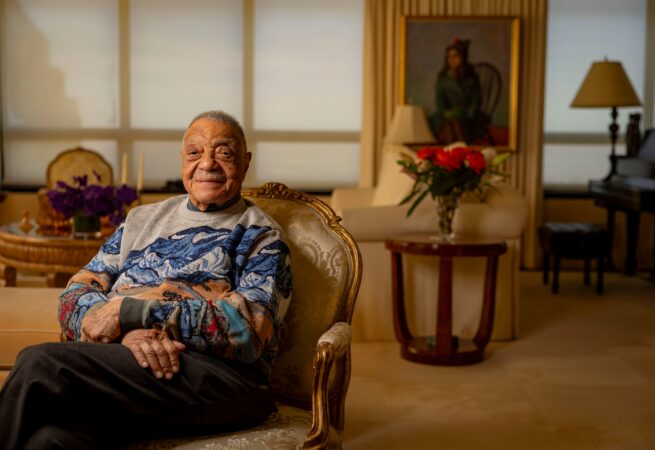
    George E. Johnson, a hair care magnate who rose from a sharecropper’s cabin to found, with his wife, Joan, what was said to be the first Black-owned company listed on a major American stock exchange, and who made a fortune on products like Ultra Sheen and Afro Sheen, died on Monday at his home in Chicago. He was 99.

    His death was confirmed by his second wife, Madeline Murphy Rabb, who said the cause was respiratory illness.

    Long before sports figures, entertainers, and Fortune 500 executives commanded sky-high salaries, the Johnson Products Company, which sold Black hair products and cosmetics, made its founder, Mr. Johnson, one of the nation’s wealthiest African Americans.

    He also helped found one of the first, and largest, Black-owned banks, the Independence Bank of Chicago, where he served as chairperson until it was sold in 1995. And for decades, Johnson Products indirectly influenced pop culture through its sponsorship of the nationally syndicated television dance show Soul Train.

    Johnson Products originated in the laboratory of Samuel B. Fuller, a Black cosmetics entrepreneur, where Mr. Johnson worked after dropping out of high school. Up to that point, his experience — starting at the age of 9, when an aunt gave him a shoeshine box — had been menial jobs.

    Mr. Johnson started at Fuller Products as a salesperson — “carrying the black bag,” as he put it — though he initially found it distressing to peddle pomade and face powder amid urban deprivation.

    “I had a problem with it unless I really needed money,” he said in an interview for this obituary. “Then I would sell like hell.”

    After requesting to work indoors, Mr. Johnson created his first product, a hair relaxer for men he called Ultra Wave. With Fuller’s blessing, Mr. Johnson teamed up with his wife and a barber to found Johnson Products in 1954.

    After one branch of a finance company rejected his request for a business loan as a “ridiculous” idea, Mr. Johnson secured the $250 in seed money from another branch by saying he needed the funds to take Joan on a vacation to California. Those early financing troubles later inspired him to help start a bank.

    He found himself on the road again to peddle his product when his partnership with the barber soured. From his station wagon, he sold Ultra Wave and other products to barbers from the Upper Midwest to New York City.

    But he soon found that barbers were not loyal. “They couldn’t resist the next deal that came along, although it involved poor quality, cheaper stuff,” Mr. Johnson told the New York Times in 1976.

    So he started eying beauty shops, where he observed women using hot combs and mineral oil to straighten hair, a smoky and unhealthful process. He modified Ultra Wave for the women’s market, creating Ultra Sheen, which he said reduced smoke by as much as 75% and could be used in the home.

    Sales took off. In the 1960s, the company had an estimated 80% of the Black hair care market, and by 1970 it had annual sales of $12.6 million, or more than $100 million today. The company listed on the American Stock Exchange in January 1971.

    Johnson Products spent heavily on advertising in its heyday — $5 million in 1975, or more than $31 million today — and was the first Black-controlled company to sponsor a national television program, Soul Train, which aired weekly for almost 35 years, until 2006.

    (Johnson Products is not related to Johnson Publishing Company of Chicago, the former publisher of Ebony and Jet magazines. Nor is it related to Robert L. Johnson, a co-founder of Black Entertainment Television.)

    Cultural and regulatory challenges — and even severe weather — exacted a toll on Johnson Products, which was struggling for survival by the late 1970s and posted its first loss in the mid-1980s.

    The company, which relied on straighteners, was late to adapt to the growing popularity of Afro hairstyles in the 1960s. Near the end of that decade, its reformulation of Ultra Sheen as Afro Sheen resulted in a poor product for long, curly hair, Mr. Johnson acknowledged.

    In the 1970s, a Federal Trade Commission investigation into the marketing of hair straighteners disrupted the industry, and in 1976 Johnson Products negotiated a consent order to add a warning that its products containing sodium hydroxide, or lye, and could cause scalp irritation and eye injury. This was over a year before Revlon, its far larger competitor, agreed to similar warning labels, a lag that may have given Revlon an edge with Black consumers.

    While African Americans made up a small part of Revlon’s market, they represented almost all of Johnson Products’, and its share of the relaxer market skidded to 45% from 85% in two years.

    Mr. Johnson also said he faced racial discrimination, contending that distributors “don’t seem to want Black products to be exposed to all Americans.”

    In early 1979, a heavy snowstorm in Chicago brought the company to a near standstill for more than a month, blocking truckers from transporting supplies or shipments and damaging its plant.

    George Ellis Johnson was born June 16, 1927, in a sharecropper’s shack in Richton, Miss., and moved to Chicago with his mother, Priscilla, when he was 2. Although his education ended in 11th grade, he was awarded nine honorary doctorates over his lifetime.

    Last year, Mr. Johnson published Afro Sheen: How I Revolutionized an Industry with the Golden Rule, From ‘Soul Train’ to Wall Street, a memoir, written with Hilary Beard.

    Joan Johnson wound up with control of the company when the couple divorced in 1989. After some disruptions, including the departure of her son Eric as president and CEO, she sold Johnson Products to the Ivax Corporation in 1993, netting about $32 million, or about $75 million today.

    The Johnsons remarried in 1995. She died in 2019.

    In addition to Rabb, whom he married in 2022, Mr. Johnson is survived by his sons, Eric, John, and George Jr.; his daughter, Joan; 10 grandchildren; and seven great-grandchildren.

    Ivax sold the company to Procter & Gamble in 2004 before it was bought by a consortium of African American investment firms in 2009.

    “When I think about pioneers, the real pioneers are the people who are able to make a path where none exists,” Eric Johnson told CNN after his mother died in 2019. “Johnson Products in many ways was that company. She and my father had no provided path. They created a path where there was none.”

    This article originally appeared in the New York Times.

  • Democrats begin to clash over who replaces Platner even before he exits

    Democrats begin to clash over who replaces Platner even before he exits

    The implosion of Graham Platner’s campaign for Senate in Maine after an accusation of rape has ripped open divisions inside the Democratic Party as its progressives and moderates battle to pick his successor even before he has said he will step aside.

    National Democrats have grown alarmed that a seat seen as crucial to winning control of the Senate could be slipping from the party’s grasp. Platner had survived a series of controversies — about a tattoo with Nazi symbolism, inflammatory old Reddit posts, and his relationships with women — but many in the party abandoned him after the rape accusation, including the leaders of the Maine Democratic Party and Senate Minority Leader Chuck Schumer.

    They have demanded that Platner step down before a Monday deadline for him to be replaced on the ballot to find a new Democrat to run against Sen. Susan Collins, a longtime Republican fixture in the state. The main super political action committee for Democratic Senate candidates said it would redirect $24 million in ad reservations to other states if he remained.

    Sen. Bernie Sanders (I., Vt.), one of Platner’s earliest and most prominent backers, joined the chorus on Tuesday afternoon.

    “I have spoken with Graham Platner about the best path forward for Maine,” Sanders said in a statement. “In light of these very serious allegations, I have recommended that he step aside.”

    Platner, who has denied the allegation, said on a private call with his campaign staff on Monday evening that he believed he still had leverage to influence which candidate would replace him on the ticket, according to three people familiar with the conversation. On the call, he did not announce plans to withdraw but implied such a decision would be coming, the people said.

    Platner’s campaign had stopped running ads on Meta’s platforms, such as Facebook and Instagram, as of Tuesday, according to the company’s ad disclosure database. He had been running multiple ads as recently as Monday evening.

    The drama comes almost exactly two years after the Democratic Party was roiled by the exit of Joe Biden, then the president, from his reelection race and the speedy anointment of Vice President Kamala Harris as the Democratic nominee. That process — and Democrats’ ultimate loss in 2024 — has left deep scar tissue for many in the party.

    Many on the left — including, it appears, Platner himself — want any replacement to come from the progressive wing of the party after he won the primary over Gov. Janet Mills, a moderate two-term Democrat, who withdrew over a month before the election.

    “To the Democratic establishment: This is not your opening,” said Joseph Geevarghese, executive director of Our Revolution, a group that emerged from Sanders’ 2016 presidential campaign. Referring to Senate Democrats’ campaign arm, he added, “Mainers did not vote by an overwhelming margin against Janet Mills and the DSCC’s handpicked pick just to be handed another status-quo candidate anyway.”

    On the flip side, many in the party establishment believe those on the left should show some humility after Platner’s collapse.

    A range of Democratic groups and activists engaged in the politics of “I told you so.”

    “When women raise the alarm, listen,” said a social media post from EMILY’s List, a group that works to elect Democratic women and that had backed Mills. “Graham Platner’s behavior is disqualifying (AS WE HAVE SAID THIS WHOLE DAMN TIME), and he should end his campaign.”

    On Tuesday morning, more Democrats who are ideological allies of Platner called for him to step aside, including New York City Mayor Zohran Mamdani.

    “I believe that it’s time for him to drop out of the race,” Mamdani said when asked at a news conference. “I think the focus of today should be to respond to the gravity of what so many of us have read, and I think the only appropriate response is for the campaign to come to an end.”

    Mamdani and Platner share several advisers, including Morris Katz and Rebecca Katz of the Fight Agency.

    The progressive group MoveOn also dropped its endorsement.

    As the situation in Maine threatened to spiral out of control, Schumer and the Democratic Senatorial Campaign Committee are set to host major donors this week for a fundraising retreat at the Broadmoor in Colorado Springs. Donors are asked to contribute $44,300 to attend, according to a copy of the invitation.

    The event, which was previously scheduled, was billed as a “special weekend to discuss the DSCC’s strategy and campaigns for taking back the Democratic Senate majority,” but now talk is likely to be consumed by the developments in Maine.

    Platner can be replaced as the Democratic nominee if he withdraws voluntarily by Monday. The state Democratic Party would then have until July 27 to pick his replacement, under state law. But the law does not dictate how the state party itself needs to pick Platner’s replacement.

    What that would look like remains unclear. The options under discussion include a convention or a statewide caucus in late July.

    “We ask for your patience as this work continues,” Devon Murphy-Anderson, the state party’s executive director, wrote in a message to committee members on Tuesday, adding: “Whatever process is ultimately adopted must reflect our Democratic values. It should be open, inclusive, transparent, and fair.”

    A range of candidates are being discussed, with some early attention on those who ran and lost the primary for governor this year. Those Democrats include Troy Jackson, a former president of the Maine Senate; Nirav Shah, a former director of Maine’s public health agency; and Shenna Bellows, Maine’s secretary of state. But some Democrats were concerned about elevating someone who just lost.

    Supporters of Jackson, who had backed Platner in the primary, created a Draft Troy website, and he filed paperwork with the Federal Election Commission for a Senate exploratory committee. Shah put out a statement that said he had received “hundreds of encouraging messages,” adding that anyone who ran for the nomination should commit to a televised debate and “multiple town halls across every corner of the state.”

    Another possible candidate is Dan Kleban, a co-founder of the Maine Beer Co., a brewery outside Portland. He briefly ran for Senate last year before dropping out and endorsing Mills. But like Platner, he has never held elected office or been through the rigors of a campaign.

    Yet another possibility is Jordan Wood, who also previously ran for Senate and dropped out. Wood ran instead in the primary for Rep. Jared Golden’s House seat and lost.

    Golden, a moderate Democrat and veteran who holds the most pro-Trump House seat of any Democrat in Congress, is retiring and previously said he was ready to step away from elected office.

    In recent days, Golden has fielded calls gauging his interest in a run for Senate, according to two people familiar with those conversations who spoke on the condition of anonymity to describe private discussions.

    Golden has not commented since the latest allegations against Platner emerged.

    More unconventional picks were being bandied about, as well. One Democratic firm in recent days included actor Patrick Dempsey in a poll. (He was viewed favorably by 52% of voters in the survey.) Others floated the popular liberal historian Heather Cox Richardson, who is based in Maine.

    Some Democrats erupted after the news emerged that Platner wanted a replacement who was aligned with him politically. One person familiar with the Platner campaign’s internal discussions said Monday that Platner would seek a guarantee he would be replaced by someone in agreement with “the values and vision and policy agenda” that he had pressed.

    Others argued that under the circumstances, Platner’s support would be damaging.

    Joe Baldacci, a state senator who ran and lost in the primary for Golden’s House seat this year, said the idea that Platner would bless a replacement would be the equivalent of “tying a lead weight” to the person.

    “After you have put the Democratic Party in a shambles and undermined all Democratic candidates running for office in Maine then you should have no say in who will be your successor,” Baldacci wrote on social media. He added, “Any connections to Platner will doom that person’s campaign from the very beginning.”

    This article originally appeared in the New York Times.

  • The accused is in court but conspiracy theories still swirl around Kirk case

    The accused is in court but conspiracy theories still swirl around Kirk case

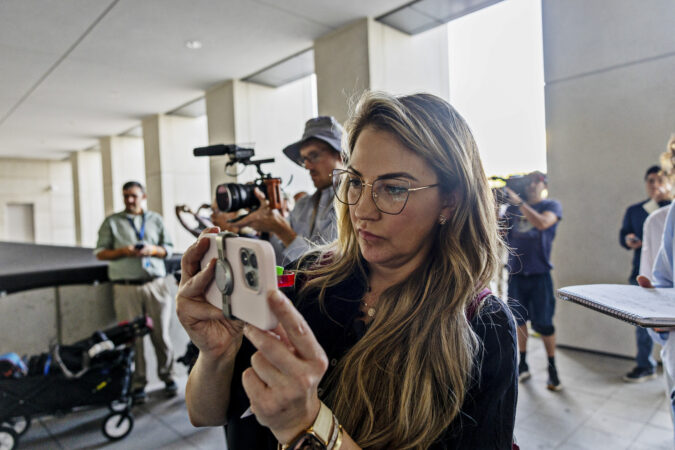
    PROVO, Utah — Outside the state District Court where the preliminary hearing for a man charged with shooting Charlie Kirk was about to begin its first day, Houston-based podcaster Keli Rabon laughed sheepishly when asked if that man, Tyler Robinson, was guilty.

    “You’re going to think I’m crazy,” Rabon replied, “but I think Charlie’s still alive.”

    Robinson, she went on, “was at most a spotter” at the scene of the crime at Utah Valley University last September. Rabon suggested that Kirk, a 31-year-old conservative activist, was currently at an undisclosed location and that he, along with his wife, President Donald Trump, and other government officials, were potentially involved in the “psy-op.”

    Rabon is one of several conspiracy theorists at the Provo courthouse. Camping out overnight to be the first member of the public allowed into the courtroom, Selena Armitage, too, had questions. A true-crime enthusiast living 45 miles away in West Valley City, Armitage said of Kirk’s killing, “I don’t think we’ve even scratched the surface.”

    The proceeding this week to weigh evidence against Robinson will seek to impose judicial norms on a case that seems likely to test those standards to the breaking point. Kirk’s death, after all, is the first assassination of a prominent American political figure in the internet age. Any straightforward prosecution of Robinson will require navigating a parallel universe of conspiracy theories turbocharged by social media.

    The cramped district courtroom has just 14 seats available to the public, and some will be occupied by people including Rabon and Armitage, who are of the view that the state’s case is far from the complete picture. They will be reinforced by untold watchers of the hearing’s livestream.

    The shooting was, in effect, nationally televised. The moment a bullet pierced Kirk’s neck was captured on mobile phones and posted in real time.

    As straightforward as the horrific footage was, internet sleuths were not taking it at face value: Where is the exit wound? Where is the blood? Who are the adults in the campus audience? Is one of them gesturing just before the shot? Why do some of the staff members of Turning Point USA, Kirk’s political organization, seem to react without alarm to his slumping body? Why are several men in the crowd wearing maroon shirts?

    The first two days of testimony have offered additional fodder. The prosecution’s opening witness, a former Utah Valley special officer named Chris Bagley, testified Monday that his body camera’s battery died while he was investigating the rooftop where police say Robinson fired his lethal shot.

    Under cross-examination by defense attorney Kathryn Nester, Bagley also acknowledged that his report did not include any mention of a rifle case that surveillance video showed the shooter carrying. Nor had he identified a plainclothes officer with a badge who had accompanied Bagley to the rooftop. Nor had he secured an empty pistol holster that he saw lying abandoned on the grassy area near where Kirk was killed.

    On Tuesday morning, Nester elicited from the lead investigator in the case, David Hull from the State Bureau of Investigation, the facts that no shell casings had been found on the rooftop, while at least two other firearms were discovered at the crime scene below. Hull also admitted that he had not interviewed two individuals who claimed that their own rooftop video featured an individual whose clothing and build did not match those of Robinson.

    Such vagaries are common in criminal investigations. Evidence is rarely conclusive, eyewitness accounts seldom 100% reliable, confessions not always ironclad. But such nuance can be lost on the judges and juries of social media.

    Right-wing social media influencers have foraged on Kirk’s assassination with particular zeal, chief among them Candace Owens, a former Turning Point USA star turned antagonist who has devoted dozens of podcast episodes to the subject.

    “I feel confident stating that Tyler Robinson did not murder Charlie Kirk,” Owens said recently. In her view, Robinson was “a total patsy” who was not even on campus that day.

    Owens has at various times implicated the victim’s widow, Erika Kirk, Turning Point USA staff, and even the Israeli government, but only with tantalizing questions and dots for her audience to connect, not a true alternative scenario.

    Erika Kirk and other Turning Point officials have expressed outrage, but privately, they have acknowledged the far right’s susceptibility to such theories, owing to a suspicion of traditional news sources and hostility toward the left.

    Kirk himself regularly argued that the 2020 presidential election was stolen and that Democrats were purposely opening the border to reshape the electorate.

    Such theories may lack evidence, but they have an audience. By far the biggest media presence at the Utah preliminary hearing is Fox News Channel, which has more than a dozen employees in Provo. And as Rabon acknowledged outside the courtroom, conspiracy theories are popular — some more than others. Her podcast was eight months old and already had 7,500 YouTube subscribers, a figure that she said would be higher if she were to embrace a more alluring conspiracy theory, such as the belief that Kirk was killed by an incendiary device in his microphone.

    “I’m doing ‘fake death,’” Rabon said. “If I was doing ‘exploding microphone,’ the algorithms would like me better.”

    This article originally appeared in the New York Times.

  • Farage says he will resign as U.K. lawmaker to trigger a special election

    Farage says he will resign as U.K. lawmaker to trigger a special election

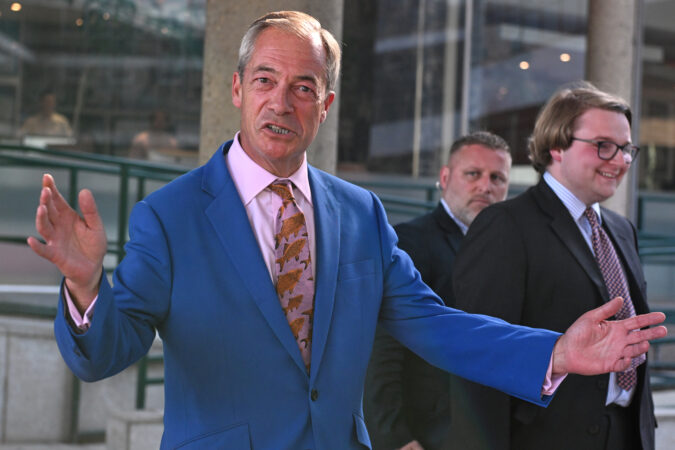
    LONDON — Nigel Farage, the leader of the populist right-wing Reform UK party, on Tuesday said he would resign his seat in Parliament and run for reelection in his Clacton seat to answer criticism of his financial affairs.

    The unexpected move comes after recent revelations about gifts and financial support received by Farage, both from a cryptocurrency billionaire and from a political ally who was once convicted of fraud in the United States.

    “I have decided that the people of Clacton should be the judges of my actions,” Farage said in a statement that was broadcast on his party’s YouTube channel. “This will be a ‘people versus the establishment’ by-election,” he added, referring to a special parliamentary election.

    The success of Farage, whose anti-immigration party has led in opinion polls for more than a year, was instrumental in destabilizing Prime Minister Keir Starmer, who announced his resignation last month.

    But Farage has suffered several setbacks lately amid growing scrutiny of his financial affairs.

    In May, it emerged that he had received an undisclosed gift of 5 million pounds (about $6.7 million) from a cryptocurrency billionaire, Christopher Harborne, a Briton who lives in Thailand.

    Farage argues that the gift was unconditional, was made before he won a seat in Parliament in the general election in 2024, and there was no requirement to declare it. However, Daniel Greenberg, Parliament’s standards commissioner, has opened an investigation into whether the money should have been made public under rules that require new lawmakers to declare some financial benefits received in the 12 months before their election.

    Over the weekend, the Sunday Times of London reported that Farage had separately failed to declare benefits provided by a political ally, George Cottrell, a convicted fraudster who served prison time in the United States.

    According to the newspaper, Cottrell’s support included providing social media staff members who worked for Farage in the year before he was elected, as well as the use of a property rented by Cottrell near Buckingham Palace.

    Farage has insisted he followed all of the rules and has accused journalists of “despicable behavior” and of hounding his family.

    However, in his statement Tuesday, Farage suggested that the Sunday Times article had now triggered a second investigation, saying that, “Despite the fact that many of the things that were written in the article were inaccurate or irrelevant, yet another standards investigation is underway.”

    If Greenberg finds that the gift from Harborne should have been declared, Farage might, under British parliamentary rules, have been suspended from Parliament and forced to fight for reelection in his parliamentary constituency of Clacton, in eastern England. So the announcement Tuesday effectively preempts that possible outcome, although it would not stop the findings being published.

    Farage, a highly effective campaigner and a longtime disrupter of British politics, will likely be confident of winning the seat again, having achieved a majority of 8,405 votes in the 2024 general election. Polling suggests he remains popular in the area.

    However, even a convincing victory there would not guarantee an end to the scrutiny of Farage and his finances as he attempts to convince the country he should become its next prime minister. The next general election must take place by 2029.

    Reform UK has recently faced competition on its right flank from a far-right party called Restore Britain, which was founded by Rupert Lowe, once an ally of Farage, after a bitter public rift with him.

    Despite Reform’s success in May in local elections in Wales, Scotland, and British municipalities in England, the party has also suffered some reverses. Last month it lost a crucial special parliamentary election in Makerfield, in northwest England, which was won by Andy Burnham, who is expected to succeed Starmer.

    Earlier this year, it lost in another special election in nearby Gorton and Denton to an insurgent Green Party. And last year, it suffered a similar fate in Caerphilly in Wales, in a special election to the Welsh parliament, which was won by the center-left nationalist Plaid Cymru party.

    In national polls, Reform’s support has fallen from about 30% last year to about 25% now, with Labour and the Conservatives around 20% each.

    This article originally appeared in the New York Times.