Category: New York Times

  • Olympian is indicted after arrest at Washington’s Reflecting Pool

    Olympian is indicted after arrest at Washington’s Reflecting Pool

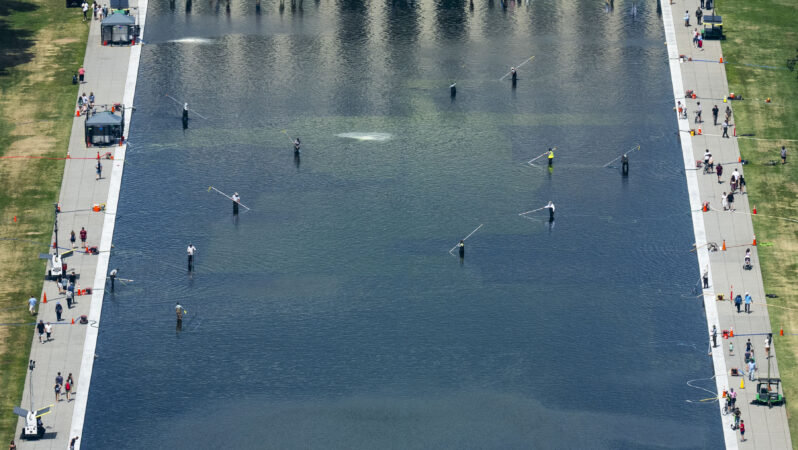
    A former Olympic canoeist who had been arrested in June on charges that he had vandalized the Lincoln Memorial Reflecting Pool has been indicted, according to court documents. He is charged with “destruction of property $1,000 or more,” a felony.

    President Donald Trump blamed vandals for the problems following a quick and costly makeover of the pool, and the canoeist, David Carter Hearn, 67, of Bethesda, Md., was among the first to be charged. The U.S. Park Police had arrested Hearn near the pool June 19, and accused him of destroying government property. At the time, Hearn denied the charge in an interview with the New York Times.

    Jeanine Pirro, the U.S. attorney in Washington, said in a news briefing that prosecutors had “tremendous evidence” underpinning the indictment, and she condemned what she called “unchecked vandalism and civil disorder.”

    “National Park Service employees observed Hearn actually forcefully and violently pulling up and removing the bottom liner with both hands,” she said. “According to witnesses, Hearn damaged approximately 2 square feet of sealant from the bottom of the pool.”

    When a parks employee told him to stop, Pirro said, Hearn was “belligerent, rude, and disrespectful.”

    Norm Eisen and Mary Dohrmann, lawyers representing Hearn, said in a statement that he is innocent.

    “These charges are outrageous and should be alarming to every American,” they said. “This indictment reflects the administration’s effort to shift blame for their own failures. On the eve of our nation’s Independence Day, Americans should be deeply concerned by the misuse of government power against an ordinary citizen.”

    Hearn has acknowledged putting his hand in the water and touching the peeling sealant during a pause in a bike ride but has said that is all he did. “I was just a curious, concerned citizen,” he said in an interview. “I guess I was there at the wrong place, wrong time.”

    On Thursday, Pirro described the case in the context of Trump’s extensive efforts to refurbish Washington, D.C., which she said was amid “a renaissance like it has never experienced before, in both safety and in beauty.”

    In April, Trump announced that he would be fixing “the once beautiful Reflecting Pool.”

    The pool’s problems, including leakage and the routine algal blooms, had bedeviled previous administrations, including Barack Obama’s, but Trump declared that when he was done, the pool would be “much more beautiful than the day it was built!”

    The administration awarded no-bid contracts to drain, resurface, and refill the pool at a cost of $16.4 million, but by mid-June — days before Hearn’s arrest — it was already clear that things were not going according to plan.

    Chunks of the sealant, which had been recently applied to the pool’s concrete slabs, were spotted floating in the water. And the water was turning a lively shade of green, proof that the algae was still present.

    Past administrations have wrestled with keeping the pool free of algae, but experts said some of the current problems were because of decisions made during the rushed makeover. But Trump blamed vandals, who he said, without citing evidence, had poured fertilizer into the water to nurture the algae.

    The area, an eternal draw for tourists, was quickly surrounded by security officers. Federal officials have said that seven people, including Hearn, have been arrested on charges of vandalizing the pool.

    Pirro said that her office was reviewing those other cases and that some would likely result in misdemeanor charges and others in violations.

    The indictment of Hearn came at a fraught moment for Pirro’s office, which has had trouble obtaining — and sustaining — criminal cases against Washington residents who protested Trump’s anti-crime efforts involving the National Guard and federal law enforcement.

    Under Pirro, prosecutors failed three times last summer to secure an indictment against a woman accused of assaulting an FBI agent during a protest against immigration officials, and ultimately lost the case at trial.

    In a similar case, grand jurors in Washington rejected efforts to indict a man who was accused of hurling a submarine sandwich at a federal officer on the street. Prosecutors later lost that case at trial as well.

    Gregory Rosen, a former prosecutor in Pirro’s office, raised questions about Thursday’s charges, especially given binding precedent from the court of appeals in Washington.

    “Malicious destruction of property has never meant just touching things,” he said. “The court has consistently required either an actual intent to cause the harm or wanton conduct, and damage resulting from an accident or curiosity doesn’t qualify.”

    This article originally appeared in the New York Times.
  • Tucker Carlson, who broke with Trump, plans to ‘help build a third party’

    Tucker Carlson, who broke with Trump, plans to ‘help build a third party’

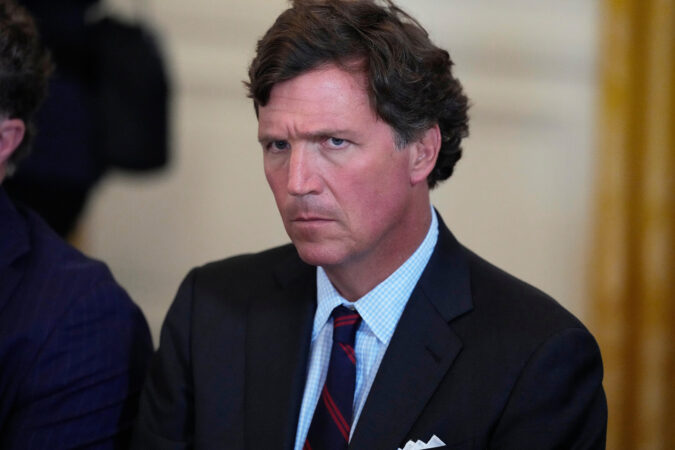
    Tucker Carlson, the influential conservative media commentator, said in an interview that he planned to help start a new political party after leaving the Republican Party but that he had no interest in running for office.

    Carlson, a former close ally of President Donald Trump who has broken with the Republican Party over the war with Iran, told the Columbia Journalism Review that he was “going to help build a third party.”

    “There should be a good-faith effort to figure out what benefits the country,” Carlson said in an interview with the Columbia Journalism Review published Wednesday.

    He outlined his plans at a moment of upheaval for both parties: The insurgent left appears ascendant in the Democratic Party as the base has grown angry over the party leadership’s stance on Israel since the war in the Gaza Strip. The Republican Party has been fractured by Trump’s handling of the war with Iran.

    Carlson, a popular podcaster and former Fox News host, said last month that he was leaving the Republican Party. He described himself on a podcast episode as a “consistent defender” of the party for 35 years, but said that he believed the party had lost touch with “America First” principles under Trump.

    In the Columbia Journalism Review interview, he described some of the policies that might animate his new party, saying he supports “ending all immigration.” A longtime nativist and immigration hard-liner prone to conspiratorial views, Carlson said immigration drives unemployment. (Many economists say it does not.)

    He also argued that the two parties did not offer a sufficient contrast on “war and finance.”

    “That’s not a democracy,” Carlson told the Columbia Journalism Review. “That’s a one-party state posing as a democracy, and it needs to be broken, and there’s going to be a third party, and I’m going to do everything I can to bring that about.”

    Carlson was often at Trump’s side during his 2024 presidential campaign and pushed Trump to select JD Vance, then a senator from Ohio, as his running mate.

    But he broke sharply with the president after the United States started the war with Iran in late February, declaring Trump was violating a core campaign promise to avoid foreign conflicts. By April, Carlson said he was “tormented” by his past support for the president.

    He told the Columbia Journalism Review that he had not spoken to Trump since the start of the war, which has been largely paused by a fragile ceasefire.

    “I’m not interested in talking to him,” Carlson told the publication.

    In the past, Carlson’s relationship with Trump has been revived after rocky stretches. In a text surfaced by a defamation lawsuit filed by Dominion Voting Systems, Carlson wrote of Trump, “I hate him passionately.” (Carlson was fired by Fox News after it agreed to pay $787.5 million to resolve the case, which centered on the network’s promotion of 2020 election misinformation.)

    But Carlson’s frequent, forceful public criticism of Trump since the war began has led to some speculation that he might be angling for his own run for office.

    Carlson told the Columbia Journalism Review that he was not entertaining the idea, and he insisted he did not see himself as a competitor to Trump.

    “I’m not a politician, that’s for sure,” Carlson told the publication. “I’m not a rival to Trump for power. I have no power. I’m someone who knows Trump, and I know him well, and I’ve known him for a long time.”

    This article originally appeared in the New York Times.
  • Immigrant arrests surge to 10,000 in 5 days as ICE clamps down

    Immigrant arrests surge to 10,000 in 5 days as ICE clamps down

    WASHINGTON — Federal immigration officials have detained more than 10,000 people in the five days ending Thursday, a major surge that has stemmed from a push within Immigration and Customs Enforcement to increase arrest rates.

    Agency leaders in recent days ordered top ICE officials to focus more of their officers’ efforts on picking up immigrants they want to deport, according to documents obtained by the New York Times and interviews with federal officials. ICE officers have arrested people at check-ins, with immigration authorities, during traffic stops, and on the street. The push has apparently yielded results, with recent arrest numbers roughly doubling from the 1,000 picked up each day earlier this year.

    ICE officials were told that the White House wanted an increase in arrests, according to three officials with knowledge of the conversations. One of the officials said that it was unclear how long the pace could continue, but that ICE officials had been told that 2,000 arrests a day was the new standard for enforcement.

    The surge has occurred without the fanfare of highly visible operations last year, in which officials announced their intentions ahead of time to target cities, including Chicago and Los Angeles, and send officers pouring into the streets. Markwayne Mullin, the homeland security secretary, pledged to mount a quieter enforcement campaign following the chaos of a monthlong operation in Minnesota, where federal officers killed two U.S. citizens.

    The rise in arrests suggests that President Donald Trump is determined to meet his pledge of mass deportations, a goal that is popular among his conservative supporters but that has fueled a political backlash amid the administration’s heavy-handed tactics. The Trump administration has promised more aggressive actions, particularly after the Supreme Court in recent days expanded the president’s power to set federal immigration policy, but undercut his effort to eliminate birthright citizenship for the children of immigrants in the country illegally and visitors.

    “Our message is clear: If you come to our country illegally, we will find you, we will arrest you, and we will deport you,” Lauren Bis, a Department of Homeland Security spokesperson, said in a statement.

    Word of an uptick in arrests has started to trickle out, sowing fear in immigrant communities and among advocates already on edge after the Supreme Court ruled that Trump could end deportation protections for people from disaster- and war-torn countries under the Temporary Protected Status program.

    In recent days, ICE officers have launched an intense push to ramp up arrests. Arrests topped out Saturday when authorities detained more than 2,400 people, according to documents obtained by the Times. The detention population inside ICE facilities has jumped nearly 4,000, to more than 63,000 in the agency’s custody as of Tuesday, according to internal documents.

    In emails to ICE personnel, agency leaders applauded the latest numbers.

    “I want to personally thank each of you for your extraordinary efforts this past weekend,” Marcos Charles, the head of ICE’s deportation wing, wrote this week. “Through your dedication, professionalism, and unwavering commitment to our mission, enforcement and removal operations achieved remarkable operational results.”

    Top ICE officials were told to make sure that as many officers as possible were working seven days a week, and to put 80% of their officers on arrest operations, according to two U.S. officials who spoke on the condition of anonymity to discuss internal conversations. Top supervisors were expected to be working closely on the operations as well.

    Last year, Stephen Miller, Trump’s deputy chief of staff, set a goal of 3,000 arrests a day for the agency, a figure it was not able to hit. Since then, the agency has hired thousands of new officers and has had its budget increased by billions of dollars for the enforcement surge.

    Across the country, immigration lawyers and advocates have reported an uptick in enforcement.

    In South Texas, Sister Letty Ugboaja, a Nigerian nun, was arrested on her way to church on Sunday morning, according to Sister Norma Pimentel, her colleague. Ugboaja is a local nurse who also helps at a parish in the region. Pimentel called local leaders after learning of the arrest, and congressional officials soon got involved and pushed for her release.

    On Sunday, she was let go from ICE custody, and Pimentel was there to greet her.

    Pimentel said that Ugboaja was distraught upon her release.

    “It took her awhile to be able to talk — she was crying,” she said.

    In southern Florida, attorneys have been on alert. Cindy Blandon, an immigration attorney in Miami, said that one of her clients, a Nicaraguan father of two children, had an immigration court hearing set for 2027, but was arrested by ICE on Monday during a routine check-in.

    And in Utah, Ysabel Lonazco, an immigration attorney, has noticed an uptick as well. She has spoken to several clients, including a man who was driving when he was picked up by the agency for overstaying his visa this weekend.

    “It sets further fear in the community,” she said. “People don’t want to leave their houses. They are afraid to drive to do their grocery shopping. They are just terrified with these detentions.”

    One of her clients, Arturo, a 48-year-old Mexican man, was arrested in Salt Lake City on his way to a soccer game Sunday, according to his wife, Veronica. She said the arrest had shattered their family.

    “They’re getting people — be very careful,” her husband told her from ICE detention, she recalled through an interpreter. She said her 13-year-old son was traumatized by the arrest of his father, who had worked most days of the week building furniture before his arrest, she added.

    A Department of Homeland Security spokesperson said that Arturo had illegally reentered the United States and would be held in ICE custody as the agency sought to deport him.

    Veronica said the family had not expected to be caught up in Trump’s deportation sweep.

    “We were worried, but it wasn’t like we were extremely worried. We figured — we don’t have any criminal record, we pay taxes every year,” she said.

    This article originally appeared in the New York Times.
  • U.S. and Iran meet with mediators in Qatar

    U.S. and Iran meet with mediators in Qatar

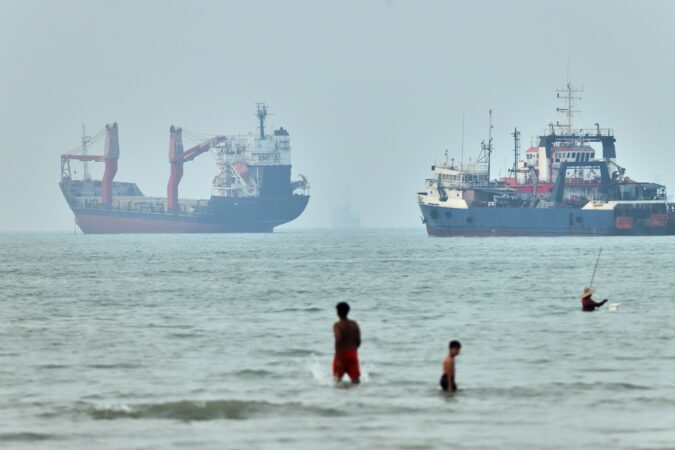
    U.S. and Iranian negotiators were in Qatar on Tuesday as both sides were set to hold talks with mediators, after a surge of attacks in recent days over the Strait of Hormuz threatened to derail efforts to agree on a lasting peace deal.

    Steve Witkoff and Jared Kushner, two of President Donald Trump’s closest advisers, were to meet with the prime minister of the Persian Gulf state, Sheikh Mohammed bin Abdulrahman Al Thani, a U.S. official said. The official added that the U.S. and Iranian delegations would hold separate talks with Qatari and Pakistani mediators today.

    Iran and Qatar said no direct, high-level meetings between the U.S. and Iranian officials were planned and that the discussions would instead be conducted via Qatari intermediaries. The negotiations would focus on implementing the preliminary ceasefire deal reached two weeks ago, the spokespeople for both countries’ foreign ministries said separately.

    The absence of face-to-face talks underscores the depth of the distrust between the United States and Iran, after negotiators met in Switzerland in June. The meetings follow a dayslong flare-up of hostilities over the strait, a key transit route for oil and gas shipments that Iran effectively blockaded during the war.

    The preliminary ceasefire largely deferred discussion of the toughest topics, including Iran’s nuclear program and U.S. sanctions on Iran, and allotted 60 days for the countries to reach a comprehensive, long-term deal. But the two sides have been unable to agree even on the meaning of the ceasefire agreement.

    U.S. officials also hoped that the pact would lead to the full reopening of the strait to its prewar status, when ships transited for free. Iran, however, has insisted that the agreement gives it substantial authority over the waterway and has threatened ships that do not travel on Iranian-mandated routes.

    Iran and Oman, a U.S. ally, are advancing a plan to collect payments for ships moving through the strait, despite U.S. objections, according to an Iranian official and four diplomats with knowledge of the matter.

    The latest round of hostilities began Thursday when the U.S. military said Iran had attacked a cargo ship hours after Iran warned that vessels could only travel through its waters in the strait. The ship was transiting through an alternative route near the Omani coast.

    U.S. officials also blamed Iran for another attack Saturday. The U.S. retaliated by striking what it said were Iranian military sites, and Iran responded by carrying out drone and missile strikes against U.S. targets in Bahrain and a Kuwait.

    The clashes ended Sunday, but neither side has publicly acceded to the other’s demands on the strait.

  • Judge orders Trump to end efforts to kill Hudson Tunnel funding

    Judge orders Trump to end efforts to kill Hudson Tunnel funding

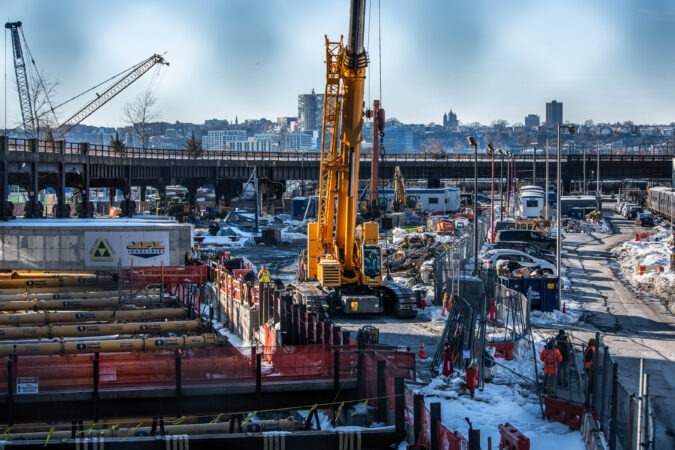
    A federal judge on Monday ordered the Trump administration to permanently abandon its efforts to suspend funding for a $16 billion rail tunnel under the Hudson River, describing those attempts as “flagrantly” illegal.

    Judge Jeannette A. Vargas of the Southern District of New York said that the administration violated federal guidelines when it stopped reimbursing the tunnel’s builders for their expenses in September. The suspension forced a shutdown of the construction project and led to a brief layoff of about 1,000 workers in New York City and New Jersey in February.

    Federal officials said that the payments were stopped while the project’s hiring practices were reviewed. But Vargas noted that President Donald Trump had indicated in interviews that there were political reasons for stopping the tunnel project, which was a favorite of Sen. Chuck Schumer, the Democratic minority leader from New York.

    “We’re cutting a $20 billion project that Schumer fought for 15 years to get, and I’m cutting the project,” the judge quoted Trump as saying in October. “The project is gonna be dead. It’s just pretty much dead right now.”

    The project, known as Gateway, would supplement two 116-year-old single-track tunnels under the Hudson between Manhattan and New Jersey. Schumer had called it the most critical infrastructure project in the United States.

    The project ran out of money about five months after the federal government stopped making payments. The states of New York and New Jersey jointly sued the Trump administration in federal court in Manhattan, seeking an emergency order to end the suspension.

    On Feb. 6, the day that work on the tunnel stopped, Vargas granted a temporary restraining order. The Trump administration opposed that order and continued to press its case but never disputed that the suspension “flagrantly violates federal law,” the judge said.

    In declaring the suspension of funding illegal, Vargas also said that the federal government could not attempt to suspend payment of the federal grants again.

    Catherine Rinaldi, executive vice president of the Gateway Development Commission, which oversees the project, said that before federal funding was frozen, the tunnel project “was on schedule and on budget, and we have made significant progress since federal funding for the project resumed in February.”

    In response to the judge’s decision, Gov. Kathy Hochul of New York and Gov. Mikie Sherrill of New Jersey, both Democrats, released a joint statement with Letitia James, the attorney general of New York, and Jennifer Davenport, the attorney general of New Jersey.

    “We are grateful that a federal court has once again agreed that the Trump administration’s decision to freeze billions of dollars in grants for the Gateway Tunnel Project is flagrantly unlawful,” their statement said. “This victory sends a clear message: The Trump administration’s attempt to halt Gateway funding will not stand.”

    The federal Department of Transportation said that it remained “committed to ensuring hard-working taxpayer dollars are being spent responsibly and do not fund unconstitutional, discriminatory contracting practices.”

    The decision Monday did not complete litigation over the suspension. The development commission is still suing the Transportation Department for monetary damages resulting from the forced shutdown of the project.

    This article originally appeared in the New York Times.
  • Why the true death toll of Venezuela’s quakes is so hard to know

    Why the true death toll of Venezuela’s quakes is so hard to know

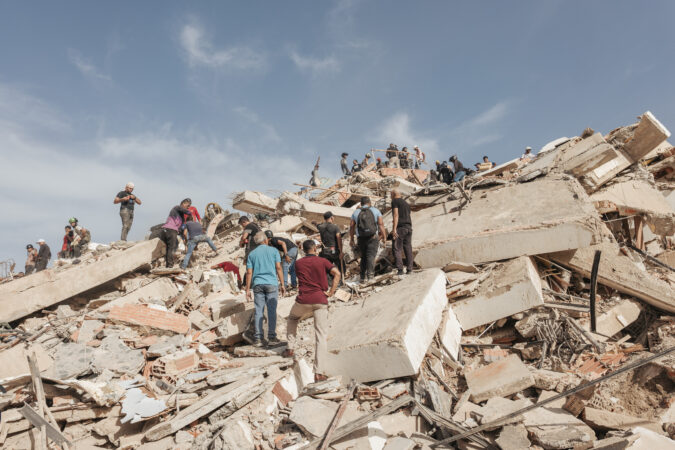
    It has been six days since devastating twin earthquakes flattened entire residential neighborhoods in Venezuela, and dozens of newly found bodies are still being hauled out of the rubble.

    On Monday, rescuers piled up coffins inside an improvised morgue at the sun-scorched port in the town of La Guaira, one of the hardest-hit areas. Small trucks arrived with more bodies, leaving them arranged in a long row by a concrete dock.

    “Every day the number of victims keeps going up,” said Jennifer Moreno Canizales, a spokesperson for the United Nations Office for the Coordination of Humanitarian Affairs in Caracas. “And we expect it to keep rising.”

    The official death toll after Venezuela’s earthquakes rose Monday to 1,719 people, an increase of nearly 300 since Sunday. It is based on the number of bodies recovered during the search operations, Moreno Canizales said.

    But sobering as it is, that figure could be a substantial undercount. Many more Venezuelans remain missing, with chances of finding them alive shrinking every day.

    The uncertainty of the number is not just a matter for the journalistic or historic record. For many Venezuelans, it signifies their anguished limbo as they search for friends with bleeding hands, trapped between uncertainty and a desperate refusal to accept the worst.

    There is no official or reliable toll for the missing. And with so much debris from tall residential buildings pressed tightly together, and a shortage of heavy machinery to remove the rubble, estimates of how many people might still be trapped inside vary widely.

    Two forensic doctors at the main morgue in the capital, Caracas, estimated a death toll of about 4,000, basing that on the number of bodies that had been arriving at a morgue in La Guaira every day.

    In anticipation of the toll increasing, the United Nations has been procuring 10,000 body bags in coordination with Venezuela’s government, said Gianluca Rampolla del Tindaro, the organization’s resident coordinator for Venezuela. “That is the applying assumption; it’s very sad,” he said.

    According to an unofficial website where Venezuelans can report the missing, more than 46,000 people were still unaccounted for. The New York Times could not independently verify the figure, which can include people who survived but became separated from relatives.

    To veteran rescue workers, the high number of reported missing may be ominous.

    “Contact is difficult, but not that difficult that you wouldn’t have gotten in contact,” said Linda Hornisberger, the president of REDOG, a nonprofit Swiss search-and-rescue association that has deployed eight dogs and 88 emergency responders to Venezuela since Friday. “We must assume most to be dead.”

    Hornisberger said that despite working eight- to 12-hour shifts for days, “we have not been able to rescue anybody.”

    Disaster response experts say that it often takes several weeks for a full picture to emerge after disasters of this magnitude.

    When Hurricane Maria hit Puerto Rico in 2017, the official government death toll was 64 people. Nearly a year later, they updated it to 2,975, nearly 50 times as high. After the Indian Ocean tsunami of 2004, when entire coastal villages were completely erased, it took the authorities more than a year to settle on the final estimate of 230,000 victims.

    Several signs out of Venezuela indicate that there might also be a delay before a final death toll is reached.

    The area of the quakes

    The day the earthquake struck was a holiday in Venezuela, when it was more likely that families would have been home, or had traveled to the seaside area of La Guaira. Many buildings there were built during an economic boom in the 1970s and 1980s, when developers erected tall towers, many 10 stories or more. A mountain range limited building space, which led developers to choose to build vertically, said Josué Araque, a Venezuelan geographer.

    Now, many of those buildings have been pancaked into a dense tangle of debris.

    “They are mountains of rubble from buildings of many, many levels, made of concrete, which basically turns them into tombs,” Araque said. It is difficult to search the lowest floors of the buildings, he said, “because there are 10 floors that fell on top of them.”

    Araque said he believed that there were probably many more missing people whom “they probably will not be able to recover.”

    There is 1.2 million tons of debris in the hardest-hit areas of La Guaira, the U.N. Development Program said Monday.

    Moreno Canizales, from the U.N., said 700 buildings had collapsed. Despite the rescue teams’ best efforts, she said, “it is hard to reach them all in time” to rescue those who might still be trapped alive.

    Del Tindaro, the U.N. humanitarian coordinator in Venezuela, also said in an interview that the high number of collapsed buildings indicated that the official toll was an undercount.

    Ilan Kelman, a professor of disasters and health at University College London, said a full accounting of the number of deaths might never be known. But a preliminary projection that the final toll could exceed 10,000 — shared by the U.S. Geological Survey based on factors including the magnitude of the earthquake, the population density, and local infrastructure — remains grimly feasible, he said.

    A difficult search

    The work of recovering bodies is painstakingly slow, and it’s not a priority for most response teams that are trying to save those who may be still alive. On Sunday, 49 rescue teams coordinated by the U.N. rescued seven survivors, Moreno Canizales said. Sometimes, she said, the teams are responding to families telling them that they can hear a relative crying from the rubble.

    When the disaster response shifts, more bodies are likely to be found, experts said.

    “The focus of the search-and-rescue teams is to look for those who might be alive” based on reports of sound and motion, said Phil Gelman, a Latin America coordinator with GOAL, an international humanitarian response agency. “When the search-and-rescue phase is ended, and heavy machinery is moved in to move rubble, the casualty count will rise.”

    Even in well-organized response efforts, many survivors end up being rescued by untrained friends, family, and neighbors, said Emily So, a professor of architectural engineering at the University of Cambridge.

    One Caracas resident, Rosmaria Herrera, 30, said she had lost at least three relatives. Family members and other civilians pulled the bodies of her father, her cousin, and her grandmother out of the rubble. But they couldn’t find her uncle.

    “It’s strange, because there is practically nothing left of the building,” she said.

    Witnesses and aid workers described a shortage of heavy machinery as one of the biggest obstacles to rescue efforts, saying volunteers often lacked the equipment needed to move concrete slabs and reach survivors trapped beneath collapsed buildings.

    In videos widely shared on social media, residents pleaded for excavators and other heavy equipment. In one, a man says neighbors pooled their own money to hire machinery after waiting days for government assistance to arrive.

    “If we keep waiting for our wonderful authorities, another week will go by with our relatives still buried there,” he says. “We had to start doing this ourselves.”

    Some victims will likely die from their injuries, in part because of Venezuela’s already overstretched health system, Kelman said.

    So said the final toll would likely be determined by the number of people reported missing, the extent of visible damage to buildings, and impeded access to the worst hit areas, which has stymied some responses.

    “Tragically, until they recover the bodies from underneath the rubble,” So said. “The count will be low.”

    This article originally appeared in the New York Times.
  • Supreme Court lifts spending limits on political parties and candidates

    Supreme Court lifts spending limits on political parties and candidates

    WASHINGTON — The Supreme Court lifted limits Tuesday on how much political parties can spend on advertising and other expenses in coordination with candidates.

    The 6-3 decision, divided along ideological lines, is a major victory for Republicans and could undercut one of the Democrats’ financial advantages going into the midterms.

    The question before the justices was whether current federal limits on such spending — called coordinated party expenditures — violate the First Amendment. During oral arguments, Noel J. Francisco, a lawyer for the National Republican Senatorial Committee, which brought the legal challenge, told the justices that such limits were “at war” with previous decisions by the court that have found that restricting how money can be spent in politics amounts to limiting speech.

    The Republican groups had argued that such spending is necessary to allow political parties to spread their message.

    The Trump administration had supported the Republican groups, asserting in court filings that the federal law “abridges the freedom of speech” under the court’s “recent First Amendment and campaign finance precedents.”

    The coordinated spending case is the latest in a series of efforts to chip away at campaign finance regulations that were enacted after Watergate to lessen the influence of money in elections. In 2010, the Supreme Court struck down limits on independent spending by corporations and unions in Citizens United v. Federal Election Commission. That decision cleared the way for a flood of new money to enter politics and set the stage for further challenges to spending limits.

    The coordinated spending case had been closely watched as the midterm elections approached.

    Experts said the decision would immediately cut into one of the Democratic Party’s critical financial advantages in television advertising. That’s because federal law requires that television broadcasters give political candidates low advertising rates, but extends no such requirement to super political action committees, which are often charged double, triple, and even four times as much for the same television time.

    Republicans in recent election cycles have been more reliant on super PACs and national party committees than Democrats, whose candidates have tended to outraise Republicans and who therefore often have been able to take advantage of the lower television ad rates.

    Allowing unlimited coordinated spending between candidates and parties would essentially permit both to take advantage of the lower rates.

    The case began in 2022, when JD Vance, then a candidate for the Senate in Ohio, sued to challenge the campaign coordination limits. He was joined by several Republican groups. The Biden administration defended the limits, and a panel of federal judges agreed they were legal.

    After President Donald Trump returned to office, the federal government flipped sides in the case and backed the Republicans challenging the spending caps.

    With the government no longer defending the spending limits, the justices appointed veteran Supreme Court litigator Roman Martinez to argue on their behalf. He argued the justices should dismiss the case as moot because Vance is no longer running for office.

    Democratic groups intervened in the case, urging the court to uphold the spending limits. They warned that overturning the law would create a system in which political parties would pay candidates’ expenses for everything from flower arrangements to electric bills.

    This article originally appeared in the New York Times.
  • Whatever you do in Russia, don’t talk about the war

    Whatever you do in Russia, don’t talk about the war

    The war in Ukraine is a “Special Military Operation,” even though it’s the biggest conflict in Europe since World War II.

    Across Russia, officials blame fuel shortages on “unscheduled maintenance at refineries” without noting a cause, as Ukrainian drones attack fuel refining facilities in the country.

    And Russia’s central bank governor has talked of the “structural transformation of the economy,” as code for military spending that has spiraled and reoriented the economy around the military-industrial complex.

    For years, President Vladimir Putin has insulated Russian society from the consequences of his war in Ukraine, using euphemisms as a psychological shield. But as the war increasingly comes home, the mismatch between rhetoric and reality is becoming a source of frustration for ordinary Russians.

    For days, Putin didn’t mention the June 18 long-range strikes on Moscow, when Ukraine attacked with nearly 200 drones. He didn’t comment as Ukrainians promised to turn Crimea, the peninsula Russia illegally annexed in 2014, into an island by pounding it with drones and missiles.

    When he appeared June 23 for the first time since the June 18 strikes, which were the largest in the war, he used the moment to blame the West.

    “These drones, strikes on civilian infrastructure — what are they for? To destabilize society, to create uncertainty about the actions of the Russian armed forces,” Putin said. At that time, he did not address the fuel shortages in at least 56 regions, according to Mediazona, an independent Russian news outlet.

    On Sunday, Putin did acknowledge fuel shortages. At a meeting of top executives and officials, he said that “systemic measures that match the scale of current challenges” must be put in place, adding that a task force was working around the clock to ensure supplies, especially for agriculture.

    But Putin has not publicly delegated officials to prepare shelters or early warning systems in case of future strikes.

    In the Moscow suburbs of Kotelniki and Lyubertsy, both of which came under drone attack in mid-June, authorities said they would not disclose the locations of bomb shelters or use sirens because the country was not technically on a war footing. They would make this information public only in case of a “period of mobilization and in wartime.”

    Lyubertsy’s administrator suggested that people consult a PDF that appeared on a government website with practical instructions on what to do in case of a drone attack.

    The head of the Republic of Bashkortostan, a region with 4 million people between the Volga River and the Ural Mountains where Ukraine has attacked refineries, said his administration had decided to not always activate sirens to not stress people out, mentioning a rise in antidepressant use in Russia.

    Downplaying danger and resorting to euphemisms to discuss drone attacks and economic pain is a “performance of obedience” to Putin and his regime, said Aleksandra Arkhipova, a teaching and research fellow in social sciences at the École Normale Supérieure in Paris.

    She has compiled a list of new war-related terms and euphemisms such as “clap” instead of “explosion,” “deprived of life” instead of “killed,” and “air target” instead of “drone.”

    “Russian political authorities right now are all about pictures in the news,” Arkhipova said. They do not want “to create a huge panic which can be shown by local TV and then on the federal news with a lot of crowds crying and running through the streets.”

    On the news, the recent attacks on Moscow barely figured, in keeping with the state’s stance. Channel One, the Kremlin’s primary cultural and political megaphone, ran a short segment the morning of the June 18 attacks and then stayed quiet until Putin commented several days later. During the evening news broadcasts on June 18 on Channel One as well as on Rossiya 1, or NTV, “not a single word” about the attacks was uttered, according to Telegram channel Agentstvo News.

    Officials and state outlets use confusing and sometimes misleading linguistic formulations to describe certain war-related events, Arkhipova said. In the early days of the war, stores that closed as a result of Western sanctions bore signs for months and in some cases years saying they were “closed for technical reasons.”

    Russia’s Federal Air Transport Agency recently announced a “schedule adjustment” at the Krasnodar airport, which is about 150 miles from the front line and in the path of Ukrainian drones. At Sochi airport, authorities don’t write that flights are delayed by incoming drones but instead that the airport is operating according to the “actual schedule” — a confusing term that is meant to distinguish between the two columns on the planned departures and arrivals, “scheduled time” and “actual time.”

    When Moscow’s airports are temporarily closed because of Ukrainian drone attacks, the term used refers to accepting flights “by agreement.” Travelers are told that their flight is delayed because of delays to the incoming flight, rather than because the city is under drone attack.

    Arkhipova calls this linguistic technique “neutralization.” It is about intentional ambiguity, she said, explaining, “People can understand that something is happening, but what exactly is happening is not that clear.”

  • Heat dome could bring triple-digit temperatures to the Midwest and Eastern U.S.

    Heat dome could bring triple-digit temperatures to the Midwest and Eastern U.S.

    A dangerous and prolonged heat wave is expected to build across central and eastern parts of the United States this week, with forecasters warning that temperatures could soar into the triple digits and reach record-breaking levels in some areas into the Fourth of July holiday weekend.

    From the Midwest to the East Coast, temperatures are forecast to reach the 90s to low 100s, said Marc Chenard, a meteorologist at the Weather Prediction Center.

    Parts of the East, particularly across the mid-Atlantic and the Northeast, could see temperatures climb above 100 degrees.

    “Washington, D.C., will almost certainly exceed 100 on at least one or two days,” Chenard said. “And Philadelphia and New York City are also currently forecast to go over 100.”

    He said daily records could be broken on Thursday and Friday in Washington, New York City, and Philadelphia.

    Philadelphia could tie its record high of 104 degrees for the month of June.

    The heat wave was expected to begin to take hold starting on Sunday across portions of the Plains, where temperatures were expected to rise into the 90s. The heat was expected to reach into the Great Lakes region, including Chicago, and toward the Gulf Coast on Tuesday.

    By Wednesday, much of the East Coast is expected to be experiencing the extreme heat.

    The high temperatures will be accompanied by high humidity, making conditions feel even more oppressive.

    The National Weather Service said that heat index values — a measure of what the temperature feels like to the human body, when humidity is considered with the air temperature — could reach 110 degrees, and locally up to 115.

    Little relief is expected during the nights, with temperatures remaining unusually high after sunset.

    Chenard said minimum temperatures were forecast to stay in the 70s, while some cities in the East could remain even warmer, particularly during the middle of the week, which could lead to numerous record-high low temperatures.

    “Areas like New York City, Philadelphia, and Washington, D.C., could have a low for one or two nights that doesn’t get below 80,” he said. “Chicago could be close to 80 on Tuesday or Wednesday morning, too.”

    The hot and humid conditions are expected to last through much of the Fourth of July weekend.

    Chenard said the longevity of the heat was being driven by a “pretty persistent” sprawling area of high pressure, often referred to as a heat dome.

    Toward the end of the holiday weekend, the heat dome was expected to shift west, back toward the Plains, allowing for cooler conditions in the East but also for the chance of thunderstorms.

    This article originally appeared in the New York Times.

  • How the Reflecting Pool turned green: Missing ‘bubblers’ and a rush job

    How the Reflecting Pool turned green: Missing ‘bubblers’ and a rush job

    WASHINGTON — The nanobubblers had to go.

    It was early June, and the Trump administration was planning an event at the Lincoln Memorial on June 12 to promote President Donald Trump’s Ultimate Fighting Championship birthday celebration at the White House.

    Dotted around the perimeter of the memorial’s Reflecting Pool were the nanobubblers, the temporary water-purification machines meant to keep the pool clear of algae. Encased in black fencing and powered by large generators, the machines were something of an eyesore.

    Before the event, the National Park Service asked Greenwater Services, which won a $1.7 million no-bid contract to install the nanobubblers, to remove them, according to two people briefed on the decision. The people asked for anonymity because they feared retaliation from the administration. The Park Service did not provide a reason for the removal, but it coincided exactly with the promotional event, which drew crowds to the Reflecting Pool.

    Photos from that evening showed the pool without the hoses or enormous machines working to keep the water clean. The water looked dark blue.

    But by the time the purification systems were reinstalled 36 hours later, enormous algae blooms were starting to spread unchecked, turning the water green.

    Once the algae started growing, it proved difficult to eliminate. Even with the nanobubblers back online, Park Service workers tried dumping jugs of hydrogen peroxide into the water to clear the algae more quickly. But the peroxide largely dissolved before it could reach the large clumps in the middle of the basin.

    The result was a reflecting pool that stayed green and murky for about a week while nanobubblers cleared out the pea-colored residual chlorophyll — a highly visible symbol of one of Trump’s pet projects gone very wrong.

    The decision to remove the water-treatment systems, which has not previously been reported, was one of several missteps that have plagued Trump’s $16.4 million renovation of the reflecting pool. There have been no-bid contracts, peeling strips of waterproof coating in Trump’s handpicked shade of “American flag blue,” and even a dead duck floating in the water (though it is not clear if the renovation had anything to do with the duck’s demise).

    In recent days, the water has become clear again, reflecting the sky and the surrounding monuments. The temporary nanobubblers have been replaced with more discreet, permanent purification systems.

    Still, the Park Service plans to drain the pool again soon to fix the peeling coating.

    Taylor Rogers, a White House spokesperson, did not answer specific questions, but said in an email that “thanks to President Trump, the Lincoln Memorial Reflecting Pool is fixed, crystal clear and currently reflecting beautifully ahead of America’s 250th birthday celebration.”

    Trump has blamed vandals for the deteriorating conditions of the reflecting pool, saying they dumped fertilizer to feed the algae and slashed its blue coating with a “sharp knife or razors.” The administration has asserted in court that there were cuts made to the caulk and “surface material” of the pool.

    Interviews with people involved in the project and a New York Times analysis — including a review of images taken by news photographers — suggest that actions taken by the Trump administration and the companies involved caused disruptions at every turn.

    A construction spree

    Trump has embarked on a construction spree in Washington unlike any undertaken by a modern president. He has rolled out jobs quickly, bypassing traditional contracting requirements and review panels. And costs have mounted as Trump’s vision for his most prized projects has doubled or tripled in size.

    But it is the renovation of the Reflecting Pool that perhaps best serves as an emblem of how Trump operates. Instead of seeking competitive bids for the project, the administration awarded no-bid contracts, hoping to expedite the process. Trump never submitted the project to a review board so that experts could weigh in.

    A crucial decision came in early April, when the administration awarded a no-bid contract to a Virginia-based company called Atlantic Industrial Coatings to spread the waterproofing blue coating on the pool’s concrete slabs. That coating, known as Rhino Pipeliner 5000, may be peeling off because it is not stretchy or flexible enough, said Anthony Flett, the CEO of U.S. Coating Specialists, a Florida-based company that specializes in waterproofing substances.

    “They used a hybrid polyurea, and they really should have picked a pure poly,” Flett said, adding, “There’s people in the pool industry whose whole life is polyurea, and they should have been called in.”

    Tim Auerhahn, the chairperson of the Aquatic Council LLC, a consulting firm for the pool and hot-tub industry, said in an email that Rhino Pipeliner 5000 is usually used to line the inside of pipes.

    “The manufacturer’s technical literature indicates it may be suitable for certain waterproofing and protective coating applications beyond pipe rehabilitation,” he said, “but it does not specifically identify large ornamental water features, swimming pools, or granite-lined basins like the Reflecting Pool as primary use cases.”

    Rhino Pipeliner 5000 is made by a California-based company called Rhino Linings. Pierre Gagnon, the company’s CEO, said in an email that the peeling “is limited to isolated areas of the finish layer and does not affect the underlying waterproofing membrane.”

    Representatives for Atlantic Industrial Coatings did not immediately respond to a request for comment.

    As for the nanobubblers, problems with the generators caused issues with one or two of the four purification systems on June 15, according to government documents reviewed by the Times. But since then, the technology appears to have been working as intended, infusing the water with tiny bubbles of ozone gas to kill algae and bacteria.

    Chas Antinone, the president of Greenwater Services, said in an interview Friday that “we want people to understand that this is a cool technology. It’s clean and green. The only byproduct of this whole technology is oxygen.”

    The ultimate owner of Greenwater Services is an investment trust led by John J. Cafaro, a donor to Trump and a neighbor to Mar-a-Lago, the president’s private club in Florida, the Times previously reported.

    Antinone declined to comment on Cafaro’s role or the removal of the nanobubblers before the UFC event. “I’m not the political guy,” he said. “I’m the science guy.”

    Katie Martin, a spokesperson for the Interior Department, the parent agency of the Park Service, said in an email that the nanobubbler technology “actively kills algae, pathogens (e.g., E. coli), and contaminants that have long plagued the reflecting pool since 1922.”

    She added: “The current state of the crystal clear blue water is proof.”

    This article originally appeared in the New York Times.