Category: New York Times

  • Iran makes moves to assert control over the Strait of Hormuz

    Iran makes moves to assert control over the Strait of Hormuz

    Iran is taking steps to cement its control over the Strait of Hormuz and to generate revenue from the waterway through new entities and procedures, experts say. The moves come even as negotiations with the United States and Iran’s neighbors over managing the vital waterway are taking place.

    The head of Iran’s primary insurance regulator, Mousa Rezaei, said Sunday that a new insurance company had been established that was dedicated solely to the Strait of Hormuz, Iranian state media reported. And late last week, the Persian Gulf Strait Authority, which was created by Iran in May, demanded that vessels register and sign up for a new mandatory Iranian insurance policy — free of charge for now.

    Shipping experts see these steps as an attempt to assert Iranian control over the whole waterway, which it shares with Oman. They appear to be a prelude to Iran’s demanding payments from vessels that once transited without fees or need of its assent, the experts say.

    The Iranian requirements could set a dangerous precedent for global shipping, experts say, and they are already making a confusing situation in the strait much more so.

    “We are in uncharted territory,” said Richard Meade, editor-in-chief of Lloyd’s List, a shipping news service, in an interview Monday.

    The Persian Gulf Strait Authority did not respond to a request for comment.

    The insurance demands emerged after the United States and Iran signed a memorandum of understanding to end the war and to reopen the Strait of Hormuz last week. That agreement left discussion of difficult issues — including management of the strait — to further talks. And Oman, Iran, and other Gulf nations “will figure out a proper security framework for the straits in the future,” Vice President JD Vance said last week.

    But the Iranian demands try to legitimize the authority of the new entity as those broader negotiations are underway, said Salvatore Mercogliano, a maritime historian and former merchant marine who hosts the YouTube show What’s Going On With Shipping?

    The free insurance period passes after 60 days, which is the length of the initial ceasefire agreement between Iran and Washington and the period that the initial deal guarantees free passage. After that, Iran could then demand vessels pay for insurance through its new dedicated strait insurance company, Mercogliano said, collecting payment for risks that did not exist until Iran began attacking ships.

    The new insurance Iran is offering protects against things like risk of attack and the detention of mariners, issues that experts say Iran created after the United States and Israel attacked the country in February and it retaliated by striking commercial vessels.

    Iran weaponized the waterway by making it too dangerous for businesses, experts say.

    Mercogliano said in an interview that the new administrative procedures took this Iranian weaponization a step further. He compared the insurance requirement to the mafia’s demanding protection money or someone trying to sell flood insurance “while they control the gates above the dam.”

    The new Iranian insurance also raises legal questions. Under international law, a toll for mere passage through the strait would be illegal, though charging fees for services — tugging or waste disposal, for example — could be legal.

    Since March, Iran has floated the notion that it will charge ships in the strait, characterizing the payments as services without specifying what it would offer and raising international alarm. Last month, it was in talks with Oman about the proposition.

    But simply calling something a “service” is not enough to transform an illegal toll into a legitimate request for payment for services, maritime lawyers say.

    The Persian Gulf Strait Authority’s insurance demand “effectively sidesteps” the agreement between the United States and Iran and paves the way for Iran to demand fees in the future, Meade said.

    “This is effectively a toll by another name,” he said.

    A spokesperson for the International Maritime Organization told the New York Times that the insurance requirement published by the authority “has not been officially submitted to IMO and is not part of any official process or record.”

    The spokesperson said the right of ships to transit through the passage “cannot be suspended or hampered by coastal states” and that there was “no established basis in international law” that allowed mandatory tolls or fees. She did not, however, rule out “cooperation mechanisms to assist in managing a strait” between states.

    The new insurance requirement also raises practical questions for shippers and vessels. By having to pay to mitigate risks from Iran, businesses could find themselves in trouble with the United States.

    The Treasury Department imposed sanctions on the Persian Gulf Strait Authority in late May. The United States called the entity a new attempt by Iran “to monetize its campaign of state-sponsored terror by extorting vessels,” and Treasury officials warned against paying the authority, saying that those who did do so could be subject to sanctions.

    Iran is also under a number of different sanctions from the United States, Britain, the European Union, and the United Nations. While lifting the sanctions has been discussed as part of a broader deal related to Iran’s fulfilling commitments to end its nuclear program, at this stage, registering for Iranian war-risk insurance is itself a potential risk.

    In light of the confusion about navigating the strait, shippers are in “purgatory,” stuck between a past that cannot be revived and a future that remains unclear, Meade said.

    This article originally appeared in the New York Times.
  • Israel holds to Lebanon truce, with troops kept on defense

    Israel holds to Lebanon truce, with troops kept on defense

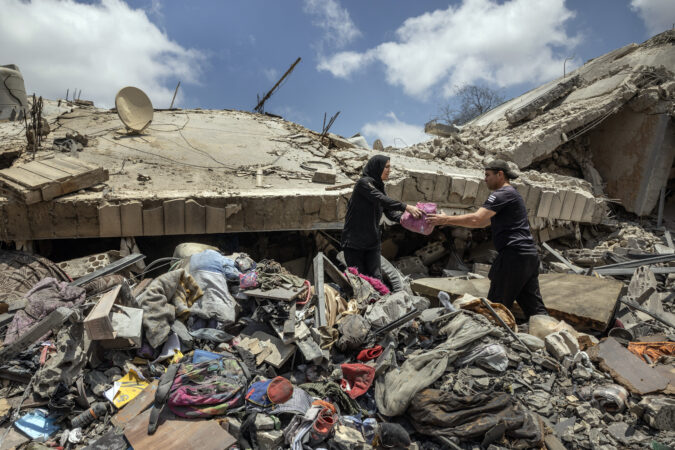
    JERUSALEM — Israel and Hezbollah appeared to maintain a tense ceasefire in Lebanon for a second day on Monday, as mediators in the U.S.-Iran talks announced a mechanism aimed at ensuring the truce holds, and Israeli troops operated under new orders designed to lower the risk of flare-ups.

    Israel’s top diplomat, however, warned that the country would not withdraw its forces from the self-declared “security zone” it has established in Lebanon up to about 6 miles north of the border.

    “Israel will respect the ceasefire in Lebanon as long as it won’t be breached by Hezbollah,” Foreign Minister Gideon Saar wrote in a social media post on Monday. “We don’t have territorial ambitions in Lebanon, but we will not withdraw from the security zone and expose our citizens to Hezbollah’s attacks and possible invasion.”

    Saar’s post came hours after Pakistan and Qatar, the mediators in the U.S.-Iran talks, announced an agreement to create a “deconfliction cell” to ensure the “adherence of the termination of military operations in Lebanon.” It would include representatives from Iran, the United States, and Lebanon.

    The quiet on the Lebanon front was still settling in after a furious round of hostilities on Friday and Saturday that began when four Israeli soldiers, including a battalion commander, were killed when their tank exploded.

    A fifth soldier was killed in the same area Saturday, setting off waves of Israeli retaliatory strikes. The military said Hezbollah, the Iran-backed Lebanese militant group, had launched more than 50 rockets targeting its soldiers operating in southern Lebanon.

    The fighting centered around the area of Kfar Tebnit and nearby Ali Taher, a strategic ridgeline overlooking the large city of Nabatiyeh in southern Lebanon. The Israeli military recently issued an updated map of its security zone that placed Kfar Tebnit and Ali Taher just within the area under Israeli control.

    That appeared to be more than coincidental.

    The Israeli military said that Ali Taher was the location of a fortified underground Hezbollah stronghold that has long served as the militia’s southern headquarters from which it directed fire against Israeli forces and communities in northern Israel.

    Should the militants inside try to leave that stronghold without surrendering, it could pose a threat to the Israel-Hezbollah ceasefire.

    Ceasefires in Lebanon have been declared, broken, and reinstated numerous times in recent weeks, but the fighting has persisted amid disagreements over what constitutes defensive actions by Israeli forces.

    An Israeli military statement Monday said that it had gained control of the area of the Hezbollah compound and encircled it, adding that “dozens of Hezbollah operatives are currently trapped with no ability to exit.”

    Hezbollah said Saturday that it had attacked Israeli forces advancing toward Ali Taher.

    Later on Saturday, the Israeli military said it had received “updated directives” from the country’s political leaders and would no longer be “conducting proactive strikes” in Lebanon. The military reserved the right to respond if Hezbollah did not abide by the ceasefire and targeted Israeli troops or civilians.

    Israeli Prime Minister Benjamin Netanyahu insisted in a video statement Monday that his directive to the military, and that of the defense minister, remained clear and unchanged: “Our fighters in southern Lebanon have full operational freedom to thwart any direct or emergent threat against them or residents of the north.”

    He did not address whether the military had been ordered to refrain from offensive action, and a spokesperson would not elaborate.

    Israeli commanders received new orders Saturday restricting them to defensive actions in Lebanon, stating that troops may only fire to counter an immediate threat unless authorized by the military’s chief of staff.

    The new orders specifically bar Israeli soldiers from firing warning shots at civilians attempting to return to southern Lebanon unless they get too close to the soldiers, according to two Israeli officials who insisted on anonymity because they were not authorized to speak publicly.

    The orders also bar Israeli soldiers from blowing up homes and other infrastructure inside the security zone without the approval of senior officers, the officials said.

    Spokespeople for the military did not respond to repeated requests for comment Monday.

    Sarit Zehavi, president of the Alma Research and Education Center, which focuses on Israel’s northern border, said she feared that the ban on offensive operations would put Israeli soldiers in the position of having to be responsive rather than proactive.

    “On the ground, it takes time till you understand what’s a threat,” she said. “This will eventually cost the lives of soldiers.”

    This article originally appeared in the New York Times.

  • First round of U.S.-Iran talks ends with high hopes and big challenges

    First round of U.S.-Iran talks ends with high hopes and big challenges

    ZURICH — The morning after the first overnight session of renewed talks between the United States and Iran, aimed at turning an incomplete truce into a lasting peace deal, the vibes were as warm as the heat wave currently washing over Switzerland.

    Mediators from Pakistan and Qatar said early Monday that Vice President JD Vance and his Iranian counterparts had made “encouraging progress” toward the goal of cementing a final peace agreement within 60 days. Swiss officials called the outcome “constructive.”

    “Yesterday was a very, very good day,” Vance told reporters Monday afternoon. “We made a lot of good progress. We did exactly what we wanted to do.”

    He added that Iran had promised to readmit nuclear inspectors from the International Atomic Energy Agency, a U.N. watchdog, though Iran did not immediately confirm that.

    But other details that emerged from the luxury Bürgenstock Resort Lake Lucerne suggested that the discussions over the next two months could still prove difficult and that efforts to reach a deal could proceed in fits and starts.

    Iran’s delegation, headed by the speaker of parliament, Mohammad Bagher Qalibaf, walked away from the table Sunday to protest a social media post from President Donald Trump that threatened to resume U.S. attacks on Iran if a deal did not come together. They eventually returned.

    Perhaps more important were the still-unresolved topics that appear to have dominated much of the conversation.

    The 60-day window, which was established by the initial memorandum of understanding that Trump and Iran’s president signed last week, was meant to be a period for Iran and the United States to solve crucial issues left out of that first-step deal. Most notably, that includes Iran’s nuclear ambitions. The memorandum says that Iran will dilute its existing stockpile of near-weapons-grade nuclear material but does not clarify how that will happen or whether the country will be barred from producing such material in the future.

    Those issues were not center stage, aside from Vance’s mention of the IAEA inspectors, whose return would still be far from a solution to the nuclear question.

    Instead, the first talks focused largely on two topics that were supposed to be settled: How to enforce a ceasefire between Israel and Hezbollah in Lebanon, and how to ensure shipping traffic, including oil tankers, flows freely again through the Strait of Hormuz.

    Israel launched the war on Iran alongside the United States in February and was not party to last week’s initial deal. Despite the deal’s call for a ceasefire, both Israel and Hezbollah have continued to carry out attacks on each other. Iran protested Israel’s attacks over the weekend by saying that it had closed the Strait of Hormuz — which has been clogged throughout the war, sending global oil prices skyward — though U.S. officials said that ships were still passing through.

    Mediators from Qatar and Pakistan, who joined Iranian and U.S. officials at Lake Lucerne, said Monday morning that discussions would continue through this week.

    Some analysts warned Monday against an overly optimistic takeaway.

    Financial markets had reacted to Trump’s initial agreement with Iran “with a classic show of irrational exuberance,” Carl B. Weinberg, the chief economist for High Frequency Economics, an American analysis firm, wrote in a research note Monday morning. “This week should bring a reality check,” he noted.

    Weinberg added that he believed Iran was likely to string out the talks for much longer than 60 days — all the way until January 2029, when the next U.S. president will take office.

    The stop-start nature of the negotiations has heightened the uncertainty.

    Vance had been scheduled to fly to Switzerland on Thursday night, but canceled the trip at the last minute after Iran pulled out in protest, diplomats said, at continuing Israeli attacks in Lebanon.

    Nothing in the statements from the mediators, or from Iranian officials, suggested that the negotiations were barreling toward the sort of quick capitulation that Trump has intimated would be the endgame for the talks. For example, Qalibaf wrote on social media that Iran’s “armed forces are prepared to respond” if Trump attacked Iran again — raising the possibility of more war.

    Still, the releases from the mediators and hosts conveyed, at the very least, a sense that the talks had succeeded in starting the gears of a more traditional diplomatic process.

    Qatar and Pakistan said that the discussions had led to “the creation of a mechanism for further technical talks.” Swiss authorities said that the parties had agreed to “a road map aimed at reaching a final agreement within 60 days.”

    “Our aim,” Swiss officials wrote, “is that our diplomacy contributes to de-escalation, stability and peace.”

    This article originally appeared in the New York Times.

  • Supreme Court restores conviction in 1979 murder of Etan Patz

    Supreme Court restores conviction in 1979 murder of Etan Patz

    NEW YORK — The Supreme Court on Monday reversed a lower court decision that had reopened the case of the man convicted in the killing of Etan Patz, a 6-year-old boy whose 1979 abduction in Manhattan reshaped American childhoods.

    The court’s unsigned opinion restores the conviction of the man, Pedro Hernandez, who the 2nd U.S. Circuit Court of Appeals had said last year was entitled to a new trial.

    The three liberal justices — Sonia Sotomayor, Elena Kagan and Ketanji Brown Jackson — noted their objection to the majority’s order.

    Hernandez was found guilty in 2017 of kidnapping and murdering Etan, but an appeals court overturned that judgment in July. Months later, the Manhattan district attorney’s office, which prosecuted Hernandez, asked the nation’s highest court to review the decision.

    On Monday, a defense lawyer for Hernandez, Harvey Fishbein, said the Supreme Court’s order meant his client would not get a new trial and that his team was “terribly disappointed.”

    “We firmly believe that an innocent man is in jail for a crime that he did not commit,” Fishbein said.

    In a statement, Manhattan District Attorney Alvin Bragg said the case had “changed a generation of New Yorkers.”

    “This office has remained steadfast in its pursuit of justice for Etan and the Patz family and will continue to stand by this important conviction,” he said.

    The Supreme Court’s action sends the matter back to the lower courts and is the latest development in a case that stumped investigators for decades. Hernandez, a handyman who lived in New Jersey, was arrested in 2012 and first put on trial in 2015. But after 18 days of deliberations, the trial ended in a hung jury. The case went back to trial and, in 2017, a Manhattan jury convicted Hernandez after nine days of deliberations.

    The reversal of Hernandez’s conviction last year reopened a case that had appeared finally settled. From the first days Etan went missing, when he was walking the two blocks from his home in the SoHo neighborhood to a school bus stop, the case generated intense public interest. Etan’s abrupt disappearance — and the killing of 6-year-old Adam Walsh two years later — ushered in an era of heightened caution among American parents.

    In its 10-page opinion Monday, the Supreme Court said the 2nd Circuit got it wrong and exceeded its authority.

    The lower court opinion “appears to reflect serious doubt about the reliability of Hernandez’s confessions,” the majority said, but the relevant statute does not permit federal courts to “disturb a state-court conviction based on such an evaluation of the evidence.”

    The liberal justices did not explain their disagreement. The ruling was issued as part of the court’s routine orders and without the justices holding oral arguments.

    For decades, investigators in Manhattan struggled to figure out what happened to Etan. His body was never found, and in 2001, he was declared legally dead.

    The critical break in the case came in 2012, when one of Hernandez’s relatives contacted investigators. New York police officers traveled to Hernandez’s home in Camden, N.J. After about seven hours of questioning, police said, Hernandez confessed — first before being read his rights, and twice more after.

    Hernandez was 18 at the time of Etan’s disappearance and worked at a bodega where investigators believed Etan had been killed.

    There was no scientific evidence linking Hernandez to the crime, and his confessions to investigators were quickly called into question.

    Hernandez’s lawyers argued that the statements were invented to placate the police. They asked the court to suppress them, saying they were a result of Hernandez’s low IQ and the product of psychotic delusions. The judge nonetheless said that they could be used as evidence.

    During jury deliberations at the second trial in 2017, the jury asked the judge whether they should disregard one of Hernandez’s later confessions if they found that his first one was not voluntary. The judge gave a one-word answer: No.

    A federal appeals court found that the judge should have explained a Supreme Court precedent about such serial confessions and ordered that Hernandez be released from his 25-years-to-life sentence or get a new trial.

    Prosecutors in Manhattan, led by Bragg, argued to the Supreme Court that Hernandez’s conviction should not have been overturned because it was not based on an “error in the decades-long investigation, in the admission of Hernandez’s confessions or in the evidence presented at trial.” The appeals court had said that the judge overseeing the trial, Maxwell Wiley, had violated federal law and therefore invalidated a jury’s verdict.

    In their response, Hernandez’s lawyers said that the judge’s instruction to the jury had touched on the central issue in the case.

    “Far from exhibiting the kind of clear error for which summary reversal is typically reserved,” his lawyers wrote, “the 2nd Circuit’s decision is correct.”

    This article originally appeared in the New York Times.

  • U.S. oil blockade means children in Cuba are missing school

    U.S. oil blockade means children in Cuba are missing school

    HAVANA — Axisa and Aron Alfonso, 6- and 7-year-old siblings in western Cuba, are luckier than most of their classmates: Their father takes them on their 1-mile commute to school on horseback.

    The children and teachers who live farther away rely on a spluttering, yellow Soviet-era school bus that no longer shows up. Teachers often do not make it to class, so the Alfonso family and their horse, Chocolate, turn around and go home.

    A U.S. oil blockade has set off an increasingly agonizing energy crisis that has brought transportation largely to a standstill. Fewer cars and buses are on the streets, and, as a result, fewer students and teachers are in school.

    “My children rarely go to school. They go, but the teachers don’t come,” said Sergio Alfonso Vásquez, 33, a farmer and the father of Axisa and Arona. “I’m afraid because they aren’t learning anything.”

    To save energy, the Cuban government in February cut school to half-days and resorted to COVID-era remote learning for college students.

    Then Cuba decided to end the school year two weeks early and scrapped college entrance exams for high school seniors after acknowledging that sleepless nights without electricity and a lack of school meals were exhausting students and teachers alike.

    The Cuban government’s measures are the latest blows to the country’s once vaunted public education system, which had long been a signature triumph of the country’s socialist revolution.

    Schools were already reeling from Hurricane Melissa last fall, which damaged hundreds of buildings; a mass departure of teachers in recent years; and shortages of textbooks, uniforms, and even pencils and paper.

    The extreme gasoline shortage finally brought the strained system to a stop.

    The Trump administration’s pressure campaign, including an executive order that prohibited countries from delivering oil to Cuba, is aimed at forcing Cuba’s government into making political and economic changes.

    But experts say the damage to the educational system is a striking example of the negative consequences of U.S. measures on regular Cubans and that, in the case of schools, amounts to a serious long-term threat.

    “Education in Cuba is at risk due to the current energy crisis,” Anne Lemaistre, the regional director of UNESCO, the United Nations education organization, said on Instagram. “It jeopardizes the future of an entire generation.”

    All 240 of Cuba’s boarding schools had to close this semester, Lemaistre, who is based in Havana, told the New York Times.

    The Cuban government did not respond to requests for comment, but government officials have publicly discussed the schools crisis.

    “After a night without electricity, getting a kid to school, figuring out how to engage him, and the class itself, is a challenge,” Naima Ariatne Trujillo Barreto, Cuba’s minister of education, said in February on state television. “And for the teachers, who also suffer just as much, without electricity or with the problem of whether or not they have water at home, concentrating on giving classes has been quite a challenge.”

    Even before the Trump administration started imposing stricter measures against the Cuban government, the country had already been in a steep economic decline for several years.

    The Cuban government said the school system was facing a shortage of roughly 26,000 teachers, many of whom had quit for better-paying jobs in the private sector.

    In Camagüey, a city in eastern Cuba, nearly 1,000 teachers had left the country for good in recent years, state-run media reported.

    After the COVID-19 pandemic, the country experienced a record-breaking exodus. More than 1 million people, including thousands of teachers who earned an average of $11 a month, left the country.

    President Donald Trump cut off international fuel deliveries in January and introduced a new package of aggressive economic measures aimed at starving the Cuban government of cash.

    The Trump administration argues that the United States is not to blame for Cuba’s energy crunch, but instead faults Cuban officials for not investing enough in infrastructure while diverting “energy resources to line their own pockets.”

    The State Department, in a statement, questioned why the Cuban regime claims it has no fuel for schools, while Interior Ministry officials who quash protests have enough gas to carry out their operations.

    Remote learning for college students, one of the austerity measures adopted by the Cuban government, has proved all but impossible. Blackouts stretch over 20 hours a day, and most students and teachers cannot pay for enough data on their phones to support remote classes.

    Instead, professors have sent lessons using WhatsApp voice notes.

    Leonard Gómez León, a third-year law student at the University of Havana, described the semester as “hellish.”

    “The power outages have been constant, the lack of internet connection, and so on, and it’s truly terrifying to see how badly we students are doing,” he said. “I feel like this is almost a lost semester.”

    Gómez, 21, is the vice president of the University Student Federation of Cuba, a state-run organization that has traditionally toed the government line. But he helped organize a protest in March outside the university, demanding the semester be canceled until in-person classes could resume.

    The vice minister of education, Modesto Ricardo Gómez, told the protesting students that the Trump administration was “massacring an entire society.”

    The collapse of education is a stark contrast to the gains that the country made after Fidel Castro toppled a U.S.-aligned dictator and seized power in 1959.

    He made education a priority at a time when the illiteracy rate was higher than 20% and mobilized 250,000 students and teachers to teach adults to read, particularly in the countryside.

    Illiteracy was all but eradicated. The island’s universal, free university system steadily expanded over the decades, churning out doctors and engineers.

    But the government, which has a near monopoly on such professions, has for decades paid minuscule salaries, undercutting economic incentives to study or teach. And the quality of Cuba’s education has deteriorated since the fall of the Soviet Union, the country’s main benefactor, which led to budget shortfalls.

    Katrin Hansing, an anthropologist at the City University of New York’s Baruch College who has written extensively about Cuba, said the education system is now “a shell of its former self.”

    University education in particular, she said, is largely on pause.

    “What is happening online is very poor in quality,” she said. “There’s only one, or two, or less, hours of electricity a day, and people in that time are trying to do everything to survive, from washing to cooking.”

    Alejandro Paradero Almenarios, 20, had enrolled at the University of Guantánamo, hoping to become a biology teacher, but dropped out in January, five months into his freshman year. He decided the effort was not worth it given the paltry wages he would earn teaching high school, the equivalent of $7 a month.

    “I was studying and studying for nothing,” he said.

    He now works full time making charcoal, which people now rely on to prepare meals because cooking gas is unavailable.

    Raúl Cabrera Oliva, 18, was in his last year at a vocational high school in Artemisa, west of Havana, that specialized in veterinary medicine.

    With few transportation options for most students, the school closed.

    “No transportation, no school,” Cabrera said.

    The government’s push to reduce school hours to half a day caused another set of problems. By the time parents and children, many of whom hitchhiked, arrived at school, there was no time for parents to go home and then return in time for dismissal.

    Mothers killed time waiting outside.

    Yaymaris Rodríguez López said she would leave her house in a village in western Cuba every morning at 7 a.m. with her two sons, ages 12 and 4, and stood on the side of the road, hoping someone would drive by offering a ride to her children’s school.

    Sometimes, 10 a.m. came and went, and they would still be waiting.

    “What am I going to do? I have to take them to school,” Rodríguez said. “They can’t grow up to be dumb.”

    This article originally appeared in the New York Times.

  • U.S. temporarily lifts sanctions on Iranian oil

    U.S. temporarily lifts sanctions on Iranian oil

    The Treasury Department on Monday issued a 60-day license allowing the production, delivery, and sale of Iranian oil as part of the preliminary U.S.-Iran deal signed last week.

    Iran stands to reap significant financial rewards from the reprieve, which represents a sharp reversal of U.S. policy. Most importantly, it clears a path for the country to export its oil at market rates after many years of being forced to sell at a discount to find buyers willing to take the risk of running afoul of U.S. economic restrictions.

    But the Trump administration has signaled that it’s ready to provide Iran with financial rewards for opening the Strait of Hormuz and ending the war, which has destabilized the global economy.

    Treasury Secretary Scott Bessent said on social media that the sanctions exemption was the result of “ongoing productive” talks with Iran that are taking place in Switzerland.

    “Iran has committed to free and open transit in the Strait of Hormuz and to permit International Atomic Energy Agency (IAEA) inspectors into their country,” Bessent wrote in a post on social platform X.

    The Trump administration provided Iran with temporary sanctions relief earlier this year as it tried to curb oil prices by allowing more crude supplies to flow to global markets. The U.S. then ramped up sanctions and created a military blockade preventing the sale of Iranian oil as part of an effort to cripple its economy.

    The new license, which expires Aug. 21, gives Iran greater access to U.S. currency by allowing the country to conduct oil transactions using U.S. dollars. It also allows U.S. importers to buy Iranian crude oil, petrochemical products, and petroleum products.

    Iran produced less than 5% of the world’s oil before the war, with the vast majority of its exports going to China. But it was forced to sharply curtail production in recent months because of a U.S. blockade. Time will tell how quickly the country will be able to restart those wells, which can be a tricky process. Iran will also have to repair energy infrastructure damaged in the war.

    The Trump administration has faced criticism for striking an initial agreement with Iran that critics say is overly accommodating and more generous than the 2015 Joint Comprehensive Plan of Action that the Obama administration and other world powers reached with Iran to curb its nuclear program.

    “It’s also important to note that sanctions relief was not provided immediately when the JCPOA was enacted, it happened at ‘Implementation Day’ — six months after the IAEA verified the nuclear commitments were fulfilled,” said Daniel Tannebaum, a senior fellow at the Atlantic Council who previously served as the Office of Foreign Assets Control compliance coordinator for the Federal Reserve Bank of New York.

    This article originally appeared in the New York Times.
  • For heirs of Custer and Sitting Bull, a 150-year-old battle is personal

    For heirs of Custer and Sitting Bull, a 150-year-old battle is personal

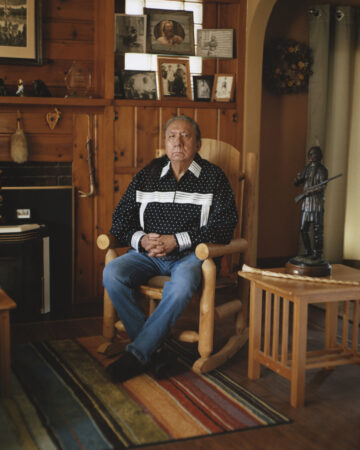
    CROW AGENCY, Mont. — As a child in South Dakota, Ernie LaPointe was told: Don’t tell anyone who your great-grandfather was.

    If his neighbors or friends knew he was descended from Sitting Bull, the storied Hunkpapa Lakota leader, he would never have a normal childhood, his mother told him.

    “‘There will be a time and place when you get the permission to do it,’” LaPointe, now 77, recalled his mother saying.

    LaPointe kept mum until the early 1990s, when, he said, an aunt told him it was time to “come out from the shadows.”

    Now he protects the legacy of Sitting Bull, who helped lead the resistance to the U.S. government’s seizure of the Great Plains and became perhaps even more famous in death than in life.

    Almost 150 years ago, Sitting Bull’s followers defeated Lt. Col. George Armstrong Custer and the 7th Cavalry Regiment of the U.S. Army in the Battle of the Little Bighorn, one of the most closely studied and hotly debated military clashes in American history. Sitting Bull is said to have had a vision that presaged a great victory, which came weeks later for warriors led by Crazy Horse.

    More than a thousand miles south, in Arizona, Chip Custer’s lineage was not something he could have hidden, even if he wanted to.

    He was born George Armstrong Custer IV, the great-great-grand-nephew of the famous lieutenant colonel. After his father (George Armstrong Custer III) died suddenly in 1991, Chip inherited the job of minding the legacy of a man who is among the most lionized, and vilified, figures in American history.

    Chip Custer, 70, has long been familiar with the criticism — of Custer’s devastating offensive against the Cheyenne, of his military tactics, of his ego. He hopes people will try to view his relative in his full complexity, in light of his successes and in the context of his time.

    “If someone wrote a thousand stories about me,” he added, “what would I end up looking like after all the time under the microscope?”

    Last week, crowds converged where the Little Bighorn River snakes through grassy hills in southeastern Montana and where Custer and all of his men died during an attack on a Native American encampment on June 25, 1876. There were reenactments, ceremonies, and talk of a new visitor center scheduled to be completed in the coming months.

    To the Lakota, Northern Cheyenne, and other tribes, the battlefield remains hallowed ground, a place of great triumph over a government that suppressed their way of life.

    To historians, it remains an inexhaustible source for debate. Had one cavalry major been drinking? Was Custer undone by recklessness or flawed intelligence?

    Chip Custer and Ernie LaPointe are students of the battle and fluent in its intricacies, but their interest is not simply in military history. It is based in a mission to preserve their family legacies.

    “The blood of my great-grandfather is in me,” LaPointe said. “He cared for the people; he cared for everything. He even cared for the people who tried to kill him.”

    Custer’s kin

    Chip Custer first visited the battlefield in 1976, for the 100th anniversary of the battle, as a 21-year-old hippie with no expressed interest in family history. He drove up from college to surprise his father, a retired Army officer who had fought in three wars.

    As they sat through a quiet ceremony near what is known as Last Stand Hill, the American Indian Movement leader Russell Means spoke out to celebrate the cavalry’s defeat.

    “My father, of course, was incensed over the way that whole event went,” Custer said. “So that was my introduction.”

    The national park was known as Custer Battlefield National Monument then, though Native American activists had begun to draw attention to the site’s narrow focus on the more than 260 U.S. deaths, part of a wider discussion of broken treaties and American expansionism.

    White marble headstones peeked out of the grass across the haunting prairie to mark where soldiers had fallen. The same was not true for the 60 to 100 Native Americans who the National Park Service has estimated died that day.

    “You’d see that powerful landscape out there and it was just the 7th Cavalry headstones,” said John Doerner, who was an historian at the battlefield for more than 20 years.

    Perspectives were evolving. Chip Custer said his father recognized that depictions of their relative — long embraced by many as a gallant, fearless commander carrying out Washington’s will to push Native Americans toward reservations — had grown more complicated.

    In 1970, the movie Little Big Man portrayed Custer as a vain commander who foolishly led his soldiers to slaughter. Chip Custer remembers watching it on an Arizona army base and that his red-faced father stormed out. His father was similarly upset in 1991 at a proposal to drop the family name from the site. He died of a heart attack just months before Congress rechristened it the Little Bighorn Battlefield National Monument.

    In the decades since, Chip has served as an occasional spokesperson for the Custer legacy, even as he ran a landscape design business and raised two daughters with his wife. Chip is descended from one of the famed soldier’s brothers, Nevin, whose health problems prevented him from joining the military. Two of George Armstrong Custer’s brothers died with him on the battlefield.

    Chip has written about Custer’s rowdy days at West Point and his celebrated successes as a Civil War “boy general,” which included commanding the Michigan Cavalry Brigade in the Battle of Gettysburg. He has spoken to groups of Custer buffs.

    In 2021, he opposed calls to remove a Custer statue in Monroe, Mich., the lieutenant colonel’s hometown. In a letter to the City Council, Chip argued that Custer, in his writings, had recognized why Native Americans resisted the confinement of reservations and that he had unfairly become the “poster boy for all wrongs committed against the American Indians during our roughly 250 years as a nation.”

    The council ultimately left the monument as is.

    When it comes to that final battle, Chip Custer believes his relative unquestionably shoulders some blame for the outcome, though some point fingers at subordinates.

    “I think he would, as any commander, accept full responsibility for how that all played out,” he said. “But I regret that we only remember him by the last day of his life.”

    Sitting with history

    For LaPointe, an Army veteran born on the Pine Ridge Indian Reservation in South Dakota, the challenge has been defending, not his relative’s legacy, but his own.

    After LaPointe publicly embraced his lineage, he began representing the family at events like the 1992 dedication of a bronze bust of his great-grandfather to the National Hall of Fame for Famous American Indians, in Oklahoma. But in the face of competing claims, his connection was still closely scrutinized by the Smithsonian in the mid-2000s as it worked to repatriate some of Sitting Bull’s belongings. Once satisfied, the museum gave LaPointe a braid of Sitting Bull’s hair and a pair of wool leggings obtained by a doctor who had custody of the Lakota leader’s body after his death.

    Sitting Bull was fatally shot in 1890 on the Standing Rock Indian Reservation during a botched arrest by Native American police officers following orders from U.S. officials. In the years after the Battle of the Little Bighorn, the U.S. government had responded to the loss by escalating its efforts to force Native Americans onto reservations.

    LaPointe’s ancestry was later scientifically confirmed by a Danish researcher, who did a DNA test on a small clipping of his great-grandfather’s hair. When the results were published, news of LaPointe’s lineage ricocheted across domestic and international media. It escalated the outreach he had long received from people who claim to be his long-lost kin.

    “They call, they email, they come to the house,” said Sonja LaPointe, his wife of more than 30 years. “One guy from Wisconsin brought his Winchester to the house because he wanted to take a picture with Ernie.”

    LaPointe was involved in the creation of an Indian memorial at the Little Bighorn battlefield, and in 2003 he attended the dedication of a sculpture by Colleen Cutschall, an Oglala-Sicangu Lakota artist. The bronze outline of warriors on horseback is level with the horizon, with the sky and grassy hills shining through the tableau.

    With permission from park rangers, LaPointe had a pipe ceremony at the memorial that night and said he noticed something special in the air. “You could hear the horse hooves all around us,” he said.

    LaPointe was also asked to share the oral histories he had heard as a child with Doerner, who worked to add red granite markers where Native American warriors fell.

    LaPointe and Custer have each been to multiple events at the battlefield, but neither planned to attend the anniversary this week. Sonja LaPointe said her husband and Custer briefly crossed paths at a battlefield event years ago, but the men do not remember meeting.

    Around 2007, LaPointe did speak with Chip’s uncle, Brice Custer, who called him after LaPointe gave a talk in George Armstrong Custer’s hometown.

    Brice, who named one of his sons Garry Owen after the 7th Cavalry marching song, told LaPointe he had not felt well enough to make the trip but wanted to express how much respect he had for Sitting Bull.

    “I said I appreciated his call,” LaPointe recalled, “and I don’t hold any animosities toward nobody.”

    “‘It happened many years ago,’ I said. ‘I think we have to heal from that.’ He agreed.”

    This article originally appeared in The New York Times.

  • Margaret Kerry, body and soul of Disney’s Tinker Bell, dies at 97

    Margaret Kerry, body and soul of Disney’s Tinker Bell, dies at 97

    Margaret Kerry, who through months of graceful and poignant pantomime inspired the portrayal of the Peter Pan fairy Tinker Bell that the world knows best, died on June 11 at her home in Wilmington, N.C. She was 97.

    The cause was lung cancer, her family announced on social media.

    Tinker Bell’s origins lie in Peter Pan, or The Boy Who Wouldn’t Grow Up (1904), a play by the British writer J.M. Barrie later expanded into a novel, Peter and Wendy (1911). Barrie invented “fairy dust” to explain how Tinker Bell could enable children to fly, but in his story, she was “quite a common fairy” who fixes pots and pans. Peter ultimately forgets about her, and in stage performances, she was only a spotlight.

    With Ms. Kerry’s help, Disney’s original animated film adaptation, Peter Pan (1953), produced a version of Tinker Bell that became definitive.

    In the movie, the fairy communicates only through movement and expression; she does not speak.

    To reinvent and animate the character, Marc Davis — the illustrator behind Snow White, Cinderella, and Cruella de Vil — oversaw an industrial equivalent of the modeling demanded by perfectionist painters like Jean-Auguste-Dominique Ingres or Paul Cézanne. Along with a few prop specialists, a camera operator, a makeup artist, and one or more directors, he spent more than six months having an actor act out everything he wanted Tinker Bell to do.

    “Marc Davis is a man’s man — how does he know how a 3½-inch sprite is going to move, get angry, or stamp her foot?” Ms. Kerry said to the Los Angeles Times in 2002. “And how does he know what kind of emotion would go behind that?”

    Ms. Kerry brought a record player to her audition for Davis and director Gerry Geronimi. With musical backing, she did a pantomime of making breakfast: Peering into a refrigerator, juggling eggs, closing the fridge door with her foot — “as much variety of movement as I could do in the context of a little story,” she said in a 2003 interview with historian Jim Korkis.

    She got the job. The first time she stepped onto Disney’s enormous, empty soundstage, she asked Davis who he wanted her to be — ditsy like Betty Boop? Above it all, like the Queen of the Fairies?

    “He said, very quietly, ‘Margaret, we want her to be you,’” Ms. Kerry recalled in an interview with author and YouTube host Jonathan Rosen.

    “At that moment,” she told Parade in 2016, “Tinker Bell and I became one.”

    One day she was asked, What would it look like if Tinker Bell landed on a mirror and saw herself? Ms. Kerry thought perhaps she would never have seen her reflection, so she began a preening once-over — until she reached her hips, got upset and stormed off. That became a scene in Peter Pan.

    She was asked to fall onto a mattress — which, she soon discovered, was rather thin, causing her to thud on impact. Her look of pained surprise also made it into the film.

    She was asked to pout. She demonstrated a whole menu of pouts and asked, What kind do you want?

    She imagined Tinker Bell as a 13-year-old girl. That helped Davis capture one of the character’s most distinctive traits: Barrie’s idea that fairies are so small that they “have room for one feeling only at a time.” Davis’ Tink is consumed by competitiveness with Wendy, or consumed by fear for Peter — always just one feeling, felt to the utmost.

    Margaret Kerry was born Margaret McCarty on May 11, 1929, in Springfield, Ill. Her mother died in childbirth and her father was unable to take care of his five children, Parade reported. She was adopted at 3 by Frederick and Grace (Lynch) Robb, who lived in Los Angeles.

    Robb was a salesperson for Durametallic Corp., an industrial manufacturer. The couple decided their adoptive daughter was “as cute as Shirley Temple,” Kerry later recalled, and by the time she was 4 she was in Central Casting. She found a lot of work in Hollywood, including appearing in eight of the Our Gang short films about the Little Rascals.

    Her stage name was originally Peggy Lynch. In 1948, she played the daughter of Eddie Cantor’s character in the movie If You Knew Susie. She changed her name to Margaret Kerry at Cantor’s suggestion.

    In later years, she did voice-over work and hosted a weekly Christian talk show on Los Angeles radio.

    She married Dick Brown, a television producer and director, in 1951. They divorced in the 1980s. Her marriage to Jack Willcox, in 1987, ended with his death in 1999. She is survived by three children from her first marriage, Eric Norquist, Christina McCarty, and Ellen Seibel, as well as several grandchildren.

    In 2019, a veteran of D-Day, Robert Boeke, visited Europe to mark its 75th anniversary. He passed a store in Amsterdam called Tinker Bell Toys and said to a travel buddy, “I have been in love with Tinker Bell all my life.”

    He was being literal: Boeke and Kerry dated when he was a college student in Los Angeles. A friend of his promptly found her email address and sent her a note. He assumed she had forgotten him.

    But the email, like a bit of fairy dust, caused something to improbably take flight. Ms. Kerry had saved a piece of jewelry that Boeke gave her all those years ago.

    On Valentine’s Day 2020, they married. They got together just in time to keep each other company through the coronavirus pandemic, and Boeke lived until just 2½ weeks before Kerry’s death. She told Rosen, “It was love at second sight.”

    This article originally appeared in the New York Times.

  • Mark Singer, longtime writer for the New Yorker, dies at 75

    Mark Singer, longtime writer for the New Yorker, dies at 75

    Mark Singer, a staff writer at the New Yorker from the age of 23 who extended the magazine’s franchise of rich reporting and witty prose about offbeat, complicated, and quintessentially American characters, died Friday in New York City. He was 75.

    The cause of death, in a hospital, was cancer of the salivary gland, his son Tim said.

    Mr. Singer wrote urbane “Talk of the Town” pieces for the front of the magazine, reflected on serious national matters like the Affordable Care Act, and did a hitch traveling the country as the correspondent for the “U.S. Journal” column.

    But he was best known as a profiler. His subjects included magician Ricky Jay, whom he called “perhaps the most gifted sleight of hand artist alive”; a set of four door attendant brothers in New York; and a braggadocious real estate developer, Donald Trump, years before he ran for office.

    “He came out of the tradition of A.J. Liebling and Joseph Mitchell and Calvin Trillin, which is to say he combined meticulous reporting and a very distinctive comic voice, which is extremely rare,” David Remnick, the magazine’s editor, said in an interview.

    An Oklahoma native, Mr. Singer moved back to the state for an immersive series of articles in 1985 that became a book, Funny Money. It is about a small suburban bank that wildly pumped up its balance sheet during an energy boom, led by a buffoonish cast of executives, including one who wore Mickey Mouse ears to work.

    A 2005 collection of Mr. Singer’s profiles, Character Studies, was subtitled Encounters with the Curiously Obsessed, a description that matched the author himself.

    The book included pieces about a group of Texans searching for the missing skull of Pancho Villa and a family of fanatic California farmers, the Chinos, who grew vegetables for chef Alice Waters of Chez Panisse (who happened to be married to Mr. Singer’s brother Stephen).

    “Singer’s voice is pitched perfectly to the register of The New Yorker: cool and intelligent, with a wry and artful skepticism uncorrupted by cynicism,” Jeff Macgregor wrote in The New York Times Book Review. “Neither aloof nor Olympian, he maintains instead an efficient distance from his subjects. He is a terrific reporter, with a receptive ear for dialogue and a painter’s eye for the salient detail.”

    The collection included Mr. Singer’s 1993 profile of Jay, with accounts of his performing mind-boggling card tricks and memory feats, which Mr. Singer witnessed over a two-year acquaintance.

    “He has small hands — just large enough so that a playing card fits within the plane of his palm,” Mr. Singer observed. “There is a slightly raised pad of flesh on the underside of the first joint of each finger.”

    He was much less stoked to be assigned by Tina Brown, then editor of the New Yorker, to profile Trump in 1997.

    Observing him over several months on construction sites, in his Trump Tower office, and on a private plane, Mr. Singer concluded that Trump, in the period before he became a reality TV star, was a man “who had aspired to and achieved the ultimate luxury, an existence unmolested by the rumbling of a soul.”

    “That profile,” Remnick said, “got everything about Trump 20 years before he ran for president: the vanity, the casual cruelty, the outsized selfishness. It was all there.”

    The profile was included in Character Studies, and after the Times review mentioned it, Trump wrote a letter to the editor attacking Mr. Singer as “not born with great writing ability.”

    Mr. Singer sent a mock thank you to Trump for the publicity, which apparently bumped his book higher on the Amazon book charts. He also enclosed a check for $37.82, “a small token of my enormous gratitude,” he wrote.

    Trump returned the letter with an all-caps note at the bottom, reading, in part, “MARK — YOU ARE A TOTAL LOSER.”

    Trump also cashed the $37.82 check, Mr. Singer later said. Singer framed a photocopy of it for his apartment.

    In 1999, Mr. Singer took on the challenge of solving the mystery of Joseph Mitchell, the magazine’s revered, Joycean profiler of New York eccentrics, who came to the office for 32 years without publishing a piece after 1964. Mr. Singer, who never quite solved the reasons for Mitchell’s epic writer’s block, quoted Philip Hamburger, a friend of Mitchell’s: “Why didn’t he write more? Well, he wrote enough.”

    Mark Jay Singer was born Oct. 19, 1950, in Tulsa, Okla., the middle of five children of Alexander and Marjorie (Teller) Singer. His father ran an oil and gas business, Singer Brothers, which had been founded by his own father and an uncle, whose family members were Jewish immigrants from Russia.

    Mr. Singer attended Yale University, where he found a mentor in William Zinsser, a nonfiction writing teacher whose classic guide, On Writing Well, preaches cutting clutter from sentences and choosing the precise word. (He also first introduced Mr. Singer to Mitchell’s work.)

    Mr. Singer received his bachelor’s degree in English in 1972. Two years later, he was hired by the New Yorker, at a time when the magazine offered an on-ramp to promising but inexperienced young writers, who sank or swam by writing unbylined pieces for “The Talk of the Town.”

    Mr. Singer married Rhonda Klein, a lawyer, in 1972. The marriage ended in divorce, as did a second marriage, to Caroline Mailhot.

    Besides his son Tim, from his first marriage, he is survived by his partner, Lisa Brody; his sons Jeb and Reid, also from his first marriage; a son, Paul Mailhot-Singer, from his second marriage; two grandchildren; and his siblings George, Stephen, and Sandra Anderson.

    Singer is also the author of Citizen K: The Deeply Weird American Journey of Brett Kimberlin (1996), an expanded version of a New Yorker profile of a drug smuggler, murder suspect, and media manipulator that was a finalist for a National Magazine Award; and the collection Somewhere in America: Under the Radar with Chicken Warriors, Left-Wing Patriots, Angry Nudists and Others (2004).

    The New Yorker writer Ian Frazier, who shared an office with Singer when both were tyros, recalled that his colleague and friend once buttonholed William Shawn, the magazine’s famously reserved former editor, at a wedding reception. Singer told Shawn a long-winded anecdote about his own first wedding.

    As the editor seemed to recoil, searching the ceiling, Singer itemized an elaborate menu he had requested from a Jewish caterer — bagels, herring, etc. — after which the caterer said, “So far, you’re giving them nothing.”

    Laughter ensued.

    “Mark and I,” Frazier said, “would talk about, What is writing? That’s writing,” he said of Singer’s lengthy tale delivered with confidence to a defensive audience. “When you can sense a real wind and just keep going with it.”

    This article originally appeared in the New York Times.

  • Jean Houston, ‘midwife of souls’ who advised Hillary Clinton, dies at 89

    Jean Houston, ‘midwife of souls’ who advised Hillary Clinton, dies at 89

    Jean Houston, a spellbinding figure in the human potential movement of the 1960s who used guided imagery to inspire unmoored suburbanites, burned-out executives, and even Hillary Clinton, helping Clinton conduct imaginary conversations at the White House with Eleanor Roosevelt, died on May 16 at her home in Ashland, Ore. She was 89.

    Her death was confirmed by her friend and business partner, Constance Buffalo.

    The daughter of a gag writer for Bob Hope, George Burns, and Henny Youngman, Ms. Houston rejected any association with the word “guru,” viewing it as an intellectual demotion. She called herself an “evocateur of the possible” and a “midwife of souls.”

    “In my definition, guru is spelled ‘Gee, You Are You,’” she said on the Oprah Winfrey television show Super Soul Sunday. “I seem to be a process. I seem to be a verb of becoming, and held by the lure of becoming that keeps us going on.”

    As the founder of numerous organizations, including the Human Capacities Corp., Mystery School, Social Artistry School, and the Possible Society, Ms. Houston led workshops at empowerment retreats, in corporate boardrooms, at her geodesic-domed house in Oregon, and in far-flung countries with the United Nations.

    “She had a remarkable capacity to be present to others,” Robertson Work, a U.N. policy adviser who accompanied her on trips around the world, said in an interview. “You felt like you were being seen. You could discover: ‘What is my greatness? What is my potential?’”

    Ms. Houston synthesized mythology, the psychology of Carl Jung and Joseph Campbell, and the experiential ethos of Esalen, the California retreat that shaped the human potential movement.

    During her multiday workshops, participants engaged in imaginary conversations with historical figures like Mahatma Gandhi and Pablo Picasso, acted out the stages of evolution while pretending to be a fish or a monkey, and translated their dreams into elaborate dances.

    “The idea was that it’s possible to cultivate a higher power within yourself,” Marion Goldman, a professor emeritus of sociology and religious studies at the University of Oregon and the author of The American Soul Rush: Esalen and the Rise of Spiritual Privilege (2012), said in an interview. “By making the self a better place, you make the world a better place.”

    In addition to her workshops, Ms. Houston published more than two dozen books, including The Possible Human: A Course in Enhancing Your Physical, Mental and Creative Abilities (1982), which sold more than 400,000 copies.

    “The imaginal realms of inner space proliferate and spill over into the external world in a phenomenal growth of new science, art, music, literature, politics, and above all in a new vision of mankind and world that is the glory of humanism,” she wrote in the book’s introduction.

    There were dissenters.

    Writing in Skeptical Inquirer magazine, Martin Gardner, a critic of pseudoscience, called Ms. Houston’s workshops “bewildering” and judged her “flowery New Age jargon” to be “so vague and murky that it is often difficult to understand.” (Adding insult to injury, the article’s headline labeled her a guru.)

    Still, her pull was gravitational — even at the White House. In 1994, Ms. Houston was among a group of motivational speakers whom President Bill Clinton and the first lady invited to Camp David for a series of pick-me-up conversations after their universal healthcare initiative failed and Republicans took control of Congress.

    She and Hillary Clinton hit it off.

    “Jean wraps herself in brightly colored capes and caftans and dominates the room with her larger-than-life presence and crackling wit,” Hillary Clinton wrote in her memoir Living History (2003). “She is a walking encyclopedia, reciting poems, passages from great works of literature, historical facts and scientific data all in the same breath.”

    Ms. Houston helped Hillary Clinton prepare for a visit to India, Nepal, and Bangladesh in 1995. That year, the first lady invited her to the White House to brainstorm ideas for It Takes a Village, Hillary Clinton’s book about the well-being of children.

    Hillary Clinton was physically and mentally exhausted. Perhaps, Ms. Houston suggested, she should speak with her hero, Eleanor Roosevelt. The idea was for Clinton to talk as herself and then answer back as Roosevelt — the sort of role-playing exercise that Ms. Houston had conducted thousands of times.

    At some point, she described the sessions with Clinton to the Washington Post reporter Bob Woodward, who recounted the details in his 1996 book, The Choice. After an excerpt appeared in the Post, tabloids and Republican opponents of the Clintons accused the first lady of holding seances at the White House.

    Hillary Clinton released a lengthy statement in her defense. “This was an interesting intellectual exercise to help spark my own thoughts,” she said. “It was a brainstorming session for my book — not a spiritual event.”

    In an appearance on the Today show, Ms. Houston told Katie Couric that she was simply helping the first lady focus her mind by imagining “what she would say to Eleanor Roosevelt should she have the occasion to do so.”

    Houston felt that she had been unfairly maligned.

    “I’m not a psychic,” she said. “I’m not a guru.”

    Jean Houston was born on May 10, 1937, in Brooklyn. Her mother, Mary (Todaro) Houston, was an actor, interior designer, and stock analyst. Her father, Jack Houston, was a comedy writer.

    Growing up, she found inspiration in a dummy. When she was 8, she accompanied her father to deliver a script to the ventriloquist Edgar Bergen. Upon arriving, they found Bergen talking to his plastic-and-wood buddy, Charlie McCarthy.

    “Charlie, what is the meaning of life?” Bergen asked the dummy, as Ms. Houston recalled in her memoir, A Mythic Life (1996). “What is the nature of love? Is there any truth to be found?”

    The dummy mumbled some answers.

    “At that moment,” Ms. Houston wrote, “my skin turned to gooseflesh, an electric hand seemed to touch mine, and a fractal wave of my future activities crashed on the shore of my 8-year-old self. For I suddenly knew that we all contain ‘so much more’ than we think we do.”

    Her epiphanies proliferated. On a school trip, she met Helen Keller and marveled at how happy she seemed despite being blind and deaf. She joined an international pen pal club and corresponded about the scriptures of Sikhs, Hindus, and Buddhists. She had long conversations with an old man in Central Park; later, she discovered that she had been talking to philosopher Pierre Teilhard de Chardin.

    “When you befriend your own brain,” she said, “a great deal becomes possible.”

    At Barnard, she studied religion and theater, acting in off-Broadway plays at night. She attended a doctoral program in religion offered by Columbia University and the Union Theological Seminary, but did not receive a degree. (She later received one in psychology from Union Institute in Cincinnati.)

    During graduate school, while conducting studies on LSD use, she met Robert E.L. Masters Jr., a writer. They married in 1965 and spent their honeymoon writing The Varieties of Psychedelic Experience, which was reviewed on the cover of the New York Times Book Review.

    Also in 1965, the couple founded the Foundation for Mind Research, the first of many organizations that Ms. Houston started to promote and study human potential.

    “We are living at the beginnings of the golden age of brain, mind, and body research,” she told the Washington Post in 1978. “We may well be standing, with regard to these, where Einstein stood in the year 1904 with his discovery of the special theory of relativity.”

    Masters died in 2008. Ms. Houston has no immediate survivors.

    Among her fondest memories was her childhood meeting with Keller, who was then in her late 60s — a story she recounted often.

    Keller put her hand on Jean’s face to read her lips.

    “Why are you so happy?” Jean asked.

    “My child,” Keller responded, “it is because I live my life each day as if it were my last. And life in all its moments is so full of glory.”

    This article originally appeared in the New York Times.