Category: Wires

  • What we know (and what we don’t) about the Epstein files’ release

    What we know (and what we don’t) about the Epstein files’ release

    The Justice Department released a second wave of files related to Jeffrey Epstein this week, providing a window into federal investigators’ examination of sexual abuse allegations lodged against the deceased financier by women and girls over the course of decades.

    The tranche of files released by the Justice Department on Monday includes wide-ranging references to President Donald Trump and a revelation that U.S. authorities sought to interview Prince Andrew in connection with two separate criminal investigations. The department had released the initial batch just ahead of last Friday’s deadline that was established in the law passed by Congress.

    Despite the deadline to release the full trove of files about Epstein, who died in federal custody in 2019 while awaiting trial on sex-trafficking charges, many files have yet to be made public. The Justice Department’s releases have faced issues, including the latest tranche being briefly taken offline before being uploaded again. The department, which traditionally has been regarded as being independent from partisan influence, released statements saying documents in the latest batch contained what it called “untrue and sensationalist claims” about Trump.

    Here is what we have learned so far from the latest release:

    Trump is mentioned much more in the latest batch of files

    The batch of files released this week produced more documents mentioning Trump than the first one. It includes a 2021 subpoena sent to Mar-a-Lago, Trump’s club in Palm Beach, Fla., for records that pertained to the government’s case against Ghislaine Maxwell, Epstein’s accomplice in sex trafficking. The full reason for the subpoena to Mar-a-Lago was not immediately clear, but an assistant U.S. attorney had been seeking past employment records from Trump’s club that were relevant in the case against Maxwell.

    The new batch includes notes from an assistant U.S. attorney in New York about the number of times Trump flew on Epstein’s plane, including one flight that included just Trump, Epstein, and a 20-year-old woman, according to the notes.

    The latest drop also includes several tips that were collected by the FBI about Trump’s involvement with Epstein and parties at their properties in the early 2000s. The documents do not show whether any follow-up investigations took place or whether any of the tips were corroborated.

    Being mentioned in a mass trove of investigatory documents does not demonstrate criminal wrongdoing. Trump has not been accused of being involved in Epstein’s criminal activities and has denied knowing about Epstein’s abuse of young women and girls. His spokesperson previously said Trump kicked Epstein out of his Mar-a-Lago Club for being a “creep.”

    In a statement Tuesday morning, the Justice Department said: “Some of these documents contain untrue and sensationalist claims made against President Trump.”

    “Nevertheless, out of our commitment to the law and transparency, the DOJ is releasing these documents with the legally required protections for Epstein’s victims,” the statement said.

    In a social media post on Wednesday, the Justice Department said that the “US Attorney for the Southern District of New York and the FBI” informed DOJ that “over a million more documents potentially related to the Jeffrey Epstein case” had been uncovered.

    “The DOJ has received these documents from SDNY and the FBI to review. … Due to the mass volume of material, this process may take a few more weeks,” the department added.

    When asked for comment Wednesday, the White House referred the Washington Post to the DOJ’s statement on X.

    U.S. authorities wanted to interview Prince Andrew, documents show

    The new set of public documents includes emails and court filings by U.S. authorities seeking to interview Andrew Mountbatten-Windsor in connection with two separate criminal investigations: one relating to Epstein and another involving Peter Nygard, the Canadian fashion tycoon accused of sexually assaulting multiple women and girls.

    The newly released material also contains an email sent from “A,” who writes that he is at the royal residence of Balmoral in Scotland and asks Maxwell whether she had found him some “new inappropriate friends.”

    While it had been known that prosecutors wanted to speak to Andrew about Epstein, their desire to engage on Nygard was newly revealed by the recently released documents.

    The document regarding Nygard stressed that Andrew was not a target of the investigations and that U.S. authorities had not gathered evidence that he had committed any crime under U.S. law.

    U.S. authorities stated that Andrew was not a target of the Epstein investigation and that there is “evidence that Prince Andrew engaged in sexual conduct involving one of Epstein’s victims.” The document noted that U.S. authorities had not concluded he had committed a crime under U.S. law.

    Andrew, who was stripped of his royal title, has repeatedly denied all wrongdoing. The former prince’s office did not respond to a request for comment on Tuesday.

    Justice Department struggles with releasing files

    The second wave of files on Epstein was available for several hours Monday afternoon and evening on the Justice Department website, but the documents were taken down around 8 p.m. The department reposted the files on its website shortly before midnight Monday.

    The department did not respond to questions about why the documents had been posted and then apparently removed.

    Lawmakers on both sides of the aisle and Epstein’s accusers have criticized the DOJ for releasing only some of the files by the Dec. 19 deadline. The House members who wrote the law setting that date said they would seek to find Attorney General Pam Bondi in contempt of Congress over the partial release.

    Deputy Attorney General Todd Blanche told NBC’s Meet the Press on Sunday that the Justice Department has “about a million or so pages of documents” related to Epstein and that “virtually all of them contain victim information.” Based on internal estimates, it appears that hundreds of thousands of pages of additional Epstein-related documents have yet to be publicly released.

    The Justice Department has said that some documents made public, including a purported letter from Epstein to Larry Nassar, a doctor convicted of sexually abusing athletes, are fake.

    Along with the Justice Department’s statements challenging the veracity of claims made about Trump, Blanche has defended his agency’s procedures for releasing documents related to Epstein.

    “We produce documents, and sometimes this can result in releasing fake or false documents because they simply are in our possession because the law requires this. … We will continue to produce every document required by law. Let’s not let internet rumor engines outrun the facts,” Blanche wrote on X.

    The latest batch of documents included emails describing how federal investigators faced data-processing delays and issues organizing the large collection of files they had obtained while investigating Epstein.

    An assistant U.S. attorney for the Southern District of New York wrote in one February 2020 email released this week that it was “basically impossible for us to keep track of what we’re getting, and what has been completed, without some kind of identification or labeling system.”

    A follow-up message in the email chain later that month states that investigators received access to “well over a million documents, and we don’t have any idea what we’re looking at.”

    Victims’ rights advocates want specific info from files — and aren’t likely to get it

    A group of women who have accused Epstein of abuse said in a statement on Monday that valuable information was missing from Friday’s initial wave of documents released by the Justice Department.

    The women, in their statement, claimed that numerous victim identities were left unredacted in the initial release and specifically criticized the lack of financial documents and unredacted grand jury minutes. The second batch of documents was similarly devoid of such information.

    The Justice Department said its review process was focused on keeping victims’ identities shielded. While compiling records, the department sought the names of people victimized by Epstein and found “over 1,200 names being identified as victims or their relatives,” Blanche said in a letter to Congress.

    Blanche also said the department had withheld some files that it claimed were covered by legal privileges that the new law did not specifically waive. Among those were documents that would reveal internal deliberations at the Justice Department.

  • Jimmy Kimmel jokes about fascism in an ‘alternative Christmas message’ for Britain

    Jimmy Kimmel jokes about fascism in an ‘alternative Christmas message’ for Britain

    LONDON — Talk-show host Jimmy Kimmel took aim at President Donald Trump as he warned Thursday about the rise of fascism in an address to U.K. viewers dubbed “The Alternative Christmas Message.”

    The message, aired on Channel 4 on Christmas Day, reflected on the impact of the second term in office for Trump, who Kimmel said acts like a king.

    “From a fascism perspective, this has been a really great year,” he said. “Tyranny is booming over here.”

    The channel began a tradition of airing an alternative Christmas message in 1993, as a counterpart to the British monarch’s annual televised address to the nation. Channel 4 said the message is often a thought-provoking and personal reflection pertinent to the events of the year.

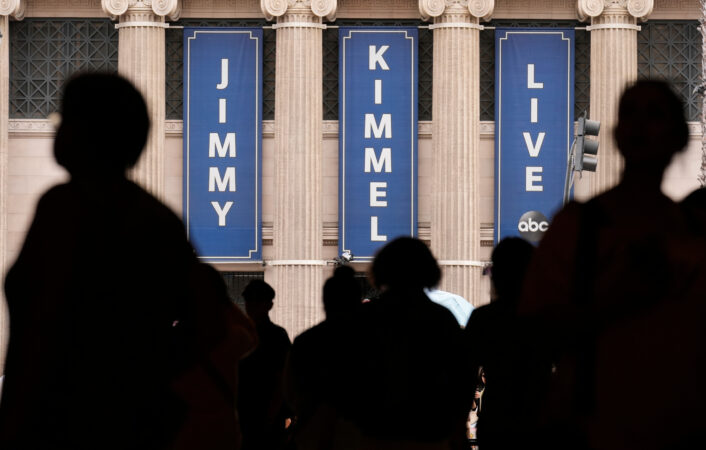
    The comedian has skewered Trump since returning to the air after ABC suspended Jimmy Kimmel Live! in September amid criticism of comments the host made after the killing of conservative activist Charlie Kirk.

    Kimmel had made remarks in reference to the reaction to Kirk’s shooting suggesting that many Trump supporters were trying to capitalize on the death.

    Trump celebrated the suspension of the veteran late-night comic and his frequent critic, calling it “great news for America.” He also called for other late-night hosts to be fired.

    The incident, one of Trump’s many disputes and legal battles waged with the media, sparked widespread concerns about freedom of speech and freedom of the press.

    Hundreds of leading Hollywood stars and others in the entertainment industry urged Americans in an open letter to “fight to defend and preserve our constitutionally protected rights.” The show returned to the air less than a week later.

    Kimmel told the U.K. audience that a Christmas miracle had happened in September when millions of people — some who hated his show — had spoken up for free speech.

    “We won, the president lost, and now I’m back on the air every night giving the most powerful politician on Earth a right and richly deserved bollocking,” he said.

    Channel 4 previously invited whistleblower Edward Snowden and Iranian President Mahmoud Ahmadinejad to deliver the alternative Christmas message.

    Kimmel, who said he didn’t expect Brits to know who he was, warned that silencing critics is not something that happens only in Russia or North Korea.

    Despite the split that led to the American Revolution 250 years ago, he said, the two nations still share a special relationship, and he urged the U.K. not to give up on the U.S. as it was “going through a bit of a wobble.”

    “Here in the United States right now, we are both figuratively and literally tearing down the structures of our democracy, from the free press to science to medicine to judicial independence to the actual White House itself‚” Kimmel said, in reference to demolition of the building’s East Wing. “We are a right mess, and we know this is also affecting you, and I just wanted to say sorry.”

  • King Charles III calls for kindness and unity in Christmas message amid global conflicts

    King Charles III calls for kindness and unity in Christmas message amid global conflicts

    LONDON — On a Christmas Day when the war in Ukraine casts a shadow over Europe, concerns over immigration divide societies, and some politicians fan anger and resentment, Britain’s King Charles III called on people to focus on kindness instead of conflict.

    Delivering his annual holiday address from Westminster Abbey, Charles said Thursday the Christmas story of wise men and shepherds traveling through the night to find their savior shows how we can find strength in the “companionship and kindness of others.”

    “To this day, in times of uncertainty, these ways of living are treasured by all the great faiths and provide us with deep wells of hope, of resilience in the face of adversity,” Charles said. “Peace through forgiveness, simply getting to know our neighbors, and by showing respect to one another, creating new friendships.”

    “In this, with the great diversity of our communities, we can find the strength to ensure that right triumphs over wrong,” he added.

    The speech, which concluded with a Christmas carol sung by a Ukrainian choir, came as European leaders have been rallying support for Ukraine amid signs that President Donald Trump is losing patience with America’s traditional European allies. At home, British politics have become increasingly bitter as Prime Minister Keir Starmer’s government struggles to control unauthorized migration and bolster creaking public services.

    Charles, the titular head of the Church of England, chose Westminster Abbey as the site of his Christmas Day broadcast to underscore the theme of pilgrimage that ran through the speech. The abbey, known as the site of coronations and royal weddings, is also the focus of an annual pilgrimage honoring Edward the Confessor, an early king of England who was canonized as a saint in 1161.

    Pilgrimage is a word less used today, but it is of particular significance for our modern world, and especially at Christmas,” he said. “This is about journeying forward into the future, while also journeying back to remember the past and learn from its lessons.”

    Charles and his family made their own pilgrimage on foot earlier in the day to St. Mary Magdalene Church on the king’s private Sandringham Estate, about 100 miles north of London.

    Charles and Queen Camilla, along with Prince William and his wife, Kate, and their children, Princes George and Louis and Princess Charlotte, and their extended family, walked to the church and greeted the crowds of people after the service.

    Events earlier this year marking the 80th anniversary of the end of World War II underscored the need to learn from the past, Charles said. While there are fewer and fewer living veterans of that conflict, we must remember the courage and sacrifice of those who fought the war and the way communities came together “in the face of such great challenge,” he said.

    “These are the values which have shaped our country and the Commonwealth,” he said. “As we hear of division, both at home and abroad, they are the values of which we must never lose sight.”

    The monarch’s annual holiday message is watched by millions of people in the U.K. and across the Commonwealth, a voluntary association of 56 independent nations, most of which have historic ties to Britain. The prerecorded speech is broadcast at 3 p.m. London time, when many families are enjoying their traditional Christmas lunch.

    The speech is one of the rare occasions when Charles, 77, is able to voice his own views and does not seek guidance from the government.

    This year’s address came just two weeks after Charles made a deeply personal television appearance in which he said “good news” from his doctors meant that he would be able to reduce his treatment for cancer in the new year.

    The king was diagnosed with a still-undisclosed form of cancer in early 2024. Buckingham Palace says his treatment is now moving to a “precautionary phase” and his condition will be monitored to ensure his continued recovery.

    The speech was accompanied by a video of members of the royal family, from the king to grandchildren George, Louis, and Charlotte, meeting with the public and carrying out their royal duties.

    That included scenes from the king’s historic trip to the Vatican as he works to forge closer relations between the Church of England and the Catholic Church.

    The event was the first time since King Henry VIII severed ties with Rome that the leaders of the two Christian churches, divided for centuries over issues that now include the ordination of female priests in the Church of England, had prayed together.

    The king’s message was clear: Even if some years had passed, there is always hope to start over. Peace is possible.

  • Mohammad Bakri, renowned and controversial Palestinian actor and filmmaker, dies at 72

    Mohammad Bakri, renowned and controversial Palestinian actor and filmmaker, dies at 72

    TEL AVIV, Israel — Mohammad Bakri, 72, a Palestinian director and actor who sought to share the complexities of Palestinian identity and culture through a variety of works in both Arabic and Hebrew, has died, his family announced.

    Mr. Bakri was best known for Jenin, Jenin, a 2003 documentary he directed about an Israeli military operation in the northern West Bank city the previous year during the second Palestinian intifada, or uprising. The film, focusing on the heavy destruction and heartbreak of its Palestinian residents, was banned by Israel.

    Mr. Bakri also acted in the 2025 film All That’s Left of You, a drama about a Palestinian family through more than 76 years, alongside his sons, Adam and Saleh Bakri, who are also actors. The film has been shortlisted by the Academy Awards for the best international feature film.

    Over the years, he made several films that spanned the spectrum of Palestinian experiences. He also acted in Hebrew, including at Israel’s national theater in Tel Aviv, and appeared in a number of famous Israeli films in the 1980s and 1990s. He studied at Tel Aviv University.

    Mr. Bakri, who was born in northern Israel and held Israeli citizenship, dabbled in both film and theater. His best-known one-man show from 1986, The Pessoptimist, based on the writings of the Palestinian author Emile Habiby, focused on the intricacies and emotions of someone who has both Israeli and Palestinian identities.

    During the 1980s, Mr. Bakri played characters in mainstream Israeli films that humanized the Palestinian identity, including Beyond the Walls, a seminal film about incarcerated Israelis and Palestinians, said Raya Morag, a professor at the Hebrew University of Jerusalem who specializes in cinema and trauma.

    “He broke stereotypes about how Israelis looked at Palestinians, and allowing someone Palestinian to be regarded as a hero in Israeli society,” she said.

    “He was a very brave person, and he was brave by standing to his ideals, choosing not to be conformist in any way, and paying the price in both societies,” Morag said.

    Mr. Bakri faced some pushback within Palestinian society for his cooperation with Israelis. After Jenin, Jenin, he was plagued by almost two decades of court cases in Israel, where the film was seen as unbalanced and inciting.

    In 2022, Israel’s Supreme Court upheld a ban on the documentary, saying it defamed Israeli soldiers, and ordered Mr. Bakri to pay tens of thousands of dollars in damages to an Israeli military officer for defamation.

    Jenin, Jenin was a turning point in Mr. Bakri’s career. In Israel, he became a polarizing figure and he never worked with mainstream Israeli cinema again, Morag said. “He was loyal to himself despite all the pressures from inside and outside,” she added. “He was a firm voice that did not change during the years.”

    Local media quoted Mr. Bakri’s family as saying he died Wednesday after suffering from heart and lung problems. A cousin, Rafic, told the Arabic news site Al-Jarmaq that Mr. Bakri was a tenacious advocate for the Palestinians who used his works to express support for his people.

    “I am certain that Abu Saleh will remain in the memory of Palestinian people everywhere and all people of the free world,” he said, using Mr. Bakri’s nickname.

  • Pope Leo XIV urges the faithful on Christmas to shed indifference in the face of suffering

    Pope Leo XIV urges the faithful on Christmas to shed indifference in the face of suffering

    VATICAN CITY — In his first Christmas Day message, Pope Leo XIV urged the faithful to shed indifference in the face of those who have lost everything, such as in Gaza; those who are impoverished, such as in Yemen; and the many migrants who cross the Mediterranean Sea and the American continent for a better future.

    The first U.S. pontiff addressed about 26,000 people from the loggia overlooking St. Peter’s Square for the traditional papal Urbi et Orbi address, Latin for “to the city and to the world,” which serves as a summary of the woes facing the world.

    Though the crowd had gathered under a steady downpour during the papal Mass inside St. Peter’s Basilica, the rain had subsided by the time Leo took a brief tour of the square in the popemobile, then spoke from the loggia.

    Leo revived the tradition of offering Christmas greetings in multiple languages abandoned by his predecessor, Pope Francis. He received especially warm cheers when he made his greetings in his native English and in Spanish, the language of his adopted country of Peru, where he served first as a missionary and then as archbishop.

    Someone in the crowd shouted out “Viva il papa!” or ”Long live the pope!” before he retreated into the basilica. Leo took off his glasses for a final wave.

    Leo surveys the world’s distress

    During the traditional address, the pope emphasized that everyone could contribute to peace by acting with humility and responsibility.

    “If he would truly enter into the suffering of others and stand in solidarity with the weak and the oppressed, then the world would change,” the pope said.

    Leo called for “justice, peace, and stability” in Lebanon, the Palestinian territories, Israel, and Syria; prayers for “the tormented people of Ukraine”; and “peace and consolation” for victims of wars, injustice, political instability, religious persecution, and terrorism, citing Sudan, South Sudan, Mali, Burkina Faso, and Congo.

    The pope also urged dialogue to address “numerous challenges” in Latin America, reconciliation in Myanmar, the restoration of “the ancient friendship between Thailand and Cambodia,” and assistance for the suffering of those hit by natural disasters in South Asia and Oceania.

    “In becoming man, Jesus took upon himself our fragility, identifying with each one of us: with those who have nothing left and have lost everything, like the inhabitants of Gaza; with those who are prey to hunger and poverty, like the Yemeni people; with those who are fleeing their homeland to seek a future elsewhere, like the many refugees and migrants who cross the Mediterranean or traverse the American continent,” the pontiff said.

    He also remembered those who have lost their jobs or are seeking work, especially young people, underpaid workers, and those in prison.

    Peace through dialogue

    Earlier, Leo led the Christmas Day Mass from the central altar beneath the balustrade of St. Peter’s Basilica, which was adorned with floral garlands and clusters of red poinsettias. White flowers were set at the feet of a statue of Mary, mother of Jesus, whose birth is celebrated on Christmas Day.

    In his homily, Leo underlined that peace can emerge only through dialogue.

    “There will be peace when our monologues are interrupted and, enriched by listening, we fall to our knees before the humanity of the other,” he said.

    He remembered the people of Gaza, “exposed for weeks to rain, wind, and cold” and the fragility of “defenseless populations, tried by so many wars,” and of “young people forced to take up arms, who on the front lines feel the senselessness of what is asked of them, and the falsehoods that fill the pompous speeches of those who send them to their deaths.”

    Thousands of people packed the basilica for the pope’s first Christmas Day Mass, holding aloft their smartphones to capture images of the opening procession.

    This Christmas season marks the winding down of the Holy Year celebrations, which will close on Jan. 6, the Catholic Epiphany holiday marking the visit of the three wise men to the baby Jesus in Bethlehem.

  • Christmas Eve winner in Arkansas lands a $1.817 billion Powerball lottery jackpot

    Christmas Eve winner in Arkansas lands a $1.817 billion Powerball lottery jackpot

    A Powerball ticket purchased outside Little Rock, Ark., won a $1.817 billion jackpot in Wednesday’s Christmas Eve drawing, ending the lottery game’s three-month stretch without a top-prize winner.

    The winning numbers were 04, 25, 31, 52, and 59, with the Powerball number being 19. The winning ticket was sold at a Murphy USA store in Cabot, lottery officials in Arkansas said Thursday. No one answered the phone Thursday at the location, which was closed for Christmas. Cabot, a community of roughly 27,000 people, is 26 miles northeast of Little Rock.

    Final ticket sales pushed the jackpot higher than previously expected, making it the second-largest in U.S. history and the largest Powerball prize of 2025, according to www.powerball.com. The jackpot had a lump-sum cash payment option of $834.9 million.

    “Congratulations to the newest Powerball jackpot winner! This is truly an extraordinary, life-changing prize,” Matt Strawn, Powerball Product Group Chair and Iowa Lottery CEO, was quoted as saying by the website. “We also want to thank all the players who joined in this jackpot streak — every ticket purchased helps support public programs and services across the country.”

    Lottery officials said they won’t know who won until at least Monday because winners must contact a claims center, which is closed for the holidays until then, according to Karen Reynolds, a spokesperson for the Arkansas lottery.

    The prize followed 46 consecutive drawings in which no one matched all six numbers.

    The last drawing with a jackpot winner was Sept. 6, when players in Missouri and Texas won $1.787 billion.

    Organizers said it is the second time the Powerball jackpot has been won by a ticket sold in Arkansas. It first happened in 2010.

    The last time someone won a Powerball jackpot on Christmas Eve was in 2011, Powerball said. The company added that the sweepstakes has been won on Christmas Day four times, most recently in 2013.

    Powerball’s odds of 1 in 292.2 million are designed to generate big jackpots, with prizes growing as they roll over when no one wins. Lottery officials note that the odds are far better for the game’s many smaller prizes.

    “With the prize so high, I just bought one kind of impulsively. Why not?” Indianapolis glass artist Chris Winters said Wednesday.

    Tickets cost $2, and the game is offered in 45 states plus Washington, D.C., Puerto Rico, and the U.S. Virgin Islands.

  • Class demonstration uncovers dangerously large kidney stone in medical student

    Class demonstration uncovers dangerously large kidney stone in medical student

    Aria Moreno was excited when she walked into class on Hofstra University’s campus in Long Island. It was late August, her fourth week of medical school, and Moreno had volunteered to undergo an ultrasound as part of the day’s lesson on the gastrointestinal system.

    It probably saved her half a kidney.

    As the ultrasound wand hovered over Moreno’s abdomen, Amanda Aguiló-Cuadra, the class instructor, noticed dark patches over Moreno’s right kidney. She suspected a buildup of fluid caused by a blockage.

    Aguiló-Cuadra said nothing. Per school policy, she waited until after class to pull Moreno aside and recommend that she see a urologist.

    “It was kind of a big shock,” Moreno said, adding: “I had zero symptoms. I had no pain, no urinary symptoms. Nothing flag-worthy.”

    Doctors eventually found and removed a dangerously large kidney stone. A typical person can pass a 4-millimeter kidney stone naturally, although it’s often very painful. Moreno’s kidney stone measured four centimeters — 10 times larger, about as wide as a pingpong ball.

    Moreno is back to normal life, but damage from the stone has left the 22-year-old with only 50% function in her right kidney and no guarantee it will improve. She’ll need to be careful with what medications she takes going forward.

    If it had not been detected, “it very likely would have progressed, and she could have lost the entire kidney,” said David Battinelli, dean of the Donald and Barbara Zucker School of Medicine at Hofstra/Northwell on Long Island, where Moreno is enrolled.

    Aguiló-Cuadra, a radiology resident who graduated from Zucker in 2024, said it was lucky this discovery happened early in the semester. Not only was it better for Moreno’s health, it preserved her privacy because her classmates did not know enough to question what they saw on the ultrasound display.

    Medical students are largely healthy 20-somethings. Still, past ultrasound demonstrations at the school using student volunteers have uncovered gallstones and thyroid nodules, said John Pellerito, a co-founder of the ultrasound program at Zucker.

    The school’s policy directs instructors to tell an affected student in a way that protects their privacy.

    But before she did that, Aguiló-Cuadra wanted to look at Moreno’s other kidney without raising alarm.

    She asked the student scanning Moreno to position the wand over Moreno’s left kidney while making an excuse about visualizing the spleen.

    Moreno was out of class for two weeks recovering from surgery to remove the kidney stone. She sent Aguiló-Cuadra regular updates.

    Her classmates sent Moreno study notes, but she didn’t need help with any renal topics ahead of her finals next week.

    “Now I can tell you anything about a kidney,” Moreno said with a laugh.

    The New Jersey native is back to exercising and her other passion, dancing. Despite an unexpected dive into kidney health, she wants to become a physician who specializes in the health of dancers.

    Moreno said she is inspired by the tactful, compassionate way Aguiló-Cuadra informed her about what she’d seen on the screen.

    “I hope to bring that kind of ease to all my patients,” Moreno said.

  • ‘Everywhere chemicals’ are in our food, decades after scientists recognized dangers

    ‘Everywhere chemicals’ are in our food, decades after scientists recognized dangers

    CARY, N.C. — Earl Gray was astonished by what he found when he cut into the laboratory rats. Some had testicles that were malformed, filled with fluid, missing, or in the wrong place. Others had shriveled tubes blocking the flow of sperm, while still more were missing glands that help produce semen.

    For months, Gray and his team had been feeding rats corn oil laced with phthalates, a class of chemical widely used to make plastics soft and pliable. Working for the Environmental Protection Agency in the early 1980s, Gray was evaluating how toxic substances damage the reproductive system and tested dibutyl phthalate after reading some early papers suggesting it posed a risk to human health.

    Sitting on a screened porch on a humid summer day more than 40 years later, Gray recalled the study and the grisly birth defects. “It was in enough animals, so we knew it wasn’t random malformations,” said Gray, 80, who retired after nearly 50 years with the agency.

    Gray and other scientists were awakening to the potential dangers of phthalates, which were making their way into nearly every human being on the planet as plastics became a way of life in the 20th century.

    Yet even as the dangers became more evident, the Food and Drug Administration, the EPA, and other regulators made only piecemeal efforts to limit their use over the next 50 years. This inaction allowed companies to continue to churn out millions of tons of phthalates for plastics manufacturing, leading these “everywhere chemicals” to become pervasive.

    Today, most people are exposed to phthalates when they eat. Although industry has largely eliminated their use in food packaging — once one of the most common uses — phthalates are used in factories that make food, accumulating at high levels in ultra-processed foods. They also enter the environment through products including medical equipment, vinyl flooring, cars, cosmetics, and cheap plastic goods like shower curtains.

    A large body of science has linked phthalates to a variety of serious health conditions, including premature birth and infertility. Studies have also tied the chemicals to neurodevelopment issues like ADHD. In April, a study led by New York University attributed 350,000 deaths from heart disease globally to phthalates exposure. And a University of Miami study linked phthalates’ disruption of hormones to breast cancer, a leading cause of death for women globally.

    The costs to society are huge. A 2024 NYU-led study that cataloged health effects from phthalates exposure in the United States — including contributions to diabetes levels and infertility — estimated that dealing with phthalate-related diseases cost $66.7 billion in a single year. That is triple the economic impact of health impacts from “forever chemicals,” another class of chemicals widely implicated in disease. Treating all cancer, by comparison, costs the U.S. $209 billion annually, according to one estimate by the government-run National Cancer Institute.

    The sporadic attention regulators have paid to this issue has allowed far more of these chemicals to circulate than what many experts consider safe. Many scientists say phthalates should have been banned or severely limited two decades ago and compare regulators’ slow response to delays in protecting the public from cigarettes and asbestos.

    “If I was in charge, would I have removed it from products? Yes,” said Shanna Swan, an epidemiologist with the Icahn School of Medicine at Mount Sinai. “The only thing you can do is ban it.”

    There was already “sufficient evidence” in the 2000s that pregnant women’s exposure to phthalates harmed fetal development, Swan said. At that time, studies by Swan and others found “phthalate syndrome” — telltale genital malformations — in humans that were similar to what Gray and others had found in rats.

    “When you already see things in humans, that is too late,” said Maricel Maffini, an independent biochemist, who has worked with major corporations and nonprofit chemical advocacy groups. “When we see effects in humans, it is because we didn’t do a good job years earlier.”

    After years of delay, federal regulators began limiting phthalates use in children’s toys in 2009, eventually banning eight compounds. The EPA is scrutinizing seven additional phthalates, but any possible action would be years away. Even the chemical Gray served to rats — dibutyl phthalate — is still on the market for use in adhesives and paints.

    Industry associations say that their voluntary actions have already reduced public exposure to these chemicals.

    By the mid-2000s, manufacturers had removed phthalates from plastic cling wrap. The FDA has worked with drug companies since 2012 to phase out two varieties, but others continue to be used. And in 2022, the agency granted a request from vinyl plastic manufacturers to withdraw approvals for 25 little-used phthalates in food packaging and manufacturing.

    Industry groups say they have been unfairly portrayed as exposing the public to phthalates.

    “It is a myth that consumer exposure to phthalates is through food packaging,” said the American Chemistry Council, the trade group that represents major phthalate manufacturers, in a statement.

    These actions have reduced public exposure, but scientists say the current phthalate levels remain dangerous, especially for pregnant women and children.

    “There are chemicals that in very, very, very small concentrations at certain times in your life will have a profound effect,” Maffini said. “We cannot go back and rewire the brain. We cannot go back and get the testes to be developed in a different way.”

    The Washington Post spoke to 14 current and former regulators at the FDA and the EPA, who blamed an institutional culture based on weak laws and a fear of litigation for why they did not ban or restrict phthalates, as well as two dozen outside scientists and other experts.

    Former regulators blame the decades of inaction on laws that did not require regulators to reexamine older chemicals that were introduced before the health dangers were known. Agency officials also feared that studies showing a link to disease would not hold up in court and companies would challenge regulators for taking action without a legal mandate.

    The fact that the FDA, the EPA, and the Consumer Product Safety Commission all regulate chemicals in some fashion means that no single agency takes responsibility for all the ways people are exposed to phthalates, experts say.

    “For the last 120 years of the modern chemical age, the country’s chemical safety laws were either nonexistent, ineffective, or rendered unusable, until only nine years ago,” said Michal Freedhoff, President Joe Biden’s EPA assistant administrator for chemical safety. “EPA will need to play catch-up for a very long time.”

    In 2016, federal officials began to implement a 2016 amendment to the Toxic Substances Control Act that requires the EPA to systematically review chemicals already on the market. A similar process is being undertaken at the FDA, though it is not legally mandated.

    Former FDA officials, including those who oversaw chemicals that come in contact with food, defended the agency’s past approach as being based on the best available science at the time.

    “Within the confines of the statute and the available science, they are making the best decisions they can,” said Dennis Keefe, who headed the FDA’s Office of Food Additive Safety from 2011 until 2022.

    The FDA takes decisive action when it is presented with clear proof of harms, Keefe said, and some studies may raise safety concerns but stop short of definitive proof.

    The Health and Human Services Department did not respond to questions about the history of its approach to the chemicals, but spokesman Andrew Nixon said in a statement, “The FDA continues to work to better understand the safety and use of the nine phthalates still authorized for use in food contact applications, and phthalates are included on FDA’s list of chemicals in the food supply that are under review.”

    EPA spokeswoman Brigit Hirsch said in a statement that before 2016, the law “did not provide a specific process or timeline for assessing and managing unreasonable risks from existing chemicals.” The agency is now prioritizing existing chemicals for review, she said, evaluating their harm and creating rules to manage unreasonable risk.

    A century of exposure

    Late 1800s-1940s: Phthalates, which are derived from petroleum, predate modern American regulation by decades. The chemicals were being commercially produced in the U.S. and Japan by the 1930s.

    Plastic — invented in the late 1800s — was still in its infancy then. Early uses include camera film and Bakelite, an extremely hard plastic. For decades, Bakelite rotary phones and radios were the most common plastic items in an American home.

    When World War II created a shortage of rubber for U.S. military equipment, scientists turned to phthalates, which make a rubberlike material when added to plastic, particularly vinyl and PVC.

    1950s: After the war ended, the U.S. reoriented its newfound plastics manufacturing might toward an ever-increasing number of consumer products containing phthalates — rubber ducks, vinyl flooring, Dow Chemical’s Saran wrap — with little regulation.

    In 1958, Congress directed the FDA to review new chemicals for use in food packaging and processing equipment — but the Food Additives Amendment grandfathered in approvals for most chemicals already broadly in use. Among them was di(2-ethylhexyl) phthalate (DEHP), the most commonly used phthalate and one of the most toxic, according to peer-reviewed studies by Gray and many other scientists.

    1960s-1970s: The publication of Rachel Carson’s Silent Spring in 1962 led to a growing public awareness of the harms resulting from the use of pesticides. The EPA was established in 1970 but did not initially regulate chemicals already on the market. Scientists noticed the reproductive effects of phthalates on animals as early as the 1970s, but their research drew little public attention.

    1980s-1990s: After Gray’s early experiments, a scientist named Theo Colborn embarked on a pioneering research program focused on chemicals that short-circuit the hormone system, including pesticides and DEHP, but later expanding to other phthalates and plastic additives.

    Colborn co-wrote the 1996 book Our Stolen Future, which helped bring hormone-disrupting chemicals to public awareness, with pressure mounting over the next decade.

    2000s: Amid concern over phthalates’ impact on children, the 2008 Consumer Product Safety Improvement Act banned DEHP and two other phthalates in toys like rubber ducks and dolls. A decade later, the Consumer Product Safety Commission banned using five additional phthalates in toys after determining they harm male reproductive systems.

    To date, the commission’s actions on children’s toys stand out as one of the few limits that regulators have placed on phthalates.

    Joint custody

    The federal government has divided the primary responsibility for regulating phthalates between the FDA, which polices exposure to chemicals through food, drugs and cosmetics, and the EPA, which oversees them elsewhere, including in the environment.

    For decades campaigners focused on food packaging, but companies have voluntarily addressed that concern. Nestlé, considered a leader in setting food standards, began limiting phthalates in its products in the mid-2000s, according to Stephen Klump, who helped develop tests for phthalates in his 21 years at the company. It gradually ratcheted up restrictions on its suppliers, banning the chemicals by 2018. The rest of the industry followed, Klump said.

    The FDA, however, still allows nine phthalates to be used in factories processing food.

    “You have hoses that are loaded with phthalates, you have plastic tanks that stuff is stored in, you have pumps that are plastic — that’s where you get a lot of phthalates,” said Tom Neltner, a longtime chemical campaigner and chemical engineer who worked in food manufacturing.

    The American Chemistry Council said the FDA has approved using certain phthalates in food-contact applications like tubing, conveyor belts, and vinyl gloves, concluding that dietary exposures do not exceed safe levels.

    “The leadership in FDA, both political and the senior career leadership, for decades in the food safety space, didn’t think chemicals merited much attention,” said Jim Jones, who was brought in as a deputy commissioner to overhaul food safety at the agency in 2023 after a career at the EPA.

    Five phthalates that predate the 1958 food additives law, including DEHP, remain on the market. Four additional phthalates still in use were subsequently approved by the agency, though scientists say those approvals rely on outdated science.

    Monsanto’s 1961 application to the FDA for the use of dicyclohexyl phthalate (DCHP) in food packaging and adhesives, obtained through a Freedom of Information Act request, relied heavily on a 1956 German study of 1,400 rats supported by Bayer (which acquired Monsanto in 2018). That study primarily looked at what doses of certain phthalates would kill them, or severely affect body and organ weight.

    Gray chuckled at the study’s unsophisticated toxicology, noting it showed only how a rat would drop dead with a single dose. “It just shows things have improved quite a bit because that’s useless,” he said.

    DCHP remains approved for use in contact with food.

    Keefe agreed the science used in older applications “wasn’t that developed.”

    Under the current process, teams of evaluators try to determine the level at which a chemical has no negative effect, and then estimate an even lower safe exposure threshold.

    Historically, the agency has reconsidered legacy chemicals only on an ad hoc basis, which often happens when there is a citizen petition to reconsider a chemical, “a health concern” or public outcry, or “new evidence,” said Carrie McMahon, who worked in the Office of Food Additive Safety reviewing ingredients during her 20-year FDA career before retiring this year.

    Susan Mayne, who was the director of food safety and nutrition at the FDA until 2023, said she went to Congress many times in her eight years there to request additional funding for post-market reviews of chemicals but never got it. “We were really at the mercy of what Congress would give that particular office,” she said. She said Congress also rebuffed the FDA’s efforts to charge companies a user fee to fund reviews, as is done for drugs.

    One central issue in a lawsuit pushing for the FDA to revoke the approvals for dozens of phthalates is the standard that there be “reasonable certainty of no harm” for a chemical to be allowed on the market. Environmental groups argue that a substance should be banned if there is significant doubt about its safety.

    But for reevaluating chemicals already in use, FDA officials require proof that a substance causes harm before removing it, a harder bar to clear.

    FDA employees said the agency’s conservative approach requires clear evidence to ban or restrict chemicals, relying mostly on animal experiments rather than the many epidemiological studies showing links between exposure to phthalates and reproductive problems.

    Despite voluntary corporate efforts, the chemicals are still making their way into consumers’ bodies: Centers for Disease and Control Prevention survey data show remnants of phthalates in virtually all Americans’ urine.

    Last year, the Biden administration reorganized the food safety division, now called the Human Foods Program, which will set out to reevaluate old chemicals, including phthalates.

    Health and Human Services Secretary Robert F. Kennedy Jr. has vowed to continue those reviews. President Donald Trump’s proposed budget asks for an additional 70 employees and $49 million to address “unsafe additives in our food supply.”

    A moving target

    While phthalates regulation has historically fallen mostly on the FDA, some experts say the EPA should now bear more responsibility since phthalates in the environment could be contaminating food before it’s even processed or packaged. Studies have shown the chemicals are broadly present in the environment, including in dust, rivers, and cow feed.

    “Saying it’s food and pointing to the people who regulate food is not solving the problem. In fact, it’s distracting people from what the problem actually is,” said Mitchell Cheeseman, who worked at the FDA for 20 years and led its Office of Food Additive Safety.

    For years, the EPA did little to regulate phthalates. In 1984 the agency set guidelines for plastics makers that put limits on discharging certain chemicals into waterways but put off action on phthalates.

    In 1992, the agency established a limit on DEHP for drinking water, based primarily on data about the chemical’s cancer risk, but did note the potential reproductive concerns, according to Betsy Southerland, former science and technology director in the EPA’s Office of Water. Only in 2015 did the EPA recommend limits, in voluntary guidelines, for manufacturers discharging five phthalates.

    Southerland said the agency failed to protect the public. “We knew about it in 1984,” said Southerland, who joined the EPA’s water office that year.

    The EPA started to review seven phthalates under the first Trump administration and has found that two of them pose a risk to factory workers, but not the public.

    But now the EPA’s chemical office has proposed reversing the Biden-era approach for evaluating toxic substances, potentially narrowing what exposure routes it considers and limiting broader actions on phthalates.

    Finding safer alternatives

    Other governments have taken a more aggressive approach to regulating phthalates.

    European Union regulators have placed much heavier restrictions on common phthalates, because they damage the reproductive system, operating under the precautionary principle that action should be taken when any activity raises the threat of serious harm to human health or the environment, even if there is not full scientific certainty.

    The EU has banned four phthalates in all but a narrow set of circumstances. And it has banned three additional phthalates in children’s toys and at least 12 in cosmetics.

    “A law, a regulation, is always stronger than everything that you can achieve with voluntary agreements among the industry,” said Anne-Sofie Backär, executive director of ChemSec, a European advocacy group.

    Safer Products for Washington is a program that focuses on preventing pollution and finding safer substitutes in the state. It assesses chemical classes and uses, rather than individual substances, said Marissa Smith, a toxicologist and the program’s technical lead, comparing a chemical’s hazardous properties to alternatives. If a safer substitute is available, then the chemical is phased out.

    Launched in 2019, the program reviews a new batch of chemical uses every five years. In its first round it found at least seven safer alternative chemicals for phthalates in vinyl flooring and a dozen alternatives for cosmetics. Sealants, caulks, and adhesives are now under scrutiny.

    Toxic-Free Future executive director Laurie Valeriano, who campaigned for the law, said this approach avoids the federal system’s pitfalls because comparing chemicals’ relative dangers is far easier than studying potential human exposure.

    Smith said some substitutes might still pose health risks.

    “That’s kind of a hard pill to swallow,” she said. “But it doesn’t mean that we still can’t make progress.”

    Gray said he was pleased the EPA is using his research in its current assessments of phthalates, as are governments around the world. But he acknowledged regulators have taken too long to act.

    “Why it took so long?” Gray asked. “I don’t know.”

    Studies show levels of phthalate exposure are declining in Americans’ urine. A Harvard study found that markers of DEHP in the urine of 1,900 people in Boston fell by at least 11.9% from 2000 to 2017, although levels of some substitutes rose. But that does not erase the fact that regulators failed for decades to protect pregnant women and children from high levels of exposure, Gray said.

    Gray’s own children had mostly grown up by the time he knew enough to be worried, meaning that he and other parents unknowingly dosed their children with phthalates over and over again.

    “There were decades where the exposures were really high,” he said. “You don’t know what the consequences of those exposures were.”

    Sitting on his neighbor’s porch, Gray recalled giving his children rubber duckies to play with in the bath. The danger now seems so clear: They were 40% phthalates.
  • Cloudy future for bourbon has Jim Beam closing Kentucky distillery for a year

    Cloudy future for bourbon has Jim Beam closing Kentucky distillery for a year

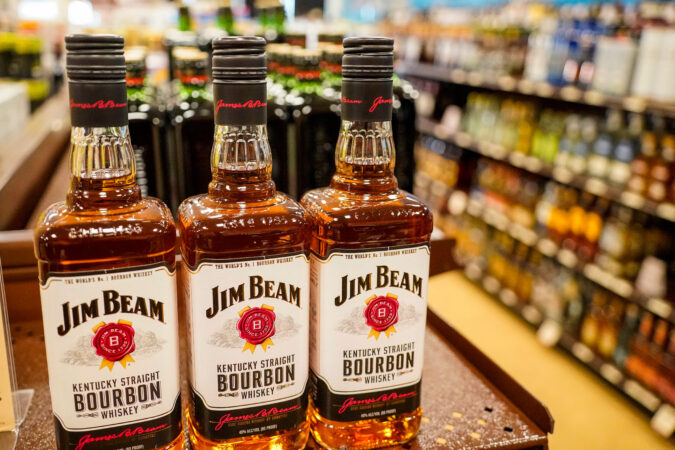
    Bourbon maker Jim Beam is halting production at one of its distilleries in Kentucky for at least a year as the whiskey industry navigates tariffs from the Trump administration and slumping demand for a product that needs years of aging before it is ready.

    Jim Beam said the decision to pause bourbon making at its Clermont location in 2026 will give the company time to invest in improvements at the distillery. The bottling and warehouse at the site will remain open, along with the James B. Beam Distilling Co. visitors center and restaurant.

    The company’s larger distillery in Boston, Ky., will continue to operate, the company said.

    “We are always assessing production levels to best meet consumer demand,” the company said in a statement that added they were talking with the distillery’s union to determine whether there will be layoffs or other reductions.

    Bourbon makers have to gamble well into the future. Jim Beam’s flagship bourbon requires at least four years of aging in barrels before being bottled.

    Whiskey makers are dealing with back-and-forth arguments over tariffs in Europe and in Canada, where a boycott started after the Trump administration suggested annexing the country into the U.S.

    Overall exports of American spirits fell 9% in the second quarter of 2025 compared to a year ago, according to the Distilled Spirits Council of the United States. The most dramatic decrease came in U.S. spirits exports to Canada, which fell 85% in the April-through-June quarter

    Bourbon production has grown significantly in recent years. As of January, there were about 16 million barrels of bourbon aging in Kentucky warehouses — more than triple the amount held 15 years ago, according to the Kentucky Distillers’ Association.

    But sales figures and polling show Americans are drinking less than they have in decades.

    About 95% of all bourbon made in the U.S. comes from Kentucky. The trade group estimated the industry brings more than 23,000 jobs and $2.2 billion to the state.

  • Powerful holiday storm lashes Southern California and brings flash floods, mudslides

    Powerful holiday storm lashes Southern California and brings flash floods, mudslides

    LOS ANGELES — A powerful winter storm swept across California on Wednesday, with heavy rains and gusty winds bringing mudslides and debris flows that has led to some water rescues and evacuation orders.

    Forecasters said Southern California could see its wettest Christmas in years and warned about flash flooding and mudslides. Areas scorched by January’s wildfires were under evacuation warnings, and Los Angeles County officials said the previous day that they delivered about 380 evacuation orders to especially vulnerable homes.

    San Bernardino County firefighters said they rescued people trapped in their cars when mud and debris rushed down a road leading into Wrightwood, a mountain resort town in the San Gabriel Mountains about 80 miles northeast of Los Angeles. It was not immediately clear how many were rescued.

    Firefighters also went door to door to check on residents, and the area was under a shelter-in-place order, officials said. Lytle Creek, also in the San Gabriel Mountains, was under evacuation orders in the afternoon as rains continued to pummel the area.

    Debris and mud were seen cascading down a road in Wrightwood in a video posted by county fire officials. Another video showed fast-moving water rushing through the front porch of several homes.

    The storm stranded Dillan Brown with his wife and 14-month-old daughter at a rented cabin in Wrightwood with almost no food and only enough diapers for about another day. By the morning, roads leading off the mountain and to a grocery store were blocked by rocks and debris, Brown said.

    “I came across [a road] where there was a car sucked away by the water and realized we were trapped here,” he said.

    A resident learned of his situation and posted a call for help in a Facebook group, and in less than an hour, neighbors showed up with more than enough supplies to ride out the storm, including bread, vegetables, milk, diapers and wipes.

    “I think we’re a little sad and upset that we’re not going to be home with our families,” Brown said, but the “kindness shown is definitely an overwhelming feeling.”

    Janice Quick, president of the Wrightwood Chamber of Commerce and a resident of the mountain town for 45 years, said a wildfire in 2024 left much of the terrain without tree coverage and “all this rain is bringing down a lot of debris and a lot of mud from the mountain area.”

    Residents around the burn scar zones from the Airport Fire in Orange County were also ordered to evacuate.

    Areas along the coast including Malibu were under flood warnings until the evening, and much of the Sacramento Valley and the San Francisco Bay Area were also under wind and flood advisories.

    Heavy rain douses Southern California

    The Los Angeles Fire Department rescued a man trapped in a drainage tunnel in northwest LA. No injuries were reported, but the man was being evaluated.

    Several roadways including a part of Interstate 5 near the Burbank Airport were closed due to flooding.

    Conditions could worsen with multiple atmospheric rivers during one of the busiest travel weeks of the year. The storm in Los Angeles was expected to strengthen into the afternoon before tapering off later in the evening.

    James Dangerfield, an 84-year-old resident of Altadena, said his family and neighbor helped place sandbags in his backyard earlier this week. A flash flood warning was issued for the neighborhood, but he wasn’t too worried because his house is on a hill.

    He and his wife, Stephanie, planned to remain there and spend Christmas Eve with their two adult daughters and grandchildren.

    “We’re just going to stay put, and everybody will have to come to us,” Dangerfield said. “We’re not going to go anywhere.”

    Mike Burdick, who takes care of his parents in Altadena near burn scars from the Eaton Fire, ran out to buy more sandbags in the morning when he saw that the pool was overflowing.

    “I literally woke up to just downpour,” he said.

    The family was prepared to evacuate with a week’s worth of essentials including for their dog and cat. They planned to attend a nearby holiday party in the evening.

    “We’re just going to make an appearance and get back safe to our animals,” Burdick said.

    Southern California typically gets half an inch to 1 inch of rain this time of year, but this week many areas could see between 4 and 8 inches with even more in the mountains, National Weather Service meteorologist Mike Wofford said.

    Much of California under weather warnings

    Forecasters said heavy snow and gusts were expected to create “near white-out conditions” in parts of the Sierra Nevada and make travel “nearly impossible” through mountain passes. There was also a “considerable” avalanche risk around Lake Tahoe, according to the Sierra Avalanche Center.

    The National Weather Service said a winter storm warning would be in effect for the greater Tahoe region until Friday morning.

    Power was knocked out to more than 125,000 due to a damaged power pole, according to the Pacific Gas and Electric Co. utility.

    The California Highway Patrol was investigating a seemingly weather-related fatal crash south of Sacramento. A driver who was apparently traveling at an unsafe speed lost control on a wet road and crashed into a power pole, Officer Michael Harper said via email.

    San Francisco and Los Angeles airports reported some minor morning flight delays.

    Gov. Gavin Newsom declared a state of emergency in six counties to allow state assistance in storm response.

    Flash flooding in Northern California has led to water rescues and at least one death, authorities said.

    The state deployed emergency resources and first responders to several coastal and Southern California counties, and the California National Guard was on standby.

    Atmospheric rivers transport moisture from the tropics to northern latitudes in long, narrow bands of water vapor that form over an ocean.