Category: Wires

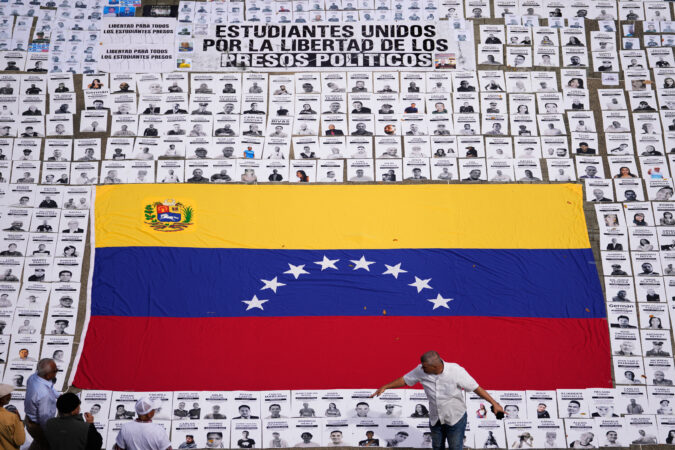
  • Hundreds more Venezuelans come forward to register relatives as ‘political prisoners’

    Hundreds more Venezuelans come forward to register relatives as ‘political prisoners’

    GUANARE, Venezuela — Freedom came too late for Edilson Torres.

    The police officer was set to be buried Tuesday in his humble, rural hometown following his death in a Venezuelan prison, where he was held incommunicado since his December detention on what his family said were politically motivated accusations. Hours ahead of the ceremony, his children, neighbors, police officers, friends and dozens others gathered to pay their respects.

    Torres, 51, died of a heart attack on Saturday, just as his family awaited the government’s promised release of prisoners following the U.S. capture of then-President Nicolás Maduro. His death comes as scores of families like his — who once hesitated to approach advocacy groups — are now coming forward to register their loved ones as “political prisoners.”

    Alfredo Romero, director of the organization Foro Penal, a non-governmental organization that tracks and advocates for Venezuelan prisoners, said the group has received a “flood of messages” since last week from families.

    “They didn’t report it out of fear, and now they’re doing it because, in a way, they feel that there is this possibility that their families will be freed,” Romero said. “They see it as hope, but more importantly, as an opportunity.”

    The head of Venezuela’s national assembly, Jorge Rodríguez, said last week that a “significant number” of Venezuelan and foreigners imprisoned in the country would be released as a gesture to “seek peace” following the explosions that rocked the South American nation in the early hours of Jan. 3.

    The U.S. and Venezuela’s opposition have long demanded the widespread release of detained opposition figures, activists and journalists, whom they claim are used as a political tool by the ruling party.

    Venezuela’s government denies that there are prisoners unjustly detained, accusing them of plotting to destabilize Maduro’s government.

    ‘Pure and real kidnapping’

    Following Torres’ death, Venezuela’s Attorney General Tarek William Saab said in a statement that the case had been assigned to a terrorism unit and “was linked to criminal activities detected by state security agencies.” He did not offer any details, but the vague language tracks with past accusations leveled against real or perceived government critics.

    Romero explained that of the roughly 300 families who reached out, about 100 cases so far have been confirmed as politically motivated. Most of those reported over the past few days, he said, once worked for Venezuela’s military. That is on top of more than 800 people that the organization says continue to be detained for political reasons in Venezuela.

    As of Tuesday morning, Foro Penal had confirmed the release of 56 prisoners. While Venezuela’s government reported a higher figure of 116, it did not identify them, making it impossible to determine whether those freed were behind bars for political or other reasons.

    “My little brother, my little brother,” Emelyn Torres said between sobs after his casket, cloaked in Venezuela’s flag, arrived at her home for the wake. A few feet away, their grandmother nearly fainted as dozens of people crammed into the living room to pay their respects.

    Hours earlier, as a minivan transported the body of her brother 267 miles from the capital, Caracas, to Guanare, Torres learned that other men linked to the WhatsApp group that led to her brother’s arrest had just been released from prison. She wailed. He did not live long enough to walk free.

    Among those who have been released are: human rights attorney Rocío San Miguel, who immediately relocated to Spain; Biagio Pilieri, an opposition leader who was part of Nobel Peace Prize winner María Corina Machado’s 2024 presidential campaign; and Enrique Márquez, a former electoral authority and presidential candidate.

    Italian businessman Marco Burlò, who was released from prison Monday, told reporters outside an international airport in Rome Tuesday that he was kept isolated throughout his detention, which he characterized as a “pure and real kidnapping.”

    “I can’t say that I was physically abused, but without being able to talk to our children, without the right to defense, without being able to speak to the lawyer, completely isolated, here they thought that I might have died,” he said.

    A rare moment of hope

    The small set of releases over the past few days continues to fuel criticisms by families, human rights watchdogs at the United Nations and U.S. politicians, who have accused the government of not following through on their word of a wider release.

    But the rapid political shifts in the Latin American nation and the distant possibility of release simultaneously marked a rare moment of hope for many families who have spent years wondering if their loved ones would ever be freed.

    Part of the reason that Romero said he believed so many people had not come forward is the government’s ongoing crackdown on dissent since Venezuela’s tumultuous 2024 election, which Maduro claimed to have won despite ample credible evidence to the contrary.

    As mass street protests broke out, authorities said they detained more than 2,000 people. In the month after July elections, Venezuela’s government passed a law – dubbed the “anti-NGO law” by critics – making it easier for the government to criminalize human rights groups.

    That had a chilling effect, Romero said, making families hesitant to come forward — until now.
  • A $2,500 full body scan said he was healthy. Then he had a catastrophic stroke.

    A $2,500 full body scan said he was healthy. Then he had a catastrophic stroke.

    In July 2023, a 35-year-old Manhattan man decided to undergo a full-body health scan, a celebrity-endorsed trend aimed at people anxious about their body’s secrets and moneyed enough to afford the knowledge.

    The industry advertises that the MRI scans can detect hundreds of treacherous health conditions such as cancers and aneurysms before they become catastrophic. While the scans have been criticized as an extravagance within U.S. healthcare, proponents say they can offer peace of mind.

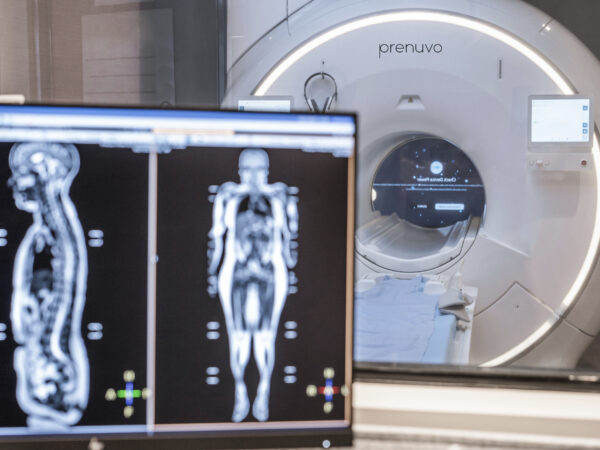
    Sean Clifford had his scan done by Prenuvo, one of the most prominent companies in the field. Kim Kardashian has described its screenings as “life saving.” The company’s website says a 45-minute whole-body scan, now priced at $2,500, “can detect subtle changes early” and “spot potential issues before they become serious.”

    The report based on Clifford’s scan indicated no major problems, according to a copy sent to him. But eight months later, he suffered a debilitating stroke, leaving him with paralysis in his left hand and left leg, according to a lawsuit he filed against Prenuvo and the doctor contracted to interpret the scan. He alleges that the company overlooked signs of trouble that appeared in the scans of his cerebral arteries.

    The Prenuvo defendants “should have reasonably known about the safety hazards or risks of injury presented by the misinterpretation of the Prenuvo MRI scans by its machines,” according to Clifford’s lawsuit filed in September 2024. According to a radiologist cited in the lawsuit, Clifford’s health report “was an obvious miss. His cerebral and cerebellar vasculature were incorrectly described as normal.”

    Clifford’s attorney, Neal Bhushan, said the family asked for privacy and declined further comment. The court records include a copy of Clifford’s Prenuvo report and other documentation, but his allegations, which the company has denied in court filings, have not been fully litigated. A judge’s decision last month allowed the case to move forward.

    Prenuvo declined to comment on the litigation, but it said in a company statement that “we take any allegation seriously and are committed to addressing it through the appropriate legal process. Our focus remains on delivering safe, high quality, proactive care to the patients who place their trust in us every day.”

    The lawsuit represents another aspect of the controversy over full-body scans, which have been criticized for detecting minor abnormalities that provoke unnecessary follow-up testing and for being overly broad. The use of MRI to conduct a full-body scan on healthy patients is a departure from its more common uses for targeted diagnoses and monitoring.

    Amid burgeoning interest in personal health data, these concerns are sometimes overwhelmed by publicity from the technology’s high-profile advocates. Prenuvo has drawn a slate of investors including supermodel Cindy Crawford; the CEO of 23andMe Anne Wojcicki; and the investment firm Steel Perlot, whose chairman is Eric Schmidt, the former Google chief executive.

    On her Instagram account, Crawford has posted a picture of herself and her husband with one of the Prenuvo scanners. “The couple that scans together, stays together,” she wrote.

    Paris Hilton also endorsed the company, writing on Instagram she was “impressed” with her fast results. “I encourage every single one of you to go get a scan and make sure you are taking care of yourselves,” she wrote.

    Among the skeptics are experts at the American College of Radiology, which warns in a statement on its website that “there is no documented evidence that total body screening is cost-efficient or effective in prolonging life.” The group said it is concerned that the scans could “lead to the identification of numerous nonspecific findings that will not ultimately improve patients’ health but will result in unnecessary follow-up testing and procedures, as well as significant expense.” Insurance rarely pays for the scans.

    While much of the criticism of the scans has focused on the potential for false alarms, the Clifford lawsuit focuses on the converse ― the possibility that the scans may miss critical problems.

    The company suggests as much in the patient consent agreement that Clifford signed, noting “as with any medical test … there are limitations which make it impossible to detect all malignancies and conditions,” according to court documents.

    Clifford’s legal complaint argued that a doctor contracted to review his Prenuvo scan missed clues to an imminent stroke.

    An image of Clifford’s brain by Prenuvo shows that one of his cerebral arteries had dangerously narrowed, according to the lawsuit. Another image, taken after his stroke, shows a blockage at that point.

    Clifford “sustained a catastrophic stroke on March 7, 2024, in the same exact area of the brain where he had the Prenuvo scan on July 15, 2023,” according to a radiologist’s report submitted by the plaintiffs. Had he known of the potential for a stroke, Clifford might have been treated with drugs, lifestyle changes, stents, or “other minimally invasive measures, thereby eliminating and preventing the catastrophic stroke,” according to the lawsuit.

    Mirza Rahman, a former president of the American College of Preventive Medicine, has been one of the foremost critics of the scans, arguing that the service exemplifies a problem in American healthcare: “The wealthy get too much of it and the poor do not get enough.”

    Even the wealthy ought to be wary of what they are getting from the scans, Rahman said, questioning whether the service may overlook some conditions because of the time and attention needed to review them.

    “Do the radiologists have sufficient time to carefully look at the bones, the vessels, the organs, and all the other information that is generated by such scans?” Rahman said. “That is a question that needs to be answered.”

    Just as troubling, Rahman said, is that the possibility of missing a dangerous condition could provide a patient with a “false sense of reassurance and that they continue with lifestyle choices that may be detrimental.”

    The company’s chief executive Andrew Lacy has boasted of its focus on accuracy.

    “This is the only thing that we do ― it’s not a side business,” Lacy said in a 2024 interview with Faces of Digital Health. “We are 100% focused on making sure that we have the best hardware, best software, best [artificial intelligence], and best radiologists so these exams are as accurate as they can be.”

    Doctors typically use MRIs to focus on just one area of the body where a problem is suspected ― not the entire body, said Max Wintermark, a doctor who is past president of the American Society of Neuroradiology and editor-in-chief of the American Journal of Neuroradiology.

    “MRI is not generally recommended for patients without symptoms,” he said. “When I have a patient, I tailor the MRI to answer specific questions. You can’t image all body parts together in great detail without making the MRI scan more than 60 minutes.”

  • Israel’s recognition of breakaway Somaliland brings uproar and threats to a volatile region

    Israel’s recognition of breakaway Somaliland brings uproar and threats to a volatile region

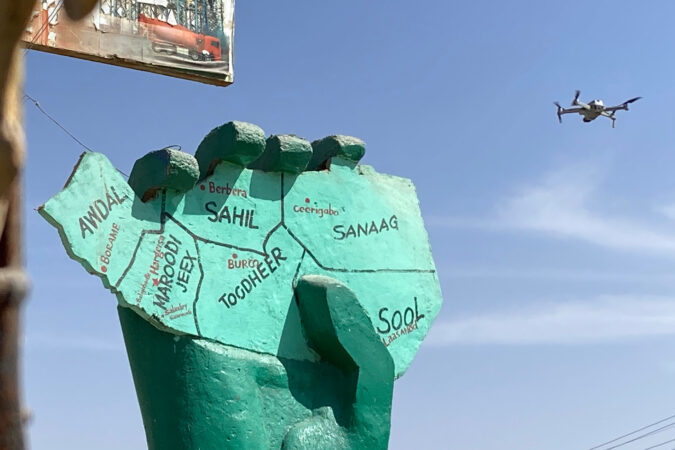
    JERUSALEM — Israel’s recognition of Somaliland has thrust the breakaway territory into the international spotlight, causing an uproar in the Horn of Africa and the Middle East as a surprise new factor in regional power struggles.

    For Israel, the decision reignites questions about the contentious proposal raised last year by American and Israeli officials for Somaliland to take in Palestinians displaced from Gaza. Israel also could use Somaliland as a base to more closely respond to attacks from Iran-backed Houthis rebels in Yemen, just across the Gulf of Aden.

    Israel also would get a diplomatic win. Somaliland’s foreign minister told The Associated Press that it aims to join the Abraham Accords, bilateral agreements between Israel and Arab and Muslim-majority countries.

    “It is a mutually beneficial friendship,” Abdirahman Dahir Adan said in an interview. In return, “Somaliland gains open cooperation with Israel in trade, investment and technology.”

    But the first international recognition of Somaliland as an independent nation also could make it a target. Analysts warn that its ties with Israel could become a rallying cry for Islamic extremists, destabilizing an already volatile region in which Somaliland has prided itself as an oasis of relative calm.

    Al-Qaeda affiliate al-Shabab, based in Somalia and the key challenge to that country’s stability, is already making threats. The group has rarely carried out attacks in Somaliland, which broke away in 1991 as Somalia collapsed into conflict.

    “Members of the movement reject Israel’s attempt to claim or use parts of our land. We will not accept this, and we will fight against it,” al-Shabab spokesperson Sheikh Ali Mohamud Rageal said in an audio message posted on one of the group’s sites.

    Strategic location

    Somaliland sits along one of the world’s busiest maritime corridors. It has drawn interest from foreign investors and military powers who see it as a potential alternative to neighboring Djibouti, which is home to the premier African bases for the American and Chinese militaries, and those of several other nations.

    Somaliland lies fewer than 100 miles from Yemen, where the Houthis have been targeting commercial and other ships in response to the Israel-Hamas war. The attacks have upended shipping in the Red Sea, through which about $1 trillion of goods pass annually. The Houthis also fired scores of missiles and drones at Israel during the war in Gaza, triggering long-range strikes by Israel’s air force.

    “If you are trying to watch, deter or disrupt Houthi maritime activity, a small footprint (in Somaliland) can provide disproportionate utility,” said Andreas Krieg, a military analyst at King’s College London.

    Shortly after Israel’s recognition, the Houthis threatened Somaliland.

    ‘No limits’ to cooperation

    Israeli Foreign Minister Gideon Saar visited Somaliland last week, and Somaliland’s president is expected to visit Israel soon.

    “This is a natural connection between democratic countries — both in challenging regions,” Saar said in defending Israel’s recognition.

    Israel and Somaliland have said their new ties would include defense cooperation, but officials declined to elaborate. Somaliland’s foreign minister said that details would follow his president’s visit to Israel.

    “There are no limits as to what areas we can work with,” Adan said.

    He expressed hope that Israel’s recognition would bestow new legitimacy on Somaliland and prompt others to recognize its sovereignty, even as Somalia has angrily rejected it.

    “Before Israel’s recognition, we were worried so much that other powers like Turkey and China would squeeze us,” Adan said, mentioning two of Somalia’s top benefactors. “I’m very hopeful that in the near future there will be many other countries that will follow Israel.”

    But the foreign minister insisted there has been no discussion with Israel about taking in Palestinians from Gaza. U.S. and Israeli officials told the AP last year that Israel had approached Somaliland about the proposal.

    Warnings of violence

    Israeli recognition of Somaliland has pushed the region into uncharted waters, said Mahad Wasuge, director of Somali Public Agenda, a think tank.

    “It could increase violence or bring proxy wars, particularly if the Israelis want to have a presence in the port of Berbera to counter threats in the Red Sea,” he said, referring to Somaliland’s largest port.

    The 57-nation Organization of Islamic Cooperation, and the African Union continental body, have condemned Israel’s recognition.

    Somali President Hassan Sheikh Mohamud has said it threatens his country’s sovereignty. He said that Somalis wouldn’t accept their nation being used by a foreign power accused of harming civilians — meaning Palestinians in Gaza — and warned that the establishment of foreign military bases would further destabilize the region.

    Somali territory “cannot be divided by a piece of paper written by Israel and signed by (Israeli Prime Minister Benjamin) Netanyahu,” Mohamud said in a televised address.

    Adan dismissed the criticism from Mogadishu, calling Somalia a “failed state.”

    Great power rivalries

    Already, Israel’s recognition has rocked the balance of powers in a region where rich Gulf countries and others have a growing interest.

    On Monday, Somalia annulled its security and defense agreements with the United Arab Emirates, a key regional ally of Israel that has long invested in Somaliland’s Berbera port, saying it was meant to safeguard “unity, territorial integrity, and constitutional order.”

    For the UAE, the area is important for its proximity to Sudan, where it has been accused of funding and arming the paramilitary Rapid Support Forces in that country’s civil war. And last week, Saudi Arabia accused the UAE of using Somaliland as a transit point to smuggle the leader of a separatist group out of southern Yemen.

    Asher Lubotzky, an analyst with Israel’s Institute for National Security Studies, said that Somaliland is one of several examples of the emerging alliance between Israel and the UAE, which have sought to align with U.S. foreign policy and shown a willingness to eschew international norms while countering extremist groups.

    “We know the Israeli interest is with the Houthis, but Somaliland also has an interest in some kind of an external protection,” he said.

    Others put on alert by Israel’s recognition are Turkey, Somalia’s largest investor and a rival to Israel, and China, which has long viewed Somaliland with suspicion over its ties with Taiwan. A rare visit to Somalia by China’s foreign minister, Wang Yi, set for last week did not occur as the Chinese embassy cited “scheduling reasons.”

    Closer to home, landlocked Ethiopia, Africa’s second-most populous country, sees Somaliland next door as a key route to the sea. It has remained silent on Israel’s recognition — perhaps scrambling, like many other countries, to understand what might come next.

  • Trump administration labels 3 Muslim Brotherhood branches as terrorist organizations

    Trump administration labels 3 Muslim Brotherhood branches as terrorist organizations

    WASHINGTON — President Donald Trump’s administration has made good on its pledge to label three Middle Eastern branches of the Muslim Brotherhood as terrorist organizations, imposing sanctions on them and their members in a decision that could have implications for U.S. relationships with allies in the region.

    The Treasury and State departments announced the actions Tuesday against the Lebanese, Jordanian and Egyptian chapters of the Muslim Brotherhood, which they said pose a risk to the United States and American interests.

    The State Department designated the Lebanese branch a foreign terrorist organization, the most severe of the labels, which makes it a criminal offense to provide material support to the group. The Jordanian and Egyptian branches were listed by Treasury as specially designated global terrorists for providing support to Hamas.

    “These designations reflect the opening actions of an ongoing, sustained effort to thwart Muslim Brotherhood chapters’ violence and destabilization wherever it occurs,” Secretary of State Marco Rubio said in a statement. “The United States will use all available tools to deprive these Muslim Brotherhood chapters of the resources to engage in or support terrorism.”

    Rubio and Treasury Secretary Scott Bessent were mandated last year under an executive order signed by Trump to determine the most appropriate way to impose sanctions on the groups, which U.S. officials say engage in or support violence and destabilization campaigns that harm the United States and other regions.

    Bessent wrote in a post on X that the Muslim Brotherhood “has a longstanding record of perpetrating acts of terror, and we are working aggressively to cut them off from the financial system.” He added that the Trump administration will “deploy the full scope of its authorities to disrupt, dismantle, and defeat terrorist networks wherever they operate in order to keep Americans safe.”

    Muslim Brotherhood leaders have said they renounce violence, and the Muslim Brotherhood branches in Egypt and Lebanon denounced their inclusion.

    “The Egyptian Muslim Brotherhood categorically rejects this designation and will pursue all legal avenues to challenge this decision which harms millions of Muslims worldwide,” it said in a statement, denying any involvement in or support for terrorism.

    The Lebanese branch of the Muslim Brotherhood, known as al-Jamaa al-Islamiya (the Islamic Group), said in a statement that it is “a licensed Lebanese political and social entity that operates openly and within the bounds of the law” and that the U.S. decision “has no legal effect within Lebanon.”

    Trump’s executive order had singled out the chapters in Lebanon, Jordan and Egypt, noting that a wing of the Lebanese chapter had launched rockets on Israel after Hamas’ Oct. 7, 2023, attack in Israel that set off the war in Gaza. Leaders of the group in Jordan have provided support to Hamas, the order said.

    The Muslim Brotherhood was founded in Egypt in 1928 but was banned in that country in 2013. Jordan announced a sweeping ban on the Muslim Brotherhood in April.

    Nathan Brown, a professor of political science and international affairs at George Washington University, said some allies of the U.S., including the United Arab Emirates and Egypt, would likely be pleased with the designation.

    “For other governments where the brotherhood is tolerated, it would be a thorn in bilateral relations,” including in Qatar and Turkey, he said. While the Turkish ruling party has been associated with members of the Muslim Brotherhood in the past, the government of Qatar has denied any relationship with it.

    Brown also said a designation on the chapters may have effects on visa and asylum claims for people entering not just the U.S. but also Western European countries and Canada.

    “I think this would give immigration officials a stronger basis for suspicion, and it might make courts less likely to question any kind of official action against Brotherhood members who are seeking to stay in this country, seeking political asylum,” he said.

    Trump, a Republican, weighed whether to designate the Muslim Brotherhood a terrorist organization in 2019 during his first term in office. Some prominent Trump supporters, including right-wing influencer Laura Loomer, have pushed his administration to take aggressive action against the group.

    Two Republican-led state governments — Florida and Texas — designated the group as a terrorist organization this year.

  • Supreme Court seems likely to uphold state bans on transgender athletes in girls and women’s sports

    Supreme Court seems likely to uphold state bans on transgender athletes in girls and women’s sports

    WASHINGTON — The Supreme Court on Tuesday appeared ready to deal another setback to transgender people and uphold state laws barring transgender girls and women from playing on school athletic teams.

    The court’s conservative majority, which has repeatedly ruled against transgender Americans in the past year, signaled during more than three hours of arguments it would rule the state bans don’t violate either the Constitution or the federal law known as Title IX, which prohibits sex discrimination in education.

    More than two dozen Republican-led states have adopted bans on female transgender athletes. Lower courts had ruled for the transgender athletes who challenged laws in Idaho and West Virginia.

    The legal fight is playing out against the backdrop of a broad effort by President Donald Trump to target transgender Americans, beginning on the first day of his second term and including the ouster of transgender people from the military and declaring that gender is immutable and determined at birth.

    The justices are evaluating claims of sex discrimination lodged by transgender people versus the need for fair competition for women and girls, the main argument made by the states.

    Justice Brett Kavanaugh, who coached his daughters in girls basketball, seemed concerned about a ruling that might undo the effects of Title IX, which has produced dramatic growth in girls and women’s sports. Kavanaugh called Title IX an “amazing” and “inspiring” success.

    Some girls and women might lose a medal in a competition with transgender athletes, which Kavanaugh called a harm “we can’t sweep aside.”

    The three liberal justices seemed focused on trying to marshal a court majority in support of a narrow ruling that would allow the individual transgender athletes involved in the cases to prevail.

    A ruling for West Virginia and Idaho would effectively apply to the other two dozen Republican-led states with similar laws.

    But the justices soon might be asked to decide about the laws in an additional roughly two dozen states, led by Democrats, that allow transgender athletes to compete on the teams that match their gender identity.

    The outcome also could influence separate legal efforts by the Trump administration and others seeking to bar transgender athletes in states that have continued to allow them to compete.

    The transgender athletes’ cases

    In the Idaho case, Lindsay Hecox, 25, sued over the state’s first-in-the-nation ban for the chance to try out for the women’s track and cross-country teams at Boise State University in Idaho. She didn’t make either squad because “she was too slow,” her lawyer, Kathleen Hartnett, told the court Tuesday, but she competed in club-level soccer and running.

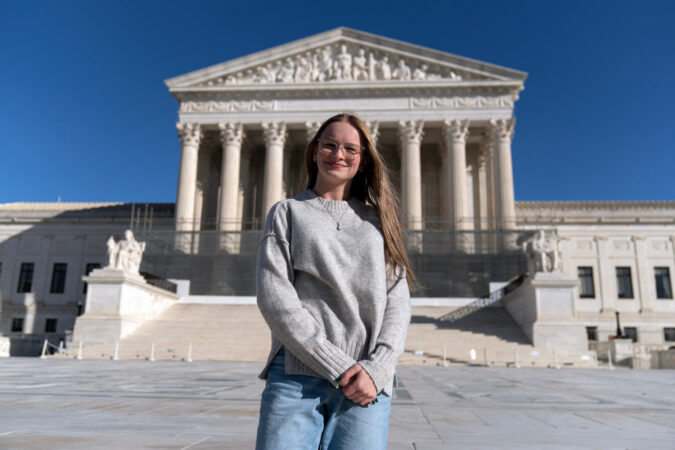
    Becky Pepper-Jackson, a 15-year-old high school sophomore, was in the courtroom Tuesday. She has been taking puberty-blocking medication, has publicly identified as a girl since age 8 and has been issued a West Virginia birth certificate recognizing her as female. She is the only transgender person who has sought to compete in girls sports in West Virginia.

    Pepper-Jackson has progressed from a back-of-the-pack cross-country runner in middle school to a statewide third-place finish in the discus in just her first year of high school.

    Prominent women in sports have weighed in on both sides. Tennis champion Martina Navratilova, swimmers Summer Sanders and Donna de Varona and beach volleyball player Kerri Walsh-Jennings are supporting the state bans. Soccer stars Megan Rapinoe and Becky Sauerbrunn and basketball players Sue Bird and Breanna Stewart back the transgender athletes.

    In 2020, the Supreme Court ruled LGBTQ people are protected by a landmark federal civil rights law that prohibits sex discrimination in the workplace, finding that “sex plays an unmistakable role” in employers’ decisions to punish transgender people for traits and behavior they otherwise tolerate.

    But last year, the six conservative justices declined to apply the same sort of analysis when they upheld state bans on gender-affirming care for transgender minors.

    Chief Justice John Roberts signaled Tuesday he sees differences between the 2020 case, in which he supported the claims of discrimination, and the current dispute.

    The states supporting the prohibitions on transgender athletes argue there is no reason to extend the ruling barring workplace discrimination to Title IX.

    Idaho’s law, state Solicitor General Alan Hurst, said, is “necessary for fair competition because, where sports are concerned, men and women are obviously not the same.”

    Lawyers for Pepper-Jackson argue that such distinctions generally make sense, but that their client has none of those advantages because of the unique circumstances of her early transition. In Hecox’s case, her lawyers want the court to dismiss the case because she has forsworn trying to play on women’s teams.

    NCAA president Charlie Baker told Congress in 2024 that he was aware of only 10 transgender athletes out of more than a half-million students on college teams. But despite the small numbers, the issue has taken on outsize importance.

    Baker’s NCAA and the U.S. Olympic and Paralympic Committees banned transgender women from women’s sports after Trump, a Republican, signed an executive order aimed at barring their participation.

    The public generally is supportive of the limits. An Associated Press-NORC Center for Public Affairs Research poll conducted in October 2025 found that about 6 in 10 U.S. adults “strongly” or “somewhat” favored requiring transgender children and teenagers to only compete on sports teams that match the sex they were assigned at birth, not the gender they identify with, while about 2 in 10 were “strongly” or “somewhat” opposed and about one-quarter did not have an opinion.

    About 2.1 million adults, or 0.8%, and 724,000 people age 13 to 17, or 3.3%, identify as transgender in the U.S., according to the Williams Institute at the UCLA School of Law.

    A decision is expected by early summer.

  • Actor-director Timothy Busfield turns himself in to face child sex abuse charges in New Mexico

    Actor-director Timothy Busfield turns himself in to face child sex abuse charges in New Mexico

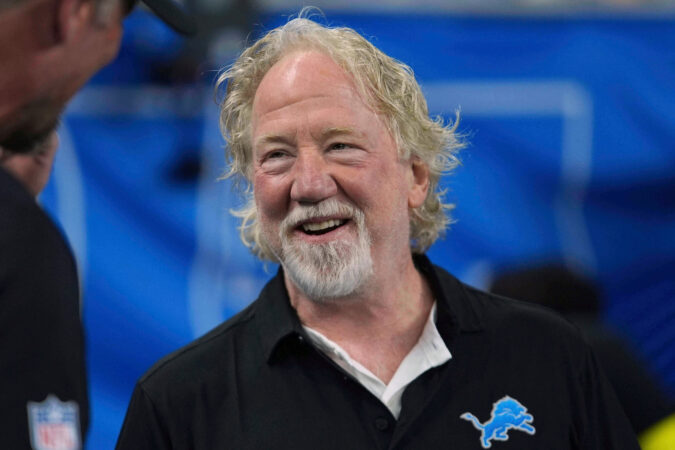
    ALBUQUERQUE, N.M. — Director and Emmy Award-winning actor Timothy Busfield turned himself to authorities on Tuesday to face child sex abuse charges in New Mexico.

    His apprehension comes after authorities in Albuquerque issued a warrant for his arrest on Jan. 9 on two counts of criminal sexual contact of a minor and one count of child abuse. The charges stem from allegations that Busfield inappropriately touched a young boy on the set of the TV series The Cleaning Lady that he was directing.

    Busfield was being booked by Albuquerque police on the charges, said Gilbert Gallegos, spokesperson for the city police department.

    A criminal complaint filed by an investigator with the Albuquerque Police Department says the boy reported that he was 7 years old when Busfield touched him three or four times on private areas over his clothing. Busfield allegedly touched him five or six times on another occasion when he was 8, the complaint said.

    The child was reportedly afraid to tell anyone because Busfield was the director and he feared he would get mad at him, the complaint said.

    The boy’s twin brother told authorities he was touched by Busfield but did not specify where. He said he didn’t say anything because he didn’t want to get in trouble.

    Busfield denied the allegations last fall when interviewed by authorities as part of the investigation, the complaint said. He suggested that the boys’ mother was seeking revenge for her children being replaced on the series. He also said he likely would have picked up and tickled the boys, saying the set was a playful environment.

    Busfield’s attorney did not immediately return a message seeking comment Tuesday. A video obtained by TMZ showed Busfield in front of a window with the Albuquerque skyline in the backdrop. He said he arrived in the city after driving 2,000 miles.

    “I’m going to confront these lies. They’re horrible. They’re all lies,” Busfield said.

    The mother of the twins — who are identified only by their initials in court records — reported to Child Protective Services that the abuse occurred between November 2022 and spring 2024, the complaint said.

    The investigation began in November 2024, when the investigator responded to a call from a doctor at the University of New Mexico Hospital in Albuquerque. The boys’ parents had gone there at the recommendation of a law firm, the complaint said.

    According to the complaint, one of the boys has been diagnosed with post-traumatic stress disorder and anxiety. A social worker documented him saying he has had nightmares about Busfield touching him.

    The Cleaning Lady aired for four seasons on Fox, ending in 2025. The show was produced by Warner Bros., which according to the complaint conducted its own investigation into the abuse allegations but was unable to corroborate them.

    Busfield, who is married to actor Melissa Gilbert, is known for appearances in The West Wing, Field of Dreams, and Thirtysomething, the latter of which won him an Emmy for outstanding supporting actor in a drama series in 1991.

  • U.S. plane used in boat strike was made to look like civilian aircraft

    U.S. plane used in boat strike was made to look like civilian aircraft

    The Trump administration’s first deadly strike on an alleged drug smuggling boat, in early September, was conducted by a secretive military aircraft painted to look like a civilian plane, multiple officials confirmed to The Washington Post on Monday.

    The crewed aircraft did not have any weapons showing when the attack occurred, two officials said, speaking, like some others, on the condition of anonymity to discuss a sensitive matter. Instead, the munitions were fired from a launch tube that allows them to be carried inside the plane, not mounted outside on the wing.

    Use of the plane prompted legal debate after the Sept. 2 operation over whether the concealment of its military status amounted to a ruse that violated international law, said current and former officials familiar with the matter. Eleven people were killed, including two who survived the initial attack by U.S. forces but died in a controversial follow-on strike.

    Feigning civilian status and then carrying out an attack with explicit intent to kill or wound the target is known as “perfidy” under the law of armed conflict, a war crime, according to legal experts.

    “If you arm these aircraft for self-defense purposes, that would not be a violation” of the law of war, said Todd Huntley, a former military lawyer who advised U.S. Special Operations forces for seven years at the height of the Pentagon’s counterterrorism campaign that followed 9/11. “But using it as an offensive platform and relying on its civilian appearance to gain the confidence of the enemy is.”

    The Trump administration has claimed that its lethal strikes on alleged drug boats in the waters around Latin America are lawful because President Donald Trump has determined the United States is in an “armed conflict” with drug cartels. That contention is widely disputed by legal experts, who say the U.S. is not at war with drug traffickers and that killing suspected criminals in international waters is tantamount to murder. Several analysts and former national security officials have said the entire campaign is, at its foundation, unlawful.

    “This isn’t an armed conflict,” said Huntley, director of the national security law program at Georgetown Law. “But what makes this so surprising is that even if you buy their argument, it’s a violation of international law.”

    The Pentagon did not immediately respond to requests for comment. A spokesperson for U.S. Special Operations Command, which carried out the Sept. 2 operation, declined to comment.

    The New York Times first reported the plane’s civilian paint scheme earlier Monday.

    The Sept. 2 military strike was the first of almost three dozen to date. The attacks have killed more than 100 people.

    The initial strike raised questions — among Democrats and law of war experts, principally — about whether a crime was committed when U.S. forces returned to the boat wreckage after the first strike to fire again and kill the two survivors as they clung to the hull.

    While the “double tap” to kill the survivors has drawn scrutiny on Capitol Hill, the military has closely guarded specifics of the aircraft involved in the operation.

    According to multiple officials, the plane is part of a fleet of crewed U.S. Air Force aircraft painted in civilian schemes and used in situations where it would not be advantageous for the military’s typical gray paint scheme to be seen. One official said the plane was already painted to look like a civilian aircraft before the Sept. 2 operation — it was not painted specifically for the boat strike, this person said.

    Firing on the alleged drug boat from an aircraft that looked like a civilian plane and had no visible weapons on it raised debate among some Pentagon officials after the strike, as well as concern that a classified capability was being “burned” in an operation targeting “civilians in a boat who pose no threat,” a former official said.

    “It’s not like they’re infiltrating downtown Tehran to kill some IRGC leader or something,” said the former official, referring to Iran’s military, the Islamic Revolutionary Guard Corps.

    Those familiar with the matter said the aircraft was broadcasting as a military aircraft. However, unless the men on the boat had technology on board to receive those transmissions, they would not have known it was a U.S. military plane.

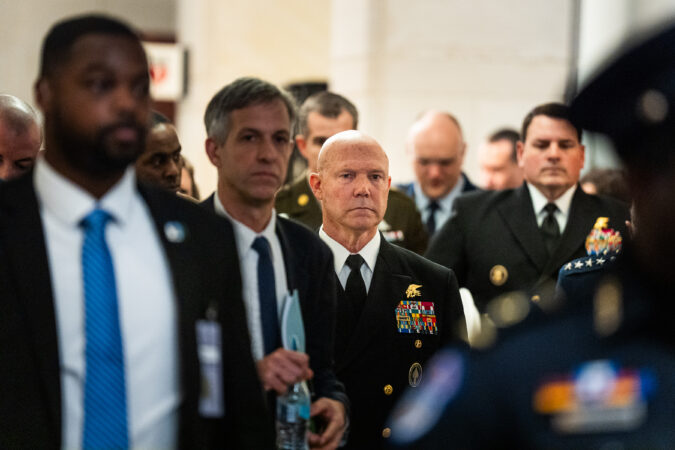
    The Post reported late last year that Defense Secretary Pete Hegseth gave his approval ahead of the Sept. 2 operation to kill the passengers, sink the boat and destroy the drugs it was suspected of carrying. As the two survivors clung to the wreckage, Adm. Frank M. Bradley, the strike commander, determined they were still viable targets and, after consulting with a military lawyer, ordered a second strike that killed them, people familiar with the matter said.

    Shortly before the second strike, real-time surveillance video showed the two men waving their arms and looking skyward, people who saw the footage told The Post in December. But Bradley explained to lawmakers scrutinizing the operation that it was unclear why they were doing so, people familiar with his account said then.

    During multiple meetings with lawmakers after news of the double tap surfaced, Bradley said he looked for signs the men were surrendering, such as waving a cloth or holding up their arms, people familiar with his account have said. The admiral noted that he saw no such gesture, and did not interpret their wave as a surrender, people familiar with his interviews have said.

  • Trump cancels meetings with Iranian officials and tells protesters ‘help is on its way’

    Trump cancels meetings with Iranian officials and tells protesters ‘help is on its way’

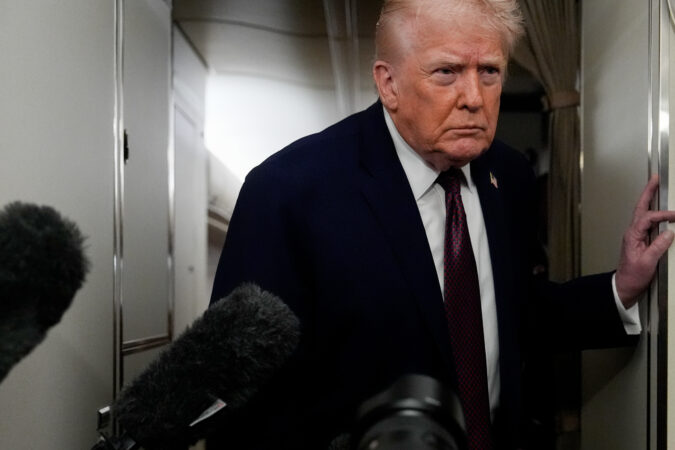
    WASHINGTON — President Donald Trump said on Tuesday that he’s cutting off the prospect of talks with Iranian officials amid a protest crackdown, telling Iranian citizens “help is on its way.”

    Trump did not offer any details about what the help would entail, but it comes after the Republican president just days ago said Iran wants to negotiate with Washington after his threat to strike the Islamic Republic, where the death toll from nationwide protests has spiked to more than 2,000, according to human rights monitors.

    But Trump, with his latest message on social media, appeared to make an abrupt shift about his willingness to engage with the Iranian government.

    “Iranian Patriots, KEEP PROTESTING – TAKE OVER YOUR INSTITUTIONS!!!” Trump wrote in a morning post on Truth Social, which he later amplified during a speech at an auto factory in Michigan. “Save the names of the killers and abusers. They will pay a big price. I have cancelled all meetings with Iranian Officials until the senseless killing of protesters STOPS. HELP IS ON ITS WAY.”

    Trump, in an exchange with reporters during the factory visit, demurred when asked what kind of help he would provide.

    “You’re going to have to figure that one out,” he said.

    He also said he didn’t have accurate numbers on the death toll in Iran but added: “I think it’s a lot. It’s too many, whatever it is.”

    The president has repeatedly threatened Tehran with military action if his administration found the Islamic Republic was using deadly force against antigovernment protesters. Trump on Sunday told reporters he believed Iran is “starting to cross” that line and has left him and his national security team weighing “very strong options” even as he said the Iranians had made outreach efforts to the U.S.

    And on Monday, the president’s team offered guarded hope that a diplomatic solution could be found.

    “What you’re hearing publicly from the Iranian regime is quite different from the messages the administration is receiving privately, and I think the president has an interest in exploring those messages,” White House press secretary Karoline Leavitt told reporters Monday. “However, with that said, the president has shown he’s unafraid to use military options if and when he deems necessary, and nobody knows that better than Iran.”

    Also on Monday, Trump said he would slap 25% tariffs on countries doing business with Tehran “effective immediately,” but the White House has not provided details on that move. China, the United Arab Emirates, Turkey, Brazil and Russia are among economies that do business with Tehran.

    Vice President JD Vance, Secretary of State Marco Rubio and key White House National Security Council officials began meeting Friday to develop options for Trump, ranging from a diplomatic approach to military strikes.

    Iran, through the country’s parliamentary speaker, has warned that the U.S. military and Israel would be “legitimate targets” if Washington uses force to protect demonstrators.

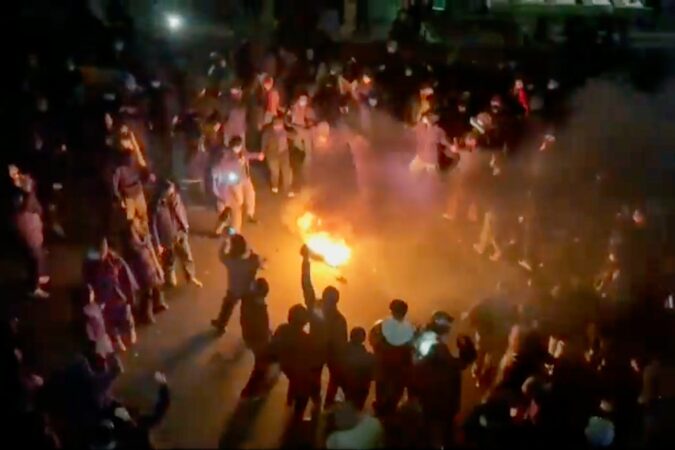
    More than 600 protests have taken place across all of Iran’s 31 provinces, the Human Rights Activists News Agency reported Tuesday. The activist group said about 1,850 of the dead were protesters and 135 were government-affiliated. It said more than 16,700 people had been detained.

    Understanding the scale of the protests has been difficult. Iranian state media has provided little information about the demonstrations. Online videos offer only brief, shaky glimpses of people in the streets or the sound of gunfire.

    Iranian state television appeared to acknowledge the high death toll on Tuesday. A TV report said the country had ‘a lot of martyrs’ in the nationwide protests and quoted Ahmad Mousavi, the head of the Martyrs Foundation.

    The anchor read a statement that laid blame on “armed and terrorist groups, which led the country to present a lot of martyrs to God.”

    Trump’s push on the Iranian government to end the crackdown comes as he is dealing with a series of other foreign policy emergencies around the globe.

    It’s been just over a week since the U.S. military launched a successful raid to arrest Venezuela’s Nicolás Maduro and remove him from power. The U.S. continues to mass an unusually large number of troops in the Caribbean Sea.

    Trump is also focused on trying to get Israel and Hamas onto the second phase of a peace deal in Gaza and broker an agreement between Russia and Ukraine to end the nearly four-year war in Eastern Europe.

    But advocates urging Trump to take strong action against Iran say this moment offers an opportunity to further diminish the theocratic government that’s ruled the country since the Islamic revolution in 1979.

    Russia’s Foreign Ministry on Tuesday called the threats “categorically unacceptable.”

    The ministry warned in a statement that any such strikes would have “disastrous consequences” for the situation in the Middle East and global security. It also criticized what it called “brazen attempts to blackmail Iran’s foreign partners by raising trade tariffs.”

    The statement noted that the protests in Iran had been triggered by social and economic problems resulting from Western sanctions. It also denounced “hostile external forces” for trying to “exploit the resulting growing social tension to destabilize and destroy the Iranian state” and charged that “specially trained and armed provocateurs acting on instructions from abroad” sought to provoke violence.

    The ministry voiced hope that the situation in Iran will gradually stabilize and advised Russian citizens in the Islamic Republic not to visit crowded places.

    The demonstrations are the biggest Iran has seen in years — protests spurred by the collapse of Iranian currency that have morphed into a larger test of supreme leader Ayatollah Ali Khamenei’s repressive rule.

    Iran appeared to ease some restrictions on its people and, for the first time in days, allowed them to make phone calls abroad via their mobile phones on Tuesday. It did not ease restrictions on the internet or permit texting services to be restored as the death toll from days of bloody protests against the state rose to at least 2,000 people, according to activists.

    Although Iranians were able to call abroad, people outside the country could not call them, several people in the capital told The Associated Press.

    The witnesses, who spoke on condition of anonymity, said SMS text messaging still was down and internet users inside Iran could not access anything abroad, although there were local connections to government-approved websites.

    It was unclear if restrictions would ease further after authorities cut off all communications inside the country and to the outside world late Thursday.

    United Nations officials said Tuesday that the more than 500 U.N. staff members in Iran are safe and accounted for as of Monday.

    Stephane Dujarric, the U.N. spokesperson, told reporters that many staff were working from home given the unrest that has spread throughout the country and killed hundreds of protesters.

    The U.N. country team in Iran has 46 international staff and 448 national staff.

  • Fewer Americans sign up for Affordable Care Act health insurance as costs spike

    Fewer Americans sign up for Affordable Care Act health insurance as costs spike

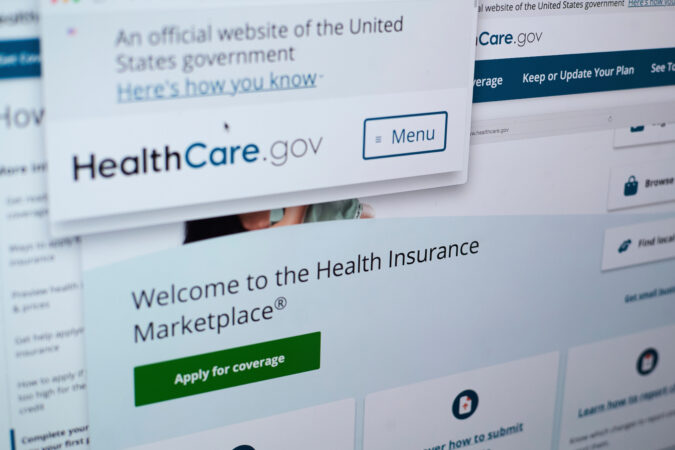
    NEW YORK — Fewer Americans are signing up for Affordable Care Act health insurance plans this year, new federal data shows, as expiring subsidies and other factors push health expenses too high for many to manage.

    Nationally, around 800,000 fewer people have selected plans compared to a similar time last year, marking a 3.5% drop in total enrollment so far. That includes a decrease in both new consumers signing up for ACA plans and existing enrollees re-upping them.

    The new data released Monday evening by the Centers for Medicare and Medicaid Services is only a snapshot of a continuously changing pool of enrollees. It includes sign-ups through Jan. 3 in states that use Healthcare.gov for ACA plans and through Dec. 27 for states that have their own ACA marketplaces. In most states, the period for shopping for plans continues through Jan. 15 for plans that start in February.

    But even though it’s early, the data builds on fears that expiring enhanced tax credits could cause a dip in enrollment and force many Americans to make tough decisions to delay buying health insurance, look for alternatives or forgo it entirely.

    Experts warn that the number of people who have signed up for plans may still drop even further, as enrollees get their first bill in January and some choose to cancel.

    Healthcare costs at the center of a fight in Congress

    The declining enrollment comes as Congress has been locked in a partisan battle over what to do about the subsidies that expired at the start of the new year. For months, Democrats have fought for a straight extension of the tax credits, while Republicans have insisted larger reforms are a better way to root out fraud and abuse and keep costs down overall. Last week, in a remarkable rebuke of Republican leadership, the House passed legislation to extend the subsidies for three years. The bill now sits in the Senate, where pressure is building for a bipartisan compromise.

    Up until this year, President Barack Obama’s landmark health insurance program had been an increasingly popular option for Americans who don’t get health coverage through their jobs, including small business owners, gig workers, farmers, ranchers and others.

    For the 2021 plan year, about 12 million people selected an Affordable Care Act plan. Enhanced tax credits were introduced the following year and four years later enrollment had doubled to over 24 million.

    This year’s sinking sign-ups — sitting at about 22.8 million so far — mark the first time in the past four years that enrollment has been down from the previous year at this point in the shopping window.

    The loss of enhanced subsidies means annual premium costs will more than double for the average ACA enrollee who had them, according to the healthcare research nonprofit KFF. But extending the subsidies would also be expensive for the country. Ahead of last week’s House vote, the nonpartisan Congressional Budget Office estimated that extending the subsidies for three years would increase the nation’s deficit by about $80.6 billion over the decade.

    Americans begin looking for other options

    Robert Kaestner, a health economist at the University of Chicago, said some of those who abandon ACA plans may have other options, such as going on a partner’s employer health plan or changing their income to qualify for Medicaid. Others will go without insurance at least temporarily while they look for alternatives.

    “My prediction is 2 million more people will lack health insurance for a while,” Kaestner said. ”That’s a serious issue, but Republicans would argue we’re using government money more efficiently, we’re targeting people who really need it and we’re saving $35 billion a year.”

    Several Americans interviewed by The Associated Press have said they’re dropping coverage altogether for 2026 and will pay out of pocket for needed appointments. Many said they are crossing their fingers that they aren’t affected by a costly injury or diagnosis.

    “I’m pretty much going to be going without health insurance unless they do something,” said 52-year-old Felicia Persaud, a Florida entrepreneur who dropped coverage when she saw her monthly ACA costs were set to increase by about $200 per month. “It’s sort of like playing poker and hoping the chips fall and try the best that you can.”

  • Democrats seek answers on donor access tied to Trump’s White House ballroom

    Democrats seek answers on donor access tied to Trump’s White House ballroom

    Senate Democrats are asking the nonprofit group that is managing donations to the White House ballroom to explain how much money has been raised and whether donors have been promised any special access or influence in exchange for supporting the estimated $400 million project, a top priority of President Donald Trump.

    “You owe Congress and the public answers about your role in managing funds for President Trump’s ballroom,” Sen. Elizabeth Warren (D., Mass.) and colleagues wrote in a letter Tuesday to the Trust for the National Mall that was shared with the Washington Post. The lawmakers gave the group two weeks to respond.

    Democrats say limited public disclosure has made it impossible to assess whether safeguards are in place to prevent donors from gaining access or influence through the project. The concerns are heightened, they argue, by Trump’s personal involvement in both the project’s design and fundraising.

    The White House has said private donors will entirely cover the ballroom addition’s cost but has declined to share basic details about the value of those gifts, or whether donors were offered meetings, access or other consideration in return. Publicly identified donors, such as Amazon, Google and Lockheed Martin, collectively have billions of dollars in contracts before the administration. (Amazon founder Jeff Bezos owns the Washington Post.)

    The Trust for the National Mall, which has managed past fundraising campaigns to restore the Washington Monument and other projects, has largely referred questions to the White House and the National Park Service since its role in the ballroom project was announced last year. The group also is expected to retain a small percentage — about 2.5% — of donations to the ballroom project for its own use, Democrats wrote. The Trust did not immediately respond to a request for comment.

    Administration officials have said the Trust could receive hundreds of millions of dollars in donations tied to the ballroom project, placing the group at the center of a fundraising effort unlike any it has previously managed.

    Trump administration officials have shared few details about the project, the most significant change to the White House grounds in decades, including the building’s final design. The lack of disclosure has also drawn legal scrutiny. Historic preservationists last month sued the Trump administration, arguing that the ballroom construction is illegal because the project did not undergo required review by two federal panels and Congress did not appropriate funding. The White House has denied the allegations. A hearing in the case is tentatively scheduled for Jan. 29 in U.S. District Court in Washington.

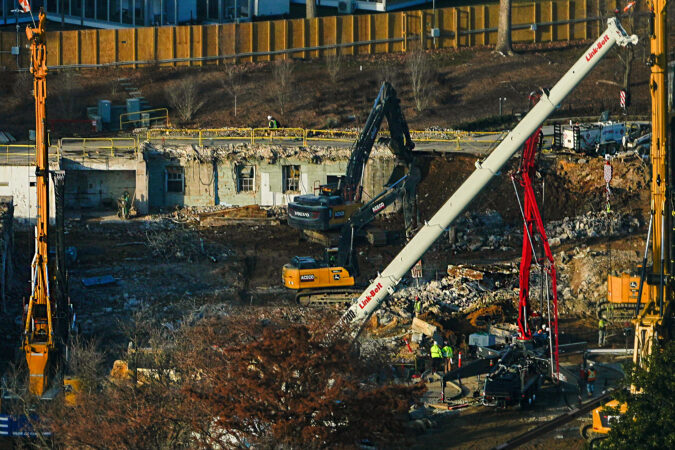
    Trump administration officials made their first public presentation on the ballroom Thursday, justifying their rapid teardown of the White House’s East Wing annex last fall as a financial decision.

    “The cost analysis proved that demolition and reconstruction provided the lowest total cost ownership and most effective long-term strategy,” Joshua Fisher, a senior White House official who is helping manage the project, said at a meeting of the National Capital Planning Commission, a review board set to weigh in on the ballroom’s design.

    Trump has also steadily increased the project’s planned seating capacity and estimated cost since announcing the ballroom in July. Officials now say the ballroom will seat about 1,000 people.

    “I started off with a building half of the seats … and then it just kept growing and growing, and the money kept pouring in and pouring in,” the president told the New York Times last week, adding that he would make the ballroom “bigger” if he could.

    Shalom Baranes, the architect Trump tapped to lead the project, told the National Capital Planning Commission last week that the ballroom would not grow further.

    In their letter to the Trust for the National Mall, Warren and her colleagues asked the group to explain whether it has internal controls or has undertaken other steps to ensure that donors are not given preferential treatment by the Trump administration.

    “This leaves open the question of whether the Trust is being misused to facilitate special-interest access and influence,” the senators wrote. They also asked whether Meredith O’Rourke, a longtime Trump fundraiser who has been coordinating donations, is employed by the Trust or otherwise affiliated with the group. O’Rourke referred questions about her role with the Trust to the White House, which did not immediately respond.

    Warren’s office also shared letters the senator received from companies that have donated to the project, which offered varied explanations for how they expected their gift to be used. Comcast, for instance, said its donation “included no specific limitations or conditions,” while Microsoft said its gift would go toward construction. Trump has also said several companies have pledged to cover specific aspects of the project, such as Carrier offering to cover an estimated $17 million in air-conditioning and heating costs.