Category: Wires

  • A heart surgeon saved his life as a teen. Now they perform surgeries together.

    A heart surgeon saved his life as a teen. Now they perform surgeries together.

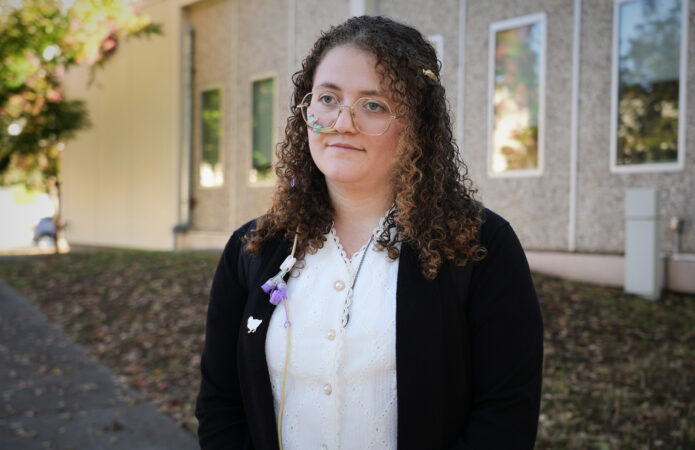
    The first time Mesfin Yana Dollar assisted with an open-heart surgery, his patient was a teenage girl from Ethiopia. She was scared and crying.

    He went to her bedside at Emory University Hospital in Atlanta and spoke to her in Amharic, explaining he would be running the machine that would function as her heart and lungs during the surgery.

    “I had the same surgery, and things are going to be just fine,” he told her, adding that as a teen he also had rheumatic fever that became rheumatic heart disease.

    The girl told him, “You must be an angel.”

    Years later, he still sees himself in every patient.

    “I was on that same operating table,” Mesfin said.

    Mesfin was born in a small village in Ethiopia in 1985. There was no electricity or running water, but he said he didn’t want for anything. He was surrounded by family and he was happy — until he got sick when he was around 10 or 11 years old.

    At first, he felt like he couldn’t run as fast and he became short of breath easily. Then he couldn’t walk to school anymore, and his cough kept him awake at night. His parents tried tribal medicine and taking him to doctors in nearby cities. He still didn’t know what was wrong — but he didn’t want to feel like a burden to his family. One day, he got a ride to the capital, Addis Ababa, and walked into Mother Teresa’s Missionaries of Charity. That’s where he met American doctor Rick Hodes.

    “I saw this young, short White man with a stethoscope hanging around his neck,” Mesfin said of Hodes, who lives in Ethiopia and helps patients with rheumatic heart disease and spine problems. “He was joking with the kids and joking with the patients.”

    Hodes, Mesfin learned, is known for saving thousands of lives in Ethiopia, often finding creative ways to fund treatment for the poorest and sickest patients. Hodes has adopted children so he could put them on his health insurance and send them to the United States for spinal surgeries.

    Leaving home for surgery

    Hodes listened to Mesfin’s heart and lungs, then ordered a battery of tests before telling Mesfin that he had a serious heart condition. He would need surgery.

    There was no open-heart surgery in Ethiopia at the time, so Hodes started working on finding a place for Mesfin to get surgery in the U.S.

    “He showed up out of nowhere, diagnosed me, and now he’s looking into surgery,” Mesfin recalled. He credits Hodes with saving his life.

    Mesfin flew to Atlanta when he was about 15 to get the surgery, which was funded in part by the nonprofit Children’s Cross Connection International. Jim Kauten, a cardiothoracic surgeon at Piedmont Heart Institute, repaired Mesfin’s mitral valve to improve his heart function. The surgery went well, and Mesfin returned to a host family nearby in Atlanta to recover.

    His host happened to be a dentist, and he recommended Mesfin have his wisdom teeth pulled before returning to Ethiopia. He recovered from his surgery, had his teeth pulled and returned to Addis Ababa, where he stayed with Hodes so the doctor could continue to monitor his recovery.

    Then the site of Mesfin’s wisdom teeth became infected. He developed endocarditis, a life-threatening condition. Hodes treated him in his living room with drugs, but Mesfin was getting sicker.

    “I told Dr. Rick, you know what, you did everything possible,” Mesfin recalled saying. “This is the will of God, and if I die, there’s no problem now.”

    Hodes said he would not let Mesfin die. He sent him back to Atlanta for emergency surgery. An ambulance met him at the airport.

    Instead of a valve repair, the doctors replaced his valve with a mechanical one that would last longer. But this meant Mesfin would need blood thinners and monitoring for life — so he couldn’t go back to his home in rural Ethiopia, where care wasn’t readily available.

    Mesfin’s cardiologist, Allen Dollar, decided to take Mesfin into his home — and the teen joined the Dollars’ growing family in Atlanta, which includes biological and adopted children. Mesfin eventually took the family’s name.

    “It kind of reminded me of home because I have 11 brothers and two sisters,” Mesfin said. “This is as large a family as I had back in Ethiopia.”

    ‘A second life’

    As a teenager at school in Atlanta, Mesfin studied hard to improve his English and quickly caught up to his peers.

    “I was blessed with a second life,” he said.

    Cardiovascular disease is a leading cause of death in young adults in Ethiopia, and rheumatic heart disease, Allen Dollar said, is a top reason. Rheumatic fever can develop when strep throat, or sometimes scarlet fever, isn’t properly treated.

    “Until recently, there literally were no heart surgeons for 100 million people,” Allen said.

    The hospital where he worked, Piedmont Heart Institute, started bringing more kids over for surgeries.

    Allen said that Mesfin quickly adapted to the rhythms of American life.

    “Mesfin was the most studious of any of our kids,” Allen said. “I never saw a kid study so much in my life.”

    Mesfin knew he wanted to work in healthcare. He went to Georgia State University and studied to be a respiratory therapist. That’s where he met his wife, Iyerusalem. They have two sons. Mesfin worked in Atlanta for a couple of years before moving his young family to Texas. He trained to be a cardiac perfusionist at the Texas Heart Institute and eventually got a job at the Mayo Clinic in Minnesota, where his wife now works, too, as a cardiac sonographer.

    At the Mayo Clinic, Mesfin, 40, runs the heart-lung machine for patients during some of the most complex open-heart surgeries in the world.

    He and the surgeon who saved his life return to Ethiopia to do surgeries there through the nonprofit Heart Attack Ethiopia.

    On the first surgery mission trip a couple of years ago, Mesfin surprised Kauten by showing up.

    “That was especially nice in my mind,” Kauten said. “For him to be able to pay back to his community services that he received in the United States, and he was able to pay it back in Ethiopia.”

    Kauten said that in addition to being a skilled perfusionist, Mesfin acts as an interpreter for the Ethiopian and American healthcare workers, and helps the team with a sense of cohesion. He also spends hours with students training to be perfusionists, like him, to help them learn.

    As much as Mesfin loved his new life, he missed his biological family. He eventually helped bring his parents and several of his siblings to the U.S.

    Allen said he is proud of his adoptive son’s professional success — but also of the person he has become.

    “He has retained this spirit of gratitude,” he said. “He has never lost sight of what his life could have been and all the people along the way.”

    “I’m always grateful,” Mesfin said. “I’m grateful for my family, for just being in the United States. It’s a resurrection for me. You know, I was once lost, dead, and I was resurrected and I’m living a new life.”

  • These creative activities may help slow down brain aging

    These creative activities may help slow down brain aging

    Playing music, dancing, creating art — and even playing some types of video games — aren’t just immersive and emotionally rewarding. They may actually slow down brain aging, a new study suggests. By analyzing brain activity data, the researchers found that engaging in creative pursuits of all kinds is linked to a younger-looking brain. The study was published by Nature Communications in October.

    “This is not just a solution for the da Vincis of the world. Anyone can benefit from having a creative hobby, not just geniuses or professional artists,” said study author Agustín Ibáñez, director of the Latin American Brain Health Institute at Universidad Adolfo Ibáñez. “We are living in a world full of stress, uncertainty, and despair. Creating a little bubble through art or music can have a positive impact on your brain health.”

    Delayed aging

    The researchers analyzed imaging data of brain activity taken from 1,467 healthy participants from around the world, including tango dancers, musicians, visual artists, and strategy video game players. To quantify brain aging, they used brain clocks, which are computational models that can estimate the difference between a person’s chronological age and their brain’s biological age.

    “We use brain connectivity metrics to predict your brain age, and there is a gap between this estimated age and your real age,” Ibáñez said. “This gap is informative for assessing accelerated or delayed brain aging.”

    Accelerated aging of the brain, as indicated by a person’s brain appearing older than their actual age, has been observed in some people with psychiatric and neurological conditions. In the current study, Ibáñez and his colleagues wanted to investigate what other factors are associated with delayed brain aging.

    The researchers found that all four creative and challenging pursuits they looked at — dance, music, visual art, and strategy video games — were associated with delayed brain aging. And greater expertise and performance level seemed to help. Experts with years of practice had younger brains compared with hobbyists. Out of all participants, highly skilled tango dancers seemed to have the most youthful brains — an average of seven years younger than their chronological age.

    However, even participants who learned a creative skill managed to reap some antiaging benefits. The researchers trained 24 people to play “StarCraft II,” a video game that requires strategic thinking and imagination. A control group was trained in “Hearthstone,” a rule-based video game with limited improvisation and creative play. After 30 hours of training, spread over three to four weeks, the “StarCraft II” group showed slower brain aging compared to the “Hearthstone” group.

    The study used strong, well-validated methods, and its findings align with previous research showing that participation in the arts is related to younger biological age, said Daisy Fancourt, a professor of psychobiology and epidemiology at University College London.

    “There have been increasing studies identifying associations between arts engagement and both cognitive preservation and delayed time to dementia onset,” said Fancourt, who was not involved in the research. “So while replication of the findings in this new paper in other data sets will be important, they overall reinforce the importance of continued research on the health benefits of the arts.”

    Protective effects even from passive activities

    Even taking in art made by others — such as going to a concert or play — may have protective effects that help buffer against age-related cognitive decline. Other research suggests such receptive arts engagement may help preserve cognitive function in later life.

    In a 2022 study, Jill Sonke, a research professor in the Center for Arts in Medicine at the University of Florida, and her colleagues analyzed data from 4,344 older adults based on six cognitive tests given in 2004 and 2011. While test performance slightly declined overall in the seven years from baseline to follow-up, engaging in receptive arts activities (such as going to a concert, play, or museum) for up to three hours a week was associated with better subsequent memory.

    A more recent study published in 2025 found that engaging in cognitively stimulating activities has a wide array of cognitive benefits, such as improved memory, better language ability, and improved executive functioning.

    The findings originate from the Long Life Family Study, a research project focused on families that have multiple people living into their 90s to uncover the biological, environmental, and behavioral factors that contribute to healthy aging. Older adults without a history of family longevity who frequently participated in hobbies such as reading and attending concerts, plays and musicals were able to match the same level of good cognitive functioning as those with familial longevity.

    “Even if you don’t have exceptional longevity in your family, what our results show is that you still can improve your chances for cognitive health by taking part in cognitively stimulating activities,” said Stacy Andersen, an assistant professor of medicine at Boston University’s Chobanian & Avedisian School of Medicine, and lead author of the September study. “There’s no time like the present to learn something new — like photography or how to play guitar — that can also help protect your future brain.”

    How to benefit from creative arts

    Here are some tips from experts on nurturing a creative activity:

    • Cultivate your flow state. Ibáñez thinks creativity’s power comes from entering the flow state, where stress and time fade away. Lean into activities and experiences that keep you fully engaged and deeply focused. “To truly have a creative experience demands focus, attention, and practice,” he said.
    • Participate in a hobby club or group. Having strong social connections is also linked to healthy aging, and a shared creative activity is one way to bond with others in your community.
    • Combine creativity with movement. “Some hobbies such as dance not only engage the mind but also engage the body,” Andersen said. “Anything that keeps your heart healthy is going to also help keep your brain healthy.”
    • Know that it’s never too late. Being excited to work on a creative project or hobby can provide a strong sense of purpose and fulfillment, particularly in retirement. At age 54, Sonke learned how to sing and play guitar. “It was just amazing taking up a new art form in midlife,” said Sonke, now 59. “I don’t strive to be a professional musician, but it is a huge part of my life now.”

    “The arts are phenomenally multimodal, in that they give us so many different kinds of benefits at the same time,” Sonke said. “They can engage us with information, physical movement, and uplifting activities that contribute to reduction of stress and improvement in mental health.”

  • As a doctor, here’s my simple, science-backed schedule for a healthier day | Expert Opinion

    As a doctor, here’s my simple, science-backed schedule for a healthier day | Expert Opinion

    How can I organize my day so I can feel as good as possible?

    The morning routines and “biohacks” you see on social media can seem extreme and often oversell the science. But consistent daily routines do matter.

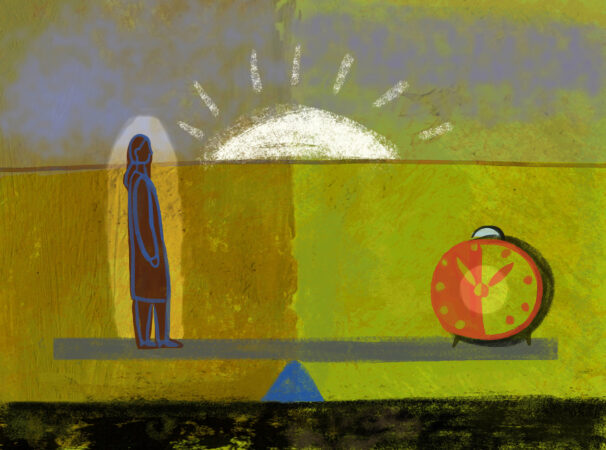
    Routines are linked to better health, academic success, and even resilience. We can all take simple steps to synchronize our activities with our circadian rhythms and biology. Small tweaks in the timing of things can pay off.

    I analyzed dozens of studies to separate hype from science, and here’s my straightforward advice for a healthier day: Maximize your efforts in the morning — that’s when much of the magic can happen for your health and productivity. And be consistent with your nighttime rituals. The quality of your sleep, and your subsequent day, depend on it.

    Here’s a science-backed daily schedule to try. Think of it as a template to help you plan a healthier day.

    Early morning

    Goal: Get sunlight or light exposure early, engage in physical activity, and fuel up with protein and fiber. It may not be possible to pull all these off each morning — like if you’re a caregiver or have a long commute — but try to check as many of these boxes as possible.

    7 a.m.: Outdoor exercise then shower. If getting outside for an early walk or run is a nonstarter for you, think about investing in a light box to boost sunlike exposure and trying a quick and easy routine indoors to get your blood moving, like the 7-minute workout.

    8 a.m.: Eat a high-fiber, high-protein breakfast (aim for 25-30 grams of protein). Studies have found that when people pump up the protein at breakfast — think eggs, yogurt, and whole grains — they feel fuller and snack less later in the day. And getting in your daily coffee in the morning, before noon, is linked to a 16% lower risk of dying from all causes compared with people who sip throughout the day.

    8:30-9 a.m.: Morning commute or settle in for the day if you work from home.

    Why this works: Going outside first thing is key. Exposure to blue light halts melatonin production (the sleep hormone) and has been shown in randomized controlled trials to improve alertness, productivity, and depression.

    You’ll get bonus points if you exercise with a friend: A workout buddy boosts accountability, and social connectedness is an underappreciated key to longevity and happiness.

    And about those cold showers that are all the hype on social media: If you enjoy them, sure. But the data on cold water immersion isn’t slam dunk, and cold plunges may actually undo the benefits of strength training.

    Late morning

    Goal: This is the most productive window of your day, so tackle activities requiring greatest focus.

    9 a.m.-noon: Write the essay, read the stack of scientific papers piled on your desk, or finish working on that budget you’ve been procrastinating. Personally, this is when I leave my smartphone in another room and nix notifications.

    Why this works: Our alertness and intellectual performance peak as we approach midday. Riding the high of your early morning cortisol (and your first coffee), this is the window when you’re bringing your A-game.

    While you’re working, set a 50/10 timer for micro-breaks. A meta-analysis showed that a 10-minute or less break every hour — to stretch, stroll around the cubicles, or do a brief meditation exercise — can enhance, not hurt, performance.

    Afternoon

    Goal: Counter that post-lunch inertia with a brisk walk — not more caffeine. Then tackle simple tasks.

    Noon: Eat with a friend, family member, or colleague if you can, then take a 15-30-minute walk.

    1-4 p.m.: Now’s the time to get those mindless errands (or worse, mind-numbing meetings) out of the way.

    Why this works: Decision fatigue builds as the day goes on. We’re all susceptible: A 2019 study published in JAMA Network Open found that as the afternoon wears on, primary care doctors are less likely to order breast and colorectal cancer screening tests for their patients than in the morning — and perhaps more interestingly, patients are also less likely to follow through with future screenings if that first appointment is in the afternoon.

    High-stakes moments are better scheduled earlier, but you can help counter the fatigue with a post-lunch walk outdoors. Pro-tip: If the weather is bad, a 10-minute walk inside will help control your blood sugar after the meal, so still prioritize movement.

    Evening

    Goal: Eat early and start winding down.

    5 p.m.: Pick up the kids, drive home, prep dinner, and pair your evening grind with a joy snack. I enjoy a fun podcast, calling my mom, or even just doing random acts of kindness for my fellow commuters like pausing to allow someone to cut in.

    5:30 p.m.: Aim to eat within an 8 to 10-hour window each day, so chow down on the earlier side. If this time frame isn’t doable, try to eat ideally at least two hours before bedtime.

    8 p.m.: Think of this as your digital sunset — minimize screens and dim household lights, which can suppress melatonin.

    Why this works: Evidence for intermittent fasting is most promising when we’re talking about an eating window of 8-10 hours within a day. The exact same meal can raise your blood sugar more at night than if you ate it early in the morning due to circadian effects.

    Bedtime

    Goal: Avoid alcohol and vigorous exercise, and build in a nightly ritual to quiet the mind.

    9 p.m.: Take a warm bath one hour before bed or slip on some cozy socks.

    9:30 p.m.: Engage in a short mindfulness or journaling exercise.

    10 p.m.: Lights out. The next seven to nine hours are for you and your pillow. Nighty-night.

    Why this works: In my ideal schedule, I would have showered after my morning workout, so if you already bathed once, no need to repeat. Instead, wear some warmer clothes to start getting your body ready to sleep. This trick can be as effective as melatonin to help you fall asleep quicker by helping your core temperature drop.

    A randomized controlled trial found that mindfulness exercises — even starting with just five minutes daily — helped improve sleep quality compared with standard sleep hygiene education offering tips such as dimming lights and avoiding alcohol or caffeine at night. Journaling can also help the mind unwind: Studies have found that actually writing a gratitude letter to someone specific (regardless of whether you send it) is more effective than making a simple gratitude list.

    I also love to write a specific to-do list about the coming days. It helps alleviate nighttime worry, and a 2018 study found that people who do this fall asleep faster.

    What I want my patients to know

    New routines don’t stick overnight. A classic study found that it takes on average 66 days of practicing a new dietary or physical behavior each day before it becomes a habit. This routine is a great goal. But some days, with my two toddlers in the mix, work deadlines, and ruthless Boston traffic, I don’t nail it.

    You need to make it easy to make it last. So choose one habit and list every barrier that will keep you from hitting the mark. Then presolve each one. Is it too cold to go for a jog early in the morning? Find a good 30-minute cardio routine on YouTube that you can do in your bedroom.

    Don’t have time for a 15-minute walk after lunch? Turn one of your afternoon calls into a walking-and-talking meeting (a personal favorite), or take a smaller win with a 5-minute lap around the building.

  • V.J. Edgecombe’s game-winning shot, Tyrese Maxey’s game-saving block helps Sixers beat Warriors, 99-98

    V.J. Edgecombe’s game-winning shot, Tyrese Maxey’s game-saving block helps Sixers beat Warriors, 99-98

    Rookie VJ Edgecombe made the go-ahead follow shot with 0.9 seconds left, Tyrese Maxey raced back for a game-saving blocked shot and the 76ers beat the short-handed Golden State Warriors 99-98 on Thursday night.

    Maxey scored 35 points but missed a jumper with the Sixers trailing by one. Edgecombe tipped it in, but the Warriors quickly fired an inbounds pass to De’Anthony Melton, who had broke downcourt. Maxey got back to block the shot off the backboard just before time expired.

    Joel Embiid had 12 points in his return to the 76ers lineup.

    Pat Spencer scored 16 points for the Warriors, who erased a 24-point deficit despite playing with their two leading scorers, Stephen Curry (left quad contusion) and Jimmy Butler (left knee soreness), then losing Draymond Green to an injured right foot late in the second quarter.

    Sixers’ Joel Embiid (left), Tyrese Maxey and Adem Bona celebrate after they beat the Warriors by one.

    Maxey’s three-pointer made it 67-43 with 8 minutes, 6 seconds left in the third quarter. But the Warriors used a 15-0 run early in the fourth quarter to get back in the contest, then had a late lead before Edgecome stole an inbounds pass with 8.2 seconds to play.

    Paul George (left knee injury recovery) was out for the Sixers, who play the second game of a back-to-back on Friday night in Milwaukee (8 p.m., NBCSP).

    Curry didn’t even make the trip to Philadelphia, missing his third in a row and seventh game this season. Butler couldn’t play after getting injured in the Warriors’ 124-112 home loss to Oklahoma City on Tuesday. Golden State did get some good news on the injury front with the return of Melton, who had 14 points in his season debut while coming back from a torn ACL.

  • Zohran Mamdani and the Louvre make the list of most mispronounced words of 2025

    Zohran Mamdani and the Louvre make the list of most mispronounced words of 2025

    DALLAS — From the election of Zohran Mamdani to the intrigue surrounding the jewel heist at the Louvre, keeping up with this year’s news also left some Americans struggling with pronunciations. That’s put both the name of New York City’s incoming mayor and the famed Paris museum on a list of the most mispronounced words in 2025.

    The language-learning company Babbel and closed-captioning company The Captioning Group on Thursday released a list of the words that news anchors, politicians, and other public figures in the U.S. struggled with the most this year, giving an overview of the people and topics that had Americans talking.

    As Mamdani made his political rise, the democratic socialist’s name often was mangled. When he takes office in January, the 34-year-old will become the city’s first Muslim mayor, first born in Africa, and first of South Asian heritage. Babbel said his name — which should be pronounced zoh-RAHN mam-DAH-nee — was most commonly mispronounced when people swapped the “M” and “N” in his last name.

    Mamdani has said he doesn’t mind if someone tries to pronounce his name correctly and misses but that some mispronounce it intentionally. During one mayoral race debate, he chided former New York Gov. Andrew Cuomo’s pronunciation of his name, telling his opponent: “The name is Mamdani. M-A-M-D-A-N-I.”

    The theft of France’s crown jewels from the Louvre in October had many people mispronouncing the name of the world’s most-visited museum. Babbel says the correct pronunciation is LOOV-ruh, with a very soft pronunciation on the “ruh,” which can be a challenge for English speakers.

    “A lot of these words come from different languages and so we have to adapt to a sound that we’ve never made before,” said Esteban Touma, a linguistic and cultural expert at Babbel.

    Other words and names on the list include:

    • Acetaminophen, the active ingredient in the Tylenol, is pronounced uh-SEE-tuh-MIH-nuh-fen. President Donald Trump gave comedians plenty of material when he stumbled over the word as he implored pregnant women to avoid taking the painkiller despite inconclusive evidence about whether too much could be linked to autism.
    • Alex Murdaugh, the prominent South Carolina attorney who was sentenced to life in prison for the 2021 fatal shootings of his wife and son, is pronounced AL-ick MUR-dock. This year the case was dramatized in a series on Hulu.
    • Mounjaro, pronounced mown-JAHR-OH, is part of a wave of diabetes and obesity medications that soared in popularity because of the weight people have lost while taking the injections.

    Several words on the U.S. list, including Louvre and Mounjaro, also made the list for the U.K., which was compiled by Babbel and the British Institute of Verbatim Reporters, an organization for subtitling professionals. Storm Éowyn, which battered Ireland, Northern Ireland and Scotland in January, put that name on the U.K. list. Babbel says the correct pronunciation is ay-OH-win, said with a three-beat pattern.

    Throughout the year, captioners note words that come up over and over as difficult to pronounce, spell or are newly emerging. Linguists at Babbel also track new pronunciation challenges they see.

    In a pronunciation surprise of the year, actor Denzel Washington told late-night talk show host Jimmy Kimmel that he was named after his father and their first names are actually pronounced DEN-zul. But, he said, that became confusing so his mother decided to pronounce her son’s name Den-ZELLE.

  • Could RoboCop be to Detroit what Rocky is to Philly?

    Could RoboCop be to Detroit what Rocky is to Philly?

    DETROIT — RoboCop has finally found a permanent home in Detroit.

    A statue looming 11 feet tall and weighing 3,500 pounds has been drawing fans since it began standing guard over the Motor City on Wednesday afternoon, after about 15 years in the making. Even in a snowstorm in the dark, people were driving by to see it, said Jim Toscano, co-owner of the FREE AGE film production company where the bronze-cast statue now stands bolted near the sidewalk.

    RoboCop hit theaters in 1987, portraying a near-future Detroit as crime-ridden and poorly protected by a beleaguered and outgunned police force, until actor Peter Weller appeared as a nearly invincible cyborg, created by a nefarious corporation bent on privatizing policing.

    There was a time when Detroit pushed back on anything pointing to its past reputation as an unsafe city, and the movie, which developed a cult following, spawning two sequels and a reboot, didn’t help its image.

    But things have changed. Violent crime has been trending down for years. Homicide numbers have dropped below mid-1960s levels. And city officials offered no objections to the statue’s installation, Toscano said.

    “I think there will be a lot more acceptance,” Toscano said. “Detroit has come a long way. You put in a little nostalgia and that helps.”

    The statue campaign appears to have started around 2010 when Detroit Mayor Dave Bing was tagged in a tweet that noted Philadelphia’s statue of boxer Rocky Balboa and said RoboCop would be a “GREAT ambassador for Detroit.”

    Bing tweeted back, saying there were no such plans. But some Detroiters ran with the idea, crowdfunding it through a 2012 Kickstarter campaign that raised more than $67,000 from more than 2,700 backers worldwide, and Detroit sculptor Giorgio Gikas finished the statue in 2017.

    Then, it got stuck, stored away from public view.

    The Michigan Science Center in Detroit ultimately nixed plans to host the sculpture in 2021, citing pressures from the coronavirus pandemic and the need to focus museum resources. Officials in Stevens Point, Wis., raised their hands, hoping to honor Weller, a native son of that city, by erecting it outside the police station or in a park.

    The search for a suitable home for RoboCop remained in limbo until about three years ago when Toscano’s company bought a building in Eastern Market, an open-air produce market, shopping and entertainment district just northeast of downtown. Toscano says he thought they were “kidding” when he was contacted by the creator of the statue idea and Eastern Market officials. But he and his business partner gladly came on board: “It’s too unusual, too unique, too cool not to do,” Toscano said.

    Toscano, 48, says he’s only viewed the first RoboCop movie.

    “It wasn’t a big film in our house,” he admitted. But if there is one iconic line uttered by RoboCop that fits this moment, Toscano said it would be “Thank you for your cooperation.”

    On Thursday, James Campbell approached the statue and told three picture-takers: “I own this. Do you guys know that?”

    Campbell said he donated $100 to the original Kickstarter campaign over a decade ago, which makes him a “.038% owner of this statue.”

    “I’m here to see this big, beautiful, bronze piece of art,” he said. “What a piece of cinematic history to represent the city of Detroit.”

    Asked why RoboCop is an appropriate symbol for the city, Campbell said: “He’s a cyborg crime fighter! In the movie, in the futuristic Detroit, he’s there to save the city. He’s a symbol of hope.”

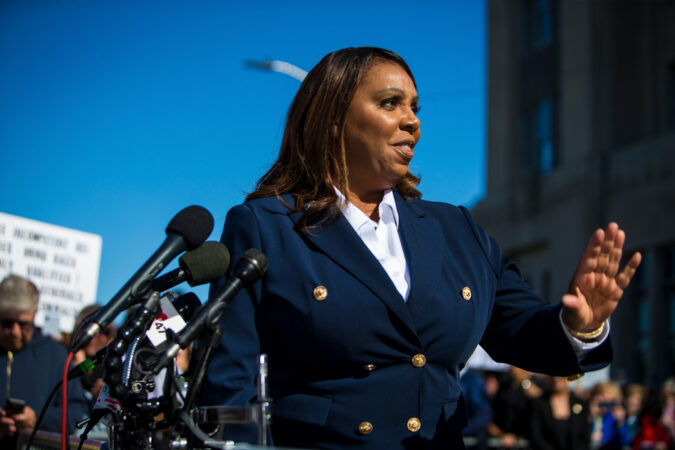
  • Grand jury rejects new mortgage fraud indictment against New York Attorney General Letitia James

    Grand jury rejects new mortgage fraud indictment against New York Attorney General Letitia James

    NORFOLK, Va. — The Justice Department failed Thursday to secure a new indictment against New York Attorney General Letitia James after a judge dismissed the previous mortgage fraud prosecution encouraged by President Donald Trump, according to people familiar with the matter.

    Prosecutors went back to a grand jury in Virginia after a judge’s ruling halting the prosecution of James and another longtime Trump foe, former FBI Director James Comey, on the grounds that the U.S. attorney who presented the cases was illegally appointed. But grand jurors rejected prosecutors’ request to bring charges.

    It’s the latest setback for the Justice Department in its bid to prosecute the frequent political target of the Republican president.

    Prosecutors are expected to try again for an indictment, according to one person familiar with the matter who spoke on the condition of anonymity because they were not authorized to publicly discuss the case.

    James was initially charged with bank fraud and making false statements to a financial institution in connection with a home purchase in Norfolk, Va., in 2020. Lindsey Halligan, a former White House aide and Trump lawyer, personally presented the case to the grand jury in October after being installed as U.S. attorney for the Eastern District of Virginia amid pressure from Trump to charge Comey and James.

    James has denied any wrongdoing and accused the administration of using the justice system to seek revenge against Trump’s political opponents. In a statement Thursday, James said: “It is time for this unchecked weaponization of our justice system to stop.”

    “This should be the end of this case,” her attorney, Abbe Lowell, said in a statement. “If they continue, undeterred by a court ruling and a grand jury’s rejection of the charges, it will be a shocking assault on the rule of law and a devastating blow to the integrity of our justice system.”

    The allegations related to James’ purchase of a modest house in Norfolk, where she has family. During the sale, she signed a standard document called a “second home rider” in which she agreed to keep the property primarily for her “personal use and enjoyment for at least one year,” unless the lender agreed otherwise.

    Rather than using the home as a second residence, James rented it out to a family of three, allowing her to obtain favorable loan terms not available for investment properties, prosecutors alleged.

    It’s the latest example of pushback by grand jurors since the beginning of the second Trump administration. It’s so unusual for grand jurors to refuse to return an indictment that it was once said that prosecutors could persuade a grand jury to “indict a ham sandwich.” But the Justice Department has faced setbacks in front of grand juries in several recent cases.

    Even if the charges against James are resurrected, the Justice Department could face obstacles in securing a conviction against James.

    James’ lawyers separately argued the case was a vindictive prosecution brought to punish the Trump critic who spent years investigating and suing the Republican president and won a staggering judgment in a lawsuit alleging he defrauded banks by overstating the value of his real estate holdings on financial statements. The fine was later tossed out by a higher court, but both sides are appealing.

    The defense had also alleged “outrageous government conduct” preceding her indictment, which the defense argued warrants the case’s dismissal. The judge hadn’t ruled on the defense’s arguments on those matters before dismissing the case last month over the appointment of Lindsey Halligan as U.S. attorney.

    U.S. District Judge Cameron McGowan Currie took issue with the mechanism the Trump administration employed to appoint Halligan to lead one of the Justice Department’s most elite and important offices.

    Halligan was named as a replacement for Erik Siebert, a veteran prosecutor in the office and interim U.S. attorney who resigned in September amid Trump administration pressure to file charges against both Comey and James.

    The following night, Trump said he would be nominating Halligan to the role of interim U.S. attorney and publicly implored Attorney General Pam Bondi to take action against his political opponents, saying in a Truth Social post that, “We can’t delay any longer, it’s killing our reputation and credibility” and “JUSTICE MUST BE SERVED, NOW!!!”

    Comey was indicted three days after Halligan was sworn in by Bondi, and James was charged two weeks after that.

    The Justice Department had defended Halligan’s appointment but has also revealed that Bondi had given Halligan a separate position of “Special Attorney,” presumably as a way to protect the indictments from the possibility of collapse. But Currie said such a retroactive designation could not save the cases.

  • California activist gets jail time for taking chickens from Perdue Farms plant

    California activist gets jail time for taking chickens from Perdue Farms plant

    SANTA ROSA, Calif. — A California animal welfare activist who took four chickens from a major Perdue Farms poultry plant was sentenced to 90 days in jail after being convicted of felony conspiracy, trespassing and other charges.

    Zoe Rosenberg, 23, did not deny taking the animals from Petaluma Poultry but argued she wasn’t breaking the law because she was rescuing the birds from a cruel situation. A jury found her guilty in October after a seven-week trial in Sonoma County, an agricultural area of Northern California.

    Rosenberg was sentenced on Wednesday and ordered to report to the Sonoma County Jail on Dec. 10. She will serve the 90 days, but 60 of those may involve jail alternates, such as house arrest, the county’s district attorney’s office said. Rosenberg will also have two years of probation, and she is ordered to stay away from all Perdue facilities in the county.

    The activist with Direct Action Everywhere, or DxE, a Berkeley-based animal rights group, has said she does not regret what she did.

    “I will not apologize for taking sick, neglected animals to get medical care,” Rosenberg said following her conviction.

    The group named the birds — Poppy, Ivy, Aster, and Azalea — and placed them in an animal sanctuary.

    Petaluma Poultry has said that DxE is an extremist group that is intent on destroying the animal agriculture industry. The company maintains that the animals were not mistreated and said Wednesday’s sentencing upholds the rule of law.

    “We’re grateful that DxE has been held to account for its unlawful campaign –- training and paying staff to carry out dangerous, unauthorized intrusions onto private property,” Herb Frerichs, general counsel for Petaluma Poultry, said in a statement Thursday. “DxE’s actions show a reckless disregard for employee safety, animal welfare, and food security.”

    Rosenberg testified that she disguised herself as a Petaluma Poultry worker using a fake badge and earpiece to take the birds, and then posted a video of her actions on social media.

    Petaluma Poultry is a subsidiary of Perdue Farms — one of the United States’ largest poultry providers for major grocery chains.

    The co-founder of DxE was convicted two years ago for his role in factory farm protests in Petaluma.

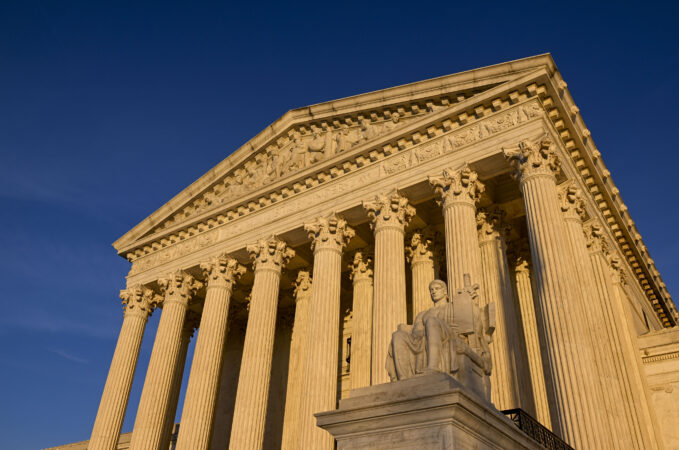
  • Supreme Court lets Texas use congressional map favored by Trump

    Supreme Court lets Texas use congressional map favored by Trump

    WASHINGTON – Texas can use a congressional map drawn to give President Donald Trump and Republicans an advantage in the 2026 midterm elections, the Supreme Court said Dec. 4 in a decision that may help the GOP keep control of the U.S. House.

    An ideologically divided court paused a lower court’s ruling that the map likely discriminates against racial minorities by diluting the voting power of Hispanic and Black Texans.

    That opinion, which replaces a temporary freeze on the ruling issued by Justice Samuel Alito on Nov. 21, keeps the map in place for the midterm elections as litigation over the boundaries continues.

    The court said the order blocking the map from being used next year was improper because it came too close to the election.

    “The District Court improperly inserted itself into an active primary campaign, causing much confusion and upsetting the delicate federal-state balance in elections,” the majority wrote in a brief, unsigned opinion.

    The court’s three liberal justices dissented.

    Texas started redistricting push

    At the urging of the Trump administration, the GOP-controlled Texas legislature drew new district lines midway through the usual 10-year redistricting cycle, setting off a race among states to get in the game. Some of those other efforts are also being challenged in court.

    Despite the uncertainty about what the playing field will look like, Democrats remain favored to flip the House next year, according to nonpartisan handicappers at the University of Virginia’s Center for Politics.

    That could change, however, if the Supreme Court issues a ruling in a pending case from Louisiana that could open the door to more redistricting attempts in southern states. Depending on what the court says and how quickly the justices rule, Republicans could create multiple districts they’d be expected to win, analyst Kyle Kondik estimates.

    The new Texas map was designed to help Republicans win five more seats, although that’s not a sure thing.

    Republicans currently hold 25 of the state’s 38 seats in the U.S. House, where they have a slim majority. If Democrats seize control, they can block Trump’s legislative agenda and launch investigations into his administration.

    Racial gerrymandering?

    In redistricting battles, the Supreme Court has said federal courts can review whether race was improperly used to draw new lines, but not whether partisan politics was a factor.

    Civil rights groups and others challenging Texas’ new map argue it has fewer districts where Hispanic and Black voters together make up the majority, diminishing their voting power.

    “This is as stark a case of racial gerrymandering as one can imagine,” lawyers for some of the challengers said in a filing.

    A three-judge panel in Texas that reviewed the map ruled 2-1 that Texas Republican Gov. Greg Abbott directed the legislature to use race to redraw the lines following a demand from the Trump administration that discussed the racial makeup of some districts.

    “The public perception of this case is that it’s about politics. To be sure, politics played a role in drawing the 2025 Map. But it was much more than just politics,” Judge Jeffrey Brown, who was appointed to the federal bench by Trump in 2019, wrote. “Substantial evidence shows that Texas racially gerrymandered the 2025 Map.”

    In an irate and unusually personal dissent, Judge Jerry Smith – who was appointed by former President Ronald Reagan – called the decision “the most blatant exercise of judicial activism that I have ever witnessed.”

    Texas says race wasn’t main factor

    Texas’ attorneys told the Supreme Court that partisanship – not race – drove the redistricting. And the lower court’s ruling has caused chaos because candidates have already gathered signatures and filed applications to run in the new districts, they argued.

    Weighing in on behalf of Texas, the Justice Department told the Supreme Court that the lower court “misconstrued” the direction the administration gave the state.

    “Indeed, the record here affirmatively shows that the 2025 map was drawn in a race-blind manner,” the Justice Department wrote in a filing.

    The civil rights groups and voters challenging the map said the lower court’s decision was based on a nine-day hearing that included dozens of witnesses and hours of footage of legislators and Abbott discussing their motives.

    The challengers also said the impending December 8 filing deadline for Texas candidates running in the spring primary is not a reason to allow the new map to be used.

    Texas created its own emergency by unnecessarily choosing to create new maps, they told the Supreme Court, and “can’t insulate unconstitutional conduct from judicial review by deliberately timing that conduct close to an election.”

  • Speaker Johnson pleads with Republicans to keep concerns private after tumultuous week

    Speaker Johnson pleads with Republicans to keep concerns private after tumultuous week

    WASHINGTON — House Speaker Mike Johnson is imploring his fellow Republicans to stop venting their frustrations in public and bring their complaints to him directly.

    “They’re going to get upset about things. That’s part of the process,” Johnson told reporters Thursday. “It doesn’t bother me. But when there is a conflict or concern, I always ask all members to come to me, don’t go to social media.”

    Increasingly, they’re ignoring him.

    Cracks inside the GOP conference were stark this week as a member of Johnson’s own leadership team openly accused him of lying, rank-and-file Republicans acted unilaterally to force votes and a leadership-backed bill faltered. It’s all underscored by growing worries that the party is on a path towards losing the majority next year.

    “I certainly think that the current leadership and specifically the speaker needs to change the way that he approaches the job,” GOP Rep. Kevin Kiley of California said on Thursday.

    Kiley, who has grown vocally critical of Johnson after the GOP’s nationwide redistricting campaign backfired in California, said that the speaker has been critical of rank-and-file Republicans, so “he needs to be prepared to accept any criticism that comes with the job.”

    “And I think, unfortunately, there’s been ample reason for criticism,” he added.

    ‘Why do we have to legislate by discharge petitions?’

    For the first part of 2025, Johnson held together his slim Republican majority in the House to pass a number of President Donald Trump’s priorities, including his massive spending and tax cut plan.

    But after Johnson kept members out of session for nearly two months during the government shutdown, they returned anxious to work on priorities that had been backlogged for months — and with the reality that their time in the majority may be running out.

    First was a high-profile discharge petition to force the vote on releasing the Jeffrey Epstein files, which succeeded after it reached the 218-signature threshold. Other lawmakers are launching more petitions, a step that used to be considered a major affront to party leadership.

    “The discharge petition, I think, always shows a bit of frustration,” said GOP Rep. Dusty Johnson.

    Another discharge petition on a bill that would repeal Trump’s executive order to end collective bargaining with federal labor unions reached the signature threshold last month, with support from seven Republicans.

    And this week, GOP Rep. Anna Paulina Luna of Florida brought a long-anticipated discharge petition for a bill to bar members of Congress from trading stock. A number of Republicans have already signed on, in addition to Democrats.

    “Anxious is what happens when you get nervous. I’m not nervous. I’m pissed,” Luna wrote on social media late Thursday, responding to leadership comments that she was overly anxious.

    GOP Rep. Nancy Mace of South Carolina signed both Luna’s petition and the one to release the Epstein files. She told reporters Thursday that she expressed her frustrations directly to Johnson in a phone call, and also in what she described as “a deeply personal, deeply passionate letter, that we are legislating by discharge petition.”

    “We have a very slim majority, but I want President Trump’s executive orders codified,” Mace said. “I want to see his agenda implemented. Why do we have to legislate by discharge petitions?”

    Johnson’s own leadership team going after him

    At the center of Johnson’s pleas for members to bring concerns to him privately instead of on social media is the chairwoman of House Republican leadership, New York Rep. Elise Stefanik.

    Angered that a provision she championed wasn’t included in a defense authorization bill, Stefanik blasted Johnson’s claims that he wasn’t aware of the provision as “more lies from the Speaker.” She conducted a series of media interviews criticizing Johnson, including one with The Wall Street Journal in which she said he was a “political novice” who wouldn’t be re-elected speaker if the vote were held today.

    Johnson told reporters Thursday that he had a “great talk” with Stefanik the night before.

    “I called her and I said, ‘why wouldn’t you just come to me, you know?’” Johnson said. “So we had some intense fellowship about that.”

    Asked if she had apologized for calling him a liar, Johnson said: “Um, you ask Elise about that.”

    Illinois GOP Rep. Mary Miller released a statement Thursday providing support for Johnson, saying that while there are differences among members “our mission is bigger than any one individual or headline.”

    Democrats, who have had leadership criticisms of their own, have reveled in the GOP’s disarray. House Republican leaders attempted to muscle through an NCAA-backed bill to regulate college sports after the White House endorsed it, before support within Republican ranks crumbled. Some GOP lawmakers pointedly said they had bigger priorities before the end of the year.

    “It’s not that Congress can’t legislate, it’s House Republicans that can’t legislate. It’s the gang that can’t legislate straight. They continue to take the ‘my way or the highway’ approach,” said House Democratic Leader Hakeem Jeffries.

    Underlying GOP unease about 2026

    All eyes in the U.S. House were on a special election Tuesday night in a Tennessee district that a Republican had won in 2024 by nearly 21 percentage points, with Trump carrying the area by a similar margin.

    Republicans hoped the contest would help them regain momentum after losing several marquee races across the country in November. Democrats, meanwhile, argued that keeping the race close would signal strong political winds at their backs ahead of next year’s midterms, which will determine control of both chambers.

    Republican Matt Van Epps ultimately won by nearly 9 percentage points.

    “I do think to have that district that went by over 20 points a year ago be down to nine, it should be a wake up call,” said GOP Rep. Don Bacon of Nebraska.

    He argued that Republicans need “to get some economic progress, like immediately,” adding that “the president and his team have got to come to grips” that tariffs are not driving the economic growth Americans are feeling.

    “I just feel like they’re going to have to get out of their bubble,” Bacon said of the White House. “Get out of your bubble. The economy needs improving. Fix Ukraine and we do need a temporary health care fix.”

    Bacon is among a growing number of House Republicans who have announced they will retire after this term. Republican Rep. Marjorie Taylor Greene abruptly declared last month that she would resign in January, citing multiple reasons, including that “the legislature has been mostly sidelined” this year.

    Those retirements add to the GOP’s challenge in holding the House, as the party must now defend more open seats. Republicans have also seen a redistricting battle — sparked by Trump’s pressure on Texas Republicans and then more states — backfire in part. In November, California voters handed Democrats a victory by approving a new congressional map.

    “That’s living in a fantasy world if you think that this redistricting war is what’s going to save the majority,” said Kiley, now at risk of losing his seat after redistricting in California.

    He added: “I think what would make a lot bigger impact is if the House played a proactive role in actually putting forward legislation that matters.”