Category: Wires

  • National Guard can stay in D.C. for now, appeals court says

    National Guard can stay in D.C. for now, appeals court says

    The Trump administration will be allowed to continue its National Guard deployment in D.C. at least temporarily, pending another appeals court decision, a panel of U.S. Court of Appeals judges said Thursday.

    The ruling means the deployment of troops to the nation’s capital could persist beyond Dec. 11, the date a lower-court judge had previously set as a deadline for the administration to halt the mission.

    Judges with the D.C. Circuit of the U.S. Court of Appeals granted an administrative stay in the case, meaning the drawdown of troops in the capital will be delayed at least until the appeals court makes an additional ruling. The court emphasized that Thursday’s decision had nothing to do with the merits of the Trump administration’s arguments in the case.

    “The purpose of this administrative stay is to give the court sufficient opportunity to consider the motion for stay pending appeal and should not be construed in any way as a ruling on the merits of that motion,” the judges wrote.

    The appeals court ruling comes the week after an attack in which prosecutors say a man targeted National Guard members, killing one and critically injuring another in a busy downtown area of D.C. blocks from the White House. For Trump administration officials, the attack – allegedly carried out by a lone gunman who was resettled in the United States from his native Afghanistan after work for a CIA-backed counterterrorism squad – only deepened their resolve to keep the troops in the capital city.

    Trump called for an additional 500 troops; South Carolina’s governor said this week he would send up to 300 members of his state’s National Guard in response.

    “Our warriors are strong and we will not back down until our capital and our cities are secure,” Pentagon press secretary Kingsley Wilson said at a news briefing Tuesday.

    For D.C. Attorney General Brian Schwalb, who sued the Trump administration in September over the National Guard deployment, the shooting and its aftermath offered further proof that the deployment of troops was ill-advised and unsafe. D.C. police officers have since paired up with National Guard troops for the troops’ safety, potentially diverting officers from other public safety tasks, he said in a court filing this week.

    “The deployment impinges on the District’s home rule, requires the diversion of scarce police resources, and exposes both the public and Guard members to substantial public safety risks, as Defendants themselves acknowledged at the outset of the deployment, and as the horrific attack on two National Guard members last week tragically underscored,” Schwalb wrote.

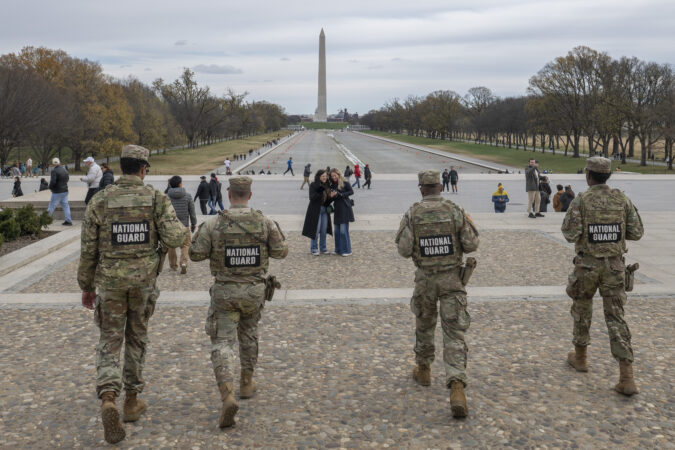
    President Donald Trump deployed the D.C. National Guard to city streets on Aug. 11 as part of a broader crime crackdown he initiated in the city. He also took temporary control of the D.C. police department and launched a surge of federal law enforcement into D.C. neighborhoods. Multiple Republican governors heeded Trump’s call for reinforcements and sent troops from their National Guards to the District. As of Wednesday, about 2,300 National Guard members were stationed in the city – about 100 more than the previous day.

    The National Guard members have stood watch at Metro stations and picked up trash at national parks. They also carry weapons and have been instructed to use them only as a last resort.

    Unlike in states, where governors control their National Guards, the president is commander in chief of the D.C. National Guard – a role the administration argues gives Trump vast power over the deployment and legally authorizes his actions in the District. But Schwalb, in his lawsuit, has argued that the president’s power over the Guard has limits. Schwalb also has alleged that the troops in D.C. have been illegally engaged in law enforcement, in violation of a federal law that prohibits military troops from engaging in domestic policing.

    In November, U.S. District Judge Jia M. Cobb sided with D.C. in a preliminary ruling, writing that the National Guard deployment was illegal and that Trump lacked the authority to activate the Guard for the mission. Cobb ordered the Trump administration to halt the deployment in D.C. while litigation continued over whether the troops should be permanently withdrawn. However, she delayed her order from going into effect until Dec. 11 to give the Trump administration time to appeal.

    In response, the administration asked an appeals court for an emergency ruling to allow the deployment to continue while litigation continues, arguing in court documents that Cobb’s order “impinges on the President’s express statutory authority as Commander-in-Chief of the D.C. National Guard and impermissibly second-guesses his successful efforts to address intolerably high crime rates in the Nation’s capital.” The appeals court on Thursday did not rule on that request; the administrative stay means the deployment can continue while the appeals court considers it.

    The Trump administration has argued that the troops have not been engaged in city law enforcement and merely deter crime through their presence, freeing up police for other tasks.

    Questions of the mission’s safety implications have taken on new weight in the aftermath of last week’s attack, but each party in the lawsuit has argued that the city would be safer if the court sided with them.

    A group of retired senior military officers and the Vet Voice Foundation, a nonpartisan, nonprofit organization representing veterans and their supporters, filed a brief in the appeals court that they said was “in support of neither party.” They argued that the use of the National Guard in D.C. “threatens to undermine the apolitical reputation of the military as an institution, places service members in situations for which they are not specifically trained, and pulls the Guard away from its critical missions.”

    But attorneys general from 24 Republican-led states – including some that sent their troops to D.C. – argued that crime is high in D.C. and while the mission “has already produced strong results,” there is more to be done. Violent crime is down 28 percent in D.C. compared to last year, although crime in the city began to fall steeply well over a year before Trump surged federal law enforcement in August.

    “Danger still lingers,” the states’ attorneys general wrote in their brief, filed in support of the Trump administration. “Just last week, an Afghani national committed a heinous terror attack, shooting two National Guardsmen at close range and murdering one.”

    In arguing that the Guard troops should stay, they also cited a few actions that Guard members had taken to keep the city safe.

    “National Guard troops have stopped at least one fight near the metro,” they wrote, “helped provide first aid to elderly residents of the district, and aided in the successful search for a missing child.”
  • Immigration crackdown in New Orleans has a target of 5,000 arrests. Is that possible?

    Immigration crackdown in New Orleans has a target of 5,000 arrests. Is that possible?

    NEW ORLEANS — Trump administration officials overseeing the immigration crackdown launched this week in New Orleans are aiming to make 5,000 arrests with a focus on violent offenders, a target that some city leaders say is not realistic.

    It’s an ambitious goal that would surpass the number of arrests during a two-month enforcement blitz this fall around Chicago, a region with a much bigger immigrant population than New Orleans.

    In Los Angeles — the first major battleground in President Donald Trump’s aggressive immigration plan — roughly 5,000 people were arrested over the summer in an area where 10 million LA county residents are foreign-born.

    “There is no rational basis that a sweep of New Orleans, or the surrounding parishes, would ever yield anywhere near 5,000 criminals, let alone ones that are considered ‘violent’ by any definition,” New Orleans City Council President J.P. Morrell said Thursday.

    Census Bureau figures show the New Orleans metro area had a foreign-born population of almost 100,000 residents last year, and that just under 60% were not U.S. citizens.

    “The amount of violent crime attributed to illegal immigrants is negligible,” Morrell said, pointing out that crime in New Orleans is at historic lows.

    Violent crimes, including murders, rapes, and robberies, have fallen by 12% through October compared to a year ago, from a total of 2,167 violent crimes to 1,897 this year, according to New Orleans police statistics.

    A flood of messages about arrests

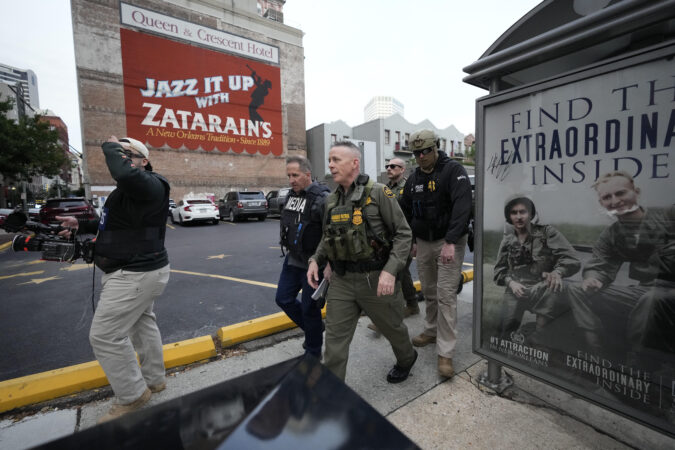
    Federal agents in marked and unmarked vehicles began spreading out across New Orleans and its suburbs Wednesday, making arrests in home improvement store parking lots and patrolling neighborhoods with large immigrant populations.

    Alejandra Vasquez, who runs a social media page in New Orleans that reports the whereabouts of federal agents, said she has received a flood of messages, photos and video since the operations began.

    “My heart is so broken,” Vasquez said. “They came here to take criminals and they are taking our working people. They are not here doing what they are supposed to do. They are taking families.”

    Several hundred agents from Customs and Border Protection and U.S. Immigration and Customs Enforcement are participating in the two-month operation dubbed “Catahoula Crunch.”

    House Speaker Mike Johnson, who is from Louisiana, is among the state’s Republicans supporting the crackdown. “Democrats’ sanctuary city policies have failed — making our American communities dangerous. The people of our GREAT city deserve better, and help is now on the ground,” Johnson posted on social media.

    Operation is being met with resistance

    About two dozen protesters were removed from a New Orleans City Council meeting Thursday after chants of “Shame” broke out. Police officers ordered protesters to leave the building, with some pushed or physically carried out by officers.

    Planning documents obtained last month by The Associated Press show the crackdown is intended to cover southeast Louisiana and into Mississippi.

    Homeland Security Department spokesperson Tricia McLaughlin said agents are going after immigrants who were released after arrests for violent crimes.

    “In just 24 hours on the ground, our law enforcement officers have arrested violent criminals with rap sheets that include homicide, kidnapping, child abuse, robbery, theft, and assault,” McLaughlin said Thursday in a statement. Border Patrol and immigration officials have not responded to requests for details, including how many have been arrested so far.

    She told CNN on Wednesday that “we will continue whether that will be 5,000 arrests or beyond.”

    Immigration arrests go beyond violent criminals

    To come close to reaching their target numbers in New Orleans, immigrant rights group fear federal agents will set their sights on a much broader group.

    New Orleans City Councilmember Lesli Harris said “there are nowhere near 5,000 violent offenders in our region” whom Border Patrol could arrest.

    “What we’re seeing instead are mothers, teenagers, and workers being detained during routine check-ins, from their homes and places of work,” Harris said. “Immigration violations are civil matters, not criminal offenses, and sweeping up thousands of residents who pose no threat will destabilize families, harm our economy.”

    During the “Operation Midway Blitz” crackdown in Chicago that began in September, federal immigration agents arrested more than 4,000 people across the city and its many suburbs, dipping into Indiana.

    Homeland Security officials heralded efforts to nab violent criminals, posting dozens of pictures on social media of people appearing to have criminal histories and lacking legal permission to be in the U.S. But public records tracking the first weeks of the Chicago push show most arrestees didn’t have a criminal record.

    Of roughly 1,900 people arrested in the Chicago area from early September through the middle of October — the latest data available — nearly 300 or about 15% had criminal convictions on their records, according to ICE arrest data from the University of California Berkeley Deportation Data Project analyzed by The Associated Press.

    The vast majority of those convictions were for traffic offenses, misdemeanors or nonviolent felonies, the data showed.

    New Orleans, whose international flavor comes from its long history of French, Spanish, African, and Native American cultures, has seen a new wave of immigrants from places in Central and South America and Asia.

    Across all of Louisiana, there were more than 145,000 foreign-born noncitizens, according to the Census Bureau. While those numbers don’t break down how many residents of the state were in the country illegally, the Pew Research Center estimated the number at 110,000 people in 2023.

  • N.Y. attorney general challenges authority of acting U.S. attorney investigating her Trump lawsuits

    N.Y. attorney general challenges authority of acting U.S. attorney investigating her Trump lawsuits

    ALBANY, N.Y. — President Donald Trump’s effort to install political loyalists as top federal prosecutors has run into a legal buzz saw lately, with judges ruling that his handpicked U.S. attorneys for New Jersey, eastern Virginia, Nevada, and Los Angeles were all serving unlawfully.

    On Thursday, another federal judge heard an argument by New York Attorney General Letitia James that the administration also twisted the law to make John Sarcone the acting U.S. attorney for northern New York.

    James, a Democrat, is challenging Sarcone’s authority to oversee a Justice Department investigation into regulatory lawsuits she filed against Trump and the National Rifle Association. It’s one of several arguments she is making to block subpoenas issued as part of the probe, which her lawyers say is part of a campaign of baseless investigations and prosecutions of Trump’s perceived enemies.

    Her attorney Hailyn Chen argued in court that since Sarcone lacks legitimate authority to act as U.S. attorney, legal steps taken by him in that capacity — like the subpoenas — are unlawful. In response to a question from U.S. District Judge Lorna G. Schofield, Chen said Sarcone should be disqualified from the investigation and the office.

    “Sarcone exercised power that he did not lawfully possess,” Chen told the judge.

    Justice Department lawyers say Sarcone was appointed properly and the motion to block the subpoenas should be denied. Assistant U.S. Attorney Richard Belliss argued that disqualifying Sarcone would be “drastic and extreme.”

    “We don’t think that’s a proper remedy,” Belliss said.

    Schofield, after peppering both attorneys with questions, did not say when she would rule.

    The fight in New York and other states is largely over the legality of unorthodox strategies the Trump administration has adopted to appoint prosecutors seen as unlikely to get confirmed by the U.S. Senate.

    The hearing came a week after a federal judge in Virginia dismissed indictments brought there against James and former FBI Director James Comey. That judge concluded that the interim U.S. attorney who brought the charges, Lindsey Halligan, was unlawfully appointed. The Justice Department is expected to appeal.

    On Monday, a federal appeals court ruled that Alina Habba, Trump’s former personal lawyer, is disqualified from serving as New Jersey’s top federal prosecutor.

    Under federal law, the president’s nominees for U.S. attorney must be confirmed by the Senate. If a position is vacant, the U.S. attorney general can appoint someone temporarily, but that appointment expires after 120 days. If that time period elapses, judges in the district can either keep the interim U.S. attorney or appoint someone of their own choosing.

    Sarcone’s appointment didn’t follow that path.

    Trump hasn’t nominated anyone to serve as U.S. attorney for the Northern District of New York. U.S. Attorney General Pam Bondi appointed Sarcone to serve as the interim U.S. attorney in March. When his 120-day term elapsed, judges in the district declined to keep him in the post.

    Bondi then took the unusual step of appointing Sarcone as a special attorney, then designated him first assistant U.S. attorney for the district, a maneuver federal officials say allows him to serve as an acting U.S. attorney.

    Chen called it an abuse of executive power.

    The New York subpoenas seek records related to a civil case James filed against Trump over alleged fraud in his personal business dealings and records from a lawsuit involving the National Rifle Association and two senior executives.

    Belliss argued in court that the U.S. attorney general has broad authority to appoint attorneys within her department and to delegate her functions to those attorneys. Belliss said that even if Sarcone is not properly holding the office of acting U.S. attorney, he can still conduct grand jury investigations as a special attorney.

    Sarcone was part of Trump’s legal team during the 2016 presidential campaign and worked for the U.S. General Services Administration as the regional administrator for the Northeast and Caribbean during Trump’s first term.

    Habba also served as an interim U.S. attorney. When her appointment expired, New Jersey judges replaced her with a career prosecutor who had served as her second-in-command. Bondi then fired that prosecutor and renamed Habba as acting U.S. attorney.

    A similar dynamic is playing out in Nevada, where a federal judge disqualified the Trump administration’s pick to be U.S. attorney there. And a federal judge in Los Angeles disqualified the acting U.S. attorney in Southern California from several cases after concluding he had stayed in the job longer than allowed by law.

  • Who is Brian Cole? What we know about the D.C. pipe bomb suspect

    Who is Brian Cole? What we know about the D.C. pipe bomb suspect

    In a move that could soon bring closure to a mystery investigated by federal law enforcement for nearly five years, the FBI announced a person has been arrested for allegedly planting pipe bombs in Washington ahead of the Capitol attack on Jan. 6, 2021.

    The suspect was identified as Brian Jerome Cole Jr., 30, of Northern Virginia, Attorney GeneralPam Bondi said in a Thursday news briefing.

    The pipe bombs were placed near the offices of the Democratic and Republican national committees on the night of Jan. 5, 2021, the FBI previously said. The explosives did not detonate.

    Federal law enforcement officials said they located Cole by using evidence they already had — not a new tip — including cell phone data and purchasing records that a special team of investigators was brought in to reevaluate.

    “That evidence has been sitting there collecting dust,” Bondi said.

    But who is Brian Cole? Here’s what we know so far about the alleged suspect.

    Who is Brian Cole?

    Brian Cole, 30, lives in Woodbridge, Va., a community in Prince William County about 20 miles south of Washington.

    According to a criminal complaint filed in U.S. District Court for the District of Columbia reviewed by USA TODAY, Cole resides in a home with his mother and other family members.

    Prince William County Public Schools Director of Communication Diana Gulotta confirmed to USA TODAY that Cole graduated from Hylton High School in Woodbridge in 2013.

    According to public records reviewed by USA TODAY, Cole does not have a criminal history but does have several traffic violations on file, which took place after the pipe bomb incident.

    What charges is Brian Cole facing?

    Cole is charged with use of an explosive device, Bondi told reporters.

    Documents say Cole bought pipe bomb components from Home Depot, Walmart

    Cole’s credit card and checking account records showed that he purchased multiple items as early as October 2019 through late 2020 consistent with the components used to manufacture two pipe bombs placed at the RNC and DNC offices, according to his 7-page charging document.

    Cole bought components including a galvanized pipe, end caps, electrical wire, battery clips and white kitchen timers, court records also said. Investigators tracked Cole’s purchases at Home Depot, Lowe’s, Walmart, and Micro Center.

    The suspect bought items including safety glasses, a wire-stripping tool and a machinist’s file, which could be used to make pipe bombs, officials said. Cole then allegedly continued to buy the components after the pipe bombs were found, including a kitchen timer, more nine-volt batteries and galvanized pipes during January 2021.

    A call to Cole’s phone number listed in public records, as well as to other relatives, went unanswered on Thursday.

    Provider records show Cole’s cell phone connected with towers consistent with his being in the area of the RNC and DNC offices on Jan. 5, 2021.

    In addition, court documents continued, a Virginia license plate registered to a 2017 Nissan Sentra that he owns was captured on camera the same day at 7:10 p.m., at the South Capitol Street exit from Interstate 395 South. That’s “less than one-half mile from the location where the individual who placed the devices was first observed on foot,” records said.

    It was not immediately clear if he had obtained legal counsel.

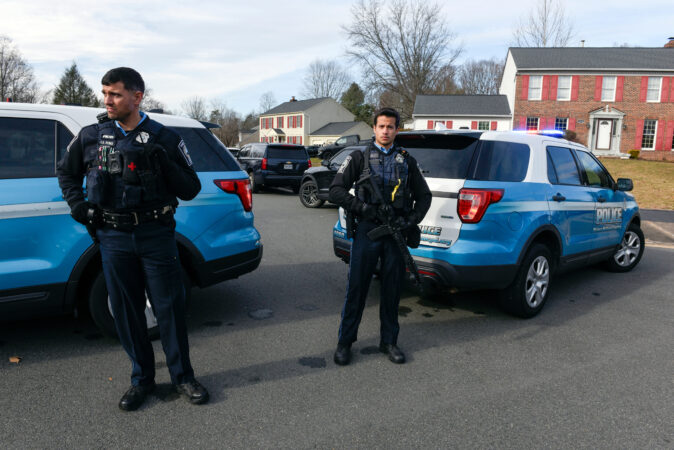
    On Thursday, Prince William County police and FBI agents sealed the street in front of the suspect’s home.

    It was not immediately known what law enforcement recovered, if anything.

  • Trump hires new White House ballroom architect

    Trump hires new White House ballroom architect

    President Donald Trump has replaced the architect he handpicked to design his White House ballroom, according to three people familiar with the project, ending the involvement of a boutique firm whose selection raised questions from the start about whether it had the capacity to complete the massive, high-profile endeavor.

    For more than three months, James McCrery II and his architecture firm led the effort to design Trump’s $300 million ballroom building — until late October, when he stopped working on the project, one of the people said. It is unclear whether McCrery stepped back voluntarily, but the men parted on good terms and remain so, according to one of the people familiar with the project, all of whom spoke on the condition of anonymity to discuss internal conversations.

    Trump and McCrery had clashed over the president’s desire to keep increasing the size of the building, but it was the firm’s small workforce and inability to hit deadlines that became the decisive factor in him leaving, one of the people said.

    Trump has chosen architect Shalom Baranes, who’s been designing and renovating government buildings in Washington for decades, to pick up the mantle, according to two of the people. Baranes’ firm has handled a number of large Washington projects dating back decades, including projects involving the main Treasury building near the White House and the headquarters of the General Services Administration.

    “As we begin to transition into the next stage of development on the White House Ballroom, the Administration is excited to share that the highly talented Shalom Baranes has joined the team of experts to carry out President Trump’s vision on building what will be the greatest addition to the White House since the Oval Office — the White House Ballroom,” White House spokesman Davis Ingle said in a written statement. “Shalom is an accomplished architect whose work has shaped the architectural identity of our nation’s capital for decades and his experience will be a great asset to the completion of this project.”

    The White House and McCrery’s representative have continued to say that McCrery remains involved in the project in a “consulting” role.

    The ballroom building — at 90,000 square feet and estimated to hold nearly 1,000 guests and cost $300 million — was from the start a herculean task for McCrery, said people familiar with his firm’s operations. That might have been true for any firm given Trump’s rushed timeline, but it was especially difficult for the head of a small firm better equipped to design churches, libraries, and homes.

    Trump’s selection of the firm raised eyebrows of architects and planning experts worried that a shop as small as McCrery’s couldn’t complete such a large project in little more than three years. One architect said federal officials tasked with awarding contracts would normally consider only firms four times bigger than McCrery’s to take on projects of that scale.

    Those concerns grew almost immediately, according to one of the people, who spoke on the condition of anonymity about the project.

    “Everybody realized he couldn’t do it,” the person said.

    McCrery’s spokesman did not respond to requests for an interview.

    The renovation represents one of the biggest changes to the White House in its 233-year history, and has yet to undergo any formal public review. The administration has not publicly provided key details about the building, such as its planned height. The structure also is expected to include a suite of offices previously located in the East Wing. The White House has also declined to specify the status of an emergency bunker located beneath the East Wing, citing matters of national security.

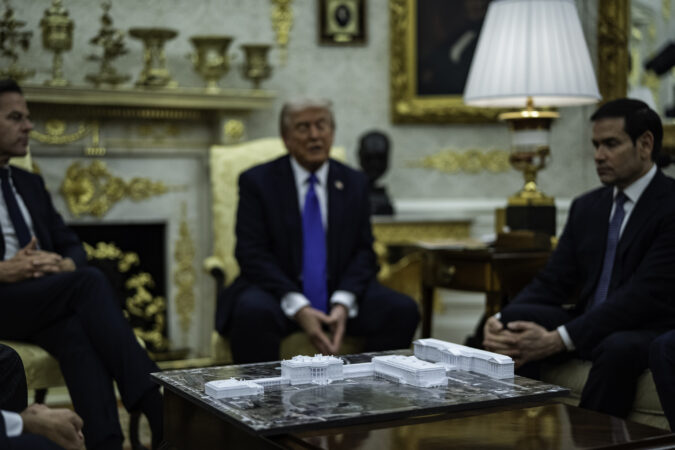
    In the weeks since the switch from McCrery to Baranes, crews of dozens of workers have continued to prep the site for construction, driving piles, stockpiling materials such as reinforced concrete pipes and amassing an array of cranes, drills and other heavy machinery, photos obtained by The Post show. On Wednesday, they erected a towering crane anchored into a concrete paddock.

    On Tuesday, Trump said during a Cabinet meeting that the pile drivers operate “all night” and have created a disagreement in his marriage. The president said he loves the sound while first lady Melania Trump has asked him to make the constant pounding stop, a request he’s denied.

    “Sorry, darling, that’s progress,” Trump said he told her.

  • The last hostage in Gaza was captured while fighting to save a kibbutz

    The last hostage in Gaza was captured while fighting to save a kibbutz

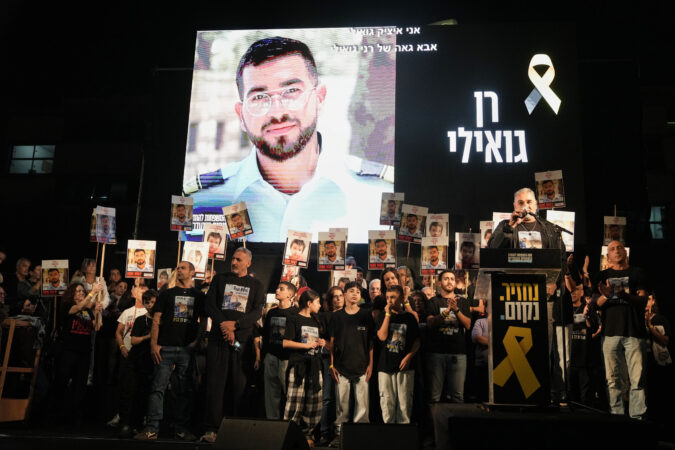
    JERUSALEM — There were hundreds, then dozens, and then just a few. Now there’s one Israeli hostage left in Gaza: Ran Gvili.

    Gvili, a 24-year-old police officer known affectionately as “Rani,” was killed while fighting Hamas militants during the Oct. 7, 2023, attack that triggered the war. After a series of ceasefire-mandated exchanges of hostages for Palestinians held by Israel, Gvili’s body still has not been recovered.

    His remains are somewhere in Gaza. On Thursday, as Israel woke to the news that remains militants returned the previous day belonged to another hostage, the country mourned Gvili as a hero who died fighting to save a kibbutz that was not his own.

    “The first to go, the last to leave,” his mother, Talik Gvili, wrote on Facebook Thursday. “We won’t stop until you come back.”

    ‘The Shield of Alumim’

    At the entrance to Kibbutz Alumim, one of the many border villages militants attacked on Oct. 7, there is a sign emblazoned with a photo of Gvili smiling in his uniform, his name beneath it.

    “He fought a heroic battle, saving the lives of the kibbutz members,” the sign says. ”Since then he has been known as ‘Rani, the Shield of Alumim.’”

    Unlike those from other Israeli kibbutzim targeted that day, the residents of Alumim survived. They credit that to men like Gvili, who joined a group of emergency response team members, soldiers and police officers who fended off waves of intruding militants.

    Migrant workers on the kibbutz, however, met a different fate. Left exposed in agricultural areas outside the kibbutz’s defensive perimeter, 22 foreign nationals were killed, according to the Israeli newspaper Haaretz.

    Gvili died fighting in battle

    On the morning of Oct. 7, Gvili was at home, his younger sister Shira Gvili said in an interview with the AP. He had been on medical leave from his elite police unit for a broken shoulder.

    Still, when he heard that gunmen were attacking panicked partygoers at the site of the Nova Music Festival, he headed straight for the venue grounds, along with other men from the unit.

    Nova later became the site of the largest civilian massacre in Israeli history, when the militants killed at least 364 people and took more than 40 hostage.

    Gvili and the other officers never made it there, his sister said. Instead, they encountered the militants at Kibbutz Alumim.

    Sgt. Richard Schechtman, a fellow police officer who also fought in the battle, said that Gvili appeared to immediately know what to do.

    “Rani was at the head of the team — because that’s who he was,” Schechtman was quoted as telling the Israeli news site Ynet. “Rani and I were standing on the road. I saw the terrorists, but I hesitated because it was the first time in my life I’d ever seen a terrorist face-to-face, and I had a moment of, ‘Wait, what am I seeing?’ Then Rani pulled the pin and opened fire — and the whole team followed him.”

    At one point in battle, Gvili ran to the western flank of the kibbutz to fight militants arriving in trucks, said his mother, who has spoken with others who fought with him that day. That’s where he was injured in the leg.

    “He radioed his team to warn that more vehicles carrying terrorists were approaching,” his mother said in an interview with Ynet. “He opened fire, and they came at him. He fought them alone, injured in both his leg and arm, and he took down those monsters.”

    Israel’s military says Gvili’s body was abducted to Gaza by the militants soon after. The military confirmed his death, based on an intelligence assessment, four months later.

    Last step in first phase of ceasefire

    The return of Gvili’s remains would mark the completion of the first phase of President Donald Trump’s 20-point ceasefire plan. The first phase also calls for the release of thousands of Palestinians from Israel, both alive and dead, and an increase of aid shipments into war-ravaged Gaza.

    The next phases of the ceasefire agreement will be much more complicated to fulfill. Key elements include deploying an international force to secure Gaza, disarming Hamas, and forming a temporary Palestinian government to run day to day affairs under the supervision of an international board led by Trump.

    Family worries Gvili’s remains will not come back

    Gvili’s family — which includes his brother, Omri — is holding out hope they’ll receive the remains soon.

    “We see all the other families whose sons came back and we see in their eyes that they have relief,” his sister said. ”This is why it’s so important. Because we want to move on with our with our life and just remember Rani.”

    Gvili was a hero, but he was more than that, his sister recalled: He was protective and goofy; he occasionally told bad jokes that everyone laughed at; he loved playing guitar and singing ‘The House of the Rising Sun’; and he had a tattoo on his leg of his dog, Luna, who the family now cares for.

    Both his mother, Talik, and father, Itzik Gvili, say they fear a worst-case scenario of the type experienced by families of Israeli soldiers Hadar Goldin or Ron Arad.

    Goldin was killed in Gaza in 2014. His body was only returned to Israel about a month ago as part of the ceasefire. Arad was abducted in Lebanon in 1988 after ejecting from his aircraft. He’s never been found.

    “We pray, of course, that he will not be another Ron Arad or (Hadar) Goldin,” Itzik Gvili told Kan News. “That we don’t drag it out for many more years.”

    “As far as I am concerned, until Ran comes back, he is alive,” the father said. “I have nothing else to hope for.”

  • She made $14M on OnlyFans. Now, she’s an outspoken anti-porn advocate.

    She made $14M on OnlyFans. Now, she’s an outspoken anti-porn advocate.

    In her early 20s, Nala Ray had it all. Or so she thought.

    She lived in a $4.3 million home in California. She frequently drove luxury cars, including Ferraris, Bentleys and Lamborghinis. Her closet dripped with designer labels — Givenchy, Dior, Prada. Her favorite? A lamb-skin Chanel bag — red, with gold chains. Even her dogs, she says, sported Louis Vuitton collars.

    All the luxury, however, came at a cost, she says. Ray made her fortune posting explicit content of herself on OnlyFans. In fact, she says she was one of the first to ever do so. In the early years of the website, when she made her account, no one quite knew what the fledgling, subscription-based platform would become. Maybe it’d be full of cooking classes. Or fitness tutorials. But, Ray says, because of early adopters like her, it became a de facto porn site, where anyone can upload content of themselves in exchange for cash from paying subscribers. Though not everyone on OnlyFans makes porn, the site has become known for it.

    Most OnlyFans creators make next to nothing. A lucky few make millions. Ray was one of them. Over the course of her five years on the site, she estimates she made $14 million total, averaging $300,000 a month.

    But after what she describes as a spiritual awakening, Ray left OnlyFans and has since become an outspoken critic of the platform. Now, she says, she wants to see OnlyFans — the very website she helped turn into a porn empire — destroyed.

    Her plan? By shedding light on what she describes as the hidden cost of pornography, she hopes to change the hearts and minds of those still on OnlyFans, one person at a time. She wants to see a day when no one frequents the platform anymore.

    “I was so deep in the industry,” Ray says. “I was bold enough to take so many crazy, radical steps into it. And now, I’m just on the opposite spectrum. It’s crazy. That shows God’s glory.”

    How Nala Ray found OnlyFans

    Ray’s upbringing was tumultuous.

    When she was 8, a tornado wiped out her family’s home in small-town Missouri. Her dad had an affair, leading to her parents’ divorce, but they remarried each other two years later. After that, Ray says, her dad took on a newfound religious intensity, becoming a minister. Frequent in-fighting in her Baptist community led her family to hop from church to church. She never felt like she had a spiritual home.

    “You get to see a dark side of religion,” Ray says. “People will kick you out of their church, and that’s so hard to see from people that you kind of fell in love with. So it was kind of major divorces, over and over and over again.”

    Things worsened when her dad took pity on a wayward 16-year-old boy, letting him live in their home. The boy molested Ray when she was 13, she says, and the abuse continued for months until he ran away one night. Ray says neither she nor her family have heard from him since.

    After that, Ray began acting out. She’d sneak out of the house at 2 a.m. to meet boys. She longed for the day she could finally move out and become independent. At around age 20, she found herself in Florida, working for an orthopedics company. She wasn’t sure where to go next.

    Then, she got the Instagram DM.

    “A random guy on Instagram − he was verified − he reached out,” she says. “And he was like, ‘Hey, you’d be so good at OnlyFans.’”

    ‘I couldn’t feel much at all’

    OnlyFans skyrocketed in popularity during the COVID-19 pandemic. Ray caught the wave at the perfect time, she says, joining the site in February of 2020. Her first month, she made $87,000.

    It became her new full-time job — and she took it seriously.

    Ray acquired a manager. She read books on men’s psychology, so she could learn how best to appeal to their fantasies. She studied popular porn trends — and adjusted her content accordingly. She went on podcasts and made outrageous statements about sex that would go viral — whatever it took to drive more people to her page. At her peak on the site, she had 270,000 subscribers.

    As the earnings ramped up, so did the pressure to make more gratuitous content, she says. She relied on marijuana and alcohol to get through particularly tough filming days. Anything, she says, to numb herself.

    “Honestly, I couldn’t feel much at all. I could feel angry, but I didn’t cry for years. It felt like I didn’t feel sorry for anybody,” she says. “Anytime I would have to do major scenes, I’d have to drink myself into oblivion to just do it.”

    Then, Ray met Jordan Giordano, a Christian influencer, on TikTok in 2023. He didn’t know who she was. They started talking.

    Giordano treated her as a person, not as as sex object. It was his compassion and gentle nudging, she says, that ultimately got her to see the life she was living differently.

    In January 2024, Ray quit OnlyFans. She and Giordano wed that March.

    “There was this tear inside of me. I had built this whole life. I was so independent. I didn’t need a man. I made my bag. I could have anything I wanted. I could go anywhere I wanted, even though I didn’t have a lot of friends or anything. I felt so unique, and OnlyFans had given me that kind of freedom,” Ray says.

    “To cross over into this very unknown world was terrifying to me. I thought so many times, ‘I can’t do this. I can’t do this. It’s too scary for me. I don’t know if I’m courageous enough to cross this line.’ And so what happened was, I continued to just talk to Jordan. I continued reading my Bible. I continued to pray. And then Jordan’s mom was actually the one that really helped me make the decision. She was like, ‘You’re on the right path, but you still have this door of darkness open, which is OnlyFans. You cannot have both.’”

    ‘Someone just wants someone else to listen to them’

    Since leaving OnlyFans, Ray’s received tons of backlash online − much of it not from OnlyFans models, but from fellow Christians.

    They call her a grifter. They call her faith a sham. They say she’ll be back on OnlyFans any day now.

    The noise used to bother her. Now, she says, she’s better at tuning it out.

    “The hate got to me for sure,” she says. “It got to my husband. I felt utterly alone some days, just being like, ‘Wow, the whole world hates me.’ And that’s a tough pill to swallow, honestly.”

    Ray still has empathy for the women who do OnlyFans. Though she disagrees with their actions, she knows many have struggles few will ever understand.

    “I have a heart for the OnlyFans girls, not only because I was one, but I saw it,” she says. “So many girls were like, ‘Oh, my dad abused me.’ ‘My stepdad tried to do things with me.’ ‘I don’t have a dad.’ ‘My dad ran away.’ ‘My mom hates me.’ I heard it all … Behavior is a symptom of what’s really going on underneath, right? Hurt damages people so bad, and shame will lead you into things that you never thought you would do.”

    When they ask for it, Ray helps guide people through the process of quitting OnlyFans. She recalls one model who deleted her account after flying to Tennessee to have a heart-to-heart with Ray in person.

    When someone like that contacts her, Ray says she listens to them, without judgment. It’s what her husband did for her − and it’s what she believes makes a real difference.

    “The biggest thing I realized is someone just wants someone else to listen to them,” Ray says. “She just wanted to talk, and I let her. And she just told me everything that was going on in her life with her family and her relationship and how she felt about OnlyFans. And I didn’t pass one word of judgment. That’s it. We just can’t judge other people, because we have no idea what it’s like to walk a day in their shoes.”

    Ray’s life looks quite different than it did a year ago. Her financial situation looks different, too. The OnlyFans money dried up fast, she says. The website took 20% of it. Her manager, 45%. Not to mention the hefty California taxes she owed.

    Although her life hasn’t gotten easier, she says she doesn’t regret her decision. Being honest about her current life is also something that’s important to her, as she charts this new path. She plans on launching a podcast to continue sharing her story.

    “The kind of Christian I want to portray is like, yeah, life freaking sucks,” Ray says. “I mess up. I’m not always modest. I still cuss sometimes. Yes, I want a joint sometimes. That is the Christian walk. I hate it when I see Christians online who just seem so perfect, but yet aren’t real with the fact that life is so hard sometimes.”

  • Hearing in Luigi Mangione’s state murder case sheds new light on his arrest

    Hearing in Luigi Mangione’s state murder case sheds new light on his arrest

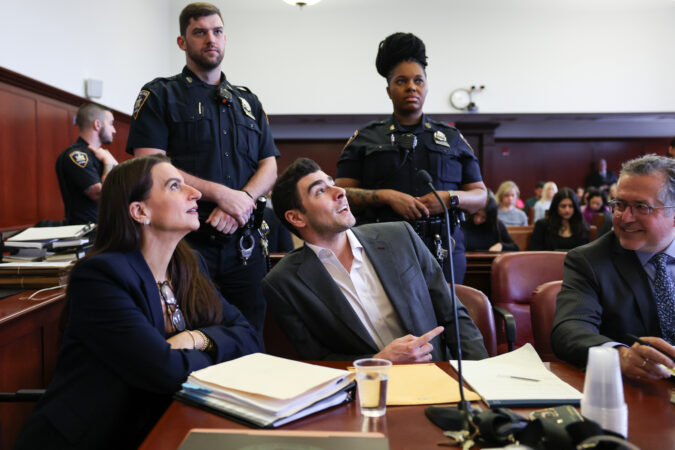
    NEW YORK — Minutes after police approached Luigi Mangione in a Pennsylvania McDonald’s, he told an officer he didn’t want to talk, according to video and testimony at a court hearing Thursday for the man charged with killing UnitedHealthcare CEO Brian Thompson.

    Although some video and accounts of police interactions with Mangione emerged earlier in this week’s hearing, Thursday’s proceedings shed new light on the lead-up to and aftermath of his Dec. 9, 2024, arrest in Altoona, Pa.

    Mangione, 27, appeared to follow the proceedings intently, at times leaning over the defense table to scrutinize papers or take notes. He briefly looked down as Altoona Police Officer Tyler Frye was asked about a strip-search of Mangione after his arrest. Under the department’s policy, that search wasn’t recorded.

    It happened after police were told that someone at the McDonald’s resembled the much-publicized suspect in Thompson’s killing. But Frye and Officer Joseph Detwiler initially approached Mangione with a low-key tone, saying only that someone had said he looked “suspicious.” Asked for his ID, he gave a phony New Jersey driver’s license with a fake name, according to prosecutors.

    Moments later, after frisking Mangione, Detwiler stepped away to communicate with dispatchers about the license, leaving the rookie Frye by Mangione’s table.

    “So what’s going on? What brings you up here from New Jersey?” Frye asked, according to his body-camera video.

    Mangione answered in a low voice. Asked what the suspect had said, Frye testified Thursday: “It was something along the lines of: He didn’t want to talk to me at that time.”

    Mangione later added that “he was just trying to use the Wi-Fi,” according to Frye.

    During the roughly 20 minutes before Mangione was told he had the right to remain silent, he answered other questions asked by the officers, and also posed a few of his own.

    “Can I ask why there’s so many cops here?” he asked shortly before being informed he was being arrested on a forgery charge related to his false ID. By that point, roughly a dozen officers had converged on the restaurant, and Mangione had been told he was being investigated and had been handcuffed.

    Mangione has pleaded not guilty to state and federal murder charges. Before any trials get scheduled, his lawyers are trying to preclude the eventual jurors from hearing about his alleged statements to law officers and items — including a gun and a notebook — they allegedly seized from his backpack.

    The evidence is key to prosecutors’ case. They have said the 9 mm handgun matches the firearm used in the killing, that writings in the notebook laid out Mangione’s disdain for health insurers and ideas about killing a CEO at an investor conference, and that he gave police the same fake name that the alleged gunman used at a New York hostel days before the shooting.

    Thursday’s proceedings came on the anniversary of the killing, which UnitedHealthcare marked by lowering the flags at its headquarters in Minnetonka, Minnesota, and encouraging employees to engage in volunteering.

    Thompson, 50, was shot from behind as he walked to an investor conference. He became UnitedHealthcare’s CEO in 2021 and had worked within parent UnitedHealth Group Inc. for 20 years.

    The hearing, which started Monday and could extend to next week, applies only to the state case. But it is giving the public an extensive preview of some testimony, video, 911 audio and other records relevant to both cases.

    After encountering Mangione, Detwiler and Frye tried to play it cool and buy time by intimating that they were simply responding to a loitering complaint and chatting about his sandwich. Still, they patted Mangione down and pushed his backpack away from him. About 15 minutes in, officers warned him that he was being investigated and would be arrested if he repeated what they had determined was a fake name.

    After he gave his real one, he was read his rights, handcuffed, frisked again and ultimately arrested on a forgery charge related to his fake ID.

    Mangione’s lawyers argue that his statements shouldn’t be allowed as trial evidence because officers started questioning him before reading his rights. They say the contents of his backpack should be excluded because police didn’t get a warrant before searching it.

    Manhattan prosecutors haven’t yet detailed their arguments for allowing the disputed evidence. Federal prosecutors have maintained that the backpack search was justified to ensure there was nothing dangerous inside, and that Mangione’s statements to officers were voluntary and made before he was under arrest.

    Many criminal cases see disputes over evidence and the complicated legal standards governing police searches and interactions with potential suspects.

  • A seal walks into a bar … and we don’t mean the Navy kind

    A seal walks into a bar … and we don’t mean the Navy kind

    A seal waddled into a bar — and ordered a drink on the rocks.

    So went one of the many jokes made by patrons at Sprig + Fern, The Meadows, a craft beer pub in New Zealand’s South Island, after a young fur seal walked in the front door on a rainy Sunday, sparking excitement and disbelief.

    Co-owner Bella Evans said she was working behind the bar, putting up Christmas decorations, when the young seal entered shortly after 5 p.m.

    “Everyone was pretty shocked,” Evans said in a phone interview Thursday. “A lot of people thought it was a dog at first, because we are a dog-friendly establishment.”

    “It was a mix of shock, excitement and everything all at once,” she said.

    The seal seemed “pretty relaxed” and was in the pub for around 25 minutes, including visiting the bathroom, Evans said. Video posted online by the bar — and set to the Mission Impossible theme tune — shows the seal waddling between tables as a customer tries to usher it outside.

    “Today we had the cutest unexpected visitor,” the business wrote on Facebook. “It wandered in all on its own for a little look around, absolutely stealing the show.”

    Evans said she was initially worried about the seal getting frightened and the safety of customers, but the pup seemed “really mellow.”

    The seal eventually settled under a dishwasher before staff members managed to lure it into a customer’s dog crate — with the help of some salmon from a pizza special on the menu. Conservation rangers then came to collect it.

    “Everyone was joking it was so popular that even the seal’s heard,” Evans said about the pub’s pizza.

    Helen Otley, a principal ranger for the New Zealand Department of Conservation, said the agency received “numerous” calls Sunday about the young fur seal, known as kekeno in Maori, which had been spotted in the area.

    “The pub staff did a great job keeping the seal safe until the DOC ranger could get there,” she said in a statement to The Washington Post.

    Otley said it was “not unusual” to see young fur seals in the Tasman Bay area, at the top of New Zealand’s South Island, as they explore their environment after being weaned. The pub is about a mile from the coast.

    “Seals can wander up to 15 km (9.3 miles) inland, often following rivers and streams. They can turn up in unusual places — like this pub — but this is normal exploratory behavior,” she said, adding that the department generally takes a “hands off” approach to seals.

    “They are capable and resilient and, given time and space, they usually find their way back to the shore,” she said.

    Evans said the surprise visitor delighted customers and staff, and sparked a flurry of jokes about drinks served “on the rocks” and the pub having the “seal of approval.” The seal has also left an intriguing scent for local dogs who have been “sniffing the trail” where it roamed, she said.

    Otley said the seal has since been released at Rabbit Island, a small island in the Tasman Bay area, which she described as “a safe location due to its dog-free status.”

    It’s not the first time animals have turned up in unexpected places in the past couple of weeks, with a raccoon passing out in a bathroom after ransacking a Virginia liquor store and a bear squeezing into a crawl space in a California home.

    For Evans, who took over the pub around three months ago, the animal visitor was followed up by another surprise this week: a customer bringing their bearded dragon for a drink.

    “We’re turning into a zoo,” she joked.

  • Steve Cropper, Memphis soul guitarist with Booker T. & the MG’s, dies at 84

    Steve Cropper, Memphis soul guitarist with Booker T. & the MG’s, dies at 84

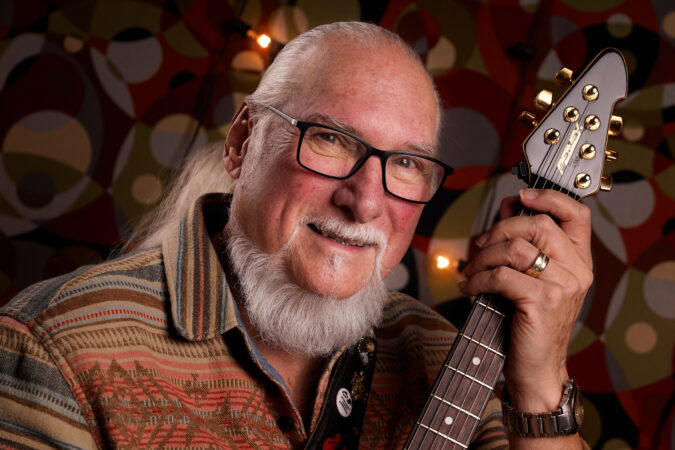
    Steve Cropper, an internationally renowned, Grammy-winning guitarist and Rock & Roll Hall of Fame inductee who played with luminaries such as Otis Redding, B.B. King, Booker T. & the MG’s and the Blues Brothers, died Dec. 3 in Nashville. He was 84 years old.

    Mr. Cropper’s death was announced on his social media accounts in a statement that called him “a beloved musician, songwriter, and producer.” The cause of death was not disclosed.

    In the earliest days of his decades-long career, Mr. Cropper played guitar as a founding member of the Memphis band the Mar-Keys, which had a national hit with “Last Night” in 1961. He formed the band with his childhood friend, Donald “Duck” Dunn, who became a well-known bassist. The two continued to collaborate for years afterward, notably with the famed Booker T. & the MG’s — a groundbreaking, racially integrated R&B/soul studio band formed by Mr. Cropper in 1962.

    Mr. Cropper performed on many enduring hits, including with Otis Redding on “(Sittin’ On) The Dock of the Bay,” which the two co-wrote, and with Sam & Dave on “Soul Man.”

    He also played on two albums with the Blues Brothers and co-wrote hits such as “In the Midnight Hour” with Wilson Pickett, “Knock on Wood” with Eddie Floyd, and “Green Onions” as part of Booker T. & the MG’s.

    Stephen Lee Cropper was born on a farm near Dora, Mo., on Oct. 21, 1941. He recalled falling in love with music after his family moved to Memphis when he was 9 years old and he started hearing Black gospel songs on local radio stations.

    “I really enjoyed that music. I don’t know what it was. At such a young age, it impressed me,” he recalled in a 1984 interview. “The Black spiritual music … it gave me a whole different attitude about music.”

    At about age 14, he decided he wanted to play guitar and scraped together $20 to order one from a catalog by setting pins at a bowling alley in Memphis — earning about 10 cents a game. He recalled his shock when he opened the box and found that the instrument had not been strung.

    “I went, ‘Wait a minute, isn’t it supposed to be all tuned and all that stuff?’” he said with a laugh. “I really didn’t have a musical background in the family.”

    He taught himself how to play, recalling: “I liked the sound of it. I liked the ring of the notes.”

    In his acceptance speech when Booker T. & the MG’s was inducted into the Rock & Roll Hall of Fame in 1992, Mr. Cropper said he was honored to play “with some of the greatest musicians on the planet.”

    “It’s been a great career and it’s been a lot of fun,” he said.

    Mr. Cropper was inducted into the Songwriters Hall of Fame in 2005. He won two Grammy Awards, in 1968 for “(Sittin’ On) The Dock of the Bay” with Redding and in 1994 for “Cruisin’” as part of Booker T. & the MG’s. He was nominated for a Grammy nine times.

    In 1996, British magazine Mojo ranked him as the second-greatest guitarist of all time, behind only Jimi Hendrix.

    “Steve’s influence on American music is immeasurable,” his family said on social media.

    “Every note he played, every song he wrote, and every artist he inspired ensures that his spirit and artistry will continue to move people for generations.”

    Mr. Cropper is survived by his wife, Angel Cropper, and his four children.