Category: Wires

  • Putin says there are points he can’t agree to in the U.S. proposal to end Russia’s war in Ukraine

    Putin says there are points he can’t agree to in the U.S. proposal to end Russia’s war in Ukraine

    Russian President Vladimir Putin says some proposals in a U.S. plan to end the war in Ukraine are unacceptable to the Kremlin, indicating in comments published Thursday that any deal is still some ways off.

    President Donald Trump has set in motion the most intense diplomatic push to stop the fighting since Russia launched the full-scale invasion of its neighbor nearly four years ago. But the effort has once again run into demands that are hard to reconcile, especially over whether Ukraine must give up land to Russia and how it can be kept safe from any future aggression by Moscow.

    Trump’s special envoy, Steve Witkoff, and son-in-law Jared Kushner, are set to meet with Ukraine’s lead negotiator, Rustem Umerov, later Thursday in Miami for further talks, according to a senior Trump administration official who wasn’t authorized to comment publicly and spoke on condition of anonymity.

    Putin said his five-hour talks Tuesday in the Kremlin with Witkoff and Kushner were “necessary” and “useful,” but also “difficult work,” and some proposals were unacceptable.

    Putin spoke to the India Today TV channel before he landed Thursday in New Delhi for a state visit. Ahead of the broadcast of the full interview, Russian state news agencies Tass and RIA Novosti quoted some of his remarks in it.

    Tass quoted Putin as saying that in Tuesday’s talks, the sides “had to go through each point” of the U.S. peace proposal, “which is why it took so long.”

    “This was a necessary conversation, a very concrete one,” he said, with provisions that Moscow was ready to discuss, while others “we can’t agree to.”

    Trump said Wednesday that Witkoff and Kushner came away from their marathon session confident that he wants to find an end to the war. “Their impression was very strongly that he’d like to make a deal,” he added.

    Putin refused to elaborate on what Russia could accept or reject, and none of the other officials involved offered details of the talks.

    “I think it is premature. Because it could simply disrupt the working regime” of the peace effort, Tass quoted Putin as saying.

    European leaders, left on the sidelines by Washington as U.S. officials engage directly with Moscow and Kyiv, have accused Putin of feigning interest in Trump’s peace drive.

    French President Emmanuel Macron met in Beijing with China’s leader Xi Jinping, seeking to involve him in pressuring Russia toward a ceasefire. Xi, whose country has provided strong diplomatic support for Putin, did not say respond to France’s call, but said that “China supports all efforts that work towards peace.”

    Russian barrages of civilian areas of Ukraine continued overnight into Thursday. A missile struck Kryvyi Rih on Wednesday night, wounding six people, including a 3-year-old girl, according to city administration head Oleksandr Vilkul.

    The attack on Ukrainian President Volodymyr Zelensky’s hometown damaged more than 40 residential buildings, a school and domestic gas pipes, Vilkul said.

    A 6-year-old girl died in the southern city of Kherson after Russian artillery shelling wounded her the previous day, regional military administration chief Oleksandr Prokudin wrote on Telegram.

    The Kherson Thermal Power Plant, which provides heat for over 40,000 residents, shut down Thursday after Russia pounded it with drones and artillery for several days, he said.

    Authorities planned emergency meetings to find alternate sources of heating, he said. Until then, tents were erected across the city where residents could warm up and charge electronic devices.

    Russia also struck Odesa with drones, wounding six people, while civilian and energy infrastructure was damaged, said Oleh Kiper, head of the regional military administration.

    Overall, Russia fired two ballistic missiles and 138 drones at Ukraine overnight, officials said.

    Meanwhile, in the Russia-occupied part of the Kherson region, two men were killed by a Ukrainian drone strike on their vehicle Thursday, Moscow-installed regional leader Vladimir Saldo said. A 68-year-old woman was also wounded in the attack, he said.

  • Admiral says there was no ‘kill them all’ order in boat attack, but video alarms lawmakers

    Admiral says there was no ‘kill them all’ order in boat attack, but video alarms lawmakers

    WASHINGTON — A Navy admiral commanding the U.S. military strikes on an alleged drug boat in the Caribbean told lawmakers Thursday that there was no “kill them all” order from Defense Secretary Pete Hegseth, but a stark video of the attack left grave questions as Congress scrutinizes the campaign that killed two survivors.

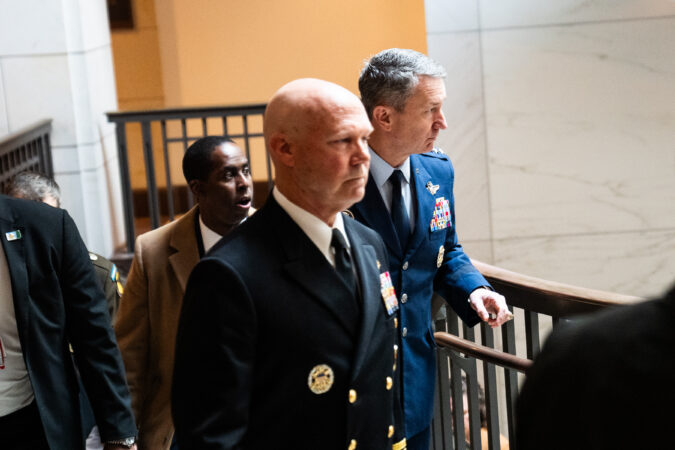
    Adm. Frank “Mitch” Bradley appeared for a series of closed-door classified briefings at the Capitol as lawmakers conduct an investigation after a report that he ordered the follow-on attack that killed the survivors to comply with Hegesth’s demands. Legal experts have said such a strike could be a violation of the laws of military warfare.

    “Bradley was very clear that he was given no such order, to give no quarter or to kill them all,” said Sen. Tom Cotton, who heads the Senate Intelligence Committee, as he exited a classified briefing.

    While Cotton (R., Ark.) defended the attack, Democrats who were also briefed and saw video of the survivors being killed questioned the Trump administration’s rationale and said the incident was deeply concerning.

    “The order was basically: Destroy the drugs, kill the 11 people on the boat,” said Washington Rep. Adam Smith, the top Democrat on the House Armed Services Committee.

    Smith, who is demanding further investigation, said the survivors were “basically two shirtless people clinging to the bow of a capsized and inoperable boat, drifting in the water — until the missiles come and kill them.”

    The classified sessions with Bradley, alongside the chairman of the Joint Chiefs of Staff Gen. Dan Caine, provided fresh information at a crucial moment as Hegseth’s leadership comes under scrutiny. But they did little to resolve growing questions about the legal basis for President Donald Trump’s extraordinary campaign to use war powers against suspected drug smugglers. So far more than 80 people have been killed in some 20 strikes.

    Lawmakers have not yet specifically authorized the use of military force against the alleged drug boats, and the Republican-controlled Congress has turned back attempts to put a check on Trump’s power to engage in the missile campaign, which Hegseth has vowed will continue. Several Democrats have called for Hegseth to resign.

    Congressional investigation gets underway

    Lawmakers want a full accounting of the Sept. 2 strike, which was the first in what has become a monthslong series of U.S. military attacks on vessels near Venezuela believed to be ferrying drugs. The Washington Post had reported that Bradley ordered the follow-on attack on the survivors.

    But lawmakers who lead the House and Senate’s national security committees in Congress came away with different descriptions of what the two survivors were doing when they were killed.

    Cotton said he saw them “trying to flip a boat loaded with drugs bound for United States back over so they could stay in the fight.”

    He said there were “several minutes” between the first and second attacks, which consisted of four missile strikes. He said it was “gratifying” that the U.S. military was taking “the battle” to cartels.

    But Connecticut Rep. Jim Himes, the top Democrat on the House Intelligence Committee, said, “what I saw in that room was one of the most troubling things I’ve seen in my time in public service.”

    “You have two individuals in clear distress, without any means of locomotion, with a destroyed vessel,” he said, and who “were killed by the United States.”

    The survivors did not issue any distress call or other communications, though lawmakers were told it appeared the people had a hand raised, “waving” at one point during the attacks, Smith said.

    Smith acknowledged there was likely cocaine on the boat, but he objects to the Republican administration’s rationale for continued attacks on alleged drug runners who may or may not be heading to the United States. “That’s really the core of the problem with all of this,” he said. “That incredibly broad definition, I think, is what sets in motion all of these problems about using lethal force and using the military.”

    Meanwhile, the U.S. conducted yet another strike on Thursday. The U.S. military said it killed four men in a strike on a suspected drug vessel in international waters in the Eastern Pacific, the 22nd such strike.

    “Intelligence confirmed that the vessel was carrying illicit narcotics and transiting along a known narco-trafficking route in the Eastern Pacific,” the U.S. military said in a statement on Thursday.

    Who is Adm. Bradley?

    At the time of the attack, Bradley was the commander of Joint Special Operations Command, overseeing coordinated operations between the military’s elite special operations units out of Fort Bragg in North Carolina. About a month after the strike, he was promoted to commander of U.S. Special Operations Command.

    His military career, spanning more than three decades, was mostly spent serving in the elite Navy SEALs and commanding joint operations. He was among the first special forces officers to deploy to Afghanistan after the Sept. 11 attacks. His latest promotion to admiral was approved by unanimous voice vote in the Senate this year, and Democratic and Republican senators praised his record.

    Sen. Thom Tillis (R., N.C.) has described Bradley as among those who are “rock solid” and “the most extraordinary people that have ever served in the military.”

    But lawmakers like Tillis have also made it clear they expect a reckoning if it is found that survivors were targeted. “Anybody in the chain of command that was responsible for it, that had vision of it, needs to be held accountable,” he said.

    What else are lawmakers seeking?

    Underpinning Trump’s campaign against suspected traffickers is his argument that drug cartels amount to armed combatants because their cargo poses a threat to American lives.

    Democrats are demanding the release of the full video of the Sept. 2 attack, as well as written records of the orders and any directives about the mission from Hegseth. None of the written orders or audio of verbal commands was shared with the lawmakers.

    A White House Office of Legal Counsel memo providing a rationale for the strikes was dated after the fact, on Sept. 5. That memo remains undisclosed, and Democrats want it released.

    Obtaining further information, though, will largely depend on action from Republican lawmakers, who have majority control of the committees, a potentially painful prospect for them if it puts them at odds with the president.

    Rhode Island Sen. Jack Reed, the top Democrat on the Armed Services Committee, said that he and the Senate Armed Services Committee chair, GOP Sen. Roger Wicker, have formally requested the executive orders authorizing the operations and the complete videos from the strikes, among other items. The Trump administration has repeatedly denied their requests for basic information about the operation, Reed said.

    Republican lawmakers who are close to Trump have largely stood by Hegseth and the administration’s decision to conduct the strikes.

    Elsewhere, Venezuelan President Nicolás Maduro and others see the U.S. military operation as part of an effort to prompt a government change in the South American country. Maduro on Wednesday acknowledged speaking last month by phone with Trump, who confirmed the call days earlier.

  • FBI makes arrest in investigation into pipe bombs placed in D.C. on eve of Jan. 6 riot, AP source says

    FBI makes arrest in investigation into pipe bombs placed in D.C. on eve of Jan. 6 riot, AP source says

    The FBI on Thursday arrested a man accused of placing two pipe bombs outside the headquarters of the Republican and Democratic national parties in Washington on the eve of the U.S. Capitol attack, an abrupt breakthrough in an investigation that for years flummoxed law enforcement and spawned conspiracy theories about Jan. 6, 2021.

    The arrest marks the first time investigators have publicly identified a suspect in an act that has been an enduring mystery for nearly five years in the shadow of the violent Capitol insurrection.

    The suspect was identified as Brian J. Cole Jr., 30, of Woodbridge, Va., but key questions remain unanswered after his arrest on explosives charges, including a possible motive and what connection if any the act had to the assault on the Capitol the following day by supporters of President Donald Trump.

    Law enforcement officials used credit purchases of bomb-making materials, cellphone tower data and a license plate reader to zero in on Cole, according to an FBI affidavit filed in the case. The FBI and Justice Department declined to elaborate on what led them to the suspect, but characterized his arrest as the result of a reinvigorated investigation and a fresh analysis of already collected evidence and data.

    “Let me be clear: There was no new tip. There was no new witness. Just good, diligent police work and prosecutorial work,” Attorney General Pam Bondi said at a news conference.

    Calls to relatives of Cole listed in public records were not immediately returned Thursday. Hours after Cole was taken into custody, unmarked law enforcement vehicles lined the cul-de-sac where Cole’s home is while FBI agents helped shoo away onlookers. Authorities were seen entering the house and examining the trunk of a car nearby.

    FBI says the bombs could have killed people

    The pipe bombs were placed on the evening of Jan. 5, 2021, near the offices of the Democratic and Republican national committees. Nobody was hurt before the bombs were rendered safe, but the FBI has said both devices could have been lethal.

    In the years since, investigators have sought the public’s help in identifying a shadowy subject seen on surveillance camera even as they struggled to determine answers to basic questions, including the person’s gender and motive and whether the act had a clear connection to the riot at the Capitol a day later, when supporters of Trump stormed the building in a bid to halt the certification of the Republican’s 2020 election loss to Democrat Joe Biden.

    Seeking a breakthrough, the FBI last January publicized additional information about the investigation, including an estimate that the suspect was about 5 feet, 7 inches tall, as well as previously unreleased video of the suspect placing one of the bombs.

    The bureau had for years struggled to pinpoint a suspect despite hundreds of tips, a review of tens of thousands of video files and a significant number of interviews.

    Investigative clues

    An FBI affidavit filed in connection with Cole’s arrest lays out a series of circumstantial clues that investigators pieced together.

    Using information from his bank account and credit cards, authorities discovered he purchased materials in 2019 and 2020 consistent with those used to make the pipe bombs, according to court papers. That included galvanized pipes and white kitchen-style timers, according to the affidavit. The purchases continued even after the devices were placed.

    Cole owns a 2017 Nissan Sentra with a Virginia license plate, the affidavit says. About 7:10 p.m. on Jan. 5, 2021, Cole’s vehicle drove past a license plate reader less than a half mile from where the person who placed the devices was first spotted on foot at 7:34 p.m. that night, the document says.

    Lack of evidence spawns conspiracy theories

    In the absence of harder evidence, Republican lawmakers and right-wing media outlets promoted conspiracy theories about the pipe bombs. House Republicans also criticized security lapses, questioning how law enforcement failed to detect the bombs for 17 hours. Dan Bongino, the current FBI deputy director, floated the possibility last year — before being tapped for his job — that the act was an “inside job” and involved a “massive cover-up.”

    The FBI’s top two leaders, Bongino and Director Kash Patel, sought to breathe new life into the investigation despite having openly disparaged the bureau’s broader approach to the Jan. 6 siege and despite Trump’s pardons on his first day back in office of the rioters who stormed the Capitol, including those who violently attacked police with poles and other makeshift weapons.

    In a long Nov. 13 post on X, Bongino wrote that the FBI had brought in new personnel to examine the case and “dramatically increased investigative resources” along with the public reward for information “to utilize crowd-sourcing leads.” He said in the same post, addressed to Rep. Thomas Massie, R-Ky., that “a week of near 24-hour work on RECENT open source leads in the case has yet to produce a break through.”

    Investigators hunt for clues

    Public attention over the years had centered in part on surveillance video, taken the night before the riot, showing the suspect spending close to an hour moving through the surrounding blocks, pausing on a park bench, cutting through an alley and stopping again as a dog walker passed.

    The person wore a light sweatshirt, dark pants and sneakers, with a dark backpack slung over one shoulder. Investigators have long said the gait suggested the person was a man, but a surgical mask and hood rendered the face all but impossible to see.

    Agents paired their video review with a broad sweep of digital records. They gathered cell tower data showing which phones were active in the neighborhood at the time and issued subpoenas to several tech companies, including Google, for location information.

    Investigators also analyzed credit card transactions from hobby shops and major retailers to identify customers who had purchased components resembling those used in the two explosive devices — each roughly 1 foot long and packed with gunpowder and metal, according to two law enforcement officials familiar with the investigation.

    Another avenue of the investigation centered on the suspect’s shoes, believed to be Nike Air Max Speed Turfs. After learning from Nike that thousands of pairs had been distributed through more than two dozen retailers, agents filed subpoenas for credit card records from Foot Locker and other chains as they worked to narrow down potential buyers. Still, for years, they had no solid breakthroughs.

  • Chargers preparing as if QB Justin Herbert will play vs. Eagles

    Chargers preparing as if QB Justin Herbert will play vs. Eagles

    EL SEGUNDO, Calif. — Los Angeles Chargers quarterback Justin Herbert did not practice Wednesday, two days after undergoing surgery to repair a broken bone in his nonthrowing hand.

    Coach Jim Harbaugh said the Chargers (8-4) are preparing as if Herbert will start against the Eagles on Monday, though he repeatedly stressed a formal determination on Herbert’s status would be made later in the week.

    “Not gonna practice, but he hasn’t missed a beat,” Harbaugh said. “Already back today in meetings and out on the field for walk-through.”

    Herbert said he had a plate and screws placed in his left hand Monday afternoon. He kept his hand out of sight in the pocket of his sweatshirt during a news conference Wednesday afternoon.

    “The doctors were happy with how they performed, so I guess that’s always a good thing,” Herbert said. “It’s just the next couple days of seeing how the swelling handles and what goes on from there.”

    Herbert, who was injured in the first quarter of a 31-14 win over the Las Vegas Raiders on Sunday, is treating this week as if he will play. He has only missed four games because of injury in six seasons with the Chargers, having been sidelined for the last four games in 2023 because of a broken finger on his right hand.

    “It’s obviously a situation where you’ll see how it goes throughout the week, and you’d love as much time as possible,” Herbert said. “I think having an extra day doesn’t hurt, so see how it goes and adjust from there, I guess.”

    Backup Trey Lance worked with the starting offense in practice. Harbaugh had previously said Lance, who was drafted third overall by the San Francisco 49ers in 2021, would see additional snaps in case he needed to play in situations where the Chargers might need to operate from under center, such as at the goal line or in short yardage.

    “Better to be prepared and not have your opportunity come than have your opportunity come and not be prepared,” Harbaugh said.

    The Chargers played exclusively out of the shotgun and pistol for the final three quarters after Herbert returned to the game with his hand in a hard cast and wearing a glove for additional protection.

    “We’ll be preparing the same exact game plan for both quarterbacks,” Harbaugh said.

    Herbert does expect to be able to try taking snaps from under center later this week. Herbert also believes he would be able to start even if he cannot practice, while admitting it would not be an ideal situation.

    “It’s definitely difficult in this league, but if that’s the case and Coach (Harbaugh) feels like I’ll give the best shot for the team, you know that I trust his decision,” Herbert said.

  • How Palantir shifted course to play key role in ICE deportations

    How Palantir shifted course to play key role in ICE deportations

    For years, Alex Karp, Palantir’s CEO, had declared the data-management company to be “involved in supporting progressive values,” saying he has repeatedly “walked away” from contracts that targeted minorities or that he found otherwise unethical. Even as Palantir took on extensive data-management contracts for the federal government, the company said it was not willing to allow its powerful tools to broadly track immigrants across America.

    That commitment no longer holds. Palantir’s software is helping U.S. Immigration and Customs Enforcement track undocumented immigrants and deport them faster, according to federal procurement filings and interviews with people who have knowledge of the project and who spoke on the condition of anonymity to discuss sensitive details. The software, Immigration OS, plays a key role in supporting the Trump administration’s mass deportation agenda.

    Karp, formerly an outspoken Democrat who a decade ago said that he respected “nothing” about Donald Trump and that a deportation drive made “no sense,” has staunchly defended the president’s immigration policies. Declaring Palantir to be “completely anti-woke,” he has repeatedly praised Trump’s ongoing crackdown on immigrants, thrusting the company into one of the country’s most contentious issues.

    That shift in political alliances in no way signals a change in his core beliefs, Karp said in a statement to The Washington Post, portraying his commitment to controlling immigration as of a piece with his long-standing devotion to social justice.

    “For over two decades, I have implored our political elite to take seriously the truly progressive position on immigration: one of extreme skepticism. To no avail,” Karp said. “Unfettered immigration in Europe, where I lived for well over a decade, has been a disaster — depressing wages for the working class and resulting in mass social dislocation. I remain an economic progressive, isolated among self-proclaimed progressives that are anything but.”

    The changes at Palantir have been driven by multiple factors, according to five of the people familiar with the company’s project. Palantir executives saw Trump’s election to a second term as a mandate from voters for stricter border control, the people said, and, like many other companies, Palantir has changed some policies in response to executive orders targeting diversity in hiring and other issues. They added that Karp’s support of Israel after the Oct. 7, 2023, Hamas attack has drawn him closer to Republican national security hawks.

    Palantir’s federal contracting business has bloomed during the Trump administration. Its September tally of new federal contracts was $128 million, its largest monthly sum on record, according to USASpending.gov. The company’s stock price is up more than 120 percent this year, as it rides its contracting wave and the boom in companies that, like Palantir, are centered on the development and use of AI.

    Palantir has long defied simple political characterization. For years, it has worked with administrations of both parties on projects other Silicon Valley firms shunned, such as the Pentagon’s Project Maven AI target identification system. But its support for ICE on a deportation crackdown punctuated by violent clashes and stiff court challenges has sparked debate among current and former employees over whether it runs afoul of the company’s values and endangers its bipartisan profile.

    Seven months into the project, which was renewed in late September, some Palantir employees still harbor concerns about Immigration OS, according to two of the people familiar with the matter. They say some Palantir staff members have been discussing whether the contract should be discontinued if ICE’s use of the technology veers into extrajudicial actions or violate the company’s civil liberties principles. It couldn’t be determined whether the company’s senior executives are involved in those discussions. A Palantir spokeswoman declined to comment.

    ICE and its parent department, the Department of Homeland Security, declined to answer questions about Immigration OS. DHS said in a statement that Palantir has been a contractor for 14 years, providing “solutions for investigative case management and enforcement operations” to ICE. “DHS looks holistically at technology and data solutions that can meet operational and mission demands,” it said.

    ICE awarded Palantir a $30 million contract on April 11 to build an “Immigration Lifecycle Operating System,” or Immigration OS for short. Its aim, according to procurement filings by the agency, is to facilitate the “selection and apprehension operations of illegal aliens” based on ICE priorities, minimize “time and resource expenditure” in deportations, and track in “near real-time” which individuals leave the country voluntarily. Palantir won the contract without a competitive bidding process, with ICE citing an “urgent and compelling need” and stating that “Palantir is the only source that can provide the required capabilities … without causing unacceptable delays.” ICE renewed the contract on Sept. 25, bringing its total value to about $60 million — a relatively small amount in the context of Palantir’s$2.87 billion revenue in 2024.

    In an internal communication to employees in the spring, Palantir presented the project as a “prototype” and said “longer-term engagements” were “TBD,” according to a copy obtained by 404 Media. The company said it was “pursuing this effort because we believe it is critical to national security and that our software can make a meaningful difference in the safety of all involved in enforcement actions.”

    ICE and Palantir have declined to disclose how many people the system tracks, which agencies it pulls data from, and whether there are safeguards against mistaken identity or overcollection of surveillance data. Shyam Sankar, Palantir’s chief technology officer, told the New York Times in a recent interview that Immigration OS tracked encounters at the border, asylum applications and applications for benefits. Immigration OS does not track information of U.S. citizens who are relatives of undocumented immigrants, Palantir said in a statement.

    ICE adopted Immigration OS this year as it rolled out a campaign to identify and detain what it calls the “Worst of the Worst.” The agency has cited cases of undocumented immigrants committing serious crimes as justification for broad deportation sweeps through Chicago, Charlotte and Portland, Oregon, and other cities. ICE and Palantir declined to say whether Immigration OS played a role in helping compile ICE’s “Worst of the Worst” lists.

    Trump said on Thanksgiving Day that he would “permanently pause” migration from “Third World Countries,” broadly deport undocumented immigrants, and end all federal benefits and subsidies to noncitizens. That would mark an escalation of a campaign that federal judges have repeatedly ruled exceeds the administration’s legal authority, with one Chicago judge saying last month that the use of force involved “shocks the conscience.” The Department of Homeland Security has decried the rulings as coming from “activist judges” and said its actions have been lawful.

    In an interview with Wired published in November, Karp said he had previously “pulled things” that he believed were being deployed in violation of the company’s code of conduct, while rejecting contentions that its immigration software is. Asked whether he needed to take a closer look at how Palantir’s products were being used in the United States, he called it “exactly the right question,” adding: “I’m telling you that I have done this, and I will continue to do it.”

    Wendy R. Anderson, who was Palantir’s senior vice president for national security until May, said Karp has never wavered in his conviction that tech companies working in defense have a duty to the country, not to politics.

    “Alex starts from a single, nonnegotiable premise: America has to win,” she said, speaking generally and not in reference to Immigration OS. “Not in a partisan sense, but in the enduring one — the survival of the United States and the Western institutions that make free societies possible.”

    Palantir, founded by Karp and PayPal co-founder Peter Thiel in 2003 in the wake of 9/11, has long drawn criticism from civil rights activists over the powerful data-management tools it sold to the likes of the Pentagon, CIA and ICE.

    Karp is the son of a Jewish father and African American mother, who brought him along to civil rights protests as a child. He grew up in Philadelphia, graduated from Central High School in 1985 and earned a bachelor’s degree in philosophy from Haverford College. Karp has long been outspoken in his self-identification as a Democrat and his beliefs in privacy protections. “We as a company, and I as an individual, always have been deeply involved in supporting progressive values and causes,” Karp said in 2011.

    In summer 2015, shortly after Trump announced his first major presidential run, Karp told his staff that he had turned down an opportunity to meet Trump, as “it would be hard to make up someone I find less appealing,” according to a leaked video published by BuzzFeed. Karp said he opposed Trump’s broad deportation platform, saying it made “no sense” to throw out hardworking people. He said blaming immigrants for the nation’s ills would bring up “the worst that a society can bring up.”

    During Trump’s first presidency, Palantir said it would not work directly with ICE’s Enforcement and Removal Operations arm on deportations, citing the risk of human rights violations. The company limited its contracts to the agency’s Homeland Security Investigations division, which worked on issues such as terrorism, sex trafficking and drug smuggling, though in practice there was at least some crossover with raids on undocumented immigrants.

    Palantir had made that distinction, Courtney Bowman, the company’s director of privacy and civil liberties, wrote in a 2020 letter to Amnesty International, “because we share your organization’s concern with the potential serious human rights violations against migrants, refugees, and asylum seekers at the U.S.-Mexico border and risks of disproportionate immigration enforcement inside the U.S.”

    Critics say Immigration OS represents a breach of those principles. The project has drawn public backlash, including from Y Combinator co-founder Paul Graham, who wrote on X that Palantir was “building the infrastructure of the police state.” In a public letter, 13 of the company’s former employees accused Palantir’s leadership of being “complicit” in “normalizing authoritarianism” in America.

    Within Palantir, executives defended the project by citing changing voter sentiment on the border issue and changes to ICE’s structure. In one of his first executive orders in January, Trump had ordered ICE’s Homeland Security Investigations to prioritize immigration enforcement instead of national security.

    “The national conversation around immigration enforcement, both at the border and in the interior of the United States has shifted,” the company wrote in an internal communication to employees, according to a copy obtained by 404 Media. Palantir said it had realized that “to really support the agency’s immigration enforcement mission, we must expand our aperture … this means supporting workflows that are substantially distinct from our historical scope and into Enforcement and Removal Operations (ERO).”

    The policy reversal prompted some employee resignations. Brianna Katherine Martin, who had been a U.S. government strategist for the company for almost three years, left in May, citing the recent expansion of the company’s work with ICE.

    “For most of my time here, I found the way that Palantir grappled with the weight of our capabilities to be refreshing, transparent, and conscionable,” Martin wrote on LinkedIn. “This has changed for me over the past few months.” She did not respond to requests for comment.

    The deepened partnership with ICE has come amid other changes at the company.

    Palantir revised its employee code of conduct in March, removing pledges to avoid biased decision-making and eschew unfair action based on race or national origin. The “Protect the Vulnerable” section of the code previously said: “We will not create or perpetuate the unfair treatment and/or stigmatization of individuals or groups, particularly when such unfair action is based on race, color, national origin, religion, sex, gender identity, disability, age, ancestry, marital status, citizenship, or sexual orientation.” The new version pledges more generally to avoid unfair action “based on any characteristic protected by federal, state, or local laws.”

    Palantir also deleted a section that said employees should strive to overcome conscious and unconscious biases in their decision-making. The section now says employees should engage with one another with respect.

    The code-of-conduct changes were made in response to Trump executive orders unrelated to the company’s ICE business, according to a person familiar with the matter, who spoke on the condition of anonymity to discuss the shift. Trump had forbidden federal contractors from “illegal” diversity practices in January.

    Karp biographer Michael Steinberger, whose book “The Philosopher in the Valley” was published last month, said his interviews revealed Karp’s increasing exasperation with what he saw as the Democratic Party’s unwillingness to control the border and preoccupation with identity politics.

    “He has definitely moved to the right,” Steinberger said. “Though I suspect he would be more inclined to say that he thinks the left left him.”

    An important factor in Karp’s rightward shift has been the Oct. 7 attack on Israel two years ago, Steinberger wrote in his book. “I’m now very willing to overlook my disagreements with Republicans on other issues because of the position they have taken on this one,” he quotes Karp there as saying.

    In a letter in July to Amnesty International, responding to questions about its ICE contracts, Palantir said that while it took the human rights risks of its work with governments seriously, its role was to serve as a responsible federal contractor and uphold the law, not to set U.S. government policy.

    “Palantir is not an oversight authority entrusted with scrutinizing or questioning executive branch actors,” the company wrote.

  • Trump proposal would weaken vehicle mileage rules that limit air pollution

    Trump proposal would weaken vehicle mileage rules that limit air pollution

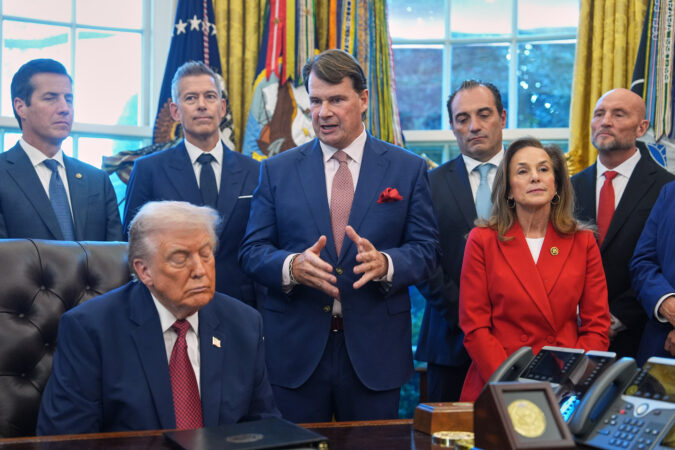
    WASHINGTON — President Donald Trump on Wednesday announced a proposal to weaken vehicle mileage rules for the auto industry, loosening regulatory pressure on automakers to control pollution from gasoline-powered cars and trucks.

    The plan, if finalized next year, would significantly reduce fuel economy requirements, which set rules on how far new vehicles need to travel on a gallon of gasoline, through the 2031 model year. The rules will increase Americans’ access to the full range of gasoline vehicles they need and can afford, officials said. The administration projects that the new standards would set the industry fleetwide average for light-duty vehicles at roughly 34.5 miles per gallon in the 2031 model year.

    The move is the latest action by the Trump administration to reverse Biden-era policies that encouraged cleaner-running cars and trucks, including electric vehicles. Burning gasoline for vehicles is a major contributor to planet-warming greenhouse gas emissions.

    “From Day One I’ve been taking action to make buying a car more affordable.” Trump said at a White House event that included top executives from the three largest U.S. automakers.

    The rule reverses a Biden-era policy that “forced automakers to build cars using expensive technologies that drove up costs, drove up prices, and made the car much worse,” Trump said.

    Rule change will save money, Trump says

    The action is expected to save consumers about $1,000 off the price of a new car, Trump said. New cars sold for an average of $49,766 on average in October, according to Kelley Blue Book.

    Automakers applauded the planned changes. They had complained that the Biden-era rules were difficult to meet.

    Ford CEO Jim Farley said the planned rollback was “a win for customers and common sense.”

    “As America’s largest auto producer, we appreciate President Trump’s leadership in aligning fuel economy standards with market realities. We can make real progress on carbon emissions and energy efficiency while still giving customers choice and affordability,” Farley said.

    Stellantis CEO Antonio Filosa said the automaker appreciates the administration’s actions to “realign” the standards “with real world market conditions.”

    Since taking office in January, Trump has relaxed auto tailpipe emissions rules, repealed fines for automakers that do not meet federal mileage standards, and terminated consumer credits of up to $7,500 for EV purchases.

    Environmentalists decried the rollback in mileage standards.

    “In one stroke Trump is worsening three of our nation’s most vexing problems: the thirst for oil, high gas pump costs, and global warming,” said Dan Becker, director of the Safe Climate Transport Campaign for the Center for Biological Diversity.

    “Gutting the [gas-mileage] program will make cars burn more gas and American families burn more cash,’’ said Katherine García, director of the Sierra Club’s Clean Transportation for All program.

    Polluting cars to stay on road

    “This rollback would move the auto industry backwards, keeping polluting cars on our roads for years to come and threatening the health of millions of Americans, particularly children and the elderly,” she said.

    Trump has repeatedly pledged to end what he falsely calls an EV “mandate,” referring incorrectly to Democratic President Joe Biden’s target that half of all new vehicle sales be electric by 2030. EVs accounted for about 8% of new vehicle sales in the United States in 2024, according to Cox Automotive.

    No federal policy has required auto companies to sell EVs, although California and other states have imposed rules requiring that all new passenger vehicles sold in the state be zero-emission by 2035. Trump and congressional Republicans blocked the California law earlier this year.

    Transportation Secretary Sean Duffy urged his agency to reverse existing fuel economy requirements, known as Corporate Average Fuel Economy, soon after taking office. In June, he said that standards set under Biden were illegal because they included use of electric vehicles in their calculation. EVs do not run on gasoline. After the June rule revision, the traffic safety agency was empowered to update the requirements.

    Under Biden, automakers were required to average about 50 miles (81 kilometers) per gallon of gas for passenger cars by 2031, compared with about 39 miles (63 kilometers) per gallon today. The Biden administration also increased fuel-economy requirements by 2% each year for light-duty vehicles in every model year from 2027 to 2031, and 2% per year for SUVs and other light trucks from 2029 to 2031. At the same time, it called for stringent tailpipe rules meant to encourage EV adoption.

    The 2024 standards would have saved 14 billion gallons of gasoline from being burned by 2050, according to the National Highway Traffic Safety Administration’s 2024 calculations. Abandoning them means that in 2035, cars could produce 22,111 more tons of carbon dioxide per year than under the Biden-era rules. It also means an extra 90 tons a year of deadly soot particles and more than 4,870 tons a year of smog components nitrogen oxide and volatile organic carbons going into the air in coming years.

    Mileage rules have been implemented since the 1970s energy crisis, and over time, automakers have gradually increased their vehicles’ average efficiency.

  • AI companies’ safety practices fail to meet global standards, study shows

    AI companies’ safety practices fail to meet global standards, study shows

    The safety practices of major artificial-intelligence companies, such as Anthropic, OpenAI, xAI, and Meta, are “far short of emerging global standards,” according to a new edition of Future of Life Institute’s AI safety index released on Wednesday.

    The institute said the safety evaluation, conducted by an independent panel of experts, found that while the companies were busy racing to develop superintelligence, none had a robust strategy for controlling such advanced systems.

    The study comes amid heightened public concern about the societal impact of smarter-than-human systems capable of reasoning and logical thinking, after several cases of suicide and self-harm were tied to AI chatbots.

    “Despite recent uproar over AI-powered hacking and AI driving people to psychosis and self-harm, U.S. AI companies remain less regulated than restaurants and continue lobbying against binding safety standards,” said Max Tegmark, MIT professor and Future of Life president.

    The AI race also shows no signs of slowing, with major tech companies committing hundreds of billions of dollars to upgrading and expanding their machine-learning efforts. The Future of Life Institute is a nonprofit organization that has raised concerns about the risks intelligent machines pose to humanity. Founded in 2014, it was supported early on by Tesla CEO Elon Musk. In October, a group including scientists Geoffrey Hinton and Yoshua Bengio called for a ban on developing superintelligent artificial intelligence until the public demands it and science paves a safe way forward.

    A Google DeepMind spokesperson said the company will “continue to innovate on safety and governance at pace with capabilities” as its models become more advanced, while xAI said, “Legacy media lies,” in what seemed to be an automated response.

    Anthropic, OpenAI, Meta, Z.ai, DeepSeek, and Alibaba Cloud did not immediately respond to requests for comment on the study.

  • Making friends as an adult is hard. Here’s the secret.

    Making friends as an adult is hard. Here’s the secret.

    On a recent Thursday evening in downtown Washington, I took a deep breath and walked into a bar. I joined a couple dozen other women who were milling around making small talk and ordering drinks, waiting for the more formal portion of the evening to begin.

    I was there to make friends.

    When I first moved to D.C. at age 23, I immediately met lots of new people who were in the same boat. Many of my fellow interns were new to the city, and we were all game for adventures. These days I still have close friends, but many of us have busy jobs and young children. Some have moved away. It can be hard to even schedule a phone call to catch up.

    I find myself craving the easy friendships of my early 20s. Could I find that again?

    The meetup I was attending was organized by RealRoots, one of a number of startups aimed at making us less lonely. Even before the pandemic, Americans were spending less time with friends. By 2023, the U.S. surgeon general warned we were in a loneliness epidemic and that the health risks of isolation were akin to smoking.

    The good news is there’s now less stigma in admitting you want to make friends, especially since the pandemic, RealRoots CEO and co-founder Dorothy Li told me.

    “We were all lonely together for two years,” she said, and many of us have begun rebuilding social lives at the same time.

    I consulted experts about how to both make new friends and reconnect with old ones. Here’s what I learned.

    Be vulnerable

    I went into the RealRoots event with a healthy dose of skepticism. I was told that I would be matched with a curated group of women based on my responses to a personality quiz and an interview with an artificial intelligence assistant named Lisa who detected my “social vibe.” (I was “grounded, thoughtful, and warm” — thanks, Lisa!)

    “I totally get it,” Li said when I told her about my doubts. “Human connection needs to be in real life.” But the planning and logistics of matching people who are similar and finding times on their calendars? That, she said, “can be done seamlessly by AI.”

    The women at my meetup included a former professional ballroom dancer, a nurse who loves her work with dementia patients, and an aid worker about to leave for a work trip to Sudan.

    Everyone had different reasons for being there. One woman worked from home and felt isolated, especially since becoming pregnant. Another wanted to push out of her comfort zone and meet new people. A third said she had social anxiety and felt this took the pressure off.

    After mingling, moderators led us through a series of questions, which started like corporate icebreakers (what are your hobbies?) but got progressively more personal (what’s something you’re good at?), finally building to the last question: What’s something you’re struggling with right now?

    I searched my mind for something that wouldn’t feel too revealing. These were basically strangers, after all. But then someone talked about her fertility issues. Another was going through a difficult divorce. Another had a serious illness. I quietly reassessed. When it was my turn, I no longer felt the need to hold back. I talked about my insecurities as a mom. I felt myself starting to cry as I explained my fears about how my anxiety would affect my daughter. I was met with so much empathy.

    When I told Li I felt close to all the women by the end of the night, she told me that’s the point.

    “When you start talking about the things that are actually on your mind, everyone can relate,” Li said.

    Vulnerability invites vulnerability. This rule also applies when trying to deepen friendships.

    For journalist Billy Baker, after getting married, having kids and relocating to the suburbs, he realized that many of his high school and college friends couldn’t be part of his daily life anymore. He set out to build a community where he lived, and the first step was to reach out to people he felt a connection to, and to tell them that. It was intentional and a little scary, but worth it, he said.

    “Vulnerability for me was always rewarded,” said Baker, author of the book We Need to Hang Out: A Memoir of Making Friends.

    Do things you want to do anyway

    When Baker was working on his book about friendship, he was trying to nail down exactly what draws us to other people. He found that a shared interest or activity worked particularly well as a first step. For instance, he would often run into a guy at the gym, so he started asking him to meet up there to work out together.

    “Pickleball has changed senior friendship,” he said. “Is it pickleball they love or is it having this activity that they enjoy, and finding others who also enjoy it and then they’re off for coffee?”

    Baker says if you choose something you want to do anyway, you’ll probably meet people with a shared interest, and even if you don’t you’ll still have a good time.

    Put friendship on the to-do list — near the top

    Baker learned that he couldn’t just assume friendships would happen to him — he needed to take initiative.

    “We were never taught to prioritize friendship,” Baker said. For him, this journey began when his editor asked him to write about how many men let friendships lapse in middle age. Even though Baker had always been social, he realized he had been prioritizing his work and family and neglecting to make time for friends.

    “The gift I gave myself is to put friendship on the to-do list every day alongside eating well, taking care of my family, taking out the trash, all those things,” Baker said. “It needs to be a part of our daily life if you really are going to reap the benefits.”

    Baker’s solution was to take inspiration from a group of men in his town with a tradition called “Wednesday nights” — a weekly promise of getting together. Baker created his own version of it, and said it was awkward at first. But eventually, genuine connections formed.

    At the end of my conversation with Baker, he gave me a challenge: Was there anyone I could think of who I wanted to be closer to?

    I thought of a colleague I have been casual friends with for a few years. I always delighted in running into her in the hallways or at parties, but we had never gotten together just us. Baker encouraged me to ask her to hang out.

    I felt a familiar creeping fear as I reached out to her — what if she was too busy, or didn’t feel the same friendship vibe I did? What if we did hang out and had nothing to say?

    I asked her, my colleague Rachel Kurzius, to get lunch on a Sunday. We chatted for two hours that felt like 20 minutes. We bonded over talking about books and our kids and the surprising number of things we had in common, and it really feels like the start of a friendship. Similar to Baker, I was rewarded by vulnerability.

    If you’re contemplating taking the first step, just do it. The odds are stacked in your favor.

    “We like people who like us,” Baker said. So make the first move.

    After my RealRoots meetup, I declined to join RealRoots’ six week series — like a kickball league, there was a cost, and it didn’t fit into the budget this month — but I was still grateful for the opportunity to meet people. A few days later, I ran into one of the women from the group at a workout class, and we greeted each other like old friends.

  • Trump targets Minnesota’s Somali community with harsh words and policies

    Trump targets Minnesota’s Somali community with harsh words and policies

    MINNEAPOLIS — Recent statements by President Donald Trump and top administration officials disparaging Minnesota’s large Somali community have focused renewed attention on the immigrants from the war-torn east African country and their descendants.

    Trump on Tuesday said he did not want Somalis in the U.S. because “they contribute nothing.” The president spoke soon after a person familiar with the planning said federal authorities are preparing a targeted immigration enforcement operation in Minnesota that would primarily focus on Somali immigrants living unlawfully in the U.S.

    Here are some things to know about Somalis in Minnesota:

    Largest Somali American population in the U.S.

    An estimated 260,000 people of Somali descent were living in the U.S. in 2024, according to the Census Bureau’s annual American Community Survey. The largest population is in the Minneapolis-St. Paul area, home to about 84,000 residents, most of whom are American citizens. Ohio, Washington and California also have significant populations.

    Almost 58% of the Somalis in Minnesota were born in the U.S. Of the foreign-born Somalis in Minnesota, an overwhelming majority — 87% — are naturalized U.S. citizens. Of the foreign-born population, almost half entered the U.S. in 2010 or later, according to the Census Bureau.

    They include many who fled the long civil war in their east African country and were drawn to the state’s welcoming social programs.

    Trump targets the community

    Trump has become increasingly focused in recent weeks on Somalis living in the U.S., saying they “have caused a lot of trouble.”

    Trump and other administration officials stepped up their criticism after a conservative news outlet, City Journal, claimed that taxpayer dollars from defrauded government programs have flowed to the militant group al-Shabab, an affiliate of al-Qaida that controls parts of rural Somalia and often has targeted the capital, Mogadishu.

    While Treasury Secretary Scott Bessent said in a social media post Monday that his agency is investigating whether “hardworking Minnesotans’ tax dollars may have been diverted to the terrorist organization,” little evidence has emerged so far to prove a link. Federal prosecutors have not charged any of the dozens of defendants in recent public program fraud cases in Minnesota with providing material support to foreign terrorist organizations.

    Last month, Trump said he was terminating Temporary Protected Status for Somali migrants in Minnesota, a legal safeguard against deportation. A report produced for Congress in August put the number of Somalis covered by the program at just 705 nationwide.

    The announcement drew immediate pushback from some state leaders and immigration experts, who characterized Trump’s declaration as a legally dubious effort to sow fear and suspicion.

    Fraud allegations lead to pushback

    Local Somali community leaders, as well as allies like Gov. Tim Walz and Minneapolis Mayor Jacob Frey, have also pushed back against those who might blame the broader Somali community for some recent cases of massive fraud in public programs.

    Those include what is known as the Feeding Our Future scandal, which federal prosecutors say was the country’s largest COVID-19-related fraud case. It involved a program meant to feed children during the pandemic. The defendants were accused of fraudulently claiming to be feeding millions of meals to children. While the alleged ringleader was white, many of the defendants were Somalis, and most of them were U.S. citizens.

    Prosecutors in recent months have raised their estimate of the thefts to $300 million from an original $250 million, and the number of defendants last month grew to 78. The cases are still working their way through the court system.

    Republican candidates for governor and other offices in 2026 are staking their hopes on voters blaming Walz for failing to prevent the losses to taxpayers. Trump has blasted Walz for allowing the fraud to unfold on his watch.

    Earlier terrorism cases still echo

    Authorities in Minnesota struggled for years to stem the recruiting of young Somali men by the Islamic State group and the Somalia-based militant group al-Shabab.

    The problem first surfaced in 2007, when more than 20 young men went to Somalia, where Ethiopian troops propping up a weak U.N.-backed government were seen by many as foreign invaders.

    While most of those cases were resolved years ago, another came to light earlier this year. A 23-year-old defendant pleaded guilty in September to attempting to provide material support and resources to a designated foreign terrorist organization.

    Mostly in the 2010s, the Islamic State group also found recruits in Minnesota’s Somali community, with authorities saying roughly a dozen left to join militants in Syria.

    Somalis have become a force in Minnesota politics

    The best-known Somali American is arguably Democratic U.S. Rep. Ilhan Omar, a fiery progressive whose district includes Minneapolis and is a frequent target of Trump.

    Several other Somali Americans have served in the Minnesota Legislature and the Minneapolis and St. Paul city councils. State Sen. Omar Fateh, a democratic socialist, finished second in the Minneapolis mayoral election in November to incumbent Mayor Frey.

  • Shredded cheese sold in dozens of states recalled due to potential for metal fragment contamination

    Shredded cheese sold in dozens of states recalled due to potential for metal fragment contamination

    There is a recall for more than 260,000 cases of shredded cheese sold in 31 states and Puerto Rico because of the potential for metal fragment contamination, according to the U.S. Food and Drug Administration.

    The FDA said that the various shredded cheeses were recalled by Great Lakes Cheese Co. The cheese products are sold under private store-brand labels at several retailers, including Target, Walmart and Aldi.

    The recall includes various cheeses such as mozzarella, Italian style, pizza style, mozzarella and provolone and mozzarella and parmesan.

    The recall has a Class II classification, because the product “may cause temporary or medically reversible adverse health consequences or where the probability of serious adverse health consequences is remote,” according to the FDA’s website.

    An FDA says ingesting metal fragments may cause injuries such as dental damage, laceration of the mouth or throat, or laceration or perforation of the intestine.