Category: Wires

  • Pentagon knew boat attack left survivors but still launched a follow-on strike, AP sources say

    Pentagon knew boat attack left survivors but still launched a follow-on strike, AP sources say

    WASHINGTON — The Pentagon knew there were survivors after a September attack on an alleged drug boat in the Caribbean Sea and the U.S. military still carried out a follow-up strike, according to two people familiar with the matter.

    The rationale for the second strike was that it was needed to sink the vessel, according to the people familiar with the matter who spoke on the condition of anonymity because they weren’t authorized to discuss it publicly. The Trump administration says all 11 people aboard were killed.

    What remains unclear was who ordered the strikes and whether Defense Secretary Pete Hegseth was involved, one of the people said. That will be part of a classified congressional briefing Thursday with the commander that the Trump administration says ordered the second strike, Adm. Frank “Mitch” Bradley.

    Hegseth has defended the second strike as emerging in the “fog of war,” saying he didn’t see any survivors but also “didn’t stick around” for the rest of the mission.

    Hegseth is under growing scrutiny over the military strikes on alleged drug traffickers in the Caribbean and eastern Pacific. Legal experts and some lawmakers say a strike that killed survivors would have violated the laws of armed conflict.

  • Americans gave $4B on Giving Tuesday 2025 as donations and volunteering gain big over last year

    Americans gave $4B on Giving Tuesday 2025 as donations and volunteering gain big over last year

    Americans gave $4 billion to nonprofits on Giving Tuesday in 2025, an increase from the $3.6 billion they gave in 2024, according to estimates from the nonprofit Giving Tuesday.

    More people also volunteered their time on the Tuesday after Thanksgiving this year, which fell on Dec. 2 and has become a major fundraising day for nonprofits. This year, 11.1 million people in the U.S. volunteered, up from, 9.2 million last year.

    Giving Tuesday started in 2012 as a hashtag and a project of the 92nd St Y in New York and has since become an independent nonprofit. The organization estimates how much was given and how many people volunteer using data from a wide variety of sources, including giving platforms, payment processors and software applications that nonprofits use.

    Woodrow Rosenbaum, the chief data officer for Giving Tuesday, said both the number of people giving and the overall donation amount may have increased this year as people seek a sense of belonging and connection.

    “Generosity is a really powerful way to get that,” Rosenbaum said in an interview with The Associated Press. ”But I think mostly it’s just that when people see need, they want to do something about it and Giving Tuesday is an opportunity to do that in a moment of celebration as opposed to crisis.”

    Overall donations increased 8.1% from last year when adjusted for inflation. Giving Tuesday has also seen the average donation increase in size over time and Rosenbaum said people may be seeking additional ways to give as well.

    “Volunteering is a way that you can add to your impact without it costing you money,” he said.

    Not everyone who volunteers their time does so through a nonprofit. They may volunteer with mutual aid groups or by helping out family members or neighbors, he said.

    Giving Tuesday does not include donations from corporations or foundations in their estimate, Rosenbaum said, as they are focused on the everyday generosity of individuals. That means they did not include the gift from billionaires Michael and Susan Dell of $6.25 billion to encourage families to claim new investment accounts created by the Trump administration.

    President Donald Trump hosted the Dells at the White House Tuesday, calling their commitment “one of the most generous acts in the history of our country.” The Dells will offer $250 to 25 million children 10 years old and younger to invest in accounts that the U.S. Department of Treasury will create next year. The ” Trump accounts ” were part of the administration’s tax and spending legislation passed in the summer.

    A significant portion of charitable giving to nonprofits happens at the end of the calendar year and Giving Tuesday is an informal kick off to what nonprofits think of as the giving season. A combination of economic and political uncertainty has meant it is hard to predict how generous donors will be this year. Rosenbaum said that the generosity demonstrated on GivingTuesday is an extremely encouraging bellwether for how the rest of the giving season will go.

    “What we really hope is that nonprofits and community groups see this as an opportunity that we are in a moment of abundance and that people are ready and willing to help,” Rosenbaum said.

  • A vocal Jeffrey Epstein accuser is urging judges to unseal his court records

    A vocal Jeffrey Epstein accuser is urging judges to unseal his court records

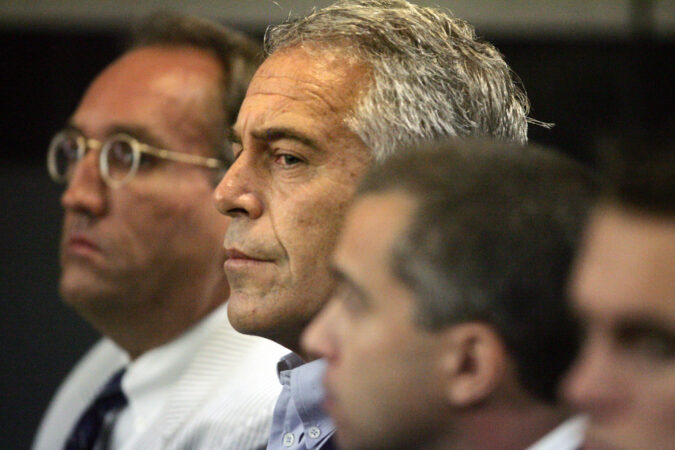
    NEW YORK — One of Jeffrey Epstein and Ghislaine Maxwell‘s most vocal accusers urged judges on Wednesday to grant the Justice Department’s request to unseal records from their federal sex trafficking cases, saying “only transparency is likely to lead to justice.”

    Annie Farmer weighed in through her lawyer, Sigrid S. McCawley, after the judges asked for input from victims before ruling on whether the records should be made public under a new law requiring the government to open its files on the late financier and his longtime confidante, who sexually abused young women and girls for decades.

    Farmer and other victims fought for the passage of the law, known as the Epstein Files Transparency Act. Signed last month by President Donald Trump, it compels the Justice Department, FBI and federal prosecutors to release by Dec. 19 the vast troves of material they’ve amassed during investigations into Epstein.

    The Justice Department last week asked Manhattan federal Judges Richard Berman and Paul Engelmayer to lift secrecy orders on grand jury transcripts and other material from Epstein’s 2019 sex-trafficking case and a wide range of records from Maxwell’s 2021 case, including search warrants, financial records, and notes from interviews with victims.

    “Nothing in these proceedings should stand in the way of their victory or provide a backdoor avenue to continue to cover up history’s most notorious sex-trafficking operation,” McCawley wrote in a letter to the judges.

    The attorney was critical of the government for failing to prosecute anyone else in Epstein and Maxwell’s orbit. She asked the judges to ensure that any orders they issue do not preclude the Justice Department from releasing other Epstein-related materials.

    Farmer “is wary of the possibility that any denial of the motions may be used by others as a pretext or excuse for continuing to withhold crucial information concerning Epstein’s crimes,” McCawley wrote.

    Epstein, a millionaire money manager known for socializing with celebrities, politicians, billionaires, and the academic elite, killed himself in jail a month after his 2019 arrest.

    Maxwell was convicted in 2021 by a federal jury of sex trafficking for helping recruit some of Epstein’s underage victims and participating in some of the abuse. She is serving a 20-year prison sentence.

    In a court filing Wednesday, Maxwell’s lawyer again said that she is preparing a habeas petition in a bid to overturn her conviction. The lawyer, David Markus, first mentioned the habeas petition in court papers in August as she fought the Justice Department’s initial bid to have her case records unsealed. The Supreme Court in October declined to hear Maxwell’s appeal.

    Markus said in Wednesday’s filing that while Maxwell now “does not take a position” in the wake of the transparency act’s passage, doing so “would create undue prejudice so severe that it would foreclose the possibility of a fair retrial” if her habeas petition succeeds.

    The records, Markus said, “contain untested and unproven allegations.”

    Engelmayer, who’s weighing whether to release records from Maxwell’s case, gave her and victims until Wednesday to respond to the Justice Department’s unsealing request. The government must respond to their filings by Dec. 10. The judge said he will rule “promptly thereafter.”

    Berman, who presided over the Epstein case, ordered victims and Epstein’s estate to respond by Wednesday and gave the government until Dec. 8 to reply to those submissions. Berman said he would make his “best efforts to resolve this motion promptly.”

    Lawyers for Epstein’s estate said in a letter to Berman on Wednesday that the estate takes no position on the Justice Department’s unsealing request. The lawyers noted that the government had committed to making appropriate redactions of personal identifying information for victims.

    Last week, a lawyer for some victims complained that the House Oversight Committee had failed to redact, or black out, some of their names from tens of thousands pages of Epstein-related documents it has released in recent months.

    Transparency “CANNOT come at the expense of the privacy, safety, and protection of sexual abuse and sex trafficking victims, especially these survivors who have already suffered repeatedly,” lawyer Brad Edwards wrote.

  • Doctor who sold ketamine to ‘Friends’ star Matthew Perry gets 2 1/2 years in prison

    Doctor who sold ketamine to ‘Friends’ star Matthew Perry gets 2 1/2 years in prison

    LOS ANGELES — A doctor who pleaded guilty to selling ketamine to Matthew Perry in the weeks before the Friends star’s overdose death was sentenced to 2 1/2 years in prison on Wednesday.

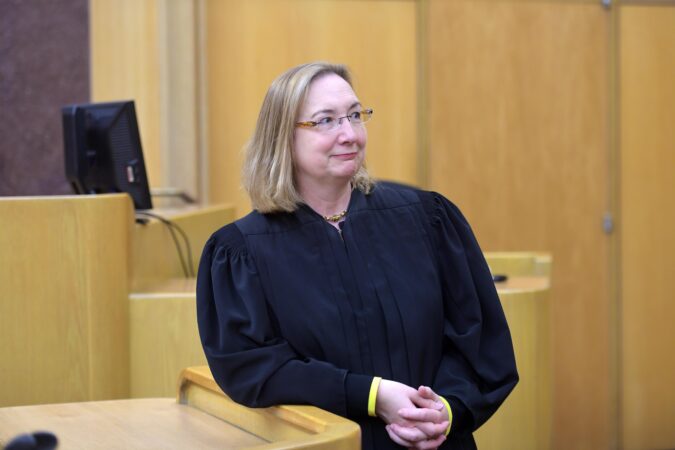
    Judge Sherilyn Peace Garnett handed down the sentence plus two years of probation to 44-year-old Dr. Salvador Plasencia in a federal courtroom in Los Angeles.

    The judge emphasized that Plasencia didn’t provide the ketamine that killed Perry, but told him, “You and others helped Mr. Perry on the road to such an ending by continuing to feed his ketamine addiction.”

    “You exploited Mr. Perry’s addiction for your own profit,” she said.

    Plasencia was led from the courtroom in handcuffs as his mother cried loudly in the audience. He might have arranged a date to surrender, but his lawyers said he was prepared to do it today.

    Perry’s mother and two half sisters gave tearful victim impact statements before the sentencing.

    “The world mourns my brother,” Madeleine Morrison said. “He was everyone’s favorite friend.”

    “My brother’s death turned my world upside down,” Morrison said, crying. “It punched a crater in my life. His absence is everywhere.”

    Plasencia was the first to be sentenced of the five defendants who have pleaded guilty in connection with Perry’s death at age 54 in 2023.

    The doctor admitted to taking advantage of Perry, knowing he was a struggling addict. Plasencia texted another doctor that Perry was a “moron” who could be exploited for money, according to court filings.

    Prosecutors had asked for three years in prison, while the defense sought just a day in prison plus probation.

    Perry’s mother talked about the things he overcame in life and the strength he showed.

    “I used to think he couldn’t die,” Suzanne Perry said as her husband, Dateline journalist Keith Morrison, stood at the podium with her.

    “You called him a ‘moron,’” she said. “There is nothing moronic about that man. He was even a successful drug addict.”

    She spoke eloquently and apologized for rambling before getting tearful at the end, saying, “this was a bad thing you did!” as she cried.

    Plasencia also spoke before the sentencing, breaking into tears as he imagined the day he would have to tell his now 2-year-old son “about the time I didn’t protect another mother’s son. It hurts me so much. I can’t believe I’m here.”

    He apologized directly to Perry’s family. “I should have protected him,” he said.

    Perry had been taking the surgical anesthetic ketamine legally as a treatment for depression. But when his regular doctor wouldn’t provide it in the amounts he wanted, he turned to Plasencia, who admitted to illegally selling to Perry and knowing he was a struggling addict.

    Plasencia’s lawyers tried to give a sympathetic portrait of him as a man who rose out of poverty to become a doctor beloved by his patients, some of whom provided testimonials about him for the court.

    The attorneys called his selling to Perry “reckless” and “the biggest mistake of his life.”

    Plasencia pleaded guilty in July to four counts of distribution of ketamine. Prosecutors agreed to drop five different counts. The agreement came with no sentencing guarantees, and legally Garnett can give him up to 40 years.

    The other four defendants who reached deals to plead guilty will be sentenced at their own hearings in the coming months.

    Perry died at age 54 in 2023 after struggling with addiction for years, dating back to his time on Friends, when he became one of the biggest stars of his generation as Chandler Bing. He starred alongside Jennifer Aniston, Courteney Cox, Lisa Kudrow, Matt LeBlanc and David Schwimmer for 10 seasons from 1994 to 2004 on NBC’s megahit.

  • Bessent says Federal Reserve Board could ‘veto’ future regional presidents

    Bessent says Federal Reserve Board could ‘veto’ future regional presidents

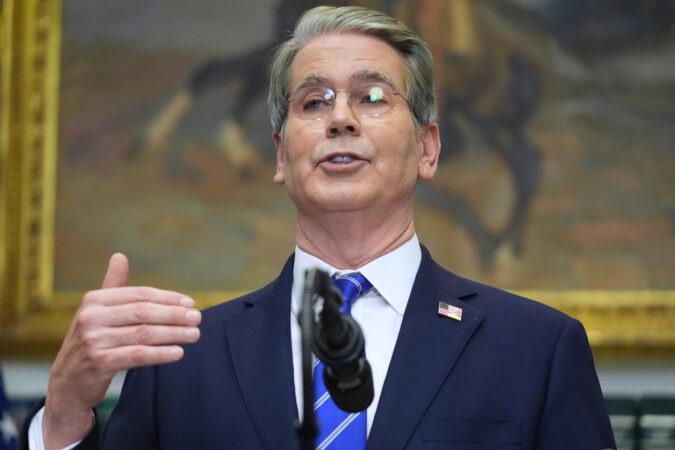
    WASHINGTON — Treasury Secretary Scott Bessent said Wednesday he would push a new requirement that the Federal Reserve’s regional bank presidents live in their districts for at least three years before taking office, a move that could give the White House more power over the independent agency.

    In comments at the New York Times’ DealBook Summit, Bessent criticized several presidents of the Fed’s regional banks, saying that they were not from the districts that they now represent, “a disconnect from the original framing” of the Fed.

    Bessent said that three of the 12 regional presidents have ties to New York: Two previously worked at the New York Federal Reserve, while a third worked at a New York investment bank.

    “So, do they represent their district?” he asked. “I am going to start advocating, going forward, not retroactively, that regional Fed presidents must have lived in their district for at least three years.”

    Bessent added that he wasn’t sure if Congress would need to weigh in on such a change. Under current law, the Fed’s Washington, D.C.-based board can block the appointment of regional Fed presidents.

    “I believe that you would just say, unless someone’s lived in the district for three years, we’re going to veto them,” Bessent said.

    Bessent has stepped up his criticism of the Fed’s 12 regional bank presidents in recent weeks after several of them made clear in a series of speeches that they opposed cutting the Fed’s key rate at its next meeting in December. President Donald Trump has sharply criticized the Fed for not lowering its short-term interest rate more quickly. When the Fed reduces its rate it can over time lower borrowing costs for mortgages, auto loans, and credit cards.

    The prospect of the administration “vetoing” regional bank presidents would represent another effort by the White House to exert more control over the Fed, an institution that has traditionally been independent from day-to-day politics.

    The Federal Reserve seeks to keep prices in check and support hiring by setting a short-term interest rate that influences borrowing costs across the economy. It has a complicated structure that includes a seven-member board of governors based in Washington as well as 12 regional banks that cover specific districts across the United States.

    The seven governors and the president of the New York Fed vote on every interest-rate decision, while four of the remaining 11 presidents vote on a rotating basis. But all the presidents participate in meetings of the Fed’s interest-rate setting committee.

    The regional Fed presidents are appointed by boards made up of local and business community leaders.

    Three of the seven members of the Fed’s board were appointed by Trump, and the president is seeking to fire Governor Lisa Cook, which would give him a fourth seat and a majority. Yet Cook has sued to keep her job, and the Supreme Court has ruled she can stay in her seat as the court battle plays out.

    Trump is also weighing a pick to replace Chair Jerome Powell when he finishes his term in May. Trump said over the weekend that “I know who I am going to pick,” but at a Cabinet meeting Tuesday said he wouldn’t announce his choice until early next year. Kevin Hassett, a top economic adviser to Trump, is widely considered Trump’s most likely choice.

    The three regional presidents cited by Bessent are all relatively recent appointees. Lorie Logan was named president of the Dallas Fed in August 2022, after holding a senior position at the New York Fed as the manager of the Fed’s multitrillion dollar portfolio of mostly government securities. Alberto Musalem became president of the St. Louis Fed in April 2024, and from 2014-2017 was an executive vice president at the New York Fed.

    Beth Hammack was appointed president of the Cleveland Fed in August 2024, after an extended career at Goldman Sachs.

    Musalem is the only one of the three that currently votes on policy and he supported the Fed’s rate cuts in September and October. But last month he suggested that with inflation elevated, the Fed likely wouldn’t be able to cut much more.

    Logan has said she would have voted against October’s rate cut if she had a vote, while Hammack has said that the Fed’s key rate should remain high to combat inflation. Both Hammack and Logan will vote on rate decisions next year.

    Bessent argued last month in an interview on CNBC that the reason for the regional Fed banks was to bring the perspective of their districts to the Fed’s interest rate decisions and “break the New York hold” on the setting of interest rates.

    __

    Associated Press Writer Fatima Hussein contributed to this report.

  • Federal judge limits warrantless immigration arrests in D.C.

    Federal judge limits warrantless immigration arrests in D.C.

    The Trump administration’s escalating use of warrantless immigration arrests in D.C. this year probably violated federal law, a judge ruled Tuesday in a decision that prohibits such arrests for all migrants in the city except those at risk of escaping.

    U.S. District Judge Beryl A. Howell granted a preliminary injunction sought by the immigrant-rights group CASA Inc. and four migrants who were arrested without administrative warrants in August amid President Donald Trump’s law enforcement surge in the capital. All four had pending immigration applications at the time of their arrests and were eventually released after spending time in detention facilities.

    “They were arrested while going about unavoidable, lawful activities of daily life,” Howell said.

    The judge, in an 88-page opinion, took Trump administration officials to task for depriving migrants of their rights and basic necessities as they languished in cramped detention facilities before being released. She criticized immigration authorities’ “systemic failure” to follow the law and said top administration officials, including Chief Border Patrol Agent Gregory Bovino, had repeatedly misstated the legal requirements for warrantless arrests in public comments.

    Bovino and a spokesperson for the Department of Homeland Security had asserted that officers needed “reasonable suspicion” to conduct such arrests, but Howell said the legal standard was more stringent: probable cause. Homeland Security officials did not immediately respond to a request for comment Wednesday.

    Trump ordered a renewed crackdown on illegal immigration this year, and top administration officials set targets as high as 3,000 daily arrests of migrants. Attorneys for CASA and the four plaintiffs in the case argued that authorities began to work under an “arrest first, ask questions later” policy to comply with the high daily quotas — and began ignoring a section of the Immigration and Nationality Act that authorizes warrantless arrests only when a migrant “is likely to escape before a warrant can be obtained.”

    One of the plaintiffs, Jose Escobar Molina, a scaffolder from El Salvador, described in a court filing how he was picked up at 6 a.m. as he headed to work one morning by a group of plainclothes officers who shoved him into a black SUV, making him think he was being kidnapped. Another plaintiff, from Venezuela, said he showed his arresting officers his driver’s license, work permit and asylum application paperwork, which they disregarded.

    Warrantless arrests have skyrocketed since Trump’s surge began in August, Howell found. By one count, she said, officials conducted 943 immigration arrests over a month-long period that ended Sept. 9, which represented 40 percent of all D.C. arrests. The judge noted that being present in the country without legal authorization is not a criminal offense, but a civil violation. Entering the United States without legal authorization is a misdemeanor under federal law, and a felony for repeat offenders.

    “Viewing all immigrants potentially subject to removal as criminals is, as a legal matter, plain wrong,” Howell said, before quoting a Supreme Court ruling from 2012: “Perceived mistreatment of aliens in the United States may lead to harmful reciprocal treatment of American citizens abroad.”

    At a court hearing last month, an assistant U.S. attorney argued that an injunction would slow the Trump administration’s deportation efforts by allowing the court to micromanage arrests. As part of her ruling Tuesday, Howell ordered that immigration authorities document every warrantless immigration arrest in D.C. with “specific, particularized facts” establishing probable cause “that the person is likely to escape before a warrant can be obtained.”

    The Justice Department in a legal filing denied that immigration authorities had instituted a new policy of warrantless arrests and argued that the court did not have jurisdiction to rule on the case.

    “Plaintiffs identify no written policy authorizing the arrests that they complain of because there is none,” Assistant U.S. Attorney John Bardo said. Howell said approximately 40 migrants had submitted court declarations attesting to the warrantless arrests and said Bovino’s comments defending those arrests with inaccurate information proved that the policy existed.

    “This is a victory for the rule of law and for the people across the city, who have avoided going to work, to church, to school, to grocery stores — out of fear of being unlawfully arrested, detained, and deported,” said Joanne Lin, an official with the Washington Lawyer’s Committee, one of the groups representing the plaintiffs.

    The ruling describes some circumstances in which immigration agents can establish a migrant’s likelihood of escaping before a warrant may be obtained, but Howell said those factors could vary.

    “Some courts have found the likelihood of escape to be higher when, for example, the noncitizen presented ‘conflicting documents,’ ‘had been “picked up before,” ’ admitted that he had previously been removed, or appeared ‘extremely nervous’ as if ‘looking for an opportunity to run,’” the judge wrote. “Courts have also made the self-evident finding that the likelihood of escape is lower when the individual has resided in the country for a lengthy period of time and has strong community ties.”

    Aditi Shah, an attorney involved in the case from the American Civil Liberties Union of D.C., welcomed those conditions.

    “This requires the government to take some extra steps that it’s required to under the law before it can just grab people off the streets and lock them away in detention centers,” she said.

    Ama Frimpong, CASA’s legal director, said the ruling was a powerful memorial to one of the migrants who described his warrantless arrest and detention in a legal filing, using a pseudonym, Elias Doe. He died last week, Frimpong said. His health had worsened after he missed a dialysis treatment while detained, she said.

    “This is now part of his legacy,” Frimpong said. “It is important for impacted community members to lead this fight and show that they are not afraid.”

  • House Judiciary issues subpoena to force Jack Smith to testify in private

    House Judiciary issues subpoena to force Jack Smith to testify in private

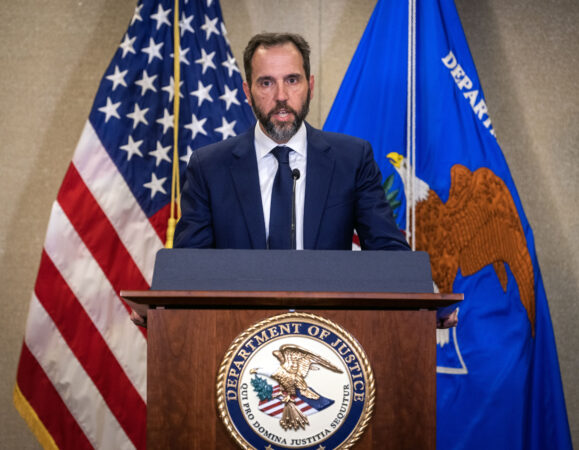
    House Republicans have upped their demands for Jack Smith to testify behind closed doors, issuing a subpoena on Wednesday to the former special counsel that calls on him to meet with members of the House Judiciary Committee and answer questions about his two federal prosecutions of President Donald Trump.

    Rep. Jim Jordan (R., Ohio), who chairs the House Judiciary Committee, said in his letter to Smith — which he posted on social media — that Smith would be deposed on Dec. 17. Smith must hand over materials related to the investigations by Dec. 12, he said.

    The demand is the latest in a string from Republican lawmakers aimed at getting Smith to testify privately and hand over materials related to the probes. In October, Jordan wrote Smith requesting that he sit for a private interview with lawmakers about the investigations, though did not issue a subpoena.

    “Due to your service as special counsel, the Committee believes that you possess information that is vital to its oversight of this matter,” the letter from Jordan reads.

    Smith repeatedly has said he would sit for an interview with lawmakers in a public setting, but does not want to do it behind closed doors. His supporters have expressed concern that a private interview would be subject to selective leaks by committee members.

    Public testimony, however, could put Republicans and the Trump administration in a tricky position. Smith has said he collected ample evidence showing that Trump committed the alleged crimes for which he was indicted. By calling Smith to testify, Republicans risk giving him a platform to air the evidence he collected against the president and failing to elicit testimony that would portray him as a corrupt prosecutor out to get Republicans.

    The former special counsel has also said that, under long-standing protocol, he needs Justice Department guidance to tell him what he is allowed to testify about and what materials he is allowed to hand over. Smith, who is now a private citizen, says he does not have access to the investigatory materials, which are now in the Justice Department’s possession.

    The Justice Department did not immediately respond to a request asking if it had provided Smith with that guidance.

    “Nearly six weeks ago Jack offered to voluntarily appear before the House Judiciary committee in an open hearing to answer any questions lawmakers have about his investigation,” Smith’s attorney, Peter Koski, said in a statement.

    “We are disappointed that offer was rejected, and that the American people will be denied the opportunity to hear directly from Jack on these topics. Jack looks forward to meeting with the committee later this month to discuss his work and clarify the various misconceptions about his investigation.”

    If Smith failed to comply with the subpoena, he could risk prosecution. If a person defies a congressional subpoena, lawmakers could refer that person to the Justice Department for prosecution.

    The back-and-forth over the terms of Smith’s testimony highlights the Trump administration’s contentious relationship with Smith and the large team of agents and prosecutors involved in investigating the president. The administration has fired multiple prosecutors and agents who worked on the cases and has portrayed Smith and his team as corrupt and politicized. The committee has also called some of Smith’s deputies on the special counsel team for testimony.

    Smith oversaw two federal investigations into Trump during the Biden administration. One examined Trump’s alleged mishandling of classified materials after he left office, and the other probed his alleged attempts to overturn the 2020 election results.

    Neither case made it to trial, and both were dismissed before Trump took office in January. Smith has said that he did nothing wrong and that he followed all investigatory protocols when overseeing the cases.

  • Pentagon watchdog finds Hegseth’s use of Signal posed risk to U.S. personnel, AP sources say

    Pentagon watchdog finds Hegseth’s use of Signal posed risk to U.S. personnel, AP sources say

    The Pentagon’s watchdog found that Defense Secretary Pete Hegseth put U.S. personnel and their mission at risk when he used the Signal messaging app to convey sensitive information about a military strike against Yemen’s Houthi militants, two people familiar with the findings said Wednesday.

    Hegseth, however, has the ability to declassify material and the report did not find he did so improperly, according to one of the people familiar with the findings who spoke on condition of anonymity to discuss the information. That person also said the report concluded that Hegseth violated Pentagon policy by using his personal device for official business and it recommended better training for all Pentagon officials.

    Hegseth declined to sit for an interview with the Pentagon’s inspector general but provided a written statement, that person said. The defense secretary asserted that he was permitted to declassify information as he saw fit and only communicated details he thought would not endanger the mission.

    The findings ramp up the pressure on the former Fox News Channel host after lawmakers had called for the independent inquiry into his use of the commercially available app. Lawmakers also just opened investigations into a news report that a follow-up strike on an alleged drug-smuggling boat in the Caribbean Sea in September killed survivors after Hegseth issued a verbal order to “kill everybody.”

    Hegseth defended the strike as emerging in the “fog of war‚” saying he didn’t see any survivors but also “didn’t stick around” for the rest of the mission and that the admiral in charge “made the right call” in ordering the second strike. He also did not admit fault following the revelations that he discussed sensitive military plans on Signal, asserting that the information was unclassified.

    “The Inspector General review is a TOTAL exoneration of Secretary Hegseth and proves what we knew all along — no classified information was shared,” Sean Parnell, the Pentagon’s chief spokesman said in a statement. “This matter is resolved, and the case is closed.”

    Meanwhile, the Pentagon knew there were survivors after a September attack on an alleged drug boat in the Caribbean Sea and the U.S. military still carried out a follow-up strike, according to two people familiar with the matter.

    The rationale for the second strike was that it was needed to sink the vessel, according to the people familiar with the matter who spoke on the condition of anonymity because they weren’t authorized to discuss it publicly. The Trump administration says all 11 people aboard were killed.

    What remains unclear was who ordered the strikes and whether Hegseth was involved, one source said. That will be part of a classified congressional briefing Thursday with the commander that the Trump administration says ordered the second strike, Adm. Frank “Mitch” Bradley.

    The information about the follow-on strike was not presented to lawmakers during a classified briefing in September, in the days after the incident. It was disclosed later, one source said, and the explanation provided by the department has been broadly unsatisfactory to various members of the national security committees in Congress.

    In a rare flex of bipartisan oversight, the Armed Services committees in both the House and Senate swiftly announced investigations into the strikes as lawmakers of both parties raise questions.

    Hegseth is under growing scrutiny over the military strikes on alleged drug traffickers in the Caribbean and eastern Pacific. Legal experts and some lawmakers say a strike that killed survivors would have violated the laws of armed conflict. The Trump administration has said the U.S. is in “armed conflict” with drug cartels, even though Congress has not approved any authorization for the use of military force in the region.

    Journalist was added to a chat where sensitive plans were shared

    In at least two separate Signal chats, Hegseth provided the exact timings of warplane launches and when bombs would drop — before the men and women carrying out those attacks on behalf of the United States were airborne.

    Hegseth’s use of the app came to light when a journalist, Jeffrey Goldberg of The Atlantic, was inadvertently added to a Signal text chain by then-national security adviser Mike Waltz. It included Vice President JD Vance, Secretary of State Marco Rubio, Director of National Intelligence Tulsi Gabbard, and others, brought together to discuss March 15 military operations against the Iran-backed Houthis.

    Hegseth had created another Signal chat with 13 people that included his wife and brother where he shared similar details of the same strike, The Associated Press reported.

    Signal is encrypted but is not authorized for carrying classified information and is not part of the Pentagon’s secure communications network.

    Hegseth previously has said none of the information shared in the chats was classified. Multiple current and former military officials have told the AP there was no way details with that specificity, especially before a strike took place, would have been OK to share on an unsecured device.

    The review was delivered to lawmakers, who were able to review the report in a classified facility at the Capitol. A partially redacted version of the report was expected to be released publicly later this week.

    Hegseth said he viewed the investigation as a partisan exercise and did not trust the inspector general, according to one of the people familiar with the report’s findings. The review had to rely on screenshots of the Signal chat published by the Atlantic because Hegseth could not provide more than a small handful of his Signal messages, the person said.

    When asked about the investigation in August, Pentagon press secretary Kingsley Wilson told reporters that “we believe that this is a witch hunt and a total sham and being conducted in bad faith.”

    The Pentagon did not immediately respond Wednesday to a request for comment.

    Lawmakers had called for inspector general to investigate

    The revelations sparked intense scrutiny, with Democratic lawmakers and a small number of Republicans saying Hegseth posting the information to the Signal chats before the military jets had reached their targets potentially put those pilots’ lives at risk. They said lower-ranking members of the military would have been fired for such a lapse.

    The inspector general opened its investigation into Hegseth at the request of the Republican chairman of the Senate Armed Services Committee, Sen. Roger Wicker of Mississippi, and the committee’s top Democrat, Sen. Jack Reed of Rhode Island.

    Some veterans and military families also raised concerns, citing the strict security protocols they must follow to protect sensitive information.

    It all ties back to the campaign against Yemen’s Houthis

    The Houthi rebels had started launching missile and drone attacks against commercial and military ships in late 2023 in what their leadership had described as an effort to end Israel’s offensive against Hamas in the Gaza Strip. Their campaign greatly reduced the flow of trade through the Red Sea corridor, which typically sees $1 trillion of goods move through it annually.

    The U.S.-led campaign against the Houthis in 2024 turned into the most intense running sea battle the Navy had faced since World War II.

    A ceasefire in the Israel-Hamas war had begun in January before falling apart in March. The U.S. then launched a broad assault against the Houthis that ended weeks later when Trump said they pledged to stop attacking ships. The latest Gaza ceasefire began in October.

    Following the disclosure of Hegseth’s Signal chat that included the Atlantic’s editor, the magazine released the entire thread in late March. Hegseth had posted multiple details about an impending strike, using military language and laying out when a “strike window” starts, where a “target terrorist” was located, the time elements around the attack and when various weapons and aircraft would be used in the strike. He mentioned that the U.S. was “currently clean” on operational security.

    Hegseth told Fox News Channel in April that what he shared over Signal was “informal, unclassified coordinations, for media coordinations and other things.”

    During a congressional hearing in June, Hegseth was pressed multiple times by lawmakers over whether he shared classified information and if he should face accountability if he did.

    Rep. Seth Moulton, a Massachusetts Democrat and Marine veteran, asked Hegseth whether he would hold himself accountable if the inspector general found that he placed classified information on Signal.

    Hegseth would not directly say, only noting that he serves “at the pleasure of the president.”
  • D-Day veteran Charles Shay, who saved lives on Omaha Beach, dies at 101 in France

    D-Day veteran Charles Shay, who saved lives on Omaha Beach, dies at 101 in France

    PARIS — Charles Shay, a decorated Native American veteran who was a 19-year-old U.S. Army medic when he landed on Omaha Beach on D-Day and helped save lives, died on Wednesday. He was 101.

    Shay died at his home in Bretteville-L’Orgueilleuse in France’s Normandy region, his longtime friend and carer Marie-Pascale Legrand said.

    Shay, of the Penobscot tribe and from Indian Island in the U.S. state of Maine, was awarded the Silver Star for repeatedly plunging into the sea and carrying critically wounded soldiers to relative safety, saving them from drowning. He also received France’s highest award, the Legion of Honor, in 2007.

    Shay had been living in France since 2018, not far from the shores of Normandy where nearly 160,000 troops from Britain, the U.S., Canada and other nations landed on D-Day on June 6, 1944. The Battle of Normandy hastened Germany’s defeat, which came less than a year later.

    “He passed away peacefully surrounded by his loved ones,” Legrand told The Associated Press.

    The Charles Shay Memorial group, which honors the memory of about 500 Native Americans who landed on the Normandy beaches, said in a statement posted on Facebook that “our hearts are deeply saddened as we share that our beloved Charles Norman Shay … has returned home to the Creator and the Spirit World.”

    “He was an incredibly loving father, grandfather, father-in-law, and uncle, a hero to many, and an overall amazing human being,” the statement said. “Charles leaves a legacy of love, service, courage, spirit, duty and family that continues to shine brightly.”

    Ready to give his life

    On D-Day, 4,414 Allied troops lost their lives, 2,501 of them Americans. More than 5,000 were wounded. On the German side, several thousand were killed or wounded.

    Shay survived.

    “I guess I was prepared to give my life if I had to. Fortunately, I did not have to,” Shay said in a 2024 interview with The Associated Press.

    “I had been given a job, and the way I looked at it, it was up to me to complete my job,” he recalled. “I did not have time to worry about my situation of being there and perhaps losing my life. There was no time for this.”

    On that night, exhausted, he eventually fell asleep in a grove above the beach.

    “When I woke up in the morning. It was like I was sleeping in a graveyard because there were dead Americans and Germans surrounding me,” he recalled. “I stayed there for not very long and I continued on my way.”

    Shay then pursued his mission in Normandy for several weeks, rescuing those wounded, before heading with American troops to eastern France and Germany, where he was taken prisoner in March 1945 and liberated a few weeks later.

    Spreading a message of peace

    After World War II, Shay reenlisted in the military because the situation of Native Americans in his home state of Maine was too precarious due to poverty and discrimination.

    Maine would not allow individuals living on Native American reservations to vote until 1954.

    Shay continued to witness history — returning to combat as a medic during the Korean War, participating in U.S. nuclear testing in the Marshall Islands and later working at the International Atomic Energy Agency in Vienna, Austria.

    For over 60 years, he did not talk about his WWII experience.

    But he began attending D-Day commemorations in 2007 and in recent years, he has seized many occasions to give his powerful testimony and spread a message of peace.

    During the COVID-19 pandemic in 2020-2021, Shay’s lone presence marked commemoration ceremonies as travel restrictions prevented other veterans or families of fallen soldiers from the U.S., Britain and other allied countries from making the trip to France

    Sadness at seeing war back in Europe

    For years, Shay used to perform a sage-burning ceremony, in homage to those who died, on a bluff overlooking Omaha Beach, where the monument bearing his name now stands.

    On June 6, 2022, he handed over the remembrance task to another Native American, Julia Kelly, a Gulf War veteran from the Crow tribe. That was just over three months after Russia’s full-scale invasion of Ukraine in what was to become the worst war on the continent since 1945

    Shay then expressed his sadness at seeing war back on the continent.

    “Ukraine is a very sad situation. I feel sorry for the people there and I don’t know why this war had to come,” he said. “In 1944, I landed on these beaches and we thought we’d bring peace to the world. But it’s not possible.”

  • Israel receives remains of possible hostage; plans to reopen Gaza crossing into Egypt

    JERUSALEM — Israel received remains of what could be one of the last hostages in Gaza on Wednesday and said it will begin allowing Palestinians to leave the war-torn territory through a border crossing with Egypt.

    Israeli Prime Minister Benjamin Netanyahu said an attack by militants earlier in the day that wounded four Israeli soldiers in southern Gaza was a violation of the ceasefire and that Israel “will respond accordingly.”

    The remains found by militants in northern Gaza were returned to Israel, where they will be examined by forensics experts. Remains militants handed over on Tuesday did not match either of the last two hostages in Gaza.

    The return of all the hostages taken on the Oct. 7, 2023, attack that started the war is a key element of the first phase of the ceasefire that began in October. In exchange, Israel has been releasing Palestinian prisoners.

    Under the terms of the ceasefire, the long-closed Rafah crossing is to be opened for medical evacuations and travel to and from Gaza. The World Health Organization says there are more than 16,500 sick and wounded people who need to leave Gaza for medical care.

    It was not immediately clear when the border crossing would be opened, however.

    Egypt wants Palestinians to be able to return to Gaza through the crossing and says it would only be opened if movement is allowed both ways. Israel says Palestinians will not be able to return to Gaza through the crossing until the last hostages’ remains are returned from Gaza.

    Once the last hostages’ remains are returned and Israel releases more Palestinian prisoners in exchange, the U.S.-backed ceasefire plan is supposed to advance to the next phases, which call for creating an international stabilization force, forming a technocratic Palestinian government and disarming Hamas.

    Last hostages in Gaza are an Israeli and Thai national

    Earlier on Wednesday, Prime Minister Benjamin Netanyahu said forensic testing showed that partial remains returned by militants on Tuesday did not match either of the hostages still in Gaza. Palestinian militants later said they had found more remains in northern Gaza and turned them over to the Red Cross, which is acting as an intermediary.

    The two hostage bodies still in Gaza are Israeli Ran Gvili and Thai national Sudthisak Rinthalak. Gvili was an Israeli police officer who helped people escape from the Nova music festival during the Oct. 7 attack and was killed fighting at another location. Sudthisak Rinthalak was an agricultural worker from Thailand who had been employed at Kibbutz Be’eri, one of the hardest-hit communities in the attack.

    A total of 31 workers from Thailand were abducted, the largest group of foreigners to be held in captivity. Most of them were released in the first and second ceasefires. The Thai Foreign Ministry has said in addition to the hostages, 46 Thais have been killed during the war.

    Opening of Rafah crossing complicated by dispute

    The Israeli military body charged with facilitating aid to Gaza, COGAT, said Israel would coordinate with Egypt on the exit of Palestinians, under the supervision of a mission from the European Union.

    Those wishing to leave Gaza will require “Israeli security approval,” COGAT said.

    The U.S. State Department’s Bureau of Near-Eastern Affairs, writing on X, cast the opening of the crossing as a measure that would afford “the most vulnerable Gazans” access to better medical care.

    Palestinians who want to leave Gaza will be able to move through Rafah if Egypt agrees to receive them, Israeli government spokesperson Shosh Bedrosian said. But the crossing won’t be open for Palestinians seeking to return to Gaza until all of the hostages in the territory are returned to Israel, she said.

    Citing an unnamed Egyptian official, Egypt’s State Information Service said, if an agreement is reached, the crossing will be opened for travel in both directions in accordance with the ceasefire plan advanced by U.S. President Donald Trump.

    Egypt fears that Palestinians allowed to leave Gaza might not be able to return.

    Egyptian President Abdel-Fattah el-Sissi has warned that Israel might prompt an exodus from Gaza as a way to permanently expel people and “eliminate the Palestinian cause” for statehood. More than 100,000 Palestinians that left Gaza after the war started, including those wounded in the conflict, have been living in Egypt, according to Egyptian authorities.

    The Rafah crossing was sealed off in May 2024 when Israel’s military invaded the area. It was briefly opened in February this year as part of a previous ceasefire for the evacuation of sick and wounded Palestinians.

    Fighting in Gaza leads to 1 Palestinian death, several injured Israelis

    In the southern city of Rafah, four Israeli soldiers were injured, one seriously, after being attacked by militants who emerged from an underground tunnel, the Israeli military said. The military called the attack in an area under its control a violation of the ceasefire, and said it responded by returning fire.

    In Gaza City, a Palestinian man was killed by Israeli fire, a hospital said, marking the latest reported Palestinian fatality in the territory.

    Israeli forces shot the 46-year-old man in the Zeitoun neighborhood, according to the Al-Ahli hospital, which received the body. Israel’s military did not immediately respond to a request for comment.

    The hospital said the man was shot while in the “safe zone,” which, under the terms of the ceasefire, is not controlled by the Israeli military. The Gaza Health Ministry says more than 360 Palestinians have been killed across Gaza since the ceasefire took effect on Oct. 11.

    Return of Palestinian bodies in flux

    Twenty living hostages and the remains of 26 others have been returned to Israel since the ceasefire began in early October.

    Israel has been releasing 15 Palestinian bodies for the remains of each hostage as part of the ceasefire agreement. The Gaza Health Ministry said the total number of remains received so far is 330. Health officials in Gaza have said they have only been able to identify a fraction of the bodies handed over by Israel, and the process is complicated by a lack of DNA testing kits.

    The exchanges have gone ahead even as Israel and Hamas have accused each other of violating other terms of the deal. Israeli officials have accused Hamas of handing over partial remains in some instances and staging the discovery of bodies in others.

    Hamas has accused Israel of opening fire on civilians and restricting the flow of humanitarian aid into the territory.

    The ceasefire aims to wind down the war that was triggered by the Hamas-led attack on southern Israel, which killed about 1,200 people and saw 251 taken hostage.

    The Gaza Health ministry says the total Palestinian death toll from the war is over 70,100. The ministry does not distinguish between militants and civilians, though it says roughly half of those killed have been women and children. The ministry operates under the Hamas-run government. It is staffed by medical professionals and maintains detailed records viewed as generally reliable by the international community.