Category: Wires

  • The Trump administration’s immigration raids are testing this sanctuary city

    The Trump administration’s immigration raids are testing this sanctuary city

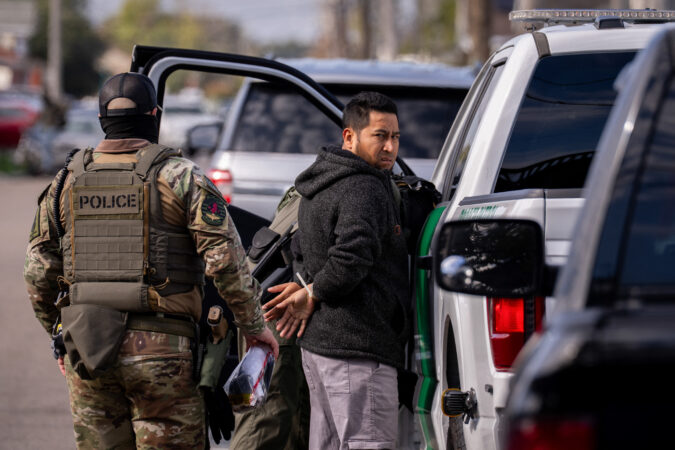
    GRETNA, La. — Siomara Cruz was not troubled when she saw two Latina immigrants handcuffed earlier this month by masked immigration agents outside a restaurant in this New Orleans suburb.

    “They need to do things the proper way,” said Cruz, 59, a housewife whose parents emigrated from Cuba. “The law is the law. Every country has their law, and you’ve got to respect it.”

    Across the street, Tracey Daniels said it was “awful” to see immigration agents in an unmarked SUV detain a Latino man outside the gas station kitchen where she was preparing lunch plates of red beans, rice, and fried catfish.

    “They’re just snatching these people, snatching them away from their families,” said Daniels, 61. “Now they got people afraid to come outside, businesses closing.”

    The immigration operation, dubbed Catahoula Crunch by the Department of Homeland Security, follows similar crackdowns in Chicago, Los Angeles, Charlotte, N.C., and other cities. DHS Assistant Secretary Tricia McLaughlin said in a statement earlier this month that 250 people had been arrested since the start of the operation.

    The mission is exposing stark divides in and around New Orleans that reflect broader national reactions to the administration’s immigration raids — and who should help enforce them.

    Across 10 national polls in November and early December, 43% approve of President Donald Trump’s handling of immigration, while 55% disapprove. The share of people who approve of Trump’s handling of immigration has dropped from about 50% in March. Last week, Illinois Gov. JB Pritzker, a Democrat, signed a law seeking to limit immigration enforcement in his state as he continues challenging the administration’s aggressive campaign there.

    New Orleans is a “sanctuary city,” where officials have historically refused to support federal immigration sweeps. But new state laws designed to penalize those who impede immigration enforcement could put officials and officers at risk if their departments do not cooperate with federal operations.

    And some surrounding police departments, including in Gretna, have signed 287(g) agreements to work with U.S. Immigration and Customs Enforcement to deport people who authorities say entered the country illegally.

    Those agreements have also divided residents. Some said that immigration enforcement should fall exclusively to federal agents — that having local officers partner on the issue risks alienating immigrant communities or violating people’s rights. But police supporting the operations said they get more complaints about crime in their communities than they do about Catahoula Crunch.

    Gretna Deputy Police Chief Jason DiMarco said his 150-person force needs to serve everyone in its diverse community, but added that having so many undocumented residents in the city makes it harder to identify suspected criminals. Last month, he said, local police accompanied ICE agents on a raid that picked up four suspects, including an alleged MS-13 gang member. DiMarco noted that within the last year, Gretna police have investigated several serious crimes committed by undocumented suspects, including one who fled the country after allegedly killing an immigrant who had come to the United States legally.

    Now, because of the 287(g) agreement, officers can coordinate directly with ICE.

    “If they run across an illegal immigrant in their day-to-day patrol activities … they can actually detain the person, check their legal status, and if they aren’t here legally, we can contact ICE and they’ll come and get them,” DiMarco explained of the partnership during an interview at his office earlier this month.

    DiMarco, who is from Gretna, has watched the city of nearly 18,000 grow more diverse, to include a member of his own family who emigrated from Honduras. Like many in the New Orleans area, his family tree includes immigrants from several countries, including France, Italy, and Cuba.

    “New Orleans is the original melting pot of the world,” he said. “… People from every walk of life lived in this city. And they intertwined and managed to live together cohesively.”

    So far, DiMarco said, he hasn’t fielded any complaints about his department’s work with ICE. Even if people don’t agree, he said, officers have a duty to enforce the law, including one signed in June by Gov. Jeff Landry, a Republican, that criminalized “any act intended to hinder, delay, prevent, or otherwise interfere with or thwart federal immigration enforcement efforts.”

    Anyone in violation could face jail time or fines.

    “We don’t get to pick and choose which you can and can’t enforce,” DiMarco said.

    But DiMarco also worries the ongoing raids may make immigrants even more hesitant to report crime.

    “We don’t want somebody to get victimized and get picked on, whether they be illegal or not,” he said. “Nobody deserves to be a victim of a crime.”

    Most Catahoula Crunch activity has been to the west of New Orleans in Jefferson Parish, which includes Gretna and other towns where law enforcement agencies signed 287(g) agreements. In last year’s presidential election, 55% of Jefferson Parish voted for Trump, while 82% of neighboring Orleans Parish voted for Democratic nominee Kamala Harris.

    Kenner, Jefferson Parish’s most populous city, has more than 64,000 residents — about one-third of whom are Latino, according to U.S. Census Bureau data. Police Chief Keith Conley said Kenner partnered with ICE at the request of local business owners, including immigrants.

    “We had members of our community pleading with us to keep our community safe,” Conley said, describing gang activity that he said had its roots in Central American countries that residents of Kenner had fled. “They saw the ways of their home countries coming here. When I have business leaders coming to me, I have to respond.”

    Conley said his city has experienced “some pretty heinous crimes” in recent years, including murder and child sexual assaults.

    “And we weren’t getting much cooperation” from federal officials, he said. “It was a failure at the top.”

    Landry requested a National Guard deployment to New Orleans in September, citing an alleged increase in violent crime, even though police and city leaders say crime has decreased and federal support is not needed. The city’s homicide rate is nearly the lowest in 50 years. Violent crimes — including murders, rapes, and robberies — have all decreased 12% through October compared with a year ago, according to New Orleans police.

    Conley and some Jefferson Parish residents, however, said they are grateful the Trump administration has sent federal agents into their region. Outside a Lowe’s hardware store in neighboring Metairie, where immigration agents were spotted this month, Howard Jones, 71, said he was supportive of local law enforcement agencies joining the operation.

    “I’m all for people being deported who are not here legally,” said Jones, a retired data warehouse analytics consultant and self-described moderate conservative who voted for Trump the last three presidential elections.

    But Gloria Rodriguez, 38, a Mexican immigrant who works in construction, said she did not like seeing local police involved. Though she is a legal permanent resident and her husband and 18-year-old son who were in the truck with her are U.S. citizens, they carried their passports and immigration paperwork in case they were stopped by federal agents.

    “They should not cooperate with immigration, just do their job and get criminals out of the streets instead of hardworking people,” Rodriguez said, adding that she has been troubled by reports of U.S. citizens being caught up in the immigration crackdown.

    “What if they take us?” she said.

    Unlike their counterparts in Gretna, Kenner, and other cities with 287(g) agreements, New Orleans officials have resisted cooperating with the Trump administration’s efforts.

    New Orleans police adopted a policy that prohibits officers from assisting federal immigration enforcement except under certain circumstances, such as a threat to public safety. The policy resulted from a 2013 federal consent decree to address a history of unconstitutional practices, including racial profiling. Last month, a federal judge ended the consent decree, but Police Superintendent Anne Kirkpatrick said last month that immigration remained a civil issue, adding that police would not enforce civil laws but instead ensure that immigrants “are not going to get hurt and our community is not in danger.”

    Louisiana Attorney General Liz Murrill, a Republican, has since encouraged Kirkpatrick to have officers “fully cooperate” with federal immigration officials.

    Murrill warned that New Orleans police policies “appear to conflict with current state law,” referencing this year’s statute that says thwarting federal immigration efforts could be considered obstruction of justice.

    Kirkpatrick did not respond to a request for comment, but a department spokesperson said in a statement this month that “NOPD is not involved in, informed of, or responsible for any enforcement activity conducted by ICE, DHS, or U.S. Border Patrol.”

    The police department’s role, the statement added, “is to enforce state and municipal criminal laws. We do not handle or participate in federal immigration enforcement.”

    Murrill is also embroiled in a legal battle with the Orleans Parish Sheriff’s Office, which operates city jails under a federal consent decree and has refused to cooperate with ICE.

    Chief Border Patrol Agent Gregory Bovino has appeared in the French Quarter of New Orleans, Kenner, and other areas with agents, where he has been met with protests and signs of support. Anti-ICE protesters confronted Bovino and temporarily shut down a New Orleans City Council meeting this month, but other residents posed for photos with Bovino while holding a homemade sign that read: “Thank you ICE.”

    New Orleans Mayor-elect Helena Moreno is already pressing federal officials to prove they are targeting only immigrants with violent criminal histories. Moreno, a Democrat who will be the city’s first Latina mayor, will not take office until Jan. 12. But she said she is concerned Catahoula Crunch is creating a “culture of fear” and forcing businesses to close and workers to stay home. She created a website advising residents of their rights, and the city council launched an online portal where they can report alleged abuse by federal officers.

    Some New Orleans business owners posted “ICE Keep Out” signs this month, while others said they worried that doing so could make them targets. Antoine’s Restaurant in the French Quarter held meetings with employees — all documented — to address their fears after seeing reports of masked immigration agents conducting raids in armored vehicles.

    “It’s giving a lot of people anxiety, including our employees,” said Lisa Blount, whose family owns the restaurant, as she stood near the packed bar. “We are in a busy season, an important, celebratory time in New Orleans. We’re not going to let them bully their way in.”

    A few streets away, Dominican immigrant Diomedes Beñalo was unloading gold chairs for a wedding and said he wished local police would do more to protect residents’ rights. He questioned why federal agents are hiding their faces.

    “That seems like a thing that can make them violate people’s rights,” said Beñalo, 40, adding that undocumented immigrants’ civil rights should not be violated.

    “The police should make sure that doesn’t happen,” he said. “That’s what we pay police to do.”
  • Coast Guard enacts policy calling swastikas, nooses ‘potentially divisive’

    Coast Guard enacts policy calling swastikas, nooses ‘potentially divisive’

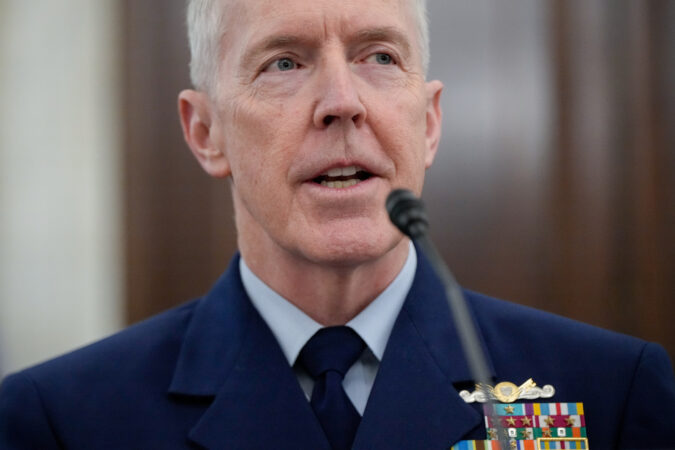
    The U.S. Coast Guard has allowed a new workplace harassment policy to take effect that downgrades the definition of swastikas and nooses from overt hate symbols to “potentially divisive” despite an uproar over the new language that forced the service’s top officer to declare that both would remain prohibited.

    The new policy went into effect Monday, according to written correspondence that the Coast Guard provided to Congress this week, a copy of which was reviewed by the Washington Post. The manual is posted online and makes clear that its previous version “is cancelled.”

    Spokespeople for the Coast Guard and the Department of Homeland Security, which oversees the military service, did not immediately respond to requests for comment. The symbols issue was expected to come up at a House committee hearing Tuesday.

    The Post was first to report on the Coast Guard’s plan to revise its workplace harassment policy last month. The Trump administration called the article “false,” but within hours of its publication the service’s acting commandant, Adm. Kevin Lunday, issued a memo forcefully denouncing symbols such as swastikas and nooses, and emphasizing that both remain prohibited.

    Lunday said at the time that his Nov. 20 memo would supersede any other language. It was not immediately clear Tuesday why publication of the new harassment policy was not paused so the “potentially divisive” language used to describe swastikas and nooses could be removed to align with Lunday’s directive.

    Lunday has been the Coast Guard’s acting commandant for several months. He was elevated to the role after the Trump administration ousted his predecessor, Adm. Linda Fagan, citing among other things her “excessive focus” on “non-mission-critical” diversity and inclusion initiatives. The Senate is expected to hold Lunday’s confirmation vote later this week.

    The Coast Guard’s policy softening the definition of a swastika — an emblem of fascism and white supremacy inextricably linked to the Nazis’ extermination of millions of Jews and the deaths of more than 400,000 U.S. troops who died fighting in World War II — comes as antisemitism is on the rise globally. At least 15 people were killed over the weekend at a Hanukkah celebration in Australia.

    Deborah Lipstadt, a historian who served as President Joe Biden’s special envoy to monitor and combat antisemitism, said the Coast Guard’s decision to approve the change was “terrifying.”

    “What’s really disturbing is, at this moment, when there is a whitewashing of Nazis amongst some on the far right, and Churchill is painted as the devil incarnate when it comes to World War II, to take the swastika and call it ‘potentially divisive’ is hard to fathom,” Lipstadt said. “Most importantly, the swastika was the symbol hundreds of thousands of Americans fought and gave their lives to defeat. It is not ‘potentially divisive,’ it’s a hate symbol.”

    Citing court documents, Lipstadt noted that Unite the Right marchers in Charlottesville, Va., while planning a 2017 demonstration that left a woman dead and 19 others injured, had urged one another not to use swastikas “because it will paint us as Nazis.”

    “When far-right protesters in Charlottesville were strategic enough to recognize the swastika would do them no good and now we have an arm of the U.S. military saying, ‘It’s not so bad,’ that’s frightening,” Lipstadt said.

  • Robot smaller than grain of salt can ‘sense, think, and act’

    Robot smaller than grain of salt can ‘sense, think, and act’

    Solving a technical challenge that has stymied science for 40 years, researchers have built a robot with an onboard computer, sensors, and a motor, the whole assembly less than 1 millimeter in size — smaller than a grain of salt.

    The feat, accomplished by a partnership of researchers at University of Pennsylvania and University of Michigan, advances medicine toward a future that might see tiny robots sent into the human body to rewire damaged nerves, deliver medicines to precise areas, and determine the health of a patient’s cells without surgery.

    “It’s the first tiny robot to be able to sense, think, and act,” said Marc Miskin, assistant professor of electrical and systems engineering at University of Pennsylvania, and an author of a paper describing the work published this week in the journal Science Robotics.

    The device, billed as the world’s smallest robot able to make decisions for itself, represents a major step toward a goal once rooted in science fiction. In the 1960s, the story and movie Fantastic Voyage imagined a medical team placed aboard a submarine and shrunk to the size of a microbe. The microscopic medical crew was then injected into the body of a dying man in order to destroy an inoperable blood clot.

    “In the future, let’s say 100 years, anything a surgeon does today, we’d love to do with a robot,” said David Gracias, a professor in the department of chemical and biomolecular engineering at Johns Hopkins University who was not involved in the study. “We are not there yet.”

    In 1989, two decades after Fantastic Voyage, Rodney A. Brooks and Anita M. Flynn, scientists at the Massachusetts Institute of Technology, wrote a paper called, “Fast, Cheap, and Out of Control: A Robot Invasion of the Solar System,” that described a robot they’d built measuring just 1¼ cubic inches, dubbed Squirt.

    Sawyer Fuller, an associate professor of mechanical engineering at the University of Washington, said that when “Fast, Cheap, and Out of Control,” was published, “people thought microrobotics was coming any minute now. … Turns out it has taken a little longer than expected to put all these things together.”

    Fuller, who was not involved in building the new microrobot, called it “the vanguard of a new class of device.”

    Miskin said the microrobot built by the Michigan and Pennsylvania teams is about 1/100th the size of MIT’s Squirt but isn’t ready for biomedical use.

    “It would not surprise me if in 10 years, we would have real uses for this type of robot,” said David Blaauw, a co-author of the paper in Science Robotics and professor of electrical engineering and computer science at University of Michigan.

    For decades scientists have dreamed of building a microrobot less than 1 millimeter in size, a barrier that corresponds to the smallest units of our biology, Miskin said. “Every living thing is basically a giant composite of 100-micron robots, and if you think about that it’s quite profound that nature has singled out this one size as being how it wanted to organize life.”

    For comparison, a human hair has a diameter of about 70 microns, while human cells are about 20 to 40 microns across.

    Although scientists and engineers have been miniaturizing circuits for the last half-century, the challenge has been to shrink all of the parts needed for a computer-guided microrobot, then assemble them without damaging the parts or causing them to interfere with one another. The robot needs an energy source of sufficient power to operate the computer and move the robot.

    Five years ago, Miskin, whose specialty has been building microrobots, met Blaauw when the two gave back-to-back talks. Blaauw’s lab then held ― and still holds ― the distinction of having built the world’s smallest computer.

    “Even in the presentations we were like, ‘Oh, we need to talk to each other,’” Blaauw recalled.

    The device they built uses tiny solar cells that convert light into energy. Some of that energy powers the computer, and some propels the robot as it swims through liquid. The computer runs at about one-thousandth the speed of today’s laptops and has far less memory.

    In the lab, the scientists shone an LED light down into the lab dish that contained the robot in a solution. The robot is made of the same kinds of materials found in a microchip: silicon, platinum, and titanium.

    To protect it from the effects of fluids, the microrobot is encased in a thick layer of what is essentially glass, Miskin said. There are a few holes in the glass that are filled in with the metal platinum, forming the electrodes that provide electrical access.

    At Johns Hopkins, Gracias stressed that scientists need to ensure that the materials they use for microrobots can be safely used inside a human body.

    Sensors on the robot allow it to respond to different temperatures in liquid. To move, the device uses energy from the solar panels to charge two metal electrodes on either side of it. The electrodes attract oppositely charged particles in the water, generating a flow that pulls the robot along.

    As it swims, the robot communicates with the person operating it.

    “We can send messages down to it telling it what we want it to do,” using a laptop, Miskin said, “and it can send messages back up to us to tell us what it saw and what it was doing.”

    The robot communicates using movements inspired by the waggle dance honeybees use to communicate.

    During the summer, the scientists invited a group of high school students to come in and test the new microrobots. The students were able to track the movements of the robots using a special low-cost microscope.

    “They loved it,” said Miskin. “It was definitely a little bit challenging at first, just getting oriented to working with something that small. But that’s part of the appeal. Once they got the hang of it, they were all in.” Miskin said the version of the robot the students used cost only about $10.

    Researchers are working now to develop the microrobot so that it can work in saltwater, on land, and in other environments.

    The long-term vision, Blaauw said, is to design tiny computers that can not only talk back and forth to their operators.

    “So the next holy grail really is for them to communicate with each other,” he said.

  • Hyundai and Kia will repair millions of vehicles under a deal to fix anti-theft technology

    Hyundai and Kia will repair millions of vehicles under a deal to fix anti-theft technology

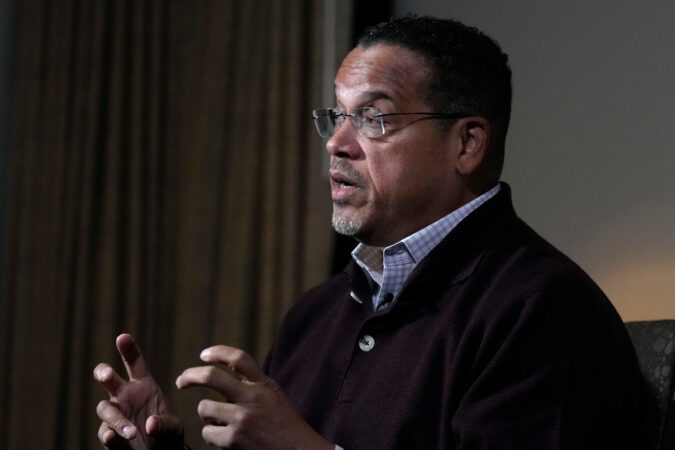
    Automakers Hyundai and Kia must offer free repairs to millions of models under a settlement announced Tuesday by Minnesota’s attorney general, who led an effort by dozens of states that argued the vehicles weren’t equipped with proper anti-theft technology, leaving them vulnerable to thefts.

    Under the nationwide settlement, the companies will offer a free repair to all eligible vehicles at a cost that could top $500 million, Minnesota Attorney General Keith Ellison said. Hyundai and Kia must also outfit all future vehicles sold in the U.S. with a key piece of technology called an engine immobilizer and pay up to $4.5 million of restitution to people whose vehicles were damaged by thieves.

    The settlement was reached by 35 states, including Pennsylvania, New Jersey, California, and New York. The vehicles eligible for fixes date as far back as 2011 and as recently as 2022. About 9 million eligible vehicles were sold nationwide.

    Thefts of Hyundai and Kia vehicles soared in part because beginning in 2021, videos posted to TikTok and other social media demonstrated how someone could steal a car with just a screwdriver and a USB cable. Minneapolis reported an 836% increase in Hyundai and Kia thefts from 2021 to 2022. Ellison announced an investigation into the automakers in early 2023.

    Ellison said the two companies installed engine immobilizers on cars sold in Mexico and Canada, but not widely in the U.S., leading to car thefts, crimes, and crashes that injured and even killed people, including teenagers.

    “This crisis that we’re talking about today started in a boardroom, traveled through the Internet, and ended up in tragic results when somebody stole those cars,” Ellison said at a news conference.

    He was joined by Twin Cities officials, a woman whose mother was killed when a stolen Kia crashed into her parents’ vehicle, and a man whose car was stolen nine times — as recently as Monday night, and including seven times after a previous software fix.

    Under the settlement, Hyundai and Kia will install a zinc sleeve to stop would-be thieves from cracking open a vehicle’s ignition cylinder and starting the car.

    Eligible customers will have one year from the date of the companies’ notice to get the repair at an authorized dealership. The repairs are expected to be available from early 2026 through early 2027.

    In a statement, Kia said the agreement is the latest step it has taken to help its customers and prevent thefts.

    “Kia is eager to continue working with law enforcement officers and officials at federal, state, and local levels to combat criminal car theft, and the role social media has played in encouraging it, and we remain fully committed to upholding vehicle security,” the company said.

    Hyundai said, “We will continue to take meaningful action to support our customers and ensure peace of mind.”

  • Rob Reiner’s son Nick charged with 2 counts of murder in killing of his parents

    Rob Reiner’s son Nick charged with 2 counts of murder in killing of his parents

    LOS ANGELES — Rob Reiner’s son Nick Reiner was charged Tuesday with two counts of first-degree murder in the killing of his parents, which stunned their communities in Hollywood and Democratic politics, where both were widely beloved.

    Nick Reiner, 32, is charged with killing Rob Reiner, the 78-year-old actor and director, and his wife, Michele Singer Reiner, District Attorney Nathan Hochman announced at a news conference with Los Angeles Police Chief Jim McDonnell.

    “Their loss is beyond tragic and we will commit ourselves to bringing their murderer to justice,” Hochman said.

    Along with the two counts of first-degree murder, prosecutors added special circumstances of multiple murders and a special allegation that the defendant used a dangerous weapon: a knife. The additions could mean a greater sentence.

    Hochman said his office had not decided whether to seek the death penalty.

    “This case is heartbreaking and deeply personal, not only for the Reiner family and their loved ones but for our entire city,” McDonnell said. “We will continue to support the Reiner family and ensure that every step forward is taken with care, dignity, and resolve.”

    The announcement came two days after the couple were found dead with apparent stab wounds in their home in the upscale Brentwood neighborhood on the west side of Los Angeles. Nick Reiner did not resist when he was arrested hours later in the Exposition Park area near the University of Southern California, about 14 miles from the crime scene, police said.

    Nick Reiner had been expected to make an initial court appearance Tuesday, but his attorney Alan Jackson said he was not brought from the jail to the courthouse for medical reasons and the appearance would not come before Wednesday.

    An email sent to Jackson seeking comment on the charges was not immediately answered. Nick Reiner has not entered a plea.

    Rob Reiner was the Emmy-winning costar of the sitcom All in the Family who went on to direct films including When Harry Met Sally … and The Princess Bride. He was an outspoken liberal activist for decades. Michele Singer Reiner was a photographer, a movie producer, and an advocate for LGBTQ+ rights. They had been married for 36 years.

    Representatives for the Reiner family did not respond to requests for comment. Police have not said anything about a motive for the killings.

    Nick Reiner is being held in jail without bail. He was arrested several hours after his parents were found dead on Sunday, police said.

    Jackson is a high-profile lawyer who represented Harvey Weinstein at his Los Angeles trial and Karen Read at her trial in Massachusetts. He was a central figure in the HBO documentary on the Read case.

    Investigators believe Rob and Michele Singer Reiner died from stab wounds, a law enforcement official told the Associated Press. The official, who was briefed on the investigation, could not publicly discuss the details and spoke on condition of anonymity.

    The killings were especially shocking given the warm comic legacy of the family. Rob Reiner was the son of comedy legend Carl Reiner, who died in 2020 at age 98.

    Kathy Bates, who won an Oscar as the star of Rob Reiner’s 1990 film Misery, was among those paying tribute to the couple.

    “I loved Rob,” Bates said in a statement. “He was brilliant and kind, a man who made films of every genre to challenge himself as an artist. He also fought courageously for his political beliefs. He changed the course of my life. Michele was a gifted photographer.”

    Former President Bill Clinton called the couple “good, generous people who made everyone who knew them better.”

    “Hillary and I are heartbroken by the tragic deaths of our friends Rob and Michele Reiner,” he said in a statement. “They inspired and uplifted millions through their work in film and television.”

    Three months ago, Nick Reiner was photographed with his parents and siblings at the premiere of his father’s film Spinal Tap 2: The End Continues.

    He had spoken publicly of his struggles with addiction, cycling in and out of treatment facilities with bouts of homelessness in between through his teen years. Rob and Nick Reiner explored — and seemed to improve — their relationship through the making of the 2016 film Being Charlie.

    Nick Reiner cowrote and Rob Reiner directed the film about the struggles of an addicted son and a famous father. It was not autobiographical but included several elements of their lives.

    “It forced us to understand ourselves better than we had,” Rob Reiner told the AP in 2016. “I told Nick while we were making it, I said, ‘You know, it doesn’t matter, whatever happens to this thing, we won already.’”

    Rob Reiner was long one of the most prolific directors in Hollywood, and his work included some of the most memorable and endlessly watchable movies of the 1980s and ’90s, including This is Spinal Tap and A Few Good Men.

    He met Michele Singer Reiner on the set of When Harry Met Sally …, and their meeting would inspire the film’s shift to a happy ending, with stars Billy Crystal — one of Reiner’s closest friends for decades — and Meg Ryan ending up together on New Year’s Eve.

    The Reiners were outspoken advocates for liberal causes and major Democratic donors.

    President Donald Trump on Monday blamed Rob Reiner’s outspoken opposition to the president for the actor-director’s killing, delivering the unsubstantiated claim in a social media post that seemed intent on decrying his opponents even in the face of a tragedy.

  • Investigators release video timeline of the Brown campus shooting suspect’s movements

    Investigators release video timeline of the Brown campus shooting suspect’s movements

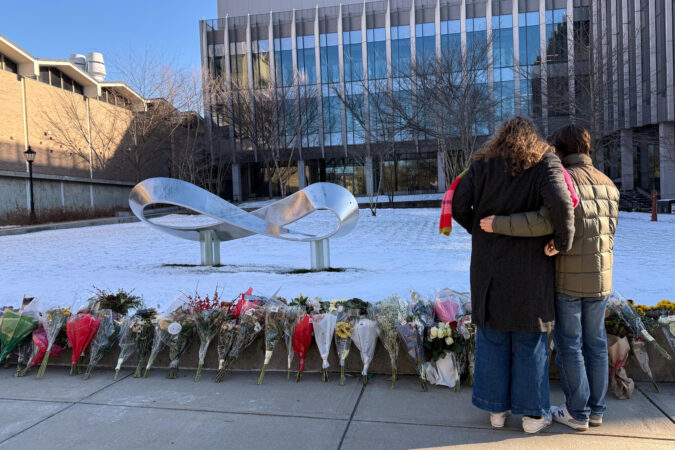
    PROVIDENCE, R.I. — Authorities on Tuesday released a new video timeline and a slightly clearer image of the man suspected in the Brown University shooting, though investigators provided no indication that they were any closer to zeroing in on his identity.

    Investigators have been canvassing Providence homes, yards, and dumpsters in search of videos or other clues that might help them figure out who was behind Saturday’s campus shooting, which killed two students and wounded nine others.

    In all of the videos made public, the suspect’s face was masked or turned away, and authorities have been able to give only a vague description of him as being stocky and about 5 feet, 8 inches tall.

    The FBI’s video timeline includes new footage of the man that was recorded before the attack. It shows him running at times along quiet and empty residential streets near campus. Authorities believe he was casing the area, Col. Oscar Perez, the Providence police chief, said in a news conference Tuesday.

    Perez asked residents to look at their camera systems in the area to see if they have any footage that might help officials identify him.

    “We’re looking for a moment that is shorter than someone taking a breath,” Perez said.

    Perez said there was no clear video of the gunman from inside the engineering building where the shooting took place. Attorney General Peter Neronha said there were cameras in the newer part of the building but “fewer, if any, cameras” where the shooting happened “because it’s an older building.”

    The Brown University president said the campus is equipped with 1,200 cameras.

    Neronha said that from his perspective, the investigation was going “really well.” He pleaded for public patience in locating the suspected killer.

    Providence is understandably tense, and additional police were sent to city schools on Tuesday to reassure worried parents that their kids will be safe. Ten state troopers were assigned to support the local police sent to beef up security at schools, district Superintendent Javier Montañez said.

    “We recognize that the tragic incident at Brown University, occurring so close to where many of our students and families live and learn, is deeply unsettling and frightening,” he wrote in an email to parents.

    Alex Torres-Perez, a spokesperson for the Providence Public School District, said the district canceled all after-school activities and field trips for the week “as a precaution.”

    A city on edge

    Locals expressed fear as well as defiance as the investigation continued Tuesday.

    “Of course it feels scary. But at the same time, I think that if the person really wanted to scare us, we shouldn’t allow him or her to win,” said Tatjana Stojanovic, a Providence parent who lives next door to the Brown campus. ”Despite all of that, we should just go about our lives. I mean, obviously, you cannot forget this. But I think we shouldn’t cower and just sort of stop living despite what has happened.

    The attack and the shooter’s escape have raised questions about campus security, including a lack of security cameras, and led to calls for better locks on campus doors. Others pushed back, though, saying such efforts do little to address the real issue.

    “The issue isn’t the doors, it’s the guns,” said Zoe Kass, a senior who fled the engineering building as police stormed in Saturday. “And all of this, like, ‘Oh, the doors need to be locked.’ I get it, parents are scared. But any of us could have opened the door for the guy if the doors had been locked.”

    After spending of her life in schools where every door was locked and school shootings persisted, Kass said, such security measures only created “the illusion of safety.”

    FBI Boston special agent in charge Ted Docks said the bureau had 30 people in the city to support survivors, victims, and loved ones, noting that the toll a tragedy like this takes on them is “immeasurable.”

    A fuller picture of the victims emerges

    Meanwhile, details have emerged about the victims, who were in the first-floor classroom in the school’s engineering building studying for a final.

    Two of the wounded students had been released as of Tuesday, Brown spokesperson Amanda McGregor said. Of the seven people who remained hospitalized, Mayor Brett Smiley said, one remained in critical condition, five were in critical but stable condition, and one was in stable condition.

    One of the wounded students, 18-year-old freshman Spencer Yang of New York City, told the New York Times and the Brown Daily Herald that there was a mad scramble after the gunman entered the room. Many students ran toward the front, but Yang said he wound up on the ground between some seats and was shot in the leg. He expected to be discharged within days.

    Jacob Spears, 18, a freshman from Evans, Ga., was shot in the stomach, “but through sheer adrenaline and courage, he managed to run outside, where he was aided by others,” according to a GoFundMe site organized for him.

    Ella Cook, a 19-year-old sophomore who was one of the two students killed, was vice president of the Brown College Republicans and was beloved in her church in Birmingham, Ala. In announcing her death Sunday, the Rev. R. Craig Smalley described her as “an incredible grounded, faithful, bright light” who encouraged and “lifted up those around her.”

    The other student killed was MukhammadAziz Umurzokov, an 18-year-old freshman from Brandermill, Va., who was majoring in biochemistry and neuroscience. His family immigrated to the U.S. from Uzbekistan when he was a kid.

    As a child, Umurzokov suffered a neurological condition that required surgery, and he later wore a back brace because of scoliosis, his sister Samira Umurzokova told the Associated Press by phone. He knew from an early age that he wanted to be a neurosurgeon to help others like him.

    “He had so many hardships in his life, and he got into this amazing school and tried so hard to follow through with the promise he made when was 7 years old,” she said.

  • Susie Wiles, White House chief of staff, criticizes Bondi and opines on Trump in Vanity Fair

    Susie Wiles, White House chief of staff, criticizes Bondi and opines on Trump in Vanity Fair

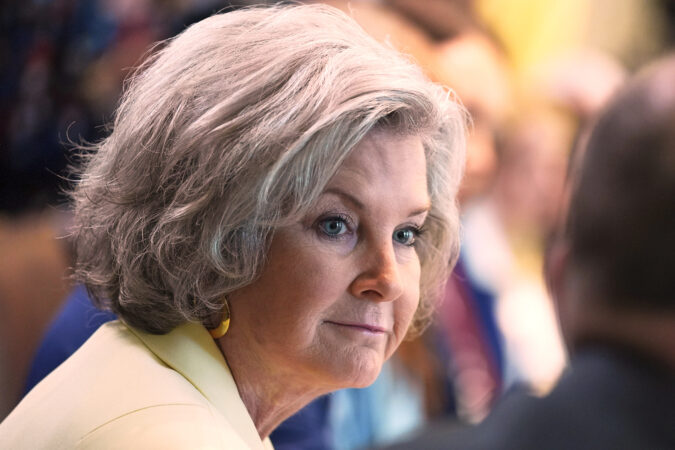
    WASHINGTON — Susie Wiles, President Donald Trump’s understated but influential chief of staff, criticized Attorney General Pam Bondi’s handling of the Jeffrey Epstein case and offered an unvarnished take on her boss and those in his orbit in interviews published Tuesday in Vanity Fair that sent the West Wing into damage control.

    The startlingly candid remarks from Wiles, the first woman ever to hold her current post, included describing the president as someone with “an alcoholic’s personality” and Vice President JD Vance as a calculating “conspiracy theorist.” The observations from Wiles, who rarely speaks publicly given the behind-the-scenes nature of her job running the White House, prompted questions about whether the chief of staff might be on her way out.

    Wiles pushed back after the piece’s publication, describing it as a “hit piece” that lacked context, and White House press secretary Karoline Leavitt said the “entire administration is grateful for her steady leadership and united fully behind her.”

    As for Trump, he told the New York Post that he had not read the piece and, when asked if he retained confidence in Wiles, said: “Oh, she’s fantastic.”

    Trump also agreed that he does have the personality of an alcoholic, describing himself as having “a very possessive personality.”

    A senior White House official, who spoke on condition of anonymity to describe internal thinking, dismissed the notion that Wiles might leave because of the profile, saying if top staffers were rattled by negative news coverage, “none of us would work here.”

    Wiles’ candor was so unusual that Rahm Emanuel, who served as chief of staff to former President Barack Obama, said that when he first saw her comments, he thought he was reading a spoof. He said he could not recall a chief of staff giving such a candid interview — at least “not while you hold the title.”

    Emanuel said the role often involves public remarks that promote the president’s agenda, but not sharing personal views about “everything, everybody” in the White House.

    His advice to Wiles: “Next time there’s a meal, bring a food taster.”

    Candor from the ‘ice maiden’ who stays behind the scenes

    The interviews with Vanity Fair were themselves uncharacteristic for Wiles, who cut her reputation as someone who brought order to the president’s chaotic style and shunned the spotlight so much that at Trump’s 2024 election night victory party, she repeatedly shook her head and avoided the microphone as Trump tried to coax her to speak to the crowd.

    “Susie likes to stay sort of in the back,” said Trump, who has repeatedly referred to her as the “ice maiden.”

    Most members of his cabinet, along with former and current White House officials, posted statements praising Wiles and criticizing the media as dishonest.

    But neither Wiles nor the members of the administration who came to her defense on Tuesday disputed any details in the two-part profile, including areas where she conceded mistakes and seemed to contradict the administration’s official reasoning for its bombing of alleged drug boats in the waters off the coast of Venezuela.

    Though the Trump administration has said the campaign is about stopping drugs headed to the U.S., Wiles appeared to confirm that the campaign is part of a push to oust Venezuela’s authoritarian leader, Nicolas Maduro, saying Trump “wants to keep on blowing boats up until Maduro cries uncle.”

    Wiles pushed back but without any denials

    After the comments were published, Wiles disparaged the Vanity Fair report as a “disingenuously framed hit piece on me and the finest President, White House staff, and Cabinet in history.”

    “Significant context was disregarded and much of what I, and others, said about the team and the President was left out of the story,” she wrote in a social media post. “I assume, after reading it, that this was done to paint an overwhelmingly chaotic and negative narrative about the President and our team.”

    Trump, in an interview with the New York Post, said he was not offended by Wiles’ remarks, including her description of him as someone with “an alcoholic’s personality,” which she said she recognizes from her father, the famous sports broadcaster Pat Summerall.

    The president, who is a teetotaler and had a brother who struggled with alcohol, said: “I’ve said that many times about myself. I’m fortunate I’m not a drinker. If I did, I could very well, because I’ve said that — what’s the word? Not possessive — possessive and addictive-type personality. Oh, I’ve said it many times, many times before.”

    Vance, speaking in Pennsylvania on Tuesday about the president’s economic agenda, said that he had not read the Vanity Fair piece. But he defended Wiles and joked that “I only believe in the conspiracy theories that are true.”

    “Susie Wiles, we have our disagreements. We agree on much more than we disagree, but I’ve never seen her be disloyal to the president of the United States, and that makes her the best White House chief of staff that I think the president could ask for,” Vance said.

    He said his takeaway was that the administration “should be giving fewer interviews to mainstream media outlets.”

    The chief of staff criticizes the attorney general

    Wiles, over the series of interviews, described the president behind the scenes very much as he presents himself in public: an intense figure who thinks in broad strokes yet is often not concerned with the details of process and policy. She added, though, that he has not been as angry or temperamental as is often suggested, even as she affirmed his ruthlessness and determination to achieve retribution against those he considers his political enemies.

    Wiles described much of her job as channeling Trump’s energy, whims, and desired policy outcomes — including managing his desire for vengeance against his political opponents, anyone he blames for his 2020 electoral defeat, and those who pursued criminal cases against him after his first term.

    On Epstein, Wiles told the magazine that she had underestimated the scandal involving the disgraced financier, but she sharply criticized how Bondi managed the case and the public’s expectations.

    Wiles faulted Bondi’s handling of the matter, going back to earlier in the year when she distributed binders to a group of social media influencers that included no new information about Epstein. That led to even more calls from Trump’s base for the files to be released.

    “I think she completely whiffed on appreciating that that was the very targeted group that cared about this,” Wiles said of Bondi. “First she gave them binders full of nothingness. And then she said that the witness list, or the client list, was on her desk. There is no client list, and it sure as hell wasn’t on her desk.”

    Bondi did not address the criticism when she released a statement supporting Wiles.

    Wiles also said at one point that Trump’s tariffs had been more painful than expected. She conceded some mistakes in Trump’s mass deportation program and suggested that the president’s retribution campaign against his perceived political enemies has gone beyond what she initially wanted.

  • Hegseth says he won’t publicly release video of boat that killed survivors in the Caribbean

    Hegseth says he won’t publicly release video of boat that killed survivors in the Caribbean

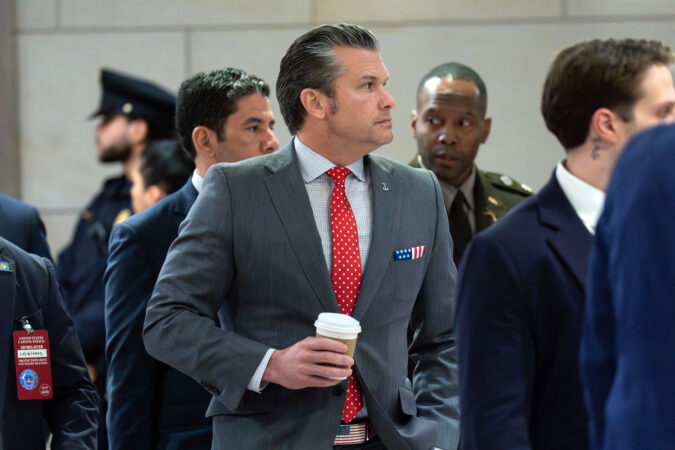
    WASHINGTON — Defense Secretary Pete Hegseth said Tuesday the Pentagon will not publicly release unedited video of a U.S. military strike that killed two survivors of an initial attack on a boat allegedly carrying cocaine in the Caribbean, as questions mounted in Congress about the incident and the overall buildup of U.S. military forces near Venezuela.

    Hegseth said members of the Armed Services Committee in the House and Senate would have an opportunity this week to review the video, but did not say whether all members of Congress would be allowed to see it as well.

    “Of course we’re not going to release a top secret, full, unedited video of that to the general public,” Hegseth told reporters as he exited a closed-door briefing with senators.

    President Donald Trump’s cabinet members overseeing national security were on Capitol Hill on Tuesday to defend a campaign that has killed at least 95 people in 25 known strikes on vessels in international waters in the Caribbean and eastern Pacific. Overall, they defended the campaign as a success, saying it has prevented drugs from reaching American shores, and they pushed back on concerns that it is stretching the bounds of lawful warfare.

    Secretary of State Marco Rubio told reporters the campaign is a “counter-drug mission” that is “focused on dismantling the infrastructure of these terrorist organizations that are operating in our hemisphere, undermining the security of Americans, killing Americans, poisoning Americans.”

    Lawmakers have been focused on the Sept. 2 attack on two survivors as they sift through the rationale for a broader U.S. military buildup in the region. On the eve of the briefings, the U.S. military said it attacked three more boats believed to have been smuggling drugs in the eastern Pacific Ocean, killing eight people.

    Lawmakers left in the dark about Trump’s goal with Venezuela

    Senate Minority Leader Chuck Schumer (D., N.Y.) said Hegseth had come “empty-handed” to the briefing, without a pledge to more broadly release the video of the Sept. 2 strike.

    “If they can’t be transparent on this, how can you trust their transparency on all the other issues swirling about in the Caribbean?” Schumer said.

    Senators on both sides of the aisle said the officials left them in the dark about Trump’s goals when it comes to Venezuelan President Nicolás Maduro or sending U.S. forces directly to the South American nation.

    “I want to address the question: Is it the goal to take him out? If it’s not the goal to take him out, you’re making a mistake,” said Sen. Lindsey Graham (R., S.C.), who defended the legality of the campaign and said he wanted to see Maduro removed from power.

    The U.S. has deployed warships, flown fighter jets near Venezuelan airspace, and seized an oil tanker as part of its campaign against Maduro, who has insisted the real purpose of the U.S. military operations is to force him from office. Maduro said on a weekly state television show Monday that his government still does not know the whereabouts of the tanker’s crew. He criticized the United Nations for not speaking out against what he described as an “act of piracy” against “a private ship carrying Venezuelan oil.”

    In a social media post Tuesday night, Trump said he is ordering a blockade of all “sanctioned oil tankers” entering and leaving Venezuela. Trump alleged Venezuela was using oil to fund drug trafficking and other crimes and vowed to escalate the military buildup.

    Trump’s Republican administration has not sought any authorization from Congress for action against Venezuela. The go-it-alone approach has led to problematic military actions, experts say, none more so than the strike that killed two people who had climbed atop part of a boat that had been partially destroyed in an initial attack.

    “If it’s not a war against Venezuela, then we’re using armed force against civilians who are just committing crimes,” said John Yoo, a Berkeley Law professor who helped craft the George W. Bush administration’s legal arguments and justification for aggressive interrogation after the Sept. 11, 2001, attacks. “Then this question, this worry, becomes really pronounced. You know, you’re shooting civilians. There’s no military purpose for it.”

    Yet for the first several months, Congress received little more than a trickle of information about why or how the U.S. military was conducting the operations. At times, lawmakers have learned of strikes from social media after the Pentagon posted videos of boats bursting into flames.

    Hegseth now faces language included in an annual military policy bill that threatens to withhold a quarter of his travel budget if the Pentagon does not provide unedited video of the strikes to the House and Senate Committees on Armed Services.

    The demand for release of video footage

    For some, the controversy over the footage demonstrates the flawed rationale behind the entire campaign.

    “The American public ought to see it. I think shooting unarmed people floundering in the water, clinging to wreckage, is not who we are as a people,” said Sen. Rand Paul (R., Ky.), who has been an outspoken critic of the campaign.

    But senators were told the Trump administration will not release all of the Sept. 2 attack footage because it would reveal U.S. military practices on intelligence gathering, said Democratic Sen. Elizabeth Warren of Massachusetts. She said the reasoning ignores the fact that the military has already released footage of the initial attack.

    “They just don’t want to reveal the part that suggests war crimes,” she said.

    Some GOP lawmakers are determined to dig into the details of the Sept. 2 attack. Adm. Frank “Mitch” Bradley, who ordered the second strike, was expected back on Capitol Hill on Wednesday for classified briefings with the Senate and House Armed Services Committees. The committees would also review video of the Sept. 2 strikes, Hegseth said.

    Still, many Republicans emerged from the briefings backing the campaign, defending their legality and praising the “exquisite intelligence” that is used to identify targets. House Speaker Mike Johnson (R., La.) called the strike in question “certainly appropriate” and “necessary to protect the United States and our interests.”

  • He survived the Holocaust and exile only to die a hero in Australia attack

    He survived the Holocaust and exile only to die a hero in Australia attack

    SYDNEY, Australia — Alexander Kleytman was just a boy when he fled the Holocaust and then endured a harrowing train journey to Siberia, where years of starvation left him permanently hunched. He suffered decades of antisemitism in the Soviet Union but never stopped being “a proud Jew,” his daughter, Sabina, recalled Tuesday.

    It was that pride that took him every year to the Hanukkah celebration at Bondi Beach in Sydney, where he had brought his family to live in 1992.

    And it was that pride — that identity — that made him, his wife, and scores of other Jewish Australians the target of Sunday’s deadly antisemitic attack, in which the 87-year-old was killed while shielding his wife, Larisa, from a hail of bullets.

    “Dad died doing what he loved the most,” Sabina Kleytman said in a tearful interview. “Protecting my mother — he probably saved her life — and standing up and being a proud Jew: lighting the light, bringing the light to this world.”

    Fifteen people were killed Sunday when two gunmen, apparently motivated by Islamic State ideology, opened fire on the festive gathering. Among the dead were a 10-year-old girl who had been happily eating cake moments earlier, an assistant rabbi known for his positivity, and a 62-year-old man who threw bricks at one of the gunmen in a desperate attempt to defend his community.

    But perhaps no death reflects the shock of the attack here in Australia more than that of Kleytman, who survived the Holocaust and a childhood of hardship only to die in the country he considered a safe haven.

    “He lived a remarkable life,” his daughter said, “and he could have had another 10 years in him if it wasn’t for this horrendous atrocity.”

    Australia has a long Jewish history dating to the arrival of the First Fleet in 1788, said Andrew Markus, emeritus professor at Monash University in Melbourne and an expert on Jewish migration. But the biggest wave of Jewish immigrants came after World War II.

    “There were a lot of people who had the sense that Europe was the charnel house of the world after what had happened to them, so to get as far away as possible was one of the attractions of Australia,” he said.

    As in the Oct. 7, 2023, attack in Israel, which claimed some Holocaust survivors, there is a “tragic irony” in Kleytman’s death in a land that he and so many other Jews saw as their refuge, Markus said.

    In Australia, Kleytman became a collector of stories from Jews from the former Soviet Union, writing two books about them even as he resisted his family’s pleas to pen his own memoir.

    Still, snatches of that remarkable life filtered down in reluctantly told tales. He was born in 1938 in what is now Ukraine. When World War II broke out, he fled to Siberia with his parents and younger brother on a long and arduous journey with other evacuees.

    “They were on a train. There were bombs coming down. So many people died,” Sabina Kleytman said.

    Along the way, her father fell sick and had to be hospitalized. He was separated from his family and feared he would never see them again. But he managed to reunite with them and make it to Siberia, where they shared a tiny room.

    They had “very little food, almost no warmth,” his daughter said. Years of malnourishment and cramped conditions left her father partially deformed, she said.

    After the war, he was eventually able to move back to what is now Ukraine — then part of the Soviet Union — where he met Larisa, the daughter of Holocaust survivors. They had Sabina and her brother and built a life there, although they could not openly celebrate being Jewish, she said.

    In 1992, after the fall of the Soviet Union, Alexander Kleytman took his family to Australia. There, the civil engineer built a successful career for himself, contributing to major projects, including Sydney’s Olympic stadium. He helped build his newfound home.

    He reluctantly retired a decade ago, at 76, and immediately turned his mind toward writing books.

    “He didn’t want to write a book about himself,” Sabina Kleytman said with a laugh. “We did ask many times. He didn’t want to do it. He wanted to write books about the lives of Jews in the Soviet Union and the terrible things which we went through.”

    It was in Australia that her father could finally fully celebrate his Jewish pride, she said. But in the two years since the Oct. 7 attack in Israel, he began to worry that Australia was becoming less safe for Jews.

    On Sunday, he nonetheless went to the Hanukkah event on Bondi Beach with his wife.

    When the gunmen — identified as father and son Sajid Akram, 50, and Naveed Akram, 24 — opened fire on the festival, Kleytman covered his wife.

    Sabina Kleytman, who was supposed to go with her parents but could not attend, received a call from her cousin, telling her to call her mother because there was news of something bad happening in Bondi.

    “I called my mom, and she said, ‘Your dad is no more. Your dad’s just been killed,’” Sabina Kleytman recalled.

    “I couldn’t stop screaming because this is not what you expect,” she said. “You go to a joyful family cultural event with hundreds of people, a peaceful family event where we sing, have some doughnuts, and dance. Everybody brings their kids.”

    “After that, it’s been a nightmare that I cannot wake up from still,” she said, sobbing.

    Part of the pain for the victims’ families is the ongoing struggle to receive their loved ones’ bodies, which, according to Jewish custom, need to be buried as soon as possible. That tradition has run up against a complex crime-scene investigation.

    In the meantime, Sabina Kleytman said, she is trying to take solace in the “outpouring of love” her family has received and the memories of a joyous and kind man: a youth chess champion who taught her to read at age 3 and spent countless hours playing table tennis with her and her brother in their Ukraine apartment; a grandfather of 11 who taught his family to be proud of their Judaism and was looking forward to lighting the first Hanukkah candle with them — only to never get the chance.

    “He never stopped being a proud Jew,” she said. “Never. Not in Ukraine, and he had absolutely no plans to stop here in Australia. And apparently he paid with his life for it.”

  • New clues about long COVID’s cause could unlock treatments

    New clues about long COVID’s cause could unlock treatments

    Why some people experience long-lasting physical and mental effects from COVID-19 could be linked to chronic inflammation, according to new research that experts say could help develop new treatments for the confounding condition that continues to afflict millions.

    Some early research on the condition has suggested that long COVID’s symptoms linger because the virus persists in people’s bodies. But the new study published Friday in Nature Immunology found that people with long COVID had activated immune defenses and heightened inflammatory responses for more than six months after initial infection compared with those who fully recovered.

    The latest research “leads to a hypothesis that there might be therapeutic targets related to inflammation that might be worth exploring in clinical studies,” said Dan Barouch, the study’s lead author and director of the Center for Virology and Vaccine Research at Beth Israel Deaconess Medical Center.

    The study’s findings signal progress in understanding a condition that is estimated to affect more than 400 million individuals around the world as the coronavirus continues to infect people every day, said Ziyad Al-Aly, a clinical epidemiologist at Washington University in St. Louis who studies long COVID. There are no drugs approved for treatment of long COVID, leaving doctors to tackle individual symptoms with various therapies.

    “This is one piece of the puzzle,” said Al-Aly, who was not involved in the new study. “It’s eye-opening in the sense that it gives us more information that these pathways seem to be upregulated or activated in people with long COVID.”

    What does the new research mean?

    Anyone, regardless of their age or severity of their original symptoms, can develop long COVID, though some people have a higher risk, according to the World Health Organization. People have reported a constellation of symptoms, as many as 200 different ones, including brain fog, fatigue, dizziness, gastrointestinal problems, heart palpitations, and issues with sexual desire. The effects can be present four or more weeks after infection with SARS-CoV-2 and can last weeks, months, or even years.

    Researchers studied people during the early years of the pandemic from 2020 to 2021 as well as another cohort between 2023 and 2024. The 180 participants included people who were healthy, people infected with the coronavirus but recovered fully, and people with long COVID. Scientists analyzed protein levels, gene expression levels, immune responses, and viral measurements to see if there were differences between people who went on to develop lingering symptoms.

    Across both groups, the researchers saw multiple inflammatory pathways — how the body responds when it is injured or fighting infection — were triggered and stayed activated in people with long COVID.

    “We would speculate that the initial COVID infection triggered chronic inflammation in the host and that it’s probably not the only factor, but probably one of the factors that was associated with long COVID afterward,” Barouch said. He noted that while the researchers did not have access to data before patients were infected, they had “no reason to suspect” that those people already had chronic inflammation.

    Barouch said the findings of his study were limited, in part, by a small group of participants. While the researchers documented similar observations between both groups, which suggests that the findings could be generalized, he noted the need for larger studies of more diverse populations followed over a period of time.

    Based on the study’s data, Barouch said he started a clinical trial to test an anti-inflammatory drug that is typically used to treat eczema which targets one of these pathways. The trial has enrolled 45 participants and is ongoing, he said.

    A randomized trial of a drug commonly used to treat gout that reduces inflammation found that the medication did not help people with long COVID. This medication targets inflammation in a different way than the anti-inflammatory therapies Barouch said he and his team are studying.

    He also cautioned that more research needs to be done. Questions still remain, he said, about whether using a drug on one pathway is enough to treat long COVID when multiple pathways are activated.

    “But I do think that in the broader sense, identification of chronic inflammation as associated with long COVID will lead to therapeutic strategies that include anti-inflammatory drugs,” he added.

    What’s the latest on treatments?

    Understanding the biological causes of long COVID is critical for developing treatments, Barouch and other experts said.

    Because some research has suggested that the coronavirus could be lingering in people with long COVID, there have been studies of the antiviral Paxlovid, which is used to treat acute COVID infections. At least two initial studies using the drug for long COVID treatment showed no therapeutic efficacy, but other research is ongoing.

    Barouch emphasized that his research doesn’t contradict any existing theories, but adds data that can be used to support more studies of other therapies.

    The new study marks a welcome shift toward more investigation of alternative treatments, said Alba Azola, a rehabilitation physician and the co-director of the Long COVID/Chronic Fatigue Syndrome Clinic at Johns Hopkins Medicine.

    “For too long in the field of long COVID a lot of attention has gone to viral persistence and viral specific kind of interventions,” said Azola, who was not involved in the latest research. “It’s important to look at, but also not the only pathway.”

    Long COVID could have different biological pathways and responses to treatments.

    “If we can get to a place where we can potentially find specific biologics that are going to be effective against the pathways that we’re seeing in common, that may give us a bigger gun to target more of those symptoms that are presenting,” Azola said.