Category: Wires

  • Police have person of interest in custody over Brown University shooting that killed 2, wounded 9

    Police have person of interest in custody over Brown University shooting that killed 2, wounded 9

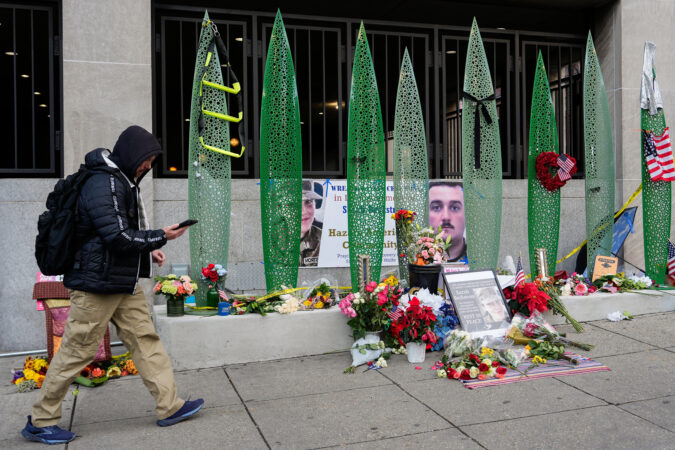
    PROVIDENCE, R.I. — A person of interest was in custody Sunday after a shooting during final exams at Brown University that killed two students and wounded nine others, though key questions remained unanswered more than 24 hours after the attack.

    The attack Saturday afternoon set off hours of chaos across the Ivy League campus and surrounding Providence neighborhoods as hundreds of officers searched for the shooter and urged students and staff to shelter in place. The lockdown, which stretched into the night, was lifted early Sunday, but authorities had not yet released information about a potential motive.

    The person of interest is a 24-year-old man from Wisconsin, according to two people familiar with the matter. The people were not authorized to publicly discuss details of the investigation and spoke to the Associated Press on condition of anonymity.

    Col. Oscar Perez, the Providence police chief, said Sunday afternoon that no one has been charged yet. Perez, who also said no one else was being sought, declined to say whether the detained person had any connection to Brown.

    The person was taken into custody at a Hampton Inn hotel in Coventry, R.I., about 20 miles from Providence, where police officers and FBI agents remained Sunday, blocking off a hallway with crime scene tape as they searched the area.

    The shooting occurred during one of the busiest moments of the academic calendar, as final exams were underway. Brown canceled all remaining classes, exams, papers, and projects for the semester and told students they were free to leave campus, underscoring the scale of the disruption and the gravity of the attack.

    College President Christina Paxson teared up while describing her conversations with students both on campus and in the hospital.

    “They are amazing and they’re supporting each other,” she said at an afternoon news conference. “There’s just a lot of gratitude.”

    The gunman opened fire inside a classroom in the engineering building, firing more than 40 rounds from a 9 mm handgun, a law enforcement official told the Associated Press. Two handguns were recovered when the person of interest was taken into custody and authorities also found two loaded 30-round magazines, the official said. The official was not authorized to discuss the investigation publicly and spoke to AP on the condition of anonymity.

    One student of the nine wounded students had been released from the hospital, said Paxson. Seven others were in critical but stable condition, and one was in critical condition.

    Some businesses remain closed in shocked city

    Providence leaders said residents would notice a heavier police presence, and many area businesses announced Sunday that they would remain closed. A scheduled 5K run was postponed until next weekend.

    Mayor Brett Smiley invited residents to gather Sunday evening in a city park where an event had been scheduled to light a Christmas tree and Hanukkah menorah.

    “For those who know at least a bit of the Hanukkah story, it is quite clear that if we can come together as a community to shine a little bit of light tonight, there’s nothing better that we can be doing,” he told reporters.

    Smiley said he visited some of the wounded students and was inspired by their courage, hope, and gratitude. One told him that active shooting drills done in high school proved helpful.

    “The resilience that these survivors showed and shared with me, is frankly pretty overwhelming,” he said. “We’re all saddened, scared, tired, but what they’ve been through is something different entirely.”

    Exams were underway during shooting

    Investigators were not immediately sure how the shooter got inside the first-floor classroom at the Barus & Holley building, a seven-story complex that houses the School of Engineering and physics department. The building includes more than 100 laboratories and dozens of classrooms and offices, according to the university’s website.

    Engineering design exams were underway. Outer doors of the building were unlocked but rooms being used for final exams required badge access, Smiley said.

    Emma Ferraro, a chemical engineering student, was in the lobby working on a final project when she heard loud pops coming from the east side. Once she realized they were gunshots, she darted for the door and ran to a nearby building where she waited for hours.

    Surveillance video released by police showed a suspect, dressed in black, walking from the scene.

    Former “Survivor” contestant just left the building

    Eva Erickson, a doctoral candidate who was the runner-up earlier this year on the CBS reality competition show Survivor, said she left her lab in the engineering building 15 minutes before shots rang out.

    The engineering and thermal science student shared candid moments on Survivor as the show’s first openly autistic contestant. She was locked down in the campus gym following the shooting and shared on social media that the only other member of her lab who was present was safely evacuated.

    Brown senior biochemistry student Alex Bruce was working on a final research project in his dorm across the street from the building when he heard sirens outside.

    “I’m just in here shaking,” he said, watching through the window as armed officers surrounded his dorm.

    Students hid under desks

    Students in a nearby lab turned off the lights and hid under desks after receiving an alert, said Chiangheng Chien, a doctoral student in engineering who was about a block from where the shooting occurred.

    Mari Camara, 20, a junior from New York City, was coming out of the library and rushed inside a taqueria to seek shelter. She spent more than three hours there, texting friends while police searched the campus.

    “Everyone is the same as me, shocked and terrified that something like this happened,” she said.

    Brown, the seventh-oldest higher education institution in the U.S., is one of the nation’s most prestigious colleges, with roughly 7,300 undergraduates and more than 3,000 graduate students.

    Crystal McCollaum, of Chicopee, Mass., was staying at the hotel where the person of interest was taken into custody. She was with her daughter to attend a cheerleading competition in Providence, but after hearing about the shooting, she thought they would be safer staying outside the city.

    “It was just weird and scary,” she said.

  • The holiday shopping season comes with tons of extra emissions. Here’s how to do it sustainably

    The holiday shopping season comes with tons of extra emissions. Here’s how to do it sustainably

    We’re in the thick of the holiday shopping season, and U.S. residents are expected to shatter the spending record again this year. The National Retail Federation forecasts that 2025 will be the first time we collectively spend more than $1 trillion on year-end gifts.

    A lot of materials, energy, packaging, and gasoline have gone into making and moving those gifts. All of those processes release planet-warming gases into the atmosphere.

    But a lot of that environmental impact is avoidable. Making, baking, thrifting, and avoiding traditional wrapping paper are all more planet-friendly ways to give. We’ve got tips on how to do them all.

    Homemade doesn’t have to be difficult

    Sure, if you’ve got the skill to turn a wooden bowl or needlepoint a Christmas stocking, those gifts are guaranteed to be unique and meaningful. But not all of us have the knowledge or time.

    Sandra Goldmark, associate dean of Columbia Climate School’s Office of Engagement and Impact, said one of her favorite options is an act of service for a loved one. One year, for example, her husband organized all her passwords for her.

    “It was not something easy to wrap and put under the tree, but believe me, it was meaningful and really helped me more than any additional object cluttering up my home could have,” she said.

    Another winner: food. If, say, you have a long list of recipients, buy ingredients in bulk and pack them in Mason jars. Cookie mix, soup mix, sourdough starter, and spice mixes are all easily sealed and transported that way. Add some ribbon and a sprig of cedar, and it’s festive. Homemade baked goods and snacks are other options.

    “It’s inexpensive, but it takes care and time and attention,” said sustainable-living educator Sarah Robertson-Barnes.

    Give experiences instead of buying more stuff

    The advice here starts out simple: Buy less stuff. The best way to give gifts more sustainably is to buy fewer new things, said Goldmark.

    Stockings can be a common spot for toys that break quickly before going straight to the landfill. Instead, you can fill stockings with things that your friends or family need anyway, like toothbrushes or body wash, or traditional treats like fruit and chocolates.

    Giving someone an experience is another popular option. That might mean a pair of concert tickets, a spa day, a gift card to a favorite local restaurant, a local news subscription, or a membership to a local garden or zoo that the recipient can use over and over. Research has indicated that experiences strengthen relationships better than material gifts do.

    “There is so much that you could do by just saying, ‘I would prefer if you just made me a nice meal or took me out for some sort of adventure,’” said Atar Herziger, environmental psychologist and assistant professor at Technion — Israel Institute of Technology.

    Experiences also come with less packaging. Herziger cautions, though, that travel can have a high impact especially if it involves planes. So she recommends local options such as a nearby hike or a staycation.

    And if you’re unsure what experience your loved one would prefer? Herziger said don’t overcomplicate it — just ask.

    Go vintage

    Secondhand gifts are easier on the planet because they involve less manufacturing, packaging, and shipping. Robertson-Barnes looks to Facebook Marketplace or her local Buy Nothing group to find items that she would have otherwise bought new.

    “I bet somebody has the thing that you’re looking for and they would love to get rid of it,” she said.

    Still, for some recipients, secondhand gifts are taboo.

    “We do have a weird cultural thing where new is better and used is gross,” said Robertson-Barnes, who suggested reframing used gifts as “vintage.”

    Similarly, Herziger said secondhand options might be received better when they’re items that can’t be bought new, such as a family heirloom or a collectible that isn’t produced anymore.

    Goldmark looks to thrift stores for smaller toys or mugs. Record stores, used book stores, furniture stores, and antique shops are other options. And of course big names like eBay and Goodwill can have rare and unique finds, too.

    If buying secondhand simply won’t work for a recipient, Goldmark said to focus on items that are high-quality, long-lasting, repairable, and really needed. That ensures that it’s worth investing in and reduces the chance that it gets returned. Look to buy locally, rather than ordering online, to reduce how far it travels.

    The wrapping matters, too

    Millions of pounds of wrapping paper end up in the landfill every year. Much of it is blended with plastic to make it shiny or sparkly, so it can’t be recycled.

    Not sure whether your wrapping paper is recyclable? Check your local recycler’s website for guidelines, or try a simple test by crumpling it into a ball. If it holds its shape, it’s more likely recyclable. Also, if it rips as easily as printer paper or gets soggy like a saturated brown grocery bag, those are good signs it’s recyclable, too.

    Robertson-Barnes said if you already have wrapping paper on hand, you should use it rather than waste it. But once it’s gone, she recommends reusable wrapping cloths such as furoshiki, a traditional Japanese fabric for presenting gifts.

    Some experts also recommend gift bags as long as they’re reused — and not tossed.

    Another cheaper and more planet-friendly alternative to wrapping paper is newspaper or brown paper bags. Tie them off with reusable ribbon, a couple pinecones or a candy cane, and suddenly it’s festive.

    Plus, brown paper is a blank canvas with endless opportunities for customization. “If you’ve got kids, then their drawings are wonderful packaging materials. They make the best wrapping paper,” Herziger said.

  • How baby boomers got so rich, and why their kids are unlikely to catch up

    How baby boomers got so rich, and why their kids are unlikely to catch up

    Baby boomers hold more than $85 trillion in assets, making them the richest generation by far. New research explores the extraordinary rise in their good fortunes — one that experts say successive generations will be hard-pressed to replicate.

    The reasons come down to timing and time: Americans 75 and older bought homes and invested in stocks well before such assets exploded in value, according to Edward Wolff, an economics professor at New York University. In a working paper for the National Bureau of Economic Research, he examined the four decades between 1983 and 2022 when those older boomers’ saw their wealth climb and their younger peers recorded relative declines.

    “It’s astonishing how their relative wealth has taken off in the last 30 plus years,” Wolff said. “They started out as among the poorest groups in terms of wealth back in 1983.”

    The wealth of baby boomers — especially those in retirement — is a reflection of the uniquely favorable economic conditions that occurred during their working lives, Wolff and other economists said. So much so that it would be difficult for younger generations to emulate, especially as they are more likely to be weighed down by debt or childcare costs.

    Housing costs also factor into the widening divide between baby boomers (born from 1946 to 1964), and everyone else, experts say. Generation X (1965 to 1980), millennials (1981 to 1996), and their successors increasingly dedicate a bigger portion of their budgets to mortgage or rent.

    Without considering the historical backdrop that let many boomers buy homes and invest in stock before decades of asset appreciation, people might overstate the extent to which the generation’s wealth reflects their superior financial decision-making, said Olivia Mitchell, professor of business economics and public policy at the University of Pennsylvania’s Wharton School.

    What happened?

    Good economic conditions

    Baby boomers “entered the labor force during decades of strong economic growth, rising productivity, and relatively high real wages,” Mitchell said. They were in their prime earning and saving years during long bull markets, namely in the 1980s and ’90s, she said, as well as the economic recovery that followed the Great Recession. They faced lower tuition and healthcare costs, and benefited from favorable tax policies, including lower capital gains tax rates, she said.

    By contrast, younger generations endured the Great Recession — which ran from late 2007 to mid-2009 — early in their careers and more volatile capital markets afterward, she said.

    And “particularly for middle-income workers, real wage gains since the 2000s have been modest, compared to the robust wage growth that boomers benefited from mid-career,” Mitchell said.

    By age 30, the average millennial had about twice as much debt as their baby boomer counterpart, said Jeremy Ney, a professor at Columbia University’s business school.

    Post-World War II, “you had this tremendous boom that many got to ride for a very long period of time,” Ney said. “And when you compare that to the bursting of the dot-com bubble, when you compare that to the 2008 housing crisis, when you compare that to the declines of COVID, it made it much more difficult for people to invest, accumulate wealth.”

    The rise of 401(k)s and stock holdings

    Some older boomers benefited from having access to defined-benefit pension plans, many of which were phased out in the private sector in the 1980s as tax-advantaged 401(k)s became commonplace. The rise of such employer-sponsored retirement plans also drove up baby boomers’ stock holdings.

    Today, about half of baby boomers’ wealth is tied up in cash, bonds, stocks, or mutual funds held directly or through retirement accounts, or other financial holdings, Mitchell said, citing 2023 survey data from the Federal Reserve. Though the generation makes up about one-fifth of the population, they hold more than half of corporate equities and mutual fund shares.

    Baby boomers have accumulated $85.4 trillion in wealth through the second quarter, according to Federal Reserve data. That’s nearly twice as much as Gen X and four times more than millennials.

    Younger generations are more likely to have debt, leaving less to save or invest, Ney said, citing student loans and childcare costs that nearly doubled between the mid-1980s and 2011, according to the U.S. Census Bureau.

    “In 1940 there was a 90% chance that you were going to earn more than your parents. To somebody born today, it is just a coin flip,” Ney said.

    Millennials and Generation Z (those born between 1997 and 2012) also tend to be more risk-averse when it comes to investing in the stock market, compared with members of the Silent Generation (1928 to 1945), boomers, and Gen X that lived through better economies, Ney said.

    “Gen Z does not buy the dip,” he said. “They are too nervous to engage in the stock market” when prices are low.

    The big story: Housing

    Perhaps the biggest share of baby boomers’ wealth comes from their home.

    Many were better positioned to buy or refinance their homes during stretches with particularly low interest rates, including after the Great Recession and during the COVID-19 pandemic, said Annamaria Lusardi, academic director of Stanford University’s Initiative for Financial Decision-Making.

    The nation’s median home price was $410,800 in the second quarter, compared with the $327,100 recorded just before the pandemic started in 2020, Federal Reserve data show. Medians are significantly higher in the Northeast ($796,700) and the West ($531,100).

    By comparison, the median home price in the first quarter of 1976 — when the oldest boomers were 30 — was $42,800, Fed data show. That would be $242,400 adjusted for inflation.

    While higher home valuations have bolstered the net worth of existing owners, Lusardi said, they’re outpacing the earnings of younger adults. Nor are they helped by current mortgage rates, which have hovered above 6% on a 30-year loan since September 2022.

    About one-third of baby boomers’ wealth today is equity in their primary residence, Mitchell said, citing the 2023 survey. Boomers overall bought homes at younger ages than later cohorts and when prices were significantly lower, allowing them to benefit from decades of home appreciation.

    The typical age of first-time home buyers recently hit an all-time high of 40 years, up from late 20s in the 1980s, according to a 2025 National Association of Realtors survey.

    “Even when you look at that same age, you tend to see much lower rates of homeownership, and therefore much lower rates of wealth accumulation,” Ney said.

    Michael Walden, a professor emeritus of economics at North Carolina State University, said some of the divergence might be due to preference — such as younger adults preferring to rent rather than assume responsibility for home repairs, or to wait for a perfect home rather than settling for a starter home they might hold onto for a few years until they had enough equity to move up.

    “Their attitude about buying housing is very different than what my parents ingrained in me which was” to ‘just get your foot in the door’ with a starter house, Walden said. “It’s probably not going to be adequate, but a few years later, you’ll be able to sell it for more and just work your way up.”

  • Mayor says at least 2 dead in shooting at Brown University in Rhode Island

    Mayor says at least 2 dead in shooting at Brown University in Rhode Island

    PROVIDENCE, R.I. — A shooter dressed in black killed at least two people and wounded eight others at Brown University on Saturday during final exams on the Ivy League campus, authorities said, as police searched for the suspect.

    Officers were hunting through campus buildings and sifting through trash cans more than three hours after the shooting erupted.

    The suspect was a male in dark clothing who was last seen leaving the building where the shootings occurred, said Timothy O’Hara, deputy chief of police.

    Mayor Brett Smiley said a shelter-in-place order was in effect for the area and encouraged people living near the campus to stay inside and not to return home until it is lifted.

    “We have all available resources” to find the suspect, Smiley said.

    The eight wounded people were in critical but stable condition, the mayor said. He declined to say whether the victims were students.

    University officials initially told students and staff that a suspect was in custody, before later saying that was not the case and that police were still searching for a suspect or suspects, according to alerts issued through Brown’s emergency notification system.

    The mayor said a person preliminarily thought to be involved was detained but was later determined to have no involvement.

    “We’re still getting information about what’s going on, but we’re just telling people to lock their doors and to stay vigilant,” said Providence Councilmember John Goncalves, whose ward includes the Brown campus. “As a Brown alum, someone who loves the Brown community and represents this area, I’m heartbroken. My heart goes out to all the family members and the folks who’ve been impacted.”

    The shooting occurred near the Barus & Holley building, a seven-story complex that houses the university’s School of Engineering and physics department. According to the university’s website, the building includes more than 100 laboratories and dozens of classrooms and offices.

    Engineering design exams were underway in the building when the shooting occurred.

    Brown senior biochemistry student Alex Bruce was working on a final research project in his dorm directly across the street from the building when he heard sirens outside and received a text about an active shooter shortly after 4 p.m.

    “I’m just in here shaking,” he said, watching through the window as a half-dozen armed officers in tactical gear surrounded his dorm. He said he feared for a friend who he thought was inside the engineering building at the time.

    Students in a nearby lab hid under desks and turned off the lights after receiving an alert about the shooting, said Chiangheng Chien, a doctoral student in engineering who was about a block away from the scene.

    Students were urged to shelter in place as police responded to the scene, and people were told to avoid the area. A police officer warned media to take cover in vehicles because the area was still an active scene.

    President Donald Trump told reporters that he had been briefed on the shooting and “all we can do right now is pray for the victims.”

    “It’s a shame,” he said in brief remarks at the White House.

    Officials cautioned that information remained preliminary as investigators worked to determine what had occurred.

    Police were actively investigating and still gathering information from the scene, said Kristy DosReis, the chief public information officer for the city of Providence. The FBI said it was assisting in the response.

    Brown is a private institution with roughly 7,300 undergraduate students and more than 3,000 graduate students.

  • Some Native Americans draw shocked response over contract to design immigration detention centers

    Some Native Americans draw shocked response over contract to design immigration detention centers

    MAYETTA, Kan. — The Prairie Band Potawatomi Nation, whose ancestors were uprooted by the U.S. from the Great Lakes region in the 1830s, are facing outrage from fellow Native Americans over plans to profit from another forced removal: President Donald Trump’s mass deportation campaign.

    A newly established tribal business entity quietly signed a nearly $30 million federal contract in October to come up with an early design for immigrant detention centers across the U.S. Amid the backlash, the tribe says it’s trying to get out of it.

    Tribal leaders and the U.S. Department of Homeland Security haven’t responded to detailed questions about why the firm was selected for such a big contract without having to compete for the work as federal contracting normally requires. A former naval officer — who markets himself as the “go-to” adviser for tribes and affiliated companies seeking to land federal contracts — established the affiliate, KPB Services LLC, in April.

    The criticism has been so intense that the 4,500-member tribe said it fired the economic development leaders who brokered the deal.

    “We are known across the nation now as traitors and treasonous to another race of people,” said Ray Rice, a 74-year-old who said he and other tribal members were blindsided. “We are brown and they’re brown.”

    ICE deals with tribes generate scrutiny

    Tribal Chairperson Joseph “Zeke” Rupnick promised “full transparency” about what he described as an “evolving situation.” In a video message to tribal members Friday, he said the tribe is talking with legal counsel about ways to end the contract.

    He alluded to the time when federal agents forcibly removed hundreds of Prairie Band Potawatomi families from their homes and ultimately corralled them on a reservation just north of Topeka.

    “We know our Indian reservations were the government’s first attempts at detention centers,” Rupnick said in the video message. “We were placed here because we were prisoners of war. So we must ask ourselves why we would ever participate in something that mirrors the harm and the trauma once done to our people.”

    The U.S. Supreme Court cleared the way in September for federal agents to conduct sweeping immigration raids and use apparent ethnicity as a relevant factor for a stop. With some Native Americans being swept up and detained in recent raids, U.S. Immigration and Customs Enforcement’s overtures to tribes and even longstanding deals are generating extra scrutiny.

    An LLC owned by the Poarch Band of Creek Indians in Alabama also has a multimillion-dollar contract with ICE to provide financial and administrative services. Meanwhile, some shareholders of an Alaska Native corporation say their values don’t align with the corporation’s federal contracting division, Akima, to provide security at several ICE detention facilities.

    “I’m shocked that there is any tribal nation that’s willing to assist the U.S. government in that,” said Brittany McKane, a 29-year-old Muscogee Nation citizen who attends the tribe’s college in Oklahoma.

    Some tribal nations have advised their citizens to carry tribal IDs.

    Last month, actor Elaine Miles (Northern Exposure) said she was stopped by ICE agents who alleged her ID from the Confederated Tribes of the Umatilla Indian Reservation in Oregon was fake.

    Economic pressure increases as federal funding decreases

    The economic arms of tribes, which can be run by non-Natives, are under increasing pressure to generate revenue because of decreased federal funding, high inflation, and competition from online gambling, said Gabe Galanda, an Indigenous rights attorney based in Seattle.

    But the economic opportunities presented to tribes don’t always align with their values, said Galanda, a member of the Round Valley Indian Tribes in northern California.

    The Prairie Band Potawatomi has a range of businesses that provide healthcare management staffing, general contracting, and even interior design.

    The tribal offshoot hired by ICE — KPB Services LLC — was established in Holton, Kan., and is not listed on the tribe’s website. It previously qualified along with dozens of other companies to provide logistical support to the U.S. Navy although, to date, it hasn’t performed any work for the federal government.

    The ICE contract initially was awarded in October for $19 million for unspecified “due diligence and concept designs” for processing centers and detention centers throughout the U.S., according to a one-sentence description of the work on the federal government’s real time contracting database. It was modified a month later to increase the payout ceiling to $29.9 million. Sole-source contracts above $30 million require additional justification under federal contracting rules.

    The contract raises a number of questions and seems to go against the Trump administration’s stated goal of cleaning up waste, fraud, and abuse, said attorney Joshua Schnell, who specializes in federal contracting law.

    “The public’s trust in the federal procurement system depends on transparency and competition,” said Schnell. “Although there is a role within this system for multimillion dollar sole-source contracts, these contracts are an exception to statutory competition requirements, and taxpayers are entitled to know how the government is spending their money.”

    Backlash swift as news about ICE contract spread

    It’s unclear what the Tribal Council knew about the contract. A spokesperson for the Tribal Council did not respond to repeated requests from the AP for details, including who was terminated.

    What is known is that KPB was registered by Ernest C. Woodward Jr., a retired U.S. naval officer with degrees in engineering and business who is a member of the Miami Tribe of Oklahoma, according to a website for his one-time consulting firm, Burton Woodward Partners LLC.

    The website described Woodward as a serial entrepreneur and tribal adviser on mergers and acquisitions, accessing capital, and landing federal contracts. The consulting firm was registered to an office park in Sarasota, Fla., in 2017 but was delisted two years later after it failed to file an annual report.

    The Prairie Band Potawatomi Nation in a 2017 news release said Woodward’s firm advised it on its acquisition of another government contractor, Mill Creek LLC, which specializes in outfitting federal buildings and the military with office furniture and medical equipment.

    Woodward also is listed as the chief operating officer of the Florida branch of Prairie Band Construction Inc., which was registered in September.

    Attempts to locate Woodward were unsuccessful. The phone number listed on Burton Woodward Partners was disconnected, and he did not respond to an email sent to another consulting firm he’s affiliated with, Virginia-based Chinkapin Partners LLC.

    Carole Cadue-Blackwood, who has Prairie Band Potawatomi ancestry and is an enrolled member of the Kickapoo Tribe in Kansas, hopes the contract dies. She has been part of the fight against an ICE detention center opening in Leavenworth, Kan., and works for a social service agency for Native Americans.

    “I’m in just utter disbelief that this has happened,” she said.

  • National Guardsman shot in D.C. making ‘extraordinary progress,’ doctor says

    National Guardsman shot in D.C. making ‘extraordinary progress,’ doctor says

    The National Guard member who was ambushed while patrolling near the White House on Thanksgiving eve is now breathing on his own and can stand with assistance, his neurosurgeon said Friday.

    Staff Sgt. Andrew Wolfe, 24, was hospitalized Nov. 26 after a gunman opened fire on him and his colleague, Spc. Sarah Beckstrom, 20, who died of her injuries the following day. The attack left Wolfe with a “critical” gunshot wound to his head, and he was airlifted to MedStar Washington Hospital Center, Jeffrey Mai said in a statement.

    Mai credited quick-acting first responders and the actions of trauma and neurosurgery teams for saving Wolfe’s life by controlling the serviceman’s bleeding and pressure on his brain. Mai called Wolfe’s recent recovery developments “important milestones that reflect his strength and determination.”

    “Staff Sgt. Wolfe has made extraordinary progress,” the doctor said. “Based on these improvements, he is now ready to transition from acute care to inpatient rehabilitation as the next step in his recovery journey.”

    Wolfe’s family, including his father, Jason, and mother, Melody, have chosen not to disclose the location of his rehabilitation, Mai added.

    Wolfe, who joined the West Virginia National Guard in 2019, and Beckstrom were among more than 2,000 Guard members deployed to D.C. after President Donald Trump’s announcement of a “crime emergency” in the city in August. Following the attack, Trump ordered an additional 500 troops to the District.

    The suspect in the attack, Rahmanullah Lakanwal, an Afghan national who served in the CIA’s “Zero Units” that seized or killed suspected terrorists, has been charged with first-degree murder.

    Prosecutors have not given a motive for the shooting. Charging documents say Lakanwal, who settled in Washington state after the 2021 U.S. withdrawal from Afghanistan, drove across the country to carry out the attack and allegedly shouted “Allahu akbar!” as he shot Beckstrom and Wolfe in their heads with a .357-caliber revolver outside the Farragut West Metro station. The phrase is Arabic for “God is great.” A Washington Post investigation found that Lakanwal slipped deeper into isolation as he struggled to adapt with his wife and five children in the United States.

    Lakanwal, who was also shot during the attack, pleaded not guilty through an attorney at the hearing Dec. 2. He spoke through an interpreter to give brief responses and appeared remotely by video from a hospital bed.

    There had been earlier signs that Wolfe’s recovery was trending positively. On Dec. 5, West Virginia Gov. Patrick Morrisey (R) shared publicly that Wolfe’s “parents report that his head wound is slowly healing and that he’s beginning to ‘look more like himself.’”

    Jordan Butler, a local pastor and friend of the Wolfe family, coled a vigil last week at the high school Wolfe attended in Inwood, a tight-knit West Virginia community where vigil attendees prayed and lit candles for Wolfe.

    “It’s amazing watching what’s happening,” Butler told the Post on Wednesday. “It’s almost miraculous.”

    On Friday, Wolfe’s parents said in a statement released by MedStar that they hope their son will be able to return to work in the West Virginia National Guard “and his new mission of being a light into this world.”

    “Please continue to lift Andy up in prayer as he begins a long and tough rehabilitation,” Jason and Melody Wolfe said. “We know he will continue to improve at a rapid pace.”

  • Fighting rages on Thai-Cambodian border despite Trump’s ceasefire claim

    Fighting rages on Thai-Cambodian border despite Trump’s ceasefire claim

    SURIN, Thailand — Fighting raged Saturday morning along the border of Thailand and Cambodia, even after U.S. President Donald Trump, acting as a mediator, declared that he had won agreement from both countries for a new ceasefire.

    Thai officials said they did not agree to a ceasefire. Cambodia has not commented directly on Trump’s claim, but its defense ministry said Thai jets carried out airstrikes Saturday morning.

    Thai Foreign Minister Sihasak Phuangketkeow said Saturday that some of Trump’s remarks didn’t “reflect an accurate understanding of the situation.”

    He said Trump’s characterization of a land mine explosion that wounded Thai soldiers as a “roadside accident” was inaccurate, and did not reflect Thailand’s position that it was a deliberate act of aggression.

    Sihasak said that Trump’s willingness to credit what may be “information from sources that deliberately distorted the facts” instead of believing Thailand hurt the feelings of the Thai people “because we consider ourselves — we are proud, in fact — to be the oldest treaty ally of the United States in the region.”

    The latest large-scale fighting was set off by a skirmish on Dec. 7 that wounded two Thai soldiers and derailed a ceasefire promoted by Trump that ended five days of earlier combat in July over longstanding territorial disputes.

    The July ceasefire was brokered by Malaysia and pushed through by pressure from Trump, who threatened to withhold trade privileges unless Thailand and Cambodia agreed. It was formalized in more detail in October at a regional meeting in Malaysia that Trump attended.

    Number of displaced tops half a million

    More than two dozen people on both sides of the border have officially been reported killed in this past week’s fighting, while more than half a million have been displaced.

    The Thai military acknowledged 15 of its troops died during the fighting and estimated earlier this week that there have been 165 fatalities among Cambodian soldiers. Cambodia has not announced military casualties, but has said at least 11 civilians have been killed and more than six dozen wounded.

    Trump, after speaking to Thai Prime Minister Anutin Charnvirakul and Cambodian Prime Minister Hun Manet, announced on Friday an agreement to restart the ceasefire.

    “They have agreed to CEASE all shooting effective this evening, and go back to the original Peace Accord made with me, and them, with the help of the Great Prime Minister of Malaysia, Anwar Ibrahim,” Trump wrote in his Truth Social post.

    Trump’s claim came after midnight in Bangkok. Thai Prime Minister Anutin had, after his call with Trump, said he had explained Thailand’s reasons for fighting and said peace would depend on Cambodia ceasing its attacks first.

    The Thai foreign ministry later explicitly disputed Trump’s claim that a ceasefire had been reached. Anutin’s busy day on Friday included dissolving Parliament, so new elections could be held early next year.

    Cambodian Prime Minister Hun Manet, in comments posted early Saturday morning, also made no mention of a ceasefire.

    Leaders held Friday night phone talks with Trump

    Hun Manet said he held phone conversations on Friday night with Trump, and a night earlier with Malaysia’s Anwar, and thanked both “for their continuous efforts to achieve a long-lasting peace between Cambodia and Thailand.”

    “Cambodia is ready to cooperate in any way that is needed,” Hun Manet wrote.

    Anwar later posted on social media that he was urging the two sides to implement a ceasefire on Saturday night. Cambodia’s prime minister, also posting online, endorsed the initiative, which included having Malaysia and the United States help monitor it. However, Thai Prime Minister Anutin denied that his country was even in negotiations over the proposal.

    Thailand has been carrying out airstrikes on what it says are strictly military targets, while Cambodia has been firing thousands of medium-range BM-21 rockets that have caused havoc but relatively few casualties.

    BM-21 rocket launchers can fire up to 40 rockets at a time with a range of 19-25 miles. These rockets cannot be precisely targeted and have landed largely in areas from where most people have already been evacuated.

    However, the Thai army announced Saturday that BM-21 rockets had hit a civilian area in Sisaket province, seriously injuring two civilians who had heard warning sirens and had been running toward a bunker for safety.

    Thailand’s navy was also reported by both sides’ militaries to have joined the fighting on Saturday morning, with a warship in the Gulf of Thailand shelling Cambodia’s southwestern province of Koh Kong. Each side said the other opened fire first.

  • Speaker Johnson unveils healthcare plan as divided Republicans scramble for alternative

    Speaker Johnson unveils healthcare plan as divided Republicans scramble for alternative

    WASHINGTON — The Senate failed to get anywhere on the healthcare issue this week. Now it’s the House’s turn to show what it can do.

    Speaker Mike Johnson unveiled a Republican alternative late Friday, a last-minute sprint as his party refuses to extend the enhanced tax subsidies for those who buy policies through the Affordable Care Act, also called Obamacare, which are expiring at the end of the year. Those subsidies help lower the cost of coverage.

    Johnson (R., La.) huddled behind closed doors in the morning — as he did days earlier this week — working to assemble the package for consideration as the House focuses the final days of its 2025 work on healthcare.

    “House Republicans are tackling the real drivers of health care costs to provide affordable care,” Johnson said in a statement announcing the package. He said it would be voted on next week.

    Later Friday, though, House Democratic Leader Hakeem Jeffries said: “House Republicans have introduced toxic legislation that is completely unserious, hurts hardworking America taxpayers, and is not designed to secure bipartisan support. If the bill reaches the House floor, I will strongly oppose it.”

    Time is running out for Congress to act. Democrats engineered the longest federal government shutdown ever this fall in a failed effort to force Republicans to the negotiating table on healthcare. But after promising votes, the Senate failed this week to advance both a Republican healthcare plan and the Democratic-offered bill to extend the tax credits for three years.

    Now, with just days to go, Congress is about to wrap up its work with no consensus solution in sight.

    What Republicans are proposing

    The House Republicans offered a 100-plus-page package that focuses on long-sought GOP proposals to enhance access to employer-sponsored health insurance plans and clamp down on so-called pharmacy benefit managers.

    Republicans propose expanding access to what’s referred to as association health plans, which would allow more small businesses and self-employed individuals to band together and purchase health coverage.

    Proponents say such plans increase the leverage businesses have to negotiate a lower rate. But critics say the plans provide skimpier coverage than what is required under the Affordable Care Act.

    The Republicans’ proposal would also require more data from pharmacy benefit managers, or PBMs, as a way to help control drug costs. Critics say PBMs have padded their bottom line and made it more difficult for independent pharmacists to survive.

    Additionally, the GOP plan includes mention of cost-sharing reductions for some lower-income people who rely on Obamacare, but those would not take effect until January 2027.

    The emerging package from the House Republicans does not include an extension of an enhanced tax credit for millions of Americans who get insurance coverage through the Affordable Care Act. Put in place during the COVID-19 crisis, that enhanced subsidy expires Dec. 31, leaving most families in the program facing more than double their current out-of-pocket premiums, and in some cases, much more.

    What Trump wants

    President Donald Trump has said he believes Republicans are going to figure out a better plan than Obamacare — something he has promised for years — but offered few details beyond his idea for providing Americans with stipends to help buy insurance.

    “I want to see the billions of dollars go to people, not to the insurance companies,” Trump said late Friday during an event at the White House. “And I want to see the people go out and buy themselves great healthcare.”

    The president did not comment directly on the House’s new plan. He has repeatedly touted his idea of sending money directly to Americans to help offset the costs of healthcare policies, rather than extending the tax credits for those buying policies through Obamacare. It’s unclear how much money Trump envisions. The Senate GOP proposal that failed to advance would have provided payments to new health savings accounts of $1,000 a year for adult enrollees, or $1,500 for those ages 50 to 64.

    It appeared there were no such health savings accounts in the new House GOP plan.

    Political pressure is building for many

    Going Johnson’s route has left vulnerable House Republicans representing key battleground districts in a tough spot.

    Frustrated with the delays, a group of more centrist GOP lawmakers is aligning with Democrats to push their own proposals for continuing the tax credits, for now, so that Americans don’t face rising healthcare costs.

    They are pursuing several paths for passing a temporary ACA subsidy extension, co-sponsoring a handful of bills. They are also signing on to so-called discharge petitions that could force a floor vote if a majority of the House signs on.

    Such petitions are designed to get around the majority’s control and are rarely successful, but this year has proven to be an exception. Lawmakers, for example, were able to use a discharge petition to force a vote on the release of the Jeffrey Epstein files held by the Department of Justice.

    One petition, filed by Rep. Brian Fitzpatrick (R., Pa.), had signatures from 12 Republicans and 12 Democrats as of Friday afternoon. It would force a vote on a bill that includes a two-year subsidy extension and contains provisions designed to combat fraud in the ACA marketplace. There are also restrictions for PBMs, among other things.

    Another petition from Rep. Josh Gottheimer (D., N.J.) has 39 signatures and is broadly bipartisan. It’s a simpler proposal that would force a vote on a one-year ACA enhanced subsidy extension and would include new income caps limiting who qualifies for the enhanced credit.

    Both discharge petitions have enough Republicans’ support that they would likely succeed if Jeffries encouraged his caucus to jump on board. So far, he’s not tipping his hand.

    “We’re actively reviewing those two discharge petitions and we’ll have more to say about it early next week,” Jeffries said.

    Meanwhile, Jeffries is pushing Democrats’ own discharge petition, which has 214 signatures and would provide for a clean three-year subsidy extension. No Republicans have signed on to that one.

    And as Republicans made clear in the Senate this week, a three-year extension without changes to the program has no chance of passing their chamber.

  • Israel says it has killed a top Hamas commander in Gaza

    Israel says it has killed a top Hamas commander in Gaza

    JERUSALEM — Israel on Saturday said it killed a top Hamas commander in Gaza after an explosive device detonated and wounded two soldiers in the territory’s south.

    Hamas in a statement did not confirm the death of Raed Saad. It said a civilian vehicle had been struck outside Gaza City and asserted it was a violation of the ceasefire that took effect on Oct. 10.

    Saad served as the Hamas official in charge of manufacturing and previously led the militant group’s operations division. The Israeli statement described him as one of the architects of the Oct. 7, 2023, attack that sparked the war, and said that he had been “engaged in rebuilding the terrorist organization” in a violation of the ceasefire.

    The Israeli strike west of Gaza City killed four people, according to an Associated Press journalist who saw their bodies arrive at Shifa Hospital. Another three were wounded, according to Al-Awda hospital.

    Israel and Hamas have repeatedly accused each other of truce violations.

    Israeli airstrikes and shootings in Gaza have killed at least 386 Palestinians since the ceasefire took hold, according to Palestinian health officials. Israel has said recent strikes are in retaliation for militant attacks against its soldiers, and that troops have fired on Palestinians who approached the Yellow Line between the Israeli-controlled majority of Gaza and the rest of the territory.

    Israel has demanded that Palestinian militants return the remains of the final hostage, Ran Gvili, from Gaza and called it a condition of moving to the second and more complicated phase of the ceasefire. That lays out a vision for ending Hamas’ rule and seeing the rebuilding of a demilitarized Gaza under international supervision.

    The initial Hamas-led 2023 attack on southern Israel killed around 1,200 people and took 251 hostages. Almost all hostages or their remains have been returned in ceasefires or other deals.

    Israel’s two-year campaign in Gaza has killed more than 70,650 Palestinians, roughly half of them women and children, according to the territory’s Health Ministry, which does not distinguish between militants and civilians in its count. The ministry, which operates under the Hamas-run government, is staffed by medical professionals and maintains detailed records viewed as generally reliable by the international community.

    Much of Gaza has been destroyed and most of the population of over 2 million has been displaced. Humanitarian aid entry into the territory continues to be below the level set by ceasefire terms, and Palestinians who lost limbs in the war face a shortage of prosthetic limbs and long delays in medical evacuations.

  • VA plans to abruptly eliminate tens of thousands of healthcare jobs

    VA plans to abruptly eliminate tens of thousands of healthcare jobs

    The Department of Veterans Affairs plans to abruptly eliminate as many as 35,000 healthcare positions this month, mostly unfilled jobs including doctors, nurses, and support staff, according to an internal memo, VA staffers, and congressional aides.

    The cuts come after a massive reorganization effort already resulted in the loss of almost 30,000 employees this year.

    Agency leaders have instructed managers across the Veterans Health Administration, the agency’s healthcare arm, to identify thousands of openings that can be canceled. Employees warn that the contraction will add pressure to an already stretched system, contributing to longer wait times for care.

    The decision comes after Veterans Affairs Secretary Douglas A. Collins, under political pressure from Congress, backed away from a plan to slash 15% of the agency’s workforce through mass firings. Instead, VA lost almost 30,000 employees this year from buyout offers and attrition.

    The agency hopes that the cuts will reduce the healthcare workforce to as little as 372,000 employees, a 10% reduction from last year, according to a memo shared with regional leaders last month and obtained by the Washington Post. Details of the cuts came into focus in recent days, according to 17 staffers at VA and congressional aides who spoke on the condition of anonymity because they didn’t have permission to share plans.

    VA spokesperson Pete Kasperowicz confirmed the planned cuts for unfilled positions. He said the healthcare system is eliminating about 26,400 of its open jobs, which he described as “mostly COVID-era roles that are no longer necessary.”

    “The vast majority of these positions have not been filled for more than a year, underscoring how they are no longer needed,” he wrote in response to questions. “This move will have no effect on VA operations or the way the department delivers care to Veterans, as we are simply eliminating open and unfilled positions that are no longer needed.”

    The nation’s largest government-run healthcare system has struggled to fill vacancies amid a broader national shortage of healthcare workers and a strained federal workforce. Job applications to the agency have also fallen 57% from last year, according to the agency’s workforce report last month.

    This reorganization comes in advance of an expected announcement next week that Collins plans to also shrink the network of 18 regional offices that administer the nation’s VA hospitals and medical centers, according to four people familiar with the plan. Staff at those regional offices help determine policies and manage staffing. Collins and others have been critical of the agency’s top-heavy administrative offices, arguing that staffing cuts there will free up more resources for healthcare.

    The health system grew by tens of thousands of employees under the Biden administration as more veterans enrolled in VA healthcare after passage of the PACT Act, which expanded benefits for veterans exposed to toxic burn pits. Then-secretary Denis McDonough urged veterans to be seen by VA doctors rather than request referrals to private practitioners outside the system.

    But the Trump administration has said it wants more veterans to seek treatment outside the government system. Political appointees at VA and their allies have also said they favor a leaner healthcare workforce because they think physicians and other healthcare providers could be more productive, said one former appointee who is close to the Trump team.

    Collins stood down from planned mass firings this year after a bipartisan mix of lawmakers expressed concerns about cuts affecting patient care. The agency said mission-critical positions were exempted from the buyouts and retirement offers.

    Since then, lawmakers have sought greater oversight of the agency’s staffing plans. In the agreement to reopen the government last month, lawmakers allocated $133 billion in discretionary funding for the VA with conditions, including that the agency could not reduce staffing for suicide prevention programs, would provide updates on staffing counts, and would maintain the staff necessary to meet certain thresholds for processing benefits and providing healthcare.

    The House also approved a measure Thursday overturning President Donald Trump’s executive order eliminating union rights at federal agencies, including VA, where the union had said it was harder to protect jobs without collective bargaining.

    Thomas Dargon Jr., deputy general counsel of the American Federation of Government Employees, which represents more than 320,000 VA employees, said the union has not been consulted by the agency about the cuts but has heard about concerns from its members.

    “The VA has been chronically understaffed for years, and employees are obviously going to be facing the brunt of any further job cuts or reorganization that results in employees having to do more work with less,” Dargon said.

    Sharda Fornnarino, a VA nurse in Colorado and local head of her nurses’ union, said her facility continues to lack the necessary staff to keep up with demand, and she urged lawmakers to restore collective bargaining so nurses could advocate for safer working conditions. The measure is unlikely to pass the Republican-held Senate.

    “We’re going to continue to do more with less,” Fornnarino said. “We’re going to continue to be overworked.”

    Meanwhile, at the VA’s regional offices, leadership is determining which roles they would need to cancel, and several healthcare workers said they had been warned their hospitals would be affected. Regional leaders were told to ensure their organizational charts are updated by next week, according to the memo reviewed by the Post.

    In Phoenix, 358 openings will be eliminated, including nurses and doctors, according to a nurse who said the losses will hit as they are already behind in scheduling doctors appointments.

    “They specifically said no department would be spared,” she said.

    In another Mountain West hospital, healthcare workers were told at a town hall last week that no current employees would lose their jobs, though if anyone leaves, they would need to determine whether they could keep those jobs, according to a recording of the meeting.

    The bad news arrived last Friday for employees of the VA San Diego healthcare system, in an exclamation mark-filled email from director Frank Pearson.

    He wrote that he’d been expecting this year to fill 734 job vacancies with new nurses, doctors, and other staff, to help care for the almost 90,000 veterans that the San Diego system regularly serves. But sometime this fall, he wrote, higher-ups decided to “do some housekeeping and cleanup of the books” — informing the San Diego system that it only had the budget to retain 4,429 employees going into fiscal year 2026.

    That meant, Pearson wrote in bold, all-caps, underlined letters, that “322 VACANT POSITIONS need to be eliminated.”

    One of the VA employees who received the email said that, in the mental health section alone, there were 78 open positions as of this month — about half of which will now go away. Currently, the employee noted, veterans in the San Diego area are waiting between 60 and 90 days to access VA mental health services.

    Staff are already strained and exhausted after a difficult year, the employee said, and were counting on reinforcements.

    “We are all doing the work of others to compensate,” she said. “The idea that relief isn’t coming is really, really disappointing.”