Category: Wires

  • President Donald Trump unveils the new Air Force One, a converted Qatari jet

    President Donald Trump unveils the new Air Force One, a converted Qatari jet

    ANDREWS AIR FORCE BASE, Md. — President Donald Trump on Friday showed off the new Air Force One, a formerly Qatari-owned jumbo jet that has been converted into the official U.S. presidential aircraft.

    The new aircraft eschews the Kennedy-era robin’s egg blue exterior of the old plane for a bolder look, with the underbelly of the plane painted navy blue with a red stripe above it. The plane’s left side, where the president boards, features the presidential seal, while the tail of the aircraft has a massive American flag on it.

    “This plane was transformed into a flying White House at a level of luxury that nobody has ever seen before,” Trump said from inside the massive Andrews Air Force Base hangar, as a couple of hundred assembled Air Force personnel looked on. He spoke after stepping off the new plane in a dramatic flourish, as his signature tune “God Bless the USA” played.

    He confirmed that he would be taking the new jet to the NATO summit in Ankara, Turkey, next month and indicated he would be returning to China “at some point,” presumably a reference to the Asia-Pacific Economic Cooperation summit that China is hosting in November. His return from the Group of Seven summit in France this week was the last planned trip aboard the old Air Force One, he said.

    “Now, when we land at airports in London and in Germany and different places, nobody tops this one, and that’s the way we have to have it for our country,” Trump said, noting that the colors and the design were to “my taste, I will say.”

    He added that the new Air Force One will do a flyover during the July 4 celebrations next month.

    The gift from Qatar is serving as a so-called “bridge” aircraft to carry the president until the new planes ordered directly from Boeing arrive. That delivery is currently slated for 2028.

    The administration formally accepted a luxury Boeing 747 jet from Qatar last year to be used as the presidential airplane, despite questions about the ethics and legality of accepting such an expensive gift from a foreign government. Trump has insisted in the past that he would not fly around in the Qatari jet once he leaves office and said it would instead be donated to a future presidential library.

    Trump on Friday said the U.S. was in a “little bit of a logjam” as they awaited the delivery of the new jets directly from Boeing, which had originally been scheduled for 2024 but have been delayed. He recalled asking the emir of Qatar for use of one of their planes.

    “See, a normal president wouldn’t do this. A normal president wants to stay away from aircraft,” Trump said Friday. “But our country has to be represented properly.”

    The Air Force said in a news release Friday that any plane deemed Air Force One “must meet rigorous security requirements” and that the Qatari plane “was modified under a disciplined engineering approach that prioritized these exact core capabilities above all else.” The Air Force also said “much of the previous head of state interior layout” of the plane was kept intact.

    The Air Force has said in the past that security modifications to the jet would cost less than $400 million.

    Trump’s efforts to reimagine the presidential airplane date back to his first administration, when he directed that an incoming fleet of new jets would adopt a color scheme that was nearly identical to that of his personal airplane. Then-President Joe Biden reversed the decision in March 2023 as an Air Force review suggested that the darker colors could increase costs and delay delivery of the new jets, but once Trump returned to office, he returned to his desired colors for the plane.

    Other government jets that carry other top administration officials will also use the similar red, white, and navy color scheme, the Air Force said earlier this year.

    An Air Force spokesperson, who spoke on condition of anonymity to discuss sensitive plans, told the Associated Press that the two current planes, known as VC-25As, will not be retiring. Instead, they will remain in the fleet until the new Boeing planes, referred to as VC-25Bs, come into service, the spokesperson said.

    It is unclear how the older jets will be used but the spokesperson said that both the Qatari jet as well as the VC-25As will be available for use and “the Presidential Airlift Group will select the appropriate aircraft for each mission based on operational requirements.”

  • Daveigh Chase, ‘Lilo & Stitch’ voice actor and ‘The Ring’ villain, dies at 35

    Daveigh Chase, ‘Lilo & Stitch’ voice actor and ‘The Ring’ villain, dies at 35

    Daveigh Chase, an actor known for voicing the character of Lilo in the hit animated film Lilo & Stitch and for her deeply unnerving turn as the child villain Samara in the horror movie The Ring, died on Tuesday in Los Angeles. She was 35.

    Her death, in a hospital, was confirmed by her father, John David Schwallier, who said the cause was complications of bacterial meningitis and a blood infection. Schwallier said his daughter had been homeless and living in Los Angeles with her boyfriend near the hospital where she died.

    Lilo & Stitch, released in 2002 when Ms. Chase was almost 12, told the story of an orphaned Hawaiian girl, Lilo, who brings home an impish blue space alien, Stitch, from the dog pound. Much wackiness ensues.

    The Disney film was a hit, grossing more than $274 million worldwide, according to Box Office Mojo (roughly $500 million when adjusting for inflation). And Ms. Chase, who had brought the plucky Lilo to life, won a Young Artist Academy Award for best performance in a voice-over role, age 10 or younger.

    Her breakout role, however, was in the live-action thriller The Ring, released in the United States roughly four months later, alongside Naomi Watts. Ms. Chase played Samara, a longhaired mystery girl who terrorized unsuspecting viewers of a certain VHS tape.

    The film, a remake of a Japanese film, Ringu, received mixed reviews, but the image of Samara crawling through a blurry television screen became seared in the cultural memory, and Ms. Chase won the award for best villain at the 2003 MTV Movie Awards.

    That year she returned to Lilo in the sequel Stitch! The Movie and in the Lilo & Stitch TV series, which ran from 2003-06.

    She then transitioned to her biggest TV role yet. In HBO’s Big Love — which chronicled the trials and tribulations of Mormon polygamists — she starred as Rhonda Volmer, a cunning 14-year-old bride in waiting, in 32 episodes between 2006 to 2011.

    Daveigh Elizabeth Schwallier was born July 24, 1990, in Las Vegas. Her father was a cook and helped to build motor homes. Her mother, Cathy Annette (Chase) Schwallier, went to nursing school but did not work a regular job.

    The family moved to Albany, Ore., where Ms. Chase would grow up, a few weeks after her birth. Ms. Chase was homeschooled, and at age 6 she won the Little Miss Oregon beauty pageant.

    She starred in a Campbell’s Soup commercial soon after, and then landed the voice-over role in Lilo & Stitch. She would go on to star as Samantha Darko, the younger sister of Jake Gyllenhaal’s Donnie, in Donnie Darko (2001) and in a little-noted sequel, S. Darko (2009). She also voiced Chihiro Ogino in Hayao Miyazaki’s 2001 animated classic, Spirited Away.

    After 2016, she largely stopped acting, and troubles with the law soon followed. In 2017, she was charged with riding in a stolen BMW, according to TMZ; in 2018, she was charged with possession of a controlled substance, according to the New York Post.

    Schwallier, 61, said in an interview Wednesday that Ms. Chase had struggled with drugs since the age of 13. He said that he hadn’t spoken with her since she was 19 and that she had a terrible falling-out with her mother around the same time. Her parents divorced 32 years ago.

    Schwallier had been in touch with Ms. Chase’s boyfriend, Roy Hernandez, and arrived at Los Angeles General Medical Center, where she was being treated, just before she died.

    “Him and her were destitute,” he said, describing the couple’s living conditions.

    In one of at least three GoFundMe pages set up to support Ms. Chase in recent days, Hernandez described her worsening condition: “The doctors say she may not survive, and when she leaves the hospital, we have nowhere to go. My hope is to raise enough money to find a place where we can be together and make her comfortable during her last days.”

    At the premiere of Lilo & Stitch in 2002, the Honolulu Star-Bulletin asked an 11-year-old Ms. Chase if she thought she could handle all the publicity that was sure to come her away after the movie’s release.

    “Well, it is just my voice,” she demurred. “But some people who worked for Disney have recognized me already. I don’t think people will really know who I am. I guess I’ll have to deal with it!”

    This article originally appeared in the New York Times.

  • A year after smashing a locker, Wyndham Clark finds himself leading at another U.S. Open

    A year after smashing a locker, Wyndham Clark finds himself leading at another U.S. Open

    SOUTHAMPTON, N.Y. — The smashed-up locker at Oakmont last year is as much a part of Wyndham Clark’s resume as the U.S. Open title he won two years before that.

    Such is life in a world teeming with cell phone cameras and viral video. Such is life in professional golf, a sport built on managing failure and harnessing emotions — and where success one week, or one year, doesn’t always carry over to the next.

    Clark’s spot at the top of the U.S. Open leaderboard after his second round at Shinnecock on Friday brought up expected reminders of his emotion-filled journey through a sport — a life, really — that Clark himself acknowledged nobody truly conquers.

    “I was on top of the world in my game, at least when I won the U.S. Open, and then had some good years,” the 32-year-old said. “Then, next thing you know, I’m apologizing for breaking a locker.”

    Much as tennis great John McEnroe will always have “You cannot be serious!” alongside the seven grand slam singles titles he won in another of sports’ biggest pressure cookers, Clark will always have the broken locker at Oakmont. He will always have the underhanded fling of the driver that smashed an advertising board and snapped off the clubhead at the PGA Championship, a few months before the locker debacle.

    Because of that, he’ll probably also always have his share of detractors and critics — people watching for some brilliance on the golf course, but also waiting for the next big blowup.

    “I’m fierce, competitive, love the game, respect the game, and I just had a bad moment,” Clark said. “Hopefully I can win those people back.”

    His breakthrough three years ago at LA Country Club was tinged with tears and stories of the personal growth Clark had to make to reach that point.

    Much of it had to do with the emotional residue left from his mom’s death in 2013 — a family tragedy that he conceded had left him spiraling.

    “I didn’t show any emotion off the course,” Clark explained after his victory that day. “But when I was on the golf course, I couldn’t have been angrier.”

    The easy way for the armchair psychologists (and sports pundits) to explain things after that win was to conclude that Clark’s victory proved he had harnessed the emotion, turned the page and beaten back all the demons.

    It’s never that simple.

    “For any of us, this is a process,” Clark’s sports psychologist, Julie Elion, wrote in her new book ’Mastering Your Mental Game.” “Golfers don’t reach the top and then stay there forever.”

    Clark followed the U.S. Open win with 18 months of good golf, including a win at Pebble Beach. Last year was something different — he only had two top-10 finishes, did not make the FedEx Cup playoffs and was nowhere to be seen at the Ryder Cup.

    “Mastering our mental game in golf or reaching a state of growth or self-improvement in life isn’t always a permanent condition,” Elion wrote. “It takes more work over more years, and there are frequently hills and valleys.”

    At Shinnecock, Clark held a four-shot lead after his second round. Heading into the weekend, he finds himself back on the rise again. He recently took to social media to tell the world he had a new girlfriend, Emily Tanner, who held hands with him as they exited the 18th green after Friday’s round of 1-under 69.

    Four weeks ago, Clark won the Byron Nelson for his first victory in 28 months.

    “I kind of looked at it objectively and took a bird’s-eye view on it and said, ‘OK, I’m not hitting it good off the tee, I’m not putting as good as I was,’” he explained about his turnaround. “And I said, ‘All right, I’ve got to attack that.’”

    He hired a swing coach, Pat Coyner at Cherry Hills, near where Clark grew up outside of Denver.

    He’s been hitting his driver straighter of late. His iron game has improved dramatically (up 110 spots in the analytic-driven stat: strokes gained on approach shots). He found a new putter, which has helped him dial in dramatically over the past four weeks, during which he also finished third at the Memorial and played in the final group last Sunday at the Canadian Open.

    Never more did it look in sync than Friday on No. 18, where he sank a 33-footer to finish the day in red numbers.

    Now, a chance for another breakthrough at the U.S. Open. With a win, he would celebrate again. But he knows as well as anyone that it wouldn’t mean all the problems — or the work, both on and off the course — are behind him.

    “I just think with the mental game there’s ebbs and flows,” Clark said. “If you think of it as climbing Everest, sometimes you go up, sometimes you have to go down to go back up. I think that’s kind of what happens both on the golf course and off the golf course. Right now I’m trending back up, which is nice.”

  • U.S. intelligence warns Israel is likely to undermine Iran peace deal, officials say

    U.S. intelligence warns Israel is likely to undermine Iran peace deal, officials say

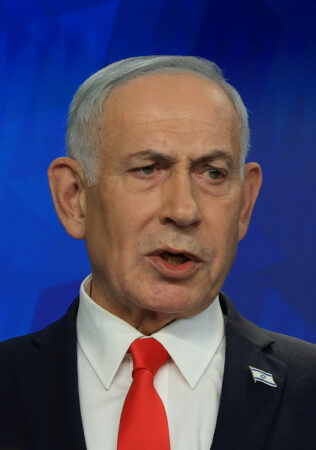
    U.S. intelligence agencies have warned the Trump administration that Israeli Prime Minister Benjamin Netanyahu is likely to take steps that will undermine President Donald Trump’s effort to reach a lasting peace deal with Iran, as the Israeli premier faces intense political pressure to continue waging his country’s war in Lebanon, current and former U.S. officials said.

    Israel appears intent on maintaining military operations against Iran’s proxy Hezbollah in Lebanon, an aim that would flout a core element of the fledgling agreement that calls for an end to hostilities in that country, according to intelligence reports, including one circulated this week, said the officials.

    The analysis comes at a moment of growing tension between Netanyahu’s government and Trump administration officials, who have publicly warned Israel against launching attacks against Hezbollah that might derail Trump’s deal.

    On Friday, Israel launched airstrikes across southern Lebanon in response to a Hezbollah drone strike that killed four Israeli soldiers. As clashes continued, U.S. and Iranian officials said they postponed talks due to begin in Switzerland on Friday. Vice President JD Vance, who was to lead the U.S. delegation, postponed his trip.

    If Netanyahu redoubles his military campaign in Lebanon, he would not only threaten the framework for an agreement signed by the United States and Iran on Wednesday, but he could rupture the relationship with an American president that has been integral to his political fortune.

    Speaking at a news conference in France on Wednesday to announce the U.S.-Iran “memorandum of understanding,” Trump said that he has a “little dispute over Lebanon” with Netanyahu and has urged the Israeli leader to not “knock down a building every time somebody walks into it that’s from Hezbollah.”

    The new U.S. intelligence report concludes that in the face of national elections this fall, Netanyahu’s political survival is linked to showing his domestic audience that he will not withdraw troops from Lebanon and that he is intent on escalating the fighting with Hezbollah, said one U.S. official familiar with the report. The official, like others interviewed, spoke on the condition of anonymity because of the matter’s sensitivity.

    The U.S. intelligence report also describes Israel’s frustration with the terms of the Trump peace memorandum, which undermine its broader objective of maintaining maximum pressure on Tehran, according to a current and former official.

    The report conveys Israel’s perception that the agreement could constrain its ability to defend itself against Hezbollah, one former official said.

    Trump administration officials insist that the terms do not prevent Israel from retaliating against Hezbollah if fired upon and that Netanyahu’s concerns pale in comparison to the need to complete a deal and reopen the Strait of Hormuz to stave off a global economic crisis.

    The report reflected that any suspension of hostilities or withdrawal from Lebanon will be seen in Israel as a defeat for Netanyahu, said the current official.

    “Israeli military activity in Lebanon is for the sole purpose of defending Israeli citizens from continuous attacks by Hezbollah,” said a senior Israeli government official, speaking on the condition of anonymity according to the government’s protocol, in response to a request for comment about the U.S. intelligence analysis.

    Popular opinion in Israel remains highly supportive of efforts to dismantle Hezbollah, the Iranian proxy group that joined its partner, Hamas, in attacking Israel with rockets in October 2023.

    Tens of thousands of Israelis displaced from their homes in the country’s north by drones and missile strikes have demanded that Netanyahu decimate Hezbollah, and he has come under withering criticism from across the domestic political spectrum for failing to eliminate the militant threat.

    Fully 70% of Jewish Israelis support intensifying the fight against Hezbollah, according to a May poll by the Institute of National Security Studies, a leading Israeli think tank, and Israeli political analysts widely say that a military pullback would be interpreted by voters as a sign of defeat.

    Even if Israel does not escalate fighting in Lebanon by bombing the southern suburbs of Beirut, Hezbollah’s seat of power, its refusal to withdraw troops from the country’s south is likely to doom the fragile accord between the U.S. and Iran, a second U.S. official said, offering an independent analysis.

    “Continuing to occupy part of Lebanon is a recipe for disaster,” said the official. “Without a full Israeli withdrawal, the likelihood of resumed hostilities between the [Israeli military] and Hezbollah is all but certain.”

    Israeli cabinet officials are standing their ground. “For every tear shed by an Israeli mother, a thousand Lebanese mothers should cry. All of Lebanon should burn,” National Security Minister Itamar Ben Gvir said Friday on social media.

    Netanyahu is risking “huge friction” with Trump, who undertook the war with Iran on Feb. 28 at the Israeli leader’s urging and soon found himself mired in a conflict that has cost tens of billions of dollars, sent global gas prices soaring, and saw the deaths of 13 U.S. troops, said Danny Citrinowicz, a former Israeli military intelligence analyst.

    “Bibi’s in a very tough situation,” said Citrinowicz, now senior researcher at the Tel Aviv-based Institute for National Security Studies, using the nickname of the Israeli prime minister. “He’s seeing his greatest rival, the Iranian regime, being strengthened by the U.S. administration — and he cannot do anything about it.”

    On two consecutive weekends this month, Netanyahu launched airstrikes against Beirut in response to Hezbollah provocations that threatened to jeopardize Trump’s fragile deal. The strike on June 7 triggered Iran to launch ballistic missiles in retaliation, and tensions were defused only when the White House intervened. Israel struck Beirut again Sunday, hours before the Trump administration pushed through the memorandum of understanding with Tehran.

    Even after the deal was signed, Netanyahu and his allies have remained defiant, insisting they will not withdraw troops from southern Lebanon and would continue carrying out strikes even if that angered Trump.

    The White House threw a brushback pitch.

    “Donald J. Trump is the only head of state in the entire world who is sympathetic to the nation of Israel at this moment in time, and he happens to be the head of state of the world’s superpower,” Vice President JD Vance told reporters in the White House press briefing room Thursday. “If I was in the cabinet of the Israeli government, I might not be attacking the only powerful ally that I have anywhere left in the entire world.”

    The Israel Defense Forces occupy more than 200 square miles of Lebanese territory and have forced more than 1 million residents from their homes — though some have returned — to create what it calls a depopulated “security zone.” More than 3,000 people have been killed by the Israeli campaign since it began in mid-March, according to Lebanese authorities.

    “We will stay in the Lebanon security buffer zone for as long as necessary,” Netanyahu told reporters in Jerusalem this week. On some issues, “we see less eye to eye,” Netanyahu said, referring to his relationship with Trump.

    Harrison Mann, a former U.S. Army officer who served as an analyst at the Defense Intelligence Agency, said the U.S. intelligence reporting captures a key incentive driving Netanyahu’s policy decisions.

    “Permanent war — and territorial expansion — have been the animating forces of Israeli politics for years. It’s no surprise that with elections coming up, Netanyahu has to prove he can do these better than his opponent,” Mann said.

    But Trump has leverage over Israel.

    “The U.S. can cut off munitions, jet fuel, and maintenance support, limiting the scope of any Israeli offensive, freeze critical intelligence sharing, or withdraw U.S. forces currently deployed to project Israeli airspace, raising the cost of any Israeli war,” Mann said.

    U.S. presidents have largely avoided such actions, though some have taken notable steps during moments of tension with the Israeli government.

    President Dwight D. Eisenhower threatened Israel with sanctions if it didn’t remove troops from the Sinai Peninsula in 1956. President Ronald Reagan delayed the delivery of advanced F-16 fighter jets in 1981 in response to Israel’s surprise bombing of an Iraqi nuclear reactor. And President George H.W. Bush withheld housing loan guarantees in an effort to force Israel to stop building new Jewish settlements in the West Bank and Gaza.

    “If you ask me, ‘Has an American president ever threatened to impose real costs and consequences on Israel in real time?’ the answer would be no,” said Aaron David Miller, a senior fellow at the Carnegie Endowment for International Peace who has advised both Democratic and Republican administrations.

    But if Iran does not constrain Hezbollah‘s attacks on northern Israel, “I don’t care what Trump says, Netanyahu is going to respond,” he said.

  • EU leaders squabble over outreach to Moscow as Ukraine war rages on

    EU leaders squabble over outreach to Moscow as Ukraine war rages on

    BRUSSELS — European Union leaders have been unable to agree on setting up a back channel with Moscow to ensure that the bloc’s interests are protected should progress be made in negotiations to end Russia’s war on Ukraine, some of them said on Friday.

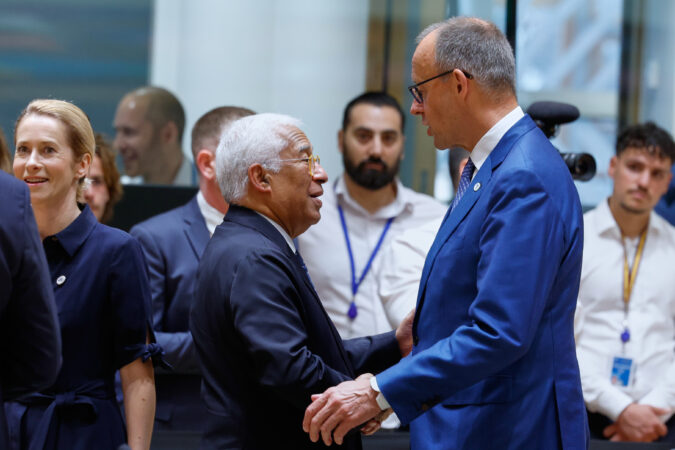
    European Council President António Costa, who chaired their two-day summit in Brussels this week, had directed his office to reach out to the Kremlin and proposed a senior official to make contact. Costa said his aim was not to mediate or set up a parallel negotiating track to the one led by the United States, which is making little progress.

    “We needed to immediately establish this direct contact,” Costa said, clarifying that Brussels would not seek to mediate in negotiations but rather open communications.

    “We cannot depend only on others to interpret Russian messages and we must be able to convey directly to Russia our own messages,” he added.

    European Commission President Ursula von der Leyen said she supported Costa’s approach because “our entire continent is at risk, and this is why Europe must be one of the architects of a just and lasting peace.”

    An unresolved disagreement over diplomacy

    Debate has been swirling around Europe in recent months about whether to appoint a mediator for talks with Russia to help get things moving again, but this has been largely rejected as many believe that Russian President Vladimir Putin would be unlikely to negotiate anyway.

    Instead, the 27 EU countries have focused on concessions that Russia should make to secure peace.

    German Chancellor Friedrich Merz stressed that peace negotiations must ultimately be conducted by Ukraine, Russia, Europe, and the U.S.

    “Who speaks for the European Union is something we don’t need to decide on today,” he said. “We will decide on that when talks come about.”

    He added that Costa has “an important to role to play” as president of the European Council, representing the EU, preparing and organizing summits, and “we don’t need to make decisions going beyond that at the moment.”

    Merz highlighted efforts to coordinate diplomacy by the so-called E3 group of countries — Germany, France, and Britain — a format that he said came about “at the explicit wish of Ukraine.”

    French President Emmanuel Macron said “Europeans are not mediators” in the negotiations but that “Costa, when the competencies are defined, will have a place.”

    Margus Tsahkna, foreign minister of Estonia — a nation on the EU’s eastern flank that has faced drone incursions and was once occupied by the Soviet Union — said that “Europe must not assume the role of a neutral mediator” but instead buttress Ukraine’s position to “force the Kremlin into serious negotiations.”

    Some nations support Costa’s backchannel proposal

    As European leaders left overnight after the summit wrapped up, Belgian Prime Minister Bart De Wever joked that Costa would be the envoy to Moscow.

    “I was just talking about you, António,” De Wever said while laughing and shaking Costa’s hand. “I was full of praise, saying you are the only one who can represent us and that we will send you to Moscow.”

    Irish Prime Minister Micheál Martin said that “opening up a channel is not a mistake in our view, and I trust António Costa.”

    “What was very clear last evening is that any negotiations would have to be first and foremost between Ukraine and Russia, but there are no indications that Russia is coming to the table at all,” he said.

    Speaking to reporters, Czech Prime Minister Andrej Babiš said the leaders had failed at the summit to resolve their differences over the approach overnight. “Europe is unable to agree even on whether there will be negotiations or who will lead them,” he said.

    Russia responds publicly to the overture

    Putin has tried to cut out Europe and Kyiv from negotiations with the U.S. over Ukraine’s future. But the Kremlin said on Friday it was “ready for contact” with Europe, on the condition it abandon its desire to talk to Moscow from the position of force.

    At the same time, Russian Foreign Minister Sergey Lavrov argued that the EU can not be an impartial peace broker. He again rejected Western claims that Moscow was harboring plants to attack Europe as “provocation” and “nonsense” while warning that Europe’s military buildup poses growing security threats.

    “A direct confrontation between NATO and Russia could rapidly escalate into an exchange of nuclear strikes, with catastrophic consequences,” Lavrov said in an essay released by the Russian Foreign Ministry.

  • Comedy trailblazer Tom Dreesen, Sinatra’s longtime opening act, dies at 86

    Comedy trailblazer Tom Dreesen, Sinatra’s longtime opening act, dies at 86

    LOS ANGELES — Tom Dreesen, who along with partner Tim Reid formed one of America’s first interracial stand-up comedy duos and later spent years as Frank Sinatra’s opening act, died Wednesday. He was 86.

    Dreesen died at his home in Los Angeles, according to publicist Lori De Waal. A cause of death was not provided.

    After meeting in Chicago, Dreesen and Reid, who was Black, formed “Tim and Tom” in 1969. Against a backdrop of simmering racial tension, they used humor to address social issues and promote understanding between audiences of different backgrounds. They worked together until the mid-1970s. Reid went on to solo success playing DJ Venus Flytrap on the popular TV sitcom WKRP in Cincinnati, where Dreesen was a guest star.

    “When I was a kid I found an album he and his comedy partner did called Tim and Tom and took it home and played it and it was one of the albums that changed the course of my life. So great,” comedian and filmmaker Mike Binder wrote on X.

    After splitting with Reid, Dreesen honed a solo comedy act, making over 500 national TV appearances, including 60 visits to The Tonight Show Starring Johnny Carson. He also was a frequent guest and sometime guest host on The Late Show with David Letterman. Their friendship dated to the early 1970s when both worked at the Comedy Store in West Hollywood, Calif.

    Dreesen’s final TV appearance came last week on Comics Unleashed with Byron Allen, which replaced Stephen Colbert’s canceled CBS late-night show.

    Dreesen was Sinatra’s opening act for 14 years and became close with the entertainer.

    “If he loved you, he worshipped the ground you walked on,” Dreesen told the Desert Sun newspaper in 2014. ”In a lot of ways, he was like a father to me. I didn’t have a father that really cared that much where I was and what I did. But Frank would give me advice and counsel, and then he was a buddy in a lot of ways. I thought the world of him.”

    Dressen also toured with Sinatra’s fellow Rat Pack member Sammy Davis Jr., as well as Liza Minnelli, Smokey Robinson, Gladys Knight, and Tony Orlando.

    “He was one of the most brilliant comedians of all time. Tonight, he’ll once again be opening for Dean, Frank and Sammy,” Deana Martin, a daughter of Dean Martin, posted on X.

    In 2008, Dreesen co-wrote the book Tim and Tom: An American Comedy Act in Black and White and in 2020 he authored his memoir.

    Dreesen acted in such TV shows as Columbo, Murder, She Wrote, and Touched by an Angel. His film roles included Spaceballs, Man on the Moon, and Trouble With the Curve, as well as the HBO movies The Rat Pack and Lansky.

    Dreesen was active in charitable work, motivational speaking, and veterans’ causes, including serving as ambassador for the Gary Sinise Foundation.

    “America lost one of our great comedians and patriots, and I lost a dear friend,” Sinise posted on X.

    He was born on Sept. 11, 1939, in Chicago and raised as one of eight children in suburban Harvey. He enlisted in the U.S. Navy at age 17 and after getting out in 1960 he returned home to work a series of jobs, including selling insurance.

    Dreesen is survived by daughters Amy and Jennifer from his marriage to Maryellen Subock, which ended in divorce in 1984, as well as seven grandchildren. He was preceded in death by his son Tommy.

  • Friction between Trump and Republican senators is growing before the pivotal midterm elections

    Friction between Trump and Republican senators is growing before the pivotal midterm elections

    WASHINGTON — The relationship between President Donald Trump and Senate Republicans neared a breaking point this week as he upended their efforts to speedily confirm one of his own nominees and said he would not sign the renewal of a key surveillance law unless they agree to new terms.

    Trump’s overnight social media post Wednesday that he was delaying Jay Clayton’s nomination to become national intelligence director, just hours before the U.S. attorney’s confirmation hearing, further strained relations between the Senate and White House that have been worsening for weeks. Later that day, some Republican senators who have been hesitant to challenge the president directly on the Iran war were blunt in their criticism of his deal to end it.

    “This is the worst foreign policy blunder in decades,” Sen. Bill Cassidy (R.,La.) said in a post on X.

    The open tensions are an almost complete reversal from a year ago when Senate Republicans worked closely with Trump on a complicated effort to push through his massive package of spending and tax cuts.

    At the time, criticism of the president was almost nonexistent among Republicans on Capitol Hill, and they planned to highlight passage of that bill in the midterms. But as the November election draws closer and Republicans are trying to defend their majorities, Trump is instead needling Congress with his demands and reversals, driving several Republican senators to disparage his actions publicly for the first time.

    “I think somebody’s not dialing the president into the complexities of what he’s done here,” Sen. Thom Tillis (R., N.C.) said Wednesday after Clayton’s confirmation was postponed. “I mean, my God.”

    The slow unraveling of what once seemed like an airtight alliance between the executive and legislative branches in a Republican-led Washington extends to their policy priorities.

    Trump appears to have lost interest in most of the GOP agenda and has become almost singularly focused on his voting legislation to require proof of citizenship, which has almost no chance of passing. At the same time, he has asked members of Congress to fund parts of his White House ballroom project, allow a temporary intelligence director that none of them like, and cede their powers on the Iran war.

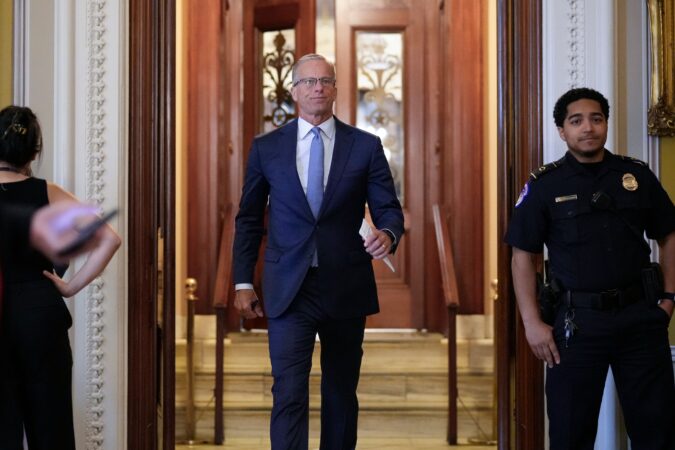
    The growing rift has brought much of the Senate’s business to a halt and put Republicans who are up for reelection this year on the defensive. It has also put pressure on Senate Majority Leader John Thune, who has been up-front with Trump about what he can and cannot do in the Senate.

    Trump pressures Thune on voting bill

    Trump has pressured Thune relentlessly to scrap the filibuster and pass the strict proof-of-citizenship legislation, called the SAVE America Act. Thune (R., S.D.) has told Trump publicly and privately that the votes are not there for either step. Still, Trump has kept up the push.

    In a social media post Thursday, Trump said he would be “the last Republican president” if the voting bill does not pass.

    “Senate Majority Leader John Thune, and the Republican Senate, must not let this ‘carnage’ happen,” Trump said. “They will go down on the wrong side of History, as will all Republicans who just stood by and watched.”

    Nonetheless, Trump has yet to go after the well-liked Republican leader on a personal basis, as he often did with Thune’s predecessor, Sen. Mitch McConnell (R., Ky.). Trump once called McConnell a ” dour, sullen, and unsmiling political hack.”

    Trump and Thune talk frequently, even as Thune is sometimes giving the president news he does not want to hear. As Trump pushed for the voting bill, Thune scheduled weeks of floor time to consider it, an effort to make clear that the Senate was supportive, even if the votes are lacking.

    Missouri Sen. Eric Schmitt, one of the president’s closest allies in the Senate, said he has never heard Trump say anything negative about Thune.

    “It’s a difficult position,” Schmitt said of Thune’s role in the Senate. “I think they have a good working relationship.”

    One of Thune’s closest allies, Republican Sen. Mike Rounds of South Dakota, said the even-keeled leader is the “right person at the right time.”

    “In the Capitol today, he is the stable force,” Rounds said. “In Washington, D.C., today, he is the stable force.”

    No signs of revolt among Senate GOP

    There were no signs of a revolt within the GOP conference for now, despite Trump’s pressure.

    Thune “has managed it better than anyone else could manage it,” said Cassidy, who has become a more frequent Trump critic since a primary loss to a Trump-backed challenger.

    Criticism of Trump has at times surfaced even among his closest Senate allies, especially with his proposed $1.776 billion settlement fund for his political allies and his pick for acting intelligence director, Bill Pulte, who has no known intelligence experience.

    But the rift with Trump has also stoked some new internal tensions.

    Several Republican senators criticized Sen. Mike Lee (R., Utah), who has waged an online campaign to eliminate the filibuster and pass the SAVE America Act, in a private conference lunch this week for stoking dissension within the party in an election year.

    Unbowed, Lee has kept up his social media campaign, including a post Friday on X in which he said that giving up because Republicans lack the votes is a “recipe for failure.”

    Texas Sen. John Cornyn, one of those who spoke out at the meeting, replied that it is Lee’s job to find the votes, “if you can.”

    “Can’t just complain about others,” Cornyn posted. “Prove us wrong.”

    Trump’s dwindling number of allies

    Some Senate Republicans have made clear they have no plans to separate themselves from Trump.

    As several of his colleagues criticized Trump’s agreement with Iran this week, first-term Sen. Bernie Moreno (R., Ohio) aggressively defended it on social media.

    “Let’s get the Nobel Peace Prize ready!” Moreno posted on X.

    But Trump has far fewer of those Senate allies than he did when they narrowly passed the tax and spending cuts legislation a year ago. That is in part because he has picked off some of the most loyal Republican votes himself.

    Both Cassidy and Cornyn lost in primaries last month after Trump endorsed their opponents. Tillis announced he was not running for reelection last year after Trump repeatedly criticized him on social media.

    Now all three have become frequent critics.

    Shortly after his election loss, Cornyn posted on social media a fable about a frog and a scorpion. The scorpion asks the frog to carry it across a river, according to the fable, and then stings the frog in the middle of the river, “dooming them both.”

    “The dying frog asks the scorpion why it stung despite knowing the consequence,” Cornyn’s post read. “To which the scorpion replies: ‘I am sorry, but I couldn’t help myself. It’s my character.’”

  • Secret vetting and blocked promotions: Inside Hegseth’s war on diversity

    Secret vetting and blocked promotions: Inside Hegseth’s war on diversity

    WASHINGTON — The Navy’s top leadership believed that Rear Adm. Stephen D. Barnett was by far the best choice to lead the command that oversees the Navy’s bases at home and abroad.

    He had more experience than the other candidates and had successfully managed the aftermath of one of the Navy’s biggest messes, a fuel spill that contaminated an aquifer on a base in Hawaii, sickening thousands.

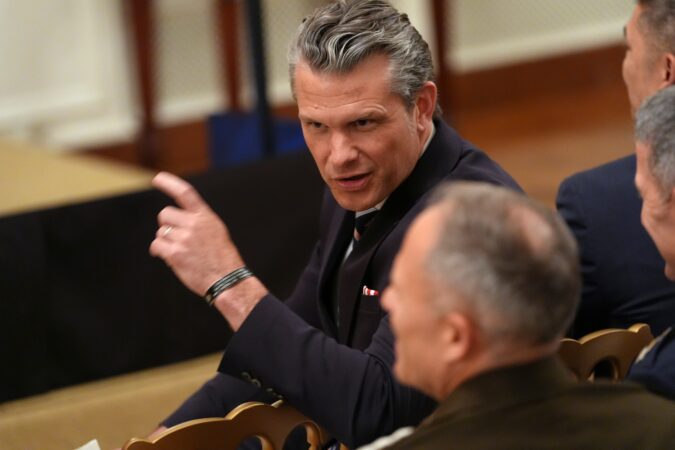
    The final decision this spring fell to Defense Secretary Pete Hegseth.

    To many in the Navy, Barnett’s promotion seemed like a foregone conclusion.

    The officer, however, had a big strike against him. Like other Black military leaders, he had been encouraged by his superiors to help the Navy recruit and retain minority officers, who remain significantly underrepresented in the force. His years-old remarks on the importance of diversity had been flagged in a secret vetting process designed to weed out senior leaders whom Hegseth and his team pegged as a problem.

    Instead of Barnett, Hegseth selected a white officer who was the Navy leadership’s third choice.

    So far this year, Hegseth has blocked the promotions of at least 40 senior officers to general and admiral ranks. About half of those are women or members of minority groups.

    This article, based on interviews with 15 current and former military and administration officials, is a look inside the process Hegseth and his team have used to halt the advancement of senior officers for reasons that have nothing to do with fighting wars or job performance.

    It tells the story of one Black officer — Barnett — whose blocked promotion shocked and angered senior Navy officials.

    The officials discussed sensitive personnel matters on the condition of anonymity. Barnett, who is expected to retire, declined a request for comment. A Pentagon spokesperson did not respond to a detailed list of questions.

    In books and speeches, Hegseth has maintained that the Pentagon’s push over the past decade to build a more diverse force had elevated women and minority officers to senior jobs that they had not earned.

    “When I think about my career in uniform, in almost every instance where there has been poor leadership or people in positions they’re not qualified for, it was based on either the reality or the perception of a ‘diversity hire,’” Hegseth, a former major in the Army National Guard, wrote in his 2024 book The War on Warriors.

    As defense secretary, he has promised to install a new promotion system that will be “ruthlessly meritocratic” and “focused squarely” on “warfighting ability.”

    In practice, though, his approach has made it harder for Black and female officers to get promoted to senior ranks, even when their records are exemplary.

    Such was the case with Barnett. In 2021, he was invited to speak at a Black History Month event at a naval base in Maryland.

    He talked about his career as a flight officer on Navy P-3 Orions, which track enemy submarines. “Just one generation before me, it was nearly unthinkable for a Black person to become a naval aviator,” he said.

    He reflected on his mentors, downplaying the importance of race. “What helped me was people who didn’t look like me,” he said.

    And he spoke about building a force that better represented the nation it serves.

    “As the country becomes more diverse, it makes sense for our military to become more diverse,” Barnett said. “Monolithic organizations cannot and will not survive.”

    At the time, the country was wrestling with the aftermath of the death of George Floyd, an unarmed Black man who was murdered by a white Minneapolis police officer nine months earlier. The Navy had just released a 142-page report with recommendations to remove barriers that had held back high-performing women and minority sailors.

    Five years later, Hegseth was leading the Pentagon. Now Barnett’s remarks were being cited as a reason to deny him a promotion that senior Navy officials said he deserved.

    “It’s Black over white”

    Hegseth has argued that the troops most likely to suffer discrimination in the military are white.

    He traced the problem to the protests and racial reckoning that followed Floyd’s murder. The Pentagon’s generals and admirals, he wrote in his 2024 book, started searching for evidence of institutional bias that did not exist. In the process, he argued, they destroyed the military’s meritocratic culture.

    “It’s Black over white. Female over male. Gay over straight,” Hegseth wrote.

    Internal Pentagon studies told a different story. Nearly a third of Black U.S. military troops reported experiencing racial discrimination, harassment, or both during a 12-month period, according to a survey conducted during President Donald Trump’s first term.

    In his book, Hegseth dismissed such data.

    As secretary of defense, he has fired or sidelined more than two dozen generals and admirals. Among those dismissed were Gen. Charles Q. Brown Jr., the second Black man to serve as chair of the Joint Chiefs of Staff, and Adm. Lisa Franchetti, the first woman to lead the Navy.

    Those ousters were all publicly announced. The extent of Hegseth’s vetoing of generals and admirals selected for promotion has remained secret until now.

    By law, one-star and two-star officers are chosen by promotion selection boards made up of senior military officers. The meetings are so confidential that board members are not permitted to tell others that they are part of the process.

    Last year, Hegseth and his top aides ordered the Army, Navy, Air Force, and Marine Corps to do online searches of the officers selected by the boards, to look for photos, videos, or news articles that might draw Hegseth’s ire, current and former defense officials said.

    The officials undertaking the reviews hoped that if they could show that the officers had been following previous Pentagon policies that Hegseth would allow their nominations to go forward to the White House and Congress for final approval.

    Inside the Pentagon, such material was referred to as “D-ROG,” short for derogatory material.

    Once the reviews led by each military service were complete, Hegseth’s staff conducted their own searches to make sure that the services had not missed or intentionally ignored anything.

    It was not clear whether Hegseth had the authority to pull names off the list. Congress had entrusted management of one-star and two-star promotion boards to the service secretaries, not the secretary of defense.

    The first test case was with an Army one-star promotion board. Last fall, Hegseth ordered Army Secretary Daniel P. Driscoll to remove two Black and two female officers from a 29-person promotion list. Driscoll, citing their decades-long records of exemplary service, repeatedly refused. The standoff lasted months.

    Finally, in March, Hegseth removed the officers’ names from the list and forwarded it to the White House.

    Around the same time, a senior aide to Hegseth accused the Navy, in a handwritten note, of promoting candidates that the defense secretary believed should have been blocked.

    Hegseth’s aides wanted the Navy to form a new promotion board that would choose a new list, Navy officials said.

    The Navy pushed back. Hegseth instead removed nine officers from the Navy’s original 31-person list.

    Soon, Hegseth was pulling officers from nearly every active duty and reserve officer promotion list. Officers who had spoken publicly about the importance of diversity in the ranks were removed from lists. So too were those who had strongly urged their troops to get the COVID vaccine.

    Hegseth has removed a total of 32 officers from Air Force and Navy one-star and two-star promotion lists, defense officials said. The only Black officer and the only female officer were removed from a Marine Corps promotion list. The two Marines’ promotions are in limbo.

    Much of the vetting process has remained shrouded in secrecy. In some instances, officers up for promotions were not told that they had been removed from the lists. Hegseth also has refused to give Congress the names of officers pulled from the lists, officials said. The Senate’s version of the 2027 defense bill would require Hegseth to provide “a written justification and notification” when removing an officer from a promotion list.

    Even the services often are not told why individual officers are vetoed.

    Military officials, though, said they have noticed patterns. Officers who had commanded aircraft carriers or amphibious assault ships have been especially vulnerable. The reason: Those ships have public affairs sailors on board who documented their skippers participating in events related to diversity or the COVID vaccine.

    Now those articles, videos, and photos, posted on the Navy websites, were being used against them, current and former Navy officials said.

    Among those targeted was Vice Adm. Sara Joyner, a three-star fighter pilot who military officials wanted to move to a higher-profile job in the Pentagon.

    Joyner had spoken at events designed to encourage and mentor female aviators and submariners. She also had appeared in a Navy recruiting ad describing her childhood and her trailblazing career as the first woman to command a carrier air wing.

    “One day, everyone will see that I’m not just a girl with a dream,” her character in the 2021 ad said. “I’m a sailor with one.”

    To Hegseth, the appearances and the ad were a big problem.

    Unlike with the one- and two-star ranks, there are no promotion boards for most three-star and four-star generals and admirals. Typically, the service secretaries and service chiefs identify their preferred candidate among two or three choices and present them to the chair of the Joint Chiefs of Staff, who can weigh in. Then the candidates are sent to the defense secretary, who picks a nominee from the shortlist.

    Joyner worked for Gen. Dan Caine, the chair of the Joint Chiefs of Staff, running a team that conducted classified war games and assessments of new weapon systems. Caine urged Hegseth to nominate her for the new position, current and former officials said. He also asked John Phelan, then the Navy secretary, to help persuade Hegseth to reconsider her promotion.

    Their interventions failed. Senior officers who are not promoted are usually expected to leave. The Times was unable to reach Joyner for comment. She retired last fall.

    A high-flying Navy career

    When Barnett joined the Navy in 1991, he never expected he would become an admiral. He didn’t come from a family with a deep history of military service and had not attended the U.S. Naval Academy.

    In 2023, he shared the story of his life and career in an interview with his hometown radio station in Columbia, Tenn.

    Barnett’s interest in the Navy was piqued by one of his fraternity brothers at Tennessee State University, a historically Black college. At the time, he was married with a child. The Navy offered a good salary, adventure, healthcare, and stability.

    “So, one day after thermodynamics class, I joined,” he told the radio host. “I kind of did it on a whim.”

    Barnett, who went by the call sign “Big Daddy,” recalled how much he enjoyed being part of a team. His P-3 surveillance plane had a crew of 11 sailors who flew sorties lasting as long as 10 hours. He rose through the ranks flying more than 250 missions in Iraq and serving in increasingly sensitive commands.

    Then, in 2021, the Navy’s Red Hill Bulk Fuel Facility leaked petroleum into an aquifer in Hawaii that tens of thousands of residents depended on for their drinking water.

    Adm. Samuel Paparo, who was serving as commander of the U.S. Pacific Fleet, asked Barnett to rush to Joint Base Pearl Harbor-Hickam in Hawaii to lead the cleanup.

    “I only need you there for 12 months,” he recalled Paparo telling him. Barnett remained for more than three years, working to decontaminate the aquifer and win back the trust of scared and angry residents.

    In a statement, Sen. Mazie Hirono (D., Hawaii) recalled him as “an important and trusted partner.”

    “He was proactive, communicative, and professional,” she said.

    Barnett’s work fixing Red Hill and experience overseeing three large regional commands made him the Navy’s top pick for a third star and the job running its bases.

    Before senior Navy officials recommended Barnett for the promotion, they searched the internet for anything in his public record that might offend Hegseth. Navy officials hoped that, if they put Barnett’s remarks in context, Hegseth might overlook them.

    Barnett had spoken at a few Black History Month events and talked in interviews about the legacy of service members, like Doris “Dorie” Miller, who became the first Black recipient of the Navy Cross for his heroics at Pearl Harbor. A photo of Miller hung in Barnett’s Hawaii office.

    In 2018, Barnett had appeared at a Navy-sponsored event during LGBTQ Pride month. “Together, we can make the world safer, freer, and more equal for everyone,” he said, according to an article posted on a Navy website.

    His statements were in line with Pentagon policy at the time, the Navy concluded.

    “If one were scrutinizing with extreme sensitivity, the only potential ‘signals’ are those of empathy and inclusivity,” according to an internal review obtained by the New York Times. “His digital footprint is remarkably disciplined and issue focused.”

    Phelan, the Navy’s senior civilian leader, and Adm. Daryl Caudle, its highest-ranking officer, picked Barnett to lead Navy Installations Command. Caine agreed.

    The final decision, though, did not fall to the Navy or the chair. It was made by Hegseth, who decided that Barnett should not advance.

    This article originally appeared in the New York Times.

  • As Juneteenth is celebrated across the U.S., Obama’s presidential center opens in Chicago

    As Juneteenth is celebrated across the U.S., Obama’s presidential center opens in Chicago

    As people gathered across the U.S. to celebrate Juneteenth on Friday, former President Barack Obama and former first lady Michelle Obama welcomed the first visitors to his presidential center.

    The Obamas, joined by former Reading Rainbow host LeVar Burton, also read Where the Wild Things Are to 25 school children at the Chicago Public Library branch inside the center. When the former president read Maurice Sendak’s line about being “king of all the wild things,” Michelle Obama interjected with, “Although there were no kings,” to applause.

    Later, awed guests shook hands with the Obamas against the backdrop of a colorful, 38-foot-tall painting depicting a map of Chicago stretching to the ceiling, inspired by Carl Sandburg’s 1914 poem about the city: “stormy, husky, brawling, City of the Big Shoulders.”

    As the last of the first group of guests passed through, the Obamas quickly exited, and the museum opened its doors to the rest of the visitors.

    Located on a sprawling campus on Chicago’s South Side, the center honoring the nation’s first Black president has been designed to inspire people to make the change they want to see in their own communities. It’s the kind of contemplation that also comes as Americans gathered for Juneteenth, which celebrates the end of slavery in the U.S.

    The holiday marks June 19, 1865, when Union troops arrived in Galveston, Texas, at the end of the Civil War with an order declaring the state’s enslaved people to be free with “absolute equality.” By then, 2½ years had passed since the Emancipation Proclamation declared the freedom of enslaved people in the South.

    “Juneteenth represents not just a commemoration of the end of slavery but it’s also part of the ongoing struggle for absolute equality and that ideal in American life,” said W. Caleb McDaniel, a Rice University professor and author of the Pulitzer Prize-winning book Sweet Taste of Liberty.

    The center’s public opening arrives as a symbolic convergence of legacy and liberation. The nation is deeply divided politically and grappling with renewed questions about the arc of racial progress as the Supreme Court hollowed out the Voting Rights Act, endangering Black political representation in Congress.

    The history of Juneteenth

    This is the fifth year since Juneteenth was designated as a federal holiday by former President Joe Biden, who served as Obama’s vice president. But the celebrations, which began in Texas and then spread across the country, have a rich and long history in Black America, with the day often spent gathering for picnics and cookouts.

    The holiday — a combination of “June” and “nineteenth” — marks the day when U.S. Maj. Gen. Gordon Granger and his troops arrived in the Texas port city with the declaration of freedom in General Order No. 3.

    As the third year of the Civil War neared, President Abraham Lincoln had issued the Emancipation Proclamation declaring the freedom of “all persons held as slaves” in the still rebellious states of the Confederacy. For many, it did not mean immediate freedom but a promise of liberation, to be secured with a Union victory.

    “It really required the force of arms and the success of U.S. armies to enforce the Emancipation Proclamation,” McDaniel said.

    About six months after Granger’s arrival in Galveston, the 13th Amendment abolishing slavery nationwide was ratified.

    Celebrations across the nation this year

    Juneteenth’s birthplace celebrated with a daylong gathering at a Galveston park with music and fireworks, a parade, and a worship service in a historic Black church. Nearby Houston lined up musical artists and a domino tournament at Emancipation Park, established in 1872 by a group of formerly enslaved men.

    Hundreds of other cities across the U.S. announced events over the long weekend, including a parade in Atlanta, a bike ride in Los Angeles, and a festival on Martha’s Vineyard.

    Several cities across the U.S. hosted walks named for Opal Lee, the Texas woman who pushed for years to make Juneteenth a federal holiday. Participants walk 2½ miles to symbolize the 2½ years it took for the Emancipation Proclamation to be enforced in Texas. Lee, known as the “grandmother of Juneteenth,” turns 100 this year.

    Reflecting on a continuing struggle

    Black Texans embraced the date of Granger’s arrival as one to celebrate, even as the Ku Klux Klan was established in Texas by 1868. By the 1880s, “it was difficult to find a significant community in Texas where it wasn’t being marked by African Americans,” McDaniel said.

    “They made it a community celebration, they made it a celebration of not only freedom but also a demonstration of community empowerment and institution-building,” he added.

    Corey D.B. Walker, dean of Wake Forest University’s divinity school, said the holiday offers a way to recognize the nation’s “complex history” and what it means to be a U.S. citizen, especially amid efforts by President Donald Trump’s administration to undermine the retelling of Black history.

    “I think it really reminds people the importance of understanding a fuller, more robust portrait of our nation’s history and the many contributions of many individuals who have contributed to America’s experiment with democracy,” Walker said.

  • Trump administration backs off plan to end ocean monitoring

    Trump administration backs off plan to end ocean monitoring

    WASHINGTON — The Trump administration is abandoning its plan to dismantle a $368 million ocean monitoring system critical to understanding climate change and marine ecosystems, bowing to a bipartisan backlash on Capitol Hill.

    The National Science Foundation had said in May that it would begin this month to remove hundreds of underwater instruments that collect data on coastal flooding, marine heat waves, and other climate and weather events.

    But the agency announced Thursday that it will pause efforts to take apart the system, known as the Ocean Observatories Initiative, while convening an expert panel to determine its future.

    “Effective immediately, NSF will not proceed with further removal or descoping of equipment,” the agency said in a statement.

    The Senate passed a measure Wednesday that would block the government from dismantling the system, with lawmakers in both parties warning that the action would be illegal and would threaten the safety of coastal communities. The Trump administration had also tried to cut the program’s funds the last two years, but Congress restored the money both times.

    In May, the science foundation had said it would send ships to start pulling up instruments anchored to the seafloor off the coasts of Oregon, Washington state, Alaska, North Carolina, and an area between Greenland and Iceland known as the Irminger Sea.

    For the past decade, scientists have used data from these instruments to understand how the ocean is absorbing greenhouse gases from the atmosphere, how marine heat waves could affect fisheries, and how soon a vital ocean current could collapse.

    Fishermen have also checked the real-time, publicly available data on wind and wave conditions before heading to sea. And meteorologists have used these observations to improve forecasts of disasters like hurricanes and tsunamis.

    The National Science Foundation said Thursday that it already had pulled some buoys, sensors, and other instruments from the water off the coasts of Oregon and Washington state, but it was “developing plans to redeploy the equipment after servicing.”

    Edward Dever, a professor of oceanography at Oregon State University who helps manage the instruments off Oregon and Washington, said the agency had removed six of the area’s seven moorings, or deep-sea platforms equipped with sensors. He said finding boats to replace the moorings could take several months.

    “I believe we could have one mooring ready to go before the end of the summer and 1-2 others ready by fall,” Dever said in an email, adding, “Ships are generally scheduled about a year in advance. Scheduling cruises on short notice can sometimes be done, but it is a challenge.”

    The Senate on Wednesday passed the measure to preserve the system by unanimous consent, essentially an agreement by all senators to bypass debate. Though the measure faced an uncertain fate in the House, it was the latest moment when Congress flexed its power of the purse to thwart the Trump administration’s attempts to cut climate and environmental programs.

    The measure was sponsored by Sens. Jeff Merkley (D., Ore.) and Lisa Murkowski (R., Alaska). In an interview Thursday, Murkowski criticized the Trump administration for failing to consult Congress before beginning to remove some monitoring equipment.

    “NSF moved forward on their own, not only unilaterally, but really with no warning, no heads-up,” she said. “They didn’t even bother to check in,” she added, “and that’s where the real foul was.”

    Murkowski said fisheries in Alaska relied on the ocean data to determine how increasing temperatures were threatening certain species. She said other data was crucial to understanding El Niño, the powerful weather pattern that formed this month in the tropical Pacific and could supercharge extreme weather events around the globe.

    The National Science Foundation had said in May that dismantling the monitoring system would save $48 million in operating costs each year. But lawmakers had accused the administration of wasting the $368 million in taxpayer dollars that had funded the installation of the instruments in 2016. And the operating costs represent a tiny fraction of overall government spending.

    “Dismantling the OOI was supreme stupidity,” Merkley said in a statement Thursday.

    Rep. Zoe Lofgren of California, the top Democrat on the House Committee on Science, Space, and Technology, welcomed the administration’s reversal but said she would continue fighting to save the system.

    “This pathetic scheme was illegal,” Lofgren said in a statement Thursday, adding: “My oversight team and I will be following closely what NSF does next. NSF’s next steps must be nothing short of replacing any of the instruments that have already been removed and ceasing all activities to descale until legitimate expert advice has been sought.”

    Backlash had also come from overseas. After the Trump administration announced the plan to dismantle the system, the European Union said it would bolster its own observation of the world’s oceans with an investment of 92 million euros ($107 million).

    Though that move had been planned long before the U.S. retreat, officials in Brussels emphasized the contrast.

    “Extremely worrying signals are coming from the other side of the Atlantic,” Costas Kadis, the EU’s commissioner for fisheries and oceans, said at the time.

    A spokesperson for Kadis did not immediately respond to a request for comment Thursday.

    This article originally appeared in the New York Times.