Category: Wires

  • NASA will return its moon rocket to the hangar for more repairs before astronauts strap in

    NASA will return its moon rocket to the hangar for more repairs before astronauts strap in

    CAPE CANAVERAL, Fla. — Grounded until at least April, NASA’s giant moon rocket is headed back to the hangar this week for more repairs before astronauts climb aboard.

    The space agency said Sunday it’s targeting Tuesday for the slow, 4-mile trek across Kennedy Space Center, weather permitting.

    NASA had barely finished a repeat fueling test Thursday, to ensure dangerous hydrogen fuel leaks were plugged, when another problem cropped up.

    This time, the rocket’s helium system malfunctioned, further delaying astronauts’ first trip to the moon in more than half a century.

    Engineers had just tamed the hydrogen leaks and settled on a March 6 launch date — already a month late — when the helium issue arose. The helium flow to the rocket’s upper stage was disrupted; helium is needed to purge the engines and pressurize the fuel tanks.

    “Returning to the Vehicle Assembly Building at Kennedy is required to determine the cause of the issue and fix it,” NASA said in a statement.

    NASA said the quick rollback preps preserve an April launch attempt, but stressed that will depend on how the repairs go. The space agency has only a handful of days any given month to launch the crew of four around the moon and back.

    The three Americans and one Canadian assigned to the Artemis II mission remain on standby in Houston. They will become the first people to fly to the moon since NASA’s Apollo program that sent 24 astronauts there from 1968 through 1972.

  • EU says U.S. must honor a trade deal after court blocks Trump tariffs

    EU says U.S. must honor a trade deal after court blocks Trump tariffs

    BRUSSELS — The European Union’s executive arm requested “full clarity” from the United States and asked its trade partner to fulfill its commitments after the U.S. Supreme Court struck down some of President Donald Trump’s most sweeping tariffs.

    Trump has lashed out at the court decision and said Saturday that he wants a global tariff of 15%, up from the 10% he announced a day earlier.

    The European Commission said the current situation is not conducive to delivering “fair, balanced, and mutually beneficial” trans-Atlantic trade and investment, as agreed to by both sides and spelled out in the EU-U.S. Joint Statement of August 2025.

    American and EU officials sealed a trade deal last year that imposes a 15% import tax on 70% of European goods exported to the United States. The European Commission handles trade for the 27 EU member countries.

    A top EU lawmaker said on Sunday he will propose to the European Parliament negotiating team to put the ratifying process of the deal on pause.

    “Pure tariff chaos on the part of the U.S. administration,” Bernd Lange, the chair of Parliament’s international trade committee, wrote on social media. “No one can make sense of it anymore — only open questions and growing uncertainty for the EU and other U.S. trading partners.”

    The value of EU-U.S. trade in goods and services amounted to 1.7 trillion euros ($2 trillion) in 2024, or an average of 4.6 billion euros a day, according to EU statistics agency Eurostat.

    “A deal is a deal,” the European Commission said. “As the United States’ largest trading partner, the EU expects the U.S. to honor its commitments set out in the Joint Statement — just as the EU stands by its commitments. EU products must continue to benefit from the most competitive treatment, with no increases in tariffs beyond the clear and all-inclusive ceiling previously agreed.”

    Jamieson Greer, Trump’s top trade negotiator, said in a CBS News interview Sunday morning that the U.S. plans to stand by its trade deals and expects its partners to do the same.

    He said he talked to his European counterpart this weekend and hasn’t heard anyone tell him the deal is off.

    “The deals were not premised on whether or not the emergency tariff litigation would rise or fall,” Greer said. “I haven’t heard anyone yet come to me and say the deal’s off. They want to see how this plays out.”

    Europe’s biggest exports to the U.S. are pharmaceuticals, cars, aircraft, chemicals, medical instruments, and wine and spirits. Among the biggest U.S. exports to the bloc are professional and scientific services like payment systems and cloud infrastructure, oil and gas, pharmaceuticals, medical equipment, aerospace products, and cars.

    “When applied unpredictably, tariffs are inherently disruptive, undermining confidence and stability across global markets and creating further uncertainty across international supply chains,” the commission added.

    As primarily a trading bloc, the EU has a powerful tool at its disposal to retaliate — the bloc’s Anti-Coercion Instrument. It includes a raft of measures for blocking or restricting trade and investment from countries found to be putting undue pressure on EU member nations or corporations.

    The measures could include curtailing the export and import of goods and services, barring countries or companies from EU public tenders, or limiting foreign direct investment. In its most severe form, it would essentially close off access to the EU’s 450-million customer market and inflict billions of dollars of losses on U.S. companies and the American economy.

  • Supreme Court put the brakes on Trump, after Congress helped him step on the gas

    Supreme Court put the brakes on Trump, after Congress helped him step on the gas

    The Supreme Court delivered a stinging rebuke Friday to President Donald Trump’s favorite instrument of economic and foreign policy power, by rejecting his claim that his presidential emergency authority allows him to unilaterally impose sweeping tariffs.

    Trump’s assertion that the 1977 International Emergency Economic Powers Act allowed him to put tariffs in place without any action by Congress was unprecedented, as are some of his other declarations of emergencies where there is no evidence they exist.

    Among the avalanche of executive orders he signed on his first day in office was one “declaring a national energy emergency” at a time of record U.S. oil and gas production and the lowest gasoline prices in years. Another emergency declaration deemed there to be an “invasion” and “widespread chaos” taking place on the southern border, even as Border Patrol statistics were showing the number of illegal crossings had dropped sharply and were lower than they had been at the end of Trump’s first term.

    But while Trump has far outpaced his modern predecessors when it comes to emergency declarations, presidents of both parties have used them in dubious ways to eliminate obstacles to their political agendas.

    President Joe Biden claimed the COVID-19 pandemic allowed him to cancel $400 billion in student debt, citing authority under the 2003 Heroes Act. That law allowed the education secretary to rewrite rules that apply to student loans during times of war or national emergencies but was meant to help military personnel serving in Iraq and Afghanistan. (The Supreme Court blocked Biden’s directive.)

    Congress shares a significant portion of the blame for presidential overreach, given that it has granted the chief executive no fewer than 150 statutory powers that become available upon the declaration of a national emergency, according to a tally by New York University Law School’s Brennan Center for Justice. Those emergency powers stretch across and beyond actions involving health and the environment, troop deployments, seizure of private property, even the dumping of infectious medical waste in ocean waters.

    Although it has always been recognized that the nation’s chief executives need flexibility to act in times of crisis, members of both parties have long been concerned that presidents can abuse their emergency powers.

    In 1976, Congress passed the National Emergencies Act, setting up more formalized procedures governing how presidents exercise them, including setting a renewable one-year expiration date for emergency actions.

    Presidents since then have made 91 emergency declarations under the act, more than half of which are still in effect. One of them — imposing economic sanctions on Iran — dates to the Carter administration.

    The law also specified that Congress could nullify an emergency declaration by passing a resolution in each chamber on a simple majority vote that would go into effect without the president’s signature.

    But the Supreme Court ruled that such resolutions were unconstitutional with its 1983 decision in INS v. Chadha. Congress, meanwhile, became lax even in exercising its enforcement and oversight authority that remained, said Elizabeth Goitein, senior director of the Brennan Center’s liberty and national security program.

    However, the legislative branch is not without other tools for reining in emergency actions, including cutting off funding or exercising more diligent oversight of them. Neither of which the Republican Congress has shown much inclination to do since Trump took office.

    “We have had decades of legislative fecklessness,” said Georgetown University law professor Stephen I. Vladeck. “Things have run totally off the rails in the last 13 months.” With Congress supine before Trump, “what you see is the increased proliferation of executive-judicial confrontation,” he added.

    Still, there have been stirrings of alarm in Congress at some of the emergency actions Trump has taken. Both the House and the Senate have voted to overturn his tariffs on Canada, although not by veto-proof majorities.

    During Trump’s first term, conservative Sen. Mike Lee (R., Utah) introduced what he called the Article One Act, after the section of the Constitution that sets out the role of the legislative branch. His bill would automatically end presidential emergency declarations unless Congress voted to extend the emergency.

    “If Congress is troubled by recent emergency declarations made pursuant to the National Emergencies Act, they only have themselves to blame,” Lee said in a statement when he introduced the bill. “If we don’t want our president acting like a king we need to start taking back the legislative powers that allow him to do so.”

    The bill, which he has subsequently reintroduced, has won bipartisan support.

    Rep. Chip Roy (R., Texas), who sponsored a companion measure in the House, said Friday that the Supreme Court decision on tariffs will not be enough to solve the problems that have arisen over presidential assertions of executive power.

    “The fact is, Congress is the one who made the mess out of all of this,” Roy said in an interview with Newsmax. “Congress needs to clean it up.”

  • Oman says next U.S.-Iran talks will be Thursday in Geneva

    Oman says next U.S.-Iran talks will be Thursday in Geneva

    DUBAI, United Arab Emirates — Oman’s foreign minister says the next round of talks between the United States and Iran will be Thursday in Geneva.

    Badr al-Busaidi said on social media Sunday he was pleased to confirm the development, “with a positive push to go the extra mile towards finalizing the deal.”

    Oman previously hosted talks and facilitated the latest round in Geneva last week.

    Iran’s top diplomat says he will meet with U.S. envoy Steve Witkoff on Thursday, following two rounds of indirect talks on the Islamic Republic’s nuclear program.

    Foreign Minister Abbas Araghchi also told CBS in an interview aired Sunday that a “good chance” remained for a diplomatic solution on the nuclear issue, adding it was the only matter being discussed.

    There was no immediate comment from the White House.

    Araghchi’s remarks came as new anti-government protests began in Iran, according to witnesses, as university students in Tehran and another city demonstrated around memorials for thousands of people killed in a crackdown on previous nationwide demonstrations about six weeks ago.

    The Trump administration has been pushing for concessions from its longtime adversary and has built up the largest U.S. military presence in the Middle East in decades.

    President Donald Trump warned on Friday that limited strikes against Iran are possible, even as Araghchi at the time said Tehran expected to have a proposed deal ready in the next few days.

    Araghchi told CBS Iran was still working on the draft proposal. He added that Iran has the right to enrich uranium. On Friday, he said his U.S. counterparts had not asked for zero enrichment as part of the latest round of talks, which is not what U.S. officials have said publicly.

    Both Iran and the U.S. have signaled they are prepared for war if talks on Tehran’s nuclear program fail. The latest round of talks was last week in Geneva, with little apparent progress.

    The U.S. has said Iran cannot have nuclear weapons or the capacity to build them and that it cannot enrich uranium. Tehran has long insisted that any negotiations should only focus on its nuclear program and that it hasn’t been enriching uranium since U.S. and Israeli strikes on Iranian nuclear sites in June.

    Although Iran insists its nuclear program is peaceful, the U.S. and others suspect it is aimed at eventually developing weapons.

    Talks were deadlocked for years after Trump’s decision in 2018 to unilaterally withdraw the U.S. from Iran’s 2015 nuclear deal with world powers. Since then, Iran has refused to discuss wider U.S. and Israeli demands that it scale back its missile program and sever ties to armed groups.

    New protests in Iran

    Meanwhile, Iran’s state news agency said students protested at five universities in the capital, Tehran, and one in the city of Mashhad on Sunday. The scattered protests erupted Saturday at universities following 40-day memorials for people killed in January during anti-government rallies.

    Iran’s government has not commented on the latest protests.

    Many Iranians have held ceremonies marking the traditional 40-day mourning period in the past week. Most of the protesters are believed to have been killed around Jan. 8 and 9, according to activists tracking the situation.

    Iranians across the country are still reeling with shock, grief and fear after the earlier protests were crushed by the deadliest crackdown ever seen under the rule of 86-year-old Supreme Leader Ali Khamenei. Thousands of people were killed and tens of thousands are believed to have been arrested.

    Although the crackdown tamped down the largest protests, smaller ones are still occurring, according to protesters and to videos shared on social media.

    During the 1979 Islamic Revolution that toppled the shah and brought the Islamic Republic to power, 40-day memorials for slain protesters often turned into rallies that security forces tried to crush, causing new deaths. Those were then marked 40 days later, with new protests.

    Posts on social media Saturday and Sunday have alleged that security forces tried to restrict people from attending some 40-day ceremonies.

    The U.S.-based Human Rights Activists News Agency says at least 7,015 people were killed in the previous protests and crackdown, including 214 government forces. The group has been accurate in counting deaths during previous rounds of unrest in Iran and relies on a network of activists there to verify deaths.

    The death toll continues to rise as the group crosschecks information despite disrupted communication with those inside the Islamic Republic.

    Iran’s government offered its only death toll from the previous protests on Jan. 21, saying 3,117 people were killed. Iran’s theocracy in the past has undercounted or not reported fatalities from past unrest.

    The Associated Press has been unable to independently assess the death toll, given authorities have disrupted internet access and international calls in Iran.

  • Trump’s talk of sending hospital ship to Greenland puzzles leaders

    Trump’s talk of sending hospital ship to Greenland puzzles leaders

    President Donald Trump’s announcement over the weekend that he would be sending a “great hospital boat” to Greenland to care for the Arctic island’s neglected sick is — like many of the president’s remarks around Greenland — causing befuddlement on both sides of the Atlantic.

    Officials on the island, a semiautonomous territory of Denmark, did not ask for such a ship, and Greenland’s prime minister said it will not be welcoming it, as its citizens are guaranteed free healthcare.

    “It’s a no thank you from here,” Greenland’s prime minister, Jens-Frederik Nielsen, said in a statement Sunday.

    “President Trump’s idea of sending an American hospital ship here to Greenland has been noted. But we have a public healthcare system where treatment is free for citizens. That is a deliberate choice — and a fundamental part of our society. That is not how it works in the USA.”

    “Please talk to us instead of just making more or less random statements on social media,” Nielsen said later in the statement. “Dialogue and cooperation require respect for the fact that decisions about our country are made here at home.”

    Maritime tracking data further suggests there are no U.S. hospital ships currently positioned to sail to Greenland.

    Trump’s post Saturday on Truth Social followed months in which he unsettled European allies by threatening to take the Arctic territory from Denmark. The White House eventually backed down and said the U.S. will instead seek strategic agreements with Denmark. But the post signals Trump may remain focused on provoking Denmark.

    The president’s unexpected announcement came as Denmark revealed there was a case of medical distress near the island needing emergency attention. But it was the U.S. that needed the help. Denmark’s Arctic Command reported early Saturday that it had evacuated a crew member of a U.S. submarine in need of doctors.

    “The crew member required urgent medical treatment and has been transferred to the Greenlandic health authorities and the hospital in Nuuk,” the Arctic Command said a statement. “The evacuation took place within Greenlandic territorial waters, 7 nautical miles off Nuuk. It was carried out by the Danish Defence Seahawk helicopter. The helicopter was deployed from the inspection vessel Vædderen.”

    That event was followed later in the day by Trump’s post, which featured what appears to be an AI-generated illustration of the USNS Mercy steaming toward the Arctic territory. Trump made no mention of the emergency evacuation of the U.S. sailor. But he declared that he was “going to send a great hospital boat to Greenland to take care of the many people who are sick, and not being taken care of there.”

    “It’s on the way!!!” said the post, which also reported that Trump was executing the action together with his envoy to Greenland, Louisiana Gov. Jeff Landry.

    Denmark quickly dismissed Trump’s announcement, saying it was not aware of any medical emergency in Greenland.

    “The Greenlandic population receives the healthcare it needs,” Danish Defense Minister Troels Lund Poulsen told Denmark’s public broadcaster, DR. “Trump is constantly tweeting about Greenland. So this is undoubtedly an expression of the new normal that has taken hold in international politics.”

    Denmark’s prime minister, Mette Frederiksen, also appeared to rebuff Trump’s plan, without mentioning him by name. She wrote Sunday on Instagram that she is happy to live in a country where healthcare is free to everyone and that Greenland enjoys the same system.

    The U.S. Navy operates two hospital ships, the USNS Comfort and USNS Mercy. Neither appears ready to deploy any time soon, and both were at a maintenance facility, Alabama Shipyard in Mobile, on Sunday, according to ship-tracking data.

    Navy officials and officials with Defense Secretary Pete Hegseth’s team referred questions to the White House, which did not immediately respond.

    In December, the Pentagon said it had signed a $16.7 million contract with the shipyard to place the Comfort in an extended period of maintenance beginning Jan. 15 with expected completion by April 26.

    In June, the Pentagon signed a $18.7 million deal with the same shipyard to place the Mercy in extended maintenance. Navy officials later said the work would take about a year.

    According to gCaptain, a website that monitors ship movements, the Mercy “was firmly in dry dock” as of late January.

  • Willie Colón, 75, architect of urban salsa music, has died

    Willie Colón, 75, architect of urban salsa music, has died

    Willie Colón, the Grammy-nominated architect of urban salsa music and social activist, died Saturday. He was 75.

    Over his decades-long career, the trombonist, composer, arranger, and singer produced more than 40 albums that sold more than 30 million copies worldwide. He collaborated with a wide range of artists, including the Fania All Stars, David Byrne, and Celia Cruz.

    His celebrated collaboration with Rubén Blades, Siembra, became one of the bestselling salsa albums of all time, and the pair were known for addressing social issues through the genre.

    Mr. Colón’s family and manager confirmed his death through social media posts.

    “Willie didn’t just change salsa; he expanded it, politicized it, clothed it in urban chronicles, and took it to stages where it hadn’t been heard before,” manager Pietro Carlos wrote. “His trombone was the voice of the people, an echo of the Caribbean in New York, a bridge between two cultures.”

    Mr. Colón, who was nominated for 10 Grammys and one Latin Grammy, made famous songs such as “El gran varón,” “Sin poderte hablar,” “Casanova,” “Amor verdad,” and “Oh, qué será.”

    Blades said on the social platform X that he confirmed “what I was reluctant to believe” and offered his condolences to Mr. Colón’s family.

    The path to the trombone — and fame

    Born in New York’s Bronx borough, Mr. Colón was raised by his grandmother and aunt, who from a young age nurtured him with traditional Puerto Rican music and the typical rhythms of the Latin American repertoire, including Cuban son and tango.

    At age 11 he ventured into the world of music, first with flute, then bugle, trumpet, and finally trombone, with which he stood out in the then-nascent genre of salsa.

    His interest in trombone arose after hearing Barry Rogers playing it on “Dolores,” Mon Rivera’s song with Joe Cotto.

    “It sounded like an elephant, a lion … an animal. Something so different that, as soon as I heard it, I said to myself: ‘I want to play that instrument,’” he recalled in an interview published in the Colombian newspaper El Tiempo in 2011.

    At 17 he joined the group of artists that formed the famous record label Fania Records, led and created by Jerry Masucci and Johnny Pacheco. Fania was largely responsible for the new sound that was produced in the Latin world of New York and would later be called “salsa.”

    Mr. Colón’s main characteristic as a musician was the fusion of rhythms, as he harmonized jazz, rock, funk, soul, and R&B with the old Latin school of Cuban son, cha-cha-cha, mambo, and guaracha, adding the nostalgia of the traditional Puerto Rican sound that encompasses jíbara, bomba, and plena music.

    In 2004 the Latin Recording Academy awarded Mr. Colón a special Grammy for his career and contributions to music.

    Community leader and activist

    As a community leader, Mr. Colón fought for civil rights, mostly in the United States. He was part of the Hispanic Arts Association, the Latino Commission on AIDS, the Arthur Schomburg Coalition for a Better New York, and the Congressional Hispanic Caucus Institute, among others.

    In 1991 he was honored with the Chubb fellowship from Yale University, a public service recognition also awarded to the likes of John F. Kennedy, Moshe Dayan, the Rev. Jesse Jackson, and Ronald Reagan, among others.

    In the political arena, he served as special assistant to David Dinkins, New York’s first Black mayor, and was later appointed special assistant and adviser to Mayor Michael Bloomberg.

    Mr. Colón had little luck running for public office himself, however. He failed in a challenge to then-U.S. Rep. Eliot Engel in the 1994 Democratic primary, and in 2001 came in third in the Democratic primary for New York’s public advocate.

    He backed Hillary Clinton’s presidential campaign in 2008, but he told the Observer that he voted for Donald Trump in 2016.

    Mr. Colón had public clashes with artists and politicians. His friendship with Blades ruptured after Mr. Colón sued for breach of contract over the 2003 concert “Siembra … 25 years later,” held in Puerto Rico. He also sparked a controversy when he called the then-president of Venezuela, Hugo Chávez, “rotten” on a social network.

    Mr. Colón acted in films such as Vigilante, The Last Fight, and It Could Happen to You, and on TV in Miami Vice and Demasiado Corazón. More recently he appeared in Bad Bunny’s music video for “NuevaYol.”

    He is survived by his wife and four sons.

  • Team USA beats Canada in OT to win first men’s hockey Olympic gold since 1980

    Team USA beats Canada in OT to win first men’s hockey Olympic gold since 1980

    MILAN (AP) — No miracle needed. The United States is on top of the hockey world for the first time in nearly a half-century.

    Jack Hughes scored in overtime and the U.S. defeated Canada 2-1 in the gold medal final at the Milan Cortina Olympics on Sunday to earn the nation’s third men’s title at the Games and its first since the “Miracle on Ice” in 1980 — 46 years to the day of the famous upset over the Soviet Union, too.

    Unlike that ragtag group of college kids that pulled off one of the biggest shockers in sports history, the Americans in Milan were a machine that rode goaltender Connor Hellebuyck and a stacked roster full of NHL players through the tournament unbeaten.

    “This is all about our country right now,” Hughes said. “I love the USA. I love my teammates. It’s unbelievable. The USA Hockey brotherhood is so strong.”

    Hughes’ goal off the rush after a pass from Zach Werenski just 1 minute, 41 seconds into three-on-three overtime, sent players into a wild celebration as Canada’s entire team watched from the bench. Werenski and Matthew Tkachuk, former teammates of Johnny Gaudreau, carried a Gaudreau No. 13 around the ice as the latest tribute to the beloved player who was killed along with his brother in 2024 by an alleged drunk driver while riding his bicycle in South Jersey’s Salem County.

    Gaudreau’s parents, Guy and Jane, his widow, Meredith, and their oldest children were in attendance. It was John Jr.’s 2nd birthday.

    Hellebuyck was by far the best player on the ice, stopping 41 of the 42 shots he faced as Canada tilted the ice toward him. He made the save of the tournament by getting his stick on the puck on a shot from Devon Toews in the third period, then minutes later denied Macklin Celebrini on a breakaway — something he also did to Connor McDavid earlier.

    “Unbelievable game by Hellebuyck,” Hughes said. “He was our best player by a mile.”

    It was only fitting the Americans needed to go through Canada, their northern neighbor that beat them at the 4 Nations Face-Off a year ago and has won every international competition over the past 16 years that featured the world’s best players.

    Not anymore.

    Winning a fast-paced, riveting game that was full of big hits and plenty of post-whistle altercations, the U.S. got a goal from Matt Boldy 6 minutes in and led until Cale Makar tied it late in the second period. Hellebuyck and the penalty kill were a perfect 18 for 18 at the Olympics.

    “I can’t even believe this,” Hughes said. “I mean it’s such an unbelievable game, USA-Canada. Such a good game. There’s so many great players. We’re a great team. That’s exactly how we wanted it to go. We’re underdogs to Canada, [but we] beat them. It could have gone either way.”

    The U.S. finally came through after generations of churning out talent from the grassroots level like a production line. All but two of the 25 players on the team went through USA Hockey’s National Team Development Program.

    That group of 23 includes captain Auston Matthews, the top line of Brady and Matthew Tkachuk and Jack Eichel, and the second set of brothers, Jack and Quinn Hughes. Much of the team played together either at the program, under-18s, the World Junior Championship, or some combination of them.

    The U.S. winning silenced criticism of general manager Bill Guerin and his management group choosing a roster full of experienced veteran players to fill specific roles and leaving four of the top 10 American goal scorers in the NHL this season at home. Some decisions were no-doubters, like coach Mike Sullivan giving the net to Hellebuyck, who was the best goalie in the tournament.

    Canada, back-to-back Olympic champions in 2010 and ’14 and winners of three of the first five, fell short while playing without injured captain Sidney Crosby. The 38-year-old two-time gold medalist and three-time Stanley Cup champion left the quarterfinal game against Czechia and sat out the semifinal game against Finland.

    McDavid, the widely considered best player in the world who wore the “C” in Crosby’s absence, suffered another devastating defeat on the doorstep of a title. He and the Edmonton Oilers have lost to Matthew Tkachuk and the Florida Panthers in the Stanley Cup Final each of the past two years.

  • TSA says PreCheck still operational after previous announcement of suspension during funding fight

    TSA says PreCheck still operational after previous announcement of suspension during funding fight

    WASHINGTON — The Transportation Security Administration said Sunday that its PreCheck program would remain operational despite an earlier announcement from the U.S. Department of Homeland Security that the airport security service was being suspended during the partial government shutdown.

    As staffing constraints arise, TSA will evaluate on a case by case basis and adjust operations accordingly,” the agency said.

    The TSA also said Sunday that its Global Entry program would be suspended as long as the partial government shutdown remains in effect.

    The security disruptions come at a time when a major winter storm will hit the East Coast from Sunday into Monday. Nine out of 10 flights going out of John F. Kennedy International Airport, LaGuardia Airport and Boston Logan Airport have been canceled for Monday.

    Global Entry is a U.S. Customs and Border Protection program that allows pre-approved, low-risk travelers to use expedited kiosks when entering the United States from abroad.

    The turmoil is tied to a partial government shutdown that began Feb. 14 after Democrats and the White House were unable to reach a deal on legislation to fund the Department of Homeland Security. Democrats have been demanding changes to immigration operations that are core to President Donald Trump’s deportation campaign.

    Homeland Security previously said it was taking “emergency measures to preserve limited funds.” Among the steps listed were “ending Transportation Security Administration (TSA) PreCheck lanes and Customs and Border Protection (CBP) Global Entry service, to refocus Department personnel on the majority of travelers.”

    Secretary Kristi Noem said in a statement on Saturday night that “shutdowns have serious real world consequences.”

    One group of fliers will definitely be affected, according to TSA.

    “Courtesy escorts, such as those for Members of Congress, have been suspended to allow officers to focus on the mission of securing America’s skies,” the agency said.

    Airlines for America, a trade group representing major carriers, said Saturday night that “it’s past time for Congress to get to the table and get a deal done.” It also criticized the announcement by saying it was “issued with extremely short notice to travelers, giving them little time to plan accordingly.”

    Democrats on the House Committee on Homeland Security criticized Homeland Security handling of airport security after the initial announcement on Saturday night. They accused the administration of “kneecapping the programs that make travel smoother and secure.”

    Sen. Andy Kim, a New Jersey Democrat, said Noem’s actions are part of an administration strategy to distract from other issues and shift responsibility.

    “This administration is trying to weaponize our government, trying to make things intentionally more difficult for the American people as a political leverage,” he told CNN on Sunday. ”And the American people see that.”

  • Armed man shot and killed after entering secure perimeter of Mar-a-Lago, Secret Service says

    Armed man shot and killed after entering secure perimeter of Mar-a-Lago, Secret Service says

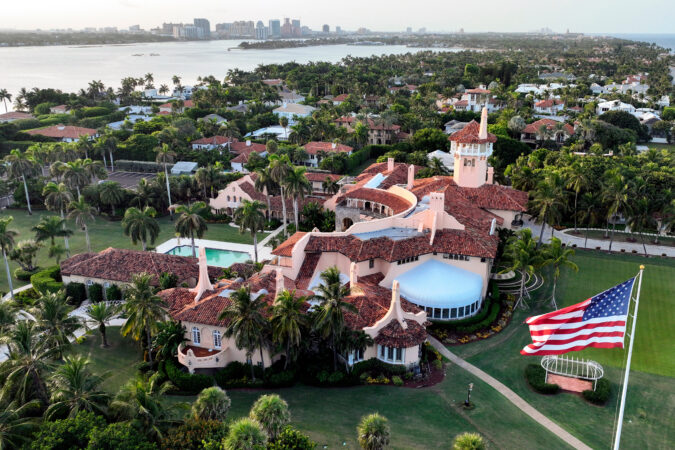
    WASHINGTON — An armed man drove into the secure perimeter of Mar-a-Lago, President Donald Trump’s resort in Palm Beach, Fla., before being shot and killed early Sunday morning, according to a spokesperson for the U.S. Secret Service. Trump was not there but was at the White House in Washington.

    The man, who was in his early 20s and from North Carolina, had a gas can and a shotgun, according to Anthony Guglielmi, the spokesperson. He had been reported missing by his family a few days ago, and investigators believe he headed south and picked up the shotgun along the way.

    Guglielmi said a box for the weapon was discovered in the man’s vehicle after the incident, which took place around 1:30 a.m.

    The man killed was identified by investigators as 21-year-old Austin Tucker Martin, according to a person familiar with the matter. The person spoke on the condition of anonymity because they were not authorized to publicly discuss details of the investigation.

    Trump has faced threats to his life before, including two assassination attempts during the 2024 campaign. Although the president often spends weekends at his resort, he and first lady Melania Trump were at the White House when the breach at Mar-a-Lago occurred.

    The man entered the north gate of the property as another vehicle was exiting and was confronted by two Secret Service agents and a Palm Beach County sheriff’s deputy, according to Palm Beach County Sheriff Ric Bradshaw.

    “He was ordered to drop those two pieces of equipment that he had with them. At which time he put down the gas can, raised the shotgun to a shooting position,” Bradshaw said at a brief news conference. The two agents and the deputy “fired their weapons to neutralize the threat.”

    The FBI asked residents who live near Mar-a-Lago to check any security cameras they may have for footage that could help investigators.

    In a post on X, FBI Director Kash Patel said that the bureau would be “dedicating all necessary resources” to the investigation.

    Investigators are working to compile a psychological profile and a motive is still under investigation. Asked whether the individual was known to law enforcement, Bradshaw said “not right now.”

    On Sunday afternoon, vehicles blocked the entrance to a property listed in public records as an address for Martin at the end of a private road in Cameron, N.C.

    Braeden Fields, Martin’s cousin, reacted with disbelief. He described Martin as quiet, afraid of guns, and from a family of avid Trump supporters.

    “He’s a good kid,” Fields, 19, said. He said they grew up together. “I wouldn’t believe he would do something like this. It’s mind-blowing,” Fields said.

    He said Martin worked at a local golf course and would send money from each paycheck to charity.

    “He wouldn’t even hurt an ant. He doesn’t even know how to use a gun,” Fields said.

    He said his cousin didn’t discuss politics.

    “We are big Trump supporters, all of us. Everybody,” Fields said, but his cousin was “real quiet, never really talked about anything.”

    The incident comes as the United States has been rocked by spasms political violence.

    The incursion at Mar-a-Lago took place a few miles from Trump’s West Palm Beach club, where a man tried to assassinate him while he played golf during the 2024 campaign.

    A Secret Service agent spotted that man, Ryan Routh, aiming a rifle through the shrubbery before Trump came into view. Officials said Routh aimed his rifle at the agent, who opened fire and caused Routh to drop his weapon.

    Routh was found guilty last year and sentenced this month to life in prison.

    Trump also survived an assassination attempt at a Butler, Pa., campaign rally. That gunman fired eight shots before being killed by a Secret Service counter sniper. One rally attendee was killed by the gunman.

    White House press secretary Karoline Leavitt said in a post on X that “the United States Secret Service acted quickly and decisively to neutralize a crazy person, armed with a gun and a gas canister, who intruded President Trump’s home.”

    Leavitt used her post to blame Democratic lawmakers in Congress for the partial government shutdown affecting the Homeland Security Department that began Feb. 14 after Democrats demanded changes to the president’s deportation campaign.

    The Secret Service is among the agencies where the vast majority of employees are continuing their work but missing paychecks.

    “Federal law enforcement are working 24/7 to keep our country safe and protect all Americans,” Leavitt said. “It’s shameful and reckless that Democrats have chosen to shut down their Department.”

    The White House referred all questions to the Secret Service and FBI. Both Trump and his wife posted statements on social media after the incident, but they were unrelated to the shooting.

    There have been other recent incidents of political violence as well.

    In the last year, there was the assassination of conservative activist Charlie Kirk; the assassination of the Democratic leader in the Minnesota state House and her husband and the shooting of another lawmaker and his wife; and an arson attack at the official residence of Pennsylvania Gov. Josh Shapiro.

    Five days ago, a Georgia man armed with a shotgun was arrested as he sprinted towards the west side of the U.S. Capitol.

  • Rich world’s growing civil unrest has an insurance sting

    Rich world’s growing civil unrest has an insurance sting

    A category of insurance risk that hardly existed a little over a decade ago has morphed into a meaningful source of losses for the industry.

    Claims tied to SRCC — strikes, riots, and civil commotion — are emerging as a growing headache for insurers as episodes of unrest increasingly lead to the destruction of property in Western democracies. Howden Re estimates that insured losses related to SRCC soared from negligible levels in 2013 to more than $8 billion between 2020 and 2024.

    SRCC losses are prone to huge swings between years, with single events often changing the landscape significantly. After relatively few claims globally in 2025, Howden Re told Bloomberg it’s now expecting the United States to see a clear increase in SRCC losses this year.

    “We live in a time of heightened risk,” said David Flandro, head of industry analysis and strategic advisory at Howden Re. And the flare-ups making news headlines in the U.S. are “clearly indicative of a broader trend,” he said.

    Civil unrest is on the rise globally, a development that has coincided with a measurable increase in levels of inequality and polarization in some of the world’s richest countries. In most Western nations, for example, the majority of citizens no longer expect to see any growth in generational wealth, according to the Pew Research Center.

    Rising political division is adding to SRCC risks in both Europe and the U.S., according to Verisk Maplecroft. However, the sharpest increase in protest sizes is taking place in the U.S., Verisk said in December.

    When it comes to ranking countries with the greatest SRCC risk, the U.S. is the No. 1 Western democracy and sits at No. 5 overall, putting it ahead of Pakistan, Bangladesh, and India, according to first-quarter data provided by Verisk Maplecroft. France ranks seventh. SRCC models take into account not just the risk of unrest, but also the cost of replacing property that’s damaged.

    “It’s fair to say that the SRCC risk landscape has fundamentally changed,” said Torbjorn Soltvedt, associate director of political violence at Verisk.

    For a long time, insurers have offered protection against SRCC at no extra cost. However, elevated risk environments mean this is becoming less common and property insurers have begun excluding or restricting coverage for SRCC from their policies, according to Cara Brown, deputy head of terrorism and political violence at insurer Chubb.

    SRCC coverage is generally bolted on to other insurance policies, though there’s evidence that the rise in such risks is prompting companies to start seeking specific cover. At the same time, Howden Re said already back in 2023 that insurers were starting to charge “significant additional premiums” for SRCC coverage, with retail assets among the most affected.

    Over two-thirds of multinational corporations already use political risk modeling tools, a trend Howden Re says is rising. And in 2024, Lloyd’s of London — the 338-year-old insurance market — assigned SRCC risk its own code. In 2025, Verisk released its first SRCC catastrophe model, focused on the U.S. market.

    Reinsurer Swiss Re says it received only a “couple dozen SRCC claims in the early 2000s and that number gradually increased into the hundreds. We have continued to see a couple hundred per year in recent years,” which is “indicative of the market trend.”

    A changing U.S.

    In the U.S., several data-tracking services show that the number of political protests is on the rise. Meanwhile, perceptions of the U.S. are changing, says Stephen M. Davis, senior fellow at Harvard Law School’s program on corporate governance and cofounder of the United Nations’ Principles for Responsible Investment.

    Viewing the U.S. as a “safe haven is a thing of the past,” he said. That’s because there’s a “policy volatility that now exists,” which can be seen “internally as well as externally.”

    It’s a sentiment that’s been playing out in markets, as some institutional investors in Europe look for ways to reduce their exposure to the U.S.

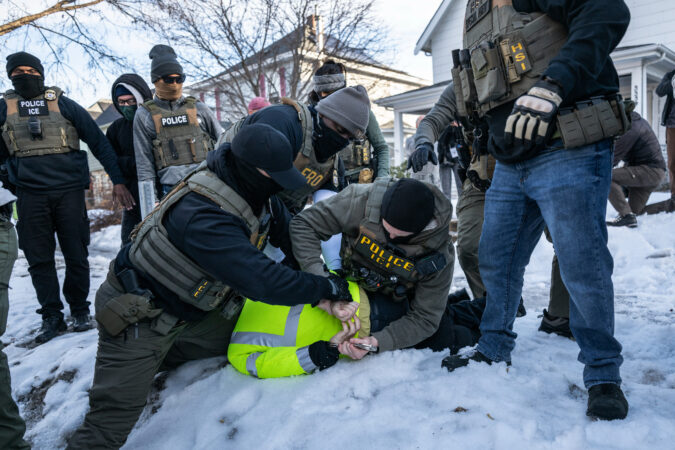
    For insurers, calculating reliable loss risks is proving hard to model, and Soltvedt notes that protests don’t always lead to property damage. For example in Minnesota, where Immigration and Customs Enforcement officers killed two U.S. citizens, protesters have conducted themselves in a way that’s resulted in “limited direct impacts on commercial property or private property so far,” he said.

    The Trump administration is now retreating from its immigration-enforcement blitz in Minnesota, pulling back after more than two months of operations.

    But given the overall pace of growth in SRCC, the probability that a single event might result in more than $5 billion of losses can no longer be ignored, according to Verisk Maplecroft. In some areas, SRCC loss risks may even exceed those brought on by natural catastrophes, it said.

    SRCC as a standalone insurance product “used to be a very niche, small class of business,” said Srdjan Todorovic, head of political violence and hostile environment solutions at Allianz Commercial. But a number of big events in recent years “hit the industry pretty badly and sobered up the market.”