Category: Wires

  • 6 daily habits to slow aging, from a Harvard brain expert

    6 daily habits to slow aging, from a Harvard brain expert

    Long before “brain health” became a buzzword, Rudolph E. Tanzi was rewriting the science behind it.

    The Harvard neurology professor and co-director of the Henry and Allison McCance Center for Brain Health at Massachusetts General Hospital is known for discovering three key Alzheimer’s genes. He has also written hundreds of journal articles in his 46-year career that helped shape modern understanding of neurodegenerative illness.

    In 2023, he teamed up with holistic health guru Deepak Chopra to write Super Brain, challenging conventional thinking about the limits of the brain. Their work argued that the mind’s potential for growth and creativity far exceeds everyday use, and that people can consciously shape their brains to have superhuman capabilities and improve their own well-being at the same time.

    Tanzi is also the architect of a lifestyle intervention plan for brain health known as SHIELD that emphasizes the importance of sleep, handling stress, interaction with others, exercise, eating well, and learning.

    Now 67, Tanzi credits his research with helping him stay mentally sharp, physically active, and deeply engaged with his work.

    “I’m doing more work and having more fun and excited than ever in my life,” he said. “Your world can be a young world or stable world completely based on the health of your brain. People don’t realize that.”

    Here’s what SHIELD is, what it looks like in Tanzi’s daily life and his tips for continuing to age well.

    Sleep: Aim for 7-8 hours of high-quality sleep each night. Adequate rest is essential for brain function and memory.

    “When you sleep, you not only consolidate memories, but you drain toxins out of your brain,” Tanzi said. “You actually clean amyloid toxins — that’s the sticky material that triggers Alzheimer’s disease, and it usually does so two decades in advance of symptoms. … Every time you go into a deep sleep, it’s a rinse cycle for your brain.”

    Tanzi doesn’t have a fixed bedtime, but he calculates backward from when he has to wake up to make sure he gets a minimum of seven hours of sleep. An hour before he needs to sleep, he turns off the TV and stops scrolling through Reels on his phone. “I am almost religious about seven hours of sleep or more.”

    People often ask him for advice about what to do if they only got five or six hours of sleep, and he recommends power naps. “Even a short one in the office that results in a little drool on your desk — that’s good.”

    Handling stress: Minimize chronic stress, which has been linked to accelerated cognitive decline.

    “It induces cortisol, which is a toxic chemical in the brain.” Tanzi worries that the constant demands of modern life — such as from staying current on social media or responding to a steady stream of emails — have created unprecedented levels of stress.

    His strategy of choice for handling stress is meditation.

    Public health experts and physicians have pointed to stress as a major reason Americans live shorter lives than peers in nations with similar resources.

    “Many people are stressed out because of the constant monologue in their heads — the monkey chatter. We as humans, to communicate with words, often have words going through our heads, so one trick you can do is sit back, close your eyes, and gently keep words and sentences from entering your brain. Just think of images … I have gone out of my way in my life to turn off internal monologue and dialogue as much as possible. … Every hour or two, close eyes, and whatever comes in your head is fine, as long as you’re not hearing words.”

    “Obsessing over something that happened in the past or feeling anxious about the future, instead of being in the now,” can also be problematic, he said.

    Tanzi traces some of his thinking to the philosophy of anthropologist and writer Carlos Castaneda, whose books Tanzi discovered early in his scientific career. Modern neuroscience, Tanzi argues, supports the idea that the constant need for validation can overstimulate stress pathways in the brain, eroding mental clarity and long-term brain health.

    “He said if you want more intuitive flashes and creativity and just feel more mental power, turn off the internal dialogue,” Tanzi said. “I feel more excited now than in my 20s because I don’t let the words and what society thinks cause me stress.”

    Interaction with friends: Maintain an active social life. Loneliness is associated with a higher risk of neurodegenerative conditions.

    “That’s the stimulation that the brain likes. … Make sure it’s people you like. If it’s people you don’t like, that’s stress. … Ask yourself, how often each week do you interact with people who are not co-workers or household family members?”

    Research has shown that social interactions have positive effects on our lives.

    Due to his busy work schedule and because many of his friends do not live in the area, Tanzi isn’t able to see his friends in person very often. But talking via text or phone is enough, he said.

    “I have different text friend groups, and I just take time to interact with two to three of them per day, but not being obsessive about it.” They include college friends such as his old fraternity brothers and a basketball group. “This is one way you use social media to benefit your brain.”

    Exercise: Engage in regular physical activity to boost blood flow to the brain and support the growth of new neural connections.

    “It does two things for the brain. It induces the birth of new nerve cells, a process called neurogenesis, and it happens in a part of the brain first affected by Alzheimer’s. It also gets muscles and blood flowing faster to release a hormone that breaks down amyloid.”

    Tanzi points to a study, published in November in Nature Medicine, from Mass General that found that for every 1,000 steps a person takes, they stave off Alzheimer’s by one year.

    Tanzi has an exercise bike in his office and normally uses it 30 minutes every other day at 80 to 90 rpm. On the other days, he takes a walk in his neighborhood at home, or if he’s in the office by Boston Harbor’s Charlestown Navy Yard.

    Learning new things: Challenge your brain by trying new activities to strengthen neural pathways.

    “Learning new things makes new connections called synapses. There are tens of trillions of them they make up a neural network that stores all your memories. … What leads to impaired cognition or dementia is when your synapses go downhill, and what you are doing is building up your synaptic reserve,” Tanzi said.

    “As you get older, you become less secure and less adventurous and take less chances, and it’s my way or the highway. You are using the same synapses, and that’s bad for the brain,” he said.

    Tanzi is a serious keyboard player on the side, and he’s always learning new music. (He’s so good, he’s even played professionally with Aerosmith!) He writes his own music, which he describes as “an ambient jazz that’s kind of chill.”

    He also likes to learn by watching documentaries, reading books, both fiction and nonfiction, and listening to podcasts.

    Diet: Follow a brain-healthy diet to support long-term cognitive health.

    “This is the most important … to have a diet that makes the bacteria in your microbiome happy. When they are balanced in the right ratios, they actually create gut metabolites in your brain to get rid of amyloid plaque and quell neuroinflammation. We used to say what’s good for the heart is what’s good for the brain, and it turns out that’s true.”

    Tanzi favors a Mediterranean diet full of fruits, vegetables, and olive oil. “I’m mostly vegan, but if there’s a good pizza around, I’m going to have it.”

    “Every single day, I need to take my medicine in terms of vegan food,” he said. When he snacks, it’ll usually be a piece an apple or pear, granola, nuts, or seeds. “Bacteria in your gut love crunchy things that are not potato chips.”

    Recently, Tanzi has been turning his attention to emerging research on how other external forces beyond food shape brain health. His next book, expected late this year or in early 2027, will explore the impact of diet and environmental exposures — what he calls the “killer P’s”: plastics, pollution, and periodontal bacteria, as well as processed foods.


  • This company says it has produced the holy grail of batteries

    This company says it has produced the holy grail of batteries

    If you can believe the ambitious claims in a slickly produced video released Jan. 4 ahead of the CES technology show in Las Vegas, a battery revolution is coming this year that could upend the EV market and eventually usher in a new era of fast-charging, long-range cars and trucks.

    The high-end electric motorcycle maker Verge Motorcycles and its spin-off motor company Donut Lab say they’re selling the world’s first EV powered by a “solid-state” battery — a much-hyped, long-promised type of battery that packs more power than standard cells, if companies could figure out how to design and mass-produce it.

    But Verge and Donut Lab have offered no evidence and few details about their battery claims. The proof, they say, will come when customers start to receive the $30,000 electric motorcycles they are selling now and plan to deliver by the end of March. Scientists are skeptical, and the controversy illustrates the long and troubled history of companies that have tried — and so far failed — to develop a technology sometimes lauded as the holy grail of batteries.

    Solid-state batteries are similar to the standard lithium-ion batteries found in phones, laptops, and electric cars, but they replace liquid electrolytes with solid materials that, theoretically, could allow them to store more energy, charge faster, and last longer, while lowering their fire risk. Researchers have struggled to develop solid-state batteries that combine all these benefits and work consistently in the real world. Even if they succeeded, companies would have to spend years and billions of dollars overhauling battery factories to mass-produce solid cells instead of batteries that use liquid electrolytes.

    Global car companies including Toyota, Nissan, and Hyundai have promised to release long-range EVs with solid-state batteries for years — but they’ve pushed back their release dates so many times that it has become a joke in the auto industry. Battery giants including Samsung, Panasonic, and CATL, and well-funded solid-state start-ups such as QuantumScape and Solid Power, are also working on the technology, targeting mass production in the next few years and churning out a steady stream of patents and peer-reviewed papers.

    Donut Lab, a Finnish start-up with fewer than 100 employees that announced its existence 14 months ago, says it has beaten its rivals with an “all-solid-state battery” that CEO Marko Lehtimäki says makes no trade-offs whatsoever: It stores about twice as much energy per pound as a typical EV battery, charges from zero to 100% in five minutes, can last 100,000 charge cycles, loses almost no capacity in the bitter cold of minus 22 degrees or the boiling heat of 212 degrees, uses no rare or “geopolitically constrained” materials, and is cheaper than standard lithium-ion cells.

    The start-up has raised nearly $60 million from investors like Risto Siilasmaa, the former chairman of Finnish cell phone giant Nokia, who now sits on Donut Lab’s board of directors.

    “Extraordinary claims require extraordinary evidence,” said Paul Braun, a professor and director of the Materials Research Laboratory at the University of Illinois at Urbana-Champaign. “While no laws of physics appear to be broken, I need to see a lot more data before I am convinced the battery technology is real.”

    Kelsey Hatzell, an associate professor at Princeton University who heads a materials science lab that works on solid-state batteries, said the no-downside combination of properties Donut Lab has promised “sounds impossible.” She added that if the cells could be mass-produced in Finland, where Lehtimäki said they’re starting to be built, “that would be shocking to me.”

    Lehtimäki declined to reveal any data or details about the battery, arguing that Donut Lab needs to protect its trade secrets. But, he said, manufacturers have been testing his batteries under nondisclosure agreements, and outside groups he declined to name would validate his claims in the coming weeks.

    In the meantime, Verge is taking orders in the United States and Europe for an electric motorcycle that starts at $29,900 and promises to charge from zero to 80% in under 10 minutes and travel over 200 miles on a single charge thanks to its new solid-state battery. It’s an overhauled version of the company’s TS Pro motorcycle, whose previous battery had the same range and price but weighed more and charged in 35 minutes. A new long-range version starts at $34,900 and promises to travel 370 miles on a single charge.

    The standard TS Pro has been on the market since 2022. It holds a Guinness World Record for the longest electric motorcycle trip on a single charge, reaching 193 miles on a loop around London last year. The promised improvements in the overhauled TS Pro are plausible, according to Braun, but don’t require solid-state batteries.

    “It might be hard, however, everything stated (except cost) could be done with high-end conventional cells,” he said in an email.

    Whether or not Verge and Donut Lab deliver, scientists and companies will continue to study solid-state batteries.

    “There’s a real need for energy-dense solid-state batteries,” Hatzell said. “I do think they’re going to exist one day, and there’s been significant progress in the last decade.”

    She envisions solid-state batteries being used in flying drones, autonomous robots, and other products for which consumers might be willing to pay more to pack as much energy into as little battery weight as possible.

    Niche, high-performance electric motorcycles also make sense as an early use for solid-state batteries, according to Braun. Eventually, they could take over the luxury EV market, or even the mass market for electric cars and trucks — but they may never get cheap enough or good enough to knock out standard lithium-ion batteries, Braun said.

    “Regular batteries are getting better,” he said. “Maybe solid-state costs never quite get down there, and so they’re only [used] at the highest performance regime.”

    But Lehtimäki, like many battery entrepreneurs before him, insists the solid-state revolution is nigh.

    “We would be just stupid to go and say some lies in front of the whole world where, in a matter of weeks, people will be opening these battery packs and scanning these cells,” he said in a phone interview with The Post. “We don’t need to go and scam people. … Every single thing I said in the video is not an exaggeration of any kind. It’s fact, and people will be shocked.”

  • Clemson’s Dabo Swinney alleges tampering by Ole Miss’ Pete Golding and calls for reforms

    Clemson’s Dabo Swinney alleges tampering by Ole Miss’ Pete Golding and calls for reforms

    Clemson coach Dabo Swinney is accusing Mississippi coach Pete Golding of tampering with transfer player Luke Ferrelli and said Friday he has forwarded evidence to the NCAA.

    “If you tamper with my players, I’m going to turn you in. It’s just that simple,” Swinney said during a news conference. “I’m not out to get anybody fired, but there has to be accountability and consequences for this type of behavior and total disregard for the rules.

    “If this happened in the NFL, which is an actual league with rules, they would be fined, they would take draft picks, they hit the cap, whatever,” Swinney continued. “This is such a terrible example for young coaches in this profession. … To me, this situation is like having an affair on your honeymoon.”

    Ferrelli, a former linebacker at California, entered the transfer portal on Jan. 2 and committed to Clemson four days later. Ferrelli subsequently enrolled, began classes, and began attending meetings and workouts, Swinney said.

    Ferrelli reentered the portal on Jan. 22 and committed to Ole Miss.

    “You can’t sign with the Browns and practice a week, and then the Dolphins call you and say we’re going to give you a little more money and you say, ‘See ya, boys,’ and go play for the Dolphins. That’s not the real world,” Swinney said.

    Ole Miss athletic officials did not respond to Swinney’s allegations when contacted on Friday by The Associated Press.

    NCAA vice president of enforcement Jon Duncan said in a statement that the association “will investigate any credible allegations of tampering and expect full cooperation from all involved as required by NCAA rules.”

    Swinney alleged that Golding maintained contact with Ferrelli after the linebacker had enrolled at Clemson, even texting, “I know you’re signed, but what is your buyout?”

    When Swinney found out about it, he said he initially told Clemson general manager Jordan Sorrells that he wanted to give Golding “some grace” because the Rebels’ coach was newly promoted after Lane Kiffin left for LSU over Thanksgiving weekend.

    Swinney asked Sorrells to tell Ole Miss officials “that we know what’s going on, and if he doesn’t cease communication, I’m going to turn him in. I really thought that would be the end of it, but it wasn’t.”

    Swinney said Ferrelli’s agent confirmed that Golding had continued reaching out to the player, so Clemson officials asked for copies of the text messages.

    “The agent communicated that if we were to add a second year at $1 million to the already agreed-upon deal with Luke, then they would gladly give us whatever we need to turn Ole Miss in,” Swinney said. “Jordan, appropriately, said, ‘No, we’re not doing that.’”

    Clemson athletic director Graham Neff said the university’s main reason for making the allegations public was to spur changes to the college football calendar and related rules — or lack thereof — that have contributed to upheaval across the sport.

    “The NCAA was surprised a school was willing to come forward as directly and transparently as we were,” Neff said. “We need to look real hard at how we got here, but (also) how to get out of it.”

    Neff added that Clemson was exploring its legal options.

    “This is not about a linebacker at Clemson,” Swinney added. “I don’t want anyone on our team that doesn’t want to be here.

    “It’s about the next kid and about the message being sent if this blatant tampering is allowed to happen without any consequences.”

    Swinney also called the January transfer portal window “stupid,” saying it causes “flat-out extortion in some cases” because players and schools are making major decisions during “such a short period of time, right in the middle of when people are trying to play bowl games, playoff games, et cetera.”

    If the system is not reformed, Swinney warned, there will be unintended consequences for players who transfer among multiple schools while chasing short-term financial payouts — particularly if they don’t make it to the NFL.

    “We’re going to have some screwed-up 30-year-olds … that have no degrees, that have spent their money, that can’t play football anymore and aren’t connected to anything,” Swinney said.

  • More than half the U.S. threatened with ice, snow, and cold in massive winter storm

    More than half the U.S. threatened with ice, snow, and cold in massive winter storm

    DALLAS — Freezing rain was falling in West Texas on Friday as a huge, dayslong winter storm began a trek that threatened to bring snow, sleet, ice, and bone-chilling temperatures as well as extensive power outages to about half the U.S. population.

    Forecasters warned that catastrophic damage, especially in areas pounded by ice, could rival a hurricane. Schools in Chicago and other Midwestern cities called off classes Friday, airlines canceled thousands of weekend flights, churches moved Sunday services online, and the Grand Ole Opry in Nashville decided to hold its Saturday night radio performance without fans. Carnival parades in Louisiana were canceled or rescheduled.

    At least 182 million people were under watches or warnings for ice and snow and more than 210 million were under cold weather advisories or warnings. In many places, those overlapped. Utility companies braced for power outages because ice-coated trees and power lines can keep falling long after a storm has passed.

    “It’s going to be a big storm,” Maricela Resendiz said as she picked up chicken, eggs, and pizzas at a Dallas store to get her, her 5-year-old son and her boyfriend through the weekend. Her plans: “Staying in, just being out of the way.”

    (function () {window.addEventListener(‘message’, function (e) { var message = e.data; var els = document.querySelectorAll(‘iframe[src*=”‘ + message.id + ‘”]’); els.forEach(function(el) { el.style.height = message.height + ‘px’; }); }, false); })();

    Freezing rain was already slickening roads in Lubbock, Texas, on Friday afternoon as temperatures dropped. After sliding into the South with ice and sleet, the storm was expected to move into the Northeast, dumping about a foot of snow from Washington, D.C., through New York and Boston, the National Weather Service predicted.

    Arctic air was the first piece to fall in place

    Arctic air that spilled down from Canada prompted schools throughout the Midwest to cancel classes Friday. With windchills as low as minus 40 degrees Fahrenheit, frostbite could set in within 10 minutes, making it too dangerous to walk to school or wait for the bus.

    In Bismarck, N.D., where the windchill was minus 41 Fahrenheit, Colin Cross cleaned out an empty unit for the apartment complex where he works.

    “I’ve been here awhile and my brain stopped working,” said Cross, bundled up in long johns, two long-sleeved shirts, a jacket, hat, hood, gloves and boots.

    Despite bitter cold, a protest over an immigration crackdown went on as planned in Minnesota, with thousands demonstrating in downtown Minneapolis.

    Nationwide, more than 1,000 flights were delayed or canceled Friday, with well over half of them in Dallas, according to the flight tracking website FlightAware. About 2,300 Saturday flights were canceled.

    In Oklahoma, Department of Transportation workers treated roads with salt brine, the Highway Patrol canceled troopers’ days off, and National Guard units were activated to help stranded drivers.

    The federal government put nearly 30 search and rescue teams on standby. Officials had more than 7 million meals, 600,000 blankets, and 300 generators placed throughout the area the storm was expected to cross, according to the Federal Emergency Management Agency.

    President Donald Trump said via social media that his administration was coordinating with state and local officials and “FEMA is fully prepared to respond.”

    Northeast prepares for heavy snow

    The Northeast could see its heaviest snow in years.

    Boston declared a cold emergency through the weekend, and Connecticut was working with neighboring New York and Massachusetts in case travel restrictions are needed on major highways.

    Connecticut Gov. Ned Lamont urged people to go grocery shopping now and “stay home on Sunday.”

    Philadelphia announced schools would be closed Monday. Superintendent Tony B. Watlington Sr. told students, “It’s also appropriate to have one or two very safe snowball fights.”

    Ice could take down power lines and pipes could freeze

    Once ice and snow end, the frigid air from the north will head south and east. It will take a while to thaw out, an especially dangerous prospect because ice can add hundreds of pounds to power lines and branches and make them more susceptible to snapping, especially if it’s windy.

    In at least 11 Southern states from Texas to Virginia, a majority of homes are heated by electricity, according to the U.S. Census Bureau.

    A severe cold snap five years ago took down much of the power grid in Texas, leaving millions without power for days and resulting in hundreds of deaths. Gov. Greg Abbott said Thursday that won’t happen again, and utility companies were bringing in thousands of employees to help keep the power on.

    Pipes are also at risk.

    In Atlanta, where temperatures could dip to 10 degrees and stay below freezing for 36 hours, M. Cary & Daughters Plumbing co-owner Melissa Cary ordered all the pipe and repair supplies she could get. She said her daily calls could go from about 40 to several hundred.

    “We’re out there; we can’t feel our fingers, our toes; we’re soaking wet,” Cary said. “I keep the hot chocolate and soup coming.”

    People are hunkering down

    Stephen McDonald, who hasn’t had a home in three years, was hoping to get out of the cold in Jackson, Miss. But the Shower Power homeless shelter was adding spray foam insulation and ceiling heaters, keeping it closed until Saturday.

    Friday night’s forecast called for lows near freezing. “Your hands get frozen solid, and they hurt real bad,” said McDonald. “It’s not good.”

    At the University of Georgia in Athens, sophomore Eden England was staying on campus to ride out the weather with her friends, even as the school encouraged students to leave dorms and go home because of concerns about losing power.

    “I was texting my parents and we kind of just realized that whether I’m here or at home, it’s going to suck either way,” England said. “So I’d rather be with my friends, kind of struggling together if anything happens.”

  • Thousands rally against immigration enforcement in subzero Minnesota temperatures

    Thousands rally against immigration enforcement in subzero Minnesota temperatures

    MINNEAPOLIS — Police arrested about 100 clergy demonstrating against immigration enforcement at Minnesota’s largest airport Friday, and thousands gathered in downtown Minneapolis despite Arctic temperatures to protest the Trump administration’s crackdown.

    The protests are part of a broader movement against President Donald Trump’s increased immigration enforcement across the state, with labor unions, progressive organizations, and clergy urging Minnesotans to stay away from work, school, and even shops. The faith leaders gathered at the airport to protest deportation flights and urge airlines to call for an end to to what the Department of Homeland Security has called its largest-ever immigration enforcement operation.

    The clergy were issued misdemeanor citations of trespassing and failure to comply with a peace officer and were then released, said Jeff Lea, a Metropolitan Airports Commission spokesman. They were arrested outside the main terminal at the Minneapolis-St. Paul International Airport because they went beyond the reach of their permit for demonstrating and disrupted airline operations, he said.

    The Rev. Mariah Furness Tollgaard of Hamline Church in St. Paul said police ordered them to leave but she and others decided to stay and be arrested to show support for migrants, including members of her congregation who are afraid to leave their homes. She planned to go back to her church after her brief detention to hold a prayer vigil.

    “We cannot abide living under this federal occupation of Minnesota,” Tollgaard said.

    Protesters demand ICE leave Minnesota

    The Rev. Elizabeth Barish Browne traveled from Cheyenne, Wyo., to participate in the rally in downtown Minneapolis, where the high temperature was minus 9 degrees Fahrenheit despite a bright sun.

    “What’s happening here is clearly immoral,” the Unitarian Universalist minister said. “It’s definitely chilly, but the kind of ice that’s dangerous to us is not the weather.”

    Protesters have gathered daily in the Twin Cities since Jan. 7, when 37-year-old mother of three Renee Good was fatally shot by an Immigration and Customs Enforcement officer. Federal law enforcement officers have repeatedly squared off with community members and activists who track their movements.

    Sam Nelson said he skipped work so he could join the march. He said he’s a former student of the Minneapolis high school where federal agents detained someone after class earlier this month. That arrest led to altercations between federal officers and bystanders.

    “It’s my community,” Nelson said. “Like everyone else, I don’t want ICE on our streets.”

    Organizers said Friday morning that more than 700 businesses statewide have closed in solidarity with the movement, from a bookstore in tiny Grand Marais near the Canadian border to the landmark Guthrie Theater in downtown Minneapolis.

    “We’re achieving something historic,” said Kate Havelin of Indivisible Twin Cities, one of the more than 100 participating groups.

    Detention of a 2-year-old and a 5-year-old

    A 2-year-old was reunited with her mother Friday, a day after she was detained with her father outside of their home in South Minneapolis, lawyer Irina Vaynerman told the Associated Press.

    Vaynerman said they had quickly challenged the family’s detention in federal court. The petition states that the child, a citizen of Ecuador, was brought to the U.S. as a newborn. The child and her father, Elvis Tipan Echeverria, both have a pending asylum application and neither are subject to final orders of removal.

    A U.S. district judge on Thursday had barred the government from transferring the toddler out of state, but she and her father were on a commercial flight to Texas about 20 minutes later, according to court filings. They were flown back Friday.

    Agents arrested Tipan Echeverria during a targeted operation, according to a DHS statement said. DHS said the child’s mother was in the area but refused to take the child.

    Vaynerman rejected that explanation, saying Tipan Echeverria was “not allowed” to bring his 2-year-old to her mother inside their home.

    DHS repeated its allegation Friday that the father of 5-year-old Liam Ramos abandoned him during his arrest by immigration officers in Columbia Heights on Tuesday, leading to the child being detained, too.

    Department spokesperson Tricia McLaughlin said Liam was detained because his father, Adrian Alexander Conejo Arias, “fled from the scene.” The two are detained together at the Dilley Detention Center in Texas, which is intended to hold families. McLaughlin said officers tried to get Liam’s mother to take him, but she refused to accept custody.

    The family’s attorney Marc Prokosch said he thinks the mother refused to open the door to the ICE officers because she was afraid she would be detained. Columbia Heights district superintendent Zena Stenvik said Liam was “used as bait.”

    Prokosch found nothing in state records to suggest Liam’s father has a criminal history.

    On Friday, Border Patrol commander Gregory Bovino sought to shift the narrative away from Liam’s detention by attacking the news media for, in his view, insufficient coverage of children who have lost parents to violence by people in the country illegally. After briefly mentioning the 5-year-old during a news conference, he talked about a mother of five who was killed in August 2023.

    Details from Good’s autopsy

    The Hennepin County Medical Examiner posted an initial autopsy report online for Good that classified her death as a homicide and determined she died from “multiple gunshots wounds.”

    A more detailed independent autopsy commissioned by Good’s family said one bullet pierced the left side her head and exited on the right side. This autopsy, released Wednesday through the Romanucci & Blandin law firm, said bullets also struck her in the arm and breast, although those injuries weren’t immediately life-threatening.

    Antonio Romanucci, an attorney for the family, said in a statement that the family is still awaiting the full report from the medical examiner and “hope that they communicate with Renee’s family and share their report before releasing any further information to the public.”

    A spokesperson for the firm said there were no funeral plans to share yet.

  • U.S. carries out first known strike on alleged drug boat since Maduro’s capture

    U.S. carries out first known strike on alleged drug boat since Maduro’s capture

    WASHINGTON — The U.S. military said Friday that it has carried out a deadly strike on a vessel accused of trafficking drugs in the eastern Pacific Ocean, the first known attack since the raid that captured Venezuelan President Nicolás Maduro earlier this month.

    U.S. Southern Command said on social media that the boat was “engaged in narco-trafficking operations” and that the strike killed two people and left one survivor. It said it notified the Coast Guard to launch search and rescue operations for that person.

    A video accompanying the post announcing the latest strike shows a boat moving through the water before exploding in flames. The U.S. military has focused lately on seizing sanctioned oil tankers with connections to Venezuela since the Trump administration launched an audacious raid to capture Maduro and bring him to New York to face drug trafficking charges.

    With the latest military action, there have been 36 known strikes against alleged drug smuggling boats in South American waters since early September that killed at least 117 people, according to announcements from the U.S. military and Trump. The majority of those of strikes have occurred in the Caribbean Sea.

    The last reported boat strikes occurred in late December, when the military said it struck five alleged drug-smuggling boats over two days, killing a total of eight people while others jumped overboard. Days later, the Coast Guard suspended its search.

    The U.S. conducted a large-scale operation in Caracas, the capital of Venezuela, on Jan. 3 that led to the capture of Maduro and his wife, who were then flown to New York to face federal drug trafficking charges.

    Maduro, before his capture, said the U.S. military operations were a thinly veiled effort to oust him from power.

    President Donald Trump has repeatedly said that the U.S. strikes targeting alleged smugglers are having an enormous impact on slowing drug trafficking routes in the Caribbean and eastern Pacific.

    “We’ve stopped — virtually stopped almost 100% of all drugs coming in by water,” Trump said in remarks on Thursday at the World Economic Forum at Davos.

  • Vance touts the Trump administration’s record against abortion at a Washington rally

    Vance touts the Trump administration’s record against abortion at a Washington rally

    Vice President JD Vance on Friday encouraged anti-abortion activists to “take heart in how far we’ve come” on the quest to limit the practice, listing the Trump administration’s accomplishments including an expansion of a ban on U.S. foreign aid for groups supporting abortion services.

    “There is still much road ahead to travel together,” Vance told attendees at the annual March for Life demonstration, which draws tens of thousands of people annually to Washington. Attendees rallied on the National Mall before heading to the Supreme Court.

    Vance, a Republican, has spent years passionately advocating for Americans to have more children. He repeatedly expressed alarm about declining birth rates as he launched his political career in 2021 with a successful bid for the U.S. Senate in Ohio, and as vice president he has continued on that mission.

    “I want more babies in the United States of America,” Vance said in addressing last year’s March for Life.

    Earlier this week, Vance and his wife, second lady Usha Vance, announced in a social media post they are expecting a son, their fourth child, in late July.

    “Let the record show, you have a vice president who practices what he preaches,” Vance said Friday.

    Vance cited the Supreme Court’s 2022 Dobbs decision, which overturned Roe v. Wade, calling it “the most important Supreme Court decision of my lifetime.” He said President Donald Trump’s leadership and appointment of conservative jurists “put a definitive end to the tyranny of judicial rule on the question of human life.”

    He also lauded the “historic expansion of the Mexico City policy,” the broadening of a ban on U.S. foreign aid for groups supporting abortion services, to include assistance going to international and domestic organizations and agencies that promote gender identity as well as diversity, equity and inclusion programs.

    “We believe that every country in the world has the duty to protect life,” Vance said, to a sea of supporters waving signs reading “Choose Life,” “Make More Babies,” and “I am the Pro-Life Generation.”

    “It’s not our job as the United States of America to promote radical gender ideology,” he said. “It’s our job to promote families and human flourishing.”

    From the Vatican, Pope Leo XIV — the first U.S.-born pope — sent a message of support to participants in the march.

    “I would encourage you, especially the young people, to continue striving to ensure that life is respected in all of its stages,” Leo wrote in a letter shown on a video at the march. “May Jesus, who promised to be with us always, accompany you today as you courageously and peacefully march on behalf of unborn children.”

    On Thursday, an official said the Trump administration was implementing new rules, halting foreign assistance from going not only to groups that provide abortion as a method of family planning but also to those that advocate “gender ideology” and DEI. The official spoke on the condition of anonymity ahead of the rules’ publication in the Federal Register on Friday.

    First established under President Ronald Reagan, a Republican, the policy was rescinded by subsequent Democratic administrations and was reinstated in Trump’s first term.

    With its origins in the 1973 Roe v. Wade decision that nationally enshrined federal protection for abortion rights, the March for Life developed an entrenched presence among conservatives arguing against abortion. In 2017, Trump addressed the march by video, becoming the first sitting U.S. president to make live remarks. Three years later, he attended the event in person, further cementing its role in conservative politics.

    In a video address to this year’s crowd, Trump recounted his administration’s “unprecedented strides to protect innocent life and support the institution of the family like never before,” enumerating his appointment of “judges and justices who believed in interpreting the Constitution as written” and “reflecting on the Dobbs decision that overturned Roe v. Wade.

    Since the June 2022 Supreme Court ruling that overturned Roe, the march has become more celebratory, with organizers relishing a state-by-state fight in legislatures around the country and urging a continued fight until abortion is eliminated.

  • Source: White Sox add former Phillie Seranthony Domínguez to their bullpen

    Source: White Sox add former Phillie Seranthony Domínguez to their bullpen

    CHICAGO — The Chicago White Sox added former Phillies reliever Seranthony Domínguez to their bullpen on Friday, agreeing to a $20 million, two-year contract with the right-hander, according to a person familiar with the deal.

    The person spoke to The Associated Press on condition of anonymity because the move was pending a physical.

    Domínguez, 31, played for Baltimore and Toronto last year, going 4-4 with a 3.16 ERA and two saves in 67 games. He was traded to the Blue Jays on July 29.

    Chicago had some additional payroll flexibility after trading center fielder Luis Robert Jr. to the New York Mets on Tuesday night. Domínguez likely will close games with his new team.

    The rebuilding White Sox finished last in the AL Central last year with a 60-102 record, a 19-game improvement from the previous season. They signed Japanese slugger Munetaka Murakami to a $34 million, two-year contract in December, and speedy infielder Luisangel Acuña came over in the Robert trade.

    The White Sox also have a promising group of young position players that includes Colson Montgomery, Kyle Teel and Chase Meidroth.

    Domínguez made his major league debut with the Phillies in 2023. He is 23-23 with a 3.50 ERA and 40 saves in 322 career games. He also has 360 strikeouts in 306 innings.

    Domínguez pitched in 12 postseason games in 2025, helping Toronto reach the World Series. He went 2-0 with a 3.18 ERA.

  • Ukraine, Russia, U.S. to discuss fraught issue of territorial concessions in Abu Dhabi

    Ukraine, Russia, U.S. to discuss fraught issue of territorial concessions in Abu Dhabi

    Ukrainian President Volodymyr Zelensky said the future of Ukraine’s eastern Donbas region will be a key focus as negotiators from Ukraine, Russia, and the United States meet in Abu Dhabi on Friday for talks to end Russia’s nearly four-year full-scale invasion.

    The UAE’s foreign ministry said the talks commenced on Friday and are scheduled to continue over two days “as part of ongoing efforts to promote dialogue and identify political solutions to the crisis.”

    The White House described the talks as productive and said conversations would continue on Saturday.

    The three-way talks come hours after Russian President Vladimir Putin discussed the settlement in Ukraine with President Donald Trump’s envoys Steve Witkoff and Jared Kushner during marathon overnight talks. The Kremlin insisted that to reach a peace deal, Kyiv must withdraw its troops from the areas in the east that Russia illegally annexed but never fully captured.

    Zelensky said after meeting with Trump that while the future status of land in eastern Ukraine currently occupied by Russia remains unresolved, the peace proposals are “nearly ready.”

    He also reiterated his openness to establishing a free trade zone under Ukraine’s control in the country’s east, adding that he discussed the proposal with Trump in Davos, Switzerland, on Thursday: “I think it will be positive for our business,” Zelensky told reporters.

    Friday is the first known time that officials from the Trump administration simultaneously meet with negotiators from both Ukraine and Russia. While it’s unclear how the talks will unfold and many obstacles to peace remain, some see it as a sign that the parties are making headway in closing a deal.

    Speaking in his evening address to the nation late Friday, Zelensky said the Ukrainian delegation attending the talks reported to him “almost every hour.”

    “They are discussing the parameters for ending the war,” Zelensky said. ”Now, they should at least get some answers from Russia, and the most important thing is that Russia should be ready to end this war, which it itself started.”

    He added that “it’s too early to draw conclusions about the content of today’s negotiations — we’ll see how the conversation goes tomorrow and what the results will be. It’s not just about Ukraine’s desire to end this war and achieve full security — it’s also about Russia somehow developing a similar desire,” Zelensky said.

    Kremlin insists on ‘solving territorial issue’

    “Today’s meeting will be in the format of Ukraine, Russia and the United States, and afterward the Europeans will certainly receive feedback from us,” Zelensky told journalists in a WhatsApp audio message.

    The Kremlin offered little detail beyond calling Friday’s meeting a “working group on security issues.”

    Kremlin spokesman Dmitry Peskov reaffirmed Friday that Russia’s demand for the Ukrainian troops’ withdrawal from the eastern Donbas region is an “important condition,” adding that there are also other “nuances” on the talks agenda that he wouldn’t specify.

    Kremlin foreign affairs adviser Yuri Ushakov, who participated in Putin’s meeting with Witkoff and Kushner, said “it was reaffirmed that reaching a long-term settlement can’t be expected without solving the territorial issue.” He described the talks with the U.S. as “frank, constructive,” and “fruitful.”

    Russia’s state Tass news agency reported that the discussions included possible buffer zones and control measures.

    Peskov told reporters that the Russian delegation, headed by Adm. Kostyukov, is comprised of military officials. Separately, Putin’s envoy Kirill Dmitriev will hold talks with Witkoff on economic issues, Peskov added.

    The U.S. has confirmed Witkoff and Kushner are attending the talks in Abu Dhabi along with Army Secretary Dan Driscoll and NATO’s top general, U.S. Air Force Gen. Alexus Grynkewich.

    The Ukrainian team includes Rustem Umerov, head of Ukraine’s national security and defense council; Andrii Hnatov, chief of the general staff; and Kyrylo Budanov, head of the presidential office.

    Trump’s meeting with Zelensky

    Hours before the Kremin talks, Zelensky met with Trump behind closed doors for about an hour at the World Economic Forum in Davos, describing the meeting as “productive and meaningful.”

    Speaking to reporters aboard Air Force One as he flew back to Washington from Davos, Trump said his meeting with Zelensky went well, adding that both Putin and Zelensky want to reach a deal and that “everyone’s making concessions” to try to end the war.

    He said the sticking points in talks remain the same as they’ve been during talks held during the past six or seven months, noting “boundaries” was a key issue. “The main hold-up is the same things that’s been holding it up for the last year,” he said.

    Russia’s bigger army has managed to capture about 20% of Ukraine since hostilities began in 2014 and its full-scale invasion of 2022. But the battlefield gains along the roughly 600-mile front line have been costly for Moscow, and the Russian economy is feeling the consequences of the war and international sanctions.

    Ukraine is short of money and, despite significantly boosting its own arms manufacturing, still needs Western weaponry. It is also short-handed on the front line. Its defense minister last week reported some 200,000 troop desertions, and draft-dodging by about 2 million Ukrainians.

    Zelensky blasts European allies

    Addressing the World Economic Forum on Thursday after meeting with Trump, Zelensky listed a litany of grievances and criticisms of Europe.

    He chided Europe for being slow to act on key decisions, spending too little on defense, failing to stop Russia’s ”shadow fleet” of oil tankers that are breaking international sanctions, and balking at using its frozen assets in Europe to finance Ukraine, among other things.

    “Europe looks lost,” Zelensky said in his speech, urging the continent to become a global force. He contrasted Europe’s response with Washington’s bold steps in Venezuela and Iran.

    The former comic actor referred to the movie “Groundhog Day,” in which the main character must relive the same day over and over again.

    “Just last year, here in Davos, I ended my speech with the words: Europe needs to know how to defend itself. A year has passed. And nothing has changed. We are still in a situation where I must say the same words again,” Zelensky said.

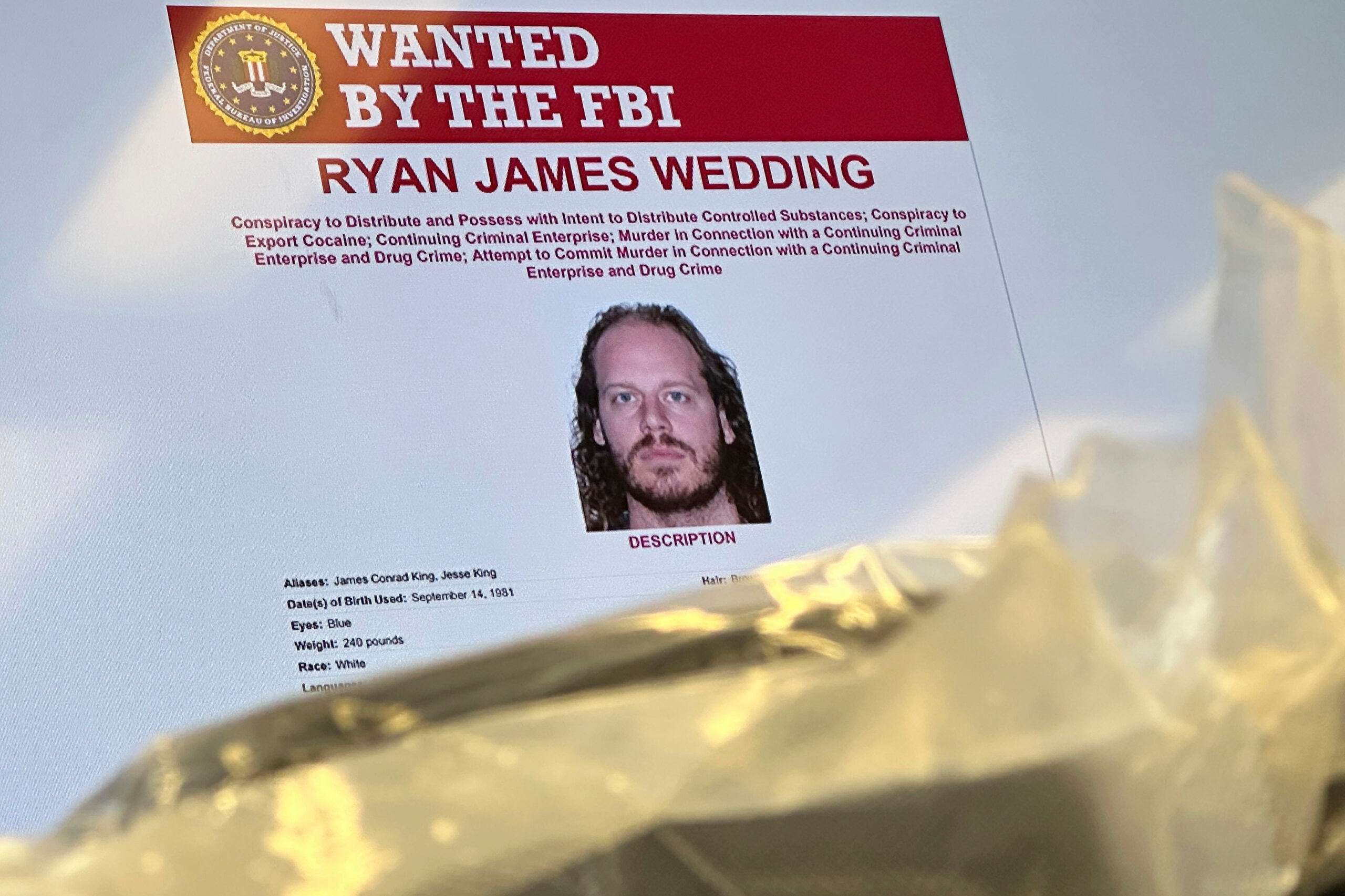
  • Ryan Wedding, a former Olympic snowboarder on the FBI’s ‘Most Wanted’ list, has been arrested

    Ryan Wedding, a former Olympic snowboarder on the FBI’s ‘Most Wanted’ list, has been arrested

    ONTARIO, Calif. — Former Canadian Olympic snowboarder Ryan Wedding, a top FBI fugitive accused of moving some 60 tons of cocaine from Latin America into the United States annually and orchestrating several killings, was arrested in Mexico and then flown to California, officials said Friday.

    Wedding, 44, turned himself in Thursday at the U.S. embassy in Mexico City. FBI Director Kash Patel said his arrest came after U.S. investigators worked with authorities in Mexico, Canada, Colombia, and the Dominican Republic for more than a year.

    Officials say Wedding used semitrucks to move cocaine between Colombia, Mexico, Canada, and Southern California, and they believe he was working under the protection of the Sinaloa Cartel, one of Mexico’s most powerful drug rings. Authorities said his aliases included “El Jefe,” “Public Enemy,” and “James Conrad Kin.”

    “He’s the modern-day El Chapo,” Patel told a news conference in California, comparing Wedding to the legendary former Sinaloa cartel kingpin Joaquín “El Chapo” Guzmán, who is imprisoned in the U.S. after pleading guilty to drug trafficking charges.

    An image of former Canadian Olympic snowboarder Ryan Wedding is displayed on a video monitor along with bricks of cocaine during a news conference at the FBI offices in Los Angeles on Oct. 17, 2024.

    Wedding was previously convicted in the U.S. of conspiracy to distribute cocaine and was sentenced to prison in 2010, federal records show. He now faces charges related to running a multinational drug trafficking ring as well as the killings of a federal witness and three other people.

    It was not immediately known if Wedding had an attorney who could comment on his behalf. He had no lawyers listed in federal court records for the cases pending against him.

    ‘It takes a united front’

    U.S. authorities believe the former Olympian, who competed in a single event for his home country in the 2002 Winter Olympics in Salt Lake City, had been hiding in Mexico for more than a decade before his apprehension.

    Wedding was added to the FBI’s Ten Most Wanted Fugitives list last March, and authorities had offered a $15 million reward for information leading to his arrest and conviction.

    “When you go after a guy like Ryan Wedding, it takes a united front, and that’s what you’re seeing here,” said Patel, who declined to give details about the arrest. He praised Mexico’s government and “global partnerships” for their roles in the operation.

    Mexico’s Security Secretary Omar García Harfuch wrote on X earlier Friday that a Canadian citizen had turned himself in at the U.S. embassy. A member of Mexico’s Security Cabinet later told the Associated Press that individual was Wedding. The person spoke on condition of anonymity because they were not authorized to speak publicly.

    Wedding is expected to appear in federal court Monday, said Akil Davis, assistant director in charge of the FBI field office in Los Angeles.

    Davis said 36 people have been arrested in connection with the drug ring Wedding is accused of running, and authorities seized large volumes of drugs, weapons, and cash, as well as millions of dollars worth of automobiles, motorcycles, artwork, and jewelry from Wedding and others charged in the case. Rewards of up to $2 million are available for information leading to additional arrests and convictions.

    Charges of ordering killings

    Wedding was indicted in 2024 in the U.S. on federal charges of running a criminal enterprise, murder, conspiring to distribute cocaine, and other crimes. Prosecutors said Wedding’s drug ring moved large shipments of cocaine from Colombia through Mexico and California to Canada and other U.S. locations.

    The murder charges accuse Wedding of directing the 2023 killings of two members of a Canadian family in retaliation for a stolen drug shipment, and for ordering a killing over a drug debt in 2024.

    Last November, U.S. Attorney General Pam Bondi announced that Wedding had also been indicted on charges of orchestrating the killing of a witness in Colombia to help him avoid extradition to the U.S.

    Authorities said Wedding and co-conspirators used a Canadian website called “The Dirty News” to post a photograph of the witness so he could be identified and killed. The witness was then followed to a restaurant in Medellín in January and shot in the head.

    Wedding faces separate drug trafficking charges in Canada that date back to 2015, according to the Royal Canadian Mounted Police.

    Second FBI fugitive also apprehended

    Patel identified a second apprehended fugitive as Alejandro Rosales Castillo, a 27-year-old U.S. citizen charged with murder in the 2016 killing of a North Carolina woman. He also faces a federal charge of unlawful flight to avoid prosecution. According to the FBI, Castillo was arrested a week ago in Mexico.

    Mexico has increasingly sent detained cartel members to the U.S. as the country attempts to offset mounting threats by President Donald Trump, who said last month U.S. forces “will now start hitting land” south of the border to target drug trafficking rings.