Category: Wires

  • Venezuela opens debate on an oil sector overhaul as Trump seeks role for U.S. firms

    Venezuela opens debate on an oil sector overhaul as Trump seeks role for U.S. firms

    CARACAS, Venezuela — Venezuela’s legislature opened debate Thursday on a bill to loosen state control over the country’s vast oil sector in the first major overhaul since the late socialist leader Hugo Chávez nationalized parts of the industry in 2007.

    The legislation would create new opportunities for private companies to invest in the oil industry and establish international arbitration for investment disputes.

    Following the U.S. capture of former President Nicolás Maduro earlier this month, the Trump administration has ramped up pressure on acting President Delcy Rodríguez and other allies of the ousted leader to invite greater investment from U.S. energy companies in Venezuela’s flagging oil industry.

    A draft of the proposed legislation, a copy of which was seen by The Associated Press, represents a sharp turn away from the resource nationalism of Chávez, who accused multinationals of colonial exploitation and considered the country’s oil wealth to be state property.

    In apparent response to demands from U.S. oil executives, the proposed legislation would allow private companies to independently operate oil fields, market their own crude output and collect the cash revenues despite remaining, on paper, minority partners to the state oil company.

    “The operating company shall assume the comprehensive management of the execution of the activities, at its sole cost, expense and risk,” the draft says, adding that portions of production volumes “may be directly commercialized by the operating company, once governmental obligations have been fulfilled.”

    Crucially, the bill also would let companies settle legal disputes through arbitration in international courts rather than only local courts.

    The legislation also would keep the current 30% royalty rate, but let the government cut royalties and taxes to as low as 15% for expensive or hard-to-develop oil projects, so that companies would be more willing to invest.

    The president of Venezuela’s National Assembly and the acting president’s brother, Jorge Rodríguez, told lawmakers at the start of Thursday’s debate that the bill aims to “allow an accelerated increase in production” of oil in Venezuela.

    “Oil under the ground is useless,” he said, referring to the need to boost oil production and open up new exploration opportunities.

    Pushed by Delcy Rodríguez, the bill is expected to advance swiftly through the ruling party-dominated legislature. Lawmakers concluded the initial discussion of the bill on Thursday after around two hours and advanced the legislation to a second round of debate, yet to be scheduled.

    During the session, Orlando Camacho, a lawmaker and head of Venezuela’s national Fedeindustria business association, told the assembly that the bill would ensure that Venezuela’s oil industry “remains the engine of the country.”

    The proposed legal guarantees — ensuring that foreign companies can bring claims against Venezuela before international bodies — are necessary to attract private investment, he said.

    Even as President Donald Trump looks to lure American companies to reboot Venezuela’s oil sector, many remain concerned about the financial and legal risks of pouring billions of dollars into the country.

    Plenty of investors have been burned before, their assets seized as Chávez nationalized parts of Venezuela’s lucrative oil industry in 2007. Firms like Exxon have been trying to get the Venezuelan government to compensate them for their billions of dollars in losses ever since, to no avail.

    The current political uncertainty also worries investors. There is no timeline for holding democratic elections in Venezuela after Maduro’s ouster as Rodríguez, long Maduro’s loyal second in command, seeks to consolidate control. The Trump administration also hasn’t said when it will lift the crippling sanctions imposed to weaken Maduro’s government, which further restrict foreign operations in the country’s oil sector.

  • 3 people involved in a Minnesota church protest are arrested

    3 people involved in a Minnesota church protest are arrested

    MINNEAPOLIS — A prominent civil rights attorney and at least two other people involved in an anti-immigration enforcement protest that disrupted a service at a Minnesota church have been arrested, Trump administration officials said Thursday, even as a judge rebuffed related charges against journalist Don Lemon.

    The developments unfolded as Vice President JD Vance arrived in the state.

    Attorney General Pam Bondi announced the arrest of Nekima Levy Armstrong in a post on X. On Sunday, protesters entered the Cities Church in St. Paul, where a local official with U.S. Immigration and Customs Enforcement serves as a pastor. Bondi later posted on X that a second person had been arrested, followed by a third arrested announced by FBI Director Kash Patel.

    The Justice Department quickly opened a civil rights investigation after the group interrupted services by chanting “ICE out” and “Justice for Renee Good,” referring to the 37-year-old mother of three who was fatally shot by an ICE officer in Minneapolis earlier this month.

    “Listen loud and clear: WE DO NOT TOLERATE ATTACKS ON PLACES OF WORSHIP,” the attorney general wrote on X.

    Cities Church belongs to the Southern Baptist Convention and lists one of its pastors as David Easterwood, who leads the local ICE field office. Many Baptist churches have pastors who also work other jobs.

    Attorneys representing the church hailed the arrests.

    “The U.S. Department of Justice acted decisively by arresting those who coordinated and carried out the terrible crime,” said Doug Wardlow, director of litigation for True North Legal, which calls itself a public interest civil rights firm, in a statement.

    Meanwhile, a magistrate judge rejected federal prosecutors’ bid to charge Lemon related to the church protest, a person familiar with the matter said Thursday.

    The person spoke on the condition of anonymity because they were not authorized to publicly discuss the ongoing investigation.

    Lemon, a former NBC10 reporter and anchor, was among those on who entered the church. Lemon has said he is not affiliated with the protest organizers and was there chronicling as a journalist.

    “Once the protest started in the church we did an act of journalism which was report on it and talk to the people involved, including the pastor, members of the church and members of the organization,” Lemon said in a video posted on social media. “That’s it. That’s called journalism.”

    It wasn’t immediately clear what the Justice Department would do after the judge’s decision. Authorities could return to a magistrate judge to again seek a criminal complaint or an indictment against Lemon before a grand jury.

    CNN, which fired Lemon in 2023, first reported the ruling.

    Vance threatens the protesters with prison

    Levy Armstrong, a civil rights attorney and prominent local activist, had called for the pastor affiliated with ICE to resign, saying his dual role poses a “fundamental moral conflict.”

    “You cannot lead a congregation while directing an agency whose actions have cost lives and inflicted fear in our communities,” she said Tuesday. “When officials protect armed agents, repeatedly refuse meaningful investigation into killings like Renee Good’s, and signal they may pursue peaceful protesters and journalists, that is not justice — it is intimidation.”

    Prominent leaders of the Southern Baptist Convention have come to the church’s defense, arguing that compassion for migrant families affected by the crackdown cannot justify violating a sacred space during worship.

    Vance, speaking in Toledo ahead of his Minnesota visit, warned the church protesters: “Those people are going to be sent to prison so long as we have the power to do so. We’re going to do everything we can to enforce the law.”

    Arrests follow DOJ civil rights investigation

    A longtime activist in the Twin Cities metropolitan area, Levy Armstrong has helped lead local protests after the high-profile police-involved killings of Black Americans, including George Floyd, Philando Castile and Jamar Clark. She is a former president of the NAACP’s Minneapolis branch.

    Homeland Security Secretary Kristi Noem posted a photo on X of Levy Armstrong with her arms behind her back next to a person wearing a badge. Noem said she faces a charge under a statute that bars threatening or intimidating someone exercising a right.

    FBI Director Kash Patel posted on X that Chauntyll Louisa Allen, the second person Bondi said was arrested, is charged under the Freedom of Access to Clinic Entrances Act, which prohibits physically obstructing or using the threat of force to intimidate or interfere with a person seeking reproductive health services or seeking to participate in a service at a house of worship. Patel said William Kelly has also been arrested.

    It’s unclear which attorneys would represent Allen and Kelly.

    Saint Paul Public Schools, where Allen is a member of the board of education, is aware of her arrest but will not comment on pending legal matters, according to district spokesperson Erica Wacker.

    Allen and Levy Armstrong are part of a community of Black Minnesota activists who have protested the deaths of African Americans at the hands of police.

    Kelly defended the protest during a news conference Tuesday, criticizing the church for its association with a pastor who works for ICE.

    The Justice Department’s swift investigation into the church protest stands in contrast to its decision not to open a civil rights investigation into the killing of Good. Deputy Attorney General Todd Blanche said last week there was “no basis” for a civil rights investigation into her death.

    Administration officials have said the officer acted in self-defense and that the driver of the Honda was engaging in “an act of domestic terrorism” when she pulled toward him. But the decision not to have the department’s Civil Rights Division investigate marked a sharp departure from past administrations, which have moved quickly to probe shootings of civilians by law enforcement officials.

    The Justice Department has separately opened an investigation into whether Minnesota officials impeded or obstructed federal immigration enforcement though their public statements. Prosecutors this week sent subpoenas to the offices of Gov. Tim Walz, Attorney General Keith Ellison, Minneapolis Mayor Jacob Frey, St. Paul Mayor Kaohly Her and officials in Ramsey and Hennepin counties, according to a person familiar with the matter.

    VP visits Minnesota

    Vance, a Republican, arrived amid tense interactions between federal immigration law enforcement authorities and residents. State and local elected officials have opposed the crackdown that has become a major focus of Department of Homeland Security sweeps.

    His visit comes less than a month after Good was killed. He has called Good’s death a “tragedy of her own making.”

    Vance said early Thursday that the “far left” has decided the U.S. shouldn’t have a border.

    “If you want to turn down the chaos in Minneapolis, stop fighting immigration enforcement and accept that we have to have a border in this country. It’s not that hard,” Vance said.

    A federal appeals court this week suspended a decision that barred immigration officers from using tear gas or pepper spray against peaceful protesters in Minnesota. The 8th U.S. Circuit Court of Appeals froze the ruling that had barred retaliation, including detaining people who follow agents in cars.

    After the court’s stay, U.S. Border Patrol official Greg Bovino, who has commanded the administration’s big-city immigration campaign, was seen on video repeatedly warning protesters on a snowy Minneapolis street “Gas is coming!” before tossing a canister that released green smoke into the crowd.

    Bovino, speaking Thursday during a news conference, urged better cooperation from local and state officials in Minnesota, and blamed an “influx of anarchists” for the anti-ICE sentiment.

    “The current climate confronting law enforcement … is not very favorable right now in Minneapolis,” he said. The Associated Press left messages for the Minneapolis Police Department requesting its response to Bovino’s comments.

  • Jack Smith defends his Trump investigations at a public congressional hearing

    Jack Smith defends his Trump investigations at a public congressional hearing

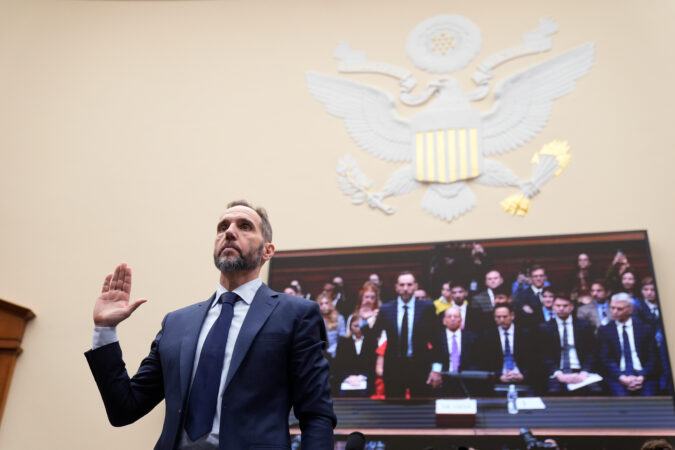
    WASHINGTON — Former Justice Department special counsel Jack Smith on Thursday defended his investigations of Donald Trump at a public congressional hearing in which he insisted that he had acted without regard to politics and had no second thoughts about the criminal charges he brought.

    “No one should be above the law in our country, and the law required that he be held to account. So that is what I did,” Smith said of Trump.

    Smith testified behind closed doors last month but returned to the House Judiciary Committee for a public hearing that provided the prosecutor with a forum to address Congress and the country more generally about the breadth of evidence he collected during investigations that shadowed Trump during the 2024 presidential campaign and resulted in indictments. The hourslong hearing immediately split along partisan lines as Republican lawmakers sought to undermine the former Justice Department official while Democrats tried to elicit damaging testimony about Trump’s conduct and accused their GOP counterparts of attempting to rewrite history.

    “It was always about politics,” said Rep. Jim Jordan of Ohio, the committee’s Republican chairman.

    “Maybe for them,” retorted Rep. Jamie Raskin, the panel’s top Democrat, during his own opening statement. “But, for us, it’s all about the rule of law.”

    The hearing was on the mind of Trump himself as he traveled back from the World Economic Forum in Davos, Switzerland, with the president posting on his Truth Social account that Smith was being “DECIMATED before Congress” — presumably reference to the Republican attacks he faced. Trump said Smith had “destroyed many lives under the guise of legitimacy.”

    Smith told lawmakers that he stood behind his decisions as special counsel to bring charges against Trump in separate cases that accused the Republican of conspiring to overturn the 2020 presidential election after he lost to Democrat Joe Biden and hoarding classified documents at his Mar-a-Lago estate in Palm Beach, Fla., after he left the White House.

    “Our investigation developed proof beyond a reasonable doubt that President Trump engaged in criminal activity,” Smith said. “If asked whether to prosecute a former president based on the same facts today, I would do so regardless of whether that president was a Republican or a Democrat.”

    Republicans, Smith spar over phone records

    Republicans from the outset sought to portray Smith as an overly aggressive, hard-charging prosecutor who had to be “reined in” by higher-ups and the courts as he investigated Trump. They also seized on revelations that the Smith team had collected and analyzed phone records of more than a half-dozen Republican lawmakers who were in contact with Trump on Jan. 6, 2021, as his supporters stormed the Capitol in a bid to halt the certification of his 2020 election loss.

    The records revealed the length and time of the calls but not the content of the communications, but Rep. Brandon Gill, a Texas Republican, said the episode showed how Smith had “walked all over the Constitution.”

    “My office didn’t spy on anyone,” Smith said, explaining that collecting phone records is a common prosecutorial tactic and necessary in this instance to help prosecutors understand the scope of the conspiracy.

    Smith describes a wide-ranging conspiracy on 2020

    Under questioning, Smith described what he said was a wide-ranging conspiracy to overturn the results of the election that Trump lost to Democrat Joe Biden and alleged how the Republican refused to listen to advisers who told him that the contest had in fact not been stolen. After he was charged, Smith said, Trump tried to silence and intimidate witnesses.

    Smith said one reason he felt confident in the strength of the case that prosecutors had prepared to take to trial was the extent to which it relied on Republican supporters of Trump.

    “Some of the most powerful witnesses were witnesses who, in fact, were fellow Republicans who had voted for Donald Trump, who had campaigned for him and who wanted him to win the election,” Smith said.

    The hearing unfolded against the backdrop of an ongoing Trump administration retribution campaign targeting the investigators who scrutinized the Republican president and amid mounting alarm that the Justice Department’s institutional independence is eroding under the sway of the president.

    In a nod to those concerns, Smith said: “I believe that if we don’t call people to account when they commit crimes in this context, it can endanger our election process, it can endanger election workers and, ultimately, our democracy.”

    Smith was appointed in 2022 by Biden’s Justice Department to oversee investigations into Trump, who has denied any wrongdoing. Both investigations produced indictments against Trump, but the cases were abandoned by Smith and his team after Trump won back the White House because of longstanding Justice Department legal opinions that say sitting presidents cannot be indicted.

    GOP says Smith wanted to wreck Trump’s White House bid

    Republicans for their part repeatedly denounced Smith, with California Rep. Kevin Kiley accusing him of seeking “maximum litigation advantage at every turn” and “circumventing constitutional limitations to the point that you had to be reined in again and again throughout the process.”

    Another Republican lawmaker, Rep. Ben Cline of Virginia, challenged Smith on his efforts to bar Trump from making incendiary comments about witnesses. Smith said the order was necessary because of Trump’s efforts to intimidate witness, but Cline asserted that it was meant to silence Trump in the heat of the presidential campaign.

    And Jordan, the committee chairman, advanced a frequent Trump talking point that the investigation was driven by a desire to derail Trump’s candidacy.

    “We should never forget what took place, what they did to the guy we the people elected twice,” Jordan said.

    Smith vigorously rejected those suggestions and said the evidence placed Trump’s actions squarely at the heart of a criminal conspiracy to undo the 2020 election.

    “The evidence here made clear that President Trump was by a large measure the most culpable and most responsible person in this conspiracy,” Smith said. “These crimes were committed for his benefit. The attack that happened at the Capitol, part of this case, does not happen without him. The other co-conspirators were doing this for his benefit.”

  • The decision to move ISIS prisoners from Syria to Iraq came at the request of Baghdad, officials say

    The decision to move ISIS prisoners from Syria to Iraq came at the request of Baghdad, officials say

    BAGHDAD — The decision to move prisoners of the Islamic State group from northeast Syria to detention centers in Iraq came after a request by officials in Baghdad that was welcomed by the U.S.-led coalition and the Syrian government, officials said Thursday.

    American and Iraqi officials told The Associated Press about the Iraqi request, a day after the U.S. military said that it started transferring some of the 9,000 IS detainees held in more than a dozen detention centers in northeast Syria controlled by the Kurdish-led Syrian Democratic Forces, or SDF, in northeast Syria.

    The move to start transferring the detainees came after Syrian government forces took control of the sprawling al-Hol camp — which houses thousands of mostly women and children — from the SDF, which withdrew as part of a ceasefire. Troops on Monday seized a prison in the northeastern town of Shaddadeh, where some IS detainees escaped and many were recaptured, state media reported.

    The SDF said on Thursday that government forces shelled al-Aqtan prison near the northern Syrian city of Raqqa with heavy weapons, while simultaneously imposing a siege around the prison using tanks and deploying fighters.

    Al-Aqtan prison, where some IS prisoners are held, was surrounded by government forces earlier this week and negotiations were ongoing on the future of the detention facility.

    Concerns about escapes

    With the push by government forces into northeast Syria along the border with Iraq, Baghdad became concerned that some of the detainees might become a danger to Iraq’s security, if they managed to flee from the detention centers amid the chaos.

    An Iraqi security official said that the decision to transfer the prisoners from Syria to Iraq was an Iraqi decision, welcomed by the U.S.-led coalition and the Syrian government. The official said that it was in Iraq’s security interest to detain them in Iraqi prisons rather than leaving them in Syria.

    Also Thursday, a senior U.S. military official confirmed to the AP that Iraq “offered proactively” to take the IS prisoners rather than the U.S. requesting it of them.

    A Syrian foreign ministry official said that the plan to transfer IS prisoners from Syria to Iraq had been under discussion for months before the recent clashes with the SDF.

    All three officials spoke on condition of anonymity because they weren’t authorized to comment publicly.

    Over the past several years, the SDF has handed over to Iraqi authorities foreign fighters, including French citizens, who were put on trial and received sentences.

    The SDF still controls more than a dozen detention facilities holding around 9,000 IS members, but is slated to hand the prisons over to government control under a peace process that also is supposed to eventually merge the SDF with government forces.

    U.S. Central Command said that the first transfer on Wednesday involved 150 IS members, who were taken from Syria’s northeastern province of Hassakeh to “secure locations” in Iraq. The statement said that up to 7,000 detainees could be transferred to Iraqi-controlled facilities.

    Iraq has beefed up patrols along its border with Syria. On Thursday, tanks lined up along the frontier in the northern province of Sinjar.

    Members of the Yazidi minority in Sinjar have been particularly fearful of a repeat of 2014 when IS militants overran the area and launched particularly brutal attacks on Yazidis, considered by the extremist group to be heretics. Militants killed Yazidi men and boys and sold women into sexual slavery or forced them to convert and marry militants.

    Stark warning

    IS declared a caliphate in 2014 in large parts of Syria and Iraq, attracting large numbers of fighters from around the world.

    The militant group was defeated in Iraq in 2017, and in Syria two years later, but IS sleeper cells still carry out deadly attacks in both countries. As a key U.S. ally in the region, the SDF played a major role in defeating IS.

    Also Thursday, the SDF accused the government of violating a four-day truce declared on Tuesday. It said Syrian government forces pounded the southern outskirts of the northern town of Kobani, which recently became besieged after the government’s push in the northeast over the past two weeks.

    A commander with the Kurdish women’s militia in Syria, speaking from inside Kobani, told reporters during an online news conference that living conditions there are deteriorating.

    Nesrin Abdullah of the Women’s Protection Units, or YPJ, said that if the fighting around Kobani continues, thousands of people “will be massacred.”

    She said that there was no electricity or running water in the town, which a decade ago became the symbol of resistance against IS. The militants at the time besieged it for months before being pushed back.

    “The people here are facing a genocide,” she said. “We have many people in hospitals, and hospitals cannot continue if there is no electricity.”

    U.N. Assistant Secretary-General Khaled Khiari told the U.N. Security Council Thursday that clashes were taking place in parts of Hassakeh province and also on the outskirts of Kobani, an enclave controlled by the SDF, and that the situation on the ground elsewhere was “very tense.”

  • Trump rolls out his Board of Peace, but many top U.S. allies aren’t participating

    Trump rolls out his Board of Peace, but many top U.S. allies aren’t participating

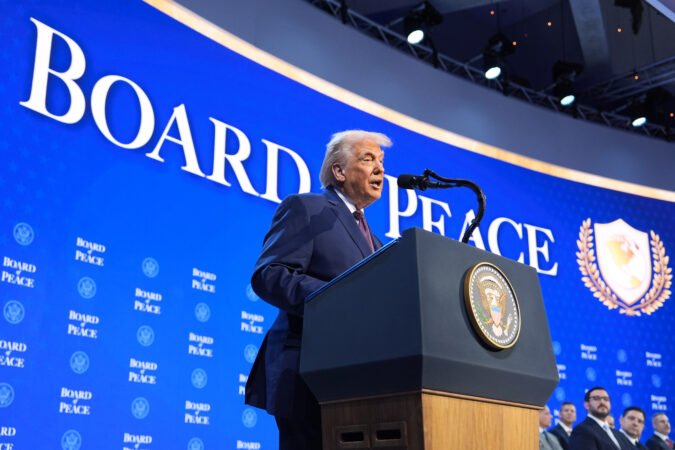
    DAVOS, Switzerland — President Donald Trump on Thursday inaugurated his Board of Peace to lead efforts at maintaining a ceasefire in Israel’s war with Hamas, insisting that “everyone wants to be a part” of the body he said could eventually rival the United Nations — despite many U.S. allies opting not to participate.

    In a speech at the World Economic Forum, Trump sought to create momentum for a project to map out a future of the war-torn Gaza Strip that has been overshadowed this week, first by his threats to seize Greenland, then by a dramatic retreat from that push.

    “This isn’t the United States, this is for the world,” he said, adding, “I think we can spread it out to other things as we succeed in Gaza.”

    The event featured Ali Shaath, the head of a new, future technocratic government in Gaza, announcing that the Rafah border crossing will open in both directions next week. But there was no confirmation of that from Israel, which said only that it would consider the matter next week.

    The Gaza side of the crossing, which runs between Gaza and Egypt, is currently under Israeli military control. Shaath, an engineer and former Palestinian Authority official from Gaza, is overseeing the Palestinian committee set to govern the territory under U.S. supervision.

    The new peace board was initially envisioned as a small group of world leaders overseeing the ceasefire, but it has morphed into something far more ambitious — and skepticism about its membership and mandate has led some countries usually closest to Washington to take a pass.

    Trump tried not to let those not participating ruin his unveiling party, saying 59 countries had signed onto the board — even though heads of state, top diplomats and other officials from only 19 countries plus the U.S. actually attended the event. He told the group, ranging from Azerbaijan to Paraguay to Hungary, “You’re the most powerful people in the world.”

    Trump has spoken about the board replacing some U.N. functions and perhaps even making that entire body obsolete one day. But he was more conciliatory in his remarks on the sidelines of the forum in the Swiss alps.

    “We’ll do it in conjunction with the United Nations,” Trump said, even as he denigrated the U.N. for doing what he said wasn’t enough to calm some conflicts around the globe.

    Secretary of State Marco Rubio said some countries’ leaders have indicated they plan to join but still require approval from their parliaments.

    Why some countries aren’t participating

    Big questions remain, however, about what the eventual board will look like.

    Russian President Vladimir Putin said his country is still consulting with Moscow’s “strategic partners” before deciding to commit. The Russian was hosting Palestinian President Mahmoud Abbas on Thursday in Moscow.

    Others are asking why Putin and other authoritarian leaders had even been invited to join. Britain’s foreign secretary, Yvette Cooper, said her country wasn’t signing on “because this is about a legal treaty that raises much broader issues.”

    “And we do also have concerns about President Putin being part of something which is talking about peace, when we have still not seen any signs from Putin that there will be a commitment to peace in Ukraine,” she told the BBC.

    Norway and Sweden have indicated they won’t participate. France declined after its officials stressed that while they support the Gaza peace plan, they were concerned the board could seek to replace the U.N.

    Canada, Ukraine, China, and the executive arm of the European Union also haven’t committed. Trump calling off the steep tariffs he threatened over Greenland could ease some allies’ reluctance, but the issue is still far from settled.

    The Kremlin said Thursday that Putin plans to discuss his proposal to send $1 billion to the Board of Peace and use it for humanitarian purposes during his talks with Abbas — if Russia can use of those assets the U.S. had previously blocked.

    Others voice reservations

    The idea for the Board of Peace was first laid out in Trump’s 20-point Gaza ceasefire plan and even was endorsed by the U.N. Security Council.

    But an Arab diplomat in a European capital said that Middle Eastern governments coordinated their response to Trump’s invitation to join the Board of Peace and that it was crafted to limit the acceptance to the Gaza plan as mandated by the U.N. Security Council.

    Speaking on the condition of anonymity to discuss the matter more freely, the diplomat said the announced acceptance is “preliminary” and that the charter presented by the U.S. administration contradicts in some parts the United Nations’ mission. The diplomat also said that other major powers are unlikely to support the board in its current form.

    Months into the ceasefire, Gaza’s more than 2 million Palestinians continue to suffer the humanitarian crisis unleashed by more than two years of war. And violence in Gaza continues.

    Key to the truce continuing to hold is the disarming of Hamas, something that the militant group that has controlled the Palestinian territory since 2007 has refused to do, despite Israel seeing it as non-negotiable. Trump on Thursday repeated his frequent warnings that the group will have to disarm or face dire consequences.

    He also said the war in Gaza “is really coming to an end” while conceding, “We have little fires that we’ll put out. But they’re little,” and they had been “giant, giant, massive fires.”

    Iran looms large

    Trump’s push for peace also comes after he threatened military action this month against Iran as it carried out a violent crackdown against some of the largest street protests in years, killing thousands of people.

    Trump, for the time being, has signaled he won’t carry out any new strikes on Iran after he said he received assurances that the Islamic government would not carry out the planned hangings of more than 800 protesters.

    But Trump also made the case that his tough approach to Tehran — including strikes on Iran’s nuclear facilities in June last year — was critical to the Israel-Hamas ceasefire deal coalescing.

    Meanwhile, Trump also spoke behind closed doors for about an hour with Ukrainian President Volodymyr Zelensky and called the discussion “very good” without mentioning major breakthroughs. Trump’s special envoy Steve Witkoff and his son-in-law Jared Kushner are expected in Moscow for talks aimed at ending Russia’s nearly 4-year-old war in Ukraine.

    Zelensky later addressed the Davos forum and said there would be two days of trilateral meetings involving the U.S., Ukraine and Russia in the United Arab Emirates starting Friday — following the U.S. talks in Moscow.

    “Russians have to be ready for compromises because, you know, everybody has to be ready, not only Ukraine, and this is important for us,” Zelensky said.

  • After ‘good’ Trump meeting, Zelensky pushes Europe hard to do more

    After ‘good’ Trump meeting, Zelensky pushes Europe hard to do more

    KYIV — Ukrainian President Volodymyr Zelensky aimed a blistering speech at Europe during the World Economic Forum on Thursday after a last-minute meeting with President Donald Trump, which both leaders described as “good,” saying framework documents between the two countries — in hopes of ending the conflict — were nearing the final stages.

    After nearly four years of full-scale war, Zelensky described how life in Ukraine felt like the movie Groundhog Day with ramped-up attacks coming amid a brutally cold winter. All the while Europe is still unequipped to defend itself against Russia, he said, which has not slowed its assault since 2022.

    In the face of European weakness, Zelensky said, “the backstop of Trump is needed” with no security guarantees functioning without the United States. He emphasized that Europe needed to be a united force: “Europe should not be a salad of small and middle powers.”

    “Europe loves to discuss the future but avoids taking action today, action that defines what kind of future we will have,” Zelensky said in his speech in Davos, Switzerland, following the hourlong meeting with Trump. “If [Russian President Vladimir] Putin decides to take Lithuania or strike Poland, who will respond? … Tomorrow you may have to defend your way of life.”

    The speech, which received a standing ovation, didn’t appear to have been originally scheduled. Zelensky scrambled to get to Switzerland after Trump on Wednesday unexpectedly said that he planned to meet with Zelensky that very day, adding that he might even “be in the audience.”

    In fact, Zelensky was still in Kyiv. He had told reporters on Tuesday — as the forum was already underway — that he would likely remain in the capital, “choosing Ukraine, not an economic forum,” as millions of Ukrainians froze in their homes and workers rushed to fix an electrical grid battered by Russian drones and missiles.

    Some had hoped a bilateral meeting might lead to the inking of frameworks for security guarantees and postwar economic recovery, with officials hinting the two countries were close to the finish line. But a senior Ukrainian official on Thursday said that no documents had been prepared for signing in Davos, and a key priority of the meeting was to discuss additional air defense systems.

    In his speech, however, Zelensky did say that the documents to end the war “are nearly ready and that really matters.” He added, however, that more pressure needed to be put on Russia to make it agree to end the war and Ukraine couldn’t be the only country making compromises.

    The meeting in the Swiss Alps was closed to the press and there were no statements at its conclusion. On his way out, however, Trump told reporters that “the meeting was good with President Zelensky, we still have a ways to go” — stepping back from his message on Wednesday, that both sides were “reasonably close” and “at a point now where they can come together and get a deal done. And if they don’t, they’re stupid.”

    He added that the message his envoys would take to Putin Thursday night in Moscow would be “the war needed to end.”

    At a question-and-answer session following his speech Thursday, Zelensky acknowledged that “this last mile is very difficult” and “Russians have to be ready for compromises, not just Ukraine.”

    Despite the optimism expressed by the White House, the two sides still appear to be far apart in negotiations. In a news conference Tuesday, Russian Foreign Minister Sergei Lavrov called into question any deal that allowed the continuing existence of the current Ukrainian government.

    “Any settlement proposal founded on the primary goal of preserving the current Nazi regime in what remains of the Ukrainian state is, naturally, completely unacceptable to us,” he said.

    White House envoy Steve Witkoff and Trump’s son-in-law Jared Kushner — who met with lead Ukrainian negotiator Rustem Umerov on the sidelines of the forum — will meet with Putin late on Thursday. Speaking at the forum’s Ukrainian Breakfast on Thursday morning, Witkoff said that he felt “encouraged” and described the Ukrainian people as “so courageous in this fight … under some real difficult conditions.”

    “I think we’ve got it down to one issue, and we have discussed iterations of that issue,” Witkoff said, appearing to gesture at territorial concessions, one of the most contentious aspects of the negotiations and a red line for Ukraine. “That means it’s solvable. So if both sides want to solve this, we are going to get this solved; that’s my view.”

    Previous meetings between Witkoff and Putin have lasted hours and will likely continue into early Friday morning, though Witkoff said he will not be spending the night and will continue on to Abu Dhabi, capital of the United Arab Emirates, afterward. Two days of trilateral meetings will be held there between Ukraine, the United States and Russia.

    Kremlin spokesman Dmitry Peskov declined to comment on whether the Kremlin shared Witkoff’s optimism that a deal was close. At a news conference, Putin said he would also discuss Russia’s contribution to Trump’s Board of Peace with Witkoff and Kushner.

    As world leaders congregated in Davos, enjoying mountain views, plush lodges and crackling fireplaces, Ukraine’s power grid remained crippled during one of the coldest winters in years. Without electricity, many Ukrainians sought refuge in restaurants and coffee shops, kept running by generators. Outside, inches of ice slicked the streets and sidewalks. The windows of thousands of apartments remained dark.

    Concluding his speech, Zelensky said, “Let’s end this Groundhog Day.”

  • Former Uvalde officer acquitted for response to 2022 school shooting

    Former Uvalde officer acquitted for response to 2022 school shooting

    A Texas jury on Wednesday acquitted a former Uvalde school police officer on 29 counts of child endangerment after he remained outside Robb Elementary School instead of immediately confronting the gunman who killed 19 children and two teachers in their classrooms in 2022.

    The verdict is a major setback for prosecutors, who portrayed the case against Adrian Gonzales as a way to deliver justice and accountability for one of the deadliest school shootings in U.S. history.

    Instead, jurors appeared to agree with Gonzales’ lawyers, who described him as unfairly singled out among the hundreds of law enforcement officers who arrived on the scene — a response that investigators said was marked by significant communication failures and poor decision-making.

    Had he been convicted, Gonzales, 52, faced up to two years in prison.

    The former officer of the six-member Uvalde Consolidated Independent School District Police Department was one of the first law enforcement personnel to respond on that sunny May day, when a teenage shooter walked into Robb Elementary through an unlocked door and opened fire inside two adjoining fourth-grade classrooms.

    Prosecutors argued that Gonzales bore particular responsibility for the tragedy. They focused on his initial encounter with a frantic woman fleeing the school, who pointed toward the general location of the shooter as gunfire was heard inside, and his subsequent decision not to immediately rush in, which they said went against his active-shooter training.

    However, defense lawyers noted that four other officers got to the school at almost the same time but also did not enter right away to confront the gunman. Unlike Gonzales, three of them were in a position to see the assailant, his lawyers said. One thought he spotted the shooter outside the school and asked for permission to fire, his superior officer testified.

    Minutes after he arrived, Gonzales did go into the school with several other officers. Gunman Salvador Ramos, armed with an AR-style rifle, shot at them, grazing two, and the group retreated.

    Nearly 400 officers ultimately converged on the school but did not breach the classroom where Ramos was located until more than an hour after he’d entered the building. A tactical unit shot and killed him.

    Emotions ran high during the three-week trial, which featured wrenching testimony from teachers who survived the shooting and parents whose children were among the murdered and wounded.

    The prosecution is “trying to hijack your emotion to circumvent your reason,” defense attorney Nico LaHood told jurors. Gonzales was “easy pickings,” he said. “The man at the bottom of the totem pole.”

    Both of Gonzales’ lawyers repeatedly acknowledged the grief of families and the community. “There’s nothing that’s going to bring these kids back,” Jason Goss said during closing arguments Wednesday. “Nothing is ever going to solve that pain.”

    But, he added, “You do not honor their memory by doing an injustice in their name.”

    Gonzales is one of two former officers to be charged in connection with the mass killing. Pete Arredondo, the former chief of Uvalde’s school district police, is also set to stand trial on charges of child endangerment. Arredondo has pleaded not guilty.

    Wednesday’s verdict marks the second time that a jury has declined to convict a school police officer for failing to stop a school shooting. In 2023, Scot Peterson, a sheriff’s deputy who worked as a security officer at Marjory Stoneman Douglas High School in Parkland, Fla., was acquitted of similar charges. Five years earlier, a gunman had killed 17 students, teachers and staff members at the school.

    Gonzales’ trial took place before Judge Sid Harle in Corpus Christi, more than 200 miles from Uvalde, after the defense argued that a change of venue was necessary to obtain an impartial verdict. Jurors began deliberating early afternoon Wednesday.

    Gonzales, in a blue suit and a tie patterned with crosses, wept and hugged one of his lawyers after the verdict was read. He had not testified in his own defense, but prosecutors played an hour-long video, recorded not long after the shooting, in which he recounted his actions at the school.

    Christina Mitchell, the district attorney for Uvalde County, had told jurors that returning a guilty verdict would send a message to all law enforcement officers about their duties to members of the public and children in particular.

    The children inside Robb Elementary had followed their lockdown training, staying quiet and hidden, she said, while Gonzales did not run to confront the shooter, as his training suggested.

    “We’re not going to continue to teach children to rehearse their own death and not hold [officers] to the training that’s mandated by the law,” Mitchell said. “We cannot let 19 children die in vain.”

    Mothers of several of the children killed in the massacre cried together outside the Nueces County courthouse Wednesday night. Relatives of another victim, 9-year-old Jacklyn Cazares, reacted with fury immediately after the verdict.

    “I’m angry,” said her father, Javier Cazares, in video provided by local television station KSAT. “We had a little hope, but it wasn’t enough.”

  • ‘Sinners’ makes Oscars history with 16 nominations

    ‘Sinners’ makes Oscars history with 16 nominations

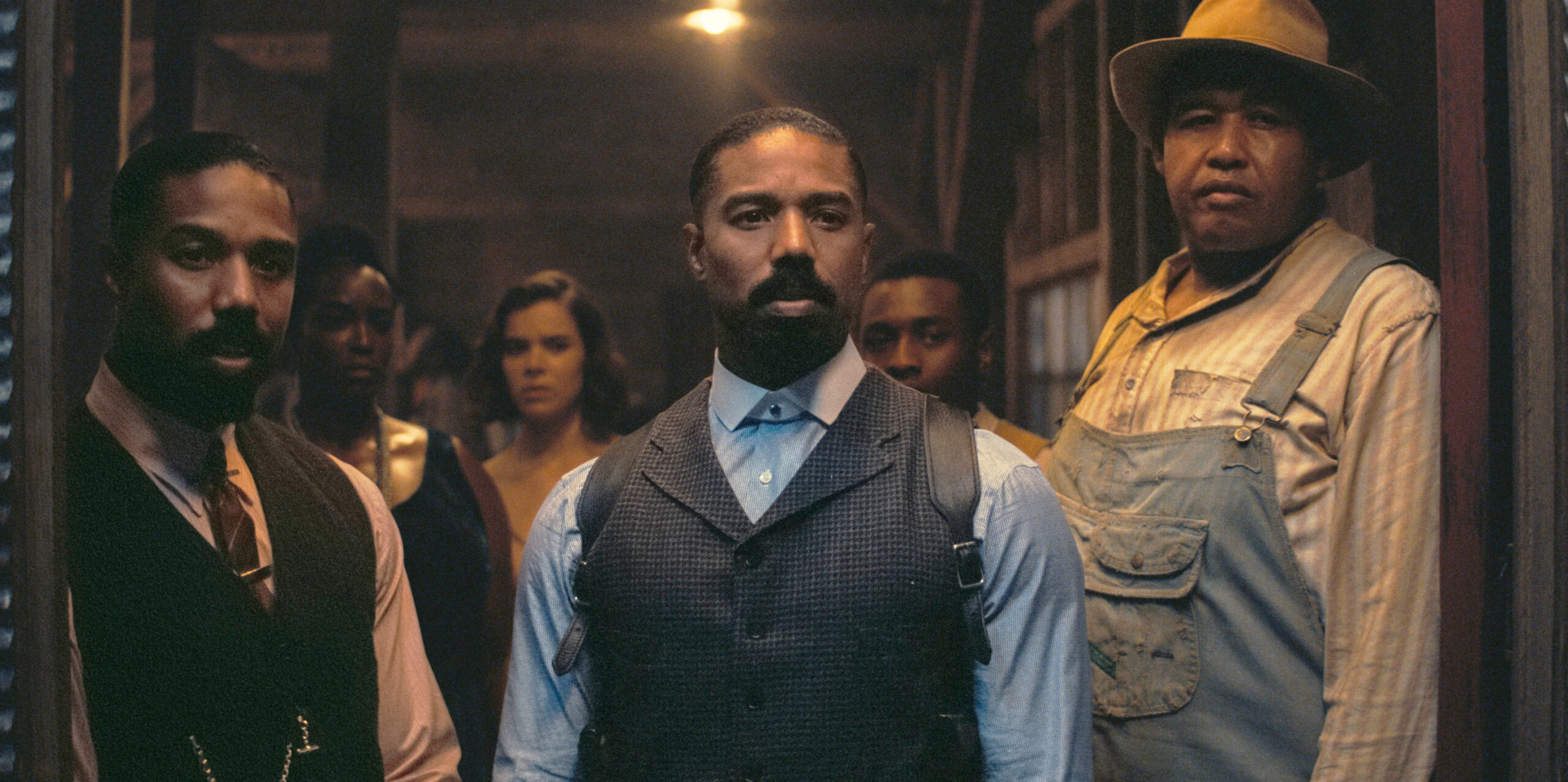
    Ryan Coogler’s blues-steeped vampire epic Sinners led all films with 16 nominations to the 98th Academy Awards on Thursday, setting a record for the most in Oscar history.

    Academy of Motion Picture Arts and Sciences voters showered Sinners with more nominations than they had ever bestowed before, breaking the 14-nomination mark set by All About Eve, Titanic, and La La Land. Along with best picture, Coogler was nominated for best director and best screenplay, and double-duty star Michael B. Jordan was rewarded with his first Oscar nomination, for best actor.

    Paul Thomas Anderson’s father-daughter revolutionary saga One Battle After Another, the favorite coming into nominations, trailed in second with 13 of its own. Four of its actors — Leonardo DiCaprio, Teyana Taylor, Benicio del Toro, and Sean Penn — were nominated, though newcomer Chase Infiniti was left out in best actress.

    Double-duty “Sinners” star Michael B. Jordan was rewarded with his first Oscar nomination for best actor.

    In those two top nominees, the film academy put its full force behind a pair of visceral and bracingly original American epics that each connected with a fraught national moment. Coogler’s Jim Crow-era film — the rare horror movie to win the academy’s favor — conjures a mythical allegory of Black life. In One Battle After Another, a dormant spirit of rebellion is revived in an out-of-control police state.

    Both are also Warner Bros. titles. In the midst of a contentious sale to Netflix, the 102-year-old studio had one of its best Oscar nominations mornings ever, with 30 nods. As the fate of Warner Bros., which Netflix is buying for $72 billion, hangs in the balance amid a challenge from Paramount Skydance, Hollywood is bracing for potentially the largest realignment in the film industry’s history.

    A coronation for Coogler

    For Coogler, the 39-year-old filmmaker of Fruitvale Station and Black Panther, it was a crowning moment. One of Hollywood’s most esteemed yet humble filmmakers, Coogler has called Sinners — a film that he will own outright 25 years after its release — his most personal movie.

    “I wrote this script for my uncle who passed away 11 years ago,” Coogler said in an interview Thursday morning. “I got to imagine that he’s listening to some blues music right now to celebrate.”

    Reached by phone an hour after the nominations were read, Coogler — speaking alongside his wife and producer Zinzi Evans and producer Sev Ohanian — was still trying to process the movie’s record-breaking haul.

    “I love making movies. I’m honored to wake up every day and do it. I was writing last night. That’s why I didn’t get too much sleep,” said Coogler, chuckling. ”Honestly, bro, I still feel a little bit asleep right now.”

    The other top nominees

    The 10 films nominated for best picture are Bugonia, F1, Frankenstein, Hamnet, Marty Supreme, One Battle After Another, The Secret Agent, Sentimental Value, Sinners, and Train Dreams.

    Guillermo del Toro’s lush Mary Shelley adaptation Frankenstein, Josh Safdie’s period Ping-Pong odyssey Marty Supreme, and Joachim Trier’s family drama Sentimental Value all scored nine nominations. Chloé Zhao’s speculative Shakespeare drama Hamnet collected eight nods. With the notable exception of del Toro, those filmmakers filled up a best director category of Anderson, Coogler, Safdie, Trier, and Zhao, who in 2021 became the first woman of color to ever win the award.

    The nine nods for Marty Supreme included a third best actor nod for 30-year-old Timothée Chalamet, the favorite in the category he narrowly missed winning last year for A Complete Unknown. With Jordan and Chalamet, the nominees are Leonardo DiCaprio for One Battle After Another, Ethan Hawke for Blue Moon and Wagner Moura for The Secret Agent.

    Nominated for best actress was the category favorite, Jessie Buckley (Hamnet), along with Rose Byrne (If I Had Legs I’d Kick You), Kate Hudson (Song Sung Blue), Renate Reinsve (Sentimental Value) and two-time winner Emma Stone, who landed her sixth nomination, for Bugonia.

    ‘KPop’ leads a field light on big hits

    The year’s most-watched movie, with more than half a billion views on Netflix, KPop Demon Hunters, scored nominations for both best song (“Golden”) and best animated feature. Sony Pictures developed and produced the film, but, after selling it to Netflix, watched it become a worldwide sensation.

    Blockbusters otherwise had a difficult morning. Universal Pictures’ Wicked: For Good was shut out entirely. While Avatar: Fire and Ash notched nominations for costume design and visual effects, it became the first Avatar film not nominated for best picture. The biggest box-office hit nominated for Hollywood’s top award instead was F1, an Apple production that landed four nominations. The streamer partnered with Warner Bros. to distribute the racing drama.

    This year, the Oscars are introducing a new category for casting. That new honor helped Sinners and One Battle After Another pad their already impressive stats. Along with those two films, the nominees are Hamnet, Marty Supreme, and The Secret Agent.

    An international shift continues

    The academy, which has expanded its overseas membership in recent years, also continued its tilt toward international films. Every category included one international nominee. For the eighth year in the row, a non-English-language film was nominated for best picture. More non-English performances were nominated than ever before.

    The top nominee of them all was Trier’s Norwegian drama Sentimental Value. It cleaned up in the supporting actor categories, with nods for Stellan Skarsgård, Inga Ibsdotter LilIeaas, and Elle Fanning. Also nominated for best supporting actress, in addition to Taylor: Amy Madigan for Weapons and Wunmi Mosaku for Sinners. In supporting actor, the nominees included Jacob Elordi for Frankenstein and, in a surprise that likely dislodged Paul Mescal of Hamnet, Delroy Lindo for Sinners.

    A competitive best international feature category mirrored the turbulent state of the world. That included the Iranian revenge drama and Palme d’Or winner It Was Just an Accident, by the often-imprisoned filmmaker Jafar Panahi. He’s spoken passionately against the ongoing crackdown of demonstrators in his home country. France nominated the film.

    Also nominated: the Tunisian entry The Voice of Hind Rajab, about volunteers at the Palestine Red Crescent Society; the timely Brazilian political thriller The Secret Agent; the apocalyptic Spanish road movie Sirât; and Sentimental Value. Four of those nominees came from one independent distributor: Neon. The company, which has had an enviable streak of Palme d’Or wins, was second only to Warner Bros. with a collective 16 nominations.

    The 98th Academy Awards will take place on March 15 at the Dolby Theatre in Los Angeles and will be televised live on ABC and Hulu. YouTube’s new deal to exclusively air won’t take effect until 2029. This year, Conan O’Brien will return as host.

  • Mets acquire ace pitcher Freddy Peralta from Brewers in trade

    Mets acquire ace pitcher Freddy Peralta from Brewers in trade

    NEW YORK — The active New York Mets acquired ace pitcher Freddy Peralta and right-hander Tobias Myers from Milwaukee on Wednesday night in a trade that sent two prized young players to the Brewers.

    Milwaukee received pitcher Brandon Sproat and minor league infielder/outfielder Jett Williams. Both were rated among the game’s top 100 prospects by Baseball America.

    Peralta gives the new-look Mets a front line starter after their rotation faltered in the second half of a hugely disappointing 2025 season. The move came hours after New York formally introduced free agent addition Bo Bichette at a Citi Field news conference, and one night after the team obtained talented center fielder Luis Robert Jr. in a trade with the Chicago White Sox.

    “Acquiring Freddy adds another established starter to help lead our rotation,” Mets president of baseball operations David Stearns said in a statement. “Throughout the offseason, we sought to complement our rotation with another front-end pitcher, and we’re thrilled we are able to bring Freddy to the Mets.”

    Peralta went 17-6 with a 2.70 ERA in 33 starts last season, when he led the National League in wins and finished fifth in Cy Young Award voting. He struck out 204 batters in 176⅔ innings and earned his second All-Star selection.

    The 29-year-old Peralta hasn’t been on the injured list since 2022, when the right-hander was sidelined by a strained lat and later elbow inflammation. He is set to make $8 million this season and can become a free agent following the World Series. He is the latest former Brewers player acquired by Stearns, who ran Milwaukee’s front office from 2015-23.

    “He obviously knows the players well. Look, he and I have worked very well together for many, many years. I obviously care about him a lot,” Brewers president of baseball operations Matt Arnold said. ”Today’s his anniversary and I was at his wedding. We go back a long way. I think I might have ruined his anniversary dinner. Look, he’s a dear friend. Hopefully, again, these are the types of trades that work out for both guys.”

    Myers, 27, was 9-6 with a 3.00 ERA in 25 starts and two relief appearances as a rookie in 2024 before going 1-2 with a 3.55 ERA in six starts and 16 relief outings last year as Milwaukee won its third consecutive division title and advanced to the NL Championship Series.

    “Over the past two seasons, Tobias has become an extremely valuable major league pitcher,” Stearns said. “His ability to pitch out of both the rotation and bullpen allows him to help our team in multiple ways.”

    Peralta’s departure marks the third straight offseason in which the cost-conscious Brewers have traded a star pitcher entering the final year of his contract.

    Two years ago, they dealt 2021 NL Cy Young Award winner Corbin Burnes to Baltimore for infielder Joey Ortiz and left-hander DL Hall. Last winter, the Brewers sent two-time All-Star reliever Devin Williams to the New York Yankees for left-hander Nestor Cortes and third baseman Caleb Durbin.

    “These decisions are always tough,” Arnold said. ”We loved having Freddy Peralta here and everything he meant to this franchise. I just had an emotional call with him.”

    Burnes and Williams both spent just one season with the teams that acquired them from Milwaukee before signing elsewhere in free agency. Burnes agreed to a $210 million, six-year contract with Arizona before the 2025 season, and Williams signed a $51 million, three-year deal with the Mets last month.

    Although the Brewers won’t have Peralta to anchor their rotation, they do bring back two-time All-Star Brandon Woodruff, who accepted the team’s $22,025,000 qualifying offer. Woodruff went 7-2 with a 3.20 ERA last year after missing the 2024 season with a shoulder injury.

    Hard-throwing right-hander Jacob Misiorowski got called up last June and was quickly picked for the All-Star team as a rookie. He finished 5-3 with a 4.36 ERA and 87 strikeouts in 66 innings.

    “We feel we have a really good core of starters to deal from,” Arnold said. “I still feel like we’ll have a very strong rotation.”

    Arnold said Sproat and Williams will compete for spots on the opening-day roster.

    The 25-year-old Sproat made his major league debut in September and went 0-2 with a 4.79 ERA in four starts for the Mets, who selected him in the second round of the 2023 amateur draft from the University of Florida. He was rated the fifth-best prospect in New York’s system by MLB.com.

    “He’s a guy we’ve liked going back to the draft. He’s major league ready. He’s going to compete for a spot in our rotation,” Arnold said. “This guy has incredible stuff. Very high octane, really good movement on his four-seamer and two-seamer. Really good secondary weapons and a really good changeup.”

    The 5-foot-7 Williams, 22, batted .261 with 17 homers, 34 doubles and 52 RBIs in 130 games combined at Double-A Binghamton and Triple-A Syracuse last year. He was drafted No. 14 overall by the Mets in 2022 out of high school in Texas and was their third-rated prospect, according to MLB.com.

    “This kid’s a gamer. He’s not that big, but I can tell you he plays with a ton of heart and he’s got incredible tools,” Arnold said. “He’s one of the fastest players in the minor leagues. I think his versatility is something that’s going to fit very, very well for this team.”

    Peralta is 70-42 with a 3.59 ERA and 1,153 strikeouts in 931 innings over eight major league seasons, all with Milwaukee. He joins a Mets rotation that also includes Nolan McLean, Clay Holmes, David Peterson, Sean Manaea and Kodai Senga.

    Peralta ranks second in the majors with 40 wins since 2023. He and Dylan Cease are the only two pitchers with at least 200 strikeouts in each of the past three years.

    To open space on their 40-man roster, the Mets designated right-hander Cooper Criswell for assignment.

  • I’m a gastroenterologist. Here are some surprising GLP-1 gut benefits. | Expert Opinion

    I’m a gastroenterologist. Here are some surprising GLP-1 gut benefits. | Expert Opinion

    Q: I’m worried that GLP-1s are bad for my gut. Should I avoid them altogether for this reason?

    A: In the original clinical trials of GLP-1 medications for weight loss, the most common side effects were gastrointestinal, including nausea, vomiting, and constipation. Ask almost anyone who’s been on one, and they’ll probably tell you that they’ve had some GI issues — even if very mild.

    So you might be surprised that as a gastroenterologist, when my patients tell me they’re considering starting a GLP-1 (the class of drug that includes Ozempic, Wegovy, and Zepbound, among others), my answer is often highly enthusiastic: Do. It.

    We hear all the time about the weight loss or heart health benefits of GLP-1s, but as a scientist who studies GLP-1 and the stomach in my own laboratory, I’ve seen firsthand how powerful and beneficial they can be for gut health. The GI effects of GLP-1s that I wish more people talked about? Randomized controlled trials have found that they can, in some cases, improve outcomes for people with fatty liver disease and fibrosis — or liver scarring — which previously no drugs could reliably achieve.

    GLP-1s are also associated with a lower risk of stomach ulcers, according to research I conducted with my colleagues and — here’s a big one — they’re linked to lower odds of colorectal cancer. Many of these potential associated benefits are unrelated to weight loss, although the weight loss alone can start a cascade of wins.

    For example, one of my patients who started a GLP-1 lost about 20 pounds after six months. Losing that 20 pounds helped her knees, which had been aching all the time, and allowed her to begin exercising regularly. She began walking daily and then, before long, joined a Zumba class. This would have been unheard of for her before taking a GLP-1. Now, even though her weight has remained steady, she’s a healthier person because she stays active, something that lowers the risk of cancer and heart disease regardless of her weight.

    That doesn’t mean I downplay the GI issues, rather in my practice, I anticipate them and make a proactive plan. With each patient, I have an honest discussion about the possibility of unwanted side effects, including the possibility of more serious, although rare, complications such as pancreatitis.

    Let’s be real: The majority of people taking GLP-1s do experience symptoms like nausea or constipation. However, in most cases, these symptoms are mild to moderate and transient: Fewer than 5% of people stop treatment because of GI symptoms. So if someone wants to stick with their GLP-1, I like to help give them every chance I can. And with a pill version of Wegovy now available, they’re going to become increasingly accessible.

    Everyone interested in GLP-1s should have that clear-minded discussion with their own physician who knows their own medical history and goals. To help start that conversation, here are some of the most common questions I get:

    What exactly are GLP-1 medications doing to my gut?

    You’ve probably heard that GLP-1, or glucagonlike peptide 1, is a hormone produced by the body that is involved in hunger signaling. But GLP-1 medications do so much more than this. For instance, they suppress stomach acid production and fortify the protective mucus layer along the stomach’s lining, which is at least partly how scientists like myself hypothesize they may help reduce the risk of ulcers. Perhaps most evident to anyone taking them is that GLP-1s slow the stomach down. As a result, food sits inside longer before it gets emptied into the small intestine, and that can create an uncomfortable sense of fullness and queasiness. (Hello, Ozempic burps!) A similar slowing occurs in the colon. Because one of the colon’s primary jobs is to absorb water, the longer the waste sits there, the drier and harder it becomes. Hence, constipation.

    We still have much to learn about GLP-1’s other effects on the gut and body. How GLP-1 medication influence our microbiome is an emerging area of research, but some limited studies in humans suggest that they may influence the production of beneficial bacterial metabolites. They also appear to help reduce chronic inflammation, which plays a big role in multiple diseases.

    How can I treat the unwanted side effects?

    You should explore possible treatments with your physician, who can make tailored recommendations. The goal isn’t for you to “suffer through” therapy with GLP-1 in the name of good health, but to make taking a GLP-1 drug as sustainable as possible. I tell my patients when starting these drugs to expect side effects and plan for them. And no, GI symptoms like nausea are not what drives weight loss, so don’t hold back seeking help.

    Let your hunger cues guide you

    Contrary to how many of us eat otherwise, when taking a GLP-1 it’s important to try to eat only when actually hungry, eat slowly, and respond to your body’s cues saying you’re full. It’s common for people to eat smaller portions than they’re used to, but still feel satisfied.

    Be proactive about bowel issues

    Anyone who struggles with their bowel movements at baseline, speak up now: We need to be especially proactive. Sometimes it’s as simple as starting a daily fiber supplement, which can be helpful for diarrhea or constipation (both are possible with GLP-1s). In the case of constipation, over-the-counter laxatives like a capful of powdered polyethylene glycol (like in Miralax) can help, while for diarrhea, loperamide (like in Imodium) can be great. But don’t give up if these feel inadequate — there are also several prescription medications that can help get your colon back on track.

    Try OTC remedies for nausea and heartburn

    For nausea, sometimes the fix can be to simply lower the dose of the GLP-1 you’re taking, although there are medications that can help. Over-the-counter remedies like bismuth subsalicylate (like in Pepto-Bismol), dimenhydrinate (like in Dramamine), or ginger tea can provide quick relief. If these are insufficient, your doctor may consider prescription antinausea medications. Because of the delay in stomach emptying, heartburn can also show up, but over-the-counter treatments like histamine-2 blockers (like Pepcid AC and Zantac 360) can help.

    Who is more likely to experience side effects?

    In real-world studies of people taking these medications, men appear to have half the risk of experiencing GI side effects as women. The most important advice to avoid side effects is to start on a low dose and increase slowly.

    Are certain GLP-1s more likely to cause side effects?

    Head-to-head trials comparing semaglutide (Ozempic, Wegovy) with liraglutide (Victoza, Saxenda) show broadly similar GI side effects overall, though results vary somewhat by study and dose. The good news is that major trials have found that these side effects were more common in the first few days or weeks of starting treatment, when they peaked, but then tended to subside. So I tell my patients that even if they experience GI symptoms initially, there’s a good chance they’ll get better.

    What I want my patients to know

    GLP-1 drugs are often spoken of as weight loss tools but, to me, that really misses the point. Obesity is a chronic, inflammatory disease that drives up the risk of heart disease, Type 2 diabetes, and certain cancers. Using a medication to treat a medical condition is not a moral failing — as some of my patients have been made to feel. There are fewer more powerful steps someone can take for their health than to reduce that constant state of inflammation, and as a doctor, I will always find that worth celebrating and supporting.

    Trisha Pasricha is an assistant professor of medicine at Harvard Medical School and author of the forthcoming book “You’ve Been Pooping All Wrong.”