Category: Wires

  • Trump set to gut U.S. climate change policy and environmental regulations: White House official

    Trump set to gut U.S. climate change policy and environmental regulations: White House official

    WASHINGTON — The Trump administration is expected this week to revoke a scientific finding that long has been the central basis for U.S. action to regulate greenhouse gas emissions and fight climate change, according to a White House official.

    The Environmental Protection Agency will issue a final rule rescinding a 2009 government declaration known as the endangerment finding. That Obama-era policy determined that carbon dioxide and other greenhouse gases endanger public health and welfare.

    A White House official, speaking on condition of anonymity because they were not authorized to speak publicly ahead of an official announcement, confirmed the plans, which were first reported by The Wall Street Journal.

    “This week at the White House, President Trump will be taking the most significant deregulatory actions in history to further unleash American energy dominance and drive down costs,” White House press secretary Karoline Leavitt said in a statement Tuesday.

    The endangerment finding is the legal underpinning of nearly all climate regulations under the Clean Air Act for motor vehicles, power plants, and other pollution sources that are heating the planet. It is used to justify regulations, such as auto emissions standards, intended to protect against threats made increasingly severe by climate change — deadly floods, extreme heat waves, catastrophic wildfires, and other natural disasters in the United States and around the world.

    Legal challenges would be certain for any action that effectively would repeal those regulations, with environmental groups describing the shift as the single biggest attack in U.S. history on federal efforts to address climate change.

    An EPA spokesperson did not address when the finding would be revoked but reiterated that the agency is finalizing a new rule on it.

    Brigit Hirsch said via email that the Obama-era rule was “one of the most damaging decisions in modern history” and said EPA “is actively working to deliver a historic action for the American people.”

    President Donald Trump, who has called climate change a “hoax,” previously issued an executive order that directed EPA to submit a report on “the legality and continuing applicability” of the endangerment finding. Conservatives and some congressional Republicans have long sought to undo what they consider overly restrictive and economically damaging rules to limit greenhouse gases that cause global warming.

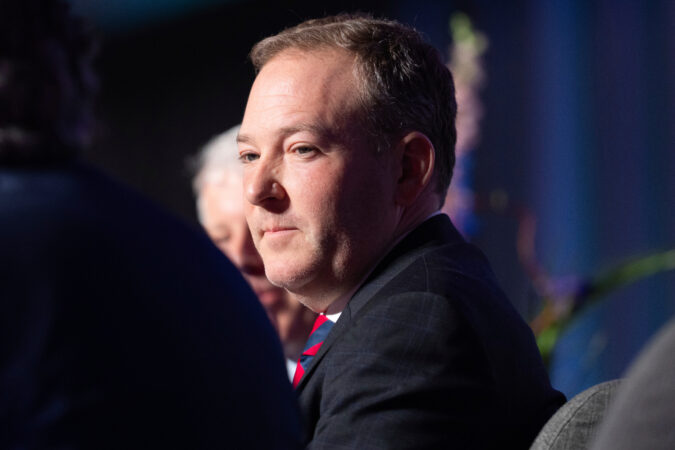
    Lee Zeldin, a former Republican congressman who was tapped by Trump to lead EPA last year, has criticized his predecessors in Democratic administrations, saying they were “willing to bankrupt the country” in an effort to combat climate change.

    Democrats “created this endangerment finding and then they are able to put all these regulations on vehicles, on airplanes, on stationary sources, to basically regulate out of existence … segments of our economy,″ Zeldin said in announcing the proposed rule last year. ”And it cost Americans a lot of money.”

    Peter Zalzal, a lawyer and associate vice president of the Environmental Defense Fund, countered that the EPA will be encouraging more climate pollution, higher health insurance and fuel costs, and thousands of avoidable premature deaths.

    Zeldin’s push “is cynical and deeply damaging, given the mountain of scientific evidence supporting the finding, the devastating climate harms Americans are experiencing right now and EPA’s clear obligation to protect Americans’ health and welfare,” he said.

    Zalzal and other critics noted that the Supreme Court ruled in a 2007 case that planet-warming greenhouse gases, caused by burning of oil and other fossil fuels, are air pollutants under the Clean Air Act.

    Since the high court’s decision, in a case known as Massachusetts v. EPA, courts have uniformly rejected legal challenges to the endangerment finding, including a 2023 decision by the U.S. Court of Appeals for the District of Columbia Circuit.

    Following Zeldin’s proposal to repeal the rule, the National Academies of Sciences, Engineering, and Medicine reassessed the science underpinning the 2009 finding and concluded it was “accurate, has stood the test of time, and is now reinforced by even stronger evidence.”

    Much of the understanding of climate change that was uncertain or tentative in 2009 is now resolved, the NAS panel of scientists said in a September report. “The evidence for current and future harm to human health and welfare created by human-caused greenhouse gases is beyond scientific dispute,” the panel said.

  • Trump’s immigration chiefs testify in Congress following protester deaths

    Trump’s immigration chiefs testify in Congress following protester deaths

    WASHINGTON — The heads of the agencies carrying out President Donald Trump’s mass deportation agenda are testifying in Congress Tuesday and faced questions over how they are prosecuting immigration enforcement inside American cities.

    Trump’s immigration campaign has been heavily scrutinized in recent weeks, after the shooting deaths in Minneapolis of two protesters at the hands of Homeland Security officers. The agencies have also faced criticism for a wave of policies that critics say trample on the rights of both immigrants facing arrest and Americans protesting the enforcement actions.

    Todd Lyons, the acting director of U.S. Immigration and Customs Enforcement, Rodney Scott, who heads U.S. Customs and Border Protection, and Joseph Edlow, who is the director of U.S. Citizenship and Immigration Services, will speak in front of the House Committee on Homeland Security.

    This is the first time all three have appeared in Congress since the department received a huge infusion of money from Congress last summer and since immigration enforcement operations intensified across the country. The officials are speaking at a time of falling public support for how their agencies are carrying out Trump’s immigration vision.

    Under Lyons’ leadership, ICE has undergone a massive hiring boom and immigration officers have deployed in beefed-up enforcement operations in cities across the country designed to increase arrests and deportations. The appearance in Congress comes as lawmakers are locked in a battle over whether DHS should be funded without restraints placed over its officers’ conduct.

    The administration says that activists and protesters opposed to its operations are the ones ratcheting up attacks on their officers, not the other way around, and that their immigration enforcement operations are making the country safer by finding and removing people who’ve committed crimes or pose a threat to the country.

    Lyons is likely to face questioning over a memo he signed last year telling ICE officers that they didn’t need a judge’s warrant to forcibly enter a house to arrest a deportee, a memo that went against years of ICE practice and Fourth Amendment protections against illegal searches.

    During Scott’s tenure, his agency has taken on a significant role in arresting and removing illegal immigrants from inside the country. That increased activity has become a flashpoint for controversy and marks a break from the agency’s traditional job of protecting borders and controlling who and what enters the country.

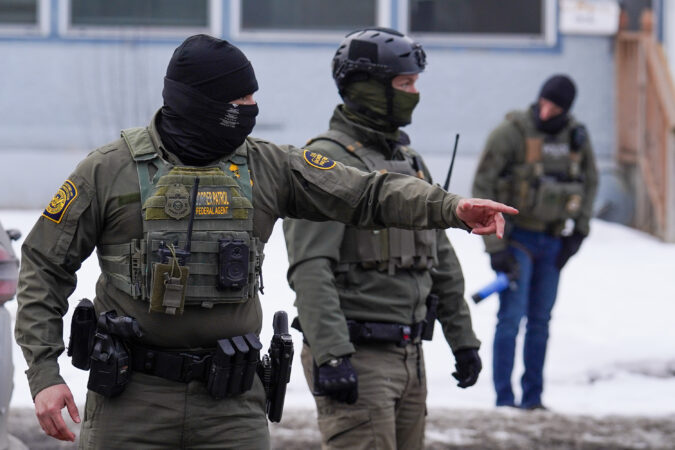
    Under commander Gregory Bovino, a group of Border Patrol agents hopscotched around the country to operations in Los Angeles, Chicago, Charlotte, and New Orleans where they were often accused of indiscriminately questioning and arresting people they suspected were in the country illegally. Bovino says his targets are legitimate and identified through intelligence and says that if his officers use force to make an arrest, it’s because it’s warranted.

    A Border Patrol agent and Customs and Border Protection officer both opened fire during the shooting death of Alex Pretti, one of two protesters killed in Minneapolis in January. The other protester, Renee Good, was shot and killed by an ICE officer.

    After the Pretti shooting, Bovino was reassigned and Trump sent his border czar Tom Homan to Minneapolis to assume control.

    USCIS has also faced criticism for steps it has taken including subjecting refugees already admitted to the U.S. to another round of vetting and pausing decisions on all asylum cases.

  • Under growing pressure, the biggest social networks agree to be rated on teen safety

    Under growing pressure, the biggest social networks agree to be rated on teen safety

    Three leading social media companies have agreed to undergo independent assessments of how effectively they protect the mental health of teenage users, submitting to a battery of tests announced Tuesday by a coalition of advocacy organizations.

    The platforms will be graded on whether they mandate breaks and provide options to turn off endless scrolling, among a host of other measures of their safety policies and transparency commitments. Companies that reviewers rate highly will receive a blue shield badge, while those that fair poorly will be branded as not able to block harmful content. Meta — which operates Facebook and Instagram — TikTok and Snap are first three companies to sign up for the process.

    “I hope that by having this new set of standards and ratings it does improve teens’ mental health,” said Dan Reidenberg, managing director of the National Council for Suicide Prevention, who oversaw the development of the standards. “At the same time, I also really hope that it changes the technology companies: that it really helps shape how they design and they build and they implement their tools.”

    Teenagers represent a coveted demographic for social media sites and the new standards come as the tech industry faces increasing pressure to better protect young users.

    A wave of lawsuits alleges that leading firms have engineered their platforms to be addictive. Congress is weighing a suite of bills designed to protect children’s safety online. And state lawmakers have sought to impose age limits on social apps.

    But those efforts have borne little fruit. Some legal experts argue teens and their families may face difficulty in court cases proving the connection between social media use and their struggles. Officials in Washington, meanwhile, have been unable to agree on how to regulate the industry and laws passed by the states have run into First Amendment challenges.

    The voluntary standards represent an alternative approach. Reidenberg said in an interview that the ratings are not a substitute for legislation but will be a helpful way for teenagers and parents to decide how to engage with particular apps. The project is backed by the Mental Health Coalition, an advocacy group founded by fashion designer Kenneth Cole.

    Cole said in a statement that the standards “recognize that technology and social media now play a central role in mental health — especially for young people — and they offer a clear path toward digital spaces that better support well-being.”

    There is still no scientific consensus on whether social media is on the whole harmful for children and teenagers. While some research has found that the heaviest users have worse mental health, studies have also found that young people who are not online can also struggle. But teenagers themselves have reported becoming more uneasy about the time they spend online, with girls in particular telling pollsters at the Pew Research Center in 2024 that apps were affecting their self-confidence, sleep patterns, and overall mental health.

    Reidenberg said it’s clear that in some cases young people’s time online becomes problematic. He said the system was developed without funding from the tech industry, but companies will have to volunteer to participate.

    Antigone Davis, Meta’s global head of safety, said the standards will “provide the public with a meaningful way to evaluate platform protections and hold companies accountable.” TikTok’s American arm said it looked forward to the ratings process. Snap called the Mental Health Coalition’s work “truly impactful.”

    Organizers compared the process to how Hollywood assigns age ratings to movies or the government assesses the safety of new cars. Companies will submit internal polices and designs for review by outside experts who will develop their ratings. In all, the companies’ performance will be measured in about two dozen areas covering their policies, app design, internal oversight, user education, and content.

    Many of the standards specifically target users’ exposure to content about suicide and self harm. But one also targets the sheer length of time that some people spend scrolling, crediting platforms for offering either voluntary or mandatory “take-a-break” features.

    The standards are being launched at an event in Washington on Tuesday. Sen. Mark R. Warner (D., Va.) said in a statement that he welcomed the standards but they weren’t a substitute for regulatory action.

    “Congress has a responsibility to put lasting, enforceable guardrails in place so that every platform is held accountable to the young people and families who use them,” he added.

  • Trump threatens to block opening of bridge between U.S. and Canada

    Trump threatens to block opening of bridge between U.S. and Canada

    President Donald Trump has threatened to block the opening of a bridge between Michigan and Ontario, claiming Canada is trying to “take advantage of America” and calling for compensation in the latest flash point in the simmering tensions between the United States and its northern neighbor.

    The Gordie Howe International Bridge — a six-lane bridge between Detroit and Windsor, Ontario, that has cost about $4.7 billion to build — has been under construction since 2018 and is due to open early this year, according to the organization behind it.

    On Monday, Trump said he “will not allow” it to open in a post on Truth Social, saying Canada had treated the U.S. “very unfairly for decades” and that the U.S. would not benefit from the project.

    “I will not allow this bridge to open until the United States is fully compensated for everything we have given them, and also, importantly, Canada treats the United States with the Fairness and Respect that we deserve,” he said. It was unclear how Trump would be able to delay or block the project from opening.

    “We will start negotiations, IMMEDIATELY. With all that we have given them, we should own, perhaps, at least one half of this asset,” he said, adding that the revenue generated from the project “will be astronomical.”

    The bridge, named after Canadian ice hockey legend Gordie Howe, who played for the Detroit Red Wings, has been labeled a “once-in-a-generation undertaking” by the Windsor-Detroit Bridge Authority, the Canadian government entity responsible for delivering it. It is set to have U.S. and Canadian entry ports and an interchange connecting to Michigan’s road network.

    The bridge is financed by the Canadian government but is publicly owned by the governments of Canada and Michigan, with terms outlined in a 2012 Crossing Agreement. The agreement stated all iron and steel used in the project must be produced in the U.S. or Canada.

    Canada will recoup the costs of funding the bridge from toll revenue, the Canadian government said in 2022.

    Candace Laing, president and CEO of the Canadian Chamber of Commerce, said regardless of whether Trump’s threat is real or an attempt at creating uncertainty, “blocking or barricading bridges is a self-defeating move.”

    “The path forward isn’t deconstructing established trade corridors, it’s actually building bridges,” she said in an emailed statement.

    The complaint is the latest in a string of blows he has leveled at Canada and Prime Minister Mark Carney, rupturing the traditionally close relationship between the two allies.

    Last month, Trump threatened to decertify and impose tariffs on Canadian-built aircraft in a move that sparked fears of wide ramifications for U.S. air travel. He also traded barbs with the Carney on the world stage at the World Economic Forum in Davos, and later revoked his invitation for Canada to join the Board of Peace, an entity that Trump has claimed will resolve global conflicts.

    The latest comments mark a sharp contrast to Trump’s previous support for the project. In a February 2017 statement with then-Canadian Prime Minister Justin Trudeau, Trump highlighted the closeness of the two countries and praised the bridge as a “vital economic link.”

    The Gordie Howe International Bridge is set to absorb traffic from the nearby Ambassador Bridge between Detroit and Windsor, which is owned by Detroit’s Moroun family and responsible for about a quarter of all trade between the U.S. and Canada. The owners have appealed to Trump to stop construction of the new bridge and sued the Canadian government for approving it, claiming it will infringe on their right to collect revenue.

    Windsor Mayor Drew Dilkens told the Canadian Broadcasting Corporation that Trump’s post was “insane,” noting that U.S. steel was used in construction on the Michigan side of the bridge.

    “I really can’t believe what I’m reading,” Dilkens said. “The faster we can get to the midterms and hopefully see a change, the better for all of us.”

    He also mocked Trump’s suggestion — made in the social media post without any supporting evidence — that if Canada makes a trade deal with China, China would “terminate” Canadian ice hockey and eliminate the Stanley Cup.

    “Thankfully the bridge was named after Gordie Howe before China terminates hockey and eliminates the Stanley Cup!” Dilkens quipped on X.

    U.S. Sen. Elissa Slotkin (D., Mich.) said Trump’s threats to tank the bridge project meant he was “punishing Michiganders for a trade war he started.”

    “The only reason Canada is on the verge of a trade deal with China is because President Trump has kicked them in the teeth for a year,” she wrote in a post on X.

    “The President’s agenda for personal retribution should not come before what’s best for us. Canada is our friend — not our enemy. And I will do everything in my power to get this critical project back on track.”

    The Canadian government, the Windsor-Detroit Bridge Authority and the White House did not immediately respond to requests for comment early Tuesday.

  • U.K. leader Keir Starmer has averted a leadership challenge for now but remains damaged by the Jeffrey Epstein fallout

    U.K. leader Keir Starmer has averted a leadership challenge for now but remains damaged by the Jeffrey Epstein fallout

    LONDON — Keir Starmer fights another day.

    After indirect fallout from the Jeffrey Epstein files sparked a dramatic day of crisis that threatened to topple him, the U.K. prime minister was saved by a pugnacious fightback and hesitation among his rivals inside the governing Labour Party about the consequences of a leadership coup.

    Energy Secretary Ed Miliband said Tuesday that Labour lawmakers had “looked over the precipice … and they didn’t like what they saw.”

    “And they thought the right thing was to unite behind Keir,” Miliband told the BBC.

    He might have added: For now.

    Mandelson blowback

    Starmer’s authority over his center-left party has been battered by aftershocks from the publication of files related to Epstein — a man he never met and whose sexual misconduct hasn’t implicated him.

    But it was Starmer’s decision to appoint veteran Labour politician Peter Mandelson, a friend of Epstein, as U.K. ambassador to Washington in 2024 that has led many to question the leader’s judgment and call for his resignation.

    Starmer has apologized, saying Mandelson had lied about the extent of his ties to the convicted sex offender. And he vowed to fight for his job.

    “I will never walk away from the mandate I was given to change this country,” Starmer said Tuesday as he visited a community center in southern England. “I will never walk away from the people that I’m charged with fighting for and I will never walk away from the country that I love.”

    Starmer’s risky decision to appoint Mandelson – who brought extensive contacts and trade expertise but a history of questionable ethical judgment – backfired when emails were published in September showing that Mandelson had maintained a friendship with Epstein after the financier’s 2008 conviction for sex offenses involving a minor.

    Starmer fired Mandelson, but a new trove of Epstein files released last month by the U.S. government contained more revelations. Mandelson is now facing a police investigation for potential misconduct in public office over documents suggesting that he passed sensitive government information to Epstein. He’s not accused of any sexual offenses.

    Simmering discontent

    The Mandelson scandal may be the final straw that finishes Starmer’s premiership. But it follows discontent that has built since he led Labour to a landslide election victory 19 months ago.

    Some of Starmer’s problems stem from a turbulent world and a gloomy economic backdrop. He has won praise for rallying international support for Ukraine and persuading U.S. President Donald Trump to sign a trade deal easing tariffs on U.K. goods. But at home, he has struggled to bring down inflation, boost economic growth and ease the cost of living.

    Despite a huge parliamentary majority that should allow the government easily to implement its plans, Starmer has been forced to make multiple U-turns on contentious policies including welfare cuts and mandatory digital ID cards.

    Starmer has been through two chiefs of staff, four directors of communications and multiple lower-level staff changes in Downing Street. The prime minister’s powerful chief of staff, Morgan McSweeney, resigned Sunday over the decision to appoint Mandelson. Communications director Tim Allan left the next day.

    Scottish Labour leader Anas Sarwar then held a news conference on Monday and called for Starmer to resign. If other senior party figures had followed, the pressure would have been impossible for Starmer to resist.

    But none did. Instead, Starmer’s Cabinet and parliamentary colleagues posted apparently choreographed messages of support. They included former Deputy Prime Minister Angela Rayner and Health Secretary Wes Streeting, considered the two most likely challengers for the top job.

    Then, came a highly charged meeting with Labour members of Parliament, where Starmer impressed many with his sense of resolve. Lawmakers in the room said that the mood, initially skeptical, became supportive.

    “It was clear he was up for the fight,” said Chris Curtis, one of more than 200 Labour lawmakers elected in the 2024 Starmer landslide.

    Temporary reprieve

    Starmer appears to have more political lives than Larry the cat, who has outlasted five prime ministers during 15 years as “chief mouser” in Downing Street.

    But his respite is likely to be temporary. Many Labour lawmakers remain worried about their reelection chances if the party’s dire opinion poll ratings don’t improve.

    Some female party members feel particularly disappointed by Mandelson’s appointment. The Labour leader of Wales, First Minister Eluned Morgan, called revelations about Mandelson “deeply troubling, not least because, once again, the voices of women and girls were ignored.

    “That failure must be acknowledged and confronted honestly,” she said, while offering support for Starmer.

    Labour faces potential electoral setbacks at a Feb. 26 special election in what was once a party stronghold in northwest England, and in May’s elections for legislatures in Scotland and Wales and local councils in England.

    And rivals are still plotting. The Guardian reported that an “Angela for leader” website backing Rayner briefly went live last month by accident. Streeting, whose genial relationship with Mandelson is now a weakness, released messages he’d exchanged with Mandelson before and after the ambassadorial appointment, seemingly in an attempt to show the men weren’t close friends.

    The exchanges include implicit criticism of Starmer, with Streeting writing that the government had “No growth strategy at all.”

    Tim Bale, professor of politics at Queen Mary University of London, said that Starmer had “bought himself some time” and challengers were “keeping their powder dry” for the moment.

    “It’s very difficult to image after the shellacking that the party will presumably face in May, him continuing to lead the party much beyond this summer,” Bale said.

    Though in British politics, nothing is impossible.

    “There are problems with the other candidates,” Bale said. ”It’s never an ideal situation for any party to be choosing a prime minister in midterm, and it may be that the Labour Party decides, better the devil you know. I suspect that Keir Starmer will go, but who knows?”

  • Congressional leaders say ICE deal is still possible despite divisions

    Congressional leaders say ICE deal is still possible despite divisions

    WASHINGTON — Congressional leaders said Tuesday that a deal was still possible with the White House on Homeland Security Department funding before it expires this weekend. But the two sides were still far apart as Democrats demanded new restrictions on President Donald Trump’s immigration crackdown.

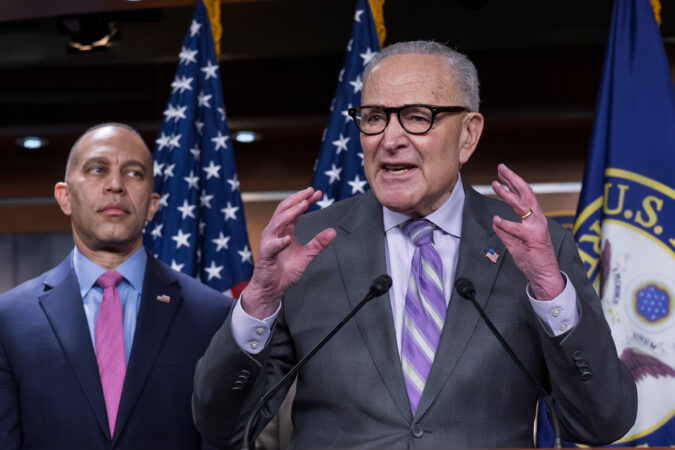
    After federal agents fatally shot two protesters in Minneapolis last month, Democrats say U.S. Immigration and Customs Enforcement needs to be “dramatically” reined in and are prepared to let Homeland Security shut down if their demands aren’t met. On Tuesday, Senate Democratic Leader Chuck Schumer and House Democratic Leader Hakeem Jeffries said they had rejected a White House counteroffer that “included neither details nor legislative text” and does not address “the concerns Americans have about ICE’s lawless conduct.”

    “We simply want ICE to follow the same standards that most law enforcement agencies across America already follow,” Schumer said Tuesday. “Democrats await the next answer from our Republican counterparts.”

    The Democrats’ rejection of the Republican counteroffer comes as time is running short, with a shutdown of the Homeland Security Department threatening to begin Saturday. Among the Democrats’ demands are a requirement for judicial warrants, better identification of DHS officers, new use-of-force standards and a stop to racial profiling.

    Finding agreement on the charged, partisan issue of immigration enforcement will be exceedingly difficult. But even as lawmakers in both parties were skeptical, a White House official said that the administration was having constructive talks with both Republicans and Democrats. The official, granted anonymity to speak about ongoing deliberations, stressed that Trump wanted the government to remain open and for Homeland Security services to be funded.

    Senate leaders also expressed some optimism.

    “There’s no reason we can’t do this” by the end of the week, Senate Democratic Leader Chuck Schumer said after meeting with his caucus on Tuesday.

    Senate Majority Leader John Thune, R-S.D., said there have been “some really productive conversations.”

    Democratic demands

    Schumer and Jeffries have said they want immigration officers to remove their masks, to show identification and to better coordinate with local authorities. They have also demanded a stricter use-of-force policy for the federal officers, legal safeguards at detention centers and a prohibition on tracking protesters with body-worn cameras.

    Among other asks, Democrats say Congress should end indiscriminate arrests, “improve warrant procedures and standards,” ensure the law is clear that officers cannot enter private property without a judicial warrant and require that before a person can be detained, it’s verified that the person is not a U.S. citizen.

    Democrats made the demands for new restrictions on ICE and other federal law enforcement after ICU nurse Alex Pretti was shot and killed by a U.S. Border Patrol officer in Minneapolis on Jan. 24, and some Republicans suggested that new restrictions were necessary. Renee Good was shot by ICE agents on Jan. 7.

    Many Democrats said they won’t vote for another penny of Homeland Security funding until enforcement is radically scaled back.

    “Dramatic changes are needed at the Department of Homeland Security before a DHS funding bill moves forward,” Jeffries said. “Period. Full stop.”

    Republican counterproposal

    Jeffries said Tuesday that the White House’s offer “walked away from” their proposals for better identification of ICE agents, for more judicial warrants and for a prohibition on excessive use of force. Republicans also rejected their demand for an end to racial or ethnic profiling, Jeffries said.

    “The White House is not serious at this moment in dramatically reforming ICE,” Jeffries said.

    Republican lawmakers have also pushed back on the requests. Oklahoma Sen. Markwayne Mullin, a close ally of Trump, said Tuesday that he’s willing to discuss more body cameras and better training — both of which are already in the Homeland spending bill — but that he would reject the Democrats’ most central demands.

    “They start talking about judicial warrants? No. They start talking about demasking them? No, not doing that. They want them to have a photo ID with their name on it? Absolutely not,” Mullin said.

    Republicans have said ICE agents should be allowed to wear masks because they are more frequently targeted than other law enforcement officials.

    “People are doxing them and targeting them,” said House Speaker Mike Johnson, R-La., on Monday. “We’ve got to talk about things that are reasonable and achievable.”

    Some Republicans also have demands of their own, including the addition of legislation that would require proof of citizenship before Americans register to vote and restrictions on cities that they say do not do enough to crack down on illegal immigration.

    At a House hearing on Tuesday, the acting director of ICE, Todd Lyons, said his agency is “only getting started” and would not be intimidated as his officers carry out Trump’s mass deportation agenda.

    Trump deals with Democrats

    Congress is trying to renegotiate the DHS spending bill after Trump agreed to a Democratic request that it be separated out from a larger spending measure that became law last week and congressional Republicans followed his lead. That package extended Homeland Security funding at current levels only through Feb. 13, creating a brief window for action as the two parties discuss new restrictions on ICE and other federal officers.

    But even as he agreed to separate the funding, Trump has not publicly responded to the Democrats’ specific asks or suggested any areas of potential compromise.

    White House press secretary Karoline Leavitt said late last week that the Trump administration is willing to discuss some items on the Democrats’ list, but “others don’t seem like they are grounded in any common sense, and they are nonstarters for this administration.”

    Thune said Tuesday that “there are certain red lines that I think both sides have, things they are not going to negotiate on, but there are some things they are going to negotiate on, and that’s where I think the potential deal space is here.”

    It was, so far, unclear what those issues were.

    “We are very committed to making sure that federal law enforcement officers are able to do their jobs and to be safe doing them,” Thune said of Republicans.

    Consequences of a shutdown

    In addition to ICE and U.S. Customs and Border Protection, the homeland security bill includes funding for the Federal Emergency Management Agency and the Transportation Security Administration, among other agencies. If DHS shuts down, Thune said last week, “there’s a very good chance we could see more travel problems” similar to the 43-day government closure last year.

    Thune has said Republicans will try to pass a two- to four-week extension of the Homeland Security funding while negotiations continue.

    Many Democrats are unlikely to vote for another extension. But Republicans could potentially win enough votes in both chambers from Democrats if they feel hopeful about negotiations.

    “The ball is in the Republicans’ court,” Jeffries said Monday.

  • Shorthanded 76ers lose 135-118 to Trail Blazers despite 30 points from Tyrese Maxey

    Shorthanded 76ers lose 135-118 to Trail Blazers despite 30 points from Tyrese Maxey

    PORTLAND, Ore. (AP) — Toumani Camara scored a career-high 30 points and shot 8 of 10 from three-point range, Deni Avdija had 26 points and 10 rebounds, and the Portland Trail Blazers used a huge third quarter to cruise to a 135-118 victory over the Philadelphia 76ers, who played without Joel Embiid on Monday night.

    Jerami Grant and Donovan Clingan each added 15 points for the Trail Blazers, who trailed 65-64 at halftime before outscoring the 76ers 49-22 in the third to take control.

    Embiid, who scored 33 points in a win at Phoenix on Saturday night, sat out against Portland to rest his right knee after an off day. Tyrese Maxey had 30 points and Kelly Oubre Jr. added 19 for the 76ers, who wrapped up a 3-2 Western road trip and lost for just the second time in eight games overall.

    Philadelphia took a 67-64 lead coming out of halftime on Andre Drummond’s layup, but the 76ers never led again.

    Grant made a 3-pointer to tie it and Avdija — who sat out last Saturday in a win against Memphis with a back ailment — followed with a three-pointer of his own to put Portland ahead. That set off an 18-4 run that was capped by another three by Avdija to make it 82-69.

    The Trail Blazers took their biggest lead of the game of 31 points, when Jrue Holiday cashed a three-pointer less than a minute into the fourth quarter to put Portland up 118-87.

    Scoot Henderson, who sat out last Saturday with a left hamstring ailment after making his season debut for the Trail Blazers the previous night, returned and had 12 points and seven assists.

    Portland finished 22 of 54 from three-point range.

    Up next

    76ers: Host the New York Knicks on Wednesday night.

    Trail Blazers: Play at Minnesota on Wednesday night.

    AP NHL: https://apnews.com/hub/nhl

  • Somalia welcomes its first bowling alley as the middle class and diaspora returnees grow

    Somalia welcomes its first bowling alley as the middle class and diaspora returnees grow

    MOGADISHU, Somalia — In a city long defined by conflict, Somalia‘s capital of Mogadishu now echoes with the crash of pins at the country’s first modern bowling alley.

    It’s the latest sign of revival in the once-thriving Indian Ocean port shaped by 35 years of civil war and militant bombings. Millions of people were forced to flee what became one of the world’s most dangerous cities. Those who remained avoided public spaces as the al-Qaeda-linked group al-Shabab waged an insurgency against the Somali state.

    In recent years, improved security measures against al-Shabab, an expanded government presence and growing private investment have allowed daily life to reemerge. Cafes line newly reopened streets, beaches draw evening crowds, and traffic congestion, once unimaginable, now clogs key intersections.

    The Feynuus Bowling Center opened last year and draws many locals and Somalis returning from the diaspora, who bring investment and business ideas after years of sending billions of dollars in remittances from abroad.

    On a recent evening, young Somalis gathered in groups, laughing and filming each other on their phones while music played. Many from the diaspora are visiting Mogadishu for the first time in years, or the first time ever.

    “I couldn’t believe Mogadishu has this place,” said Hudoon Abdi, a Somali-Canadian on holiday, as she prepared to take her turn to bowl.

    “I’m enjoying it. Mogadishu is actually safe,” she said, urging others to visit.

    Mogadishu remains vulnerable to militant attacks, however, with security measures like checkpoints and heavily guarded zones part of daily life. Non-Somalis remain largely confined to a compound at the international airport.

    But residents say the ability to gather for recreation signals an important psychological shift. Such venues provide a welcoming environment for a younger generation eager for safe spaces to socialize.

    Abukar Hajji returned from the United Kingdom on holiday after many years away and found the difference between what he imagined and what he experienced eye-opening.

    “When I was flying from the U.K., I believed it was a scary place, like a war-torn country,” he said. “Everyone told me, ‘Good luck,’ but when I came and saw it with my own eyes, I didn’t want to leave.”

    Sadaq Abdurahman, the manager of the bowling center, said the idea for the business emerged from a growing demand among young people for recreational facilities.

    “It has created employment opportunities for at least 40 youths,” he said.

    According to the Somali National Bureau of Statistics, Somalia’s unemployment rate stands at 21.4%.

    The bowling alley has private security guards, bag checks, and surveillance cameras, reflecting the precautions common at public venues in Mogadishu.

    Urban planners and economists say businesses like the bowling alley signal a broader shift in Mogadishu’s recovery, as private sector growth increasingly complements international aid and government-led rebuilding efforts.

    Ahmed Khadar Abdi Jama, a lecturer in economics at the University of Somalia, said innovative businesses are responding to the needs of diaspora returnees and the growing middle class, “which in turn adds to the expected increase in Somalia’s GDP.”

    Outside the bowling alley, traffic hummed and neon signs flickered, other reminders of Mogadishu’s fragile transformation.

  • Vance is in Armenia, a country no sitting U.S. president or vice president has visited before

    Vance is in Armenia, a country no sitting U.S. president or vice president has visited before

    YEREVAN, Armenia — Vice President JD Vance landed in Armenia on Monday — a country that no sitting U.S. vice president or president has visited before — as the Trump administration offered economic opportunities while it works to advance a U.S.-brokered deal aimed at ending a decades-long conflict with Azerbaijan.

    Vance and Armenian Prime Minister Nikol Pashinyan signed an agreement to push forward negotiations on a civil nuclear energy deal, and Vance said the U.S. was ready to export advanced computer chips and surveillance drones to Armenia, and invest in the country’s infrastructure.

    The visit comes after Pashinyan joined a deal at the White House in August with Azerbaijani President Ilham Aliyev where the leaders signed agreements reaffirming their commitment to signing a peace treaty. The text of the treaty was initialed by foreign ministers, which indicates preliminary approval. But the leaders have yet to sign the treaty and parliaments have yet to ratify it.

    “Peace is not made by cautious people,” said Vance, who planned to travel to Azerbaijan on Tuesday. “Peace is not made by people who are too focused on the past. Peace is made by people who are focused on the future.”

    The August deal between the two former Soviet republics calls for the creation of a major transit corridor dubbed the Trump Route for International Peace and Prosperity. It is expected to connect Azerbaijan and its autonomous Nakhchivan exclave, which are separated by a 20-mile-wide patch of Armenian territory.

    The land bridge had been a sticking point in resolving a conflict that lasted for nearly four decades over control of the Karabakh region, known internationally as Nagorno-Karabakh. The region had been under the control of ethnic Armenian forces backed by Armenia since 1994. A six-week war in 2020 resulted in Azerbaijan regaining control of parts of the region and the surrounding areas. In September 2023, Azerbaijan launched a blitz that forced the separatist authorities to capitulate. After Azerbaijan regained full control of Karabakh, most of its 120,000 Armenian residents fled to Armenia.

    Vance said that the Armenian prime minister had his endorsement in upcoming elections and he emphasized that the country was among the oldest to have identified as Christian.

    Pashinyan expressed his gratitude toward President Donald Trump and Vance, noting that he had accepted an invitation to participate in the first meeting of Trump’s Board of Peace on Feb. 19 in Washington. The group, founded by Trump, is overseeing the ceasefire plan in Gaza.

    He said Vance’s visit was “of truly historic and symbolic importance” and it “reflects the depth of the strong and strategic partnership forged between the Republic of Armenia and the United States of America.”

    The vice president and his wife, Usha, arrived in Yerevan after spending four days in Milan at the Winter Olympics with their family. They were greeted with a red carpet, an honor guard, and a delegation of officials. Armenian and American flags hung from poles from as the delegation drove to the vice president’s meeting, with some demonstrators on the side of the road, including one with a sign that said, “Does Trump support Devils?”

  • Trump leaves Republicans guessing on midterms plans as outlook darkens

    Trump leaves Republicans guessing on midterms plans as outlook darkens

    Republicans looking to the White House to lead in the face of the party’s dimming prospects for November’s midterms are facing a crucial hang-up: the president.

    The party’s flagship campaign committee and super PACs have no indication of how President Donald Trump will deploy his $300 million-plus war chest because he has not approved a spending plan. Republican donors are funding expensive Senate primaries in Texas and Georgia because Trump has not cleared the field with his endorsement, or, in the case of Louisiana, endorsed a challenger to the incumbent Republican.

    People who have spoken with Trump about these obstacles said he at times can sound detached and noncommittal about his plans for spending and endorsements. One person close to the White House said some days the president seems not to care. Having already been impeached twice and indicted four times, Trump is less afraid of being impeached again than he is determined not to let a Democratic-controlled House halt his policy agenda, a White House official said. The official and others spoke to the Washington Post on the condition of anonymity to detail private conversations.

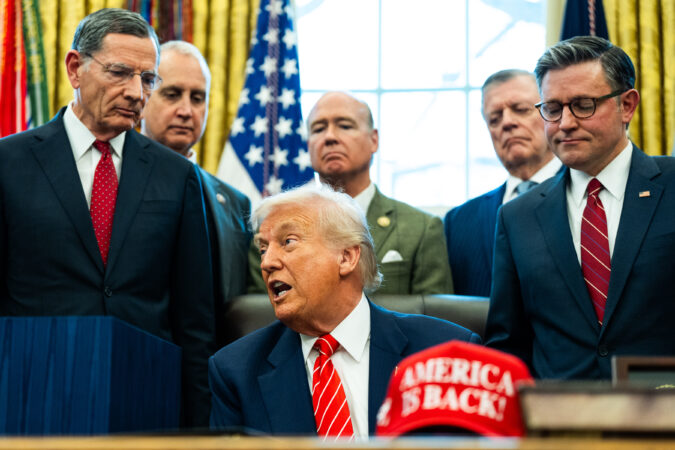
    But a White House official said Trump is excited to get more engaged in midterm strategy and looking forward to increasing his travel this month, including a campaign-style event outside of Washington this week. An Oval Office meeting to go over a handful of House endorsements Wednesday night turned into a five-hour gabfest on the midterms, according to two people present. Trump said he wants to defy the tendency of the president’s party losing seats in Congress in the midterms, one of the people said.

    “We’ll spend whatever it takes,” the person recalled Trump saying. “Go get it done.”

    The president’s political team, led by White House adviser James Blair, campaign strategist Chris LaCivita, and pollster Tony Fabrizio, met in Palm Beach, Fla., on Friday to review research from every competitive race in both chambers and develop estimates for what Republicans will have to spend to win. The team also briefed a retreat of the Senate Republicans’ campaign arm on Saturday.

    For much of last year, the White House was an island of optimism. Trump’s team would argue that Republicans were better positioned than at the same point in his first term, based on data such as the president’s approval rating, the generic ballot, and voter registration.

    Democrats, however, don’t need a 2018-size blue wave to win the House, where Republicans hold the narrowest possible majority and are defending 14 seats rated as toss-ups by the Cook Political Report. Democrats are defending four toss-up seats, and Cook shifted 18 seats in their favor in January.

    Republicans are anxiously awaiting a clear picture of the Trump team’s plans as the president’s sagging approval ratings and Democratic overperformances in special elections have darkened the GOP’s outlook for the midterms. Most Republicans are not ready to criticize Trump in public. But privately, there is rising frustration with an apparent lack of urgency from Trump and his staff, according to people who spoke to the Post.

    “Every time I talk to him on the phone, he says, ‘How’s the race going?’ and then he cites polls back to me so I know he’s following it closely,” Sen. John Cornyn (R., Texas) said, noting that Fabrizio is also his pollster and that LaCivita is a consultant to the super PAC supporting his reelection.

    Still, Trump’s endorsement has eluded Cornyn. “There’s only one person in the world who’s going to make that decision, and we can’t wait,” the senator said.

    Cornyn’s primary in Texas next month is dominating Republican anxieties on the Senate side since national strategists see his toughest challenger, state Attorney General Ken Paxton, as weaker in the general election, according to a memo from the National Republican Campaign Committee obtained by the Post. Holding the Senate seat for the GOP with Paxton as the nominee would cost an additional $100 million in a state where effective advertising costs $8 million a week, according to people involved in the race.

    “Texas cannot be taken for granted,” the memo said, presenting internal polling that puts Cornyn ahead of the Democratic candidates and Paxton behind them. Either Republican would face a competitive general election, the survey showed, with Texas state Rep. James Talarico running stronger than U.S. Rep. Jasmine Crockett on the Democratic side.

    An online survey released Monday that was conducted between Jan. 20 and 31 by the Hobby School of Public Affairs at the University of Houston found Paxton leading Cornyn 38% to 31%, with Rep. Wesley Hunt at 17%. On the Democratic side, Crockett led Talarico 47% to 39%.

    In a presentation to the Republican Senate caucus on Tuesday, National Republican Senatorial Committee Chair Tim Scott of South Carolina said a recent Fox News poll giving Democrats a six-point advantage in House races would put all nine Senate battlegrounds up for grabs, according to two people present. He also noted that Democratic candidates are raising more money for competitive races such as those in Georgia, North Carolina, and Ohio.

    Senate Republicans were heartened Feb. 1 when Trump endorsed John E. Sununu in the Republican primary for Senate in New Hampshire, after extensive lobbying by Senate Majority Leader John Thune (R., S.D.). Sununu has criticized Trump in the past but was leading in polls, and national Republicans saw him as the strongest candidate to flip the seat being vacated by a retiring Democrat, Jeanne Shaheen.

    But lobbying for Trump to endorse Cornyn has stalled as the incumbent has not established a clear polling lead — even after allies have poured $50 million into ads supporting Cornyn. Trump treasures his endorsement as definitive in primaries — and it often is, in part because he resists backing underdogs.

    Early voting opens Feb. 17 for the March 3 primary. If no one wins a majority, the top two candidates will compete in a runoff on May 26.

    Trump renewed hopes that he would wade into the race by telling reporters Feb. 1, “I’m giving it a very serious look.” The day before, a Democrat won a special election in a state Senate district that Trump won by 17 points in 2024.

    “I’ve had many conversations about why I think that makes the most sense to get behind John Cornyn,” Thune told reporters last week. “I don’t have any inside knowledge of when or what that might look like or when it might happen.”

    Trump might clear the field with an endorsement in Georgia to challenge Democrat Jon Ossoff, the person close to the White House said. The Republican primary includes Reps. Buddy Carter and Mike Collins, as well as former football coach Derek Dooley, who is backed by Gov, Brian Kemp. That race, though, is not considered as much a priority for Senate leaders as Texas is.

    Senate Republicans, including Thune, have been frustrated by Trump’s treatment of Senate incumbents, according to two people familiar with the tensions. Sen. Thom Tillis of North Carolina declined to run for reelection in the battleground state after feuding with Trump over Medicaid cuts in the president’s 2025 tax cuts and spending package. Last month, Trump recruited and endorsed a challenger to Sen. Bill Cassidy in Louisiana — which the White House official said was the result of Cassidy’s vote five years ago to convict Trump in the Senate impeachment trial of inciting the Jan. 6, 2021, riot at the Capitol.

    “I do think it’s a real problem when Senate Leadership Fund is on record supporting Cornyn and Cassidy, and President Trump is either silent or in opposition,” Tillis said, referring to the main super PAC supporting Senate Republicans. “We’re literally going to have Republican-on-Republican money being spent, and that makes no sense leading up to a general [election] where we’re going to have headwinds.”

    On the House side, the White House’s push to protect the House majority using redrawn congressional maps in Texas, North Carolina, and Missouri appears poised to net zero seats because of Democratic counteractions in California, Maryland, and Virginia. The latter two still face legislative or judicial hurdles.

    The White House still expects to pick up Republican seats from a new map in Florida, after Gov. Ron DeSantis (R) last month announced a state legislative special session in April. DeSantis said he wanted to wait until then in the hopes of a new Supreme Court ruling that could reshape as many as 19 House districts across the South by further weakening the Voting Rights Act of 1965.

    Trump has noted that the stakes of the midterms include, for him personally, the likelihood of being investigated or even impeached by a Democratic-controlled House. His first administration uniformly disregarded oversight requests and litigated subpoenas until after his term. Now some advisers expect that the administration can stonewall congressional oversight and that Democratic focus on investigating Trump could backfire on them leading up to the 2028 presidential election.

    Republicans still hold an overall advantage in fundraising. The House GOP campaign arm, which historically struggles to attract donors in uphill midterms, outraised its Democratic counterpart in 2025. The Democratic National Committee has more debt than cash, while the Republican National Committee has $95 million in the bank.

    Trump’s main super PAC, MAGA Inc., finished 2025 with a $304 million stockpile. But the PAC, led by LaCivita and Fabrizio, has been mum with allies about its spending plans. The person close to the White House said the president is likely to approve spending in multiple waves, and may reserve funds to maintain his political kingmaker role in future elections and for legal fees.

    “Thanks to President Trump’s leadership, MAGA Inc. will have the resources to help candidates who support President Trump’s America First agenda of securing our border, keeping our streets safe, supercharging our economy, and making life more affordable for all Americans,” PAC spokesperson Alex Pfeiffer said.

    While lawmakers await details on what assistance they can expect from the super PAC, Trump’s team noted it was the largest outside spender in the Dec. 2 special election to retain a House seat in Tennessee.

    “President Trump and his team were all in for me. I wouldn’t have won without them,” said Rep. Matt Van Epps, who won by 8.8 points in a district Trump carried by 22 points in 2024. “I know they’ll do the same for the entire America First team in this year’s midterm.”

    The White House said it is actively scheduling multiple trips for the president in battleground states and districts in the coming weeks and months that will include local lawmakers. The White House has also encouraged cabinet secretaries to minimize foreign trips and focus solely on domestic travel this year, encouraging officials to seek guidance on prioritizing battleground districts. White House officials are also helping to book cabinet members on local media in target areas.

    Since Thanksgiving, Trump has visited the battleground districts of Reps. Rob Bresnahan (R., Pa.) and Don Davis (R., N.C.), as well as Detroit (home to a Senate and governor’s race) and Iowa (home to a Senate race and two target House races). Vice President JD Vance visited battleground House districts held by Ryan Mackenzie (R., Pa.) and Marcy Kaptur (D., Ohio). Medicare administrator Mehmet Oz visited the districts of Rep. Michael Lawler (R., N.Y.) and Brian Fitzpatrick (R., Pa.).

    The White House provided statements from Lawler, North Carolina U.S. Senate candidate Michael Whatley, Sen. Jon Husted of Ohio, Sen. Dan Sullivan of Alaska, and RNC adviser Danielle Alvarez praising Trump and his staff for their support.

    “It is only February, and there is time for more, but I’m glad to have very strong support from the President and his administration,” Husted said.