TUCSON, Ariz. — The urgent investigation into the apparent kidnapping of 84-year-old Nancy Guthrie continued Sunday, a week after the mother of Today show host Savannah Guthrie was reported missing in Arizona.
Savannah Guthrie solemnly told the potential kidnappers in a social media video released Saturday that the family was prepared to pay for her safe return. Flanked by her siblings, Guthrie said “we received your message” and that: “This is the only way we will have peace. This is very valuable to us, and we will pay.”
An FBI spokesperson said Savannah Guthrie was referring to a message that was sent to the Tucson-based television station KOLD on Friday. The station declined to share details about the message’s contents as the FBI conducted its review.
Detectives and agents continued to perform follow-up work at multiple locations as part of the investigation, according to an email Sunday from the Pima County Sheriff’s Department. The agency said in the email to media that it would not yet provide details about that work.
“Investigators have not identified any suspects, persons of interest, or vehicles connected to this case,” read the email.
Two marked sheriff’s cars and another vehicle arrived at Nancy Guthrie’s house around midday Sunday and at least two people went to the back of the home for more than 20 minutes before leaving without comment.
Investigators believe Nancy Guthrie was taken against her will last weekend from her home just outside Tucson. DNA tests showed blood on Guthrie’s front porch was a match to her, Pima County Sheriff Chris Nanos has said.
Multiple press outlets have received alleged ransom letters during the past week. At least one letter made monetary demands and established Thursday evening and Monday evening as deadlines. Law enforcement officials declined to affirm that the letters were credible but said all tips were being investigated seriously.
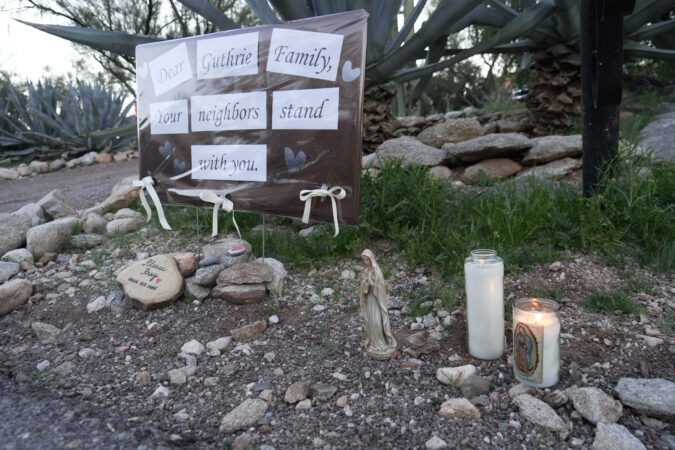
The disappearance of the well-known TV host’s mother has fixated Americans over the past week. Candles remained lit early Sunday near Nancy Guthrie’s home, next to a sign expressing support for the family.
The White House said President Donald Trump called and spoke with Savannah Guthrie last week. The president told reporters on Friday that there are clues in the case “that I think are very strong.”
Authorities say they have growing concerns about Nancy Guthrie’s health because she needs daily medication. She is said to have a pacemaker and has dealt with high blood pressure and heart issues, according to sheriff’s dispatcher audio on broadcastify.com.
The video released Saturday was the third this week that pleaded with potential kidnappers.
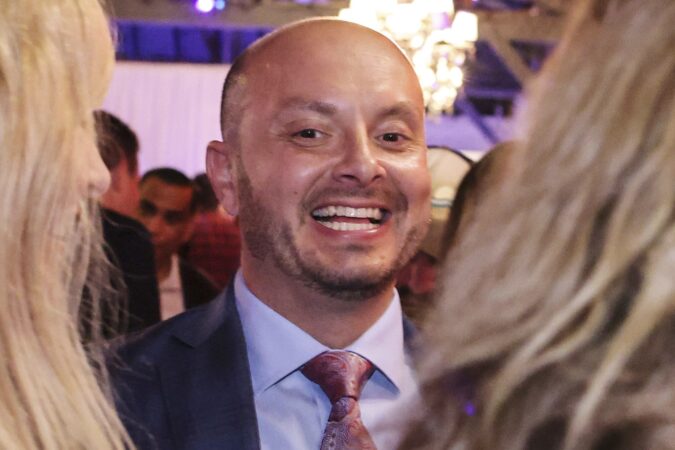
On Tuesday, Rep. Andrew R. Garbarino (R., N.Y.) plans to lead what is likely to be the most contentious and closely watched hearing of his short tenure as a House committee chairperson. The focus is the Trump administration’s surge in immigration enforcement in Minnesota and elsewhere that has included the shooting deaths of two people in Minneapolis by federal authorities.
The Homeland Security Committee hearing, which follows public blowback against the administration’s actions, is notable for a Republican-led House that has scaled back oversight hearings since President Donald Trump returned to office. It will be led by a chairperson who also stands out — both for his rapid ascent into the ranks of House leaders and for his reputation as a moderate willing to break with his party on high-profile issues.
Garbarino, 41, faces the challenge of leading the interrogation of top immigration officials at the peril of angering the White House over Trump’s marquee policy of immigration — at a time when polls suggest a majority of voters disapprove of the president’s handling of it. Those scheduled to testify Tuesday include leaders at U.S. Immigration and Customs Enforcement, Customs and Border Protection, and Citizenship and Immigration Services.
Former member of Congress Peter T. King, a Republican who represented the same district as Garbarino for 28 years, said it will be a difficult balancing act for the third-term lawmaker, who ascended to chairperson of the Homeland Security Committee in July.
“He’s going to run the risk of Democrats saying he’s stonewalling, and he’s protecting ICE,” King said, while some Republicans on the committee are going to say “you can’t give an inch” in defending the administration.
Garbarino’s temperament suits him well for what’s ahead, King said.
“He has a good style,” King said, adding that Garbarino doesn’t get rattled easily. “He’s not going to be hitting somebody with the gavel.”
Garbarino, in an interview, said he doesn’t see his job Tuesday as protecting the administration.
“One of our roles is congressional oversight,” he said. “It’s not my job at this hearing to tout any accomplishments.”
During the hearing, Garbarino, who practiced law before joining Congress, said he plans to ask questions about the training of immigration agents and their use of force, among other topics.
Garbarino’s independent streak has at times put him at odds with his party as he sided with Democrats on some consequential votes.
He supported legislation in 2022 that codified same-sex and interracial marriage. The previous year, he was one of only eight House Republicans to support a bill with new background check requirements for firearm transfers. The same year, he was one of 13 House Republicans to vote for President Joe Biden’s infrastructure bill. The latter move prompted then-Rep. Marjorie Taylor Greene (R., Ga.) to post Garbarino’s telephone number on social media in retaliation.
And yet, Garbarino has vaulted past most rank-and-file House Republicans to land key committee assignments.
Besides chairing Homeland Security, he sits on the coveted House Steering Committee that is responsible for doling out committee roles, and he also serves on the Financial Services and the Ethics committees. The latter often deals with controversies. During Garbarino’s tenure on Ethics, the panel voted in 2024 to release its report on former member of Congress Matt Gaetz (R., Fla.) that concluded Gaetz regularly paid for sex and possessed illegal drugs, charges Gaetz consistently denied.
Ahead of Tuesday’s hearing, some of Garbarino’s more right-wing colleagues have expressed skepticism about how he’ll handle a high-profile examination of the Trump administration’s immigration agenda.
“I think we need to have strong conservative leadership on that issue in the House,” Rep. Michael Cloud (R., Texas) said. When asked if he doubts whether Garbarino fits that description, Cloud responded: “We’ll see.”
Similar doubts surfaced at the start of Garbarino’s tenure as Homeland chairperson. Rep. Clay Higgins (R., La.) resigned from the committee after losing a bid to lead it to Garbarino.
“I would have been disagreeing with probably 90% of the positions that he takes,” Higgins said. “So the best thing for me to do as a joyful warrior was to withdraw from that position that was going to be fraught with disagreement, and I would have essentially derailed the chairman.”
Garbarino was recommended by the steering committee in July over two other lawmakers as well: Reps. Michael Guest (R., Miss.) and Carlos A. Gimenez (R., Fla.).
During his tenure in Congress, Garbarino has accomplished a feat that few have in the GOP conference: winning the favor of both former speaker Kevin McCarthy (R., Calif.) and the current speaker, Mike Johnson (R., La.), who helped Garbarino land a seat on the Ethics Committee. His shared first-floor Capitol hideaway is another signal of his close ties to leadership — a perk extended to a select few in the conference.
“Part of my personality is being able to bring people together, you know, get things done, break down barriers, and part of that is … I do it through humor,” Garbarino said.
For the most part, Garbarino, who represents Long Island’s South Shore, has won the respect of members of the New York delegation and fellow committee members, including those who represent red districts hundreds of miles from his home state.
“In many ways, he’s very low-profile. From a public perspective, he doesn’t do a lot of press releases or social media or fanfare, but he has great relationships, and he’s utilized those relationships to deliver for New York,” Rep. Nicole Malliotakis (R, N.Y.) said, adding that she considers Garbarino a “professional schmoozer.”
Rep. Brad Knott (R., N.C.), a freshman on Homeland Security, said Garbarino “embraces every positive stereotype of a New Yorker: He’s loud, he’s brash, he’s hilarious, he’s off the cuff.”
King attributed Garbarino’s rapid rise in the House to his affable nature and described him as being a “straight shooter.”
“People don’t worry about him knifing them in the back, agreeing to one thing and then saying another or doing something else or criticizing something that he really supported,” King said.
King also led Republicans on the Homeland Security Committee, serving from 2005 to 2013 as chairperson and ranking Republican when the focus was more on counterterrorism in response to the Sept. 11, 2001, attacks — the events that led to the committee’s creation.
The committee has since evolved, pivoting from counterterrorism to its current focus on immigration and border security. Given that, Garbarino faces another balancing act of guiding the committee’s priorities. Just recently, he shepherded the latest fix to the 9/11 healthcare program in a fraught spending package that passed after a temporary government shutdown.
Tuesday’s hearing is long overdue, according to Garbarino’s Democratic counterpart, who said he’s been pushing for an oversight hearing on the Department of Homeland Security since Trump took office in January 2025.
Rep. Bennie G. Thompson (Miss.), the panel’s ranking Democrat, said Garbarino “understands that part of our role is oversight,” adding that Mark Green (R., Tenn.), who led the panel until his resignation from Congress last summer, was not willing to convene a hearing focused on ICE.
“He understands that part of our role is oversight based on our jurisdiction, so we’ve been able to get a commitment to have a specific hearing on ICE, which we couldn’t get Green to do,” Thompson said.
Garbarino acknowledged some of the challenges that come with the hearing, which is expected to be confrontational and emotional. He pledged he will “keep order” and ensure every member adheres to the committee’s five-minute rule for questioning.
“I’m not the Hulk, where all of a sudden I’ll turn angry,” he said.
LOS ANGELES — Brad Arnold, the lead singer of the Grammy-nominated rock band 3 Doors Down, died Saturday, months after he announced that he had been diagnosed with Stage 4 kidney cancer. He was 47.
The band said in a statement that Mr. Arnold “passed away peacefully, surrounded by loved ones, in his sleep after his courageous battle with cancer.”
3 Doors Down formed in Mississippi in 1995 and four years later received a Grammy nomination for the breakout hit “Kryptonite.” Mr. Arnold wrote the song in math class when he was 15 years old, according to the band statement.
Their debut album, The Better Life, sold over 6 million copies. A second Grammy nomination came in 2003, for the song “When I’m Gone.”
The band said Mr. Arnold “helped redefine mainstream rock music, blending post-grunge accessibility with emotionally direct songwriting and lyrical themes that resonated with everyday listeners.”
3 Doors Down released six albums, most recently Us and the Night in 2016. Singles included “Loser,” “Duck and Run,” and “Be Like That,” which appeared on the soundtrack for the 2001 film American Pie 2.
While promoting their fifth album, Time of My Life, Mr. Arnold said he considered himself lucky to have carved out a career in the music business.
“If you do something as long as we’ve done it, you can’t help but get better at it, you know?” Mr. Arnold told the Associated Press in 2011.
In 2017, 3 Doors Down performed at the first inauguration concert of President Donald Trump.
Mr. Arnold announced his cancer diagnosis last May, saying clear cell renal carcinoma had metastasized to his lungs. The band was forced to cancel a summer tour.
“His music reverberated far beyond the stage, creating moments of connection, joy, faith, and shared experiences that will live on long after the stages he performed on,” the band said.
WASHINGTON — President Donald Trump wants to keep home prices high, bypassing calls to ramp up construction so people can afford what has been a ticket to the middle class.
Trump has instead argued for protecting existing owners who have watched the values of their homes climb. It’s a position that flies in the face of what many economists, the real estate industry, local officials, and apartment dwellers say is needed to fix a big chunk of America’s affordability problem.
“I don’t want to drive housing prices down. I want to drive housing prices up for people that own their homes, and they can be assured that’s what’s going to happen,” Trump told his cabinet on Jan. 29.
That approach could bolster the Republican president’s standing with older voters, a group that over time has been more likely to vote in midterm elections. Those races in November will determine whether Trump’s party can retain control of the House and Senate.
“You have a lot of people that have become wealthy in the last year because their house value has gone up,” Trump said. “And you know, when you get the housing — when you make it too easy and too cheap to buy houses — those values come down.”
But by catering to older baby boomers on housing, Trump risks alienating the younger voters who expanded his coalition in 2024 and helped him win a second term, and he could wade into a “generational war” in the midterms, said Brent Buchanan, whose polling firm Cygnal advises Republicans.
“The under-40 group is the most important right now — they are the ones who put Trump in the White House,” Buchanan said. “Their desire to show up in an election or not is going to make the difference in this election. If they feel that Donald Trump is taking care of the boomers at their expense, that is going to hurt Republicans.”
The logic in appealing to older voters
In the 2024 presidential election, 81% of Trump’s voters were homeowners, according to AP VoteCast data. This means many of his supporters already have mortgages with low rates or own their homes outright, possibly blunting the importance of housing as an issue.
Older voters tend to show up to vote more than do younger people, said Oscar Pocasangre, a senior data analyst at liberal think tank New America who has studied the age divide in U.S. politics. “However, appealing to older voters may prove to be a misguided policy if what’s needed to win is to expand the voting base,” Pocasangre said.
Booker Lightman, 30, a software engineer in Highlands Ranch, Colo., who identifies politically as a libertarian Republican, said the shortage of housing has been a leading problem in his state.
Lightman just closed on a home last month, and while he and his wife, Alice, were able to manage the cost, he said that the lack of construction is pushing people out of Colorado. “There’s just not enough housing supply,” he said.
Shay Hata, a real estate agent in the Chicago and Denver areas, said she handles about 100 to 150 transactions a year. But she sees the potential for a lot more. “We have a lack of inventory to the point where most properties, particularly in the suburbs, are getting between five and 20 offers,” she said, describing what she sees in the Chicago area.
New construction could help more people afford homes because in some cases, buyers qualify for discounted mortgage rates from the builders’ preferred lenders, Hata said. She called the current situation “very discouraging for buyers because they’re getting priced out of the market.”
But pending construction has fallen under Trump. Permits to build single-family homes have plunged 9.4% over the past 12 months in October, the most recent month available, to an annual rate of 876,000, according to the U.S. Census Bureau.
Trump’s other ideas to help people buy houses
Trump has not always been against increasing housing supply.
During the 2024 campaign, Trump’s team said he would create tax breaks for homebuyers, trim regulations on construction, open up federal land for housing developments, and make monthly payments more manageable by cutting mortgage rates. Advisers also claimed that housing stock would open up because of Trump’s push for mass deportations of people who were in the United States illegally.
As recently as October, Trump urged builders to ramp up construction. “They’re sitting on 2 Million empty lots, A RECORD. I’m asking Fannie Mae and Freddie Mac to get Big Homebuilders going and, by so doing, help restore the American Dream!” Trump posted on social media, referring to the government-backed lenders.
But more recently, he has been unequivocal on not wanting to pursue policies that would boost supply and lower prices.
In office, Trump has so far focused his housing policy on lobbying the Federal Reserve to cut its benchmark interest rates. He believes that would make mortgages more affordable, although critics say it could spur higher inflation. Trump announced that the two mortgage companies, which are under government conservatorship, would buy at least $200 billion in home loan securities in a bid to reduce rates.
Trump also wants Congress to ban large financial institutions from buying homes. But he has rejected suggestions for expanding rules to let buyers use 401(k) retirement accounts for down payments, telling reporters that he did not want people to take their money out of the stock market because it was doing so well.
There are signs that lawmakers in both parties see the benefits of taking steps to add houses before this year’s elections. There are efforts in the Senate and House to jump-start construction through the use of incentives to change zoning restrictions, among other policies.
One of the underlying challenges on affordability is that home prices have been generally rising faster than incomes for several years.
This makes it harder to save for down payments or upgrade to a nicer home. It also means that the places where people live increasingly double as their key financial asset, one that leaves many families looking moneyed on paper even if they are struggling with monthly bills.
There is another risk for Trump. If the economy grows this year, as he has promised, that could push up demand for houses — as well as their prices — making the affordability problem more pronounced, said Edward Pinto, a senior fellow at the American Enterprise Institute, a center-right think tank.
Pinto said construction of single-family homes would have to rise by 50% to 100% during the next three years for average home price gains to be flat — a sign, he said, that Trump’s fears about falling home prices were probably unwarranted.
“It’s very hard to crater home prices,” Pinto said.
TOKYO — The governing party of Prime Minister Sanae Takaichi secured a two-thirds supermajority in a key parliamentary election Sunday, Japanese media reported citing preliminary results, earning a landslide victory thanks to her popularity.
Takaichi, in a televised interview with public television network NHK following her sweeping victory, said she is now ready to pursue policies to make Japan strong and prosperous.
NHK, citing results of vote counts, said Takaichi’s Liberal Democratic Party, or LDP, alone secured 316 seats by early Monday, comfortably surpassing a 261-seat absolute majority in the 465-member lower house, the more powerful of Japan’s two-chamber parliament. That marks a record since the party’s foundation in 1955 and surpasses the previous record of 300 seats won in 1986 by late Prime Minister Yasuhiro Nakasone.
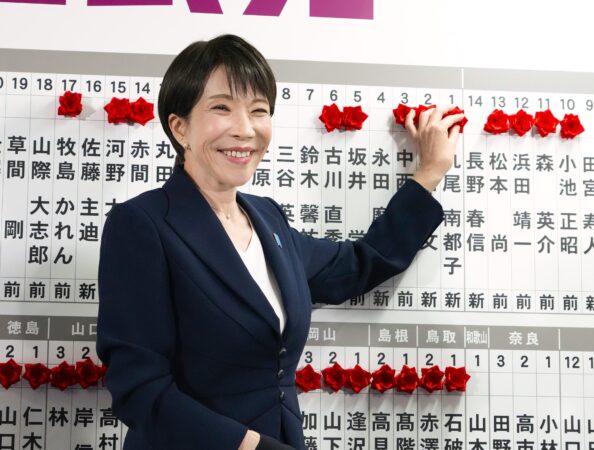
A smiling Takaichi placed a big red ribbon above each winner’s name on a signboard at the LDP’s headquarters, as accompanying party executives applauded.
Despite the lack of a majority in the other chamber, the upper house, the huge jump from the preelection share in the superior lower house would allow Takaichi to make progress on a right-wing agenda that aims to boost Japan’s economy and military capabilities as tensions grow with China and she tries to nurture ties with the United States.
Takaichi said she would try to gain support from the opposition while firmly pushing forward her policy goals.
“I will be flexible,” she said.
Takaichi is hugely popular, but the governing LDP, which has ruled Japan for most of the last seven decades, has struggled with funding and religious scandals in recent years. She called Sunday’s early election after only three months in office, hoping to turn that around while her popularity is high.
Popular leader
The ultraconservative Takaichi, who took office as Japan’s first female leader in October, pledged to “work, work, work,” and her style, which is seen as both playful and tough, has resonated with younger fans who say they weren’t previously interested in politics.
The opposition, despite the formation of a new centrist alliance and a rising far right, was too splintered to be a real challenger. The new opposition alliance of LDP’s former coalition partner, Buddhist-backed dovish Komeito, and the liberal-leaning Constitutional Democratic Party of Japan, is projected to sink to half of their combined preelection share of 167 seats.
Takaichi was betting with this election that her LDP party, together with its new partner, the Japan Innovation Party, would secure a majority.
Akihito Iwatake, a 53-year-old office worker, said he welcomed the big win by the LDP because he felt the party went too liberal in the past few years. “With Takaichi shifting things more toward the conservative side, I think that brought this positive result,” he said.
Takaichi’s policies
The prime minister wants to push forward a significant shift to the right in Japan’s security, immigration, and other policies. The LDP’s right-wing partner, JIP leader Hirofumi Yoshimura, has said his party will serve as an “accelerator” for this push.
The first major task for Takaichi when the lower house reconvenes in mid-February is to work on a budget bill, delayed by the election, to fund economic measures that address rising costs and sluggish wages.
Takaichi has pledged to revise security and defense policies by December to bolster Japan’s offensive military capabilities, lifting a ban on weapons exports and moving further away from the country’s postwar pacifist principles.
She has been pushing for tougher policies on foreigners, anti-espionage laws, and other measures that resonate with a far-right audience, but ones that experts say could undermine civil rights.
She now has time to work on these policies, without an election until 2028.
Divisive policies
Though Takaichi said that she’s seeking to win support for policies seen as divisive in Japan, she largely avoided discussing ways to fund soaring military spending, how to fix diplomatic tension with China, and other issues.
Her rightward shift is unlikely to redirect Japan’s foreign policy and Takaichi is expected to maintain good relations with South Korea given shared concerns about threats from North Korea and China. But Seoul would worry about a Japanese attempt to revise the country’s pacifist constitution or to further build up military because of Japan’s wartime past, said Leif-Eric Easley, professor of international studies at Ewha Womans University in Seoul.
In her campaign speeches, Takaichi enthusiastically talked about the need for proactive government spending to fund “crisis management investment and growth,” such as measures to strengthen economic security, technology, and other industries. Takaichi also seeks to push tougher measures on immigration, including stricter requirements for foreign property owners and a cap on foreign residents.
Sunday’s election “underscores a problematic trend in Japanese politics in which political survival takes priority over substantive policy outcomes,” said Masato Kamikubo, a Ritsumeikan University politics professor. “Whenever the government attempts necessary but unpopular reforms … the next election looms.”
Impact of snow
Sunday’s vote coincided with fresh snowfall across the country, including in Tokyo. Record snowfall in northern Japan over the past few weeks blocked roads and was blamed for dozens of deaths nationwide.
DUBAI, United Arab Emirates — Iran sentenced Nobel Peace Prize laureate Narges Mohammadi to over seven more years in prison after she began a hunger strike, supporters said Sunday, as Tehran cracks down on all dissent following nationwide protests and the deaths of thousands at the hands of security forces.
The new convictions against Mohammadi come as Iran tries to negotiate with the United States over its nuclear program to avert a threatened military strike by U.S. President Donald Trump. Iran’s top diplomat insisted Sunday that Tehran’s strength came from its ability to “say no to the great powers,” striking a maximalist position just after negotiations in Oman with the U.S.
Mohammadi’s supporters cited her lawyer, who spoke to Mohammadi. The lawyer, Mostafa Nili, confirmed the sentence on X, saying it had been handed down Saturday by a Revolutionary Court in the city of Mashhad. Such courts typically issue verdicts with little or no opportunity for defendants to contest their charges.
“She has been sentenced to six years in prison for ‘gathering and collusion’ and one and a half years for propaganda and two-year travel ban,” he wrote. She received another two years of internal exile to the city of Khosf, some 460 miles southeast of Tehran, the capital, the lawyer added.
Iran did not immediately acknowledge the sentence. Supporters say Mohammadi has been on a hunger strike since Feb. 2. She had been arrested in December at a ceremony honoring Khosrow Alikordi, a 46-year-old Iranian lawyer and human rights advocate who had been based in Mashhad. Footage from the demonstration showed her shouting, demanding justice for Alikordi and others.
While that was to be only three weeks, Mohammadi’s time out of prison lengthened, possibly as activists and Western powers pushed Iran to keep her free. She remained out even during the 12-day war in June between Iran and Israel.
Mohammadi still kept up her activism with public protests and international media appearances, including even demonstrating at one point in front of Tehran’s notorious Evin prison, where she had been held.
Mohammadi had been serving 13 years and nine months on charges of collusion against state security and propaganda against Iran’s government. She also had backed the nationwide protests sparked by the 2022 death of Mahsa Amini, which have seen women openly defy the government by not wearing the hijab.
Mohammadi suffered multiple heart attacks while imprisoned before undergoing emergency surgery in 2022, her supporters say. Her lawyer in late 2024 revealed doctors had found a bone lesion that they feared could be cancerous that later was removed.
“Considering her illnesses, it is expected that she will be temporarily released on bail so that she can receive treatment,” Nili wrote.
However, Iranian officials have been signaling a harder line against all dissent since the demonstrations. Speaking on Sunday, Iranian judiciary chief Gholamhossein Mohseni-Ejei made comments suggesting harsh prison sentences awaited many.
“Look at some individuals who once were with the revolution and accompanied the revolution,” he said. ”Today, what they are saying, what they are writing, what statements they issue, they are unfortunate, they are forlorn (and) they will face damage.”
Foreign minister strikes hard-line tone
The news about Mohammadi came as Foreign Minister Abbas Araghchi, speaking to diplomats at a summit in Tehran, signaled that Iran would stick to its position that it must be able to enrich uranium — a major point of contention with Trump, who bombed Iranian atomic sites in June during the 12-day Iran-Israel war.
Israeli Prime Minister Benjamin Netanyahu is expected to travel to Washington this week, with Iran expected to be the major subject of discussion, his office said.
While Iranian President Masoud Pezeshkian praised the talks Friday in Oman with the Americans as “a step forward,” Araghchi’s remarks show the challenge ahead. Already, the U.S. moved the aircraft carrier USS Abraham Lincoln, other ships, and warplanes to the Middle East to pressure Iran into an agreement and have the firepower necessary to strike the Islamic Republic should Trump choose to do so.
“I believe the secret of the Islamic Republic of Iran’s power lies in its ability to stand against bullying, domination, and pressures from others,” Araghchi said. ”They fear our atomic bomb, while we are not pursuing an atomic bomb. Our atomic bomb is the power to say no to the great powers. The secret of the Islamic Republic’s power is in the power to say no to the powers.”
‘Atomic bomb’ as rhetorical device
Araghchi’s choice to explicitly use an “atomic bomb” as a rhetorical device likely wasn’t accidental. While Iran has long maintained its nuclear program is peaceful, the West and the International Atomic Energy Agency say Tehran had an organized military program to seek the bomb up until 2003.
Iran had been enriching uranium up to 60% purity, a short, technical step to weapons-grade levels of 90%, the only nonweapons state to do so. Iranian officials in recent years had also been increasingly threatening that the Islamic Republic could seek the bomb, even while its diplomats have pointed to Iranian Supreme Leader Ayatollah Ali Khamenei’s preachings as a binding fatwa, or religious edict, that Iran wouldn’t build one.
Pezeshkian, who ordered Araghchi to pursue talks with the Americans after likely getting Khamenei’s blessing, also wrote on X on Sunday about the talks.
“The Iran-U.S. talks, held through the follow-up efforts of friendly governments in the region, were a step forward,” the president wrote. “Dialogue has always been our strategy for peaceful resolution. … The Iranian nation has always responded to respect with respect, but it does not tolerate the language of force.”
It remains unclear when and where, or if, there will be a second round of talks. Trump, after the talks Friday, offered few details but said: “Iran looks like they want to make a deal very badly — as they should.”
MINNEAPOLIS — For days, Luis Ramirez had an uneasy feeling about the men dressed as utility workers he’d seen outside his family’s Mexican restaurant in suburban Minneapolis.
They wore high-visibility vests and spotless white hard hats, he noticed, even while parked in their vehicle. His search for the Wisconsin-based electrician advertised on the car’s doors returned no results.
On Tuesday, when their Nissan returned to the lot outside his restaurant, Ramirez, 31, filmed his confrontation with the two men, who hide their faces as he approaches and appear to be wearing heavy tactical gear beneath their yellow vests.
“This is what our taxpayer money goes to: renting these vehicles with fake tags to come sit here and watch my business,” Ramirez shouts in the video.
A spokesperson for the Department of Homeland Security and Immigration and Customs Enforcement did not respond to inquiries about whether the men were federal immigration officers. But encounters like Ramirez’s have become increasingly common.
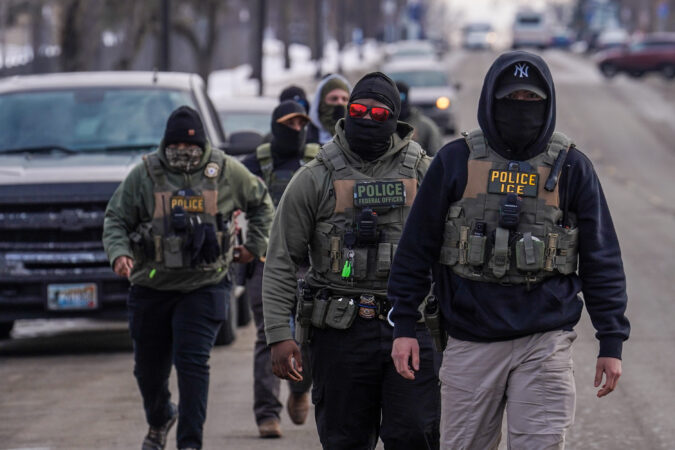
As the sweeping immigration crackdown in Minnesota continues, legal observers and officials say they have received a growing number of reports of federal agents impersonating construction workers, delivery drivers, and in some cases anti-ICE activists.
“If you have people afraid that the electrical worker outside their house might be ICE, you’re inviting public distrust and confusion on a much more dangerous level,” said Naureen Shah, the director of immigration advocacy at the American Civil Liberties Union. “This is what you do if you’re trying to control a populace, not trying to do routine, professional law enforcement.”
A ‘more extreme degree’ of deception
In the past, immigration authorities have sometimes used disguises and other deceptions, which they call ruses, to gain entry into homes without a warrant.
The tactics became more common during President Donald Trump’s first term, attorneys said, prompting an ACLU lawsuit accusing immigration agents of violating the U.S. Constitution by posing as local law enforcement during home raids. A recent settlement restricted the practice in Los Angeles. But ICE deceptions remain legal elsewhere in the country.
Still, the undercover operations reported in Minnesota would appear to be a “more extreme degree than we’ve seen in the past,” said Shah, in part because they seem to be happening in plain sight.
Where past ruses were aimed at deceiving immigration targets, the current tactics may also be a response to the Minnesota’s sprawling networks of citizen observers that have sought to call attention to federal agents before they make arrests.
At the Bishop Henry Whipple Federal Building in Minneapolis, the city’s central hub of ICE activity, activists told the Associated Press they had seen agents leaving in vehicles with stuffed animals on their dashboards or Mexican flag decals on their bumpers. Pickups with lumber or tools in their beds were also frequently spotted.
In recent weeks, federal agents have repeatedly shown up to construction sites dressed as workers, according to Jose Alvillar, a lead organizer for the local immigrant rights group, Unidos MN.
“We’ve seen an increase in the cowboy tactics,” he said, though he noted the raids had not resulted in arrests. “Construction workers are good at identifying who is a real construction worker and who is dressing up as one.”
Using vintage plates
Since the start of the operation in Minnesota, local officials, including Democratic Gov. Tim Walz, have said ICE agents had been seen swapping license plates or using bogus ones, a violation of state law.
Candice Metrailer, an antiques dealer in south Minneapolis, believes she witnessed such an attempt firsthand.
On Jan. 13, she received a call from a man who identified himself as a collector, asking if her store sold license plates. She said it did. A few minutes later, two men in street clothes entered the shop and began looking through her collection of vintage plates.
“One of them says, ‘Hey, do you have any recent ones?’” Metrailer recalled. “Immediately, an alarm bell went off in my head.”
Metrailer stepped outside while the men continued browsing. A few doors down from the shop, she saw an idling Ford Explorer with blacked out windows. She memorized its license plate, then quickly plugged it into a crowdsourced database used by local activists to track vehicles linked to immigration enforcement.
The database shows an identical Ford with the same plates had been photographed leaving the Whipple building seven times and reported at the scene of an immigration arrest weeks earlier.
When one of the men approached the register holding a white Minnesota plate, Metrailer said she told him that the store had a new policy against selling the items.
Metrailer said she had reported the incident to Minnesota’s attorney general. A spokesperson for DHS did not respond to a request for comment.
A response to obstruction
Supporters of the immigration crackdown say the volunteer army of ICE-tracking activists in Minneapolis has forced federal agents to adopt new methods of avoiding detection.
“Of course agents are adapting their tactics so that they’re a step ahead,” said Scott Mechkowski, former deputy director of ICE enforcement and operations in New York City. “We’ve never seen this level of obstruction and interference.”
In nearly three decades in immigration enforcement, Mechkowski said he also hadn’t seen ICE agents disguising themselves as uniformed workers in the course of making arrests.
Earlier this summer, a spokesperson for DHS confirmed a man wearing a high-visibility construction vest was an ICE agent conducting surveillance. In Oregon, a natural gas company published guidance last month on how customers could identify their employees after reports of federal impersonators.
In the days since his encounter, Ramirez, the restaurant worker, said he has been on high alert for undercover agents. He recently stopped a locksmith who he feared might be a federal agent, before quickly realizing he was a local resident.
“Everybody is on edge about these guys, man,” Ramirez said. “It feels like they’re everywhere.”
LONDON — British Prime Minister Keir Starmer ‘s chief of staff resigned Sunday over the furor surrounding the appointment of Peter Mandelson as the U.K. ambassador to the U.S. despite his ties to Jeffrey Epstein.
Morgan McSweeney said he took responsibility for advising Starmer to appoint Mandelson, 72, to Britain’s most important diplomatic post in 2024.
“The decision to appoint Peter Mandelson was wrong. He has damaged our party, our country and trust in politics itself,” McSweeney said in a statement. “When asked, I advised the Prime Minister to make that appointment and I take full responsibility for that advice.”
Starmer is facing a political storm and questions about his judgment after newly published documents, part of a huge trove of Epstein files made public in the United States, suggested that Mandelson sent market-sensitive information to the convicted sex offender when he was the U.K. government’s business secretary during the 2008 financial crisis.
Starmer’s government has promised to release its own emails and other documentation related to Mandelson’s appointment, which it says will show that Mandelson misled officials.
The prime minister apologized this week for “having believed Mandelson’s lies.”
He acknowledged that when Mandelson was chosen for the top diplomat job in 2024, the vetting process had revealed that Mandelson’s friendship with Epstein continued after the latter’s 2008 conviction. But Starmer maintained that “none of us knew the depth of the darkness” of that relationship at the time.
A number of lawmakers said Starmer is ultimately responsible for the scandal.
“Keir Starmer has to take responsibility for his own terrible decisions,” said Kemi Badenoch, leader of the opposition Conservative Party.
Mandelson, a former Cabinet minister, ambassador, and elder statesman of the governing Labour Party, has not been arrested or charged.
Metropolitan Police officers searched Mandelson’s London home and another property linked to him on Friday. Police said the investigation is complex and will require “a significant amount of further evidence gathering and analysis.”
The U.K. police investigation centers on potential misconduct in public office, and Mandelson is not accused of any sexual offenses.
Starmer had fired Mandelson in September from his ambassadorial job over earlier revelations about his Epstein ties. But critics say the emails recently published by the U.S. Justice Department have brought serious concerns about Starmer’s judgment to the fore. They argue that he should have known better than to appoint Mandelson in the first place.
The new revelations include documents suggesting Mandelson shared sensitive government information with Epstein after the 2008 global financial crisis. They also include records of payments totaling $75,000 in 2003 and 2004 from Epstein to accounts linked to Mandelson or his husband, Reinaldo Avila da Silva.
Aside from his association with Epstein, Mandelson previously had to resign twice from senior government posts because of scandals over money or ethics.
Starmer had faced growing pressure over the past week to fire McSweeney, who is regarded as a key adviser in Downing Street and seen as a close ally of Mandelson.
Starmer on Sunday credited McSweeney as a central figure in running Labour’s recent election campaign and the party’s 2004 landslide victory. His statement did not mention the Mandelson scandal.
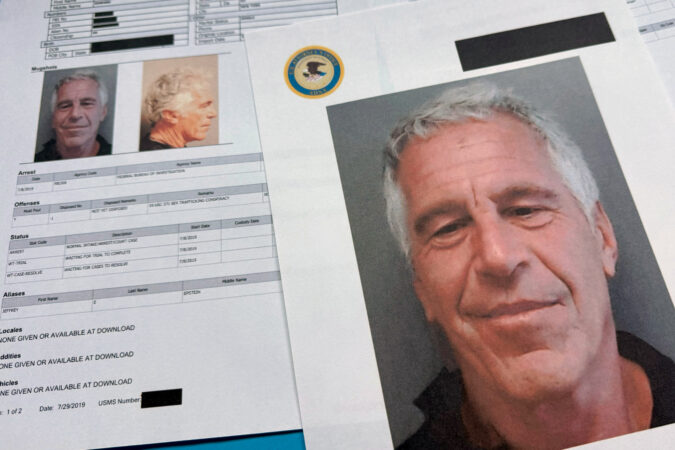
NEW YORK — The FBI pored over Jeffrey Epstein’s bank records and emails. It searched his homes. It spent years interviewing his victims and examining his connections to some of the world’s most influential people.
But while investigators collected ample proof that Epstein sexually abused underage girls, they found scant evidence the well-connected financier led a sex trafficking ring serving powerful men, an Associated Press review of internal Justice Department records shows.
Videos and photos seized from Epstein’s homes in New York, Florida, and the Virgin Islands didn’t depict victims being abused or implicate anyone else in his crimes, a prosecutor wrote in one 2025 memo.
An examination of Epstein’s financial records, including payments he made to entities linked to influential figures in academia, finance, and global diplomacy, found no connection to criminal activity, said another internal memo in 2019.
While one Epstein victim made highly public claims that he “lent her” to his rich friends, agents couldn’t confirm that and found no other victims telling a similar story, the records said.
Summarizing the investigation in an email last July, agents said “four or five” Epstein accusers claimed other men or women had sexually abused them. But, the agents said, there “was not enough evidence to federally charge these individuals, so the cases were referred to local law enforcement.”
The AP and other media organizations are still reviewing millions of pages of documents, many of them previously confidential, that the Justice Department released under the Epstein Files Transparency Act and it is possible those records contain evidence overlooked by investigators.
But the documents, which include police reports, FBI interview notes, and prosecutor emails, provide the clearest picture to date of the investigation — and why U.S. authorities ultimately decided to close it without additional charges.
Dozens of victims come forward
The Epstein investigation began in 2005, when the parents of a 14-year-old girl reported she had been molested at the millionaire’s home in Palm Beach, Fla.
Police would identify at least 35 girls with similar stories: Epstein was paying high school-age students $200 or $300 to give him sexualized massages.
After the FBI joined the probe, federal prosecutors drafted indictments to charge Epstein and some personal assistants who had arranged the girls’ visits and payments. But instead, then-Miami U.S. attorney Alexander Acosta struck a deal letting Epstein plead guilty to state charges of soliciting prostitution from an underage girl. Sentenced to 18 months in jail, Epstein was free by mid-2009.
In 2018, a series of Miami Herald stories about the plea deal prompted New York federal prosecutors to take a fresh look at the accusations.
A year later, prosecutors charged Epstein’s longtime confidant, Ghislaine Maxwell, saying she’d recruited several of his victims and sometimes joined the sexual abuse. Convicted in 2021, Maxwell is serving a 20-year prison term.
Prosecutors fail to find evidence backing most sensational claims
Prosecution memos, case summaries, and other documents made public in the department’s latest release of Epstein-related records show that FBI agents and federal prosecutors diligently pursued potential coconspirators. Even seemingly outlandish and incomprehensible claims, called in to tip lines, were examined.
Some allegations couldn’t be verified, investigators wrote.
In 2011 and again in 2019, investigators interviewed Virginia Roberts Giuffre, who in lawsuits and news interviews had accused Epstein of arranging for her to have sexual encounters with numerous men, including Britain’s former Prince Andrew.
Investigators said they confirmed that Giuffre had been sexually abused by Epstein. But other parts of her story were problematic.
Two other Epstein victims who Giuffre had claimed were also “lent out” to powerful men told investigators they had no such experience, prosecutors wrote in a 2019 internal memo.
“No other victim has described being expressly directed by either Maxwell or Epstein to engage in sexual activity with other men,” the memo said.
Giuffre acknowledged writing a partly fictionalized memoir of her time with Epstein containing descriptions of things that didn’t take place. She had also offered shifting accounts in interviews with investigators, they wrote, and had “engaged in a continuous stream of public interviews about her allegations, many of which have included sensationalized if not demonstrably inaccurate characterizations of her experiences.” Those inaccuracies included false accounts of her interactions with the FBI, they said.
Still, U.S. prosecutors attempted to arrange an interview with Andrew, now known as Andrew Mountbatten-Windsor. He refused to make himself available. Giuffre settled a lawsuit with Mountbatten-Windsor in which she had accused him of sexual misconduct.
In a memoir published after she killed herself last year, Giuffre wrote that prosecutors told her they didn’t include her in the case against Maxwell because they didn’t want her allegations to distract the jury. She insisted her accounts of being trafficked to elite men were true.
Prosecutors say photos, videos don’t implicate others
Investigators seized a multitude of videos and photos from Epstein’s electronic devices and homes in New York, Florida, and the U.S. Virgin Islands. They found CDs, hard copy photographs, and at least one videotape containing nude images of females, some of whom seemed as if they might be minors. One device contained 15 to 20 images depicting commercial child sex abuse material — pictures investigators said Epstein obtained on the internet.
No videos or photos showed Epstein victims being sexually abused, none showed any males with any of the nude females, and none contained evidence implicating anyone other than Epstein and Maxwell, then-Assistant U.S. Attorney Maurene Comey wrote in an email for FBI officials last year.
Had they existed, the government “would have pursued any leads they generated,” Comey wrote. “We did not, however, locate any such videos.”
Investigators who scoured Epstein’s bank records found payments to more than 25 women who appeared to be models — but no evidence that he was engaged in prostituting women to other men, prosecutors wrote.
Epstein’s close associates go uncharged
In 2019, prosecutors weighed the possibility of charging one of Epstein’s longtime assistants but decided against it.
Prosecutors concluded that while the assistant was involved in helping Epstein pay girls for sex and may have been aware that some were underage, she herself was a victim of his sexual abuse and manipulation.
Investigators examined Epstein’s relationship with the French modeling agent Jean-Luc Brunel, who once was involved in an agency with Epstein in the U.S., and who was accused in a separate case of sexually assaulting women in Europe. Brunel killed himself in jail while awaiting trial on a rape charge in France.
Prosecutors also weighed whether to charge one of Epstein’s girlfriends who had participated in sexual acts with some of his victims. Investigators interviewed the girlfriend, who was 18 to 20 years old at the time, “but it was determined there was not enough evidence,” according to a summary given to FBI Director Kash Patel last July.
Days before Epstein’s July 2019 arrest, the FBI strategized about sending agents to serve grand jury subpoenas on people close to Epstein, including his pilots and longtime business client, retail mogul Les Wexner.
Wexner’s lawyers told investigators that neither he nor his wife had knowledge of Epstein’s sexual misconduct. Epstein had managed Wexner’s finances, but the couple’s lawyers said they cut him off in 2007 after learning he’d stolen from them.
“There is limited evidence regarding his involvement,” an FBI agent wrote of Wexner in an Aug. 16, 2019, email.
In a statement to the AP, a legal representative for Wexner said prosecutors had informed him that he was “neither a coconspirator nor target in any respect,” and that Wexner had cooperated with investigators.
Prosecutors also examined accounts from women who said they’d given massages at Epstein’s home to guests who’d tried to make the encounters sexual. One woman accused private equity investor Leon Black of initiating sexual contact during a massage in 2011 or 2012, causing her to flee the room.
The Manhattan district attorney’s office subsequently investigated, but no charges were filed.
Black’s lawyer, Susan Estrich, said he had paid Epstein for estate planning and tax advice. She said in a statement that Black didn’t engage in misconduct and had no awareness of Epstein’s criminal activities. Lawsuits by two women who accused Black of sexual misconduct were dismissed or withdrawn. One is pending.
No client list
Attorney General Pam Bondi told Fox News in February 2025 that Epstein’s never-before-seen “client list” was “sitting on my desk right now.” A few months later, she claimed the FBI was reviewing “tens of thousands of videos” of Epstein “with children or child porn.”
But FBI agents wrote superiors saying the client list didn’t exist.
On Dec. 30, 2024, about three weeks before President Joe Biden left office, then-FBI Deputy Director Paul Abbate reached out through subordinates to ask “whether our investigation to date indicates the ‘client list,’ often referred to in the media, does or does not exist,” according to an email summarizing his query.
A day later, an FBI official replied that the case agent had confirmed no client list existed.
On Feb. 19, 2025, two days before Bondi’s Fox News appearance, an FBI supervisory special agent wrote: “While media coverage of the Jeffrey Epstein case references a ’client list,’ investigators did not locate such a list during the course of the investigation.”
SUVA, Fiji — The methamphetamine drop-offs to a squatter settlement here followed a routine.
Once a week, according to residents, a black Dodge truck with tinted windows pulled up to a tent on the edge of the community, a dense maze of tiny shacks connected by muddy paths, slick from the persistent summer rain. A man stepped out, swapped drugs for cash with his local contact, and drove off. Dealers repacked the white crystals into tiny zip-top bags, no bigger than a child’s pinkie, before doling them out for about $22 each.
The settlement does not have plumbing or formal electricity. Even food is scarce. But the drugs were everywhere, according to community workers and one former user who lives here, a 17-year-old boy. Given that almost all his friends were on meth, he said, getting addicted was “only a matter of time.”
For years, law enforcement partners and the United Nations had warned Fiji that international criminal syndicates were exploiting its geography as a South Pacific island, using it as a transshipment point for drugs originating in Southeast Asia and Latin America and destined for New Zealand, Australia, and North America.
Those drugs — principally methamphetamines — have seeped into Fiji itself, devastating families and scarring this small society. Community workers say they have seen users as young as 10.
Compounding the problem is how meth is used in Fiji: injected, rather than smoked, snorted or taken orally, according to interviews with current and former methamphetamine users and an assessment of drug use in Fiji’s capital, Suva, commissioned by the World Health Organization and U.N. Development Program (UNDP). Poor education around drugs and a deeply ingrained communal culture have meant that needles are routinely shared among users, who lack knowledge of or ignore safe sex practices — igniting an HIV public health crisis, health workers said in interviews.
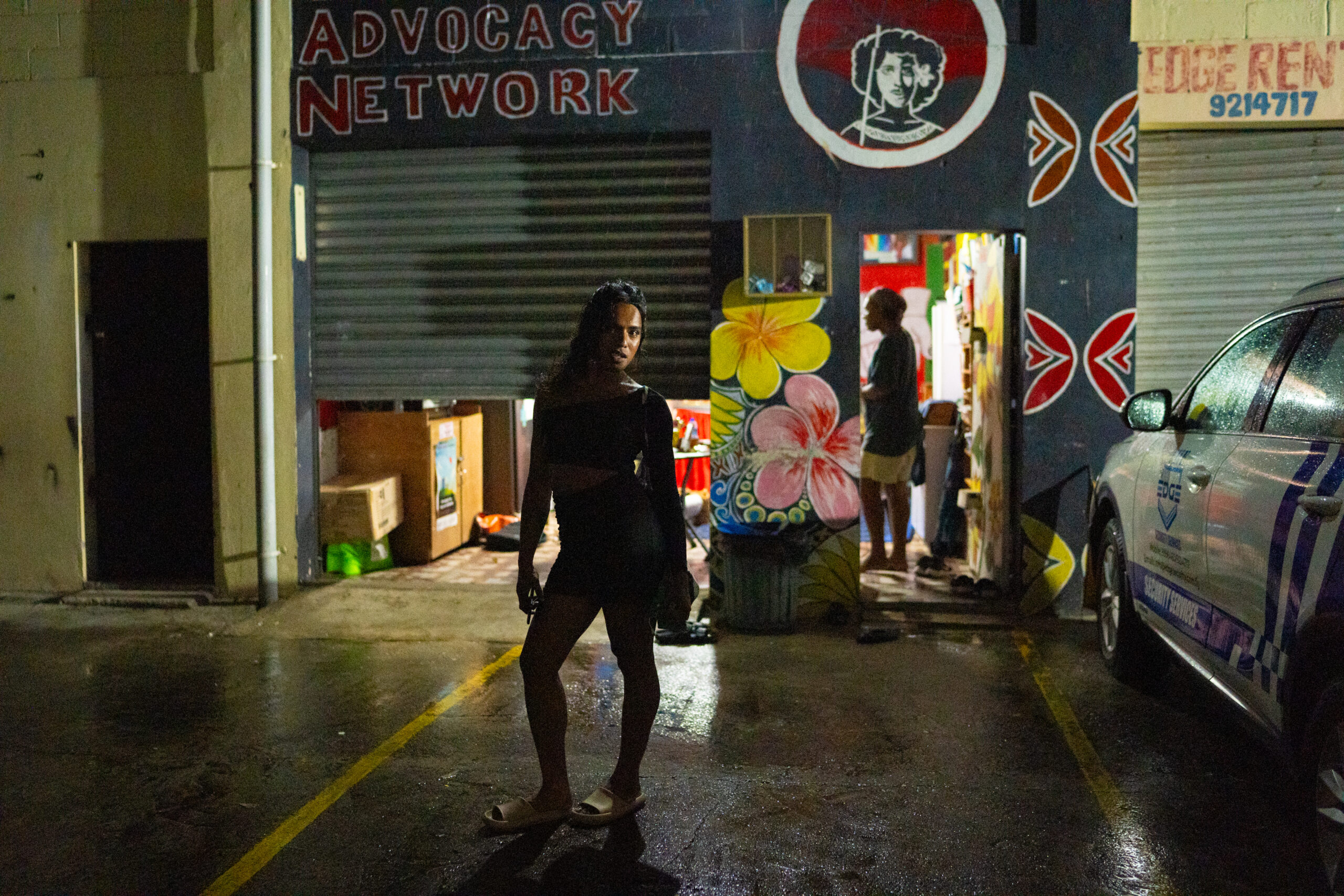
A sex worker waits outside the Survival Advocacy Network, a safe haven for the LGBTQ+ and sex worker community in Fiji that in recent years has also served injecting drug users and provides free HIV testing.
Fiji — a tourist destination known for its exclusive resorts, pristine waters, and white-sand beaches — now has one of the fastest-growing rates of HIV infection in the world, overburdening its donor-dependent public health system. More than 1,583 new HIV infections were recorded in 2024 in a country with a population of less than 1 million — the highest ever in Fiji’s history, and a 500% increase from 2018.
That number, according to preliminary assessments from the Joint U.N. Program on HIV/AIDS (UNAIDS) and Fiji’s Health Ministry, is expected to double again this year to more than 3,000. And public health officials believe the true number of those infected is closer to double that, as many exposed Fijians have not yet been tested, especially on more remote islands.
Conditions here “were a recipe for an explosive epidemic,” said Jason Mitchell, who leads the Fijian government’s HIV task force. “We have a long way to go … before we see the end of this.”
A majority of these new cases have been recorded among young people between ages 15 and 34, while a growing number of mothers are passing the infection on to their babies, according to local health statistics; half of the new infections are linked to drug use.
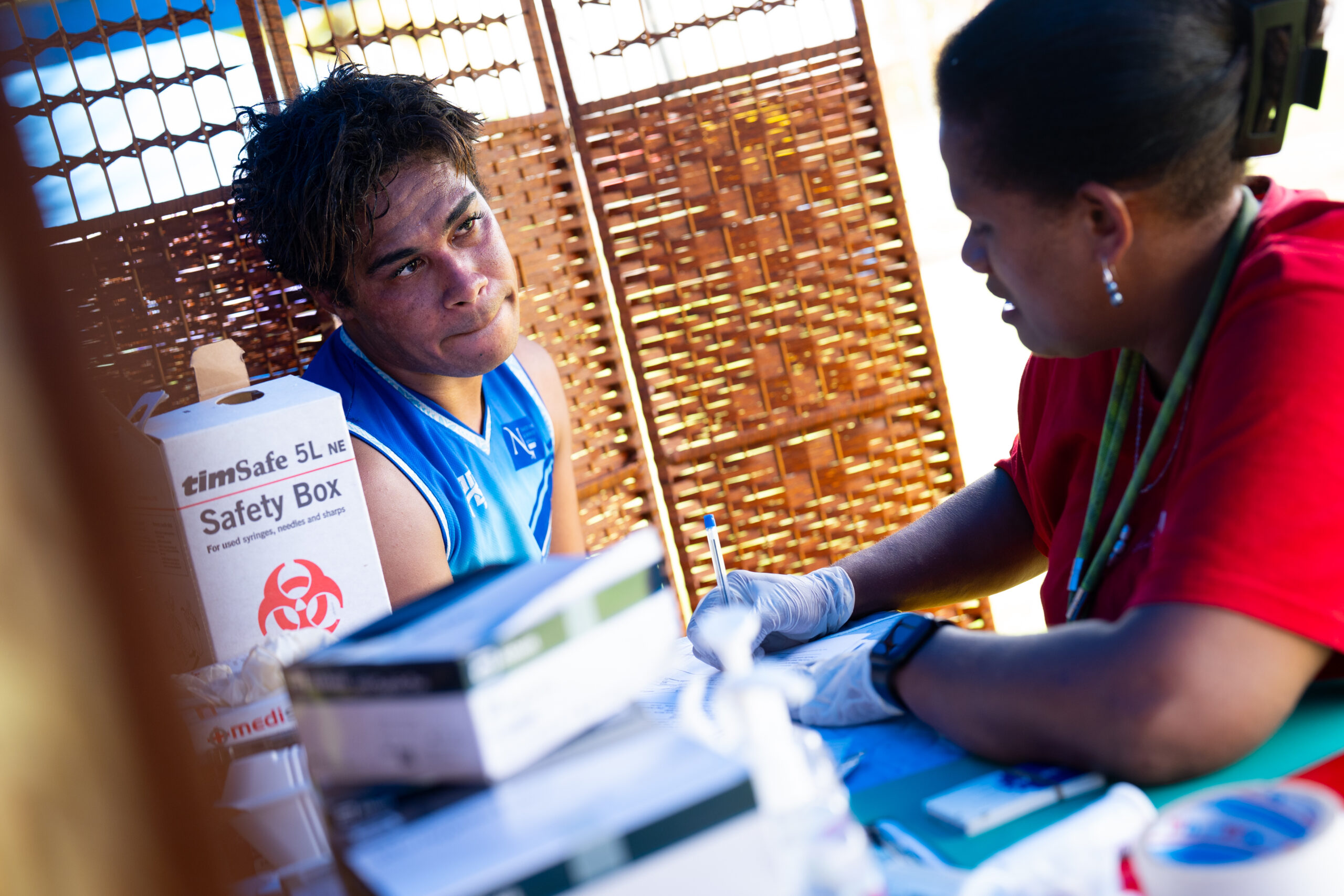
The Reproductive and Family Health Association of Fiji (RFHAF) gives free HIV tests at a sporting event. Isoa Fou, 26, wasn’t ashamed to be getting a test and feels concerned about what’s going on in the country.
Experts in both public health and transnational crime believe that Fiji is the starkest example of a phenomenon that is taking hold across the Pacific region: Rising HIV infections track drug shipment routes across islands that are smaller, more isolated and have significantly less testing for the virus, including in Tonga, Samoa, and the Solomon Islands.
Those islands “all have the early signs that Fiji had in 2019,” said Renata Ram, UNAIDS’ country director in Fiji. Ram raised alarm bells of an impending HIV crisis in a 2022 article, warning that risky behaviors commonplace in Fiji were spreading to other parts of the Pacific.
Law enforcement officials, customs agencies, U.N. officials and others who investigate drug syndicates believe that the groups operating in and around Fiji are working with each other, bringing together Chinese triads, Mexican cartels, Australian biker gangs, and other syndicates with connections as far away as Nigeria.
Criminal organizations are targeting our region “because they understand our enforcement limitations to monitor across vast maritime territories using traditional enforcement methods,” said the Oceania Customs Organization Secretariat, a 24-member association that helps coordinate customs and border enforcement for Pacific nations, in a response to questions from the Washington Post. “We’re witnessing unprecedented coordination between drug cartels, organized criminal groups and regional networks.”
That cooperation presents a huge challenge and has “thrown traditional narcotics work out the window,” according to one U.S. law enforcement official who, like others, spoke on the condition of anonymity to discuss counternarcotics operations. Criminal organizations from different countries, rather than violently seeking to secure turf, are working together in Fiji, law enforcement officials say, much like a diversified multinational corporation.
“Those guys are going to make deals along the chain, even though they technically would be looked at as adversaries,” the U.S. law enforcement official said, “because at the end of the day they are going to do what it takes to succeed.”
At the same time, international law enforcement agencies have been reticent to share intelligence with their Fijian counterparts, prosecutors said, because of allegations that drug syndicates have infiltrated the police and other agencies.
In December, leaked chats on Viber, a messaging app commonly used in Fiji, allegedly showed police officers texting with traffickers about moving drugs. Seven senior officers are now under investigation in connection with that case, according to Fiji’s Ministry of Policing. Between January 2023 and October of last year, before the Viber investigation, 27 police officers were charged with drug-related offenses, the ministry said.
John Rabuku, Fiji’s deputy director of public prosecutions, who last year secured convictions up to life in prison in connection with the Pacific’s largest-ever drug bust, acknowledged in an interview that these were only “middle-level people … involved in the logistics.” Even at trial, he said, prosecutors were unable to show the drugs came from a particular group. The syndicate had brought in 4.1 metric tons (about 4.5 U.S. tons) of methamphetamine worth over a billion dollars into Nadi, Fiji’s main tourist area, on a yacht in December 2023.
“No one would give us that information,” Rabuku said. “The offshore intelligence community … just didn’t want to tell us.”
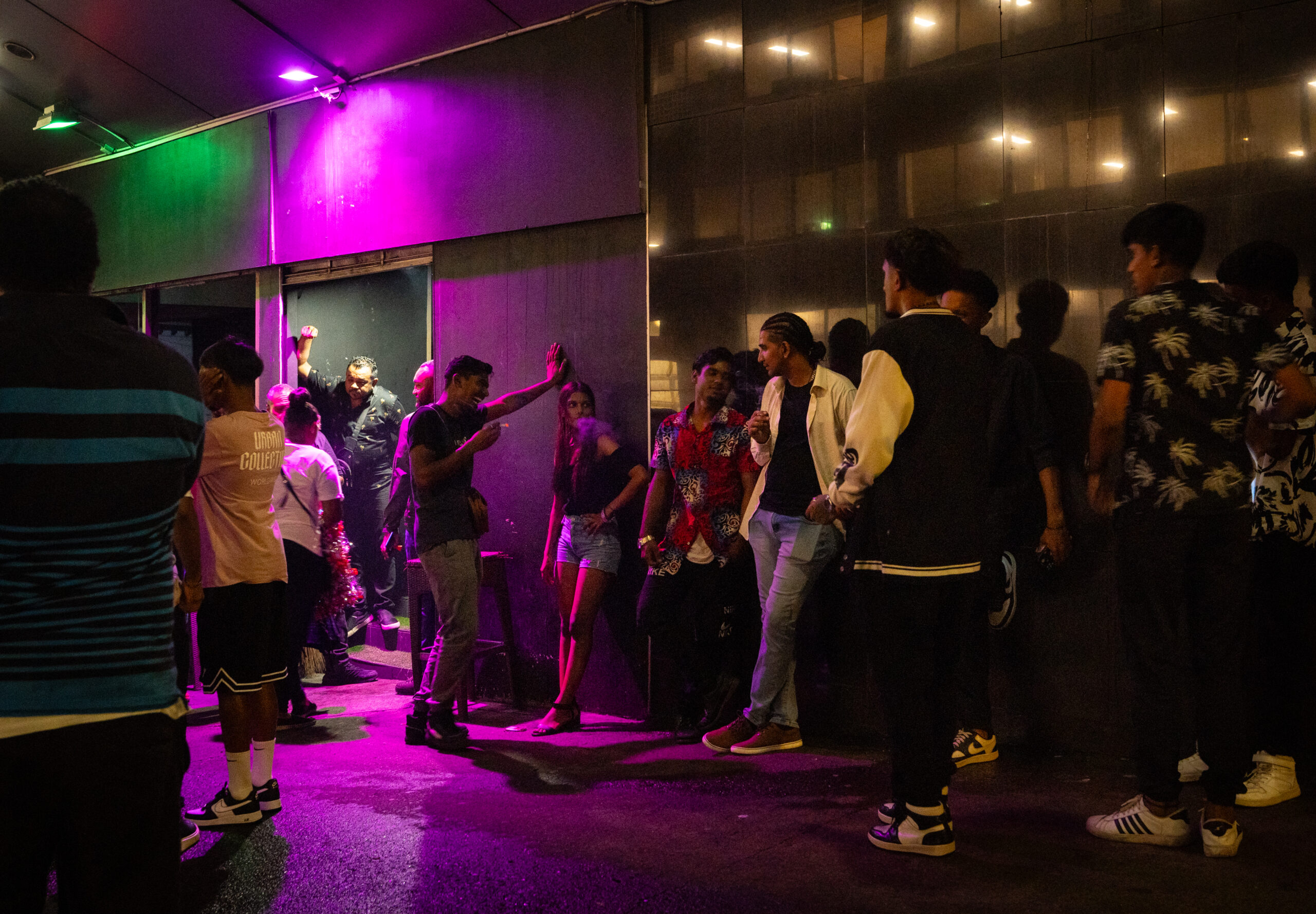
Guests wait outside a nightclub in Suva in December.
White money
Joseph was a singer in a reggae band, performing for tourists at beach bars, when a contact he knew approached him about selling marijuana. The 47-year-old, who spoke on the condition that only his first name be used because of security concerns and ongoing criminal cases against him, started dealing, mostly selling locally grown product to foreigners.
A few years before the COVID pandemic, he and others said, meth started hitting the streets, first as a party drug for tourists and wealthy Fijians. The drugs, according to the U.N. Office on Drugs and Crime (UNODC) and law enforcement officials, were from shipments transiting to Australia and New Zealand, where meth is growing in demand and exceptionally lucrative, selling for 18 times what it retails for in the United States, according to law enforcement officials and other experts on the drug trade.
When COVID-19 hit, putting a freeze on tourist arrivals and complicating the transport of drugs in and out of Fiji, traffickers started paying runners in the drug itself — “white money,” as it is called on the streets. Joseph and experts on organized crime said dealers started selling meth locally to turn their pay into cash.
“That payment in kind became the origin of the domestic market,” said Virginia Comolli, head of the Pacific program at the Geneva-based Global Initiative Against Transnational Organized Crime. There was so much that dealers “didn’t know how to price it,” she said, while users themselves had no idea how addictive the drug could be.
As supply exploded and prices fell, meth quickly spread among the urban poor, sex workers and other marginalized communities.
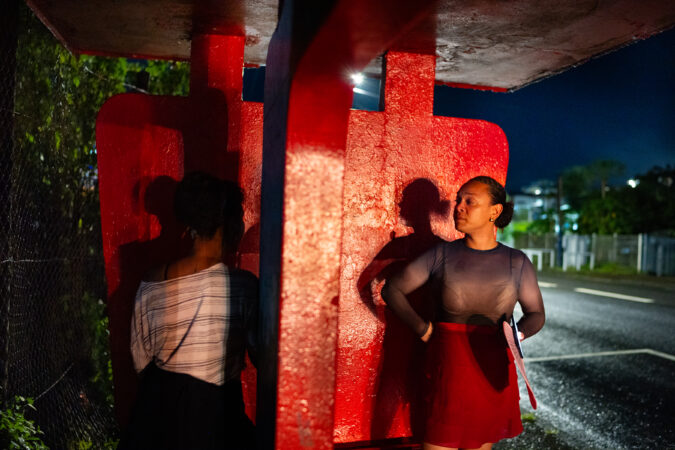
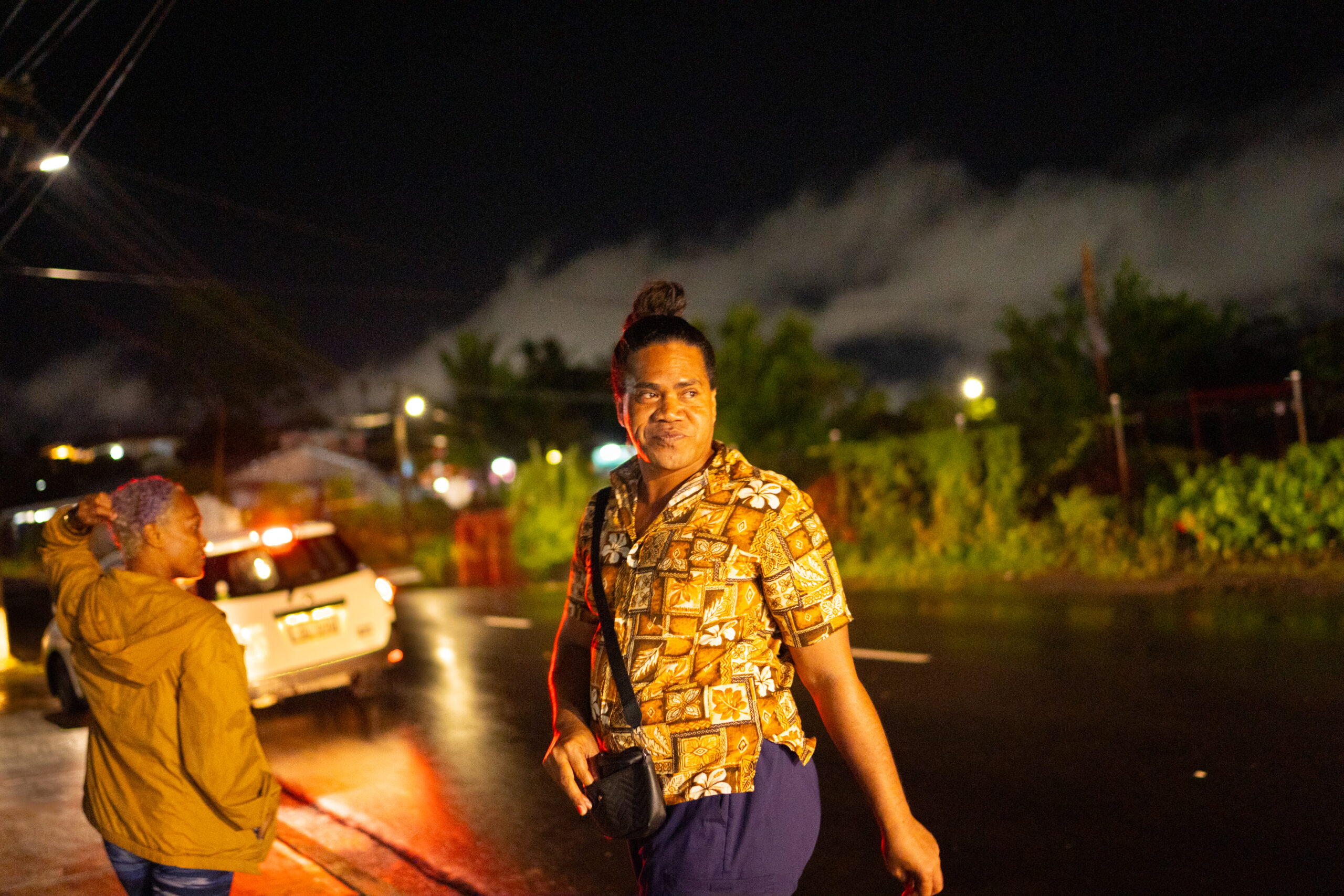
“It was the ‘in thing’ for us,” said Rochelle Naulunimagiti, a 37-year-old transgender sex worker and activist. “All the girls were on it.”
Rochelle Naulunimagiti, 37, a trans sex worker and community activist, shared a needle with a friend one night when she was desperate to get high, amid an especially tough period in her life. A few months later, she tested positive for HIV, a diagnosis that initially crippled her.
In Fiji, just as a single cigarette is often shared among a group of smokers and as the traditional psychoactive drink, kava, is passed around in a single cup, needles too were shared, community workers and users said.
Friends would sit and inject in a group, using shared bottle caps or other mixing paraphernalia to dissolve the crystals into an injectable liquid. Often, just one person — called the “doctor” — would be in charge of administering the drug, injecting the others, users and community workers said. In rare cases, addicts injected themselves with the blood of a person who was already high to get a residual hit. But the high was never as strong. On one evening, reporters from the Post observed a user injecting “raw,” as it is called here: using their own blood, instead of water, to dilute the crystals, and then injecting the mixture back into their veins.
Ben Morrison, who co-founded Inspire Pacific, which runs a camp for boys who are grappling with drugs and violence, said about 30% of those in the cohort are HIV-positive, most through needle-sharing.
For them, “HIV is like, what’s that? OK, I got a sickness, but look at my life. I don’t have a dad, I don’t have a home, I don’t eat on a daily basis,” Morrison said. “So what’s another diagnosis from a doctor to me?”
Sometimes, though, the risks were clear to users. Naulunimagiti knew better, she said. But one night in 2023, grappling with depression, she said she “really needed that feeling.” She took a needle from a friend and injected herself. Several months later, she tested positive for HIV.
“I was a leader in the community,” Naulunimagiti said through tears. “I thought, what would people think of me?”
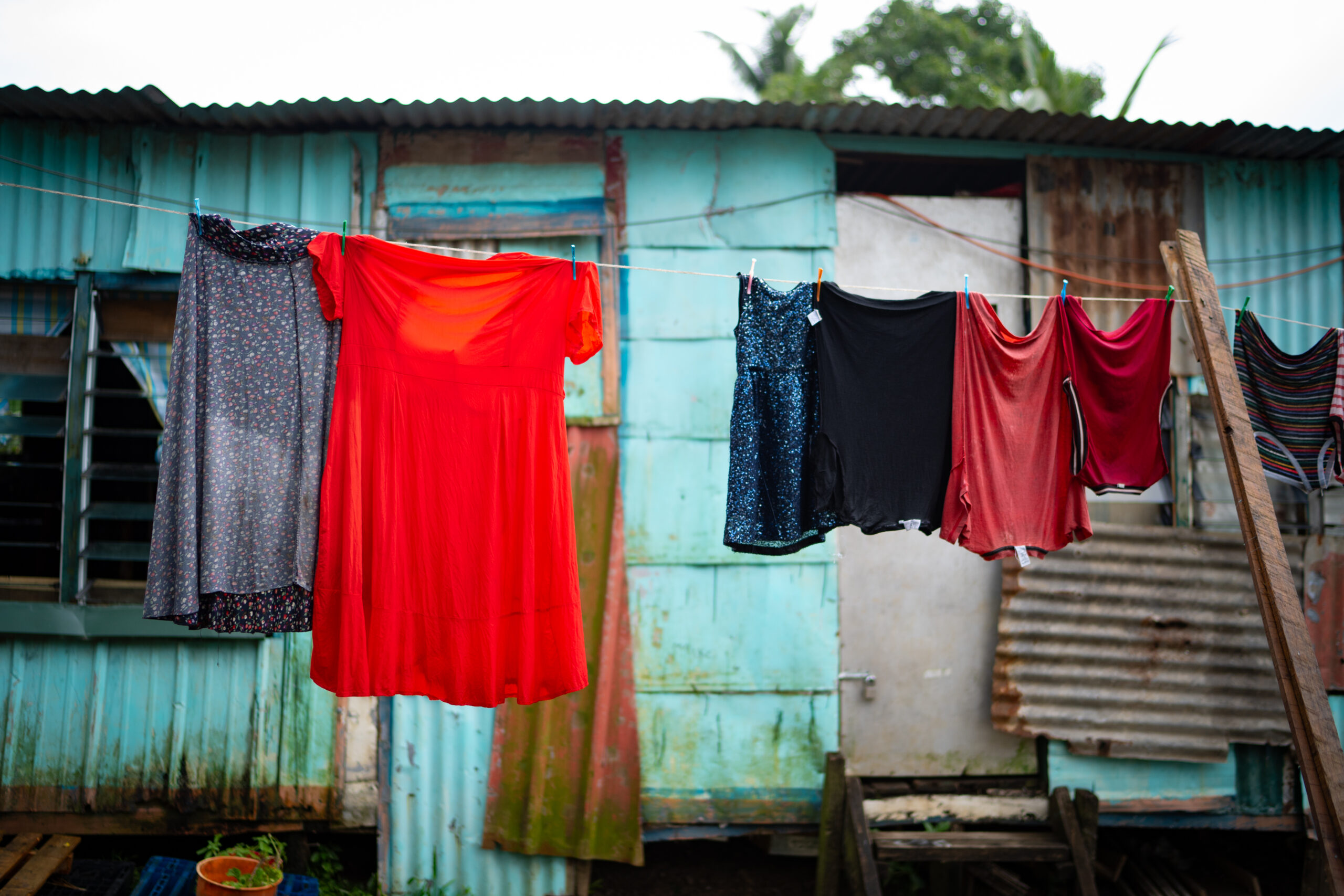
Laundry hangs on a line in an urban squatter community in Suva.
Culture of silence
Mark Shaheel Lal, a 24-year-old student, was walking through the streets of Suva one afternoon when a driver rolled down his window and shouted, “he has AIDS!” before speeding off. It wasn’t the first time, he said. Just a few months earlier, someone pointed at him and called out, “HIV.”
Just weeks before Fiji’s government officially announced there was an HIV outbreak in the country, Lal, a gay man who is not a drug user, came out as HIV-positive. In a nation where a culture of silence still exists around the diagnosis, Lal’s declaration made him a face of the epidemic, as well as a source of information for many HIV-positive Fijians. Through his Facebook page, Living Positive Fiji, Lal has counseled more than 100 newly diagnosed HIV patients over the past year, helping them navigate their diagnosis.
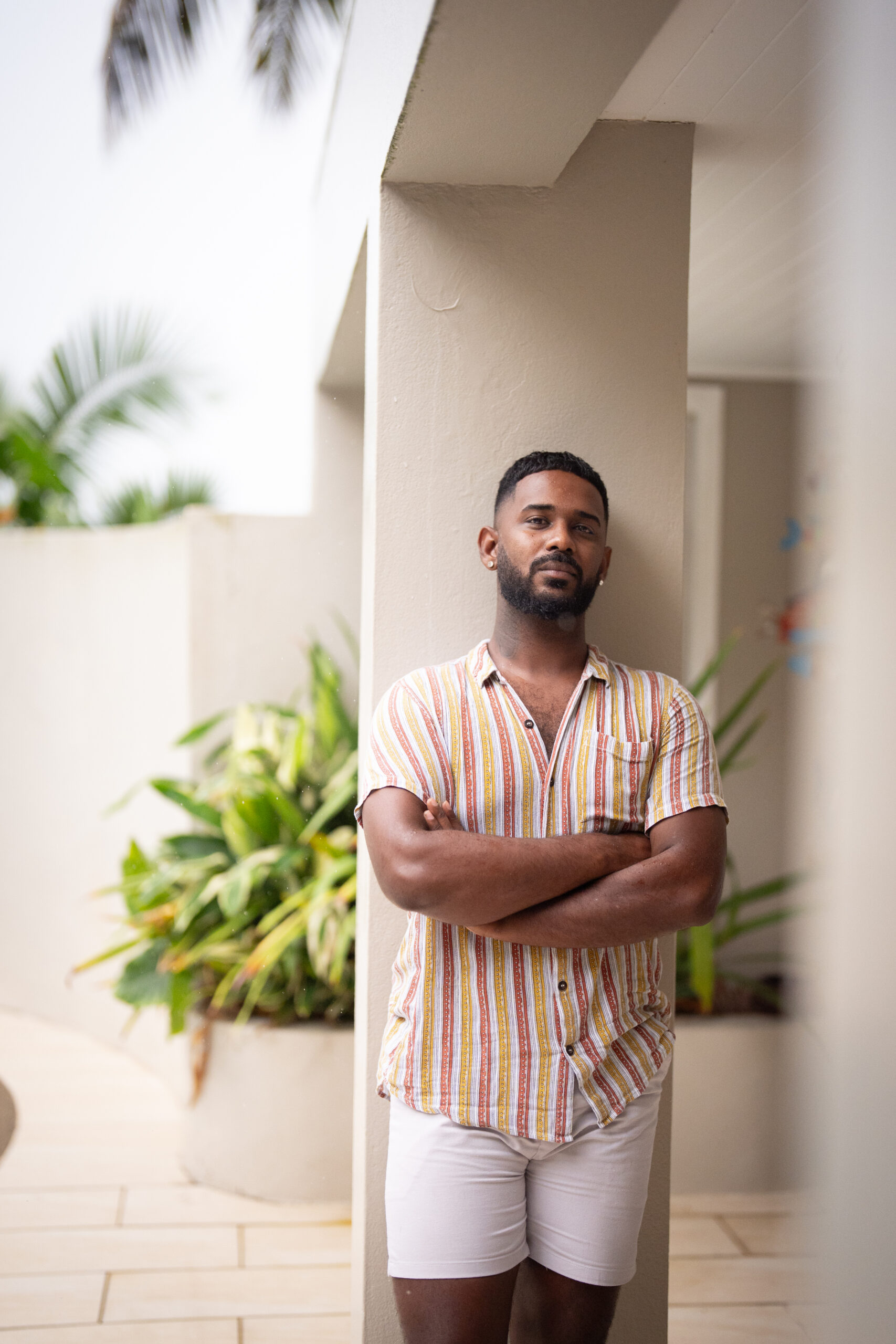
Mark Shaheel Lal, 24, came out as a HIV-positive in 2024, hoping to break the “culture of silence” around the diagnosis.
“I know how I felt when I got that note,” Lal said. “I thought my world was ending. It even came to a point where I thought I should take my own life because I was going to die anyway.”
Some who have reached out to him have been hesitant to get treatment, believing that since they are not showing any signs of sickness, the diagnosis must be incorrect. Advances in antiretroviral therapy mean HIV is no longer the death sentence it once was — but only if detected early and if someone is receiving treatment. Fiji’s public health officials are also pushing for Pre-Exposure Prophylaxis (PReP) medication for high-risk groups, which can prevent people from contracting HIV altogether.
Of the more than 120 people who died of HIV-related causes in Fiji in 2024, more than half found out their status the same year, according to data from the Health Ministry, long after their immune system had already been fatally compromised.
Lal holds his HIV medication pills.
Accessing critical medication has also not always been straightforward. At one point in late 2024, Lal and Naulunimagiti said, there were no antiretroviral pills in the country. There was also a shortage of specimen bottles for further testing, which Lal raised money for and then donated to the local reproductive health clinic.
In recent months, both Australia and New Zealand have pledged millions to Fiji’s effort to get the HIV epidemic under control. The Fijian government was separately in discussions with the U.S. Agency for International Development (USAID) for additional funding and the U.S. Centers for Disease Control and Prevention (CDC) for help investigating the origins of the epidemic and the specific strain of HIV the country was dealing with, according to people familiar with the conversations. Both discussions did not progress under the Trump administration, which took office soon after Fiji declared its epidemic. USAID had just reopened its regional mission in Fiji in late 2023 after more than a decade.
A spokesperson for the CDC, in response to questions from the Post, referred queries to the Department of Health and Human Services, which referred the Post on to the State Department. The U.S. Embassy in Suva did not respond to a request for comment.
Ships in the waters off Fiji.
New year, new bust
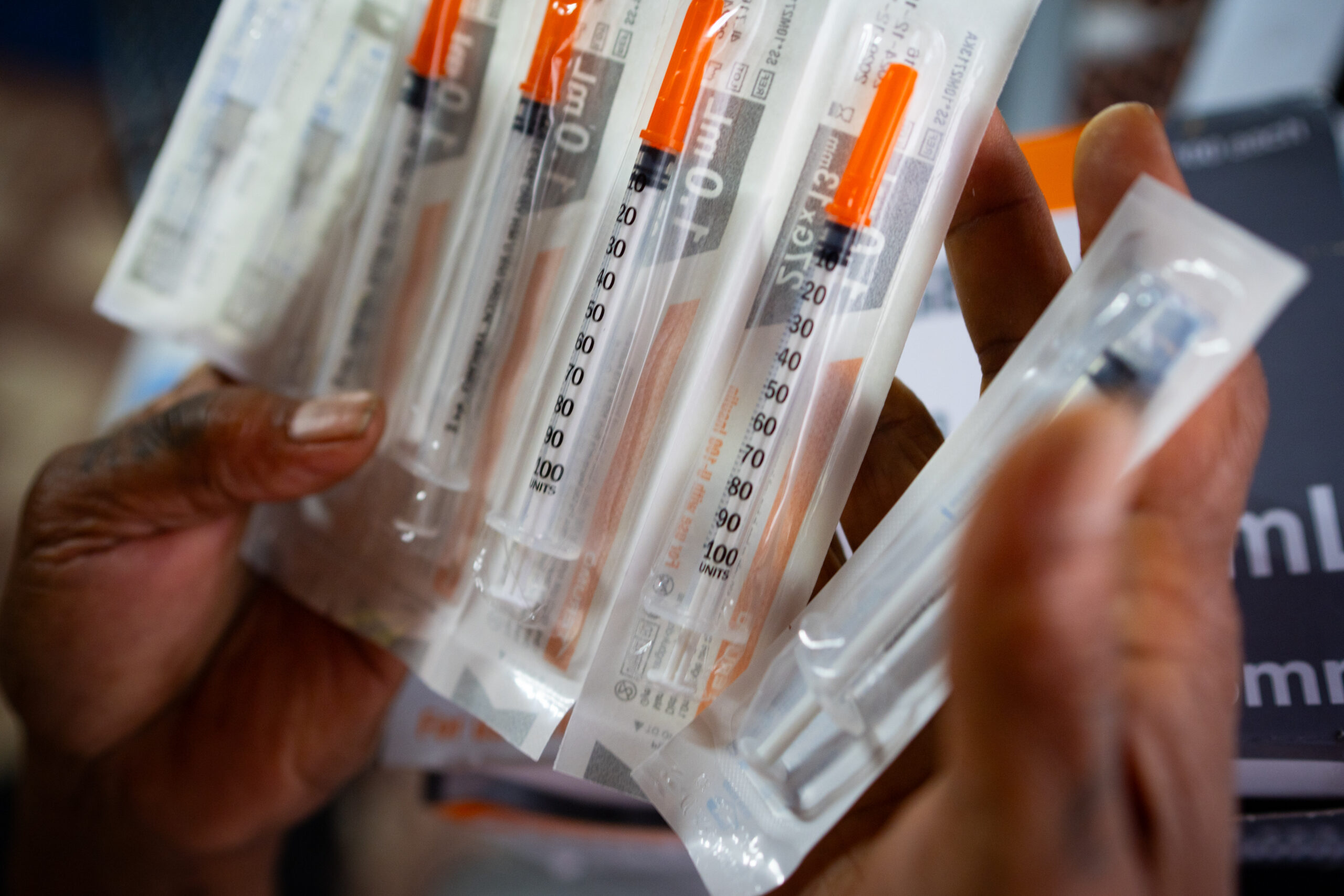
On a recent afternoon in Fiji, a community worker sitting in a taxi rolled down the window, stuck out their hand and brandished a handful of new syringes, still wrapped in sterile packaging, to a group of zombielike men, scar tissue marking their forearms, sitting outside an alcohol store.
It took them a minute to register that the syringes were free handouts. They rushed to the car, grabbed the syringes and asked for more.
Needles have now become almost as valuable as the drug itself, as awareness of safe injecting practices grows in the country. Providing needles remains illegal, however. Participants in the WHO- and UNDP-commissioned assessment on drug use said they “without exception … reported difficulties accessing sterile needles and syringes for injection,” particularly in pharmacies, which are reluctant to give them out without a prescription.
“Carrying the syringes sometimes feels just as risky as carrying weed or dope,” Joseph said.
Needles have become almost as valuable in Fiji as meth itself, as awareness of safe injecting practices grows in the country.
A needle and syringe program, where sterile needles are distributed free with no questions asked, is in the pipeline and likely to be implemented later this year after cabinet approval. The WHO, in its assessment, identified it as one of the highest priorities for Fiji.
Meanwhile, the drugs keep coming. On Jan. 16, Fijian police raided a vessel off a wharf in the northwest of the country and found more than 2 metric tons of cocaine, packed in over 100 sacks. Prosecutors have charged six — four Ecuadoran nationals and two locals — in connection with the trafficking case. The drugs, prosecutors said, came in through semisubmersible vessels known as “narco subs.” Also so far this year, two senior police officers, who have since been suspended, were charged with illegally importing and possessing meth.
“A culture of participation” in the drug trade has “seeped into our police force, our institutions and our society,” said Rabuku, the deputy public prosecutor, undeterred even by recent life sentences. As long as that does not change, he added, Fiji will “always remain a transit point for drugs.”