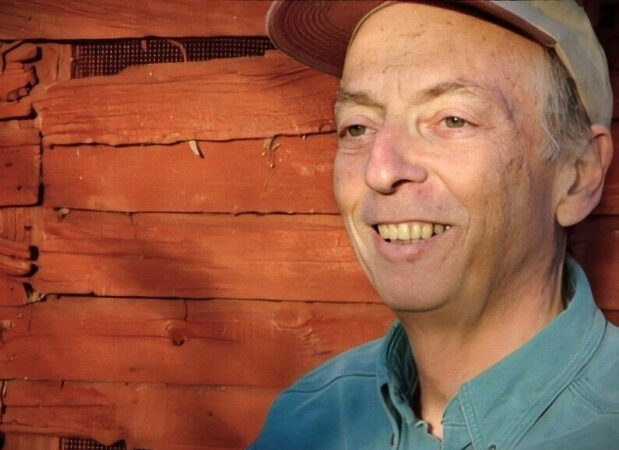
GETTYSBURG — History professor Gabor S. Boritt, a Hungarian immigrant to the United States who wrote widely about the Civil War and President Abraham Lincoln, has died. He was 86.
Mr. Boritt had been a professor at Gettysburg College in Pennsylvania for many years, founding the Civil War Institute and helping establish the $50,000 Lincoln Prize for scholarship related to the Civil War.
He died Monday in Chambersburg, according to his son.
Mr. Boritt was born in Budapest in 1940 and survived World War II, although relatives were killed in the Auschwitz Nazi death camp. He was sent to an orphanage after the war and in 1956 joined the Hungarian Revolution as a 16-year-old, his family recalled.
After the uprising was crushed, he made it to the United States, where he worked in a New York hat factory before furthering his education in South Dakota and earning a history doctorate from Boston University.
He taught at several universities before joining the faculty at Gettysburg in 1981. Mr. Boritt served on the board of the Gettysburg Foundation and was involved in the construction of a new visitor’s center at Gettysburg National Military Park.
He was awarded a National Humanities Medal by President George W. Bush in 2008.
A screening of Budapest to Gettysburg, a documentary about his life created by his son, Jake Boritt, will be held on Lincoln’s Birthday, Feb. 12, in Gettysburg.
SAN FRANCISCO — Drew Brees and Larry Fitzgerald headlined the 2026 Pro Football Hall of Fame class featuring five players but not six-time Super Bowl winning head coach Bill Belichick.
Brees and Fitzgerald both made it in their first year of eligibility in results announced at NFL Honors on Thursday night after prolific careers. Luke Kuechly and Adam Vinatieri made it in their second seasons of eligibility, while Roger Craig was the lone pick among seniors, coaches and contributors.
“One of the coolest moments was getting up on that stage with all the other Hall of Famers,” Fitzgerald said. “That moment kind of crystallized it for me.”
But the class is also noteworthy for Belichick’s absence as at least 11 of the 50 voters opted against giving him a vote despite a career with 333 wins in the regular season and playoffs and the most Super Bowl titles of any head coach. A report last week that Belichick fell short in his first year of eligibility was met with widespread criticism of both the voters and the process for choosing Hall of Famers.
“His stats speak for themselves,” said Vinatieri, who played six years for Belichick.
“I thought he’d have a real good chance to be up there as well. The people who voted made their votes and I think he’ll be up here one day.”
The man who hired Belichick in New England to set the stage for the Patriots dynasty also fell short, with owner Robert Kraft failing to get enough votes.
This is the second straight year with a smaller class after only four people made it last year as new rule changes have made it harder to get into the Hall. There had been at least seven people inducted in the previous 12 classes before last year.
That contributed to the snub for Belichick and Kraft, who were grouped with Craig and two other players — Ken Anderson and L.C. Greenwood — who have been retired for at least 25 seasons. The voters picked three of the five candidates with the highest vote-getter and anyone else above 80% getting the honor.
Craig, who was in his 28th year of eligibility, was the only one of those five to make it. Craig was the first player ever to have 1,000 yards rushing and 1,000 yards receiving in the same season, which happened in 1985, and he led the NFL with 2,036 yards from scrimmage in 1988 when he helped San Francisco win the Super Bowl.
Craig also was part of the title-winning teams for the 49ers in the 1984 and 1989 seasons. His 410 yards from scrimmage in those Super Bowl wins are the third-most ever behind Hall of Famers Jerry Rice and Franco Harris.
The four modern-era candidates all overlapped for several years, waging many battles against each other.
“Very early on you realized there was something special and unique about these guys,” Brees said.
Vinatieri was one of the most clutch kickers in NFL history, making the game-winning field goals in the first two Super Bowl victories during New England’s dynasty with Belichick and Kraft in charge. He joined Jan Stenerud and Morten Andersen as the only players in the Hall who were primarily kickers in their careers.
Vinatieri helped launch the run with one of the game’s greatest kicks — a 45-yarder in the snow to force overtime in the “Tuck Rule” game against the Raiders in the 2001 divisional round. He made the game-winning kick in OT to win that game and then hit a 48-yarder on the final play of a 20-17 win in the Super Bowl against the Rams.
Vinatieri is the NFL’s career leader in points (2,673) and made field goals (599) over a 24-year career with New England and Indianapolis. He also leads all players with 56 field goals and 238 points in the postseason.
Brees is second all time to Tom Brady with 80,358 yards passing and 571 touchdown passes. He spent the first five seasons of his career with the San Diego Chargers before signing as a free agent with the Saints in 2006, where his career took off as he helped lift a city still recovering from Hurricane Katrina.
Brees delivered to New Orleans its first Super Bowl title following the 2009 season, when he won MVP of the game after beating Peyton Manning and the Indianapolis Colts. Brees made the Pro Bowl 13 times in his career, won AP Offensive Player of the Year in 2008 and 2011, was an All-Pro in 2006 and was a second-team All-Pro four times.
Fitzgerald spent his entire career with the Arizona Cardinals after being drafted third overall in 2004. His 1,432 catches and 17,492 yards receiving in 17 seasons rank second all time to Jerry Rice.
Fitzgerald topped 1,000 yards receiving nine times — tied for the fourth-most ever — and helped the Cardinals reach their only Super Bowl following the 2008 season. Fitzgerald set single-season records that postseason with 546 yards receiving and seven TD catches, including a go-ahead 64-yard score with 2:37 to play in the Super Bowl before Pittsburgh rallied for a 27-23 win over Arizona.
Kuechly’s career was brief but impactful. The first-round pick by Carolina in 2012 was an All-Pro five times, with seven Pro Bowl nods and a Defensive Rookie of the Year award. Over his eight-year career, Kuechly led all linebackers in the NFL in tackles (1,090), takeaways (26), interceptions (18) and passes defensed (66).
Voters reduced the list of 15 finalists in the modern era category to 10 and then seven before voting for five to make it. The top three vote-getters and anyone else above 80% got into the Hall.
Offensive linemen Willie Anderson and Marshal Yanda, and edge rusher Terrell Suggs made it to the final seven in the modern-era category and will automatically be finalists again next year.
WASHINGTON — A man Justice Department officials described as a key participant in the 2012 attack that killed a U.S. ambassador and three other Americans in Benghazi, Libya, was taken into U.S. custody Friday and will face prosecution.
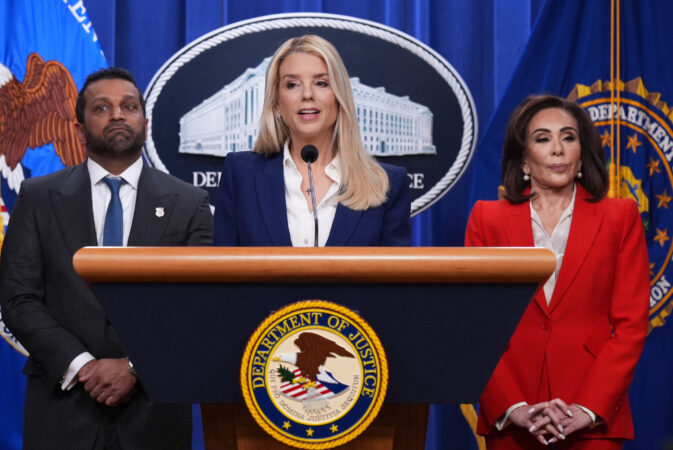
Zubayar al-Bakoush was arrested in an undisclosed country and flown to an airfield near Washington, where he arrived just after 3 a.m. Friday, Attorney General Pam Bondi said. He faces an eight-count indictment on charges including murder, terrorism and arson.
Bondi and FBI Director Kash Patel declined at a news conference to answer questions about where al-Bakoush was arrested and whether the operation that brought him into custody involved the assistance of foreign nations.
“We have never stopped seeking justice for that crime against our nation,” Bondi said.
In the Sept. 11, 2012, attack, at least 20 militants, armed with AK-47s and grenade launchers, stormed the U.S. mission in Benghazi, breaching its gates, forcing their way into offices and setting buildings ablaze. Ambassador J. Christopher Stevens, State Department employee Sean Smith and CIA contractors Tyrone S. Woods and Glen Doherty were killed. Stevens was the first U.S. ambassador slain while performing his duties abroad in nearly four decades
Almost immediately, the incident became a subject for partisan finger-pointing, with Republican lawmakers faulting the Obama administration and especially then-Secretary of State Hillary Clinton for alleged security failures at the facility and what they described as a slow response to the violence. References to Benghazi — nearly 14 years later — remain a potent point of political division.
Even as they announced al-Bakoush’s arrest Friday, Justice Department officials seized the opportunity to swipe at frequent Republican targets, renew old lines of attack, and credit President Donald Trump.
“Hillary Clinton famously once said about Benghazi, ‘What difference, at this point, does it make?’” Bondi said, referring to an irritated response Clinton gave during a 2013 Senate hearing at which she was repeatedly pressed about the motive for the attack.
“Well, it makes a difference to Donald Trump,” Bondi continued. “It makes a difference to those families and 14 years later, it makes a difference to law enforcement who made the difference in this case.”
A Republican-led congressional investigation into the incident later found no evidence of wrongdoing by Clinton, though it faulted the Obama administration more broadly for being slow to respond after the militants breached the gates.
Jeanine Pirro, the Trump-appointed U.S. attorney in Washington whose office is overseeing the prosecution, made reference to that frequent Republican criticism in her remarks Friday about al-Bakoush’s arrest.
In her prior role as a Fox News host, Pirro frequently waded into the debate over Benghazi, at one point accusing then-FBI Director Robert S. Mueller III of orchestrating a cover-up to protect administration officials.
“For 13 hours, the American cavalry never came,” she said Friday. “For 13, hours [the victims] waited for that help that never came.
Democrats have defended their efforts to prosecute individuals tied to the deaths of Stevens and the others, noting that the Justice Department had by late 2013 filed sealed complaints against roughly a dozen overseas militants accused of playing a role in the attack.
Pirro acknowledged Friday that the complaint that led to al-Bakoush’s arrest was first filed in 2015, during the final year of the Obama administration.
Court filings unsealed Friday described al-Bakoush as a member of an extremist Libyan militia who was identified by a cooperating FBI witness as one of the attackers caught on surveillance footage from the compound. Agents described footage showing al-Bakoush, with a firearm slung over his shoulder, attempting to break into cars of U.S. service members and following the crowd into buildings where Stephens and others were killed.
Al-Bakoush is the third man law enforcement officials have brought to the U.S. to face charges.
A federal jury in Washington in 2017 convicted Ahmed Abu Khattala, a Libyan militia leader and the accused mastermind behind the attack, on conspiracy and terrorism charges tied to the incident. A second militant, Mustafa al-Imam, was found guilty on similar charges in 2019. Both men were sentenced to prison terms of more than a decade.
“Time will not stop us from going after these predators, no matter how long it takes, to fulfill our obligation to those families who suffered horrific pain at the hands of these violent terrorists,” Pirro said.
OSLO, Norway — Norway’s crown princess apologized on Friday for the situation she has put the royal family in as she faces scrutiny over her contacts with the late sex offender Jeffrey Epstein, part of a broader apology for all those she has “disappointed.”
Crown Princess Mette-Marit’s communications and contacts with Epstein have put her in the spotlight over the past week, adding to the embarrassment to the royals just as her son went on trial in Oslo for multiple offenses, including charges of rape.
The Epstein files contained several hundred mentions of the crown princess, who said in 2019 that she regretted having had contact with Epstein, Norwegian media reported.
The documents, which include email exchanges, showed that Mette-Marit borrowed an Epstein-owned property in Palm Beach, Fla., for several days in 2013. Broadcaster NRK reported that the stay was arranged through a mutual friend, which was later confirmed by the royal household.
The royal palace said Friday that Mette-Marit wants to talk about what happened and explain herself in more detail, but is unable to at present. It added that she is in a very difficult situation and “hopes for understanding that she needs time to gather her thoughts.”
It also issued a statement from the crown princess — her second in a week — in which she reiterated her deep regret for her past friendship with Epstein.
“It is important for me to apologize to all of you whom I have disappointed,” she said. “Some of the content of the messages between Epstein and me does not represent the person I want to be. I also apologize for the situation I have put the Royal Family in, especially the King and Queen.”
King Harald, 88, and the royals are generally popular in Norway, but the case against Mette-Marit’s son, Marius Borg Høiby, has been a problem for the family’s image since 2024 and the latest Epstein files have compounded that. Mette-Marit is married to Crown Prince Haakon, the heir to the throne.
The release of documents included an email from Mette-Marit to Epstein in November 2012 asking: “Is it inappropriate for a mother to suggest two naked women carrying a surfboard for my 15-year-old son’s wallpaper?”
He replied, “Let them decide,” and advised that the mother should, “Stay out of it.”
Mette-Marit, 52, said in a statement issued shortly after the files were released that she “must take responsibility for not having investigated Epstein’s background more thoroughly, and for not realizing sooner what kind of person he was.” She added: “I showed poor judgment and regret having had any contact with Epstein at all. It is simply embarrassing.”
The crown princess isn’t the only high-profile Norwegian who faces unflattering attention stemming from the documents on millionaire financier and sex offender Epstein released by the U.S. Department of Justice.
The Norwegian Economic Crime Investigation Service, a mixed unit of police and prosecutors, said Thursday that it would look into whether gifts, travel or loans were received by former Prime Minister Thorbjørn Jagland in connection with his positions.
Jagland was Norway’s prime minister between 1996 and 1997. He also has chaired the Norwegian Nobel Committee and was secretary general of the Council of Europe.
The files revealed years of contact between the politician and Epstein. Emails indicate that he made plans to visit Epstein’s island with his family in 2014, when he was chairman of the Nobel committee, with an Epstein assistant organizing the flights.
Norwegian authorities are also looking to lift Jagland’s immunity, which he enjoys because of his past as a diplomat. His legal representative told Norwegian broadcaster NRK that Jagland is cooperating with the investigation.
The World Economic Forum also announced on Thursday that it was opening an internal review into its CEO Børge Brende to determine his relationship with Epstein, after the files indicated the two had dined together several times and exchanged messages. Brende was Norway’s foreign minister from 2013-2017.
He told NRK that he is cooperating with the investigation, that he only met Epstein in business settings and that he had been unaware of Epstein’s criminal background.
Epstein killed himself in 2019 while awaiting trial on charges that he sexually abused underage girls at his homes in the U.S.
MOSCOW — A deputy chief of Russia’s military intelligence agency was shot and wounded in Moscow on Friday in an attack that follows a series of assassinations of senior military officers that Russia has blamed on Ukraine.
Lt. Gen. Vladimir Alekseyev was hospitalized after being shot several times by an unidentified assailant at an apartment building in northwestern Moscow, Investigative Committee spokesperson Svetlana Petrenko said in a statement.
She didn’t say who could be behind the attack on the 64-year-old who has served as the first deputy head of Russia’s military intelligence agency, known as the GRU, since 2011.
He was decorated with the Hero of Russia medal for his role in Moscow’s military campaign in Syria and in June 2023 was shown on state TV speaking to mercenary chief Yevgeny Prigozhin when his Wagner Group seized the military headquarters in the southern city of Rostov-on-Don during his short-lived mutiny.
The shooting came a day after Russian, Ukrainian, and U.S. negotiators wrapped up two days of talks in Abu Dhabi, United Arab Emirates, aimed at ending the nearly 4-year-old war in Ukraine. The Russian delegation was led by Alekseyev’s boss, military intelligence chief Adm. Igor Kostyukov.
President Vladimir Putin was informed about the attack, said Kremlin spokesman Dmitry Peskov, who added that law enforcement agencies need to step up protection of senior military officers during the conflict in Ukraine.
Ukrainian authorities haven’t commented on the attack.
Asked about the shooting, Russian Foreign Minister Sergey Lavrov said it would be up to law enforcement agencies to pursue the investigation but described it as an apparent “terrorist act” by Ukraine intended to derail peace talks.
The business daily Kommersant said the attacker, posing as a delivery person, shot the general twice in the stairway of his apartment building, wounding him in the foot and the arm. Alekseyev tried to wrest away the gun and was shot again in the chest before the attacker fled, the report said.
Alekseyev, who was born in Ukraine when it was part of the Soviet Union, rose steadily through the ranks to lead operations of Russian military intelligence in Syria, Ukraine, and elsewhere.
He was sanctioned by Washington for meddling in the 2016 U.S. election and also faced sanctions in the U.K. and the European Union over his alleged role in the 2018 poisoning of former Russian intelligence officer Sergei Skripal and his daughter with the nerve agent Novichok in Salisbury, England.
Since Moscow sent troops into Ukraine in 2022, Russian authorities have blamed Kyiv for several assassinations of military officers and public figures in Russia. Ukraine has claimed responsibility for some of them.
In December, a car bomb killed Lt. Gen. Fanil Sarvarov, head of the Operational Training Directorate of the Russian Armed Forces’ General Staff.
In April, another senior Russian military officer, Lt. Gen. Yaroslav Moskalik, a deputy head of the main operational department in the General Staff, was killed by a bomb placed in his car parked near his apartment building just outside Moscow.
A Russian man who previously lived in Ukraine pleaded guilty to carrying out the attack and said he had been paid by Ukraine’s security services.
Days after Moskalik’s killing, Ukrainian President Volodymyr Zelensky said he received a report from the head of Ukraine’s foreign intelligence agency on the “liquidation” of top Russian military figures, adding that “justice inevitably comes” although he didn’t mention Moskalik’s name.
In December 2024, Lt. Gen. Igor Kirillov, the chief of the military’s nuclear, biological and chemical protection forces, was killed by a bomb hidden on an electric scooter outside his apartment building. Kirillov’s assistant also died. Ukraine’s security service claimed responsibility for the attack.
An undocumented immigrant is seeking $1 million in damages after he says he was riding his bike in Melrose Park, Ill., when a U.S. Border Patrol agent suddenly tackled him, placed him in a chokehold and punched his head.
A Chicago resident says that federal agents caused $30,000 worth of property damage when they broke a lock on his wrought-iron gate and scaled a wooden fence to chase after construction workers repairing his Victorian-era home.
A Columbia University student and activist who spent 104 days in a U.S. Immigration and Customs Enforcement detention center is demanding $20 million over what he says was a false arrest.
All three should expect a long and difficult fight under the current legal landscape, lawyers warn.
These and scores of other claims expected to arise out of the Trump administration’s crackdown on illegal immigration are winding through a bureaucratic process mandated under the Federal Tort Claims Act. It is the primary legal recourse for people seeking compensation for property damage, injuries and even deaths allegedly caused by federal agencies and their employees.
First, individuals must fill out a form and submit it for review by the agency that they say caused the harm. Agencies such as ICE and Customs and Border Protection have six months to deny a claim, offer a settlement, or not respond at all. Only then can people sue in court under the Federal Tort Claims Act.
But these cases are different from civil rights lawsuits. Judges, not juries, decide the outcome. Awarded damages are likely to be much lower. And individual officers can’t be named as defendants.
“It’s absolutely bonkers,” said Brian Orozco, a Chicago attorney for Ricardo Aguayo Rodriguez, the bike-riding immigrant who was hospitalized and is now detained, awaiting deportation to Mexico. “If a Chicago police officer abuses my civil rights, I can file a claim immediately. I don’t have to wait six months [to file a lawsuit]. I have a right to a jury trial. I don’t have that when I’m up against the federal government. It’s scary to me how protected these federal agents are.”
After the Civil War, Congress passed a law that established the right to sue local and state officials for the violation of constitutional rights. Federal officials weren’t included in the law, though a 1971 Supreme Court ruling established precedence for such lawsuits. But legal experts said that the court’s decisions within the past decade have narrowed that path and made it nearly impossible to successfully sue federal agents for civil rights violations.
“It is arguably harder today in 2026 than at any other time in American history to sue federal officials for money damages if they violate your constitutional rights,” said Harrison Stark, senior counsel at the State Democracy Research Initiative at the University of Wisconsin Law School.
Relatives of both Renée Good and Alex Pretti, Minneapolis residents who were fatally shot in separate encounters by federal immigration officers in January, have hired attorneys. In a statement, Romanucci & Blandin, the law firm retained by Good’s family, said it is pursuing a tort claim and would not be deterred by “the byzantine, time-consuming processes mandated by the Federal Tort Claims Act.” The attorney hired by Pretti’s parents did not respond to a request for comment.
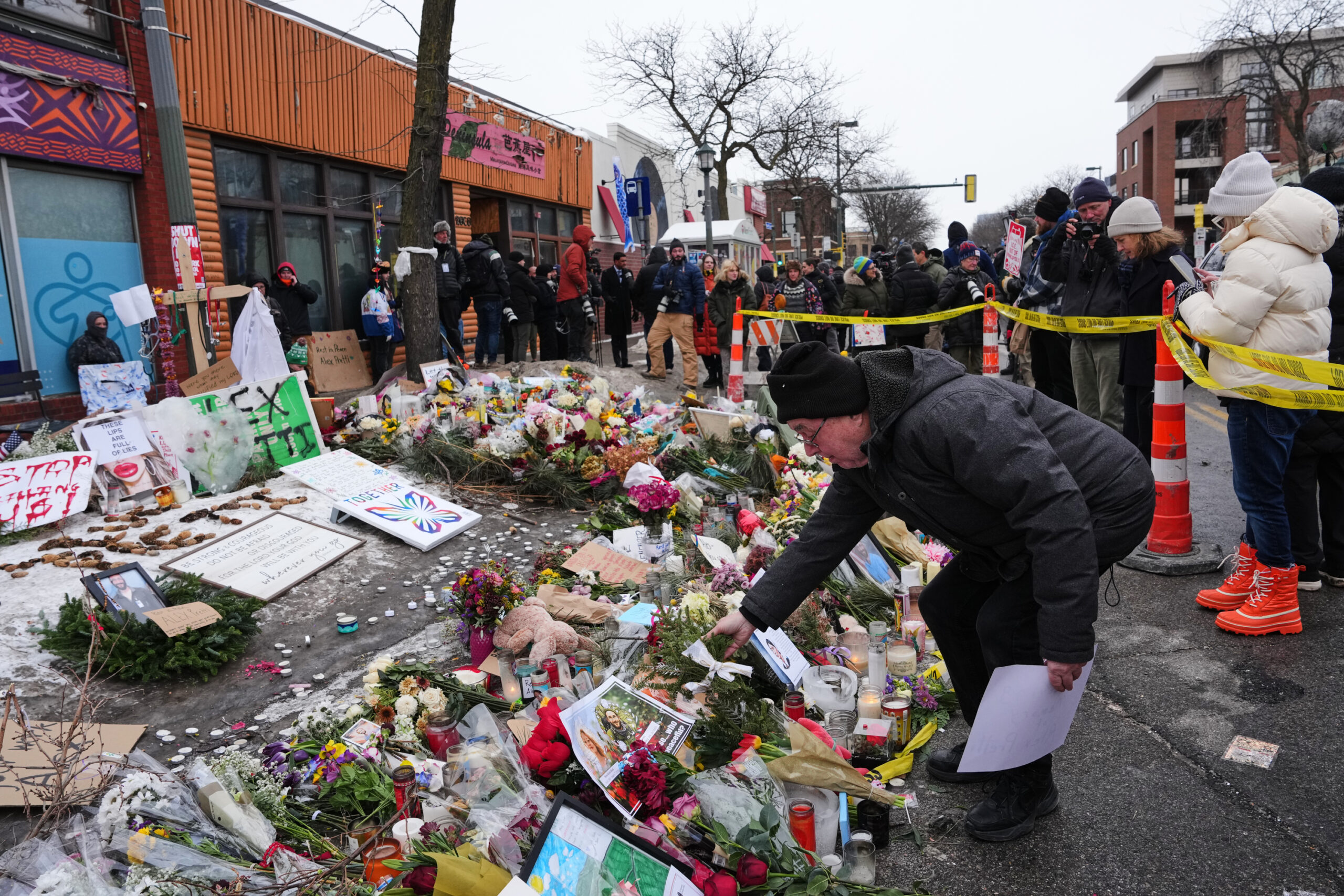
People visit a makeshift memorial on Jan. 26 in Minneapolis for 37-year-old Alex Pretti, who was fatally shot by immigration officers.
An ICE spokesperson said the agency received about 400 tort claims in fiscal 2025, which ended Sept. 30, but did not provide a breakdown of how many resulted in settlements or denials.
“Despite facing a more than 1,300% increase in assaults against them, 8,000% increase in death threats, and a 3,200% increase in vehicle rammings, the men and women of ICE continue working around the clock” to arrest and remove “the worst of the worst criminal aliens from the United States,” ICE said in an emailed statement. The Washington Post could not independently verify these numbers.
A U.S. Customs and Border Protection spokesperson declined to provide data about the number of tort claims the agency received last year.
“Rioters and agitators have created an extraordinary amount of damage to public and private property, not to mention the harm they have put our officers and the public in,” a CBP spokesperson said in a statement. “We expect these agitators will be held responsible for their actions.”
Spokespeople for ICE and CBP declined to comment on individual claims described in this story. They broadly said their agencies adhere to the Federal Tort Claims Act.
A significant settlement is not impossible. The estate of Ashli Babbitt, the woman who was shot and killed on Jan. 6, 2021, during the U.S. Capitol riot, filed a tort lawsuit and reached a nearly $5 million settlement with the government.
But the challenges of navigating the Federal Tort Claims Act — coupled with an anticipated rise in claims as violent encounters continue in cities across the United States — have put pressure on Congress to pass legislation to allow civil rights lawsuits against federal officers and agents.
Such an effort would probably face pushback, experts said. Several years ago, the National Border Patrol Council, a union that represents Border Patrol agents, warned the Supreme Court of the “potentially massive financial impact” that would occur if thousands of its agents were exposed to “liability for personal damages.”
‘Not very hopeful’
Leo Feler said he ran into challenges as soon as he decided to pursue a tort claim. For one thing, he wasn’t sure where to send it: Feler didn’t know which federal agency employed the masked men who came to his Chicago home on Oct. 24.
Feler, a 46-year-old economist, said he wasn’t there at the time. But he received a notification from his Ring security camera: Someone was on his property.
A construction crew had been repairing the windows and siding of his home in the affluent Lakeview neighborhood. As the workers ate lunch outside, armed men in green uniforms jumped from two vehicles and tried to break the locks on the gates of a nearly 6-foot-high wrought-iron fence, according to Feler, who reviewed security camera footage of the incident and a video taken by a neighbor.
The agents, Feler said, had scaled a wooden fence along the side of his house and hopped onto his balcony in pursuit of the fleeing workers.
One worker was injured as he scrambled through a construction site littered with wood and nails, Feler said, leaving a trail of blood in the home. Another worker was detained, he said.
Feler said a tenant who rented a unit on his property asked the officers to provide a warrant that authorized the raid, but they refused to do so. Through his Ring camera’s intercom system, Feler told the agents that they were trespassing and needed to leave. But they ignored him, he said.
Feler later sought legal advice. Attorneys told him he could file a tort claim for damages.
Unsure which agencies had come to his house, Feler sent the paperwork for his tort claim in December to ICE, Customs and Border Protection and the Department of Homeland Security.
He described the damage to his property — including to his locks and fence — and also wrote that the agents “robbed me and my family of the feeling of security we once enjoyed in my home.” His tenant was afraid and asked to break her lease early, which Feler said he agreed to do.
Overall, Feler estimated $30,000 in damage to his property.
He said he is “not very hopeful” that he will receive payment. If his claim is denied, he said he and his attorneys will pursue a lawsuit under the Federal Tort Claims Act.
Others caught up in Operation Midway Blitz, the administration’s immigration enforcement actions in the Chicago area last fall, also said they expect it will be difficult to recover alleged damages.
Leigh Kunkel, a 39-year-old freelance journalist, said she was documenting federal agents shooting pepper balls at protesters in late September outside an ICE facility in Broadview, Ill. An agent then aimed the weapon at her and fired pepper balls, she said, striking her in the back of the head and the nose and leaving her bloodied.
A week later, her fiancé, Kyle Frankovich, also was protesting in Broadview within an area that he said state police monitoring the scene had designated a “free speech zone.” Federal officials, including Border Patrol commander Gregory Bovino, emerged from the ICE facility and began arresting protesters, according to video footage.
Frankovich, 41, said he showed no aggression toward agents; nevertheless, he said, they took him to the ground and put him in handcuffs. They later lined him up with other detainees along a guardrail near the facility. The scene served as a backdrop to a Department of Homeland Security promotional video featuring Secretary Kristi L. Noem.
He said he was detained for eight hours before a federal agent dropped him off at a nearby gas station. Frankovich has not been charged with a crime.
Antonio Romanucci, a civil rights lawyer and founding partner at the Chicago-based firm representing Renée Good’s family, said his office plans to file federal tort claims for Kunkel and Frankovich. The couple said they understand the path may be long and their case could be unsuccessful, while also exposing them to public scrutiny.
“Ultimately, we landed on the feeling that we are privileged enough to have the opportunity to fight back against this as citizens,” Kunkel said, “and that if we can do that, if this is one little way that we can push back, that we should.”
Pushing for change
Previous efforts to change the federal law have failed to gain traction.
A law signed by President Ulysses S. Grant in 1871 established the statutory right to sue local or state officials for constitutional violations. Nearly two years ago, a group of U.S. lawmakers introduced draft legislation that would have amended that law by inserting just four words — “or the United States” — and established the right to sue federal officials as well. But the effort stalled.
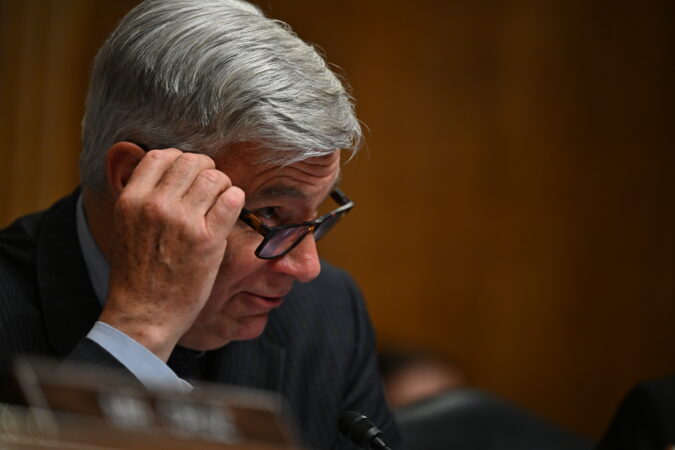
“It’s a somewhat complicated area of law across different jurisdictions,” Sen. Sheldon Whitehouse (D., R.I.) said of the challenges in garnering support for the bill, which he sponsored. “But I didn’t see any huge partisan issues.”
Whitehouse said there was a lack of urgency at the time, even though the Supreme Court had “more or less strangled” the legal pathway that had been used since the 1970s to sue federal officials for civil rights violations.
Last fall, Whitehouse and Rep. Hank Johnson (D., Ga.) reintroduced the measure. Legal experts told the Post they think it is unlikely to pass, citing anticipated concerns about exposing federal law enforcement officers to personal liability.
A handful of states already have laws that authorize claims against federal officials for the violation of constitutional rights, including New Jersey and Massachusetts, according to research compiled by Stark of the University of Wisconsin Law School. Lawmakers in other states are scrambling to draft similar bills.
Last week, the California Senate passed the “No Kings Act” to allow civil rights lawsuits against federal officers. The measure will head to the State Assembly next.
In Colorado, Mike Weissman, a Democratic state senator, recently introduced a similar bill. He described talking with state legislators in Washington, New Mexico, and Virginia, to exchange ideas.
And in Minnesota, State Rep. Jamie Long, a Democrat whose district includes part of Minneapolis, has drafted such a bill for the legislative session that begins later this month.
“We know that there is evidence of these severe constitutional violations happening, and that’s why we think it’s appropriate to create this state remedy,” Long said.
Such measures are likely to be challenged. The U.S. Justice Department has already sued Illinois, alleging that its new law authorizing civil rights claims against federal officers is an “unconstitutional attempt to regulate federal law enforcement officers.”
In the meantime, those who say they have sustained property damage or injuries during immigration enforcement efforts and their attorneys are continuing to press lawmakers to enable them to sue federal officers.
Christopher Parente, a Chicago-based lawyer, is representing Marimar Martinez, a 30-year-old teacher’s assistant who was shot five times by a Border Patrol agent in October and survived. In an interview with the Post, her attorney said he thinks that Congress should change the law.
Parente, a former federal prosecutor who plans to file a tort claim on Martinez’s behalf, said, “There is no deterrence — in fact, these agents are embraced and celebrated by this administration and their colleagues.”
Marimar Martinez (center) is greeted by her family after being released from the Metropolitan Correctional Center on Oct. 6, 2025, after being shot by immigration agents and charged with assaulting federal officers in an incident in Chicago’s Brighton Park.
A chilling effect
People seeking compensation from the federal government may face another roadblock: finding an attorney to take their case.
“I’ve met people who spent the entire statute of limitations period, which is generally two years, looking for attorneys to represent them in cases against the federal government or federal officials and not being able to find them,” said Anya Bidwell, senior attorney for the Institute for Justice, a nonprofit law firm based in the D.C. area.
Bidwell said many attorneys are deterred from taking Federal Tort Claims Act cases because the government often invokes “a very broad immunity that courts traditionally interpret to pretty much swallow any of the claims that involve any kind of a judgment or choice on behalf of an officer.”
In other words, many cases are dismissed. Bidwell said “even getting to trial is extremely difficult.”
Some people who consider filing claims ultimately decide not to, discouraged by the long and difficult process.
In Minneapolis, Gina Christ, a 55-year-old business manager, contacted a lawyer to challenge what she described as an unlawful detention. But the attorney she met with told her suing the government would be “very, very difficult,” Christ recalled.
Christ had driven to a protest that began after Border Patrol agents allegedly tried to arrest a pair of Latino teens. She said she parked along the side of the street to observe the agents, not to obstruct them.
Christ said she was soon surrounded by agents and protesters. Agents yelled at her to move before smashing the window of her Ford Escape. They opened the door, pulled her out of the car, and held her facedown on the pavement, she said.
Agents restrained her wrists with plastic zip ties, Christ said, while her eyes and throat burned from tear gas fired into the nearby crowd.
Authorities took her to a federal building for processing, she said, and placed her in metal arm and leg shackles. She said they walked her to a folding table, where there was a makeshift sign with the criminal code for assaulting an officer. They told her she would face charges and took her fingerprints and a DNA swab.
Christ said she spent nearly four hours in custody before she was released. She hasn’t been charged with a crime.
A Customs and Border Protection spokesperson did not answer questions about the agency’s interaction with Christ.
After weighing the difficulty of pursuing a tort claim, Christ said she plans to pay to fix her window herself. Given what others have lost, she said, it seems too small to pursue.
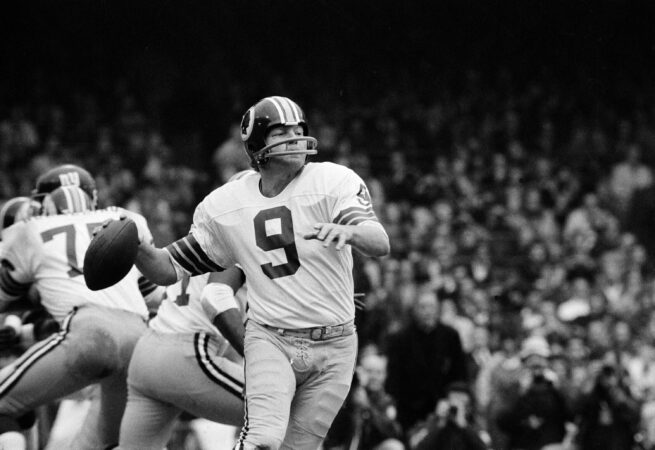
Sonny Jurgensen, the Hall of Fame quarterback whose strong arm, keen wit and affable personality made him one of the most beloved figures in Washington football history, has died. He was 91.
A Washington Commanders spokesperson confirmed Friday the team learned of Jurgensen’s death that morning from his family.
Jurgensen arrived in Washington in 1964 in a surprise quarterback swap that sent Norm Snead to the Philadelphia Eagles. Over the next 11 seasons, Jurgensen rewrote the team’s record books.
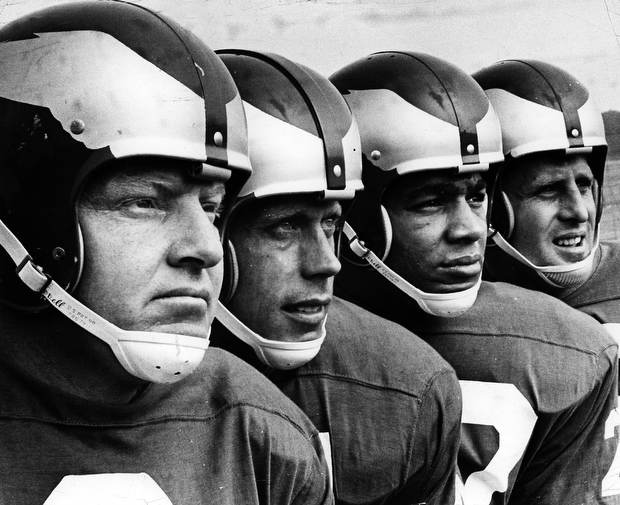
Eagles players (from left) Sonny Jurgensen, Pete Retzlaff, Timmy Brown and Tommy McDonald in 1963.
He topped 3,000 yards in a season five times, including twice with Philadelphia, in an era before rules changes opened up NFL offenses. He was inducted into the Pro Football Hall of Fame in 1983 and remains the only Washington player to wear the No. 9 jersey in a game.
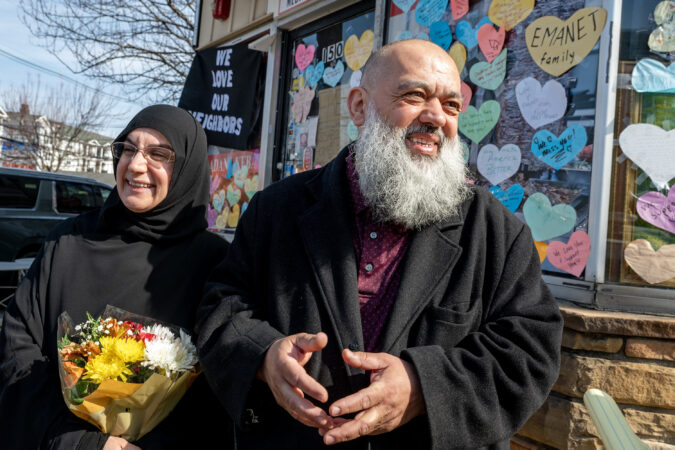
COLLINGSWOOD, N.J. — The shawarma, falafel wraps and baklava at Jersey Kebab are great, but many of its patrons are also there these days for a side of protest.
A New Jersey suburb of Philadelphia has rallied around the restaurant’s Turkish owners since federal officers detained the couple last February because they say their visas had expired.
In fact, business has been so good since Celal and Emine Emanet were picked up early in the Trump administration’s immigration crackdown that they have moved to a bigger space in the next town over. Their regulars don’t seem to mind.
Celal Emanet, 52, first came to the U.S. in 2000 to learn English while he pursued his doctorate in Islamic history at a Turkish university. He returned in 2008 to serve as an imam at a southern New Jersey mosque, bringing Emine and their first two children came, too. Two more would be born in the U.S.
Before long, Celal had an additional business of delivering bread to diners. They applied for permanent residency and believed they were on their way to receiving green cards.
When the COVID-19 pandemic began and the delivery trucks were idled, Celal and Emine, who had both worked in restaurants in Turkey, opened Jersey Kebab in Haddon Township. Business was strong from the start.
On Feb. 25, U.S. marshals and Immigration and Customs Enforcement officers arrested the couple at the restaurant. Celal was sent home with an ankle monitor, but Emine, now 47, was moved to a detention facility more than an hour’s drive away and held there for 15 days.
With its main cook in detention and the family in crisis, the shop closed temporarily.
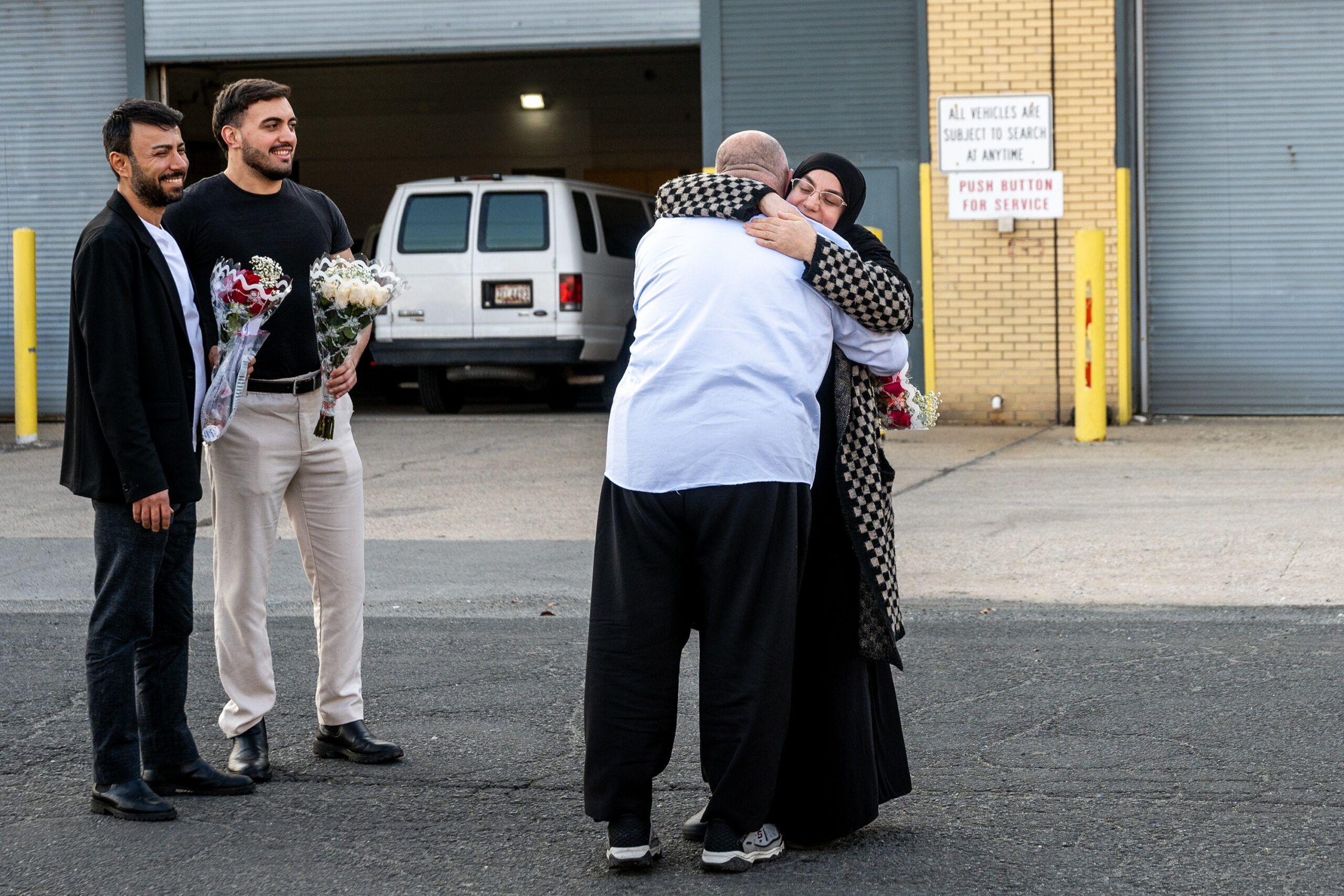
Emine Emanet hugs her husband Celal as she leaves the ICE Elizabeth Detention Facility on Wednesday, March 12, 2025.
Although the area is heavily Democratic, the arrests of the Emanets signaled to many locals that immigration enforcement during President Donald Trump’s second term wouldn’t stop at going after people with criminal backgrounds who are in the U.S. illegally.
“They were not dangerous people — not the type of people we were told on TV they were looking to remove from our country,” Haddon Township Mayor Randy Teague said.
Supporters organized a vigil and raised $300,000 that kept the family and business afloat while the shop was closed — and paid legal bills. Members of Congress helped, and hundreds of customers wrote letters of support.
Celal Emanet works at the grill in his Jersey Kebab restaurant on Sunday, Mar. 30, 2025.
Space for a crowd
As news of the family’s ordeal spread, customers new and old began packing the restaurant. The family moved it late last year to a bigger space down busy Haddon Avenue in Collingswood.
They added a breakfast menu and for the first time needed to hire servers besides their son Muhammed.
The location changed, but the restaurant still features a sign in the window offering free meals to people in need. That’s honoring a Muslim value, to care for “anybody who has less than us,” Muhammed said.
Judy Kubit and Linda Rey, two friends from the nearby communities of Medford and Columbus, respectively, said they came to Haddon Township last year for an anti-Trump “No Kings” rally and ate a post-protest lunch at the kebab shop.
“We thought, we have to go in just to show our solidarity for the whole issue,” Kubit said.
Last month, with the immigration crackdown in Minneapolis dominating the headlines, they were at the new location for lunch.
Gretchen Seibert tapes up hearts with words of support for Celal and Emine Emanet, the owners of Jersey Kebab, after the couple was detained by ICE in February 2025.
The legal battle hasn’t ended
The Emanets desperately want to stay in the U.S., where they’ve built a life and raised their family.
Celal has a deportation hearing in March, and Emine and Muhammed will also have hearings eventually.
Celal said moving back to Turkey would be bad for his younger children. They don’t speak Turkish, and one is autistic and needs the help available in the U.S.
Also, he’d be worried about his own safety because of his academic articles. “I am in opposition to the Turkish government,” he said. “If they deport me, I am going to get very big problems.”
The groundswell of support has shown the family they’re not alone.
“We’re kind of fighting for our right to stay the country,” Muhammed Emanet said, “while still having amazing support from the community behind us. So we’re all in it together.”
TUCSON, Ariz. — “Today” show host Savannah Guthrie’s brother on Thursday renewed the family’s plea for their mother’s kidnapper to contact them, hours after an Arizona sheriff said investigators don’t have proof Nancy Guthrie is alive but believe “she’s still out there.”
“Whoever is out there holding our mother, we want to hear from you. We haven’t heard anything directly,” Camron Guthrie said in a video posted on social media.
“We need you to reach out and we need a way to communicate with you so we can move forward,” but first the family needs to know the kidnapper has their mother, he said, echoing a statement his famous sister read the day before.
Five days into the desperate search for 84-year-old Nancy Guthrie, authorities have not identified any suspects or persons of interest, Pima County Sheriff Chris Nanos said.
Authorities think she was taken against her will from her home in Tucson over the weekend. DNA tests showed blood found on Guthrie’s front porch was a match to her, the sheriff said.
“Right now, we believe Nancy is still out there. We want her home,” Nanos said at a news conference earlier Thursday. He acknowledged, however, that authorities have no evidence she’s OK.
Demands for ransom
Investigators said they are taking seriously notes seeking ransom that were sent to some media outlets.
It’s unclear if all of the notes were identical. Heith Janke, the FBI chief in Phoenix, said details included a demand for money with a Thursday evening deadline and a second deadline for Monday if the first one wasn’t met. At least one note mentioned a floodlight at Guthrie’s home and an Apple watch, Janke said.
“To anyone who may be involved, do the right thing. This is an 84-year-old grandma,” Janke said.
At least three media organizations reported receiving purported ransom notes, which they handed over to investigators. Authorities made an arrest after one ransom note turned out to be fake, the sheriff said.
A note e-mailed Monday to the KOLD-TV newsroom in Tucson included information that only the abductor would know, anchor Mary Coleman told CNN.
“When we saw some of those details, it was clear after a couple of sentences that this might not be a hoax,” she said.
The sheriff said it’s possible Nancy Guthrie was targeted, but if she was, investigators don’t know if that’s because her daughter is one of television’s most visible anchors.
Authorities say any decision on whether to fulfill ransom demands ultimately is up to the family.
A day earlier, Savannah Guthrie and her siblings released a message to her mother’s kidnapper, saying they are ready to talk but want proof their mom is still alive. There’s been no response to their pleas so far.
New timeline of Guthrie’s disappearance
Investigators gave a more detailed timeline from the hours after Nancy Guthrie was last seen Saturday night. She was eating dinner and playing games with family members before one of them dropped her off at her home in a upscale neighborhood that sits on hilly, desert terrain, the sheriff said.
About four hours later, just before 2 a.m. Sunday, the home’s doorbell camera was disconnected, Nanos said. But Guthrie did not have an active subscription, so the doorbell company was unable to recover any footage.
Software data recorded movement at the home minutes later, the sheriff said, acknowledging that the motion could have come from an animal.
Then at 2:28 a.m. the app on Guthrie’s pacemaker was disconnected from her phone.
Search enters a fifth day
Guthrie was reported missing shortly before noon Sunday after she didn’t show up at a church.
While she is able to drive and her mind is sharp, the sheriff said she has difficulty walking even short distances. She also requires daily medicine that’s vital to her health, he has said.
A sheriff’s dispatcher said during the search Sunday that Guthrie has high blood pressure, a pacemaker and heart issues, according to audio from broadcastify.com.
Investigators searched in and around Guthrie’s home again for several hours Wednesday.
Authorities are bringing more resources and people into the investigation, and the FBI announced Thursday it was offering up to $50,000 for information. A day earlier, President Donald Trump posted on social media that he was directing federal authorities to help where they can.
Savannah Guthrie has hosted “Today” — NBC’s flagship morning show — for more than a decade and had been set to co-anchor the network’s coverage of Friday’s opening ceremony for the Winter Olympics. For now, she’s staying close to her mother’s home.
She joined her two siblings in an emotional plea on social media Wednesday to say they’re ready to talk to whoever sent the ransom notes.
“We need to know without a doubt that she is alive and that you have her. We want to hear from you and we are ready to listen. Please reach out to us,” she said while fighting off tears.
With her voice cracking, she addressed her mother directly, saying the family was praying for her and that people were looking for her. She was flanked by Camron and their sister, Annie.
“Mamma, If you’re listening, we need you to come home. We miss you,” Annie Guthrie said.
TRENTON, N.J. — The race in New Jersey between a onetime political director for Sen. Bernie Sanders and a former congressman was too early to call Thursday, in a special House Democratic primary for a seat that was vacated after Mikie Sherrill was elected governor.
Former U.S. Rep. Tom Malinowski started election night with a significant lead over Analilia Mejia, based largely on early results from mail-in ballots. The margin narrowed as results from votes cast that day were tallied.
With more than 61,000 votes counted, Mejia led Malinowski by 486, or less than 1 percentage point.
All three counties in the district report some mail-in ballots yet to be processed. Also, mail-in ballots postmarked by election day can arrive as late as Wednesday and still be counted.
Malinowski did better than Mejia among the mail-in ballots already counted in all three counties, leaving the outcome of the race uncertain.
The Democratic winner will face Randolph Mayor Joe Hathaway, who was unopposed in the Republican primary, on April 16.
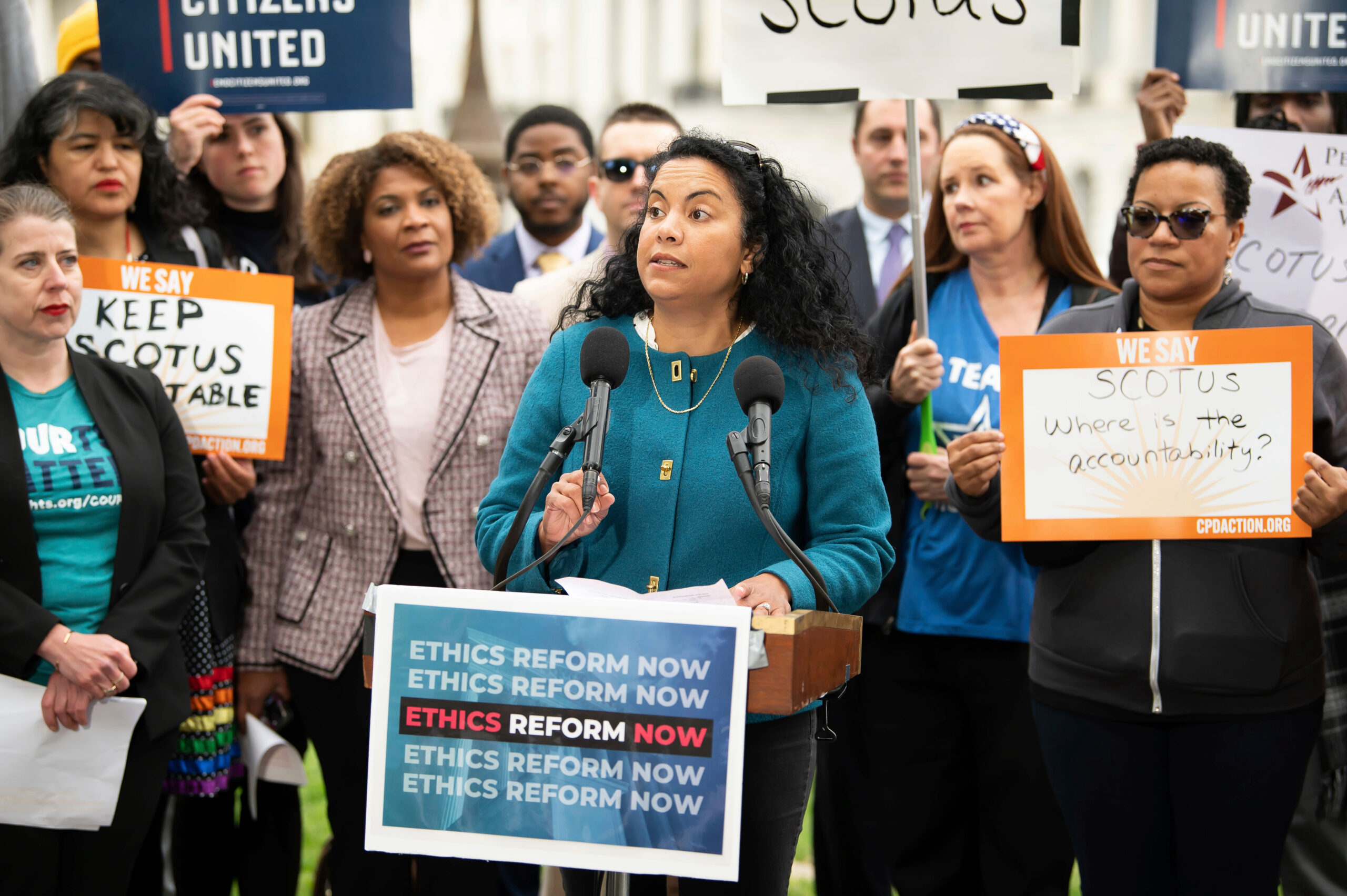
Analilia Mejia, center, speaks during a rally in Washington calling for SCOTUS ethics reform on May 2, 2023.
Mejia, a former head of the Working Families Alliance in the state and political director for Sanders during his 2020 presidential run, had the Vermont independent senator’s endorsement as well as that of U.S. Rep. Alexandria Ocasio Cortez of New York. She also worked in President Joe Biden’s Labor Department as deputy director of the women’s bureau.
Both Malinowski and Mejia were well ahead of the next-closest candidates: Brendan Gill, an elected commissioner in Essex County who has close ties to former Gov. Phil Murphy; and Tahesha Way, who served as lieutenant governor and secretary of state for two terms under Murphy until last month.
Democratic Congressman Tom Malinowski speaks during his election night party in Garwood, N.J., on Nov. 8, 2022.
The other candidates were John Bartlett, Zach Beecher, J-L Cauvin, Marc Chaaban, Cammie Croft, Dean Dafis, Jeff Grayzel, Justin Strickland and Anna Lee Williams.
The district covers parts of Essex, Morris and Passaic counties in northern New Jersey, including some of New York City’s wealthier suburbs.
The special primary and April general election will determine who serves the remainder of Sherrill’s term, which ends next January. There will be a regular primary in June and general election in November for the next two-year term.
Sherrill, also a Democrat, represented the district for four terms after her election in 2018. She won despite the region’s historical loyalty to the GOP, a dynamic that began to shift during President Donald Trump’s first term.