Category: Wires

  • Disney parks chief Josh D’Amaro will succeed Bob Iger as CEO

    Disney parks chief Josh D’Amaro will succeed Bob Iger as CEO

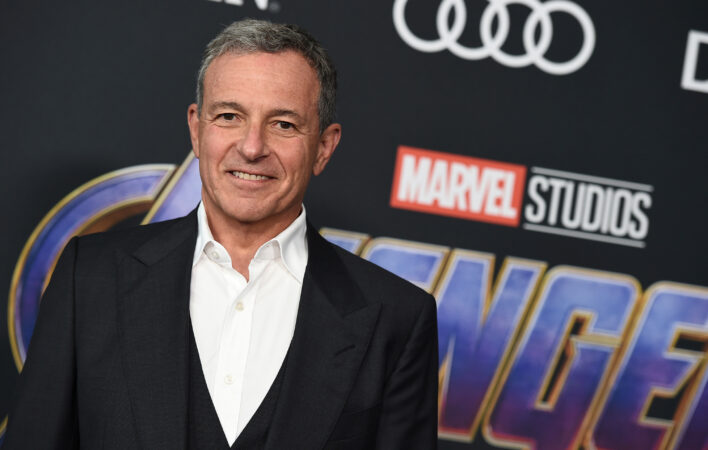
    Disney has named its parks chief Josh D’Amaro to succeed Bob Iger as the entertainment giant’s top executive.

    D’Amaro will become the ninth CEO in the more than 100-year-old company’s history. He has overseen the company’s theme parks, cruises, and resorts since 2020. The so-called Experiences division has been a substantial moneymaker for Disney, with $36 billion in annual revenue in fiscal 2025 and 185,000 employees worldwide.

    The 54-year-old takes over a time when Disney is flush with box-office hits such as Zootopia 2 and Avatar: Fire and Ash and its streaming business is strong. At the same time, Disney has seen a decline in foreign visitors to its domestic theme parks. Tourism to the U.S. has fallen overall during an aggressive immigration crack down by the Trump administration, as well as clashes with almost all of country’s trading partners.

    The decision on the next chief executive at Disney comes almost four years after the company’s choice to replace Iger went disastrously, forcing Iger back into the job.

    Only two years after stepping down as CEO, Iger returned to Disney in 2022 after a period of clashes, missteps ,and a weakening financial performance under his hand-picked successor, Bob Chapek.

    Disney meticulously and methodically sought out its next CEO this time. The company created a succession planning committee in 2023, but the search began in earnest in 2024 when Disney enlisted James Gorman, who is currently Disney’s chairman and previously served as Morgan Stanley’s executive chairman, to lead the effort. That still gave it ample opportunity to vet candidates, as Iger agreed to a contract extension.

    Disney said that Iger will continue to serve as a senior adviser and board member until his retirement from the company at the end of the year.

    While external candidates were considered, it was widely expected that Disney would look internally for the next CEO. The advantage would be that Disney executives were already being mentored by Iger, and had extensive contact with the company’s 15 board members, of which Iger is a member.

    Disney is unique in that its top executive must oversee a sprawling entertainment company with branches reaching in every direction, while also serving as an unusually public figure.

    D’Amaro and Disney Entertainment co-chair Dana Walden quickly emerged as the front-runners for the top job.

    D’Amaro, who has been with Disney since 1998, has been leading the charge on Disney’s multiyear $60 billion investment into its cruise ships, resorts, and theme parks. He also oversees Walt Disney Imagineering, which is in charge of the design and development of the company’s theme parks, resorts, cruise ships, and immersive experiences worldwide. In addition, D’Amaro has been leading Disney’s licensing business, which includes its partnership with Epic Games.

    “Throughout this search process, Josh has demonstrated a strong vision for the company’s future and a deep understanding of the creative spirit that makes Disney unique in an ever-changing marketplace,” Gorman said in prepared remarks. “He has an outstanding record of business achievement, collaborating with some of the biggest names in entertainment to bring their stories to life in our parks, showcasing the power of combining Disney storytelling with cutting-edge technology.”

    In her most recent role as co-chair of Disney Entertainment, Walden has helped oversee Disney’s streaming business, along with its entertainment media, news, and content businesses. She joined Disney in 2019. Before that, Walden spent 25 years at 21st Century Fox and was CEO of Fox Television Group.

    Walden will now step into the newly created role of chief creative officer of the Walt Disney Co. She will report to D’Amaro.

    “I think if you think about what is the heart of the Disney company, it’s the creativity. It’s this amazing IP that’s been produced over decades, going back to Walt, and the storytelling that comes from that creativity. And I think Dana, working with Josh and ensuring that the best creativity permeates all of our businesses, is what we wanted,” Gorman said in an interview with CNBC.

    There had been speculation that Disney might go the route of naming co-CEOs, a move that has started to become more popular with companies. Oracle and Spotify are among those who named co-CEOs in 2025.

    D’Amaro and Walden’s appointments are effective on March 18.

  • House passes bill to end the partial government shutdown

    House passes bill to end the partial government shutdown

    WASHINGTON — President Donald Trump signed a roughly $1.2 trillion government funding bill Tuesday that ends the partial federal shutdown that began over the weekend and sets the stage for an intense debate in Congress over Homeland Security funding.

    The president moved quickly to sign the bill after the House approved it with a 217-214 vote.

    “This bill is a great victory for the American people,” Trump said.

    The vote Tuesday wrapped up congressional work on 11 annual appropriations bills that fund government agencies and programs through Sept. 30.

    Passage of the legislation marked the end point for one funding fight, but the start of another. That’s because the package only funds the Department of Homeland Security for two weeks, through Feb 13, at the behest of Democrats who are demanding more restrictions on immigration enforcement after the shooting deaths of Alex Pretti and Renee Good by federal officers in Minneapolis.

    Leaders are digging in for a fight

    Difficult negotiations are ahead, particularly for the agency that enforces the nation’s immigration laws — U.S. Immigration and Customs Enforcement, or ICE.

    House Democratic Leader Hakeem Jeffries quickly warned Democrats would not support any further temporary funding for Homeland Security without substantial changes to its immigration operations., raising the potential of another shutdown for the department and its agencies.

    “We need dramatic change in order to make sure that ICE and other agencies within the department of Homeland Security are conducting themselves like every other law enforcement organization in the country,” Jeffries said.

    Speaker Mike Johnson said he expects the two sides will be able to reach an agreement by the deadline.

    “This is no time to play games with that funding. We hope that they will operate in good faith over the next 10 days as we negotiate this,” said Johnson. “The president, again, has reached out.”

    But Johnson’s counterpart across the Capitol, Senate Majority Leader John Thune, (R., S.D.), sounded less optimistic of a deal. “There’s always miracles, right?” Thune told reporters.

    Voting with no margin for error

    The funding bill that cleared Congress Tuesday had provisions that appealed to both parties.

    Republicans avoided a massive, catchall funding bill known as an omnibus as part of this year’s appropriations process. Such bills, often taken up before the holiday season with lawmakers anxious to return home, have contributed to greater federal spending, they say.

    Democrats were able to fend off some of Trump’s most draconian proposed cuts while adding language that helps ensure funds are spent as stipulated by Congress.

    Still, Johnson needed near-unanimous support from his Republican conference to proceed to a final vote on the bill. He narrowly got it during a roll call that was held open for nearly an hour as leaders worked to gain support from a handful of GOP lawmakers who were trying to advance other priorities unrelated to the funding measure.

    The final vote wasn’t much easier for GOP leaders. In the end, 21 Republicans sided with the vast majority of Democrats in voting against the funding bill, while that exact same number of Democrats sided with the vast majority of Republicans in voting yes.

    Trump had weighed in Monday in a social media post, calling on Republicans to stay united and telling holdouts, “There can be NO CHANGES at this time.”

    Key differences from the last shutdown

    The current partial shutdown that is coming to a close differed in many ways from the fall impasse, which affected more agencies and lasted a record 43 days.

    Then, the debate was over extending temporary coronavirus pandemic-era subsidies for those who get health coverage through the Affordable Care Act. Democrats were unsuccessful in getting those subsidies included as part of a package to end the shutdown.

    Congress made important progress since then. Some of the six appropriations bills it passed prior to Tuesday ensured the current shutdown had less sting. For example, important programs such as nutrition assistance and fully operating national parks and historic sites were already funded through Sept. 30.

    The remaining bills passed Tuesday mean that the vast majority of the federal government has been funded.

    “You might say that now that 96% of the government is funded, it’s just 4% what’s out there?” Johnson said. ”But it’s a very important 4%”

  • Trump wants to ‘nationalize the voting,’ seeking to grab states’ power

    Trump wants to ‘nationalize the voting,’ seeking to grab states’ power

    President Donald Trump said Monday that Republican lawmakers should nationalize voting — claiming a power explicitly granted to states in the U.S. Constitution.

    Speaking to right-wing podcaster Dan Bongino, who recently stepped down from his role as the FBI’s deputy director, Trump again falsely alleged that the 2020 election was stolen from him, and he urged Republicans to “take over” elections and nationalize the process.

    “We should take over the voting, the voting, in at least 15 places,” Trump told Bongino. “The Republicans ought to nationalize the voting.”

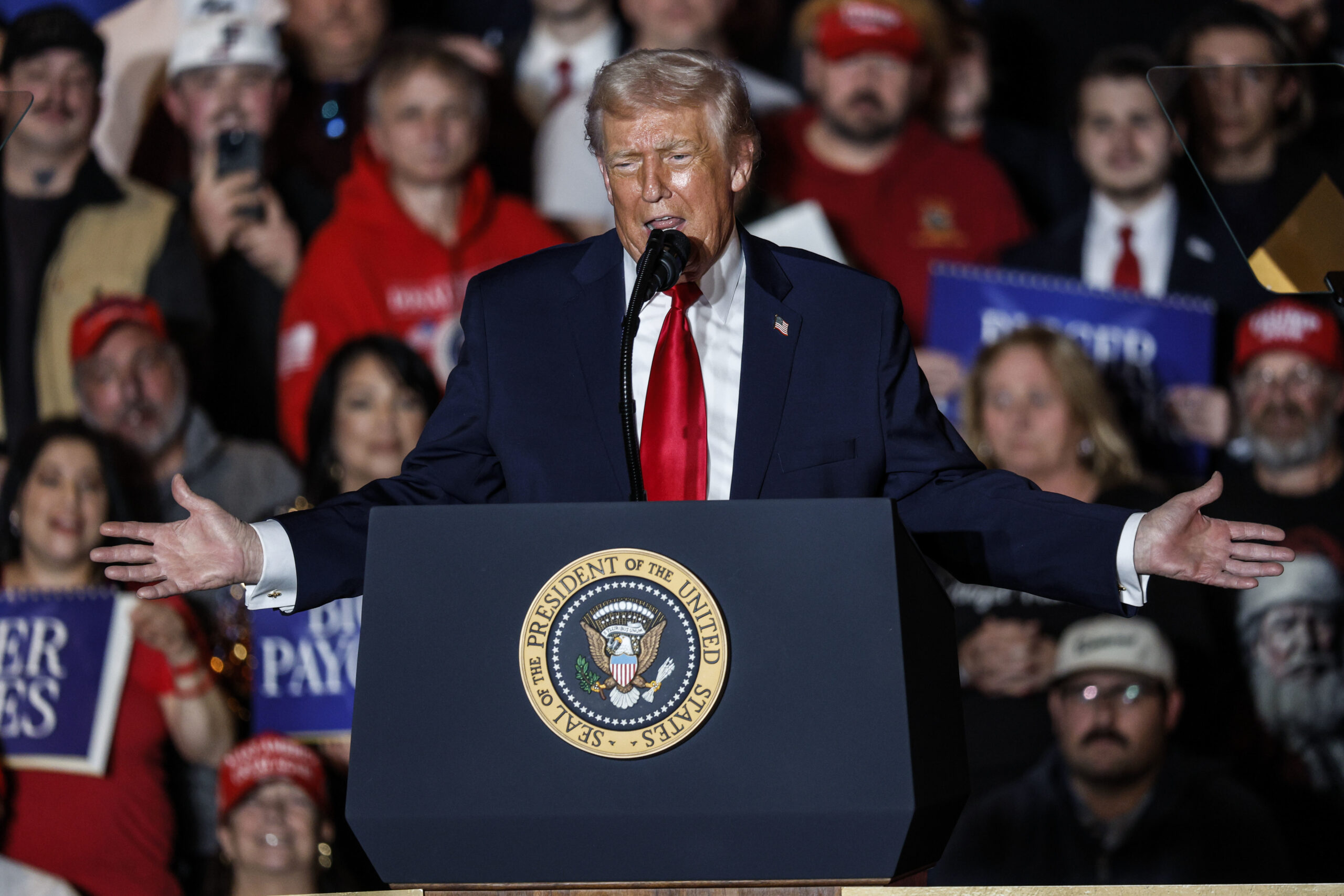
    President Donald Trump speaks in Mt. Pocono, Pa., on Tuesday, Dec. 9, 2025.

    Under the Constitution, the “Times, Places and Manner” of holding elections are determined by each state, not the federal government. Congress has the power to set election rules, but the Constitution does not give the president any role on that subject. Republicans in recent decades have often argued in favor of states’ rights and against a powerful federal government.

    Trump’s demand comes less than a week after the FBI executed a search warrant at a warehouse in Fulton County, Georgia, which is at the heart of right-wing conspiracy theories about the 2020 election. The unusual warrant authorized agents to seize all physical ballots from the 2020 election, voting machine tabulator tapes, images produced during the ballot count and voter rolls from that year. Days before the search, Trump claimed in a speech at the Davos World Economic Forum that the 2020 election was rigged.

    On Monday, while speaking to Bongino, Trump said without offering evidence that there are “states that are so crooked” and that there are “states that I won that show I didn’t win.” He also baselessly claimed that undocumented immigrants were allowed to vote illegally in 2020.

    He then teased that there will be “some interesting things come out” of Georgia, but did not discuss the FBI warrant or its findings.

    While Trump has repeatedly and baselessly accused states such as Georgia of running fraudulent elections, U.S. national security officials have said they found no evidence of widespread fraud in the 2020 election, and numerous courts rejected claims of election irregularities as unfounded.

    This is not the first time Trump has tried to minimize states’ roles in the running of elections. In August, while complaining in a Truth Social post about mail-in voting, Trump said he would sign an executive order that would “help bring HONESTY” to this year’s midterm elections, arguing that states are meant to follow federal instructions when it comes to voting.

    “Remember, the states are merely an ‘agent’ for the Federal Government in counting and tabulating the votes,” Trump wrote then. “They must do what the Federal Government, as represented by the President of the United States, tells them, FOR THE GOOD OF OUR COUNTRY, to do.”

    It is not clear what Republicans in Congress could do if they were to “take over” elections, as Trump suggested. While Congress has exercised its power on elections rules throughout history by, for example, creating a national Election Day, or by requiring states to ensure that their voter rolls are accurate, lawmakers have historically allowed states to run elections under their own laws and procedures.

  • Vanguard drops its average fee to just 0.06% with latest cuts

    Vanguard drops its average fee to just 0.06% with latest cuts

    Vanguard Group has unleashed another round of fee cuts across its lineup of mutual funds and exchange-traded funds, further tightening the screws on an industry already known for its low costs.

    The Jack Bogle-founded asset manager, which oversees about $12 trillion, is lowering costs for 84 share classes of mutual funds and ETFs across 53 funds in total, Vanguard said in a news release Monday. The reductions bring Vanguard’s average asset-weighted expense ratio to 0.06%, shaving one basis point from last year’s record fee cut.

    Monday’s fee cuts are par for the course for Vanguard, which has reshaped the asset management world over the past 50 years with its low-cost index funds — pressuring its peers to drop their own costs to rock-bottom levels in order to compete. Now, as that race-to-the-bottom seemingly hits its limit with the average fee on new funds beginning to rise, Vanguard is sticking to its blueprint of steadily lowering fees.

    “Vanguard is investor-owned — we have no outside stockholders or inside owners profiting from our clients,” Vanguard chief executive officer Salim Ramji said in Monday’s release. “These fee reductions — more than half a billion dollars over the past two years — are a clear expression of our purpose and commitment to our clients as owners.”

    Between last year and this year’s cost cuts, Vanguard estimates its investors have saved about $600 million, according to the release.

    Vanguard’s unique ownership structure blunts some of the margin-pressure that its competitors feel from low costs. Fund shareholders elect its board members, who in turn funnel extra cash or assets generated by its products toward lowering costs.

    Nonetheless, Vanguard pulls in much less fee revenue from its $12 trillion in assets than its peers. Despite ranking second in overall ETF assets, the Malvern-based firm generated about $1.5 billion in fee revenue last year from its U.S.-listed ETFs, trailing issuers with smaller AUM (assets under management) levels, Bloomberg Intelligence data shows. That compares to a $5.4 billion haul for BlackRock’s U.S.-listed ETF lineup, which is only 6% larger than Vanguard’s at the end of 2025.

    Vanguard’s average fees are continuing to drift lower even as the asset manager stages a push into actively-managed funds, which tend to command higher expense ratios. The firm launched its first traditional stock-picking ETFs last year, a trio which includes the Vanguard Wellington Dividend Growth Active ETF (ticker VDIG), which ranks as its costliest ETF with a 0.40% fee.

  • Tyrese Maxey scores 29 as Sixers win fourth straight with 128-113 win over Clippers

    Tyrese Maxey scores 29 as Sixers win fourth straight with 128-113 win over Clippers

    INGLEWOOD, Calif. — Tyrese Maxey scored 29 points, including seven three-pointers, Dominick Barlow added 26 points and 16 rebounds, and the 76ers beat the Los Angeles Clippers 128-113 on Monday night for their fourth consecutive victory.

    The game featured two big names who weren’t selected as All-Star reserves: Joel Embiid of the Sixers and Kawhi Leonard of the Clippers.

    Embiid had 24 points as he continues to gain full strength after a right ankle injury. The Sixers improved to 11-10 without Paul George, who is serving a 25-game suspension for violating the NBA’s anti-drug program.

    Leonard led the Clippers with 29 points and Jordan Miller had 21 points off the bench.

    Los Angeles was without James Harden, who missed his second straight game due to personal reasons. Coach Tyronn Lue said before the game that Harden was at home in Phoenix.

    Leonard had two dunks and a three-pointer in the fourth, but the Clippers couldn’t put together a sustained run and he finished the game on the bench.

    Maxey, Barlow, and Embiid combined to score 22 points in the third when the Sixers were outscored 34-28, but still led 100-87.

    The Sixers led the entire game, going up by 23 points before settling for a 72-53 halftime advantage.

    The Clippers are 8-3 over their last 11 games as they try to stay within range of at least making the play-in tournament.

    The Sixers visit the Golden State Warriors on Tuesday night (10 p.m., NBCSP) to finish a back-to-back.

  • Every Homeland Security officer in Minneapolis is now being issued a body-worn camera, Noem says

    Every Homeland Security officer in Minneapolis is now being issued a body-worn camera, Noem says

    WASHINGTON — Every Homeland Security officer on the ground in Minneapolis, including those from Immigration and Customs Enforcement, will be immediately issued body-worn cameras, Secretary Kristi Noem said Monday, in the latest fallout after the shooting deaths of two U.S. citizens at the hands of federal agents.

    Noem said the body-worn camera program is being expanded nationwide as funding becomes available.

    “We will rapidly acquire and deploy body cameras to DHS law enforcement across the country,” Noem said in a social media post on X.

    The news of the body cameras comes as Minneapolis has been the site of intense scrutiny over the conduct of federal officers after two U.S. citizens protesting immigration enforcement activities in the city were shot and killed.

    It is the latest effort by the Trump administration to alleviate tensions after the shootings and show it is responding to calls for accountability.

    In the immediate hours after ICU nurse Alex Pretti’s death, Noem went on the offensive, saying several times that Pretti “came with a weapon and dozens of rounds of ammunition and attacked” officers, who took action to “defend their lives.” Other administration officials painted a similar picture.

    Multiple videos that emerged of the shooting contradicted that claim, showing Pretti had only his mobile phone in his hand as officers tackled him to the ground, with one removing a handgun from the back of his pants as another officer began firing shots into his back.

    Homeland Security has said that at least four Customs and Border Protection officers on the scene when Pretti was shot were wearing body cameras. The body camera footage from Pretti’s shooting has not been made public.

    The department has not responded to repeated questions about whether any of the ICE officers on the scene of the killing of Renee Good earlier in January were wearing the cameras.

    The shootings, and the narrative coming from some in the administration, triggered outrage and demands for accountability, including among some Republicans.

    President Donald Trump sent his border czar Tom Homan to Minneapolis to take control of operations there, displacing Border Patrol commander Gregory Bovino, who has become a lightning rod for criticism in the various operations he’s joined in cities like Chicago and Los Angeles.

    The Justice Department has also opened a federal civil rights investigation into Pretti’s shooting, which it did not do in the case of Good.

    There have been increased calls by critics of Homeland Security to require all of the department’s officers who are responsible for immigration enforcement to wear body cameras.

    President Joe Biden ordered in 2022 that federal law enforcement officers wear body cameras as part of an executive order that included other policing reform measures. Trump had rescinded that directive after starting his second term.

    Noem’s move comes after Trump over the weekend endorsed the idea of body cameras for immigration officers.

    After Noem’s announcement Monday, Trump said the decision was up to the secretary but said that he thought it was generally good for law enforcement to wear cameras.

    “They generally tend to be good for law enforcement because people can’t lie about what’s happening,” he said in the Oval Office Monday, adding “If she wants to do the camera thing, that’s OK with me.”

  • Musk joins his rocket, AI businesses into a single company before an expected IPO this year

    Musk joins his rocket, AI businesses into a single company before an expected IPO this year

    NEW YORK — Elon Musk is joining his space exploration and artificial intelligence ventures into a single company before a massive planned initial public offering for the business later this year.

    His rocket venture, SpaceX, announced on Monday that it had bought xAI in an effort to help the world’s richest man dominate the rocket and artificial intelligence businesses. The deal will combine several of his offerings, including his AI chatbot Grok, his satellite communications company Starlink, and his social media company X.

    Musk has talked repeatedly about the need to speed development of technology that will allow data centers to operate in space to solve the problem of overcoming the huge costs in electricity and other resources in building and running AI systems on Earth.

    It’s a goal that Musk said in his announcement of the deal could become much easier to reach with a combined company.

    “In the long term, space-based AI is obviously the only way to scale,” Musk wrote on SpaceX’s website Monday, then added in reference to solar power, “It’s always sunny in space!”

    Musk said in SpaceX’s announcement he estimates “that within 2 to 3 years, the lowest cost way to generate AI compute will be in space.”

    It’s not a prediction shared by other many companies building data centers, including Microsoft.

    “I’ll be surprised if people move from land to low-Earth-orbit,” Microsoft’s president, Brad Smith, told The Associated Press last month, when asked about the alternatives to building data centers in the U.S. amid rising community opposition.

    SpaceX won’t be the first to explore the idea of putting AI data centers in space. Google last year revealed a new research project called Project Suncatcher that would equip solar-powered satellites with AI computer chips.

    Mississippi officials last month announced that xAI is set to spend $20 billion to build a data center near the state’s border with Tennessee.

    The data center, called MACROHARDRR, a likely pun on Microsoft’s name, will be its third data center in the greater Memphis area.

  • Woodie King Jr., founder of powerhouse off-Broadway New Federal Theatre, has died at 88

    Woodie King Jr., founder of powerhouse off-Broadway New Federal Theatre, has died at 88

    NEW YORK — Woodie King Jr., an actor, director, and producer who founded the New Federal Theatre to give voice and employment to Black playwrights, actors, directors, designers, and young people entering the American theater, has died. He was 88.

    His off-Broadway theater company said Mr. King died Thursday at Weill Cornell Medical Center in New York City of complications from emergency heart surgery.

    Mr. King was inducted into the American Theatre Hall of Fame in 2012 and received the Tony Honors for Excellence in Theatre in 2020.

    “We have lost a giant,” said Emmy Award-winning actor and educator Erin Cherry on Instagram. “I am here because of Woodie King Jr. My very first introduction to the Black theater scene was the play ‘Knock Me a Kiss’ produced by New Federal Theatre. It changed my life. I’m forever grateful.”

    The New Federal Theatre produced such key works as Black Girl by J.E. Franklin, The Taking of Miss Janie by Ed Bullins — which jumped to Lincoln Center and won the Drama Critics Circle Award — and For Colored Girls Who Considered Suicide When the Rainbow is Enuf by Ntozake Shange, which landed on Broadway in 1976 and was nominated for the best new play Tony Award.

    The New Federal Theatre was a springboard for many playwrights, including Charles Fuller — later to win the Pulitzer Prize for A Soldier’s Play — who premiered two plays — In My Many Names and Days and The Candidate. David Henry Hwang premiered The Dance and the Railroad at the New Federal and would later win the Tony for M. Butterfly.

    Some performers who got early career boosts thanks to the company include Chadwick Boseman, Debbie Allen, Morgan Freeman, Phylicia Rashad, Denzel Washington, LaTanya Richardson Jackson, Samuel L. Jackson, and Issa Rae.

    Mr. King was born in Alabama, raised in Detroit, and earned his bachelor’s degree from Lehman College and later his master’s from Brooklyn College. He served as the cultural director of Mobilization for Youth for five years, before founding New Federal Theatre in 1970.

    Mr. King is survived by his wife, Elizabeth Van Dyke, and his three children, Geoffrey King, Michael King, and Michelle King Huger, whom he shared with ex-wife Willie Mae Washington, as well as five grandchildren.

    Tyler Fauntleroy, an actor who has toured in Hamilton, took to Instagram to recall working at the New Federal in 2019 on a show called Looking for Leroy that would change his career. “His belief in me came at a time when my own was at an all-time low. What a champion he was for Black artists. It was an honor to witness. Thank you, sir and rest easy.”

  • X.J. Kennedy, 96, prize-winning poet and educator

    X.J. Kennedy, 96, prize-winning poet and educator

    NEW YORK — X.J. Kennedy, an award-winning poet, author, translator, and educator who schooled millions of students through The Bedford Reader and other textbooks and engaged voluntary readers with his children’s stories and intricate, witty verse, died Sunday at 96.

    Mr. Kennedy died of natural causes at his home in Peabody, Mass., according to his daughter, Kate Kennedy.

    Born Joseph Charles Kennedy, he chose the professional name X.J. Kennedy as a young man to avoid confusion with Joseph P. Kennedy, the former ambassador to Britain and father of President John F. Kennedy. Starting in the early 1960s, he turned out dozens of poetry and children’s books, contributed to the popular Bedford Reader and collaborated with the poet and onetime National Endowment for the Arts chair Dana Gioia on anthologies of poetry, drama, and fiction.

    “I write for three separate audiences: children, college students (who use textbooks), and that small band of people who still read poetry,” Mr. Kennedy once observed.

    The Bedford Reader, established in the early 1980s, is a widely used composition book for college students that has included everything from the Rev. Martin Luther King Jr.’s “I Have a Dream” speech to the classic Shirley Jackson story “The Lottery.” Mr. Kennedy edited the Reader along with his wife, Dorothy; Jane E. Aaron and Ellen Kuhl Repetto. The goal, they stated, was “to show you how good writers write” and not to feel “glum if at first you find an immense gap” between yourself, and, say, E.B. White.

    Mr. Kennedy’s poems, some published in the New Yorker and the Atlantic, were rhyming vignettes on everyday and macabre matter such as bartending, aging, and the discovery of a severed arm. They were brief, often light-hearted in tone and dark and unsettling in content. In Innocent Times, Mr. Kennedy mocks the idea that the country was better off during the “Mad Man” era, looking back to when doctors “puffed their cigarettes” and “cheap thermometer and thermostat/leaked jets of mercury like poison darts.” The poem Fireflies shifts abruptly from the calm of a twilight lawn to the horrors of the war on terrorism.

    Complacently we watched them glow

    Like kindly lantern lights that sift

    Through palm fronds in Guantánamo

    On the torture squad’s night shift

    His awards included a Los Angeles Times book prize, the Poetry Society of America’s Robert Frost Medal for lifetime achievement, and the Jackson prize from Poets & Writers for an “American poet of exceptional talent who deserves wider recognition.” He taught English at the University of Michigan, the Woman’s College of the University of North Carolina (now UNC-Greensboro), and Tufts University, among other schools. In the 1970s, he served as the Paris Review’s poetry editor.

    A native of Dover, N.J., he was an intrepid young man who wrote and published science fiction and helped found the Spectator Amateur Press Association, a leading science fiction fandom organization whose members have included Harlan Ellison, Robert Silverberg, and Lenny Kaye. After attending Seton Hall and Columbia University, Mr. Kennedy served briefly in the Navy in the 1950s. At the University of Michigan, he worked for several years on a Ph.D. in the 1950s and 1960s and never finished his dissertation. But he did meet his future wife and professional collaborator, Dorothy Mintzlaff, who died in 2018. They had five children and six grandchildren.

    His first book, Nude Descending a Staircase: Poems, Songs, a Ballad, was published in 1961. His children’s books included One Winter Night in August and Other Nonsense Jingles and the novel The Owlstone Crown, while In a Prominent Bar in Secaucus is a compilation of poems from 1955 to 2007 that ends with a bon voyage for the text itself.

    Go, slothful book. Just go

    Fifty years slopping around the house in your sock-feet

    Sucking up to a looking-glass

    Rehearsing your face. Why

    Don’t you get a job?

  • In Venezuela, change is coming fast. Relief is taking more time.

    In Venezuela, change is coming fast. Relief is taking more time.

    CARACAS, Venezuela — American oil traders are poised to descend on Venezuela’s capital — and may soon be able to fly here direct. The Trump administration is preparing to reopen the U.S. Embassy. The socialist government here has made the nationalized oil industry friendlier for foreign investors, and the U.S. Treasury has eased sanctions to allow U.S. companies to buy and sell Venezuelan oil.

    The dizzying changes would have seemed unthinkable just a month ago, when U.S. forces were surrounding the country, seizing Venezuelan oil, and menacing the authoritarian government.

    But the U.S. capture Jan. 3 of President Nicolás Maduro, and President Donald Trump’s vow to exploit the world’s largest proven oil reserves, has fundamentally transformed relations between the two countries. The administration is working with Delcy Rodríguez, Maduro’s vice president, rather than María Corina Machado, the popular opposition leader whom Trump previously championed.

    The economic outlook for Venezuela has improved dramatically; after years of economic collapse, rising unemployment, and soaring inflation, some economists say it’s not far-fetched to imagine double-digit growth this year.

    In the latest surprise move, Rodríguez on Friday proposed a general amnesty for hundreds of political prisoners, some of whom have been held for decades — and promised to repurpose the infamous Helicoide prison, an alleged torture center.

    Human rights defenders have expressed cautious optimism. But in Caracas, hope is colliding with reality. For many Venezuelans, the changes have done little to ease the daily pressure of paying for basic goods or fears of being detained by police.

    Rodríguez, Maduro’s vice president, has yet to release details of elections or power-sharing agreements. The individuals who ran the country’s feared security forces under Maduro remain in power. It’s still unsafe for opposition leader Machado, the recipient of the 2025 Nobel Peace Prize, to return home.

    With the government’s apparatus for repression fully intact, Venezuelans say, real change feels far away.

    “I don’t know if the politics are changing, but my pocket is the same,” said Argenis Pérez, who parks cars at a restaurant in eastern Caracas. Waking at 4 a.m. each morning to take two buses from his home in working-class Avenida Victoria to his job, he earns $120 a month, paid in bolivars and in bags of food.

    “I don’t buy an entire grocery list,” he said. “I just buy the basics.”

    He was interrupted by cars approaching the restaurant — luxury SUVs that sell for well over $100,000. What did he think about the changes?

    “Well, you know … we can’t speak about that,” he said. “I don’t know what will happen, but I need to work.”

    After weeks in which the United States was boarding tankers and seizing Venezuelan oil, the economy is experiencing some relief. The United States has released $300 million from oil sales to pay government workers. The injection has helped stabilize Venezuela’s foreign exchange rate and could help reduce retail prices, economist Francisco Rodríguez said.

    It’s unclear how the U.S. will manage the proceeds from oil sales and how the money will flow into the Venezuelan economy. The government has not released economic statistics for years.

    The government-controlled National Assembly voted unanimously Thursday to make Petróleos de Venezuela and other state-run enterprises more attractive to foreign investors. The U.S. Treasury then announced a general license for U.S. companies to buy, sell, transport, and refine Venezuelan oil.

    Alejandro Grisanti, an economist with the Caracas consulting firm Ecoanalítica, said dialogue between the government and the private sector also has improved. “I think 2026 will be a good year,” he said. Ecoanalítica predicts oil production will grow by at least 200,000 barrels per day, more bolivars will circulate, and banks can offer more credit.

    The country is still recovering from cumulative inflation, which in the first three weeks of January was 15%. “But for that to actually improve the purchasing power of the average Venezuelan,” Grisanti said, “that will take six to eight months.”

    “There is still a lot of uncertainty,” he said. The recent inflation, along with messaging from the government that Maduro’s allies remain in control, means Venezuelans “may not feel the profound change that is taking place.”

    Under Rodríguez, the regime already has released hundreds of political prisoners, but security forces continue to detain Venezuelans arbitrarily, human rights advocates say. About 50 detainees have disappeared within the prison system, and officials have refused to say where they are or what’s happened to them.

    Some prisoners have been released without notice. One Venezuelan political prisoner, who had been in the Rodeo 1 prison for more than a year, was suddenly given a haircut, masked, and put on a bus with other detainees, according to his sister, who spoke on the condition of anonymity to discuss sensitive details about her brother’s case. The detainees were taken to an unfamiliar location in Caracas and directed to leave the bus. Their families weren’t alerted.

    The man walked for two hours to the home of a relative, and asked to use a phone to call other family members who had been waiting outside the prison in hopes he would be released.

    In the weeks since his release, his family says, he has said nothing of what he experienced in the prison. He remains in Venezuela, where he is prohibited from speaking publicly about his detention.

    Many of the recently released prisoners have been surveilled, threatened, and warned not to speak out, according to Orlando Moreno, a human rights coordinator for Vente Venezuela, Machado’s political party.

    “This is not true freedom. It is freedom with chains,” Moreno said. “They will let you out of your cell, but you are not free.”

    But some Venezuelans appear willing to take on more risk, according to Andreina Baduel, director of the Committee of Family and Friends for the Freedom of Political Prisoners. Many have come forward for the first time to report cases of relatives imprisoned long ago. A protest outside the attorney general’s office recently drew twice the usual number of demonstrators, she said.

    “We now know that we are not alone in this struggle,” Baduel said.

    Some opposition politicians are emerging from hiding and speaking publicly for the first time in months or even years. And within the government-controlled National Assembly, some of the few opposition lawmakers allowed to hold seats have sensed more open dialogue.

    “The government has acknowledged its vulnerability,” opposition lawmaker Antonio Ecarri said. “There has been more respect and cordiality.”

    One important change is the inclusion of some government critics on a new peace commission.

    “Venezuela needs to find itself. We’ve become accustomed to living separately and in tribes. It’s been many years of conflict,” commission member Michael Penfold, a professor at the Institute of Advanced Studies in Administration in Caracas, wrote on X. “Let’s hope that in this process, Venezuelans don’t become the main obstacle.”

    Opposition lawmaker Henrique Capriles, who ran against Maduro twice, called on the regime to release plans for an election. “So far, all we have are announcements of investment in the oil sector,” he said. The government must increase salaries and pensions, he said, to give Venezuelans a sense that their lives are, in fact, improving.

    “We Venezuelans have been very patient, and we know it’s not quick,” he said. “Urgent things need to be done, but democracy cannot be detached from building Venezuela’s future.”