Category: Wires

  • Congress has four weeks to dodge another shutdown

    Congress has four weeks to dodge another shutdown

    Lawmakers are back in Washington this week for a four-week sprint to finish funding the government before the current spending law runs out on Jan. 30.

    If they fail, they will need to pass another short-term extension or spark another government shutdown just two and a half months after the last one, the longest funding lapse in U.S. history.

    Funding the government usually requires passing 12 individual bills. Lawmakers approved three as part of a deal to end last fall’s shutdown, and they also extended current funding levels for the rest of the government into January. Those levels were last set in March 2024.

    But it will be challenging to finalize the remaining bills, which have not yet been formally negotiated between the House and the Senate or approved by congressional leaders.

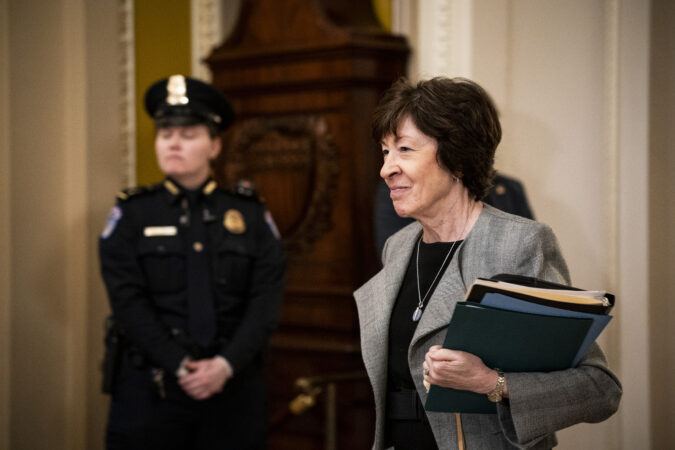
    The two Appropriations Committee chairs, Rep. Tom Cole (R., Okla.) and Sen. Susan Collins (R., Maine), announced in late December that they had finally reached an agreement on the total spending level they’ll shoot for in the remaining bills. They did not reveal the overall cost, but Cole said it is lower than the amount if Congress were to pass another funding extension, known as a continuing resolution.

    “This pathway forward aligns with President [Donald] Trump’s clear direction to rein in runaway, beltway-driven spending,” Cole said in a statement. “We will now begin expeditiously drafting the remaining nine full-year bills to ensure we are ready to complete our work in January.”

    From there, appropriators must navigate political pressures from their right and left: Fiscal hawks, including many in the conservative House Freedom Caucus, insist that funding levels for most agencies should not be higher than the last fiscal year.

    “I believe that we should begin to control our federal deficit and runaway federal debt by keeping this year’s discretionary spending level at or below last year’s level,” said House Freedom Caucus chairman and senior Appropriations Committee member Rep. Andy Harris (R., Md.) in a statement.

    But Democrats must approve any funding agreement, which has to receive at least 60 votes in the Senate to bypass the filibuster. Republicans control the upper chamber 53-47.

    Sen. Patty Murray of Washington, the top Democrat on the Senate Appropriations Committee, slammed the chamber’s newly released Homeland Security spending bill in December, calling it “partisan” and pledging to fight for accountability in Trump’s “out-of-control” DHS.

    The Senate has spent weeks attempting to pass a five-bill appropriations package that had only been negotiated in that chamber. The bill needed consent from all 100 senators to advance, and several conservative senators held up action for weeks over billions of dollars in earmarks tucked into the bills. (The House proposals also include billions in earmarks.)

    Those senators eventually relented, and the chamber was poised to vote on the package right before leaving town for the winter break, but two Democratic senators blocked it — demanding funding be reinstated for the National Center for Atmospheric Research, a Colorado-based research organization that Trump has moved to eliminate.

    The Senate package would tie together two major government funding bills — covering defense, labor, education, and health and human services agencies — with three other bills to fund the departments of Interior, Transportation, Housing and Urban Development, Commerce, Justice, and science-related agencies.

    It would appropriate $1.3 trillion, making up the vast majority of discretionary federal government spending.

    Cole has said that the Senate’s five-bill package would be too big to pass the lower chamber. He suggested passing the remaining nine appropriations bills in three separate three-bill packages in January when lawmakers return, beginning with bills covering the Commerce and Justice Departments, the Interior Department and agencies covering energy and water.

    The political minefield ahead may mean lawmakers once again turn to a funding extension rather than face another shutdown.

    “I don’t want another CR, I don’t think Mr. Cole wants another CR,” said Rep. Rosa DeLauro of Connecticut, the top Democrat on the House Appropriations Committee. “Let’s go. Let’s get the bills done.”

    Congress is supposed to pass all 12 appropriations bills before government funding runs out at the end of each fiscal year on Sept. 30.

    But lawmakers’ inability to adhere to that process is not new: Congress has only passed all its spending bills before the deadline four times in recent decades. Instead, most spending bills in modern history have been approved in one big package known as an “omnibus” right before the holiday break.

    House Speaker Mike Johnson (R., La.) pledged to stop that practice. The political complications of passing all 12 bills separately, however, has made that difficult to achieve. Instead, lawmakers have extended funding levels first approved under President Joe Biden multiple times, and Republicans have passed supplemental spending for their immigration and defense priorities through a party-line tax and spending bill.


  • Danish prime minister says a U.S. takeover of Greenland would mark the end of NATO

    Danish prime minister says a U.S. takeover of Greenland would mark the end of NATO

    COPENHAGEN, Denmark — Danish Prime Minister Mette Frederiksen said Monday an American takeover of Greenland would amount to the end of the NATO military alliance. Her comments came in response to U.S. President Donald Trump’s renewed call for the strategic, mineral-rich Arctic island to come under U.S. control in the aftermath of the weekend military operation in Venezuela.

    The dead-of-night operation by U.S. forces in Caracas to capture leader Nicolás Maduro and his wife early Saturday left the world stunned, and heightened concerns in Denmark and Greenland, which is a semiautonomous territory of the Danish kingdom and thus part of NATO.

    Frederiksen and her Greenlandic counterpart, Jens Frederik Nielsen, blasted the president’s comments and warned of catastrophic consequences. Numerous European leaders expressed solidarity with them.

    “If the United States chooses to attack another NATO country militarily, then everything stops,” Frederiksen told Danish broadcaster TV2 on Monday. “That is, including our NATO and thus the security that has been provided since the end of the Second World War.”

    20-day timeline deepens fears

    Trump called repeatedly during his presidential transition and the early months of his second term for U.S. jurisdiction over Greenland, and has not ruled out military force to take control of the island. His comments Sunday, including telling reporters “let’s talk about Greenland in 20 days,” further deepened fears that the U.S. was planning an intervention in Greenland in the near future.

    Frederiksen also said Trump “should be taken seriously” when he says he wants Greenland. “We will not accept a situation where we and Greenland are threatened in this way,” she added.

    Nielsen, in a news conference Monday, said Greenland cannot be compared to Venezuela. He urged his constituents to stay calm and united.

    “We are not in a situation where we think that there might be a takeover of the country overnight and that is why we are insisting that we want good cooperation,” he said.

    Nielsen added: “The situation is not such that the United States can simply conquer Greenland.”

    Ask Rostrup, a TV2 political journalist, wrote on the station’s live blog Monday that Mette previously would have flatly rejected the idea of an American takeover of Greenland. But now, Rostrup wrote, the rhetoric has escalated so much that she has to acknowledge the possibility.

    Trump slams Denmark’s security efforts in Greenland

    Trump on Sunday also mocked Denmark’s efforts at boosting Greenland’s national security posture, saying the Danes have added “one more dog sled” to the Arctic territory’s arsenal.

    “It’s so strategic right now,” Trump had told reporters Sunday as he flew back to Washington from his home in Florida. “Greenland is covered with Russian and Chinese ships all over the place.”

    He added: “We need Greenland from the standpoint of national security, and Denmark is not going to be able to do it.”

    But Ulrik Pram Gad, a global security expert from the Danish Institute for International Studies, wrote in a report last year that “there are indeed Russian and Chinese ships in the Arctic, but these vessels are too far away to see from Greenland with or without binoculars.”

    U.S. space base in northwestern Greenland

    Greenlanders and Danes were further rankled this weekend by a social media post following the raid by a former Trump administration official turned podcaster, Katie Miller. The post shows an illustrated map of Greenland in the colors of the Stars and Stripes accompanied by the caption: “SOON.”

    “And yes, we expect full respect for the territorial integrity of the Kingdom of Denmark,” Ambassador Jesper Møller Sørensen, Denmark’s chief envoy to Washington, said in a post responding to Miller, who is married to Trump’s influential deputy chief of staff Stephen Miller.

    The U.S. Department of Defense operates the remote Pituffik Space Base in northwestern Greenland. It was built following a 1951 defense agreement between Denmark and the United States. It supports missile warning, missile defense, and space surveillance operations for the U.S. and NATO.

    On Denmark’s mainland, the partnership between the U.S. and Denmark has been long-lasting. The Danes buy American F-35 fighter jets and just last year, Denmark’s parliament approved a bill to allow U.S. military bases on Danish soil.

    Critics say the vote ceded Danish sovereignty to the U.S. The legislation widens a previous military agreement, made in 2023 with the Biden administration, where U.S. troops had broad access to Danish air bases in the Scandinavian country.

  • Trump team puts a target on Cuba, with threats and oil blockade

    Trump team puts a target on Cuba, with threats and oil blockade

    No place was hit harder than Cuba by the shock waves that Saturday morning’s U.S. military seizure of Venezuela’s Nicolás Maduro sent throughout Latin America and the world.

    Within hours of the operation — long before the government in Havana acknowledged it — phone calls and texts across the island spread the news that dozens of elite Cuban security forces had been killed guarding Maduro.

    But by the time it finally released a statement late Sunday saying that 32 of its military and security personnel were dead in Caracas, the Cuban government had bigger problems on its hands.

    Both President Donald Trump and Secretary of State Marco Rubio made clear over the weekend that the collapse of Cuba’s communist government was not only a likely side benefit of Maduro’s ouster but a goal.

    “I don’t think we need [to take] any action,” Trump said as he flew back to Washington from his extended Florida holiday break. Without Maduro and the oil supplies Venezuela provided, he said, “Cuba looks like it’s ready to fall.”

    Rubio went further, indicating that the United States might be willing to give it a push. “I’m not going to talk to you about what our future steps are going to be,” he told NBC’s Meet the Press on Sunday. But, he added, “If I lived in Havana and I was in the government, I’d be concerned.”

    Their words resonated with many in the Miami-centered exile community, where the struggle to free Cuba from communist rule has dominated politics for decades. On Saturday, South Florida Cuban exiles — some wearing red Trump hats and Cuban flags as capes — joined hundreds of revelers at spirited, impromptu celebrations from Little Havana to Doral, a city nicknamed “Doralezuela” because of its large population of Venezuelans. Cuban American leaders, most of them Republican, issued statements as Venezuela coverage dominated local TV stations.

    Cuba is the “root” of problems with Venezuela, Nicaragua, and other leftist regimes in the region, said Dariel Fernandez, Miami-Dade County’s elected tax collector. “Now the time has come … for the Castro communist and socialist assassin regime to be held accountable as well, and for the Cuban people to finally be free.”

    Absent direct U.S. intervention, however, Cuba experts here and on the island were less certain.

    “If you’re asking if the Cuban government will just collapse on its own because the economic pain is bound to increase” without shipments of Venezuelan oil, “I’m very skeptical,” said Michael J. Bustamante, associate professor of history and director of the Cuban studies program at the University of Miami.

    To keep the lights on and cars running, Cuba has long been dependent on Venezuelan oil supplies, for which it has exchanged security and medical personnel in a sympathetic contract with leftist allies in Caracas.

    “I could very well be proven wrong, but Cuba has been here before” and survived, Bustamente said, referencing what is known in Cuba as the “special period” that began in 1991 with the abrupt cutoff of outside assistance after the demise of the Soviet Union.

    Juan Gonzalez, who served as Western Hemisphere director on the Biden administration’s national security staff, said that “cutting off the oil deliveries is going to put a huge squeeze on the humanitarian situation” in Cuba, which is already suffering regular electricity blackouts and food scarcities. “But I don’t think the regime is going to cry uncle.”

    Aside from an economic uptick during the Obama administration, when the resumption of diplomatic relations between Washington and Havana led to increased tourism and slender openings for private ownership and outside investment, the Cuban economy has never really recovered from the Soviet fall.

    The nation has been on a steady slide into economic chaos for years, owing to U.S. sanctions and what even many of its supporters see as mismanagement by a sclerotic Cuban Communist Party.

    Some chose to see opportunity in the darkness following Maduro’s ouster. Carlos Alzugaray, a retired career Cuban diplomat reached by phone at his Havana home, said, “There is of course an increase of the threat, a very bad thing.”

    But it was possible, he said, that Cuba’s allies in Russia and elsewhere would help, “and just maybe the government will … open up the economy and do what the economists have been telling them for a long time and they have refused to do.”

    Venezuelan support under Maduro’s predecessor, Hugo Chávez, in the early 2000s helped Cuba emerge from the special period and the weight of decades-long U.S. sanctions. Since then, Havana has weathered the death of revolutionary leader Fidel Castro, COVID, Trump’s dismantling during his first administration of the limited Obama opening and furious street protests in 2021.

    But the emboldened second Trump administration presents an entirely new threat to Cuba’s leaders.

    At various points over the years, Cuba’s own government economists have advised overhauling the economy and have been urged to do so by allies in China, Vietnam, and Russia.

    Raúl Castro, who took over from his ailing brother, Fidel, in 2006, warned of needed reforms in a lengthy 2010 speech to the Cuban parliament. “We are playing with the life of the revolution,” he said. “We can either rectify the situation, or we will run out of time walking on the edge of the abyss, and we will sink.”

    But his plans to expand the role of the private sector and reduce state ownership were seen as contradictory and insufficiently implemented, ultimately resolving few of Cuba’s systemic problems. Other pushes for change have run into similar roadblocks over the ruling party’s refusal to allow private businesses and farms to sell their goods directly for market prices, its rejection of currency reforms, heavy government investments in a failing tourism industry and the growing power of GAESA, the military-controlled conglomerate that runs vast swaths of the economy.

    At their peak of about 100,000 barrels a day, Venezuelan oil shipments allowed Cuba to serve its own energy needs and sell refined petroleum products overseas for desperately needed cash. But as Venezuela dealt with sharp drops in output, due to U.S. sanctions and mismanagement, shipments dropped to about 30,000 barrels last year.

    Those cuts, along with Cuba’s aging refineries, failing infrastructure and the occasional hurricane, led to at least five islandwide blackouts last year.

    “They have to realize they can’t depend on foreign help anymore,” Alzugaray said. Russia and Mexico have supplied some oil, although Mexican President Claudia Sheinbaum is likely to come under increasing U.S. pressure to cut off aid to Havana. China, which holds major Cuban debt, has shown little interest in helping.

    Reforms have been approved “on paper,” Alzugaray said. “The problem is they don’t do it. The essence is opening to market economics, allowing expansion of the private sector, and eliminating or selling socialist state enterprises that don’t produce. They have to do it, and they have to do it fast. They have lost too much time.”

    Few Cuba watchers have much confidence that reforms will happen, at least under the party government of President Manuel Díaz-Canel and the current power structure.

    “There are reformers inside the regime,” said Gonzalez, the Biden administration official, who had extensive dealings with the Cuban government. “They have a vision, but they don’t have the wherewithal and the influence to have it done.”

    Even if they did, he said, “it won’t be enough” for Rubio, whose parents fled the island before Fidel Castro’s 1959 takeover, and Cuban American lawmakers and power brokers, he said. “They’re going to want big change.”

    Opposition on the island is diffuse and leaderless since arrests following the 2021 street protests.

    “People who aspire to be opposition leaders are either in Miami or in Madrid or in jail,” said William LeoGrande, a specialist in Latin American affairs at American University. A Venezuela-like removal of even a handful of individuals is unlikely to rattle the multilayered, entrenched party and military power centers to the point of collapse, he said.

    As for Cubans themselves, Alzugaray said, “I wouldn’t think that people are so desperate that they will welcome an American intervention or a group of Miami Cubans taking over. What people want is the Cuban government to change,” he said, “but in Cuban terms, not imposed by the outside.”

  • Cowboys and Commanders fire defensive coordinators; Kliff Kingsbury also leaves Washington

    Cowboys and Commanders fire defensive coordinators; Kliff Kingsbury also leaves Washington

    The Dallas Cowboys fired first-year defensive coordinator Matt Eberflus on Tuesday after they allowed the most points and intercepted the fewest passes in franchise history.

    Another Eagles rival in the NFC East, the Washington Commanders, is dismissing defensive coordinator Joe Whitt Jr. In addition, offensive coordinator Kliff Kingsbury will not return to coach Dann Quinn’s staff.

    Fired by Dallas

    It’s the second consecutive season in which Eberflus has been fired. He was let go midseason in 2024, his third year as head coach of the Chicago Bears.

    Eberflus made it to the end of the season in his return to Dallas, where he had been an assistant from 2011-17 before going to Indianapolis as defensive coordinator. But the 55-year-old’s fate appeared sealed before Sunday’s finale, a 34-17 loss at the New York Giants that set a club record as the ninth game of allowing at least 30 points.

    “Having known Matt Eberflus for decades now, we have tremendous respect and appreciation for him as a coach and a person,” owner and general manager Jerry Jones said. “After reviewing and discussing the results of our defensive performance this season, though, it was clear that change is needed. This is the first step in that process, and we will continue that review as it applies to reaching our much higher expectations.”

    The departure of Eberflus means the Cowboys will have their fourth defensive coordinator in four seasons, following Dan Quinn in 2023, Mike Zimmer last year and Eberflus. Dallas’ last five defensive coordinators have been former NFL head coaches.

    Eagles quarterback Jalen Hurts checks on Cowboys defensive tackle Quinnen Williams on Nov. 23 in Arlington, Texas.

    The Cowboys (7-9-1) finished last in the NFL in scoring defense and passing defense and 30th overall, wasting one of quarterback Dak Prescott’s best seasons for the league’s No. 2 offense.

    Dallas gave up 500 points for the first time in club history, allowing 511 for an average of 30.1. The only higher average was the 30.8 points per game given up by the franchise’s winless expansion team in 1960.

    The defense’s six interceptions fell one short of the previous franchise low, and the 12 takeaways were the second fewest in club history. The Cowboys finished tied for 29th in the NFL with a minus-9 turnover margin.

    Jones didn’t do Eberflus any favors by trading star pass rusher Micah Parsons a week before the season started.

    One of the two first-round picks acquired from Green Bay in that deal led to a trade for standout defensive tackle Quinnen Williams of the New York Jets, a move that sparked a three-game winning streak under first-year coach Brian Schottenheimer.

    Jones has said the most surprising moment of the season was the 44-30 loss at Detroit that ended the winning streak and sent the Cowboys tumbling to a 1-4 finish. Trailing most of the game, Dallas couldn’t get a fourth-quarter stop after trimming the deficit to three with 10 minutes remaining.

    Dallas has consecutive losing seasons for the first time since the last of three in a row in 2002. The Cowboys had three straight 12-win playoff seasons from 2021-23 but just one postseason victory.

    Eberflus moved to the coaching booth from the sideline with three games remaining, but the results didn’t change much.

    “I don’t really think about it that way,” Eberflus said when asked before the season finale what he might have done differently. “I think about being in the moment and just keep adjusting and learning and growing and getting better. I don’t think I’d do anything differently.”

    Commanders offensive coordinator Kliff Kingsbury agreed to move on after a meeting with coach Dan Quinn.

    Washington’s shake-up

    Kingsbury and Whitt are both gone from Quinn’s staff with the Commanders after a 5-12 season, a team official with knowledge of the moves told the Associated Press on Tuesday.

    The person spoke to the AP on condition of anonymity because the staff changes had not yet been announced.

    Kingsbury, the offensive coordinator, and Whitt, who had been in charge of the defense until being stripped of play-calling duties during the season, both arrived in Washington with Quinn before the 2024 season.

    According to the person who described Tuesday’s decisions to the AP, Quinn and Kingsbury met in the morning to talk about the future of the team’s offense, which stars quarterback Jayden Daniels.

    Quinn and Kingsbury then mutually agreed to part ways, the official said.

    Whitt was dismissed, which was not surprising given his earlier demotion and just how bad Washington’s defense was this season. No team in the NFL allowed opponents to gain more yards.

    These switches come two days after the Commanders’ disappointing campaign ended, a far cry from a year ago, when Quinn’s first season in Washington included a 12-5 regular-season record, a run all the way to the NFC championship game and AP NFL Offensive Rookie of the Year honors for No. 2 overall draft pick Daniels.

    But Daniels kept getting hurt this season, managing to start only seven games and getting shut down in December after a series of injuries to his left knee, right hamstring, and left elbow.

  • More than 2 million Epstein documents still unreleased, officials say

    More than 2 million Epstein documents still unreleased, officials say

    More than 2 million documents regarding convicted sex offender Jeffrey Epstein remain to be released, Justice Department officials told a federal judge Monday, offering the most precise estimate so far of the size of the file still under review.

    In a letter to U.S. District Judge Paul Engelmayer in New York, officials said the department had released 12,285 documents, comprising about 125,575 pages, but that the vast majority of the Epstein files had not yet been released. Last month, Engelmayer issued an order allowing the department to release grand jury documents related to the 2021 trial and conviction of Ghislaine Maxwell, Epstein’s accomplice, on sex-trafficking charges.

    Justice Department officials had previously given even larger estimates of the number of documents still under review. The letter notes that the department has identified a large number of documents that are “copies of (or largely duplicative of) documents that had already been collected.”

    The letter was signed by Attorney General Pamela Bondi, Deputy Attorney General Todd Blanche, and Jay Clayton, the U.S. attorney in Manhattan.

    A new law passed in November mandated that the entire trove of Epstein files be released by Dec. 19. Justice Department officials said late last month that they hope to release the rest of the documents by Jan. 20. Members of Congress who pushed the legislation say that the department has not released key documents they want to see.

    “DOJ’s refusal to follow the law I passed in Congress and release the full files is an obstruction of justice,” Rep. Ro Khanna (D., Calif.), one of the new law’s main sponsors, said in a statement. “They also need to release the FBI witness interviews which name other men, so the public can know who was involved,” he said.

    More than 400 lawyers and 100 specially trained document analysts “will dedicate all or a substantial portion of their workday” to getting documents ready for release, the officials told the judge.

    The letter — a progress report of sorts — gives a glimpse into the daunting labor that lies ahead for federal officials.

    Those reviewing the unreleased documents must determine whether each document falls under the law’s broad mandate, review the documents to redact information that could identify victims, and respond to requests from victims or their family members for additional redactions, according to the letter.

    Officials offered similar explanations for a delay in releasing all unclassified Epstein documents last month, after the Justice Department failed to meet its deadline.

    Epstein was arrested on federal sex-trafficking charges in 2019 and died in federal custody later that year. His death was ruled a suicide. Judges and lawmakers say that over decades, he abused, trafficked, and molested scores of girls, many of whom have come forward in court and in other public forums.

    Epstein’s friendships with prominent political, business, and cultural figures, including President Donald Trump, also continue to be under intense scrutiny.

    Trump had a long-standing friendship with Epstein. He has said he knew Epstein socially in Palm Beach, Fla., and that they had a falling out in the mid-2000s. Trump has attributed the end of their relationship to a quarrel over a real estate deal and to Epstein hiring employees away from Trump’s Mar-a-Lago Club. White House spokeswoman Karoline Leavitt has said Epstein was ejected from the club “for being a creep” to female workers there.

    Trump has not been accused of participating in Epstein’s criminal conduct.

    Documents released last month confirmed that the FBI received a complaint about Epstein as far back as 1996. But Epstein did not appear to come under serious law enforcement scrutiny until about a decade later, when he was arrested in 2006.

    At the time, Epstein reached an agreement with officials in Florida that enabled him to plead guilty in 2008 to two state charges of soliciting prostitution, including one involving a minor, while avoiding federal charges and serving just over a year behind bars — with ample work-release privileges.

  • Joseph McGettigan, prosecutor in Jerry Sandusky and John du Pont cases, dies at 76

    Joseph McGettigan, prosecutor in Jerry Sandusky and John du Pont cases, dies at 76

    HARRISBURG, Pa. — Joseph E. McGettigan III, a Pennsylvania prosecutor who obtained criminal convictions against Penn State assistant football coach Jerry Sandusky and chemical heir John du Pont, has died at age 76.

    Mr. McGettigan, who lived in the Philadelphia suburb of Media, died on Dec. 31, according to the funeral home Boyd Horrox Givnish Life Celebration Home of East Norriton.

    He was a senior deputy attorney general when he served as a lead prosecutor in the trial of Sandusky on child molestation charges in 2012. During the closing argument, Mr. McGettigan showed jurors photos of eight of Sandusky’s victims as children, all of whom had taken the stand.

    “He molested and abused and hurt these children horribly,” Mr. McGettigan said. “He knows he did it, and you know he did it. Find him guilty of everything.” Sandusky was convicted of 45 of 48 counts.

    Mr. McGettigan was an assistant district attorney in Delaware County when he prosecuted du Pont, who was found guilty of third-degree murder but mentally ill in the death of Olympic gold medal-winning freestyle wrestler David Schultz at du Pont’s palatial estate outside Philadelphia in 1996. Schultz come to live and train at a state-of-the-art training center that du Pont had built on his property.

    Du Pont died in a Pennsylvania prison in 2010 at the age of 72. Sandusky, 81, is currently serving a 30- to 60-year sentence in state prison.

    Mr. McGettigan’s work as prosecutor, which also included a stint in Philadelphia, often involved murder and child molestation cases. More recently he had been a lawyer in private practice, including work on behalf of crime victims.

    Survivors include his wife, Gay Warren; his mother, Ruth L. McGettigan; and six siblings.

  • NRA sues its own charity in growing schism over trademarks, fundraising

    NRA sues its own charity in growing schism over trademarks, fundraising

    The National Rifle Association is suing its own charitable wing in federal court, alleging that the nonprofit NRA Foundation, which it founded in 1990, is unfairly using the NRA logo to attract a rival donor base and undercut it.

    The lawsuit, filed Monday in federal court, marks the latest strife for the gun rights group, which has been trying to balance its books and rebuild its reputation after years of misspending, allegations of corruption, and internal conflict.

    The suit alleges that the NRA’s official charity was “seized by a disgruntled faction of former NRA directors who lost control of the NRA’s Board.”

    The filing accuses the foundation’s leadership of misleading donors by suggesting that they were supporting the NRA, when in fact the funds were going to a charity that the NRA alleges had been transformed into “a vehicle for personal reprisal.” It also says the NRA Foundation was using the NRA’s trademark without permission.

    The NRA Foundation did not respond to a request for comment about the lawsuit early Tuesday.

    “This is a disappointing day, and it should not have come to this,” NRA CEO Doug Hamlin said in an emailed statement. “A foundation established to support the National Rifle Association of America has taken actions that are adversarial at a time when the NRA is rebuilding and focused on its long-term mission,” he said, describing the lawsuit as a “last resort.”

    In the lawsuit, attorneys for the NRA ask a judge to prevent the foundation from unfairly competing with the NRA, as well as order the foundation to stop using the NRA’s trademarks and pay an unspecified sum in damages.

    Monday’s court filings marked the latest explosion of internal warfare at the group, whose finances have been ravaged in recent years. According to campaign data tracker OpenSecrets, the NRA spent $11 million in the 2024 elections, one-third of its 2020 spending and less than one-fifth of its 2016 spending.

    In February 2024, a jury in New York found that Wayne LaPierre, the NRA’s longtime leader who resigned on the eve of the trial, had squandered funds on vacations, private jets, and designer clothes and was liable to pay $5.4 million in damages. Former CFO Wilson “Woody” Phillips was ordered to pay $2 million in damages.

    Some weeks later, the NRA avoided a second trial by reaching a settlement with the D.C. district attorney, agreeing to reform how the NRA Foundation distributed money. That lawsuit had accused the charity of funneling millions of dollars without proper oversight back to the NRA. The NRA did not acknowledge any wrongdoing in the settlement and had denied the lawsuit’s claims in court filings.

    According to the lawsuit, the foundation’s chairman and the majority of its trustees are former NRA board members who were allied with LaPierre. It accused the charity of being “stacked with trustees associated with the Old Guard faction that had lost control of the NRA, including Foundation Chairman Tom King, whom NRA members had voted off of the NRA Board in 2024.”

    King declined to provide an immediate comment on the suit Tuesday morning.

    The NRA has been trying to turn a new leaf on a painful chapter in its 155-year-old history. In recent years, many of the group’s former critics have joined the NRA’s 76-member board, which likes to call itself “NRA 2.0.” In November, it announced plans to furlough more than 30 staff members in a bid to save about $16 million.

    It was not immediately clear how Monday’s lawsuit would affect the link between the NRA and the NRA Foundation. The NRA’s website continued on Tuesday to prominently promote a link to “Friends of NRA,” the foundation’s main fundraising program.

    The NRA Foundation’s annual report for the 2024 calendar year, its most recent, listed net assets exceeding $200 million and annual revenue of $41 million.

  • Corporation for Public Broadcasting, gutted of federal funds, votes to dissolve

    Corporation for Public Broadcasting, gutted of federal funds, votes to dissolve

    The Corporation for Public Broadcasting’s board of directors voted to dissolve the organization, officials announced Monday, ending the 58-year-old agency that distributed federal funds to NPR, PBS and more than 1,500 local public radio and television stations.,

    The move formalizes the shutdown that began this summer after Republicans in Congress rescinded $1.1 billion in funding at President Donald Trump’s behest. At the heart of the campaign was a long-standing conservative critique that public media outfits produce news that is liberal, biased, and should not be funded by taxpayer dollars.

    CPB leaders said they chose dissolution over maintaining a dormant organization that could become manipulated by new stewards acting without public media’s best interest at heart.

    “CPB’s final act would be to protect the integrity of the public media system and the democratic values by dissolving, rather than allowing the organization to remain defunded and vulnerable to additional attacks,” said Patricia Harrison, CPB’s president and chief executive.

    Ruby Calvert, chair of CPB’s board, called the defunding “devastating” but expressed hope that “a new Congress will address public media’s role in our country because it is critical to our children’s education, our history, culture, and democracy to do so.”

    Created by Congress through the Public Broadcasting Act of 1967, CPB served as a middleman between taxpayers and public media, distributing most of its appropriations directly to local stations. The funding was particularly crucial for small and rural stations, which relied on federal dollars for a significant share of their budgets. The organization also negotiated music rights and procured technical infrastructure on behalf of stations — functions that now have no clear successor.

    CPB said it would complete distribution of its remaining funds and support the American Archive of Public Broadcasting in digitizing and preserving historical content. The organization’s own archives, dating to its 1967 founding, will be maintained in partnership with the University of Maryland.

    The organization’s closure caps months of turmoil for the public media system. In April, CPB sued the Trump administration after the president attempted to fire three of its board members, arguing it was not a government agency subject to presidential authority. In May, Trump signed an executive order instructing CPB to halt all funding to NPR and PBS, calling them “biased media.” NPR and PBS sued, arguing the order amounted to unconstitutional viewpoint discrimination.

    In September, after Congress passed its rescission bill, CPB announced it would redirect $57.9 million in satellite funding away from NPR to Public Media Infrastructure, a newly formed nonprofit backed by other public radio organizations, including PRX and American Public Media.

    In response, NPR sued its longtime ally CPB, arguing the move improperly allocated funds meant for NPR and violated the Public Broadcasting Act and was made under pressure from the Trump White House — a claim CPB disputed. The parties settled in November, with NPR receiving nearly $36 million for its satellite system. NPR also said it would waive fees derived from public radio stations for accessing its satellite services for the next two years.

    PBS has had staff cuts and NPR has reportedly made budget cuts. But for local stations that relied on CPB for a large share of their budgets, the federal funding cuts have been devastating.

    Major foundations, including Knight, MacArthur and Ford, have pledged tens of millions of dollars in emergency funding to keep the most vulnerable stations afloat, but some are already considering dropping national programming or shutting down entirely.

    NJ PBS, New Jersey’s public television network, announced in September that it may close next year, while Arkansas Public Television dropped its PBS affiliation — just as several public radio stations have dropped their NPR affiliation — showing that federal defunding has destabilized a system scrambling for answers.

    NPR, PBS, and the White House did not respond to requests for comment.

  • Israel clears final hurdle to start settlement construction that would cut the West Bank in two

    Israel clears final hurdle to start settlement construction that would cut the West Bank in two

    JERUSALEM — Israel has cleared the final hurdle before starting construction on a contentious settlement project near Jerusalem that would effectively cut the West Bank in two, according to a government tender.

    The tender, which seeks bids from developers, would clear the way to begin construction of the E1 project.

    The anti-settlement monitoring group Peace Now first reported the tender. Yoni Mizrahi, who runs the group’s settlement watch division, said initial work could begin within the month.

    Settlement development in E1, an open tract of land east of Jerusalem, has been under consideration for more than two decades, but was frozen due to U.S. pressure during previous administrations.

    The international community overwhelmingly considers Israeli settlement construction in the West Bank to be illegal and an obstacle to peace.

    A controversial project

    The E1 project is especially contentious because it runs from the outskirts of Jerusalem deep into the occupied West Bank. Critics say it would prevent the establishment of a contiguous Palestinian state in the territory.

    Israeli Finance Minister Bezalel Smotrich, a far-right politician who oversees settlement policy, has long pushed for the plan to become a reality.

    “The Palestinian state is being erased from the table not with slogans but with actions,” he said in August, when Israel gave final approval to the plan. “Every settlement, every neighborhood, every housing unit is another nail in the coffin of this dangerous idea.”

    The tender, publicly accessible on the website for Israel’s Land Authority, calls for proposals to develop 3,401 housing units. Peace Now says the publication of the tender “reflects an accelerated effort to advance construction in E1.

    Israel and Syria resume U.S.-brokered talks in Paris

    Syrian and Israeli officials met Tuesday in Paris for U.S.-mediated talks intended to broker a security agreement to defuse tensions between the two countries. A joint statement issued after the meeting said it “centered on respect for Syria’s sovereignty and stability, Israel’s security, and prosperity for both countries.”

    It said the two sides have agreed to establish a joint communication cell “to facilitate immediate and ongoing coordination on their intelligence sharing, military de-escalation, diplomatic engagement, and commercial opportunities under the supervision of the United States.” The cell would serve as a platform to address disputes and “prevent misunderstandings,” it said.

    In December 2024, insurgents led by Syria’s now interim President Ahmad al-Sharaa ousted the country’s longtime autocratic leader, Bashar Assad, in a lightning offensive.

    Al-Sharaa said that he has no desire for a conflict with Israel. But Israel was suspicious of the new Islamist-led leadership and quickly moved to seize control of a formerly U.N.-patrolled buffer zone in southern Syria set up under a 1974 disengagement agreement. Israel has also launched hundreds of airstrikes on Syrian military facilities and periodic incursions into villages outside the buffer zone, which have sometimes led to violent confrontations with residents.

    Syrian officials have said their priority in the talks is the withdrawal of Israeli forces and a return to the 1974 agreement. Israeli Prime Minister Benjamin Netanyahu’s office said in a statement Tuesday that Israel “stressed the importance of ensuring security for its citizens and preventing threats on its border” and of protecting the Druze minority in Syria, which also comprises a substantial minority in Israel.

    U.N. says aid groups have enough food for Gazans

    The United Nations said that aid groups have enough food on hand to sustain people in Gaza for the first time since the war began more than two years ago.

    “The January round is the first since October 2023 in which partners had sufficient stock to meet 100% of the minimum caloric standard,” U.N. spokesperson Stéphane Dujarric said Monday.

    More aid has been reaching Gaza since the ceasefire between Israel and Hamas took effect on Oct. 10.

    However, the flow of humanitarian aid remains challenging amid Israel’s recent decision to revoke the licenses of more than three dozen organizations, including such prominent groups as Doctors Without Borders, the Norwegian Refugee Council, and Oxfam.

    The European Union’s foreign policy chief on Tuesday called on Israel to lift the restrictions to avert deaths from exposure, hunger, and a lack of medicines, as thousands of displaced Palestinians return to what is left of their homes.

    “To deliver aid rapidly, safely, and at the scale required, international NGOs must be able to operate in a sustained and predictable way,” Kaja Kallas, the EU’s top diplomat, said in a statement from the 27-nation bloc, referring to non-governmental organizations.

    Israeli troops fire at university protesters in West Bank

    The Palestinian Red Crescent said Tuesday that 11 people were injured during an Israeli raid at a university in the West Bank.

    The president of Birzeit University, speaking at a news conference, said a group of about 20 Israeli military vehicles had stormed the gate and entered the campus. Video obtained by The Associated Press confirmed their presence on campus.

    “Unfortunately, targeting the university is a recurring event,” said Talal Shahwan, the school’s president, who said the forces displayed “clear brutality.”

    Israeli officials said military and border troops were sent to break up an anticipated gathering and soon found themselves facing a crowd of hundreds of people, some allegedly throwing rocks at them from rooftops.

    They said they used targeted fire toward the “main violent individuals.”

    Foreign journalists press Israel for entry into Gaza

    A group representing major international media organizations on Tuesday criticized the Israeli government’s latest refusal to allow foreign journalists into Gaza, despite a three-month ceasefire.

    Israel has barred the foreign media from entering Gaza since the war erupted on Oct. 7, 2023.

    The Foreign Press Association has asked Israel’s Supreme Court to end the ban. After months of delays, the Israeli government this week told the court that it remains opposed to allowing international journalists into Gaza, citing security reasons.

    The FPA, which represents dozens of major media organizations, including The Associated Press, expressed “its profound disappointment” with the government’s position and said it hoped judges would soon end the ban.

  • U.S. to promise Ukraine support to counter new Russian attacks

    U.S. to promise Ukraine support to counter new Russian attacks

    PARIS — Ukraine’s allies said Tuesday they had agreed to provide the country with multilayered international defense guarantees as part of a proposal to end Russia’s nearly 4-year-old invasion of its neighbor.

    At a key meeting in Paris, leaders from European countries and Canada, as well as U.S. representatives and top officials from the European Union and NATO, said they would provide Kyiv’s front-line forces with equipment and training and back them up with air, land and sea support to deter any future Russian attack.

    The size of the supporting forces was not made public, and many of the plan’s details remain unclear.

    U.K. Prime Minister Keir Starmer said the meeting made “excellent progress” but cautioned that “the hardest yards are still ahead,” noting that Russian attacks on Ukraine continue.

    He said allies will participate in U.S.-led monitoring and verification of any ceasefire, support the long-term provision of armaments for Ukraine’s defense, and work toward binding commitments to support Ukraine in the case of any future attack by Russia.

    There was no immediate comment from officials in Russia on Tuesday, which was the eve of Orthodox Christmas.

    Moscow has revealed few details of its stance in the U.S.-led peace negotiations. Officials have reaffirmed Russia’s demands and have insisted there can be no ceasefire until a comprehensive settlement is agreed. Russian President Vladimir Putin has ruled out any deployment of troops from NATO countries on Ukrainian soil.

    Starmer added that there can only be peace if Russia compromises, and “Putin is not showing that he is ready for peace.”

    In the event of a ceasefire, he said the U.K. and France “will establish military hubs across Ukraine and build protected facilities for weapons and military equipment to support Ukraine’s defensive needs.”

    Ukrainian President Volodymyr Zelensky said progress was made in the talks, although commitments need to be ratified by each country so that they can be put in place after any settlement.

    “We determined what countries are ready to take leadership in the elements of security guarantees on the ground, in the air, and at sea, and in restoration,” Zelensky told a news conference in Paris. “We determined what forces are needed. We determined, how these forces will be operated and at what levels of command.”

    He said details of how monitoring will work remain to be determined, as do the size and financing of the Ukrainian army.

    U.S. envoy Steve Witkoff said U.S. “strongly stands behind” security guarantees

    French President Emmanuel Macron said the security statement endorsed by Ukraine’s allies is a “significant step” toward ending Russia’s invasion.

    A joint statement said the allies also agreed to continue long-term military assistance and armament to Ukraine’s armed forces, which “will remain the first line of defense and deterrence” after any peace deal is signed.

    The allies still must finalize “binding commitments” setting out what they will do to support Ukraine.

    Prospects for progress at the meeting had been uncertain as the Trump administration’s focus is shifting to Venezuela, while U.S. suggestions of a Greenland takeover caused tension with Europe, and Moscow shows no signs of compromise.

    The countries dubbed the “coalition of the willing have been exploring for months how to deter any future Russian aggression should it agree to stop fighting Ukraine.

    Macron’s office said an unprecedented number of officials attended in person, with 35 participants including 27 heads of state and government. Witkoff and Trump’s son-in-law Jared Kushner, met with Macron at the Elysee presidential palace for preparatory talks ahead of the gathering.

    A series of meetings on the summit’s sidelines illustrated the intensity of the diplomatic effort and the complexity of its moving parts.

    Zelensky met with Macron ahead of the summit. French, British, and Ukrainian military chiefs also met, with NATO’s top commander, U.S. Gen. Alexus G. Grynkewich, participating in talks that France’s army chief said focused on implementing security guarantees. Army chiefs from other coalition nations joined by video.

    Macron’s office said the U.S. delegation was initially set to be led by Secretary of State Marco Rubio, but he changed his plans after the U.S. military intervention in Venezuela.

    Tension rises over Greenland comments

    Trump on Sunday renewed his call for the U.S. to take control of Greenland, a strategic, mineral-rich Arctic island.

    The leaders of France, Germany, Italy, Poland, Spain, and the U.K. on Tuesday joined Danish Prime Minister Mette Frederiksen in defending Greenland’s sovereignty in the wake of Trump’s comments about the self-governing territory of the kingdom of Denmark.

    But the continent also needs U.S. military might to back up Ukrainian security guarantees and ward off Russia’s territorial ambitions. That could require a delicate diplomatic balancing act in Paris.

    Participants are seeking concrete outcomes on five key priorities once fighting ends: ways to monitor a ceasefire; support for Ukraine’s armed forces; deployment of a multinational force on land, at sea and in the air; commitments in case of more Russian aggression; and long-term defense cooperation with Ukraine.

    But whether that’s still achievable Tuesday isn’t so clear now, after the U.S. military operation targeting Maduro in Venezuela.

    Ukraine seeks firm guarantees from Washington of military and other support seen as crucial to securing similar commitments from other allies. Kyiv has been wary of any ceasefire that it fears could provide time for Russia to regroup and attack again.

    Important details unfinalized

    Zelensky said during the weekend that potential European troop deployments still face hurdles, important details have not been finalized, and “not everyone is ready” to commit forces.

    He noted that many countries would need approval from lawmakers even if leaders agreed on military support for Ukraine. But he recognized that support could come in forms other than troops, such as “through weapons, technologies, and intelligence.”

    Zelensky said deployments in Ukraine by Britain and France, Western Europe’s only nuclear-armed nations, would be “essential.”

    “Speaking frankly as president, even the very existence of the coalition depends on whether certain countries are ready to step up their presence,” he said. “If they are not ready at all, then it is not really a ‘coalition of the willing.’”

    In fighting Tuesday, Ukraine’s Security Service (SBU) carried out drone strikes on a military arsenal and an oil depot deep inside Russia, according to a security official who was not authorized to comment publicly and thus spoke on condition of anonymity.

    The long-range drones hit the arsenal in Russia’s Kostroma region, triggering explosions that lasted for hours and forced the evacuation of nearby settlements, the official said. The site was described as a key logistics hub supplying ammunition in western and central Russia.

    In a separate strike, SBU drones hit an oil depot in Russia’s Lipetsk region, causing a huge fire, the official said.