Category: Wires

  • This Jan. 6 plaque was made to honor law enforcement. It’s nowhere to be found at the Capitol

    This Jan. 6 plaque was made to honor law enforcement. It’s nowhere to be found at the Capitol

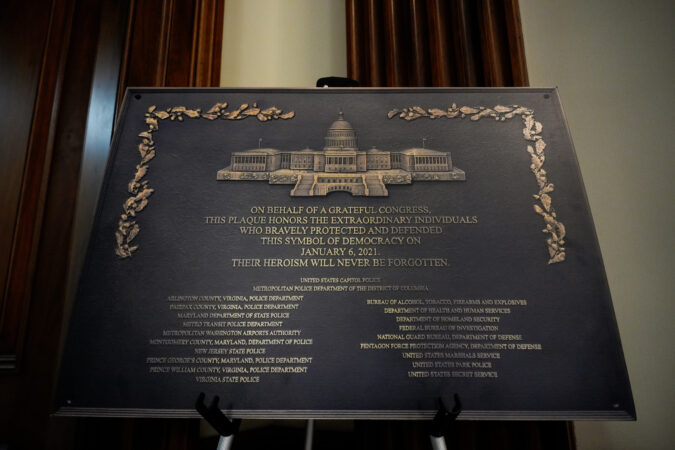
    WASHINGTON — On the fifth anniversary of the Jan. 6, 2021, attack on the Capitol, the official plaque honoring the police who defended democracy that day is nowhere to be found.

    It’s not on display at the Capitol, as is required by law. Its whereabouts aren’t publicly known, though it’s believed to be in storage.

    House Speaker Mike Johnson, a Louisiana Republican, has yet to formally unveil the plaque. And the Trump administration’s Department of Justice is seeking to dismiss a police officers’ lawsuit asking that it be displayed as intended. The Architect of the Capitol, which was responsible for obtaining and displaying the plaque, said in light of the federal litigation, it cannot comment.

    Determined to preserve the nation’s history, some 100 members of Congress, mostly Democrats, have taken it upon themselves to memorialize the moment. For months, they’ve mounted poster board-style replicas of the Jan. 6 plaque outside their office doors, resulting in a Capitol complex awash with makeshift remembrances.

    “On behalf of a grateful Congress, this plaque honors the extraordinary individuals who bravely protected and defended this symbol of democracy on Jan. 6, 2021,” reads the faux bronze stand-in for the real thing. “Their heroism will never be forgotten.”

    Jan. 6 void in the Capitol

    In Washington, a capital city lined with monuments to the nation’s history, the plaque was intended to become a simple but permanent marker, situated near the Capitol’s west front, where some of the most violent fighting took place as rioters breached the building.

    But in its absence, the missing plaque makes way for something else entirely — a culture of forgetting.

    Visitors can pass through the Capitol without any formal reminder of what happened that day, when a mob of President Donald Trump’s supporters stormed the building trying to overturn the Republican’s 2020 reelection defeat by Democrat Joe Biden. With memory left unchecked, it allows new narratives to swirl and revised histories to take hold.

    Five years ago, the jarring scene watched the world over was declared an “insurrection” by the then-GOP leader of the Senate, while the House GOP leader at the time called it his “saddest day” in Congress. But those condemnations have faded.

    Trump calls it a “day of love.” And Johnson, who was among those lawmakers challenging the 2020 election results, is now the House speaker.

    “The question of January 6 remains — democracy was on the guillotine — how important is that event in the overall sweep of 21st century U.S. history,” said Douglas Brinkley, a professor of history at Rice University and noted scholar.

    “Will January 6 be seen as the seminal moment when democracy was in peril?” he asked. Or will it be remembered as “kind of a weird one-off?”

    “There’s not as much consensus on that as one would have thought on the fifth anniversary,” he said.

    Memories shift, but violent legacy lingers

    At least five people died in the riot and its aftermath, including Trump supporter Ashli Babbitt, who was fatally shot by police while trying to climb through a window toward the House chamber. More than 140 law enforcement officers were wounded, some gravely, and several died later, some by suicide.

    All told, some 1,500 people were charged in the Capitol attack, among the largest federal prosecutions in the nation’s history. When Trump returned to power in January 2025, he pardoned all of them within hours of taking office.

    Unlike the twin light beams that commemorated the Sept. 11, 2001, attack or the stand-alone chairs at the Oklahoma City bombing site memorial, the failure to recognize Jan. 6 has left a gap not only in memory but in helping to stitch the country back together.

    “That’s why you put up a plaque,” said Rep. Mary Gay Scanlon (D., Pa.). “You respect the memory and the service of the people involved.”

    Police sue over plaque, DOJ seeks to dismiss

    The speaker’s office over the years has suggested it was working on installing the plaque, but it declined to respond to a request for further comment.

    Lawmakers approved the plaque in March 2022 as part of a broader government funding package. The resolution said the U.S. “owes its deepest gratitude to those officers,” and it set out instructions for an honorific plaque listing the names of officers “who responded to the violence that occurred.” It gave a one-year deadline for installation at the Capitol.

    This summer, two officers who fought the mob that day sued over the delay.

    “By refusing to follow the law and honor officers as it is required to do, Congress encourages this rewriting of history,” said the claim by officers Harry Dunn and Daniel Hodges. “It suggests that the officers are not worthy of being recognized, because Congress refuses to recognize them.”

    The Justice Department is seeking to have the case dismissed. U.S. Attorney Jeanine Pirro and others argued Congress “already has publicly recognized the service of law enforcement personnel” by approving the plaque and displaying it wouldn’t alleviate the problems they claim to face from their work.

    “It is implausible,” the Justice Department attorneys wrote, to suggest installation of the plaque “would stop the alleged death threats they claim to have been receiving.”

    The department also said the plaque is required to include the names of “all law enforcement officers” involved in the response that day — some 3,600 people.

    Makeshift memorials emerge

    Lawmakers who have installed replicas of the plaque outside their offices said it’s important for the public to know what happened.

    “There are new generations of people who are just growing up now who don’t understand how close we came to losing our democracy on Jan 6, 2021,” said Rep. Jamie Raskin (D., Md.), a member of the Jan. 6 committee, which was opposed by GOP leadership but nevertheless issued a nearly 1,000-page report investigating the run-up to the attack and the attempt to overturn the 2020 election.

    Raskin envisions the Capitol one day holding tours around what happened. “People need to study that as an essential part of American history,” he said.

    “Think about the dates in American history that we know only by the dates: There’s the 4th of July. There’s December 7th. There’s 9/11. And there’s January 6th,” said Rep. Zoe Lofgren (D., Calif.), who also served on the committee and has a plaque outside her office.

    “They really saved my life, and they saved the democracy, and they deserve to be thanked for it,” she said.

    But as time passes, there are no longer bipartisan memorial services for Jan. 6. On Tuesday, the Democrats will reconvene members from the Jan. 6 committee for a hearing to “examine ongoing threats to free and fair elections,” House Democratic Leader Hakeem Jeffries of New York announced. It’s unlikely Republicans will participate.

    The Republicans under Johnson have tapped Rep. Barry Loudermilk of Georgia to stand up their own special committee to uncover what the speaker calls the “full truth” of what happened. They’re planning a hearing this month.

    “We should stop this silliness of trying to whitewash history — it’s not going to happen,” said Rep. Joe Morelle (D., N.Y.), who helped lead the effort to display the replica plaques.

    “I was here that day so I’ll never forget,” he said. “I think that Americans will not forget what happened.”

    The number of makeshift plaques that fill the halls is a testimony to that remembrance, he said.

    Instead of one plaque, he said, they’ve “now got 100.”
  • Eva Schloss, 96, stepsister of Anne Frank and Holocaust educator

    Eva Schloss, 96, stepsister of Anne Frank and Holocaust educator

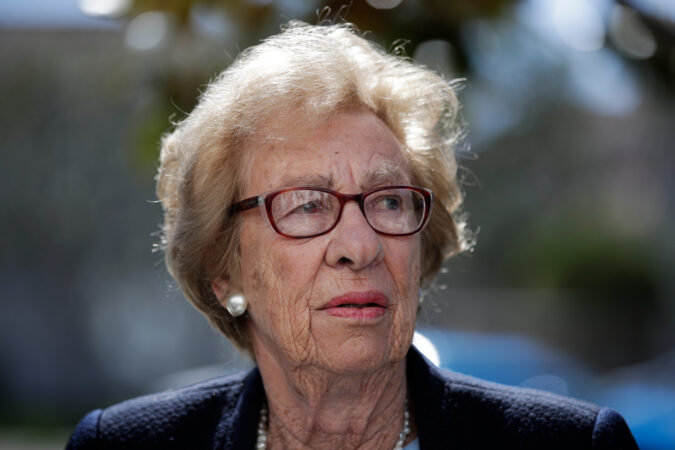
    LONDON — Auschwitz survivor Eva Schloss, the stepsister of teenage diarist Anne Frank and a tireless educator about the horrors of the Holocaust, has died. She was 96.

    The Anne Frank Trust UK, of which Ms. Schloss was honorary president, said she died Saturday in London, where she lived.

    Britain’s King Charles III said he was “privileged and proud” to have known Ms. Schloss, who cofounded the charitable trust to help young people challenge prejudice.

    “The horrors that she endured as a young woman are impossible to comprehend, and yet she devoted the rest of her life to overcoming hatred and prejudice, promoting kindness, courage, understanding, and resilience through her tireless work for the Anne Frank Trust UK and for Holocaust education across the world,” the king said.

    Born Eva Geiringer in Vienna in 1929, Ms. Schloss fled with her family to Amsterdam after Nazi Germany annexed Austria. She became friends with another Jewish girl of the same age, Anne Frank, whose diary would become one of the most famous chronicles of the Holocaust.

    Like the Franks, Eva’s family spent two years in hiding to avoid capture after the Nazis occupied the Netherlands. They were eventually betrayed, arrested, and sent to the Auschwitz death camp.

    Ms. Schloss and her mother, Fritzi, survived until the camp was liberated by Soviet troops in 1945. Her father, Erich, and brother Heinz died in Auschwitz.

    After the war, Eva moved to Britain, married German Jewish refugee Zvi Schloss, and settled in London.

    In 1953, her mother married Frank’s father, Otto, the only member of his immediate family to survive. Anne Frank died of typhus in the Bergen-Belsen concentration camp at the age of 15, months before the end of the war.

    Ms. Schloss did not speak publicly about her experiences for decades, later saying that wartime trauma had made her withdrawn and unable to connect with others.

    “I was silent for years, first because I wasn’t allowed to speak. Then I repressed it. I was angry with the world,” she told the Associated Press in 2004.

    But after she addressed the opening of an Anne Frank exhibition in London in 1986, Ms. Schloss made it her mission to educate younger generations about the Nazi genocide.

    Over the following decades she spoke in schools and prisons and at international conferences and told her story in books including Eva’s Story: A Survivor’s Tale by the Stepsister of Anne Frank.

    She kept campaigning into her 90s. In 2019, she traveled to Newport Beach, Calif., to meet teenagers who were photographed making Nazi salutes at a high school party. The following year she was part of a campaign urging Facebook to remove Holocaust-denying material from the social-networking site.

    “We must never forget the terrible consequences of treating people as ‘other,’” Ms. Schloss said in 2024. “We need to respect everybody’s races and religions. We need to live together with our differences. The only way to achieve this is through education, and the younger we start the better.”

    Ms. Schloss’ family remembered her as “a remarkable woman: an Auschwitz survivor, a devoted Holocaust educator, tireless in her work for remembrance, understanding and peace.”

    “We hope her legacy will continue to inspire through the books, films and resources she leaves behind,” the family said in a statement.

    Zvi Schloss died in 2016. Eva Schloss is survived by their three daughters, as well as grandchildren and great-grandchildren.

  • Hegseth censures Kelly after Democrats’ video warning about following unlawful orders

    Hegseth censures Kelly after Democrats’ video warning about following unlawful orders

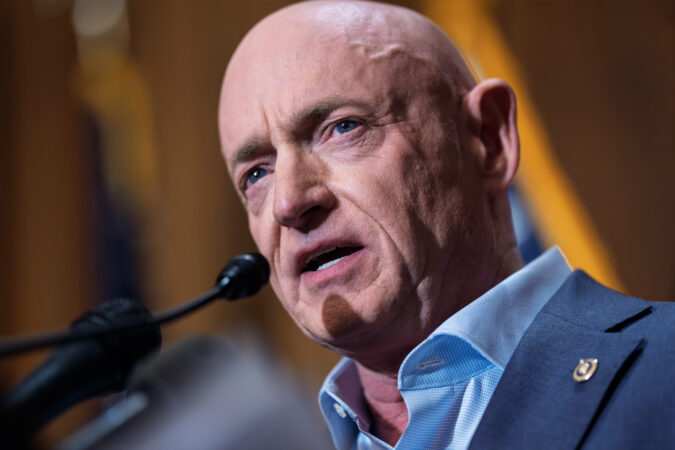
    WASHINGTON — Defense Secretary Pete Hegseth on Monday announced that he is issuing a letter of censure to Democratic Sen. Mark Kelly of Arizona over the lawmaker’s participation in a video that called on troops to resist unlawful orders.

    Hegseth said that the censure was “a necessary process step” to proceedings that could result in a demotion from Kelly’s retired rank of captain in the U.S. Navy. Kelly’s office had no immediate comment.

    The move comes more than a month after Kelly participated in a video with five other Democratic lawmakers in which they called on troops to defy “illegal orders.” President Donald Trump accused the lawmakers of sedition “punishable by DEATH” in a social media post days later. Senate Democratic leader Chuck Schumer of New York called Hegseth’s action against Kelly “a despicable act of political retribution.”

    “Mark Kelly is a hero and a patriot committed to serving the American people,” Schumer said on social media. “Pete Hegseth is a lap dog committed to serving one man – Donald Trump.”

    In November, Kelly and the other lawmakers — all veterans of the armed services and intelligence community — called on U.S. military members to uphold the Constitution and defy “illegal orders.”

    The 90-second video was first posted from Sen. Elissa Slotkin’s X account. In it, the six lawmakers — Slotkin, Kelly and Reps. Jason Crow, Chris Deluzio, Maggie Goodlander and Chrissy Houlahan — speak directly to U.S. service members, whom Slotkin acknowledges are “under enormous stress and pressure right now.”

    The Pentagon announced that it began an investigation of Kelly late in November while citing a federal law that allows retired service members to be recalled to active duty on orders of the defense secretary for possible court martial or other measures.

    While all six lawmakers served in the military or the intelligence community, Hegseth made clear in previous remarks that Kelly was the only one facing investigation because he is the only one of the lawmakers who formally retired from the military and is still under the Pentagon’s jurisdiction.

    Kelly said that the investigation was part of an effort to silence dissent within the military.

    “This is just about sending a message to retired service members, active duty service members, government employees — do not speak out against this president or there will be consequences,” Kelly told reporters in mid-December.

    In his post Monday, Hegseth charged that Kelly’s remarks in the video and afterward violated the Uniform Code of Military Justice provisions against conduct unbecoming an officer and violating good order and discipline.

    Kelly, along with some of the other Democrats in the initial video, have also sent out fundraising messages based off the Republican president’s reaction to their comments, efforts that have gone toward filling their own campaign coffers and further elevating their national-level profiles.

    In recent months, Kelly — whose name has frequently been mentioned as a potential 2028 Democratic presidential contender — has made several trips to South Carolina, traditionally an early primary state that kicked off its party’s nominating calendar in 2024. Appearing with his wife, former Rep. Gabby Giffords, at events calling for stricter gun control measures, Kelly met during those trips with local lawmakers, stakeholders whose early support can be critical as national-level hopefuls attempt to make inroads in the critical state.

    Hegseth said Monday that “Captain Kelly’s status as a sitting United States Senator does not exempt him from accountability, and further violations could result in further action.”

    Todd Huntley, a retired Navy captain and judge advocate general, said that this is a “novel” situation that raises legal questions.

    One issue, according to Huntley, is whether Kelly’s comments fall under the constitutional protections of the speech or debate clause.

    The clause is intended to protect members of Congress from questioning about official legislative acts, and a 1968 Supreme Court decision wrote that the provision’s intent was “to prevent legislative intimidation by and accountability to the other branches of government.”

    Huntley also said that while the type of process Hegseth is using here, known as a retirement grade determination, is fairly routine, “as far as I know, they’ve always been based on conduct during the individual’s active duty service, even if it only came to light after retirement.”

    “So, I don’t know if conduct totally after retirement would fit the requirement for such a determination,” he added.

    According to Hegseth, Kelly now has 30 days to submit a response to the proceedings that will decide if he is demoted. The decision will be made within 45 days, Hegseth’s post added.

  • A man who broke windows at JD Vance’s home in Ohio has been detained, the Secret Service said

    A man who broke windows at JD Vance’s home in Ohio has been detained, the Secret Service said

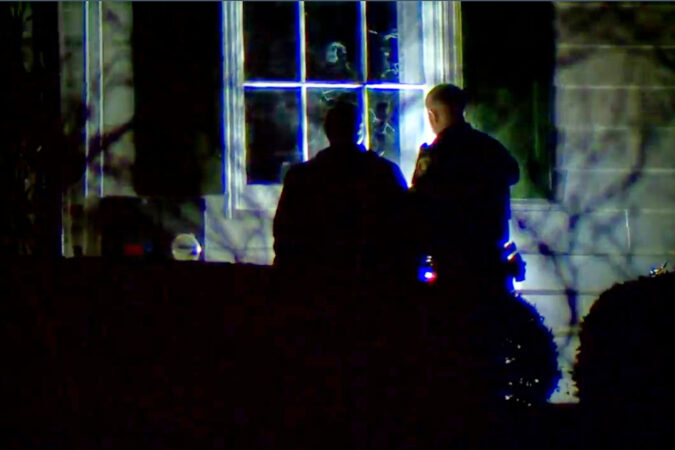
    A man who broke windows at Vice President JD Vance’s Ohio home and caused other property damage was detained early Monday, the U.S. Secret Service said.

    The man was detained shortly after midnight by Secret Service agents assigned to Vance’s home, east of downtown Cincinnati, agency spokesperson Anthony Guglielmi said in a statement emailed to The Associated Press. He has not been named.

    The Secret Service heard a loud noise at the home around midnight and found a person who had broken a window with a hammer and was trying to get into the house, according to two law enforcement officials who were not publicly authorized to discuss the investigation into what happened and spoke on the condition of anonymity. The man had also vandalized a Secret Service vehicle on his way up the home’s driveway, one of the officials said.

    The home, in the Walnut Hills neighborhood, on hills overlooking the city, was unoccupied at the time, and Vance and his family were not in Ohio, Guglielmi said.

    The Secret Service is coordinating with the Cincinnati Police Department and the U.S. attorney’s office as charging decisions are reviewed, he said.

    Vance, a Republican, was a U.S. senator representing Ohio before becoming vice president. His office said his family was already back in Washington and directed questions to the Secret Service.

    Walnut Hills is one of the city’s oldest neighborhoods and is home to historic sites, including the Harriet Beecher Stowe House.

  • Tim Walz, Democrats’ 2024 candidate for vice president, ends his bid for a third term as Minnesota governor

    Tim Walz, Democrats’ 2024 candidate for vice president, ends his bid for a third term as Minnesota governor

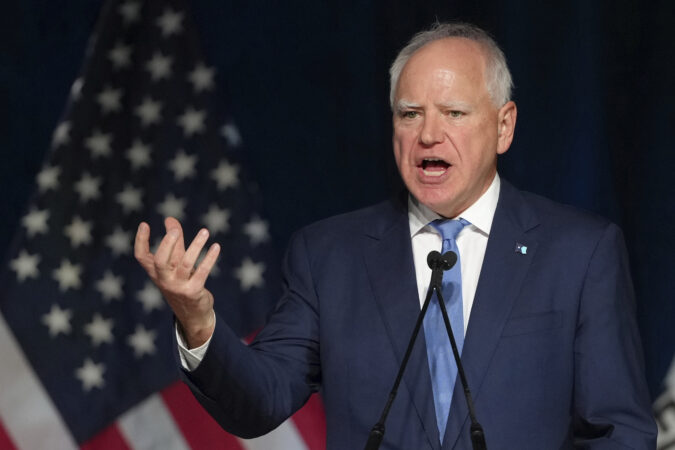
    ST PAUL, Minn. — Minnesota Gov. Tim Walz, Democrats’ 2024 candidate for vice president, is ending his bid for a third term as governor amid President Donald Trump’s relentless focus on a fraud investigation into child care programs in the state.

    Less than four months after announcing his reelection campaign, Walz said Monday that he could no longer devote the energy necessary to win another term, even as he expressed confidence that he could win.

    Walz said in a statement Monday that he “can’t give a political campaign my all” after what he described as an “extraordinarily difficult year for our state.”

    “Donald Trump and his allies – in Washington, in St. Paul, and online – want to make our state a colder, meaner place,” Walz said, referring to the Trump administration withholding funds for the programs. “They want to poison our people against each other by attacking our neighbors. And, ultimately, they want to take away much of what makes Minnesota the best place in America to raise a family.”

    Democratic Sen. Amy Klobuchar of Minnesota is considering running for governor, according to a person close to her. The person, who wasn’t authorized to speak publicly and spoke on the condition of anonymity, said Klobuchar has not made a final decision.

    Around a dozen Republicans are already in the race. They include MyPillow founder and chief executive Mike Lindell, an election denier who is close to Trump. They also include Minnesota House Speaker Lisa Demuth, of Cold Spring; Dr. Scott Jensen, a former state senator from Chaska who was the party’s 2022 candidate; state Rep. Kristin Robbins, of Maple Grove; defense lawyer and former federal prosecutor Chris Madel; former executive Kendall Qualls; and former Minnesota GOP Chair David Hann.

    Walz is a military veteran and union supporter who helped enact an ambitious Democratic agenda for his state, including sweeping protections for abortion rights and generous aid to families.

    Vice President Kamala Harris picked Walz as her running mate after his attack line against Trump and his running mate, then-Ohio Sen. JD Vance — “These guys are just weird” — spread widely.

    Walz had been building up his national profile since his and Harris’ defeat in November. He was a sharp critic of Trump as he toured early caucus and primary states. In May, he called on Democrats in South Carolina to stand up to the Republican president, saying, “Maybe it’s time for us to be a little meaner.”

  • Cleveland Browns fire head coach Kevin Stefanski after six seasons

    Cleveland Browns fire head coach Kevin Stefanski after six seasons

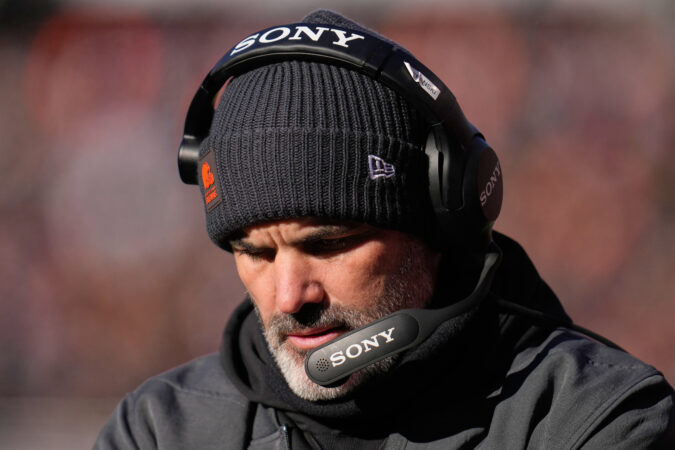
    BEREA, Ohio — The Cleveland Browns have fired coach Kevin Stefanski after six seasons.

    Stefanski, a Wayne native who played quarterback at St. Joseph’s Prep and got his start coaching at his alma mater, Penn, is the fourth NFL coach fired this season. He joins Tennessee’s Brian Callahan, the New York Giants’ Brian Daboll and Atlanta’s Raheem Morris.

    The Browns won their final two games to finish 5-12, including a 20-18 victory over the Cincinnati Bengals on Sunday.

    The 43-year-old Stefanski is a two-time AP NFL Coach of the Year. He led Cleveland to playoff appearances in 2020 and 2023. The Browns’ 48-37 victory over Pittsburgh in an AFC wild-card round game was the franchise’s first since 1993.

    Ironically, Stefanski was not on the Browns’ sideline for that game after he tested positive for COVID-19. He watched the game from the basement at his house.

    Stefanski is the sixth coach fired since owners Jimmy and Dee Haslam bought the franchise in 2012. The five coaches hired by the Haslams have a 73-139-1 regular-season record since 2013, the second-worst mark in the NFL.

  • Maduro appears in court, says ‘I was captured’

    Maduro appears in court, says ‘I was captured’

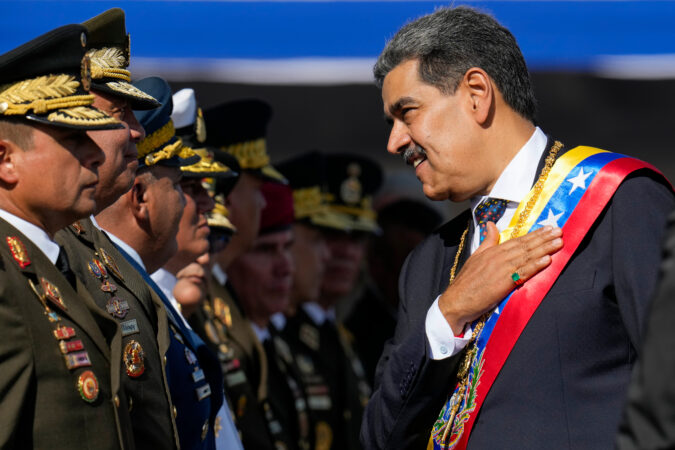
    NEW YORK — Deposed Venezuelan leader Nicolas Maduro declared himself “innocent” and a “decent man” as he pleaded not guilty to federal drug trafficking charges in a U.S. courtroom on Monday.

    “I’m innocent. I am not guilty. I am a decent man, the president of my country,” Maduro told a judge.

    Maduro was making his first appearance in an American courtroom Monday on the narco-terrorism charges the Trump administration used to justify capturing him and bringing him to New York.

    Maduro, wearing a blue jail uniform, and his wife were led into court around noon for a brief, but required, legal proceeding that will likely kick off a prolonged legal fight over whether he can be put on trial in the U.S. Both put on headsets to hear the English-language proceeding as it was translated into Spanish.

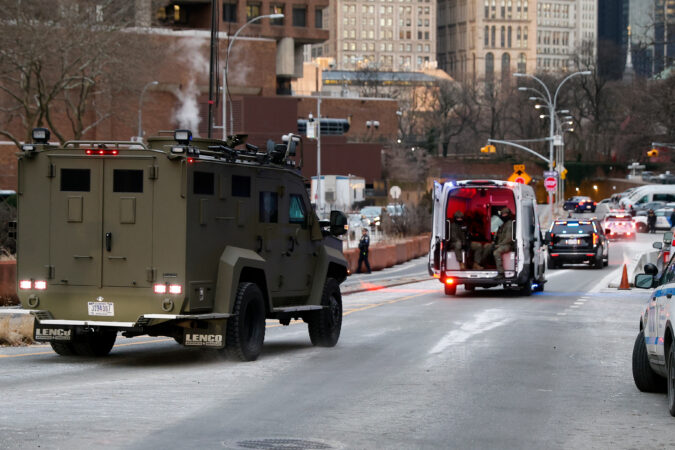
    The couple were transported under armed guard early Monday from the Brooklyn jail where they’ve been detained to a Manhattan courthouse.

    The trip was swift. A motorcade carrying Maduro left the jail around 7:15 a.m. and made its way to a nearby athletic field, where Maduro slowly made his way to a waiting helicopter. The chopper flew across New York harbor and landed at a Manhattan heliport, where Maduro, limping, was loaded into an armored vehicle.

    A few minutes later, the law enforcement caravan was inside a garage at the courthouse complex, just around the corner from the one where Donald Trump was convicted in 2024 of falsifying business records. Across the street from the courthouse, the police separated a small but growing group of protesters from about a dozen pro-intervention demonstrators, including one man who pulled a Venezuelan flag away from those protesting the U.S. action.

    As a criminal defendant in the U.S. legal system, Maduro will have the same rights as any other person accused of a crime — including the right to a trial by a jury of regular New Yorkers. But he’ll also be nearly — but not quite — unique.

    Maduro’s lawyers are expected to contest the legality of his arrest, arguing that he is immune from prosecution as a sovereign head of state.

    Panamanian strongman Manuel Noriega unsuccessfully tried the same defense after the U.S. captured him in a similar military invasion in 1990. But the U.S. doesn’t recognize Maduro as Venezuela’s legitimate head of state — particularly after a much-disputed 2024 reelection.

    Venezuela’s new interim president, Delcy Rodríguez, has demanded that the U.S. return Maduro, who long denied any involvement in drug trafficking — although late Sunday she also struck a more conciliatory tone in a social media post, inviting collaboration with President Trump and “respectful relations” with the U.S.

    Before his capture, Maduro and his allies claimed U.S. hostility was motivated by lust for Venezuela’s rich oil and mineral resources.

    The U.S. seized Maduro and his wife in a military operation Saturday, capturing them in their home on a military base. Trump said the U.S. would “run” Venezuela temporarily, but Secretary of State Marco Rubio said Sunday that it would not govern the country day to day other than enforcing an existing ” oil quarantine.”

    Trump suggested Sunday that he wants to extend American power farther in the Western Hemisphere.

    Speaking aboard Air Force One, he called Colombia’s president, Gustavo Petro, “a sick man who likes making cocaine and selling it to the United States. And he’s not going to be doing it very long.”

    He called on Venezuela’s Rodriguez to provide “total access” to her country, or else face consequences.

    Trump has suggested that removing Maduro would enable more oil to flow out of Venezuela, but oil prices rose a bit more than 1% in Monday morning trading to roughly $58 a barrel. There are uncertainties about how fast oil production can be ramped up in Venezuela after years of neglect and needed investments, as well as questions about governance and oversight of the sector.

    A 25-page indictment made public Saturday accuses Maduro and others of working with drug cartels to facilitate the shipment of thousands of tons of cocaine into the U.S. They could face life in prison if convicted.

    Maduro has retained Barry J. Pollack, a Washington, D.C.-based lawyer known for securing WikiLeaks founder Julian Assange’s release from prison and winning an acquittal for former Enron accountant Michael Krautz.

    Pollack, a partner at the law firm Harris, St. Laurent & Wechsler, negotiated Assange’s 2024 plea agreement — allowing him to go free immediately after he pleaded guilty to an Espionage Act charge for obtaining and publishing U.S. military secrets.

    Krautz, acquitted of federal fraud charges in 2006 after a hung jury the year before, was one of the only Enron executives whose case ended in a not-guilty verdict. Nearly two dozen other executives were convicted of wrongdoing in connection with the energy trading giant’s collapse.

    Maduro and his wife, Cilia Flores, have been under U.S. sanctions for years, making it illegal for any American to take money from them without first securing a license from the Treasury Department.

    While the indictment against Maduro says Venezuelan officials worked directly with the Tren de Aragua gang, a U.S. intelligence assessment published in April, drawing on input from the intelligence community’s 18 agencies, found no coordination between Tren de Aragua and the Venezuelan government.

    Maduro, his wife, and his son — who remains free — are charged along with Venezuela’s interior and justice minister, a former interior and justice minister, and Hector Rusthenford Guerrero Flores, an alleged Tren de Aragua leader who has been criminally charged in another case and remains at large.

    Among other things, the indictment accuses Maduro and his wife of ordering kidnappings, beatings, and murders of those who owed them drug money or undermined their drug trafficking operation. That included a local drug boss’ killing in Caracas, the indictment said.

    Maduro’s wife is also accused of accepting hundreds of thousands of dollars in bribes in 2007 to arrange a meeting between “a large-scale drug trafficker” and the director of Venezuela’s National Anti-Drug Office, resulting in additional monthly bribes, with some of the money going to Maduro’s wife, according to the indictment.

  • Maduro’s case will revive a legal debate over immunity for foreign leaders tested in Noriega trial

    Maduro’s case will revive a legal debate over immunity for foreign leaders tested in Noriega trial

    MIAMI — When deposed Venezuelan leader Nicolás Maduro makes his first appearance in a New York courtroom Monday to face U.S. drug charges, he will likely follow the path taken by another Latin American strongman toppled by U.S. forces: Panama’s Manuel Noriega.

    Maduro was captured Saturday, 36 years to the day after Noriega was removed by American forces. And as was the case with the Panamanian leader, lawyers for Maduro are expected to contest the legality of his arrest, arguing that he is immune from prosecution as a sovereign head of foreign state, which is a bedrock principle of international and U.S. law.

    It’s an argument that is unlikely to succeed and was largely settled as a matter of law in Noriega’s trial, legal experts said. Although Trump’s ordering of the operation in Venezuela raises constitutional concerns because it wasn’t authorized by Congress, now that Maduro is in the U.S., courts will likely bless his prosecution because, as was the case with Noriega, the U.S. doesn’t recognize him as Venezuela’s legitimate leader.

    “There’s no claim to sovereign immunity if we don’t recognize him as head of state,” said Dick Gregorie, a retired federal prosecutor who indicted Noriega and later went on to investigate corruption inside Maduro’s government. “Several U.S. administrations, both Republican and Democrat, have called his election fraudulent and withheld U.S. recognition. Sadly, for Maduro, it means he’s stuck with it.”

    Noriega died in 2017 after nearly three decades in prison, first in the U.S., then France, and finally Panama. In his first trial, his lawyers argued that his arrest as a result of a U.S. invasion was so “shocking to the conscience” that it rendered the government’s case an illegal violation of his due process rights.

    Justice Department opinion allows ‘forcible abductions’ abroad

    In ordering Noriega’s removal, the White House relied on a 1989 legal opinion by then-Assistant Attorney General Bill Barr, issued six months before the invasion. That opinion said the U.N. Charter’s prohibition on the use of force in international relations does not bar the U.S. from carrying out “forcible abductions” abroad to enforce domestic laws.

    Supreme Court decisions dating to the 1800s also have upheld America’s jurisdiction to prosecute foreigners regardless of whether their presence in the United States was lawfully secured.

    Barr’s opinion is likely to feature in Maduro’s prosecution as well, experts said.

    Drawing parallels to the Noriega case, Barr on Sunday pushed aside criticisms that the U.S. was pursuing a change of government in Venezuela instead of enforcing domestic laws. As attorney general during the first Trump administration, Barr oversaw Maduro’s indictment.

    “Going after them and dismantling them inherently involves regime change,” Barr said in a Fox News Sunday interview. “The object here is not just to get Maduro. We indicted a whole slew of his lieutenants. It’s to clean that place out of this criminal organization.”

    Key differences between Noriega and Maduro

    There are differences between the two cases.

    Noriega never held the title of president during his six-year de facto rule, leaving a string of puppets to fill that role. By contrast, Maduro claims to have won a popular mandate three times. Although the results of his 2024 reelection are disputed, a number of governments — China, Russia, and Egypt among them — recognized his victory.

    “Before you ever get to guilt or innocence, there are serious questions about whether a U.S. court can proceed at all,” said David Oscar Markus, a defense lawyer in Miami who has handled several high-profile criminal cases, including some involving Venezuela. ”Maduro has a much stronger sovereign immunity defense than did Noriega, who was not actually the sitting president of Panama at the time.”

    For U.S. courts, however, the only opinion that matters is that of the State Department, which considers Maduro a fugitive and has for months been offering a $50 million reward for his arrest.

    The first Trump administration closed the U.S. Embassy in Caracas, the capital of Venezuela, and broke diplomatic relations with Maduro’s government in 2019 after he cruised to reelection by outlawing most rival candidates. The administration then recognized the opposition head of the National Assembly as the country’s legitimate leader.

    The Biden administration mostly stuck to that policy, allowing an opposition-appointed board to run Citgo, a subsidiary of Venezuela’s state-owned oil company, even as the U.S. engaged in direct talks with Maduro’s government that were aimed at paving the way for free elections.

    “Courts are so deferential to the executive in matters of foreign policy that I find it difficult for the judiciary to engage in this sort of hairsplitting,” said Clark Neily, a senior vice president for criminal justice at the Cato Institute in Washington.

    U.S. sanctions are a hurdle for Maduro’s defense

    Another challenge that Maduro faces is hiring a lawyer. He and his wife, Cilia Flores, who also was captured, have been under U.S. sanctions for years, making it illegal for any American to take money from them without first securing a license from the Treasury Department.

    The government in Caracas now led by Maduro’s vice president, Delcy Rodríguez, may want to foot the bill, but it is similarly restricted from doing business in the United States.

    The U.S. has indicted other foreign leaders on corruption and drug trafficking charges while in office. Among the most noteworthy is Juan Orlando Hernández, former president of Honduras, who was convicted in 2024 for drug trafficking and weapons charges and sentenced to 45 years in prison.

    Trump pardoned Hernández in November, a move that drew criticism from even some Republicans who viewed it as undercutting the White House’s aggressive counternarcotics strategy centered against Maduro.

    The U.S. had requested Hernández’s extradition from Honduras a few weeks after he left office. After the arrest of Noriega, who had been a CIA asset before becoming a drug-running dictator, the Justice Department implemented a new policy requiring the attorney general to personally sign off on charging of any sitting foreign president, due to its implications for U.S. foreign policy.

    Maduro may have a slightly stronger argument that he is entitled to a more limited form of immunity for official acts he undertook as at least a de facto leader, since that question would not turn on whether he is a head of state recognized by the U.S.

    But even that defense faces significant challenges, said Curtis Bradley, a University of Chicago Law School professor who previously served as a counselor of international law at the State Department.

    The indictment accuses Maduro and five other co-defendants, including Flores and his lawmaker son, of facilitating the shipment of thousands of tons of cocaine into the U.S. by providing law enforcement cover, logistical support, and partnering with “some of the most violent and prolific drug traffickers and narco-terrorists in the world.”

    “The government will argue that running a big narcotrafficking operation … should not count as an official act,” Bradley said.

  • Secret Service plans unprecedented staff surge with anxious eye on 2028

    Secret Service plans unprecedented staff surge with anxious eye on 2028

    The Secret Service has launched one of the most ambitious hiring efforts in its history, seeking to bring on thousands of agents and officers to ease strain on its overstretched workforce and prepare for multiple major events in 2028, including the presidential election and the Olympics.

    Service leaders say they want to hire 4,000 new employees by 2028 — a surge that law enforcement experts say has no clear precedent and reflects mounting concerns about staff burnout, a loss of experienced agents, and a relentless operational tempo. The added staff would make up for expected retirements and increase the size of the agency by about 20%, to more than 10,000 for the first time.

    Under a plan led by Deputy Director Matthew Quinn, the service aims to expand its special agent ranks from about 3,500 to about 5,000. Officials also want to add hundreds of officers to the Uniformed Division, for a total of about 2,000, and hire additional support staff. The figures have not been previously reported.

    The agency faces serious obstacles, however, including a shortage of qualified candidates; competition with other law enforcement agencies, especially in immigration enforcement; and bottlenecks in hiring and training, according to former service officials.

    A previous attempt to reach 10,000 employees over a roughly 10-year period ending in 2025 failed as the agency struggled with leadership turnover and disruptions from the coronavirus pandemic, among other issues. The service fell far short of recruitment and retention goals despite offering some of the biggest financial incentives of any federal law enforcement agency.

    “Our mindset is, we aren’t going to pay our way out of this,” said Quinn, a longtime Secret Service official who returned to the agency in May after several years in the private sector. “We can’t create enough incentives to negate the fact that we’re working our people very, very hard.”

    Quinn said he and Secret Service Director Sean Curran, the former head of President Donald Trump’s protective detail, have set out to make hiring a top priority, second only to protection. Senior administration officials have backed them, he said.

    “The protective mission has expanded,” he said. “Our numbers are low to meet those needs. We have to achieve what we said we were going to do 10 years ago. We’ve got to achieve it now.”

    Agency officials want to improve the quality of life in the service by shortening hours and reducing time on the road for officers and agents, many of whom spend months each year traveling on protective assignments.

    A larger staff could also allow the Secret Service to lean less on other law enforcement agencies for help securing high-profile events, giving it tighter control over venues. Poor communication with other agencies played a major role in the service’s most publicized failure in recent years, the attempted assassination of Trump in 2024 at a campaign rally in Butler, Pa.

    Some former officials questioned whether the service can achieve its goal.

    “They are going to have to eliminate all the management and red-tape barriers,” said Janet Napolitano, a former secretary of the Department of Homeland Security, the service’s parent agency. “They have to be able to swiftly recruit, maintain quality, and train that number of new agents. They’re going to have to turn headquarters into a hiring machine.”

    In 2024, Napolitano helped lead a bipartisan investigation of the Secret Service failures that led up the Butler assassination attempt, the first time a president or former president had been fired upon since 1981.

    Others said even more modest hiring targets could be a stretch on such a short timeline. Getting hired and trained for a job in the Secret Service is a long, strenuous, and heavily bureaucratic process, even by federal government standards. It involves multiple rounds of interviews, an intensive background check, and a notoriously tough polygraph test that officials say screens out some otherwise strong candidates.

    All of those steps place heavy demands on already understaffed field offices, according to a former Secret Service executive familiar with the process, who like others spoke on the condition of anonymity due to concerns about retaliation. The former executive said it was difficult to see how the agency could clear those hurdles while significantly expanding the workforce.

    “I hope they have success in getting those numbers as much as anybody, but it’s not realistic,” said another former senior official, who retired recently. “There’s no part of law enforcement that’s not struggling to hire.”

    Service leaders are adamant that they are not lowering standards to meet their goals.

    Some service officials had floated the possibility of curtailing or suspending the investigative portion of agent training, focusing only on the protective portion of the service’s mission, according to people familiar with the discussions. But Quinn said that was out of the question. “Investigations are the lifeblood of this organization,” he said.

    Instead, officials say, they have found ways to speed the process.

    In November, the service held the first of what officials expect to be multiple accelerated hiring events in which candidates complete assessments over several days, including a physical fitness test, a security interview, and a full polygraph.

    Historically, those assessments have taken months, according to Delisa Hall, the Secret Service’s chief human capital officer. About 350 candidates out of nearly 800 who attended the first event advanced to the next phase, she said.

    “It’s becoming evident that this may be our new normal to push applicants through,” she said.

    Agency officials say they have compressed the timeline for a job offer down to less than a year from the previous 18 months or more and hope to cut the timeline by roughly another four months. The long wait in the past has led some candidates to withdraw or take positions with other agencies that moved more quickly.

    Hall said the agency is recruiting from the military, college athletes, and law enforcement, and it’s staying more engaged with applicants to keep from losing people along the way.

    Getting new hires trained and field-ready on time could also present challenges as the Secret Service races to staff up.

    Officials say the service has secured 42 classes at the federal government’s main training center for law enforcement agents in Glynco, Ga., for the 2026 fiscal year. All the service’s new agents and officers must undergo basic criminal investigator training at the facility, known as FLETC, for about three months alongside recruits from other agencies.

    The campus is expected to remain packed for the foreseeable future with recruits from Immigration and Customs Enforcement and other immigration agencies hired as part of the Trump administration’s crackdown. Secret Service leaders say they have not had to compete for space. But several former officials said they worry the service’s recruits could take a back seat to training for ICE or the Border Patrol, both of which are hiring aggressively.

    The pressure on the agency will only mount as 2028 approaches. Some in the Secret Service have privately referred to the year as “Armageddon” because of the extraordinary security demands posed by the election and other major gatherings, including the Los Angeles Olympics, the first Summer Games in the United States since Atlanta in 1996.

    The workforce carrying out the mission could look dramatically different from the last election cycle. Many experienced agents have departed for other agencies or jobs in the private sector in recent years. Others from a large cohort hired in the years surrounding the Sept. 11, 2001, terrorist attacks may not stay for another breakneck campaign.

    “About a third of the workforce will be retirement-eligible before the start of 2028,” said Derek Mayer, a former deputy special agent in charge of the Secret Service’s Chicago field office. “That’s definitely a cause for concern. There were periods during hiring freezes in the 2010s when we didn’t hire anyone. When that happens, it does hurt, but it hurts five or 10 years later.”

    With Trump term-limited, both major parties are expected to have competitive primaries, raising the number of people the service will have to protect. The eventual nominees, their running mates and their spouses will receive full-time Secret Service details.

    The agency is also tasked with coordinating protection around the 2028 Summer Olympics and Paralympics, scheduled during the last two weeks of July and the last two weeks of August, respectively.

    “No matter what, I don’t care how successful we are,” Quinn said, “it’s still going to be a rough summer.”

  • In Venezuela raid, the specter of U.S. regime change returns to Latin America

    In Venezuela raid, the specter of U.S. regime change returns to Latin America

    The United States will “run” Venezuela — a country of 30 million people spread over hundreds of thousands of square miles — for the foreseeable future, President Donald Trump said Saturday just hours after the shocking, early morning U.S. military assault that captured its head of state and left Latin America and much of the rest of the world reeling.

    “We’re going to stay until … the proper transition takes place,” Trump said in a Florida news conference that glanced past details of how exactly that would be done.

    Two side benefits, he indicated, were that hundreds of thousands of Venezuelans who had fled to the United States would now go home and that the U.S. would now be able to take over the Venezuelan oil industry.

    On social media, Trump posted a photograph of shackled and blindfolded Venezuelan President Nicolás Maduro aboard the amphibious assault ship USS Iwo Jima. Maduro and his wife, both under U.S. indictment for drug trafficking and corruption, were snatched from a safe house by U.S. Special Operations forces in what senior administration officials insisted was not regime change but a law enforcement operation for which the military provided security.

    The Maduros, officials said, were read their rights by an FBI official on the ground before being whisked away in a helicopter. Asked if U.S. forces were prepared to kill Maduro if he resisted, Trump said, “It could have happened.”

    Trump made no distinction between law enforcement and overthrow, seeming to exult in what he called a “spectacular” operation, the likes of which had not been seen “since World War II … one of the most stunning, effective, and powerful displays of American military might and competence in American history.”

    “American dominance in the Western Hemisphere will never be questioned again,” Trump said. “Under the Trump administration we are reasserting American power in a very powerful way in our home region.”

    Asked who would run Venezuela, Trump said, “largely the people behind me,” pointing to Secretary of State Marco Rubio and Defense Secretary Pete Hegseth. “They’re going to be a team that’s working with Venezuela to make sure it’s working right,” he said.

    The vagueness of what happens next recalls the 2003 U.S. takeover of Iraq after the invasion ousting Saddam Hussein. Trump initially supported the Iraq operation, before saying he was against it as it stretched into a yearslong battle with disaffected Iraqis, gave rise to the Islamic State, and left thousands of American troops dead before the formal U.S. withdrawal in 2011.

    Trump made no commitment to María Corina Machado, the leader of the Venezuelan opposition and Nobel Peace Prize laureate, or to Edmundo González, whom the United States and others recognized as the legitimate president after an election last year that Maduro was widely believed to have stolen. Rubio, he said, had spoken by phone with Venezuelan Vice President Delcy Rodríguez, who “said ‘we’ll do whatever you need.’ I think she was quite gracious.”

    Trump said Rodríguez had been sworn in as interim president, although she told Venezuela’s state television Saturday night that “There is only one president here, and his name is Nicolás Maduro.”

    The 20th century was marked with numerous U.S. military interventions and occupations in Central America and the Caribbean, but Saturday’s assault on Venezuela was Washington’s first direct and openly acknowledged military strike in history against a South American government. A strategic gamble with an unpredictable outcome in a deeply divided region, it dramatically alters the security dynamic across the continent.

    In a flash, to both American foe and ally alike, the strikes have made the threat of U.S. military power indisputably real.

    “This is one of the most dramatic moments in modern South America history,” said Oliver Stuenkel, an analyst of international affairs at the Brazilian university, the Getulio Vargas Foundation. “The United States now represents the biggest security threat for the simple fact that it just militarily attacked a South American country with an unclear rationale.”

    Others were more direct. “For most Latin Americans, it’s insulting,” said a senior South American diplomat who spoke on the condition of anonymity so as not to draw Trump’s ire to his own country.

    “Of course we understand that the might of the United States is that it can intervene in any Latin American countries in any way they want,” the diplomat said. “But this will lead to complete destruction of any kind of international law, and to a growing antipathy toward the United States” throughout the Western Hemisphere.

    By Saturday morning, reaction to the strikes was already breaking along ideological lines in a region deeply polarized over security, crime, and corruption. Many on the right cheered the intervention, calling the removal of the self-described socialist Latin American strongman an advancement for liberty and a blow against drug trafficking.

    Argentine President Javier Milei, whose government has received a $20 billion currency swap from the United States to stabilize his country’s troubled economy, lauded the strikes. So did Ecuadorian President Daniel Noboa Azin, who has allied himself with Trump and offered to reopen a U.S. air base closed by one of his predecessors.

    “For all narco-Chavista criminals, your time has come,” Noboa wrote on social media, referring to Maduro’s predecessor, Hugo Chávez. “Your structure will end up falling across the entire continent.”

    Those on the left decried what they called an illegal act of military aggression. Few came directly to the defense of Maduro, who had been left increasingly isolated as his authoritarian and illiberal practices have bankrupted Venezuela, unleashed a refugee crisis, and given drug traffickers increasingly free rein. But they said the unilateral strikes and his removal set a new and dangerous precedent for the region.

    “The bombing of Venezuelan territory and the capture of its president crosses an unacceptable line,” Brazilian President Luiz Inácio Lula da Silva said. “The action recalls the worst moments of interference in Latin American and Caribbean politics and threatens the regional preservation as a zone of peace.”

    Some analysts, however, said it would be a mistake to interpret the strikes as the continuation of U.S. military actions in other Latin American nations, whether the CIA-sponsored overthrow of Guatemala’s government in 1954, the 1983 U.S. invasion of Grenada, or the 1989 capture of Panama leader Manuel Antonio Noriega following a 25,000-troop invasion.

    “This is not going to be a unified Latin American rejection of the action, like you may have seen in the ‘60s or the ‘70s,” when interventions were often influenced by the Cold War, said Eric Farnsworth, a senior associate at the Center for Strategic and International Studies think tank. “This is happening in a divided region, where nobody wanted this to happen, but where many recognized that there was no alternative to this unless you were ready to live with Maduro forever.”

    Several governments and leaders in the region already have an affinity with the Trump administration — ties the White House has sought to expand and exploit over the past year.

    The Trump administration has solidified relations with El Salvador’s president, Nayib Bukele, who accepted millions of dollars to imprison U.S. deportees and whom Trump called a “great friend” and “one hell of a president.” It has promised new trade and security cooperation with Ecuador and Paraguay, whose leaders are also Trump admirers. And it threw an economic lifeline to Milei, whom U.S. Treasury Secretary Scott Bessent called a “beacon” for South America.

    But few disagreed over the significance of the strikes. For decades, the United States has focused its military might elsewhere, in theaters much further away. The attacks have returned Washington to a policy of unabashed interventionism in the region.

    “The reaction in the rest of Latin America will be mixed between euphoria, anger, and fear,” said Brian Winter, an analyst with the Americas Society and Council of the Americas.

    Those in the region who condemn the strikes — most notably Lula, Mexican President Claudia Sheinbaum and Colombian President Gustavo Petro — will have to watch their backs. While Trump last year had what he called a productive meeting with Lula, he repeated at the news conference an earlier warning that Petro, whose country is a major producer of cocaine, had better “watch his ass.”

    In the case of Mexico, “the fact of the matter is that large swaths of the country are under the control of narco-terror organizations,” a senior administration official said, speaking on the condition of anonymity under rules imposed by the White House.

    “This is not a president that just talks,” the official said. “He will take action eventually. … I think the president always retains the option to take action against threats to our national security.’’

    While Petro has called Trump a “murderer” for U.S. military strikes against alleged drug boats in the Caribbean and eastern Pacific, it’s unlikely that either Lula or Sheinbaum will want to risk a lengthy diplomatic dispute with the White House, said Matias Spektor, a Brazilian political scientist at the Getulio Vargas Foundation.

    Referring to Cuba, which has depended on Venezuela for energy supplies and economic and security backing, Rubio said at the news conference Saturday, “If I lived in Havana now and I was in the government, I’d be concerned.” Venezuelan oil, he said, would not be allowed to go there.

    Since he began ratcheting up public threats against Maduro last summer, Trump has offered an evolving list of charges to justify his removal through exile or force, from allowing China, Russia, and Iran to gain a toehold in the hemisphere, to illegal U.S. immigrants that he charged Maduro had released from Venezuelan prisons and “insane asylums,” while asserting Venezuelan “terrorist” drug gangs were engaged in “armed conflict” with the United States.

    Most recently, he has charged that Venezuela “stole” oil and land belonging to the United States when it, like many other countries, nationalized its petroleum resources decades ago.

    In his news conference, Trump said he now plans to take back those assets. Asked how long he planned to run Venezuela, Trump said, “I’d like to do it quickly, but it takes a period of time.”