Category: Wires

  • Rubio takes on most challenging role yet: Viceroy of Venezuela

    Rubio takes on most challenging role yet: Viceroy of Venezuela

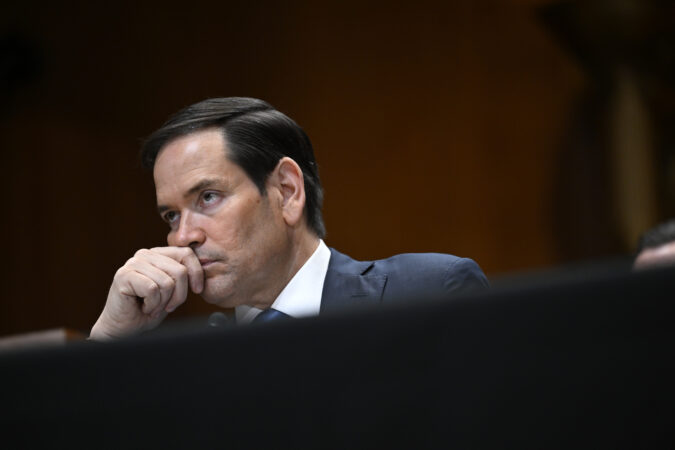
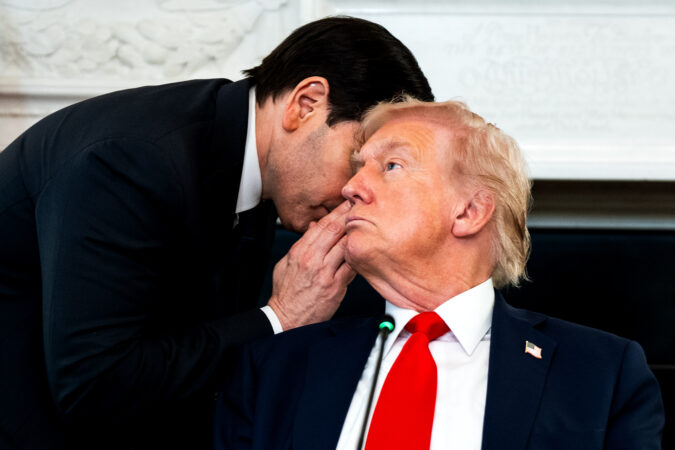
    Marco Rubio has held many titles during Donald Trump’s presidency. He may have just acquired his most challenging one yet: Viceroy of Venezuela.

    The secretary of state, national security adviser, acting archivist, and administrator of the now-defunct U.S. Agency for International Development was central to masterminding the ouster of Venezuelan President Nicolás Maduro on Saturday, officials familiar with the planning said.

    But with no immediate successor to govern the country of roughly 29 million, Trump is leaning on Rubio to help “run” Venezuela, divvy up its oil assets and usher in a new government, a fraught and daunting task for someone with so many other responsibilities.

    On Sunday news shows, Rubio appeared to back off Trump’s assertions that the U.S. was running Venezuela, insisting instead that Washington will use control of the South American country’s oil industry to force policy changes: “We expect that it’s going to lead to results here.”

    “We’re hopeful, hopeful, that it does positive results for the people for Venezuela,” Rubio told ABC’s This Week. “But, ultimately, most importantly, in the national interest of the United States.”

    Asked about Trump suggesting that Rubio would be among the U.S. officials helping to run Venezuela, Rubio offered no details but said, “I’m obviously very intricately involved in the policy” going forward.

    He said of Venezuela’s interim leader, former vice president Delcy Rodríguez: “We don’t believe this regime in place is legitimate” because the country never held free and fair elections.

    “The task in front of him is stupefying,” said a senior U.S. official, noting the dizzying array of policy decisions related to energy, elections, sanctions, and security that await. This person, like others interviewed for this article, spoke on the condition of anonymity to respond freely.

    The moment marks the realization of a long-held goal for Rubio, who has voiced his criticisms of Maduro and desire for change in Venezuela for well over a decade. Those who have worked closely with Rubio, whose parents left Cuba several years before the Communist takeover in 1959, say the issues of the region are close to his heart.

    “Marco’s parents’ experience … is hardwired in him,” said Cesar Conda, a Republican strategist who worked as the former senator’s chief of staff between 2011 and 2014.

    U.S. officials say Rubio will play an outsize role in guiding U.S. policy as the Trump administration attempts to stabilize Venezuela.

    His Spanish proficiency and familiarity with Latin American leaders and the Venezuelan opposition make him a natural point man for Trump, said another senior U.S. official. But this person emphasized that the administration will need to appoint a full-time envoy to assist Rubio given the vast scope of decisions and responsibilities inherent in such a task.

    Trump, speaking to reporters after the operation, was vague when addressing questions about whether his administration is capable of running the Latin American country, saying “the people that are standing right behind me” will do so for a “period of time.”

    The president hailed Rubio’s initial talks with Maduro’s vice president, Rodríguez.

    “He just had a conversation with her, and she’s essentially willing to do what we think is necessary to make Venezuela great again,” Trump said. Shortly after his comments, Rodríguez contradicted Trump’s plans for her country, saying Venezuela “will never return to being the colony of another empire.”

    The U.S. capture of the sweat-pant-clad Maduro not only fulfills a long-held goal of Rubio’s but also represents a bureaucratic victory for him in an administration that includes ardent skeptics of regime change, in particular Vice President JD Vance.

    “Many people were skeptical that some kind of extraction operation could be carried out without a hitch,” said Geoff Ramsey, a nonresident senior fellow at the Atlantic Council. “He will see this as a resounding success for his foreign policy strategy.”

    Justin Logan, director of defense and foreign policy studies at the Cato Institute, said that while the removal of Maduro alone was unlikely to satisfy political exiles, it could help the Trump administration avoid an Iraq- or Afghanistan-style quagmire that hurts Republicans at the next election.

    “The only way it’s a mass political issue is if it gets bigger and costlier,” said Logan. “As long as the blood and treasure costs are this low, you can pretty much do whatever you want.”

    Besides navigating the treacherous minefield of nation-building that lies ahead, Rubio will also have to rebuild trust among U.S. lawmakers, many of whom have accused him of lying to Congress when he said the Trump administration would seek congressional approval before taking military action against Venezuela.

    “Secretaries Rubio and [Pete] Hegseth looked every Senator in the eye a few weeks ago and said this wasn’t about regime change. I didn’t trust them then and we see now that they blatantly lied to Congress,” said Sen. Andy Kim (D., N.J.).

    In an interview with the Washington Post, Rubio denied that he lied and said he promised to get congressional approval only if the United States “was going to conduct military strikes for military purposes.”

    “This was not that. This was a law enforcement operation,” Rubio said, referring to the indictment against Maduro in the Southern District of New York on drug charges.

    When pressed that U.S. forces bombing Venezuela, seizing its leader, and claiming to “run” the country would be widely interpreted as a military operation, Rubio did not relent, saying “the mission last night was in support of the Department of Justice.”

    The argument failed to move some experts. Jennifer Kavanagh, director of military analysis at Defense Priorities, said that the law enforcement justification was a “convenient” excuse for the administration’s decision not to notify Congress.

    The operation to capture Maduro “was extremely massive and complex,” Kavanagh added. “It doesn’t sound like a law enforcement operation to me.”

    Before joining the State Department, Rubio had long indicated that he supported using U.S. military force to oust Maduro, suggesting in a Spanish language interview in 2018 that there was a “strong argument” that the United States should do so.

    The next year, during renewed tension with Maduro, Rubio posted photographs to social media of deposed foreign leaders, including Libya’s Moammar Gaddafi shortly before he was executed by rebel forces in 2011.

    Though Trump had entertained the idea of talks with Maduro early last year, including those brokered in the early part of his term by envoy Richard Grenell that saw several detained U.S. citizens released, people close to the administration say that his instincts largely aligned with Rubio’s harder approach.

    “Rubio and the president are working hand in glove on this,” and the two of them “were really running this thing,” said one individual close to the Trump administration who has known Rubio for many years.

    During a news conference on Saturday, Rubio implied that Cuba could face similar U.S. military action. “If I lived in Havana, and I was in the government, I’d be concerned, at least a little bit,” he said in response to a reporter’s question.

    Though former officials and analysts said they wouldn’t expect imminent military action against Cuba, it was likely that economic pressure would increase with Maduro removed from Venezuela.

    “I presume that one of the first demands that we would have as the United States with whoever is running things in Venezuela is that any support for Cuba will stop on the theory that that will then destabilize that regime and lead to a better outcome,” said Kevin Whitaker, who served as U.S. ambassador to Colombia during the first Trump administration.

    Exactly who is running things in Venezuela now is uncertain. Some Latin America experts said that the United States was probably underestimating the challenge of governing Venezuela with a small U.S. footprint.

    “Credible estimates of the number of boots on the ground required range from tens of thousands to well into the hundreds of thousands,” said Adam Isacson, a scholar at the Washington Office on Latin America. “In Panama in 1989, the occupying force was 27,000, and Venezuela is 12 times the size and 6.5 times the population — with a much broader array of armed and criminal groups.”

    “So it is reasonable to expect the 15,000 troops currently deployed in the region to multiply by a factor of well over five, at the most conservative estimate,” Isacson added.

    By leaving Maduro’s vice president, Rodríguez, in place, the Trump administration may be trying to avoid a situation like the one in Iraq, where the government and military were almost completely purged, because that was a “catastrophe,” said Whitaker.

    A former Senate staffer who remains in touch with Rubio said that they did not think U.S. officials would be performing a formal occupation like Paul Bremer and the Coalition Provisional Authority had done in Iraq.

    “We’re going to tell them: ‘Hey, this is what you have to do in order for there not to be another strike,’” said the former staffer. “That’s what [Trump] sees as running the country.”

    John Feeley, a former senior State Department official and ambassador to Panama who worked on Latin America for decades, said it appears the administration is hoping initially to exercise influence over Venezuela through Rodríguez, whom he described as an “ideological communist” who was at “the heart of chavismo.”

    So far, Feeley said if Rodríguez is engaging behind the scenes, “she’s negotiating with Trump to save her skin.” And it’s unclear to what extent she can sway the rest of the military and political leadership.

    “The Trump administration’s hope is that after witnessing the events of today, all of those Venezuelan military leaders will be too scared to do anything other than follow Delcy’s orders,” he said. “But without boots on the ground, this is just noise.”

    Feeley said he’s been stunned by “the precision and professionalism” of what the public has been told about the military operation in Venezuela. But, he said, that “stands in stark contrast to the uncertainty and lack of clarity that we heard from the president and Secretary Rubio about the future of how Venezuela is going to be run.”

    Information from the Associated Press was used in this story.
  • International aid groups grapple with what Israel’s ban will mean for their work in Gaza

    International aid groups grapple with what Israel’s ban will mean for their work in Gaza

    TEL AVIV — Israel’s decision to revoke the licenses of more than three dozen humanitarian organizations last week has aid groups scrambling to grapple with what this means for their operations in Gaza and their ability to help tens of thousands of struggling Palestinians.

    The 37 groups represent some of the most prominent of the more than 100 independent nongovernmental organizations working in Gaza, alongside United Nations agencies. Those banned include Doctors Without Borders, the Norwegian Refugee Council, Oxfam, and Medical Aid for Palestinians.

    The groups do everything from providing tents and water to supporting clinics and medical facilities. The overall impact, however, remains unclear.

    The most immediate impact of the license revocation is that Israel will no longer allow the groups to bring supplies into the Gaza Strip or send international staffers into the territory. Israel says all suspended groups have to halt their operations by March 1.

    Some groups have already been barred from bringing in aid. The Norwegian Refugee Council, for example, said it has not been allowed to bring in supplies in 10 months, leaving it distributing tents and aid brought in by other groups.

    Israel says the banned groups make up only a small part of aid operations in Gaza.

    But aid officials say they fulfill crucial specific functions. In a joint statement Tuesday, the U.N. and leading NGOs said the organizations that are still licensed by Israel “are nowhere near the number required just to meet immediate and basic needs” in Gaza.

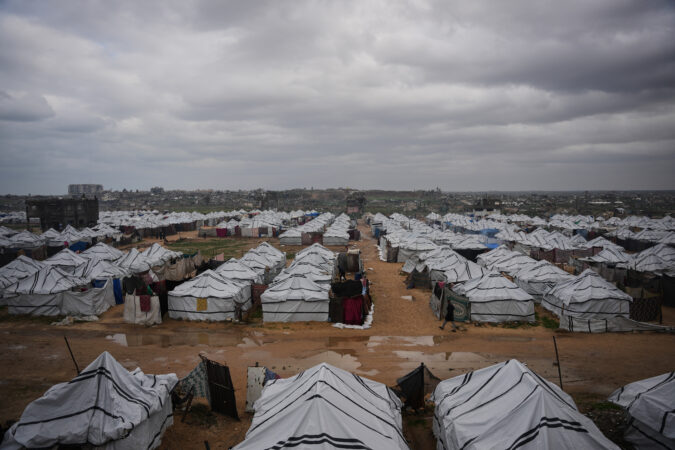
    The ban further strains aid operations even as Gaza’s over 2 million Palestinians still face a humanitarian crisis more than 12 weeks into a ceasefire. The U.N. says that although famine has been staved off, more than a quarter of families still eat only one meal a day and food prices remain out of reach for many; more than 1 million people need better tents as winter storms lash the territory.

    Why were their licenses revoked?

    Earlier this year, Israel introduced strict new registration requirements for aid agencies working in Gaza. Most notably, it required groups to provide the names and personal details of local and international staff and said it would ban groups for a long list of criticisms of Israel.

    The registration process is overseen by Israel’s Ministry for Diaspora Affairs and Combating Antisemitism, led by a far-right member of the ruling Likud party.

    Israel says the rules aim to prevent Hamas and other militants from infiltrating the groups, something it has said was happening throughout the 2-year-old war. The U.N., which leads the massive aid program in Gaza, and independent groups deny the allegations and Israeli claims of major diversion of aid supplies by Hamas.

    Aid organizations say they did not comply, in part, because they feared that handing over staff information could endanger them. More than 500 aid workers have been killed in Gaza during the war, according to the United Nations.

    Israel denies targeting aid workers. But the groups say Israel has been vague about how it would use the data.

    “Demanding staff lists as a condition for access to territory is an outrageous overreach,” Doctors Without Borders, known by its French acronym MSF, said Friday. It said Israeli officials had refused its attempts to find alternatives.

    A December report on MSF issued by an Israeli government team recommended rejection of the group’s license. It pointed primarily to statements by the group criticizing Israel, including referring to its campaign in Gaza as genocide and calling its monthslong ban on food entering the territory earlier this year as “a starvation tactic.” It said the statements violated neutrality and constituted “delegitimization of Israel.”

    The report also repeated claims that an MSF employee killed in by an Israeli airstrike in 2024 was an operative with the Islamic Jihad militant group. That, it said, suggested MSF “maintains connections with a terrorist group.”

    MSF on Friday denied the allegations, saying it would “never knowingly employ anyone involved in military activities.” It said that its statements cited by Israel simply described the destruction its teams witnessed in Gaza.

    “The fault lies with those committing these atrocities, not with those who speak of them,” it said.

    Aid groups have a week from Dec. 31 to appeal the process.

    Medical services could see biggest impact

    Independent NGOs play a major role in propping up Gaza’s health sector, devastated by two years of Israeli bombardment and restrictions on supplies.

    MSF said Israel’s decision would have a catastrophic impact on its work in Gaza, where it provides funding and international staff for six hospitals as well as running two field hospitals and eight primary health centers, clinics, and medical points. It also runs two of Gaza’s five stabilization centers helping children with severe malnutrition.

    Its teams treated 100,000 trauma cases, performed surgeries on 10,000 patients, and handled a third of Gaza’s births, the group says. It has 60 international staffers in the West Bank and Gaza and more than 1,200 local staff — most medical professionals.

    Since the ceasefire began in early October, MSF has brought in about 7% of the 2,239 tons of medical supplies that Israel has allowed into Gaza, according to a U.N. tracking dashboard. That makes it the largest provider of medical supplies after U.N. agencies and the Red Cross, according to the dashboard.

    Medecins du Monde, another group whose license is being halted, runs another four primary health clinics.

    Overburdened Palestinian staff

    Aid groups say the most immediate impact will likely be the inability to send international staff into Gaza.

    Foreign staff provide key technical expertise and emotional support for their Palestinian colleagues.

    “Having international presence in Gaza is a morale booster for our staff who are already feeling isolated,” said Shaina Low, communications adviser for the Norwegian Refugee Council, which is one of the main NGOs providing shelter supplies and fresh water to displaced people.

    NRC has roughly 30 international staff who rotate in and out of Gaza working alongside some 70 Palestinians.

    While any operations by the 37 groups in the West Bank will likely remain open, those with offices in east Jerusalem, which Israel considers its territory, might have to close.

    Halt on supplies

    Many of the 37 groups already had been blocked from bringing supplies into Gaza since March, said Bushra Khalidi, Oxfam’s policy lead for Israel and the occupied Palestinian territories.

    What changes with the formal license revocation is “that these practices are now formalized, giving Israel full impunity to restrict operations and shut out organizations it disagrees with,” she said.

    Some of the groups have turned to buying supplies within Gaza rather than bringing them in, but that is slower and more expensive, she said. Other groups dug into reserve stocks, pared down distribution, and had to work with broken or heavily repaired equipment because they couldn’t bring in new ones.

    Amed Khan, an American humanitarian philanthropist who has been privately donating medicine and emergency nutrition for children to Gaza, said the impact extends beyond the aid groups.

    He relies on NGOs to receive and distribute the supplies, but the fewer groups that Israel approves, the harder it is to find one.

    “It’s death by bureaucracy,” he said.

  • North Korea launches ballistic missiles toward sea ahead of South Korean leader’s visit to China

    North Korea launches ballistic missiles toward sea ahead of South Korean leader’s visit to China

    SEOUL, South Korea — North Korea launched multiple ballistic missiles toward its eastern waters Sunday, its neighbors said, just hours before South Korea’s president left for China for talks expected to cover North Korea’s nuclear program.

    South Korea’s Joint Chiefs of Staff said in a statement it detected several ballistic missile launches from North Korea’s capital region around 7:50 a.m. It said the missiles flew about 560 miles and that South Korea and U.S. authorities were analyzing details of the launches.

    South Korea’s Defense Ministry noted the launches violated U.N. Security Council resolutions that ban any ballistic activities by North Korea. It urged North Korea to cease provocative actions immediately and respond to South Korea’s push to restart talks and restore peace on the Korean Peninsula.

    Japanese Defense Minister Shinjiro Koizumi said that at least two missile launches by North Korea have been confirmed. “They are a serious problem, threatening the peace and security of our nation, the region, and the world,” Koizumi told reporters.

    The U.S. military said in a statement on social media that the missile launches did not “pose an immediate threat to U.S. personnel or territory, or to our allies.”

    “The United States remains committed to the defense of the U.S. homeland and our allies in the region,” the military said.

    North Korea ramps up weapons display

    The launches were the latest weapons demonstration by North Korea in recent weeks. Experts say North Korea is aiming to show off or review its achievements in the defense sector ahead of its upcoming ruling party congress, the first of its kind in five years. Observers are watching the Workers Party congress to see whether North Korea will set a new policy on the U.S. and resume long-stalled talks between the two countries.

    North Korea has been focusing on testing activities to enlarge its nuclear arsenal since its leader Kim Jong Un’s summitry with U.S. President Donald Trump fell apart in 2019. Kim has also boosted his diplomatic credentials by aligning with Russia over its war in Ukraine and tightening relations with China. Observers say Kim would believe his leverage has sharply increased to wrest concessions from Trump if they sit down for talks again.

    North Korea hasn’t announced when it will hold the congress, but South Korea’s spy service said it will likely occur in January or February.

    Launches comes before South Korean leader’s trip

    Sunday’s launches also came hours before South Korean President Lee Jae Myung departed for China for a summit with President Xi Jinping. During the four-day trip, Lee’s office said, he would request China, North Korea’s major ally and biggest trading partner, to take “a constructive role” in efforts to promote peace on the Korean Peninsula.

    South Korea and the U.S. have long asked China to exercise its influence on North Korea to persuade it to return to talks or give up its nuclear program. But there are questions on how much leverage China has on its socialist neighbor. China, together with Russia, has also repeatedly blocked the U.S.‘s and others’ attempts to toughen economic sanctions on North Korea in recent years.

    Later Sunday, South Korea convened an emergency national security council meeting to discuss the North Korean missile launches. The council reported details of the launches and unspecified South Korean steps to Lee, according to the presidential office.

    North Korea condemns U.S. operation in Venezuela

    The launches followed Saturday’s dramatic U.S. military operation that ousted Venezuelan leader Nicolás Maduro from power and brought him to the U.S. to face narco-terrorism conspiracy charges. It represented America’s most assertive action to achieve regime change in a country since the nation’s 2003 invasion of Iraq.

    North Korea’s Foreign Ministry on Sunday slammed the U.S. operation, saying it again shows “the rogue and brutal nature of the U.S.” A ministry statement said it denounces the U.S. act as “the most serious form of encroachment of sovereignty.”

    “Kim Jong Un may feel vindicated about his efforts to build a nuclear deterrent, as he likely did after Trump’s strikes on Iran,” said Leif-Eric Easley, professor of international studies at Ewha Womans University in Seoul. “However, leaders of hostile regimes will probably live with greater paranoia after seeing how quickly Maduro was extracted from his country to stand trial in the United States.”

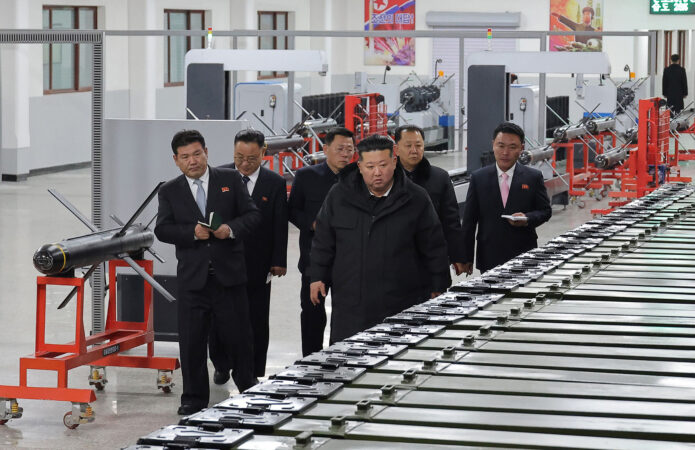
    The official Korean Central News Agency said Sunday Kim visited a weapons factory on Saturday to review multipurpose precision guided weapons produced there. KCNA cited Kim as ordering officials to expand the current production capacity by about 2.5 times.

    Last Sunday, North Korea test-fired what it called long-range strategic cruise missiles. On Dec. 25, North Korea released photos showing apparent progress in the construction of its first nuclear-powered submarine.

  • Venezuelans remain shell-shocked a day after U.S. captured Maduro

    Venezuelans remain shell-shocked a day after U.S. captured Maduro

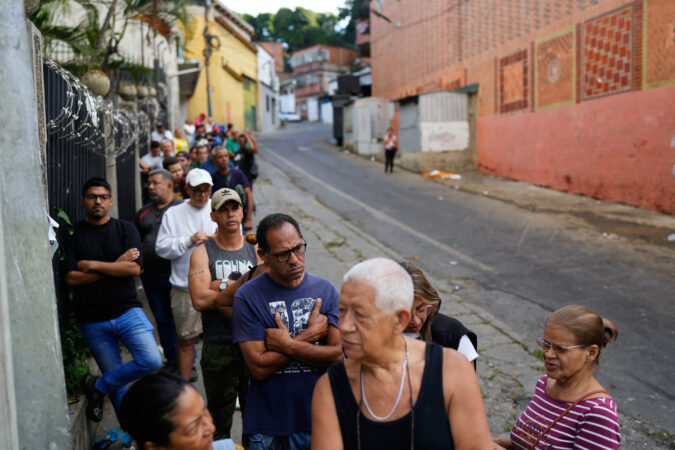
    CARACAS, Venezuela — Venezuelans on Sunday remained shell-shocked a day after President Nicolás Maduro was deposed and captured in a U.S. military operation, with an uncertain future ahead in the South American nation.

    A tense calm settled over the capital, Caracas, which was unusually quiet. Many stores, gas stations, and churches remained closed and people patiently lined up outside others, staring at their phones or into the distance.

    “People are still shaken,” said 77-year-old David Leal, who arrived to work as a parking attendant but realized he likely would not have customers. He pointed to the deserted street.

    While Maduro was in custody in New York, the officials who had surrounded him remained in power and demanded his release. Venezuela’s presidential palace was guarded by armed civilians and members of the military.

    U.S. President Donald Trump on Saturday asserted that his administration would “run” Venezuela with the help of Delcy Rodríguez, Maduro’s vice president and now the interim president after a high court’s order.

    But Secretary of State Marco Rubio on Sunday appeared to back off Trump’s assertion. In interviews with CBS and ABC, he insisted instead that Washington will use control of Venezuela’s oil industry to force policy changes. He said the government currently in place was illegitimate but a step toward where the U.S. wanted Venezuela to be.

    “We want to see Venezuela transition to be a place completely different than what it looks like today. But obviously, we don’t have the expectation that’s going to happen in the next 15 hours,” Rubio said. “There has to be a little realism here.”

    While Venezuelans in the U.S. and Latin America broke out in celebration or protest, there were no signs of celebration within the country. A number of government supporters rallied over the weekend, some burning U.S. flags and holding signs reading “gringo go home”.

    In a low-income neighborhood in eastern Caracas, construction worker Daniel Medalla sat on the steps outside a Catholic church and told a few parishioners that there would be no morning Mass.

    Medalla said he believed the streets remained mostly empty because people fear government repression if they dare celebrate.

    “We were longing for it,” Medalla, 66, said of Maduro’s exit.

    There are fresh memories of a government crackdown during 2024’s fraught elections, which Maduro was widely accused of stealing. Street protests left 28 people dead, 220 injured and at least 2,000 detained, according to official figures.

    In the coastal state of La Guaira, families with houses damaged in blasts during the overnight operation that captured Maduro and his wife were cleaning up debris.

    Wilman González, who was left with a black eye from a blast, picked through rubble on his floors, surrounded by broken furniture. One part of his apartment building was almost entirely blown off, leaving walls gaping.

    A number of people were killed by the U.S. strikes, though Venezuelan officials did not confirm how many.

    Among those killed was González’s aunt.

    “This is it, what we are left with: ruins,” he said.

    González spoke with anger at the wreckage but also at the compounding economic and political crises that Venezuela has endured for decades.

    “We are civilians, we are not with the government or anyone else,” he said.

  • Gunmen kill at least 30 villagers and abduct others during raid in northern Nigeria

    Gunmen kill at least 30 villagers and abduct others during raid in northern Nigeria

    MINNA, Nigeria — At least 30 villagers have been killed and several others are missing after gunmen raided a village in northern Nigeria’s Niger state, police said Sunday, the latest in a cycle of deadly violence in the conflict-hit region.

    The gunmen stormed the Kasuwan-Daji village in the Borgu local government area on Saturday evening and opened fire on residents. They also razed the local market and several houses, state police spokesperson Wasiu Abiodun said in a statement.

    At least two residents put the death toll at 37 and said it could be much higher as some people remained missing as of Sunday. Locals also said the security forces are yet to arrive in the area, contradicting a police claim that they have deployed officers to search for those kidnapped.

    Stephen Kabirat, a spokesperson for the Catholic Church of Kontagora Diocese where the attack happened, told local media that the gunmen killed more than 40 people and abducted several others, including children.

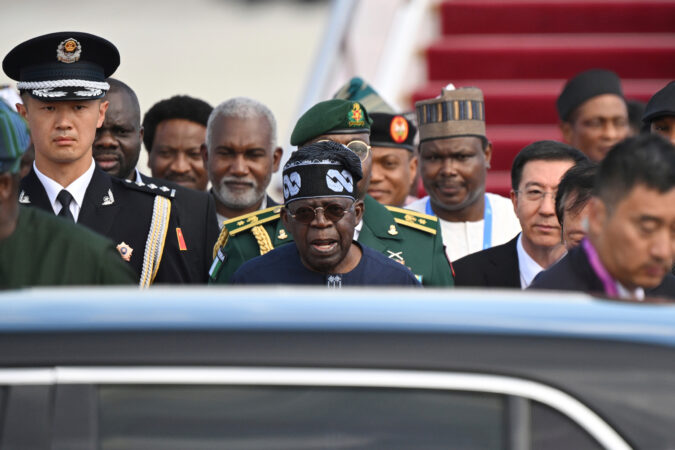
    Nigeria’s President Bola Tinubu condemned the attack and said he has directed security officials to hunt down the gunmen and rescue the hostages.

    “These terrorists have tested the resolve of our country and its people,” Tinubu said in a statement. “They must face the full consequences of their criminal actions. No matter who they are or what their intent is, they must be hunted down. In addition, those who aid, abet, or enable them will also be brought to justice.”

    The gunmen had been lurking around nearby communities for about a week before the attack, according to one resident who asked not to be named for fear of his safety. Now survivors are too afraid to go recover the bodies.

    “The bodies are there (in Kasuwan-Daji village). If we don’t see any security, how can we go there?” the resident said, adding that the attack lasted for up to three hours.

    Such attacks are common in Nigeria, Africa’s most populous country, where dozens of rogue gangs seeking control often target remote communities with limited security and government presence.

    The attack on Kasuwan-Daji village happened near the Papiri community, where more than 300 schoolchildren and their teachers were kidnapped from a Catholic school in November.

    The attackers who raided Kasuwan-Daji arrived from the National Park Forest along Kabe district, according to the police, pointing to a usual trend where abandoned expansive forest reserves act as hideouts for armed gangs.

  • Officers who defended the Capitol on Jan. 6 say their struggles linger, 5 years after the riot

    Officers who defended the Capitol on Jan. 6 say their struggles linger, 5 years after the riot

    WASHINGTON — As Donald Trump was inaugurated for the second time on Jan. 20, 2025, former Capitol Police Sgt. Aquilino Gonell put his phone on “do not disturb” and left it on his nightstand to take a break from the news.

    That evening, after Gonell spent time with family and took his dog on a long walk, his phone started to blow up with calls. He had messages from federal prosecutors, FBI agents, and the federal Bureau of Prisons — all letting him know that the new president had just pardoned about 1,500 people who had been convicted for their actions at the Capitol on Jan. 6, 2021. The pardons included rioters who had injured Gonell as he and other officers tried to protect the building.

    “They told me that people I testified against were being released from prison,” Gonell said. “And to be mindful.”

    Gonell was one of the officers who defended the central West Front entrance to the Capitol that day as Congress was certifying Democrat Joe Biden’s victory and hundreds of Trump’s supporters broke into the building, echoing his false claims of a stolen election. Gonell was dragged into the crowd by his shoulder straps as he tried to fight people off. He almost suffocated. In court, he testified about injuries to his shoulder and foot that still bother him to this day.

    “They have tried to erase what I did” with the pardons and other attempts to play down the violent attack, Gonell said. “I lost my career, my health, and I’ve been trying to get my life back.”

    Five years after the siege, Gonell and some of the other police officers who fought off the rioters are still coming to terms with what happened, especially after Trump was decisively elected to a second term last year and granted those pardons. Their struggle has been compounded by statements from the Republican president and some GOP lawmakers in Congress minimizing the violence that the officers encountered.

    “It’s been a difficult year,” said Officer Daniel Hodges, a Metropolitan Police Department officer who was also injured as he fought near Gonell in a tunnel on the West Front. Hodges was attacked several times, crushed by the rioters between heavy doors, and beaten in the head as he screamed for help.

    “A lot of things are getting worse,” Hodges said.

    An evolving narrative

    More than 140 police officers were injured during the fighting on Jan. 6, which turned increasingly brutal as the hours wore on.

    Former Capitol Police Chief Thomas Manger took over the department six months after the riot. He said in a recent interview that many of his officers were angry when he first arrived, not only because of injuries they suffered but also “they resented the fact that they didn’t have the equipment they needed, the training they needed ” to deal with the unexpectedly violent crowd.

    Several officers who fought the rioters told the Associated Press that the hardest thing to deal with has been the effort by many to play down the violence, despite a massive trove of video and photographic evidence documenting the carnage.

    Trump has called the rioters he pardoned, including those who were most violent toward the police, “patriots” and “hostages.” He called their convictions for harming the officers and breaking into the building “a grave national injustice.”

    “I think that was wrong,” Adam Eveland, a former District of Columbia police officer, said of Trump’s pardons. If there were to be pardons, Eveland said, Trump’s administration should have reviewed every case.

    “I’ve had a hard time processing that,” said Eveland, who fought the rioters and helped to push them off the Capitol grounds.

    The pardons “erased what little justice there was,” said former Capitol Police Officer Winston Pingeon, who was part of the force’s Civil Disturbance Unit on Jan. 6. He left the force several months afterward.

    Pushback from lawmakers and the public

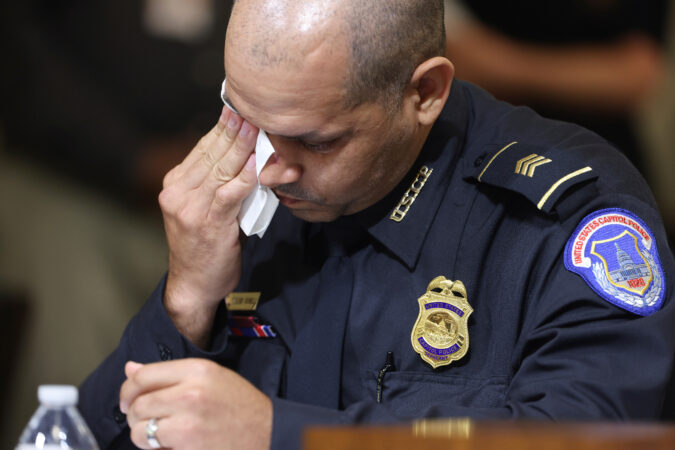
    Hodges and Gonell have been speaking out about their experiences since July 2021, when they testified before the Democratic-led House committee that investigated Jan 6. Since then, they have received support but also backlash.

    At a Republican-led Senate hearing in October on political violence, Hodges testified again as a witness called by Democrats. After Hodges spoke about his experience on Jan. 6, Sen. Peter Welch (D., Vt.) asked the other witnesses whether they supported Trump’s pardons of the rioters, including for those who injured Hodges. Three of the witnesses, all called by Republicans, raised their hands.

    “I don’t know how you would say it wasn’t violent,” says Hodges, who is still a Washington police officer.

    It has not just been politicians or the rioters who have doubted the police. It also is friends and family.

    “My biggest struggle through the years has been the public perception of it,” Eveland said, and navigating conversations with people close to him, including some fellow police officers, who do not think it was a big deal.

    “It’s hard for me to wrap my head around that, but ideology is a pretty powerful thing,” he said.

    Improvements in safety and support

    As police officers struggled in the aftermath, Manger, the former Capitol Police chief, said the department had to figure out how to better support them. There were no wellness or counseling services when he arrived, he said, and they were put in to place.

    “The officers who were there and were in the fight — we needed to make sure that they got the help that they needed,” Manger said.

    Manger, who retired in May, also oversaw major improvements to the department’s training, equipment, operational planning, and intelligence. He said the Capitol is now “a great deal safer” than it was when he arrived.

    “If that exact same thing happened again, they would have never breached the building, they would have never gotten inside, they would have never disrupted the electoral count,” Manger said.

    Pingeon, the former Capitol Police officer, said he believes the department is in many ways “unrecognizable” from what it was on Jan. 6 and when he left several months later.

    “It was a wake-up call,” he said.

    Pressing on

    Pingeon, who was attacked and knocked to the ground as he tried to prevent people from entering the Capitol, said Jan. 6 was part of the reason he left the department and moved home to Massachusetts. He has dealt with his experience by painting images of the Capitol and his time there, as well as advocating for nonviolence. He said he now feels ready to forgive.

    “The real trauma and heartache and everything I endured because of these events, I want to move past it,” he said.

    Gonell left the Capitol Police because of his injuries. He has not returned to service, though he hopes to work again. He wrote a book about his experience, and he said he still has post-traumatic stress disorder related to the attack.

    While many of the officers who were there have stayed quiet about their experiences, Eveland said he decided that it was important to talk publicly about Jan. 6 to try to reach people and “come at it from a logical standpoint.”

    Still, he said, “I’ve had to come to terms with the fact that just because something happened to me and was a major part of my world doesn’t mean that everyone else has to understand that or even be sympathetic to that.”

    He added: “The only thing I can do is tell my story, and hopefully the people who respect me will eventually listen.”

  • Hundreds march in silence to honor victims of Swiss bar fire that left 40 dead

    Hundreds march in silence to honor victims of Swiss bar fire that left 40 dead

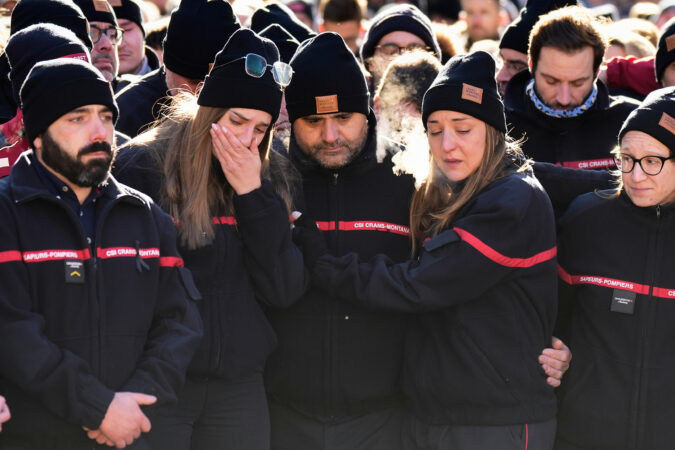
    CRANS-MONTANA, Switzerland — Hundreds marched in silence Sunday to honor the victims of the New Year’s Eve fire at a bar in the Swiss Alpine resort of Crans-Montana, which left 40 dead and many severely injured.

    Somber mourners, many with reddened eyes, filed silently out of the chapel to organ music after the hourlong Mass at the Chapelle Saint-Christophe in Crans-Montana. Some exchanged hugs before marching up a hill to Le Constellation bar.

    Many hundreds of people walked in the dense snaking procession in the bright sunlight past shuttered stores. Up on the mountain overlooking the town, snow machines sent plumes of white flakes into the air.

    At the top of the street, in front of Le Constellation — which is still largely shielded from view by white screens — the swelling crowd stood in near total silence, some weeping.

    Then they broke out into sustained applause for the rescue teams and police who rushed to the scene of horror, their hands in gloves and mittens against the cold. Mourners and well-wishers deposited bouquets at a makeshift memorial piled with flowers, cuddly toys, and other tributes. Some firefighters wiped their eyes too.

    “They went there to party”

    “Through this tragic event, I believe we must all remember that we are all brothers and sisters in humanity,” Véronique Barras, a local resident who knows grieving families, said. “It’s important to support each other, to hug each other, and to move forward towards light.”

    Cathy Premer said her daughter was out celebrating her 17th birthday on New Year’s Eve when she called in the early hours of the morning to say she was stuck because Le Constellation was cordoned off.

    “For the young — but even for adults — it’s hard to understand things that seem inexplicable,” she said. “They went there to party, it’s a destination for Dec. 31, it’s very festive, there were people of many nationalities … and it all turned into a tragedy.”

    In the crowd, Paola Ponti Greppi, an 80-year-old Italian who has a house in Crans-Montana, called for safety checks in bars. “We need more safety in these places because it’s not the only place like this. Why didn’t the town do the proper checks? For me that’s terrible.”

    A Mass for the victims

    During the Mass, the Rev. Gilles Cavin spoke of the “terrible uncertainty” for families unsure if their loved ones are among the dead or still alive among the injured.

    “There are no words strong enough to express the dismay, anguish, and anger of those who are affected in their lives today. And yet, we are here, gathered because silence alone is not enough,” he said.

    In the crowded pews, a grieving woman listened intently, her hands sometimes clasping rosary beads, as speakers delivered readings in German, French, and Italian.

    Forty people died and 119 were injured in the blaze that broke out around 1:30 a.m. on Thursday at Le Constellation bar. Police have said many of the victims were in their teens to mid-20s.

    By Sunday morning, Swiss authorities identified 24 out of the 40 fatalities. They include 18 Swiss citizens — aged as young as 14 — two Italians 16 years old, one dual citizen of Italy and the United Arab Emirates also 16 years old, an 18-year-old Romanian, a 39-year-old French person, and a Turkish citizen, 18.

    A grieving mother

    One of the victims was 16-year-old Arthur Brodard, whose mother had been frantically searching for him.

    “Our Arthur has now left to party in paradise,” a visibly shaken Laetitia Brodard said in a Facebook story posted on Saturday night, speaking to a camera. “We can start our mourning, knowing that he is in peace and in the light.”

    Brodard’s frenzied search for her son reflected the desperation of families of the young people who disappeared during the fire, who did not know whether their loved ones were dead or in the hospital.

    Swiss authorities said the process of identifying victims was particularly hard because of the advanced degree of the burns, requiring the use of DNA samples. Brodard also had given her DNA sample to help in the identification process.

    In her Facebook post, she thanked those who “testified their compassion, their love” and to those who shared information as she anxiously searched and waited for news of her son. Other parents and siblings are still waiting in anguish.

    Bar managers face a criminal investigation

    Swiss authorities have opened a criminal investigation of the bar managers.

    The two are suspected of involuntary homicide, involuntary bodily harm, and involuntarily causing a fire, the Valais region’s chief prosecutor, Beatrice Pilloud, told reporters Saturday. The announcement of the investigation did not name the managers.

    Regional police said Sunday there were no legal grounds so far that would require the managers to be held pending the legal process. They have not been deemed to be a flight risk.

    Investigators have said they believe festive sparkling candles atop Champagne bottles ignited the fire when they came too close to the ceiling of the crowded bar.

    Authorities are looking into whether sound-dampening material on the ceiling conformed with regulations and whether the candles were permitted for use in the bar. The investigation also centers on other safety measures on the premises, including fire extinguishers and escape routes, and whether previous work at the site was up to code.

    “Initial witness accounts cited a fire that spread quickly, generating a lot of smoke and a huge wave of heat,” the police statement Sunday said. “Everything happened very fast.”

    Swiss President Guy Parmelin announced a national day of mourning for the victims on Jan. 9.

    France’s Health Minister Stéphanie Rist said 17 patients have received care in France, out of a total of 35 transferred from Switzerland to five European countries. Other patients were planned to be transferred to Germany, Italy, and Belgium.

  • The big obstacles to Trump’s plan for a Venezuelan oil windfall

    The big obstacles to Trump’s plan for a Venezuelan oil windfall

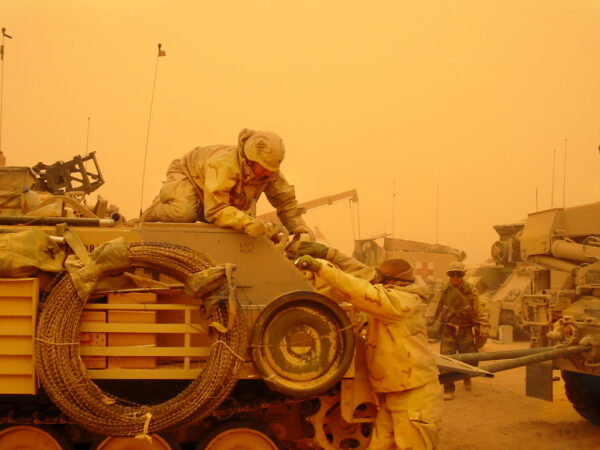
    There’s a familiar ring to President Donald Trump’s plan to send U.S. energy giants to Venezuela to use the wealth generated from rekindling long-stalled oil production to stabilize that country and cement American energy dominance: Similar ambitions accompanied the U.S. invasion of Iraq in 2003.

    The quick riches promised did not materialize there, as firms grappled with years of political turmoil and security threats, struggled to negotiate workable contract terms and confronted vexing infrastructure inadequacies. Venezuela may not be any easier, industry analysts warn.

    “One of the clear lessons from Iraq — and it is not unique to Iraq — is that you need to have stability and be able to assess risk before you can start production,” said Kevin Book, managing director at ClearView Energy Partners, a research firm. Until then, he said, companies may not be enthusiastic about making the billions of dollars in investments required in Venezuela.

    It’s unclear which firms Trump was referencing at a news conference Saturday morning, when he said: “We’re going to have our very large United States oil companies, the biggest anywhere in the world, go and spend billions of dollars to fix the badly broken infrastructure, the oil infrastructure.”

    Chevron, which operates there now, declined to comment on plans.

    ExxonMobil and ConocoPhillips exited the country and saw their assets seized after refusing to meet the terms of Venezuela’s government nearly two decades ago. ExxonMobil did not respond to requests for comment.

    “It would be premature to speculate on any future business activities or investments,” ConocoPhillips spokesperson Dennis Nuss said in an email.

    But the appeal is clear. Venezuela has one of the biggest oil reserves in the world, estimated at 300 billion barrels.

    “Every major oil company in the world and some of the smaller ones will look closely at this because there are very few places on Earth where you could increase production so much,” said Francisco Monaldi, director of the Latin American Energy Program at Rice University. “But first you need political stability and clarity.”

    He said restoring peak oil production there would cost up to $100 billion and take about a decade. And that is assuming there is enough political stability for companies to operate unencumbered during that entire period.

    There are other obstacles. The oil in Venezuela is a heavy form of crude that is more difficult to process and carries a heavier carbon footprint than oil pumped elsewhere. Venezuela’s power grid is on the brink, creating an uncertain outlook for oil production, which requires massive amounts of energy. Also, Russian and Chinese firms partnered with Venezuela after U.S. companies left the nation, complicating the reestablishment of U.S. firms.

    Returning to Venezuela has hardly been a central talking point of U.S. oil companies.

    In this era of relatively low oil prices and uncertainty about how robust future demand will be amid an on-again, off-again global energy transition from fossil fuels, firms are anxious about reinvesting tens of billions of dollars more in pumping in Venezuela absent assurances that their investments would be secure for at least a decade, according to industry analysts.

    Trump’s removal of Venezuela’s leader and plan to put the U.S. in charge of the country for now does not ensure that, despite his sweeping promises.

    “We built Venezuela’s oil industry with American talent, drive, and skill, and the socialist regime stole it from us,” Trump said. “The oil companies are going to go in. They’re going to spend money there that we’re going to take back the oil that, frankly, we should have taken back a long time ago. A lot of money is coming out of the ground. We’re going to get reimbursed for all of that. We’re going to get reimbursed for everything that we spend.”

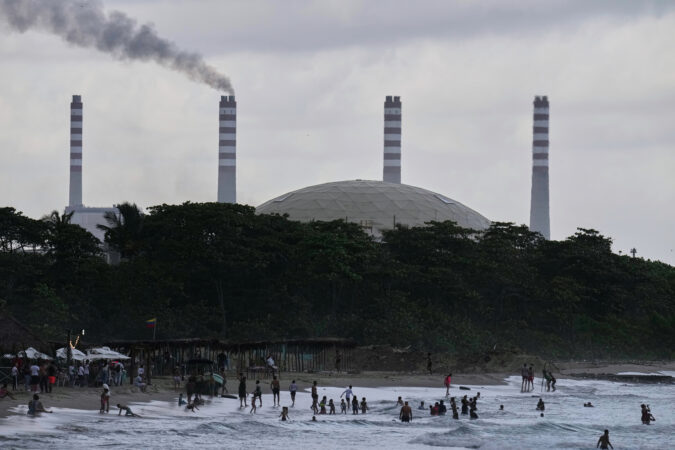
    Today, the nation’s oil production is a fraction of what it could be and its infrastructure is badly frayed because of domestic turmoil, the departure of foreign oil companies, and related international sanctions. The nation is pumping a mere 1 million barrels of oil per day, less than 1% of global output. That is also less than a third of its peak production under the Hugo Chávez regime and a quarter of what experts say it is capable of generating.

    That oil has largely been purchased by China.

    The only American company operating in Venezuela is Chevron, with its production constrained by considerable Venezuelan government restrictions.

    “Chevron remains focused on the safety and wellbeing of our employees, as well as the integrity of our assets,” said a statement from Bill Turenne, a company spokesman. “We continue to operate in full compliance with all relevant laws and regulations.”

    While acknowledging that firms have reason to be reticent, Monaldi, of Rice University, pointed to forecasts showing Venezuelan oil could be crucial to meet rising global demand over the next decade.

    But none of that can happen overnight.

    “Oil companies do not operate in a vacuum and we are years from significant volume increase,” said Pedro Burelli, a critic of Venezuelan President Nicolás Maduro now living in the United States, and a former board member of the Venezuelan state oil company. “Regulations and contracts matter, as U.S. oil companies are publicly traded companies with shareholders who will demand rational investment decisions.”

    Oil companies have even been reluctant to increase their rig counts here, despite Trump’s repeated calls for more drilling, amid demand uncertainty and dropping market prices. U.S. oil production soared during the Biden administration, but the pace of growth has slowed since Trump returned to office, with some forecasts predicting declines this year.

    Book said oil companies will be looking to sign contracts that they are confident will be honored for the long term, and there is no government in Venezuela that right now can honor such a contract.

    “Before you make all these big investments and start running operations, you also need a stable country with reliable electricity, functioning ports, and an available workforce,” he said. “A lot of factors go into pulling this off.”

    Trump may have further complicated the outlook for U.S. oil firms returning to Venezuela by declaring that he does not believe the popular opposition leader there, María Corina Machado, commands the respect to run the country immediately following Maduro’s ouster.

    Machado has been a vocal proponent of helping U.S. firms re-establish operations in Venezuela. One of her energy advisers, Evanan Romero, a former Venezuelan oil executive and government minister, stressed in an interview that if the oil firms wish to return, “we will welcome them.”

    “They will make money, Venezuela will make money,” he said.

  • Trump administration misled Congress before Maduro raid, Democrats say

    Trump administration misled Congress before Maduro raid, Democrats say

    In early November, hours before the Republican-led Senate rejected bipartisan legislation to block the Trump administration from conducting a military attack on Venezuela, Secretary of State Marco Rubio sought to reassure lawmakers it didn’t intend to.

    He told them that the U.S. lacked legal authority to invade the South American country and oust its president, Nicolás Maduro, and said that doing so would carry major risks, according to two people who attended the classified briefing.

    In the aftermath of Saturday’s raid to capture Maduro and his wife at a fortified military compound in Caracas, top Democrats are accusing Rubio of deliberately misleading Congress.

    During a news conference at President Donald Trump’s Mar-a-Lago Club in Florida, Rubio, who also serves as White House national security adviser, told reporters that he and other top officials had planned the Maduro operation for months. The acknowledgment led some on Capitol Hill to conclude that the administration was readying assets for the assault while having told lawmakers that the military buildup in the region was not meant to force a regime change.

    “Rubio said that there were not any intentions to invade Venezuela,” Rep. Gregory W. Meeks of New York, the House Foreign Affairs Committee’s top Democrat, told the Washington Post. “He absolutely lied to Congress.”

    In an interview with the Post later Saturday, Rubio rejected the assertion. He argued that Maduro is under indictment from a U.S. court, and neither the United States nor the European Union recognized him as the legitimate leader of Venezuela. So rather than an invasion, he cast the attack as a “law enforcement operation” that required military assets to conduct.

    Lawmakers previously asked whether the administration “would be invading Venezuela,” Rubio said. “This was not that,” he added.

    Democrats were incredulous at the argument.

    “It absolutely is one hundred percent regime change,” said Rep. Adam Smith of Washington state, the senior Democrat on the House Armed Services Committee.

    Smith said that he had asked Rubio directly whether the administration’s military buildup in the region would result in attacks on Venezuelan territory and that the secretary had said no.

    The Trump administration did not notify key members of Congress of the operation until late Saturday morning, sending a short notice that said the president had approved a “military operation in Venezuela to address national security threats posed by the illegitimate Maduro regime.”

    The operation, the notice said, came in response to the Justice Department’s warrant against Maduro, who was transported to New York to await trial.

    Sen. Mark R. Warner of Virginia, the top Democrat on the Senate Intelligence Committee, said that Rubio tried to reach him after the raid had begun in the early morning hours but that they were unable to connect.

    Warner, who has had multiple briefings with Rubio over the past few months, declined to say whether he felt the administration had misled Congress but noted that the timing for the operation — with lawmakers days away from returning to Washington after a holiday break — was not “idle chance.”

    “Doing this during a congressional break raises huge questions,” he said in an interview.

    Senior Republicans called on the administration to brief lawmakers even while expressing near-unified support for the operation. Senate Majority Leader John Thune (R., S.D.) and House Speaker Mike Johnson (R., La.) said in separate statements that they had spoken with senior officials early Saturday and wanted the administration to brief Congress in the coming week.

    Senate Minority Leader Charles E. Schumer (D., N.Y.) and House Minority Leader Hakeem Jeffries (D., N.Y.) demanded far more information.

    “We want to know the administration’s objectives, its plans to prevent a humanitarian and geopolitical disaster that plunges us into another endless war — or one that trades one corrupt dictator for another,” Schumer told reporters.

    The Senate is set to vote this week on another war powers resolution that, if passed, would block the administration from conducting further military action in Venezuela. Trump said Saturday that the U.S. could carry out a larger “second wave” of attacks but that he did not think doing so would be necessary because Venezuela’s interim leader was cooperating with U.S. demands.

    Sen. Tim Kaine (D., Va.) said he hoped the new measure would get more Republican support. He, too, accused the administration of lying to lawmakers and the public.

    At least two of the Republicans who considered supporting the measure that was narrowly defeated in November received calls from Rubio on Saturday, according to their public statements.

    “Congress should have been informed about the operation earlier and needs to be involved as this situation evolves,” said Susan Collins (R., Maine), one of the lawmakers who signaled that they might support the last resolution but ultimately opposed it.

    Shortly after news of the attack broke Saturday morning, Sen. Mike Lee (R., Utah), a skeptic of expansive U.S. military commitments abroad, posted on social media that he wanted to know “what, if anything, might constitutionally justify this action in the absence of a declaration of war or authorization for the use of military force” from Congress.

    Hours later, Lee posted again that he had spoken with Rubio and was satisfied that the attack “likely” was within the president’s authority.

  • How Trump’s foreign intervention could shake up the midterm elections

    How Trump’s foreign intervention could shake up the midterm elections

    President Donald Trump’s intervention in Venezuela will test Americans’ appetite for regime change, inserting a new and unpredictable element ahead of midterm elections this year that have so far been dominated by domestic issues.

    Democrats immediately began arguing that overnight action on Saturday was an abandonment of Trump’s promise to focus on improving lives at home, while many Republicans insisted it was an expansion, rather than a shift, in Trump’s “America First” mantra.

    Trump on Saturday said the United States had captured Venezuelan President Nicolás Maduro and his wife and planned to “run the country” during a transition period, an action Trump cast as part of a new era of “American dominance in the Western Hemisphere.” The president touted the operation as a boost to U.S. interests: a blow to the drug trade, an opportunity for American oil companies, and a show of strength.

    But his argument drew skepticism on both the right and the left, as critics warned against dragging the U.S. into regime change and costly wars. Recent polls suggest there is significant political risk for Trump, who is already facing discord within his base. A CBS News poll in November found that 70% of Americans opposed U.S. military action in Venezuela and that the vast majority did not view the South American country as a major threat to national security. Americans in both parties have grown increasingly skeptical of foreign intervention in recent decades.

    Republican leaders mostly backed the president, but some expressed doubts as Trump outlined a potentially expansive U.S. role in Venezuela and said he is “not afraid of boots on the ground.” Many Democrats framed the attack as a violation of Trump’s campaign promises to “get rid of all these wars starting all over the place” and to avoid the type of foreign entanglements that bedeviled many of his predecessors and bred cynicism within his base.

    While foreign policy does not always play a central role in domestic elections, it often informs broader opinions about competence and focus. President Joe Biden’s botched withdrawal from Afghanistan undermined his argument that he was restoring faith and effectiveness in government that had been hampered by the COVID-19 epidemic. President George W. Bush’s decision to invade Iraq with faulty intelligence claims, and the attempts at nation-building that followed, damaged his party’s credibility and helped pave the way for Trump’s takeover of the GOP.

    “What Americans want is an American president that’s going to care about them … and I think what this shows is the president’s more concerned about what’s going on in Venezuela, what’s going on in Argentina than he is on what’s going on in Pennsylvania and Ohio,” said Rep. Ro Khanna (D., Calif.) in an interview.

    The politics of the intervention are hard to assess immediately, some strategists said, as details of the U.S.’s plans remain unclear and the situation in Venezuela is still unfolding. The issue’s relevance to voters could change based on the ultimate extent of the U.S.’s involvement and Venezuela’s stability in the months to come. Trump on Saturday said Venezuela’s vice president, Delcy Rodríguez, appeared “willing to do what we think is necessary to make Venezuela great,” but she later criticized the U.S.’s actions as “barbarity.”

    Trump had been ramping up pressure on Maduro for months, but the action in Venezuela probably caught many Americans off guard, given that it did not follow a provocation like the Sept. 11, 2001, terrorist attacks.

    Republicans embracing his latest action in Venezuela are betting that the fallout there will be limited, and even some staunch critics of foreign intervention on the right declined to criticize Trump on Saturday. But a few echoed the concerns from Democrats.

    Rep. Marjorie Taylor Greene (R., Ga.), a proponent of America First policies who has become one of Trump’s biggest critics from the right, questioned his justifications for the attack — noting that the fentanyl responsible for most U.S. drug deaths comes primarily from places other than Venezuela — and reiterated her worry that he is veering from principles on which he campaigned.

    “This is what many in MAGA thought they voted to end,” she wrote on X. “Boy were we wrong.”

    Rep. Thomas Massie (R., Ky.), who has long been at odds with Trump, said the president, at his news conference, had undercut earlier suggestions from administration officials that the action in Venezuela was a limited effort to apprehend Maduro. Stephen K. Bannon, the former Trump adviser turned MAGA commentator, initially hailed Maduro’s capture as a “stunning overnight achievement” on his show — but after Trump’s news conference expanding on the U.S. role in Venezuela, he wondered if the plan would “hark back to our fiasco in Iraq under Bush.”

    Sen. Todd Young (R., Ind.) called the Venezuela operation “successful” but added in a statement online, “We still need more answers, especially to questions regarding the next steps in Venezuela’s transition.”

    Other Republicans echoed Trump’s points about U.S. interests in the region. Raheem Kassam, a political strategist who is editor of the conservative National Pulse, suggested Trump’s MAGA base will “warm” to the idea that the Venezuela action is America First and noted that many supporters also embraced Trump’s long-shot ambitions to annex Greenland.

    Kassam doesn’t see the issue playing into the midterms much yet — but “if it turns into a disaster, certainly.”

    “These things are very risky,” he acknowledged. Trump “will know what risk he’s taking and people know what it means if Caracas suddenly overnight turns into a complete powder keg.”

    Some Republicans were skeptical that the U.S. would be as involved as Trump suggested Saturday was possible. “The president gets a lot of leeway up to a certain point,” said GOP strategist David Urban, “and I think that point would be, having U.S. soldiers in some meaningful capacity in Venezuela. I don’t think you’ll see that.”

    Democrats, meanwhile, questioned the legality of the military action in Venezuela. Some also sought to use it to build their longtime case that Trump is distracted from the issues that matter most to voters.

    “The American people don’t want to ‘run’ a foreign country while our leaders fail to improve life in this one,” wrote Pete Buttigieg, the former transportation secretary and potential Democratic 2028 presidential candidate, on social media, arguing that Trump was “failing on the economy and losing his grip on power at home.”

    Buoyed by victories in November’s elections in New Jersey and Virginia, Democrats are focusing intensely on the issue of affordability heading into the 2026 midterms. Trump’s advisers signaled after those elections that they would be refocusing on the economy, and Trump began to tout his economic achievements at rallies. Now, many Democrats say the operation in Venezuela could undercut that effort.

    “His biggest problem is that costs are continuing to go up, and he promised people they would go down, and whenever people see him creating some other kind of a problem, rather than buckling down and trying to un-break that key promise, they turn against him more,” argued Andrew Bates, a Democratic strategist and former White House communications official under Biden.

    Whit Ayres, a longtime GOP pollster, emphasized that it’s hard to predict the politics of Trump’s actions in Venezuela without more data.

    “What I can say based upon polling is that one of Trump’s strengths in public opinion polls is that he’s viewed as strong, and not indecisive or weak, and in that sense this plays to his strength,” he said of the Venezuela operation.