Category: Wires

  • Hilary Knight set to make 5th Olympics appearance for USA women’s hockey

    Hilary Knight set to make 5th Olympics appearance for USA women’s hockey

    Hilary Knight is set to make her fifth Olympic appearance, and she will lead a younger, faster U.S. women’s national team that’s favored to win gold at the Milan Cortina Winter Games next month.

    The 36-year-old Knight headlines the list as USA Hockey released its 23-player Olympic women’s roster on Friday. It’s a group that returns just 11 members from the team that won silver at the 2022 Beijing Games, and features several newcomers, highlighted by defender Laila Edwards.

    The 21-year-old Wisconsin senior and Cleveland native is set to become the first Black female hockey player to compete for the U.S. at the Olympics.

    “It still hasn’t really kicked in yet. Getting that call is like a dream come true,” Edwards said. “Always had dreams of playing in the pros, but the biggest dream was to go the Olympics, for sure.”

    As for Knight, she will set a U.S. women’s hockey record for most Winter Games appearances after winning gold in 2018 and three silver medals. The Seattle Torrent captain previously announced that these will be her final Winter Games, while she plans to continue her PWHL career.

    The U.S. roster features various familiar faces, including forward Kendall Coyne Schofield and defender Lee Stecklein, who will be competing in a fourth Winter Games. Other returnees include forwards Alex Carpenter and Kelly Pannek and defenders Megan Keller and Caroline Harvey, who, at 23, is completing her senior season at Wisconsin.

    The roster has otherwise been transformed under coach John Wroblewski, who placed an emphasis on a youth movement upon being hired in June 2022.

    The Americans relied mostly on veterans and appeared a step behind in finishing 5-2 — both losses to Canada — in Beijing under former coach Joel Johnson.

    This year’s team features seven players still competing in college, with 20-year-old Ohio State forward Joy Dunne being the youngest. The goalie trio also is new, with projected starter Aerin Frankel, projected backup Gwyneth Philips, and third-stringer Ava McNaughton set to make their Olympic debuts.

    Wroblewski’s imprint on the roster was evident particularly in the most recent Rivalry Series, in which the Americans swept all four games by outscoring the Canadians, 24-7. The U.S. also is the defending world champions after a 4-3 overtime win over Canada in April.

    The Americans open the Olympics by facing the Czech Republic on Feb. 5, with the gold-medal game set for Feb. 19.

    The U.S. is favored to win its third Olympic gold medal, and first since defeating Canada at the 2018 PyeongChang Winter Games. The Americans also won the inaugural tournament at Nagano in 1998, with the Canadians winning gold at the other five Olympic competitions.

    These are the first Olympics since the PWHL began play in 2024, with the now-eight-team league expected to make an impact by raising the level of international competition and bridging the gap between nations trailing the two global powers, the U.S. and Canada.

    The U.S. roster features 16 PWHL players.

  • Auston Matthews, the Tkachuk brothers headline USA Hockey’s Olympic roster

    Auston Matthews, the Tkachuk brothers headline USA Hockey’s Olympic roster

    Last spring, Tage Thompson and Clayton Keller helped the U.S. win the world hockey championship for the first time since 1933, while Seth Jones was a key part of the Florida Panthers’ second consecutive Stanley Cup run.

    Those contributions earned them a spot on the U.S. Olympic team as the only three additions from the 4 Nations Face-Off early last year.

    USA Hockey unveiled its roster Friday on the Today show. A vast majority of it features players who took part in the NHL-run international tournament last February, when the Americans made the final before losing to Canada in overtime. The only ones not back from the 4 Nations are forward Chris Kreider and former New York Rangers defenseman Adam Fox.

    “It was incredibly difficult for our management group to get to the final roster and that’s a credit to so many in our country, including all those at the grassroots level who help make our sport so strong,” USA general manager Bill Guerin said. ”There’s nothing like the Olympics, and I know our players and staff will represent our country well and work hard to achieve our ultimate goal.”

    Keller, who’s captain of the Utah Mammoth and tied for the team lead in scoring, wore the “C” at Worlds. Thompson, who plays for the Buffalo Sabres, was a point-a-game producer.

    The U.S. followed Canada’s lead after its northern neighbor also chose a 4 Nations-heavy roster. But while Canada made some changes in net beyond starter Jordan Binnington, the Americans went with the same three goaltenders: Connor Hellebuyck, Jake Oettinger, and Jeremy Swayman.

    Left off were Jason Robertson of the Dallas Stars, who leads U.S. players in points this season, and a couple other elite goal-scorers in Cole Caufield and Alex DeBrincat.

    Guerin and his management staff, along with coach Mike Sullivan, prioritized experience and players they knew well. That meant sticking with depth forwards Vincent Trocheck and Brock Nelson over Robertson and others.

    Teams are allowed 25 players at the Olympics, up from 23 at the 4 Nations, and can dress 20 skaters — typically 13 forwards and seven defenseman, along with two goalies. The first U.S. game is Feb. 12 against Latvia.

  • Here’s what to know about a deadly fire at a Swiss Alpine bar’s New Year celebration

    Here’s what to know about a deadly fire at a Swiss Alpine bar’s New Year celebration

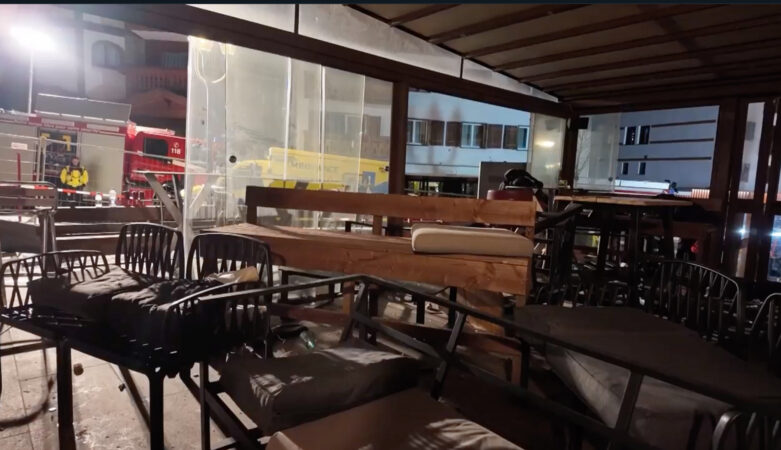
    CRANS-MONTANA, Switzerland — Swiss investigators are probing what caused a fire in a bar at an Alpine ski resort that left around 40 people dead and another 115 injured during a New Year’s celebration.

    Most injuries, many of them serious, occurred when the blaze swept through the crowded bar less than two hours after midnight Thursday in southwestern Switzerland.

    The Crans-Montana resort is best known as an international ski and golf venue. Overnight, its crowded Le Constellation bar morphed from a scene of revelry into the site of one of Switzerland’s worst tragedies.

    While officials said Thursday it was too early to determine the fire’s cause, investigators have already ruled out the possibility of an attack.

    Crans-Montana is less than 5 kilometers (3 miles) from Sierre, Switzerland, where 28 people, including many children, were killed when a bus from Belgium crashed inside a Swiss tunnel in 2012.

    Here’s what we know about the deadly fire:

    A frantic attempt to escape

    The blaze broke out around 1:30 a.m. Thursday during a holiday celebration inside the Le Constellation bar.

    Two women told French broadcaster BFMTV they were inside when they saw a male bartender lifting a female bartender on his shoulders as she held a lit candle in a bottle. The flames spread, collapsing the wooden ceiling, they told the broadcaster.

    People frantically tried to escape from the basement nightclub up a narrow flight of stairs and through a narrow door, causing a crowd surge, one of the women said.

    A young man at the scene said people smashed windows to escape the fire, some gravely injured, reported BFMTV. He said he saw about 20 people scrambling to get out of the smoke and flames.

    Gianni Campolo, a Swiss 19-year-old who was in Crans-Montana on holiday, rushed to the bar to help first responders after receiving a call from a friend who escaped the inferno.

    “As we get closer, we see almost dismembered persons lying on the floor, in cardiac arrest. People were also inside trapped, laying on the ground. We saw their clothes melting onto their skin,” Campolo told TF1. “I have seen horror and I don’t know what else would be worse than this.”

    The blaze triggered a flashover or backdraft

    The Swiss officials called the blaze an “embrasement généralisé,” a French firefighting term describing how a blaze can trigger the release of combustible gases that can then ignite violently and cause what English-speaking firefighters would call a flashover or a backdraft.

    The injured suffered from serious burns and smoke inhalation. Some were flown to specialist hospitals across the country.

    Authorities urged people to show caution in the coming days to avoid any accidents that could require the already overwhelmed medical resources.

    Italian and French nationals are among the missing

    Italy’s Foreign Minister Antonio Tajani placed flowers at the memorial in Crans-Montana and said 13 Italian citizens were wounded and six remained missing by midday Friday.

    One of the missing was Giovanni Tamburi, whose mother Carla Masielli issued an appeal on Italian state television network RAI for any news about her son and asked the media to show his photo in hopes of identifying him.

    “We have called all the hospitals but they don’t give me any news. We don’t know if he’s among the dead. We don’t know if he’s among the missing,” she wailed. “They don’t tell us anything!”

    Three of Italy’s wounded were transported Thursday from Switzerland to a Milan hospital while a fourth is expected to be transferred Friday, Tajani said.

    France’s foreign ministry said eight French people are missing and another nine are among the injured. Top-flight French soccer team FC Metz said one of its trainee players, 19-year-old Tahirys Dos Santos, was badly burned and has been transferred by plane to Germany for treatment.

    A top venue for the world’s best athletes

    With high-altitude ski runs rising around 3,000 meters (nearly 9,850 feet) in the heart of the Valais region’s snowy peaks and pine forests, Crans-Montana is one of the top venues on the World Cup circuit.

    The resort will host the best men’s and women’s downhill racers, including Lindsey Vonn, for their final events before the Milan Cortina Olympics in February.

    The town’s Crans-sur-Sierre golf club, down the street from the bar, stages the European Masters each August on a picturesque course.

  • Nvidia gains, hospitals hurt: 2025 winners and losers with Congress

    Nvidia gains, hospitals hurt: 2025 winners and losers with Congress

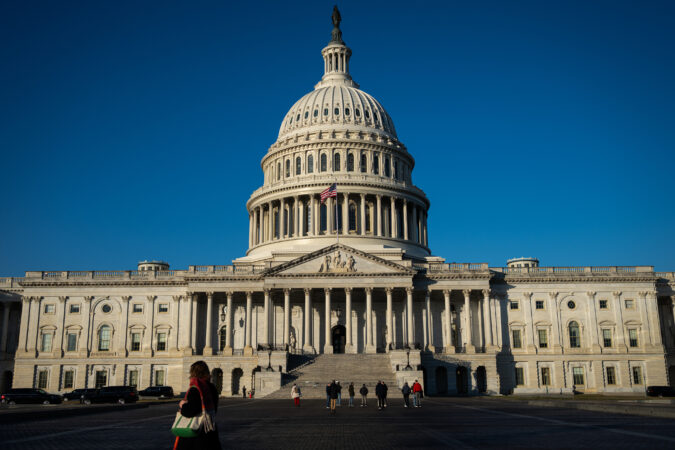
    The Republican-controlled Congress has been very good to most of corporate America this year. Foremost among the boons is a $4 trillion tax-cut package that extended and added generous breaks for businesses large and small.

    But it hasn’t been all good news for U.S. companies, and some industries have benefited more than others. The legislative branch’s acquiescence to Donald Trump’s sharp tariff increases raised input costs across the economy and provoked retaliatory moves against U.S. farm exports.

    The healthcare sector, renewable energy companies, and Las Vegas’ casinos have taken legislative hits while chipmakers, drug companies, and private equity fended off potentially costly congressional interventions.

    Here are this year’s winners and losers.

    Winners

    Nvidia

    America’s most valuable company beat back influential Republican China hawks’ efforts to insert provisions in legislation aimed at ensuring U.S. companies get first dibs on Nvidia’s products. Chief executive officer Jensen Huang’s visits to Congress and the White House also helped pave the way for Trump administration actions easing export restrictions so the company could sell advanced chips to Chinese customers.

    Private equity

    The struggle to preserve a tax break cherished by private equity proved to be one of the rare instances this year when congressional Republicans stood up to Trump, rebuffing the president’s early demands to raise taxes on carried interest. The provision would have eliminated a lower income tax rate for a key portion of private equity executives’ compensation. PE firms worked to squelch the change in tandem with venture capital and real estate partnerships, whose executives and dealmakers also benefit. Better yet, private equity also won an expanded interest expensing tax break.

    Oil and gas

    Energy companies secured a tax break worth more than $1 billion for oil and gas producers in the Trump tax package. The provision allows businesses subject to a 15% corporate alternative minimum tax to deduct certain drilling costs when calculating their taxable income. Companies including ConocoPhillips Co., Ovintiv Inc., and Civitas Resources Inc. lobbied in favor of it.

    Crypto

    Digital-assets companies achieved a breakthrough with the passage of a light-touch regulatory law for dollar-pegged stablecoins, clearing the way for broader use of the technology in everyday finance. An industry drive for a broader rewrite of securities and commodities laws to set up favorable regulation of crypto assets is moving closer to the finish line. A $263 million campaign war chest the crypto industry has amassed in super-PACs is sure to help.

    Pharma

    Drug companies mostly succeeded in blocking legislative efforts to control their soaring prices. While Trump talked up requiring massive price cuts from pharmaceutical companies, Republican leaders on Capitol Hill made no moves to codify such a policy. Still, the Senate’s confirmation of Health and Human Services Secretary Robert Kennedy Jr. empowered a foe of vaccine makers.

    Tech giants

    Technology giants have stymied public pressure for federal legislation to regulate social media and other tech products amid rising concern over harm to children. Even so, the industry so far hasn’t been able to secure a federal law blocking state regulation of artificial intelligence. The Trump administration stepped in with an executive order to override state AI regulations, though that faces legal challenges.

    Financial planners

    The wealth management industry came out ahead when Senate Republican leader John Thune’s campaign to add a repeal of the estate tax to Trump’s tax law foundered. The tax overhaul kept in place the complex loopholes that the rich employ financial planners to navigate on their behalf.

    Defense and aerospace

    The defense industry thwarted efforts by Elon Musk’s DOGE team to cut military spending and scored big increases in the Pentagon budget. Trump’s massive tax and spending package included $150 billion in new defense spending. A defense policy bill Congress just passed came in $8 billion above the White House request. Notable beneficiaries include Anduril Industries Inc., Palantir Technologies Inc., and Boeing Co. with the new F-47 fighter. A provision to allow the Pentagon to repair weapons systems without paying contractors to do so was defeated.

    Domestic car dealers

    Car dealers won a tax break for loan interest on purchases of new U.S.-built automobiles.

    Large corporations

    The $4 trillion Trump tax cut bill extended a bevy of 2017 tax breaks that had expired. Manufacturers won bonus depreciation for the cost of production upgrades and a research and development tax break. Attempts to pay for these by scaling back the corporate state and local tax deduction and to increase the stock buyback tax were beaten back by a heavy lobbying effort.

    Small businesses

    The 2017 law that allowed pass-through businesses to deduct up to 20% of their qualified business income from their taxable income was permanently extended.

    Losers

    Hospitals

    A $50 billion bailout for rural hospitals included in Trump’s tax cut plan won’t offset the loss of funding from Medicaid cuts in the law. Millions of Americans will lose health insurance in the coming years, according to forecasts, leading to a surge in uncompensated care in emergency rooms.

    Health insurers

    Big insurers are in line to lose millions of customers with the expiration of enhanced Obamacare premium tax credits at the end of December. Fewer healthy people signing up for policies also could further harm insurers’ bottom lines. While a bipartisan group of moderates in both parties are trying to renew the credits in January, they face an uphill battle against Republican congressional leaders, who oppose the effort.

    Green energy

    The Trump tax bill ended Joe Biden’s signature tax credits for solar, wind, and other renewable energy sources, and curtailed the $7,500 consumer electric vehicle tax credit for cars made by such companies as Tesla Inc., Rivian Automotive Inc., and General Motors Co. Renewable energy companies Sunnova Energy International Inc., Solar Mosaic Inc., and Pine Gate Renewables LLC all filed for bankruptcy protection this year in part due to the ending of tax incentives.

    Banks

    Crypto bros’ gain is bankers’ loss as the stablecoin legislation Congress passed this year threatens the banking sector’s long and profitable dominance of the payments system. Still, bankers’ congressional allies blocked votes on credit card competition legislation, which would cut into the nearly $190 billion in swipe fees retailers pay annually to banks, Visa Inc., and Mastercard Inc. Congress also repealed a Biden-era regulation limiting bank overdraft fees.

    Casinos

    Under the tax bill, professional gamblers would only be able to deduct 90% of their losses against their winnings, leading to a situation where they could still owe income tax if they break even over a year or lose money overall. Major casino companies are pushing to repeal the provision, fearing a drop-off in business from their best customers.

    Airlines

    Airlines lost hundreds of millions of dollars in ticket revenue during the longest government shutdown in history as the Trump administration moved to curtail flights during the congressional impasse. Delta Air Lines Inc. alone estimated it took a $200 million hit from the shutdown.

    Importers

    Retailers and other importers stung by Trump’s tariffs got little help from lawmakers this year, as Republicans largely sat back while the president claimed broad authority to rewrite the world’s trading order. House Speaker Mike Johnson, a close Trump ally, has so far managed to delay a looming floor fight over the legality of the tariffs until at least the end of January.

  • She provides the raw material to Trump’s influencer machine

    She provides the raw material to Trump’s influencer machine

    WASHINGTON — Over the past two years, a little-known aide to President Donald Trump has become one of the GOP’s most influential content creators, filming him dancing on a tarmac in Malaysia, serving French Fries at McDonald’s on the campaign trail, and greeting small children in the Oval Office.

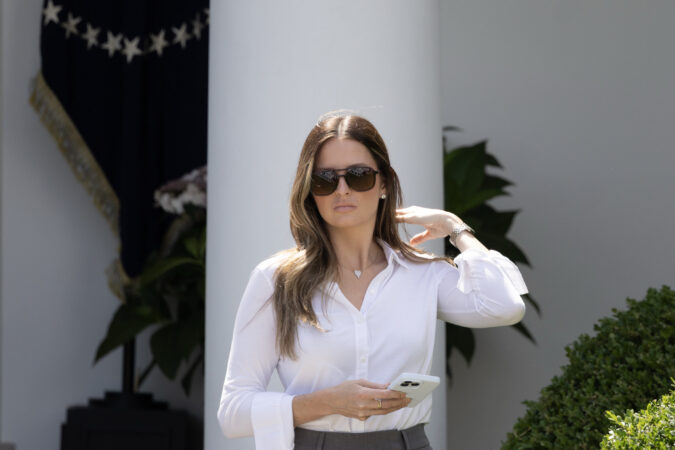
    Margo Martin, a 30-year-old who gets as close to the president as his Secret Service detail, is the quiet engine of a social media operation that has transformed presidential communications.

    Armed with an iPhone camera, she gives what feels like a behind-the-scenes glimpse of the president and the most potent element that spurs online engagement: a sense of authenticity.

    Martin’s raw material is then processed by a sprawling network of better-known right-wing influencers who use that content for memes, podcast clips, and shows that go viral, reinforcing Trump’s bond with his most ardent supporters and maintaining his status as a ubiquitous pop culture figure for everyone else.

    During Trump’s trip to Asia in the fall, vertical videos and photos captured by Martin were viewed nearly 50 million times on her X account and more than 222 million times on the @TeamTrump Instagram and TikTok, not to mention the millions of views on reposts from Trump supporters who cribbed the content and shared it themselves.

    It’s curated, of course. You won’t see images of Trump dozing off in a Cabinet meeting or the bruise on his hand that are often promoted by the left. But even Democrats who view Martin’s efforts as propaganda concede their effectiveness.

    “The more you see something, the more you think it’s true,” said Sammy Kanter, a Democratic content creator and new media consultant.

    “The more volume of content that they put out there that favors the image that they want out there, and the more that’s in people’s feeds, and the more they see it, the more they’re going to think it’s reality or question less what their reality is versus what they’re being told,” Kanter said.

    Martin, who declined an interview request, served as a press assistant in the first administration and then moved to Palm Beach, Fla., to continue working with Trump after he left office. A recording she made of Trump’s book interviews became part of special counsel Jack Smith’s investigation into the president’s handling of classified documents. (She was subpoenaed to testify before a federal grand jury.)

    All of that — plus a low-key personality that is rare in Trump’s world of brash advisers — has bonded her to the president, who at a campaign rally called her “the most beautiful photographer in the world.”

    “She has the trust of the president,” White House press secretary Karoline Leavitt said in an interview, noting the proximity of her desk, just outside the Oval Office. “So she’s able to really see the inner workings of his every day and share that with the American public.”

    Compared with the flashy and controversial memes and edits often shared by other Trump and White House accounts, Martin’s content on X is understated, a collection of mostly vertical photos and videos optimized for audiences scrolling on their phones.

    Captions usually include a brief description, a quote and pronouncements like “MUST WATCH!” or “THE PEOPLE’S PRESIDENT!” She’s a frequent user of the red heart, American flag, fire, and laughing emojis.

    The basic approach is ideal for creators looking to make their own content, because the clips are free and ready to clip, unlike professional news videos that often require a licensing fee to news services such as Getty Images or the Associated Press.

    “It really is about arming your base with the resources that they need,” said Parker Butler, who directed the team that ran the @KamalaHQ accounts for Kamala Harris’s 2024 presidential campaign.

    The stream of material is “so helpful for us to discuss what the administration is doing,” said Link Lauren, a conservative political influencer who also served as a senior adviser for Robert F. Kennedy Jr.’s presidential campaign.

    You’d be hard-pressed to find a Republican influencer or politico who hasn’t reposted one of Martin’s videos or photos. A Washington Post analysis of social media posts found that more than 300 high-profile right-wing influencers and politicians have mentioned Martin since the inauguration, sharing her posts thousands of times.

    Her posts have been shared more than 10 times in that time period by Elon Musk, the Republican National Committee, and Fox News.

    Leavitt credits Martin with fueling news cycles and prime-time Fox News packages, making her a key cog in a media operation that has increasingly pushed aside traditional adversarial news gathering.

    Other allies credit Martin with building relationships among online supporters to further boost the White House message, which gives Martin an influence well beyond her 337,000 followers on her official X account.

    “She’s undoubtedly one of the most influential creators right now, and she is maybe the first ever White House influencer,” said Alex Bruesewitz, a senior adviser to a Trump-affiliated political action committee and architect of the Trump 2024 campaign’s online strategy.

    “Her content reaches the masses in a way that I don’t think anybody in the administration — in any administration — has done before,” Bruesewitz said.

    Not all of Martin’s work appears on her official account. She posts more personal content on Instagram, where she presents as a cross between a travel influencer and a presidential sidekick. Photo dumps and reels include shots of her sitting across from the president on Air Force One and behind the scenes on foreign trips, but are interspersed with gym content, concert videos, and clips of her being an aunt.

    That approach reflects the broader social media strategy the Trump campaign and Republican operatives embraced during the 2024 campaign, blending politics with other topics to reach lower-propensity voters.

    “She’s kind of combining this lifestyle aesthetic with girl boss energy, and almost like a travel influencer,” said Azza Cohen, who served as Harris’ official White House videographer and director of video.

    She pointed to a reel on Martin’s account of Trump’s August summit with Russian President Vladimir Putin in Alaska as an example of “whitewashing and sanitizing.”

    The video is edited to look “like any other travel influencer,” she said, even as the content features high-level shots of the president on the plane, the military flyover, their handshake, and the Russian and American flags.

    “Visually, it’s very effective because it’s normalizing Putin and it’s normalizing the sort of friendship between the president of the United States and the dictator who commits horrific human rights abuses,” she said.

    Trump officials disagree, calling Martin’s work an example of transparency at the highest levels.

    “I couldn’t think of anything less curated than an unedited filter video on an iPhone that is literally just simply posted and shared with the world in real time,” Leavitt said.

  • Deadly fire in bar in Swiss Alps kills dozens

    Deadly fire in bar in Swiss Alps kills dozens

    CRANS-MONTANA, Switzerland — About 40 people were killed and another 115 injured, most of them seriously, after a fire ripped through a bar’s New Year celebration in a Swiss Alpine resort less than two hours after midnight Thursday, police said.

    Authorities did not immediately have an exact count of the deceased.

    The Crans-Montana resort is best known as an international ski and golf venue, and overnight its crowded Le Constellation bar morphed from a scene of revelry into the site of one of Switzerland’s worst tragedies.

    Swiss President Guy Parmelin, speaking on his first day in office, said many emergency staff had been “confronted by scenes of indescribable violence and distress.”

    “This Thursday must be the time of prayer, unity and dignity,” he said. “Switzerland is a strong country not because it is sheltered from drama, but because it knows how to face them with courage and a spirit of mutual help.”

    The country will hold five days of mourning.

    Valais Canton police commander Frédéric Gisler said during a news conference that work is underway to identify the victims and inform their families, adding that the community is “devastated.”

    Thirteen of the wounded were Italian citizens, and another six Italians are unaccounted for, Italy’s ambassador to Switzerland, Gian Lorenzo Cornado, told state-run RAI television.

    Consular officials at the U.S. Embassy in Bern are ready to provide assistance to U.S. citizens who may have been affected by the fire, the embassy said in a statement Thursday.

    Beatrice Pilloud, Valais Canton attorney general, said it was too early to determine the cause of the fire. Experts have not yet been able to go inside the wreckage.

    “At no moment is there a question of any kind of attack,” Pilloud said.

    She later said the number of people who were in the bar is “currently totally unknown,” adding that its maximum capacity will be part of the investigation.

    Le Constellation has a capacity of 300 people with a terrace that holds 40, according to the resort’s tourism agency.

    It is not yet clear how many people were inside the bar when the fire broke out, said Beatrice Pilloud, attorney general of the Valais Canton.

    “For the time being, we don’t have any suspect,” she added, when asked if anyone had been arrested over the fire. “An investigation has been opened, not against anyone, but to illuminate the circumstances of this dramatic fire.”

    Gisler said that the priority until further notice would be identifying the victims and that “this work will have to take several days.”

    The Crans-Montana Mountain Resort offers views of the Matterhorn, one of the world’s most photographed mountains, and the Mont Blanc, the highest peak in Western Europe. It was acquired by the U.S.-based Vail Resorts in 2023.

    “We are deeply saddened by last night’s tragedy in Crans-Montana. Our thoughts are with the victims and their families,” Pete Petrovski, managing director of Crans-Montana Mountain Resort, said in an email.

    Vail Resorts does not own the bar, according to Swiss business records.

    An evening of celebration turns tragic

    Two women told French broadcaster BFMTV that they were inside when they saw a male bartender lifting a female bartender on his shoulders as she held a lit candle in a bottle. The flames spread, collapsing the wooden ceiling, they told the broadcaster.

    One of the women described a crowd surge as people frantically tried to escape from a basement nightclub up a narrow flight of stairs and through a narrow door.

    Another witness speaking to BFMTV described people smashing windows to escape the blaze, some gravely injured, and panicked parents rushing to the scene in cars to see whether their children were trapped inside.

    The young man said he saw about 20 people scrambling to get out of the smoke and flames and likened what he saw to a horror movie as he watched from across the street.

    Axel Clavier, a 16-year-old from Paris who survived the blaze, described “total chaos” inside the bar. One of his friends died and “two or three” were missing, he told the Associated Press.

    He said he hadn’t seen the fire start, but did see servers arrive with Champagne bottles with sparklers, he said.

    Clavier said he felt like he was suffocating and initially hid behind a table, then ran upstairs and tried to use a table to break a Plexiglas window. It fell out of its casing, allowing him to escape.

    He lost his jacket, shoes, phone, and bank card while fleeing, but said, “I am still alive and it’s just stuff. … I’m still in shock.“

    One of the people unaccounted for was an Italian, Giovanni Tamburi, whose mother Carla Masielli issued an appeal for any news about her son and asked the media to show his photo in hopes of identifying him, according to RAI.

    “We have called all the hospitals, but they don’t give me any news. We don’t know if he’s among the dead. We don’t know if he’s among the missing,” she wailed. “They don’t tell us anything!”

    The injured were so numerous that the intensive care unit and operating theater at the regional hospital quickly hit full capacity, said Mathias Reynard, head of the regional government of the Valais Canton.

    “This evening should have been a moment of celebration and coming together, but it turned into a nightmare,” said Reynard.

    Italian Foreign Minister Antonio Tajani was planning to go to the site on Friday given the significant number of Italians involved.

    Three of the wounded were being transported from the Sion hospital in Switzerland to Milan’s Niguarda, the Italian civil protection agency said.

    Resort town sits in the heart of the Alps

    In a region busy with tourists skiing on the slopes, the authorities have called on the local population to show caution in the coming days to avoid any accidents that could require medical resources that are already overwhelmed.

    With high-altitude ski runs rising nearly 9,850 feet in the heart of the Valais region’s snowy peaks and pine forests, Crans-Montana is one of the top venues on the World Cup circuit.

    The resort is scheduled to host the best men’s and women’s downhill racers for their final events before the Milan-Cortina Olympics in February. The town’s Crans-sur-Sierre golf club stages the European Masters each August on a picturesque course.

    The Swiss blaze on Thursday came 25 years after an inferno in the Dutch fishing town of Volendam on New Year’s Eve that killed 14 people and injured more than 200 as they celebrated in a cafe.

    This article includes information from the Washington Post.

  • Daycares say they are unfairly punished over misleading Minnesota video

    Daycares say they are unfairly punished over misleading Minnesota video

    Daycare operators say the Trump administration’s restrictions on federal childcare funding unfairly punish them over a conservative activist’s fraud allegations against Minnesota centers that are undercut by state records and disputed by some of the owners.

    YouTuber Nick Shirley recently went to nine federally subsidized daycare centers in Minneapolis, many operated by Somali Americans.

    In a 42-minute video of his visits that went viral last week, he claimed that the centers weren’t caring for any children because none could be seen entering or exiting the buildings.

    In response, the U.S. Department of Health and Human Services cut off funds to the centers until they undergo extensive auditing and announced stricter verification measures nationwide for childcare funds.

    Minnesota state regulators visited the centers within the past 10 months and saw children, according to state officials and records, undermining claims that they are fraudulent businesses.

    One daycare manager told the Washington Post that security camera footage showed Shirley visiting her facility when it was closed. Another daycare director said staff didn’t open the door in part because they assumed that Shirley and six or seven men with him, some masked, were from Immigration and Customs Enforcement — which launched an operation in early December focused on Somali immigrants in the Minneapolis area.

    Ahmed Hasan, director of ABC Learning Center, said the YouTuber showed up at the front entrance around noon on Dec. 16. During the winter, most parents use the back entrance and Shirley stayed no more than a few minutes, he said.

    “There were kids here all the time,” Hasan said. “I was also here.”

    Hasan said his daycare serves about 56 children, most from low-income East African families. It was last visited by a state regulator on Nov. 7. Since the video went viral, people have flooded his center’s phones with harassing calls, threatening to have him arrested or call ICE, he said.

    Ayan Jama, manager at Mini Childcare Center, said that her daycare has also received threatening phone calls, including a bomb threat, and that people have attempted to break in.

    She said Shirley visited in the morning before her center opened after noon. Its typical hours are 12:30 to 9:30 p.m. to serve mostly Somali children after school while their parents work in the afternoons and evenings, she said.

    “Why not come during operating hours?” she said. “This is a targeted attack on our community.”

    Jama, whose business was last visited by a regulator on June 11, said she won’t be able to keep her doors open if federal funds, which account for 90% of her revenue, aren’t restored.

    Of the seven other daycare centers featured in Shirley’s video, five didn’t return requests for comment on Wednesday, the mailbox was full for a sixth, and multiple calls to a seventh resulted in a busy signal.

    Minnesota Attorney General Keith Ellison, a Democrat, said the Trump administration is threatening funding for childcare services “apparently all on the basis of one video on social media.”

    “To say I am outraged is an understatement,” Ellison said in a statement Wednesday.

    The scrutiny on the nine daycare centers in Shirley’s video has nationwide implications because all daycare centers will have to submit more documentation to HHS before receiving childcare funds.

    The new guidelines, while still unclear, mirror “defend the spend” requirements that briefly went into effect in April before they were stopped, child welfare policy analysts said. For a few weeks, states seeking to draw down money to reimburse daycares were asked to upload additional details on why the payments were justified.

    That effort significantly delayed payments to providers, said Stephanie Schmit, director of childcare and early education at nonpartisan Center for Law and Social Policy.

    If the new documentation requirements are the same or more onerous, providers that are chronically underfunded will struggle to keep their doors open, she said.

    “We already know that childcare providers don’t have a lot of additional time to do things like this,” Schmit said.

    HHS said federal childcare dollars, which help families with low incomes pay for care, will be frozen to the centers under suspicion until they release extensive documents, including attendance records, inspection reports, and complaints.

    HHS spokesman Andrew Nixon said the agency has “a clear duty to verify the proper use of taxpayer funds.”

    “The documentation process exists to rule out fraud and confirm that funds are supporting legitimate child care providers,” he said in a statement. “Any provider operating should be prepared to demonstrate compliance.”

    Clare Sanford, a government relations chair for the Minnesota Child Care Association, which represents more than 300 centers across the state, called the viral video misleading.

    For example, daycare centers often lock their front doors for safety reasons, and it is not unusual for employees to not answer a door if they are caring for children and not expecting a visitor, she said.

    If an employee opens a door, children might not be visible because daycare centers keep them in classrooms, away from entrances, she said.

    Shirley did not return requests for comment Wednesday evening.

    The action comes amid state and federal fraud investigations of 14 Minnesota-run safety net programs, including for child nutrition, housing, and autism assistance.

    President Donald Trump, Republican lawmakers, and conservative activists and media outlets have cited the involvement of Somali Americans to blast the immigrant group. Trump said in a Cabinet meeting last month that he doesn’t want Somali immigrants in the United States and referred to them as “garbage.”

    Around three dozen people gathered Wednesday at the Minnesota Capitol to express opposition to the childcare funding restrictions, holding signs that said “No child care, no workforce” and “Fund care not fear.”

    “Let’s be honest about how we really got here: Our president decided he doesn’t like the Somali community and he wants to destroy them,” said Amanda Schillinger, a Minnesota childcare provider, to a loud chorus of boos.

    Minnesota Gov. Tim Walz, a Democrat, tweeted Tuesday that Trump was “politicizing the issue to defund programs that help Minnesotans.”

    State Rep. Carlie Kotyza-Witthuhn, a Democrat who is cochair of the House Children and Families Finance and Policy Committee, said the state has been actively working for years to put safeguards in place against fraud.

    “It’s incredibly frustrating to me that Donald Trump and the Republicans want to use this as a political vehicle to cut funding to our state,” she said.

    Eight of the daycare centers depicted in Shirley’s video have received multiple violations by state regulators. ABC Learning Center was cited for deficiencies, which Hasan said were corrected and described as common among daycares, such as not having food menus with proper nutritional requirements and not having an individual care plan for a child with a known allergy.

    The ninth center in Shirley’s video — Super Kids Daycare Center — had its license activated Oct. 1 and shares the same address as another daycare center whose license expired that same day and previously received violations.

    The Minnesota Department of Children, Youth and Families did not return requests for comment after the Trump administration announced its funding freeze.


  • Russia says Ukrainian drone strike kills 24 in occupied territory

    Russia says Ukrainian drone strike kills 24 in occupied territory

    KYIV, Ukraine — Russian officials said Thursday that a Ukrainian drone strike killed 24 people and wounded at least 50 more as they celebrated the new year in a Russian-occupied village in Ukraine’s Kherson region.

    Three drones struck a cafe and hotel in the resort town of Khorly on the Black Sea coast, the region’s Moscow-installed leader Vladimir Saldo said in a statement on Telegram. He said that one of the drones carried an incendiary mixture, sparking a blaze.

    Ukrainian officials did not immediately comment on the claim of a strike. The attack could not be independently verified by the Associated Press.

    The attack was condemned by a number of Russian officials as tensions between the two nations continue to spike despite diplomats hailing productive peace talks.

    Valentina Matviyenko, the chair of Russia’s upper house of parliament, the Federation Council, said that the strike “strengthened” Russia’s resolve to quickly achieve its goals in its almost four-year invasion of Ukraine.

    The strike “once again demonstrates the validity of our initial demands,” Matviyenko said.

    The statement follows claims from Moscow that Ukraine launched a long-range drone attack against one of Russian President Vladimir Putin’s official residences in northwestern Russia on Tuesday. Kyiv has denounced the claims as a “lie.”

    Russia’s Ministry of Defense said Thursday that its specialists had accessed the navigation system in one of the drones it claimed was used in the Tuesday attack and used its data to confirm that Putin’s residence was the drone’s final destination.

    The claim could not be verified as the ministry did not share evidence on the findings, but officials said that it would transfer the data to U.S. officials “through established channels.”

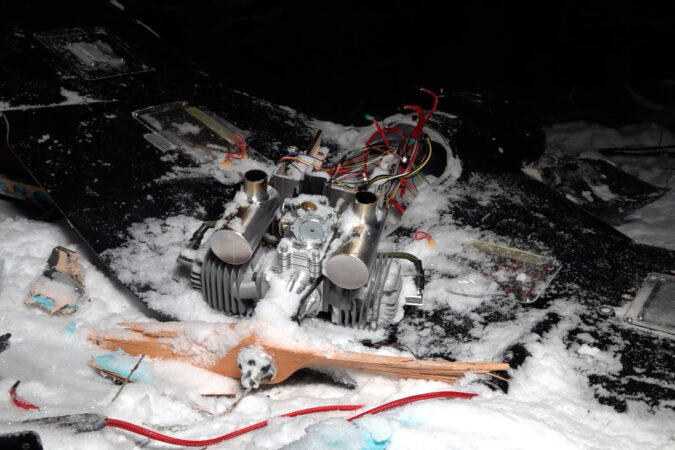
    On Wednesday, Russia’s Defense Ministry also released a video on Wednesday of a downed drone it said was involved in the attack.

    The nighttime clip showed a man wearing camouflage, a helmet, and a Kevlar vest standing near a damaged drone lying in snow. The man, his face covered, talks about the drone. Neither the man nor the Defense Ministry provided any location or date and neither the video nor its claims could be independently verified.

    Kyiv has called the allegations of an attack on Putin’s residence a ruse to derail ongoing peace negotiations, which have ramped up in recent weeks on both sides of the Atlantic.

    In his New Year’s address, Ukrainian President Volodymyr Zelensky said that a peace deal was “90% ready” but warned that the remaining 10%, believed to include key sticking points such as territory, would “determine the fate of peace, the fate of Ukraine and Europe, how people will live.”

    Trump’s special envoy Steve Witkoff said Wednesday that he, Secretary of State Marco Rubio and Trump’s son-in-law and adviser Jared Kushner had a “productive call” with the national security advisers of Britain, France, Germany, and Ukraine “to discuss advancing the next steps in the European peace process.”

    “We focused on how to move the discussions forward in a practical way on behalf of (Trump’s) peace process, including strengthening security guarantees and developing effective deconfliction mechanisms to help end the war and ensure it does not restart,” Witkoff said in a post on X.

    Lead Ukrainian negotiator Rustem Umerov also reaffirmed that European and Ukrainian officials plan to meet Saturday. Zelensky is due to hold talks next week with European leaders.

    In the diplomatic sphere, Kyiv has also continued to push the International Atomic Energy Agency (IAEA) to take action against Russia for alleged attacks on electricity infrastructure deemed “critical for nuclear safety and security” at Ukraine’s nuclear power stations.

    The IAEA on Tuesday published a Note Verbale sent by Kyiv to the agency, saying that a Russian drone and missile attack on Dec. 23 had caused certain Ukrainian nuclear power plants to lose a “significant part of their off-site power connections.”

    Elsewhere in Ukraine, Russia attacked the Odesa region overnight, targeting civilian infrastructure in several waves of drone attacks, according to regional head Oleh Kiper.

    In a post on Telegram, Kiper said that a two-story residential building was damaged and that a drone hit an apartment on the 17th floor of a high-rise building without detonating. There were no casualties reported.

    In its daily report, Ukraine’s air force said air defense forces had downed or suppressed 176 of 205 drones targeting the country overnight. It said hits by 24 strike drones were recorded at 15 locations and the attack was still ongoing.

  • An effort to resurrect Florida’s oyster industry

    An effort to resurrect Florida’s oyster industry

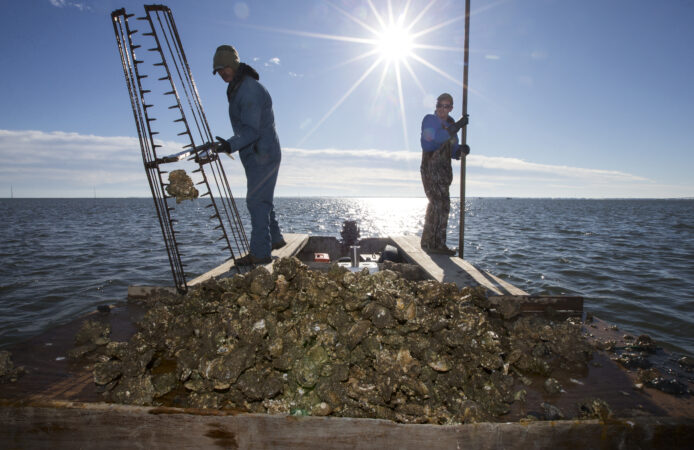
    Chad Hanson remembers a time, not so long ago, when driving on a bridge across Florida’s Apalachicola Bay meant witnessing an astounding sight.

    “You’d see just boats lined up along the reefs and spread out,” he said of the hundreds of oyster fisherman that used to harvest from roughly 10,000 acres of the bay, about 75 miles southwest of Tallahassee.

    For generations, those boats helped fuel the local economy and provided 90% of the oysters harvested in Florida, as well as about 10% of the nation’s wild caught oysters.

    “Pretty much the whole community, in one way or another, was involved with the oyster industry,” said Hanson, a science and policy officer for the Pew Charitable Trusts who works on conservation issues around the Southeast.

    Now, more than a decade after the once-iconic industry began to fade — and five years after harvesting was shuttered completely — Apalachicola’s storied oyster beds have opened once more, on the first day of 2026.

    In 2013, the fishery entered a precipitous decline, the result of pressures such as excessive drought, overharvesting, the loss of reef material and long-running water disputes along the rivers that feed the bay — a reflection of stressors that have affected oyster populations across the Gulf of Mexico and beyond.

    By 2020, Florida had imposed a five-year oyster harvesting ban, in an effort to try to jump-start an ecological recovery.

    When harvesting in Apalachicola begins anew, it won’t be anything like the glory days just yet, with a truncated season, fewer permits available to access fewer acres and catches strictly monitored and limited.

    But for folks such as Shannon Hartsfield, a fourth-generation Franklin County fisherman, it’s something.

    “How can I put it?” Hartsfield, 56, said on a recent afternoon. “It’s a step forward, but it’s not going to be enough to say you can make a living in the bay.”

    The decision to reopen the bay

    In the fall, Florida’s Fish and Wildlife Commission voted unanimously to reopen Apalachicola Bay to oyster harvesting on Jan. 1 — a decision that drew swift praise from Gov. Ron DeSantis, a Republican.

    “Apalachicola’s oyster industry has been the cornerstone of Florida’s seafood economy for generations. No place knows oysters better than Apalachicola,” DeSantis said at the time.

    “I look forward to continuing to invest in restoration activities that support the long-term restoration of Apalachicola Bay and the communities that rely on it,” DeSantis said.

    The approval came with a series of restrictions. To begin with, the state will allow only a two-month season, ending on Feb. 28. If all goes well, officials plan to reopen future seasons beginning in October.

    For now, the state considers only about 500 acres suitable for harvesting, and commercial crews who qualify for a permit will be allowed to fish Monday through Friday along four small, designated reefs.

    Each permit holder also will be limited to a certain number of bags from each reef. A bag is equal to two 5-gallon buckets, one 10-gallon bucket, or 60 pounds of oysters.

    No one is pretending that such modest limits are enough to bring back oystering jobs that have been lost over the years, or to immediately make harvesting a sustainable line of work again in Apalachicola, where some oystermen have sold their boats and many have had to seek other kinds of work.

    “I just don’t know how it’s going to be,” said Hartsfield, who said he quit harvesting oysters in 2013 but has helped academic researchers with their ongoing search for solutions. “We have a drop in the bucket compared to what we used to have.”

    Merely reaching the point of being able to temporarily reopen Apalachicola Bay to harvesting took years of work and significant funding.

    Numerous small-scale restoration efforts have unfolded during the years of closure, but the largest effort came in 2024, when the state’s fish and wildlife commission constructed 77 acres of new reef on degraded oyster habitat, the agency said.

    State officials have set a long-term goal to restore 2,000 acres of oyster reefs in the bay by 2032 — still a fraction of what once existed, but far more than its recent lows.

    The state also hopes to reestablish an oyster fishery with a long-term “cultch” program, in which oyster shells or other material are added back onto reefs to create an ideal habitat for baby oysters to attach and grow.

    Such a program “is necessary component of any sustainable oyster fishery,” state wildlife officials wrote in a recent presentation.

    “The success of oyster recovery in Apalachicola Bay, which includes a viable oyster fishery, depends on continued restoration and reef maintenance,” the agency wrote, estimating that such efforts will require an annual budget between $30 million and $55 million.

    A budget proposal rolled out by DeSantis in December seeks $30 million in funding to expedite the state’s efforts to restore oyster habitats, including $25 million in Apalachicola Bay. But even if that amount ultimately is approved, restoring resilience in the estuary will take time.

    “I’ll be frank,” said Hanson, who also serves on the board of the Partnership for a Resilient Apalachicola Bay. “Oyster restoration and habitat rebuilding is on the order not of years, but decades.”

    Stress on the industry across the region

    The pressures facing Florida’s once-renowned oyster industry are not unique. Other oyster populations around the Gulf of Mexico have faced declines in recent years for a litany of reasons, including habitat loss, pollution, and damage from storms.

    Recently, Alabama announced that the state would close all public water bottoms oyster harvesting on Dec. 23 after one of the worst harvests in years.

    State conservation officials said in a statement that surveys of reefs “suggest Alabama’s oyster populations have faced multiple stressors in recent years which have led to a population decline.”

    Those threats extend across much of the Gulf Coast — and far beyond — said Tom Wheatley, a conservation project director for Pew. “It’s a global issue,” he said.

    Indeed, researchers have estimated that as much as 85% of oyster reefs have been lost. Those losses matter not only because of the fishing industry they support, but also because of the habitat they provide for other marine life and the critical role they play in improving water quality and helping buffer the impacts of storm surges and waves.

    Hanson said so much work remains in Apalachicola Bay before its beloved reefs resembled anything from decades ago. But he sees the reopening of the harvest season as a small step to a potentially brighter future.

    “Hopefully, this is the beginning of a success story,” he said.

    Hartsfield, like others who come from generations of oyster families, shares that hope. He said he plans to be back out on the water come January, and so does his 78-year-old father.

    But he also knows how delicate the situation remains. How if another drought hits hard, or salinity levels aren’t just right, or other threats deepen, “It could go right back to where it was” when officials closed the bay in 2020.

    “Right now, for the next few years, we will just be waiting to see what happens,” he said. “It’s very fragile.”

  • Trump, in interview, defends his energy and health

    Trump, in interview, defends his energy and health

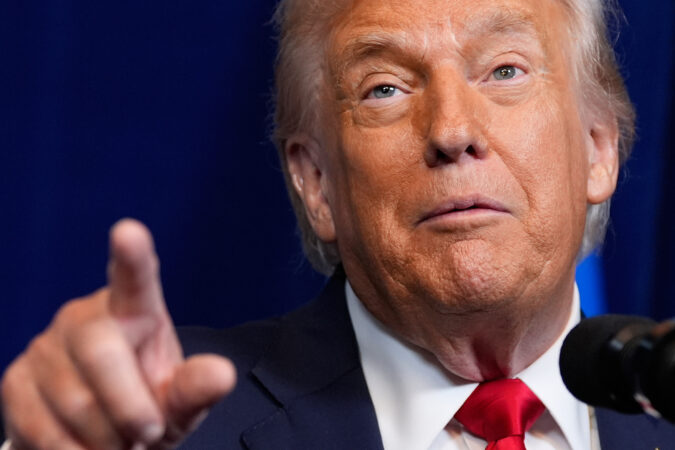
    WASHINGTON — President Donald Trump defended his energy and health in an interview with the Wall Street Journal and disclosed that he had a CT scan, not an MRI scan, during an October examination about which he and the White House delayed offering details.

    Trump, in the interview, said he regretted undergoing the advanced imaging on his heart and abdomen during an October visit to Walter Reed National Military Medical Center because it raised public questions about his health.

    His physician said in a memo the White House released in December that he had “advanced imaging” as a preventative screening for men his age.

    Trump had initially described it as an MRI but said he didn’t know what part of his body he had scanned. A CT scan is a quicker form of diagnostic imaging than an MRI but offers less detail about differences in tissue.

    The president’s doctor, Navy Capt. Sean Barbabella, said in a statement released Thursday by the White House that Trump underwent the exam in October because he planned to be at Walter Reed to meet people working there. Trump had already undergone an annual physical in April.

    “President Trump agreed to meet with the staff and soldiers at Walter Reed Medical Hospital in October. In order to make the most of the President’s time at the hospital, we recommended he undergo another routine physical evaluation to ensure continued optimal health,” Barbabella said.

    Barbabella said that he asked the president to undergo either a CT scan or MRI “to definitively rule out any cardiovascular issues” and the results were “perfectly normal and revealed absolutely no abnormalities.”

    White House press secretary Karoline Leavitt said in a statement Thursday that the president’s doctors and the White House have “always maintained the President received advanced imaging” but said that “additional details on the imaging have been disclosed by the President himself” because he “has nothing to hide.”

    “In retrospect, it’s too bad I took it because it gave them a little ammunition,” Trump said in the interview with the Wall Street Journal published Thursday. “I would have been a lot better off if they didn’t, because the fact that I took it said, ‘Oh gee, is something wrong?’ Well, nothing’s wrong.”

    Trump, 79, became the oldest person to take the oath of office when he was sworn in as president last year and has been sensitive to questions about his health, particularly as he has repeatedly questioned his predecessor Joe Biden’s fitness for office.

    Biden, who turned 82 in the last year of his presidency, was dogged at the end of his tenure and during his abandoned attempt to seek reelection over scrutiny of his age and mental acuity.

    But questions have also swirled around Trump’s health this year as he has been seen with bruising on the back of his right hand that has been conspicuous despite a slathering of makeup on top, along with noticeable swelling at his ankles.

    The White House this summer said the president had been diagnosed with chronic venous insufficiency, a common condition among older adults. The condition happens when veins in the legs can’t properly carry blood back to the heart and it pools in the lower legs.

    In the interview, Trump said he briefly tried wearing compression socks to address the swelling but stopped because he didn’t like them.

    The bruising on Trump’s hand, according to Leavitt, is from “frequent handshaking and the use of aspirin,” which Trump takes regularly to reduce the risk of heart attack and stroke.

    He said he takes more aspirin than his doctors recommend but said he has resisted taking less because he’s been taking it for 25 years and said he is “a little superstitious.” Trump takes 325 milligrams of aspirin daily, according to Barbabella.

    “They say aspirin is good for thinning out the blood, and I don’t want thick blood pouring through my heart,” Trump said. “I want nice, thin blood pouring through my heart. Does that make sense?”

    Trump, in the interview, denied that he has fallen asleep during White House meetings when cameras have caught him with his eyes closed, instead insisting that he was resting his eyes or blinking.

    “I’ll just close. It’s very relaxing to me,” he said. “Sometimes they’ll take a picture of me blinking, blinking, and they’ll catch me with the blink.”

    He said that he’s never slept much at night, a habit he also described during his first term, and said he starts his day early in the White House residence before moving to the Oval Office around 10 a.m. and working until 7 or 8 p.m.

    The president dismissed questions about his hearing, saying he struggled to hear only “when there’s a lot of people talking,” and said he has plenty of energy, which he credited to his genes.

    “Genetics are very important,” he said. “And I have very good genetics.”