Category: Washington Post

  • Trump officials say they will dismantle ‘global mother ship’ of climate and weather forecasting

    Trump officials say they will dismantle ‘global mother ship’ of climate and weather forecasting

    The Trump administration said Tuesday it was breaking up one of the world’s preeminent earth and atmospheric research institutions, based in Colorado, over concerns about “climate alarmism” — a move that comes amid escalating attacks from the White House against the state’s Democratic lawmakers.

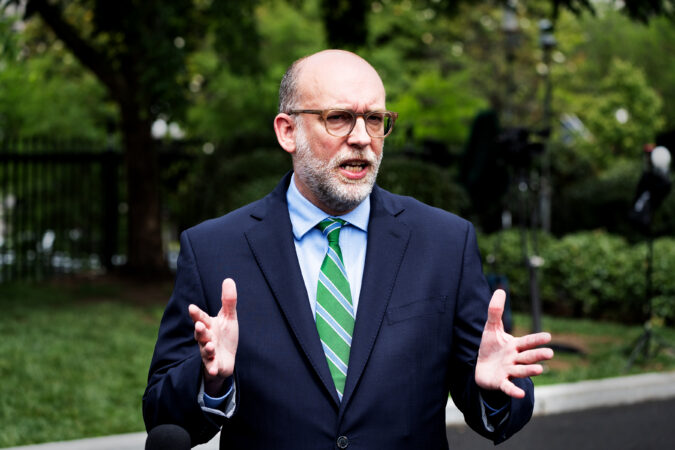
    “The National Science Foundation will be breaking up the National Center for Atmospheric Research (NCAR) in Boulder, Colorado,” wrote Russell Vought, the director of the White House Office of Management and Budget on X. “This facility is one of the largest sources of climate alarmism in the country.”

    The plan was first reported by USA Today.

    The NCAR laboratory in Boulder was founded in 1960 at the base of the Rocky Mountains to conduct research and educate future scientists. Its resources include supercomputers, valuable datasets, and high-tech research planes.

    The announcement drew outrage and concern from scientists and local lawmakers, who said it could imperil the country’s weather and climate forecasting, and appeared to take officials and employees by surprise.

    NCAR’s dismantling would be a major loss for scientific research, said Kevin Trenberth, a distinguished scholar at NCAR and an honorary academic in physics at the University of Auckland in New Zealand.

    Trenberth, who joined NCAR in 1984 and officially retired in 2020, said the research center is key to advanced climate science discoveries as well as in informing the climate models that produce the weather forecasts we see on the nightly news.

    Colorado Gov. Jared Polis said in a statement that the state had not received information about the administration’s intentions to dismantle NCAR.

    “If true, public safety is at risk and science is being attacked,” said Polis. “Climate change is real, but the work of NCAR goes far beyond climate science. NCAR delivers data around severe weather events like fires and floods that help our country save lives and property, and prevent devastation for families.”

    The action comes as Republicans have escalated their attacks on Polis and others in the state for their handling of a case involving Tina Peters, a former county clerk in Colorado who was convicted in state court on felony charges related to efforts to overturn the 2020 presidential election. President Donald Trump announced last week that he is pardoning Peters, who is serving a nine-year sentence, but it is unclear whether Trump has that authority, because she was not convicted in federal court.

    In a joint statement, Colorado’s two Democratic senators, John Hickenlooper and Michael Bennet, and Rep. Joe Neguse (D., Colo.) slammed the move and vowed to fight back against it.

    In his social media post, Vought said that “any vital activities such as weather research will be moved to another entity or location” — but did not specify further.

    “The Colorado governor obviously isn’t willing to work with the president,” said a White House official, who spoke on the condition of anonymity because they were not authorized to discuss the matter publicly.

    The official declined to cite any specifics about how Polis is refusing to cooperate, from the administration’s perspective, but denied that the move was in response to the state’s refusal to release Peters from prison.

    The facility “is not in line with the president’s agenda,” the official added, noting that it had “been on the radar” of the administration “for a while.”

    The National Science Foundation, the federal science agency that funds the center, was blindsided by the announcement, according to a person familiar with NSF operations who spoke on the condition of anonymity to avoid retribution. But they said facilities managers at NSF will need to be involved in moving assets or capabilities. An NSF spokesman did not immediately respond to questions about the plan to dismantle NCAR.

    Antonio Busalacchi, the president of the University Corporation for Atmospheric Research, which oversees NCAR, said it was aware of reports to break up the center but did not have “additional information about any such plan.”

    “Any plans to dismantle NSF NCAR would set back our nation’s ability to predict, prepare for, and respond to severe weather and other natural disasters,” Busalacchi said.

    An internal email obtained by the Washington Post, sent Tuesday night, emphasized the critical work NCAR does for “community safety and resilience.”

    Busalacchi wrote that the news had come as a shock, and the institution had reached out to NSF for more information. “We understand that this situation is incredibly distressing, and we ask that you all continue doing what you have done so well all year — provide support for one another as we navigate this turbulent time,” Busalacchi wrote.

    The center is “quite literally our global mother ship,” Katharine Hayhoe, a Texas Tech University professor and chief scientist for the Nature Conservancy, wrote on X. “Dismantling NCAR is like taking a sledgehammer to the keystone holding up our scientific understanding of the planet.”

    NCAR plays a unique role in the scientific community by bringing together otherwise siloed specialists to collaborate on some of the biggest climate and weather questions of our time, Caspar Ammann, a former research scientist at the center, said in an email.

    “Without NCAR, a lot could not happen,” he said. “A lot of research at US Universities would immediately get hampered, industry would lose access to reliable base data.”

    Ammann added that around the world, weather and climate services use NCAR modeling and forecasting tools.

    The Colorado-based center draws scientists and lecturers from all over the world, and through its education programs has helped produce future scientists, Trenberth said.

    He said he feared not just for the discoveries and data that would be lost if the center were to close, but for the early careers that could also be affected or destroyed.

    “If this sort of thing happens, things will go on for a little while,” he said. “But the next generation of people who deal with weather and science in the United States will be lost.”
  • Mamdani gets 74,000 resumés in sign of New York City’s job-market misery

    Mamdani gets 74,000 resumés in sign of New York City’s job-market misery

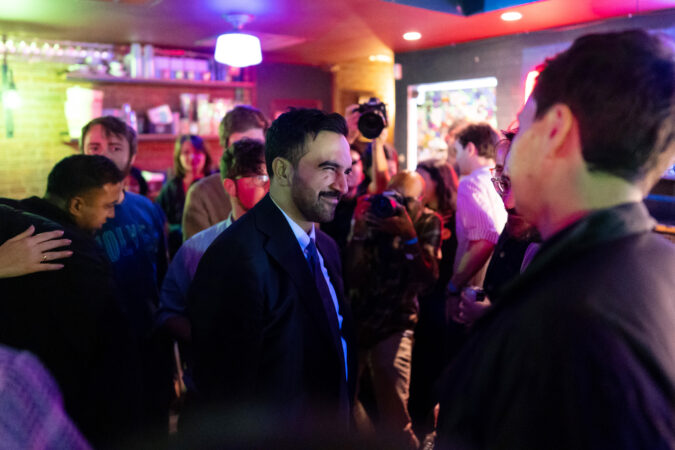
    More than 74,000 people, with an average age of 28, have applied for roles in Zohran Mamdani’s new administration. Those figures are both a measure of enthusiasm for New York City’s incoming mayor and a sign of how tough the job market is for young people in the five boroughs.

    Young voters and volunteers fueled the 34-year-old Mamdani’s fast rise from a relatively unknown Queens assemblyman to mayor-elect of America’s largest city. A lot of them had time on their hands: New Yorkers aged 16 to 24 faced a 13.2% unemployment rate in 2024, 3.6 percentage points higher than in 2019, according to a May report from the New York state comptroller.

    New York City had a 5.8% unemployment rate overall in August, 1.3 percentage points above the U.S. average. The city added roughly 25,000 jobs this year through September, compared with about 106,000 during the same period in 2024, according to city data.

    Mamdani’s campaign pledge to lower the cost of living in New York resonated with voters struggling to find jobs and establish themselves at a time when rents have stayed high and income growth has slowed. Now he’s looking to hire an unspecified number of roles across 60 agencies, 95 mayoral offices, and more than 250 boards and commissions, with senior roles a priority, according to his transition team.

    The typical size of the New York City mayoral staff — commissioners, communications, operations and community affairs — is about 1,100, according to Ana Champeny, vice president of research at the Citizens Budget Commission, a nonprofit finance watchdog. City government in total hired 39,455 people in 2024, according to New York City data.

    Applications for roles in Mamdani’s administration have come from workers of all experience levels and from a wide range of backgrounds and industries, said Maria Torres-Springer, co-chair of the mayor-elect’s transition team. About 20,000 of the applicants came from out of state.

    When Barack Obama was elected U.S. president in 2008, workers submitted more than 300,000 job applications to his administration. Blair Levin, who co-led the technology transition team for Obama, said he received around 3,000 of those resumes. He whittled the pool down to 75, a relatively easy task because he needed applicants with specific tech and economics skills, he said.

    Without invoking the term “AI,” Torres-Springer said the applications would be filtered using “the typical technology that any big corporation would have in an applicant-tracking system.” The resumes will then be sorted and matched to different agencies.

    Mamdani’s avid use of social media, which helped him connect with young people during his campaign, has continued into his transition efforts, creating excitement — among young people especially — about the prospect of joining his administration.

    “The average age does tell a particularly interesting story in two ways,” Torres-Springer said. “It might be because of volatility in the job market but it’s also because I think we are attracting, the administration is attracting, New Yorkers who may not have considered government in the past.”

    Take David Kinchen, a 28-year-old data engineer who moved to New York from northern Virginia three years ago. Since getting laid off from a job in fraud detection at Capital One, he has applied for more than 1,000 roles and completed at least 75 interviews without an offer, he said. Kinchen volunteered for Mamdani’s campaign and applied to the administration, highlighting his tech credentials and a passion for photography.

    “I did data engineering, so I could help with database decisions. There was also a creative option on the application, since I could work as a staff photographer too,” Kinchen said.

    Another applicant, 22-year-old Aurisha Rahman, has struggled to find a job since graduating with a civil-engineering degree from Hofstra University on Long Island.

    “The job market is even worse than it was last fall,” Rahman said. Mamdani’s resumé portal was one of the few places she found open to entry-level applicants.

    Rahman, who was born and raised in Queens, said she wants to give back to the city where she was raised and wouldn’t be picky about a position. “Whatever they need, I’ll do it. I don’t care,” she said. “Right now, it’s better to be busy with something than nothing.”

  • Trump administration admits to targeting blue states for energy grant cuts

    Trump administration admits to targeting blue states for energy grant cuts

    The Trump administration acknowledged in a court filing this week that a decision to cut energy grants during the government shutdown was influenced by whether the money would go to a state that tended to elect Democrats statewide or nationally.

    Government lawyers also wrote in the filing that “consideration of partisan politics is constitutionally permissible, including because it can serve as a proxy for legitimate policy considerations.”

    The remarkably candid admission echoes President Donald Trump’s frequent vows to punish cities and states that he sees as his enemies, from withholding disaster relief for Southern California to targeting blue cities with National Guard troops.

    It could also raise the possibility that federal attorneys might make similar arguments in legal challenges to other unilateral cuts implemented by the administration for blue cities and states.

    The White House budget office and the Energy Department did not respond to requests for comments about the new filing.

    A coalition of Minnesota clean energy groups and the city of St. Paul sued the Trump administration last month in the U.S. District Court for the District of Columbia after the Energy Department announced it was slashing 321 grants of about $7.5 billion. The cuts included projects to kick-start the hydrogen industry in California, upgrade the electricity grid serving Indigenous communities in New Mexico and generate new energy mostly from wind and solar in Minnesota.

    At the time, Trump’s budget director, Russell Vought, touted the cuts on X, declaring “nearly $8 billion in Green New Scam funding to fuel the Left’s climate agenda is being canceled” and listed blue states.

    California’s Democratic lawmakers had complained about partisan interference in the grant cuts, demanding an investigation by the Energy Department’s acting inspector general. Acting inspector general Sarah B. Nelson wrote in a letter to Democrats this week that her office would be looking into the process for canceling grants “and whether those cancellations were in accordance with established criteria.”

    In their lawsuit, the Democratic city and clean energy groups argue that cuts to funding in Minnesota were entirely politically motivated. Justice Department attorneys did not agree that it was solely a political decision but instead claimed that politics was one factor.

    During the record-long government shutdown that ended in November, Trump and his allies said they would target Democratic priorities and cut funding to programs in mostly Democratic-controlled states.

    “A lot of good can come down from shutdowns,” Trump told reporters in October. “We can get rid of a lot of things we didn’t want, and they’d be Democrat things.”

    At the same time, the government has previously been careful not to invoke political considerations in court cases about its decision-making. In an earlier filing in the same St. Paul case, government attorneys wrote that the terminations were “part of a months-long review process by DOE, and the grant terminations made as part of this review process include entities located in both ‘Red States’ and ‘Blue States’ alike.”

    The Monday filing marked the first time the government had acknowledged in the court documents that politics was a factor.

    Legal experts said the administration’s statement marks a significant departure from legal norms in which agencies have traditionally steered clear of pointing to partisanship in such cases.

    “It really undermines the idea that you’re passing neutral laws that you know are supposed to apply equally to everybody,” said Dan Farber, a professor of law at the University of California at Berkeley. “I find it really startling they would make that concession.”

    The groups are alleging that the administration violated their First Amendment rights by targeting a state that voted for Democrat Kamala Harris in the 2024 presidential election.

    David Super, a law professor at Georgetown University, said the free speech claim could chart a new course for grantees impacted by cuts after the Supreme Court previously rejected an effort to restore research funding through the National Institutes of Health based on the argument that the cuts were arbitrary and capricious.

    “I cannot believe that the Supreme Court would want to allow a partisan tit-for-tat to develop with each party pulling grants from its perceived partisan foes, but one can never be entirely certain these days,” Super wrote in an email.

    Eric Schickler, a political science professor at the University of California at Berkeley, said the administration may make the argument that politics can be a proxy for policy considerations in other instances where blue states are systematically disadvantaged, especially if it proves successful in this case. Farber, however, said that the blue cities and states suing the administration could use this latest concession against them in legal attacks.

    “I believe this is likely a preview of a strategy that the administration will adopt more broadly if the courts go along with it,” Schickler said.

    The admission aligned with what some Energy Department employees noticed over the past several months in the cancellation of grants, according to two workers there who spoke on the condition of anonymity out of fear of retribution.

    One worker said there were internal discussions at Energy about canceling projects across the country, and that staff were told it would be based on an independent review of criteria including technical merit and alignment with administration objectives. But when she saw a leaked list of canceled grants over the summer, it only effected projects in mostly blue areas: Washington, New York, Illinois, and Massachusetts.

    The second Energy worker said that, over months, he noticed the same: “One of the most important factors deciding which projects get canceled is what state is the performer in. Is it in a blue or a red state?”

    A few times, he and his co-workers tried to make the system work to their advantage.

    They would take a project with an original location of New York or California and try to find ways to move the same work to Iowa or Georgia — anywhere tinged red. The original recipient of the project was often bummed, he said, but willing to try to salvage the federal funding and the project, even if it went to someone else. It’s not yet clear if that strategy will pan out, he said.

    “The work is fine, the administration likes the work, they just don’t like the person doing it,” he said. “It sucks, but it’s better to have the work happen.”

  • Marjorie Taylor Greene says ‘dam is breaking’ within GOP against Trump

    Marjorie Taylor Greene says ‘dam is breaking’ within GOP against Trump

    Rep. Marjorie Taylor Greene (R., Ga.) on Tuesday said President Donald Trump has “real problems” within the Republican Party, adding in an interview with CNN that the president is out of touch with voters on key issues such as affordability.

    Greene told Kaitlan Collins on The Source that the “dam is breaking” in terms of Trump’s hold on support within the party and that she expects Republicans to struggle in next year’s midterm elections.

    Citing the backlash to Trump’s comments on the death of director Rob Reiner, the 13 House Republicans who voted with Democrats to overturn Trump’s executive order on collective bargaining and Indiana Republicans’ rejection of the president’s redistricting push, Greene said she expected “pushback” within the party to grow as lawmakers enter the campaign phase for the upcoming elections.

    “I think the midterms are going to be very hard for Republicans,” Greene said. “I’m one of the people that’s willing to admit the truth and say I don’t see Republicans winning the midterms right now.”

    The White House did not immediately reply to a request for comment on Greene’s interview.

    Greene had carved out a high-profile role as one of Trump’s most vocal allies, first in the “Make America Great Again” movement and then with her support for the “America First” agenda. But after weeks of speaking out against the president on several issues, Greene and Trump had an acrimonious public split last month after she joined with Democrats on a discharge position to compel a House vote calling on the Justice Department to release files related to convicted sex offender Jeffrey Epstein.

    Trump, who has called Greene a “Lunatic” and “traitor,” withdrew his endorsement of her reelection. Days after the spat, Greene announced she would resign from Congress as of Jan. 5 and has since criticized the administration for being out of touch with core issues affecting MAGA voters, such as the cost of living and healthcare.

    Speaking to the Washington Post this week, Greene described herself as a “bellwether” who is closely attuned to Trump’s base. “I say it, and then within four to six months, everybody’s saying the same thing,” she said.

    Trump’s advisers have put the criticism down to “cyclical” feedback and have planned for weekly election rallies so Trump can highlight his achievements, the Post has reported. Polling shows Trump maintains support from the vast majority of the party, even though recent polling shows this has dipped slightly below the usual 90% approval mark.

    In the CNN interview Tuesday, Greene said she had only broken with Trump on a few issues — such as the release of the Epstein files, artificial intelligence regulation and foreign workers — “but he came down on me the hardest.”

    “He’s got real problems with Republicans within the House and the Senate that will be breaking with him on more things to come,” she added.

    Greene also said Trump’s supporters “didn’t appreciate” the president’s reaction to the death of Rob Reiner, who was found stabbed to death alongside his wife, photographer Michele Singer Reiner, in their Los Angeles home Sunday. The couple’s son Nick Reiner faces two counts of first-degree murder, among other charges, in their deaths.

    In a social media post less than a day after the Reiners’ bodies were found, Trump suggested the director’s death was somehow linked to his past criticism of the president: “He was known to have driven people CRAZY by his raging obsession of President Donald J. Trump, with his obvious paranoia reaching new heights as the Trump Administration surpassed all goals and expectations of greatness, and with the Golden Age of America upon us, perhaps like never before. May Rob and Michele rest in peace!”

    Trump’s comments drew bipartisan backlash, including from some prominent figures on the right.

    “I thought that statement was absolutely, completely below the office of the president of the United States,” Greene told CNN. “Classless and it was just wrong.”

    In the interview, Greene described affordability as a “crisis” that Trump has failed to tackle.

    “What I would like to see from the president is empathy for Americans,” she said.

    “Donald Trump is a billionaire, and he’s the president of the United States. When he looks into a camera and says affordability is a hoax and just totally tries to make nothing out of inflation, he’s talking to Americans that are suffering, and have been suffering for many years now, and are having a hard time making ends meet.”

  • A Trump-touted drug for autism is now in demand, but doctors see a dilemma

    A Trump-touted drug for autism is now in demand, but doctors see a dilemma

    Pediatrician Kristin Sohl has lost count of how many times parents of children with autism have asked her for a prescription for leucovorin — the drug thrust into the spotlight after President Donald Trump touted it at a White House event this fall.

    Since September, despite the rising queries, Sohl has typically told her patients no.

    Early clinical trials of the drug showed hints of promise in boosting communication and cognition for some children with autism. But the studies have been small, often just a few dozen participants. Normally, approval by the Food and Drug Administration comes only after years of large-scale testing. But Trump’s pledge to fast-track the drug in September, bypassing that process, has left many doctors on the front lines divided.

    “It leaves me as a practicing physician with a lot of unanswered questions,” said Sohl, a professor of pediatrics at the University of Missouri School of Medicine, who has been working in the field of autism for over 20 years.

    As interest in the drug surges, Facebook groups devoted to it are swelling in membership, message boards are inundated with questions, and Google searches are climbing. Physicians, who typically rely on evidence-based guidelines and clear treatment algorithms, are finding that with leucovorin they must — lacking robust scientific data — improvise. Some are cautiously moving forward with prescribing the drug, but many are still holding off.

    At Children’s National Hospital in Washington, D.C., neurodevelopmental pediatrician Sinan Turnacioglu said the hospital convened a meeting of various departments — including those specializing in autism, developmental pediatrics, genetics and psychiatry, as well as primary care doctors — to come up with a systemwide policy. Their conclusion: that they would like to see more robust research before prescribing it.

    Peter Crino, chair of neurology at the University of Maryland School of Medicine and who runs a clinic for neurodivergent adults, likewise said he believes the medication is not ready for prime time.

    “People are asking me a lot about it, but I do not prescribe it. Gosh I hope there will be something to the drug and it will help people in the future, but the data is simply not there yet,” he said.

    Limited evidence

    Each conversation Sohl has with families unfolds differently, she said, shaped by a child’s history, a parent’s worry, a flicker of hope. But the script she follows is steady: she lays out what research has shown — and what it doesn’t — about the treatment, then asks what the family hopes the drug might change.

    In a field with no cure and few therapies, she uses that same framework to guide discussions about the other latest supposed breakthroughs drifting across social media — broccoli extracts, CBD oil, stem cell therapy, and more. The goal isn’t to dismiss any ideas outright but to ground them in evidence, or show the lack of it, before families decide what to do next.

    For leucovorin, Sohl’s main message is that “we’re not on solid science yet.” However, there are “potential suggestions of benefit.”

    Leucovorin or folinic acid has a long history of use in the context of cancer for about 50 years. It’s been shown to protect healthy cells from the toxic effects of one particular chemotherapy drug and to enhance the effectiveness of another one. Side effects were very minimal but in cancer patients have included nausea and fatigue.

    For some children with autism, the immune system may produce antibodies that block the body’s ability to move folate — a vitamin essential for cell growth and DNA production — into the brain. Leucovorin, a prescription form of folate, offers a potential workaround. It crosses the blood-brain barrier by a different route, delivering the nutrient where it’s needed.

    The U.S. clinical trial that got Trump’s attention is being conducted by Richard E. Frye, a pediatric neurologist who was formerly an associate professor at Arizona Children’s Hospital in Phoenix. Its design was considered the gold standard — a randomized, double-blind placebo-controlled trial — but it only had 48 children, ages 5 to 12, in it. In the trial — published in 2018 in the journal Molecular Psychiatry — the drug was well-tolerated and the parents and doctors reported improvements in communication and behavior.

    Frye said in an interview that leucovorin did not work on all of his patients. But it did work for many and that children with no verbal utterances began showing meaningful word approximations, for example, and that those with phrase speech began forming full sentences.

    There have been four subsequent trials in other countries, and all four of them also reported significant improvements and no serious harm. But they were also very small. A study in France with 19 patients was published in 2020, in Iran with 55 patients in 2021, in India with 40 patients in 2024, and in China with 80 patients in 2025.

    The Trump administration latched onto promising research and promoted efforts to expand access to leucovorin for autism, despite the lack of large-scale clinical trials.

    But since then, doctors have been proceeding cautiously. At least two influential medical societies have come out with their own interim recommendations. The American Academy of Pediatrics and the Society for Developmental & Behavioral Pediatrics both do not recommend the routine use of leucovorin for children with autism. But the AAP left an opening for doctors to prescribe it, stating that pediatric care providers “are encouraged to engage in shared decision-making with families who inquire about or request leucovorin, providing clear information about current evidence and potential risks.”

    Crino said that many medical research papers — including those on leucovorin — are written in ways families can understand, and he encourages patients and their families to read the primary studies themselves. He often reviews the papers with them, he added, pointing out the limitations of the research. In the 2024 study, which was published in the European Journal of Pediatrics, for example, the authors reported that many children showed improvements in speech, but none went from nonspeaking to speaking, and the study offered no evidence about whether those changes affected daily life.

    “There is a lot going on in scientific research that is getting twisted,” he said.

    Turnacioglu said that some of his patients receive leucovorin from other providers. In those cases, he focuses on monitoring their progress by first establishing a baseline assessment of language and adaptive skills and then repeating the same evaluations periodically to track any changes.

    In those cases, he focuses on monitoring their progress by first establishing a baseline assessment of language and adaptive skills and then repeating these evaluations periodically to track any changes.

    He said the growing interest in leucovorin reflects a broader shift toward more personalized autism treatments, fueled by recent research that supports what clinicians have long observed: autism is not a uniform condition that exists along one continuous spectrum, but rather a collection of distinct conditions that have been grouped under a single label. As a result, different people may require different treatments.

    “We don’t yet have enough information to use those findings to guide leucovorin treatment,” Turnacioglu said. “But it’s the kind of direction I’m excited about — figuring out which patients are going to respond to particular treatments.”

    An exception

    Sohl is part of a team of pediatricians who helped draft the AAP guidelines.

    The patients that have approached her are all ages and across the spectrum, including adults and individuals with strong verbal skills. For months, she’d explained her reasons for holding back on leucovorin, and most families accepted them.

    Then, in October, a patient sat across from her and she began to wonder if this might be an exception.

    He was a teen boy she describes as minimally speaking, whom Sohl had been treating for 10 years. She was impressed by his knowledge of the research on leucovorin, his deep and realistic understanding of the potential risks and benefits, and his eagerness to document any changes both quantitatively and in narrative form. Sohl will be meeting with her patient each month to go over any changes.

    “I have low expectations, his mom has low expectations, he has low expectations. But we all agreed it was worth a therapeutic trial,” Sohl said.

    With the recent national attention, information about leucovorin has been spreading online far faster than through the slow, methodical channels of medical research, where studies and peer-reviewed papers can take years to emerge. She learns from the parents and patients who are often the first to encounter new ideas circulating in their communities and online.

    Sohl tells families that while the drug has shown very little in the realm of side effects, this is in the context of adults with cancer, not children with autism. She said she emphasizes that she does not think this is a dangerous medicine, but there has not been enough research.

    “I think it’s my duty as a doctor to say that I don’t know,” Sohl said, “and I want you to know I don’t know.”

  • TikTok’s mental health ‘rabbit hole’? It’s not in your head.

    TikTok’s mental health ‘rabbit hole’? It’s not in your head.

    At first, the mental health-related videos that popped up on Amy Russell’s TikTok feed made her feel seen. The tips and funny anecdotes about living with ADHD reminded her of herself — maybe her forgetfulness wasn’t a flaw but a symptom.

    After two years of learning about the condition on TikTok, she went to a doctor for an assessment. The resulting diagnosis changed her life for the better, she said, as she started taking medication and using strategies to manage daily tasks. She attributes the transformation in part to TikTok.

    There’s just one problem: Now she can’t get the ADHD videos off her feed. The more she scrolls, the stranger and less trustworthy the content becomes, she said. Her efforts to see less of it — scrolling past videos and not engaging — don’t seem to help.

    “You just keep finding more tunnels and it gets harder to find your way out,Russell, 35, said.

    She’s not imagining it. TikTok’s algorithm favors mental health content over many other topics, including politics, cats, and Taylor Swift, according to a Washington Post analysis of nearly 900 U.S. TikTok users who shared their viewing histories. The analysis found that mental health content is “stickier” than many other videos: It’s easier to spawn more of it after watching with a video, and harder to get it out of your feed afterward.

    “It felt like a rabbit hole to me because you kept going down deeper and deeper,” Russell said.

    TikTok uses an algorithm to select a video and gives users two main options: Watch it or skip past to something else. Along the way, the app learns what a user like Russell likes and dislikes, based on her watching and skipping behavior. It takes skipping past 1.3 videos, on average, to undo the effect of watching one full video about cats or politics, The Post analysis found. For mental health, it takes 2.2 skips — meaning users must work harder to get it out of their feeds.

    TikTok spokesperson Mahsau Cullinane criticized The Post’s methodology as incomplete and said it doesn’t “reflect the reality of how our recommendation system works.”

    This finding comes amid a broader debate on the role of algorithms and influencers in Americans’ understanding of mental health. Content about mental illness and neurological differences is extremely popular across social media apps, with about as many TikTok posts using the hashtag #mentalhealth as those that mention #sports, according to data from analytics firm Sprout Social. Mental health content on TikTok deals with not just conditions like depression or anxiety, but also living with a neurological type such as ADHD or autism.

    People are turning to social media for health information as Americans face a shortage of mental health professionals, barriers to accessing and paying for care, and lingering stigma. Information from social media helps underserved and underdiagnosed populations better understand themselves, many users say. What happens next, however, is rarely examined.

    Over the period that The Post examined Russell’s TikTok data, about one in 11 videos on her feed were mental-health-related. Russell, who spent more than an hour watching videos on many days, said the more she scrolled, the more often she saw videos from nonprofessionals that seemed designed to get a reaction rather than educate.

    Efforts to evaluate mental health content on TikTok support Russell’s impression. Anthony Yeung, a psychiatrist and University of British Columbia researcher, ran a study examining 100 top TikTok videos about ADHD and found that some were helpful, but about half were misleading. (Videos about creators’ personal experiences weren’t classified as misleading.) Other reviews of TikTok content about ADHD and autism by mental health practitioners have found similar results.

    “The algorithm says, ‘Well, you like this video about ADHD, even though it’s misleading, let’s give you another video,’” Yeung said. “And it becomes this very vicious feedback loop of misinformation.”

    The phenomenon is having a profound effect on real-world mental health treatment, clinicians say. Yeung said he deals with “two visions of what ADHD is”: the one discussed on social media and the one he sees among actual patients. On TikTok, ADHD content often paints with a broad brush, portraying common quirks or struggles as not just personal experiences but diagnostic criteria for the condition.

    One popular ADHD account, @lifeactuator, regularly earns views in the millions with titles like “What ADHD feels like” and “Things people with ADHD do despite knowing better.” One widely watched video with the caption “if the world was made for ADHD” depicts a Costco store with ADHD shoppers being chased around by store employees to stop them from making impulse purchases.

    Eric Whittington, the Arizona-based creator behind @lifeactuator, said that because of the constraints of short-form video, he’s not able to include all the information viewers might need to understand what, if anything, his videos reflect about ADHD as an actual medical condition. Taken individually, his videos probably apply to a broad swath of the population, he said — not just people with ADHD.

    “When you only have a minute to work with, it’s hard to add disclaimers on the content saying, ‘Yes, everybody experiences this from time to time, but if it happens all the time, you may have ADHD,’ ” he said.

    Rana Coniglio, an Arizona-based therapist who works primarily with Gen Z clients, said they often arrive at her practice already attached to a diagnosis they found on TikTok. Sometimes, that attachment makes it harder to accurately diagnose or make a treatment plan that could improve that person’s symptoms.

    “I have had people come to me and say, ‘Hey, I saw this video on TikTok and it’s actually the reason that I’m seeking therapy because it made me think I actually do need help,’ and there are benefits to that,” she said. “But I think the majority of people see a diagnosis, take it and run with it.”

    High volume, low quality

    For Ace Bannon, a 19-year-old in Utah, the more he watched, the darker the content became.

    Bannon first got curious about autism and its characteristics after learning that many of his best friends — people he’d met on a Discord server — were autistic. He started watching TikTok videos, with content about autism taking up a growing chunk of his feed. Then, TikTok served him video after video of autistic adults discussing the trauma they endured as children, Bannon said. Before long, he wanted his old algorithm back.

    “Because you’re interested, it starts recommending more of those videos and it makes you fall into these rabbit holes that you just want to get out of after a while, but you can’t.”

    Sometimes this experience actually exacerbates existing mental health problems, some users say. Kailey Stephen-Lane, 30, said she had to temporarily stop using the app because spending time on TikTok was worsening the symptoms of her obsessive compulsive disorder. While her real-life therapist was helping her sit with fears and insecurities without fixating, TikTok was “bombarding” her with videos about the very symptoms that made her so anxious, she said.

    “The TikToks that I’ve been getting are not helpful to my recovery,” she said. “They lead me down a lot of spirals, and me just clicking ‘not interested’ doesn’t seem to work anymore.

    TikTok provides a high-level description of some of the data its algorithm uses but few details. That makes it difficult to know why mental health videos are stickier than other topics, says Stevie Chancellor, an engineering professor at the University of Minnesota who studies AI and its risks, and whose research found that the algorithm creates a “runaway train” of mental health content.

    But the app’s business incentives offer some clues, Chancellor says. Maybe users who see a lot of mental health videos spend longer on the platform or are more likely to spend money down the line, she said. Maybe the effect is completely unintentional, an example of a black-box algorithm optimizing for what it thinks users want.

    “Watching [mental health] content might lead to other behaviors that are valuable on the platform,” Chancellor said.

    The topic may become sticky because it’s one “that a user only wants to engage with sometimes,” said Laura Edelson, a computer science professor at Northeastern University who collaborated with The Post in a parallel TikTok research effort.

    Cullinane, the TikTok spokesperson, said the company is “transparent” about how its feed works.

    For TikTok users, adjusting the type of content that shows up on their feeds can be hard. It’s not always clear when engaging with a certain video would spawn something undesirable: Even watching clips about romantic relationships made a user more likely to encounter mental health content, The Post’s analysis found. TikTok has gradually added options that could help users tailor their feeds, such as clicking a “not interested” button, blocking videos with certain keywords or resetting their algorithms from scratch. A new “Manage Topics” menu lets users adjust the prevalence of 12 specific topics on their For You page — but mental health isn’t one of them.

    As for Russell, she is glad for the journey toward an ADHD diagnosis because of TikTok. She just wishes her favorite type of content — lighthearted cat videos — got the same treatment from the app’s algorithm.

    “I want like 10-20% cute cat videos, probably even like 30%,” she said. “But those disappear really quickly.”

    Methodology

    Hundreds of TikTok users in the United States sent their watch history data to The Washington Post. We downloaded the collective 14.8 million videos they’d been shown and then sorted them into topics, based on keywords in the transcripts and on-screen text. The Post calculated the stickiness of each topic by computing the difference between the number of topical mental health videos each user had been shown in the previous 50 videos and how many they saw in the next 50. We averaged this for all videos, aggregated by whether the user watched at least 90% of the video, or skipped it.

  • The Trump administration’s immigration raids are testing this sanctuary city

    The Trump administration’s immigration raids are testing this sanctuary city

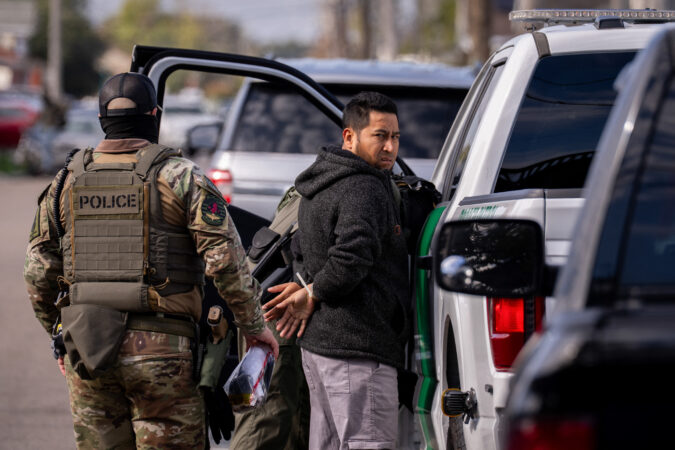
    GRETNA, La. — Siomara Cruz was not troubled when she saw two Latina immigrants handcuffed earlier this month by masked immigration agents outside a restaurant in this New Orleans suburb.

    “They need to do things the proper way,” said Cruz, 59, a housewife whose parents emigrated from Cuba. “The law is the law. Every country has their law, and you’ve got to respect it.”

    Across the street, Tracey Daniels said it was “awful” to see immigration agents in an unmarked SUV detain a Latino man outside the gas station kitchen where she was preparing lunch plates of red beans, rice, and fried catfish.

    “They’re just snatching these people, snatching them away from their families,” said Daniels, 61. “Now they got people afraid to come outside, businesses closing.”

    The immigration operation, dubbed Catahoula Crunch by the Department of Homeland Security, follows similar crackdowns in Chicago, Los Angeles, Charlotte, N.C., and other cities. DHS Assistant Secretary Tricia McLaughlin said in a statement earlier this month that 250 people had been arrested since the start of the operation.

    The mission is exposing stark divides in and around New Orleans that reflect broader national reactions to the administration’s immigration raids — and who should help enforce them.

    Across 10 national polls in November and early December, 43% approve of President Donald Trump’s handling of immigration, while 55% disapprove. The share of people who approve of Trump’s handling of immigration has dropped from about 50% in March. Last week, Illinois Gov. JB Pritzker, a Democrat, signed a law seeking to limit immigration enforcement in his state as he continues challenging the administration’s aggressive campaign there.

    New Orleans is a “sanctuary city,” where officials have historically refused to support federal immigration sweeps. But new state laws designed to penalize those who impede immigration enforcement could put officials and officers at risk if their departments do not cooperate with federal operations.

    And some surrounding police departments, including in Gretna, have signed 287(g) agreements to work with U.S. Immigration and Customs Enforcement to deport people who authorities say entered the country illegally.

    Those agreements have also divided residents. Some said that immigration enforcement should fall exclusively to federal agents — that having local officers partner on the issue risks alienating immigrant communities or violating people’s rights. But police supporting the operations said they get more complaints about crime in their communities than they do about Catahoula Crunch.

    Gretna Deputy Police Chief Jason DiMarco said his 150-person force needs to serve everyone in its diverse community, but added that having so many undocumented residents in the city makes it harder to identify suspected criminals. Last month, he said, local police accompanied ICE agents on a raid that picked up four suspects, including an alleged MS-13 gang member. DiMarco noted that within the last year, Gretna police have investigated several serious crimes committed by undocumented suspects, including one who fled the country after allegedly killing an immigrant who had come to the United States legally.

    Now, because of the 287(g) agreement, officers can coordinate directly with ICE.

    “If they run across an illegal immigrant in their day-to-day patrol activities … they can actually detain the person, check their legal status, and if they aren’t here legally, we can contact ICE and they’ll come and get them,” DiMarco explained of the partnership during an interview at his office earlier this month.

    DiMarco, who is from Gretna, has watched the city of nearly 18,000 grow more diverse, to include a member of his own family who emigrated from Honduras. Like many in the New Orleans area, his family tree includes immigrants from several countries, including France, Italy, and Cuba.

    “New Orleans is the original melting pot of the world,” he said. “… People from every walk of life lived in this city. And they intertwined and managed to live together cohesively.”

    So far, DiMarco said, he hasn’t fielded any complaints about his department’s work with ICE. Even if people don’t agree, he said, officers have a duty to enforce the law, including one signed in June by Gov. Jeff Landry, a Republican, that criminalized “any act intended to hinder, delay, prevent, or otherwise interfere with or thwart federal immigration enforcement efforts.”

    Anyone in violation could face jail time or fines.

    “We don’t get to pick and choose which you can and can’t enforce,” DiMarco said.

    But DiMarco also worries the ongoing raids may make immigrants even more hesitant to report crime.

    “We don’t want somebody to get victimized and get picked on, whether they be illegal or not,” he said. “Nobody deserves to be a victim of a crime.”

    Most Catahoula Crunch activity has been to the west of New Orleans in Jefferson Parish, which includes Gretna and other towns where law enforcement agencies signed 287(g) agreements. In last year’s presidential election, 55% of Jefferson Parish voted for Trump, while 82% of neighboring Orleans Parish voted for Democratic nominee Kamala Harris.

    Kenner, Jefferson Parish’s most populous city, has more than 64,000 residents — about one-third of whom are Latino, according to U.S. Census Bureau data. Police Chief Keith Conley said Kenner partnered with ICE at the request of local business owners, including immigrants.

    “We had members of our community pleading with us to keep our community safe,” Conley said, describing gang activity that he said had its roots in Central American countries that residents of Kenner had fled. “They saw the ways of their home countries coming here. When I have business leaders coming to me, I have to respond.”

    Conley said his city has experienced “some pretty heinous crimes” in recent years, including murder and child sexual assaults.

    “And we weren’t getting much cooperation” from federal officials, he said. “It was a failure at the top.”

    Landry requested a National Guard deployment to New Orleans in September, citing an alleged increase in violent crime, even though police and city leaders say crime has decreased and federal support is not needed. The city’s homicide rate is nearly the lowest in 50 years. Violent crimes — including murders, rapes, and robberies — have all decreased 12% through October compared with a year ago, according to New Orleans police.

    Conley and some Jefferson Parish residents, however, said they are grateful the Trump administration has sent federal agents into their region. Outside a Lowe’s hardware store in neighboring Metairie, where immigration agents were spotted this month, Howard Jones, 71, said he was supportive of local law enforcement agencies joining the operation.

    “I’m all for people being deported who are not here legally,” said Jones, a retired data warehouse analytics consultant and self-described moderate conservative who voted for Trump the last three presidential elections.

    But Gloria Rodriguez, 38, a Mexican immigrant who works in construction, said she did not like seeing local police involved. Though she is a legal permanent resident and her husband and 18-year-old son who were in the truck with her are U.S. citizens, they carried their passports and immigration paperwork in case they were stopped by federal agents.

    “They should not cooperate with immigration, just do their job and get criminals out of the streets instead of hardworking people,” Rodriguez said, adding that she has been troubled by reports of U.S. citizens being caught up in the immigration crackdown.

    “What if they take us?” she said.

    Unlike their counterparts in Gretna, Kenner, and other cities with 287(g) agreements, New Orleans officials have resisted cooperating with the Trump administration’s efforts.

    New Orleans police adopted a policy that prohibits officers from assisting federal immigration enforcement except under certain circumstances, such as a threat to public safety. The policy resulted from a 2013 federal consent decree to address a history of unconstitutional practices, including racial profiling. Last month, a federal judge ended the consent decree, but Police Superintendent Anne Kirkpatrick said last month that immigration remained a civil issue, adding that police would not enforce civil laws but instead ensure that immigrants “are not going to get hurt and our community is not in danger.”

    Louisiana Attorney General Liz Murrill, a Republican, has since encouraged Kirkpatrick to have officers “fully cooperate” with federal immigration officials.

    Murrill warned that New Orleans police policies “appear to conflict with current state law,” referencing this year’s statute that says thwarting federal immigration efforts could be considered obstruction of justice.

    Kirkpatrick did not respond to a request for comment, but a department spokesperson said in a statement this month that “NOPD is not involved in, informed of, or responsible for any enforcement activity conducted by ICE, DHS, or U.S. Border Patrol.”

    The police department’s role, the statement added, “is to enforce state and municipal criminal laws. We do not handle or participate in federal immigration enforcement.”

    Murrill is also embroiled in a legal battle with the Orleans Parish Sheriff’s Office, which operates city jails under a federal consent decree and has refused to cooperate with ICE.

    Chief Border Patrol Agent Gregory Bovino has appeared in the French Quarter of New Orleans, Kenner, and other areas with agents, where he has been met with protests and signs of support. Anti-ICE protesters confronted Bovino and temporarily shut down a New Orleans City Council meeting this month, but other residents posed for photos with Bovino while holding a homemade sign that read: “Thank you ICE.”

    New Orleans Mayor-elect Helena Moreno is already pressing federal officials to prove they are targeting only immigrants with violent criminal histories. Moreno, a Democrat who will be the city’s first Latina mayor, will not take office until Jan. 12. But she said she is concerned Catahoula Crunch is creating a “culture of fear” and forcing businesses to close and workers to stay home. She created a website advising residents of their rights, and the city council launched an online portal where they can report alleged abuse by federal officers.

    Some New Orleans business owners posted “ICE Keep Out” signs this month, while others said they worried that doing so could make them targets. Antoine’s Restaurant in the French Quarter held meetings with employees — all documented — to address their fears after seeing reports of masked immigration agents conducting raids in armored vehicles.

    “It’s giving a lot of people anxiety, including our employees,” said Lisa Blount, whose family owns the restaurant, as she stood near the packed bar. “We are in a busy season, an important, celebratory time in New Orleans. We’re not going to let them bully their way in.”

    A few streets away, Dominican immigrant Diomedes Beñalo was unloading gold chairs for a wedding and said he wished local police would do more to protect residents’ rights. He questioned why federal agents are hiding their faces.

    “That seems like a thing that can make them violate people’s rights,” said Beñalo, 40, adding that undocumented immigrants’ civil rights should not be violated.

    “The police should make sure that doesn’t happen,” he said. “That’s what we pay police to do.”

  • Coast Guard enacts policy calling swastikas, nooses ‘potentially divisive’

    Coast Guard enacts policy calling swastikas, nooses ‘potentially divisive’

    The U.S. Coast Guard has allowed a new workplace harassment policy to take effect that downgrades the definition of swastikas and nooses from overt hate symbols to “potentially divisive” despite an uproar over the new language that forced the service’s top officer to declare that both would remain prohibited.

    The new policy went into effect Monday, according to written correspondence that the Coast Guard provided to Congress this week, a copy of which was reviewed by the Washington Post. The manual is posted online and makes clear that its previous version “is cancelled.”

    Spokespeople for the Coast Guard and the Department of Homeland Security, which oversees the military service, did not immediately respond to requests for comment. The symbols issue was expected to come up at a House committee hearing Tuesday.

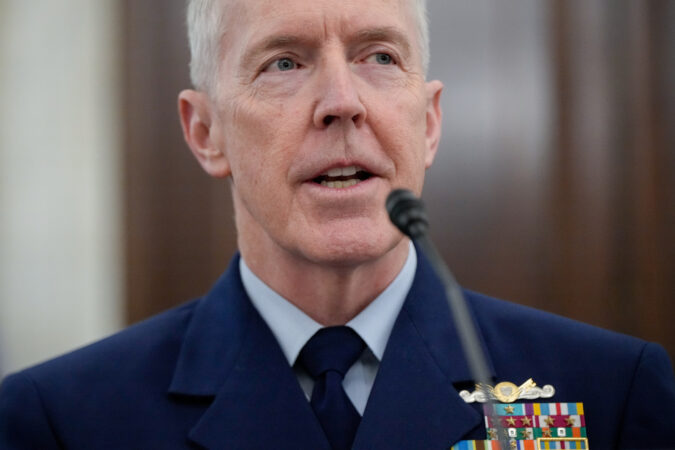
    The Post was first to report on the Coast Guard’s plan to revise its workplace harassment policy last month. The Trump administration called the article “false,” but within hours of its publication the service’s acting commandant, Adm. Kevin Lunday, issued a memo forcefully denouncing symbols such as swastikas and nooses, and emphasizing that both remain prohibited.

    Lunday said at the time that his Nov. 20 memo would supersede any other language. It was not immediately clear Tuesday why publication of the new harassment policy was not paused so the “potentially divisive” language used to describe swastikas and nooses could be removed to align with Lunday’s directive.

    Lunday has been the Coast Guard’s acting commandant for several months. He was elevated to the role after the Trump administration ousted his predecessor, Adm. Linda Fagan, citing among other things her “excessive focus” on “non-mission-critical” diversity and inclusion initiatives. The Senate is expected to hold Lunday’s confirmation vote later this week.

    The Coast Guard’s policy softening the definition of a swastika — an emblem of fascism and white supremacy inextricably linked to the Nazis’ extermination of millions of Jews and the deaths of more than 400,000 U.S. troops who died fighting in World War II — comes as antisemitism is on the rise globally. At least 15 people were killed over the weekend at a Hanukkah celebration in Australia.

    Deborah Lipstadt, a historian who served as President Joe Biden’s special envoy to monitor and combat antisemitism, said the Coast Guard’s decision to approve the change was “terrifying.”

    “What’s really disturbing is, at this moment, when there is a whitewashing of Nazis amongst some on the far right, and Churchill is painted as the devil incarnate when it comes to World War II, to take the swastika and call it ‘potentially divisive’ is hard to fathom,” Lipstadt said. “Most importantly, the swastika was the symbol hundreds of thousands of Americans fought and gave their lives to defeat. It is not ‘potentially divisive,’ it’s a hate symbol.”

    Citing court documents, Lipstadt noted that Unite the Right marchers in Charlottesville, Va., while planning a 2017 demonstration that left a woman dead and 19 others injured, had urged one another not to use swastikas “because it will paint us as Nazis.”

    “When far-right protesters in Charlottesville were strategic enough to recognize the swastika would do them no good and now we have an arm of the U.S. military saying, ‘It’s not so bad,’ that’s frightening,” Lipstadt said.

  • Robot smaller than grain of salt can ‘sense, think, and act’

    Robot smaller than grain of salt can ‘sense, think, and act’

    Solving a technical challenge that has stymied science for 40 years, researchers have built a robot with an onboard computer, sensors, and a motor, the whole assembly less than 1 millimeter in size — smaller than a grain of salt.

    The feat, accomplished by a partnership of researchers at University of Pennsylvania and University of Michigan, advances medicine toward a future that might see tiny robots sent into the human body to rewire damaged nerves, deliver medicines to precise areas, and determine the health of a patient’s cells without surgery.

    “It’s the first tiny robot to be able to sense, think, and act,” said Marc Miskin, assistant professor of electrical and systems engineering at University of Pennsylvania, and an author of a paper describing the work published this week in the journal Science Robotics.

    The device, billed as the world’s smallest robot able to make decisions for itself, represents a major step toward a goal once rooted in science fiction. In the 1960s, the story and movie Fantastic Voyage imagined a medical team placed aboard a submarine and shrunk to the size of a microbe. The microscopic medical crew was then injected into the body of a dying man in order to destroy an inoperable blood clot.

    “In the future, let’s say 100 years, anything a surgeon does today, we’d love to do with a robot,” said David Gracias, a professor in the department of chemical and biomolecular engineering at Johns Hopkins University who was not involved in the study. “We are not there yet.”

    In 1989, two decades after Fantastic Voyage, Rodney A. Brooks and Anita M. Flynn, scientists at the Massachusetts Institute of Technology, wrote a paper called, “Fast, Cheap, and Out of Control: A Robot Invasion of the Solar System,” that described a robot they’d built measuring just 1¼ cubic inches, dubbed Squirt.

    Sawyer Fuller, an associate professor of mechanical engineering at the University of Washington, said that when “Fast, Cheap, and Out of Control,” was published, “people thought microrobotics was coming any minute now. … Turns out it has taken a little longer than expected to put all these things together.”

    Fuller, who was not involved in building the new microrobot, called it “the vanguard of a new class of device.”

    Miskin said the microrobot built by the Michigan and Pennsylvania teams is about 1/100th the size of MIT’s Squirt but isn’t ready for biomedical use.

    “It would not surprise me if in 10 years, we would have real uses for this type of robot,” said David Blaauw, a co-author of the paper in Science Robotics and professor of electrical engineering and computer science at University of Michigan.

    For decades scientists have dreamed of building a microrobot less than 1 millimeter in size, a barrier that corresponds to the smallest units of our biology, Miskin said. “Every living thing is basically a giant composite of 100-micron robots, and if you think about that it’s quite profound that nature has singled out this one size as being how it wanted to organize life.”

    For comparison, a human hair has a diameter of about 70 microns, while human cells are about 20 to 40 microns across.

    Although scientists and engineers have been miniaturizing circuits for the last half-century, the challenge has been to shrink all of the parts needed for a computer-guided microrobot, then assemble them without damaging the parts or causing them to interfere with one another. The robot needs an energy source of sufficient power to operate the computer and move the robot.

    Five years ago, Miskin, whose specialty has been building microrobots, met Blaauw when the two gave back-to-back talks. Blaauw’s lab then held ― and still holds ― the distinction of having built the world’s smallest computer.

    “Even in the presentations we were like, ‘Oh, we need to talk to each other,’” Blaauw recalled.

    The device they built uses tiny solar cells that convert light into energy. Some of that energy powers the computer, and some propels the robot as it swims through liquid. The computer runs at about one-thousandth the speed of today’s laptops and has far less memory.

    In the lab, the scientists shone an LED light down into the lab dish that contained the robot in a solution. The robot is made of the same kinds of materials found in a microchip: silicon, platinum, and titanium.

    To protect it from the effects of fluids, the microrobot is encased in a thick layer of what is essentially glass, Miskin said. There are a few holes in the glass that are filled in with the metal platinum, forming the electrodes that provide electrical access.

    At Johns Hopkins, Gracias stressed that scientists need to ensure that the materials they use for microrobots can be safely used inside a human body.

    Sensors on the robot allow it to respond to different temperatures in liquid. To move, the device uses energy from the solar panels to charge two metal electrodes on either side of it. The electrodes attract oppositely charged particles in the water, generating a flow that pulls the robot along.

    As it swims, the robot communicates with the person operating it.

    “We can send messages down to it telling it what we want it to do,” using a laptop, Miskin said, “and it can send messages back up to us to tell us what it saw and what it was doing.”

    The robot communicates using movements inspired by the waggle dance honeybees use to communicate.

    During the summer, the scientists invited a group of high school students to come in and test the new microrobots. The students were able to track the movements of the robots using a special low-cost microscope.

    “They loved it,” said Miskin. “It was definitely a little bit challenging at first, just getting oriented to working with something that small. But that’s part of the appeal. Once they got the hang of it, they were all in.” Miskin said the version of the robot the students used cost only about $10.

    Researchers are working now to develop the microrobot so that it can work in saltwater, on land, and in other environments.

    The long-term vision, Blaauw said, is to design tiny computers that can not only talk back and forth to their operators.

    “So the next holy grail really is for them to communicate with each other,” he said.

  • He survived the Holocaust and exile only to die a hero in Australia attack

    He survived the Holocaust and exile only to die a hero in Australia attack

    SYDNEY, Australia — Alexander Kleytman was just a boy when he fled the Holocaust and then endured a harrowing train journey to Siberia, where years of starvation left him permanently hunched. He suffered decades of antisemitism in the Soviet Union but never stopped being “a proud Jew,” his daughter, Sabina, recalled Tuesday.

    It was that pride that took him every year to the Hanukkah celebration at Bondi Beach in Sydney, where he had brought his family to live in 1992.

    And it was that pride — that identity — that made him, his wife, and scores of other Jewish Australians the target of Sunday’s deadly antisemitic attack, in which the 87-year-old was killed while shielding his wife, Larisa, from a hail of bullets.

    “Dad died doing what he loved the most,” Sabina Kleytman said in a tearful interview. “Protecting my mother — he probably saved her life — and standing up and being a proud Jew: lighting the light, bringing the light to this world.”

    Fifteen people were killed Sunday when two gunmen, apparently motivated by Islamic State ideology, opened fire on the festive gathering. Among the dead were a 10-year-old girl who had been happily eating cake moments earlier, an assistant rabbi known for his positivity, and a 62-year-old man who threw bricks at one of the gunmen in a desperate attempt to defend his community.

    But perhaps no death reflects the shock of the attack here in Australia more than that of Kleytman, who survived the Holocaust and a childhood of hardship only to die in the country he considered a safe haven.

    “He lived a remarkable life,” his daughter said, “and he could have had another 10 years in him if it wasn’t for this horrendous atrocity.”

    Australia has a long Jewish history dating to the arrival of the First Fleet in 1788, said Andrew Markus, emeritus professor at Monash University in Melbourne and an expert on Jewish migration. But the biggest wave of Jewish immigrants came after World War II.

    “There were a lot of people who had the sense that Europe was the charnel house of the world after what had happened to them, so to get as far away as possible was one of the attractions of Australia,” he said.

    As in the Oct. 7, 2023, attack in Israel, which claimed some Holocaust survivors, there is a “tragic irony” in Kleytman’s death in a land that he and so many other Jews saw as their refuge, Markus said.

    In Australia, Kleytman became a collector of stories from Jews from the former Soviet Union, writing two books about them even as he resisted his family’s pleas to pen his own memoir.

    Still, snatches of that remarkable life filtered down in reluctantly told tales. He was born in 1938 in what is now Ukraine. When World War II broke out, he fled to Siberia with his parents and younger brother on a long and arduous journey with other evacuees.

    “They were on a train. There were bombs coming down. So many people died,” Sabina Kleytman said.

    Along the way, her father fell sick and had to be hospitalized. He was separated from his family and feared he would never see them again. But he managed to reunite with them and make it to Siberia, where they shared a tiny room.

    They had “very little food, almost no warmth,” his daughter said. Years of malnourishment and cramped conditions left her father partially deformed, she said.

    After the war, he was eventually able to move back to what is now Ukraine — then part of the Soviet Union — where he met Larisa, the daughter of Holocaust survivors. They had Sabina and her brother and built a life there, although they could not openly celebrate being Jewish, she said.

    In 1992, after the fall of the Soviet Union, Alexander Kleytman took his family to Australia. There, the civil engineer built a successful career for himself, contributing to major projects, including Sydney’s Olympic stadium. He helped build his newfound home.

    He reluctantly retired a decade ago, at 76, and immediately turned his mind toward writing books.

    “He didn’t want to write a book about himself,” Sabina Kleytman said with a laugh. “We did ask many times. He didn’t want to do it. He wanted to write books about the lives of Jews in the Soviet Union and the terrible things which we went through.”

    It was in Australia that her father could finally fully celebrate his Jewish pride, she said. But in the two years since the Oct. 7 attack in Israel, he began to worry that Australia was becoming less safe for Jews.

    On Sunday, he nonetheless went to the Hanukkah event on Bondi Beach with his wife.

    When the gunmen — identified as father and son Sajid Akram, 50, and Naveed Akram, 24 — opened fire on the festival, Kleytman covered his wife.

    Sabina Kleytman, who was supposed to go with her parents but could not attend, received a call from her cousin, telling her to call her mother because there was news of something bad happening in Bondi.

    “I called my mom, and she said, ‘Your dad is no more. Your dad’s just been killed,’” Sabina Kleytman recalled.

    “I couldn’t stop screaming because this is not what you expect,” she said. “You go to a joyful family cultural event with hundreds of people, a peaceful family event where we sing, have some doughnuts, and dance. Everybody brings their kids.”

    “After that, it’s been a nightmare that I cannot wake up from still,” she said, sobbing.

    Part of the pain for the victims’ families is the ongoing struggle to receive their loved ones’ bodies, which, according to Jewish custom, need to be buried as soon as possible. That tradition has run up against a complex crime-scene investigation.

    In the meantime, Sabina Kleytman said, she is trying to take solace in the “outpouring of love” her family has received and the memories of a joyous and kind man: a youth chess champion who taught her to read at age 3 and spent countless hours playing table tennis with her and her brother in their Ukraine apartment; a grandfather of 11 who taught his family to be proud of their Judaism and was looking forward to lighting the first Hanukkah candle with them — only to never get the chance.

    “He never stopped being a proud Jew,” she said. “Never. Not in Ukraine, and he had absolutely no plans to stop here in Australia. And apparently he paid with his life for it.”