Category: Washington Post

  • Rubio tries to enlist other nations in antifa fight, but some allies recoil

    Rubio tries to enlist other nations in antifa fight, but some allies recoil

    Secretary of State Marco Rubio has invited senior ministers from more than 60 countries to a meeting next week about what the Trump administration views as a major peril: the “resurgence of transnational far-left terrorism,” according to documents reviewed by The Washington Post.

    The meeting has prompted consternation among career and political U.S. officials, some European allies, and independent analysts who do not see the threat in the same terms. Some U.S. officials told The Post that they worry it is part of a Trump administration effort to use powerful counterterrorism tools to crack down on U.S. activists they view as left-wing extremists.

    The administration’s counterterrorism czar, Sebastian Gorka, has had discussions with colleagues about using foreign terrorism labels for antifa to justify going after Americans with links to the movement, a loosely knit association of far-left activists who militantly oppose fascism and right-wing ideologies, three current and former U.S. officials said.

    A linkage to foreign terrorist groups “can unlock certain investigative tools,” such as surveillance, said one U.S. counterterrorism official, who like several other officials interviewed for this article spoke on the condition of anonymity to describe internal discussions and to avoid retribution.

    Gorka did not respond to a request for comment.

    State Department spokesman Tommy Pigott said the event was organized because far-left terrorism is “an old threat re-emerging with strong transnational links and new convergences.”

    “Because this threat has not been adequately addressed in the past, each engagement, designation, or security assistance program creates a compounding effect supporting countermeasures at home and abroad,” Pigott said in a statement.

    Some Trump administration officials fear that a future Democratic administration could use the tactic against conservative activists, one administration official said.

    “The idea is you’re setting a precedent for a future Gavin Newsom administration to turn these authorities on conservatives,” the official said, referring to the California governor who is widely expected to make a 2028 White House run.

    The use of these tactics has raised concerns among career and political officials inside the Justice Department and the White House Counsel’s Office, the administration official said, adding that some U.S. officials have decided not to attend the July 16 event at the State Department.

    Asked for comment, a White House official said that the characterization of such concerns does “not represent the prevailing feeling in the White House” and accused Democrats of having weaponized national security tools against their conservative political opponents.

    The White House official pointed to a passage in the Trump administration’s counterterrorism strategy‚ released in May, which states: “We will not permit the weaponization of America’s unparalleled CT capabilities for partisan purposes.”

    That document also states that “our counterterrorism powers will not be used to target our fellow Americans who simply disagree with us.”

    Like Gorka, White House Deputy Chief of Staff Stephen Miller is among those who have shown enthusiasm for taking a hard-line approach to left-wing extremists in the United States. During a White House roundtable last fall, he expressed support for designating antifa a foreign terrorist organization.

    “It’s true,” Miller said when the president asked for his opinion, “there are extensive foreign ties. I think that would be a very valid step to take.”

    But achieving that status for antifa would be a stretch, experts say.

    U.S. law requires a group be foreign to be designated. “If it has any significant domestic presence, it cannot be designated,” said Jason Blazakis, who ran the State Department’s designation process for 10 years before leaving in 2018.

    Elsewhere in the government, discomfort with the administration’s direction is such that at meetings of national security officials from various agencies, some intelligence analysts have declined to brief on antifa because they do not regard antifa as a serious counterterrorism threat, according to one person familiar with the matter.

    Officials from some foreign governments, speaking on the condition of anonymity to avoid being seen as criticizing the administration, expressed dismay about the Rubio invitation, citing what they call its vague aims and the short notice. The invitation, a copy of which was shown to The Post, was issued last week with RSVPs due this Friday, they said. Several told The Post that their country’s foreign minister or interior minister was unlikely to attend, citing the busy diplomatic schedule over summer, which includes an annual security conference next week in Aspen, Colo.

    Some said, too, they were unsure why they had been invited. “We don’t have antifa,” said one European diplomat.

    “I don’t think we can find any reason why we would be interested in attending such an event,” said another.

    “Our law enforcement authorities have not focused on left-wing terrorism because this is not considered a high priority threat in our country,” said a third.

    The invitation list, reviewed by The Post, included most European nations, larger Latin American countries and several Asian states, including India, Indonesia, and Singapore. The State Department did not respond to a request seeking to understand how the list of invitees was drawn up.

    President Donald Trump has made no secret of his disdain for antifa, going so far as to issue an executive order in the fall branding it a “domestic terrorist organization,” a rhetorical label that experts say carries no legal weight.

    Trump issued the order after the killing of conservative activist Charlie Kirk, whose mobilization of the youth vote helped propel Trump back to the White House. Legal proceedings began this week in the case of Kirk’s alleged killer.

    The order was followed by the issuance of National Security Presidential Memorandum 7, which directed the Justice Department to “investigate and disrupt networks, entities and organizations that foment political violence.” The document states that Kirk’s alleged killer engraved the bullets used in the killing with “so-called ‘anti-fascist’ rhetoric.”

    That led to a criminal investigation that culminated last month in lengthy prison sentences given to several members of what prosecutors called an “antifa cell” — one defendant received 100 years — for their roles last summer in a protest outside an Immigration and Customs Enforcement facility in Texas during which a police officer was shot. The person sentenced to 100 years was convicted of attempted murder. The others received prison terms of 30 to 70 years on charges such as rioting, providing support to terrorists and conspiracy to use and carry explosives.

    Defense attorneys called the prosecution politically motivated.

    Antifa, short for “anti-fascist,” is a decentralized movement without a clear command structure or leader, reflecting a range of ideologies mostly on the political left, from anarchism to communism and everything in between. Unlike left-wing extremist groups of the 1960s and 1970s, such as Weather Underground, antifa does not issue manifestos or claim responsibility for actions.

    Analysts say it can be difficult to categorize left-wing violence. (Is the killing of a healthcare executive over perceived corporate greed — as the suspect Luigi Mangione is alleged to have done — a “left wing” act?) And though there is some upswing of political violence in the United States, “to date left-wing violent extremism has typically been less lethal than other forms of terrorism,” said Bruce Hoffman, senior fellow for counterterrorism at the Council on Foreign Relations.

    A “concept note” sent to invitees and U.S. diplomats this week and reviewed by The Post characterizes next week’s event as a ministerial on the “resurgence of political terrorism.” But it makes clear that the focus is on “far-left terrorists” who, the note says, are “increasingly turning to organized, deadly violence to advance their political objectives.”

    The ministerial is an opportunity to strengthen cooperation in intelligence-sharing and law enforcement, the note says.

    But terrorism experts said that such framing inflates the threat posed by left-wing extremists and underestimates the true scope of the challenge in combating terrorism broadly.

    “This is the politicization of intelligence, and it’s dangerous because what they’re doing is basically playing partisan politics with counterterrorism, and only looking at a sliver of the overall threat,” said Colin P. Clarke, executive director of the Soufan Center, who has testified before Congress on numerous occasions as an expert witness on terrorism issues.

    Several current and former counterterrorism officials across Republican and Democratic administrations, as well as Europeans themselves, say the Trump administration’s emphasis is misapplied.

    “The Europeans were much more concerned about right-wing terrorism than left-wing terrorism” in the first Trump administration and the Biden administration, said one former official who worked in both.

    That is still where most Europeans are, according to U.S. and European officials.

    In late May, the State Department held a meeting in The Hague on antifa and left-wing terrorism, convening law enforcement and counterterrorism officials from mostly European countries, according to two people familiar with the event. The Dutch declined to co-host, so it took place at the U.S. Embassy there, one person said.

    The event, according to these people, fell flat. Many of the invitees’ view was “we don’t see it quite the way you do,” said one of the people.

    That was followed in early June by a gathering at the U.S. Institute of Peace to try to convince State Department personnel that “far-left political terrorists” were a growing threat to the country, but that event apparently was also a “dud,” according to Puck News. About an hour into the event, organizers sent out an email blast telling people they could still join, if they wanted, Puck reported.

    Undeterred, the State Department in mid-June sent a cable to more than 20 U.S. embassies — from Argentina and Mexico to Italy and Albania — seeking information on far-left extremist groups, according to two people familiar with the matter. Several have responded, but none has indicated they concur with the administration’s assessment of the threat, one person said.

    In November, the State Department announced the designations of four European groups as foreign terrorist organizations, including a militant group in Germany that calls itself antifa Ost. Two more were in Greece and one in Italy.

    Designation, which is done by the secretary of state, is based on criteria that include the assessment that the group poses a direct threat to U.S. national security interests.

    The designations of the four groups were met with skepticism among experts.

    “They’re very peculiar,” said Blazakis, who is now a professor at Middlebury Institute and teaches about violent extremism. “Those groups have carried out acts of vandalism. They’ve harmed individuals. But they don’t have a casualty to their name.”

    Authorities in Germany also did not see a significant threat. “The security authorities’ assessment is that the potential threat posed by the group has recently decreased significantly,” an Interior Ministry spokesperson told reporters in November, noting that antifa Ost leaders and particularly violent members were either in custody or already convicted.

    European governments have largely declined to label antifa as a terrorism organization, despite pressure from far-right parties. In the Netherlands, the center-right government rejected a parliamentary motion to designate antifa, with the country’s justice minister telling parliament in May that it did not meet the legal threshold because there was no evidence it was an organization rather than an amorphous movement.

    That month, a State Department official told reporters that the agency had taken “unprecedented steps to dismantle transnational far-left and anarchist terrorism, including antifa-aligned groups,” asserting that the number of incidents involving these groups had increased “sharply” over the past decade in the United States and Europe.

    The official, who spoke on the condition of anonymity under rules set by the department, said the administration had heard from foreign partners that they were seeing “different groups starting to converge.”

    The administration’s rhetoric is consistent with the language of its counterterrorism strategy, which calls for the “rapid identification and neutralization of violent secular political groups whose ideology is anti-American, radically pro-transgender, and anarchist.”

    The strategy directs the use of all tools “constitutionally available to us to map them at home, identify their membership, map their ties to international organizations like Antifa, and use law enforcement tools to cripple them operationally before they can maim or kill the innocent.”

    It does not, as did the 2018 counterterrorism strategy issued in Trump’s first term, mention nationalist neo-Nazi groups with “anti-Western views” that have attacked Muslims and left-wing groups.

    “We have to be objective about identifying threats, not politically selective,” Hoffman said.

    “If I were to rack and stack priorities, left-wing terrorists wouldn’t be in my top three,” Clarke said.

    Razzan Nakhlawi contributed to this article.

  • Your sleep tracker might be giving you insomnia

    Your sleep tracker might be giving you insomnia

    You wake up to your 7 a.m. alarm feeling relatively refreshed and ready to tackle the day ahead. But when you check your smartwatch, you’re surprised to see a low sleep score staring back at you.

    You start trying to remember the night before. Did you toss and turn more than you thought? Why is your watch telling you that you’re exhausted when you feel fine? When your head hits the pillow that night, you lie wide awake worrying about getting a good night’s sleep until the wee hours of the morning.

    If this scenario feels familiar, you may have orthosomnia, a fixation on achieving “perfect” sleep, often fueled by sleep trackers, that tends to result in worse sleep.

    “Orthosomnia is, at its core, a form of insomnia triggered by obsessive tracking of sleep data and the use of sleep wearables,” said Andrew Spector, a sleep medicine specialist at Duke Health in North Carolina. “It’s essentially trouble falling asleep for artificial reasons.”

    Many people rely on technology to fix their problems, but as it turns out, in this situation, these gadgets may backfire. Read on to learn more about orthosomnia and what to do if you think you might have it.

    What causes orthosomnia?

    At the root of orthosomnia is the popularity and ubiquity of sleep trackers. And while they can be useful tools at times — for example, some can screen for signs of sleep apnea, such as breathing disturbances — they can interfere with your ability to listen to your body, according to Amy Morin, a Florida-based psychotherapist and author of The Mental Strength Playbook.

    “Instead of thinking about how well rested you feel, you might look at an app or device to tell you if you’re getting enough sleep,” Morin said. Over time, this can undermine your trust in how you feel after a night of sleep and lead you to put too much weight on what a tracker says. “This can cause increased anxiety about sleep and can lead to more sleep problems,” she said.

    For instance, you may start to depend on tech to tell you how you feel, as opposed to listening to your own body’s cues, according to Morin. People are impressionable, and if your wearable is telling you that you didn’t get enough sleep, you might start to convince yourself that you’re more tired than you actually are.

    “You may start to feel sluggish. Then, you’ll act sluggish. Consequently, you’ll become sluggish,” Morin said. This may lead you to pass up an opportunity to do something later on in the day because you’ve allowed your tech to convince you that you’re too tired, she said.

    Additionally, someone who wakes up feeling well rested but sees their sleep tracker telling them they woke up often during the night may spend all morning thinking about how they’re going to feel exhausted later, Morin said. They then may be so worried about getting adequate rest that, ironically, they can’t sleep when they try to wind down for the day, Morin explained.

    Keep in mind that sleep trackers aren’t always accurate. These devices base their metrics on imperfect factors such as how much you moved during the night, Morin said. “That doesn’t always correlate to actual sleep time or sleep stages,” she said. “It’s important to know that these devices are just estimating how much sleep you got, and they’re not pinpointing your stages of sleep accurately.”

    People with anxiety or perfectionism may be especially susceptible to orthosomnia, according to Morin. “They may want perfect sleep, and a tracking app may create stress that shows them not every night is going to be perfect,” Morin said.

    How do you know if you have orthosomnia?

    According to Spector, a telltale sign of orthosomnia is checking your sleep tracker immediately after you wake up and analyzing all the data.

    “Your sleep tracker will give you a summary of your night. If you look at the summary and move on with your day, that’s fine,” Spector said. “But are you going minute by minute through the night and analyzing the little details of the report? That’s a red flag to me.”

    Another indication of orthosomnia is not being able to get to sleep because you’re worried you won’t get a good sleep score that night, Spector said.

    You may also start thinking about getting a good sleep score as your reason for wanting to sleep well as opposed to the actual benefits that come with adequate shut-eye — including improved mood, better focus, and reduced risk of health conditions such as heart disease, stroke, diabetes, and high blood pressure.

    Tips to manage orthosomnia

    There are a few ways to manage — and overcome — orthosomnia, according to experts:

    • Establish good sleep hygiene habits, like avoiding screen time before bed, creating a bedtime routine that helps you wind down and ensuring your room is dark and quiet, said Morin.
    • Focus on tuning into your body and recognizing when you need more rest and adjust your bedtime accordingly, according to Morin.
    • Recognize that your beliefs about sleep will greatly impact your performance, Morin said. If you assume a difficult night’s sleep will make it nearly impossible to function, you’ll have trouble functioning, she said. If, however, you believe you can still function just fine after a rough night, you’ll probably do much better.
    • Consider therapy if sleep becomes a source of anxiety that you can’t manage on your own, Spector said.

    If you find yourself obsessing over your sleep data, try ditching your tracker for a month, Morin suggested. During that time, focus on good sleep hygiene and pay attention to how your body feels.

    Once you can more confidently trust your body, you might decide to reintroduce wearable tech. Or, maybe you’ll realize you don’t really need it after all.

    “Wearable tech is helpful if it gives you information you need to make the best health decisions. But it becomes a problem when it interferes with your ability to read your body’s cues,” Morin said. It’s unrealistic to expect perfect sleep every night, and accepting that might put your mind at ease just enough for you to drift off easily.

  • Low birth rate risks creating U.S. housing glut over coming decade

    Low birth rate risks creating U.S. housing glut over coming decade

    For the past decade, scarcity was the U.S. housing industry’s most powerful marketing tool. The less there was to buy, the greater the urgency to keep bidding, even as prices hit record highs.

    Demand was supercharged by record-low pandemic-era mortgage rates that sparked bidding wars and sent prices soaring, crushing affordability. Recent estimates of the national housing shortage have ranged from 1.5 million to 7.3 million units.

    But a new era may be dawning, in which a shortage of buyers, not homes, is the defining feature, according to a new white paper from the Mortgage Bankers Association. Starting in 2030, deaths in the U.S. are projected to outnumber births, meaning that without immigration — now being throttled by the Trump administration’s crackdown — the population would begin to shrink, according to the Congressional Budget Office.

    “The next decade is likely to be quite different,” said Mike Fratantoni, the MBA’s chief economist and a coauthor of the paper. “We’re moving from a time of rapid household formation to one where there’s a slowdown.”

    That outlook is far from certain given all the variables such as a future administration that could decide to expand immigration and a stronger labor market that could boost household incomes.

    For now, affordability remains the market’s biggest constraint. Many young adults don’t have the money to buy a home and, in some cities, struggle to rent without roommates or financial help from family.

    Affordability has become a rallying cry so loud that it has bridged the political divide. Last month, Republicans and Democrats worked together to pass a bipartisan housing bill designed to address the shortage in affordable housing and lower costs for buyers and renters. The bill’s fate is uncertain after President Donald Trump abruptly canceled its signing.

    Still, the forces that fueled the housing market frenzy are now reversing. Mortgage rates, in the mid-6% range, aren’t likely to return anytime soon to the sub-3% levels of late 2020. The country’s fertility rate has fallen to a record low. Baby boomers, the oldest of whom are 80, are poised to start adding to supply as they downsize or die. In addition, immigration is severely restricted and deportations have cut net international migration by half in 2025 and likely even more this year.

    Many builders currently have too much inventory, especially in Sun Belt states such as Texas, Arizona, and Florida, where they’ve been most active. Multifamily completions hit a 38-year high in 2024, flooding the market just as demand is cooling. The rental vacancy rate rose to 7.3% in 2025 from 5.6% in 2022, according to the MBA report.

    Fratantoni and his coauthors warn that a shrinking population will upend conventional thinking about “housing supply adequacy” and raise doubts that “the supply shortage that defined the post-2010 housing narrative will remain the right framework for the decade ahead.”

    National house prices are starting to adjust. After rising 55% from 2020 to 2025, a shrinking pool of potential buyers has the MBA projecting growth of only 1% in 2026 and flat home prices over the next two years.

    Even if it’s not a recipe for a broad market crash, continued construction could cause values to drop in some places. For the mortgage industry, oversupply and falling prices would mean fewer loans for new purchases and less demand for refinancing.

    Other analysts are seeing similar evidence of changing demand for housing. An assessment released last month by Harvard University’s Joint Center for Housing Studies found that household growth fell to 1.1 million in 2025 from 2 million in 2021, the third straight year of decline as young people double up with roommates or live with family rather than go out on their own.

    “The demand slowdown is coming,” said Alexander Hermann, senior research associate at the Joint Center. “That’s a real thing.”

    But a weaker appetite for homes overall doesn’t mean everyone can find one. According to the National Low Income Housing Coalition, 11 million extremely low-income renter households are competing for just 3.8 million homes within their reach.

    There remains a severe shortage of units for households in the lower- and middle-income brackets, Hermann said. “I don’t think we’ve made any progress on that,” he said. “If anything, that circumstance has only worsened.”

    A few months ago, Ali Wolf, chief economist at homebuilding consultancy Zonda, spoke before a gathering of clients and laid out a sobering picture: The country was still adding jobs, but at a slower pace, and the population was still growing, but at one of the slowest rates on record.

    A builder asked a question that caught her attention.

    “He said, ‘If job growth is slow and if population growth is slow, how do we grow our business?’” Wolf said.

    Since then, she’s been marshaling resources to answer it, building an index that ranks nearly 100 metropolitan areas on expectations for long-term demand. Her team is meeting with builders to explain what it means for their regions.

    When the immigration crackdown began, builders braced for the obvious blow: the loss of the workers who frame their houses and pour their foundations. But a drop in apartment construction since then has eased that pressure.

    “We thought we were going to get hit by labor supply,” Wolf said. “And actually, our biggest concern has been housing demand.”

  • I’m a sleep doctor. These are the signs you have a real sleep problem. | Expert Opinion

    I’m a sleep doctor. These are the signs you have a real sleep problem. | Expert Opinion

    Q: I’m always tired. I try to prioritize sleep but always end up exhausted despite my best efforts. Why don’t I ever feel well rested?

    A: For millions of people, poor sleep has become so normalized that they no longer recognize it as a potential medical issue. Feeling tired all the time gets blamed on stress. Freight train snoring becomes a family joke at the dinner table. Trying not to doze off during that weekly meeting means your job is boring.

    These signs all point to a possible sleep disorder. Yet, most people push through and ignore them.

    The Centers for Disease Control and Prevention and sleep researchers estimate that between 50 million and 70 million Americans have an active sleep disorder, and most people don’t know they do.

    As a sleep specialist who primarily treats people with chronic insomnia, I can say with confidence that even common sleep disorders remain underrecognized, underdiagnosed, and undertreated.

    Sleep disorders deserve medical attention — and often are highly treatable. Here are the most common (there are more than 80 clinical sleep disorders, by the way), and the signs you might have one.

    Insomnia

    Insomnia disorder is defined as difficulty falling asleep, staying asleep, or waking up too early at least three nights per week for at least three months. It causes real impairment in daily life.

    Sleep onset insomnia is the inability to fall asleep within a reasonable time frame (30 minutes) after getting into bed, while sleep maintenance insomnia involves waking up during the night and having trouble returning to sleep (for 30 minutes or more) or waking up much earlier than desired.

    Insomnia can be acute, lasting days to weeks, usually triggered by an identifiable stressor and often resolving on its own, or chronic, persisting three months or longer and typically requiring intervention.

    Decades of epidemiological research suggests that 10 to 15% of the general population meets the criteria for chronic insomnia disorder, with higher rates among women, older adults, and people with co-occurring mental health conditions.

    Additional signs of insomnia disorder:

    • Feeling exhausted, even after a full night of sleep
    • Regularly experiencing irritability, low mood, mood changes, difficulty concentrating or paying attention, or memory problems
    • Dread or anxiety as bedtime approaches
    • Feeling exhausted getting into bed, but the moment your head hits the pillow, you’re wide-awake (“tired but wired”).

    The gold standard treatment is cognitive behavior therapy for insomnia, also known as CBT-I, though other forms of sleep therapy as well as certain medications may also be appropriate.

    Obstructive sleep apnea

    Obstructive sleep apnea is a medical condition in which the muscles in the throat relax during sleep, causing the airway to narrow or close entirely — which often manifests as snoring, though you don’t have to snore to have OSA. As the airway collapses, breathing stops — sometimes for a few seconds, sometimes longer — until the brain partially wakes the body to restore airflow. This cycle can repeat hundreds of times a night, fragmenting sleep so often that most people wake up exhausted.

    OSA is estimated to affect more than 30 million Americans. Yet, according to multiple analyses, 80 to 90% of OSA cases in the United States go undiagnosed every year. Women are overwhelmingly underdiagnosed because their symptoms often present differently — fatigue, mood changes, insomnia, morning headaches — compared with men, who are more likely to snore loudly or gasp/choke.

    I hear this all the time from women in my practice. They didn’t fit the typical OSA stereotype, and instead their symptoms were attributed to depression, thyroid problems, stress or another sleep disorder.

    Additional signs of OSA:

    • Waking up with a dry mouth, sore throat, or headaches
    • Excessive daytime sleepiness
    • Waking frequently to use the bathroom during the night (known as nocturia; this happens when apneas strain the heart and the body releases more of a hormone that increases urination)
    • Difficulty concentrating, memory problems, or cognitive slowing
    • Increased irritability, mood changes, anxiety, or depression that don’t fully resolve with treatment
    • A history of chronic insomnia, particularly difficulty staying asleep
    • High blood pressure or cardiac issues that are difficult to control.

    Sleep apnea is often treated with continuous positive airway pressure therapy, which involves wearing a breathing machine that keeps airways open while sleeping, though other therapies and even surgery may be helpful for some. Lifestyle changes, such as weight loss and avoiding alcohol use, could also help.

    Restless legs syndrome

    Restless legs syndrome, also known as Willis-Ekbom disease, is characterized by an irresistible urge to move the legs (and/or arms), usually accompanied by uncomfortable sensations: crawling, tingling, pulling, aching, burning, itching, or an indescribable inner restlessness.

    Symptoms emerge or worsen at rest, and moving around, stretching, or walking usually brings temporary relief. It is deeply uncomfortable in a way that makes staying still feel impossible and falling asleep extraordinarily challenging.

    Research published in the Journal of Global Health estimates that RLS affects between 7.2% and 11.5% of the general population, though data suggests it’s largely undiagnosed or not diagnosed until years after symptom onset.

    Because RLS cannot be visually detected on standard tests, and the sensation is difficult to explain, it was long dismissed as psychological or simply as “growing pains.”

    Additional signs of RLS:

    • Your bed partner complains that you kick or jerk your legs (and/or arms) repeatedly during sleep.
    • Excessive daytime sleepiness, mood changes, cognitive slowing, and increased anxiety or depression.

    Antiseizure medications and prescription-strength iron supplements may help, as can treating other health conditions and lifestyle interventions such as regular exercise, eating well, avoiding stimulants, massage, compression wear, hot/cold packs, and magnesium supplementation.

    Circadian rhythm sleep-wake disorders

    Circadian rhythm sleep-wake disorders, or CRSWDs, occur when a person’s internal biological clock — which governs the timing of sleep, hormone release, body temperature, and dozens of other physiological functions — is misaligned with the external environment or the person’s desired sleep schedule. These are not disorders of sleep quality per se but of sleep timing.

    This can result in a sleep-wake schedule that’s much different from typical social norms, whether that means you can’t fall asleep until extremely late at night no matter how early you try, or you get sleepy in the early evening and wake up very early in the morning.

    A research review published in the Journal of Clinical Neurophysiology found that up to 3% of the adult population has a CRSWD, with rates reaching 7 to 16% among adolescents and young adults. The review also noted that CRSWDs are commonly misdiagnosed as other sleep disorders.

    Additional signs of circadian rhythm disorders:

    • You identify as an “extreme night owl” or “extreme early bird.”
    • When allowed to sleep freely on vacation or nonwork days, you shift to a dramatically different schedule.
    • You work rotating shifts and struggle to sleep when you have the opportunity, despite feeling exhausted.
    • You have been told you have insomnia, but sleep medications or standard sleep hygiene advice have not helped.
    • Your “insomnia” or “fatigue” has never fully responded to treatment.

    The best “treatment” is to adapt your lifestyle so you can sleep in your natural, biological sleep-wake window. When that’s not possible, circadian rhythm management (e.g., microdosing melatonin, bright light therapy) or behavioral strategies, such as CBT-I, may be appropriate.

    What to do if you suspect a sleep disorder

    If any of the signs described above sound familiar, and especially if they’ve been going on for more than a few weeks, the first step is to talk to your doctor and specifically ask about sleep disorders.

    Don’t just say you’re tired or can’t sleep. Be specific: Describe when the problems occur, how long they’ve lasted, how they affect your daytime functioning and whether your bed partner has noticed anything unusual.

    From there, your doctor may refer you to a sleep specialist (or you may need to ask directly for a referral), who can conduct a thorough sleep evaluation and, when appropriate, a sleep study. The list above is not exhaustive; other sleep disorders, such as narcolepsy and idiopathic hypersomnia, are less common but can also cause excessive daytime sleepiness despite your having logged plenty of hours in bed, and require proper diagnosis and treatment.

    If you’ve been exhausted for months or years, and standard sleep hygiene advice hasn’t helped improve your sleep, you are not failing at sleep. Your sleep problems are probably not “just stress” or “just how you are,” and your exhaustion is not a badge of honor. Your sleep struggles deserve more attention.

    Sarah Silverman, PsyD, is a sleep psychologist and behavioral sleep medicine specialist in private practice specializing in women’s sleep health and insomnia.

  • Does leisure make us happy? Often the answer is no.

    Does leisure make us happy? Often the answer is no.

    You might think spending more time relaxing would make you happier.

    But recent research suggests that having more leisure time doesn’t necessarily make people more likely to rate their day as happy. The research, using data from the U.S. Census Bureau’s American Time Use Survey, shows that people were most satisfied with their days when they included an hour or two of socializing, physical exercise, and — surprisingly — up to six hours of work (though more work than this was linked to less happiness).

    “It doesn’t mean leisure time is bad. It just means that we probably need to use it a little bit differently,” said Laurie Santos, a psychology professor at Yale University who wasn’t involved in the study, which was published earlier this year and analyzed how 15,000 Americans used their time across two nonconsecutive years.

    In the survey, respondents reported “watching television and movies” was about 70% of their relaxation and leisure time.

    Santos said that working — whether at a day job, or doing another effortful activity, especially if it involves connecting with other people — often makes us happier than being idle. In particular, she said, scrolling on our phones or binge-watching TV might be a recipe for loneliness.

    Yet given the choice, people often choose the easier route, one of the many ways people tend to be misguided when predicting what will make them happy, she said.

    Santos teaches the course “Psychology and the Good Life,” which became the most popular class on Yale’s campus when she first offered it in 2018. Nearly 1 in 4 students now enroll, which she said is a sign of how many young people are searching for research-backed strategies to help them feel better.

    The paradox of happiness

    One of the pitfalls of searching for happiness is that focusing on it too much can make contentment even more elusive.

    Santos cited research from Iris Mauss at the University of California at Berkeley, which found that it’s hard to enjoy a happy moment if you’re too fixated on how happy you are.

    “You know, I’m on vacation in this perfect spot and I’m asking, ‘Could this be better? Was this worth the money?’ And of course that doesn’t make the vacation feel all that great,” Santos said. “We tend to be kind of anxious about whether we’re feeling happy and that doesn’t feel good.

    The second problem is that we think that the perfect job or relationship or achievement will make us happier.

    “Happiness is really less about our circumstances and more about our behaviors and our mindsets,” Santos said.

    For people who are struggling with essentials like housing or food, changing their circumstances will make them happier, she said, but once basic needs are met, there are diminishing returns.

    The problem with ‘good vibes only’

    Being a happy person does not mean being happy all the time.

    “A good flourishing life is going to involve some negative emotion,” Santos said.

    Often it’s our reactions to our emotions that cause problems. For example, if you get an email that stresses you out and let that spill into your next interaction, you might snap at someone, then feel guilty.

    Santos recommends recognizing what you’re feeling without adding too much meaning to it — or shaming yourself for feeling badly — what Santos calls “meta-emotions.”

    On a vacation, for example, if a rainy day forces a change of plans and you find yourself getting frustrated, that can bring on meta-emotions. You might feel ashamed that you’re annoyed on vacation — Shouldn’t I just be enjoying it? Feeling grateful?

    “It’s often those meta-emotions that are worse than the primary emotions that we initially feel,” Santos said. “It takes some work, but those meta-emotions are under your control.”

    What actually makes people happier

    There is a lot of research about what does make people feel better. In the scientific literature and in Santos’s own experience, these little tweaks work by subtly rewiring the brain.

    A little bit of effort or challenge is better than pure ease. We tend to enjoy things more when they require a bit of work. If you have a free afternoon, you’re more likely to take pleasure in a hike outside rather than scrolling or watching TV alone.

    Pretty much everything is better with a friend. Even if you’re just running errands, invite a friend, and look for opportunities for small moments of connection, like chatting with a clerk in a store rather than ordering things online.

    Try a reframe. You’ve probably heard the advice to keep a gratitude journal, but if you can’t stick to writing things down every day, you can still do a quick reframe in a tough moment by asking yourself some questions.

    “What’s one thing that I’m really grateful for in this moment? What’s one thing that I’m going to look back on tonight and think was good?” Santos asked. “Just that little change in our attention can be really powerful.”

  • Graham Platner, isolated, defies Maine Democrats as they try to hatch a plan

    Graham Platner, isolated, defies Maine Democrats as they try to hatch a plan

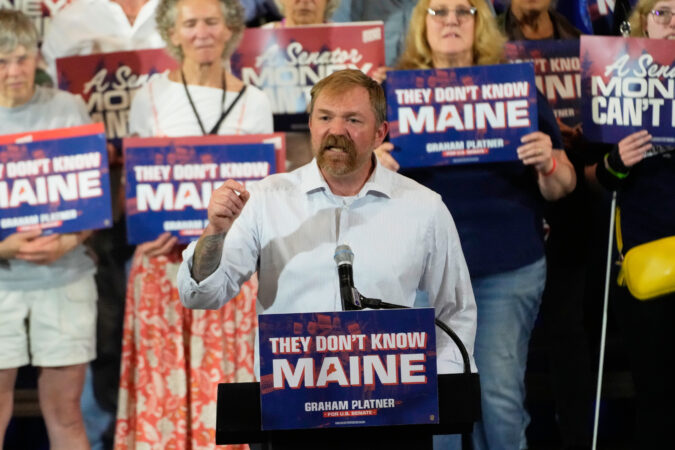
    Increasingly isolated from the Democratic Party, Graham Platner is holed up at his home in rural Maine, navigating the likely end of his once-surging campaign for the U.S. Senate, as establishment fury over his prolonged exit grows louder.

    Platner’s campaign team held a call Wednesday afternoon in which campaign leadership sounded resigned to the idea that the Democrat’s bid could be ending soon, said a Democrat close to Platner. Campaign staff were told that Platner would speak about the future of his run Wednesday night.

    He could drop out of the race soon, probably by prerecorded video, said a second person close to Platner’s team who, like others in this article, spoke on the condition of anonymity to avoid alienating fellow Democrats in what has become an increasingly tense situation.

    One of Platner’s key advisers, Morris Katz, flew up to Maine from New York on Tuesday to discuss his withdrawal, said the person. But Platner, whose political support has evaporated since he was accused of sexual assault on Monday, has struggled with the decision, people close to him said, and has said he would like input on the replacement process, leaving the timing of any announcement unclear.

    “It is him who is wanting to hold on,” the first Democrat said. “He is having to come to terms that his dream is dead. The show is over, this is done.”

    Until Platner pulls the plug, however, the Democratic Party is at an impasse, unable to fully refocus on its uphill battle to defeat five-term Republican Sen. Susan Collins. The race is critical to Democrats’ longshot bid to retake the Senate, where the party must flip four seats held by Republicans to win back control in November.

    That frustration is now spilling into the public.

    On Tuesday night, the Maine Democratic Party released a confrontational video reiterating its call for Platner to drop out so it could select a replacement candidate. If Platner withdraws by Monday, the party has until July 27 to submit a new nominee – though it remains unclear how that decision would be made.

    “Unfortunately, Graham Platner’s team has repeatedly reached out to us in an attempt to put their thumb on the scale of what this process looks like,” Devon Murphy-Anderson, executive director of the Maine Democratic Party, said in the video. “We have repeatedly reiterated to Graham Platner’s team that they have no role in determining our next Democratic nominee for the U.S. Senate.”

    That posture incensed Platner’s more dedicated supporters, some of whom have felt aggrieved by how quickly Democrats turned on him after the sexual assault accusation and who argue that any replacement candidate must be aligned with the populist politics that fueled his rise.

    Party officials are sensitive to the fact that, despite Platner’s downfall, they need to keep the political movement that emerged around him intact in order to win.

    “It is important that someone carry forward the movement that has been built here of everyday working-class people who are fed up with a system in Washington that is so broken,” Maine House Speaker Ryan Fecteau said in an interview. “There are a number of people in Maine politics who share the same views as Graham Platner, who have the same message as Graham Platner, who can carry this work forward.”

    A spokesperson for Platner denied that “the campaign tried to ‘put its finger on the scale’” of the replacement process. But Platner is seeking to influence it as he navigates his exit – and his decision not to drop out immediately has divided many within his campaign.

    Platner’s attempt to continue a campaign detonated by his own alleged behavior has not only exasperated some Maine Democrats but also dumbfounded them.

    “People who have made their political careers decrying a rigged political system are now trying to rig the political system,” quipped a Democratic operative who works in Maine.

    National Democrats, led by the Democratic Senatorial Campaign Committee, have said that they will not spend money in Maine if Platner remains the nominee.

    But their role in selecting his successor is minimal, beyond supporting the Maine Democratic Party’s currently unknown plans for selecting a replacement should Platner drop out. There is belief within the committee that any nominee, at this point, will be stronger than a scandal-plagued Platner, said one person familiar with the committee’s thinking.

    Since he launched his campaign last summer, Platner’s political rise and his outsider message have invigorated Maine Democrats, who have long failed to find a candidate who can defeat Collins, despite the state’s Democratic lean.

    Many voters were willing to overlook earlier controversies that plagued the charismatic 41-year-old oyster farmer and military veteran, including old social media posts where Platner downplayed sexual assault and made other inflammatory comments; a tattoo resembling a Nazi symbol that he had covered up; sexually explicit text messages sent to other women after he married; and accusations of violent behavior by ex-girlfriends.

    Then on Monday, a woman who used to date Platner said he entered her home intoxicated one night in late 2021 and forced himself on her as she told him to stop.

    On Tuesday, a second ex-girlfriend told The Washington Post that Platner repeatedly removed protection without her consent when they were having sex. The campaign called the claim “categorically false and politically motivated.”

    Unlike some politicians engulfed by scandal, Platner retains a core of close advisers who have stuck by him since Monday, allowing him to hold out against calls for his withdrawal.

    In April, when then-Rep. Eric Swalwell (D-California) was accused of sexual assault by a former staffer amid a run for governor, top campaign staff immediately quit and his campaign imploded within days. Platner, by contrast, continues to operate with the inner circle of his campaign from his home in the small coastal town of Sullivan.

    The scene was quiet there Wednesday morning. Several cars were parked in Platner’s driveway near a pile of chopped wood and a boat covered in a green tarp. A few reporters were across the narrow road.

    As the public awaits word from Platner about his plans, longtime friends say this has been a difficult moment, with one even suggesting that Platner could continue to fight.

    “Everybody says they are pulling their support. Is that truly what they are going to do? Are they just going to let Susan Collins win?” the friend said. “That seems highly unlikely to me because we need Maine to flip the Senate.”

    That is not a universal view, however. Some people who have backed Platner for months, even through his many scandals, are too disgusted with him to continue their relationship.

    “At this point, he knows I know he’s lied to me directly too many times,” said a top Maine Democrat who has been close to Platner. “I don’t think he has the shame to speak directly to me.”

    Joanna Slater in Sullivan, Maine, contributed to this article.

  • The Vances added a chicken coop to the vice president’s residence. We had questions.

    The Vances added a chicken coop to the vice president’s residence. We had questions.

    Vice President JD Vance and his family are raising chickens at their residence at the U.S. Naval Observatory. The family has a dozen hens pecking inside a custom-made coop on a 72-acre federal observatory — but many other details about their experiment in raising chickens are unknown.

    The coop was designed to mirror the Queen Anne-style architecture of the vice president’s residence at Number One Observatory Circle. As such, the henhouse is not cheap: It cost between $100,000 and $120,000, according to the owner of the North Carolina company that built the structure. But U.S. taxpayers didn’t foot the bill. The coop was donated by the company.

    So who exactly will be raising the hens? And why are the Vances taking on this project? For eggs? For educational purposes? For feathered pets? A spokesperson for Vance did not respond to multiple emails seeking comment.

    The Washington Post turned to former and current backyard chicken keepers to gather insights on what may be going on at Number One Observatory Circle. We also talked to the guy who built the pricey coop. We even checked with a city official to discuss whether the Vances are following the proper protocols to raise hens in Washington.

    Who built the Vances’ coop?

    The henhouse and run were custom-built by Carolina Coops, which specializes in high-end structures for those looking to pamper their backyard birds. Owner Matt DuBoise said Fox & Friends Weekend co-host Rachel Campos-Duffy, wife of Transportation Secretary Sean P. Duffy, recommended him to the Vances. DuBoise had built a coop for the Duffys.

    The Vances’ henhouse is elevated — about 2 feet off the ground — and situated inside a shed that is protected from the elements, DuBoise said. The design is such that the owner does not have to walk through “chicken droppings and chicken bedding” to tend to the birds. The keeper can access the hens via interior shed doors. The attached run is predator-proof, DuBoise said, and includes a solid roof, which helps prevent avian flu from spreading to the flock, as it can be “transmitted with migratory birds flying overhead,” he said.

    Why are the Vances raising chickens?

    In the run-up to the 2024 presidential election, Vance raised alarms about the high cost of eggs, which was apparently affecting his family’s budget. He and his wife, Usha, have three children. At a supermarket stop in Reading, Pa., Vance turned to his kids and said, “These guys actually eat about 14 eggs every single morning. Is that right?”

    “Yeah!” one child responds, off-camera.

    The family’s daily consumption is probably a joke, but it highlighted a possible reason the Vances wanted a coop: In their prime, the second family’s 12 hens may each lay up to six eggs a week, nearly enough to cover the Vances’ daily needs. Like many hen keepers, the Vances will have to figure out what to do with their eggs: Eat some, give away some, maybe even donate some to a food bank that will accept them.

    The addition has led to speculation that there may be political motivations behind the flock’s appearance. It’s a theory that resonates with Danny Bowers, who keeps 19 chickens on a suburban property in Utah County, Utah. Bowers, who uses they/them pronouns, points out that some conservatives have embraced the values espoused by “trad wife” influencers, many of whom raise chickens.

    Who will do the actual work of raising the hens?

    It’s not clear, but Usha Vance, who is due to deliver the family’s fourth child later this month, may be off the hook for a little while — numerous state health departments say pregnant women should avoid handling chickens, especially chicks, because of the risk of salmonella infection.

    DuBoise said he expects the family to take a hands-on approach with the chickens. When he was at the Naval Observatory, installing the coop, the Vance children were “very, very active, asking great questions,” DuBoise said. “That’s always a great sign when the kids are very curious and wanting to get involved.”

    Is it legal to raise chickens in D.C.?

    Yes, but chicken keepers must meet some requirements before the city will issue them a permit. Every coop in Washington must be located at least 50 feet from a building “used for human habitation,” according to regulations. A henhouse and run must also be at least 250 feet from any property line or, failing that, the owners must get written permission from all neighbors located within 100 feet of their property line.

    There’s also a rule that you can’t keep roosters, said Tony Tomelden, the D.C. hospitality veteran who owns the Pug on H Street NE. Tomelden and his family raised chickens in their Brookland backyard for years, starting in the 2010s. Tomelden said it’s not easy to determine whether your chicks are cockerels (male) or pullets (female), unless you’re trained to know the difference. It’s only later, when a cockerel matures into a rooster, that owners learn — the hard way.

    “What they say is, ‘You’ll know it’s a rooster when it lets you know,’” Tomelden said. “And so one of them did.”

    I tried to confirm the regulations with a few people at D.C. Health. No one returned my calls or responded to my emails. But one city official said D.C. regulations don’t typically apply to federal property. He spoke on the condition of anonymity because he wasn’t authorized to talk to the media.

    But locals don’t follow the rules, either, the official said. “I know we have plenty of people in the city that are raising chickens on properties that don’t meet [the] requirements,” he said.

    Are there benefits to raising hens aside from eggs?

    Backyard keepers often develop an emotional attachment to their chickens. Take Clara Cho. Her parents, Yon and Francie, have raised hens at their suburban New Jersey home, outside New York City, since Clara, now 27, was a senior in high school. Clara had grown up with dogs and cats.

    The chickens “weren’t as affectionate as the cats or the dogs,” Clara remembered. “But they’d come for pets, and they would come out when you called them from the coop and everything. It was definitely sad when they passed away.”

    Bowers, the Utah chicken keeper, thinks of their hens, especially a bearded white Silkie bantam named Karen, almost as emotional support animals. When Bowers is having a particularly bad day — they suffer chronic pain from several autoimmune disorders — they will cuddle up with Karen.

    “You wouldn’t think a chicken could be such a comfort,” Bowers said. “But all I know is she’s 6 years old, and she better live to be, like, 20.”

    Is this the first time a president or vice president has raised livestock in office?

    Plenty of presidents have had livestock at the White House, including horses and cows, but the White House Historical Association found only one instance of a president raising chickens.

    According to White House chief usher Irwin Hood “Ike” Hoover’s 1934 memoir, Forty-Two Years in the White House, an admirer sent two dozen live chickens to the White House during Calvin Coolidge’s presidency in the 1920s. Coolidge apparently kept the chickens near a mint patch that Theodore Roosevelt started for his mint juleps.

    The White House Historical Association has not been able to verify the account from other contemporary sources.

    DuBoise, however, believes Vance will be the first to raise chickens at the vice president’s residence.

    Will the Vances save money on eggs by raising their own hens?

    It depends on how you crunch the numbers.

    The Post’s Unearthed columnist Tamar Haspel raised chickens for 15 years with her husband, Kevin, on their property in Cape Cod, Mass. If you read Haspel’s book To Boldly Grow, you quickly learn she and Kevin know how to stretch a dollar when it comes to raising birds.

    I asked Haspel to calculate how much it would cost the Vances to produce a dozen eggs, based on the best information we could gather. She figured a laying hen would produce about 24 dozen eggs a year, which, based on feed costs alone, would come to $1.46 per dozen. That’s more than 70 cents cheaper than the average price per dozen of large white Grade A eggs, which stood at $2.19 in May.

    But that price doesn’t factor in expenses such as water, supplemental feed, bedding, and the cost of the chicks. Nor does it factor in the price of the fancy coop, which the Vances did not pay for, but most Americans would. Haspel said that if you amortize the coop over the remaining months of the Trump administration, it would add $139 to every dozen eggs. If you amortize the structure over 10 years, it adds $35 to every dozen eggs.

    In other words, it wouldn’t be a bargain.

    “If you get a coop like that,” Haspel wrote via email, “don’t ever expect to make up the money in eggs. But mostly that’s not why people get chickens.”

  • Trans people are fleeing red states for Seattle. The city can’t keep up.

    Trans people are fleeing red states for Seattle. The city can’t keep up.

    SEATTLE — Crow Harmony never felt at ease living in Florida as a transgender guy. The state has some of the most restrictive anti-LGBTQ+ laws in the country, and Harmony said he struggled to find employers willing to hire trans people. Last fall, after Harmony’s boyfriend transitioned, the couple lost their housing.

    They were just 21 and 20 with no money or job prospects, so Harmony reached out to a Seattle nonprofit for help getting out of Florida. The nonprofit, a trans-led organization called Traction, welcomed the couple with a place to sleep and money for moving.

    But unbeknownst to Harmony, Traction was struggling, too.

    Since the 2024 election, Traction has helped 1,500 trans people flee red states — more than 20 times the 70 people it aided in the 18 months before the election. And it’s just one of several Seattle nonprofits whose leaders say they don’t have the resources to help the number of trans people who’ve left their homes for the safety of the Pacific Northwest.

    Though trans people make up just 1% of the population in Washington state, the nonprofits that help them say their budgets are drained and their staffs are stretched so thin that last month the Seattle LGBTQ Commission asked Mayor Katie Wilson (D) to declare a civil state of emergency. Such a declaration would free up general fund dollars to bolster the nonprofits’ finances as they help transplants find housing and jobs.

    “The conditions,” the commission wrote in a June 2 letter to Wilson and the City Council, “are an urgent policy concern and a life-and-death matter for internal displaced persons fleeing to Seattle for safety.”

    Though no one tracks the migration of LGBTQ+ people from one place to another, a poll conducted by NORC suggests that roughly 400,000 trans adults fled red states in the six months after the 2024 election, a time when President Donald Trump issued a slew of executive orders aimed at restricting nearly every facet of trans life. Another 1.2 million trans people were estimated to be considering such moves.

    In the year since, the need for aid has skyrocketed, nonprofit leaders say, as states such as Kansas and Idaho have stripped trans people of their drivers’ licenses and threatened to jail them if they didn’t use bathrooms that conform to the sex they were assigned at birth. Meanwhile, private donations have shrunk and grant opportunities have disappeared as Trump warns against using federal funding to “promote gender ideology.”

    Wilson has said she will decide by the end of August whether to authorize a state of emergency, which could free up $2.1 million and create a program to help LGBTQ+ newcomers navigate the city’s social services. In a nearly three-hour council committee meeting in late June, commission members said that without the declaration, some LGBTQ+ organizations might close, further straining the city’s already overtaxed safety net.

    “We need help,” LGBTQ Commissioner Kody Allen told the City Council. “Our community needs help. And this is the only place we can get it.”

    Seattle has long been known as one of the country’s most trans-friendly cities. It banned discrimination on the basis of gender 40 years ago. Its hospitals were among the first to offer gender transition care to young people. And Washington state was the first in the nation to allow trans athletes to compete.

    Those protections have always drawn trans people from elsewhere, but in the years before Trump won reelection, nonprofit leaders say, the numbers were small enough, and the newcomers so prepared, that organizations could easily help people settle in. Most arrived with jobs and rental agreements. But after Trump took office and further emboldened conservative lawmakers to strip trans people of rights, Seattle leaders say they began to hear from people with no plan, only a desperate need to move immediately.

    “Most people don’t come to us saying, ‘I want to move to Seattle.’ They say, ‘I need to get the hell out now,’” said Aspen Coyle, a program manager for Traction. “It’s been chaos. We have been scaling up as fast as we can, but there is so much need out there. It is this massive, massive wave of people coming in.”

    Nearly 400 people have asked for help in the past two months alone. For a nonprofit that took in less than $84,000 in revenue before the election, those requests can feel “immense.” But Coyle and Traction founder Michael Woodward said securing money has become increasingly difficult under Trump. Last year, the organization applied for a dozen grants and won only two small ones — worth just $17,500. Individual donors have stopped giving as much, too, and some are afraid to donate to organizations Trump might consider part of “a radical ideology.”

    When Harmony and his boyfriend contacted Traction last year, the couple had nearly no resources to rebuild their lives. They were too young to have amassed any real savings, and they were leaving all of their friends and most of their possessions behind.

    A Traction peer navigator met the couple at the airport. Three different couples who volunteer with the group offered to house Harmony and his boyfriend for weeks at a time. The navigator helped Harmony sign up for health insurance and food benefits, and eventually, Traction helped the couple find jobs and enroll in college. A few months ago, the couple signed a lease for their own apartment.

    “For the very first time, I felt like I didn’t have to do it all myself,” Harmony said. “We never had to wonder, ‘What are we going to do now?’ They were already thinking ahead of what we might need.”

    In a council committee meeting in late June, dozens of trans people told similar stories. A person from Kansas said they lost their job driving a bus after the state forced trans people to surrender their licenses. Others from New Orleans and Georgia said they lost access to medical care. And several described themselves as “refugees” who would have been homeless if not for Seattle’s nonprofits.

    Leaders from multiple nonprofits told the council that they were now hearing “every day” from people who were afraid to continue living elsewhere. But Taylor Farley, the executive director of the Queer Power Alliance, said they worried local groups don’t have the resources to help everyone who needs it.

    “Our costs are rising nearly twice as fast as our funding is coming in,” said Farley. “Our community is under attack, and organizations protecting LGBTQIA+ people are struggling to survive.” (One conservative influencer in Seattle decried the “emergency” as an attempt by left-wing groups to tap public tax dollars unnecessarily.)

    Declaring a civil emergency would be a “significant step,” commission members acknowledged in a letter to Wilson this spring — one that could cost the city $2.1 million if it addresses the immediate needs. Seattle is facing a nearly $500 million shortfall over the next three years, and some city officials have told commission members they worry about the financial feasibility of declaring an emergency. But it’s not without precedent: Eight months ago, city leaders set aside $8 million in discretionary dollars to declare a state of emergency after the federal government cut food stamp funding.

    In a written reply to the commission, Wilson said that even though the city is facing “challenging budget restraints,” she will “proactively search for ways” to meet the need and ensure Seattle remains “a place of safety, dignity, and inclusion” for LGBTQ+ newcomers.

    Wilson, whose office did not respond to a request for comment, has convened an interdepartmental group that now meets every other week to evaluate the needs and the city’s capacity to address them. She has said that group will make a recommendation by August.

    If the city chooses not to declare a state of emergency, commission leaders said, they worry what will happen not only to Seattle’s LGBTQ+ organizations but also to ones that help all city residents. Many of the newcomers need shelter, food aid, and subsidized healthcare. And the city’s homeless population has already reached a record high this year.

    Allen, who also works for a youth homeless shelter, said his organization is turning away at least 10 young trans people a night from the shelter because it doesn’t have space.

    The one positive nonprofits say they have seen is an uptick in volunteers. Early last year, Traction had only three or five volunteers. Now it has more than 70, including Harmony. In the months since his life stabilized, Harmony has helped other newcomers navigate Seattle. Many have told him they don’t want to leave their home states, but they have to.

    “If there’s no state of emergency, we’re still going to have an influx of trans people who have been displaced from their homes, their lives,” Harmony said. “Half of them have no connections. They just want to be able to live safely. So it’s up to us to say, ‘Here is your chance. You deserve one.’”

  • Judge rules for the Washington Post in $3.8B defamation suit brought by Trump Media

    Judge rules for the Washington Post in $3.8B defamation suit brought by Trump Media

    A federal judge on Thursday ruled in favor of the Washington Post, throwing out a $3.8 billion defamation lawsuit filed in 2023 by President Donald Trump’s social media company, Trump Media and Technology Group.

    U.S. District Judge Thomas Barber, who is based in Tampa, wrote in a summary docket entry — known as a minute order — that Trump Media “failed to present evidence that would allow a jury to find by clear and convincing evidence” that the Post “published the allegedly defamatory statements with actual malice.” Barber granted the Post’s motion for summary judgment and denied one from Trump Media.

    The judge said in his ruling Thursday that a full opinion is forthcoming.

    Public figures who sue for defamation in U.S. courts generally must demonstrate that the defendants acted with actual malice — disseminating information they know is false, or acting with reckless disregard for the truth — under the standard set by the landmark 1964 Supreme Court case New York Times Co. v. Sullivan.

    In the complaint, lawyers for Trump’s social media company alleged a “yearslong crusade” by the Post that culminated in an “egregious hit piece.”

    The article, published on May 13, 2023, focused on Trump Media’s effort to obtain financing ahead of a merger to take the company public. The deal, a merger with a special purpose acquisition company, or SPAC, called Digital World Acquisition, received sign-off from federal securities regulators in February 2024. One month later, in March, the company debuted under the ticker symbol DJT on the Nasdaq stock exchange.

    “We are pleased with the court’s decision and look forward to reviewing its written order upon release,” a Post spokesperson wrote in a statement.

    After discovery concluded in the case, the Post published a correction to the original piece, appended with a hyperlink on May 22, 2026 — three years after it was published.

    The correction noted that “[d]iscovery in the ongoing litigation has established that Trump Media didn’t pay a loan referral fee of $240,000, as was stated in the article and was based on The Post’s reporting at the time of publication.”

    Trump Media said the correction was a win and said it is considering appealing the court loss.

    “After three years, The Washington Post finally admitted its harmful story was false,” a spokesperson for Trump Media wrote in a statement on Monday. “We believe a jury should decide whether these falsehoods were actionable and will evaluate whether to appeal last week’s ruling in due course. We will also continue to hold the media accountable.”

  • Rahm Emanuel to tell Israel its alliance with the U.S. cannot ‘survive as it has been’

    Rahm Emanuel to tell Israel its alliance with the U.S. cannot ‘survive as it has been’

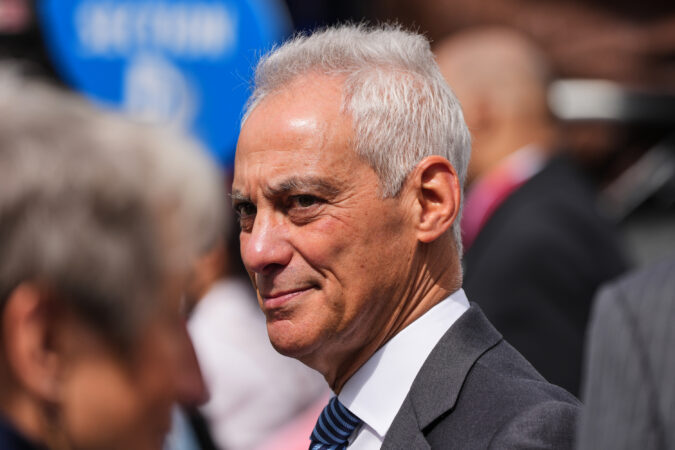
    Rahm Emanuel, the former Chicago mayor and potential Democratic presidential candidate, plans to use a speech in Tel Aviv on Wednesday to warn that America’s relationship with Israel is “not sustainable” unless the Israeli government sharply changes course.

    Emanuel, according to draft remarks provided to the Washington Post, plans to offer criticism of all parties involved in the decades-long conflict between Israel and its Arab neighbors — warning that Israel has become a “pariah” under Prime Minister Benjamin Netanyahu, calling out “the corruption of the Palestinian leadership” and challenging the “unconditional support” the United States has offered Israel.

    Emanuel, who is Jewish and whose father was born in Jerusalem, plans to tell the Israeli audience that the relationship between the United States and Israel is “at a crossroads” and cannot “stand or survive as it has been,” given the country’s harsh treatment of Palestinians in the Gaza Strip and the West Bank.

    “The United States cannot continue to finance and support that cynicism in silence,” Emanuel plans to tell the audience at Tel Aviv University. “You cannot fight indefinitely against a world that has stopped believing you have the right to fight. You must instead find a new sustainable path to peace, security, and economic prosperity.”

    The debate over Israel and Palestinian territories is causing enormous upheaval in the Democratic Party, where negative views of Israel have shot up since its lethal invasion of Gaza following the Hamas attacks of Oct. 7, 2023.

    Democratic lawmakers in New York and Colorado suffered primary defeats recently against political newcomers critical of their past backing of Israel, while Democrats weighing 2028 presidential runs are already facing tough questions on the Middle East. Party leaders have yet to find a way to navigate between those who still fundamentally support Israel, most of whom nonetheless criticize the Netanyahu government, and those who want to end all economic and military cooperation.

    Emanuel may be in a particularly sensitive spot because his connections to Israel are notable. His uncle is buried in Jerusalem, and he served as a civilian volunteer for the Israeli military during the 1991 Gulf War. He also worked on Arab-Israeli peace as a top aide to presidents Bill Clinton and Barack Obama.

    Emanuel said in an interview that he opted to “come and be frank” by speaking in Israel, rather than “shooting spitballs from across the Atlantic.” In a possible shot at other Democrats considering presidential runs, he added, “I don’t think it takes a lot of courage to criticize Israel from the opinion pages of any publication or from the floor of the Senate.”

    In his prepared remarks, the former congressman says the push for a “Greater Israel,” one that includes Gaza and the West Bank, is as “self-destructive and fanatical” as the demands for a Palestine stretching “from the river to the sea.”

    Emanuel also plans to outline a three-part proposal: full diplomatic relations between Israel and its Arab neighbors, who will be responsible for standing up a credible Palestinian authority; economic investment to deepen connections between Israel and its Arab neighbors; and an end to the “American taxpayer’s subsidy of Israel’s defense budget.”

    But the tone of his speech could be as important as the content. “Hear me now: Israel will be alone if its leaders choose to attempt to annex the West Bank and pursue the fantasy of a Greater Israel,” he plans to say. “America will not and cannot be complicit or complacent in that endeavor.”

    In the interview, Emanuel said his central message is that the status quo cannot continue.

    “I happen to think the alliance, if done right, serves American interests. But if it doesn’t, I’m going to say, ‘This is going to change,’” Emanuel said. “And if it doesn’t change, it can’t stay as is. This is not sustainable for the United States.”

    Netanyahu comes in for particular criticism. “The prime minister and his government have led Israel into a dead end,” Emanuel plans to say.

    Emanuel and Netanyahu have a tangled history. While working as Obama’s chief of staff, Emanuel challenged the prime minister on new housing in the West Bank, leading to headlines in Israel that Netanyahu called Emanuel and Obama adviser David Axelrod “self-hating Jews.”

    Emanuel now wields that insult like a badge of honor, given Netanyahu’s low standing among Democrats. “I didn’t need a war to know that what he was going to do was going to lead to perpetual war. That’s what I said to him in 2009,” Emanuel said in the interview. “If there was a prediction I wanted to be wrong on, that was it.”

    Still, the speech reads like a statement of tough love from a friend, one that finds the former mayor leaning on his connections to the nation to deliver blunt criticism. Emanuel plans to open by noting his uncle’s grave site on Jerusalem’s Mount of Olives and his father’s service in the Irgun, a Jewish underground militia, during the 1948 Arab-Israeli War.

    “The most important thing a true friend can do is to tell the truth even when it’s painful,” he plans to say. “And today is a day for truth.”

    Emanuel, unlike many critics of Israel, contends in his speech that Israel over the years has repeatedly offered the Palestinians sovereignty in exchange for security, only to be rebuffed.

    Emanuel said his trip to Israel is part of a broader strategy to mount a nontraditional presidential campaign, should he “decide to take the dive into the deep end.”

    “I’m not going to do a campaign the traditional way,” Emanuel said, adding that if he chooses to run, he will not make any announcement until after the 2026 midterms.

    The dramatic shift in Democrats’ position on Israel began in the Biden administration. President Joe Biden, a traditional pro-Israel Democrat, flew to Israel to show support in October 2023 after Hamas militants surged over the Gaza border and killed some 1,200 people.

    As Israel mounted an aggressive retaliatory military campaign that ultimately killed more than 70,000 Palestinians, Biden was increasingly besieged by progressive protesters at his events hurling chants of “Genocide Joe.”

    Even with the 2028 election more than two years away, potential Democratic hopefuls are already facing questions about their stance toward Israel.

    California Gov. Gavin Newsom in March referred to Israel as “sort of an apartheid state,” a remark he later walked back under pressure. Illinois Gov. JB Pritzker was sharply critical of AIPAC, the influential pro-Israel group, after it spent lavishly on political campaigns in his state.

    Kentucky Gov. Andy Beshear, asked in a Politico interview in March whether Israel was guilty of genocide in Gaza, responded, “That’s becoming one of those new litmus tests that we said we would never do as a party again.”

    He added that he supports Israel and its right to exist but disapproves of Netanyahu’s handling of the Gaza war.