Category: Washington Post

  • As blazes rage out West, federal firefighters describe a mounting strain

    As blazes rage out West, federal firefighters describe a mounting strain

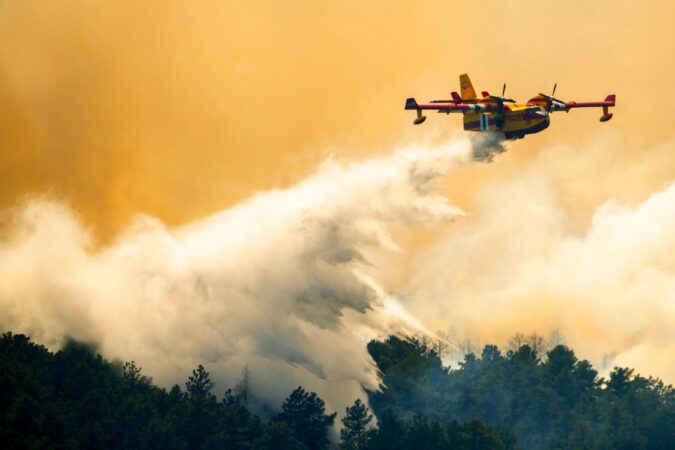
    As wildfires rip across the parched American West, federal firefighters say they are facing immense pressure and grappling with a shortage of resources that has worsened following the Trump administration’s staffing cuts.

    A collision of risky conditions have made things harder as the summer gets underway: a warm, dry winter; prolonged drought; snowless mountains; thick fuels that have had time to cure — elements that have set the stage for what could be a hellish fire year. The scenario started rearing its head in March and intensified over the last few weeks, with about 50 large fires now burning across the United States, and Utah and Colorado experiencing particularly large or destructive blazes.

    Before these factors aligned, strain on federal firefighting capacity had been building for years, leaving many feeling short-strapped and exhausted as they respond to prolonged and erratic fires, according to interviews with 26 current wildland firefighters, state officials, experts, and former federal officials.

    In interviews, emails, and message exchanges with the Washington Post this week, 15 federal firefighters said that what goes on behind the scenes can be more challenging than the blazes themselves. They spoke of organizational gaps across agencies, smaller crews with fewer seasoned leaders, prolonged exposure to dangerous conditions, and major changes to the way the nation fights fires. They all spoke on the condition of anonymity for fear of retaliation.

    The crisis, firefighters say, hit a crescendo when the Trump administration slashed federal agencies last year. Multiple states and forest stations lost workers who could support fire response. Many senior leaders and veterans also took deferred resignations or retired early.

    The U.S. Forest Service, housed within the Agriculture Department, is the nation’s largest wildfire firefighting force, managing more than 193 million acres across the country, as well as partnering with state and local fire departments to help respond to large blazes.

    In 2024, there were 18,700 federal employees who could fight fires. Now there are a little over 17,000, according to the U.S. Forest Service and Interior Department. In a recent June report, the Government Accountability Office noted that the U.S. Forest Service’s workforce “decreased by about 20% in response to a February 2025 executive order for large-scale workforce reductions.”

    The administration is also in the middle of reshaping how the country responds to wildfires. Earlier this year, officials announced the formation of a new unified U.S. Wildland Fire Service and a shift back to a strategy that prioritizes “suppression,” which seeks to put out all fires quickly. Firefighters in the field say that transition — which they say commands more of their time and resources — is taking place in real time as they respond to ongoing fires.

    While firefighters have been raising the alarm on staffing concerns for years, they say the current climate — the exceptionally fire-prone conditions and the administration’s assault on federal workers — has fueled intensified levels of burnout and concerns over the preparedness of less-experienced crews.

    In response to questions about wildland firefighter staffing and resources, the U.S. Forest Service said it is “stronger than ever, fully staffed, and equipped to respond aggressively to every unplanned ignition.”

    The agency added that it has “reached and exceeded our hiring goal of 11,300 firefighters. This is the earliest we have reached our 11,300-target since 2022.”

    Experts and firefighters say the Forest Service has had that same hiring goal of 11,300 since April 2022, according to public memos. Some argue the number has not kept up with demand, in part because the agency includes what are known as secondary fire employees, such as dispatchers and administrative positions, in that number, according to congressional budget requests, internal data viewed by the Post, and two people familiar with the situation.

    While the Forest Service said it surpassed its hiring goal and brought on “11,719 wildland firefighters onboard nationwide,” the number of primary firefighters, workers whose main duty is to fight fire, is about 9,000, according to staffing data from late June reviewed by the Post.

    The Forest Service confirmed the yearly hiring figure does include secondary positions, including dispatchers, describing them as “critical to successful daily operations.”

    “Between our operational firefighters, our non-fire carded employees and administratively determined hires — the Forest Service can mobilize more than 28,000 responders,” the agency said.

    “I’m so frustrated I could cry,” said one federal firefighter currently fighting Utah’s Cottonwood Fire, the largest active blaze in the country. In a message to the Post, he said firefighters knew what dangers could emerge “while watching the snowpack all winter.” But he said the Forest Service has had less staff to reduce fuels in drought-stricken forests and do other fire prevention work.

    He described a cratering morale and said firefighters are “treated like we’re dispensable.” Last week, three of his federal colleagues died after helicoptering into fires burning on remote parts of the Utah-Colorado border. That kind of tragedy so early in the summer has added to the emotional heaviness.

    “We are reeling, devastated, and still trying to come to terms with it,” he said.

    And even though about 3.2 million acres have burned across the U.S. so far this year — nearly twice as many as this time last July — firefighters and experts caution that the fire current fire landscape isn’t that busy yet. California and the Pacific Northwest haven’t seen major blazes; there haven’t been the kind of megafires burning for weeks that require resources from other countries.

    The Cottonwood Fire, which has burned nearly 100,000 acres, is the largest blaze burning in the U.S., fueling devastating loss across Southern Utah. Colorado is also grappling with a siege of wildfires that has forced about 6,000 residents in rural communities to evacuate.

    These kinds of overlapping fires have stretched federal assets, experts and fire officials said.

    On Monday night, Tim Ross, an incident commander with the U.S. Forest Service, said during a briefing on the Willow Fire that with all the activity across the state, “there is a battle for resources.”

    In an interview Thursday, Gov. Jared Polis (D) and several fire and public safety officials said that while Colorado may have its hands full right now, they are managing. It’s what could come next that worries them. Decades of falling behind on fuel treatments and climate challenges have made their forests tinder boxes, they said.

    “Our biggest worry right now are more major incidents,” Polis said from his car after getting an update on the Aspen Acres fire, which has burned more than 50,000 acres and has become the state’s top priority. “While we don’t have a shortage [of resources], our concern is that we would have a shortage in our state and other states if there were additional incidents.”

    Colorado has been bolstering its firefighting apparatus over the past few years, Polis said, buying more aircraft and engines, and changing policies so they can put out fires before they get too big. Other states that are becoming more fire-prone might not have made those changes. But the reality is, when fires explode, even the most well-resourced states still need the federal government’s help.

    For about the past 15 years, the Rocky Mountain region has had the same number of incident management teams — three. Right now, they’re all dispatched in Colorado. In need of further assistance, officials brought in what’s known as a complex incident management team to help out, a crew that came all the way from Alaska.

    Experts said that suggests most of these teams are already committed to other fires.

    “They are hitting the limits of available resources across the Lower 48 because of this recent outbreak of fires across the entire Southwest,” said Michael Wara, the director of Stanford University’s Climate and Energy Policy Program who specializes in wildfires. “There are only so many firefighters to go around. Our militia is smaller than it used to be because so many people got laid off or left. At some point you start to get into difficult competition for resources when things get really busy and there are so many battles happening at same time.”

    Colorado fire officials also acknowledged they’ve seen some loss of experienced incident command officials who really know how to fight fires.

    The Forest Service said it has sufficient resources to battle wildfires. As of July 1, the federal government has mobilized more than 9,000 personnel, the agency said, adding that “over the past week the Rocky Mountain and Great Basin areas processed 9,623 resource requests with about 1.5% of those requests being unfilled. This demonstrates that incident management teams are receiving the support they need.”

    Staffing the nation’s federal wildfire response infrastructure has long been difficult and opaque, according to experts and previous federal investigations. And federal wildland fire staffing levels are complex — agencies often have a mix of permanent full-time employees, seasonal, and emergency hires that ebb and flow throughout the year.

    A 2022 report from the Government Accountability Office highlighted that “recruiting and retaining federal wildland firefighters has been difficult” due to “low pay, poor work-life balance” as well as a lack of mental health support and other issues. Other GAO assessments from 2024 and 2025 found that low staffing was hampering goals such as prescribed fire targets.

    Those are some of the same struggles firefighters are now describing as the summer ramps up.

    A Forest Service official in Colorado who leads a team focused on suppression said a lack of funding meant he could no longer hire the standard number of seasonal workers. There are important leadership spots still open, he added, and his forest may have to stop using one of their engines because they don’t have enough crew members to staff it. That means their fire response will be less robust, he said.

    And at a time when “the fires are larger and more complex,” they have lost officials who’ve been around for decades, and who know best how to respond to dicey situations or rugged terrain.

    “We simply don’t have the experience and qualifications to backfill them,” he said. “They say ‘don’t do more with less’ but the reality is that we must.”

    These experiences echo hundreds of others who took a recent survey for the Grassroots Wildland Firefighters, a nonprofit advocacy group, according to Riva Duncan, president of Grassroots and a retired firefighter currently helping out on assignments as an officer making strategic decisions when new fires flare up.

    “Over the past several years as the climate crisis worsens, it feels like we keep asking fewer firefighters to do even more and morale is suffering,” she said. “And a very challenging fire season, like this one is shaping up to be, will probably only affect that even more.”

    Zeke Lunder, a 30-year wildfire expert who specializes in mapping and wildfire science, said the loss of senior, qualified leadership can have a tangible effect on crews when they are in the field, because fire — when, where, and how it burns — is often cyclical.

    As an example, Lunder pulled up maps showing how a wind-driven fire in the 1990s hit the same area where the three firefighters died last week. That fire, he said, spread 10 miles in one day, “and these fatalities happened under similarly explosive conditions.”

    Federal officials are investigating the conditions during which the firefighters responded.

    “History tells you the potential, the possibility of a fire. When you forget those stories we repeat those mistakes,” Lunder said. “The right question isn’t are your positions fully staffed. It’s how many people do you have who have been working over 20 years?”

    For the past several months, firefighters and officials have also been undergoing a significant reorganization. While many firefighters think a unified federal firefighting force is a good idea, they described a transition that’s been disruptive and has added even more pressure to all-consuming jobs. As one high-level supervisor with the new service explained, they are trying to rebuild long-established protocols “in real time, during fire season.”

    “Winter is normally when we recover from the previous season, take leave, complete hiring, conduct training, and prepare for the year ahead,” the supervisor said. “That opportunity largely disappeared this year. Permanent fire staff have spent the offseason consumed by organizational unification efforts instead of preparing for fire season. Many people are already exhausted, and it’s only July 1.”

    A new directive to put fires out as fast as possible also means there’s more risk, firefighters said.

    In one Mountain West state, a member of a specialized helicopter-based crew detailed how his team was already missing critical positions, known as spotters, and that he has had to shift people around to fill the gaps.

    These kind of firefighters land near or rappel from helicopters in remote terrain engines often can’t drive into. The firefighters who died last week in Colorado were part of a helitack crew.

    Focusing on full suppression will require these teams to be in the air more — flying further and shuttling food and protective gear back and forth — as well as responding to more dangerous situations.

    On one recent assignment, the helitack firefighter said the pilot he was with didn’t feel safe because the area was so congested with other air traffic. He said the helicopter decided to pull out of the assignment despite officials asking them to keep dumping water on flames.

    “We said no,” the firefighter said. “All this pressure to put everything out is adding to the workload; that is unequivocally what is happening.”

  • A long-planned LGBT cruise has been blocked from stopping in Turkey

    A long-planned LGBT cruise has been blocked from stopping in Turkey

    Officials in Turkey are prohibiting an all-gay cruise from spending multiple days in the country next week during a voyage from Athens to Venice, according to the company organizing the trip.

    Turkish government and tourism representatives did not respond to inquiries from the Washington Post on Friday. Virgin Voyages, which owns the ship, also could not immediately be reached.

    But Sunday, the official X account for the provincial government that includes the port city of Kusadasi posted a news release stating that the July 7 call of a chartered cruise ship had been canceled. The post said groups on the ship were “known for their behavior incompatible with our society’s structure and moral values,” according to an English translation.

    The 10-night Mediterranean sailing aboard Scarlet Lady will depart from Athens on Sunday and include other ports.

    Broadway star Patti LuPone, who is performing on the cruise, shared her outrage on social media.

    “A ship — a magnificent ship — full of well-heeled gay men. And me. Denied entry to Turkey simply because of who is on board,” she wrote on Facebook. “I am ready to perform for all the wonderful men on this Atlantis cruise, who deserve so much better than this.”

    The cruise has been planned for more than a year, said Rich Campbell, CEO of trip organizer Atlantis Events. He said he first got word a week ago that there might be an issue.

    On Saturday, he said, the port agency — which serves as the connection between cruise lines and authorities where they dock — sent a letter to the cruise line telling them the port calls would be denied by the government.

    Campbell said he was sure there was a mistake. The Los Angeles-based company, which charters large ships for LGBT experiences, has brought travelers to Turkey more than a dozen times over 20-plus years, including last year, and had “a fantastic tourist experience.”

    “We’re there to shop, be great tourists, spend money,” he said. “It’s always a culturally respectful group.”

    Campbell said that despite multiple efforts to stick to the original itinerary, including assistance from the U.S. Embassy, he learned Thursday that the decision would not change.

    The U.S. State Department declined to comment on the case, directing questions to the company, but said in a statement that the U.S. Embassy in Ankara “regularly promotes U.S. business and commercial interests” in the country.

    Atlantis sent a notice about the change to passengers Thursday, informing them that the new itinerary would include a full day in Alexandria in Egypt and a stop in Crete.

    “Despite exhaustive efforts on our part to reverse this decision, our calls to Istanbul and Kusadasi have been canceled by the Turkish Authorities,” the message to passengers said. “We know that this change is disappointing and truly wish that we could have kept our visits to Turkey as planned. … They have always been a highlight of our voyages, and we look forward to returning soon.”

    Campbell said he believes Turkey will lose at least $1 million in revenue by blocking the passengers from spending three days in the country.

    “The bigger damage to Turkey is when you start picking and choosing who’s allowed to enter, and your economy depends on tourism, you’re creating a standoff between tourists and yourself,” he said. “And you run the risk of alienating a lot of potential tourists.”

    While same-sex relationships are not illegal in Turkey, top leaders have expressed antigay sentiment. A Pride march in Istanbul has been banned for more than 10 years. Police detained dozens of people in recent days during a gay pride event that was held despite a ban, Agence France-Presse reported.

    Campbell said there has not been a threat to travelers on his company’s cruises. And he doesn’t believe Turkey is hostile to gay tourists, even considering the recent action.

    “I think it’s a bad call, but unfortunately it has the potential for long-term repercussions,” he said.

  • Iran’s new leadership is younger, savvier, ruthless, and even more hard-line

    Iran’s new leadership is younger, savvier, ruthless, and even more hard-line

    The death of Iran’s supreme leader on the opening day of the war raised U.S. and Israeli hopes that the regime he led — and that has held the country in an Islamic vice grip since 1979 — had been pushed to the brink of collapse.

    Four months later, however, as Iran stages a belated state funeral for Ayatollah Ali Khamenei, the burial rites testify instead to the Islamic republic’s survival and mark the ascendance of a new generation of leaders that is more entrenched and hard-line, according to security officials and experts.

    Led by Khamenei’s son and successor, Mojtaba — who has remained in hiding since being injured in the same strike that killed his father — the new hierarchy is younger, has better command of the state’s levers of power, has gained insights from the U.S. wars in Iraq and Afghanistan, and is savvier about soft-power tools including diplomacy and online propaganda.

    After surviving months of strikes by two of the world’s most potent militaries, the regime has emerged emboldened, officials and experts said, and remains ruthless. It reportedly has carried out a campaign of executions against domestic critics and political opponents even as it continues intermittent strikes in the Persian Gulf and flexes its control over the Strait of Hormuz.

    Iran “might be weaker when it comes to its economic situation, its industries, some of its strategic capabilities,” said Raz Zimmt, head of Iran research at the Institute for National Security Studies in Israel. “But the bottom line is that we are facing a new, bolder, self-confident Iran.”

    Nearly all of those now in high-ranking positions spent formative years as lieutenants in security agencies or military units responsible for crackdowns on domestic protests, arming proxy militias including Hezbollah and Hamas, and rising through the ranks of elite organizations including the Islamic Revolutionary Guard Corps.

    The roster includes Mohammad Bagher Zolghadr, who has taken on the influential role of secretary of the Supreme National Security Council of Iran. He is a former Revolutionary Guard commander with deep ties to the Quds force, the IRGC branch that trains allied militias.

    Ahmad Vahidi, the Revolutionary Guard’s new commander in chief, backed the violent crackdown against women’s rights protests in 2022, according to officials and experts.

    Mohsen Rezaei, the new military adviser to the supreme leader, is an ardent advocate of escalation in response to any U.S. and Israeli attacks, experts said.

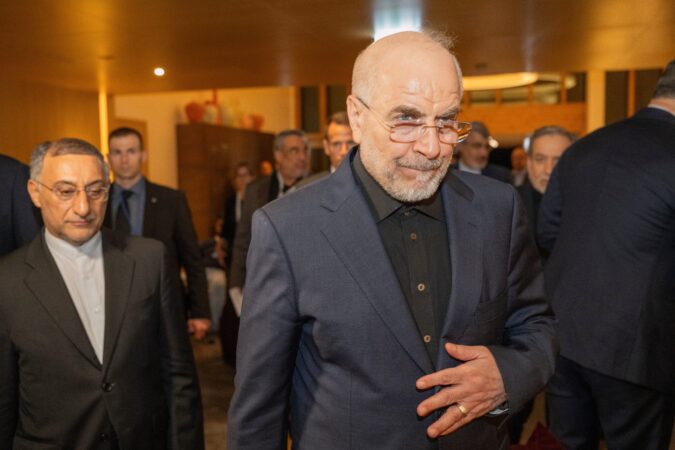
    Even those perceived as moderates by the Trump administration were shaped by years spent in security agencies or war zones. Mohammad Bagher Ghalibaf, speaker of the Iranian parliament and a main representative in peace talks with the United States, served as an IRGC commander during the Iran-Iraq war.

    By contrast, Iranian leaders with civilian backgrounds largely have been sidelined as part of the war-driven shake-up, officials and experts said. They include President Masoud Pezeshkian and Foreign Minister Abbas Araghchi, who previously led talks with the United States but has seen his position and influence diminished.

    The swift consolidation of power by loyalists contradicts claims by President Donald Trump that the war accomplished “regime change” and empowered pragmatists willing to acquiesce to U.S. demands.

    “They have a new group of leaders,” Trump said during the Group of Seven summit in France last month. “Actually, I think they’re smart. … They’re far less radicalized, and I think they’re very, very good.”

    Instead, officials and experts said that Trump’s approach — including threats to annihilate Iran’s civilization, a country of more than 90 million — has bolstered hard-liners’ claims that the country is in an existential struggle with the United States and its allies.

    This has weakened the hand of moderates who were key to negotiations over Iran’s nuclear program a decade ago.

    Experts and officials warn that the younger Khamenei and his inner circle probably will face a more difficult test when the war truly ends, and they confront the challenge of rebuilding Iran’s battered economy and improving conditions for its people.

    The Trump administration’s agreement, in a preliminary memorandum of understanding, to release billions of dollars in frozen Iranian assets and provide other financial benefits could deliver a lifeline to Iran’s new leadership team.

    The regime also faces more immediate challenges, such as demonstrating that the younger Khamenei has recovered from injuries sustained in the strike that killed his father and is capable of handling the full range of duties — including the public appearances that come with being supreme leader.

    The funeral looms as a critical test of the regime’s confidence that he can be protected, and will be scrutinized by analysts at the CIA and other intelligence agencies — much as they scoured footage of Soviet parades and politburo meetings during the Cold War — for clues to the leader’s condition and the identities of others who have gained clout.

    Even in peace time, Mojtaba Khamenei kept a low profile. He has been photographed in public only a handful of times, and few Iranians have heard him speak.

    The war sent him deeper underground. Officials and experts said that he probably is being moved among bunkers and other secure locations to protect him from airstrikes or assassination.

    The funeral, however, is the first mass public gathering since the war, creating pressure on the regime for Khamenei to appear.

    “He’s the head of state. A religious leader. And it’s the funeral for his father,” said Norman Roule, a former CIA officer and an expert on Iran. “His failure to appear at his father’s funeral, mourn publicly, and project command would be interpreted by many inside Iran and abroad as evidence of his personal weakness, physical incapacity, or even death.”

    An Iranian diplomat who spoke on the condition of anonymity to discuss sensitive diplomacy said it was unlikely that Khamenei would appear, in part out of fear that the United States or Israel would try to kill him.

    “The Iranian people first and foremost need him to be safe, so he can lead the country,” the diplomat said. “The United States and Israel have shown that they are bound by no commitments.”

    Even in hiding, Khamenei is believed to be handling high-level decisions, U.S. and Middle Eastern officials said, though security precautions have meant that his decisions and statements mainly are relayed through intermediaries, creating a cumbersome dynamic.

    ‘It’s very clear by now that Mojtaba Khamenei is making the strategic decisions,” Zimmt said, while those below him have formed a leadership “collective” that has influence on key issues but answers to the ayatollah.

    Khamenei is believed to have set boundaries for negotiations with the United States, experts said, ruling out substantive discussion of Iran’s nuclear program before a durable ceasefire took effect.

    Like his father, he also has distanced himself from decisions that could backfire. He publicly expressed reservations about the MOU his government signed with the United States, for example, but allowed it to proceed citing assurances from subordinates.

    He also took a shot at his U.S. counterpart. Iran had agreed to sign the memo “out of compassion and goodwill,” he said, while Trump had done so “out of desperation.”

    The new leadership team supplants a generation forged by years of operating in the shadows of the resistance to the autocratic rule of the shah, followed by the chaotic 1979 revolution and its aftermath.

    Those in charge now, experts said, are part of a postrevolutionary cohort who are less extreme in their religious views but equally ruthless in their willingness to use brutal force to maintain control.

    Their understanding of the United States has less to do with the hostage crisis of 1979 than their front-row view of the wars in Iraq and Afghanistan, conflicts that went on for years but ended with the United States having achieved few of its core aims.

    The new group’s more sophisticated grasp of American pressure points may account for Iran’s strategy of launching retaliatory strikes against Persian Gulf allies of the United States, as well as its halting of tanker traffic through the Strait of Hormuz, which yielded major economic leverage.

    Even after an initial ceasefire was announced in April, Iran has demonstrated that it remains willing to resume its use of military force, an aggressive stance that has helped it extract key economic concessions from the United States and allowed the regime to craft a narrative at home that it prevailed in the war.

    “They are brimming with confidence,” said a European official in regular contact with Iranian officials, who spoke on the condition of anonymity given the sensitivity of the matter. “They not only survived, they rediscovered the Strait of Hormuz as a big lever, and they really think that they can dictate terms.”

  • Iran begins funeral rites for Ali Khamenei, supreme leader killed in war

    Iran begins funeral rites for Ali Khamenei, supreme leader killed in war

    For four months, Iran feared it was too dangerous to lay to rest Ayatollah Ali Khamenei, the country’s supreme leader who was killed in an airstrike on the first day of the joint U.S.-Israeli war.

    Now, shielded by a tentative truce — and perhaps by an America distracted by its 250th July Fourth celebration — millions of Iranians are expected to mourn over several days of funeral rites that will stretch across five cities and into neighboring Iraq.

    For the surviving Iranian regime, the funeral offers an opportunity to project power after withstanding months of war with Israel and the United States, but it will also be a high-profile test of the government’s postwar competence.

    Khamenei’s body was moved to Tehran, the capital, on Thursday for a private ceremony at the place where he was killed — the small compound that served as his office and residence.

    On Friday, his coffin was moved to Grand Mosalla religious complex where it sat beside the coffins of other family members killed in the same strike, including his daughter and her husband. The smallest coffin was that of Khamenei’s granddaughter, who was 14 months old.

    Images distributed by state media showed foreign dignitaries, including leaders from Iraq, Qatar, and Tajikistan, as well as family members of the assassinated Hezbollah commander, Hasan Nasrallah, filing past the coffins as they arrived in Iran ahead of the funeral.

    Also shown paying his respects was the son of anti-Taliban Afghan commander Ahmed Shah Massoud.

    The funeral organizer said no officials were invited from Europe or the United States. Official banners prepared for the event declared “We must rise” and carried the image of a red fist.

    Security was expected to be tight, with sections of the capital Tehran already going into lockdown Friday.

    Parliament Speaker Mohammad Bagher Ghalibaf, who has been a key figure in peace talks with the U.S., issued a statement on Thursday calling on the Iranian people to “rise up and convey the nation’s call for bloodshed.”

    “Iran stands on the threshold of creating one of the greatest scenes in its history, a day when a nation, with hearts full of love, loyalty, and the pain of separation, comes to bid farewell to a great man,” Ghalibaf said.

    The cavernous prayer hall where Khamenei’s coffin was put on display Friday to lie in state was named after his predecessor, Ayatollah Ruhollah Khomeini, who led the country’s Islamic revolution, took power in 1979, and died a decade later.

    Khamenei led the Islamic Republic for 37 years, through wars and uprisings, and years of enmity and tangled negotiations with Washington over Iran’s nuclear program. Under his leadership, Iran repressed freedoms domestically and expanded its role as the patron of violent proxy militant groups, including Hezbollah and Hamas, which it used to confront the U.S. and Israel.

    Khamenei was killed in the opening hours of a war that has transformed Iran yet again, devastating the country’s infrastructure and leadership ranks, but ultimately seeming to strengthen its position regionally and in ceasefire talks with the U.S. — notably because of its leverage over the Strait of Hormuz.

    As Iranians mourn their assassinated leader, they and observers around the world will be watching the funeral for signals about the surviving regime, which is younger and even more hard-line. Among the top questions is whether Khamenei’s son and successor, Mojtaba, will appear in public for the first time since his father’s death.

    Mojtaba is believed to have been seriously injured in that strike, including serious damage to his face. His wife, Zahra Haddad Adel, was also killed.

    Mojtaba Khamenei has been living under intense security measures given the expectation that he, too, will be a target for assassination.

    Even in peacetime, he kept a low profile. He has only been photographed in public a few times and, before his designation as the new leader, most Iranians had never heard him speak publicly.

    Up until now, Iranians who support their government say they understand why their supreme leader has been unable to appear in public. But the further the country moves away from active war, the more people may demand an appearance.

    “If he doesn’t show up, it does become significant,” said Norman Roule, a former CIA officer who worked on Iran for decades, adding that the move would indicate that he is breaking from the rule of his father in which revolutionary symbolism was critically important.

    If Khamenei does appear — in person or by video — experts will be scouring images for clues about his injuries, officials said, while also searching for broader signs of the regime’s cohesion and capabilities.

    Observers will also be tracking the scale of the event, including whether the government can orchestrate convincing shows of public support beyond the tightly controlled capital. They will also be monitoring how much security is mobilized.

    And as the country shifts away from a war footing, its economic challenges will become more pronounced. Inflation has skyrocketed, and energy exports fell to near zero for weeks. The country’s industrial sector was heavily damaged by U.S. and Israeli strikes.

    Over Ali Khamenei’s decades as supreme leader, public dissatisfaction with the Iranian system grew, triggering repeated waves of protests. And in the past five years, demonstrations seemed to threaten the Islamic Republican at least twice.

    In each instance, Khamenei ordered violent crackdowns with escalating cruelty to clear city streets. The most recent crackdown in January is estimated to have killed thousands of people over just three days, a remarkable scale of brutality.

    After the mourning ceremonies in Tehran, Khamenei’s body will be taken to the holy Iranian city of Qom, then on to neighboring Iraq where crowds will gather in the holy Shiite cities of Najaf and Karbala, before he is finally laid to rest in his hometown, the eastern Iranian city of Mashhad.

    The ceremonies will present a serious logistical challenge for the Iranian regime. Local officials in Tehran say they are expecting crowds of up to 20 million.

    Authorities are keen to avoid the kind of chaotic scenes that marked previous burials. Eight people were trampled to death when Khomeini was buried in 1989. And dozens were killed in 2020 during crowd crushes at the funeral for Maj. Gen. Qasem Soleimani, then Iran’s most powerful military commander, who was killed in a U.S. drone strike ordered by U.S. President Donald Trump.

  • Trump wants to ease rules on mailing guns. His son’s company could benefit.

    Trump wants to ease rules on mailing guns. His son’s company could benefit.

    On an earnings call in May, GrabAGun’s chief executive had a hopeful message for investors: The Trump administration’s proposed rollback of gun regulations could be a boon to the company, which hopes to be “the Amazon of guns.”

    “This could be the most significant change to firearms retail distribution in decades,” Marc Nemati said, according to a public recording of the call. “GrabAGun is uniquely positioned for this opportunity.”

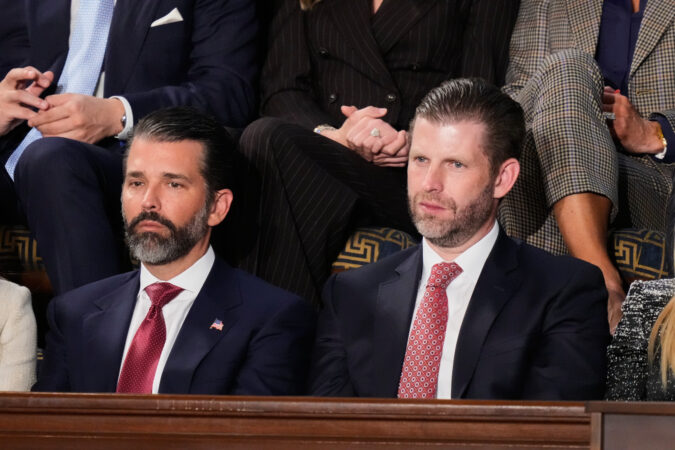
    What Nemati did not mention was that the company also had a powerful voice on its side. Donald Trump Jr., the president’s son, is on GrabAGun’s board and is a consultant to the company.

    The younger Trump was present at the New York Stock Exchange in July 2025 when the company went public, with photos showing him making a gesture like holding a gun to celebrate the moment as he helped ring the bell.

    And, with a 1.1% ownership stake in the company, Trump Jr. stands to prosper if the company fulfills its goal of being a dominant seller of firearms online.

    “To be able to come back to the New York Stock Exchange and actually take a gun company public feels like such a vindication of all the insanity, all of the woke nonsense that we’ve been watching and facing for the last decade in America,” Trump Jr. said on Fox Business ahead of GrabAGun going public. “It’s a triumphant return.”

    GrabAGun sells and ships ammunition, and some gun accessories, directly to consumers in some states using its website. But it must rely on middlemen to actually transfer the firearm to the customer.

    That’s because federal regulations prohibit sending handguns to individuals through the mail, and they require that firearms background checks and transfers be conducted in person. The administration has proposed regulatory changes that, for the first time, would let firearms sales take place entirely online, with handguns mailed directly to buyers’ doorsteps.

    Such changes could enormously benefit GrabAGun and the president’s son, creating a potential conflict of interest that has attracted the attention of ethics watchdogs.

    Many Republicans were highly critical of Hunter Biden’s tenure as a board member of the Ukrainian energy company Burisma at a time when his father, Joe Biden, was vice president and a key player on Ukraine. In the Trumps’ case, the president’s son could benefit directly from policies adopted by his father’s administration.

    “There is no question about the company’s ties to the son of the president,” said Jordan Libowitz, a spokesperson for Citizens for Responsibility and Ethics in Washington, which investigates and litigates matters involving ethics in governance. “It is always going to raise red flags and question how decisions are made within the administration.”

    In a statement, a spokesperson for GrabAGun said, “We appreciate the proposed rulemaking may allow a more streamlined purchase process for firearms for everyone who wishes to legally secure firearms, from enthusiasts to sportsmen. There is a lengthy rulemaking process ahead. GrabAGun has submitted a public comment on one of the proposed rules, and will be participating in the public comment process.”

    A spokesperson for Trump Jr. said he is a longtime promoter of gun rights who is pursuing an attractive business opportunity and has no connection to the ATF rule changes.

    “Don is a lifelong businessperson and vocal advocate of our Second Amendment rights,” the spokesperson said. “He does not interface with the federal government as part of his role with any company that he invests in or advises and had zero involvement in this particular decision.”

    A White House official said the ATF proposals were driven by the administration’s interest in protecting the Second Amendment and had nothing to do with Trump Jr.’s business interests.

    The Trump family’s sprawling business ventures, which have thrived during President Donald Trump’s second term, are facing heightened scrutiny. The president’s latest financial disclosure forms show that his reported income soared to more than $2.2 billion in 2025, as he took in more than $1.4 billion from cryptocurrency, digital tokens, and related partnerships.

    The president has said he is not involved in the day-to-day operation of his businesses while in the White House. But his two oldest sons have continued to manage the family’s eponymous real estate empire and invest in new ventures, often in countries heavily reliant on the goodwill of the U.S. government.

    Trump Jr., for example, has invested in AI-related companies, data centers, and more.

    Trump Jr. became formally involved in GrabAGun in December 2024, shortly after his father was elected to his second term. Under his agreement with the company, Trump Jr. would serve as a consultant in exchange for 300,000 shares of stock, or just over 1% of the company’s value, according to filings with the Securities and Exchange Commission.

    He would also be responsible for helping to execute the company’s marketing strategy, developing partnerships, and “serving as a spokesperson for the Company to effectively communicate the Company’s mission and initiatives,” the filings say.

    GrabAGun Digital Holdings is a 16-year-old Texas-based company that aims to digitize the gun-buying process, according to SEC filings. It hopes to reach a more youthful cohort of firearms users, who company executives say would be more likely than their older peers to buy firearms online.

    Since going public, the company — which is valued at nearly $70 million — has dropped in value, public records show. On the earnings call, company executives blamed the loss in value on the costs of going public and expanding.

    Trump Jr. has made it clear that the company’s path toward greater profitability is internet sales.

    “Younger people are actually getting into the Second Amendment,” he said on Fox News in January 2025. “They understand the fundamental importance of being able to protect themselves and their freedoms. … This is a way — with an incredible tech site — for them to shop the way they shop for everything else.”

    On the campaign trail, the elder Trump promised to roll back Biden-era firearms regulations, such as a rule that prohibits the sale of stabilizing brace firearm accessories, and received the backing of major gun rights groups. In April, the Bureau of Alcohol, Tobacco, Firearms and Explosives — the law enforcement agency within the Justice Department tasked with regulating the nation’s hundreds of millions of firearms — proposed amending or eliminating 34 gun regulations.

    Experts said some of those changes, taken together, would transform the firearms market from one that largely plays out in storefronts across the country into a potentially lucrative digital marketplace.

    Currently, licensed firearms dealers must verify a potential buyer’s identity and run a federally mandated background check in person. That stems from Congress’ move to tighten the rules in 1968, after Lee Harvey Oswald used a fake name on a mail order to buy the gun he used to assassinate President John F. Kennedy in 1963.

    Gun rights groups say the regulations are outdated in the digital era. Under one of the ATF proposals, firearms sellers would be able to verify someone’s identity and check their background online.

    Erich Pratt, senior vice president of Gun Owners of America, said the Gun Control Act of 1968 went beyond the government’s authority in restricting gun purchases, given the Second Amendment right to bear arms. Pratt, the ATF, and other gun rights groups have said that the proposal has ample measures in place to ensure the safe sale of firearms online.

    “The right of Americans to buy guns — even online — is something that is deeply rooted in our nation’s text, history, and tradition,” Pratt said, echoing the language of recent Supreme Court decisions. “It is as American as apple pie.”

    GrabAGun’s business model allows customers to order firearms on the company’s website or mobile app. The guns are shipped not to their homes but to a licensed dealer in their states, and the customers must undergo background checks at the store before they can pick up the firearms.

    As the ATF moves to allow background checks online, a separate proposal would loosen a century-old ban on sending handguns to people’s homes through the U.S. Postal Service. Under the proposed rule, licensed firearms dealers could ship guns to residents of their state. The proposal follows a Justice Department memo in January, authored by lawyers in the department’s Office of Legal Counsel, declaring the gun-mailing ban unconstitutional.

    If the ATF and Postal Service rule changes are enacted, GrabAGun could sell firearms online and ship them directly to consumers, at least in states where the company is licensed. GrabAGun is a licensed dealer in Texas, according to public records, and firearms experts say it would not be difficult for the company to get licensed in many other states.

    The ATF announced its proposals on April 29, beginning a 90-day public comment period that will expire in early August. The public comment period for the Postal Service measure has closed, and those comments are under review. Multiple state attorneys general have said they are against the Postal Service proposal, suggesting that it could face legal challenges if adopted.

    The administration says its proposals would remedy the misinterpretation of the law and Constitution by Biden-era officials.

    “ATF regulation changes reflect President Trump’s commitment to the rule of law, and that includes protecting the Second Amendment rights of all Americans,” a White House official said. “We refuse to bypass Congress and use the regulatory process to harass law-abiding Americans seeking to exercise their rights,” as the administration claims its predecessors did.

    Advocates for stricter gun laws say it is critical that potential buyers have in-person interactions before they acquire handguns. In face-to-face interactions, they say, gun sellers can pick up on any red flags suggesting that it would be unsafe for the potential buyer to possess a firearm.

    Gun-control advocates cite another administration proposal that, they say, could help GrabAGun but threaten public safety.

    Under existing ATF regulations, residents of states with rigorous procedures for obtaining concealed-carry permits can bypass the federal background check. Under the new proposal, more states, including those with laxer procedures, would qualify for the waiver.

    Marianna Mitchem, senior industry adviser for Everytown for Gun Safety, a gun-control advocacy group, said she fears that the administration’s proposals would make it simpler for gun traffickers, criminals, and underage people to get their hands on firearms through online platforms such as GrabAGun.

    Mitchem, who was a senior official at ATF overseeing inspections of gun shops before leaving the agency in 2025, said the agency during the Biden administration never discussed easing regulations to enable online sales.

    “This is going to make it so much easier for dangerous people to get firearms,” Mitchem said. “You are eliminating [gun shops’] ability to be the first line of defense.”

    GrabAGun’s executives disagree, and they submitted a comment to ATF supporting online background checks.

    “The Second Amendment is in our blood,” Jonathan B. Wolens, GrabAGun’s general counsel, wrote in the comment, which is available online. “We support this rule change because we believe it will promote efficiency and support compliance by enabling more timely, accurate confirmation of license validity.”

    ATF said the proposed rule would require a rigorous identification process while updating the gun sales process for the 21st century. “ATF’s proposed rule modernizes and strengthens identity-verification requirements … and reduces burden on consumers,” an ATF spokesperson said in a statement.

    GrabAGun appears poised to move fast if the rule changes are enacted. In October — months before the proposals were introduced — GrabAGun formed a subsidiary called Pew Logistics, with a stated mission of selling software to provide “next-generation, white-label direct-to-consumer fulfillment solutions to modernize the firearms supply chain.”

    That software would be sold to gun manufacturers, helping them sell directly to consumers online.

    Trump Jr. has multiple other financial ties to GrabAGun that could enable him to profit if the company takes off.

    GrabAGun offers a “Shoot Now Pay Later” financing option through a company called Credova Financial. Credova is a subsidiary of Public Square Holdings, where the president’s son is a board member and investor.

    In August, the Consumer Financial Protection Bureau dropped an investigation of Credova, which had been accused of wrongly charging fees to customers. It said the inquiry, which started during the Biden administration, was politically biased against companies affiliated with firearms.

    When GrabAGun went public, it merged with Colombier Acquisition Corp. II, a firm designed to combine with other companies and take them public. Colombier is led by Omeed Malik, a major Republican donor who chairs 1789 Capital, a venture capital firm that includes Trump Jr. as a partner.

  • Trump returns to Mount Rushmore after years of hinting he belongs there

    Trump returns to Mount Rushmore after years of hinting he belongs there

    He hasn’t explicitly said that he wants to be added — at least not in public.

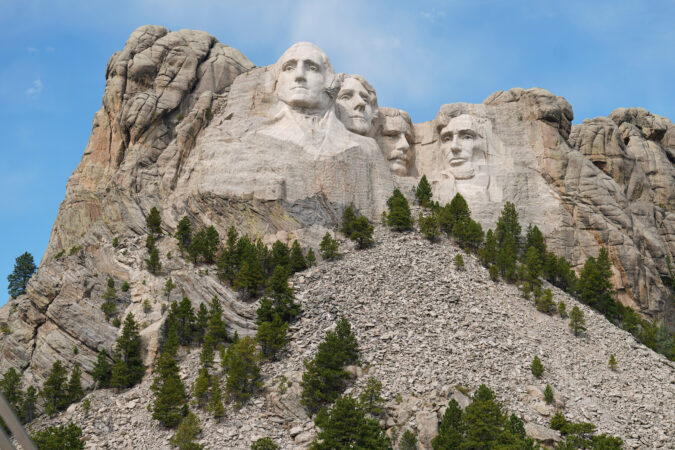
    But on the eve of the nation’s 250th anniversary, President Donald Trump was returning to Mount Rushmore after nine years of flirting with the idea of having one more face join the four presidents: his own.

    Ahead of his visit to the national memorial on Friday, his White House said that adding Trump’s face would be a welcome development — even though officials at Mount Rushmore have long said the monument cannot be carved further.

    “There would be no better addition to the iconic Mount Rushmore than the 45th and 47th President of the United States, Donald Trump,” said Taylor Rogers, a White House spokesperson, in a statement to the Washington Post.

    For a president who has had a golden statue of himself erected at his golf resort and his name and image affixed to buildings, government programs, U.S. passports, digital and physical coins, roads, and an airport, the landmark represents a rare limit: No presidential order or act of Congress can create more carvable rock.

    It has been on his mind. As recently as five weeks ago, the president — twice in one evening — posted to Truth Social digital mock-ups of his face next to the mountainside carvings of George Washington, Thomas Jefferson, Theodore Roosevelt, and Abraham Lincoln.

    Soon after he first took office, Trump told a congresswoman in private that joining them was his dream. When that Republican congresswoman, Kristi L. Noem, became South Dakota governor and gave Trump a sculpture depicting his face on Mount Rushmore next to Lincoln’s, he put it on display at his Mar-a-Lago office.

    He last visited the monument six years ago, delivering a speech on July 3, 2020, that sought to rally supporters around a law-and-order message central to his unsuccessful reelection campaign.

    On Friday, “beneath the towering faces of four of America’s greatest presidents, President Trump will deliver a historic address commemorating the nation’s 250th anniversary and charting a course for America’s next chapter,” Freedom 250, the White House-created organization heading up the semiquincentennial celebrations, wrote in an announcement of Trump’s Mount Rushmore appearance.

    Two people with knowledge of the event planning, including a senior White House official, said there would not be a projection of Trump’s face on Rushmore during the Friday night celebration.

    Trump, as he has danced around the idea of being added to Mount Rushmore since first taking office, has never batted it down.

    “Never suggested it,” he wrote on Twitter in 2020 in response to a New York Times report that said a White House aide had inquired with Noem’s office about the process of carving additional presidents. But Trump continued: “Although, based on all of the many things accomplished during the first 3½ years, perhaps more than any other Presidency, sounds like a good idea to me!”

    A year earlier, when asked by the Hill if he’d like to see his face carved there, Trump replied that he didn’t want to say: “If I answer that question, ‘Yes,’ I will end up with such bad publicity.”

    At a 2017 rally in Youngstown, Ohio, Trump declared that each of the presidents on Mount Rushmore “believed in protecting American industry.” He told the audience that he should “ask whether or not you think I will someday be on Mount Rushmore,” but that he would face blowback for positing such a question.

    “If I did it joking, totally joking, having fun, the fake news media will say, ‘He believes he should be on Mount Rushmore,’” Trump said. “So I won’t say it, OK? I won’t say it.”

    Trump’s allies have kept hope alive, however, even as Mount Rushmore officials and engineers who have long monitored the rocks there say it isn’t possible.

    Days after he was sworn in for a second time, Rep. Anna Paulina Luna (R., Fla.) in January 2025 filed a bill directing the Interior Department to begin the process of having Trump’s face carved onto Mount Rushmore. Around the same time, a Fox News panel, including former White House press secretary Kayleigh McEnany and former representative Jason Chaffetz (R., Utah), cheered on the idea. McEnany said it would be “epic” to have Trump’s face added for the country’s 250th anniversary — which would have left a year and a half to do so.

    Last July, Rep. Andy Ogles (R., Tenn.) sent a letter to Interior Secretary Doug Burgum asking him to “explore” adding Trump, saying that “past bureaucratic resistance or political discomfort” should not stop the process.

    And Burgum himself, contradicting what past National Park Service officials had said, last year told Trump’s daughter-in-law and Fox News host Lara Trump that it wasn’t out of the question.

    “Well, they certainly have room for it there,” Burgum replied when she asked if the United States would ever see Trump added to Mount Rushmore.

    In 2018, the public information officer at Mount Rushmore, Maureen McGee-Ballinger, told the Sioux Falls Argus Leader that “there is no more carvable space up on the sculpture,” adding that the rock to the left of Washington can’t be carved into, and what appears to be space next to Lincoln is “beyond the sculpture” and an “optical illusion.”

    Staff at Mount Rushmore and the National Park Service did not immediately respond to a request for comment on whether the memorial’s geology had changed since.

  • D.C. official tells Trump to build his arch somewhere else

    D.C. official tells Trump to build his arch somewhere else

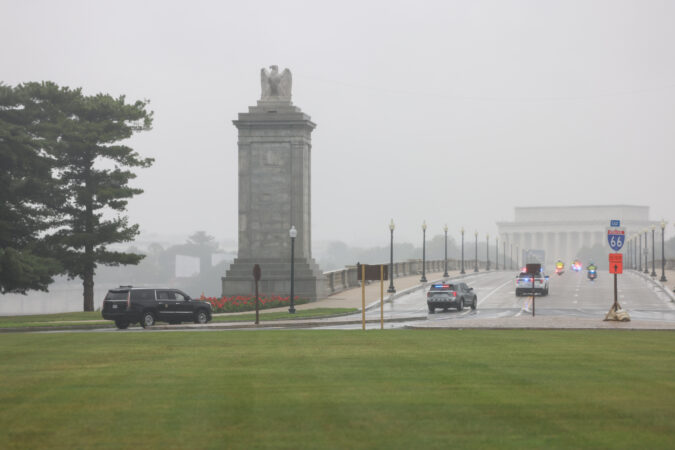
    The Trump administration should pick an “alternative site” for President Donald Trump’s planned 250-foot-tall triumphal arch, a Washington, D.C., official told the administration last month, warning that Trump’s plan to build the structure by Arlington National Cemetery would be “divisive.”

    David Maloney, the city’s historic preservation officer, said the plan to build in Memorial Circle — a traffic roundabout across the river from the Lincoln Memorial — would “severely damage an exceptional cultural landscape and one of the most important symbolic places in the nation.”

    Maloney instead suggested a different spot that he said would be a better fit for the towering arch: an empty traffic oval located on South Capitol Street between Nationals Park and Audi Field.

    “It would create an energizing focal point for a still-emerging neighborhood, suitable for a celebratory crowd,” Maloney wrote to the National Park Service in a June 26 letter posted by a federal commission reviewing the project. An arch located there could become a symbol of “sports triumph” linked with the nearby stadiums, he said, “and importantly, it would enhance the historic L’Enfant Plan and the city’s monumental landscape rather than detracting from it.”

    Rodney Mims Cook Jr., a Trump appointee who chairs the U.S. Commission of Fine Arts, had previously identified that site as a prospective location to build a triumphal arch.

    Washington Mayor Muriel E. Bowser’s office declined to comment on the proposal from Maloney, who has served as the city’s historic preservation officer since 2007. The historic preservation office does not always speak for the mayor and has some degree of autonomy in its work, city officials said.

    Bowser has sought to strike a balance with Trump as he attempts to remake parts of Washington, encouraging him to tend to long-delayed repairs to local fountains. She has avoided public battles with the president over some of his more controversial changes to the city and its historic buildings, such as Trump’s demolition of the East Wing to build an expansive White House ballroom.

    Trump last year proposed building a triumphal arch to honor the nation’s 250th anniversary, arguing that it was an overdue addition to Washington.

    “We’re the only important and major city that doesn’t have one,” Trump said in the Oval Office in May. He also touted his plan to make it bigger than the 164-foot-tall Arc de Triomphe in Paris.

    “We have to do slightly larger … otherwise you’d all be disappointed in me,” the president said, alluding to his propensity for large construction projects. “But it’s even far more beautiful.”

    Historic preservationists and advocacy groups have opposed the project, warning that the large arch — Trump’s most significant effort to change Washington’s skyline — would alter the city’s historic views.

    Military veterans also have sued to block it, warning that the towering structure would harm their experience of visiting the nearby national cemetery. A federal judge is weighing the case.

    The Commission of Fine Arts, which Trump has packed with allies, has approved the project. A second federal panel, the National Capital Planning Commission, is scheduled to weigh the proposal Thursday.

    Federal officials have also laid out an aggressive timetable to potentially complete work on the arch before Trump’s term ends, which would involve 20 hours per day of construction on the arch, year-round.

    Maloney, who declined an interview, has also questioned the Trump administration’s process to build the arch, criticizing the 10-day window for public comment. He also said that outside experts had been wrongly excluded from a federally required process, known as a Section 106 review, to consider the arch’s potential effects on historic properties.

    Trump officials have declined to include a half-dozen historic preservation and advocacy groups in the process. All of the excluded organizations, which have historically offered input on past federal projects, have sued the Trump administration over the president’s construction and renovation projects.

    The review process “is clearly an exercise designed to shield this controversial project from genuine public and expert scrutiny, rather than to reduce its harmful impacts on our shared heritage, which is owned by the public,” Rebecca Miller, the executive director of the DC Preservation League, wrote in a June 15 letter to the Park Service.

    Maloney also warned that Memorial Circle is somewhat removed from Washington’s downtown, limiting potential visitors if an arch is built there. He compared it to the sites of other major memorials — such as the Arc de Triomphe in Paris and the 9/11 Memorial in New York City — that are better woven into their city’s fabric.

    “The location does not suggest a likelihood of success for a celebratory monument,” Maloney wrote in his June 26 letter to the Park Service.

  • We asked nurses. Here are the at-home medical items they swear by.

    We asked nurses. Here are the at-home medical items they swear by.

    Peeking inside somebody’s medicine cabinet is a no-no, which is a big part of what makes poking around all those tubes and bottles so tempting. (Still, don’t. It’s not only rude, but also an egregious violation of privacy.) But what if someone were to invite you into their medicine cabinet, and then took it a step further by showing you the items they swear by for every ailment under the sun? Fabulous!

    In service of bringing you that exact experience, we asked nurses — and, truly, who better than nurses? — to tell us what they always keep stocked in their medicine cabinets. And any items you can’t do without? Let us know in the comments.

    (Responses have been edited for length and clarity.)

    Hanna Weitzman-Flanigan, a nurse-practitioner in New York City

    Tylenol is the universal answer. Headache? Tylenol. Sore back after a 12-hour shift? Tylenol. Low-grade fever? You guessed it. It’s the “don’t overthink it” solution — reliable, effective, and always within reach.

    Rubbing alcohol is one of those quiet MVPs. Need to clean a cut? Done. Disinfect something quickly? Easy. Somehow get marker, sticker residue or who knows what on your skin? Rubbing alcohol has entered the chat. I love it because it’s simple and it works without fuss.

    I use Band-Aids for almost everything. Paper cut, kitchen nick, blister from new shoes … it’s getting a Band-Aid. Part comfort, part prevention, all habit.

    Benadryl cream is a favorite for all the annoying things — bug bites, mystery rashes, skin that just suddenly decides to act up. It’s the “Why is this itchy, and how do I make it stop immediately?” solution. And it usually works.

    Vicks VapoRub is basically magic. Congestion? Vicks. Cough? Vicks. Headache, sore muscles, questionable life decisions? Somehow … also Vicks. It’s part remedy, part nostalgia, and 100% a staple in my home.

    Zac Shepherd, an intensive care unit travel nurse

    Electrolytes. I keep these around because they’re useful in a lot more situations than people realize. Travel, stomach bugs, heat, long days, hard workouts, or simply not drinking enough water. As an ICU nurse, I’ve seen firsthand how much electrolyte imbalances can affect the body. That said, more isn’t always better — don’t take them just for the sake of taking them. Electrolytes that are too high can be just as dangerous as electrolytes that are too low.

    Vaseline. It’s not exciting, but I probably use it more than anything else on this list. Dry skin, chapped lips, minor cuts, irritated skin. There’s always a tub of it somewhere in my house.

    A blood pressure cuff. Working in the ICU has made me appreciate having objective information. If something feels off, getting a useful piece of data like your blood pressure can help you decide what to do next. Checking it periodically can also help you understand what’s normal for you, especially if white coat syndrome tends to make you run higher at the doctor’s office or hospital.

    Ibuprofen (Advil). It’s a staple for a reason. Headaches, sore muscles, back pain, minor injuries. It’s one of those things that has a permanent spot in my medicine cabinet. When appropriate, alternating it with Tylenol can be a very effective way to manage pain.

    Jennifer Armendariz, a nurse-practitioner in Texas

    Oscillococcinum is a homeopathic product that I keep on hand at all times. As soon as someone starts to feel a cold coming on, we start taking it.

    Excedrin migraine. My daughter and I both suffer from migraines. I keep this at home and in my purse.

    Magnesium glycinate to help with sleep. I will also pair Excedrin and magnesium when I have a headache.

    Arnica ointment for any bruising to help speed up the healing process.

    Aloe vera gel is especially helpful during the summer if you’re out in the sun too long. The plant is best, but you can get the gel as well.

    Icy Hot or Biofreeze are great for muscle aches or joint pain.

    Bonnie Fecowicz, a registered nurse in New Hampshire

    Aleve, cortisone cream, Band-Aids, and antidiarrheal meds. Nothing impairs you more than having to find a bathroom frequently! I used to host teenagers and young adults for summer vacations, and no matter what they were up to the night before, these things got them through the next day.

    Louis Joseph, a neonatal ICU nurse in Chicago

    Castor oil. It helps with digestion, skin care, hair care, hair growth. I was born in Haiti, and it’s something everyone keeps in their home.

    Vicks VapoRub. When you rub it on your chest or under your nose, all that menthol and the minty smell help to open your sinuses. It warms and cools your skin, and it seems as if it can fix anything, like a headache, a cold, or a stuffy nose. It may be a superstitious thing, but someway, somehow it helps you feel better.

    Baby aspirin. It’s good for treating pain, and it’s an antiplatelet.

    Albuterol inhaler for asthma. Cold and flu medication. Tums.

    Also, in my backpack that I take everywhere, I carry a mini medicine cabinet that has baby aspirin, cough drops, acetaminophen (Tylenol),a blood pressure cuff, a stethoscope, an ophthalmoscope, and emergency albuterol. There are a lot of kids in the city and in my neighborhood with asthma because of air pollution. So I like to keep things around just in case. Everyone around me knows that I’m the go-to for anything.

    Diane Plas, a family nurse-practitioner in Texas

    Second-generation antihistamines, like loratadine (Claritin), cetirizine (Zyrtec), fexofenadine (Allegra), or levocetirizine (Xyzal), are multipurpose medicines. When the weather changes, when a wind storm blows in, or when new flora blooms, they come to the rescue to treat troubling allergies. You can also grab these antihistamines to treat itchy skin and rashes caused by allergies, and they also come in handy for skin breakouts due to new cosmetics and self-care items, irritation from certain fabrics, food allergies, and pet allergies. It’s best to have antihistamines on hand year-round.

    I always have a trio of meds to cover all GI issues: Gaviscon — you want something quick and chewable to help with heartburn, indigestion, and GERD. An antidiarrheal may not be needed very frequently, but when you need it, you need it! No one wants to go out to the pharmacy during a bout of this type of tummy trouble. Stool softeners like Colace or Miralax that pull water into the bowel without a stimulant. You can ensure everything keeps moving without the dramatics of a stimulant. This is also great for travel.

    Antifungal cream for itchy rashes along toes, underarms, and skin folds. They often increase in hot, humid, and sweaty areas and can be very bothersome. Treating these rashes quickly helps prevent them from spreading.

    You can put hydrocortisone on so many trouble spots. It will help with inflammation and itchy areas due to contact dermatitis, allergies, and yeast.

    Jessica Varghese, a registered nurse in New York

    Vicks VapoRub is my go-to solution for everything. From headaches, to chest congestion, to general uneasiness, Vicks is the remedy. When I was pregnant, the smell even helped my nausea. It’s the answer to many ailments.

    I carry Benadryl in my purse and have used it in emergency situations in the community. Benadryl can be used when there is some type of allergic reaction. Having a child with an egg allergy, it has come in handy when certain things you don’t account for have egg, such as brioche or certain ice creams. It can also be used to help with itching, induce sleep, or as a treatment for hay fever.

    Tweezers. Someone is always getting something stuck somewhere. It’s very helpful for splinter removal, ticks, and bee stings, which happen a great deal outdoors.

    Chai calms you from the inside out (I usually store that in my kitchen cabinet, not my medicine cabinet, but it still serves the same medicinal purpose). I make it with ginger and cardamom, and it is very therapeutic for healing.

    Pam Vollmer, a registered nurse in Florida

    Fever reducer. Acetaminophen is the best choice here.

    Nonsteroidal anti-inflammatory. I prefer ibuprofen for this, but naproxen (Aleve) is another excellent over-the-counter choice. Doses of ibuprofen range from 400 to 800 mg. My rule of thumb is that if the pain I have is not bad enough to need an 800-mg dose, then I don’t take anything at all.

    Antihistamine for severe reactions. My go-to for this is diphenhydramine (Benadryl). The antihistamine kept on hand should be something that can treat allergic emergencies, not simply daily or seasonal type allergies.

    Sandra Russo, a registered nurse in New York City

    Two pain relievers: plain acetaminophen and plain ibuprofen, both in one standard strength so nobody has to squint at labels when they don’t feel well. If someone has a low‑grade fever, a headache, or just feels achy, we start with acetaminophen. If it’s something clearly inflamed, like a twisted ankle, a sore back after too much lifting, or dental pain, that’s when I pull out the ibuprofen.

    There’s always a nondrowsy antihistamine (I usually buy cetirizine), a small bottle of diphenhydramine and a tube of 1% hydrocortisone cream. Between those three, we’ve gotten through bug bites, surprise rashes from who‑knows‑what, and random hives that show up right before bed. Aloe gel and a battered bottle of calamine lotion live there, too, because in the summer someone is always coming home sunburned or bitten.

    For stomach and “I knew that second slice was a bad idea” problems, I keep chewable antacids, loperamide (Imodium), and a couple of electrolyte drinks or powder packets.

    If there’s a bug going around, I add honey, throat lozenges, and saline spray to the rotation before I reach for anything stronger.

    And because the nurse part of my brain never fully clocks out, there’s a small first aid box tucked nearby — containing bandages in too many sizes, gauze, tape, antibiotic ointment, alcohol wipes, tweezers, a tiny pair of scissors, gloves — and a reusable ice pack waiting in the freezer.

    A plain digital thermometer is the unsung hero of the whole setup. It’s not glamorous, but it’s the thing I reach for first.

    Veneta Simone Easter, a registered nurse in California

    I find myself always reaching for the following three things again and again that I will always recommend having. Witch hazel should be a staple for everyone because it’s so versatile. It can be used to soothe irritated skin, calm any redness, refresh your skin when needed. It’s also great if you get a bug bite or a minor scrape as it gives you fast relief. This product is inexpensive and simple, and I highly recommend it.

    Medical-grade hyaluronic acid is great in the serum form, and for skin care this is my top recommendation. No better way to get healthy, hydrated skin. A quality serum helps maintain and protect the skin’s barrier, gives you instant hydration and can be used for all skin types. A win-win for everyone.

    Sunscreen is next, and this is nonnegotiable! Go for a mineral sunscreen with an SPF of at least 30 for daily sun protection and use. This product will help prevent premature aging, hyperpigmentation and, of course, protect your skin from sun damage.

    Jeff Doucette, a chief nurse officer in Pennsylvania

    The three must-haves in my medicine cabinet are a tub of CeraVe Moisturizing Cream for all the handwashing and rehydrating; it’s second to none! Lumify eye drops: With all my travel, something to clear up red eyes from flights and different hotels, no day starts without a couple of drops. SPF 30 light facial moisturizer: No face should leave the house without it.

    Karen Selby, registered nurse and patient advocate in Florida

    I always have a supply of the classic first aid kit essentials: burn cream, antibiotic ointment, aspirin, antacids, and Tylenol. But in addition to those, I always have a supply of Tegaderm transparent dressing. This is a great way to keep wounds clean and dry, especially in the summer months.

    Another must-have is some type of woven sleeve bandage, which is perfect for keeping those scraped knees and elbows clean and covered.

    Jessica Wise, a licensed practical nurse in Pennsylvania

    Burn gel is crucial to stop wounds from continuing to burn and blister.

    Saline wound wash as a “hurt free” rinse for boo-boos. My kiddos think it’s magic! Butterfly dressings to help keep wounds/cuts closed.

    A Dechoker helps remove foreign objects from airways — you will never know when you need it!

    All the Band-Aids: every shape, size, color, and character of Band-Aids, because the kids go through 100 a day, even if they aren’t actually needed.

    Fedline Lysius, a senior nurse clinician in New York City

    A heating pad is one of my go-to recommendations because it can provide soothing relief for muscle tension, menstrual cramps, back pain, and stress-related tightness.

    I keep oral rehydration packets on hand, as they can be especially helpful during illness, after travel, following strenuous activity, or any time dehydration contributes to fatigue, headaches, or dizziness.

    I swear by aromatherapy rollers containing ingredients such as peppermint. Many people find these useful for easing tension headaches, promoting relaxation, and creating a sense of calm during stressful moments.

    Another favorite is a simple stress ball, which can serve as a practical mindfulness tool by helping release nervous energy, improve focus, and encourage grounding during periods of stress and overwhelm.

  • After gutting foreign aid, Trump goes big on Venezuela earthquake relief

    After gutting foreign aid, Trump goes big on Venezuela earthquake relief

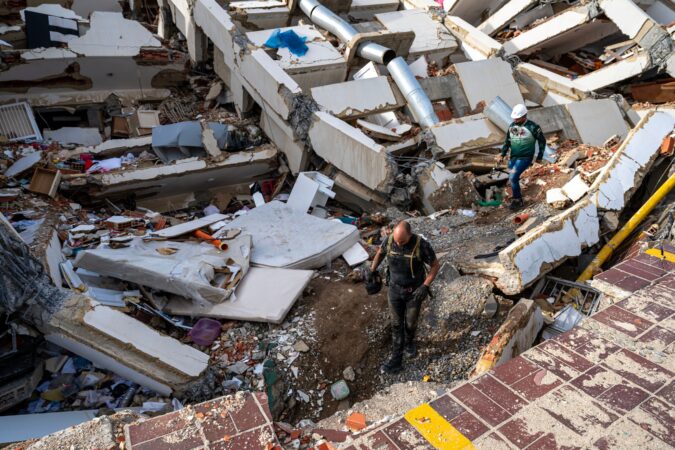
    The humanitarian crisis gripping Venezuela after last week’s earthquakes is testing President Donald Trump’s claim of American leadership in the Western Hemisphere, as officials tout their surge of U.S. money and personnel to the country after gutting America’s foreign assistance apparatus early in the administration.

    At first glance, the large-scale relief effort may be surprising as the Trump administration has championed a policy of “trade over aid” in its attempt to reimagine how Washington apportions the federal government’s largess.

    But the U.S. aid presence now in Venezuela — including search-and-rescue teams along with military and civilian logistical support — is an example of the big, brash displays of humanitarian assistance and disaster relief that the administration says it favors over slower-paced development work.

    “There is a definite ‘Team America’ element to a search-and-rescue deployment,” said Jeremy Konyndyk, former head of disaster assistance at the United States Agency for International Development (USAID), which the Trump administration dismantled and shuttered within months of the president taking office. “It makes for good TV.”

    Another twist is Washington’s newly close relationship with Venezuela, which has become tethered to the United States since a January military raid captured President Nicolás Maduro. The Trump administration has fostered ties with the country’s interim leader, Delcy Rodríguez, focusing on shared economic benefits, including the takeover of Venezuela’s oil industry, and sidelining its exiled opposition leader María Corina Machado.

    Trump emphasized this dynamic in the hours after the two quakes struck June 24, writing on social media that the U.S. would “be there for our new and great friends.”

    On Capitol Hill, some in the president’s own party have appeared more skeptical of this relationship, citing reports of Venezuelan officials stymieing the efforts of international rescue teams, including those from the U.S. Such accounts are “very troublesome for the White House,” Rep. María Elvira Salazar (R., Fla.) told reporters this week, adding that it raised questions about where Rodríguez’s “heart is.”

    Asked about the reports, John Barrett, chargé d’affaires of the U.S. Embassy in Caracas, told reporters Wednesday that “local authorities have fully complied with our requests and have accelerated this massive humanitarian response.”

    Since returning to office, Trump has advanced a more assertive U.S. leadership role in the Western Hemisphere in a bid to dilute the influence of China and Russia. His supporters call it the “Donroe Doctrine,” a play on the 19th-century pledge by President James Monroe to protect America’s neighboring nations from European colonial powers.

    At the same time, the Trump administration has radically overhauled the U.S. government’s decades-old approach to foreign aid, and what remains is sharply scaled back in key areas, including global health, food aid, and support for refugees around the world.

    Few have expressed doubt that the U.S. response to the Venezuelan earthquakes is substantial, though some experts question the metrics being used by the Trump administration to promote its claims that the relief effort is one of Washington’s fastest and most robust in decades.

    Jeremy Lewin, a senior official with the State Department’s foreign aid bureau, told reporters Monday that the $300 million the United States had pledged to spend on the relief effort was likely to grow significantly.

    “This is, by really any estimate, at this point the largest response to any natural disaster the United States has mounted in this century in terms of personnel on the ground, money out the door, [and] speed,” Lewin said.

    It is unclear how the State Department arrived at that assessment. One official, speaking on the condition of anonymity to describe internal discussions, pointed to the number of U.S. personnel “on the ground,” including military staff, urban search-and-rescue teams, and other U.S. government employees, as well as the initial pledge of monetary support.

    Gen. Francis Donovan, the commander of U.S. Southern Command, told reporters this week that there were “roughly 2,000 teammates” from the Defense Department in area to help with search and rescue. The U.S. military has used drones to aid those efforts and led the repair and reopening of an international airport in Caracas that had been inoperable due to damage.

    Sam Vigersky, a former USAID official now at the Council on Foreign Relations think tank, said that in 2010, when Haiti experienced a devastating earthquake, records show that the U.S. sent roughly 5,800 military personnel to help within five days — a figure significantly larger than those currently deployed to Venezuela.

    The Obama administration deployed six search-and-rescue teams to Haiti, compared to the four in Venezuela, Vigersky said.

    President Barack Obama also extended temporary protected status to Haitian nationals after the earthquake, allowing tens of thousands of people to continue living and working in the U.S. by shielding them from deportation.

    The Trump administration canceled TPS for Haitians and for Venezuelans, who were granted protected status by the Biden administration due to political and economic turmoil under Maduro. Deportation flights originating from the U.S. were arriving in the country right up until the day of last week’s earthquakes.

    Vigersky said that the different nature of the natural disasters in Haiti and Venezuela, as well as the political situations in the two nations, may explain disparate figures; the U.S. initially estimated more than 65,000 dead in Haiti, far more than the current toll of about 1,700 in Venezuela.

    Even still, Vigersky said, “Venezuela is a huge response by any measure.” And with the $300 million in aid announced by the State Department so far, the Trump administration may well surpass early U.S. spending after the Haiti earthquake.

    However, only a third of that money appeared to be new funding for partner organizations in Venezuela, with the rest made up of previously announced assistance for the United Nations Office for the Coordination of Humanitarian Affairs and other agencies.

    The State Department said this week it was directing funding to several large and well-established religious aid agencies, including the evangelical Samaritan’s Purse and Catholic Relief Services. Both organizations have been involved in relief efforts since the earthquakes hit, with CRS working through a local partner, Caritas Venezuela, and Samaritan’s Purse setting up a field hospital in the coastal city of La Guaira.

    Representatives of both organizations said Wednesday that they had not yet received funding from the State Department.

    Brittany Wichtendahl, a media relations contact for CRS, said that their “request is still in proposal form” and they did not have a dollar figure yet.

    Franklin Graham, president and CEO of Samaritan’s Purse, said his organization was in “final discussions” with the State Department for a $15 million funding agreement. “While that has not been finalized yet, these funds would certainly enable us to do more and to help more people,” Graham said in a statement.

    In response to a request for comment from the Washington Post, the State Department said that there were 1,900 personnel currently deployed to Venezuela and that the number of search-and-rescue teams sent to the region does not “signify any perceived level of support.”

    “In terms of personnel, financial support, and speed, the State Department’s response has been swift and comprehensive,” the State Department said in a statement.

    The Trump administration drew criticism last year for a slower and smaller response to an earthquake in Myanmar that occurred amid the dismantling of USAID. More than 5,000 were later estimated to have died in that disaster.

    Paul Spiegel, a professor at Johns Hopkins University who chaired a recent commission that proposed radical ways to overhaul the international humanitarian system, expressed concern with what he called the seemingly selective nature of the support for Venezuela.

    “A $300 million response to Venezuela, framed around its strategic importance and set beside roughly $9 million for a comparable earthquake in Myanmar last year, creates the appearance of aid being allocated by political interest rather than relative need,” Spiegel said.

    Speaking to reporters Monday, Lewin, the State Department official who oversaw much of USAID’s dismantling, said politics and geography would play a role in the Trump administration’s response to such disasters going forward.

    “Venezuela,” he told reporters, “has been part of our system and part of our hemisphere … it’s one of our neighbors.”

    Lewin pointed to efforts in the Caribbean last year, where the State Department led a smaller disaster-relief effort after Hurricane Melissa struck the region. The new model, he explained, is to support these nations as “quickly, efficiently, and accountably as possible, whenever these sudden onset disasters occur in friendly nations and our neighbors.”

    Konyndyk, who now leads the nongovernmental group Refugees International, said he supported the administration spending big on the disaster-relief efforts underway in Venezuela. “There’s a really powerful symbolism to it, in addition to being lifesaving,” he said.

    But in terms of dollars spent per life saved, the administration could do more if it also reinstated other forms of foreign assistance, Konyndyk added.

    “The administration has fully cut off food aid to Somalia ahead of what could turn into a famine there,” he said. “You could save exponentially more lives for dramatically less money in Somalia just by turning food aid back on there. They’re choosing not to do that.”

  • How Philadelphia’s past tragedy prepared the city for today’s extreme heat

    How Philadelphia’s past tragedy prepared the city for today’s extreme heat

    Thanks to Thomas Jefferson, we know that July 4, 1776, was a pleasant day in Philadelphia with temperatures that topped out in the mid-70s.

    Two hundred and fifty years later, visitors who descend on the city to celebrate the signing of the Declaration of Independence — and to watch a World Cup match on July 4 — will find a far more sweltering reality.

    A dangerous heat dome over the Eastern United States for the next several days is forecast to send temperatures into the triple digits, break records across multiple states, and pose health risks for tens of millions of Americans.

    In the Philadelphia area, the National Weather Service has warned that daily heat indexes could be as high as 110 degrees through Sunday. “This is not the kind of heat event we see every year,” the service wrote in an update this week, adding that the region could experience its hottest stretch since July 2011.

    Of any city in the path of the furnacelike blast, Philadelphia might be the most prepared. The onetime capital of the nation, home to Independence Hall and the Liberty Bell, has long had one of the country’s most robust heat-response programs.

    “We are a fairly well-oiled machine when it comes to monitoring the weather and making the decision to declare a heat health emergency,” said Palak Raval-Nelson, the city’s health commissioner. She said officials spent years planning for the America 250 and World Cup crowds.

    Behind those extensive preparations lies the memory of a deadly heat wave decades ago, and the lessons learned that started Philadelphia on its current path. The early interventions developed in its aftermath are still part of the city’s regular heat protocols.

    A brutal stretch of heat in the summer of 1993 killed 118 people in Philadelphia, a tally higher than in other cities that were grappling with similar conditions. Many of the victims were among the city’s most vulnerable — poor, elderly, or infirm. Some had no access to air-conditioning and were found with their windows closed, the stifling heat probably worsening any health conditions.

    In the wake of that disaster, officials dug deeper into what went wrong. At the time, deaths were typically considered heat-related only when there were documented signs of hyperthermia — defined as a core body temperature of 105 degrees or higher.

    But Philadelphia’s then-medical examiner, Haresh Mirchandani, expanded the definition of heat deaths to include those for which heat was a contributing factor, resulting in a more accurate picture of the heat wave’s toll.

    “It was a turning point,” recalled Laurence Kalkstein, a climatologist and heat-mortality expert who worked with Philadelphia on developing a novel approach that would eventually be emulated by numerous cities.

    The 1993 heat wave led to a litany of changes in Philadelphia, aimed at raising awareness and reducing risk among those residents most imperiled by urban heat.

    The city set up a mass-notification system to alert residents when the mercury spikes and conditions pose serious health risks. Officials designated cooling centers, mobilized a network of block captains to check on neighbors, launched a public awareness campaign, and set up an emergency heat hotline.

    One early study found that the early-warning system saved at least 117 lives in the first several years of the program and that the benefits far outweighed the costs.

    “Philadelphia led the pack,” said Kalkstein, who still works on heat-related policies in the United States and abroad.

    One measure of the success of such interventions, he said, is that even as global warming has worsened extreme heat events in recent decades, fatalities in places such as Philadelphia have not trended higher.

    “You would think because of climate change, heat-related deaths would be going up,” he said. “That’s not what we are finding.”

    Raval-Nelson said the preparations have been even more extensive ahead of the World Cup and America 250 celebrations, which are expected to draw huge crowds to the city.

    For example, she said the free FIFA Fan Festival on Lemon Hill will have cooling tents, water filling stations, ample shade, and medical stations. Organizers also have reduced the festival’s hours because of the forecast for crippling heat.

    Many of the same precautions — misting fans, free water stations, medical tents, extra shade — have been set up throughout the city, Raval-Nelson said, adding that Philadelphia also has “an elaborate network” of pools and spray parks where people can cool off.

    In addition, officials recently conducted the latest workshop for block captains on how to look out for residents. That can be especially key in neighborhoods such as Hunting Park, a predominantly Black and Hispanic enclave where surface temperatures can reach far higher than those in whiter, shadier suburbs.

    As this week’s heat dome descends, Raval-Nelson said she hopes the range of actions Philadelphia has taken will lead to a safer holiday throughout the city where the Founding Fathers enjoyed a much more mild July 4.

    “We want everyone to celebrate safely,” she said. “Practice makes perfect, and we’ve been practicing this.”