Category: Washington Post

  • Donors were misled by Trump-backed Freedom 250, House Democrats allege

    Donors were misled by Trump-backed Freedom 250, House Democrats allege

    Some donors who intended to give money to a bipartisan effort to celebrate the nation’s 250th anniversary were, instead, steered to a White House-backed initiative under false pretenses, House Democrats allege in a report released Thursday morning, citing whistleblower interviews and newly obtained documents.

    The donors meant to give money to America250, a congressionally chartered initiative to celebrate the nation’s semiquincentennial, according to Democrats on the House Natural Resources Committee. They instead were given routing and account numbers that directed their funds to Freedom 250, which President Donald Trump established last year to organize anniversary events, the report says.

    The report does not identify the donors. In interviews, Democrats said they needed to protect the identity of whistleblowers who worked with the panel. But they said their report — which includes other allegations of Freedom 250 officials and allies explicitly steering money away from America250 and toward projects shaped by Trump — shows how the president transformed a bipartisan celebration of the nation’s anniversary into an initiative that benefited him and his allies.

    “I’m a lawyer, and I know better than to pronounce that a crime has been committed,” said Rep. Jared Huffman (D., Calif.), who oversaw the report as the committee’s top Democrat. “But I do know the elements of fraud, and there is evidence of all those elements here.”

    The White House referred questions to Freedom 250, which denied that donors had been misled by its fundraising activities and criticized Democrats for the timing of their report.

    “This so-called ‘report’ is nothing more than a partisan smear from politicians who would rather manufacture division than celebrate America’s 250th birthday alongside the rest of the country,” Freedom 250 spokesperson Danielle Alvarez said in a statement.

    Alvarez also criticized America250, saying that the bipartisan organization — which Congress established in 2016 — “had nothing to show” for its 10 years of planning and spending.

    “Freedom 250 was created because the American people deserved better,” Alvarez said.

    America250 declined to comment on the specific allegations in Democrats’ report.

    “America250 will continue to focus on the values-based programming approved by our bipartisan Commission at the local, state, national and international levels, including once-in-a-lifetime celebratory moments during the 4th of July weekend,” Rosie Rios, who chairs America250, said in a statement. “We are supportive of the many other organizations planning events for the 250th at the federal, state and local level, so all Americans have ample opportunities to join in the celebration.”

    Trump has extolled Freedom 250 in public remarks, saying that the initiative has organized multiple special events. The public-private partnership, which the White House launched in December, has overseen a flurry of high-profile announcements, including some from the Oval Office.

    “We’ll have a Freedom 250 Grand Prix right here in Washington around the Capitol,” the president said last week in remarks kicking off the Great American State Fair on the National Mall — another Freedom 250-backed event.

    The Trump-backed initiative has overtaken some efforts led by America250, which is directed by a bipartisan board created by Congress a decade ago.

    America250 originally applied for and received a grant from the Institute of Museum and Library Services for so-called Freedom Trucks, mobile museums inspired by the American Freedom Train that crisscrossed the country from 1975-1976. The institute is a federal agency that provides financial support for museums and libraries.

    Officials have said the grant was later voluntarily transferred to Freedom 250, which is now operating Freedom Trucks that provide a sanitized version of the nation’s founding, according to administration critics.

    America250 officials have said they reoriented their initiative to organize events outside Washington, while Freedom 250 focuses on events in the nation’s capital. But the dueling organizations and approaches have confused some corporate leaders and lawmakers, and tensions between the groups have grown, the Washington Post reported earlier this year.

    The Democratic lawmakers’ report offers further examples of how the two groups have come into conflict.

    Some donors and sponsors interested in donating to America250 were told by the Trump administration that they lacked a “green light” to do so, according to the Democrats. The report also claims that administration officials pressured donors to redirect donations from the bipartisan effort to Freedom 250, with the Trump-backed group conducting outreach to America250 sponsors with donation requests.

    Some corporate executives did not understand the difference between the two organizations and were confused by this process, the report says.

    Freedom 250 officials also worked to deprive America250 of money, the Democrats charge, citing new examples of Trump allies pressuring donors to reallocate funds away from the bipartisan initiative. They also allege that Trump allies worked to shift public financial support away from America250, including $75 million of congressionally allocated funds that America250 leaders were expecting to receive. The remaining funds are likely to be kept by the White House, the report says.

    The reduced funding posed challenges for America250 to execute planned programming, according to the report, including grants, educational initiatives, and volunteer programs. Redirected federal funding created “significant headwinds” for this programming, the Democrats said, though the group still sought to execute all planned events through additional private fundraising.

    Though America250 is still organizing anniversary celebrations in large cities across the country, its programming has been overshadowed by that of Freedom 250. The Trump-backed group helped organize last month’s UFC fight on the White House lawn, this week’s opening of the Theodore Roosevelt Presidential Library in North Dakota, and a Trump rally and fireworks show scheduled for the evening of Independence Day.

    Freedom 250 also employs many former U.S. DOGE Service officials and harvested users’ data for political purposes, according to the report.

    Huffman said that if Democrats retake the House this fall — and obtain the power to issue subpoenas — they will open broader investigations into Freedom 250.

    “If and when we have more tools at our disposal to do investigation and oversight, perhaps in the next Congress you will see a lot more information on this, I’m sure,” he said.

  • 6 ways to shift your stress mindset to dial down daily anxiety

    6 ways to shift your stress mindset to dial down daily anxiety

    To deal with a stressful world, many of us try to avoid and reduce the stress. But what we believe about stress may have just as important a role in helping us deal with it.

    Psychologists call this our “stress mindset” — our belief that stress can debilitate us or enhance us and have positive consequences.

    Research from the past decade shows that these beliefs can affect our psychology and physiology; people who are more inclined to see the positives of stress are more likely to experience improved performance, boosted mood and, in fact, reduced stress.

    Importantly, you can change your stress mindset, experts say.

    “If somebody perceives that stress has benefits for them, they’re likely to engage in a stressful situation much more adaptively,” said Sarah Williams, a sport and performance psychologist and associate professor at the University of Birmingham in England.

    Having a stress-is-enhancing mindset is less about “Pollyannaish” positive thinking or toxic positivity and more about acknowledging that a stressful experience can “lend itself to growth, to opportunities,” said Alia Crum, an associate professor of psychology at Stanford University who first developed a psychological measure for stress mindsets in 2013.

    “So rather than trying to remove stresses and calm everybody down, it’s about trying to help people understand the benefits of when they feel stressed, what those responses can do for them, how they can fuel them to perform better,” Williams said.

    In other words, stress — and how we think about it — may actually help us thrive.

    What our mind does to stress

    The negative effects of stress are still real. Stress, especially if it is chronic, can cause physical and mental illnesses or premature aging.

    But the true nature of stress is more complex.

    “The body’s stress response was not designed to kill us,” Crum said. “It was designed evolutionarily to help our bodies, brains, and minds rise to the occasion and meet the challenges and threats that we are faced [with].”

    (When most people say “stress,” they are usually referring to “distress,” the negative side of stress. Eustress, by contrast, is what researchers consider motivating and energizing stress.)

    There are four ways that our mindsets change how stress affects us, Crum said.

    First, what we believe changes what we pay attention to. Believing that stress is inherently harmful can cause people to overly fixate on the bad and “freak out or check out” as a result, Crum said.

    Second, our stress mindset changes what we are motivated to do. When people believe stress can be enhancing, they are more likely to engage with it in appropriate ways.

    Third, what we believe changes our emotions. “Something I always tell people is often the detrimental thing is not the stress,” Williams said. “It’s the stressing about the stress.” Conversely, believing that stress is enhancing can boost positive emotions, research shows.

    And fourth, there is evidence that mindset can change our body’s physiological response to stress, including by decreasing levels of salivary cortisol, our body’s principal stress hormone.

    Research shows that having a more stress-is-enhancing mindset is linked to better mental health outcomes in the long run, including higher resilience, more optimism, and lower anxiety and depressive symptoms, Williams said.

    Crum said she has tested stress mindsets in different groups of people — students, athletes, workers — across different cultures, and, on average, all groups fell more on the stress-is-debilitating side of the scale.

    The one exception she has found? Candidates working to become Navy SEALs. “These are people who are literally choosing to go into one of the most stressful experiences, professions that exist on the planet,” Crum said. “So they must have a belief that stress can serve them.” (Nevertheless, Navy SEAL candidates who had greater stress-is-enhancing mindsets were more likely to persist through training, have faster obstacle course times, and have fewer negative evaluations from their peers or instructors.)

    This is not to say that the stressor, whether it’s a big job interview, getting an F on an exam, or a tough relationship conversation, is necessarily a good thing or something we enjoy.

    But the stressor is distinct from our experience of the stress.

    “You’re only stressed about things that matter to you,” Crum said. We should “welcome stress” because stress is “a sign that there’s something you care about.”

    Malleable mindsets

    Shifting stress mindsets — and reaping the benefits — is possible for anybody, even for those with the deepest struggles, researchers say.

    Early research found that presenting people with evidence of the benefits of stress could shift their mindset and confer psychological and physiological benefits.

    In a 2017 study published in the journal Anxiety, Stress, & Coping, Crum and her colleagues presented 113 participants with a three-minute video that emphasized either the enhancing or debilitating properties of stress. Afterward, participants took part in a mock job interview — a typically stressful activity — and received either positive or negative feedback.

    Participants who learned that stress is enhancing experienced more improvements to their positive emotions regardless of whether they were told they performed well or poorly. They also exhibited more cognitive flexibility, which is the ability to adapt our thinking and behavior to different contexts. Conversely, participants who learned that stress is debilitating had worse cognitive and emotional outcomes.

    But more recently, Crum and colleagues found that giving a more holistic perspective of stress and emphasizing the power of mindsets may be even more effective, according to a 2023 study in Journal of Experimental Psychology: General. This “metacognitive” approach improved self-reported physical health symptoms and work performance compared with people who were wait-listed for the training.

    And compared with participants who learned only about the positive benefits of stress, those who received the metacognitive approach were more able to maintain the stress-is-enhancing mindset even when presented with evidence of negative effects of stress a week or two later.

    People who can imagine themselves succeeding in a stressful situation may further shift their belief that stress can be enhancing, according to a 2023 study conducted by Williams and colleagues. “We’re almost training the brain to connect the responses to stress with that positive outcome,” Williams said.

    Researchers are careful to note that just because our stress mindset matters, it doesn’t mean it’s “all that matters,” Crum said. “It’s just one piece of the puzzle to help us live happier, healthier, more productive lives.”

    How to shift your stress mindset

    Here are steps experts say you can take to shift your stress mindset.

    Acknowledge the stress. Instead of denying it or trying to suppress it, say what is stressing you aloud. Notice your physiological responses — elevated heart rate, sweatier palms — and remind yourself that “this is my body preparing for me to perform,” Williams said.

    Welcome the stress. It is a sign that there’s something you care about, which can be focusing and energizing if you allow it to be.

    Use the stress response. Instead of expending effort and resources trying to avoid the stress, “utilize the narrowed focus, the increased arousal and energy that happens in the body in order to meet the goals that you have,” Crum said.

    Fuel your stress mindset. Think about a time in your life when you’ve excelled or grown the most. “Anytime you want to, you know, level up, there’s usually some stress involved,” Crum said. “So we just need to remember that is evidence to fuel and sustain the belief.”

    Try stress-mindset micropractices. Take moments to reflect on what stresses you have and what you care about most. This is something Crum says she does when she makes the transition going up the stairs into her workplace and again when returning home.

    Complement with other stress management strategies. More research needs to be done about what contexts and scenarios call for different approaches to stress, experts say. But strategies such as reframing negative experiences and slowing our breath also can help alleviate stress and improve mood.

  • Victor Willis, who fronted the Village People and co-wrote ‘Y.M.C.A.,’ dies at 74

    Victor Willis, who fronted the Village People and co-wrote ‘Y.M.C.A.,’ dies at 74

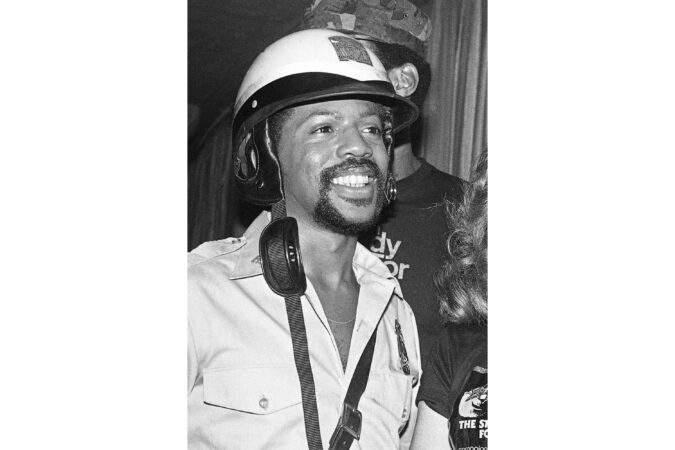
    WASHINGTON — Victor Willis, who helped make the Village People one of the most enduring groups of the disco era, singing lead and co-writing hits including “Y.M.C.A.” and “Macho Man,” died June 30, a day before his 75th birthday.

    His wife, Karen Huff-Willis, announced the death in a statement on social media, saying that Mr. Willis suffered from a “short, but aggressive illness.” Additional details were not immediately available.

    Mr. Willis rose to fame in the late 1970s as the front man of the Village People, donning flamboyant costumes while becoming a camp favorite of nightclubs and dance halls. Most often dressed as a police officer, he shared the stage with a parade of macho male archetypes — bandmates who dressed as a naval officer, a cowboy, a biker, a construction worker, or a Native American in a headdress – while performing upbeat hits including “Macho Man,” the group’s first Top 25 single, and “In the Navy,” a military spoof.

    The Village People’s biggest hit, 1978’s “Y.M.C.A.,” remains a mainstay of weddings, sporting events, and party playlists, bringing listeners to their feet with its joyous horn blasts, four-on-the-floor drum groove, and sing-along chorus. The song was inducted into the Library of Congress’s National Recording Registry in 2020.

    “Everybody knows ‘Y.M.C.A.’,” said Mr. Willis, who drew inspiration for the song from his trips to New York’s 63rd Street Y as a newcomer to the city. “Everywhere I go, people tell me their little children know ‘Y.M.C.A.’ They don’t know Village People, but they know ‘Y.M.C.A.’”

    President Donald Trump has regularly played “Y.M.C.A.” at his rallies, and Mr. Willis and the Village People performed the song last year at an event that was part of Trump’s second inauguration.

    “He was a great and happy guy,” the president wrote in a Truth Social post Wednesday, adding that “we will think of Victor every time YMCA is played, like today, and all throughout this July Fourth Birthday week.”

    Ahead of the inauguration, Mr. Willis and the group took to social media to say that their performance was not intended as an endorsement of Trump. Their “preferred candidate” had been Kamala Harris, the group wrote in a lengthy Facebook post, adding that they believed that “Y.M.C.A.” had the power to bridge partisan divides.

    “We’re trying to make people come together and unite the country,” Mr. Willis told NPR. “And regardless if you didn’t vote for him —basically, I’m a Democrat. We lost, so we have to put that aside, and it was time for everybody to get behind the president-elect.”

    Mr. Willis’ decision to participate in inauguration ceremonies polarized the group’s fans, including gay listeners who had embraced the Village People’s macho image and subtly suggestive lyrics for decades.

    The group’s shifting lineup included gay and straight musicians, although Mr. Willis dismissed labels about the band and its music, going so far as to threaten to sue news organizations that described “Y.M.C.A.” — with its lyrics about hanging out “with all the boys” and doing “whatever you feel” — as a gay anthem.

    “The group performs a masculine show. Gay people like us, straight people like us,” he told Rolling Stone in 1979. “But we’re not a gay group.”

    Mr. Willis was born in Texas on July 1, 1951, and grew up in San Francisco, singing at a Baptist church where his father served as minister. By age 15, he was singing in a local group, the Ballads, that had opened for the Temptations.

    After moving to New York, he performed in Broadway productions of Two Gentlemen of Verona and The Wiz, including while serving as an understudy for some of The Wizard of Oz adaptation’s lead characters.

    Amid the disco craze of the movie Saturday Night Fever and the Studio 54 nightclub, Mr. Willis was asked in 1977 to front a group being developed by Henri Belolo, a music executive, and Jacques Morali, a songwriter.

    “I had a dream that you sang lead vocals on an album I produced and it went very, very big,” Morali told him, according to an online history of the Village People. “I have four tracks. I can’t pay you much right now, but if you agree, I’ll make you a star.”

    Mr. Willis agreed, leading to the release of the Village People’s self-titled debut later that year. He continued to record and perform with the group until 1979, when he left as Belolo and Morali prepared to release a film about the group, the critically reviled Can’t Stop the Music.

    “I just felt the ship sinking, and I didn’t want to be on it when it went down,” Mr. Willis told the San Diego Union-Tribune in 2015, “because I felt I had a little more life in me.”

    Mr. Willis recorded an album, Solo Man, that went unreleased until 2015. (He said it had been blocked by Belolo and Morali, who were angry by his decision to leave the group.) He also “got kind of drugged out,” in his telling, and struggled with addiction before entering rehab in 2006 at the Betty Ford Center in California. He said his recovery was aided by Huff-Willis, a lawyer, whom he married in 2007.

    An earlier marriage to actress Phylicia Rashad, who appeared with him in The Wiz and later starred as Clair Huxtable on the television show The Cosby Show, ended in divorce. Complete information on survivors was not immediately available.

    With Huff-Willis’s encouragement, Mr. Willis won a 2012 copyright case to regain control over the Village People’s biggest hits. He rejoined the group after reaching a settlement in 2017 with Belolo’s production company.

  • Trump’s income topped $2 billion in 2025, boosted by crypto, coin ventures

    Trump’s income topped $2 billion in 2025, boosted by crypto, coin ventures

    WASHINGTON — President Donald Trump’s reported income soared to more than $2.2 billion in 2025, as the president took in more than $1.4 billion from cryptocurrency, digital tokens and related partnerships, according to his latest financial disclosure forms.

    The 927 pages of disclosuresindicated that Trump’s income substantially increased after he reentered the White House last year.

    Overall, Trump reported assets worth at least $2.4 billion and income of more than $2.2 billion. His assets are almost certainly worth more, since the federal disclosure forms require only that asset values be reported in ranges that top out at “over $50 million,” which leaves the full value of the president’s holdings unclear.

    In his 2024 financial disclosure, filed a year ago, Trump reported assets worth more than $1.6 billion and income of over $600 million.

    In addition to income from crypto ventures, Trump reported over $620 million in real estate, hotel and golf-related income.

    The president also reported receiving $86.5 million from settlements in five separate lawsuits against ABC, CBS, YouTube, Meta, and the social media platform X.

    The 2025 disclosure, released Tuesday, includes $635 million in royalties from a license agreement with Celebration Coins; at least $525 million in proceeds from token sales by World Liberty Financial, a cryptocurrency project founded by Trump and his sons; $65 million in proceeds from World Liberty Financial’s equity sale; and $196 million in net proceeds from a stablecoin transaction.

    Trump also saw increased income from his golf clubs and resorts. He reported $121 million from Trump National Doral in 2025, up from $110 million a year earlier, and $77 million from Mar-a-Lago, up from $56 million.

    In response to a request for comment about Trump’s significant increase in income from crypto and similar ventures, White House spokeswoman Anna Kelly said that Trump had “proudly made the United States the crypto capital of the world through executive actions, supporting legislation like the GENIUS Act, and other commonsense policies to drive innovation and economic opportunity for all Americans.”

    “Neither the President nor his family has ever engaged — or will ever engage — in conflicts of interest,” Kelly continued, saying any suggestion otherwise is a “tired, false narrative.”

    Trump’s disclosures are in stark contrast to Vice President JD Vance’s filing, which came in at 17 pages. Vance, however, also saw a boost in at least one category of income: royalties for his memoir Hillbilly Elegy, released in 2016.

    Vance reported earning $50,000 to $100,000 from the book in 2024. Last year, that range shot up to $1 million to $5 million, he disclosed.

    This month Vance published a second book, Communion, which he has promoted on an extensive media tour over the last two weeks.

  • ICE’s arrest of nun heading to church fuels bipartisan backlash in South Texas

    ICE’s arrest of nun heading to church fuels bipartisan backlash in South Texas

    SAN ANTONIO, Texas — Sister Leticia “Letty” Ugboaja was walking to Sunday Mass in McAllen, Texas, when federal immigration officers stopped her, confiscated her rosary, and placed her in handcuffs.

    The Catholic nun from Nigeria was released hours later after Democratic and Republican lawmakers intervened. The Department of Homeland Security did not respond to requests for comment about her immigration status, and officials from the Diocese of Brownsville would not give details other than to say she is a nurse who entered the country legally.

    Ugboaja’s arrest was the latest to trigger anger from both sides of the political aisle in South Texas, highlighting how Hispanics in a region that supported President Donald Trump in the 2024 elections are growing wary of his administration’s deportation campaign.

    An unlikely bipartisan consensus has emerged in Texas’s Rio Grande Valley to protest several recent immigration arrests, including those of three teenage mariachi musicians, numerous construction workers, and cases involving children and people who had been granted protection from deportation.

    Rep. Monica De La Cruz, a Republican who flipped her House district that includes the Texas border in 2022, has joined Democrats in the predominantly Mexican American region in calling for the release of immigrants with deep ties to their local communities and no criminal record.

    “As I have repeatedly said, our immigration enforcement should target violent criminals,” she wrote on Facebook. “A Catholic nun on her way to church is not a threat to our community.”

    Trump won 12 of 14 Texas border counties that had long been dominated by Democrats in the last presidential election. The rightward shift was the result of widespread discontent over how the Biden administration handled immigration and inflation.

    Lawmakers and political analysts say border constituents hold nuanced views that the Trump deportation campaign is testing. They support deporting criminals and enhancing border security, but they also say hardworking immigrants with no criminal record should be given a chance. And they are upset by images of people like Ugboaja being detained while going about their daily lives.

    “If the administration said they closed the border and are deporting criminals and stopped there, it would’ve been welcome news,” said Rep. Henry Cuellar (D., Texas). “But they didn’t stop there. They started going after people on the streets, and that part — the overreach by ICE — is turning Hispanics back to other candidates, to Democrats honestly.”

    The diocese said Ugboaja is part of the Daughters of Mary Mother of Mercy congregation headquartered in Nigeria and has worked more than a decade at local Texas hospitals. Ugboaja has not publicly addressed her arrest by Immigration and Customs Enforcement and did not respond to a request for comment.

    ICE did not respond to a request for comment on why she was detained.

    Richard Cortez, a Democrat who is the elected judge, or administrator, of Hidalgo County, is a parishioner at Our Lady of Sorrows, the church that Ugboaja had been walking to when she was arrested. He said he contacted representatives for De La Cruz and Cuellar after a deacon texted him to let him know that a nun had been arrested. The lawmakers then sent frenzied phone calls and text messages to Homeland Security Secretary Markwayne Mullin and Tom Homan, the administration’s border czar.

    “Where is she?” Cuellar recalled texting officials in Washington, demanding her swift release. The veteran lawmaker, who sits on the House Appropriations Committee, said Mullin and Homan reassured him that Ugboaja would be home by nightfall that same day.

    De La Cruz wrote on Facebook on Sunday that she had “elevated this to the highest levels.”

    The congresswoman is up for reelection and has been walking a careful line in supporting the Trump administration while also advocating for specific immigrants caught up in the deportation campaign. In a statement to the Washington Post, she said there is a “misconception” that Hispanic families want open borders.

    “It simply isn’t true,” she said. “We want a strong, secure border and enforcement that prioritizes violent criminals and real threats to our neighborhoods.”

    Local activists and cultural leaders were also involved in sounding the alarm, including Tejano singer Bobby Pulido, a Democrat challenging De La Cruz in the November general election. “It’s an aggression coming from the top, and they are not targeting bad people,” he said. “Trump voters, friends of mine, are very upset by this.”

    Sister Norma Pimentel, a well-known figure in the region, drove to the El Valle Detention Center in Raymondville, Texas, late Sunday to embrace a tearful Ugboaja as she exited the metal gates.

    De La Cruz ”is arguing for the compassionate release for some but not others,” said political scientist Álvaro Corral of the University of Texas in the Rio Grande Valley. “It puts her in a complicated place. The folks that elected her likely cheered some of this on.”

  • Voters are angry with Washington, and other takeaways from the Colorado primaries

    Voters are angry with Washington, and other takeaways from the Colorado primaries

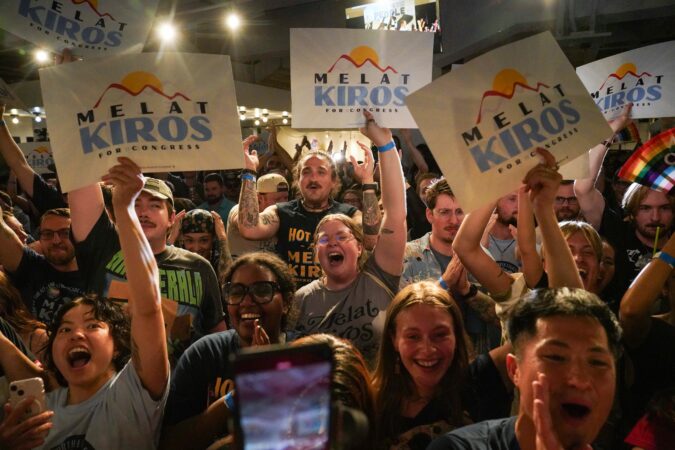
    WASHINGTON — Democrats in Colorado rode a backlash against Washington to victory Tuesday night, as a surge of primary voters picked candidates without ties to Congress.

    The state’s Democratic primary had been closely watched to see whether the wave of democratic socialist victories in New York last week would travel west from coastal, urban terrain into more politically diverse stretches of the country.

    One key House race proved the theory true: Lawyer and democratic socialist Melat Kiros, 29, ousted Rep. Diana DeGette, a liberal, 30-year incumbent from Denver.

    And in the primary race for governor, ties to D.C. also became too toxic to overcome as Colorado Attorney General Phil Weiser decisively beat U.S. Sen. Michael Bennet, a three-term incumbent who once held a double-digit lead in polling.

    The most prominent Democratic incumbent to fend off a challenger, Sen. John Hickenlooper, won against a challenger who did not air a single television ad. Hickenlooper, a former two-term governor and Denver mayor who was born outside Philadelphia in Narberth and graduated from the Haverford School, posted the narrowest primary victory of his more than 20 years running for public office in Colorado.

    Here are some takeaways from primary night in Colorado, a once-purple state that saw a surge of Democratic ballots this year.

    Democratic primary voters seek a fighter

    In a campaign built on who would best fight President Donald Trump, Bennet’s early advantage evaporated as Weiser argued that the lawsuits he filed against the administration made him a better antagonist than an 18-year creature of Congress.

    During his second term, the president has moved the U.S. Space Command headquarters out of the state and shut down Colorado’s globally recognized climate research center, among other moves that challengers said D.C.-based politicians did not do enough to stop.

    Bennet is the first sitting senator to lose a gubernatorial primary in 15 years, a loss underwritten by a nearly $1 million personal loan to his campaign and almost twice as much spending on TV ads compared to Weiser.

    Weiser tweaked Bennet for voting to confirm eight of Trump’s Cabinet members. Bennet stood by his votes, except for the one to confirm Energy Secretary Chris Wright. He argued that his support was necessary to help the state secure federal resources.

    Colorado primary voters ultimately decided to leave Bennet in D.C., where he has another two years in his Senate term.

    Democratic socialists can topple liberals

    Kiros’s victory fuels nationwide exuberance of democratic socialists trying to pull the Democratic Party closer to their brand of economic populism and opposition to Israel.

    After three candidates endorsed by New York Mayor Zohran Mamdani won their congressional primaries in New York last week, establishment Democrats felt angst. Democratic socialists looked to Colorado, and the money followed.

    “Today, the East Coast, next week the Mountain West,” the Democratic Socialists of America posted on X the night of those NYC victories, along with a photo of Kiros and entreaties to help phone bank and “elect another socialist to Congress.”

    Sen. Bernie Sanders (I., Vt.) had endorsed her a week earlier.

    Kiros, a first-time candidate, beat Colorado’s most veteran member of Congress, a longtime progressive who supports Medicare-for-all and other causes dear to the left.

    On the campaign trail, Kiros argued that DeGette had become part of the party’s out-of-touch establishment and accepted corporate donations but not doing enough to support the working class. A lawyer and Ph.D. student, Kiros moved back to Colorado from New York after she was fired in 2023 for writing an anti-Israel letter and refusing to retract it.

    Buoyed by her savvy social media campaign, national groups flooded the race with cash in the closing weeks, tapping into the electorate’s growing interest in candidates vowing to upend the political system they seek to join. Establishment groups responded with cash to boost DeGette.

    Outside spending for both candidates exceeded $3.1 million.

    Kiros was not born when DeGette, 68, entered Congress in 1997, and her primary victory in a deeply blue district centered in Denver all but assures she’ll join the small caucus of Gen Z members of the House next year.

    In the swingiest district, a progressive moves toward the middle

    In Colorado’s most competitive House district, currently held by a Republican and stretching from the Denver suburbs north through ranches and farmland, the Democratic winner shifted positions away from those endorsed by democratic socialists — even as he remained the most liberal candidate in the field.

    Manny Rutinel, a 31-year-old first-term state lawmaker, moderated his progressive views as he battled through a three-way primary race, finishing well ahead of his closest challenger, Shannon Bird.

    The district, represented by Gabe Evans, is expected to be one of the country’s most expensive general election races this fall.

    Rutinel is among the most progressive members of the state legislature, but he shifted on enough positions during his campaign that the Denver chapter of the democratic socialist party declined to endorse him. An editor’s note on the DSA’s voting guide added: “Many of our members are concerned that even a Neutral vote is too supportive of this candidate.”

    A Yale-educated lawyer who also worked as an economist for the Army Corps of Engineers, Rutinel declined to support Medicare-for-all, proposing a strong public option instead. He also stopped supporting a fracking ban and ending student debt.

    Colorado Democrats lost a redistricting fight, but they may flip seats anyway

    The surge in Colorado’s Democratic turnout fueled the party’s optimism that losing in court over redistricting won’t matter too much in the end.

    Democratic groups in the state had been planning in recent weeks an effort to redraw their maps ahead of the 2028 election in hopes of countering a string of Republican-run states that gerrymandered to favor the GOP in recent months.

    Currently the state’s delegation is split 4-4 under boundaries drawn by an independent redistricting commission. But Colorado has trended blue for years amid a population explosion, and Democrats believed they could add as many as three seats.

    Three ballot measures proposed by a Democratic-aligned group, Coloradans for a Level Playing Field, would have temporarily suspended the independent redistricting commission and adopt new maps for the 2028 elections. The Colorado Supreme Court ruled Monday that they were unconstitutional because of how they were structured.

    But high turnout among Democrats in Tuesday’s primary has Democrats believing they can gain one or more seats in November, two years earlier than they had originally hoped.

  • Three words in the Declaration of Independence paint a cruel picture of Natives

    Three words in the Declaration of Independence paint a cruel picture of Natives

    McKaylin Peters, a 24-year-old Native American graduate student at Johns Hopkins University, still recalls when she first heard the words “merciless Indian savages.”

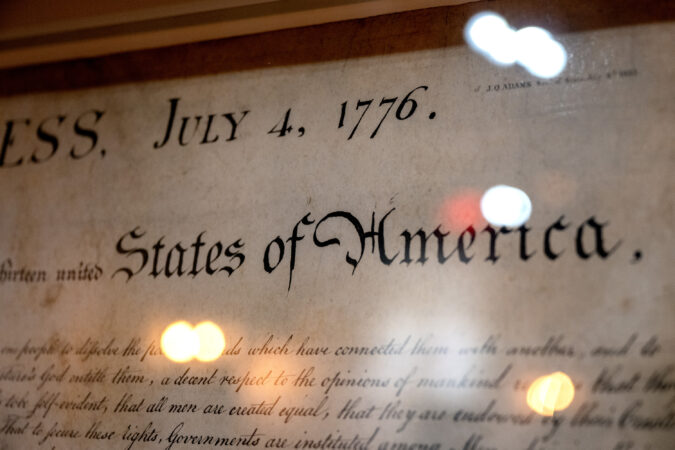
    Sitting in social studies class at her predominantly White middle school near Green Bay, Wisc. — a school that once used an image of an Indian as its mascot — she cringed when the teacher read a passage deep in the Declaration of Independence: “He has excited domestic insurrections amongst us, and has endeavoured to bring on the inhabitants of our frontiers, the merciless Indian Savages, whose known rule of warfare, is an undistinguished destruction of all ages, sexes and conditions.”

    Peters said she and the six other Native students in the class looked quietly at one another.

    “I was upset. It just rolled off her tongue very easily,” recalled Peters, a citizen of the Menominee Nation who is getting her master’s in organizational leadership. “It seemed like no one else was shocked except for us, the Indigenous students in the classroom. We were like, ‘Did she really just say that?’”

    As the United States marks the 250th anniversary of the Declaration — a document fundamental to the nation’s founding and still revered — Peters and other Native American scholars and tribal leaders are reflecting on the Founding Fathers’ use of the derogatory description for Indigenous people in 1776. Many note that while the Declaration promises that “all men are created equal,” its ideals were not extended to everyone.

    The document’s portrayal of Indigenous people helped establish a moral and legal framework that justified decades of devastating U.S. policies toward Native communities, according to historians. Celebrations of the 250th anniversary of the Declaration’s signing come amid a striking contrast: Native tribes are working to reclaim ancestral lands, revive lost languages, and preserve cultural traditions, while the Trump administration has sought to remove or downplay references to slavery, Native dispossession, and other dark chapters of U.S. history in parks and museums and on government websites.

    “It’s not just a line in an old document,” Peters said. “It’s a reminder that this country was built by declaring us less than human. When the Declaration of Independence calls us that, it’s a message that Native youth sadly still hear today in classrooms, policy debates, and in how society talks about us.”

    Many historians and Indigenous historians say the term “savages” did more than reflect 18th-century attitudes. It helped perpetuate stereotypes of Native Americans and contributed to their marginalization; centuries later, it adds to feelings, especially for Native youths, of being excluded from America’s national story. A 2022 study by Texas A&M University researchers found that the Declaration’s pejorative reference to Native Americans helped normalize a view of them as threats rather than as sovereign nations and peoples with rights.

    For many Native people, the meaning — and impact — of the phrase is emotional and complicated.

    Some discover the wording as adults and are appalled. Others see it as a reminder of racist attitudes and centuries of broken treaties, land theft, and forced assimilation. Some young people have reclaimed the epithet, debating it on social media and displaying it on T-shirts and tattoos as a symbol of resilience and empowerment. An Indigenous-led heavy metal band intentionally used the phrase as its name.

    “It’s become sort of an ironic touchstone,” said Kevin Gover, the Smithsonian Institution’s undersecretary for museums and culture. A citizen of the Pawnee Tribe of Oklahoma, Gover said he did not encounter the term until middle age. After his initial outrage, Gover said, he responded as many Native people do: by mocking it.

    “Even we, on the side of the descendants of those who were victimized, have to take a nuanced view,” said Gover, who is also the former director of the National Museum of the American Indian in D.C. “In many respects, it’s a badge of pride that our ancestors had the wherewithal to survive and allow us to be alive in this time.

    “We can acknowledge the wrong,” he said, “and be grateful for our ancestors’ fortitude.”

    Hartman Deetz, an enrolled member of the Mashpee Wampanoag — the Massachusetts tribe that famously helped the Pilgrims survive their first Thanksgiving in 1621 — said the wording reflects the opposite of how Indigenous people treated white settlers.

    “They were fed when they were starving, given hospitality by us, but they treated us in a way that was savage and merciless in the dispossession of our homelands,” said Deetz, who served as a consultant for an exhibition at the Museum of the American Revolution in Philadelphia about the Declaration and the history behind it. “It was framed in a way that justified the treatment they brought upon us, and it continues to this day in attempts to sell our sacred sites for copper mines and to drill for oil and mining on our lands.

    “The colonial enterprise hasn’t stopped,” he said. “There’s such a disregard for Natives to exist or have rights of where we do exist. That’s the legacy of these words.”

    The words originated in an early draft of the Virginia Constitution written by Thomas Jefferson, who later included it in the Declaration of Independence, which Congress adopted.

    Ironically, some historians say, the characterization of Native people contradicts Jefferson’s own views. In Notes on the State of Virginia, a book Jefferson wrote that laid out many of his views on race, government, and religious freedoms, he was “very sympathetic to Native people,” said Kevin Butterfield, a historian at the Library of Congress. Jefferson described Indigenous people as just, honorable and noble — a sharp contrast to the widespread European belief that Indigenous people were inferior.

    But Jefferson understood the Declaration was political rhetoric — a kind of “public relations piece,” said Butterfield, who is the acting chief of the Manuscript Division at the Library of Congress. He placed it near the end to bolster the case for independence.

    “He’s trying to paint the worst possible picture of how the king is approaching his interactions with the American colonists,” Butterfield said. “So he’s laying out horrible wartime atrocities from the Revolutionary War.”

    The description reflected colonial attitudes and the realities of frontier warfare, scholars say. Colonists were hostile toward Native Americans, who were powerful political and military figures and, just like other nations, protecting their sovereignty. Some Native nations had allied with the British — a move that many settlers resented — and many colonists also opposed King George III’s Proclamation of 1763, which barred settlement west of the Appalachian Mountains.

    Repeated violence between Indigenous people and settlers also helped shape the ideology behind the description, including the French and Indian War and Dunmore’s War in 1774, when Virginia colonists fought the Shawnee and Mingo to expand into the Ohio Valley, according to historians. In the summer of 1776, as the Declaration was drafted and adopted, a lesser-known conflict unfolded when Cherokee warriors attacked frontier settlements across parts of Virginia, North Carolina, South Carolina, and Georgia. Colonists responded by burning more than 50 Cherokee towns and driving Native people from their homes.

    By 1776, the Founding Fathers “understood their need to accuse the king of what they considered the ultimate crime — partnering with Indigenous peoples and arming them,” said Ned Blackhawk, a Native American author and Yale University historian. “So they created this vilification in the Declaration that, in many ways, was at odds with their experience of living alongside Natives for generations.”

    The rhetoric was part of a broader racial ideology taking shape during the Revolutionary era, said Blackhawk, an enrolled member of the Te-Moak Tribe of Western Shoshone Indians of Nevada.

    “They were deeply committed to Enlightenment principles, but those were restricted to people similar to themselves,” he said. “Native Americans became a foil in simplified and racialized ways.”

    Tracy L. Canard Goodluck, executive director of the Center for Native American Youth at the Aspen Institute, said she is disappointed the term is either glossed over or not taught in many school curriculums, its impact not discussed.

    It wasn’t until she was a student at Dartmouth College, she said, that she fully understood the context of the description. She was angry, but the new knowledge also awakened in her a passion for educating others about Indigenous history and mistreatment. Goodluck, a member of the Oneida Nation who is also Mvskoke Creek, said in her previous work as a teacher in Seattle and Albuquerque she taught about Indigenous people and the harsh characterization in the Declaration.

    “It shouldn’t just be about white history,” she said. “It should be about all history — the good, the bad, and the ugly.”

    She said it’s also important to educate the public, so every Fourth of July, she wears a T-shirt emblazoned with the phrase from the Declaration.

    “Those words served the purpose back then as a way to dehumanize Native people in this country,” said Goodluck. “We need to change that narrative. We’re still here. We’re doctors, lawyers, teachers and political leaders.

    “I am that merciless Indian savage who my ancestors prayed for to do great things.”

  • As war stalls, Putin concedes he never cut a deal with Trump in Alaska

    As war stalls, Putin concedes he never cut a deal with Trump in Alaska

    Russia’s war in Ukraine is stalling — on the battlefield and in the corridors of diplomacy.

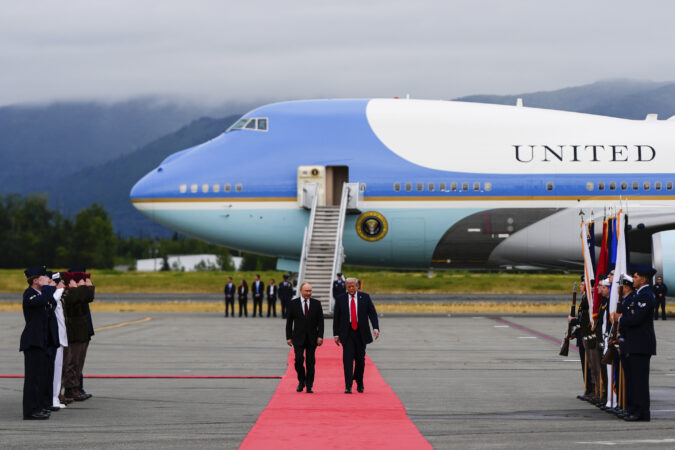
    For months, high-ranking Russian officials insisted that a path to ending the war in Ukraine — largely on Moscow’s maximalist terms — had been decided at a meeting between President Vladimir Putin and President Donald Trump last August in Anchorage. Only Ukraine’s intransigence stood as an obstacle.

    But that narrative has unraveled — perhaps because the only way to get the United States to help broker a new deal is admitting there never was a previous one.

    In recent days, three top Russian officials accused the White House of not honoring the Alaska agreement. Foreign Minister Sergei Lavrov even speculated that the summit was a U.S. “ploy to buy time to rearm the Kyiv regime.”

    Secretary of State Marco Rubio, however, pushed back. “If there had been an agreement, we would have had an end of the war,” Rubio told reporters.

    “Russia wants the entirety of Donetsk to be turned over to them, among some other things,” he said, explaining Russia’s demand for more Ukrainian territory.

    After days of back-and-forth, Putin conceded the point, saying on Sunday that “there were indeed no agreements reached in Anchorage.”

    “The spirit of Anchorage — although it wasn’t expressed in any formal documents, and no one put any signatures down — in Anchorage we discussed certain possibilities for ending the crisis in Ukraine,” Putin told a state television reporter Sunday. “And the compromises discussed were precisely the proposals the American side made to us.”

    The contradictions started in Alaska immediately after the summit. Putin said an agreement that will “pave the path toward peace in Ukraine” was reached, while Trump said that while the meeting was “extremely productive … there’s no deal until there’s a deal.” Trump also told Fox News afterward that it was “up to Zelensky” now to get a deal done, referring to Ukrainian President Volodymyr Zelensky.

    The Russian leader’s decision now effectively to bury the Alaska summit, which the Kremlin and its propagandists had mythologized as a turning point, comes as Russian forces are largely stalled on the battlefield in Ukraine — a sharp change from the previous four summers when they made gains.

    Instead, the skies over Russia and the Ukrainian territory it occupies are increasingly crowded with advanced Ukrainian drones, signaling a new phase in which Russia is playing technological catch-up and regular Russian citizens are feeling the war intrude on their lives with gasoline shortages and disruptions to summer travel, including to occupied Crimea.

    Russian political analysts have interpreted the indirect spat between Rubio and Lavrov over the alleged deal as a sign that Ukraine has convinced Trump it can keep fighting — and that it can pose a serious threat to Crimea, which Russia illegally annexed in 2014, rather than surrendering the Donbas region, as Russia has demanded.

    Trump probably arrived in Anchorage believing that Ukraine’s defeat was inevitable and that the sooner it accepted terms, the better for everyone, Fyodor Lukyanov, a prominent foreign policy analyst who advises the Kremlin, wrote in an op-ed in a Russian publication.

    “The goal of Kyiv and the collective Brussels was to convince Trump that the belief in Ukraine’s inevitable defeat was mistaken,” Lukyanov wrote. “Ten months after the Anchorage summit, they succeeded in persuading him.”

    Since Alaska, no major breakthrough has materialized in Russia’s favor, Europe so far has managed to sustain its military and economic aid to Ukraine, and Trump has become distracted by Iran.

    “Diplomacy in the midst of hostilities is shaped by their outcome,” Lukyanov wrote. “If the balance of power — or the perception thereof — shifts, the understandings reached at an earlier stage lose their validity.”

    Ukraine’s push to impose a “logistical lockdown” on Crimea and Kyiv’s growing capability to strike deep inside Russia seem to be part of a 40-day blitz declared by Zelensky to “influence” Moscow to end the war.

    Continuing that pressure, Ukraine overnight launched dozens of drones at the Moscow region and struck Russia’s Dubna satellite communications center north of the capital. Zelensky said ​Russia uses the Dubna site for reconnaissance and coordination of its military activities in Ukraine.

    Andrei Vorobyov, governor of the Moscow region, confirmed the attack had occurred but said that an “administrative building was damaged by drone debris.”

    Amid chaotic scenes in Crimea, the Russia-installed authorities imposed a state of emergency in response to strikes on highways and bridges. There have also been blackouts that have prompted many summer visitors to return home.

    “He’s holding his own at least,” Trump said of Zelensky last week, speaking to reporters at the White House. “A lot of people dying on both sides, but I think he’s doing pretty well. You have to say he’s courageous, he’s got great equipment, he’s got great men, he’s got fighters.”

    Ukraine seems to have scaled drone production to a level that can sustain strikes on Russian cities hundreds of miles from the border, and that keeps the frontline kill zone stable. This means that ground action is drying up.

    “The war has markedly changed this year,” said Ruslan Leviev, an analyst with the Conflict Intelligence Team, a group that uses open-source data to track the Russian military.

    “It’s hard to say the battle initiative is on the Ukrainian side,” Leviev said, “but time is on Ukraine’s side — more problems keep arising for Russia, economically, politically, and militarily, and it’s all adding up.”

    Russian budget data indicates that its military recruited 71,216 men during the first quarter of 2026, compared with 89,601 over the same period last year, according to Janis Kluge, a Russia expert at the Berlin-based German Institute for International and Security Affairs.

    Recruitment stabilized somewhat in the second quarter, returning to around 30,000 contracts per month. But local media reports suggest the overall stream of recruits has slowed compared with previous years as the pool of men drawn by the enormous pay packages that eclipse regional Russian salaries appears to be shrinking.

    Rumors have circulated that Russia may declare a fresh mobilization after key parliamentary elections in the fall — the first since the war began — but politically that move could prove extremely costly for the Kremlin. The “partial mobilization” in 2022 drove tens of thousands of men to flee Russia. After four years of war, and mounting economic strain, the mood has soured considerably.

    Leviev and other analysts said that they doubt Moscow would call for full mobilization, since this would require significant financial resources to set up new formations, and train and equip them, and that such a move fundamentally wouldn’t unfreeze the line of contact. “At this pace, the war on the ground looks to us as a dead end,” Leviev said.

    This poses several challenges for Russia.

    Russia still holds an advantage in manpower, conventional arms, and ballistic missiles, which it continues to use against Ukrainian cities and infrastructure. But Ukraine’s relentless drone campaign, especially its use of medium-range drones, has chipped away at this advantage, complicating frontline logistics and driving up the costs for Moscow of supplying the front.

    Russia’s flagship air defense systems were designed for high-altitude targets like jets and ballistic missiles, not slow, low-flying drones. Interceptor missiles also cost many times more than the drones they shoot down, draining stocks at a rate Western officials have said may be unsustainable.

    In his remarks Sunday, Putin commented on the deteriorating situation in Crimea and the wider fuel shortage in Russia after weeks of silence.

    Addressing Ukraine’s drone campaign, Putin said that Russia needed to “significantly ramp up production of air defense systems.” He also pledged to ensure the supply of fuel to Crimea by land and sea but did not say how this would be accomplished.

    Putin also asserted that Kyiv had put forward what he called “new proposals” to curtail hostilities in four regions of eastern Ukraine — Kherson, Zaporizhzhia, Donetsk, and Luhansk — and agree to mutually halt long-range strikes.

    Putin, however, cast the offer as a distraction that would allow Ukraine to redeploy units from other regions to these four areas, relieving pressure along the nearly 800-mile frontline. He reiterated that Moscow aims to fight on.

    “We have some certainty regarding the challenges facing Putin, but what we can expect from him in response to these challenges remains unclear,” said Vladimir Pastukhov, a Russian political scientist and honorary senior research fellow at University College London.

    According to Pastukhov, Putin has several options to escalate the war, all fraught with risk. These include an attack on a NATO nation in the Baltics, the detonation of a tactical nuclear weapon in Ukraine, or a mass mobilization of Russian soldiers. Moscow could also adopt a hybrid strategy, potentially striking European military facilities supporting Ukraine.

    That would effectively be a limited, undeclared war on Europe, testing Trump’s loyalty to NATO allies.

    Putin could also pressure its ally Belarus to allow Russian forces to attack Ukraine from its territory, opening a new northern front.

    Putin on Sunday said Russia was expecting a resumption of U.S.-led peace talks and a visit to Moscow by U.S. envoys Steve Witkoff and Jared Kushner — once the “hot ​phase” of the Iran war is resolved.

    Lukyanov, the analyst, said Russia believes that Trump’s position on the war in Ukraine will shift again — as it has many times. “But first,” he wrote, “the White House must be brought to the understanding that a military victory for Russia’s adversaries is impossible.”

  • House GOP defections block move to attach Trump-backed elections measure to defense bill

    House GOP defections block move to attach Trump-backed elections measure to defense bill

    The latest attempt by House Speaker Mike Johnson (R., La.) to fulfill President Donald Trump’s demand to advance an elections overhaul bill failed Tuesday and delayed consideration of an annual defense policy bill.

    Due to GOP defections, a procedural vote failed 224-198 on the House floor. The vote would have merged the Save America Act and the National Defense Authorization Act upon passage of the latter and sent both bills together to Senate.

    Thirteen Republicans joined with Democrats to defeat a measure that would set rules for debate. GOP hard-liners, led by Rep. Anna Paulina Luna (Fla.), rebelled against the tactic, arguing it would make it too easy for the Senate to remove provisions of the Save America Act. Senate leaders have said repeatedly that they lack the votes to pass the Save America Act as a stand-alone measure.

    House Majority Leader Steve Scalise (R., La.) voted “no” on the rule Tuesday alongside the 13 GOP lawmakers, a move that preserves a chance for the House to reconsider the vote later.

    Johnson said Republicans will spend the next day and a half working on getting everyone in the party to a yes.

    He said the Republicans who voted against the rule are making “irrational decisions.”

    “It makes no sense to punish the House and stop the great progress of the House because of what Senate Democrats are doing or not doing,” he told reporters. “We’ve got to move forward.”

    When asked if Trump should talk to the House GOP holdouts, Johnson said he believes the president is “going to be very frustrated” with them.

    House Republicans have scrambled to find a way to get another vote on the Save America Act that would impose new voting restrictions, including a requirement to provide documented proof of citizenship and a photo ID at the time of voting, as Trump has demanded.

    After Tuesday’s failed vote, Luna said she will vote for the rule if House leaders let her add an amendment to the NDAA that would call for voter ID plus proof of citizenship to be placed into the text of the NDAA — two crucial portions of the Save Act.

    Another option House Republicans are considering would use a fast-track process to bypass the filibuster and pass Trump’s sought-after voting restrictions.

    Johnson said Monday that Republicans are moving forward with a plan to establish a grant program that would incentivize states to adopt stricter election rules outlined in the Save America Act.

    The move would use the reconciliation process, designed to overcome the filibuster, because it can be passed with a simple majority in both chambers, bypassing Democrats.

    “If you put it into a grant program or something similar, then it does make it part of reconciling the budget,” Johnson told reporters Monday, after meeting with Trump at the White House. “It does ultimately work that way.”

    “The only way to get that to the president’s desk, we’ve been shown many times, is to put it on reconciliation,” Johnson said.

    However it’s not clear whether Trump would be on board with voting restrictions administered through a grant program. And many Senate Republicans have expressed doubt about passing more legislation through the fast-track process this year.

    On Tuesday, Scalise said Trump is “really excited” about House Republicans’ plans to put components of the Save America Act into a reconciliation bill, but Scalise did not indicate whether the president supports the idea of getting the act done through a grants program.

    “He wants to get Save America signed into law, so do I. So you’ve seen us pass it multiple times in different ways, and we’re going to keep trying,” Scalise said. “The Senate is going to have to figure out a way to get it to the president’s desk.”

    Trump has been trying to pressure Republicans to pass the act, including refusing to sign a bipartisan bill aimed at helping Americans with housing, which was sent to his desk Monday.

    Speaking at the White House on Monday, Trump said it is “even more important” that Congress passes the Save America Act.

    Senate Republican leaders have repeatedly told Trump that the votes are not there to pass his election bill, which would require proof of citizenship to vote in federal elections and restrict mail-in voting, among other provisions. The House passed a version of the bill earlier this year that did not include all the provisions Trump has demanded.

    Johnson said he believes that establishing a grant program that incentivizes states to implement the new election restrictions — rather than establishing them outright — should comply with Senate rules and allow them to pass the legislation with Republican votes only.

    However, Senate rules would likely prevent much of the Save America Act as written from being included as provisions passed through the process must be budgetary.

    At least four Republicans in the Senate have expressed opposition to the Save America Act and previously voted against adding the language to another must-pass measure. It is unclear whether these senators would support the new grant provision.

  • Trump’s July 4 fireworks to start much later and last much longer

    Trump’s July 4 fireworks to start much later and last much longer

    The July Fourth fireworks show on the National Mall will start later, last longer, and have far more pyrotechnics than any held previously on Independence Day, according to officials in charge of producing the event.

    Typically, the Fourth of July fireworks at the core of the nation’s capital begin a little before 9:30 p.m. and last 17 to 25 minutes. This year, the show won’t begin until after 10:30 p.m. and may not start until 11 p.m., a spokesperson for Freedom 250, the public-private partnership aligned with President Donald Trump that has taken over much of the programming for America’s semiquincentennial, said in an email.

    The show is expected to last approximately 40 minutes.

    No reason has been publicly provided for why the fireworks will start so late, but Trump has described the event as a “rally” and said he will begin speaking at 9 p.m. The duration of the fireworks is longer — about twice the average length — because of the administration’s goal of setting a record for the world’s largest fireworks display.

    Danielle Alvarez, an adviser to Freedom 250, did not specifically address the late time but called the July 4 event a “once-in-a-generation milestone.”

    “This isn’t just another Independence Day. It’s America’s 250th,” Alvarez said in a statement. “And history only comes around once.”

    The late start, as well as rules prohibiting attendees from bringing coolers, lawn chairs, bags, and more than one bottle of water, drew criticism on social media and elsewhere, particularly because organizers have recommended people arrive early Saturday, when temperatures could surpass 100 degrees.

    A Freedom250 spokesperson said there will be four free hydration stations on the Mall.

    “We’re closely monitoring conditions and will keep adjusting as needed to make sure everyone stays safe and has a great time,” the spokesperson said in a statement.

    D.C. Mayor Muriel E. Bowser (D) urged anyone attending the fireworks show on the Mall to stay hydrated and be cautious.

    “The thing to remember, especially with this heat, is that’s a long, long day,” Bowser said at a news conference Monday to discuss safety measures for Independence Day. “I’m expecting … that families with small children are going to decide that the children should watch on TV or watch at a neighborhood event.”

    The current record for a single display is about 810,000 fireworks, launched at a New Year’s event in the Philippines in 2016, according to Guinness World Records. That display lasted a little over an hour and took place in a driving rain.

    Pyrotecnico, the Pennsylvania-based company putting on this year’s show, plans to set off more than 850,000 fireworks from 10 locations including West Potomac Park, the Reflecting Pool, and barges in the Potomac River, Pyrotecnico CEO Stephen Vitale said in an interview Monday.

    Vitale said he hopes the weather will cooperate and that there will be a slight breeze to clear the smoke and keep all of the fireworks visible.

    A typical July Fourth fireworks show on the Mall in D.C. features about 20,000 fireworks, Vitale said. While this year’s show is about 10 times bigger than any previous show his company has produced, he hopes viewers will remember the show for more than just setting a record.

    “Size always helps, but it’s about the beauty and the memories that people will have for generations,” Vitale said. “Fireworks are magical to people, and we help people walk away believing that’s the best fireworks display that they have seen or ever will see.”