Category: Washington Post

  • U.S. gave Tehran details on Iranian asylum seekers, lawsuit alleges

    U.S. gave Tehran details on Iranian asylum seekers, lawsuit alleges

    A lawsuit filed Tuesday in Washington alleges the Trump administration violated U.S. law by providing Iran’s government with confidential information detailing the asylum applications for Iranians it planned to deport.

    The extraordinary claim, outlined in court papers submitted by the Iranian American Legal Defense Fund and Public Citizen Litigation Group, contends that the materials it alleges were shared with the Iranian government could jeopardize the lives of pro-democracy protesters along with members of religious minorities and the LGBTQ community and their families.

    An annual State Department report on human rights in Iran, released last year under the Trump administration, called the situation in Iran “severe” and worsening, with political protest movements and religious minorities targeted by authorities. Previous U.S. administrations have reported that Iranian authorities have targeted LGBTQ people for prosecution and subjected them to humiliating treatment.

    “The law couldn’t be more clear that information in asylum applications is protected,” said Michael Kirkpatrick, a Public Citizen attorney involved with the complaint. He called the case “potentially a matter of life and death” for Iranian asylum seekers who end up deported back to Iran.

    Since returning to office last year, immigration hard-liners in the Trump administration have taken several steps that opponents say has eroded the United States’ established practice of allowing migrants who say they are fleeing persecution to seek asylum in the country. The administration and its allies have argued that the asylum system had become overwhelmed and, in some cases, abused by individuals making dubious claims.

    The lawsuit names as defendants Secretary of State Marco Rubio, Homeland Security Secretary Markwayne Mullin, and acting director of U.S. Immigration and Customs Enforcement (ICE) David Venturella, along with the agency each leads.

    Spokespeople for the three agencies did not provide comment. The Iranian Mission to the United Nations did not respond to a request for comment.

    The lawsuit seeks an end to the alleged practice and to require that the U.S. government notify anyone whose personal information was shared with the Iranian government without their consent. It is not immediately clear how the government might respond or whether the case would succeed.

    Despite long-running tensions between the U.S. and Iranian governments, which escalated into all-out warfare in February, the Trump administration has deported more than 100 Iranians back to the country since President Donald Trump’s return to office in 2025, according to advocate groups that track deportations and reports in the Iranian news media.

    Iranian officials said last year that they had reached an agreement with the Trump administration to accept approximately 400 Iranian deportees. More recently, the administration included at least one Iranian national among a group of people deported from the United States to the Central African Republic, lawyers for the group have said.

    The lawsuit filed Tuesday in U.S. District Court in D.C. includes accounts of alleged secret meetings between officials from the Trump administration and representatives of the Iranian government dating to March 2025.

    Because the United States does not have diplomatic relations with Iran, the government in Tehran is represented in Washington by the Iranian Interests Section at the Embassy of Pakistan.

    Kirkpatrick told the Washington Post that the allegations contained in the lawsuit are based, in part, on the account of an Iranian government official who is assigned to the Pakistani Embassy and accounts from deportees who have said that Iranian officials knew details from their applications seeking asylum in the United States.

    The lawsuit does not identify the Iranian government officials or the deportees to whom attorneys spoke. The Pakistani Embassy did not respond to a request for comment.

    At the initial meeting in March 2025, the lawsuit alleges, State Department officials met with representatives of the Iranian Interests Section in Washington. The lawsuit alleges that the discussion encompassed the Trump administration’s desire to deport Iranians to Iran, with the administration officials handing over a list of roughly 150 names. The lawsuit does not identify by name any of the meeting’s participants.

    After this encounter, the lawsuit alleges, it was agreed that officials from ICE and the Iranian government representatives would hold monthly meetings so that the administration could share information about Iranians in U.S. custody.

    ICE falls under the Department of Homeland Security, which at that time was led by Kristi L. Noem. Mullin took over as secretary in March after Trump removed Noem from the post. Noem now serves as the special envoy to the Shield of the Americas, a State Department position. The State Department did not respond when asked if she wanted to comment.

    The lawsuit also alleges that while in-person meetings between ICE officials and Iranian officials were halted after Feb. 28, when the U.S. and Israel started the war with Iran, ICE officials continued to send documentation to the Iranians.

    Roughly 115 Iranian nationals are believed to have been sent back to Iran on three U.S. deportation flights, according to advocacy organizations that track the deportations. The most recent is said to have occurred Jan. 26, only weeks after anti-government protests there were met with a severe response that is estimated to have left thousands dead.

    Trump had earlier this year expressed sympathy with the protesters, telling them on Jan. 13 that “help is on the way.”

    It is not clear how many of those deported back to Iran had asylum claims pending before the U.S. government. Lawyers for some of the deported Iranians have said that people from at-risk groups were among those deported on the flights.

  • Here’s what we know about Sen. Mitch McConnell’s health

    Here’s what we know about Sen. Mitch McConnell’s health

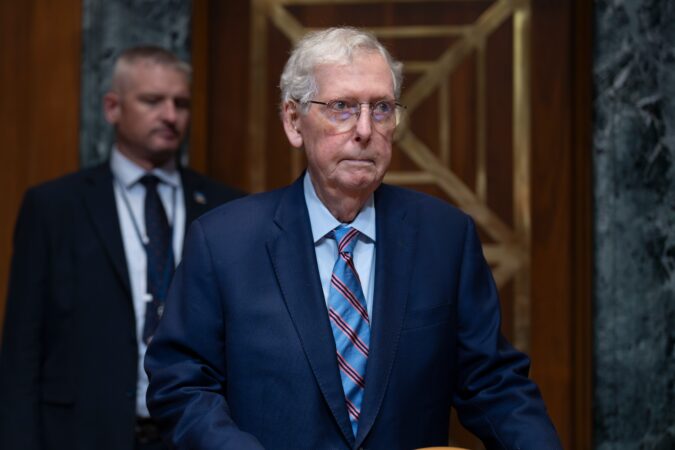
    Sen. Mitch McConnell has been hospitalized for more than three weeks, and his office still will not say what sent the 84-year-old Kentucky Republican there, his latest condition, or when he might return.

    McConnell, who has served in the Senate since 1985 and led Senate Republicans from 2007 until 2025, has not cast a vote since June 11. His absence comes as Republicans are navigating a narrow Senate majority. It has helped stall spending bills in the Appropriations Committee and added uncertainty around a senator already in the final months of his career.

    Here’s what we know about his health.

    What happened to McConnell?

    McConnell was admitted to the hospital on the morning of June 14, according to a statement from his office that said that he was “receiving excellent care.”

    EMS dispatch audio from the morning of June 14 suggests that emergency medical personnel were sent to McConnell’s home to attend to an unconscious person in cardiac arrest.

    According to the dispatch audio, a call went out at 8:36 a.m. for an “unconscious” person at McConnell’s address, and an ambulance was sent with an advanced life support crew. Six minutes later a medic radioed that CPR was “in progress.” At 8:43 a.m., a dispatcher relayed the emergency as a “cardiac arrest.” McConnell is named nowhere in the recording, though the address is his.

    The next day, Senate Majority Leader John Thune (R., S.D.) and Senate Majority Whip John Barrasso (R., Wyo.) — the top two Senate Republicans — told reporters that they had spoken to McConnell.

    What else do we know?

    McConnell’s office has been quiet on his condition in the weeks since and has not provided additional information on his treatment or the cause for his hospitalization.

    On June 22, eight days after McConnell was hospitalized, his office said that he wouldn’t be voting that week “as he continues his recovery.”

    Thune, on the same day, told reporters that he spoke with McConnell “toward the end of last week” and that McConnell “sounded good and was anxious to get back.”

    A July 2 statement from McConnell’s office provided little new information but said he was still in the hospital.

    “The Senator continues to improve, and is working closely with his staff on Kentucky and Senate matters while the Senate is out of session,” his office said.

    His office has not provided additional information since and did not respond to a request for comment on Monday.

    What does his continued absence mean?

    Any extended absence for McConnell could make matters more difficult for Republicans to pass legislation this year, as it would temporarily shrink their majority to 52-47 in the chamber.

    McConnell’s absence also further complicates matters for the Senate Appropriations Committee, which is already running behind schedule. The committee has not advanced any spending bills for the 2027 fiscal year due to disagreements over defense funding.

    Without McConnell, the Senate Appropriations committee is split evenly between Republicans and Democrats. This could prevent Republicans from advancing their spending priorities if all Democrats vote against them, as any vote within the committee that splits evenly along party lines would fail.

    The committee already had postponed plans to mark up spending bills during the week of June 22 due in part to McConnell’s absence, according to a Republican aide who spoke on the condition of anonymity.

    McConnell did not run for reelection this year and is set to retire from the Senate in January at the end of his term.

    What health issues has McConnell faced before?

    McConnell’s health has drawn repeated attention in recent years.

    McConnell had polio as a child and has long had difficulty climbing stairs.

    In March 2023, he was hospitalized after falling at a Washington hotel and was away from the Senate floor for several weeks. Months later, he had two highly public episodes in which he stopped speaking during news conferences and had to be helped by others.

    He was injured again in December 2024 after tripping outside a Senate Republican lunch, and earlier this year, he spent more than a week in the hospital after his office said he had flulike symptoms.

  • Democrats invoke ‘big, beautiful bill’ far more than Republicans as midterms near

    Democrats invoke ‘big, beautiful bill’ far more than Republicans as midterms near

    Republicans’ sprawling One Big Beautiful Bill Act was meant to be their party’s crowning legislative achievement heading into the 2026 midterms. But Democrats are bringing up the legislation much more frequently on the campaign trail, saying its constrictions on the social safety net make it a liability for the GOP despite the tax cuts it delivered.

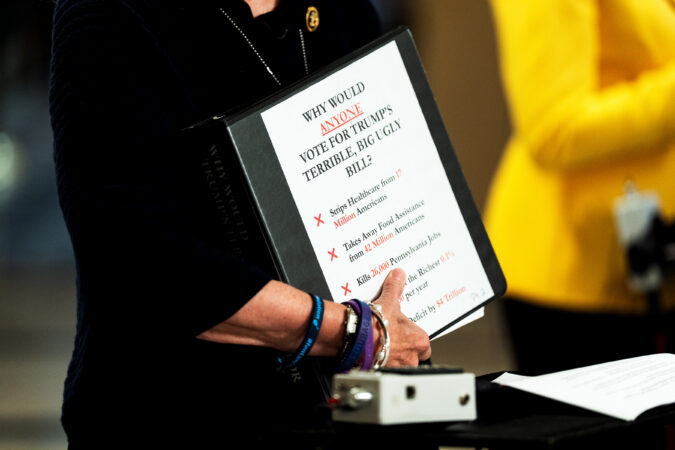
    Congressional Democrats talk about the law twice as often as Republicans, according to a Washington Post analysis of public statements and social media posts. The legislation has emerged as a central talking point for the Democratic Party, with candidates deriding it as the “Big Ugly Bill” and tying the changes it brought to Medicaid and food assistance programs to voters’ anxieties about the cost of living.

    In California, for instance, Rep. Derek Tran has blasted the legislation as jeopardizing benefits for the Supplemental Nutrition Assistance Program, formerly known as food stamps. In Florida, Rep. Kathy Castor has said the law is killing clean energy projects necessary to meet rising energy demands and protect the environment. In Nevada, Rep. Susie Lee derided the legislation as the “largest transfer of wealth from working families to the rich in history.”

    Republicans have largely retreated from talking about the law by name, as they did more often earlier last year —opting instead to focus on the tax cuts under it. Democrats assert that the shift is a sign of the Republican Party’s acknowledgment of the law’s low overall approval.

    “Instead of boosting GOP midterm prospects, the bill has turned into a political albatross and vulnerable House Republicans are stuck defending this disastrous legislation in an already brutal midterm environment,” the Democratic Congressional Campaign Committee wrote in a memo last week advising Democratic House candidates to lean heavily into some of the law’s provisions.

    But Republicans haven’t entirely abandoned their biggest legislative win of President Donald Trump’s second term. GOP candidates regularly discuss individual provisions of the law that poll favorably, such as tax cuts on tipped wages, during campaign events.

    In Wisconsin, for instance, Rep. Derrick Van Orden has toured manufacturing centers to tout the tax cuts for working voters. In California, Reps. David G. Valadao and Vince Fong held a roundtable focused on healthcare that featured the $50 billion rural hospital fund established by the law. And in New York, Rep. Mike Lawler and Trump have praised the law’s temporarily raised deduction caps on state and local taxes.

    The legislation is Republicans’ marquee accomplishment in the current Congress, featuring the lion’s share of Trump’s legislative priorities. It extends the tax cuts included in Trump’s 2017 Tax Cuts and Jobs Act and creates stricter work requirements for Medicaid and food assistance programs. Those priorities polled well among voters when the law was being negotiated.

    Failing to extend the 2017 tax cuts would have led to one of the largest tax increases in U.S. history, and new tax cuts, including credits for tipped wages and overtime, also landed well among voters. Republicans continue to defend the legislation for saving taxpayers an average of almost $2,300 per filer, according to estimates by the nonpartisan Tax Foundation.

    “I don’t care what you call it. It’s what delivers for America,” said House Republican Conference Chair Lisa McClain (Mich.), who ticked off several provisions in the legislation, including the Trump Accounts, a program that allows parents to open investment accounts for children born during Trump’s second term and receive $1,000 from the government.

    “That legislation resonates for real people,” said McClain, who has taken the lead in framing advice on how her party talks about the legislation.

    The dynamic illustrates the challenge of controlling the narrative around massive catchall legislation, which often polls more poorly as a whole than on its individual parts.

    McClain acknowledged that the sheer scale of the legislation — spanning more than 900 pages and touching on issues as varied as transgender athletes, border security, and student loans — could distract from the tax provisions.

    Democrats had similar difficulty selling the benefits of what they dubbed the Inflation Reduction Act during the 2022 midterm elections. That law sought to lower prescription drug costs, invest in clean energy production, and raise corporate taxes, among other provisions.

    “These bills just become conglomerations in people’s minds. Like, nobody knows what’s in these bills,” said Neera Tanden, who directed the Domestic Policy Council in President Joe Biden’s White House. Republicans rebranded Democrats’ marquee legislation, which included the largest ever investment in combating climate change, as driving up gas prices by disincentivizing fossil fuel production.

    But Tanden said Republicans have a unique challenge in selling their catchall legislation because there are visible and immediate impacts to voters’ access to healthcare.

    The nonpartisan Congressional Budget Office predicted that the legislation’s changes to Medicaid, including new 80-hour-per-month work requirements, would result in around 10 million Americans losing healthcare coverage by 2034. Numerous lawmakers, including several Republicans who wound up voting for the legislation, voiced concerns while it was being negotiated that a provision related to Medicaid funding could lead to more hospital closures, particularly in rural areas.

    Some of those outcomes are already becoming reality, Democrats say. Iowa state senator Sarah Trone Garriott, a Democrat running to unseat Rep. Zach Nunn (R) in a competitive race, said a number of health clinics have closed or announced plans to close in her district, citing federal funding and policy changes to Medicaid that she said added to long-standing financial difficulties.

    “Here in Iowa, healthcare was already hanging by a thread, and then when Medicaid was cut, those cuts were so significant that hospital systems are already making changes to try to anticipate the impact,” Trone Garriott said. “My congressman said that it was a myth that it was going to close rural hospitals. It is already happening.”

    Nunn disputed that the closures were directly caused by the changes to Medicaid and noted his community opened a major health clinic that will be aided by the rural hospital fund included in the Trump law. He added that “work requirements for able-bodied adults are how we prevent fraudsters from stealing billions and keep Medicaid strong for the Iowans who truly need it.”

    Several Republicans in vulnerable seats warned last year that proposals in the legislation affecting Medicaid and food assistance could make reelection difficult. The anxiety led to fierce conflicts between moderates, who wanted stronger protections for Medicaid, and deficit hawks, who placed a greater emphasis on curbing spending, that nearly derailed the entire package.

    “Communities like ours won us the majority, and we have a responsibility to deliver on the promises we made,” a dozen Republicans in swing districts wrote in a letter to GOP leadership in April last year. All of the signatories eventually voted for the legislation after securing compromises that could cushion some of the political pushback, including the $50 billion fund for rural hospitals that could see funding dry up because of Medicaid changes.

    A number of components of the legislation don’t go into effect until after the midterms, including the Medicaid work requirements, which start in January. Democrats accused Republicans of delaying the provision to avoid backlash during the November elections.

    “That is so conniving,” said Marni von Wilpert, a Democrat running for a competitive open seat around San Diego. Von Wilpert said that she encounters Medicaid recipients who are unaware of the coming work requirements and that conveying them to voters has been a challenge.

    McClain said the changes to Medicaid and other social safety programs were aimed at gutting fraud and abuse, a concern that she said voters continue to cite in internal Republican polling.

    Republicans have also combated Democrats’ attempt to cast the legislation by rebranding it. Their new preferred name for the law: the “Working Family Tax Cuts Act.”

  • Trump speeds up helipad project ahead of Xi visit, adding $875K, records show

    Trump speeds up helipad project ahead of Xi visit, adding $875K, records show

    The White House sped up construction of a new helipad and related work in anticipation of an “upcoming state visit,” requiring crews to work around the clock and driving the cost up by $875,000, according to a contractor’s records obtained by the Washington Post.

    The $13 million project also includes work on the nearby South Portico and an adjacent portion of the White House driveway, which will be retopped with white stone, the contracting records show.

    Workers have been on-site since June 29, when construction on the helipad got underway, according to three people who spoke on the condition of anonymity because they were not authorized to discuss the project publicly.

    A spokesperson for Clark Construction confirmed work had begun on the project and referred questions to the White House, which declined to comment on specific details of the project.

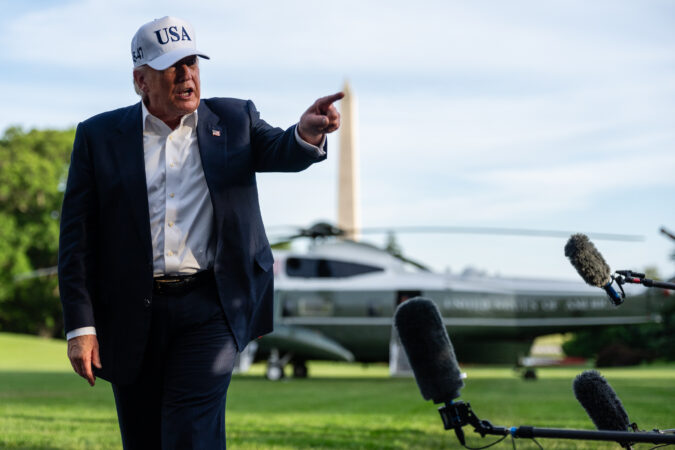
    President Donald Trump told reporters Monday morning that he had decided to build a helipad to address a long-running problem: The new generation of helicopters designated for use as Marine One — the call sign for whichever helicopter is transporting the president — runs the risk of burning the lawn.

    A June 12 letter from Clark and an updated project plan that the company sent to the Trump administration capture the contractor’s efforts to shave more than a month off the planned construction timeline.

    The move came after the contractor received a last-minute directive from the government to conclude work no later than Sept. 17, the documents show.

    The documents obtained by the Washington Post do not name the foreign leader planning to visit the White House, but officials requested the accelerated construction timeline days after Trump invited Chinese President Xi Jinping to visit Sept. 24.

    Clark’s accelerated plan “included 24-hours, 7-days per week for working hours,” the contractor’s documents show.

    In the latest example of Trump’s deep involvement in efforts to reshape the White House and its grounds, the president was personally engaged in several aspects of the helipad project, from price negotiations to design minutiae, according to emails exchanged between Clark and the White House in December.

    Trump offered input on how far to extend the driveway and requested adding a slight slope to the pavers to facilitate better drainage, according to emailed notes from a Dec. 19 meeting with the president.

    “POTUS wants to look at the option of a curved curb for the drive,” the email noted.

    On Monday, Trump told reporters at the White House that the planned helipad will have “the seal of the White House — it’s beautiful, the eagle, and it’s carved out of granite.” He said the manufacturer of the new generation of Marine One helicopters, Sikorsky, would cover the cost of what he referred to as a $5 million or $6 million helipad.

    The president did not address the planned work on the South Portico or the driveway in his comments. He also did not discuss the project timeline.

    The administration’s rush to complete the helipad and driveway construction in time for the state visit is reminiscent of Trump’s push to finish changes to the West Wing, including repaving a path to the Oval Office, before King Charles III visited the White House in April.

    “We had it completed for King Charles,” Trump said in the Oval Office a few days later, saying that the British monarch was impressed by the project. “He loved it, and he’s seen some nice stonework.”

    The highly anticipated visit by Xi would follow Trump’s trip to Beijing this year and reflects years of diplomacy between the two global powers — including efforts to smooth over tensions after last year’s trade battle sparked by Trump’s tariffs. The White House has not announced other state visits for that time period.

    Some diplomatic concerns argue for finishing the helipad and driveway project quickly: The highest-status foreign dignitaries are customarily received on the White House’s South Lawn. Trump has previously welcomed Charles; Saudi Arabia’s crown prince, Mohammed bin Salman; and other leaders there for state visits.

    Current and former White House and military personnel have also said that finishing the helipad quickly would provide some national security benefits. Trump has not been able to use his customary Marine helicopters for White House departures and landings since May, when the Ultimate Fighting Championship began construction of a large arena on the White House’s grounds. That structure covered a large part of the South Lawn, where helicopters have landed and taken off for years.

    Clark, the largest general contractor in the D.C. metro area, has become Trump’s go-to for White House construction projects, some of which have been conducted using no-bid contracts. The company’s work includes overhauling Lafayette Square and building a new East Wing complex and ballroom. Clark estimated in March that the total construction costs for the ballroom project were likely to be $600 million, more than half from taxpayers, the Post previously reported.

    The projects have been panned by Democrats and outside historical preservationists, who have said Trump should seek public comment before making changes to the White House, following long-established processes. Some GOP allies have said Trump should spend less time on construction and be more focused on policy matters that could boost Republicans’ chances in this fall’s midterm elections.

    The White House tapped Clark for the helipad project in December under an existing contract that President Joe Biden’s administration awarded to the company in 2024 for repairs or renovations to the executive residence and its grounds.

    Trump claimed Monday that he originated the idea of a White House helipad, but current and former officials told the Post in May that the concept had been considered across several administrations given the risk of the new Marine One helicopters scorching the lawn.

    Lockheed Martin, whose Sikorsky division builds the helicopters, has donated $5 million to specifically cover the cost of the helipad, the company said Monday.

    “Lockheed Martin has a long history of supporting projects in both the Washington, DC area and across the country,” the company said in a statement.

    The president was involved in planning the helipad and driveway renovation from the start, including personally negotiating a $4.5 million subcontract for stonework, according to the December emails between Clark and White House.

    The helipad plans show a 100-foot-wide presidential seal made of stone and a white-stone sidewalk connecting the helipad to the White House’s South Portico.

    The South Portico and an adjacent portion of the driveway will also be paved with white stone, planning documents show.

    The president has planned other changes to the driveway, which wends through the White House grounds and was designed by landscape architect Frederick Law Olmsted Jr. nearly a century ago. The loosely circular route would need to be adjusted to fit the length of Trump’s planned White House ballroom, according to renderings presented by Trump’s handpicked architect for the ballroom project this year.

    Documents show Clark selected at least 11 subcontractors for the helipad project through a competitive bidding process, including one of its wholly owned subsidiaries. Several had previously been engaged by Clark for work on the ballroom addition.

    On May 11, records show, Clark sent the White House a final construction plan detailing work on the helipad project beginning July 6 and concluding Oct. 20. The schedule, which was obtained by the Post, “included working hours from 0500-2400, Monday through Saturday,” six days a week, from 5 a.m. to midnight.

    “Extended hours beyond those stated may be required to be accepted upon request and coordination,” the document noted.

    One week later, on May 18, “the Government informed Clark of an upcoming state visit requiring Clark to achieve a new substantial completion date of September 17, 2026,” Clark division president Jared Oldroyd wrote in the June letter updating the construction plan.

    Shaving a month off the construction timeline would require “24/7 work” and site preparations would have to begin immediately following the UFC event at the White House on June 14, according to the documents Clark shared with administration officials.

    The accelerated plan noted that concrete work for the driveway and portico could be shortened from three weeks to two by “utilizing 24/7 access/working work hours.”

    The site excavation team would also have to “work 24 hours per day in lieu of 19 hours per day,” contracting records show.

    Twelve more workers and an additional foreman would be added to the stone fabrication and construction team to meet the new deadline, the documents show.

    On June 30, with work already underway, a White House official signed paperwork authorizing the $875,000 needed to cover the cost of accelerating construction.

  • After America’s 250th, Trump will test how far he can push NATO allies

    After America’s 250th, Trump will test how far he can push NATO allies

    Fresh off a week of star-spangled celebrations of America’s 250th, President Donald Trump departs for Turkey on Monday to meet with fellow leaders of NATO. They hope he wouldn’t declare independence from them.

    Trump has long been skeptical about NATO and European allies, asserting that the alliance the United States forged after World War II to fend off the Soviet Union has been taking advantage of Washington’s largesse. Deep into his second term, the president is now well acquainted with the theatrics of NATO gatherings, reveling, according to his associates, in the drama of threatening fellow leaders and watching them scramble to keep him happy.

    The strains increase every year, with Trump’s popularity sinking in Europe after he threatened to seize Greenland in January and sent energy prices spiking with his attack on Iran. The president has fumed that European allies didn’t do enough to help Washington in its war. And in recent days, he has renewed complaints about their defense spending, though he has successfully driven big increases.

    Now, the alliance will again attempt to weather Trumpian pressure, by flattering him where possible and avoiding unnecessary confrontations.

    Trump is scheduled to arrive in the Turkish capital of Ankara on Tuesday and will meet Turkish President Recep Tayyip Erdogan before having dinner with fellow NATO leaders that evening.

    The substantive meeting will be Wednesday morning, which diplomats have kept short to minimize potential disruptions. Afterward, Trump plans to meet with Ukrainian President Volodymyr Zelensky and Syrian President Ahmed al-Sharaa before holding a news conference and returning to Washington, according to White House spokesperson Anna Kelly.

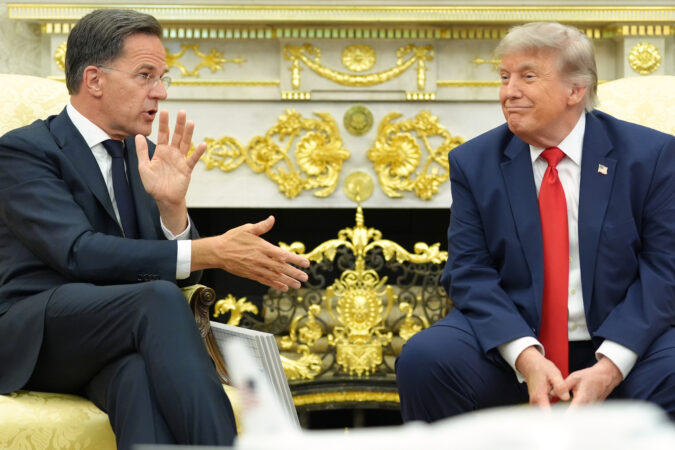
    The president’s grievances have already subsumed much of NATO’s business. NATO Secretary General Mark Rutte laid the foundation last month, praising the president’s stewardship and delivering a presentation in the Oval Office of what he called the “Trump trillion,” with poster boards in golden, “Art of the Deal”-style lettering boasting increases in Europe’s defense spending over the last decade.

    Trump told Rutte that he would skip the gathering altogether were it not being hosted by Erdogan, who for 23 years has ruled his nation with an increasingly tight grip.

    Asked what he wanted from allies, Trump said alongside Rutte that “I just want their loyalty.”

    He has rewarded allied leaders in recent months whom he perceives as friends, including Polish President Karol Nawrocki, whose country has been promised 5,000 more U.S. troops. And he has moved to punish those he views as insufficiently deferential, including German Chancellor Friedrich Merz, who faced weeks of open criticism from Trump after questioning the president’s Iran strategy during a public conversation with schoolchildren.

    Trump began and ended one day last week with angry posts about NATO on his social media account, declaring that “the United States spends more money on NATO than any other country, by far, to protect them, without getting any benefit from so doing.” But behind the public criticism, a senior White House official said, the president views the summits as an opportunity to impose pressure, leaning into his tough-guy role and seeing how leaders respond.

    The last summit, held in June 2025 in the Netherlands, “was great fun,” the official said, referring to an event in which Rutte called Trump “daddy,” comparing him to a father who needs to use authority to stop kids from fighting on a schoolyard. The comment went viral online and was boosted by the White House’s edit of the video clip with the Usher song “Hey Daddy (Daddy’s Home).”

    “The president always has fun at NATO, contrary to what people think,” the White House official said, speaking on condition of anonymity to speak candidly about the sensitive politics of these encounters.

    NATO officials and diplomats from NATO countries don’t expect Trump to threaten to pull from the alliance this year, as he did in 2018. But they know the president likes to surprise, and they say much will depend on his mood when he lands in Turkey. It is expected to be the first international trip on the refurbished, luxury Boeing 747 that he pushed Qatar to give him for use as Air Force One.

    One senior European diplomat fretted that Trump would arrive in Turkey exhausted and angry after a week of tiring travel, including a 3:30 a.m. Saturday return from an event at Mount Rushmore and a rally on the National Mall later that day in the sweltering Washington heat.

    Europeans are “nervous that the way [Trump] feels about NATO is that this is not fundamentally in U.S. interests and so [they] are nervous that the summit could be more calamitous,” said Max Bergmann, an expert on U.S.-Europe relations at the Center for Strategic and International Studies, a think tank. “Especially now as there’s more domestic political pressure on European leaders to be seen as standing up to Trump.”

    NATO officials are coming to the summit armed with big numbers that play to Trump’s wishes. They will trumpet an extra $139 billion spent on defense by European allies and Canada last year. They will make a show of signing billions of dollars of weapons deals and letters of intent, according to senior NATO diplomats speaking on condition of anonymity to discuss the sensitive planning around the meeting.

    And they hope to promise as much as they can to help ensure security in the Strait of Hormuz, although many countries say they need Tehran’s assent if they are to deploy naval missions there to remove the Iranian mines that are hampering shipping traffic.

    But many of NATO’s core security issues have been overshadowed by Trump’s dispute with the alliance. Ukraine and Russia have stepped up attacks on each other in recent weeks, but U.S. efforts to mediate a peace deal have all but halted. Trump’s peace envoys, Steve Witkoff and Jared Kushner, have been focused on Iran, and the White House hasn’t empowered other officials to engage, despite the deep ranks of policymakers who might do so.

    NATO diplomats are negotiating a pledge for Ukraine of about $70 billion in military aid for this year and the next, to be announced at the summit. Washington would not take part, but it has not opposed language supportive of Ukraine, as it sometimes did last year, two diplomats said, speaking on the condition of anonymity to share internal deliberations.

    The alliance has shelved work on a strategy for responding to threats from Russia, a consequence, European diplomats say, of White House caution about doing anything that would portray Moscow as an adversary.

    Some U.S. officials have downplayed the tensions. The U.S. ambassador to NATO, Matthew G. Whitaker, said last week that the summit “really is going to be a measurement of the progress,” since allies pledged last year to each spend 5% of their annual economic output on defense by 2035.

    Whitaker offered assurances that “the U.S. isn’t going away” but said the administration would try to reward the countries that are spending the most. He said the Pentagon and State Department have discussed possible benefits such as “more time with leaders” and “priority in acquisition and procurement.”

    Asked if the U.S. was considering measures targeting nations that are lagging behind, he said yes, but did not elaborate.

    The Trump administration has made disjointed troop announcements in recent months, with the Pentagon at times out of step with the White House. After the Pentagon surprised Poland by canceling a planned troop rotation, for instance, Trump scrapped it and promised an increase. In other cases, the president has suggested some cuts were punishment for European criticism of the war on Iran.

    European leaders plan to declare their commitment to assume increased responsibility of the continent’s defenses — a message many of them have converged on with the Trump administration, which is intent on pulling U.S. resources.

    European policymakers describe their vow to rearm as a response to an increasingly tense confrontation with Russia and shifting U.S. priorities, rather than just a bid to placate Trump. But policymakers including in France and Germany have pressed their U.S. counterparts to coordinate any military drawdown.

    Some Europeans, especially those in Western Europe, have started to work with Pentagon planners on an orderly handover. French Deputy Defense Minister Alice Rufo said Paris has long led calls for greater European autonomy, and “today it is the Americans saying it” too.

    “What we need to achieve at this summit is for this shift to happen in a coherent manner for collective defense, which also concerns the Americans,” Rufo said. “It’s in our best interest to ensure that this shift takes place in an orderly, efficient manner to deter our adversaries, and not to create frictions among us.”

    But the effort is creating strains in the alliance. Rutte is still trying to preserve a robust U.S. presence in Europe. And many policymakers in countries that border Russia still trust Washington more than France and Germany to defend them in a war with Moscow. They believe that old American instincts to defend democracies would kick in, along with pressure from hawkish Republican lawmakers.

    A senior NATO diplomat said there was a sense of optimism ahead of the summit but also a recognition that “things can derail.”

    The diplomat mentioned Italian Prime Minister Giorgia Meloni, a far-right leader who shares much of Trump’s skepticism about migration and is sympathetic with many of his issues. But the two leaders traded barbs in recent weeks in a dispute that originated with Trump’s anger at Italy’s caution about allowing its bases to be used to attack Iran.

    “Can I totally exclude that something like that will happen? No. I’m optimistic because I think the leaders know what is at stake,” the NATO diplomat said. “And if something does occur, then we always have the ultimate marriage counselor, Mark Rutte, to smooth things over.”

    The Trump-Meloni kerfuffle took on a new dimension after Trump claimed she had “begged” for a photo with him at a recent Group of Seven meeting in France.

    It escalated further over the weekend as the president posted a meme to Truth Social of Meloni looking at him during the G7, under the headline “Restraining Order Needed.” The post sparked a fresh wave of coverage in the Italian press and thinly veiled distaste within the ranks of Meloni’s coalition.

  • Supreme Court’s dramatic moves will reshape elections — and give the GOP a midterm boost

    Supreme Court’s dramatic moves will reshape elections — and give the GOP a midterm boost

    The Supreme Court dramatically reshaped elections in recent months, sharply limiting a law that has been a cornerstone of minority voter empowerment, allowing states to gerrymander maps, and loosening campaign finance regulations.

    The conservative majority says the series of decisions helps correct an election system that has run afoul of the Constitution. In rulings, they cite ideas they have long championed — undoing programs that advantage minorities, allowing partisan redistricting, and eliminating restrictions that impinge on free speech rights.

    Most of the rulings, which have rolled out as the country heads toward pivotal midterm elections, benefit Republicans. That’s led critics — starting with some of the court’s liberal justices — to complain the court’s conservative majority has gone beyond enunciating broad legal principles and put a thumb on the scale in upcoming races.

    What is clear is that the Supreme Court has tilted this fall’s electoral landscape toward Republicans as they struggle with voter discontent.

    In one of the most consequential rulings of the term, the conservative majority in April significantly weakened the Voting Rights Act’s last pillar, which required states to draw congressional districts to ensure the voting power of minorities under certain circumstances. In its opinion, the court said the protection was no longer needed by a country that has made “great strides in ending entrenched racial discrimination.” That decision touched off a push by Republican-controlled states to eliminate districts mostly held by Black Democrats across the South.

    Other rulings cleared the way for specific voting maps preferred by Republicans. And one loosened campaign finance limits — a change that brings the most immediate boost to Republican candidates.

    Democrats notched few outright victories, but they avoided some outcomes that they would have viewed as particularly disruptive. In one case, the court allowed states to continue to tally mail-in ballots even if they arrive after Election Day. Mail voting in recent years has become more popular among Democrats than Republicans.

    Legal experts said the justices’ intervention amid an election cycle and the pace at which the court is moving to implement changes that largely benefit one party is all but unprecedented in recent years.

    Richard L. Hasen, an expert in election law and political science at UCLA, said Chief Justice John G. Roberts Jr., who is known for his slow, methodical approach, lately appears to be a justice “in a rush.”

    “The court has been moving toward weakening voting rights, freeing up campaign money, and letting partisan actors run loose — that’s not a new trend,” Hasen said. “But the speed with which things are happening is much faster.”

    The decisions represent a dramatic coda to more than a decade of work by the justices, who have rewritten election law under Roberts in ways that one analysis found have pushed it to the right of any other court over the past 70 years.

    Republicans face an uphill battle in November’s contests because the president’s party historically loses seats in the midterms, and Trump’s low approval rating, the high price of gas, and the unpopular conflict in Iran have been a drag on GOP candidates.

    Democrats have a shot at taking the House and Senate, but the Supreme Court’s moves have erected a higher hurdle. Today, Republicans control 219 seats to Democrats’ 212 in the House, while Republicans enjoy a more solid advantage in the Senate, with 53 seats to 47.

    Earlier this year, the nonpartisan Cook Political Report had rated 217 House seats out of 435 as leaning Democratic, and projected Democrats needed to win only one of the tossups in November to capture the House.

    Cook recalibrated after the Supreme Court’s landmark Voting Rights Act ruling sparked the push to redistrict. It now lists 206 House seats as leaning toward Democrats, meaning Democrats need to win at least 12 of 18 tossups to gain control.

    “The fundamental question for 2026 is whether or not the structural firewall that Republicans have built up around their majority is strong enough to withstand what is shaping up to be a punishing political environment,” said Amy Walter, the publisher and editor of Cook.

    Democrats have issued bitter recriminations over the rulings as polling shows many in their base believe the court’s rulings are motivated by politics.

    “This is the most partisan Supreme Court in the history of the nation,” Sen. Ruben Gallego (D., Ariz.) recently posted on X.

    Roberts publicly addressed such criticisms at an appearance in early May, denying politics was a factor in the court’s rulings.

    “I think at a very basic level, people think we’re making policy decisions. … We’re saying we think this is what things should be as opposed to this is what the law provides,” Roberts said. “I think they view us as truly political actors, which I don’t think is an accurate understanding of what we do.”

    In its latest ruling, the court struck down limits on political parties spending money in coordination with candidates, finding they violated parties’ constitutional free-speech rights. Justice Brett M. Kavanaugh, writing for the majority, said the ruling ”treats all political parties equally” and will allow them to “participate more freely and compete more fully in the political process.”

    It’s unclear which party will benefit long term, but there’s one clear winner for the midterms: the GOP.

    Republican party committees have amassed a more than $100 million advantage over their Democratic counterparts, some of whom have struggled to raise money.

    Several of the high court’s other rulings have centered around how officials split their states into voting districts, creating maps that can give either political party an edge.

    In one of its earlier cases of the term, the high court greenlit Texas Republicans’ unusual move to redraw the state’s congressional maps between censuses, an effort that touched off a nationwide redistricting war. The decision could net the GOP up to five additional congressional seats in Texas alone.

    The justices later blocked New York from redrawing the district of Republican Rep. Nicole Malliotakis. That reversed the mandate of a state court, which had ordered officials to include more Black and Latino voters, a change that could have likely flipped the seat to Democrats.

    And in May, the court rejected a longshot emergency bid by Virginia Democrats to revive a gerrymandered voting map that would have allowed the party to pick up as many as four seats in the House in November.

    In its most sweeping decision of the term related to voting, the high court pared back a key part of the Voting Rights Act known as Section 2 that required states to draw maps that help minority communities elect candidates of their choice under certain circumstances. In the process, the court struck down a second Black-majority district in Louisiana, saying it was an unconstitutional racial gerrymander.

    With the help of the ruling, Republicans have drawn 16 districts with more favorable lines since last year, compared to six for Democrats.

    In the wake of the VRA ruling, a complicated fight over Alabama’s congressional map has raised questions about what room remains for minority communities to pursue claims that discriminatory redistricting violates the Constitution, possibly signaling even greater gains for Republicans.

    In June, the high court allowed Alabama to revert to a map with one Black-majority congressional district instead of two, a move that will likely flip a Democrat-controlled seat to the GOP.

    The decision came over a lower court finding that Alabama intentionally discriminated against the state’s Black voters in creating the map and then defied a court order to remedy the racial bias. In its ruling, the high court’s majority rejected that finding, citing “our colorblind Constitution.”

    The ruling was notable because the conservative majority held its Voting Rights Act ruling did not disturb the Constitution’s protections for minorities from “present-day intentional racial discrimination regarding voting.”

    But voting rights and minority advocates said the Alabama ruling indicates that protection might be a dead letter. Deuel Ross, director of litigation at the Legal Defense Fund, which advocates for racial justice, said in a statement he worries minority groups will lose political power.

    “The Supreme Court’s decision gives cover to Alabama and others to deliberately and openly discriminate against Black voters without fear of any consequence,” Ross said.

    Not every case went Republicans’ way. The Supreme Court dealt the GOP a setback when it upheld a Mississippi law that allows mail-in ballots to arrive up to five days after polls close. The ruling could have affected 13 other states with similar laws. Voting by mail is particularly popular with Democrats.

    Nevada Secretary of State Cisco Aguilar (D), who oversees elections in his battleground state, praised the Watson v. Republican National Committee case on mail ballots, but said the decision meant less in light of other rulings this term.

    “The fact that they destroyed the Voting Rights Act is detrimental to the fundamental foundation of our democracy,” he said. “Yes, they may have done something with Watson, but in the totality of it, the Supreme Court has become politically active in the overall administration of our election.”

    The clearest win for Democrats came when the court allowed California to gerrymander its voting maps to give Democrats up to five additional House seats. The California push came in response to Texas’ move to redraw its maps.

    The court’s liberals and some legal scholars have not just taken issue with the substance of the court’s decisions, but how the justices have arrived at them.

    The Supreme Court has regularly invoked the Purcell principle, a doctrine that holds federal courts should not change election law too close to elections because it can create confusion among voters.

    In the Texas redistricting case in December, with primary elections a few months away, the conservative majority referenced Purcell in allowing the use of redrawn maps favoring Republicans. A lower court had blocked the maps.

    “The District Court improperly inserted itself into an active primary campaign, causing much confusion and upsetting the delicate federal-state balance in elections,” the majority wrote of the primary scheduled for March.

    But in April during an active primary, the conservative majority struck down Louisiana’s second majority-Black congressional district in the Voting Rights Act decision. The seat is held by a Democrat.

    The decision came after thousands of voters had already returned mail-in ballots in the contest. The Supreme Court then expedited the ruling, paving the way for Louisiana Republicans to quickly redraw the district to favor Republicans.

    Liberal Justice Ketanji Brown Jackson issued a sharp rebuke, saying the conservative majority was willing to employ the Purcell principle in the Texas case when it favored Republicans, but ignore it in Louisiana when it did not.

    “The Court unshackles itself from both constraints today and dives into the fray,” Jackson wrote in a dissent. “And just like that, those principles give way to power.”

    Conservative Justice Samuel A. Alito Jr. shot back in a concurrence that the claim the court was acting in a partisan manner was “a groundless and utterly irresponsible charge” and it needed to act to prevent an election in Louisiana from going forward with an unconstitutional map.

    The court’s liberals have also accused conservatives of misusing Purcell in the Alabama and New York redistricting cases.

    Legal scholars differ over whether the court was employing Purcell in an evenhanded fashion. Edward B. Foley, who specializes in election law at Ohio State University, said the rulings were hard to square.

    “They may think they are being principled and consistent, but it sure doesn’t look that way,” he said of the court’s use of Purcell. “This principle seems to favor Republican partisan results.”

    Derek Muller, a Notre Dame law professor who specializes in election law, said he saw a legal logic to the court’s moves.

    “The Supreme Court is stepping back from cases in Alabama and Louisiana. It’s not issuing a rule to alter the rules of the election,” Muller said. “It’s allowing the legislatures to issue the rules they want.”

    The way the court handled the New York redistricting case also became an issue of contention. Liberal Justice Sonia Sotomayor accused the conservative majority of carrying out an “unprecedented” power grab by ruling before a state Supreme Court had a chance to weigh in.

    Sotomayor said the move trampled precedent against federal courts intervening in state court cases while litigation is still ongoing.

    “The Court’s 101-word unexplained order can be summarized in just 7: ‘Rules for thee, but not for me,’” Sotomayor wrote.

    Alito wrote in a concurring opinion that the intervention was necessary because New York courts approved a map that “blatantly discriminates on the basis of race.”

    Justin Riemer, former chief counsel at the Republican National Committee, rejected the notion the court is making partisan rulings, saying it had issued rulings favoring Democrats in recent years.

    He highlighted decisions dismissing a challenge to Trump’s 2020 election loss and rejecting arguments put forward by Republicans in 2023 that state legislatures could set election rules without interference from state courts.

    “I really don’t think that they’re in the tank one way or the other,” said Riemer, president of the group Restoring Integrity and Trust in Elections. “I think they have a judicial philosophy that they apply … that works for the types of claims we bring.”

    The redistricting and campaign finance decisions may provide immediate benefits to Republicans, but they may not last for long, said New York University law professor Richard Pildes.

    Democrats will have opportunities to redraw congressional districts in states they control after the midterms and political parties typically adapt to campaign finance rulings to keep up with their opponents, he said.

    Democratic anger over the decisions is intense, and it could fuel efforts to ban mid-decade redistricting, limit partisan gerrymandering, and pack the Supreme Court with more justices, he said. One Democratic congressman went so far as to introduce articles of impeachment against Roberts.

    “This is a real sort of avalanche that’s kind of been unleashed,” Pildes said.

    Legal experts said the court’s decisions this term are of a piece with its rulings on voting rights and campaign finance over the last 15 years.

    Those include the 2010 Citizens United decision that loosened campaign finance restrictions on corporations and unions, the 2013 Shelby County ruling that knocked down a section of the Voting Rights Act that required states with a history of racial discrimination to get federal pre-clearance to change voting laws, and the 2019 Rucho decision that found federal courts could not hear partisan gerrymandering claims.

    Guy-Uriel Emmanuel Charles, a Harvard law professor who focuses on political power and race, said regardless of which party benefits, this term’s cases could supercharge the era’s bare-knuckle politics.

    “This Court is sending a clear message: It will not impose many limits,” Charles wrote in an email. “The Court is incentivizing political parties to push the boundaries as far as possible to gain an advantage.”
  • As Christians are attacked in Israel, government shows little concern

    As Christians are attacked in Israel, government shows little concern

    JERUSALEM — The stone footpath begins at the tomb of King David, revered by Jews, and curves past the room where Christians believe Jesus held the Last Supper. Nearby, the Dormition Abbey towers over a site where many believe Mary slept before being taken to heaven.

    Steeped in history and faith, this quiet alleyway in Jerusalem’s Mount Zion was the site of a brazen attack in April, when a Jewish Israeli man from the occupied West Bank shoved a French Catholic nun to the ground and kicked her out of “religious hostility,” according to Israeli police.

    The assault, recorded by surveillance cameras in broad daylight, shocked many. But not Nikodemus Schnabel, abbot of the Dormition Abbey, which the nun had visited before she was attacked.

    Christians today are “hit, spit at, beaten,” said Schnabel, who has experienced it all — and worse. “There was a video in this case, but you can be sure there are so, so many undocumented things.”

    “Believe me,” he sighed, “this is not the case of one lost soul.”

    Across the Holy Land, Christians are being targeted by a tide of hostility and violence — attacks that risk drawing the ire of Christians in the United States, including evangelicals who are traditionally among Israel’s most ardent American supporters.

    In Jerusalem, Christians say they are routinely harassed by ultra-Orthodox Jews and huddle in fear when Religious Zionists rampage through the Old City, destroying property during their processions.

    Twenty miles away, in the West Bank’s only predominantly Christian town, Taybeh, the population is dwindling after years of unrelenting attacks and economic pressure from armed Jewish settlers.

    U.S. Ambassador Mike Huckabee, an evangelical pastor who has often spoken in Israel’s defense, visited Taybeh last year after settlers allegedly set fire to its most famous landmark, the 1,500-year-old Church of St. George, and denounced what he called “an act of terror,” though he later retracted that statement.

    Meanwhile, a string of social media posts from neighboring Lebanon, where Israeli soldiers have recorded themselves smashing Christian icons and defacing churches despite calls for discipline from military commanders, have reinforced a sense that animosity toward Christians is being normalized under Prime Minister Benjamin Netanyahu’s government, the most right-wing in Israel’s history.

    For decades, Christian monastics and pilgrims, easily identifiable with their robes and crosses, faced harassment in Jerusalem. But the number of incidents nearly doubled from 2023 to 2025 and is on track to reach a new high this year, according to the Rossing Center, an interreligious organization in the city.

    At different times in the past 18 months, the two joint-chief rabbis of Israel, David Yosef and Kalman Ber, have issued statements condemning attacks on Christians as antithetical to Jewish values and as a “severe phenomenon” that “must be eradicated.”

    But local and national political leaders have often kept their silence.

    After the attack on the nun on April 28, which drew condemnation from the French Consulate, the Israeli Foreign Ministry was one of the few official voices that issued a statement, calling the assault a “shameless act” that contradicted Israel’s founding values of “respect, coexistence, and freedom of religion.”

    Netanyahu’s office did not comment at the time of the assault but in a statement to the Washington Post said: “We have made it clear that any acts of violence and vandalism of this type will not be tolerated. Those who commit such acts will be prosecuted to the fullest extent of the law.”

    When an earlier wave of harassment targeting Christians made headlines in 2017, Itamar Ben Gvir, then a settler activist and lawyer, gave a radio interview to defend spitting at Christian monks and churches as “an ancient Jewish tradition.”

    “I don’t think this represents any violation,” said Ben Gvir, who today leads Israeli law enforcement as minister of national security, a post he was given despite having been convicted of supporting a Jewish terrorist organization and inciting racism. “Why do we turn this into a criminal matter?”

    A spokesperson for Ben Gvir did not respond to requests seeking comment.

    Francesco Ielpo, the custodian of the Holy Land and a senior Vatican official in Jerusalem, said he feared the growing influence of Israel’s far right will push Christians in Israel and the Palestinian territories to leave, accelerating a pattern of emigration among a prosperous and well-educated minority group.

    Although Israel’s Central Bureau of Statistics says the population of Christians in Israel and Jerusalem has ticked up about 1% annually to 184,200 at the end of 2025, or 1.9% of Israel’s population, Christian leaders say the official data does not reflect that many Christians included in the census mostly live abroad.

    In the West Bank, the Christian population has hovered between 40,000 and 50,000 for years, as emigration balances out births.

    “The general atmosphere is this: Many people are afraid,” Ielpo said. “I can give good works and health assistance. I can give good schools. But all this is not enough. You need hope to remain.”

    Christian village under siege

    From a vantage point an hour north of Jerusalem’s Old City, Suleiman Khouriyeh pointed in every direction to explain how the residents of Taybeh — a village that, according to the Gospels, once gave refuge to Jesus and his disciples — now cannot find relief themselves.

    Khouriyeh, the mayor, was blocked from harvesting his 4-acre olive grove after settlers closed in from the west, seized his land and built a fence. Across the valley, a local business owner, Hanna Massis, was building a multistory hotel but halted construction because of settler attacks.

    Bashir Marouf, the owner of a house on a street where settlers often arrive at night to set up roadblocks to disrupt the local traffic, had long fled.

    To the south was Roland Bassir’s cement factory, its office windows shattered and its machinery destroyed from a recent attack. Initially, in late 2023, settlers set up a single tent on a nearby hilltop. One tent became a few trailers, then a small farm.

    Over the next two years, settlers from the outpost began taking their cattle to graze inside the factory premises and forcing Bassir’s workers to leave in the middle of the day, according to Bassir and videos his employees recorded.

    They lofted an Israeli flag, vandalized cars, and smashed equipment. During two attacks, on Sept. 14 and March 14, they shot in the air with rifles, Bassir said. Struggling to keep the factory running, Bassir has laid off nearly all of his 45 employees.

    After sinking more than $100,000 into the business, Bassir was ready to abandon it, he said. He has already applied for a U.S. visa. “If I get it, I will leave tomorrow,” Bassir said. “There is no future. Every day I think it might be my last day here, because I might be killed.”

    In the past 10 years, 10 extended families have left Taybeh for the United States, Latin America, and Spain – a significant exodus for a town of 1,500 residents, Khouriyeh said.

    “They can’t handle living here,” Khouriyeh said. “It’s really hard, especially for young men who don’t have jobs and are forced to leave. What we see is Israelis taking the whole area.”

    On a recent afternoon, Khouriyeh sat in his office with municipal employees, venting about the Western governments that they believed should do more to protect them — if not as Palestinians, then at least as Christians.

    In 2024, many Taybeh residents celebrated when Donald Trump was reelected as president, believing he was the “peace president,” recalled Khouriyeh and the acting mayor during the recent election period, Khaldoun Hanna.

    The following year, the village felt relieved when Huckabee, Trump’s new ambassador to Israel, visited.

    But their appreciation turned to fury when Huckabee retracted his statement after Israeli police denied finding clear evidence of an arson attack.

    Months later, villagers found clips of Huckabee telling Tucker Carlson in an interview that Israel had the divine right to claim as its own the Palestinian territories and parts of Egypt, Lebanon, Syria, and Iraq.

    “Someone ask Huckabee, is he America First or Israel First,” a young municipal employee, Jeries Taye’e, angrily demanded.

    “He’s Israel First,” Hanna snorted.

    Mayor Khouriyeh raised his hands, then posed a question: Without a change in policy in Israel — and in Washington — what will happen to the Christian population here?

    “We have the oldest holy sites: the Church of the Holy Sepulchre, the Church of the Nativity,” Khouriyeh said. “But what is the value of an empty church without Christians?

    International dimensions

    At a time when Israel already faces international isolation and criticism over its actions in Gaza, particularly from the Islamic world, tensions with Christians could further undermine a crucial pillar of support, some Israeli analysts warn.

    In America, Christian conservatives — who traditionally leaned pro-Israel — have questioned Vice President JD Vance at public events about Israel’s treatment of Christians, noted Avishay Ben Sasson-Gordis, an expert on U.S.-Israel relations at the Institute for National Security Studies, a Tel Aviv think tank that advises the government. Christian nationalist commentators who are influential on the American right, like Carlson and Candace Owens, also frequently cite reports of attacks and harassment against Christians when they lambaste Israel, Ben Sasson-Gordis said.

    “The violence against Christians and the [Israeli] political figures who encourage it are bad enough that something needs to be done about them,” he said. “But it’s also important to pay attention to the way it alienates Israel’s friends and provides tools for Israel’s detractors.”

    These days, the slew of headlines suggests that anti-Christian sentiment has grown particularly quickly among Israeli youths, said Yisca Harani, the founder of the Religious Freedom Data Center, a Jewish Israeli group that operates a hotline for reporting attacks against Christians in Jerusalem.

    Harani now organizes a group of about 100 Jewish volunteers to walk alongside Christian nuns whenever they leave their homes, and since the May attack, nuns have called Harani every day requesting a protective presence. The problem begins with education, said Harani, an observant Jewish Israeli who has pushed Jewish religious schools to teach more about the history of Christians in the Holy Land.

    “Half of Israel is greatly affected by the rhetoric of Jewish supremacy and Jewish exclusivity,” Harani said. “What can only be the outcome if in school they say: ‘All gentiles want your annihilation, remember what the Christians did, remember what Hamas did.’ People therefore look at the world through glasses of fear, estrangement, and, finally, animosity.”

    For Nikodemus, the Dormition Abbey abbot, the change in atmosphere is more easily explained.

    When he first traveled to Israel in 2003, he saw advertisements at the Tel Aviv airport showcasing the country as the home of Christian holy sites. The minister of tourism at the time held receptions where the young Benedictine monk was welcomed. But over the years, the occasional curses that Schnabel encountered in dark alleys became spitting and open confrontations in broad daylight.

    “That’s the difference between then and now,” Schnabel said. “The government.”

    One major shock for Schnabel came in 2015, when Jewish extremists set fire to the Church of the Multiplication, where it is said Jesus performed the miracle of feeding 5,000 people with two fish and five loaves.

    A decade later, one memory from the arson trial has stuck with Schnabel: the attorney delivering a fiery courtroom argument in defense of the young Jews accused of terrorism.

    That lawyer was Itamar Ben Gvir, now the minister of national security.

  • Families of children killed in bombing of Iranian school join leader’s funeral

    Families of children killed in bombing of Iranian school join leader’s funeral

    TEHRAN — Among the tens of thousands of mourners gathered in central Tehran for the funeral of Ayatollah Ali Khamenei are families of the schoolchildren from the southern city of Minab who, like the supreme leader, were bombed to death on the first day of the U.S.-Israeli war against Iran.

    At least 175 civilians were killed at the girls’ elementary school, most of them students, in what appeared to be a strike by a U.S. Tomahawk missile. So far, the United States has not taken responsibility or released the results of any investigation. In Iran, the children’s deaths have become a potent symbol for U.S.-Israeli brutality and an unjust war.

    Parents and other family members made the 800-mile trip to the Iranian capital by train, car, and bus, and on Sunday, they were brought to the Grand Mosalla religious center for the funeral prayers. The crowd swelled in size ahead of the prayers, with tens of thousands packing into the open-air complex.

    Many mourners had hoped that Khamenei’s son and successor, Mojtaba Khamenei, would appear in public for the first time since his father’s assassination to lead the prayers, but he did not show, probably because of concerns for his safety.

    Ayatollah Jafar Sobhani, a prominent theologian and member of the Council of Experts that chose Ali Khamenei’s successor, led the ceremony instead.

    Also present Sunday was Ahmad Vahidi, the recently appointed commander of Iran’s powerful Islamic Revolutionary Guard Corps — a key member of the surviving regime, which has emerged emboldened and even more hard-line after months of attacks by two of the world’s most powerful militaries.

    Vahidi, too, had been in hiding since the war. A shudder rippled through the crowd as people recognized him. After the prayer concluded, isolated chants broke out, invoking his name: “Vahidi! Vahidi! Revenge! Revenge!”

    The Minab school attack occurred on Feb. 28, the same day that Ali Khamenei was killed at his leadership compound, along with other members of his family and other senior officials.

    Hanzaleh Salehi, 43, whose son was killed in the school strike, said he remembers hearing confirmation of the supreme leader’s death while he was in the morgue identifying his child’s body. Experiencing the two losses back to back left him feeling frozen, he said.

    “We want to send our voice to the world,” Salehi said, wearing a T-shirt that showed his son’s framed portrait. “I want the world to realize how the Iranian people are treated. This was not the first crime, and it may not be the last.”

    An invitation from the Iranian government to attend the proceedings, albeit under restricted conditions, including accompaniment by a government-provided guide and interpreter, has allowed the Washington Post its first opportunity to report from Iran since the war began. The views of people interviewed at the funeral events are unlikely to represent all of Iranian society, given the risks posed to those who have opposed or been critical of the government.

    While the U.S. has not accepted responsibility for the attack, video evidence and Post reporting found that the school was on a U.S. target list, suggesting it was carried out by U.S. forces. The Pentagon said it launched an investigation, but more than four months later, no findings have been published.

    In Iran, the strike is a national tragedy. Memorials to the children have been installed in government offices and businesses and at Iranian embassies abroad. In Tehran, an installation of backpacks, flowers, and children’s shoes commemorates those killed in Minab at the capital’s international airport.

    One of the Minab booths set up for Khamenei’s funeral displayed dozens of portraits of the children above a chalkboard, exercise books, and school desks.

    Fatimeh Yavari, 39, from Semnan, east of Tehran, stopped to take pictures of the display with her two children. The Minab children “are like my own children. I cried for all of them like I was burying my own child,” Yavari said, growing emotional behind her sunglasses. “It was a great tragedy.”

    Minab is a small town that’s home to large military installations in a province, Hormozgan, that is a critical export hub near the port city of Bandar Abbas.

    Yasir Pour Jomeh, 39, a dock laborer, traveled 24 hours by bus and private car to Tehran so he could help oversee a Minab booth during the funeral. He said that after the Minab attack, there was a surge of support for the government in the area.

    “People realized how supportive the supreme leader was of the people,” Jomeh said. “Even some who were against the establishment turned back.”

    After the public viewing of Khamenei’s body ends on Saturday evening, his casket will be carried on an hourslong funeral procession through the Iranian capital.

    That procession is expected to draw even larger crowds that those at Mosalla, and the daylong event could prove to be one of the most logistically difficult portions of the ceremony.

    After the funeral procession, Khamenei’s body will be flown to the Iranian city of Qom, a center of Islamic learning, before it is brought to the Iraqi cities of Najaf and Karbala, both homes to holy Shiite shrines that are pilgrimage sites. Finally, Khamenei will be buried in his hometown, Mashhad, in eastern Iran.

  • Trump fashions America’s 250th anniversary in his own image

    Trump fashions America’s 250th anniversary in his own image

    For all the power he has flexed over the past year and a half, President Donald Trump could not control the scorching, dangerous, record-shattering weather in the nation’s capital for the 250th anniversary of America’s independence, or the lightning strikes in the distance that prompted officials to evacuate the National Mall ahead of his planned speech.

    But nearly every other aspect of the celebration in Washington bore Trump’s imprint, as decisions he made transformed an official commemoration of American history into another polarizing moment in American politics.

    After a chaotic scene unfolded early Saturday evening, with Secret Service officials forcing defiant Trump supporters to flee the president’s Salute to America event as severe weather loomed, Trump told them all to come back. The show would go on.

    His supporters, wearing gear bearing his name and slogans, trekked back to stand in security lines again in the rain.

    “I said, ‘There’s no way — if we have to speak in front of one person at 4 o’clock in the morning, I’m going to be here,’” Trump declared when the rain had stopped and he began speaking after 11 p.m. to a crowd half the size of what it had been earlier. “There’s no way we can be deterred.”

    “This is an evening for the ages. I believe this is something very special,” Trump said into the night, describing the attendees’ perseverance and late-hour return as “bigger than if we didn’t have the lightning blaring.”

    “But this is bigger. A little more inconvenient, but it’s bigger. I think, in its own way, it’s more beautiful.”

    It was but the latest twist in a national celebration that Trump defined in his terms — and for which the president has called the shots.

    Ever the showman, Trump throughout his speech brought notable Americans out onto the stage with him — war veterans as old as 107 who saluted from wheelchairs, astronauts from the Artemis II and Apollo 17 missions, and families of soldiers killed in battle.

    He praised the “unstoppable spirit that created the world’s most powerful industries and built the strongest military anyone had ever seen‘” but also reprised his political grievances.

    Trump joked that he was serving his third term as president, a reference to his false claims that the 2020 election was stolen from him. He prompted cheers from his supporters as he touted his bill to assert federal control over election rules — legislation that Senate Republican leaders have repeatedly told him won’t pass as it is currently written. And he lobbed several verbal attacks at “communists,” his label for the democratic socialists who have won several recent Democratic primary elections.

    Before Saturday night’s rally, Trump didn’t pretend that the celebrations would be anything other than his usual unapologetic rhetoric.

    “Has anyone ever seen a Happy Dumocrat?” the president wrote of his opposing political party on social media on Saturday morning, his first Fourth of July greeting of the day. Weeks earlier, Trump had abruptly announced that he would also serve as the headlining act of a rally kicking off the two-week Great American State Fair on the National Mall, calling himself “the Number One Attraction anywhere in the World, the man who gets much larger audiences than Elvis in his prime.”

    “Only Great Patriots invited” Trump wrote of the launch of a fair that was, in theory, open to all, later billing the kickoff to the 250th anniversary festivities as a “Trump rally.”

    Milestone anniversaries like the semiquincentennial present rare moments of shared civic ritual, occasions when presidents are widely expected to place themselves within the sweep of the American story, rather than at the center of it. This year’s celebration, instead, reflected both Trump’s vision of America, and America’s divisions over Trump.

    The decision to have Trump speak late Saturday also reshaped a long-standing July Fourth tradition. Security restrictions prevented attendees from bringing coolers or arriving throughout the evening, and the speech was already set to delay the fireworks until after 10:30 p.m.

    The pyrotechnics finally began moments before midnight, with Trump remaining in a climate-controlled box at the National Mall to watch. The massive show set a record, organizers said.

    As Americans sweltered through a dangerous heat wave, with Washington’s heat indexes reaching 115 degrees, Trump had warned that he planned to “make a really long speech … just to show that I can do anything.” Organizers instructed those attending not to arrive too early to limit their time outside.

    In the end, the late-night speech was about 35 minutes long.

    The National Mall fair itself, long touted as a showcase for American greatness and national unity, instead became a Rorschach test. Trump supporters praised the patriotic atmosphere and military flyovers.

    His critics, meanwhile, pointed to images of sparse crowds, a mock-up of Trump’s proposed triumphal arch on the grounds, and administration officials touting their accomplishments as evidence that the president’s personal involvement had undercut what might otherwise have been a broader civic celebration.

    With just months to spare before the occasion, Trump had pushed aside America 250, the long-standing bipartisan commission tasked a decade ago with planning anniversary festivities, replacing it with his own group of political allies, Freedom 250. His advisers argued the move was necessary because the commission had become bogged down by bureaucracy.

    But as Trump’s chosen planning organization became increasingly seen as a partisan entity, vendors and performers alike ultimately pulled out of the fair, which has struggled to draw large crowds for much of its first week.

    Besides supplanting the bipartisan commission, Trump has increasingly put his imprint on other aspects of this year’s commemoration. His face appears on a commemorative gold coin marking the anniversary and on limited-edition “patriot passports.” Administration officials have pushed for a $250 bill bearing his portrait, and Trump this week posted an image of a $100 bill featuring his autograph — marking the first time a sitting president’s signature has been featured on U.S. currency.

    As he has throughout the anniversary celebration, Trump cast himself as central to the story he wants the country to tell about itself: that America was diminished before him, revived by him, and is now celebrating its founding through his restoration — a promised “Golden Age.” At Mount Rushmore on Friday night, he told the crowd that he “saved, almost single-handedly,” the Second Amendment and that he was going to “give our country its identity back.”

    “We never had the American Dream, however, like we have it right now,” Trump said Saturday on the National Mall. “The American Dream is back. Very strong. Beautiful.”

    Republican President Gerald Ford took a different approach during the nation’s bicentennial celebration in 1976, even as he was running for reelection in the aftermath of Watergate and the Vietnam War. In his remarks, Ford made no mention of the campaign, the Democratic front-runner Jimmy Carter, or his GOP primary challenger, Ronald Reagan.

    Ford’s only reference to electoral politics came as a broader reflection on self-determination: “This November the American people will, under the Constitution, again give their consent to be governed,” he said, outside Independence Hall in Philadelphia. “This free and secret act should be a reaffirmation by every eligible American of the mutual pledges made 200 years ago by John Hancock and the others whose untrembling signatures we can still make out.”

    But comparisons with past presidents are complicated by the fact that patriotism itself has become more polarized, said Tevi Troy, a presidential historian and senior fellow at the Reagan Institute.

    “There’s a feeling out there that Republicans are more patriotic than Democrats, or that the patriotism gap can differ depending on which party is in the White House,” Troy said. “While Trump does things in terms of partisanship that you can safely say are unprecedented, he is also president in a more divided time.”

    A recent Gallup poll found that national pride has fallen to its lowest point since the organization began asking in 2001 how proud respondents were to be an American. Just 33% reported being “extremely proud,” down eight percentage points from a year ago and 37 points since a high in 2003. The partisan gap there is wide, with Republicans reporting much higher American pride while Democrats and independents have hit record lows for their respective groups, Gallup found.

    John Pitney, a former national Republican official who now teaches political science at Claremont McKenna College, said Trump is diverging from the tradition of presidents who have used moments of national triumph and tragedy to speak as Americans first, not as partisans.

    “I remember Reagan at Normandy in 1984 — the 40th anniversary of D-Day, surrounded by people who were veterans of that war,” Pitney said. “There is a reason why that speech is still remembered. It wasn’t about him.”

  • Dollar hits 13-month high as foreign investors overlook worries about Trump

    Dollar hits 13-month high as foreign investors overlook worries about Trump

    Global investors last week drove the dollar to its highest value in more than a year, as the appeal of the U.S. artificial intelligence boom and the prospect of higher interest rates eclipsed doubts about President Donald Trump’s erratic policymaking.

    The greenback’s more than 5% gain since the end of January has quieted — for now — talk of the “Sell America” trade that emerged following the president’s April 2025 global tariffs announcement. At that time, financial markets, spooked by Trump’s plan for the highest import taxes since the 1930s, sent U.S. stocks, bonds, and currency sliding in an unusual trifecta of losses.

    Foreign investors remain wary of the unpredictable U.S. president. But eager to capitalize on the historic AI boom, they have piled into fast-growing technology stocks such as ASML Holding, a maker of semiconductor equipment that is up nearly 125% over the past year, and they’ve bought dollars to do so.

    New Federal Reserve Chairman Kevin Warsh fueled the dollar’s rise this month by vowing to “unambiguously” curb inflation, reassuring markets at his public debut that he would ignore the president’s demand for lower interest rates. With inflation still above the Fed’s price stability target, rates may head higher, drawing in more foreign capital.

    “You might hate the U.S. government, but if you love the opportunity presented by U.S. companies, you’re going to come here,” said Rebecca Patterson, former chief investment strategist for Bridgewater Associates, now with the Council on Foreign Relations.

    The revived dollar has reversed a portion of the 12% decline from its January 2025 peak under President Joe Biden to its low ebb in January of this year. The currency traded last week at its highest mark since May 2025.

    American tourists in Europe or Japan will find travel more affordable. But companies that depend on foreign markets, including technology giants such as Intel, Microsoft, and Qualcomm, could see earnings hit when they convert their overseas profits into dollars. U.S. exports, which have risen for four consecutive months, also could sag.

    The turnaround at the Fed is the biggest force driving the dollar rally.

    After the central bank cut its benchmark borrowing rate three times in the final months of 2025, investors began this year anticipating additional monetary easing.

    But the energy price shock from the Iran war, coupled with the effects of tariffs and the surge in AI-related spending, aggravated inflation. Prices, excluding volatile food and energy costs, were up 3.4% in May from one year ago, according to the Fed’s preferred inflation gauge.

    The Fed’s policymaking committee made clear this month that after five years of above-target inflation, higher interest rates may be needed to cool off prices. Nine of the 18 members of the rate-setting Federal Open Market Committee projected at least one rate increase this year. Only one official forecast a cut.

    “Foreign investors continue to invest in America in a pretty big way,” said Adam Turnquist, chief technical strategist for LPL Financial. “But certainly momentum now, I think, has more to do with the kind of definitive shift in monetary policy that we’re seeing.”

    Higher U.S. interest rates would mean more expensive mortgages and business loans for Americans. But they would deliver higher returns for investors, especially compared with what is available in other developed markets. The European Central Bank raised its main policy rate this month to 2.4% while the Fed’s benchmark holds in a range of 3.5% to 3.75%.

    Given the weak state of the euro-area economy, which contracted by 0.2% in the first quarter, the ECB has little room to raise rates further while a majority of investors expect a U.S. rate hike at the Fed’s September meeting, according to CME Group’s Fedwatch, which tracks prices in the Fed futures market.

    The increasingly healthy U.S. economy is catnip for foreign investors. The Commerce Department last week said growth in the first three months of the year hit an annual 2.1% rate, up from its initial 1.6% estimate. The pace may be quickening, according to the Federal Reserve Bank of Atlanta, which forecasts a 2.5% rate for the April-June period.

    After a weak 2025, hiring has strengthened. Employers through the first five months of this year created an average of 114,000 jobs per month, more than 10 times last year’s anemic pace, according to the Bureau of Labor Statistics.

    “We’ve had very resilient economic data. So not only are we getting the hawkish Fed, but we’ve got what appears to be a restrengthening of the U.S. economy,” said Marc Chandler, chief market strategist for Bannockburn Capital Markets in New York.

    Some foreign markets this year, notably including Japan’s Nikkei index, have outperformed their U.S. counterparts. But U.S. stocks have a long history of outperformance. Over the past 20 years, an investor would have earned an annual return of 9% vs. just 2.4% in the rest of the world, according to a J.P. Morgan Asset & Wealth Management analysis.

    In a recent speech, Treasury Secretary Scott Bessent touted the U.S. attributes that attract global capital: “the deepest, most dynamic markets; the preeminent role of our dollar; and an ecosystem of innovation that has pushed the boundaries of the possible for two and a half centuries.”

    The broad “Sell America” trade, which Bessent derided earlier this year as a “false narrative,” faded as Trump dialed back his most extreme tariff plans and backed off his threats to the central bank’s independence and U.S. short-term rates began rising.

    In a sign of the dollar’s endurance, its use as a global payments currency has actually increased since Trump unveiled his tariffs to 51% of all transactions from 49%, according to the Society for Worldwide Interbank Financial Telecommunication, which operates a secure financial messaging network.

    Yet even as foreign financial institutions and individual investors load up on dollars, global central banks are edging away. For the past four years, as geopolitical risk flared, including from an unpredictable United States, central banks seeking an alternative to the dollar purchased unusually large amounts of gold.

    As the price of gold roughly doubled over the past two years, the metal’s share of central bank reserves topped that of U.S. Treasurys. Gold now accounts for 27% of the assets central banks use to backstop their currencies compared with 22% held in U.S. government securities, the European Central Bank said this month.

    Since Russia’s 2022 invasion of Ukraine, the heaviest buyers of gold have been located in areas facing the greatest conflict risk, including China, Poland, Turkey, and India, the ECB said.

    The embrace of gold is part of a slow shift from the dollar. Over the past 20 years, the greenback’s share of reserves has dropped to around 57% of the total from more than 66%, according to the International Monetary Fund.

    “All the central banks are just saying, ‘Do I have too many dollar assets, generally, given the risk around the U.S.?’” Patterson said.

    Overseas anxieties about the disruptive U.S. administration were highlighted by the president’s January demand for the U.S. to control Greenland, a NATO ally. But the dispute was shelved and, in hindsight, the episode marked the end of the dollar’s relative decline.

    Foreign investors, however, are troubled by the deteriorating U.S. government fiscal situation. Since the 2020 pandemic, Washington has incurred unusually large amounts of red ink.

    The federal budget deficit for the current fiscal year is expected to exceed $1.8 trillion or nearly 6% of the economy, a level historically seen only during war or financial crisis, according to the Congressional Budget Office.

    With the $31.6 trillion U.S. public debt now larger than the economy, Washington’s annual interest bill hovers around $1 trillion. Some foreign investors worry that borrowers will demand higher returns, hurting the value of the U.S. securities they own. Earlier this year, AkademikerPension, a small Danish pension fund, sold its $100 million Treasury holdings, citing worries over the U.S. public debt.

    The use by multiple presidents of punitive export controls and financial sanctions — plus emerging restrictions on the most advanced AI models — also has foreign governments reluctant to deepen their reliance on the United States. The dollar’s recent rise, as a result, should be viewed with caution.

    “Even though financial markets are reacting in the normal way that we would expect them to based on the fundamentals of the economy and interest rates, this is still not an accurate barometer that trust in the U.S. has been restored writ large,” said Matt Swinehart, a managing director at Rock Creek Global Advisors in Washington.