Blog

  • 2026 Toyota Crown Signia: Smooth, comfortable contender

    2026 Toyota Crown Signia: Smooth, comfortable contender

    2026 Subaru Outback Touring XT vs. Toyota Crown Signia Limited: New ways to get around.

    This week: Toyota Crown Signia

    Price: $48,990 for the Limited model.

    What others are saying: “Highs: Lexus-like interior, plush ride quality, thrifty hybrid powertrain. Lows: Noisy engine under acceleration, bland handling, underperformed its EPA highway fuel economy rating in real-world testing,” says Car and Driver.

    What Toyota is saying: “First-class comfort.”

    Reality: So suave and charismatic, maybe there should be a Thomas Crown Signia edition for 2027.

    What’s new: While I billed this competition as new ways to get around, the Crown Signia is only new to Driver’s Seat testing. This hybrid-only SUV debuted for the 2025 model year, replacing the Venza.

    The Venza was a model I really enjoyed, but it got very little respect from car lovers. Both models have a reputation for boring drivers, but I loved the comfy seats and easy controls of the Venza — and the 36 mpg — enough to recommend it heartily. Would the Crown Signia bring the same kind of experience?

    As for the Outback vs. Crown Signia comparison, two cars with more opposite market aims could hardly fit into the same category, and they could hardly have come to testing in more opposing conditions. The Outback endured 20-degree days while the Crown Signia was here for the 90s. Both offered some hesitation before they were warmed up, so we’ll just have to say that’s a feature, not a bug.

    Competition: In addition to the Outback, there are the Chevrolet Blazer, Honda Passport, Jeep Grand Cherokee, Nissan Murano, Mazda CX-70, and Volkswagen Atlas. That’s a wide range of crossovers.

    Up to speed: A new 240-horsepower 2.5-liter four-cylinder is mated to an electric motor, and it adds 21 horses over the Venza. It gets to 60 mph in 7 seconds, according to Car and Driver; with 20 fewer horses than the Outback turbo tested, it’s almost a second slower. You go, Subaru.

    Shifty: The Crown Signia uses the Prius shifter, electronically shifting up and left for Reverse and down and left for Drive.

    On the road: On-demand all-wheel drive makes the handling acceptable, and Sport mode is a little nicer. The Crown Signia lends itself to driving sedately and looking at the scenery.

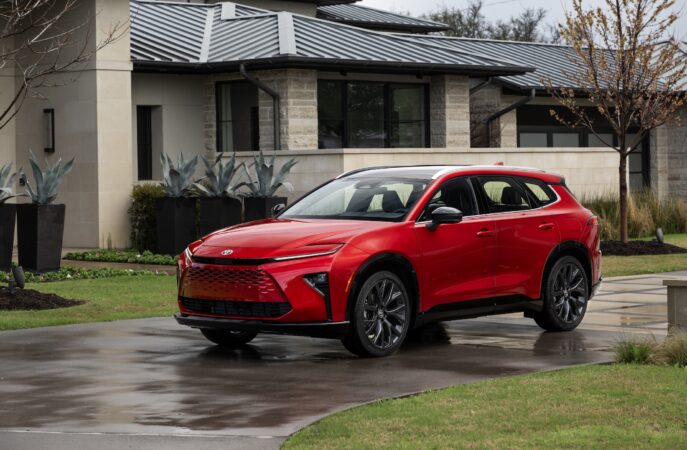
    The pretty interior of the 2026 Toyota Crown Signia turns the comfort level to 11.

    Driver’s Seat: Comfort is definitely the name of the game behind the wheel of the Crown Signia. Convenience as well. This is where I realize the Crown Signia is a nice replacement for the Venza; that too offered luxury and comfort closer to Lexus’ standard than Toyota’s.

    No ground is really broken here, as the controls match most of Toyota crossovers and cars. The Outback wins this category.

    Friends and stuff: The rear seat provides comfort in both cushion quality and spaciousness. Legroom, headroom, and foot room are all generous. The middle seat is not too bad as the floor hump sits low and wide, and the console doesn’t intrude too much.

    Cargo space is 24.8 or 66.1 cubic feet, a growth spurt over the Venza that may help improve sales. But it’s still no match for the Outback’s 80 cubes.

    In and out: The Crown Signia is at a perfect height for people of almost any age. No real climb or limbo required.

    Play some tunes: A lone volume button is the only nod to the Before Times from the stereo control people. The screen is big and easy to follow.

    Sound from the system is clear and aimed correctly, an A- to an A. Advantage, Crown Signia.

    Keeping warm and cool: Toggles control all the features, and this functions nicely. Except for the seat heaters and coolers, which sit above a different toggle, so that confuses until you get used to it. It keeps us out of the touchscreen, at least. A small screen tells you what’s blowing where and how hard.

    An annoying feature of the Crown Signia HVAC (something I noticed in the 4Runner hybrid as well) is the AC turns itself off with each restart. So I’d be blasting the fan on myself after crossing a 90-degree parking lot and wondering why I never got cool. I’m sure it’s easy to get used to but also, why? At least it’s not a touchscreen control, which would certainly malfunction when the interior exceeds 120 degrees.

    Fuel economy: I averaged close to 36 mpg during my week of testing, much nicer than the Outback turbo (as can be expected). Strong win for the Crown Signia.

    Where it’s built: Aichi, Japan

    How it’s built: Consumer Reports gives the Crown Signia a four out of five for reliability.

    In the end: The Crown Signia carries the torch of the Venza: Fun may not be part of the vocabulary, but it sure is a nice, efficient ride. The Subaru is also a nice ride, but I’m not sure 0.8 seconds off the 60-mph run-up is worth another 10 cents a mile forever.

    And at 50 grand each, a Thomas Crown-worthy heist may be needed to help pay either of these vehicles off.


  • Bill to raise minimum wage to $25 an hour will be introduced in Senate

    Bill to raise minimum wage to $25 an hour will be introduced in Senate

    The minimum wage would be raised to $25 an hour under a new bill to be introduced by Sen. Chris Murphy (D., Conn.) on Thursday, in a bid to enthuse the working-class voters who have abandoned the Democratic Party.

    The legislation, dubbed the Living Wage for All Act, has a companion bill already introduced in the House.

    Murphy, whose name is frequently floated as a potential 2028 presidential candidate, said he is pushing his party to take more aggressive stances on affordability, following its punishing defeats in the 2024 elections.

    “Democrats need to offer solutions that are as big as the problems people are facing,” Murphy said in an interview. “The way you solve people’s basic economic problem — not having enough money to pay the bills — is by making a minimum wage be a living wage.”

    The bill would incrementally increase the minimum wage from its current rate of $7.25, with the first jump to $12 an hour in the first year of enactment. Major corporations would have six years to work up to a $25 minimum wage, while smaller employers would have a 13-year runway. The legislation would also do away with subminimum wages for tipped workers, such as restaurant servers, youth workers and workers with disabilities. Nearly half of the American workforce makes less than $25 an hour.

    The legislation is unlikely to get very far in this Congress, with Republicans in control of both chambers, but the $25-an-hour push is one of the more significant proposals aimed at boosting Americans’ wages, which have been rising but not as quickly as inflation, especially in recent months.

    Some 34 states, territories or districts, including Washington, D.C., have increased the minimum wage above the federal minimum, according to the National Conference of State Legislatures.

    Saru Jayaraman, president of One Fair Wage, a left-leaning advocacy group that worked with Murphy on the bill, credited support for a $25 minimum wage for primary wins in competitive races in Illinois, New Jersey, Pennsylvania, and California. She said she has heard support for the proposal from liberal and MAGA voters alike.

    The $25 figure was drawn from calculations by MIT that analyzed a living wage, which takes into account costs such as food, childcare, healthcare, housing and transportation.

    Democrats have long advocated raising the federal minimum wage from its current $7.25, but Murphy’s bill would set the highest floor of any proposal in the Senate. Rep. Delia C. Ramirez (D., Ill.) is leading a House version of the bill, which she introduced earlier this year with wide support across the Democratic caucus. A similar bill by Sen. Bernie Sanders (Ind., Vt.) would set a $17 minimum wage and has 33 Democratic senators as cosponsors, including Murphy.

    Murphy’s bill also has the backing of Democratic Sens. Richard Blumenthal (Connecticut), Andy Kim (New Jersey), and Ron Wyden (Oregon).

    Congress has not raised the federal minimum wage since 2009, though only about 1% of workers make $7.25 an hour or less.

    Business groups have often campaigned against raising the minimum wage, suggesting that the economy works best when employers are responsive to market forces.

    A higher federal minimum wage could create “really damaging consequences,” including businesses closing or cutting jobs, especially in rural areas where the cost of living is low, said Ryan Bourne, an economist at the libertarian Cato Institute.

    He said the rising average wage shows that state and local governments are already responding to market changes.

    “I think it makes much more sense for it to be set at a local level where policymakers have a better sense of the local industries,” Bourne said.

    Murphy called those kinds of arguments a “red herring,” saying cities that have already established a $15 minimum wage have not seen major adverse effects. He said the staggered adoption would help assuage employers’ concerns.

    “The business community cried murder, and the job losses they predicted did not materialize,” Murphy said.

    Alex Jacquez, the chief of policy and advocacy at the left-leaning Groundwork Collaborative and a former Sanders aide, helped craft a $15 minimum wage proposal that Democrats attempted to include in their climate and economic policy bill in 2021. He said the surge in wage growth as the economy recovered from the coronavirus pandemic has led more liberal policymakers to believe that a $15 minimum wage would now be too low.

    “It’s also an organizing tool,” he said. “It’s something big and bold that people can hang on to and run on and be able to see the Democrats are fighting for them.”

    So far, most congressional action has tried to address affordability through tax cuts, including the child tax credit, covid-era Affordable Care Act credits or the numerous tax cuts in Republicans’ One Big Beautiful Bill.

    While Murphy supports programs such as the child tax credits and student loan forgiveness, he said tax cuts have proved insufficient in motivating voters.

    “People don’t want to be written a check. People want to work for pay,” Murphy said. “[Tax breaks] are designed to compensate for a rigged system. Why don’t we just unrig the system?”

  • Rep. Tom Kean, missing for months, is back home in New Jersey

    Rep. Tom Kean, missing for months, is back home in New Jersey

    Rep. Thomas Kean Jr., who has been missing from Washington for nearly four months with little explanation, is back home in New Jersey.

    He could be seen from the street Wednesday evening, standing in a brightly lit front room of his Westfield home just before 8:45 p.m.

    “It’s good to see you,” he said after a reporter for the New York Times rang his doorbell. He was wearing a dark suit and a red tie. “I’ll talk to you next week,” he said. “Thank you.”

    Kean’s wife, Rhonda, stood in the background, smiling pleasantly. He declined additional comment and closed the door.

    Aides had said that Kean, 57, was being treated for a health condition and was expected to fully recover, but had offered no additional details as their boss missed more than 100 floor votes since the middle of March.

    Kean, a Republican, is running for a third term in November in one of the country’s most competitive midterm races. His absence from the campaign trail, though, had left even some of his biggest Republican boosters frustrated.

    A spokesperson for Kean, Harrison Neely, said last week that Kean was expected to return to Washington on June 30. He declined to say how long Kean had been home or to offer any additional details about the representative’s long absence.

    “He will be fully transparent on the 30th,” Neely wrote in a text message.

    Earlier this month, Kean, in absentia, locked in the Republican nomination for his 7th District seat; he was running unopposed. Democrats selected Rebecca Bennett, 39, a former Navy helicopter pilot.

    The Democratic Party considers Kean’s seat one of its best pickup opportunities as it seeks to tip the balance of power in Washington and had been aggressively targeting the race long before he began missing votes in Washington.

    Kean was last spotted on Capitol Hill on March 5. He spoke that day during a committee hearing and cast a crucial “yea” vote in support of funding President Donald Trump’s immigration crackdown and moving to end a government shutdown.

    Then, he seemingly vanished. Neighbors in Westfield said there had been no obvious sign of Kean for months, and the family’s vacation house in Bay Head, N.J., appeared shuttered the weekend before Memorial Day. Year-round residents of Fishers Island, N.Y., where the Kean family owns a large estate, said they had not seen him, either.

    Kean’s aides repeatedly insisted that he had no plans to abandon his reelection effort and that he was expected to return to work “soon,” even as they refused to discuss the medical condition that had sidelined him.

    In May, after a debate between the four Democrats vying to run against him, Dan Scharfenberger, Kean’s chief of staff, offered a cryptic explanation for why there had been no sightings of the representative in Washington or in his New Jersey district. “There’s no cameras where Tom is,” he said, and did not elaborate.

    During his absence, Kean has nonetheless bought and sold stock, introduced remarks into the Congressional Record and urged House colleagues from afar to oppose Ireland’s effort to limit trade with Israel.

    A handful of Republican leaders in the 7th District’s six counties reported getting calls from Kean. And his office has released two statements attributed to Kean, including one on primary day, June 2, when he made no public appearances.

    “Right now I am focused on my recovery and under the advice of healthcare professionals,” the June 2 statement said.

    The statement indicated that he planned to be “completely transparent as to the nature of my medical condition.”

    “I understand the need for transparency on this matter,” he wrote, “and I look forward to sharing my experience with the public.”

    This article originally appeared in The New York Times.

  • Judge throws out federal suit against 4 N.J. ‘sanctuary’ cities

    Judge throws out federal suit against 4 N.J. ‘sanctuary’ cities

    A federal judge on Wednesday tossed out a lawsuit filed by the Justice Department that accused four New Jersey cities of having “sanctuary” policies that shield immigrants in the U.S. illegally from federal immigration enforcement.

    Justice Department lawyers had sued the mayors and City Council members of Newark, Jersey City, Hoboken, and Paterson last month as tensions were rising between local governments in the Garden State and immigration authorities.

    The complaint accused local officials of thwarting federal immigration enforcement by impeding access to immigrants in local custody, restricting the ability of local officers to turn over immigrants to agents, and barring “willing local officers from providing mission-critical information to federal immigration authorities.”

    But Judge Evelyn Padin, who was appointed by President Joe Biden, ruled that the federal lawsuit had “a fundamental flaw” because it challenged only the cities’ policies and did not take into account an order from the state attorney general’s office, known as the immigrant trust directive, that dictates how local law enforcement officers must engage with immigration authorities.

    That 2008 directive, which has been upheld by previous court rulings, was not raised in the lawsuit, Padin wrote. That means, as a legal matter, the federal government lacks the standing to file the suit.

    The judge dismissed the lawsuit without prejudice, meaning the Justice Department could refile it. A spokesperson for the department did not immediately return a request for comment.

    The ruling came as protesters have swarmed Delaney Hall, an immigration facility in Newark, with nearly daily demonstrations.

    Local officials praised Padin’s ruling, saying the immigrant trust directive was one key to maintaining good relationships between local police agencies and immigrants without permanent legal status. Police departments depend on cooperation in immigrant neighborhoods to stop crime.

    Amol Sinha, the executive director for the American Civil Liberties Union of New Jersey, wrote in a statement that the sanctuary policies “help people access public services” without fear of being detained, separated from their families and perhaps deported.

    “Public safety is strengthened when people can report crimes, and public health is improved when people can seek medical care,” he said.

    This article originally appeared in The New York Times.

  • Reflecting Pool’s algae bloom and peeling paint reflect Trump’s treatment of U.S. history

    Reflecting Pool’s algae bloom and peeling paint reflect Trump’s treatment of U.S. history

    President Donald Trump’s latest D.C. renovation, painting the Lincoln Memorial Reflecting Pool “American Flag Blue,” to celebrate the country’s 250th birthday has instead turned the symbolic heart of the National Mall Algae Bloom Green. The paint is peeling, and the water is a swampy muck.

    Trump has asserted, without evidence or corroboration, that vandals cut a 250-foot gash into the new lining and poured corrosive chemicals into the basin. Yet, the explanation for what has happened appears to be more mundane and predictable than the cloak-and-dagger sabotage Trump has suggested. Rosalina Stancheva Christova, an aquatic ecologist from George Mason University’s Algal Ecology Laboratory, sampled the water and found an ordinary, non-toxic bloom — the kind any ordinary swimming pool owner has fought in their own backyard.

    And yet, the problem with the renovation runs far deeper than all of this. Trump’s painting project reflects a fundamental lack of understanding of the original purpose and vision for the reflecting pool. For more than a century, the basin has functioned as a civic mirror, a place where visitors could see themselves reflected alongside the monuments that commemorate the nation’s story. Today that possibility is gone.

    The roots of the reflecting pool lie in the “City Beautiful” movement of the late 19th and early 20th centuries. The Gilded Age and decades of laissez-faire growth had left many of America’s cities in disrepair, full of tenement districts, boss-run wards and blight.

    American architects Daniel Burnham, Charles McKim, Frederick Law Olmsted Jr. and Augustus Saint-Gaudens wanted to change that, and they were inspired by European urban renewal projects like Baron Georges-Eugene Haussmann’s redesign of Paris. In 1893, at the World’s Columbian Exposition in Chicago, they explored the principles that spawned their movement to reimagine American cities — demonstrating how monumental architecture and carefully designed landscapes could express civic ideals.

    Their experience in Chicago helped to convince the men that beautiful, orderly, civic space could repair the disordered industrial cities the Gilded Age had left them. Their vision reflected a broader Progressive Era faith that urban renewal and public investment could address the social problems of industrial America while restoring civic pride through monumental construction projects designed to project an image of a robust and resilient nation.

    In 1903, all four architects became members of the Senate Park Commission (McMillan Commission) whose mandate was to replace decades of haphazard development in Washington D.C. with a coherent civic plan.

    They set their sights on the National Mall, which was, at that time, a disunified Victorian garden punctuated by marshland with a public green transected by a railroad depot and tracks.

    The commission’s 1901 report complained that the mall “has been diverted from its original purpose and cut into fragments, each portion receiving a separate and individual informal treatment, thus invading what was a single composition.” Their redesign plans aimed to unify the space into a legible and cohesive civic story and the reflecting pool eventually became the spine for that narrative.

    Over the next two decades, the McMillan Plan gradually reshaped the mall.

    Architect Henry Bacon was charged with designing the Lincoln Memorial. In 1911, he completed his first sketches, and he incorporated the commission’s vision by extending the mall’s central axis westward and anchoring it with the reflecting pool. Bacon imagined the pool as a mirror reflection, where visitors could see both the Washington Monument and the Lincoln Memorial. As a result, Bacon created a linear and legible connection between the man who presided over the creation of the republic at one end and the man who led the nation through the war for its preservation at the other.

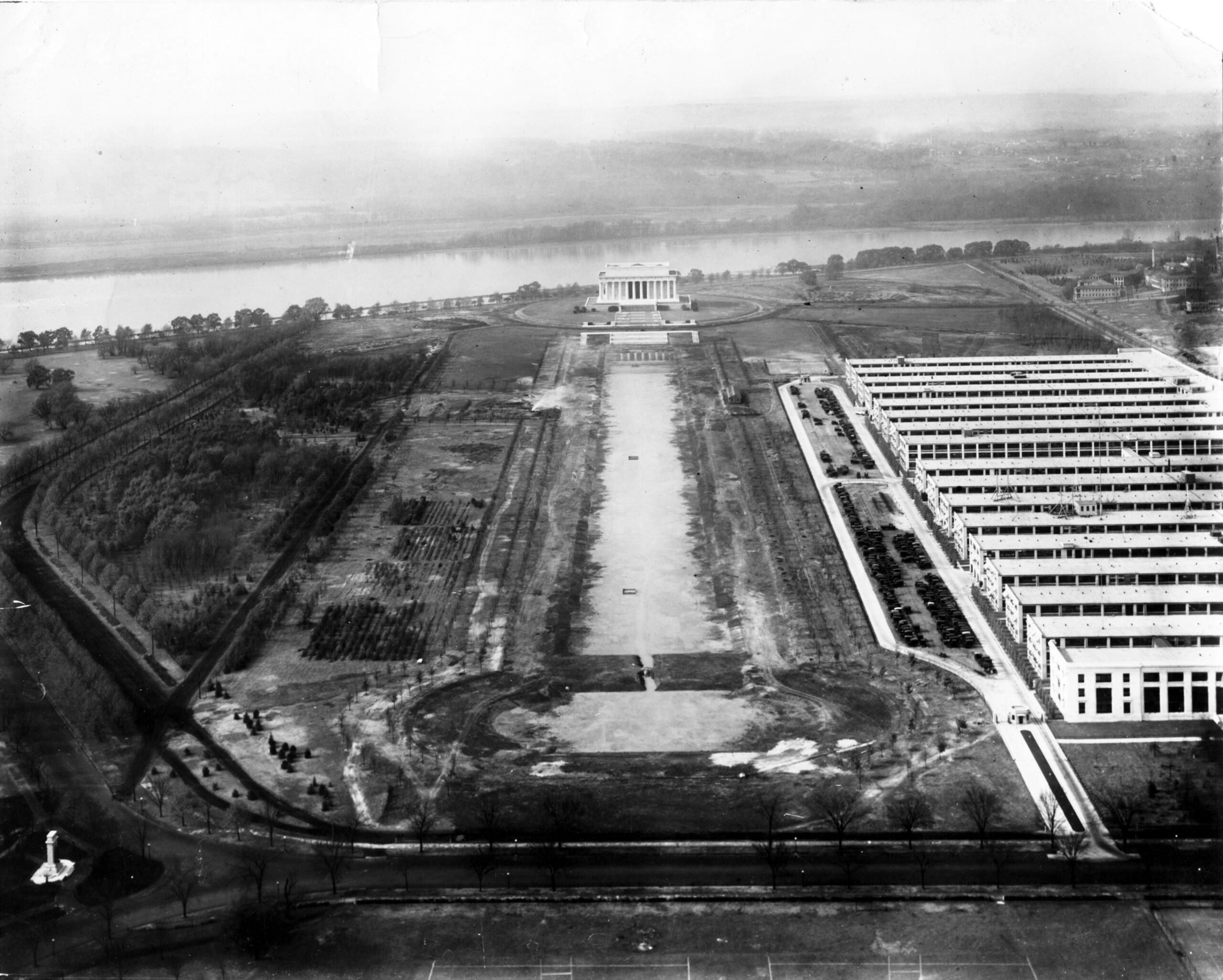
    The future Reflecting Pool site facing west toward the Lincoln memorial in 1921.

    In 1919, the Army Corps of Engineers began excavating a former Potomac marshland known as the Kidwell Flats, to enable construction of the pool. The project took four years and was still under construction at the time of the Lincoln Memorial’s dedication in 1922.

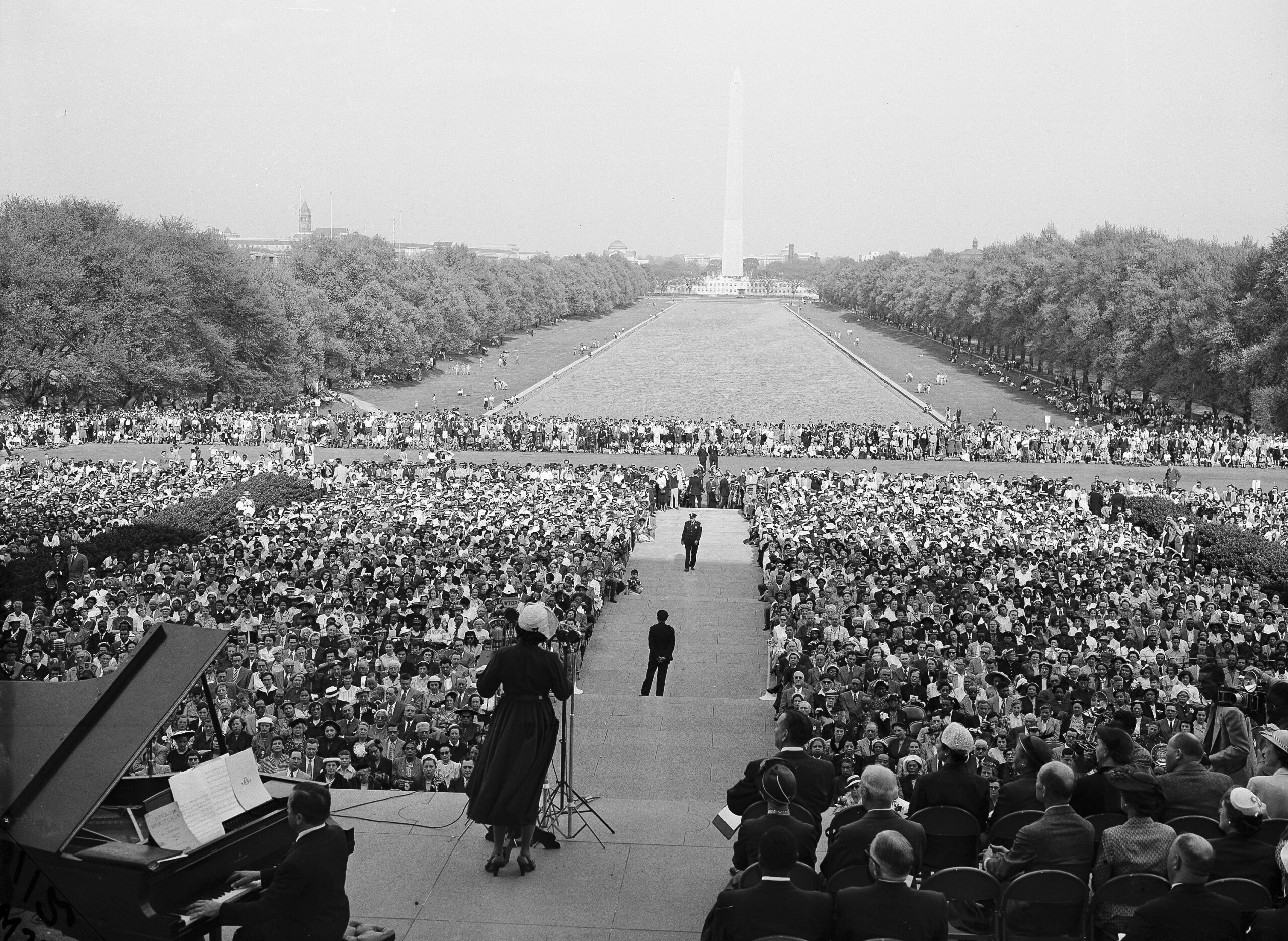
    The pool quickly became a symbolically rich venue for crucial moments in U.S. history. In 1939 the African American contralto Marian Anderson sang from the memorial steps to a crowd of approximately 75,000 people massed along the pool after the Daughters of the American Revolution refused to let her perform at Constitution Hall.

    Made By History sponsors. FOR USE ON MADE BY HISTORY STORIES ONLY.

    Twenty-four years later, a quarter million people lined both banks of the pool to hear the Reverend Dr. Martin Luther King Jr. proclaim his dream, to challenge the nation to complete the unfinished journey toward racial equality and achieve a meaningful resolution of the issues that had nearly destroyed the nation.

    Marian Anderson performs from the steps of the Lincoln Memorial in Washington on April 20, 1952, in this image showing the Reflecting Pool and the Washington Monument. . Anderson’s accompanist is Franz Rupp, lower left, at piano. (AP Photo/Henry Griffin, File)

    The pool reflected those crowds, those moments and those movements only while they occupied the space. Each reflection vanished and was replaced by another individual, another gathering, another episode in the nation’s story.

    Yet, despite its symbolic significance and its success as a site for large scale civic dialogue, from a physical standpoint, the pool faced problems almost from day one. At issue was the soggy foundation created by the choice of marshlands for the reflecting pool’s site.

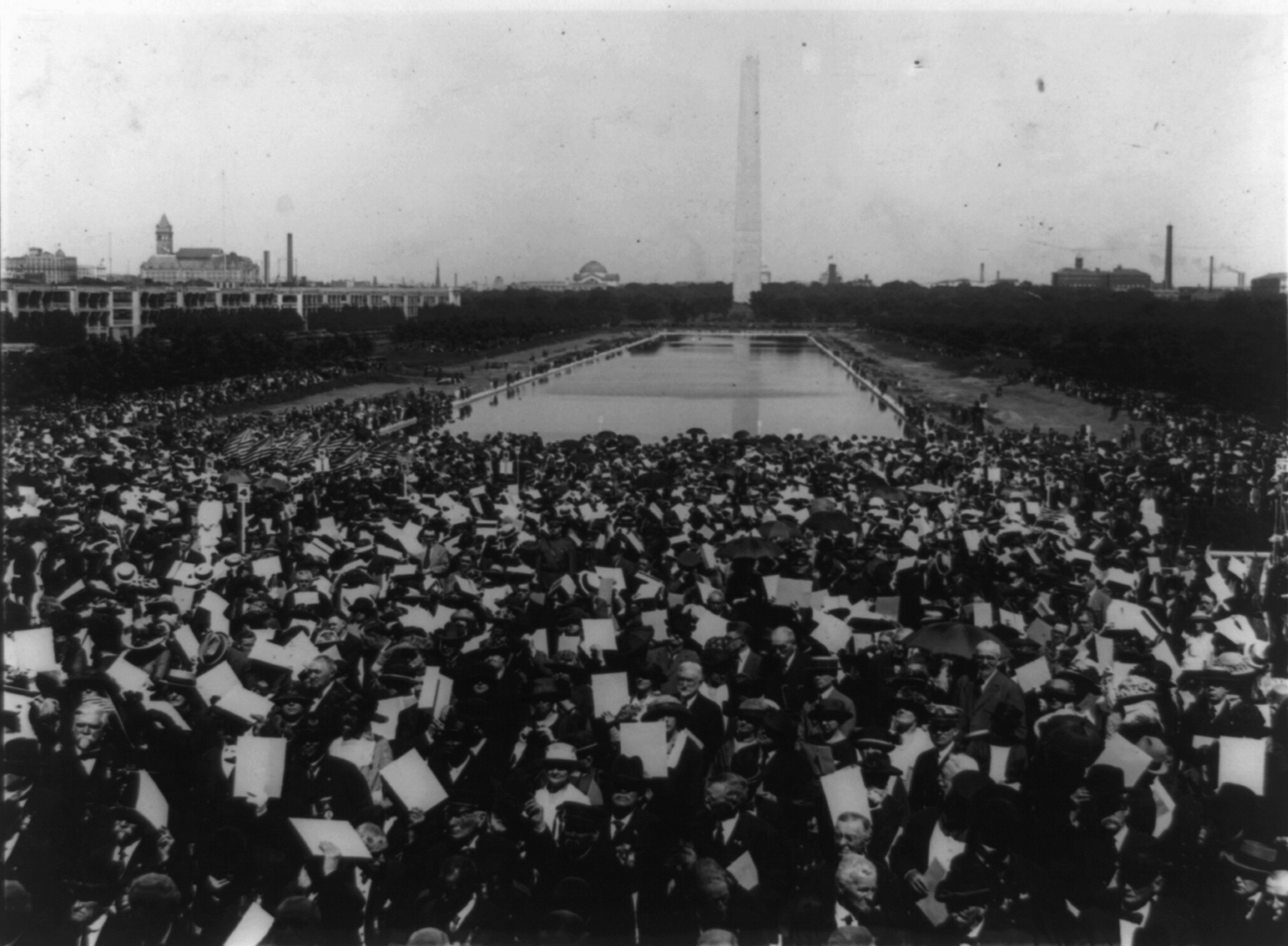
    This 1922 photo was taken at the dedication of the Lincoln Memorial. Nearly from the start, the Reflecting Pool faced structural problems.

    During its construction, the Army Corps of Engineers had attempted to mitigate the potential problem with concrete support beams and a drainage system undergirding the pool. But almost immediately these mitigation systems proved inadequate. The result was cracks and leaks that have plagued the pool for its entire lifetime.

    Numerous administrations have tried to solve the issues. In 1986, the Reagan Administration drained the pool and poured an entirely new concrete foundation. Even this did not solve the problem. The pool continued to leak nearly 30 million gallons per year.

    In 2011, Barack Obama’s administration undertook another round of renovations. While matters improved, the pool still leaks 16 million gallons of water per year.

    The current issue with the reflecting pool and Trump’s response to it, however, go well beyond structural inadequacies and sabotage theories. They reflect a lack of understanding about the pool’s purpose.

    In April, Trump posted a doctored image of himself and his officials in swimsuits lounging in the reflecting pool, a woman in a bikini reclining in the water beside them. But the pool is a mere 18 inches deep, not swimming pool/ lounging depth and Bacon never intended anyone to use it that way. He built a basin you stand beside because its work happens in the mind of the person at the rim. Trump’s artificial intelligence revisionism gets the object exactly wrong — an instrument of contemplation made over into the feature of a tacky resort.

    Trump directed the Department of the Interior to repaint the pool in time for the nation’s 250th anniversary and used an emergency exemption to award a no-bid contract to a company that specialized in painting swimming pools. The result essentially took an area that was a swamp, before its transformation into a civic mirror, and returned it to a swamp. An algae-greened surface now sits where the reflection used to be, and the connection the pool held, the citizen to the monuments, individual to the national story, has been severed.

    When the pool functions as a mirror surface, it is a monument that embodies an evolving republic rather than a finished one. Trump’s swamp has transformed it into a static, murky image that defies the idea of a nation moving forward. As this history makes clear, the health of the republic depends on its ability to see itself clearly, and Trump’s algae-infested reflecting pool is a symbolic reflection of a nation and a history he and his administration continue to try to obscure from clear view.

    Susan Deily-Swearingen holds a Ph.D. in history from the University of New Hampshire, and has taught at multiple universities since 2015. She has a forthcoming book about the persistent legacies of the U.S. Civil War in contemporary politics and society, and frequently writes about historical memory and the echoes of the past in the modern world.

    Made by History takes readers beyond the headlines with articles written and edited by professional historians. Opinions expressed do not necessarily reflect the views of The Inquirer.

  • 🎠 Ocean City nears decision time | Down the Shore

    🎠 Ocean City nears decision time | Down the Shore

    It may finally be decision time in Ocean City for the site of the former Wonderland Pier at 600 Boardwalk. It’s been nearly two years since the beloved amusement park owned by Mayor Jay Gillian shut down.

    Eustace Mita, the developer who proposed a luxury hotel with a seashore theme anchored by Gillian’s old carousel and Ferris wheel and maybe a kiddie ride or two, told me he’s in the dark about what will happen. The Icona developer has turned his attention to other things lately, he says, like building a Soul Sanctuary Catholic retreat on the grounds of a once-notorious abbey in County Cavan, Ireland.

    Closer to home, Ocean City’s City Council is scheduled to vote Thursday evening on whether to designate the Wonderland site is in need of rehabilitation, a designation Mita has been seeking that would then allow a negotiation with Council over zoning and other matters (the Boardwalk is not zoned for a hotel).

    The council hired a planner to come up with a report, which pretty much said what an earlier report said: that there is justification for such a designation “to prevent further underutilization and deterioration of the Property and to encourage redevelopment of the Property.”

    The city’s planning board in January deadlocked on a recommendation and punted the topic back to Council.

    There are a lot of strong feelings about this in town, though the Save Wonderland movement seems to have resigned itself to the idea that an amusement park is probably no longer in the site’s future.

    Council is expecting a big crowd and has moved the 6 p.m. meeting to the City’s Music Pier. Stay tuned.

    📮 Is it time for Ocean City to move ahead with the hotel plan at 600 Boardwalk? Is it time for another idea? Let me know what you think by replying to this email.

    Have ideas or news tips about the Shore or this newsletter? Send them to me here.

    🌤️ It’s quite lovely out there. Hope it lasts. The recent spate of land breeze days that left the beach a bit suffocating and ocean water temps plunging was not that great.

    — Amy S. Rosenberg (Find me at @amysrosenberg. 📷 Follow me on Insta at @amysrosenberg. 📧 Email me here.)

    If someone forwarded you this email, sign up for free here.

    Shore talk

    🚲 New Jersey says it is now taking appointments for people to get their e-bikes registered, as a new law requires (though not of Pennsylvanians). Read more about the confusing law here.

    🚨 An Atlantic City police officer who was shot in the femoral artery, then saved during surgery at the city’s emergency room, was released from the hospital as hundreds gathered.

    👰‍♀️ Taylor Swift may have other ideas than Sea Isle City for Jason and Kylie Kelce over July 4 weekend.

    🐢 Diamondback terrapins are trying to find suitable nesting spots and are crossing busy Shore roads, especially causeways and blocks near the bay. Please watch out for them!

    🤍 A plane took off from Ocean City’s airport and crashed on its way back to Maryland, killing its three occupants.

    👑 Egg Harbor Township wrestling alum and Preps Pizza employee Kylie Wright was crowned Miss New Jersey.

    🏀 Margate’s favorite basketball superstar, Jalen Brunson, celebrated Father’s Day with brunch at Steve & Cookie’s. His wife, Ali Marks Brunson, is teaching (sold-out) workout classes in Ocean City.

    What to eat/What to do

    🎡 Go to a pretend Shore Boardwalk at Six Flags.

    🏁 Watch Atlantic City’s offshore powerboat high-speed Grand Prix.

    📖 Read Brother Epistles, by Shore resident Shanda McManus, a memoir of her brother’s Christmas Eve 1992 shooting death in Philly. McManus talks here about holding joy and grief on the same page.

    🫐 Savor South Jersey’s amazing blueberries here.

    ✈️ Fly direct from Atlantic City to Vero Beach on newly announced flights from Breeze Airways.

    🍗 Check out the new New Jersey Black Heritage Trail marker commemorating Chicken Bone Beach in Atlantic City, and the city’s new Black Cultural Heritage Tour.

    🏖️ Spend a perfect weekend on 7 Mile Island.

    🇺🇸 Indulge in a Mino’s Bakery strawberry shortcake (red, white) and the iconic blueberry pie (blue) at Ventnor’s 7311 and get ready for fireworks.

    Shore snapshot

    From left: Lifeguards Kyle Satt, Gavin Mogck, and Paul Connor patrol the beach in rainy and foggy conditions on Memorial Day 2026 in Cape May.

    🧠 Trivia time

    The pizza magnate whose family owns half of Ocean Casino is now buying the entire pie, and will be sole owner of one of Atlantic City’s most successful casinos.

    Which pizza company is it?

    A. Lorenzo’s

    B. Domino’s

    C. Tony’s Baltimore Grill

    D. Little Caesars

    If you think you know the answer, click on this story to find out.

    Ask Down the Shore: Avoiding traffic

    A reader wrote: “Friday used to be the heavy traffic day from Philadelphia to the shore on the Expressway. Now the congestion seems to start as early as noon on Thursday and continues straight through Friday night.”

    We turned to our Shore Line group chat (join us here!) and asked: Which is the best window to drive to the Shore?

    Here are some replies:

    • I go down, believe best time is at 5:30-6 am or after 7 on Friday, still light out at both times, don’t like to drive when dark.
    • Here’s my solution to avoiding heavy traffic to and from the shore. Go down on Wednesday before MDW and come back on Wednesday after LDW (it helps to be retired!).
    • I work in Center City so I leave after work on Friday’s typically. Hit the road around 5:30, use Ben Franklin. Then on the way to the AC, 42 is a parking lot! Anymore, I’m thinking early morning Thursday or Friday before 8 a.m.? Just a guess.
    • No window is better than another — I gave up and moved to the shore.

    Have another Shore dilemma? Or an opinion on traffic? Let us know what you think by replying to this email.

    Your Shore memory

    I’ve been talking to a lot of people about changes in Sea Isle City for an upcoming story, and Diana Dougherty shared these reminiscences of the old days:

    My husband was an altar boy at St. Joe’s. When we got married, we started renting for a couple weeks every year with in-laws, wonderful times, low key restaurants, crowds not as bad, felt safe, no issue with teenagers. Now it’s all changed in maybe last 20-25 years. We finally build our own house in 1985. It looks like a tiny house to what is now. Miss my beloved place, but will never sell and just redid inside.

    Send us your Shore memory in 200 words! Tell us how the Shore taps into something deep for you, and we will publish them in this space during the summer.


    By submitting your written, visual, and/or audio contributions, you agree to The Inquirer’s Terms of Use, including the grant of rights in Section 10.

  • ‘Don’t cut these funds, Gov. Sherrill’ | Inquirer South Jersey

    ‘Don’t cut these funds, Gov. Sherrill’ | Inquirer South Jersey

    Good morning, South Jersey. The bulk of the rain seems to be over this week, but there’s a chance of some more showers.

    Hispanic Women’s Resource Centers face steep cuts under Gov. Mikie Sherrill’s proposed budget.

    And Medford passed an ordinance to prohibit data centers within its limits.

    Plus, Pennsauken’s Yaxel Lendeborg was chosen in the first round of the NBA draft, and more news of the day.

    — Taylor Allen (southjersey@inquirer.com)

    If someone forwarded you this email, sign up for free here.

    Pleading for state funding

    Hispanic Women’s Resource Centers were established in 1991 to address the wage gap for Latinas in New Jersey, one of the states with the biggest gap for Latina workers.

    Under Gov. Mikie Sherrill’s proposed budget, the statewide initiative could see its funding decrease by 80%.

    These centers help women like Consensa Francisca Silva Silva who was able to obtain a work permit, make a down payment for an apartment, and start working thanks to the assistance she was able to receive for one of these centers in Camden.

    “It was very hard to come here without knowing anyone, and it was really hard because at first I couldn’t find any work,” Silva said about her experience when she first arrived from Costa Rica.

    Silva and other supporters worry immigrant women like her won’t get the support they need if the cuts go through.

    The Inquirer’s Aliya Schneider has the latest information on the budget process.

    Medford bans data centers

    Medford sent a clear message this week: No data centers here. Its council adopted the ordinance to prohibit them, despite not receiving any formal applications for a center.

    “These are extra precautions to ensure that we don’t move forward in a direction that we can’t come back from until we know full well what the impacts of data centers will be,” Medford Mayor Michael Czyzyk said.

    Council reserves the right to amend the ordinance to permit data centers in the future.

    Medford is the latest South Jersey community to resist data centers, including Cherry Hill.

    Reporter Lacey Latch has the story.

    What to know today

    • The New Jersey Supreme Court on Wednesday ordered prosecutors to fully disclose how police used facial recognition technology in a murder case, New Jersey Monitor reports.
    • A body of a swimmer who went missing last month in Ocean County has been recovered, according to the police.
    • The federal government ordered Chemours Co. to pay $450 million over illegal discharges of synthetic “forever chemicals” known as PFAS. According to the Associate Press, the company will pay penalties and provide mitigation efforts to prevent these types of discharges in North Carolina, West Virginia, and New Jersey.
    • Camden might get a new rooftop nightclub along the waterfront. The Club 9 SkyLounge is proposed for the rooftop deck of the Hinson Parking Garage on Delaware Avenue.
    • Yaxel Lendeborg, a 23-year-old forward who played for Pennsauken High School, was chosen by the Golden State Warriors in the first round of the NBA draft.
    • Moorestown Township established new rules for e-bikes, electric scooters, dirt bikes, and other motor-assisted devices. One of those rules is that they’re generally banned from sidewalks. The new ordinances takes effect on July 19.

    🗓️ The best things to do this week

    SoccerFest26 at the Waterfront: Residents and tourists will be able to celebrate the World Cup with match screenings, international food, soccer-based youth programming, live music, and various craft vendors. ⏰ Thursday, June 25-Saturday, June 27, various times 💵 Pay-as-you-go/RSVP required 📍 Wiggins Park, 2 Riverside Dr., Camden

    🏳️‍🌈 Gloucester Township’s LGBTQ+ Pride Festival: The three-day Pride celebration will feature local vendors, film screenings, art, wellness sessions, and drag shows. ⏰ Friday, June 26-Sunday, June 28, various times throughout the weekend 💵 Pay-as-you-go 📍 Harmony Hall, 3 S. Black Horse Pike, Blackwood

    🇺🇸 Freedom Fest: A Star Spangled Spectacular: The festival will include live performances, fireworks, food trucks, and more. ⏰ Saturday, June 27, 3 p.m. 💵 Pay-as-you-go 📍 Delran Community Park, 12 Hardford Rd., Delran

    See more event listings here.

    🧠 Trivia time

    The Phillies drafted Logan Dawson last year. He grew up locally in Voorhees and is a lifelong fan of the team. Who was his favorite player growing up?

    A) Ryan Howard

    B) Chase Utley

    C) Jimmy Rollins

    D) Cole Hamels

    Think you know? Check your answer.

    What we’re…

    🚲 Double-checking: The rules and restrictions about e-bikes in New Jersey.

    ⚽ Exploring: The different games at the PATCO Soccer Stop for the World Cup.

    🌻 Wishing: It were sunflower picking season at Dalton Farms in Swedesboro.

    🏡 On the market

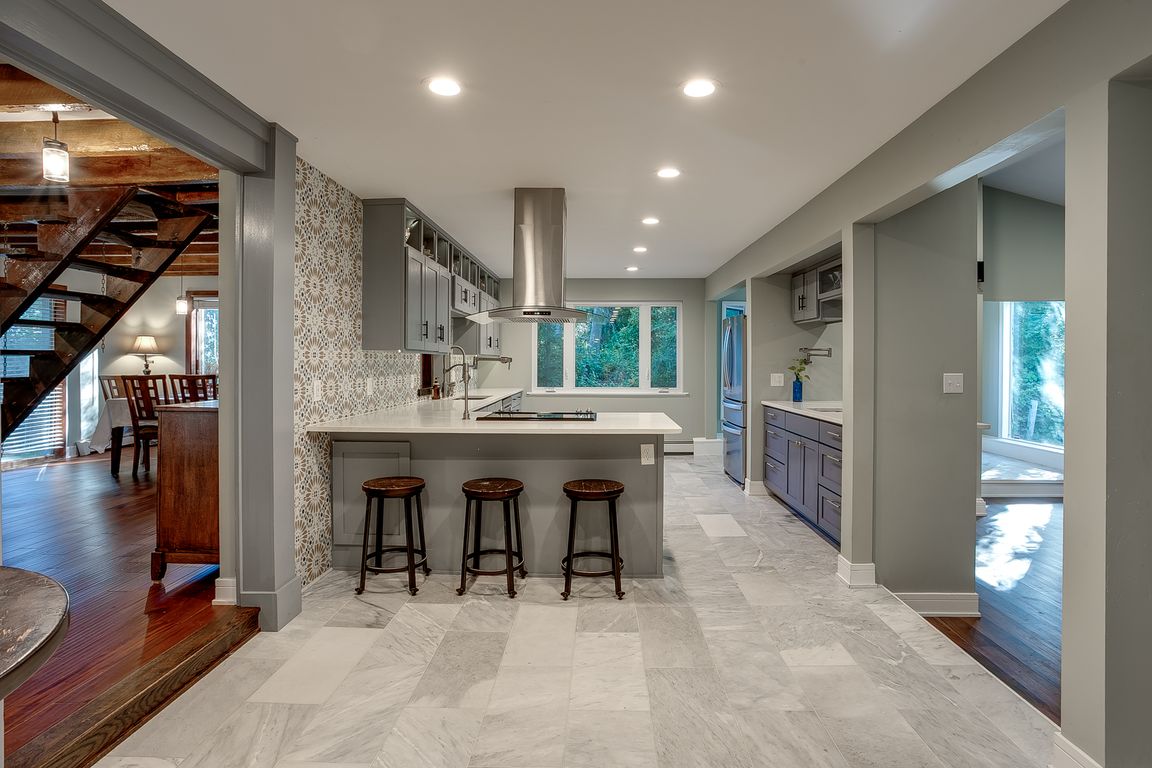
    A Mount Laurel Colonial with modern updates and an expansive backyard

    The four-bedroom, three-bathroom home has Colonial charm with the original deed dating back to 1842. It has a classic farmhouse exterior with modern amenities inside such as an updated kitchen. The home showcases exposed wood beams and hardwood flooring. There’s also an abundance of space including two large great rooms, and an expansive backyard with mature trees and patio areas.

    See more photos of the property here.

    Price: 589,999 | Size: 2,703 SF | Acreage: 1.10

    And that is all I have for you today. I’ll be back in your inbox tomorrow morning. 👋🏽

    By submitting your written, visual, and/or audio contributions, you agree to The Inquirer’s Terms of Use, including the grant of rights in Section 10.

  • Developer sued in Northern Liberties | Real Estate Newsletter

    Developer sued in Northern Liberties | Real Estate Newsletter

    Last month, developer Brian Zoubek appeared with New Jersey Gov. Mikie Sherrill to cut the ribbon on a group of luxury townhouses he built in Atlantic City.

    But over in Northern Liberties, a group of Philly homeowners say Zoubek’s construction of apartments next to their homes damaged the houses. One family even had to move out because the city said their home had become unsafe.

    Neighbors on Brown Street have sued Zoubek, who has faced lawsuits before over construction projects.

    Keep scrolling for that story and more in this week’s edition:

    — Michaelle Bond

    If someone forwarded you this email, sign up for free here.

    Cracks, slants, and leaks

    Philadelphia real estate developer Brian Emmons and his wife, Robyn, want to move to South Jersey to be closer to family. But they can’t sell their $900,000 rowhouse in Northern Liberties in its current condition.

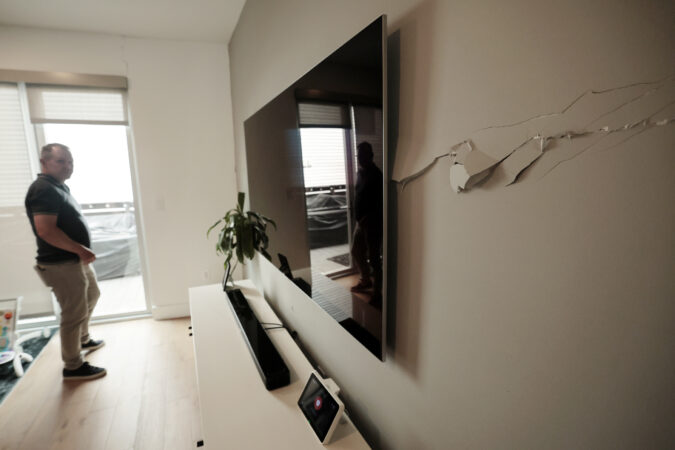
    They’ve got cracks all over their home. And they point to another developer as the reason why.

    The Emmonses and neighbors on Brown Street have sued Brian Zoubek, saying that his redevelopment of Philly’s oldest surviving public school building into apartments damaged their homes. They say Zoubek dug too deep while constructing a four-story addition next to their houses and compromised their foundations.

    Homeowners now deal with:

    • cracks in walls
    • slanting floors
    • leaks in the shared garage
    • windows and doors residents struggle to open

    Zoubek has been in the construction business in the Philly area for more than 10 years. He said he is “actively defending” the claims against him.

    Keep reading to learn more about what led to this legal battle.

    Reviving a public housing site

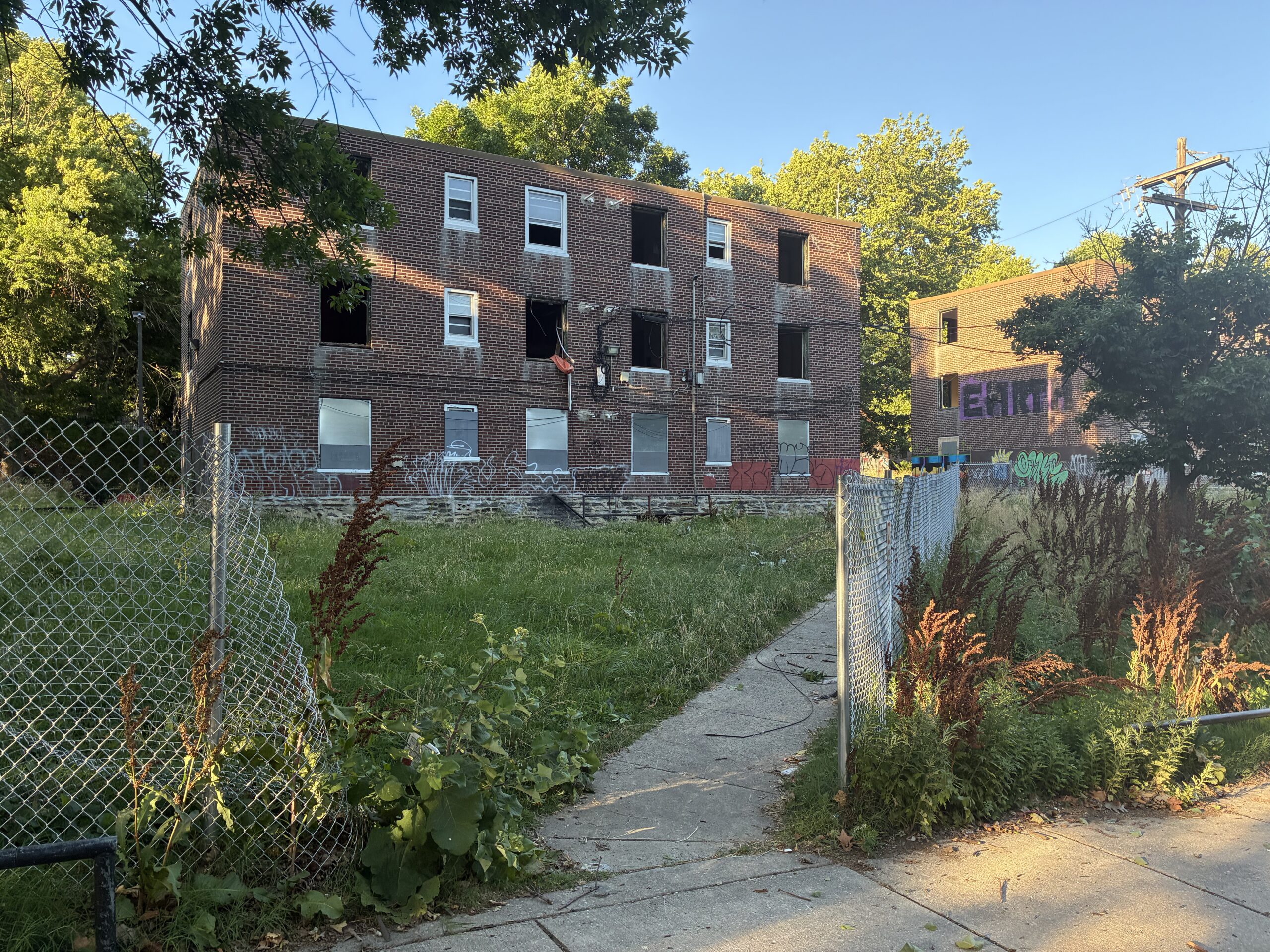
    The wrecking ball should be coming soon for an abandoned public housing complex in Southwest Philly.

    Bartram Village is a Philadelphia Housing Authority complex with 45 buildings that date back to 1942. Since at least 2018, PHA has been planning a major redevelopment at the 22-acre site, located next to the popular Bartram’s Garden.

    The last tenant moved out last year. But squatters moved in. Now, the buildings are in rough shape.

    Last week, Mayor Cherelle L. Parker declared a public safety emergency at the site.

    It’s a move meant to clear the way so PHA can finally move forward with its plans for demolition and redevelopment.

    Keep reading to learn more about the state of the site and what PHA plans to build there.

    The latest news to pay attention to

    Home tour: A pop of purple in Mount Airy

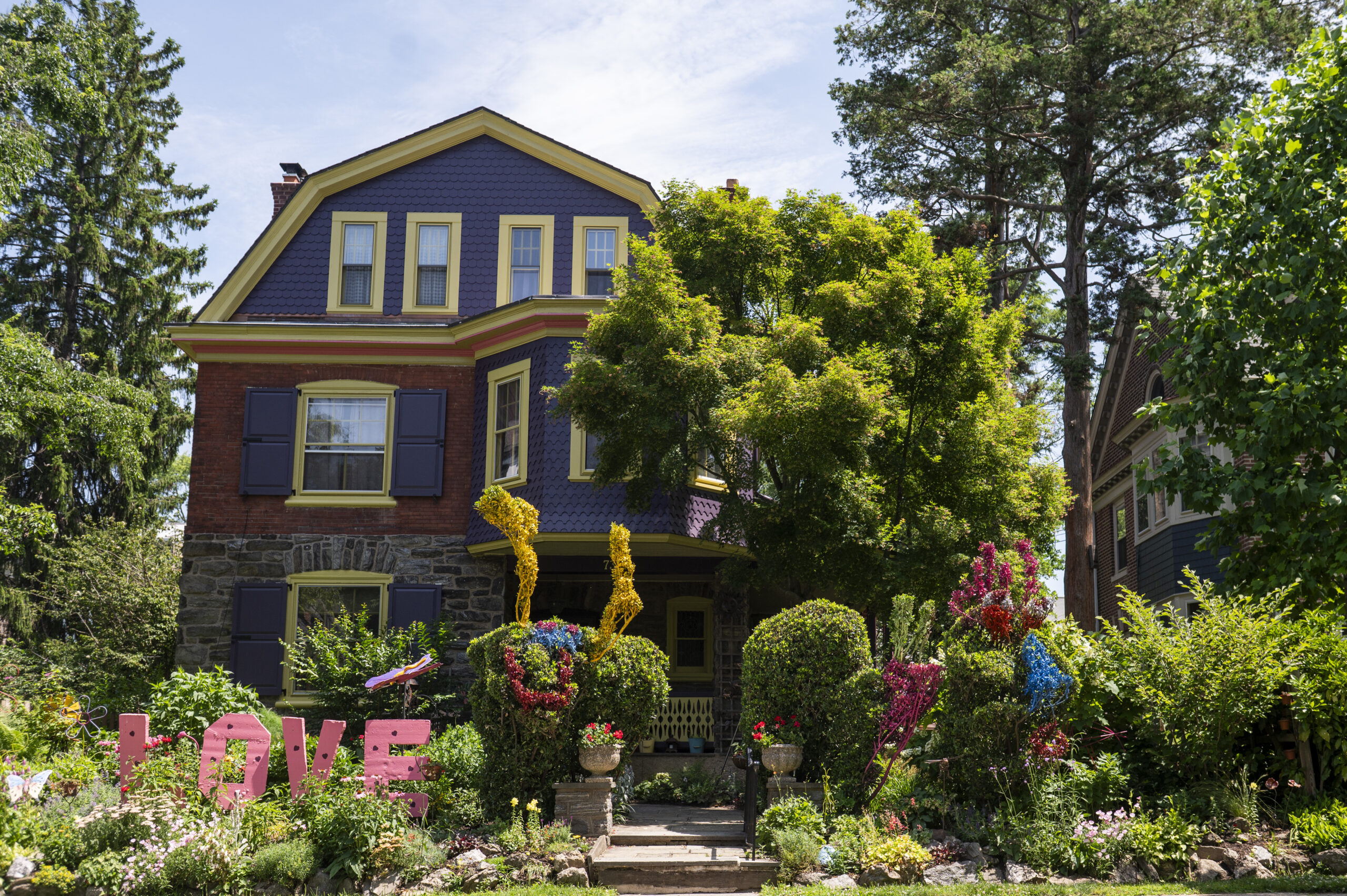
    Jean Miller has always wanted a purple house.

    After countless home renovations over more than 25 years, she now has one. That’s thanks to the most recent project, which included a lot of purple paint.

    “It makes the house pop,” Miller said of the Mount Airy home where she and Craig Heim raised their two children.

    But the bold facade isn’t the only thing that pops on the property. The outside of the house is lined with yellow, including the front porch railing and the windows. A hedge is painted and shaped to look like a “happy bull” in a colorful front garden. Miller made a large, heart-covered “LOVE” sign that stands in front of the home.

    Inside, Miller and Heim have transformed pretty much all 3,200 square feet of their house since they bought it in 2000.

    Take a peek inside the property.

    📷 Photo quiz

    Do you know the location this photo shows?

    📮 If you think you do, email me back and share your memories.

    Last week’s quiz featured a photo of Market Square in Germantown.

    Shout out to Stuart H. for getting that right.

    We regularly feature homes for sale in our region. But I’ve never seen anything like this.

    A historic Philly mansion recently hit the market with a quirky caveat in the deed: once a year, the owner must allow a reenactment of a Revolutionary War battle to take place on the front lawn.

    The current owner said he loved having the reenactments on his property. Now, he’s looking for someone else who’d be into it, too.

    Only in Philly. Enjoy the rest of your week.

    By submitting your written, visual, and/or audio contributions, you agree to The Inquirer’s Terms of Use, including the grant of rights in Section 10.

  • Philadelphia budget’s ugly attack on the arts | Editorial

    Philadelphia budget’s ugly attack on the arts | Editorial

    At $5 million, Philadelphia’s primary arts and cultural fund is not one of its many substantial burdens for taxpayers, amounting to well under a thousandth of the multibillion-dollar municipal budget. And yet, the city’s politicians can’t seem to resist the allure of the minuscule expense as a canvas for their financial creativity.

    Having narrowly survived fiscal extinction during the pandemic, the Philadelphia Cultural Fund took another disproportionate cut in the city’s recently enacted budget for fiscal 2027, which begins next week. The spending plan recently passed by City Council and signed by Mayor Cherelle L. Parker appropriates $3.5 million for the fund, nearly a third less than this year, according to the fund’s executive director, Gabriela Sanchez. It’s hardly a rounding error in Philadelphia’s $7.1 billion budget, but it’s likely to devastate many of the tiny arts and cultural groups the line item supports citywide.

    Nearly 100 of the almost 300 arts organizations that depend on the fund are expected to lose the aid as a result, Sanchez said in a statement. She said the fund would halve its eligibility threshold, limiting grants to groups with budgets of no more than $1.5 million, among other “untenable decisions,” hobbling neighborhood theaters, festivals, music programs, and more. “In practice,” Sanchez added, “this means that community-based arts and culture groups … will lose essential operating funding that sustains their day-to-day work.”

    Created three decades ago to supplant more traditionally Philadelphian methods for distributing tax money — according to the whims and still less defensible motives of local politicians — the cultural fund brought a measure of evenhandedness and transparency to bear, offering clear rules and a fair process. Today, it funds groups ranging from A Book a Day, which has donated thousands of books to institutions serving young readers in West Philadelphia, to the Wyck Association, dedicated to preserving and interpreting the historic house of that name in Germantown.

    The impact of these groups, economic and otherwise, is far greater than their cost: A 2024 report by the Greater Philadelphia Cultural Alliance found that nonprofit arts groups generate more than $2 billion in yearly economic activity, providing $1 billion in household incomes and $265 million in tax revenues. The alliance also found that the sector suffers from inadequate, unreliable, and uneven public funding.

    The cut is cruelly contrary to what city arts groups and some Council members argued for amid the Trump administration’s retreat from federal arts funding, which was to increase the cultural fund’s allocation by 20%. It’s also at odds with a city budget that raises overall spending by about 3% over this fiscal year. At that rate, given the fund’s benefits, the city should at least be able to hold it harmless and maintain this year’s relatively meager contribution.

    Philadelphia’s arts groups shouldn’t be perpetually on the budgetary brink just because most of them are small and lack powerful political patrons, making them easy to pick on. The mayor and Council should find a way to restore this funding and stop creating trouble for the city’s invaluable creators.

  • A 188-apartment building is the latest new development slated for North Broad Street area

    A 188-apartment building is the latest new development slated for North Broad Street area

    A new 188-unit apartment building is the latest in a burst of development proposals around North Broad Street between City Hall and Temple University.

    The eight-story building at 1527 Callowhill St. is being developed by Philadelphia-based Omega Home Builders with architecture from locally based firm Designblendz.

    The project features 13,300 square feet of commercial space and 24 parking spaces accessible from 16th Street. The building will have a green roof, and the developer plans to plant additional street trees.

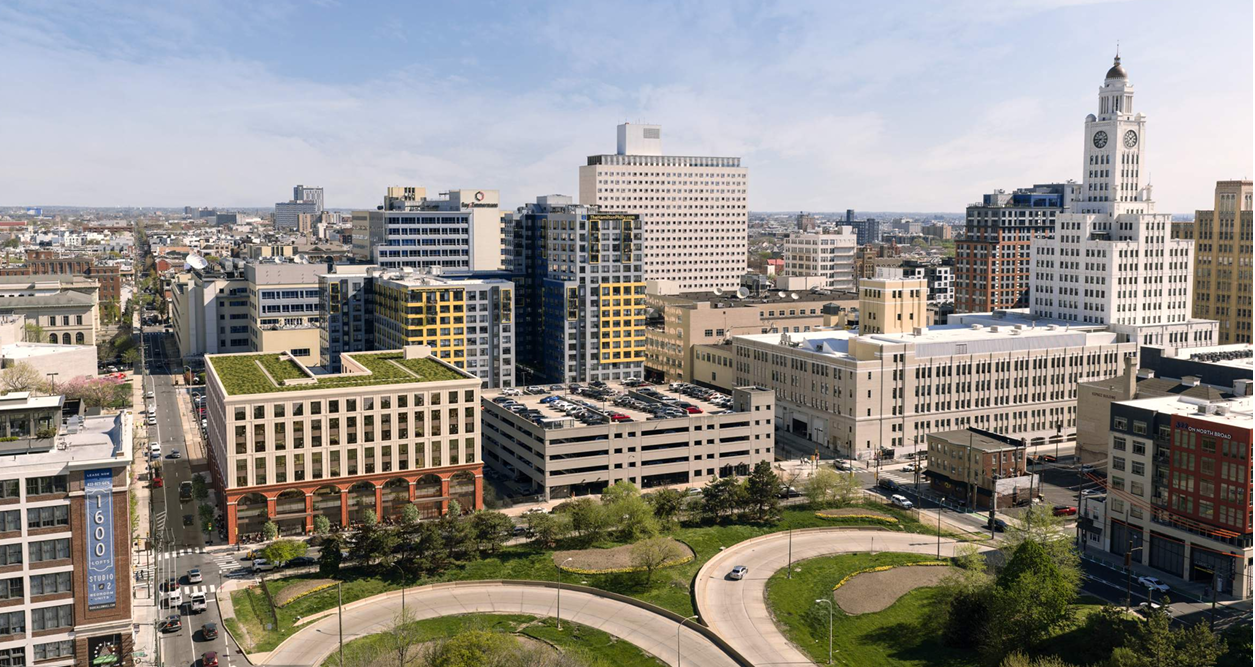
    The property is currently a surface parking lot that was once owned by The Philadelphia Inquirer, as an annex of the media company’s former 400 N. Broad St. offices. The building is now the Philadelphia Police Department’s headquarters.

    The Inquirer’s former properties were bought by Philadelphia developer Bart Blatstein 15 years ago. He sold the parking lot to Omega Homes’ Roman Ovrutsky at the end of last year for $5.6 million.

    “I think it’s [a] good location, next to cops, plenty [of] parking around,” Ovrutsky said in a text message, “so I think it’ll thrive with our finishes and competitive pricing.”

    Ovrutsky’s project is the latest development proposed for this area. In the past eight months, not including this project, at least 1,221 apartments have been permitted along this stretch of North Broad Street.

    The majority of the apartments in this Callowhill Street project, 111 units, will be one-bedrooms, which Ovrutsky says will rent for between $2,200 and $2,400.

    The building also will include 52 two-bedroom apartments, starting at $2,800, and seven three-bedrooms with two bathrooms each and over 1,000 square feet. Those will start at $3,400.

    There will be 18 studio apartments, although the development team wanted to minimize that number. They believe the market currently has too many small studios, which they argue do not incentivize long-term living.

    “We will have a little bit more space for residents to actually live here, not necessarily the kind of studio-esque [apartments] which Center City often gets hit with,” said Scott Woodruff of Designblendz Architecture.

    We are “sizing these units with more storage space and generously sized bedrooms, so it doesn’t feel like you’re living in a shoebox,” Woodruff said.

    Ovrutsky said that he hopes to start construction by this time next year and finish by early 2029.

    Woodruff said they have been asked why the project isn’t including more parking. He noted that the proposed apartment building is within a short stroll of the Broad Street subway line and on a number of bus routes.

    A rendering of the building’s garage entrance on 16th Street, with the police headquarters visible in the background.

    It is also walkable to multiple grocery stores and restaurants, and the area has excess parking capacity.

    “With the access to public transit and where this is in the city, we didn’t feel like there was a great need to try and push a lot of parking,” Woodruff said.

    The commercial space could be ideal for a restaurant and could even be carved up between two tenants, he said.

    The property does not require zoning changes to move forward, but it is large enough to trigger consideration by the city’s advisory-only Civic Design Review committee on July 7.

    It was warmly received at a presentation to the Logan Square Neighborhood Association.

    “The group was very pleased with the building as described,” said Alan Williams of the association. “We liked the green roof, the focus on new street trees, sizing in line with neighboring buildings, and the overall aesthetics.”

    The proposed building is on the left side of this rendering.

    The burst of development attention along this stretch of North Broad Street was partly spurred by a City Council bill that would have banned new housing around the former Hahnemann University Hospital campus.

    That pushed a number of property owners to try to secure permits for apartment projects before the bill went into effect, which means these units aren’t necessarily coming any time soon. Council eventually shelved the bill.

    The North Broad Street corridor’s popularity for developers also relates to the large parcels available at attractive prices. More residents will also activate the streets in the area, which are often devoid of pedestrians at present.

    “This is a big chunk of open parking lot right now, flanked by two parking garages, so it just ruins the fabric,” Woodruff said.