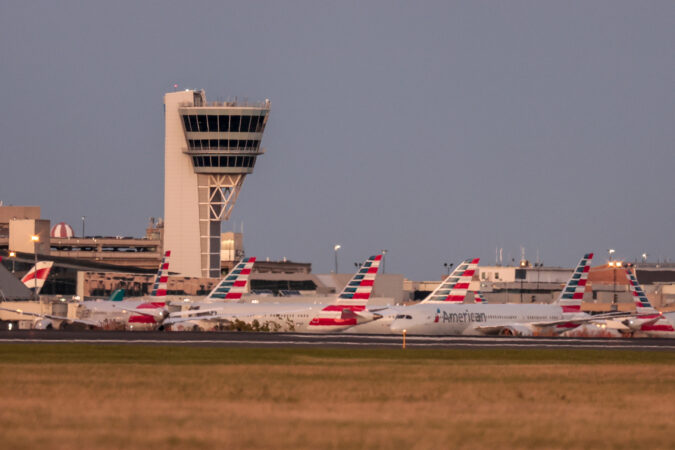
American Airlines is planning a new route to Porto, Portugal, from Philadelphia.
The route is expected to become available in summer 2027, pending government approval, the airline noted in a news release Thursday.
The flight will be offered on a new aircraft — the Airbus A321XLR — that American just began operating in December. According to PHL chief commercial officer Kate Sullivan, having that aircraft is key to the new route availability.The aircraft will feature “Flagship Suite” seats, which were recently introduced on some PHL flights.
“Not only is seeing a summer 2027 route announced so early exceptional, the A321XLR will enable American to serve markets like Porto that have strong demand but may not support daily flights from wide-body aircraft,” Sullivan said. “Porto is just the beginning of what this aircraft will unlock for our region’s residents and visitors.”
This will be the first time that Porto is offered as a direct route out of PHL, airport spokesperson Heather Redfern confirmed Friday. Sullivan said the addition is “outstanding news for PHL.”
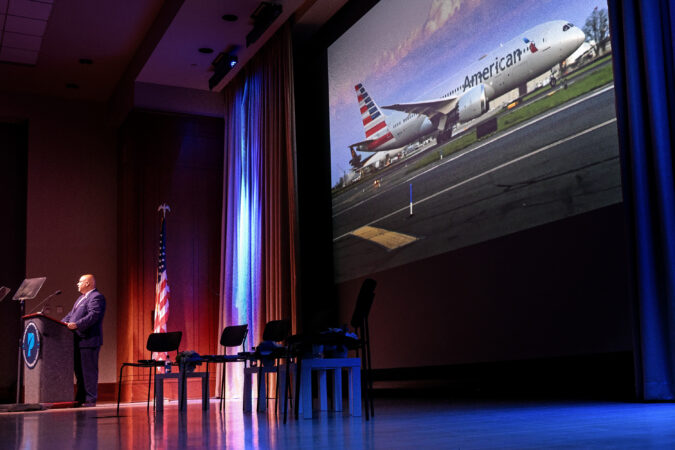
“Porto is exactly the type of new market the Airbus A321XLR enables us to serve,” Brian Znotins, a senior vice president at the airline, said this week at a conference.
American has recently added several other direct flights from PHL to Europe. In 2024, the airline launched routes connecting Philadelphia to Copenhagen, Denmark; Nice, France; and Naples, Italy.
The airline also launched a bus service in 2022 to shuttle passengers from airports in the region to PHL to take a flight. And it opened new lounges at PHL last year, featuring two bars, private phone rooms, and showers.
American was among the top 10 largest employers in Philadelphia in 2025 and is the largest airline by passenger volume operating out of PHL. In 2024, the airline carried nearly 20 million passengers through the airport.
A Downingtown dog has been euthanized after it injured multiple people in recent months and made residents feel unsafe, officials said.
The decision, made the day of a Thursday hearing in district court, stems from a November incident in which the dog bit a child in a neighboring house on the 500 block of Thomas Road.
Whitley Coggins said her sons, ages 4 and 8, had been playing in the backyard when the neighbor’s dogs were let outside. One mixed-breed dog got through the fence, attacking her youngest son, she said. The boy was bitten on his upper arm and required stitches.
There are four dogs that had been known to neighbors for aggressive behavior, she said. Though the Coggins family had never personally experienced it until November, the mother said, she warned her sons to run back inside if they ever saw the dogs in the yard.
After the hearing and the owner’s decision to euthanize, Coggins said she was frustrated that the only positive was that one of the dogs was removed from the house.
“I feel like I’m supposed to feel like something was done, I’m supposed to feel good that the one dog that attacked my child is gone, and I do feel a small sense of replaced safety or something — that that one dog is not there,” she said. “But that one dog has never been the problem, not the whole problem.”
Coggins said her sons still feel unsafe leaving the house and are fearful of dogs.
“Following our time in court, we still had to return — and the rest of the neighbors had to return — to a neighborhood with three dogs who have registered attacks on other people and other animals, and because of the laws and the way the laws are written or interpreted, there is nothing to go forward with to remove these dogs,” Coggins said.
Reached by phone, the attorney for the dog owner declined comment.
Brendan Brazunas, Downingtown’s chief of police, said the owner’s defense counsel immediately suggested euthanasia given the seriousness of the 4-year-old’s injury, and the fact that this was the fourth documented bite involving this dog since 2023.
“The dog that created the most issues at that house is this dog that was euthanized,” Brazunas said. “Obviously, the community is very concerned and they’re afraid, and I think this was the first step with regards to dogs at that house.”
Brandywine Valley SPCA, which had assisted the Downingtown police in the case, transported and euthanized the dog, a spokesperson for the organization said.
“This was a tragic situation that never should have escalated to this point,” Erica Deuso, mayor of Downingtown, said in a statement. “I love animals, and I am heartbroken any time a dog loses its life, but public safety comes first.”
The charges were dropped, as they can only be made for live dogs, Brazunas said. But there are ongoing cases facing the owner’s other dogs.
A Jan. 20 incidentwas reported to police when the dogs escaped through an open door and injured an adult man, a tow-truck driver who was returning a vehicle. That case will be heard in the coming weeks.
The SPCA has six outstanding charges for other dogs in the owner’s home regarding rabies vaccinations, dog licenses, and the dogs getting loose, the spokesperson said.
The Delaware Valley Regional Planning Commission is working to help keep alive the city’s project to cap the Vine Street Expressway after Washington last year yanked $150 million in promised federal money.
The project was dependent on a $159 million U.S. Department of Transportation grant covering the entire cost.
Now, DVRPC, at the city’s request, is managing the process of gathering $12.5 million to replace some of the lost money, enough to complete the final design.
“We are taking this administrative action to keep the project moving,” DVRPC spokesperson Elise Turner said.
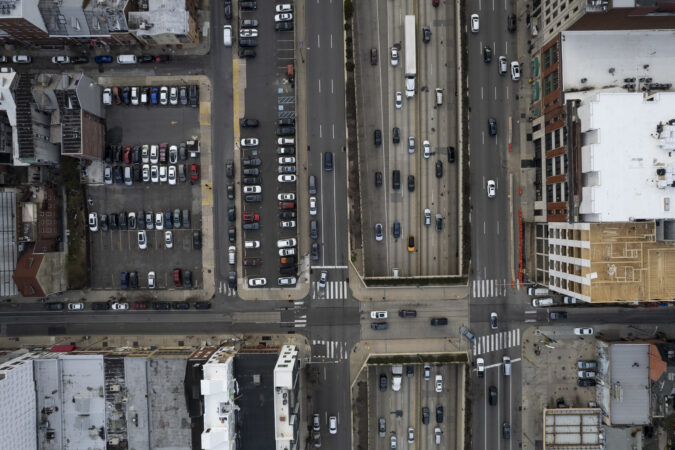
The Chinatown project involves building a cap over I-676 from just east of 10th to 13th Streets, allowing for a park as well as more developable land. It would tie together Chinatown and the neighborhood to the north, which were united until the interstate split them.
Finishing the design will advance the project as officials look for construction funding. It’s possible building the cap will be delayed.
For the design work, $10 million would be obtained from another federal program for improvements on the national highway network. That money is available in the region’s reserve controlled by PennDot, DVRPC staff said.
The city would contribute $2.5 million.
The city’s Office of Transportation and Infrastructure Systems is working to secure the money and is “confident” that will happen, a spokesperson said, while declining to disclose details.
As for construction, “funding will have to be figured out later,” said DVRPC’s Turner.
The agency determines priorities for regional transportation projects.
To receive federal funds, an infrastructure project needs the formal blessing of the DVRPC, the designated metropolitan planning organization for the Philadelphia region.
Meanwhile, preliminary engineering work is continuing, financed by the $8.4 million. The project is expected to receive environmental approvals in the spring, DVRPC said.
President Donald Trump and the GOP congressional majorities have been targeting Biden-era initiatives for elimination, including various transportation-equity programs — to fund projects like the Stitch — that began under the national infrastructure act of 2022.
In late 2023, construction of the cap was projected to begin in 2027, although at other points a groundbreaking was anticipated in 2028.
The timeline is currently unclear.
This story has been updated to clarify DVRPC’s role in the project.
The NBA trade deadline produced a frenzy of deals around the league, but the dust has finally settled. The 76ers were one of the least active teams at the deadline, only making two trades before 3 p.m. on Thursday. However, one of those trades garnered plenty of reaction.
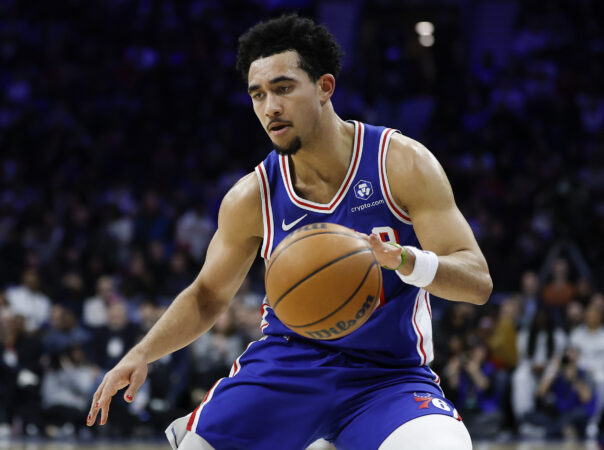
Guard Jared McCain won Sixers fans over as a rookie in 2024-25 as he was a rare bright spot in an otherwise trying season. The 16th overall pick out of Duke averaged 15.3 points across 23 contests before a torn meniscus in his right knee ended his season.
McCain struggled to find his footing this season. He missed the first six games and made his season debut against the Chicago Bulls on Nov. 4, where he missed all four of his shots. However, he did show flashes of his rookie self, including scoring 17 points on 6 of 8 shooting against the Milwaukee Bucks on Jan. 27.
But with the Sixers searching for roster flexibility and a way to duck under the luxury tax, they decided to trade McCain to the Oklahoma City Thunder in exchange for the Houston Rockets’ 2026 first-round pick and three second-round picks.
The Sixers also moved on from guard Eric Gordon, who played in just six games, along with a 2032 second-round pick swap to the Memphis Grizzlies.
The trades cleared a roster spot for Dominick Barlow’s two-way contract to be converted to a standard contract.
Here are how some of the national media outlets are grading the Sixers’ moves.
ESPN: B+/B
ESPN gave the Sixers a B+ for the McCain trade as they accomplished multiple logistical goals with the move. The trade got the the team below the luxury tax line, cleared a roster spot to convert Barlow’s contract, and gave them future flexibility to re-sign guard Quentin Grimes. The Thunder received the same grade on their end of the deal.
“After adding VJ Edgecombe and Quentin Grimes to All-Star Tyrese Maxey in the past year, Philadelphia’s roster got crowded, part of the reason McCain hasn’t played many minutes this season,” wrote Kevin Pelton. “Turning McCain into draft picks not only gets Philadelphia below the luxury tax line but probably makes it easier to make additional deals, whether before Thursday’s trade deadline or this offseason.”
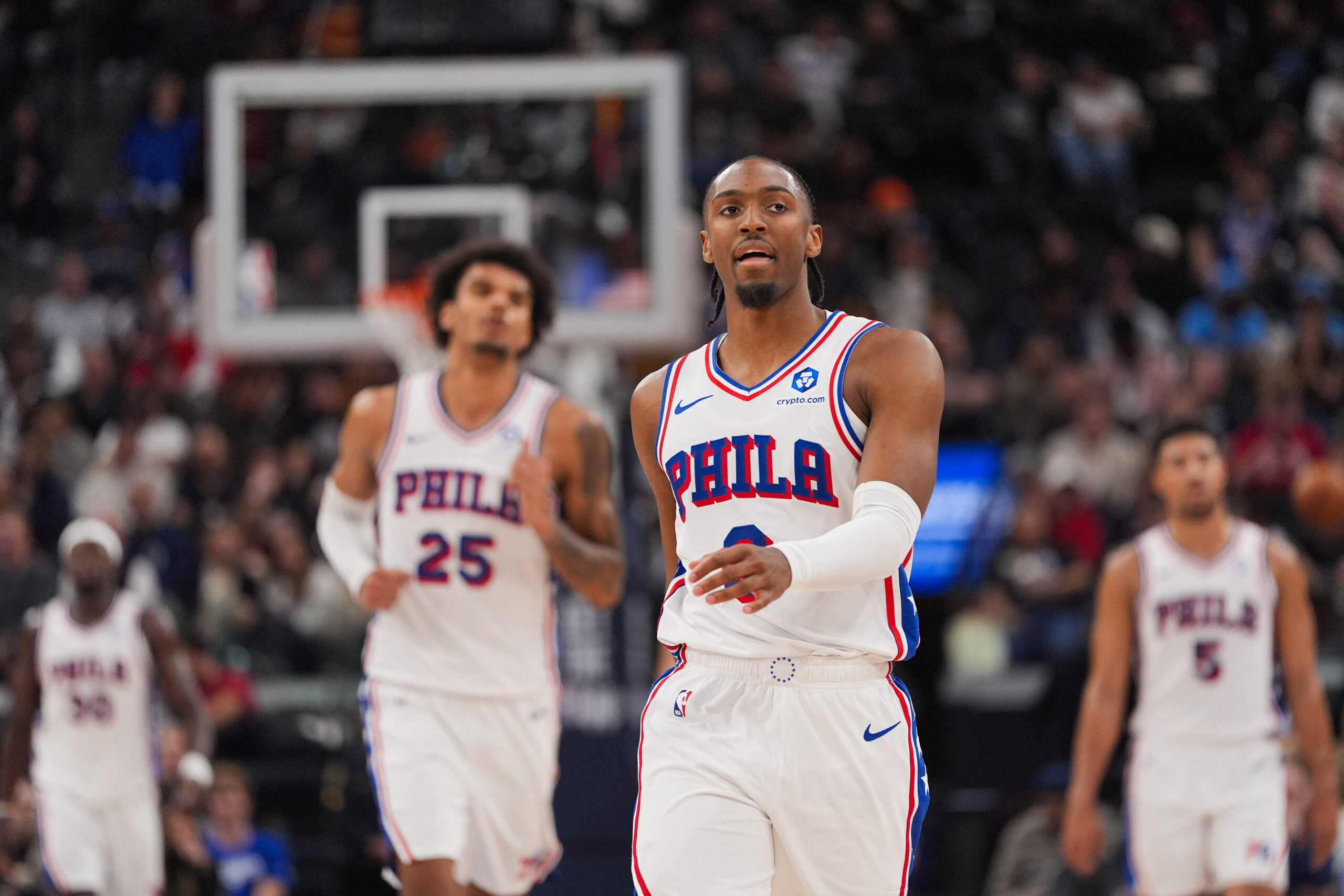
Tyrese Maxey (0) walks up the court against the Los Angeles Clippers on Feb. 2.
ESPN graded the Gordon move as a B, as he had not made much of an impact on the court this year. The veteran has not played since Christmas and has played 74 total minutes this season. The Sixers now have three open roster spots after the trade, giving them plenty of room to convert two-way deals or sign a free agent.
The Athletic: B
Zach Harper of The Athletic was much more fond of the McCain trade from the Thunder’s point of view as opposed to the Sixers. He gave the Sixers a B for moving on from McCain in year two while Oklahoma City got an A for adding a potentially valuable bench player with two and a half years of control.
“The good news is the Sixers are good now, so they didn’t need him nearly as much to play well. If he can’t be the player we saw in his rookie season, then that Houston pick should be pretty easy to use to replace him,” Harper wrote. “If he can be that player again, then Philadelphia doing this to not pay the luxury tax in a decent season makes nailing that Houston pick pretty big.”
Yahoo! Sports: B-
Morton Stig Jensen of Yahoo! Sports was critical of general manager Daryl Morey’s decision to trade McCain and praised Thunder general manager Sam Presti. Jensen gave the Sixers a B- for getting below the luxury tax, but described it as a “pity grade.” He gave Oklahoma City an A+ for filling its need for floor spacing.
“Trading away young, cheap pieces, when you have that much money tied up in Joel Embiid and Paul George is just not a position they want to be in,” Jensen wrote. “So this is all about the finances, which is both boring and discouraging.”
“So, sure, Philly, congrats on avoiding the tax bill, I guess.”
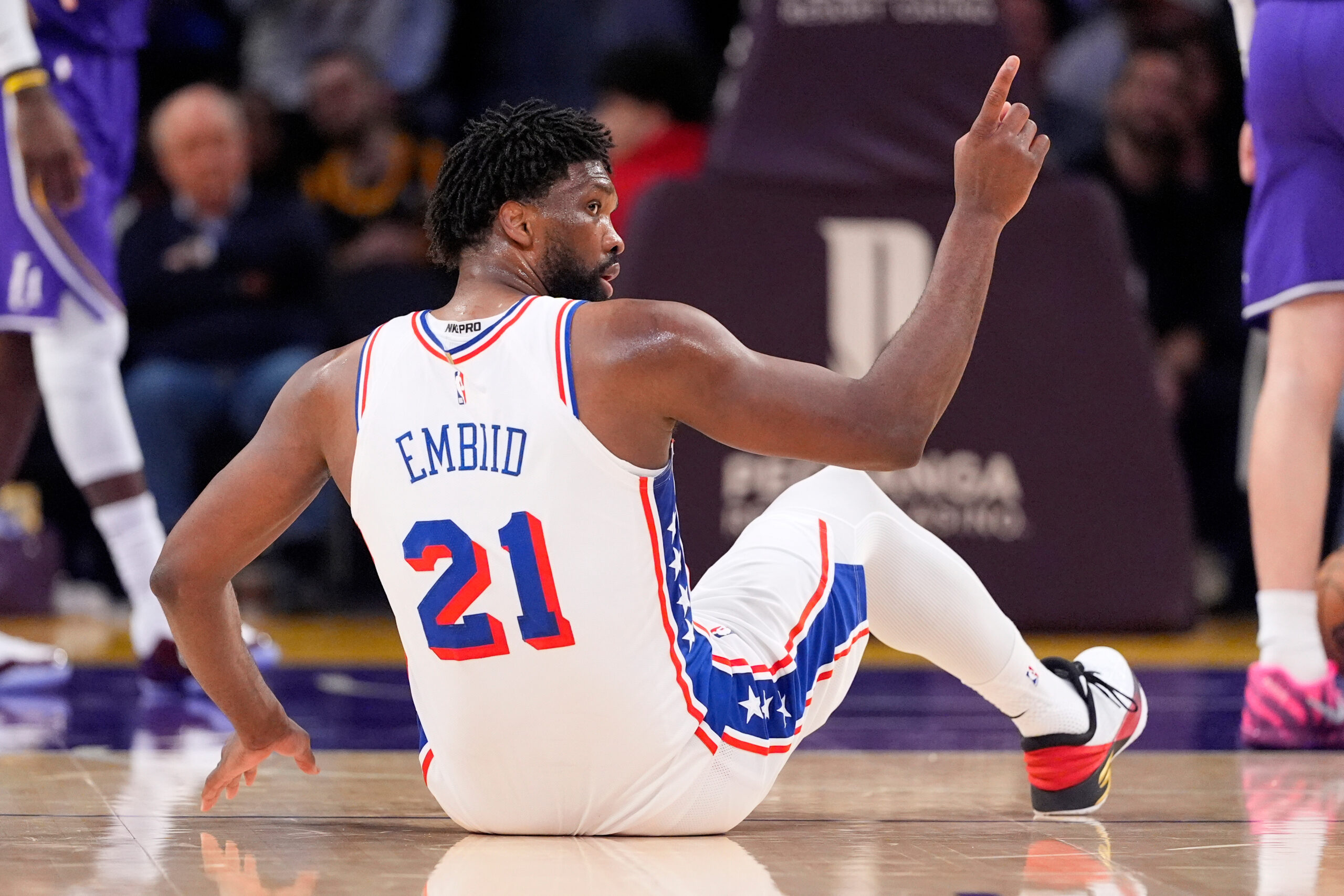
Joel Embiid celebrates after scoring and drawing a foul against the Los Angeles Lakers on Thursday.
Sports Illustrated: C
Austin Krell of Sports Illustrated gave the Sixers a C. He also looked at the deal as a win for them from the financial side, but a big risk for giving up on McCain’s upside. The Thunder received a B for getting another shooter in their push for back-to-back championships.
“This seems like a clear indication that the Sixers viewed McCain as someone whose stock would drop if they kept him,” Krell wrote. “If we want to look at it from a financial perspective, he’s maybe the only player you could’ve moved that would’ve accomplished the goal of dodging the luxury tax while also netting actual assets in return.”
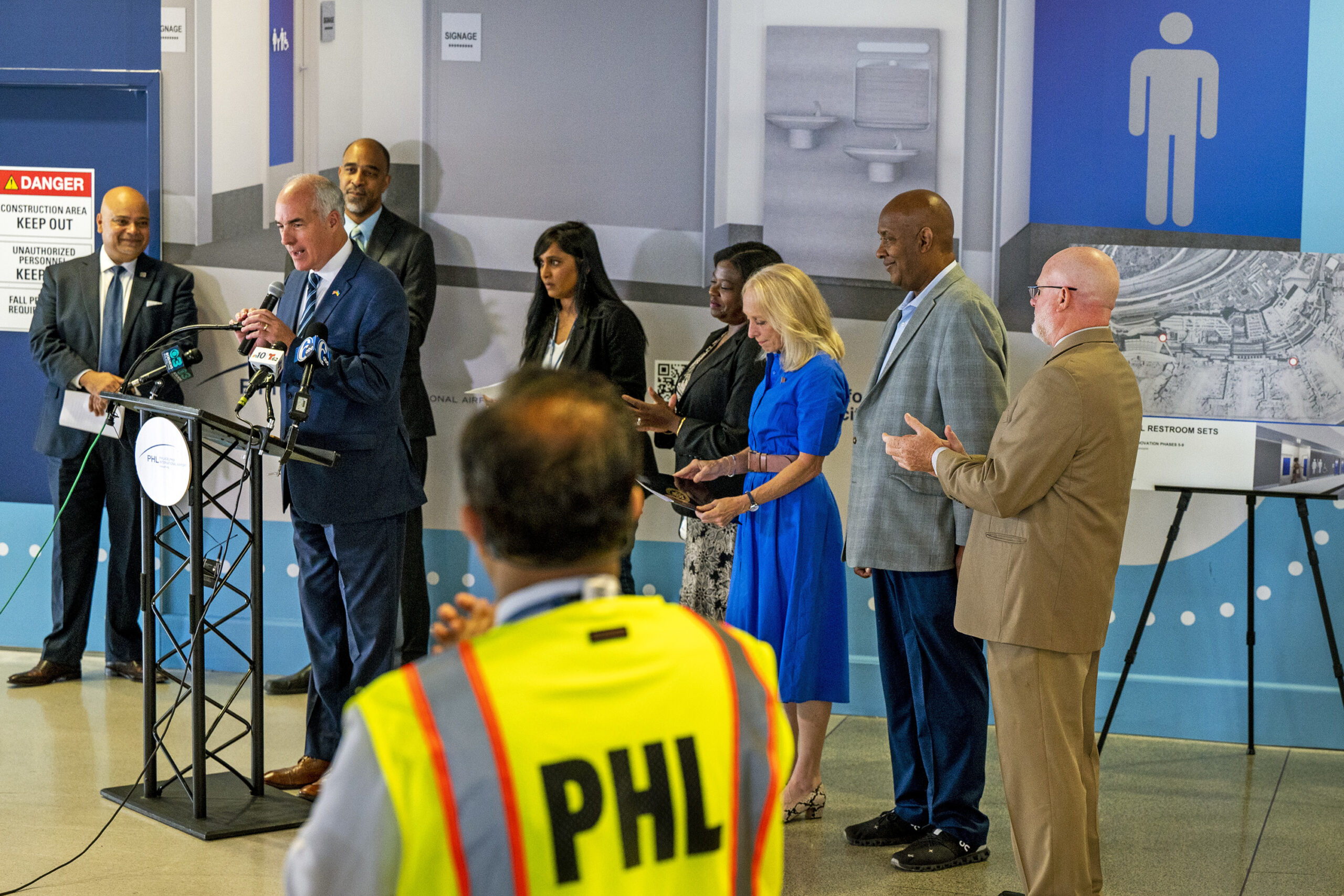
Philadelphia International Airport CEO Atif Saeed is stepping down, just as Philadelphia prepares for an expected influx of tourists this year.
Saeed has led the city’s Department of Aviation, which also includes the Northeast Philadelphia Airport, since 2022, and plans to step down Feb. 27. He is heading west to be president and CEO of the San Diego County Regional Airport Authority.
“Under his direction, our airports emerged stronger from the pandemic, advanced critical modernization efforts, and positioned Philadelphia to welcome the world in 2026 and beyond,” Mayor Cherelle L. Parker said in a statement Thursday.
“We are grateful for his contributions and wish him continued success in this next chapter,” Parker said.
The city plans to hire a new CEO following a national search. Tracy Borda, PHL’s chief financial officer, will be interim CEO.
Saeed’s departure comes as Philadelphia expects to be inundated with visitors this year for the United States’ 250th anniversary, the MLB All-Star Game, and the FIFA World Cup games.
“I will always look back at my time at PHL and PNE fondly,” Saeed said in a statement Thursday. “I am confident that our airports are ready to welcome the world for the events of 2026 and beyond.”
“From the start, by addressing the unhoused situation at PHL with a caring, multiagency approach, this team was committed to ensuring that through strategic investments and thoughtful planning, PHL and PNE are in a position of strength to continue to enhance airport operations for an even brighter future,” Saeed said Thursday.
The Eagles failed to make it back to the Super Bowl this year, but, as The Philadelphia Inquirer’s Jeff McLane can vouch for during his trip to the Bay Area, the team is still dominating conversations around the league. That’s because in the past week, the Eagles hired a new offensive coordinator, parted ways with a revered assistant, and, much to their relief, got word from their defensive guru that he’ll be returning for another season. Jeff checks in from San Francisco to talk with The Inquirer’s Olivia Reiner, as the two sift through what they’ve been hearing and what fans can expect now that the Eagles’ coaching staff is rounding into form.
00:00 Jeff Stoutland’s exit, and its “messy” handling
14:55 With Stout out, could Lane Johnson be next?
17:11 Why Vic Fangio came back
27:30 Jeff McLane talks with Klint Kubiak about pupil Sean Mannion 30:15 What Jeff and Olivia know about Mannion and his potential impact on the offense, Jalen Hurts
44:40 How the Eagles’ coaching moves reflect on Nick Sirianni
unCovering the Birds is a production of The Philadelphia Inquirer and KYW Newsradio Original Podcasts. Look for new episodes throughout the offseason, including breaking news updates and reactions.
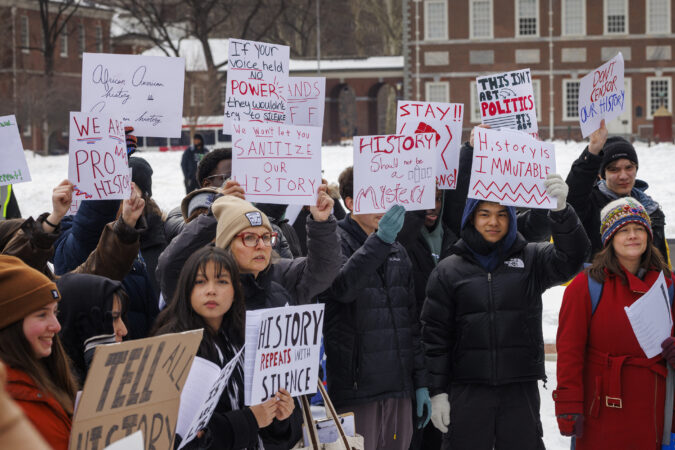
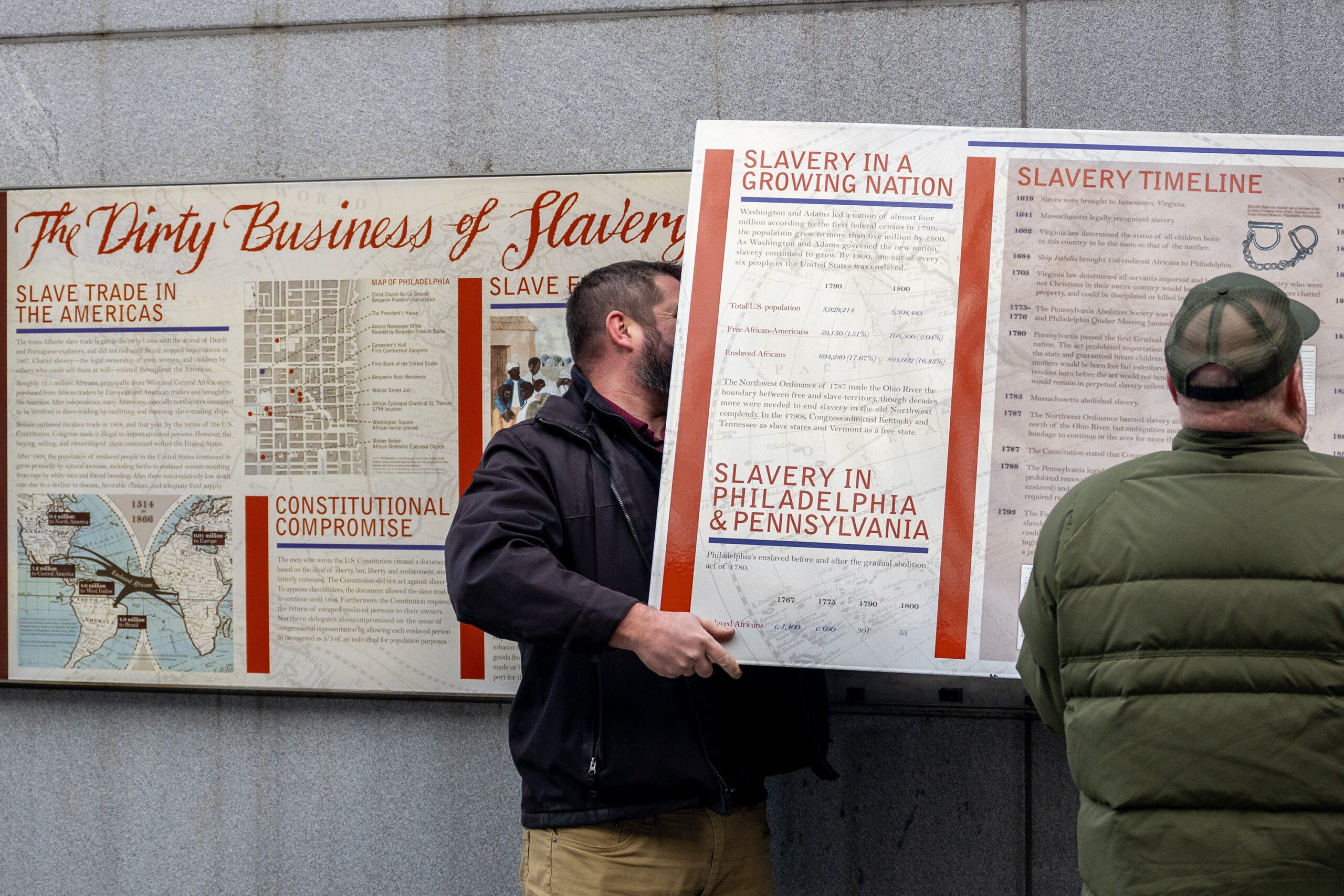
Students and teachers from two Philly area private schools joined up with activists and protesters Friday morning at the President’s House in Independence National Historical Park to demand that the site’s slavery exhibit be restored after it was abruptly dismantled last month.
“Whitewashing history is a totalitarian gimmick,” read one sign in a crowd that included young and older people. “All our stories must be told,” read another.
The “teach in” was held in front of a granite wall etched with the names of nine enslaved people owned by U.S. founding father and first president George Washington. The wall is one of the few remnants of the slavery exhibit that was dismantled by order of the Trump administration.
Standing at a lectern, the students, from Solebury School in Bucks County and Friends Select in Center City, read the biographies of the enslaved whose names had been etched on the wall.
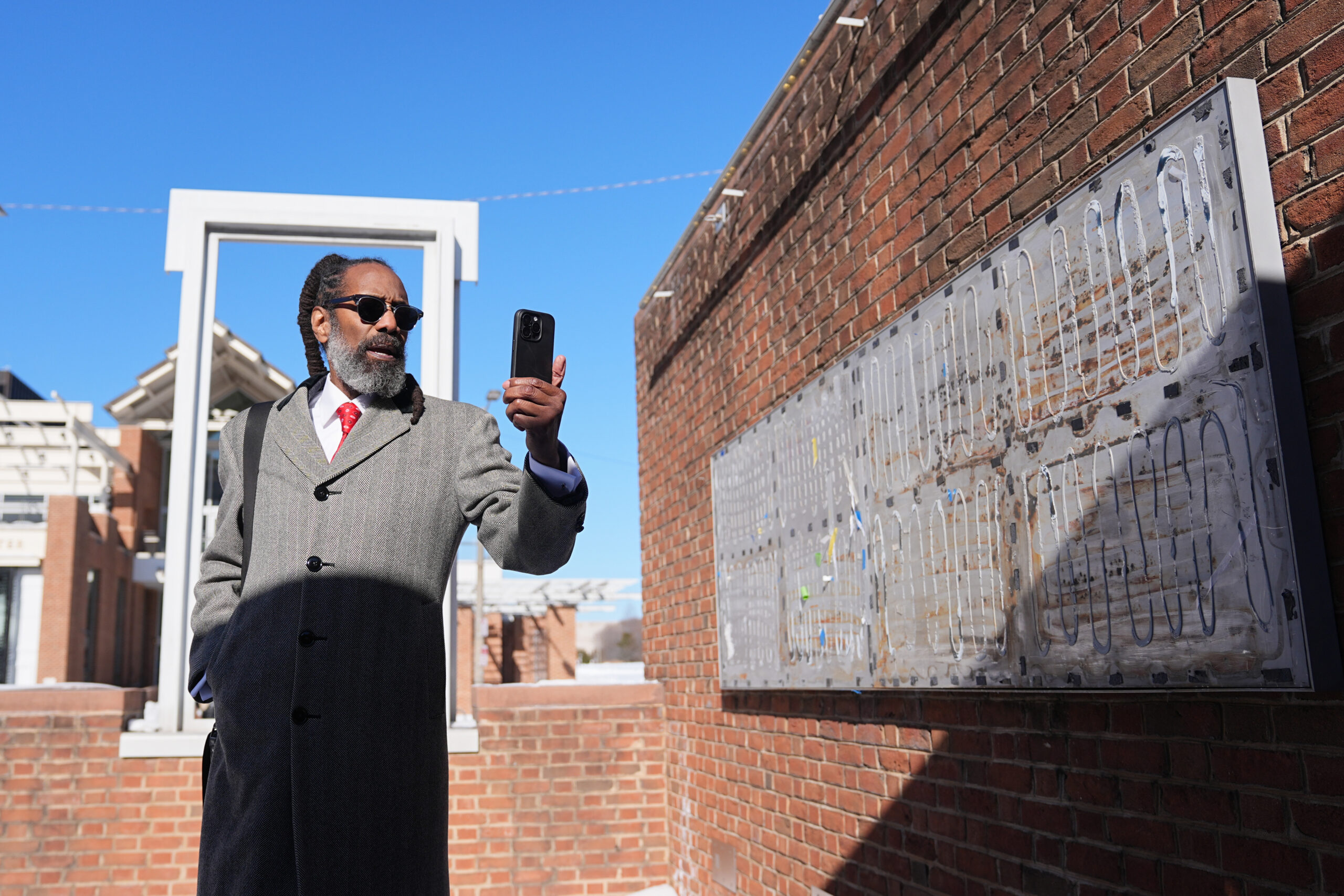
Activist and criminal defense attorney Michael Coard told the crowd he helped to create the slavery exhibit after learning that Washington owned enslaved people — and realizing that his educators had failed to teach him about it.
“When I learned about that, I was enraged, because I’d never heard about it,” Coard said.
With the help of elected officials, the President’s House Site became a reality in 2010, Coard said.
But when the Trump administration issued its “Restoring Truth and Sanity to American History” executive order last March, Coard knew that the exhibit could be targeted. The order calls on the U.S. Department of the Interior to remove historical exhibits that “perpetuate a false reconstruction of American history” or “disparage Americans past or living.”
Attorney Michael Coard makes a social media post at the now removed explanatory panels that were part of an exhibit on slavery at President’s House Site in Philadelphia, Friday, Jan. 30, 2026. (AP Photo/Matt Rourke)
“Anything pertaining to Black people, he was opposed to it,” Coard said of President Donald Trump.
Since then, Coard said, there’s been a furious legal battle to have the site restored. Philadelphia Mayor Cherelle L. Parker sued the federal government. A judge ordered the government to safeguard the exhibits, which are currently in storage, while the issue plays out in federal court.
Coard encouraged people to sign a petition, attend protests, and stay involved in future protests.
“Just because you can’t do everything, that doesn’t mean you shouldn’t do anything,” Coard told the crowd, quoting poet and musician Gil Scott-Heron.
Solebury School college counselor Erin Wallace joined the 50 students who traveled by bus to the site for the teach-in.
Wallace said the students are “very active” in following national politics, and were eager to attend the protest. About 25% of the student body attended, Wallace said.
“It was an overwhelmingly positive response,” Wallace said.
Workers remove the display panels about slavery at the President’s House Site in Independence National Historical Park Thursday, Jan. 22, 2026. The fate of exhibits at the site, which serves as a memorial to the nine people George Washington enslaved there during the founding of America, had been in limbo since President Trump’s executive order, “Restoring Truth and Sanity to American History,” directed the Department of the Interior to review over 400 national sites to remove or modify interpretive materials that “inappropriately disparage Americans past or living.”
Solebury School history teacher Don Kaplan of Elkins Park attended the first vigil after the site was shuttered. Kaplan said he organized the teach-in student protest because it is relevant to what he teaches his 9th- and 11th-grade students.
“I just thought to myself, we need to address this,” Kaplan said.
Kaplan asked that his students not be quoted directly. But after the rally, he struggled to keep his 11th graders from weighing in as he was interviewed for this story.
“We should teach all history,” two students said.
They explained that in Kaplan’s class, their research often shows that historical figures are not purely good or evil and were shaped by myriad forces.
To Kaplan, that stands in contrast to the Trump administration’s perspective on teaching history, which seeks to eliminate “negative” stories about America’s founders.
“That’s not what we do,” Kaplan said. “We have to teach every possible perspective.”
The late Maya Angelou had a saying that goes, “When people show you who they are, believe them the first time.”
She’s gone now, but that was some really good advice.
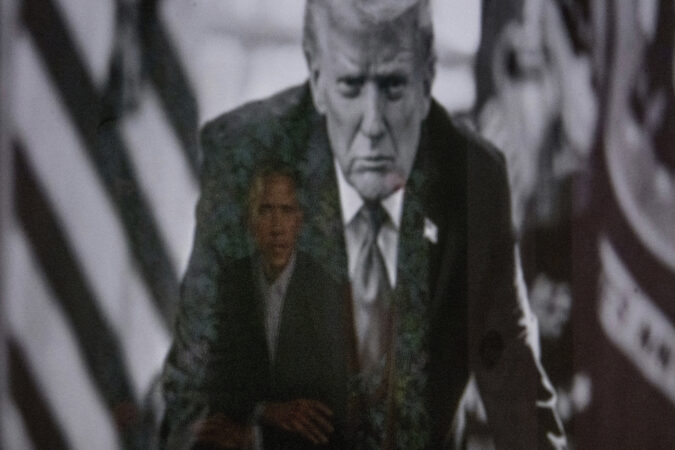
I am reminded of the late author’s wisdom after watching and rewatching a blatantly racist video that President Donald Trump posted on Thursday on Truth Social. It includes AI-generated imagery depicting former President Barack Obama and his wife as dancing primates.
I am so disgusted.
Anything to make the Obamas look bad. I wish I could share a photo of it with this column, but it’s too offensive. I’d tell you to go see his Truth Social account and look it up yourself, but I learned while writing this column that he has taken it down.
Trump’s boorishness is no surprise. He has been showing us who he is and what MAGA is about since even before he came down that escalator at Trump Tower in 2015 and called Mexicans rapists and drug dealers.
So it’s entirely fitting that night he would reshare a video repeating false claims about the 2020 presidential election, which he lost, that includes vile imagery about the 44th president.
For many of 44’s supporters, the Obamas represented America at its best. And no matter where one stands politically, it would be hard to argue that Obama himself ever succumbed to the kind of impulsivity, rudeness, and disrespect we regularly see these days out of 1600 Pennsylvania Ave.
But Trump is a petty, vindictive man whose obsession with the Obamas goes way back. It began in 2011, when Trump deliberately started a campaign of lies about Obama, claiming he wasn’t born in America and therefore ineligible to occupy the Oval Office.
Some pundits argue that Trump’s Obama envy helped fuel his own run for the presidency. And now that he is in the White House for a second term, you’d think he’d be over it. But judging from the way he keeps disparaging Obama, he’s not.
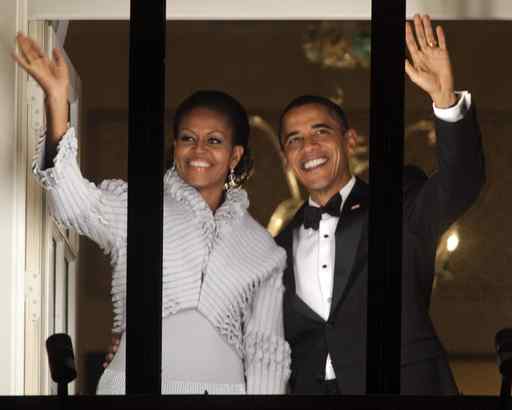
President Barack and Michelle Obama wave to the crowd from a balcony at the Grand Hotel in Oslo, Norway, after he accepted the Nobel Peace Prize at the city hall in 2009.
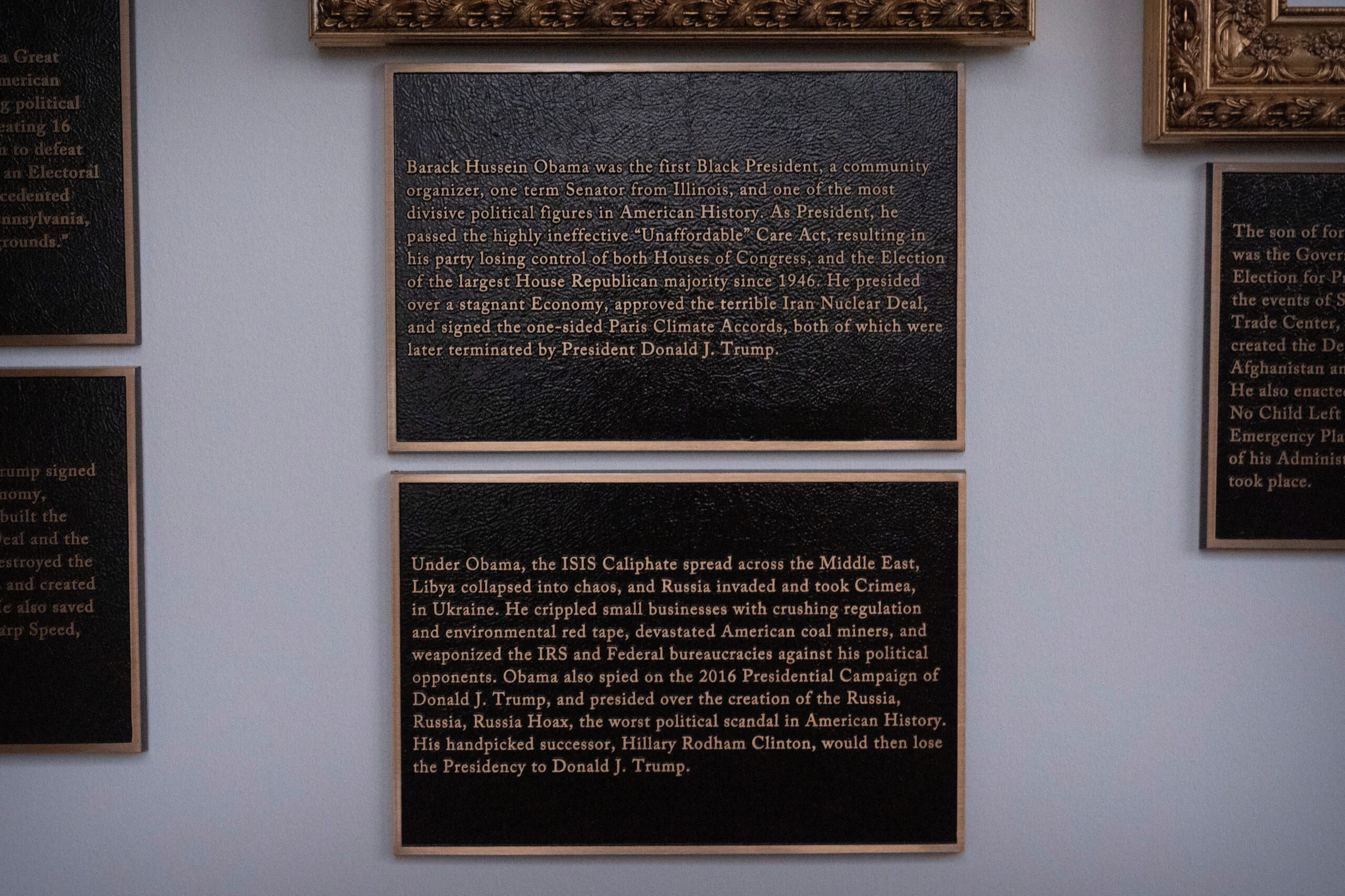
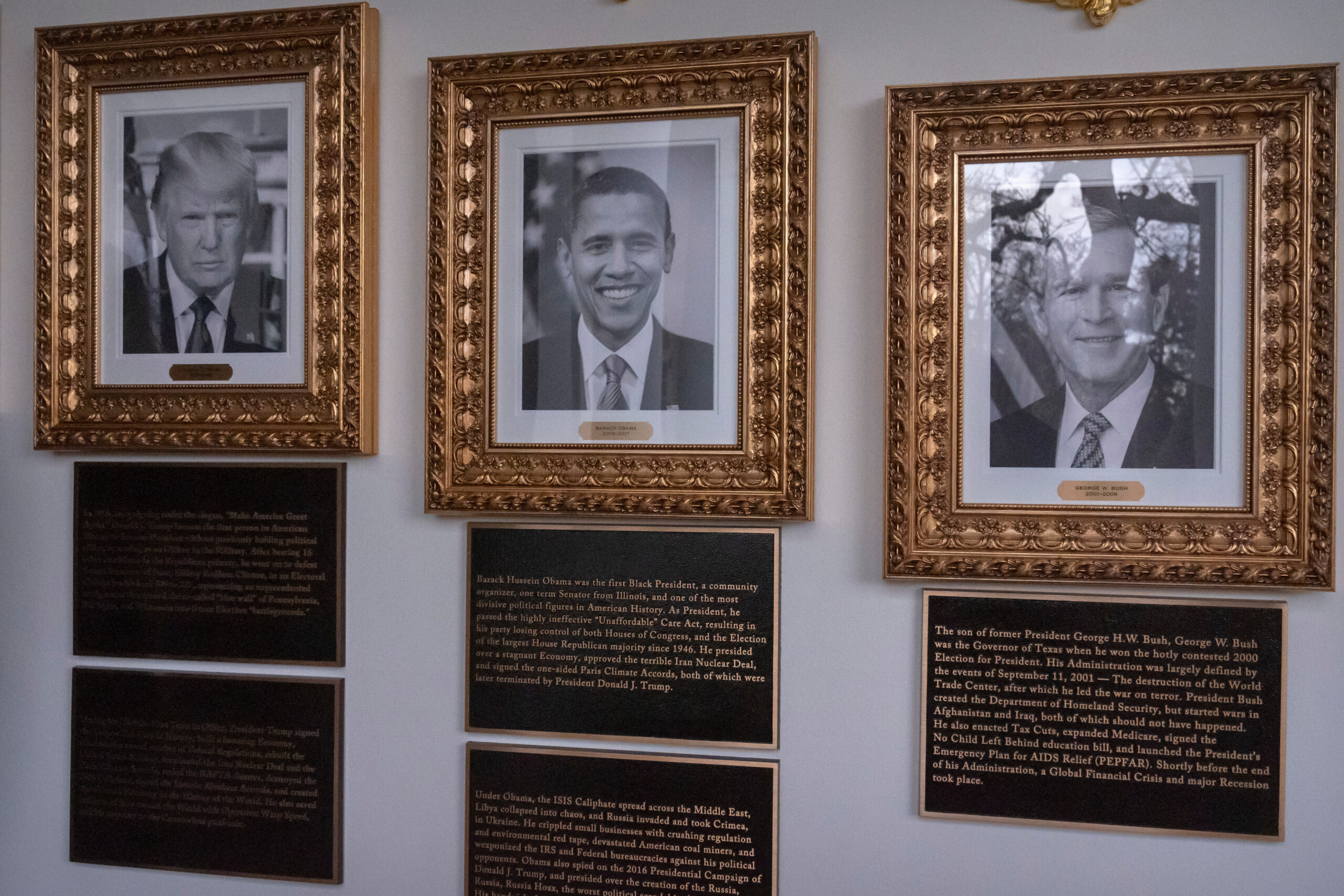
Trump also ordered the installation of plaques under the photos of his presidential predecessors, and used the one under Obama’s to bash his legacy, calling him “one of the most divisive political figures in American history” and making other false claims.
Plaques of explanatory text are seen beneath a framed portrait of former President Barack Obama on the Presidential Walk of Fame on the Colonnade of the White House, Wednesday, Dec. 17, 2025, in Washington. Portraits of President Donald Trump and former Presidents Barack Obama and George W. Bush with plaques of text below are seen on the Presidential Walk of Fame on the Colonnade of the White House, Wednesday, Dec. 17, 2025, in Washington.
White House press secretary Karoline Leavitt tried to walk Trump’s post back, writing, “This is from an internet meme video depicting President Trump as the King of the Jungle and Democrats as characters from the Lion King.”
She added via text, “Please stop the fake outrage and report on something today that actually matters to the American public.”
There’s nothing fake about our outrage. We see Trump. We know what he’s doing by pulling out that old racist trope. Even Black Trump supporters like Sen. Tim Scott (R., S.C.) see this for what it is. “Praying it was fake because it’s the most racist thing I’ve seen out of this White House. The President should remove it,” Scott wrote on social media.
To deal with the snow, the city has deployed roughly 1,000 workers and 800 pieces of snow-removal equipment, and instituted programs to break up ice at crosswalks and streets in residential neighborhoods, among other efforts. But to some Inquirer readers, the solution has been right in front of us all along.
“I know we used to toss snow into the river,” one reader wrote via Curious Philly, The Inquirer’s forum for questions on all things local. “What happens to it now?”
In the past, the city has dumped snow into the Delaware River and the Schuylkill on various occasions. But in recent decades, that practice has been used rarely — if at all — primarily over environmental concerns. Here is what we know:
An old practice
Newspaper archives show references to dumping snow in the Delaware and Schuylkill dating back at least to the late 19th century — during a storm colloquially known as the “Great Arctic Outbreak of 1899.” That storm dumped 19 inches of snow on Philadelphia around Valentine’s Day.
In the aftermath, the city sought permission from its Board of Port Wardens to dump snow in the rivers surrounding Philadelphia, but there were concerns over the “considerable amount of dirt” that would be thrown into the water.
The practice was utilized in the winter of 1909, when 21 inches of snow fell. Initially, snow was dumped into the rivers at three points, but officials later expanded approved dumping sites to be “at any point and from any wharf” along either river.
“It was contended that this was perfectly proper, since snow is not refuse, but will readily melt after it is thrown into the water,” The Inquirer reported at the time.
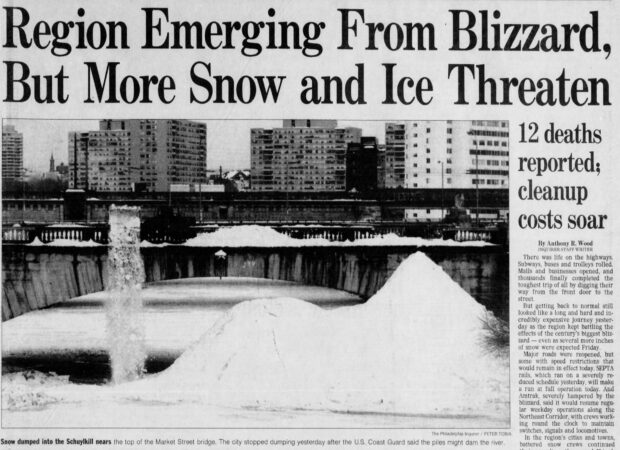
Article from Jan 10, 1996 Philadelphia Daily News (Philadelphia, Pennsylvania) <!— –>
The blizzard of ’96
Perhaps the most well-known modern use of Philadelphia’s rivers as a snow dump came in 1996, when a debilitating 30.7 inches of snow fell in early January. The city was left with few options, and got a permit from state environmental officials to dump snow in the rivers, Inquirer reports from the time indicate.
Within days, roughly 500 tons of snow were dumped into the rivers, and that total would grow into the thousands. Famously, city trucks were spotted dumping snow into the Schuylkill from the Market Street Bridge — until being asked to stop by the U.S. Coast Guard.
“We did advise the city to stop dumping snow into the Schuylkill. Our concern was the accumulation of ice in the river,” a Coast Guard spokesperson said at the time. The piles of snow in the river ran the risk of forming dams that could cause flooding.
The piles became so severe they had to be beaten back down. By mid-January, one Inquirer report noted, wrecking balls were sent in to break up at least one mountain of snow that threatened to clog the Schuylkill.
Article from Feb 22, 2003 The Philadelphia Inquirer (Philadelphia, Pennsylvania) <!— –>
An ‘option of last resort’
The city again in 2003 dumped snow into Philadelphia’s rivers, this time in an attempt to mitigate the impacts from a February storm that left about 19 inches of the white stuff. This time, though, city officials seemed to at least feel bad about it, calling it an “option of last resort.”
For this storm, roughly 400,000 pounds of snow was dumped into the Schuylkill. But along with it went road salt, antifreeze, trash, and other pollutants, prompting concerns from regional environmental groups. That pollution, they said, could harm marine life and devastate the riverbanks.
“All the stuff that’s on the road surface goes into the water,” Delaware Riverkeeper Network head Maya van Rossum told The Inquirer that year. “This is not the appropriate way to deal with the snow. There are plenty of places on the land to put it.”
The dumping, Streets Commissioner Clarena Tolson said, was limited. And the Pennsylvania Department of Environmental Protection said it asked the city to only dump “virgin snow” into the rivers.
“We’re going to take some of that down to the Navy Yard. We will not dump in the river,” Tolson said. “There are environmental concerns with placing snow in the river. The snow accumulates pollutants and salt, and dumping it in the river would be a very extreme measure.”
The Center for Environmental Policy at the Academy of Natural Sciences applauded the Nutter administration’s decision, writing in a letter to The Inquirer that the move would “prevent serious environmental damages to the river.”
“Urban precipitation, including snow, acquires a witch’s brew of contaminants such as oil, grease, litter, road salt, and lawn fertilizer,” director Roland Wall wrote. “We salute the city for making a commonsense decision that will protect one of Philadelphia’s natural treasures.”
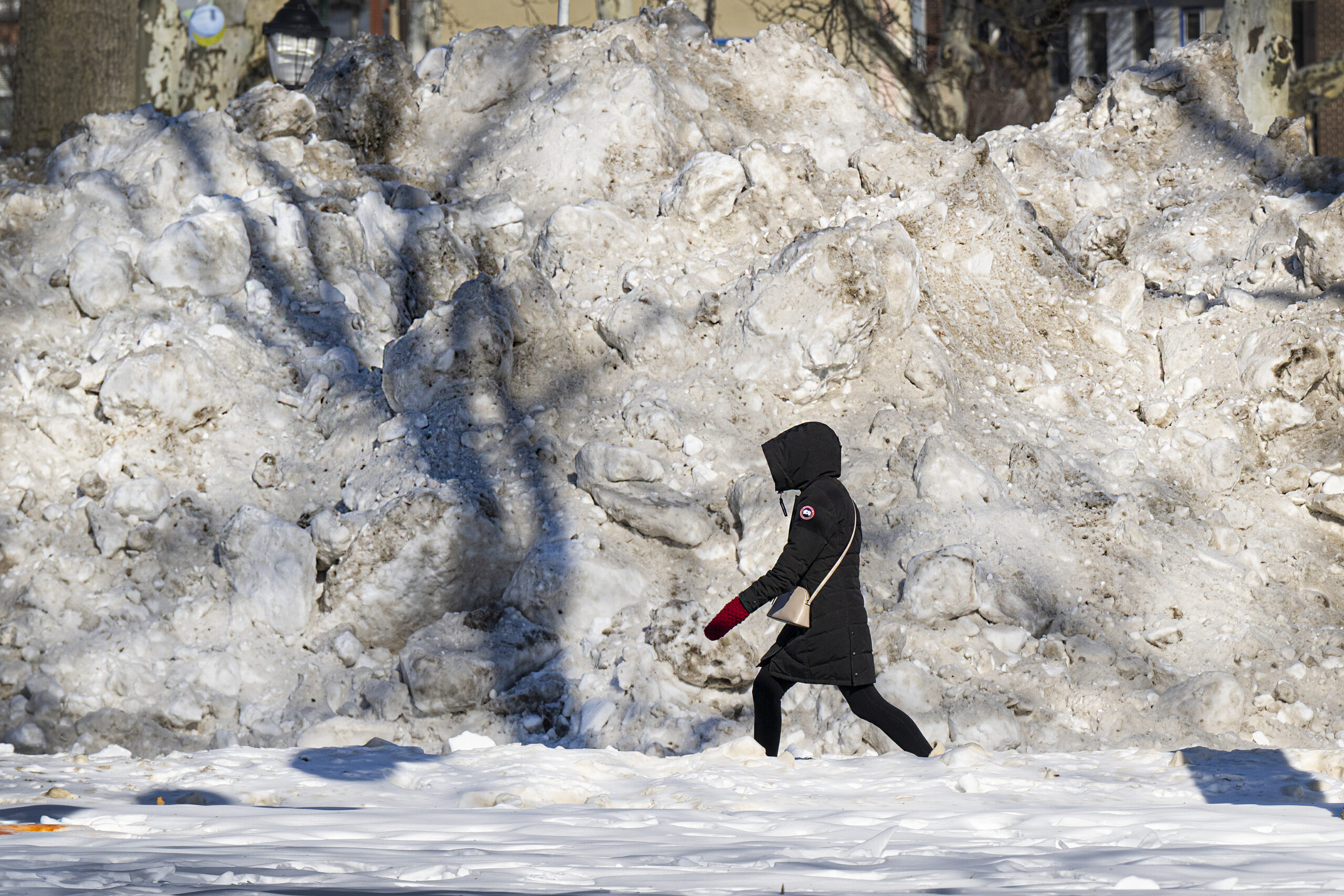
A pedestrian walks past a large pile of snow and ice along the Benjamin Franklin Parkway days after a fierce winter storm dropped up to 9 inches of snow and sleet, with freezing temperatures leaving large banks of ice and snow on streets and sidewalks in Philadelphia, Monday, Feb. 2, 2026.
So what do we do now?
On Wednesday, Carlton Williams, the city’s director of clean and green initiatives, said the city does not dump snow in Philadelphia’s rivers, as that practice is “not an EPA standard.” Instead, the city has gravitated toward removing the snow from city streets and placing it at 37 snow dump sites around Philadelphia.
The city did not respond to a request for comment regarding those dump sites’ locations. Some of them contain mounds of snow up to 12 feet high that stretch for blocks, Williams said Wednesday. Officials also brought in a snow-melting machine from Chicago.
Pennsylvania Department of Environmental Protection guidelines, meanwhile, recommend municipalities push snow at least 100 feet away from surface waters, where it will be able to melt with less environmental impact.
“Dumping of snow directly into a stream carries with it the shock of loading de-icing chemicals and anti-skid agents,” the agency said in a recent recommendations document. “Allowing a natural melt provides a slow release of the water, dilutes the chemicals, and provides filtration of the solids through the soil.”
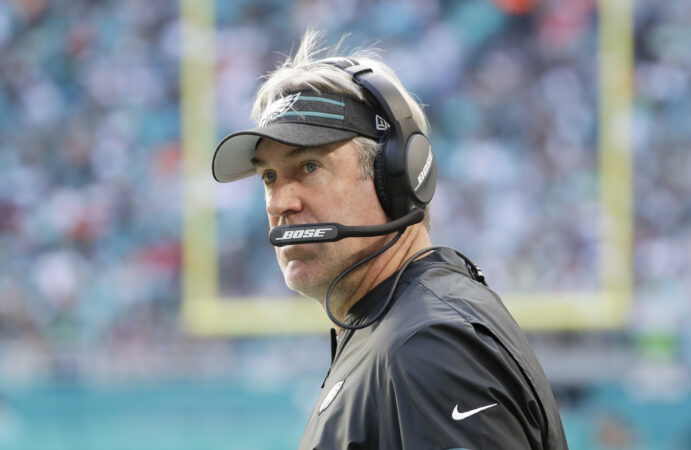
With the release of ESPN’s new 30 for 30 about the Philly Special on Friday night, Doug Pederson is back on the minds of Eagles fans. And that’s not the only reason why. The former Eagles coach was also spotted this week answering fan questions in an unusual way: over the public address system of an airplane.
Pederson talked about seeing Jalen Hurts grow after they drafted him in 2020, despite already having Carson Wentz as their starter. He also offered some advice for new offensive coordinator Sean Mannion.
"You know, we drafted Jalen Hurts for a reason."
They asked Doug Pederson about the new OC hire and he spent 90 seconds waxing poetic about his QB instead. pic.twitter.com/lpgrMOkUOP
“We drafted Jalen Hurts for a reason,” Pederson said over the microphone. “And we saw something in Jalen Hurts that we felt like he was going to be the starter at some point, he was going to be in the franchise at some point. Sooner, obviously, than later. In his defense, I think this is going to be his sixth offensive coordinator in his career.”
A former quarterback and coordinator himself, Pederson said he understands how difficult that can be, and noted that the Eagles have managed to be very successful despite all the turnover.
“That’s hard,” Pederson said. “But yet you look at the success the Eagles have had over the course of, really, since he’s started. They’ve won a Super Bowl, they’ve been in another Super Bowl. They’ve been to many playoff games. They’ve won a ton of football games. And, every year they’ve had a different offensive coordinator.”
Former offensive coordinator Kevin Patullo, who was replaced this offseason by Mannion, faced heavy criticism from fans during the 2025 season due to the team’s struggles on offense.
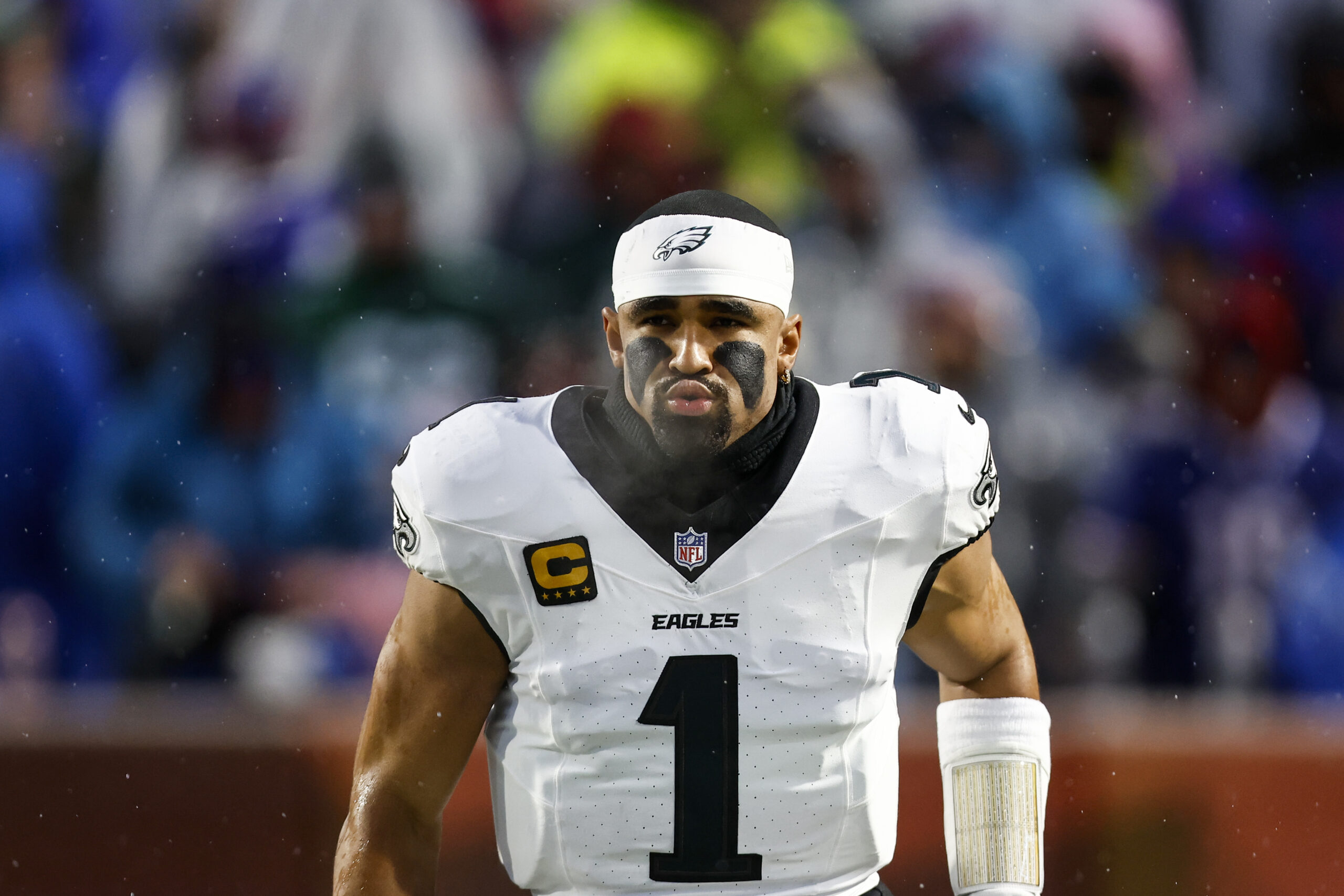
Philadelphia Eagles quarterback Jalen Hurts will have another new offensive coordinator next year.
So Pederson’s advice to the Birds’ new OC? Work with Hurts.
“I don’t know a ton about [Mannion]. I just know he got to come in and he’s got to work with Jalen. He’s got to figure out what Jalen does best,” Pederson said. “Utilize his strengths, utilize the talent on offense get the run game going to where it was a year ago when they won the Super Bowl. If he does that then they’re going to have a lot of success moving forward.”
According to the fan on the flight who posted the viral video on Reddit, Pederson was there as part of a FanDuel Super Bowl event and took part in an interview before answering fan questions — like who he would rather have on his team, Tom Brady or Patrick Mahomes. Pederson also gave his prediction for Sunday’s Super Bowl, where he picked the Seattle Seahawks over the New England Patriots.
Pederson has not coached since the 2024 season after he was fired following a three-year stint with the Jaguars. But he’s open to returning — and according to the Redditor on the flight, Pederson said he has some interest in currently open offensive coordinator positions, but that he is also enjoying spending time with his wife.

 –>
–>  –>
–>  –>
–>