Blog

  • Advocates say Delaney Hall detainees have ended hunger strike

    Advocates say Delaney Hall detainees have ended hunger strike

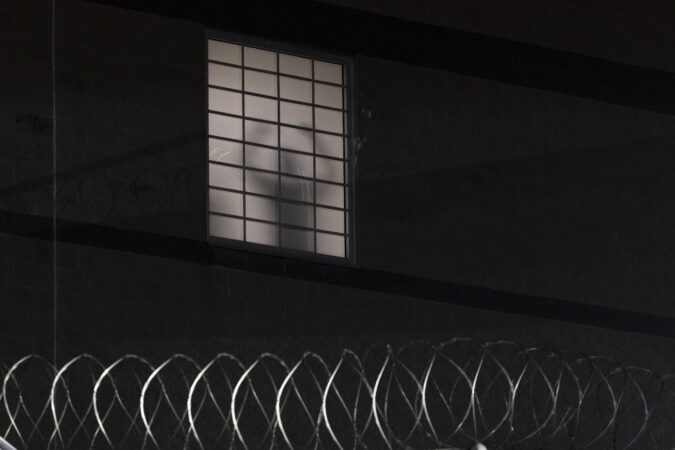
    A hunger and labor strike by detained immigrants at Newark migrant jail Delaney Hall that drew national attention and sparked weeks of violent protests outside the detention center has effectively ended, immigration advocates said Monday.

    The detainees ended their strike because of the actions taken by the jail’s guards, and not because conditions behind bars have improved, the advocates said.

    “Because of the intimidation tactics, the disciplinary consequences for folks to be placed in segregation, [detainees] have now resorted to going back to job assignments and eating,” said Sally Pillay, an advocate with Eyes on ICE who has spent months outside of the migrant jail aiding families of detainees.

    A request for comment from the U.S. Department of Homeland Security was not immediately returned. Federal officials have said for weeks that detainees never engaged in a hunger or labor strike.

    More than 300 detainees inside the immigration detention center said they launched the strike May 22 to call attention to what they called inhumane conditions, including inedible food and poor treatment by guards. Delaney Hall soon became a national flashpoint, attracting members of Congress, state officials, and sustained crowds of protesters to Doremus Avenue in Newark on a near-daily basis.
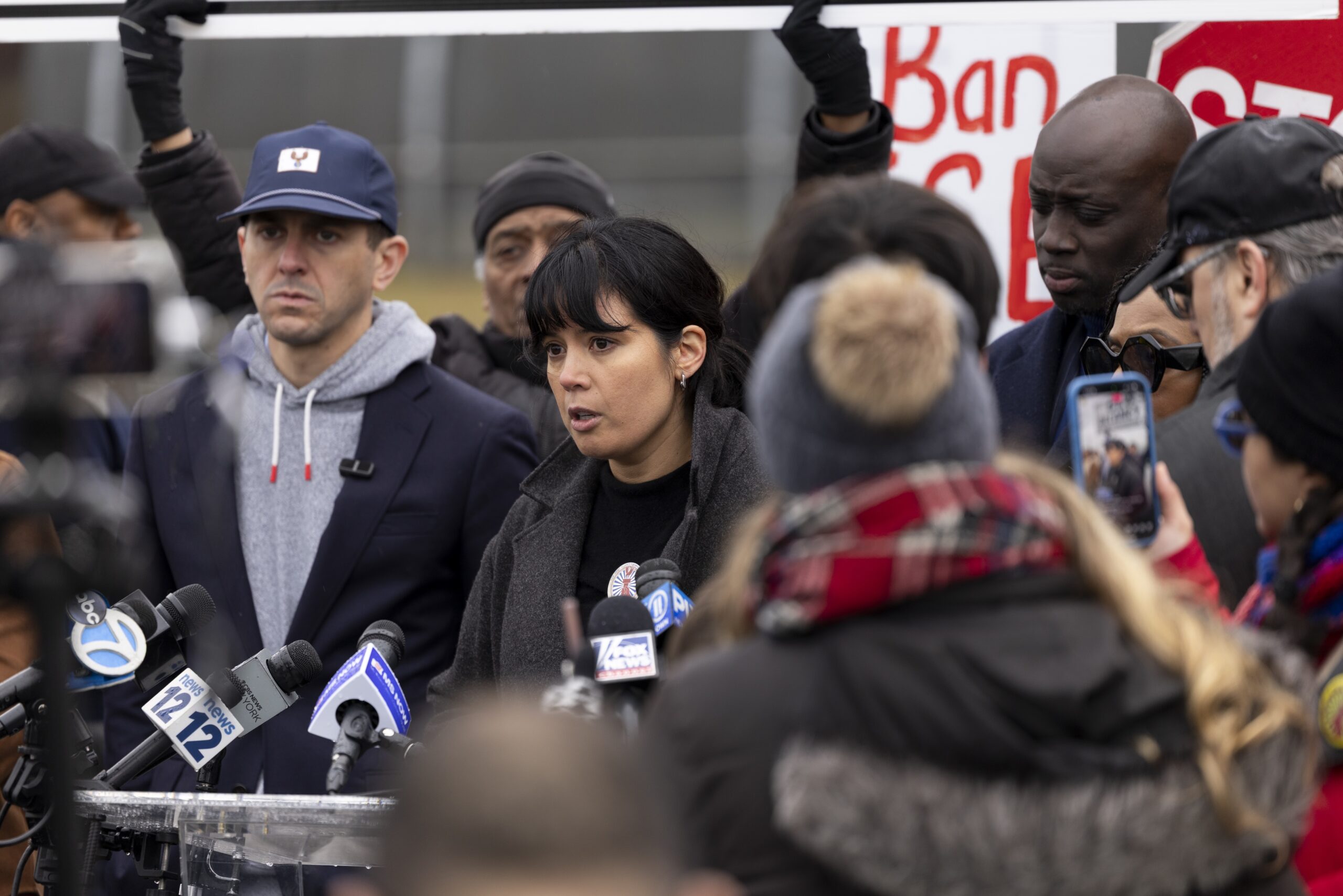
    Amy Torres, the executive director of New Jersey Alliance for Immigrant Justice, speaks outside Delaney Hall on Tuesday, Dec. 23, 2025.

    Amy Torres, executive director of the New Jersey Alliance for Immigrant Justice, said the tactics used to break the strike are nothing new. Some detainees were transferred out of the facility as a “means of punishing them for being part of that dissent,” she said.

    Torres said among those transferred was a 20-year-old man who crossed the border at 18. He was transferred in the last two days and his location remains unknown as of Monday, she said.

    “There are hundreds more that have disappeared,” Torres said. “There’s no way to account for where they are. Are they OK? What’s going on with them? It’s pure heartbreak.”

    Pillay said activist groups have tracked detainees to facilities in Louisiana, Texas, Pennsylvania, California, Arizona, and Colorado.

    “These transfers have had devastating consequences,” she said. “We know that these facilities are in remote locations where people do not have access to their lawyers, to their families, and their support networks.”

    She noted that detainees in the units most active in the strike were deliberately broken up, with people dispersed throughout the facility. Detainees have also raised new concerns inside the jail, like discolored drinking water and weeks without access to hot water, Pillay said.

    Family visitation, which was briefly suspended during the strike, was reinstated with sharp restrictions. Pillay said visitations have been cut to 30 minutes, are only offered twice a week in some units, and are limited to immediate family members on an approved list. She said Geo Group — the private company that runs the detention center — has not posted information about the new visitation schedule online, so families show up expecting the old schedule and are turned away.

    Detainees have also been blocked from speaking with members of Congress conducting oversight visits. Detainees must now sign a privacy waiver, provided only in English, before a member of Congress can speak with them, and forms must be submitted in advance of the visit, a process Pillay said is “to probably intimidate and use retaliatory tactics against the individuals who speak out.”

    On Father’s Day, Pillay said of the 80 family members who arrived to visit loved ones, more than 30 were turned away.

    “We saw heightened emotions, distraught families, and loved ones outside,” she said.

    Dozens showed up for a protest Sunday. Some tied neckties to the fence outside the jail in honor of the fathers who remain detained and some held up signs that read, “Free the dads.”

    One protester holding an upside-down American flag near the driveway of the prison was hit by a car entering the jail parking lot, video shows. Newark Public Safety Director Emanuel Miranda said the incident is under investigation.

    “Federal agents are brutal, abusive, and reckless with the public,” Torres said. “We can only imagine what they’re doing to people in detention behind closed doors.”

    This story originally appeared on New Jersey Monitor.

  • Supreme Court restores conviction in 1979 murder of Etan Patz

    Supreme Court restores conviction in 1979 murder of Etan Patz

    NEW YORK — The Supreme Court on Monday reversed a lower court decision that had reopened the case of the man convicted in the killing of Etan Patz, a 6-year-old boy whose 1979 abduction in Manhattan reshaped American childhoods.

    The court’s unsigned opinion restores the conviction of the man, Pedro Hernandez, who the 2nd U.S. Circuit Court of Appeals had said last year was entitled to a new trial.

    The three liberal justices — Sonia Sotomayor, Elena Kagan and Ketanji Brown Jackson — noted their objection to the majority’s order.

    Hernandez was found guilty in 2017 of kidnapping and murdering Etan, but an appeals court overturned that judgment in July. Months later, the Manhattan district attorney’s office, which prosecuted Hernandez, asked the nation’s highest court to review the decision.

    On Monday, a defense lawyer for Hernandez, Harvey Fishbein, said the Supreme Court’s order meant his client would not get a new trial and that his team was “terribly disappointed.”

    “We firmly believe that an innocent man is in jail for a crime that he did not commit,” Fishbein said.

    In a statement, Manhattan District Attorney Alvin Bragg said the case had “changed a generation of New Yorkers.”

    “This office has remained steadfast in its pursuit of justice for Etan and the Patz family and will continue to stand by this important conviction,” he said.

    The Supreme Court’s action sends the matter back to the lower courts and is the latest development in a case that stumped investigators for decades. Hernandez, a handyman who lived in New Jersey, was arrested in 2012 and first put on trial in 2015. But after 18 days of deliberations, the trial ended in a hung jury. The case went back to trial and, in 2017, a Manhattan jury convicted Hernandez after nine days of deliberations.

    The reversal of Hernandez’s conviction last year reopened a case that had appeared finally settled. From the first days Etan went missing, when he was walking the two blocks from his home in the SoHo neighborhood to a school bus stop, the case generated intense public interest. Etan’s abrupt disappearance — and the killing of 6-year-old Adam Walsh two years later — ushered in an era of heightened caution among American parents.

    In its 10-page opinion Monday, the Supreme Court said the 2nd Circuit got it wrong and exceeded its authority.

    The lower court opinion “appears to reflect serious doubt about the reliability of Hernandez’s confessions,” the majority said, but the relevant statute does not permit federal courts to “disturb a state-court conviction based on such an evaluation of the evidence.”

    The liberal justices did not explain their disagreement. The ruling was issued as part of the court’s routine orders and without the justices holding oral arguments.

    For decades, investigators in Manhattan struggled to figure out what happened to Etan. His body was never found, and in 2001, he was declared legally dead.

    The critical break in the case came in 2012, when one of Hernandez’s relatives contacted investigators. New York police officers traveled to Hernandez’s home in Camden, N.J. After about seven hours of questioning, police said, Hernandez confessed — first before being read his rights, and twice more after.

    Hernandez was 18 at the time of Etan’s disappearance and worked at a bodega where investigators believed Etan had been killed.

    There was no scientific evidence linking Hernandez to the crime, and his confessions to investigators were quickly called into question.

    Hernandez’s lawyers argued that the statements were invented to placate the police. They asked the court to suppress them, saying they were a result of Hernandez’s low IQ and the product of psychotic delusions. The judge nonetheless said that they could be used as evidence.

    During jury deliberations at the second trial in 2017, the jury asked the judge whether they should disregard one of Hernandez’s later confessions if they found that his first one was not voluntary. The judge gave a one-word answer: No.

    A federal appeals court found that the judge should have explained a Supreme Court precedent about such serial confessions and ordered that Hernandez be released from his 25-years-to-life sentence or get a new trial.

    Prosecutors in Manhattan, led by Bragg, argued to the Supreme Court that Hernandez’s conviction should not have been overturned because it was not based on an “error in the decades-long investigation, in the admission of Hernandez’s confessions or in the evidence presented at trial.” The appeals court had said that the judge overseeing the trial, Maxwell Wiley, had violated federal law and therefore invalidated a jury’s verdict.

    In their response, Hernandez’s lawyers said that the judge’s instruction to the jury had touched on the central issue in the case.

    “Far from exhibiting the kind of clear error for which summary reversal is typically reserved,” his lawyers wrote, “the 2nd Circuit’s decision is correct.”

    This article originally appeared in the New York Times.

  • A Delco judge denied a motion to dismiss trespassing charges in Swarthmore protest case

    A Delco judge denied a motion to dismiss trespassing charges in Swarthmore protest case

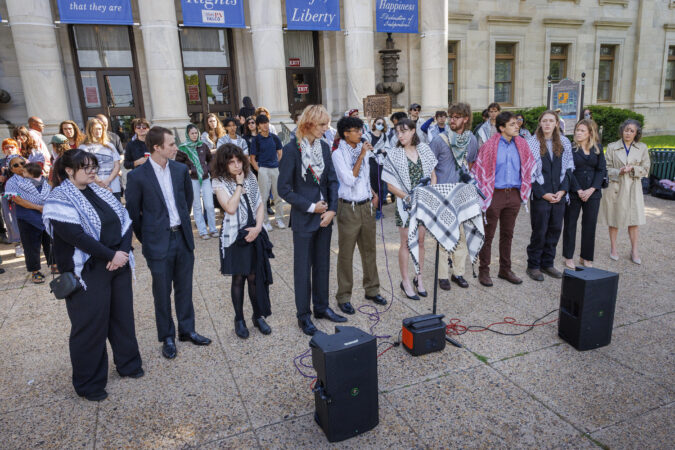
    A Delaware County judge on Monday denied a motion to dismiss criminal charges filed against nine people for refusing to leave a pro-Palestinian encampment on Swarthmore College’s campus last spring, setting the stage for a trial next week.

    Judge Dominic Pileggi ruled that prosecutors had presented sufficient evidence for the case to proceed to trial and allow a jury to decide whether the so-called Swarthmore 9 had trespassed.

    The group was arrested and briefly detained outside the college’s Trotter Hall in May 2025 when officers from surrounding police departments dismantled their encampment protesting the war in Gaza and Swarthmore’s IT contract with Cisco, a company that does business with the Israeli government.

    Of the nine people arrested, only one, Jace Boland, is a student at the college. Another, Brendan Cook, is a former student who was suspended for participating in an earlier protest in 2024, but the rest are not affiliated with Swarthmore, according to school officials.

    Members of the group — Boland, Cook, Jonathan Britt, Mara Helen Cahill, Daria C. Dressler, Thomas Falcone, Colin Buckley Malcarney, Riley J. McManus, and Andrew Thomas — have all been charged with trespassing, a third-degree misdemeanor.

    District Attorney Tanner Rouse has said his office offered each member of the group a plea deal that would see those charges reduced to summary offenses, similar to traffic citations, that could be resolved by paying a fine.

    The group has refused, saying pleading guilty would set a precedent on how colleges across the country could curtail students’ protest rights.

    During Monday’s hearing, the group’s attorney, Marni Jo Snyder, argued that Swarthmore and county prosecutors violated the protestors’ constitutional rights by arresting them.

    She noted that Swarthmore changed its policy allowing protests on its campus to explicitly outlaw encampments after a similar, monthlong demonstration in the same location in 2024.

    Policing a specific type of expressive speech, she said, is illegal.

    “The policy is wrong, the repeated orders to leave are wrong,” she said. “These are improper responses to constitutionally protected speech.”

    Snyder said that, though Swarthmore’s campus is private property, administrators have allowed previous demonstrations to be held there, as well as other quasi-private events. The arrests in this case, she said, showed that prosecutors were specifically targeting demonstrators protesting the war in Gaza.

    Samantha Door, who represented the district attorney’s office at the hearing, disputed that, saying the protestors’ conduct, and not the purpose of the encampment, was the reason criminal charges were filed.

    Swarthmore issued multiple warnings to the group to disperse over the course of three days, Door said, including one final warning 10 minutes before the encampment was dismantled.

    Other protestors who left the encampment and continued to chant and hold protest signs were not arrested, she said.

    Also, Door said administrators raised concerns about public safety, since many of the protestors wore masks and refused to identify themselves, vandalized campus property with graffiti, and used pallets and other materials to create barricades around the encampment.

    The trial in the case is scheduled to begin with jury selection on June 30.

  • Quarantine comes to an end for the last of the hantavirus ship passengers in Nebraska

    Quarantine comes to an end for the last of the hantavirus ship passengers in Nebraska

    OMAHA, Nebraska — The last eight American passengers who endured 42 days in a specialized hospital quarantine unit after exposure to an unusual hantavirus outbreak on a cruise ship that killed three people have left the Nebraska facility.

    U.S. Department of Health and Human Services officials on Monday confirmed the end of the quarantine.

    “Through close collaboration among federal, state, and local partners, HHS helped protect the American people, contain potential risks, and bring this response effort to a successful conclusion,” HHS spokesperson Emily Hilliard said in an email.

    More than 120 people were evacuated from the MV Hondius in Spain’s Canary Islands early last month — including the 18 Americans who wound up in the National Quarantine Unit in Omaha — though most were from other countries.

    In addition to those people evacuated by health officials in full protective suits, at least 30 other passengers had left the ship earlier before the outbreak was documented. That included seven Americans, who were allowed to monitor for any symptoms at home. When the ship eventually docked in the Netherlands, 25 crew members and two medical personnel were on board and had to quarantine.

    The World Health Organization didn’t immediately respond Monday to questions about the status of all the other people who had to quarantine around the globe. A total of 13 cases of the virus, including the three who died, were identified among people who were on the ship.

    Most Americans returned home but some were forced to quarantine

    One of the American passengers, Angela Perryman, had been held against her will and against the recommendation of a government medical expert. She said in an interview Monday passengers were told that the quarantine monitoring period ended Sunday at 2 p.m. She left on a flight that evening. Others were flying out Monday, she said.

    “We were locked in our rooms until 1:55. And at 2 o’clock, ‘OK, well, everybody walk out and go home,’” Perryman said, speaking from her Florida home.

    Some stayed the night elsewhere in Omaha, but Perryman pushed for a flight home that evening. The government paid for the flights, she said.

    Seven of the last remaining patients stayed there voluntarily, but Perryman was forced to stay as the result of a controversial quarantine order that was deemed unnecessary even by some health officials.

    Perryman and seven others spent six weeks at the National Quarantine Unit at the University of Nebraska Medical Center. That monitoring period was set because symptoms of hantavirus have taken as long as 42 days to appear in previous outbreaks. None were reported to have developed the illness.

    Ten others who were at the facility were allowed to leave earlier under an agreement that they would be closely monitored in their home states.

    Outbreak developed on a small cruise ship

    The passengers were on a Dutch cruise ship, the MV Hondius, traveling in the South Atlantic that became the setting of a hantavirus outbreak that killed three people, including a Dutch couple who health officials believe were the first exposed to the virus while visiting South America.

    Hantaviruses usually spread when people inhale contaminated residue of rodent droppings, but the hantavirus that caused the outbreak, called the Andes virus, may be able to spread between people in rare cases, health officials say.

    Some 25 Americans were on the ship, including about seven who disembarked in April and 18 who remained on board. Sixteen were evacuated to the Nebraska quarantine unit in Omaha on May 11, and two other Americans joined them a few days later.

    Passengers staying in Omaha enjoyed Nebraska hospitality

    During the passengers’ stay, local Omaha restaurants and food trucks delivered special meals for them to enjoy almost daily. And the nurses sometimes made Starbucks runs to deliver some of the passengers’ favorite drinks.

    The rooms they stayed in are like hotel rooms equipped with a desk, television, internet connection, and exercise equipment to help the passengers pass the time.

    One of the passengers, Jake Rosmarin, on Monday morning posted an “I’m finally coming home” video that showed him leaving his room at the quarantine center, hauling two suitcases and a backpack and turning out the lights as he walked out the door. Later Monday, he posted a video of the Omaha skyline shot out the window of his plane as he headed home to his fiance in Boston and his family.

    Rosmarin, who is a travel blogger, posted a tearful video Sunday thanking the staff of the quarantine unit, the Omaha community, and his family and friends who helped him get through quarantine.

    “I want to thank the Omaha, Nebraska, community for welcoming us with open arms and showing us complete kindness and generosity. And a big thanks to all of you who have helped me get through this because I really don’t know if it would have been as easy without the support from strangers,” he said while wearing a Nebraska Huskers sweatshirt that someone sent him.

    Florida wouldn’t agree to monitor passenger round the clock

    Perryman had a darker take. She was forced to stay after Florida officials refused a federal demand that the state provide round-the-clock surveillance on her if she were returned home. This happened even as they had started making travel arrangements for the passengers weeks ago, she said.

    “Nobody actually expected anybody to get sick at that point,” she said. “Everybody was well aware that we were all going home on commercial flights.”

    She called the six-week quarantine “a political stunt.”

  • Confirmed Ebola cases in Congo outbreak top 1,000 with 254 deaths, authorities say

    Confirmed Ebola cases in Congo outbreak top 1,000 with 254 deaths, authorities say

    BUNIA, Congo — Confirmed cases in the Ebola outbreak in eastern Congo have reached 1,003, including 254 deaths, officials said, as tracing those who had been in contact with patients remains a major challenge.

    A total of 100 people have recovered in the outbreak concentrated in the Ituri province since it was declared on May 15, Congo’s Ministry of Health said Sunday. At least 365 patients are in hospitals or in isolation, it said.

    The Ebola outbreak caused by the rare Bundibugyo virus, which has no vaccines or treatment, was the worst ever in its first month. Officials admit there could be far more cases they still don’t know about and that the peak of the outbreak is still ahead.

    Contact tracing remains a key issue for local authorities, who have only achieved a 55% coverage rate, the ministry said.

    “If you want to control an outbreak, especially Ebola outbreak, you must know the index case. We don’t have confidence on when this outbreak started,” the Africa Centers for Disease Control and Prevention Director-General Jean Kaseya told the Associated Press last week.

    Officials also are yet to identify the patient zero and trace more than 35,000 people who have come in contact with infected individuals as of last week, authorities said.

    That’s partly because eastern Congo is also battling ongoing violence from rebels. In Ituri, attacks by the Islamic State group-backed Allied Democratic Force have cut off access to many villages and forced people to flee their homes, including those sheltering in overcrowded camps and others constantly on the move.

    More than a month into the outbreak, officials believe the disease continues to outpace response efforts and no one knows its true scale.

    Displaced persons at risk

    At the Kigonze displacement camp in Bunia, the capital of Ituri province, camp officials said Friday that 10 people had died last week in unusual circumstances, raising the fear of a possible outbreak in the camp of over 20,000 displaced people.

    There had been no Ebola case confirmed at the site, camp officials said, but added that the death rate was unprecedented and called for investigation.

    The U.N. refugee agency has said at least 2 million people forcibly displaced from their homes, including over 320,000 refugees, live in areas at risk of Ebola in Congo.

    In a statement on Friday, the agency said it was “deeply concerned by the accelerating spread” of the virus and “the growing risks it poses to displaced communities across the region.”

    “If a disease or epidemic were to spread among the thousands of people living at this (Kigonze) site, it would be a real catastrophe given our already very precarious living conditions,” said Charité Banza, a civil society leader in Ituri.

  • Top Justice Department officials can remain part of prosecution of press gala attack, judge rules

    Top Justice Department officials can remain part of prosecution of press gala attack, judge rules

    WASHINGTON — A federal judge on Monday denied a request to disqualify top Justice Department officials from supervising the prosecution of the man charged with trying to kill President Donald Trump at the White House Correspondents’ Association dinner.

    Cole Tomas Allen had argued that involvement in his prosecution by Acting Attorney General Todd Blanche and District of Columbia U.S. Attorney Jeanine Pirro created a potential conflict of interest because they were among many administration officials present at the April dinner. Allen’s attorney also had raised concerns about the close friendship between Trump and Pirro, a former Fox News commentator.

    U.S. District Judge Trevor McFadden wrote in his ruling that neither their attendance at the dinner nor Pirro’s personal relationship with the president merited their disqualification. McFadden noted that Allen is not charged with attempting to harm Blanche and Pirro, and there is no evidence to suggest he even knew they would attend the dinner.

    “They are unlikely to be trial witnesses, nor do they meet the legal definition of victims,” wrote McFadden, who was nominated to the bench by Trump.

    Allen has been accused of trying to breach a security checkpoint armed with guns and knives. He has pleaded not guilty to various charges, including assaulting a federal official with a deadly weapon and attempted assassination of the president. He faces a maximum sentence of life in prison if convicted of the attempted assassination charge alone.

    Allen also is accused of firing a shotgun at a Secret Service agent during the attack, which disrupted and ultimately prompted an early end to one of the highest-profile annual events in the nation’s capital. The Secret Service officer who was shot once in a bullet-resistant vest fired his own weapon five times without hitting anyone. Allen, of Torrance, Calif., was injured but was not shot.

  • U.S. oil blockade means children in Cuba are missing school

    U.S. oil blockade means children in Cuba are missing school

    HAVANA — Axisa and Aron Alfonso, 6- and 7-year-old siblings in western Cuba, are luckier than most of their classmates: Their father takes them on their 1-mile commute to school on horseback.

    The children and teachers who live farther away rely on a spluttering, yellow Soviet-era school bus that no longer shows up. Teachers often do not make it to class, so the Alfonso family and their horse, Chocolate, turn around and go home.

    A U.S. oil blockade has set off an increasingly agonizing energy crisis that has brought transportation largely to a standstill. Fewer cars and buses are on the streets, and, as a result, fewer students and teachers are in school.

    “My children rarely go to school. They go, but the teachers don’t come,” said Sergio Alfonso Vásquez, 33, a farmer and the father of Axisa and Arona. “I’m afraid because they aren’t learning anything.”

    To save energy, the Cuban government in February cut school to half-days and resorted to COVID-era remote learning for college students.

    Then Cuba decided to end the school year two weeks early and scrapped college entrance exams for high school seniors after acknowledging that sleepless nights without electricity and a lack of school meals were exhausting students and teachers alike.

    The Cuban government’s measures are the latest blows to the country’s once vaunted public education system, which had long been a signature triumph of the country’s socialist revolution.

    Schools were already reeling from Hurricane Melissa last fall, which damaged hundreds of buildings; a mass departure of teachers in recent years; and shortages of textbooks, uniforms, and even pencils and paper.

    The extreme gasoline shortage finally brought the strained system to a stop.

    The Trump administration’s pressure campaign, including an executive order that prohibited countries from delivering oil to Cuba, is aimed at forcing Cuba’s government into making political and economic changes.

    But experts say the damage to the educational system is a striking example of the negative consequences of U.S. measures on regular Cubans and that, in the case of schools, amounts to a serious long-term threat.

    “Education in Cuba is at risk due to the current energy crisis,” Anne Lemaistre, the regional director of UNESCO, the United Nations education organization, said on Instagram. “It jeopardizes the future of an entire generation.”

    All 240 of Cuba’s boarding schools had to close this semester, Lemaistre, who is based in Havana, told the New York Times.

    The Cuban government did not respond to requests for comment, but government officials have publicly discussed the schools crisis.

    “After a night without electricity, getting a kid to school, figuring out how to engage him, and the class itself, is a challenge,” Naima Ariatne Trujillo Barreto, Cuba’s minister of education, said in February on state television. “And for the teachers, who also suffer just as much, without electricity or with the problem of whether or not they have water at home, concentrating on giving classes has been quite a challenge.”

    Even before the Trump administration started imposing stricter measures against the Cuban government, the country had already been in a steep economic decline for several years.

    The Cuban government said the school system was facing a shortage of roughly 26,000 teachers, many of whom had quit for better-paying jobs in the private sector.

    In Camagüey, a city in eastern Cuba, nearly 1,000 teachers had left the country for good in recent years, state-run media reported.

    After the COVID-19 pandemic, the country experienced a record-breaking exodus. More than 1 million people, including thousands of teachers who earned an average of $11 a month, left the country.

    President Donald Trump cut off international fuel deliveries in January and introduced a new package of aggressive economic measures aimed at starving the Cuban government of cash.

    The Trump administration argues that the United States is not to blame for Cuba’s energy crunch, but instead faults Cuban officials for not investing enough in infrastructure while diverting “energy resources to line their own pockets.”

    The State Department, in a statement, questioned why the Cuban regime claims it has no fuel for schools, while Interior Ministry officials who quash protests have enough gas to carry out their operations.

    Remote learning for college students, one of the austerity measures adopted by the Cuban government, has proved all but impossible. Blackouts stretch over 20 hours a day, and most students and teachers cannot pay for enough data on their phones to support remote classes.

    Instead, professors have sent lessons using WhatsApp voice notes.

    Leonard Gómez León, a third-year law student at the University of Havana, described the semester as “hellish.”

    “The power outages have been constant, the lack of internet connection, and so on, and it’s truly terrifying to see how badly we students are doing,” he said. “I feel like this is almost a lost semester.”

    Gómez, 21, is the vice president of the University Student Federation of Cuba, a state-run organization that has traditionally toed the government line. But he helped organize a protest in March outside the university, demanding the semester be canceled until in-person classes could resume.

    The vice minister of education, Modesto Ricardo Gómez, told the protesting students that the Trump administration was “massacring an entire society.”

    The collapse of education is a stark contrast to the gains that the country made after Fidel Castro toppled a U.S.-aligned dictator and seized power in 1959.

    He made education a priority at a time when the illiteracy rate was higher than 20% and mobilized 250,000 students and teachers to teach adults to read, particularly in the countryside.

    Illiteracy was all but eradicated. The island’s universal, free university system steadily expanded over the decades, churning out doctors and engineers.

    But the government, which has a near monopoly on such professions, has for decades paid minuscule salaries, undercutting economic incentives to study or teach. And the quality of Cuba’s education has deteriorated since the fall of the Soviet Union, the country’s main benefactor, which led to budget shortfalls.

    Katrin Hansing, an anthropologist at the City University of New York’s Baruch College who has written extensively about Cuba, said the education system is now “a shell of its former self.”

    University education in particular, she said, is largely on pause.

    “What is happening online is very poor in quality,” she said. “There’s only one, or two, or less, hours of electricity a day, and people in that time are trying to do everything to survive, from washing to cooking.”

    Alejandro Paradero Almenarios, 20, had enrolled at the University of Guantánamo, hoping to become a biology teacher, but dropped out in January, five months into his freshman year. He decided the effort was not worth it given the paltry wages he would earn teaching high school, the equivalent of $7 a month.

    “I was studying and studying for nothing,” he said.

    He now works full time making charcoal, which people now rely on to prepare meals because cooking gas is unavailable.

    Raúl Cabrera Oliva, 18, was in his last year at a vocational high school in Artemisa, west of Havana, that specialized in veterinary medicine.

    With few transportation options for most students, the school closed.

    “No transportation, no school,” Cabrera said.

    The government’s push to reduce school hours to half a day caused another set of problems. By the time parents and children, many of whom hitchhiked, arrived at school, there was no time for parents to go home and then return in time for dismissal.

    Mothers killed time waiting outside.

    Yaymaris Rodríguez López said she would leave her house in a village in western Cuba every morning at 7 a.m. with her two sons, ages 12 and 4, and stood on the side of the road, hoping someone would drive by offering a ride to her children’s school.

    Sometimes, 10 a.m. came and went, and they would still be waiting.

    “What am I going to do? I have to take them to school,” Rodríguez said. “They can’t grow up to be dumb.”

    This article originally appeared in the New York Times.

  • Amazon agrees to pay $3 million in Pennsylvania class-action settlement over unpaid wages

    Amazon agrees to pay $3 million in Pennsylvania class-action settlement over unpaid wages

    Amazon has reached a $3 million class-action settlement in Pennsylvania over allegedly unpaid wages during the pandemic.

    Employees had said they spent time off the clock before their shifts in COVID-19 screenings and were not paid for that time as state law requires, according to court documents.

    Amazon’s legal team has said that “time spent off the clock was minimal,” especially once company sites adopted temperature screenings via thermal cameras.

    A representative for Amazon did not immediately respond to a request for comment Monday.

    The class action lawsuit was originally filed in 2023 in the U.S. District Court for the Eastern District of Pennsylvania by Bobby Muniz, an Amazon employee at the company’s Easton fulfillment center.

    Muniz argued that the required health screening typically took 10 to 15 minutes before each shift, including the wait in line.

    “Both sides vigorously dispute the amount of time workers spent off the clock as a result of the COVID-19 screenings,” a recent court document indicates.

    The case went to mediation in October, and a proposed settlement was granted preliminary court approval earlier this month. A final approval hearing is set for November.

    Amazon employees who worked for the company in Pennsylvania before July 19, 2023, and underwent COVID-19 screening are eligible to be part of the class settlement.

    Eligible workers don’t need to take any further steps. Those who want to opt out must do so by Oct. 15.

  • Trump-endorsed de la Espriella holds slim lead in Colombia’s election as rival challenges vote

    Trump-endorsed de la Espriella holds slim lead in Colombia’s election as rival challenges vote

    BOGOTA, Colombia — Conservative political outsider Abelardo de la Espriella held a narrow lead Monday with almost all votes counted in Colombia’s polarized presidential runoff, as the ruling party’s progressive candidate vowed to challenge the results.

    De la Espriella, a business owner and lawyer who earned U.S. President Donald Trump’s endorsement despite never having run for office, led with 49.7% of the votes over lawmaker Iván Cepeda, with 99.9% of results released by electoral authorities. Cepeda, ally of outgoing President Gustavo Petro, had 48.7%.

    Election officials have not formally announced a winner.

    A victory by de la Espriella is expected to usher in policies that will reverse Petro’s agenda, including a contentious plan to hold parallel peace negotiations with illegal armed groups. Cepeda, Petro’s protégé, had pledged to push forward that strategy and other social reforms if he won Sunday’s vote.

    The election was colored by people’s fears of renewed internal conflict.

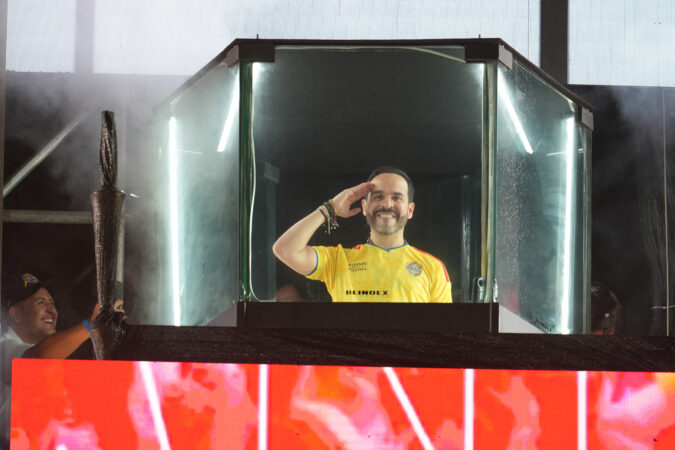
    “I will govern for all Colombians,” de la Espriella, nicknamed “The Tiger,” told thousands of supporters as he stood behind bulletproof glass in the northern city of Barranquilla on Sunday night. But his conciliatory tone changed as he spoke.

    “Pack your bags and prepare to become the opposition,” he added. “Make no mistake, Mr. Cepeda. You already know how fiercely the tiger roars.”

    Progressive candidate calls count “unofficial”

    Cepeda on Monday responded to de la Espriella’s remarks, warning him against threats, veiled or otherwise.

    “Let me be perfectly clear: We are half of this country in political terms, and we have a long history of resistance,” Cepeda said in the capital, Bogota. “We are very hardened. Don’t come threatening us. Neither your roars nor your screams frighten us.”

    He asked supporters to remain calm and maintain “exemplary behavior.” Hours earlier, people in the western city of Cali took to the streets, damaging a public bus, several surveillance cameras, and an ATM.

    The vote count showed that the municipality that includes Cali favored Cepeda with nearly 60%. Authorities there said four police officers were injured in the protest and two demonstrators were arrested.

    After the results became public Sunday, Cepeda characterized the count as “unofficial and non-binding” and announced that his team was challenging results from more than 30,000 voting stations. Petro also vowed to challenge the outcome.

    No recount has flipped the results of a presidential election in Colombian history.

    Sunday’s winner will begin a four-year term Aug. 7.

    The candidates pitched voters widely different strategies to protect the South American country from the nonstop violence, such as car bombs, kidnappings, disappearances, and forced displacements, that Colombians have lived with in previous decades.

    De la Espriella, 47, promised a heavy-handed approach to crime-fighting, including drug trafficking. He also said he plans to end Petro’s attempts to establish dialogue with multiple armed groups — an effort that has largely failed — and to build mega-prisons, emulating Salvadoran President Nayib Bukele’s aggressive policies. Those tactics have lowered homicide rates in the Central American country but have fueled accusations of human rights abuses.

    De la Espriella holds dual Colombian and U.S. citizenship. He’s a Trump supporter and a member of the Republican Party.

    “He Won, BIG!” Trump said on social media.

    ‘It’s always the same violence’

    Yolanda Hernández, who recycles trash for a living, voted for Petro in 2022 but cast her ballot for de la Espriella this time. While she acknowledged that Petro was unable to deliver on promises meant to help the poor because of congressional gridlock, she said Colombia cannot afford another four years under his vision for the country.

    “We want change in Colombia because it’s always the same violence, always the same thing,” Hernández, 49, said. “(Petro) said he was going to lower the cost of services, that he was going to lower the price of food, and everything is more expensive.”

    More than 426,000 voters chose a third, no-name option on the ballot meant to allow people to express dislike of both candidates. Another 29,000 voters cast blank ballots.

    Will Freeman, a fellow for Latin American Studies at the Council on Foreign Relations, said Sunday’s result shows the country “has not shifted overwhelmingly or decisively” against Petro’s project or for de la Espriella’s outsider “iron fist showmanship.”

    Freeman said the result also underscored Colombia’s regional divisions.

    “It’s regional, not just ideological, polarization; or rather, the two overlapping,” he said. “Ironically, de la Espriella’s iron-fist message performed best in the core of the country, not the periphery, which bears the brunt of Colombia’s violence.”

    Colombia’s illegal groups have more than 27,000 members.

    Last year, authorities recorded 14,780 homicides, the most since at least 2015, driven by clashes among illegal armed groups. Among those killed was conservative presidential hopeful Miguel Uribe.

  • ‘Snuffed her life out’: Man accused of randomly shooting CHOP nurse in Tredyffrin Township appears in court

    ‘Snuffed her life out’: Man accused of randomly shooting CHOP nurse in Tredyffrin Township appears in court

    Hours before Steve Jahn shot Megan Nieberle to death on a March evening this year, prosecutors said, he drove around Tredyffrin Township for hours with a gun in his hand.

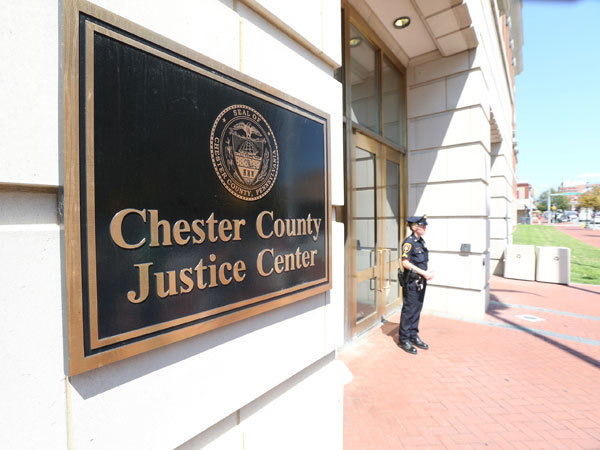
    In dashcam videos played in a Chester County courtroom Monday, Jahn is seen gripping a semiautomatic handgun in his Chevy Silverado truck, muttering to himself and glancing back and forth erratically as cars pass by.

    Those utterances, prosecutors said, offer a view into the mindset of a man about to commit murder.

    “Get out of the [expletive] way,” Jahn says an one point, one hand on the wheel, another on his firearm. “You don’t belong here.”

    “Ya’ll [expletive] are dead,” the 44-year-old says in another clip.

    Though it would be hours before Jahn, who police said was homeless, encountered Nieberle, a 53-year-old mother of three and a nurse at Children’s Hospital of Philadelphia, prosecutors used the videos from Jahn’s dashcam to bolster their contention that he had been prepared to harm someone that Saturday.

    Jahn, a Berwyn native, was arrested a day after the March 7 shooting and charged with first- and third-degree murder, aggravated assault, and reckless endangerment.

    The hearing marked the first time Jahn appeared in a case that shocked the Chester County community and kick-started a conversation about mental illness and firearms.

    Some residents questioned why police did not act more forcefully to ensure that Jahn, who had been in a mental health crisis that day, was checked into a nearby psychiatric unit.

    Jahn, wearing a red prison jumpsuit and sporting a beard, showed little emotion during the hearing, as Nieberle’s loved ones looked on, some in tears.

    Assistant District Attorney Kathleen Wright said prosecutors had linked Jahn to the crime scene using GPS data from his vehicle, gunshot residue recovered from his hands and clothing, and remarks he made while in police custody.

    Though the footage of Jahn was illuminating, Wright said, the shooting itself was not captured on the dashcam because Jahn had removed the device shortly before the shooting.

    Wright called Tredyffrin police officers and county detectives to the stand to testify about the scene they had encountered near the intersection of Old State Road and Contention Lane, where Nieberle was found in the driver’s seat of her silver Acura SUV around 10:47 p.m. with a gunshot wound to the head.

    She was bleeding heavily, the officers said, and was taken to a nearby hospital, where she died the next morning.

    Chester County Det. Matthew Shumway of Chester County said data recovered from Jahn’s truck allowed investigators to identify him driving down the dimly lit residential street that night.

    Approaching Nieberle’s vehicle, Jahn slowed his truck to 6 mph, Shumway testified. He fired once through her driver’s side window, the detective said, a shot captured on a neighbor’s doorbell camera.

    Played in court, the short video showed Jahn’s headlights cut through the darkness and illuminate an approaching vehicle. Within seconds, a loud bang rang out.

    Jahn’s attorney, Brian McCarthy, did not contest many of prosecutors’ assertions about how events unfolded that night, but he argued that first-degree murder was not appropriate because Jahn had not shown premeditation and intent to kill, conditions required to meet the threshold for that crime.

    “What we did see does not establish murder in the first degree,” McCarthy said of the dashcam footage. The person in that video, he said, was a “troubled man looking back and forth, not a cold-blooded killer.”

    Wright, the prosecutor, countered that Jahn’s actions were premeditated. She said Jahn had rolled down his window, aimed his weapon, and would have “had to have known” that there was someone inside an oncoming vehicle.

    Of Nieberle, Wright said, Jahn “snuffed her life out and left her there to die.”

    District Judge Patricia A. Zaffarano ruled that prosecutors had presented sufficient evidence for the case to proceed to trial on all charges.

    Jahn will be formally arraigned on July 2. He remains in custody in the Chester County Correctional Facility after being denied bail in March.