Blog

  • Rubio will visit Gulf allies amid scrutiny of his position on Iran deal

    Rubio will visit Gulf allies amid scrutiny of his position on Iran deal

    ABU DHABI — Secretary of State Marco Rubio will head to the Middle East this week for meetings with Arab Gulf allies, a high-stakes diplomatic assignment for a prominent Iran hawk who largely kept a low profile as the Trump administration pursued its fragile ceasefire deal with Tehran.

    Rubio will travel to the United Arab Emirates, Kuwait, and Bahrain from Tuesday to Thursday. All three countries faced heavy targeting from Iranian strikes after U.S. and Israeli forces began the Iran war in late February, and they suffered some of the most acute economic fallout from Tehran’s move to block traffic through the Strait of Hormuz, a vital shipping lane for export-dependent countries in the region.

    In addition to his bilateral meetings during the three stops, Rubio will meet in Bahrain with the Gulf Cooperation Council (GCC), a regional body for the Arab Gulf nations.

    The secretary’s trip follows Vice President JD Vance’s meeting with Iranian officials in Switzerland on Sunday, beginning a 60-day effort to build upon the ceasefire announced in a controversial memorandum of understanding signed by President Donald Trump last week. The meeting was delayed by several days after Israeli attacks on Lebanon prompted Iran to say it would reimpose its closure of the Strait of Hormuz.

    The outcome of U.S. talks with Iran would have significant impact across the Middle East. As part of the Trump administration’s proposed compromise with Tehran, the Iranian regime would give up its highly enriched uranium, which could be used to make a nuclear weapon, in exchange for a number of economic benefits, including the lifting of sanctions, access to frozen assets, and a $300 billion fund for reconstruction.

    That Vance, and not Rubio, has been the face of the deal has been widely noted in Washington.

    “I think Marco just sees a bad deal when he knows one,” said Sen. Chris Coons, (D., Del.), speaking at a roundtable with journalists hosted by Bloomberg News last week. Coons asserted that Rubio, his former colleague on the Senate Foreign Relations Committee, was not discussing the subject publicly to avoid being associated with a deal that the senator called a “near-total capitulation” to Tehran.

    The State Department dismissed this sentiment as ill-informed speculation. “Secretary Rubio and the entire administration is 100% in lockstep behind President Trump,” said Tommy Pigott, a spokesperson.

    Any public defense of the negotiations with Iran from Rubio could carry weight, as he was a fierce critic of the 2015 nuclear agreement with Iran, the Joint Comprehensive Plan of Action, that was secured by the Obama administration. In one speech before that agreement was struck, Rubio said that “a bad deal [with Iran] almost guarantees war, because Israel is not going to abide by any deal that they believe puts them and their existence in danger.”

    “I think many will be waiting with bated breath to see how one of the most internationalist and hawkish members of this administration will be making sense of this document,” said Behnam Ben Taleblu, an expert at the Foundation for Defense of Democracies, a D.C. think tank that has argued for more aggressive action against Tehran.

    Brett Bruen, who served on the White House National Security Council during the Obama administration, said Vance’s position as the public face of the deal was notable and may be because “the vice president so badly wanted to push peace, having been so ideologically at odds with the war.”

    “But it’s also because Rubio knows a dumb diplomatic deal from a distance and this one with Iran has ‘disastrous’ emblazoned all over,” Bruen added.

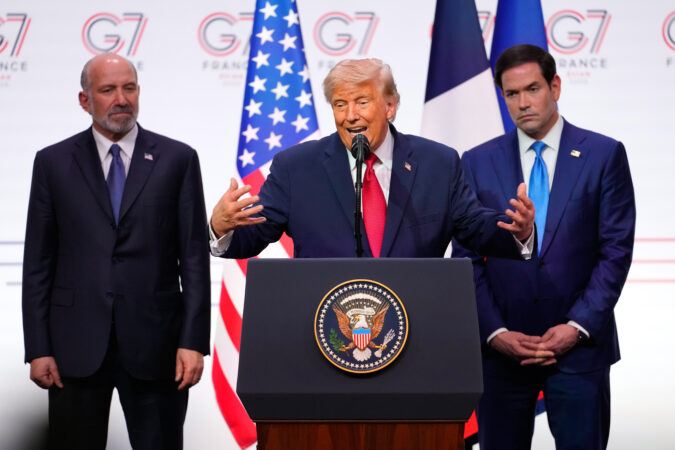
    Officials close to both Rubio and Vance have downplayed the significance of Vance’s role as the public face of the agreement, arguing that much of it was timing. The vice president, these people noted, had a book coming out and was already doing a press tour, whereas Rubio was traveling with Trump to the Group of Seven meetings in France, where naturally his boss took center stage.

    “From what I can tell, he’s supportive of the deal,” said one person familiar with Rubio’s thinking, who spoke on the condition of anonymity because they were not authorized to speak to the media. This person added that the secretary, who also serves as White House national security adviser, was also “clear-eyed about the fact that we are talking about the Iranians here.”

    Vance’s ownership of the issue has political implications, given that he and Rubio are widely expected to become political rivals in the race to succeed Trump as president.

    Jon Hoffman, a policy analyst at the libertarian Cato Institute think tank, said Rubio and Vance represented “the divide between the traditional neoconservative worldview and the growing constituency weary of foreign entanglements,” particularly in the Middle East.

    All three nations that Rubio is visiting were impacted by Iranian military retaliation after it was attacked. Bahrain, the smallest country in the region, saw major damage near the U.S. Navy’s 5th Fleet based in Manama, while the UAE was reported to have seen more attempted strikes than the five other Gulf Cooperation Council nations combined.

    Experts said that while all three appeared to welcome the ceasefire, across Arab Gulf nations there were major concerns about the memorandum of understanding’s lack of provisions addressing nonnuclear threats like Iran’s ballistic missiles and the prospect of large sums of money going to Tehran with few strings attached.

    Rubio will need to “reassure them that this is not some harbinger of a U.S. decision to leave the region or to abandon their security,” said William V. Roebuck, executive vice president of the Arab Gulf States Institute in Washington and a former U.S. ambassador to Bahrain. “In fact, it’s an opportunity to enhance it.”


  • U.K. Prime Minister Starmer to resign as Labour Party seeks reboot

    U.K. Prime Minister Starmer to resign as Labour Party seeks reboot

    LONDON — British Prime Minister Keir Starmer announced Monday that he will resign, succumbing to pressure from lawmakers within his own Labour Party, after crushing losses in nationwide local elections last month triggered a mutiny.

    An emotional Starmer said he would leave office after a new Labour leader — and therefore a new prime minister — is selected in a leadership election that will begin in July. Standing outside 10 Downing Street, Starmer recounted his government’s achievements during its two years in office and then grew tearful after saying that he had informed King Charles III of his decision Monday morning and would soon devote himself to his own family.

    “The question my party is asking now is whether I am best placed to lead us into the next general election,” Starmer said with his staff and some — but notably not all — of his cabinet looking on. “I have heard the answer of my parliamentary party to that question, and I accept that answer with good grace.”

    Starmer, 63, had struggled to define his agenda while contending with economic stagnation, fallout from the Epstein scandal, and turbulent relations with President Donald Trump.

    The discord with Trump was punctuated by a final jab on Sunday when the U.S. president proclaimed that Starmer would resign — shoving the British leader to the door before Starmer had made any announcement of his own.

    Starmer’s surrender came fast on the heels of a special parliamentary election in Makerfield on Thursday, in which Greater Manchester Mayor Andy Burnham won a decisive victory, returning him to the House of Commons and positioning him to mount a Labour Party leadership challenge that Starmer seemed all but certain to lose.

    Burnham’s victory gave him momentum in a challenge to Starmer that has been brewing for months. And his status as a front-runner neared shoo-in levels on Monday when another likely candidate for a leadership race, former Health Secretary Wes Streeting, pulled out of contention and threw his support to Burnham.

    To become the new Labour leader, any challenger must first secure the written backing of at least 81 of Labour’s 403 elected members of Parliament. Once that threshold is crossed, the contest goes to a broader vote of party members who rank candidates in order of preference until one of them clears 50%.

    Starmer could have effectively anointed Burnham as his replacement, avoiding what could be a bruising intraparty battle for the top job. But some have argued that Labour, and the country, would be better served by a leadership contest that demanded candidates defend their vision for leadership.

    Starmer opted for an open contest, saying he would instruct Labour’s executive committee to begin accepting nominations on July 9 with an eye to completing the election in time for a new prime minister to take office by the end of parliament’s summer recess in September.

    It was unclear if that schedule would hold given the accelerating support for Burnham among lawmakers.

    “He’s the next prime minister,” said Tim Bale, a professor of politics at Queen Mary University of London. “It’s going to be something like a coronation.”

    Starmer’s resignation extends a remarkable era of political turmoil in Britain and will usher in the country’s seventh prime minister in the past 10 years.

    Starmer spent less than two years at No. 10 Downing Street. His departure ends a troubled tenure marred by failures to deliver on campaign promises, ousters of senior advisers, criticism of his handling of the wars in Ukraine and Iran, and recriminations over his appointment as U.S. ambassador of former Labour power broker Peter Mandelson, whose entanglement with Jeffrey Epstein, the convicted sex offender, is now under investigation by the Metropolitan Police.

    These and other missteps contributed to the undoing of a staid politician who led Labour to a landslide victory in 2024, promising competence and centrist polices that he said would reinvigorate the British economy and shield the country from the polarizing forces tearing other democracies apart.

    After nearly 15 years of Conservative Party rule, Labour also benefited in that race from widespread unhappiness over the economic malaise that followed Brexit, the country’s Tory-led departure from the European Union.

    And yet Starmer soon became caught in the same currents of voter discontent that he had exploited. Starmer, a former prosecutor who lacked the flair of Britain’s most famous prime ministers, faced persistently abysmal approval ratings and barely concealed scheming in the upper ranks of his party.

    More broadly, Starmer’s resignation underscores the extent to which British politics is entering a turbulent new period in which insurgent parties — including Reform UK, whose anti-immigrant posture echoes the MAGA movement in the United States, and the populist Green Party — are gaining strength amid eroded support for the Conservative and Labour parties that have dominated U.K. politics for generations.

    The bloodbath in local elections suffered by Labour on May 7 — a loss of more than 1,500 of the approximately 2,600 seats it held on local councils and other bodies — was widely expected. And with national parliamentary elections not due until mid-2029, Labour retains a strong majority in the House of Commons. But rank-and-file MPs quickly called for Starmer’s head, fearing a potential wipeout if they did not replace him in time for a dramatic turnabout.

    On paper, at least, the looming leadership contest looked to be Burnham’s to lose even before Streeter pulled out Monday.

    Burnham’s decisive win last week in Makerfield, a working-class constituency Labour strategists feared it might lose outright to Reform UK, handed him a fresh mandate as the figure best positioned to blunt the new right-wing party’s advance in the postindustrial seats Labour needs to hold onto power.

    Burnham’s camp has said he has already secured the backing of more than 201 Labour MPs, half the 402-member parliamentary party. That tally, if it holds, would make him the prevailing favorite from the outset. Coming from local politics, he is seen as largely untainted by the compromises of Starmer’s government.

    Streeting, 43, who served as health secretary under Starmer, resigned his cabinet post last month to launch his own leadership bid. His quick endorsement suggested that Burnham was building perhaps insurmountable support.

    Streeting, who hails from the more centrist Labour wing identified with former prime minister Tony Blair, would have challenged Burnham from the right, and had built a profile as a sharp-elbowed media figure willing to break publicly with Starmer’s government. That’s a contrast to Burnham’s more staid, institutional brand of working-class populism, built over three terms as mayor of Greater Manchester and 16 years before that in the House of Commons.

    Streeting has stressed the need for Labour to win back swing voters defecting to Reform UK and had pointed to his record of NHS reform as proof of a pragmatic governing style. In withdrawing, he acknowledged that a divisive leadership contest could prove costly by stressing disagreements rather than unity.

    “We could spend the summer exaggerating small differences, or we can roll up our sleeves and help him to deliver the change our Party and our country needs,” Streeting said in a statement.

    Starmer’s struggles were compounded by strains in the “special relationship” between Britain and the United States.

    Starmer’s early attempts to appease Trump upon his return to the White House — including a trip to Washington in which he carried an invitation from King Charles III for an “unprecedented” second state visit to England — did not shield Britain from steep tariffs imposed by Trump or from a steady stream of insults.

    In recent weeks, Trump has lashed out at Starmer, saying he is “no Winston Churchill,” for his refusal to thrust Britain’s military more directly into the U.S.-Israeli war with Iran.

    Seeking to avoid the fate of Blair, whose support for the 2003 U.S. invasion of Iraq is still seen as a stain on his legacy, Starmer initially refused to allow U.S. forces to stage attacks on Iran from British bases. He later softened that position to allow “defensive” strikes meant to blunt Iran’s ability to retaliate on British territories or allies. Starmer’s shifting positions added to perceptions of him as indecisive.

    Still, it was another U.S. crisis — the Epstein scandal — that seemed most damaging. Starmer has no known direct ties to Epstein but was pilloried for the ambassadorial appointment of Mandelson, who maintained ties with the Epstein long after his 2008 conviction on solicitation of prostitution and shared with him sensitive U.K. government documents, according to U.S. Justice Department files.

    In February, police arrested Mandelson on suspicion of misconduct in public office, raising the pressure on Starmer over his judgment in appointing him. Weeks earlier, a government review had found evidence in the Epstein files that sensitive information about the 2008 financial crash appeared to have been shared with the financier by a government official. Mandelson was a government minister at the time.

    Starmer’s resignation is likely to add to a general sense that the political fallout related to Epstein has been far more severe in Britain and Europe than in the United States, where neither Trump nor other American politicians revealed to have had close ties with Epstein over the years have faced significant consequences.

    In Britain, Starmer faced calls for his resignation. And Andrew Mountbatten Windsor, a brother of King Charles, was stripped of his royal titles and forced to leave his longtime royal residence following new revelations about his own Epstein connection.

    Starmer weathered those initial calls to step down, but ultimately bowed to reality as the numbers among Labour’s rank-and-file turned against him. In his resignation speech on Monday, he claimed credit for bringing Labour back from the dead.

    “Six years ago, I inherited a Labour Party that was politically, financially, and morally bankrupt,” Starmer said. “I was told time and time again that my part was finished, that we were consigned to history, that a majority at the general election let alone a landslide majority was impossible. But we proved those people wrong.”

  • U.S. temporarily lifts sanctions on Iranian oil

    U.S. temporarily lifts sanctions on Iranian oil

    The Treasury Department on Monday issued a 60-day license allowing the production, delivery, and sale of Iranian oil as part of the preliminary U.S.-Iran deal signed last week.

    Iran stands to reap significant financial rewards from the reprieve, which represents a sharp reversal of U.S. policy. Most importantly, it clears a path for the country to export its oil at market rates after many years of being forced to sell at a discount to find buyers willing to take the risk of running afoul of U.S. economic restrictions.

    But the Trump administration has signaled that it’s ready to provide Iran with financial rewards for opening the Strait of Hormuz and ending the war, which has destabilized the global economy.

    Treasury Secretary Scott Bessent said on social media that the sanctions exemption was the result of “ongoing productive” talks with Iran that are taking place in Switzerland.

    “Iran has committed to free and open transit in the Strait of Hormuz and to permit International Atomic Energy Agency (IAEA) inspectors into their country,” Bessent wrote in a post on social platform X.

    The Trump administration provided Iran with temporary sanctions relief earlier this year as it tried to curb oil prices by allowing more crude supplies to flow to global markets. The U.S. then ramped up sanctions and created a military blockade preventing the sale of Iranian oil as part of an effort to cripple its economy.

    The new license, which expires Aug. 21, gives Iran greater access to U.S. currency by allowing the country to conduct oil transactions using U.S. dollars. It also allows U.S. importers to buy Iranian crude oil, petrochemical products, and petroleum products.

    Iran produced less than 5% of the world’s oil before the war, with the vast majority of its exports going to China. But it was forced to sharply curtail production in recent months because of a U.S. blockade. Time will tell how quickly the country will be able to restart those wells, which can be a tricky process. Iran will also have to repair energy infrastructure damaged in the war.

    The Trump administration has faced criticism for striking an initial agreement with Iran that critics say is overly accommodating and more generous than the 2015 Joint Comprehensive Plan of Action that the Obama administration and other world powers reached with Iran to curb its nuclear program.

    “It’s also important to note that sanctions relief was not provided immediately when the JCPOA was enacted, it happened at ‘Implementation Day’ — six months after the IAEA verified the nuclear commitments were fulfilled,” said Daniel Tannebaum, a senior fellow at the Atlantic Council who previously served as the Office of Foreign Assets Control compliance coordinator for the Federal Reserve Bank of New York.

    This article originally appeared in the New York Times.

  • Federal judge halts Trump administration effort to subpoena Walz in immigration enforcement probe

    Federal judge halts Trump administration effort to subpoena Walz in immigration enforcement probe

    A federal judge has blocked an attempt by the Trump administration to subpoena Minnesota Gov. Tim Walz and other state officials, calling it an effort to “harass and retaliate against them.”

    In a ruling unsealed Monday, U.S. District Judge Patrick Schlitz found the “dominant purpose” of the subpoenas was to “coerce Minnesota officials into assisting the federal government with enforcing civil immigration law and to harass and retaliate against them for failing to do so.”

    The subpoenas seeking records were served in January as part of an investigation into whether Walz and other officials obstructed or impeded law enforcement during a sweeping immigration operation in the Minneapolis-St. Paul area. They were sent to the offices of Walz, Attorney General Keith Ellison, Minneapolis Mayor Jacob Frey, St. Paul Mayor Kaohly Her, and officials in Ramsey and Hennepin counties.

    The ruling is the latest rebuke by the federal judiciary of Justice Department efforts to aggressively implement the Trump administration agenda in courts and target the president’s political adversaries through subpoenas and similar demands.

    The judge ruled that there appeared to be “extremely weak to nonexistent” connections between the information sought in the subpoenas and any possible criminal violation. The subpoenas seek materials “that largely if not entirely relate to constitutionally protected conduct,” the judge wrote, noting that Minnesota has the legal right not to devote its resources to enforcing federal immigration law.

    The Justice Department “is not conducting a criminal investigation,” the judge wrote, “but is instead using the grand jury process for other (unlawful) purposes.”

    The evidence that the subpoenas were issued for unlawful reasons is overwhelming, the judge said, arguing that the Justice Department “has struggled — without success — to identify a single plausible investigatory justification” for them.

    The Justice Department didn’t immediately respond to an email seeking comment.

    Walz, in a statement, called the ruling “a victory for the rule of law and our democracy.”

    “The U.S. Justice Department is pursuing criminal investigations into the President’s political opponents,” said Walz, the 2024 Democratic nominee for vice president. “This case was just one example of that, but we are seeing daily reminders of this administration’s lawlessness — in Minnesota and around the country. We all must continue to seek justice and uphold the rule of law.”

    Ellison said “it should disturb every American that Donald Trump is weaponizing the criminal justice system against people he disagrees with.”

    The subpoenas were “a politically motivated retaliation against our city for lawfully standing up to ICE and fighting for our residents,” Her said in a statement, referring to U.S. Immigration and Customs Enforcement.

    Frey said the investigation was “never about justice, law, and order, but the absence of it.”

    “Subpoenaing political opponents because they spoke on behalf of their constituents violates the core tenets of our democracy and human decency,” he said.

    Frey also observed that criticizing government action is not a crime.

    “One of the defining strengths of our democracy is the ability to challenge those in power without fear of retribution. Elected officials have both the right and the responsibility to speak honestly about how government decisions affect the people they serve,” he said.

    Over the last year, judges have dismissed indictments against two prominent Trump foes, former FBI Director James Comey and New York Attorney General Letitia James, and grand juries have repeatedly refused to return indictments sought by the Justice Department.

    The moves reflect mounting public concerns that the Justice Department, an institution meant to make investigative and prosecution decisions independent of the White House, is being politicized under the current Trump administration.

    Vice President JD Vance has separately called on the Justice Department to investigate Walz and Ellison over allegations they failed to stop widespread social services fraud, though the department has not said whether it will open an investigation. Walz and Ellison have described those allegations as politically motivated and defended their efforts to combat fraud in Minnesota.

  • ‘Oh, Mary!’ is coming to Philadelphia on its first national tour

    ‘Oh, Mary!’ is coming to Philadelphia on its first national tour

    Oh, Mary!, the wacky and irreverent Tony Award-winning play about first lady Mary Todd Lincoln, will stop in Philadelphia on its first national tour next spring, and tickets go on sale this week.

    Following a record-breaking box office Broadway run, the Philadelphia premiere of Oh, Mary! will be one of the buzziest theater tickets of the season. Its brief run at the Miller Theater from March 9 to 14 will likely sell fast given the show’s massive popularity.

    Written by actor/comedian Cole Escola, the play focuses on the Lincolns in the weeks leading up to the assassination of President Abraham Lincoln (here called “Mary’s husband”). The dark, campy comedy first featured Escola in the role of Mary — which led them to win the 2025 Tony Award for best leading actor in a play — and has since hosted special guest stars like Maya Rudolph, Tituss Burgess, Jinkx Monsoon, and Jane Krakowski. The show also won the Tony for best direction of a play, and was named a Pulitzer Prize finalist.

    Tituss Burgess and Phillip James Brannon in “Oh, Mary!” on Broadway. The Tony Award-winning comedy about Mary Todd Lincoln runs March 9 to 14, 2027, at the Miller Theater.

    Oh, Mary! is exactly the kind of bold, inventive Broadway sensation that we want to bring to Philadelphia,” said Frances Egler, Ensemble Arts Philly’s vice president of theatrical programming and presentations, in a statement. “The play is both razor-sharp and delightfully idiotic, an absurdist, whip-smart comedy … And given Mary Todd Lincoln’s well-documented fondness for shopping in Philadelphia, it feels only right that she finally gets top billing here.”

    Casting for the tour has not been announced yet. Presale tickets are available for Ensemble Arts Philly members; tickets go on sale to the general public at 10 a.m. on Friday, June 26.

    “Oh, Mary!”, March 9-14, 2027, Miller Theater, 250 S. Broad St., 215-893-1999 or www.ensembleartsphilly.org.

  • AristaCare at Meadow Springs is keeping patients in-house for a lung procedure that used to require a transfer to a hospital

    AristaCare at Meadow Springs is keeping patients in-house for a lung procedure that used to require a transfer to a hospital

    AristaCare at Meadow Springs, a Plymouth Meeting nursing home that specializes in patients who need ventilators to help them breathe, has started doing a key lung procedure in-house that used to require patients to be transferred to a hospital.

    The effort is part of a broad trend in healthcare to provide more care outside of hospitals, which are the most expensive sites of care.

    Meadow Springs’ goal in doing the lung-clearing procedures in-house is reducing the number of times its residents are hospitalized, the facility’s administrator Rob Nealon said.

    Keeping residents in the facility benefits Meadow Springs financially even though it doesn’t charge for the treatment because it doesn’t lose revenue to hospitals, Nealon said. It’s also better for residents to avoid difficult transitions and long hospital stays, he said.

    The treatment, called a bronchoscopy, uses suction tubing with video to go deep inside a patient’s lungs to clear out secretions and mucus plugs that make it hard for ventilator patients to breath, said Lejoy Mathew, respiratory director for the facility.

    The nursing home with 153 licensed beds has the capacity to care for 72 people on ventilators.

    AristaCare did its first bronchoscopy in February and has done four more since then, Mathew said.

    Patients who are dependent on ventilators often have a chronic respiratory disease, neuromuscular or neurodegenerative diseases, or traumatic brain injuries.

    The company, based in Cranford, N.J., also owns AristaCare at East Falls, another ventilator facility it acquired in 2024, and plans to start doing bronchoscopies there as well. The East Falls facility has 66 beds.

  • Brian Fitzpatrick ties the knot with Fox News’ Jacqui Heinrich in NYC wedding

    Brian Fitzpatrick ties the knot with Fox News’ Jacqui Heinrich in NYC wedding

    U.S. Rep. Brian Fitzpatrick (R., Pa.), who represents Bucks County, and Fox News senior White House correspondent Jacqui Heinrich got married Saturday in New York City.

    The wedding was attended by high-profile figures in politics and media and featured a nighttime cruise around the Statue of Liberty.

    The celebrations for the newlyweds and their 302 guests included a ceremony at St. Patrick’s Cathedral and a reception on a yacht called Horizon’s Edge, with a 10-piece brass band and the toasts of former GOP House Speaker Kevin McCarthy and former Sen. Joe Manchin (I., W. Va.), People magazine reported.

    The nuptials of Fitzpatrick, 52, and Heinrich, 37, comes almost a year after their engagement and amid the Republican’s high-stakes reelection campaign to represent Pennsylvania’s 1st Congressional District against Democratic challenger Bob Harvie.

    Fitzpatrick and Heinrich said they chose New York for their wedding because of its significance in jumpstarting their respective careers as an FBI agent and a network news reporter and its connection to their families’ immigration journey, People reported. It was also a central meeting point for the couple’s families from New England and Pennsylvania.

    The reception featured other nods to family — Heinrich’s parents got married on a chartered cruise and the couple’s cake-cutting song was an “Irish tune,” People reported, written by Fitzpatrick’s great-uncle, an NYPD officer who was killed in the line of duty, according to People.

    Former Sen. Joe Manchin (I, W.Va) and former GOP House Speaker Kevin McCarthy (right) give a toast to U.S. Rep. Brian Fitzpatrick and Fox News reporter Jacqui Heinrich’s nuptials.

    Guests took to social media to congratulate the newlyweds including Heinrich’s Fox News colleagues, U.S. Rep. Don Bacon (R., Neb.), and President Donald Trump’s former Labor Secretary Lori Chavez-DeRemer.

    Pennsylvania Gov. Josh Shapiro was invited to the wedding, but the Democrat was unable to attend.

    Fitzpatrick and Heinrich met in Washington when Heinrich was a correspondent on Capitol Hill. After she switched beats to cover the White House, Fitzpatrick asked her on a date to the Kennedy Center Honors.

    Heinrich’s LinkedIn page shows she began working as Fox News’ White House correspondent in May 2021 during former President Joe Biden’s term.

    They are one of the most high-profile couples on Capitol Hill, sometimes earning the ire of Trump.

    Last month, after Fitzpatrick won his GOP primary unopposed, Trump threatened Fitzpatrick, without saying his name, when asked a question by Heinrich, who is vice president of the White House Correspondents Association.

    “Her husband votes against me all the time. Can you imagine? I don’t know what’s with him,” Trump said. “You better ask what’s with him. She’s married to a certain congressman. He likes voting against Trump, You know what happens with that? It doesn’t work out well.”

  • ‘Phillies Extra’ Q&A: Preston Mattingly on the trade deadline, his ‘special’ chance to work with his dad, and more

    ‘Phillies Extra’ Q&A: Preston Mattingly on the trade deadline, his ‘special’ chance to work with his dad, and more

    When Preston Mattingly took a job with the Padres in 2017, his famous dad, Don, was managing the Marlins. After Preston joined the Phillies’ front office in 2022, Don began coaching the Blue Jays.

    “You’re in the same industry,” Preston said, “but you’re light-years apart.”

    Over the last few years, the Mattinglys figure they were together for a total of about 10 days. So, they need not be reminded, especially on Father’s Day weekend, of the uniqueness of their proximity as the first father-son manager-general manager combination in baseball history.

    Last week, Preston Mattingly joined Phillies Extra, The Inquirer’s baseball podcast, to discuss working with his dad. In addition, he talked about Andrew Painter’s demotion to triple A, the state of the Phillies’ farm system, and preparing for the Aug. 3 trade deadline.

    Watch the full interview below and subscribe to the Phillies Extra podcast on Spotify or Apple Podcasts.

    Q: The fastball was really Andrew Painter’s bread-and-butter pitch in the minors, especially before he had Tommy John elbow surgery in 2023. Major league hitters are hitting .404 and slugging .660 against it. Why do you think he struggled so much with it during his first experience in the big leagues?

    A: Yeah, it’s a good question. I think a lot of different factors go into it, whether it’s his arm slot … I think it ultimately comes down to command. I think when you’re behind in counts, and when you throw balls in the middle of the plate, no matter how hard you’re throwing or who you are, you’re going to get hit. But there’s definitely some things we can clean up in his development plan that he’s going to be working on. But we’ve seen him in the past to where he can command the ball to all four quadrants, the shape on the fastball pre-injury was significantly different, so we’re working as an organization to get back to that.

    Q: So, where do you guys go from here for a fifth starter?

    A: I think, as an organization, we’ve done a pretty good job over the last few years of coming up with guys, either optionable guys or depth type of arms. I think all options are on the table right now. We feel really good about our pitching, in general, about our pitching depth in terms of our relievers. So, I think there’s different ways to get creative in how we do it. We’re still talking through it as a group, but I’m sure we’ll sit down and put the pieces together how they fall out.

    The Phillies are hoping rookie outfielder Gabriel Rincones Jr., can give them some production after losing Adolis García for the season to shoulder surgery.
    Q: There have been two notable injuries within the last week in Adolis García and Brad Keller. How much do you feel like the depth of the 40-man roster is going to be tested here between those injuries and now Painter going to the minor leagues?

    A: Yeah, I’ll touch on the pitching, the Keller side first. Obviously, we felt [his right forearm strain] was pretty minor, and something we, as an organization, we wanted to knock out, not let linger. So, don’t expect him to be out long term. We have some other guys coming back too, as well. Kyle Backhus shouldn’t be too far away here. So, in terms of relievers, we felt really good. I already touched on Andy, and how we’re going to get creative to do that. And then touching on the Adolis injury, obviously unfortunate. He was an elite defender in right field, showed a little bit of strides with the bat, and was getting to some power before the [strained lat muscle near his right shoulder]. But I think we, as an organization, believe in Gabriel Rincones. We’re excited to see him, a lot of good underlying skills that translate to major league success. He’s got to go out and do it. But we feel like he’s a guy that hits the ball really hard. In the minor leagues he put together really quality at-bats, controls the strike zone, and we think he’s got a chance to have some power.

    Q: I think there are two factors that make this trade deadline on Aug. 3 fascinating. One is that, in the American League, you have only five teams that are over .500 right now, so a lot of teams that are ordinarily leaning toward the sell column are hanging in there. But really the one that I’m fascinated by is this looming labor fight that we have at the end of the season. Is there any sense yet for whether that’s going to change the market dynamics at all?

    A: It’s not something we talk about internally. I think it kind of depends. The next six weeks will [determine] which way teams fall. Obviously, it’s pretty quiet right now. You’re still talking to teams and checking in, and more just having conversations to kind of lay some groundwork. But pretty quiet right now. You have the draft coming, too, so teams are having their focus in a lot of different areas. But I’m sure over the next two to three weeks to a month, things will start to pick up a little bit.

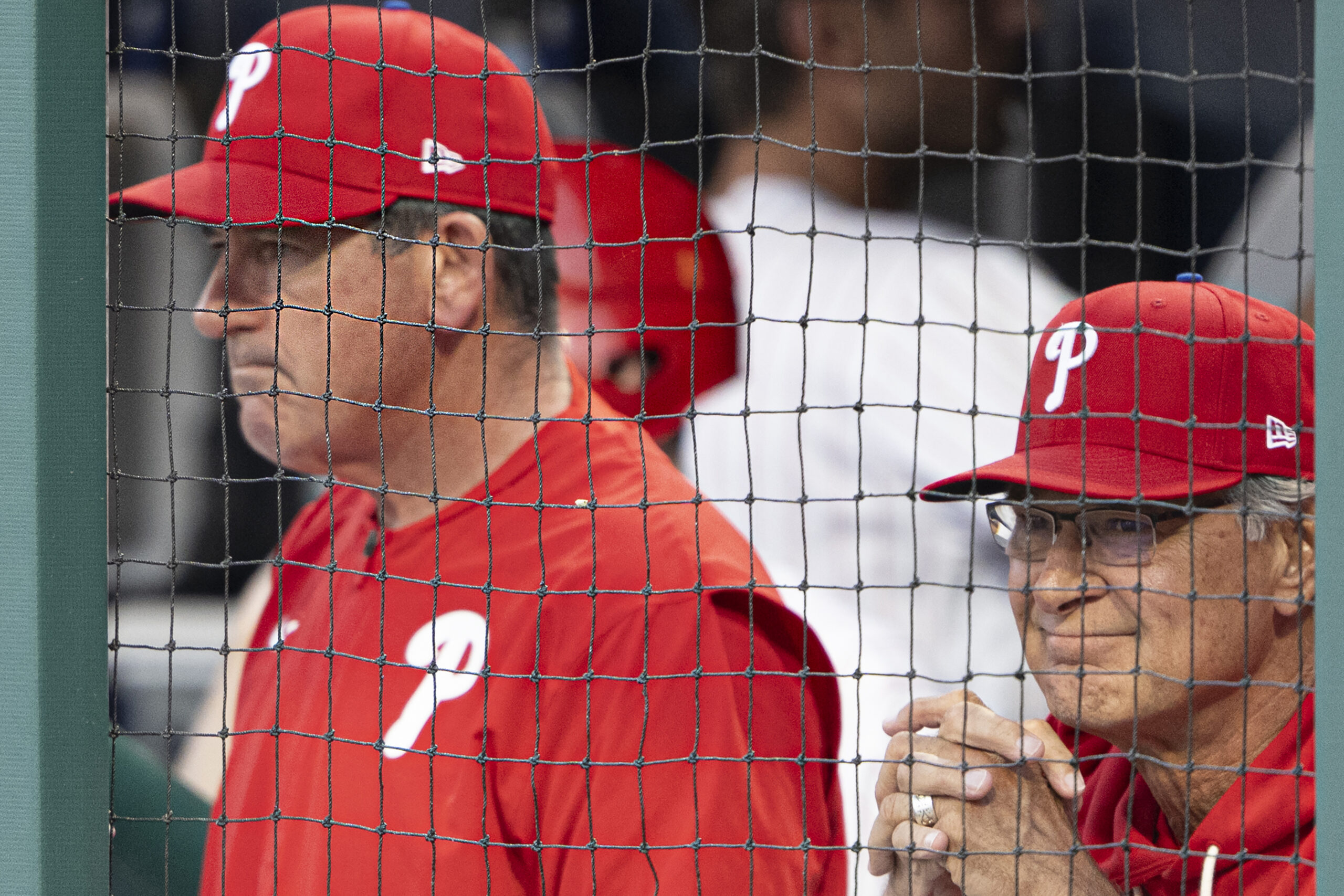
    After the Phillies fired manager Rob Thomson (left) on April 28, bench coach Don Mattingly (right) was elevated to interim manager.
    Q: What was that first conversation like with your dad after Dave Dombrowski made the decision to elevate him to interim manager after Rob Thomson was fired?

    A: It was definitely a unique situation. I know Dave spoke to my dad and talked to him about stepping into the role. I followed him up with a call, and just kind of made sure he was comfortable. And I think the great thing is we’re both here for the same reason, which is to help the organization win a championship. He’s been around the game a really long time. He’s built a lot of relationships with the players in our clubhouse already, so it’s definitely been unique. But it’s been really gratifying, too. I think I’ve said this a couple times, but getting texts from people around the league, in the moment it may have been a little bit … awkward, is maybe the word. But I think after the first couple days it was kind of business as usual. A lot of people around the league said some great things. ‘Just enjoy the moment. It’s not every day you get to work with your dad. And you’ll look back five or 10 years, 20 years later, and remember how special that was.’ So, I definitely have taken that to heart. He’s been great to work with, along with the rest of our coaching staff. So, yeah, it’s been really fun.

    Q: Your dad said something when he was hired as bench coach in January about the importance of establishing trust with the players in the clubhouse, that he wasn’t going to go upstairs and talk to you about what was being said there. How have you two gone about navigating that balance?

    A: Yeah, it’s definitely a topic that came up. I think we just want to be prepared. Front offices are pretty involved downstairs. We’re around a lot more, probably, than years ago. Obviously, my dad’s a professional. Things that are between him and the players stay between him and the players. We’re not looking to gather information, and, like I said, we’re just looking to try and win, and so there’s none of that going on.

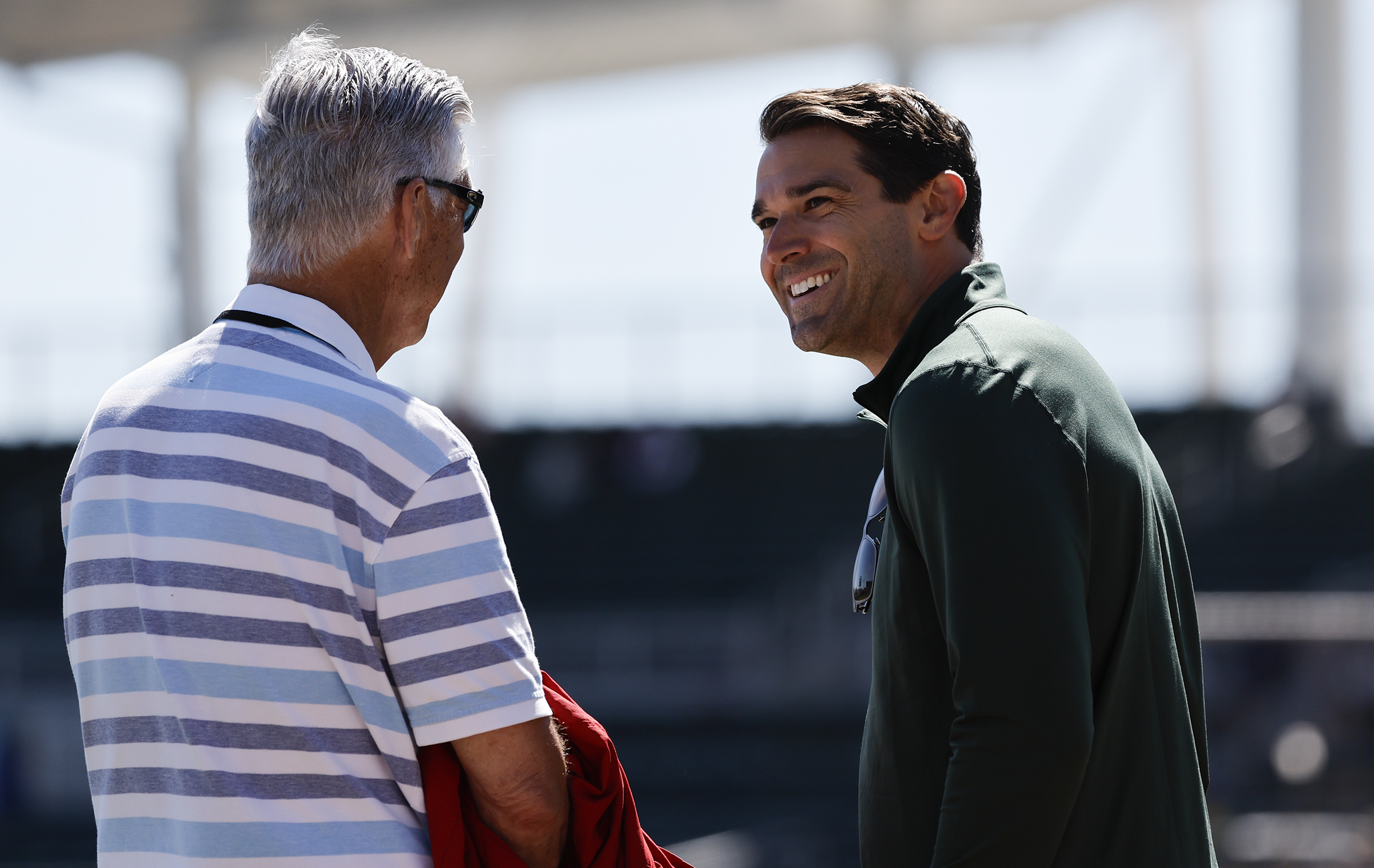
    Preston Mattingly (right), with Phillies president of baseball operations Dave Dombrowski, has been general manager since 2024.
    Q: What has it been like after all those years on opposite sides and different teams in different cities to actually be around each other almost every day?

    A: When I was in San Diego, he was in Miami the entire time. I felt like I had two teams to follow. I’ve always followed his teams very closely, probably pretty opinionated on what they should do with their roster, who they should acquire. And then obviously he goes to Toronto and I come to Philly … you feel like you’re in the same industry, but you’re light-years apart. So it’s been great, just the daily conversations. I told somebody a couple weeks ago, over the last three years, just because what I’m doing, what he’s doing, I think I’ve seen him for maybe 10 days. Holidays, a couple days, a special day here, day there. So, it’s been great just to spend time together, have a daily conversation.

    I’m sure for him, every off-day at home, he’s come over to my house and enjoyed my family a little bit, which he doesn’t get to see as much. So, just things like that. It’s just really cool to spend time together. Since I left the house at 17, we haven’t really spent much time together. So, it’s just been fun in that regard, and then just working on the same team. Sports are great competition. Working as a group is as good as it gets, so getting to do that with your dad is pretty special.

  • Virtua Mount Holly nurses approve contract after threatening to strike

    Virtua Mount Holly nurses approve contract after threatening to strike

    Nurses at Virtua Mount Holly Hospital have voted in favor of a new contract ensuring raises and safety enhancements under a deal reached with employers at the South Jersey hospital after their union threatened to strike last week.

    Under the contract approved Friday, the hospital will enforce minimum staffing ratios to ensure a certain number of nurses are caring for a given patient at all times, and hire new staff in some areas.

    Nurses will receive pay raises at an average of 16.5% through June 2028.

    The three-year contract also includes provisions for new safety measures at the hospital, including panic buttons and wearable devices for staff, and increased visitor screening for weapons, the union said. The hospital will also implement a visitor ID system. Protocols will be improved to notify nurses when they have been exposed to an infectious disease.

    “HPAE nurses are not willing to tolerate the status quo anymore so we are proud that we have won strong language to ensure nurses can care for their patients the way they were trained,” HPAE president Debbie White said in a statement.

    The contract ratification comes after Mount Holly nurses, a local chapter of the Health Professionals and Allied Employees union, voted earlier this month to strike on June 16 if they could not come to an agreement with Virtua officials.

    Both sides had been negotiating for two months, including in a 21-hour session the night before the strike vote. More than 700 unionized nurses work at the Burlington County hospital.

    Staffing levels, a concern raised by nursing unions across the country, were a particular sticking point in bargaining. Many nurses say that the number of nurses assigned to care for a given patient is a safety issue.

    Nurses last week said the strike vote — in which 92% of nurses threatened to walk off the job — helped the union reached a tentative contract agreement with Virtua.

    In a statement Monday, Chrisie Scott, senior vice president and chief marketing officer, said the three-year contract “will enable Virtua Mount Holly to continue delivering safe, high-quality care for our patients, while providing wage increases, enhanced safety measures, and updated staffing levels for our nurses.”

    “We look forward to moving ahead together,” she said.

  • The Norristown school board plans to hire Delaware’s Superintendent of the Year

    The Norristown school board plans to hire Delaware’s Superintendent of the Year

    The Norristown school board plans to vote Monday to hire Delaware’s Superintendent of the Year as the district’s next leader.

    The board announced Sunday that it had selected Dorrell Green, the superintendent of the Red Clay Consolidated School District in New Castle County as its pick for superintendent.

    Green is expected to start as superintendent in the Norristown Area School District on July 20, under a five-year term with an initial salary of $270,000, according to an agenda for Monday’s meeting.

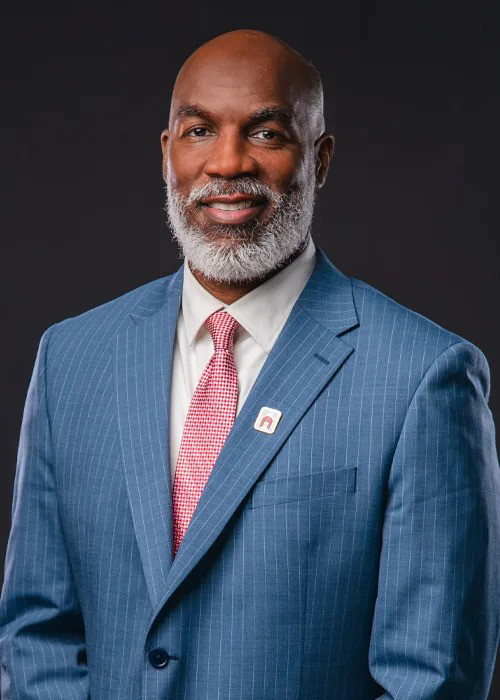
    Dorrell Green, the superintendent of the Red Clay Consolidated School District in New Castle County, Del., is to join Norristown Area School District as superintendent on July 20, 2026.

    Green’s selection comes after the board, which has a new majority after November’s school board elections, moved this spring to oust Superintendent Christopher Dormer, citing poor test scores. The board has since sparked controversy with other changes, including eliminating its DEI director.

    Throughout the superintendent search process, “our community made it clear that they were seeking a visionary leader who is committed to student achievement, educational excellence, and meaningful engagement with all stakeholders,” the board’s president, Jeremiah Lemke, said in a statement.

    He said Green’s “experience, leadership record, and commitment to serving diverse school communities” set him apart during a search process that was led by a consulting group and attracted 88 applicants.

    Green has worked in public education for more than 25 years, including as a teacher, principal, and assistant superintendent.

    In Red Clay, Delaware’s largest school district with 15,000 students, Green has served as superintendent since 2019. He expanded early childhood education during his tenure there and increased access to advanced course work, according to the Norristown board.

    Before that, Green was the first executive director of the Delaware Department of Education’s Office of Innovation and Improvement, an office created by former Delaware Gov. John Carney to support the state’s neediest schools.

    Green has a bachelor’s degree in elementary education and master’s degree in educational leadership from the University of Delaware. He has a doctoral degree in organizational leadership from Wilmington University.