Blog

  • Ten years after Philly killed hitchBOT, the robots are back. Let’s be nice this time.

    Ten years after Philly killed hitchBOT, the robots are back. Let’s be nice this time.

    Philadelphia is known for some great things: the Declaration of Independence (happy 250th!), Rocky, and the cheesesteak. It is also known for “killing” hitchBOT, the famous hitchhiking robot that was dismembered in August 2015. A decade later, there’s a new bot in town: the Uber Eats delivery robot, operated by Avride.

    When these robots first arrived, I had my own spontaneous encounter with one. I was surprised by how unsettled I felt, especially as someone who has spent years researching them. I am an expert in human–robot interaction, and my research focuses on why people abuse robots. I immediately wondered how long it would be before another robot made headlines in this post‑hitchBOT world.

    It only took 18 days.

    Uber Eats robot attacked by Philly pedestrians

    Since these delivery robots rolled into town, they have been making headlines for all the wrong reasons: getting beat up, hit by cars, and colliding with pedestrians. These coolers on wheels are having an effect on Philadelphians, and I do not blame my fellow city dwellers.

    We are living in a cultural climate where artificial intelligence and automation are often framed as threats to jobs amid inflation and economic anxiety. Layer on top of that Philadelphia’s unique reputation as a destroyer of robots, and the reaction is hardly surprising.

    Clockwise from lower left. 1) Last known image of an intact hitchBOT in Philadelphia in 2018. 2) Frame grab from surveillance video of man in No. 12 jersey after tossing what appear to be hitchBOT’s arms to sidewalk. 3 & 4) Man appears to stomp item believed to be hitchBOT.

    With innovative technology, there is always disruption. When UberX and Lyft arrived, Philadelphians were up in arms about the traffic congestion caused by rideshare vehicles, a problem the city later officially acknowledged.

    Yet in less than a decade, the norm quietly shifted. Today, many of us hail a rideshare instead of a taxi despite the unresolved congestion issue. The question now is whether we will react to delivery robots as another passing disruption, or whether we will choose to use them to actually improve city life.

    Garci Peterkin, owner and CEO of Carter’s Cheesesteaks by Garci in the 1000 block of Race Street, demonstrates how food delivery robots work, in March.

    Recently, Councilmember Jeffery Young proposed a $1,000 surcharge on deliveries made by autonomous delivery devices using city sidewalks. That may sound like mere regulation, but in practice it would push the robots out entirely. Before Philadelphia taxes these devices into irrelevance, we should look at how other cities are putting them to work for the public good.

    West Hollywood, for example, has had delivery robots on its sidewalks since 2020. On Jan. 1, 2026, the city implemented a new program, the first of its kind, to use data and fees from these devices to improve and pay for sidewalk repairs. In this program, companies that operate delivery robots partner with an accessibility app used by blind and low-vision residents. As they travel city streets, the robots can report real-time obstacles such as blocked sidewalks, helping make navigation safer. The city then uses information gathered by the robots to map accessibility problems and prioritize sidewalk improvements.

    The companies also pay a daily fee for each robot in their fleet, plus an advertising fee (about four dollars per day per device) with that advertising revenue directed into a sidewalk repair fund that is expected to bring in roughly $40,000 to $80,000 per year.

    In other words, the robots are not just delivering takeout; they are quietly scanning the city, funding basic infrastructure, and making the streets more accessible.

    There are a lot of potential benefits: using robot data to measure and assess street conditions, cutting down on short car trips by shifting them to small electric devices, and easing traffic congestion on already strained streets.

    These are practical, achievable ways to use technology to help address the climate crisis and long‑neglected infrastructure. This moment should also demonstrate that it’s past time for us to stop pretending we can opt out of technological change altogether.

    Philadelphia City Council should resist a blanket $1,000 surcharge that effectively bans delivery robots and instead work with residents, robotic operators, advocates, and experts in human–robot interaction to build a Philadelphia version of West Hollywood’s data‑and‑sidewalk‑repair model.

    Uber Eats’ delivery robot in Chinatown on March 10, 2026.

    If we are going to share our streets with robots, we should make sure the companies profiting from them are paying their way and helping fix the sidewalks they roll on.

    Will Philadelphia embrace that possibility, or will we become a city of Robo-NIMBYs, elected officials and residents alike?

    Lindsay Ouellette is a Philadelphia-based social psychologist and human-robot interaction researcher who studies public responses to robots and emerging technologies. She recently earned her doctorate from Temple University, where her research examined aggression toward robots.

  • How NIL is reshaping major high school track and field events, including New Balance Nationals

    How NIL is reshaping major high school track and field events, including New Balance Nationals

    Franklin Field played host to the New Balance Nationals Outdoors Championship this weekend, where it brought some of the most talented high school track and field athletes in the country to Philadelphia.

    The keyword is some. Two other high school track competitions were happening at the same time. The Nike Outdoor Nationals were held in Eugene, Ore., and the Adidas track nationals came to Greensboro, N.C.

    This is not a new occurrence. There has long been an overlap between open, registration-based national championships. Besides medaling, these meets serve as a massive marketing opportunity for their sponsors. Famously, competitors at all three meets are given free backpacks with the title sponsor’s logo on them. Penn’s Rockwell Gym was converted into a pop-up New Balance store this past weekend.

    What is semi-new to the landscape — and high school sports — is the role that name, image, and likeness deals are playing in these three championship meets. If a student-athlete is signed with Nike or New Balance, he or she would compete at their respective meets.

    For example, Eastern Regional senior runner Natalie Dumas, who’s heading to Arkansas, is one of only 20 female high school track and field athletes signed to Nike Elite. Because of this, Dumas competed this past weekend in Eugene a day after running in the USATF U20s on the same track. At the Nike Nationals, she ran a 52.21-second time in the 400-meter dash, placing first.

    Meanwhile, 18-year-old Olympian Quincy Wilson, of the Bullis School in Potomac, Md., is signed to New Balance. Wilson also ran in the USATF U20s, clocking a second-place finish of 44.84 seconds on Friday to qualify for the World U20 Championships.

    But shortly after, Wilson got on a flight back to the East Coast to compete at Franklin Field due to the meet’s title sponsor. He ran the final leg in the 4×400-meter boys’ championship on Sunday and led his school to a second-place finish.

    Outside of NIL deals, New Balance Nationals’ prestige seemed to play the biggest role in winning over competitors from Nike and Adidas.

    “I’ve always had just like a natural draw to the New Balance Nationals,” said senior Blake Cook, who attends Corry Area High School in Erie County and placed sixth in the boys’ 110-meter hurdles championship. “It was the first nationals I ever watched knowing that Nike and Adidas did it, they just never appealed as much to me. Just knowing how grand that this meet makes everyone feel. Even if you’re dead last in your heat, you feel elite just walking in and being able to say that you got your [backpack].”

    The New Balance Nationals have only operated since 2022, following a split from the National Scholastic Athletic Foundation, a nonprofit that operates and supports high school track competitions. New Balance had partnered with the NSAF from 2010 to 2019 as the national meet’s title sponsor. Then, it was New Balance that called Greensboro home — not Adidas. Nike has been partnered with the NSAF since the nonprofit split from New Balance. Today, many see Nike and New Balance as the “premier” national meets with Adidas trailing behind.

    “In general, I think New Balance has the most competition,” said Patrick Logan, who attends Grafton High School in Virginia and ran in the boys’ 400-meter dash. “Nike has some big names, but I think, in general, New Balance is just a more competitive meet and it’s on the East Coast, so it’s easier for me to get to.”

    Bullis School’s Quincy Wilson competes in the 4×400-meter relay on Sunday.

    ‘Bring it back to Jersey’

    The weekend brought competition from all over the country, but two runners from South Jersey showed out.

    On Friday, Pennsauken senior Sianni Wynn won the 100-meter girls’ championship with a personal-best 11.27 seconds. To finish out Friday, Wynn anchored Pennsauken to a first-place finish in the 4×200-meter championship relay. Then, on Sunday, Wynn finished third in the 200-meter championship.

    “It’s been a super long weekend,” said Wynn, who is committed to Florida. “I’m happy to cap it off now, and you know, it’s been a great last high school track for me.”

    Sunday was Jasmine Jackson’s day. The Winslow Township High sophomore shattered her personal-best in the 100-meter hurdles, clocking in at 13.04 seconds to place first in the girls’ championship.

    “I’m feeling great,” Jackson said. “I woke up today, I said, ‘I’m not losing.’ I lost indoor, I got second, I got second in middle school, I got second as a freshman. So today I just knew I was not losing. That was not an option.”

    Jackson’s finish also beat the New Jersey state record of 13.18 seconds, which was held by Union Catholic’s Taylor Cox. After the race, Jackson made sure to show love to Cox, who now runs at Georgia.

    “Taylor dominated New Balance when she was still in high school,” said Jackson. “I knew I had to bring it back to Jersey.”

  • Flyers draft: Alexander Command feels a connection with Philly. But will he be there at No. 21 on draft day?

    Flyers draft: Alexander Command feels a connection with Philly. But will he be there at No. 21 on draft day?

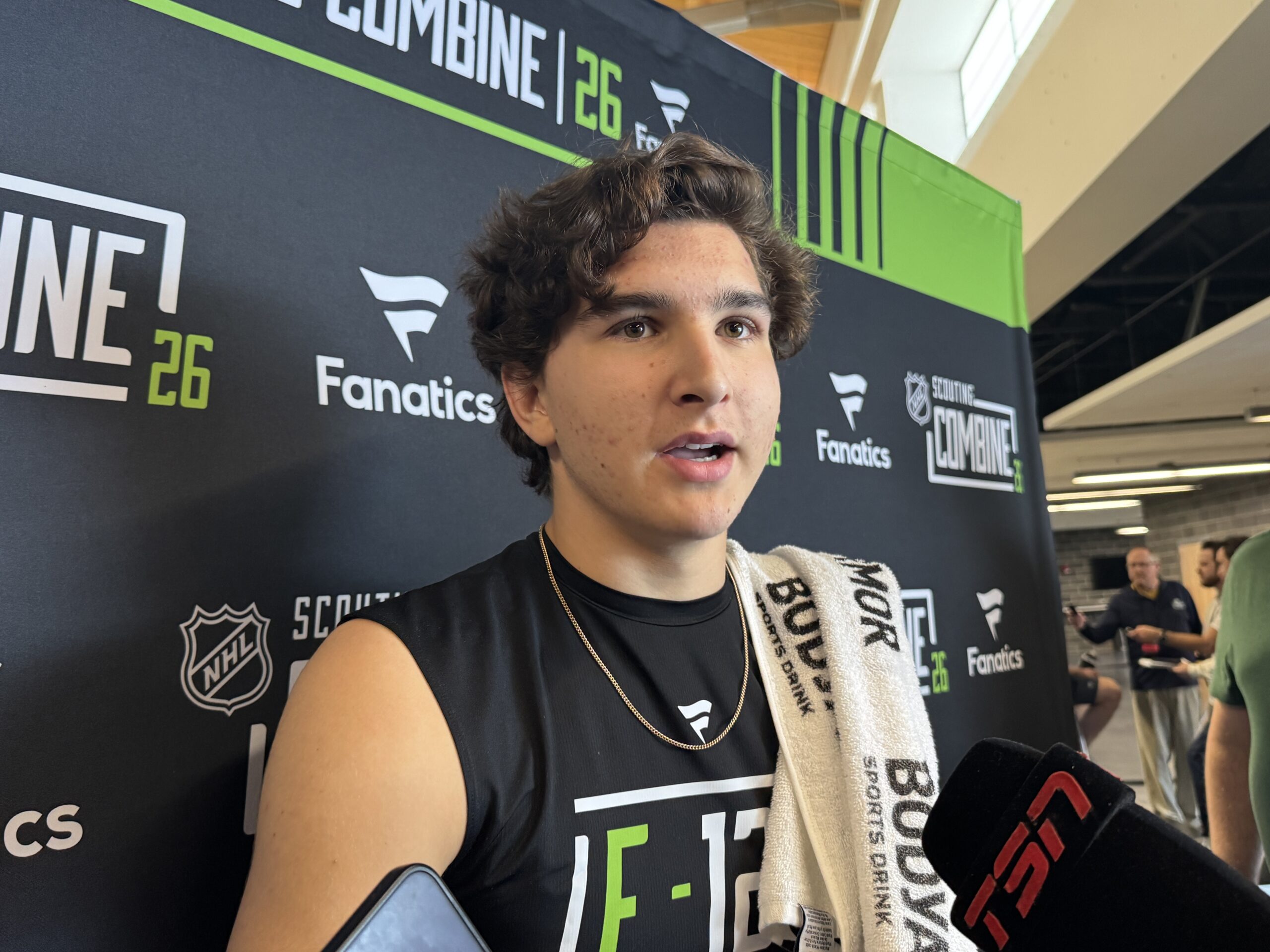
    BUFFALO, N.Y. — Alexander Command sees a lot of parallels between himself, the city of Philadelphia, the Flyers, and their fans.

    “I’ve heard that it’s where the communities, like the people, are pretty hard-working. They do right by themselves, take no [stuff], kind of like me,” the Swede said with a grin and a twinkle in his eye.

    Called one of the most competitive players in this draft class by Elite Prospects, the just-under 6-foot-1, 187-pound center commands — pun slightly intended — attention whether he has the puck on his stick or not.

    A confident player with a big personality, the recently turned 18-year-old is a self-described hard-working two-way center with a high hockey IQ and compete level who is not afraid to get to the dirty areas. Although other pivots in the draft class are not projected to play the position at the NHL level, no one doubts that Command will play down the middle in the middle-six.

    And yes, the Flyers, who met with Command at the NHL scouting combine — he said they mentioned how much they liked how he plays the game — have drafted eight centers — not including Denver Barkey, who played some center this past season — in the last three drafts.

    But Flyers general manager Danny Brière has said repeatedly he doesn’t think you can have too many centers in the system.

    The only problem for the Flyers, a team he feels a close connection with, is that middle-six centers seldom linger on draft day. And with the consensus that every team has him high on their list, the chances of Command being there at 21 don’t look promising.

    Preparatory commands

    Christian and Joanna Command first got Alexander on skates at the age of 3 or 4 in the northern Stockholm suburb of Danderyd, Sweden. They brought him to a public ice rink not far from their home because “they thought it was common knowledge to learn how to skate on ice,” Alexander told The Inquirer at the scouting combine.

    “I found it very fun, but when I started playing hockey, I loved it even more.”

    It didn’t hurt that his friends were also playing in a municipality that has produced four NHL players, with Edmonton Oilers center Mattias Janmark and retired goalie Jonas Gustavsson having played the most.

    At first, Command was a small, skilled player who relied on his skating. But as his NHL dreams began to percolate, he was getting a little anxious about whether he was going to hit the imaginary bar that teams set when it comes to height.

    Alexander Command finished in the top-25 of two bike tests, but while he said the dreaded Wingate test was “pretty fun,” he did confess he threw up afterward; to be fair, it is a common result.

    That worry didn’t last too long because in the past two years, he hit a growth spurt. He added almost eight inches and more than 48 pounds right as he was moving two hours west of home to play hockey in Örebro.

    “I was like, all the other guys that are moving [to play hockey] are like 10 centimeters [approximately 4 inches] taller. How am I going to manage? But once it came [and I got bigger], I was really happy,” he said, noting he was still the same player but was able to use his body more to his advantage and that, with the growth spurt, he still needs to work on his skating.

    “I never went to the gym and ate so much food as I did in that period of time when I started noticing that I can build muscle.”

    Command worked out with his uncle Christophe, who has been a personal trainer for 20 years, and as he grew, he started adding weight training. “It was a big difference,” he said, “and I think it’s from there that I gained so much muscle, because I trained the right way, ate all the right stuff, had my good night’s sleep every day, and had my mom’s home-cooked meals.”

    He likes his mom’s stuvade makaroner, a recipe that calls for macaroni boiled in milk before it is eaten with sausage and ketchup, and the tacos she makes with chicken and mango. He used to struggle to finish two tacos, but in the last few years he’ll easily chow down on three.

    Commands of execution

    All the work has built an inner belief that Command can succeed as he continues to take steps in his career. It shines through with his big personality, which is a little uncommon in reserved Sweden, and has given him the mentality that he can compete no matter who he is facing.

    It’s why Karl Kling, his coach for Örebro’s U20 squad, which plays in Nationell, Sweden’s top junior league, called his biggest strength his mindset.

    “He always wants to go to the next level, so he’s always like hunting that next thing in his career, or in his game,” Kling told The Inquirer during a recent phone interview.

    “It’s his mentality, because a lot of kids can shoot and pass a puck, but he’s very competitive, and he believes in himself. So, I think it’s his biggest strength.”

    This past season, Command led his junior team with 44 points (17 goals, 27 assists) and 61 penalty minutes despite playing in 30 of the team’s 36 regular-season games. Kling said he was among the league’s best in the faceoff circle, that he plays with an edge and is intense, and that he was one of his most important players on the power play. Command added he likes to get under his opponent’s skin.

    The then-17-year-old added another 13 points in 14 playoff games before the Vipers lost in the semifinals to Flyers prospect Max Westergård and Frölunda; they’d lose in the final.

    During the season, Command, who says his comp is Patrice Bergeron, a former Boston Bruins center and six-time Selke Trophy winner, as the NHL’s top defensive forward, earned a six-game promotion to Örebro’s SHL squad in Sweden’s top league. He did not register a point.

    However, he scored a bunch when he helped Sweden win gold at the Under-18 Men’s World Championship, notching seven points in seven games — the same numbers for another gold medalist, Jett Luchanko, in his draft year — while centering the top line.

    Like the other men in his family, Alexander Command has his last name tattooed on his arm, noting, “family is important, and it’s those around you who make your day better.”

    “I think people were impressed by how he played at the U18s, in part because he had these two really skilled one-way wingers on his line, and he kind of had to do all the hard work — that would be [Elton] Hermansson and [Marcus] Nordmark, who are highly ranked players in this year’s draft,“ The Athletic’s senior NHL prospects writer Corey Pronman told The Inquirer in Western New York.

    “That line had a lot of success, in part due to how Command played at both ends of the ice.”

    In May, Command signed a two-year extension with Örebro that will carry him through 2027-28. The expectation is that he will play in the SHL, but Kling would welcome him back to the U20 team if he needs more ice time to work on finding a balance with his game.

    Or maybe the next stop is the NHL? And could that be in orange and black?

    “I’ve gotten to know their organization good, and we stand for the same things,” he said.

    He added with a smile: “My cockiness and maybe a bit of my personality I think fits the Flyers organization and the people.”

    Alexander Command’s coach with Örebro HK U20, Karl Kling, called him a game-breaker.
  • Alan Greenspan, most powerful central banker of modern times, dies at 100

    Alan Greenspan, most powerful central banker of modern times, dies at 100

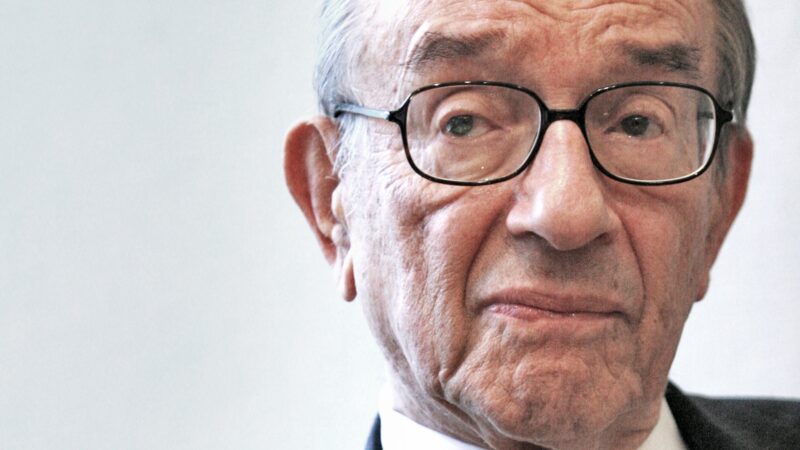
    Alan Greenspan, who as the world’s most powerful central banker maneuvered the United States through two decades of stunning prosperity, but whose decisions contributed to the near-collapse of the economy shortly after he left office, died June 22 at age 100.

    The cause was complications from Parkinson’s disease, his wife, Andrea Mitchell, said in a statement.

    “He was a giant of a man who helped shape the U.S. economy for decades under presidents of both parties, but was always honest in acknowledging his mistakes,” said Mitchell, chief Washington correspondent and chief foreign affairs correspondent for NBC News. “To me he was my husband, who shaped my life from our very first date in 1984.”

    A dour intellectual with eclectic interests who attended the Juilliard music school, played the clarinet in a jazz band and was an acolyte of the philosopher Ayn Rand as a young man, Mr. Greenspan initially made his name as an economic forecaster and adviser to presidents Richard M. Nixon, Gerald Ford and Ronald Reagan.

    During a more than 18-year run as chair of the Federal Reserve beginning in 1987, Mr. Greenspan achieved greater prominence than any central banker before him. He attained an almost mythical reputation for his ability to guide U.S. economic policy with a whisper in the president’s ear, to steer the multi-trillion-dollar economy by nudging interest rates up or down, and to soothe frazzled global financial markets with a few arcane words in a speech.

    Mr. Greenspan was a Washington fixture, named to five terms as Fed chair by four different presidents. He exercised greater power, and for longer, than arguably any public official since FBI Director J. Edgar Hoover.

    He was the “Maestro,” as Washington Post journalist Bob Woodward titled his best-selling book about Mr. Greenspan in 2000. He was a founding member of the “Committee to Save the World,” as a 1999 Time magazine cover called the alliance of Mr. Greenspan, Treasury Secretary Robert E. Rubin and Rubin deputy Lawrence H. Summers.

    Mr. Greenspan’s 1996 musing in a speech over how hard it is to know when “irrational exuberance has unduly escalated asset values” triggered both a sell-off on global stock markets and a new term of art for financial bubbles.

    The financial world was so obsessed with his every move that the cable network CNBC would tape him getting into his car on the morning of Fed policy meetings, hoping to judge by the thickness of his briefcase whether the central bank would move interest rates. An entire cottage industry existed of analysts who parsed his rare and often inscrutable public comments. (“If I seem unduly clear to you, you must have misunderstood what I said,” Mr. Greenspan once said.)

    He was a curious mix of cerebral economist and Washington celebrity. He was a man who spent his mornings reading economic reports as he soaked in the bathtub, his days obsessing over monetary policy transmission mechanisms, and his evenings on the Georgetown cocktail circuit. A man once nicknamed “the undertaker” for his serious manner married one glamorous newscaster, Mitchell of NBC, having earlier dated another, Barbara Walters.

    Mr. Greenspan’s peculiar brand of celebrity was built on a very real achievement. Economists call it the Great Moderation, and it coincided almost precisely with Mr. Greenspan’s tenure as the nation’s economist in chief: A period in which growth was steady, inflation low, and recessions rare and mild. The unemployment rate averaged 5.5 percent during his nearly 19 years in the job, compared with 6.4 percent in the preceding two decades.

    A tarnished legacy

    Mr. Greenspan bent the sprawling Federal Reserve system to his will, using a subtle political touch and a vast reserve of knowledge about the inner workings of the U.S. economy acquired while an economic consultant to businesses. His primary job was to set monetary policy — adjusting interest-rate targets to manipulate the money supply, aiming for low unemployment and low inflation.

    Mr. Greenspan guided the economy through rocky economic shoals, including the 1987 stock market crash, which occurred when he had been in office for two months, the 1991 recession, financial crises in emerging markets in 1998, and the dot-com bust and the Sept. 11, 2001, terrorist attacks. He titled his 2007 autobiography “The Age of Turbulence,” though in hindsight it appears a period of enviable economic calm.

    When Mr. Greenspan left government service in early 2006, he was widely viewed as one of the greatest economic statesmen of all time. But within a few years, the Great Moderation came to look like a mirage, and the maestro’s legacy was severely tarnished.

    Much of the economic expansion under Mr. Greenspan’s watch was built on bubbles, first the 1990s stock market boom and then an unprecedented run-up in house prices in the 2000s. Americans financed their consumption with ever-rising levels of debt: The ratio of household debt to the size of the economy as a whole soared to 82 percent from 53 percent during his tenure.

    The Greenspan Fed fueled these trends with ultra-low-interest-rate policies, particularly from 2003 to 2005, and by taking a hands-off approach to regulating a financial system that grew immeasurably in size and complexity during his tenure.

    “The mindset was that there should be no regulation,” Scott Alvarez, a longtime lawyer at the Fed and Mr. Greenspan’s general counsel starting in 2004, told the Financial Crisis Inquiry Commission. “The market should take care of policing, unless there already is an identified problem … We were in the reactive mode because that’s what the mindset was of the ’90s and the early 2000s.”

    Around 2000, he specifically rebuffed a request by a fellow Fed governor, Edward Gramlich, for the Fed to crack down on lending to people who might have little ability to repay their mortgages, Gramlich told the Wall Street Journal in 2007. Those “subprime” loans would serve as the initial trigger to the crisis that enveloped the world in 2008.

    Mr. Greenspan repeatedly advised Congress against heightening regulation of derivatives, complex financial contracts that, he argued, made the financial system as a whole more stable by distributing risk to those who can afford to take it on. In fact, the unraveling of those markets was a key factor in the 2007-2009 financial crisis.

    And while Mr. Greenspan was renowned for his understanding of the workings of the U.S. economy, and by 2005 had expressed some public worry about home prices having risen too high, he did not identify the scale of the housing bubble that was a major underlying cause of the crisis or use regulatory tools or his bully pulpit to try to combat it.

    “There do appear to be, at a minimum, signs of froth in some local markets,” he said in 2005, near the peak of the biggest national home-price bubble in U.S. history.

    Fostering complacency

    More broadly, Mr. Greenspan’s greatest apparent achievement — preventing the series of crises and near-crises in the financial world from damaging the broader U.S. economy — may have been a factor in the steep downturn. His critics call it the “Greenspan Put,” using a financial term for an option contract that protects investors against losses.

    His very actions that maintained financial stability — helping prevent extreme losses when conditions turned unfavorable — made global investors complacent about risk. That helped fuel the bad lending and excessive use of borrowed money that caused a massive collapse soon after Mr. Greenspan left office.

    “He was the person who came up with the ‘irrational exuberance’ critique of excessive speculation prior to 2000, but he didn’t follow up on it,” said Robert J. Shiller, a Yale economist who warned of stock and housing bubbles during the 1990s and 2000s. “He has an Ayn Rand, pro-market philosophy, and so it wasn’t in his personality to aggressively pursue those ideas and to lean against bubbles.”

    The popping of the housing and credit bubble in 2007 led to a deep global recession and near-collapse of the financial system in 2008, and a far worse outcome was avoided only by an expensive series of government bailouts.

    “I made a mistake in presuming that the self-interest of organizations, specifically banks and others, were such that they were best capable of protecting their own shareholders and their equity in the firms,” Mr. Greenspan told a congressional committee in October 2008, amid the darkest days of the crisis. “Something which looked to be a very solid edifice, and indeed a critical pillar to market competition and free markets, did break down. And I think that, as I said, shocked me. I still do not fully understand why it happened.”

    A libertarian’s pragmatism

    Mr. Greenspan was a staunch libertarian, deeply skeptical of government intervention in the economy. In four decades on the national stage, though, he was a pragmatist who used the tools of government in ways that sometimes were at odds with his philosophy.

    He served on a key commission in the Nixon administration that led to ending the military draft, which Greenspan viewed as an affront to human freedom. But he also helped Ford bail out a nearly bankrupt New York City in the mid-1970s.

    In 1983, he chaired a commission on the finances of Social Security. The accord raised taxes and raised the retirement age over time, and stabilized the finances of the program for a generation.

    As Fed chair, he offered crucial public support both to Bill Clinton’s deficit reduction plan in 1993 and to George W. Bush’s proposed tax cuts in 2001. The former attracted accusations from Republicans that he was trying to ingratiate himself with the new Democratic president who would later reappoint him. The latter drew sharp attacks from Democrats who accused Mr. Greenspan of raw partisanship. (“One of the biggest political hacks we have here in Washington” was how Senate Democratic leader Harry M. Reid of Nevada described him in 2005).

    His testimony at congressional hearings in the latter years of his Fed chairmanship resembled nothing so much as a series of efforts by members of Congress to win Mr. Greenspan’s endorsement — viewed as the sine qua non of economic seriousness — for their preferred policies and pet causes.

    Mr. Greenspan’s impact on U.S. economic policy, in other words, went far beyond that of his official portfolio as a central banker.

    “Alan Greenspan has probably been a key player in more Republican presidential campaigns and Republican party platforms and Republican administrations than any other economist in the country,” Martin Anderson, a senior fellow at the Hoover Institution who recruited Mr. Greenspan to work on the 1968 Nixon presidential campaign, told The Washington Post in 2006. “He’s a wonderful politician.”

    The number cruncher

    Alan Greenspan was born in New York on March 6, 1926, the only child of parents who would soon divorce. His father, Herbert, was a stockbroker. Raised by his mother, the former Rose Goldsmith, in Manhattan’s Washington Heights neighborhood, Alan channeled an uncanny way with numbers as a child into analyzing baseball statistics with an intensity that would be mirrored in his approach to economic analysis decades later.

    “I developed my own technique of keeping box scores,” Mr. Greenspan wrote in “The Age of Turbulence.” “I always used green paper, and recorded each game pitch by pitch, using an elaborate code I made up. My mind, which had been essentially empty to that point, filled with baseball statistics.”

    His other great passion was jazz; he played the clarinet and was nearly as obsessed with big-band leader Glenn Miller as he was with baseball. After high school, he studied at the Juilliard School, and when a spot on his lung kept him out of the Army during World War II, he joined a 14-man jazz band that played around the country.

    During breaks, when most of the musicians would smoke tobacco or marijuana, Mr. Greenspan read about finance and economics. He took to doing his bandmates’ income taxes.

    He enrolled at New York University and took a part-time job at the investment bank Brown Brothers Harriman, where he figured out how to take raw weekly information on department store sales and adjust the data to filter out the normal seasonal fluctuations. That would be an easy task for anyone with a modern computer spreadsheet program, but at the time it required hours upon hours of laborious calculations by hand.

    As with his baseball statistics, Mr. Greenspan had found his great obsession — analyzing data to discern trends. He graduated summa cum laude in 1948 from NYU, where he also received a master’s degree in economics in 1950.

    While in graduate school, he took a job at the Conference Board, which then as now did economic research for big companies.

    “I discovered that the Conference Board had amassed a treasure trove of data on every major industry in America dating back half a century and more,” he wrote in 2007. “It became my passion to master all the knowledge on those shelves. I read about the robber barons; I spent hours over the census of population of 1890; I studied railroad freight-car loadings of that era, trends in short staple for the decades after the Civil War … Instead of reading ‘Gone With the Wind,’ I was happy to immerse myself in ‘Copper Ore Deposits in Chile.’ ”

    Mr. Greenspan enrolled in Columbia University’s economics PhD program in 1950, and though he would never finish it, he did cultivate a relationship with economist Arthur F. Burns, a mentor who would go on to chair the Federal Reserve in the 1970s. (New York University awarded Mr. Greenspan a doctorate in economics in 1977 for previously published research — after he had already become one of the country’s preeminent business economists and chief economic adviser to Ford).

    Mr. Greenspan married art historian Joan Mitchell in 1952, but the marriage was annulled 10 months later. He wrote in his memoir, “I had no real understanding of the commitment required for marriage.”

    In Ayn Rand’s circle

    It was through Mitchell, however, that Mr. Greenspan met one of his deepest, most enduring intellectual influences. Ayn Rand, the libertarian author of “The Fountainhead” and “Atlas Shrugged,” maintained a cadre of mostly young men who came over for evening bull sessions, long arguments about philosophy at which Mr. Greenspan was a regular through the 1950s and early 60s.

    “When I met Ayn Rand, I was a free enterpriser in the Adam Smith sense — impressed with the theoretical structure and efficiency of markets,” Mr. Greenspan told the New York Times in 1974. “What she did — through long discussions and lots of arguments into the night — was to make me think why capitalism is not only efficient and practical, but also moral.”

    Taxes, in her philosophy, were immoral theft; the social safety net an affront to human liberty. He contributed to The Objectivist, a monthly journal published by Rand acolytes, and in a 1966 issue wrote that “the welfare state” was “nothing more than a mechanism by which governments confiscate the wealth of the productive members of a society.”

    While Mr. Greenspan distanced himself over the years from many of the extreme implications of Rand’s views, they remained exceptionally close until her death in 1982; she appeared at his side when he was sworn in as Ford’s economic adviser.

    While Mr. Greenspan debated with Rand and her other young protégés at night, he was building a business consulting firm by day.

    In 1953, he partnered with investment adviser William W. Townsend to start an economic research firm, Townsend-Greenspan, in which Mr. Greenspan would use the knowledge of the inner workings of the U.S. economy he had been accumulating through his work at the Conference Board to consult for some of the biggest American businesses.

    When U.S. Steel, Alcoa, Mobil Oil or dozens of other companies wanted to know when the economy was poised to speed up or slow down, or what how demand for steel or aluminum or anything else would trend, Townsend-Greenspan did the analysis. The experience left Mr. Greenspan with a sterling Rolodex, full of contacts across corporate America.

    Entering politics

    Mr. Greenspan entered politics in 1967, recruited to help Nixon’s 1968 presidential campaign. He briefed Nixon regularly on economics during the campaign but served the administration as an outside adviser rather than within the White House.

    By the time he was ready to join the Nixon administration, the president had resigned in disgrace and Mr. Greenspan would serve Ford instead. His adjustment to full-time government work was uneasy at times. In his memoir, he recalled blanching at one of his first major policy meetings. Speechwriters unveiled a campaign called “Whip Inflation Now,” aiming to using a mere publicity effort to keep prices unchanged when powerful economic forces were driving them upward.

    “The speechwriters had ordered up millions of Whip Inflation Now buttons, samples of which they handed out to us in the room,” Mr. Greenspan wrote. “I was the only economist present, and I said to myself, ‘This is unbelievable stupidity. What am I doing here?’ ”

    Early misgivings aside, Mr. Greenspan proved to be an able public servant, winning a lifelong friend in Ford, who was House minority leader before succeeding Nixon, and the trust of such Nixon and Ford White House officials as Dick Cheney and Donald H. Rumsfeld.

    As president, Reagan gave Mr. Greenspan the task of salvaging the finances of the nation’s public pension program, which was on the verge of running out of money.

    As chair of the National Commission on Social Security, Mr. Greenspan guided a disparate 15-member group, stocked with disparate figures including AFL-CIO head Lane Kirkland, Sen. Robert J. Dole (R-Kansas) and Sen. Daniel Patrick Moynihan (D-New York), toward a common understanding of how best to put the finances of Social Security on a more sustainable path.

    Their agreement, which Congress enacted in 1983, raised taxes on some affluent individuals and increased the retirement age gradually over the decades to follow, among many other provisions that put the finances of the program on a solid footing for a generation.

    While the Greenspan Commission, as it was widely known, has been hailed as a triumph of policymaking by bipartisan commission, the reality may have been somewhat different.

    Robert M. Ball, a commission member and former commissioner of Social Security, wrote later that the committee was in fact deadlocked. A compromise was achieved when James A. Baker III, Reagan’s chief of staff, and House Speaker Thomas J. “Tip” O’Neill Jr. (D-Massachusetts) hammered out an agreement between themselves, which the commission then accepted.

    Mr. Greenspan, for his part, acknowledged the irony that a man philosophically opposed to the social insurance net had played a large role in saving it.

    His work on the Social Security commission had another, more personal benefit. A young NBC White House correspondent, Andrea Mitchell, called Mr. Greenspan as a source in 1983. They talked periodically; he declined an invitation to the White House correspondents’ dinner because he was going with Barbara Walters.

    Mitchell agreed to go to dinner with him in 1984, and, he later recalled that on their first date, he invited her back to his apartment to read an essay on monopolies he had written for Rand’s newsletter.

    Mr. Greenspan and Mitchell quickly became a couple, although they would not marry until 1997. She is his only immediate survivor.

    The ‘Black Monday’ test

    On Aug. 3, 1987, Mr. Greenspan was confirmed as chair of the Federal Reserve. His first test came remarkably early on. On Oct. 19 that year, the stock market plummeted 22.5 percent in a single nerve-shaking day.

    Mr. Greenspan was in Dallas for a previously scheduled speech — or at least he was, until the White House dispatched an Air Force jet to ferry him back to Washington. He immediately realized the risks to the U.S. economy: If banks, reeling from losses and fearful that their clients wouldn’t survive, stopped extending routine credit, the entire financial system could collapse.

    Fed lawyers wanted to release a lengthy, complicated statement of the Fed’s stance, according to Woodward’s book “Maestro.” But Mr. Greenspan and a key lieutenant, New York Fed President E. Gerald Corrigan, realized that the central bank needed to give Wall Street a simple, open-ended commitment to prevent financial collapse.

    At 8:41 a.m. on Tuesday, Oct. 20, Mr. Greenspan issued a statement under his name: “The Federal Reserve, consistent with its responsibilities as the nation’s central bank, affirmed today its readiness to serve as a source of liquidity to support the economic and financial system.”

    That, along with a slew of private calls by Corrigan to Wall Street firms strongly encouraging them not to start canceling credit lines, helped fuel a market rally that day, and ultimately Black Monday in 1987 would have little visible impact on the U.S. economy.

    It was the first triumph over markets by the maestro, and Mr. Greenspan’s almost mystical reputation as a soothsayer over financial markets had begun.

    Pressure on rates

    In Mr. Greenspan’s early years as Fed chair, one of his steepest challenges was the tendency of Reagan and Bush administration officials to constantly — and publicly — push for lower interest rates.

    Fed chairs operate independently of the rest of the government for a reason. Higher interest rates may slow down the economy and result in higher unemployment in the short run, but they are often needed to prevent inflation from rising in the longer run. Elected officials, Mr. Greenspan soon saw firsthand, often have a shorter-term perspective than central bankers.

    In August 1988, Mr. Greenspan pushed the Fed’s policy committee to raise a key bank lending rate by half a percentage point. Baker was now secretary of the treasury, and Mr. Greenspan went to Baker’s office at the Treasury Department to make the case for raising rates.

    Baker, who wanted the economy firing on all cylinders to help Vice President George H.W. Bush win the presidential race that fall, replied, “You just hit me right here” in my stomach, according to “Maestro.”

    It was just one in a four-year series of attacks — some veiled, some overt — on Mr. Greenspan from his fellow Republicans in the Reagan and Bush administrations. The frustration that Mr. Greenspan wasn’t doing enough to boost the economy led Bush, by then elected president, to move slowly and reluctantly in deciding whether to appoint Mr. Greenspan to a second term.

    The decision was made only a month before his term was to expire, and only after Mr. Greenspan assured the president that he was relatively pessimistic about the economy, which was interpreted within the White House as an indication he was inclined to keep interest rates low.

    Referring to Bush’s reluctant decision to reappoint him, Mr. Greenspan wrote in his memoir, “I think he concluded I was his least worst choice” and that any other selection would have roiled markets.

    Bush kept pressure on Mr. Greenspan to cut rates in 1992, requests the Fed chair ignored. Bush, he made clear in later interviews, blamed Mr. Greenspan for his losing reelection bid.

    A growing reputation

    By the mid-1990s, the U.S. economy was growing rapidly and unemployment was low. Mr. Greenspan had a warm relationship with Clinton and his administration, who adopted a hands-off-the-Fed policy. And Mr. Greenspan was using his knowledge of the inner workings of the U.S. economy to great advantage, winning the awe of his Fed colleagues.

    Lawrence B. Lindsey, a Fed governor from 1991 to 1997, later recalled a time when the Mississippi River was flooding. “At the time of the weekly Board of Governors’ meeting, the U.S. economy was literally linked together by a single bridge,” Lindsey wrote in his book “Economic Puppetmasters: Lessons from the Halls of Power.” “Greenspan not only knew the location of the bridge, but also the various reroutings that could be used to get merchandise there. Those type of facts fit naturally into the mind of a man who studies statistics on boxcar loadings at all the major terminals in the country.”

    The economy, if anything, seemed to be growing too fast. Surely, some Fed policymakers argued, that would soon cause an outburst of inflation. Mr. Greenspan felt differently. He concluded that American businesses were becoming more productive, thanks to information technology and new ways of doing things.

    That would allow a speedier rate of growth without prices rising, so he kept interest rates lower than some inflation worriers would have preferred. He even cut rates in late 1998, when East Asian nations were experiencing a financial crisis even as the U.S. economy kept going gangbusters, which in turn helped boost the stock market to stratospheric levels.

    Having handled the 1987 market crash, the 1991 recession and the political battles of the Bush years, and having guided the economy through the grand prosperity of the 1990s, Mr. Greenspan was developing a certain aura of greatness.

    When Sen. John McCain (R-Arizona) was running for president in 2000, he was asked whether he would reappoint Mr. Greenspan.

    “Not only would I reappoint him,” McCain said, “but if he died we’d prop him up and put sunglasses on him as they did in the movie ‘Weekend at Bernie’s.’ ”

    Defending his record

    Amid the popping of the stock market bubble that his policies had helped fuel, and the Sept. 11, 2001, terrorist attacks, Mr. Greenspan led the Fed on an aggressive series of interest-rate cuts. By the summer of 2003, the Fed’s target rate for loans between banks was down to 1 percent.

    It worked to keep the 2001 recession a mild one. But while the economy was growing in 2002 and 2003, it did so at a glacial pace. And Mr. Greenspan feared that the nation could fall into a dangerous cycle of falling prices known as deflation.

    To fend off that risk, he wanted to keep the low rate in place for a long time — a “considerable period,” as Fed statements of the time put it. That was one factor, although hardly the only one, behind a booming housing market in which national home prices rose by double-digit rates.

    In all, from the beginning of 2000 to the middle of 2006, just after Mr. Greenspan left office and a year after receiving the Presidential Medal of Freedom, national home prices rose 90 percent, according to one popular index. It was much more than that in some markets, and the fundamental economic reasons that might have justified that rise were few.

    And while Congress had given the Federal Reserve the authority to regulate mortgage lending practices, the Fed did little with that authority. Mr. Greenspan’s successor, Ben S. Bernanke, would later call it “the most severe failure of the Fed in this particular episode.”

    Mr. Greenspan, testifying before the Financial Crisis Inquiry Commission in 2010, defended his legacy and rebuffed criticism. “History tells us regulators cannot identify the timing of a crisis, or anticipate exactly where it will be located or how large the losses and spillovers will be,” Mr. Greenspan said.

    “When you’ve been in government for 20 years, as I have been, the issue of retrospective and figuring out what you should have done differently is a really futile activity,” he added. “My experience has been, in the business I was in, I was right 70 percent of the time, but I was wrong 30 percent of the time and there are an awful lot of mistakes in 21 years.”

    Irwin, a former Post staff writer, is the author of “The Alchemists: Three Central Bankers and a World on Fire.”


  • Philadelphia’s former top lawyer, now a corporate defender, says national companies need Philly lawyers

    Philadelphia’s former top lawyer, now a corporate defender, says national companies need Philly lawyers

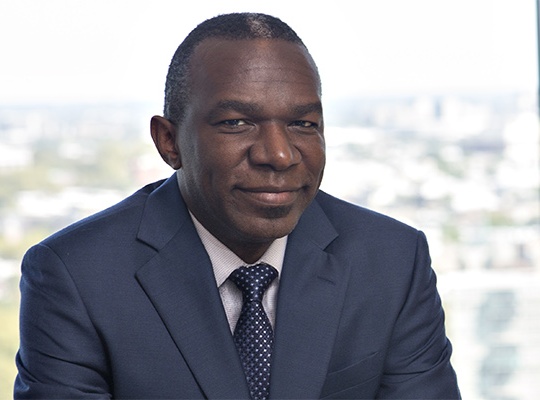
    As Philadelphia’s city solicitor, heading a staff of more than 200 lawyers, Sozi Pedro Tulante sued some of the nation’s biggest corporations, accusing them of loan discrimination and pushing lethal painkillers.

    Now he’s a partner at Dechert LLP, a Philadelphia-founded, international corporate law firm, where the work includes defending big national corporations from the kinds of complaints he used to file.

    Corporate targets during his 2016-18 stint as the city’s top civil lawyer included Wells Fargo & Co., the third-largest U.S. bank, which settled his lending-discrimination complaint for a promise of $10 million in donations to housing programs, and six pharmaceutical companies, four of which were major Pennsylvania employers, for promoting addictive opioids. The city later got a nearly $200 million share of a national settlement.

    Tulante’s job also included routine legal reviews. He defended the city’s soda tax and its sanctuary city immigration status.

    After leaving his city position in 2018, Tulante — son of a refugee, a Northeast High School and Harvard University graduate, and a former federal prosecutor — lectured at the University of Pennsylvania’s law school.

    He joined Dechert’s litigation department the next year, then spent 2022 to 2025 as general counsel at Boston-based Form Energy, which builds iron-based batteries for data centers and other clients at its plant in Weirton, W.Va.

    Last year, Tulante moved back to Philadelphia and was named co-managing partner of Dechert’s Philadelphia office. He agreed to talk to The Inquirer about practicing law in Philadelphia.

    This interview has been edited for clarity and brevity.

    Does Philadelphia’s reputation as a “judicial hellhole” full of billboards urging citizens to sue businesses scare companies away?

    When a company is deciding to locate in a particular place, they do look at the tax structure and how red is the red tape and the legal climate.

    The Inquirer has reported how in Philadelphia [a plaintiff] can pursue a case in Philadelphia Court of Common Pleas even if they aren’t here. There have been these “nuclear verdicts” for millions of dollars.

    More companies are now aware of the risk. They adjust.

    There are extreme cases where litigation ends a company. But for the most part you factor it in.

    Who gains from a litigious climate?

    Sophisticated national companies have clients everywhere. They know they are going to get sued. They study to minimize litigation. For example, don’t use flip messaging. Just be familiar where the threats may come from. Know what litigation the city is pursuing.

    Many of the big companies facing litigation in Philadelphia are more likely to engage counsel that is locally respected and recognized in the area. In Philly, if you can’t answer the question, “Where did you go to high school?” [with a name the parties recognize], it’s a disadvantage. Here, we fight the plaintiff attorney, but we also serve on the same board and attend the same continuing legal education [CLE] classes.

    There are great lawyers on the other side, at [plaintiffs’] firms like Kline & Specter and Ross Feller Casey, sophisticated counsel who walk into court and get instant respect.

    Part of my role at Dechert is to represent clients in Philadelphia and nationally who are thinking about how Philadelphia has changed as a place of litigation and how that litigation impacts business.

    Businesses are saying, “We have the tax burden, the regulatory burden, we’ll comply, but you are pushing on the edges.”

    What recent laws have changed the legal climate for business?

    The new consumer protection ordinance, passed in 2024, has given the city more power to bring some major cases [through national law firms] that are broader than before. Life sciences cases. Firearms liability. Fair workweek litigation. They may go after [national] retailers in certain cases. The city can go forward and get penalties up to $2,000 per violation.

    As city solicitor, I was reminded that government has the broadest power of regulation at the local level. The police authority government has is really broad. Unless there’s some preemption by state or federal government. It’s something folks pay attention to.

    Is part of Philadelphia’s affordability a result of its failure to attract private-sector employers?

    I live in West Philly. I work at the law school. I have three children in public schools. I want the city to have a secure tax base. I want to make sure investment goes where it needs to.

    It’s challenging. One of the biggest challenges is getting people from Temple, Penn, Drexel, and St. Joe’s to stay.

    There are instances, like Chubb’s new office, where the city has persuaded [a longtime city employer] to stay.

    In Philadelphia the strength ultimately is in eds and meds. We have doctors and nurses, lab technicians, people with a high level of training. Philadelphia takes credit for helping solve COVID by our Nobel Prize winners Drew Weissman and Katalin Karikó at Penn, which has led to investments in gene therapy.

    What was the most satisfying thing you did as city solicitor?

    Working to get local control of the school district and disbanding the state’s School Reform Commission. It was humiliating, the way the state was running our schools. We should have a stake. The most important thing we can do is educate our children and prepare them for businesses that want to hire talent.

    Why did you choose the law?

    It’s not the ability to argue that makes a good lawyer. You have to solve problems. You have to be really good at writing. And you have to be able to talk to people — to be personable, to make the hard stuff simple, to help them understand.

    I like a career where people ask you to help them solve really big problems. They can be CEO of a major company or a pro bono client that needs a habeas petition. They require the same level of skill.

    How did you come to be a Philadelphian?

    I came here at age 8 in 1983 [after his father, a military official in Angola, fled to Congo following a change in government, was imprisoned, then was resettled in North Philly by a refugee agency].

    It was a difficult time to grow up here. I graduated in 1993 from Northeast High School. I got into Harvard, then Harvard Law School.

    Eight years ago, I left the city, to be general counsel at a startup.

    But it came back to family and affordability. Philadelphia is that place for me, within the larger Northeast corridor.

    What gives you hope?

    My dad drove a cab when he came here. My mom worked in the prison system. Now here I am, a Black attorney from the public school system.

    I am a big booster of today’s public schools. My children are at Central, at Masterman — I couldn’t get into those, I still hold a grudge! — and at Penn Alexander in West Philly.

    I want my children with other children who really want to achieve. I motivate them, the teachers motivate them, they are self-motivated, but the friends they are with have more of an impact on them.

    And I think we are finally putting into place an infrastructure for understanding government. You know Philadelphia has more political ads and advertising than almost anyplace, a big city in a swing state. But we have not always centered our education on civics. Now my son understands more than I did.

    I’m glad to be back at Dechert. I can see a lot from this perch.

    This story has been updated to correct some biographical information about Sozi Pedro Tulante.

  • Wyndham Clark avoids record collapse and holds on to win the U.S. Open

    Wyndham Clark avoids record collapse and holds on to win the U.S. Open

    SOUTHAMPTON, N.Y. — Wyndham Clark couldn’t remember being in a darker place. He was publicly reviled for a moment of petulance when he smashed a locker at Oakmont after missing the cut in the U.S. Open last year. His game, his reputation, he felt it all was slipping away.

    Sunday at Shinnecock Hills wasn’t much better. The New York crowd behind Scottie Scheffler in his bid for a career Grand Slam turned on Clark, cheering his misses and wishing for the worst.

    That’s what made this U.S. Open title so much sweeter.

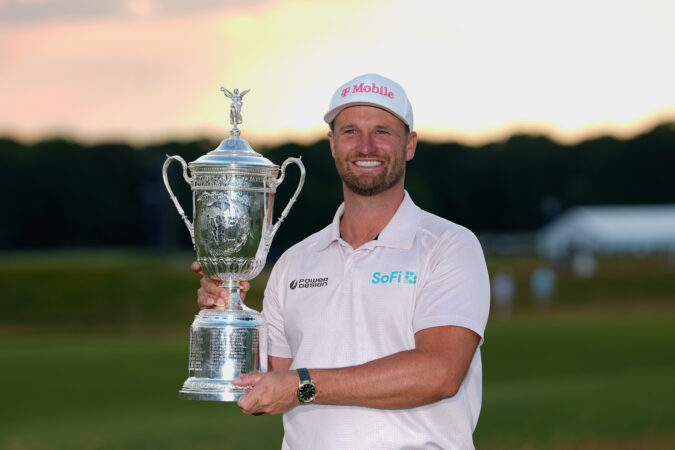
    On the edge of the greatest collapse in U.S. Open history, Clark held his nerve against a charge by Sam Burns and a Shinnecock Hills crowd that never gave him much love until he showed his mettle with his second U.S. Open title in four years.

    “The first one was kind of just the breakthrough of knowing I can do it,” Clark said after a two-putt par from 50 feet for a 3-over 73 and a one-shot victory. “And then this one was a lot of redemption. Last year was so tough, a terrible year. I left this place in shambles, and it’s amazing what a year can do. I’m leaving here this Sunday as a champion, and I’m just so blessed.”

    Clark, who won the 2023 U.S. Open at Los Angeles Country Club, became the first wire-to-wire winner of the U.S. Open since Martin Kaymer at Pinehurst No. 2 in 2014.

    This sure didn’t feel like a stroll through the Hamptons.

    He had the largest 54-hole lead in the U.S. Open in 15 years. It was down to a single shot in just five holes, and stress followed him the rest of the way.

    The clincher for Clark was on the par-5 16th, where on Saturday he made the only eagle of the week. This time it was his worst drive, well left into the gnarly fescue. He gouged that out and narrowly cleared a bunker. His 8-iron barely stayed on the back of the green. He rolled in a 30-foot birdie putt for a two-shot lead with two holes to play.

    It was a signature moment with muted applause. The gallery rooted against him all day, putting all their support behind Scheffler, who made his own share of mistakes and never got closer than three shots of Clark all day.

    “Winning major championships is extremely difficult,” Scheffler said after a 71 to tie for fourth. “He had some stones down the stretch. … Being in the arena is not for everybody, and I think it shows a lot about Wyndham, how he handled not only this golf course but I think the crowd today. And he is a well-deserving champion.”

    Clark had the highest final round of a U.S. Open champion since Graeme McDowell closed with a 74 to win at Pebble Beach. No matter. The 32-year-old American has two U.S. Open titles, and two wins in the last month.

    Burns closed with a 67, his second chance in as many years to win the U.S. Open. He bounced back from a three-putt bogey on the 15th with an 18-foot birdie to stay within one shot. He made a weak pass at a 10-foot birdie putt to tie for the lead on the 17th. What haunts him is a 17-foot birdie chance on the 18th that grazed the right edge of the cup, causing him to drop to his knees.

    “I would say last year at Oakmont I felt more I lost the golf tournament. I certainly don’t feel that way today,” Burns said. “I did everything I could to have a chance to win today.”

    Clark finished at 4-under 276 and got a surprise at the end when his father, Randall, took an overnight flight from Denver to watch his son win for the first time.

    Even the New York crowd had no choice but to salute him.

    “New York didn’t really like me — I love you guys,” Clark said at the closing ceremony, hoisting the silver trophy. “But I get it. Some of it’s self-deserved. I did some unfortunate things last year that I really regret, and I’ve been sorry multiple times and I’m still sorry, so hopefully I can win you guys over eventually.”

    Clark noticed fans leaving early on Saturday and hoped for a big crowd and big energy for the final round. He got every bit of that, and it was uncomfortable at times. One was ejected when he shouted, “Don’t choke, Wyndham.” The grandstand behind the seventh green broke into cheers when his shot rolled off the green and into the bunker.

    “I get it — they were rooting for Scottie,” Clark said. “Grand Slams only happen a few times. He’s going to get it. He’s the best player in the world. But today it’s my day.”

    It almost wasn’t.

    But Burns never caught him. No one did.

    Tom Kim, who like Scheffler celebrated a birthday on Sunday, was on the fringes of seriously contending until he fell back with a bogey on the 17th and shot 70 to finish third.

    Clark’s hit a superb wedge that spun back to 4 feet for birdie on the 10th to restore the lead to two shots. But then he went long on the 13th with a pitching wedge and couldn’t save par. And then came his big moment on the 16th, and one last act of lagging a 50-foot putt to tap-in range.

    That’s how it was at Los Angeles in 2023, when he needed two putts from 60 feet and lagged it close. Clark simply is at his best against tough tests, and rough arenas. Three years ago, he denied Rory McIlroy. This time it was Scheffler.

    “The first one was amazing, and this one seems even better,” Clark said. “I think especially after such a sour taste last year in this championship, to have some redemption and win this again is almost surreal.”

    A month ago, he was two years without a win and No. 75 in the world. Then he shot 60 in the final round to win The CJ Cup, contended the next two weeks and won his second major. It moves him to No. 8 in the world.

    The smile he wore holding that U.S. Open trophy would suggest he feels on top of the world.

  • US and Iran wrap high-level talks in Switzerland after making ‘encouraging progress,’ mediators say

    US and Iran wrap high-level talks in Switzerland after making ‘encouraging progress,’ mediators say

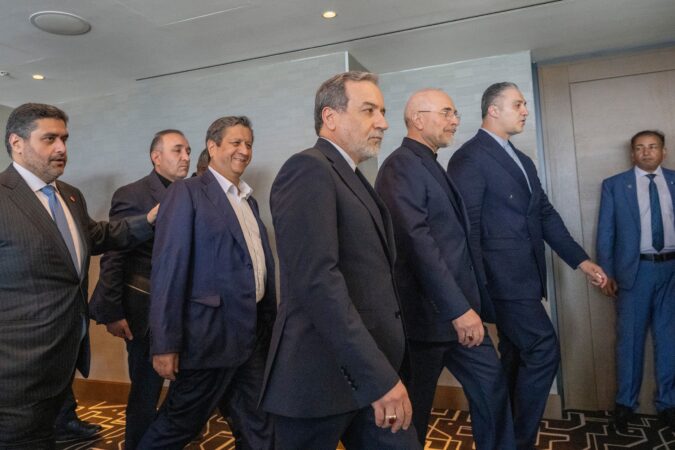
    OBBUERGEN, Switzerland — U.S. Vice President JD Vance and Iran’s parliamentary speaker Mohammad Bagher Qalibaf on Monday wrapped up a lengthy round of initial talks aimed at solidifying a permanent end to the war between the countries.

    The mediation effort in Switzerland, which started Sunday and stretched into the early hours of Monday, had rocky moments. But the talks also led to some agreements between the two sides.

    In a joint statement, mediators Pakistan and Qatar said that while the high-level engagement had ended, technical negotiations would continue in Switzerland this week.

    Vance was expected to make remarks from the resort at 1 p.m. local time, his office said.

    The mediators hailed what they called “encouraging progress” made during the talks. A senior U.S. diplomat claimed progress on multiple fronts, including the establishment of “mechanisms” to ensure the Strait of Hormuz, a vital waterway for global energy shipments, remains open and that a ceasefire in the fighting between Israel and Iran-backed Hezbollah militants in southern Lebanon holds.

    Yet the talks between the United States and Iran were jolted by blistering statements from U.S. President Donald Trump, who, from thousands of miles away from the Swiss negotiating venue at a mountainside resort near Lake Lucerne, was firing off comments that offended the Iranians.

    Iranian state media said talks had paused after the “publication of an insulting message by the U.S. President,” according to Iranian state media.

    Ultimately, the Iranians remained on site and negotiations continued, according to the senior U.S. diplomat, who was not authorized to comment publicly and briefed reporters on the condition of anonymity.

    Iranian state television reported Monday that the Iranian delegation had left the summit site to head to the airport in Zurich to fly back to Tehran.

    Trump didn’t attend what was dubbed the “Lake Lucerne Summit,” but his presence certainly loomed large.

    Ahead of the talks, Iranian President Masoud Pezeshkian had vowed to “never back down from the right to enrich uranium,” according to state media.

    Trump on Sunday told Fox News in a phone interview that Pezeshkian should watch what he says and also threatened to take over Iran, according to one of the news channel’s correspondents.

    Trump also continued to issue warnings against Iran on social media, posting as negotiators worked: “Iran must immediately stop their highly paid PROXIES in Lebanon from causing trouble. If they don’t, we’ll hit Iran very hard again, just like we did last week, only harder!!!”

    It’s unclear when Vance will depart Switzerland. Trump envoys Jared Kushner and Steve Witkoff are handling many of the technical details on behalf of the U.S. delegation.

    Iranian Foreign Minister Abbas Araghchi wrote on X that Pakistani and Qatari mediators delivered “major progress to end the Lebanon War.” But, he added, the first “real test” of negotiations would be whether the mechanism succeeded in halting the fighting between Israel and Hezbollah.

    The senior U.S. diplomat said among the issues discussed was Iran’s messaging as it related to the Strait of Hormuz, which Iran’s military said it closed Saturday in response to continued fighting in Lebanon. U.S. Central Command has disputed that Iran closed the strait again.

    The interim deal to end the fighting in Iran, signed last week by the leaders of the U.S. and Iran, also sets a 60-day period for negotiators to settle the future of Tehran’s nuclear program amid concerns that it wants to use it for military purposes, a claim Iran denies. The fate of frozen Iranian assets, among other thorny issues, are also on the agenda.

    Though the talks will encompass a vast array of complex matters, Iran has insisted on first addressing the fighting in Lebanon.

    Saturday’s renewed ceasefire in Lebanon appeared to be holding, and Israel’s military said it would lift movement restrictions for residents near the Israel-Lebanon border on Monday morning. Neither Israel nor Hezbollah is a signatory to the U.S.-Iran deal.

    There was cautious calm Monday in Lebanon, with no Israeli strikes reported overnight after a quiet Sunday. Hezbollah likewise has not announced any attacks on Israeli forces since Saturday.

    The lull in fighting in Lebanon is the longest since the outbreak of the latest Israel-Hezbollah war on March 2.

  • Starmer announces he’ll resign as UK prime minister with Burnham confirming bid to succeed him

    Starmer announces he’ll resign as UK prime minister with Burnham confirming bid to succeed him

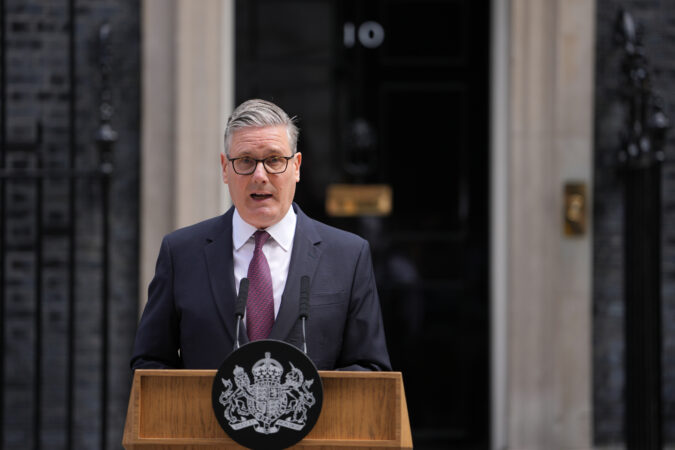
    LONDON — British Prime Minister Keir Starmer announced Monday that he will resign, forced out by his own party after missteps and mistakes soured voters’ goodwill for a prime minister who won a landslide election victory two years ago on a promise of steady leadership and economic growth.

    Starmer says he will remain caretaker prime minister until his Labour party chooses a new leader — with expectations growing that it will be former Greater Manchester Mayor Andy Burnham.

    Burnham confirmed in a social media post that “I will put myself forward as part of this process.” Former Health Secretary Wes Streeting, who was considered his main rival for the top job, said he will back Burnham.

    It was Burnham’s victory in a special parliamentary election last week that triggered Starmer’s decision to resign. After nearly a decade out of Parliament as the mayor of Greater Manchester, Burnham returns to Westminster and will be sworn in as a lawmaker later on Monday.

    Only members of Parliament can stand for the party leadership.

    Streeting’s statement makes it more likely that Burnham will be selected without a leadership contest.

    Starmer is the sixth prime minister in a decade to stand outside 10 Downing Street and announce a premature departure. His statement comes the day before Britain marks the 10th anniversary of its vote to leave the European Union, a decision that still roils the country’s economy and politics.

    After weeks of insisting he would fight to keep his job, Starmer conceded to growing pressure to hand over to a new leader who can try and revive the government’s flagging fortunes. He led Labour to a landslide election victory in July 2024, but since then his popularity and that of the party have plummeted.

    A new leader in place within weeks

    Starmer made the announcement outside his official 10 Downing St. residence, the spot where he delivered his first speech as prime minister two years ago.

    His voice choked with emotion near the end of the brief statement, which was watched by a group of staff, Cabinet ministers and scores of journalists.

    “The question my party is asking now is whether I am best placed to lead us into the next general election,” Starmer said. “I have heard the answer of my parliamentary party to that question, and I accept that answer with good grace.”

    He said he spoke to King Charles III, Britain’s constitutional monarch, to inform him of the decision.

    Starmer spent the weekend pondering his future following Burnham’s special election victory.

    It’s unclear whether Burnham, who is due to be sworn in as a member of Parliament on Monday, will now face a coronation or a challenge. Starmer said nominations for a leadership contest will open on July 9, and the new leader will be in place by the time Parliament returns from its summer break on Sept. 1.

    If Burnham is the only candidate, the change could come by mid-July.

    Starmer struggled to fulfill election pledges

    Starmer has struggled to deliver promised economic growth, repair tattered public services and ease the cost of living. He has been hamstrung by repeated missteps, including his decision to appoint Peter Mandelson, a scandal-tarnished friend of Jeffrey Epstein, as the U.K. ambassador to the United States.

    Labour is losing liberal voters to the growing Green Party and facing a rising Reform UK, the Nigel Farage -led anti-immigration party that consistently leads in nationwide opinion polls.

    U.S. President Donald Trump weighed in even before an announcement, linking Starmer’s potential exit to two of his recurring bugbears: immigration and renewable energy.

    “Keir Starmer will resign as Prime Minister of The United Kingdom. He failed badly on two very important subjects- IMMIGRATION AND ENERGY (OPEN NORTH SEA OIL!). I wish him well! President DJT,” Trump posted on his social media platform.

    Starmer’s initially warm relationship with the president has soured in recent months over issues including the Iran war, which the U.K. didn’t join.

    He won praise on the world stage

    In contrast to missteps on the domestic front, Starmer has won praise for his international role, notably in rallying European support for Ukraine in its fight against Russia’s invasion, and working to mitigate the economic and political turmoil unleashed by the Iran conflict.

    A NATO summit in Turkey next month may be his last foray on the world stage as Britain’s leader.

    European Commission President Ursula von der Leyen praised Starmer’s legacy.

    “It can take many leaders years to grow into the statesman you became in just two years,” she said on X. “European and Ukrainian security is stronger because of you. Thank you, dear Keir.”

    While many Labour lawmakers have rallied behind Burnham, some have said that Starmer had been treated unfairly. London legislator Neil Coyle railed on X against “the prospect of an utter stitch-up & the media circus being rewarded.

    “When the next leader cannot change Trump, Iran, Ukraine, Putin, Musk, broadcast editorial & algorithm bias overnight they’ll bay for his blood too. Better keep that guillotine sharp,” he wrote.

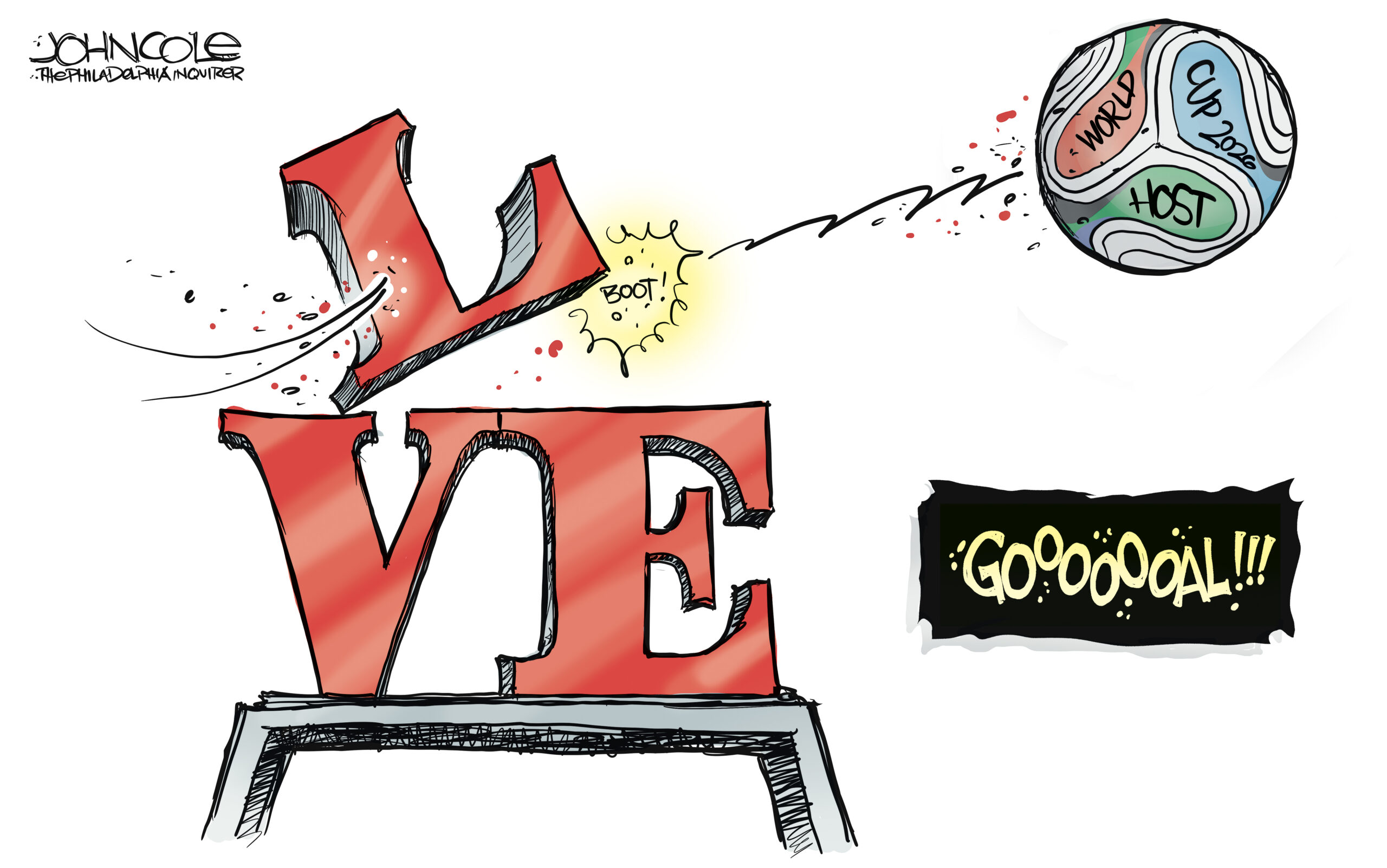
  • Worldie | Editorial Cartoon

    John Cole spent 18 years as editorial cartoonist for The (Scranton) Times-Tribune, and now draws for various statesnewsroom.com sites.

  • Invading Cuba would be a disaster, and history proves it

    Invading Cuba would be a disaster, and history proves it

    Recently, President Donald Trump declared “I do believe I’ll have the honor of taking Cuba.” He mused that, “whether I free it, take it, I think I could do anything I want with it.” Trump’s increasingly hostile rhetoric has led to a debate over whether the U.S. should invade Cuba and remove the island nation’s government from power.

    History suggests that the answer is no. An intervention by the U.S. in Cuba will end badly for both Americans and Cubans. It may prompt a flood of Cuban Americans returning to the island, and the very sort of economic development that, in the past, produced a revolution and ignited a chain of events that led to the current situation.

    U.S. intervention in the Caribbean to “bring democracy” or promote American corporate interests is nothing new — and Cuba is no exception.

    In 1898, the U.S. took control of Cuba after it won a quick victory in the Spanish-American War. What most Americans do not know is that Spain’s defeat was just the epilogue to a Cuban war for independence that had raged for three years.

    The American victory meant that, instead of the independence for which Cubans had been fighting, they became an American colony. Worse, a series of independence wars, dating back to 1868, had left the fledgling Cuban government and landowners bankrupt as the warring factions destroyed property in an effort to break the other’s morale. As a result, many previously wealthy Cubans sold off their properties to American investors.

    U.S. business owners and companies poured money into the island, purchasing some of the best properties in the agricultural zones, as well as telecommunications, mining and railroad infrastructure. These purchases gave Americans dominance over the Cuban economy. At one point 70% of Cuba’s foreign trade was with the United States, and U.S. companies and investors owned 90% of the telephone and telegraph industry, 83% of the railways and 42% of sugar production.

    U.S. industries, like the United Fruit Company, primarily hired Americans to work in upper management, which limited the upward mobility of Cubans. They built enclaves for their managers that frequently segregated them from the Cuban population-at-large except for the laborers who provided services. Often, they even built infrastructure, including railroads and ports, to extract goods and wealth from Cuba rather than serve the people of the island.

    Even worse, as historian Louis A. Pérez, Jr. has eloquently argued, this economy paved the way for a corrupt political system fueled by patronage and pay offs. Engaging in the system became the principal pathway to wealth for Cubans.

    Four years after the occupation, in 1902, the U.S. granted Cuba independence — sort of.

    The U.S. agreed to withdraw its troops, but only after Cuba signed a treaty allowing the U.S. to militarily intervene when its self-interests were imperiled — the so-called Platt Amendment. Cuba also agreed to lease to the U.S. in perpetuity a vast tract of land around Guantanamo Bay for use as a naval base. The lease could only be voided if both parties agreed to end it, which gave the U.S. veto power.

    In 1906, the U.S. demonstrated that Cuba’s “independence” was illusory. Concerned by a faltering Cuban government, the U.S. dispatched troops who would occupy the island until 1909. In 1912, U.S. Marines again invaded eastern Cuba to help put down a local uprising.

    The interventions sent the unmistakable message: Cuban officials had to maintain U.S. support. Accordingly, every Cuban government until 1933 sought to please the U.S. government and powerful American economic interests.

    When the government did try to boost Cuban industries, it often had to reverse course after Washington balked to protect American corporate interests.

    Cubans resented an economy that served U.S. companies well, but not Cubans. They also resented their government for putting American interests ahead of Cuban ones. That led to a powerful backlash typified by the slogan “Cuba for Cubans.” In 1933, Cubans finally revolted.

    The uprising produced some economic and political reforms, including the establishment of an eight-hour work day, a minimum wage, guarantees that industries would maintain a minimum percentage of Cuban workers and the abrogation of the Platt Amendment.

    However, in the ensuing years, the U.S. meddled in Cuban politics in an attempt to temper the revolutionary fervor. Behind the scenes, the U.S. Embassy worked with political groups to try to ensure a compliant Cuban government. They went so far as to help rig the 1936 presidential election to secure victory for a candidate favorable to military dictator Fulgencio Batista (who ruled the island on several occasions between the 1930s and 1950s) and the military. American officials saw the dictator as a stabilizing force in Cuban politics.

    Made By History sponsors. FOR USE ON MADE BY HISTORY STORIES ONLY.

    The U.S. also maintained economic dominance over the island by purchasing most of Cuba’s primary export: sugar. That made it impossible even for democratic Cuban governments to undertake the substantial land reform necessary to create economic prosperity for small farmers. Such reform would have taken land from American owners and therefore risked an U.S. boycott of Cuban sugar or other economic sanctions. The loss of their primary market would have devastated Cuban tenant farmers.

    In 1952, however, the U.S. made a fatal mistake. After an eight-year absence from power, Batista led a coup against democratically elected president Carlos Prio Socarrás. The Eisenhower administration quickly recognized Batista’s government, failing to grasp that it had little popular support.

    Enter Fidel Castro, who quickly built a strong opposition movement, precipitating the Cuban Revolution in 1959. During a visit to the U.S. a few months after his triumph, Castro described his revolution as “humanist.”

    Yet, the Eisenhower Administration suspected that Castro was a Communist at heart. The new leader confirmed their worst fears when he presented a modest land reform plan in June 1959 that would distribute unused parcels of land to tenant farmers. This proposal led to a rapid escalation of American sanctions against Cuba. The Cuban government responded by seizing property owned by American business interests. The escalating bellicosity from the U.S. drove Castro into a closer relationship with the Soviet Union. In April 1961, this cycle of escalation culminated in the fiasco that was the Bay of Pigs invasion by Cuban exiles, backed by the U.S.

    Scholars have long debated whether Castro was a Communist when he took power, but it was not until the day before the Bay of Pigs that he made it official by declaring this is a “socialist and democratic revolution of the humble, by the humble and for the humble.”, In October 1962, the conflict between the two nations culminated in the Cuban missile crisis, when the Soviet Union placed nuclear weapons in Cuba. After 13 days of brinkmanship between the U.S. and Soviet Union, the Soviets agreed to withdraw the missiles. As part of the deal, President John F. Kennedy pledged never to invade Cuba.

    Over decades, however, memory of the cycle that led to the Cuban Revolution — and the rise of a government hostile to the U.S. — has faded. And that has left Americans and Cubans, once again, at a crossroads.

    Cuba, already impoverished by government mismanagement, is being squeezed further by a fuel blockade and new economic sanctions imposed by the U.S. The Trump Administration is seeking a collapse of the Cuban Government. It has not ruled out direct military intervention either to capture former President Raúl Castro (Fidel’s brother) or displace the government.

    Yet, the history of Cuban-American relations suggests that such a move would be a mistake. It is easy to envision Miami Cubans flooding back to the island, some with property claims dating back more than 65 years, and others with mucho dinero ready to invest in Cuban tourism and other economic opportunities. Investment sounds like a great idea but as the first half of the 20th century demonstrated, investment from Americans and American interests probably will not focus on what is good for Cubans.

    If the U.S. recreates an economy dominated by outsiders like it did after the Spanish-American War, trampling all over Cuban sovereignty in the process, that will fuel resentments and anti-American sentiment, and could sow the seeds of revolution once again. If history is any guide, the result will be catastrophic for Cubans and Americans alike.

    Frank Argote-Freyre is a Latin American history professor at Kean University, Argote-Freyre’s first book, Fulgencio Batista: From Revolutionary to Strongman, was published in 2006. He is the author of dozens of scholarly works, journalistic articles, and public policy papers on a wide variety of topics from mental health to housing to public education. He is currently working on his next book, Fulgencio Batista: From President to Dictator.

    Made by History takes readers beyond the headlines with articles written and edited by professional historians. Opinions expressed do not necessarily reflect the views of The Inquirer.