Blog

  • ⚾ What a show | Sports Daily Newsletter

    ⚾ What a show | Sports Daily Newsletter

    Bryce Harper did something on Saturday that the Phillies star has never done in his 15 year career.

    He hit for the cycle — in only four at-bats during a 15-3 rout of the Mets.

    It marked the 11th time a Phillies player hit for the cycle, but Harper ran for it, too. Overaggressive base running has always been part of Harper’s game, and it paid off.

    To add on to the historical night, Kyle Schwarber crushed three homers and became the fourth Phillies player to homer twice in one inning.

    Their performance was quite spectacular. The two stars put on a dueling talent show for the ages. It almost makes you wonder what Schwarber and Harper could have in store for an All-Star encore.

    Neither will commit to the Home Run Derby until they know if they’ll be named to the All-Star team. But is there any doubt? If anything, they just gave everyone one heck of a preview.

    The Phillies continued to rally against the Mets on Sunday night, behind what amounted to a 6-2 series finale.

    — Isabella DiAmore, @phillysport, sports.daily@inquirer.com.

    If someone forwarded you this email, sign up for free here.

    ❓Where does Bryce Harper rank in your eyes among all-time Phillies players? Email us back for a chance to be featured in the newsletter.

    Who makes the Eagles roster?

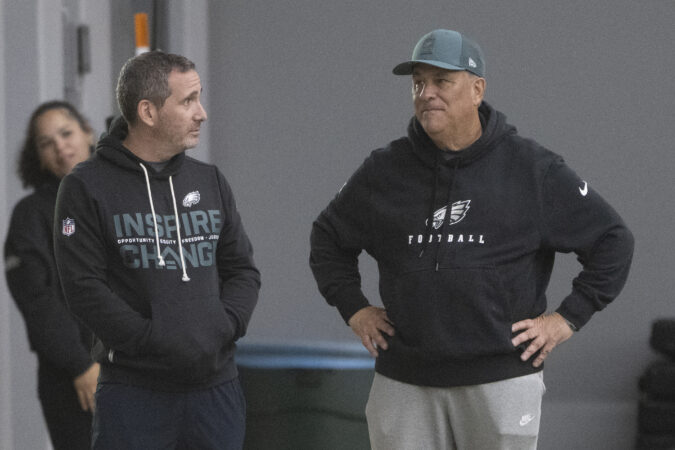
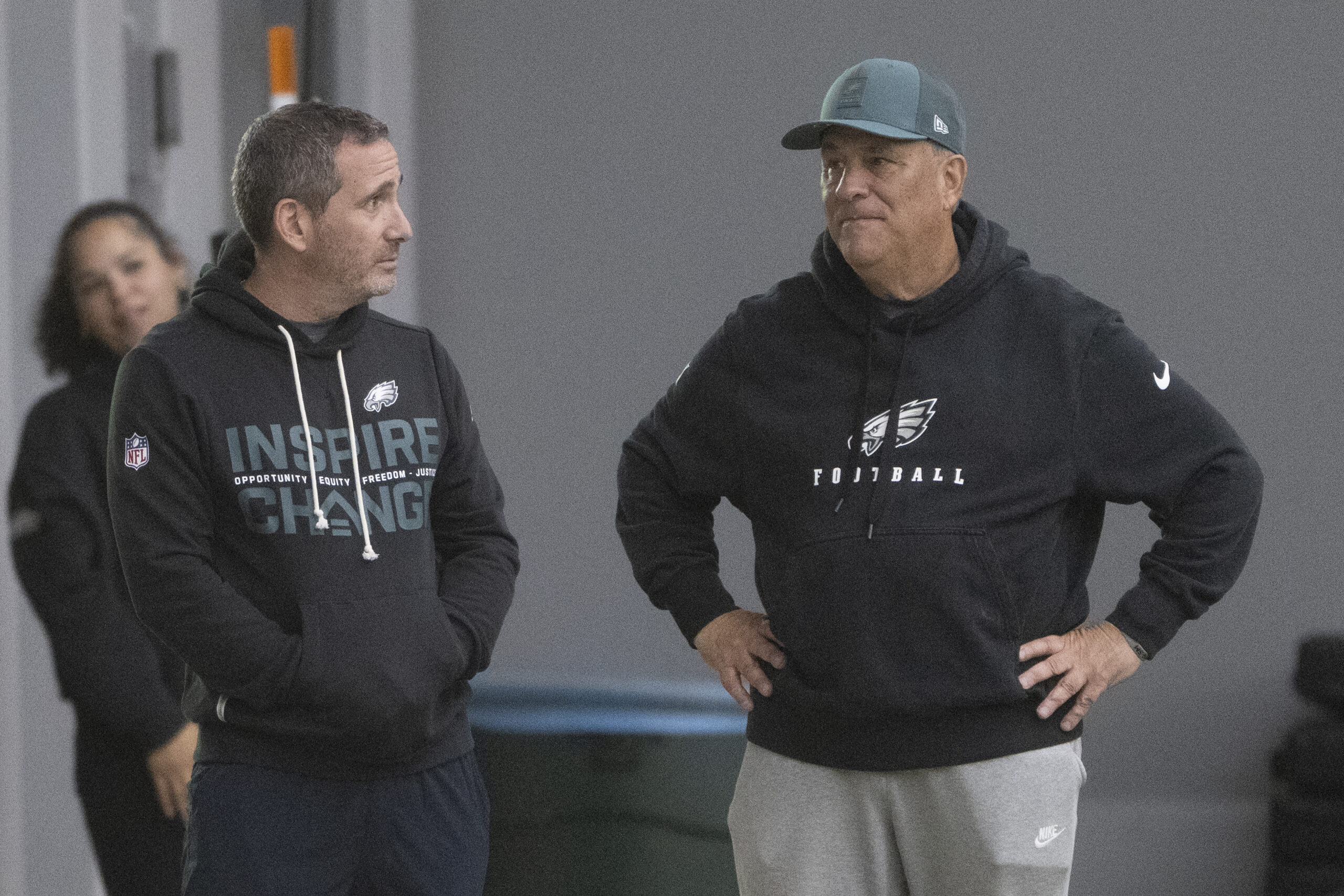
    How Eagles general manager Howie Roseman (left) might tinker with the personnel on Vic Fangio’s defense — particularly as it applies to the safety position — remains an open question.

    The Eagles still are more than two months away from cutting their roster down to 53 players by the Aug. 30 deadline. A lot can change between now and then.

    With that being said, we’re going to make our roster predictions throughout training camp, and since the Eagles just finished their offseason program and have some downtime, it’s worth taking a shot at the roster now.

    Here is our initial 53-man roster prediction for the 2026 Eagles.

    What we’re…

    👏 Applauding: Makai Lemon attended an Open Door Abuse Awareness and Prevention football combine to inspire the youth.

    🤔 Wondering: Why was Eagles’ Jalyx Hunt at Deptford High School’s graduation? To support the students who created his fan account.

    👀 Seeing: Kahleah Copper debuted a custom “Norf Philly” Adidas Harden Vol. 10 player-exclusive sneaker during a game vs. the Las Vegas Aces.

    📖 Reading: Behind the scenes at Pocono Raceway with 22-year-old South Jersey native Lavar Scott, who is one of three active Black drivers in NASCAR.

    A sweet escape

    A Brazil fan waves his national flag before Friday’s FIFA World Cup Group C soccer match between Brazil and Haiti.

    As Philadelphia gets ready for another World Cup game today — France vs. Iraq at 5 p.m. — let’s look back on this past weekend’s festivities, where a true spectacle was on display.

    For the past two games in the city, the attraction has been about the fans and the unbridled passion people have for a team, its players, and the nation they represent.

    The World Cup came at the perfect time in an America that felt fractured into sides and factions — it’s the escape we didn’t know we needed, writes Kerith Gabriel.

    And can the USMNT really win this World Cup? People are starting to ask after the U.S. team’s wins at the World Cup. The truth is the games to come will be much harder than the ones so far.

    In case you missed, Delco was very much mentioned on the world’s biggest stage as Matt Freese and Auston Trusty helped the U.S. win two games in a World Cup group stage for the first time since 1930.

    NHL draft countdown

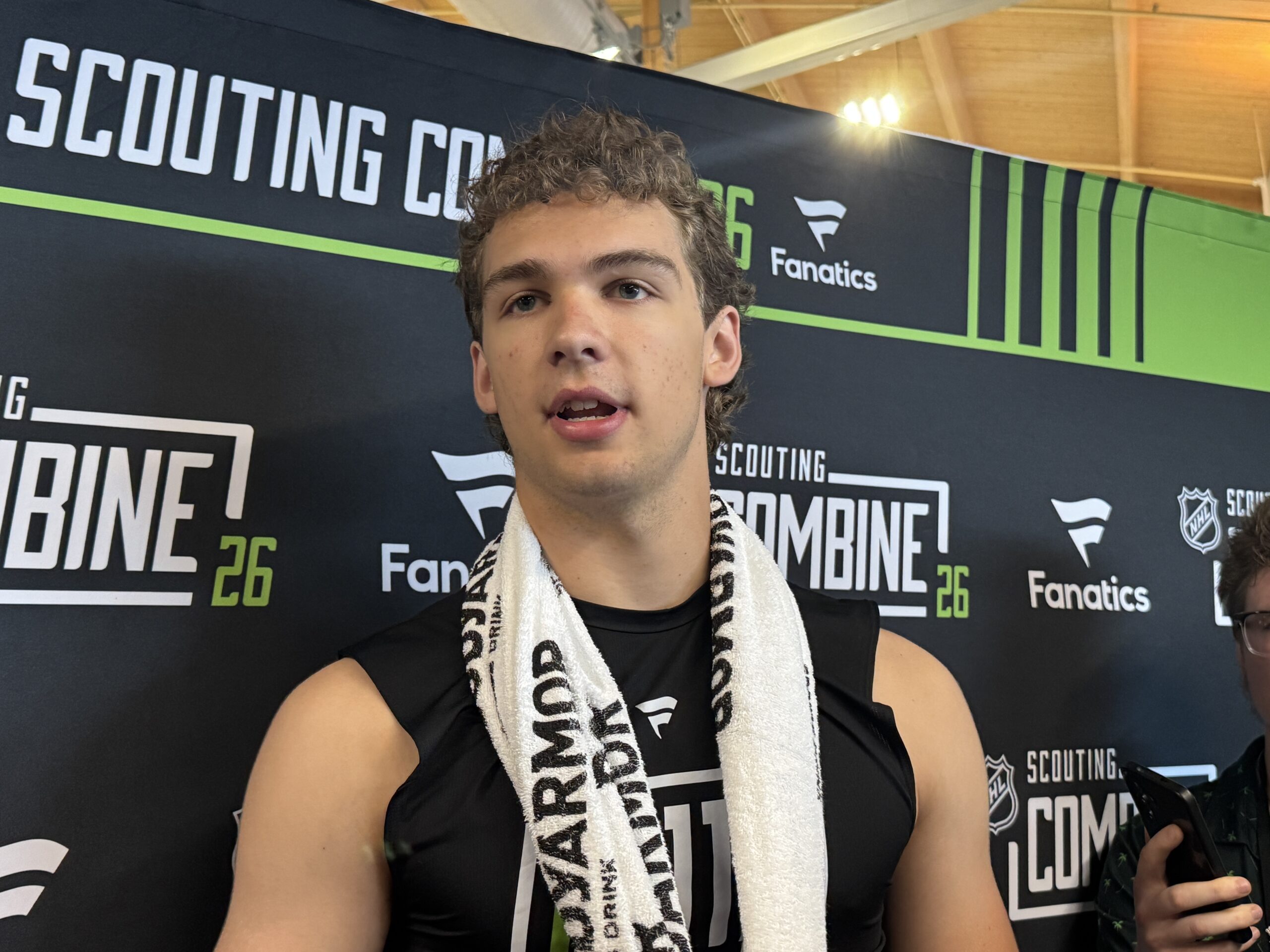
    Center Jack Hextall finished among the top 25 in five fitness tests at the NHL’s scouting combine.

    The NHL draft is looming. Starting on Friday, the Flyers will select their next generation in the 2026 NHL draft.

    They have 21st pick in the first round, and will be making their selctions in Atlantic City. So let’s roll the dice here with another mock draft — which is only two rounds since the Flyers traded away their third-rounder to Toronto.

    Sports snapshot

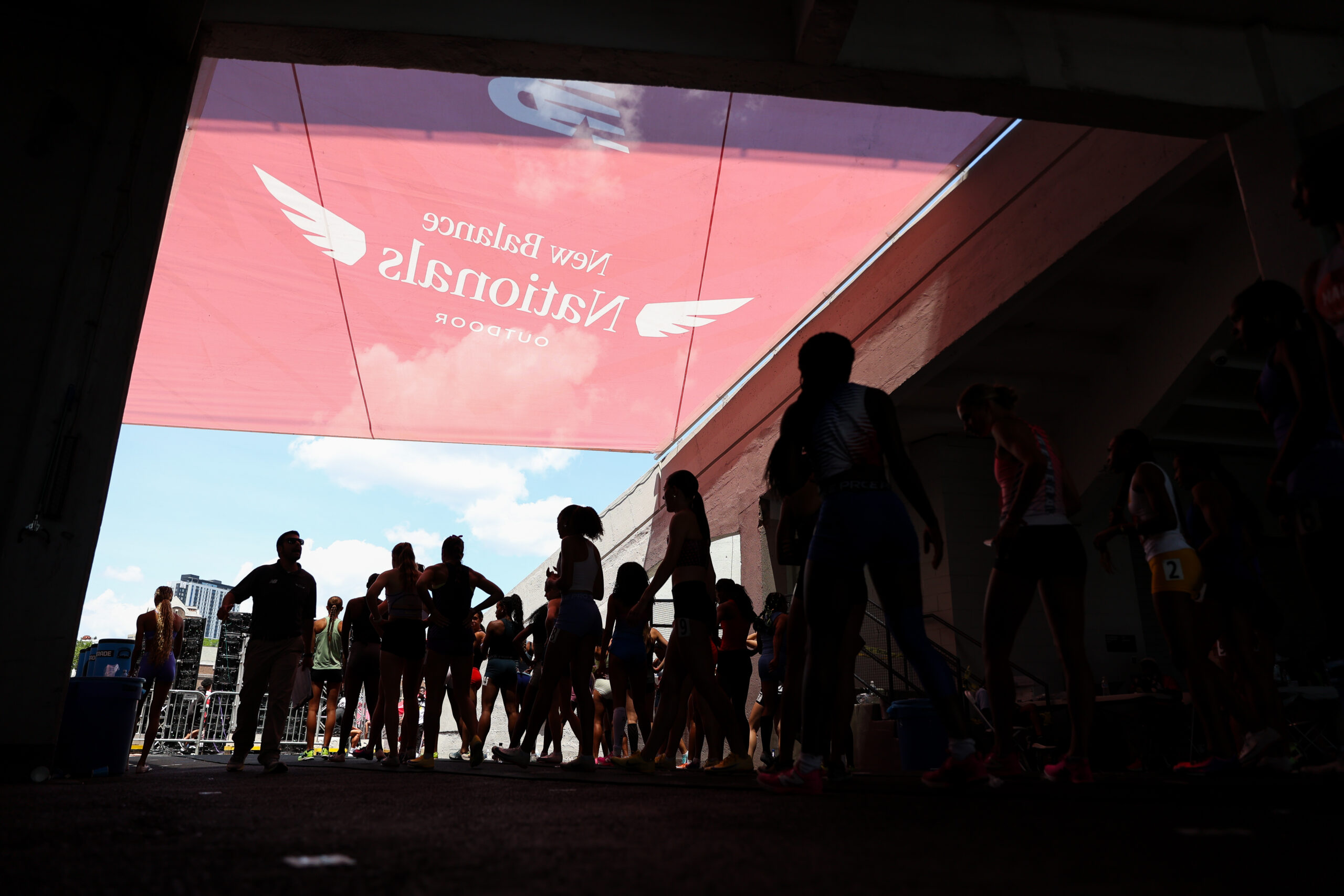
    Athletes prepare to take the field during the New Balance Nationals Outdoors Championship at Franklin Field on Sunday.
    • Changing landscape: Franklin Field played host to the New Balance Nationals this weekend, but that wasn’t the only major high school track meet happening.
    • More than a title: La Salle’s ‘super special’ boys’ lacrosse season ended with its first state crown since 2019.

    Marcus Hayes’ take…

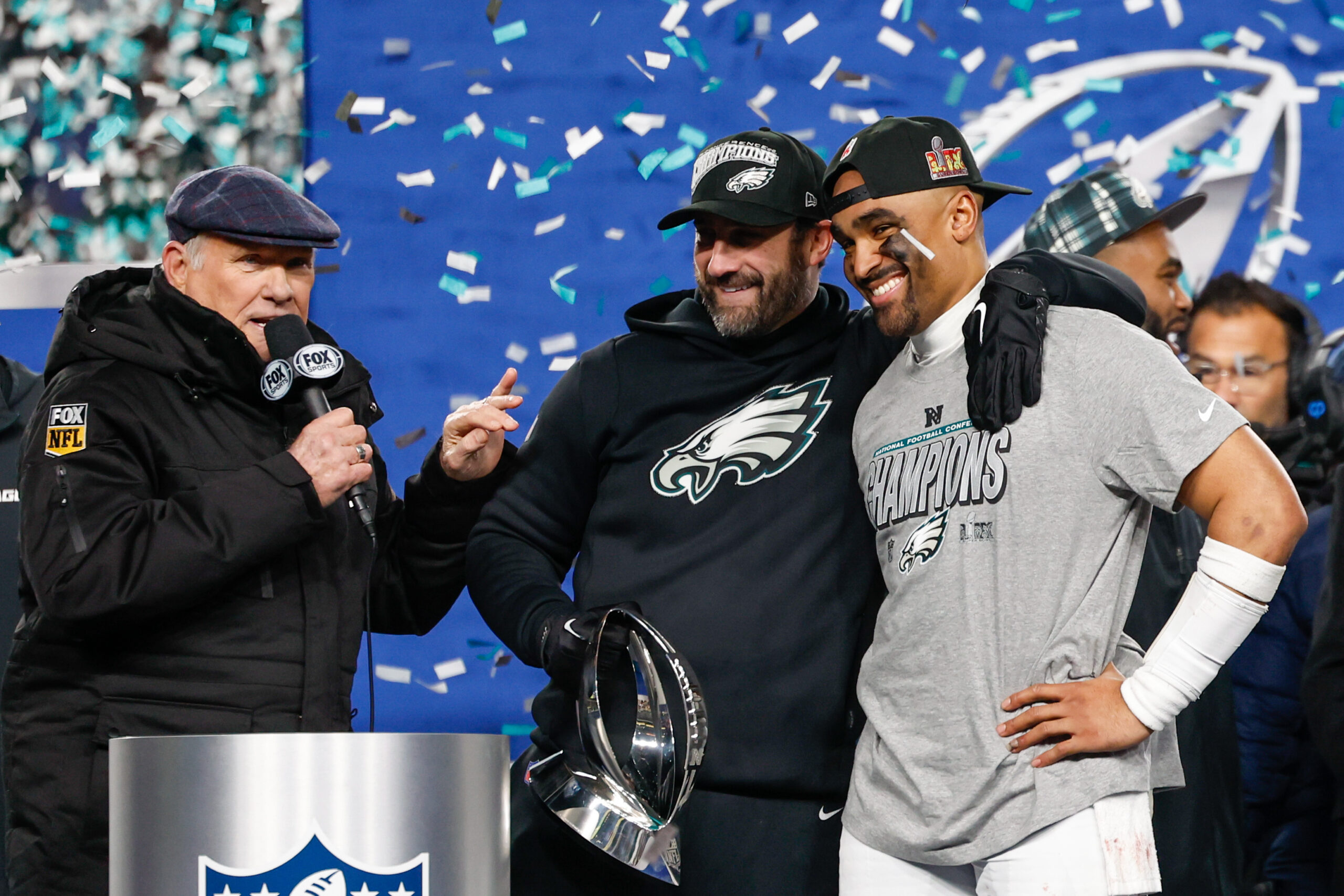
    Nick Sirianni (left) has always had stability at quarterback with Jalen Hurts. Is that about to change?

    It’s rare that, in the same week in June, you see three separate stories that pull back the curtain on the most secretive team in town, the Eagles. That’s what’s happened over the past few days.

    And it brought some revelations: Just 16 months ago, the coach and the quarterback were celebrating a Super Bowl LIX win. Now, there are concerns about their futures and legacies, and the owner’s kid is in the middle of it, writes columnist Marcus Hayes.

    We compiled today’s newsletter using reporting from Scott Lauber, Jeff Neiburg, Kerith Gabriel, Jonathan Tannenwald, Marcus Hayes, Jackie Spiegel, Devin Jackson, Conor Smith, Mia Messina, Ethan Kopleman, and Lauren Jones.

    By submitting your written, visual, and/or audio contributions, you agree to The Inquirer’s Terms of Use, including the grant of rights in Section 10.

    Happy Monday ☀️ — thanks for getting your morning started with me. I’ll be back in your inbox tomorrow. — Bella

  • Can the USMNT really win this World Cup? Probably not, but the players are allowed to believe it.

    Can the USMNT really win this World Cup? Probably not, but the players are allowed to believe it.

    IRVINE, Calif. — On any given day in Seattle, there are a lot of things in the air: the breeze off Puget Sound, the seagulls that steal your french fries, and other substances for which the city is well-known.

    It wouldn’t be fair for an outsider to ask if the last of those factored into the sudden outbreak of hype around the U.S. men’s soccer team. The atmosphere at Friday’s U.S.-Australia game needed no enhancement, with that crowd showing the nation and the world why Seattle’s soccer culture is the real deal.

    But something has caused people to start asking if the U.S. men can win this World Cup. So let’s answer it.

    No, this team is a long way from such a … height, let’s say.

    A sign from U.S. fans at the game against Australia, with two teams that call the sport “soccer” instead of England’s “football.”

    Yes, the Americans have won two games in a men’s World Cup group stage for the first time since 1930. Yes, they have won their group for the first time since 2010, and clinched qualification for the knockout rounds with a game to spare for the first time in the program’s modern era, which started in 1990.

    But the teams they’ve beaten so far, Paraguay and Australia, looked the part of the 41st- and 27th-ranked teams in FIFA’s global standings, which they were when the tournament kicked off. The U.S., meanwhile, has done something that should be within reach for a No. 17 team with home-field advantage on the world’s biggest stage.

    When the U.S. faces Turkey in the group stage finale on Thursday in Inglewood, Calif. (10 p.m. Fox29, Telemundo 62), the hosts will again face a team ranked below them. Turkey is No. 22. How much will that actually prove, compared to a potential matchup with Belgium in the round of 16 or Spain in the quarterfinals?

    Even the first knockout game in the round of 32 could be a trap. Though the U.S. is already set to head to the Bay Area for a game on July 1, the team across the field won’t be known until the group stage ends. It will be the third-place team from group B, E, F, I, or J, depending on which eight of the 12 third-place finishers in the tournament advance.

    A U.S.-Bosnia game would be a reunion for Bosnia’s Esmir Bajraktarević (left), who grew up in Wisconsin and played for the New England Revolution.

    The Athletic has a forecasting formula that projects Bosnia & Herzegovina, ranked No. 64, as the most likely candidate right now. As they’d say on “Let’s Make A Deal,” you take the offer right there. Upcoming games could put Ivory Coast, Ecuador, Japan, Sweden, Norway, or Senegal behind the other doors.

    But if it is Bosnia, it would still be a measuring stick, and not just because the U.S. men have won just one knockout-round game in their history (against Mexico in 2002).

    The Americans’ all-time record against European teams in World Cups is 3-14-7, and the only win of the modern era was against Portugal in 2002. The other two were against England in 1950 and Belgium in 1930. (Coincidentally, both games had heroes from Philadelphia, Walter Bahr and Bart McGhee.)

    Sometimes, the insistence on measuring American soccer against Europe is just a thing in the heads of fans and media. But the results record is still long and one-sided, even compared to other continents. The U.S. is 3-2-0 against teams from South America, 2-2-0 against teams from Africa, and 2-1-1 against teams from Asia.

    Weston McKennie (center) and the U.S. men recorded their third World Cup win over a South American team by beating Paraguay.

    Why it’s different for the players

    If reading this makes you feel like it’s spoiling the party, sometimes that’s the job of a professional cynic. So we’ll balance it by saying the warning only applies to outsiders. It’s perfectly fine for the players and coaches to believe they can go all the way, because they need that belief along with everything else to win games on the biggest stage.

    “Obviously, we take it one game at a time, but every game, every tournament that we play, we want to win,” centerback Chris Richards said. “So I don’t think it’s ridiculous to say that we want to win it.”

    Nor was it outrageous, even if it was certainly headline-grabbing, when manager Mauricio Pochettino told The Athletic last week that “we should dream without limits.”

    “If I dream of touching the moon, of being up on the moon, maybe I can get close to the moon,” he said. “If I only dream of getting close to it, I’ll stay on Earth. It’s so powerful, isn’t it? Believing that you can do it.”

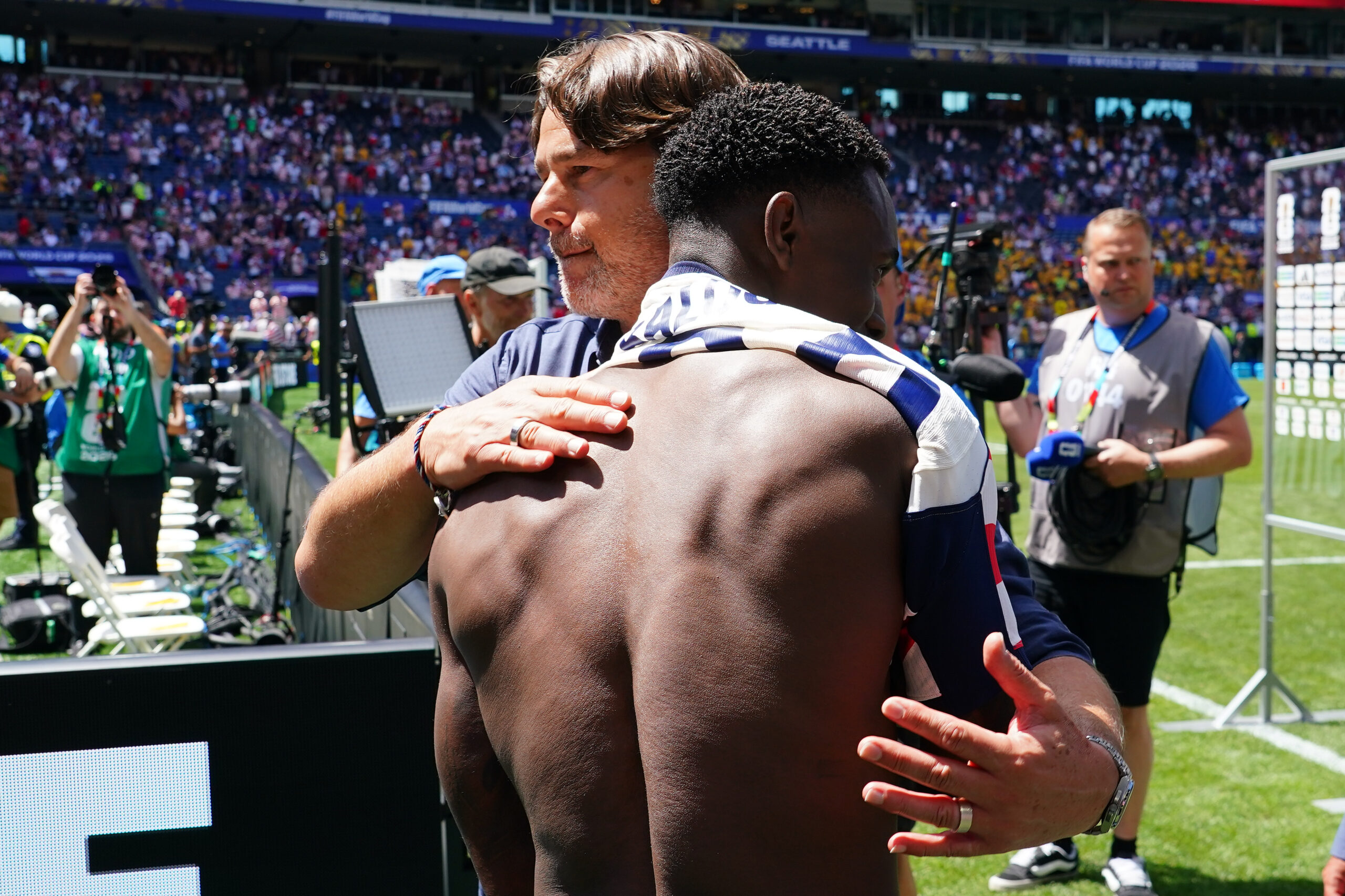
    Mauricio Pochettino embracing Folarin Balogun after the U.S.’ win over Australia.

    It had to help Friday. The players found out that morning, just a few hours before kickoff, that its catalyst, Christian Pulisic, wasn’t healthy enough to play.

    “We were all ready to prepare for this game, and whenever we heard that the coach gave us the lineup, the next player, the next man up was ready,” said Ricardo Pepi, who was that next man.

    “I think that we built the victory in our attitude,” Pochettino said after the Australia game. “I told the player: the first action when we started the game, did you see how Pepi and Balogun go to press?”

    We sure did, and it set the tone that led to the game’s first goal in just 11 minutes. Australia had to boot the ball out to beat it, and one of those clearances led to the throw-in that started the scoring play. The U.S. worked the ball around the back line, Antonee Robinson sprung Balogun down the left wing, Pepi charged up the middle, and Cameron Burgess put the ball in his own net.

    They didn’t let up, either, as physical as the game got. After winning the first game with style, the U.S. won the second with grit, as the teams combined for 28 called fouls and plenty more uncalled.

    How the Turkey game will go is impossible to know right now, with the U.S. already group winners and Turkey already eliminated. It’s the first game without qualification stakes for the Americans since 1998, when they lost their first two games and were eliminated before the third.

    Will Pochettino rotate his lineup a lot? It makes sense at first, but there are caveats. There’s a history of teams that rest players in their third game ending up rusty in their first knockout game, and this time there are six days between the second and third group contests — then another six between the round of 32.

    There’s a clear case to rest Pulisic and players on yellow cards: Tyler Adams, Robinson, Richards, and Balogun. If they get another booking in this game, they’re out of the round of 32 contest. But beyond them (and it’s a lot, for sure), Pochettino might want to keep the rest in a good rhythm.

    At least it’s a good problem to have. The results so far and the manner of earning them signal that the U.S. can make a run in this World Cup. But winning the title is a different question. That still feels too high of a task, and it will eventually become clear.

  • Mutant mice resistant to pest control found in Philly, its suburbs, and NYC. Are rats next?

    Mutant mice resistant to pest control found in Philly, its suburbs, and NYC. Are rats next?

    Pest control companies routinely use traps baited with rodenticide to kill rats and mice found in homes, restaurants, and businesses throughout the Philadelphia area, but a recent Rutgers University study suggests those companies face a gnawing problem.

    Researchers discovered that mice in Philadelphia, Trenton, and suburbs like Levittown and New Hope harbor genetic mutations that shield them from standard chemical baits.

    In fact, a majority of house mice sampled from Northeast urban areas, including Manhattan and other New York City boroughs, carried at least one mutation linked to rodenticide resistance — a clear sign that pests are actively evolving to survive common poisons.

    Rats presented a different problem. While they lacked the chemical-resistant mutations found in mice, the study’s author suggests they possess the cognitive sophistication to outsmart and evade traps entirely.

    Lead author Jin-Jia Yu, a postdoctoral researcher in Rutgers’ entomology department, said the findings indicate that pest control companies might need to develop different strategies.

    Yu conducted his research with the supervision of another of the paper’s authors, Changlu Wang, an entomologist in the same department.

    Published in the April issue of Pest Management Science, the peer-reviewed study was launched after frustrated pest control professionals repeatedly approached the Rutgers lab, reporting that rodents routinely survived multiple treatments.

    “For the house mouse, we saw much more mutations rather than Norway rats,” Yu said. Norway rats are the common brown rat often seen in sewers. “Genetic mutation is not that special in these creatures. But we found that the house mouse shows a lot of genetic mutations related to rodenticide resistance.”

    Rodents are a bigger problem in cities

    This study focused on urban rodents. It found that mice in big cities such as Philly and New York had a high frequency of mutations of a certain gene.

    Rodents are a bigger problem in cities than more rural areas. Data cited in the study indicate that an average of 12% of all households experience rodent sightings. But major metropolitan areas reporter higher rates, including Philadelphia (29%), Washington (20%), and Manhattan (15%).

    Yu said that similar studies of mutations in house mice and Norway rats were conducted in Europe and that research in the U.S. has been limited. One study in 2009 did find some rats in England with mutations that made them resistant.

    However, Yu said there had been no such studies in the Northeast.

    It has long been known that rodents developed resistance to the rodenticides developed in the 1950s. So more potent compounds were created in the 1970s and include brodifacoum, bromadiolone, difenacoum, and difethialone.

    The poisons contain anticoagulants that interfere with the activation of vitamin K reductase (VKOR), an enzyme essential for blood to clot. Eating the bait leads to fatal internal bleeding.

    The Rutgers team looked for mutations in the gene known as VKORC1 that makes the enzyme.

    Pest control companies, as well as the Philadelphia Department of Public Health, sent the researchers the tails of caught rodents. Yu said his research was possible only with their help.

    A rare mouse mutation in Philly

    The researchers analyzed DNA from 147 house mice and 143 Norway rats collected in New York, New Jersey, Pennsylvania, and Washington, D.C.

    Among house mice, 84% carried at least one mutation in the VKORC1 gene. Nearly 70% carried mutations known to help mice survive rodenticides.

    Of 24 mice collected in Philadelphia, the majority had a mutation and five had two. One mouse had a rare mutation.

    Of 20 mice collected in Trenton, 10 had two mutations. Lansdale, Levittown, and New Hope had one mouse each with a mutated VKORC1 gene.

    About 35% of the Norway rats also carried mutations. However, scientists do not yet know whether those mutations result in resistance in the rats.

    Mice, Yu said, might be genetically adapting faster than rats because they are curious and more likely to eat unfamiliar food, including rodent bait.

    However, rats will avoid new objects, including live traps, and learn from their encounters.

    In other words, not only are mice mutating to survive, but rats may be learning to avoid entrapment.

    “They’re pretty smart,” Yu said of rats.

  • The city’s graffiti cleanup program doesn’t cover areas where residents request it the most

    The city’s graffiti cleanup program doesn’t cover areas where residents request it the most

    To make its best first impression on the droves of visitors expected this summer in Philadelphia, the city has launched an anti-graffiti cleanup campaign. But those cleanup areas do not match up with where Philadelphia residents actually ask for it the most.

    In the fall, the city began an $11.5 million beautification project ahead of this summer’s series of major events — the World Cup, the nation’s 250th celebration, and the MLB All-Star Game — that included new landscaping and graffiti cleanup. The Gateways to Philadelphia project focused on seven major transit areas that could be a visitor’s first glimpse of the city, where new murals and fresh flowers replace sparse medians and graffiti.

    Those gateways were:

    • 26th Street Gateway at Penrose Avenue.
    • South Street Bridge, walls, medians, and ramps.
    • 30th Street Station walls, medians, and ramps.
    • I-676 interchange at 15th and 16th Streets and Vine Street.
    • I-676 interchange at Sixth and Eighth Streets and Callowhill/Vine Streets.
    • I-76 and I-95 interchange at Second and Third Streets and Callowhill/Vine Streets.
    • CSX/Amtrak wall at Spring Garden Street.

    Meanwhile, the hot spots for graffiti cleanup requests through 311 last year were most densely clustered in West Philly, South Philly, and Northern Liberties. Despite three gateway locations being a short distance from high-density areas, they are on the opposite side of the Schuylkill from the hot spots.

    In 2025, residents submitted 10,141 requests for graffiti removal, and nearly all of them have since been marked closed. There was a seasonal spike in the spring, with residents filing over 1,100 requests each in March and April.

    (function() {
    var l2 = function() {
    new pym.Parent(‘iframe_test’,
    ‘https://media.inquirer.com/world_cup_graffiti/iframe_graffiti_wc_map.html’);
    };
    if (typeof(pym) === ‘undefined’) {
    var h = document.getElementsByTagName(‘head’)[0],
    s = document.createElement(‘script’);
    s.type = ‘text/javascript’;
    s.src = ‘https://pym.nprapps.org/pym.v1.min.js’;
    s.onload = l2;
    h.appendChild(s);
    } else {
    l2();
    }
    })();

    Sara Lorenz, 45, lives in one of the corridors with a high amount of graffiti cleanup requests, along Baltimore Avenue in West Philly. She said graffiti typically gets cleaned up fairly quickly in the area, particularly near businesses, but sometimes it lingers and becomes an eyesore. Lorenz makes a distinction between artful graffiti and careless markings, and said it would do some good if the city had an initiative targeting the latter on blocks like hers.

    Lorenz said she understands the city’s desire to make its best appeal to tourists this summer, but it would be nice if the beautification efforts went toward the typical Philadelphian, too.

    “As residents, we also deserve respect,” she said.

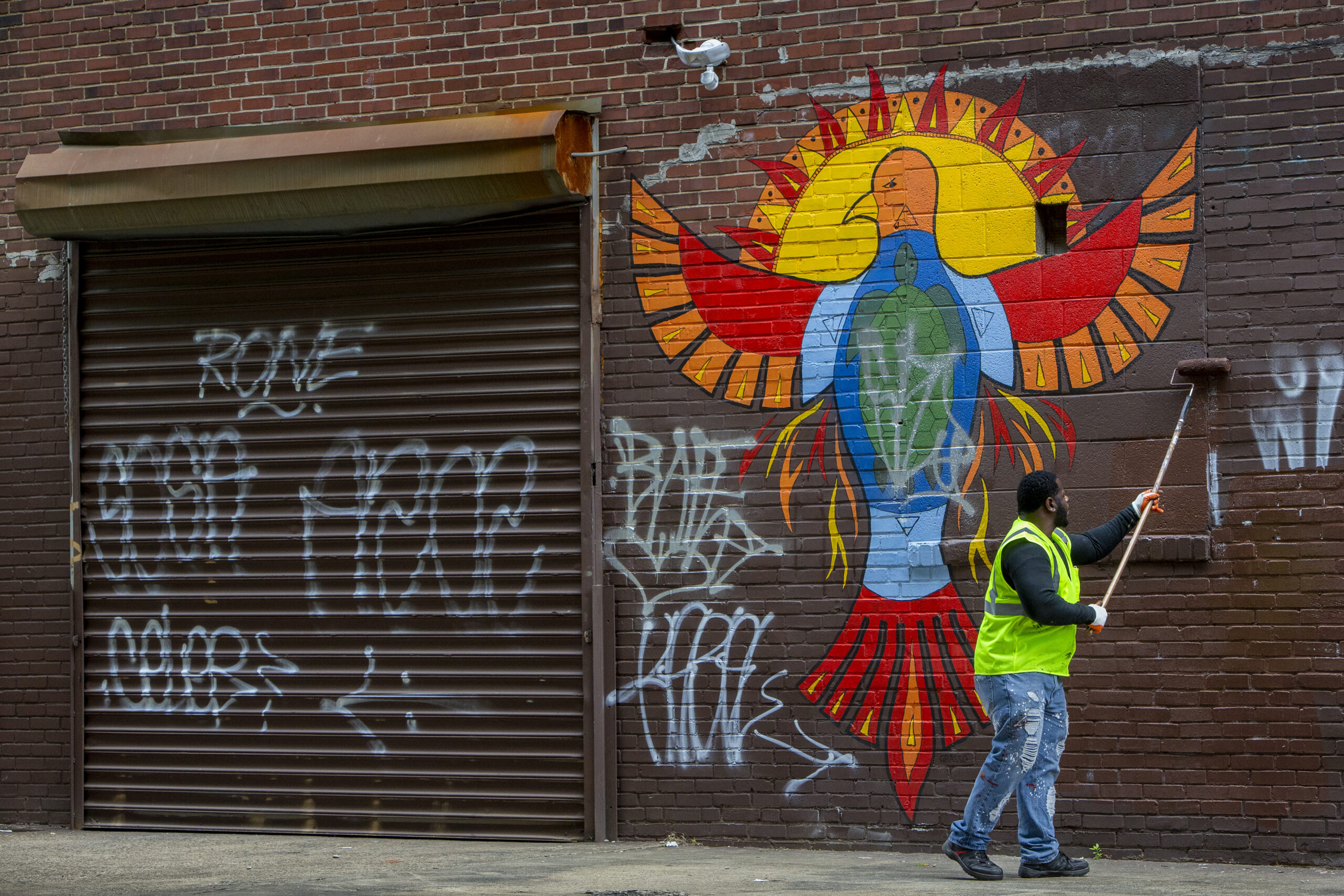
    The city has painted a new, wide postcard style mural to cover graffiti.

    Efficient response time

    It could be that some Philly residents also want graffiti removed from the city’s chosen gateways, and that people are less likely to contact 311 for what they witness while driving on major roadways. Some other residents living near Lorenz said they had not noticed graffiti much around them and were not bothered about the city’s beautification plans.

    The city is clear that the gateways project was prompted by visitors, but there are plans for at least some of it to continue after the guests leave. The beautification project is expected to be completed sometime this summer, and a maintenance plan has been put in place for the new installations, according to Keisha McCarty, a spokesperson for the Philadelphia Office of Clean and Green Initiatives.

    “If you want the city to look clean, you want to do it where it’s most visible,” said Fikru Bekele, 75, the owner of multiple properties along Baltimore Avenue, who said he understands the city’s focus on visitors. He said he has gotten used to residents not receiving as much attention as higher-profile projects do.

    “It’s not the right thing but it’s the way it is. … Neighborhoods need to be taken care of, too,” he said.

    William Scott with the CLIP, Community Life Improvement Program, removes graffiti from wall around a colorful bird along North 9th Street near Jefferson on Tuesday, April 20, 2021.

    However, graffiti removal in Philadelphia neighborhoods might not need additional focus, because the city’s existing program appears to be working efficiently. Graffiti removal requests submitted to 311 are passed along to the Philadelphia Community Life Improvement Program, known as CLIP. It took 311 and CLIP crews eight days on average to close graffiti removal requests last year, with five days as the median closure time.

    If there is a 311 submission in South Philly, there is a decent chance it’s coming from Joe Eastman. The retired Navy veteran is a 311 neighborhood liaison, part of a city program that trains certain residents how to report issues more effectively. Eastman, 75, goes on walks and reports what he sees in the neighborhood, and often finds himself alerting 311 to the same spots, like a stop sign near Broad Street and Snyder Avenue.

    “I’m sure if I go back in two weeks it’ll have graffiti again,” he said.

    Eastman is pleased with 311 and CLIP’s responsiveness, and said he has no problem with the anti-graffiti focus on visitors if CLIP continues at its current pace.

    “I get what they’re doing. And as long as they are being as responsive as they have been, I think we can all get along with this,” he said.

  • Pharmacy benefit manager legislation proposed by Pa. GOP legislators would harm Black and brown communities

    Pharmacy benefit manager legislation proposed by Pa. GOP legislators would harm Black and brown communities

    Pennsylvania’s Republican lawmakers are on the verge of deepening the state’s pharmacy access crisis — and Black and brown communities will pay the highest price.

    Earlier this year, three Republican state senators announced intended legislation that purports to “protect” Pennsylvanians’ access to care. While not yet introduced, this proposed legislation would do the opposite, forcing the closure of chain pharmacies that are owned by companies that also own pharmacy benefit managers.

    Verbatim, the announcement says the bill would, “prohibit PBMs from holding a pharmacy license in Pennsylvania.” If enacted, hundreds of brick-and-mortar and mail-order pharmacies could lose their licenses and be forced to shut down.

    Closing pharmacies is not protection. It is a deliberate harm to vulnerable seniors, working families, and the communities that already struggle most to access care. Academic studies document that socioeconomic barriers can influence access to pharmacies.

    Pennsylvania is already deep in a pharmacy desert crisis. Since 2020, more than 1,100 independent and chain pharmacies have closed across the commonwealth — including Rite Aid, which filed for bankruptcy and permanently shuttered in 2025.

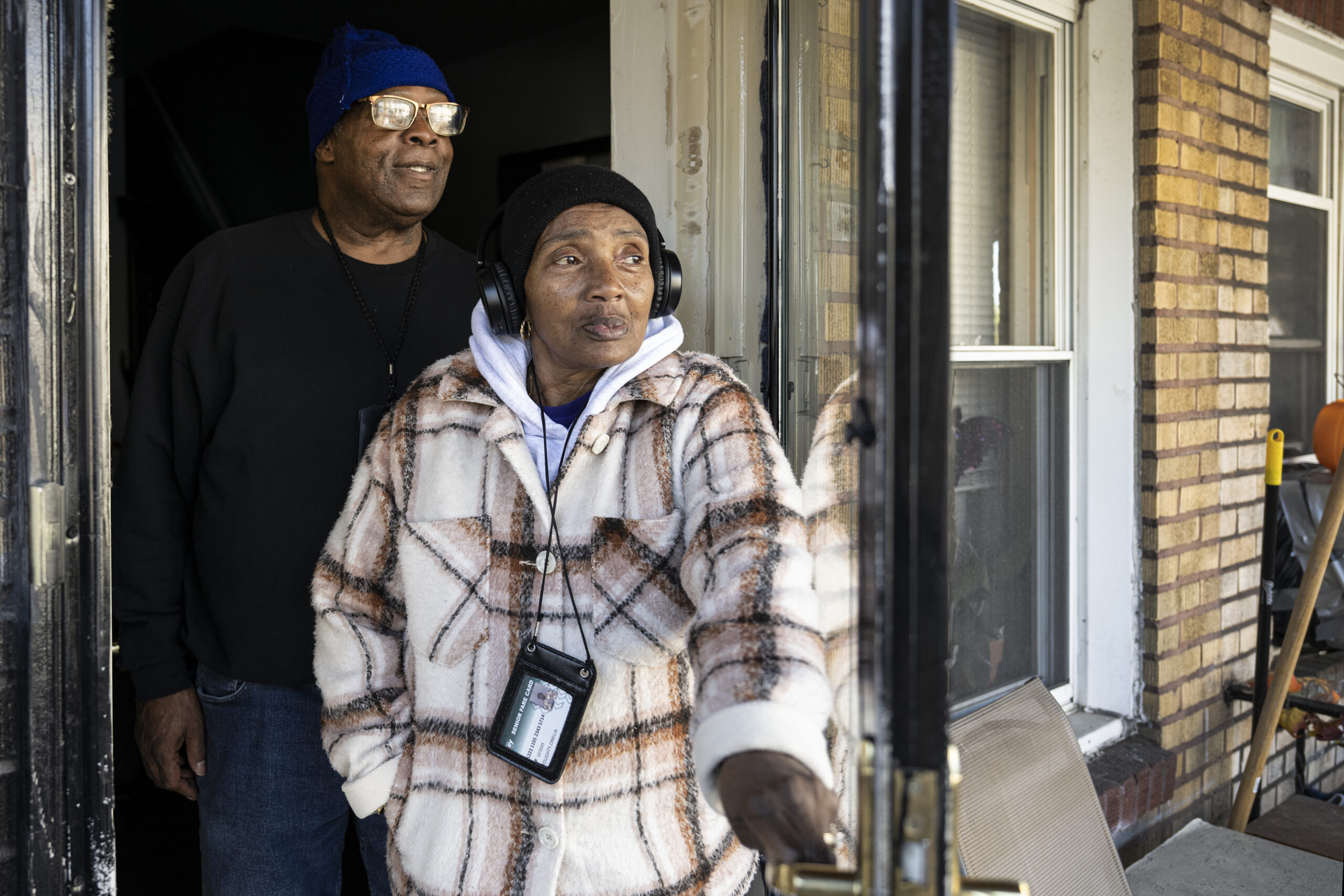
    Ronald and Onelia Doughty, photographed at their Grays Ferry home in November 2023, take dozens of medications between them for various health conditions. But to get those medications, Ronald, who walks with a cane, now has to get a bus to South Broad Street or borrow a car from his son who lives in West Philadelphia. Their neighborhood Rite Aid was among those that closed earlier in 2023.

    Residents in predominantly Black and brown neighborhoods in Philadelphia, Pittsburgh, and Allentown, as well as those in rural townships, already face long distances and real hardships just to fill a prescription.

    The health stakes are high. Hispanic Pennsylvanians, in particular, experience higher risk factors for chronic disease, asthma, and multiple cancers than white residents. Managing chronic conditions requires consistent, affordable access to medication — and when that access is severed, patients split pills, skip doses, or abandon prescriptions entirely.

    Managing chronic conditions requires consistent, affordable access to medication — and when that access is severed, vulnerable communities are the most impacted.

    Medication adherence is already lower in minority communities. This legislation would make a serious problem catastrophic.

    Proponents argue that independent pharmacies can fill the void. We’ve seen how that plays out. When Rite Aid collapsed, independent pharmacists reported being overwhelmed, creating waitlists and turning away patients on less profitable insurance plans. The chaos that followed will repeat — and intensify — if hundreds more pharmacies are shuttered at once.

    This legislation also ignores legal reality. Arkansas passed a similar law that was immediately halted in federal court for violating the Commerce Clause and interfering with TRICARE, the healthcare program for veterans and military families. Tennessee faced fierce opposition from patient advocates and state Medicare officials.

    Pennsylvania should avoid repeating these costly mistakes.

    Pennsylvania’s Act 77, passed in 2024, already established meaningful oversight, transparency, and fairness in pharmacy benefit management — with the explicit goal of preventing pharmacy closures. These new proposals directly contradict that intent.

    Communities of color cannot absorb more neglect. The National Hispanic Health Foundation strongly opposes this legislation and urges its immediate rejection.

    Pennsylvania’s must instead pursue reforms that strengthen — not destroy — the healthcare lifelines our communities rely on.

    Elena Rios is president of the National Hispanic Health Foundation, a leading national organization dedicated to transforming the healthcare system through leadership, research, and education to improve the health of Hispanics.

  • Inside the $70 million makeover of Roosevelt Mall

    Inside the $70 million makeover of Roosevelt Mall

    As Brixmor Property Group executives began transforming the Roosevelt Mall, they briefly debated whether to change the name.

    After all, the 60-year-old Northeast Philly shopping center is undergoing a more than $70 million makeover that promises to bring it into the modern age with new tenants, upgraded facades, and a better layout.

    As Brixmor executives walked around the 620,000-square-foot complex on a recent day, they said they already see the outdoor mall becoming a community hub — with a gym, an organic grocer, and new fast-casual dining options.

    Despite these changes, they have decided the Roosevelt Mall should not be rebranded.

    “It’s an iconic name,” said David Vender, Brixmor Property Group’s executive vice president for the north region, who is based in Conshohocken. “People know it as a landmark.”

    Brixmor operates about 350 shopping centers nationwide, but some of its top executives — including new CEO Brian Finnegan, who grew up in Roxborough — have soft spots for Philly, forged by personal or family connections to the region.

    During a visit to the Roosevelt Mall last week, they said they were proud of their local properties.

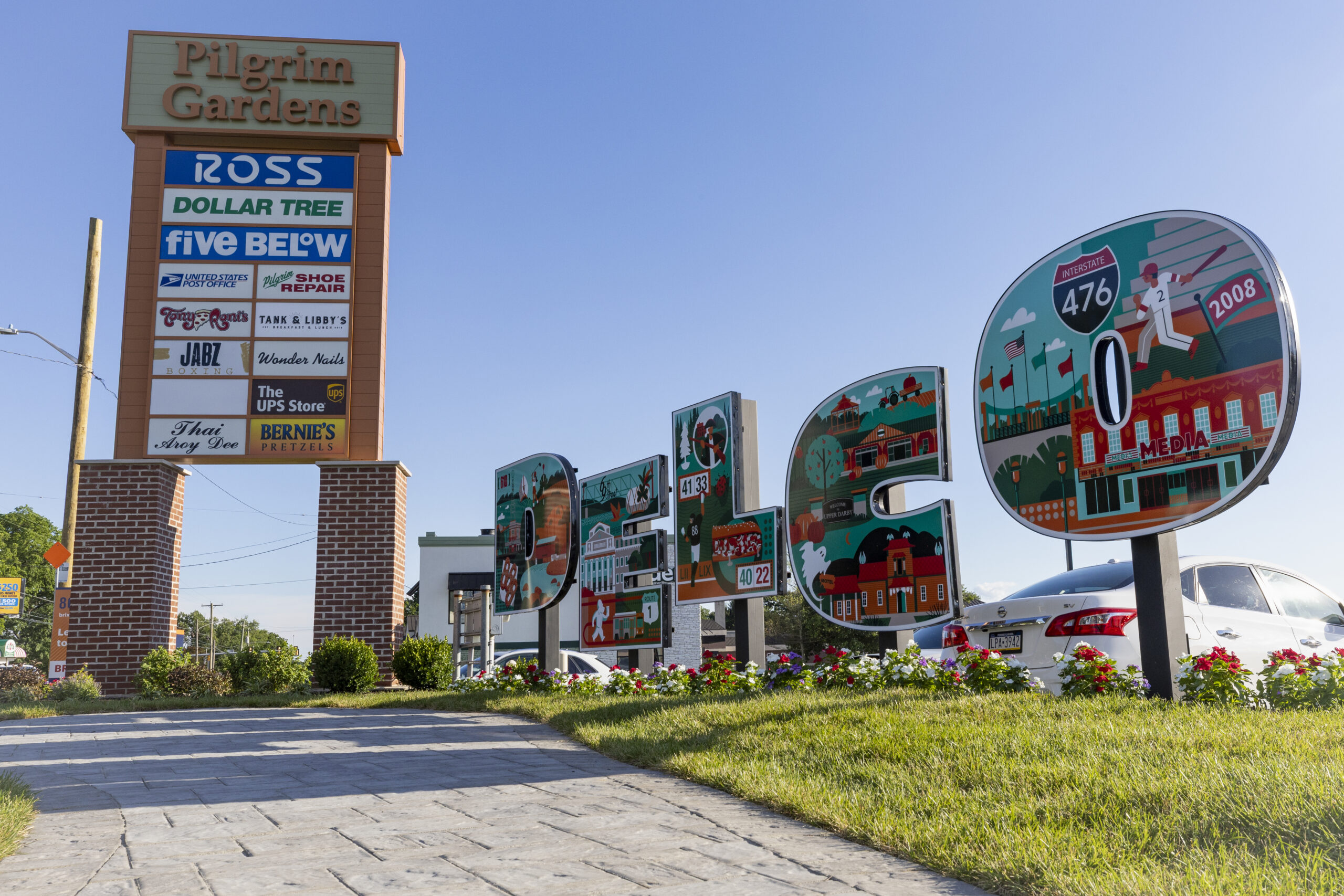
    Those include the Village at Newtown in Bucks County and Pilgrim Gardens in Drexel Hill, where the company recently built an artful “Delco” sign to tap into local pride.

    A new Delco sign is shown at Pilgrim Gardens in Drexel Hill on June 16.

    And they said their connection to the community around the Roosevelt Mall has only grown stronger since last year’s plane crash, which killed eight people, injured two dozen, damaged nearby homes, and left an 8-foot-deep crater in front of the mall.

    Even before the tragedy, they said, they considered how their local redevelopments affected the Philly-area residents who shop, eat, and drive by their centers every day.

    At the Roosevelt Mall — which sits on 36 acres between Cottman Avenue, Roosevelt Boulevard, and Bustleton Avenue — these decisions have begun to pay off.

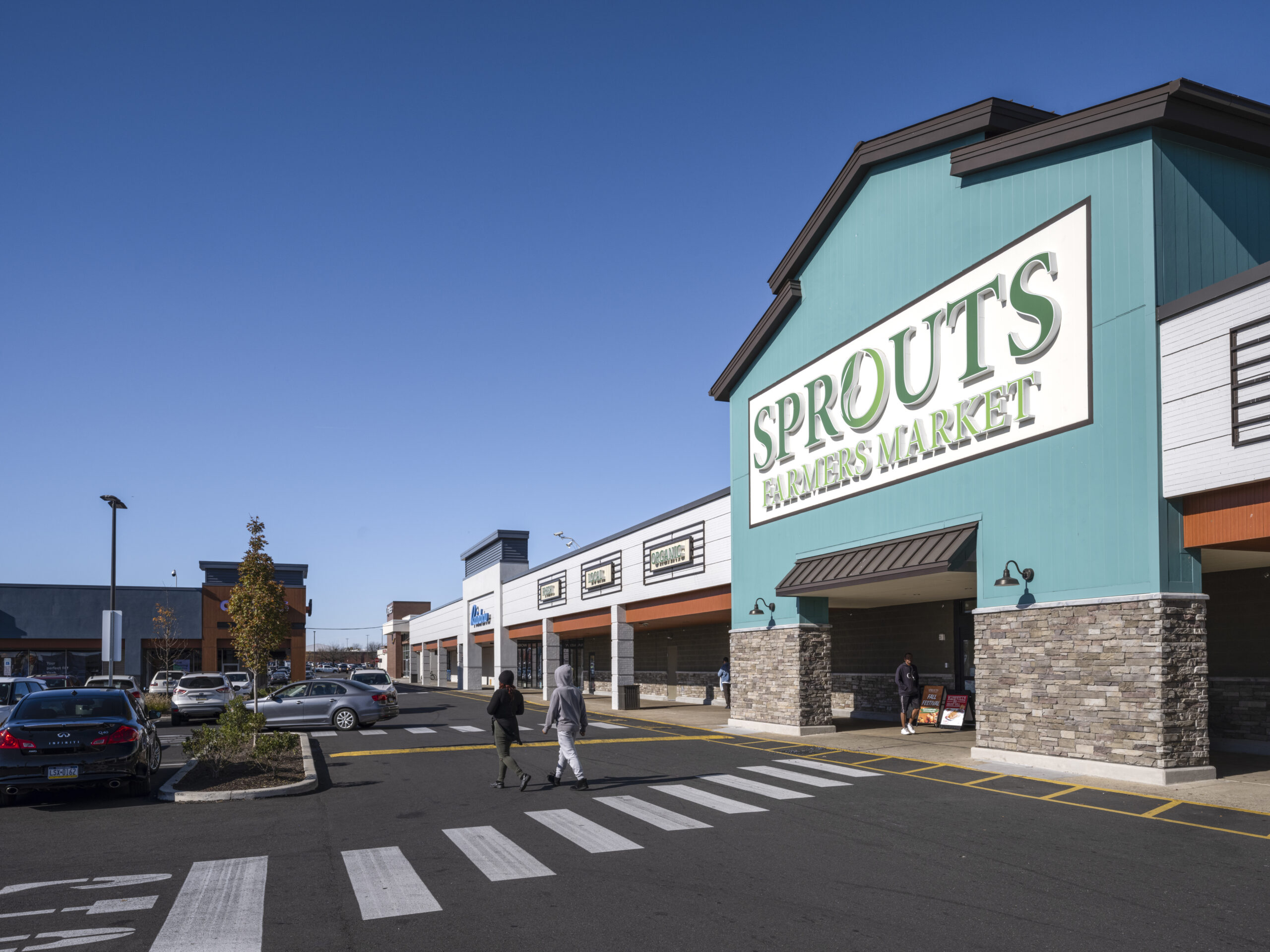
    In the last year, the center logged 6.3 million visits, a 5% year-over-year increase and a 19% jump when compared with the 12 months before Sprouts Farmers Market’s 2024 opening, according to company executives.

    Occupancy was over 98% this spring, they said, and customers spend about 35 minutes there on average, on par with the national average for all Brixmor complexes.

    When you’re able to bring together “higher-quality food and beverage, fitness, service … then you’re also able to attract more elevated retail” stores, said Finnegan, noting that Ulta Beauty and Victoria’s Secret are among the tenants signed on for the next phase of the Roosevelt Mall’s redevelopment.

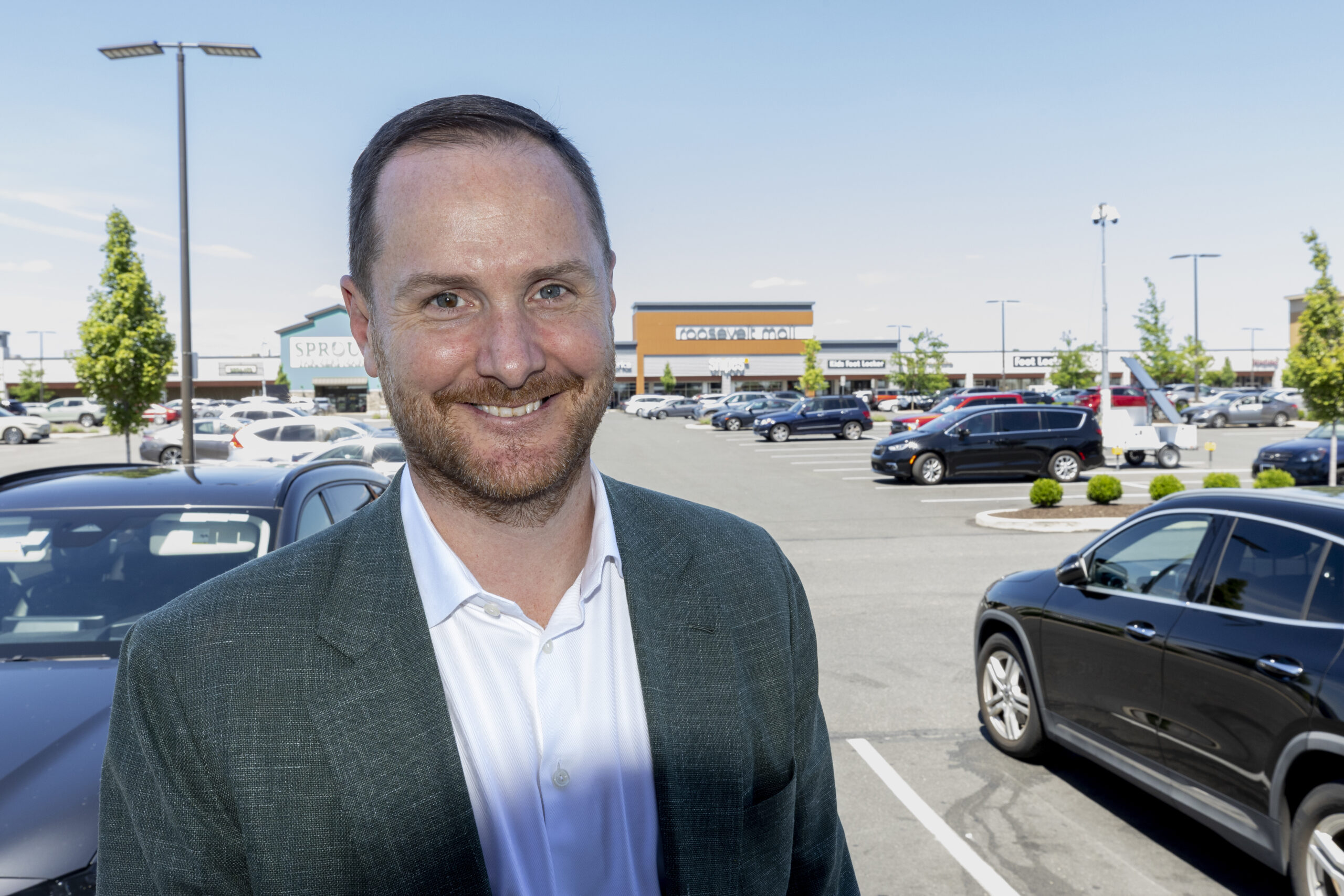
    Brian Finnegan, CEO and president, at Brixmor Property Group, at the Roosevelt Mall in Northeast Philadelphia.

    Achieving the tenant mix of a modern shopping center

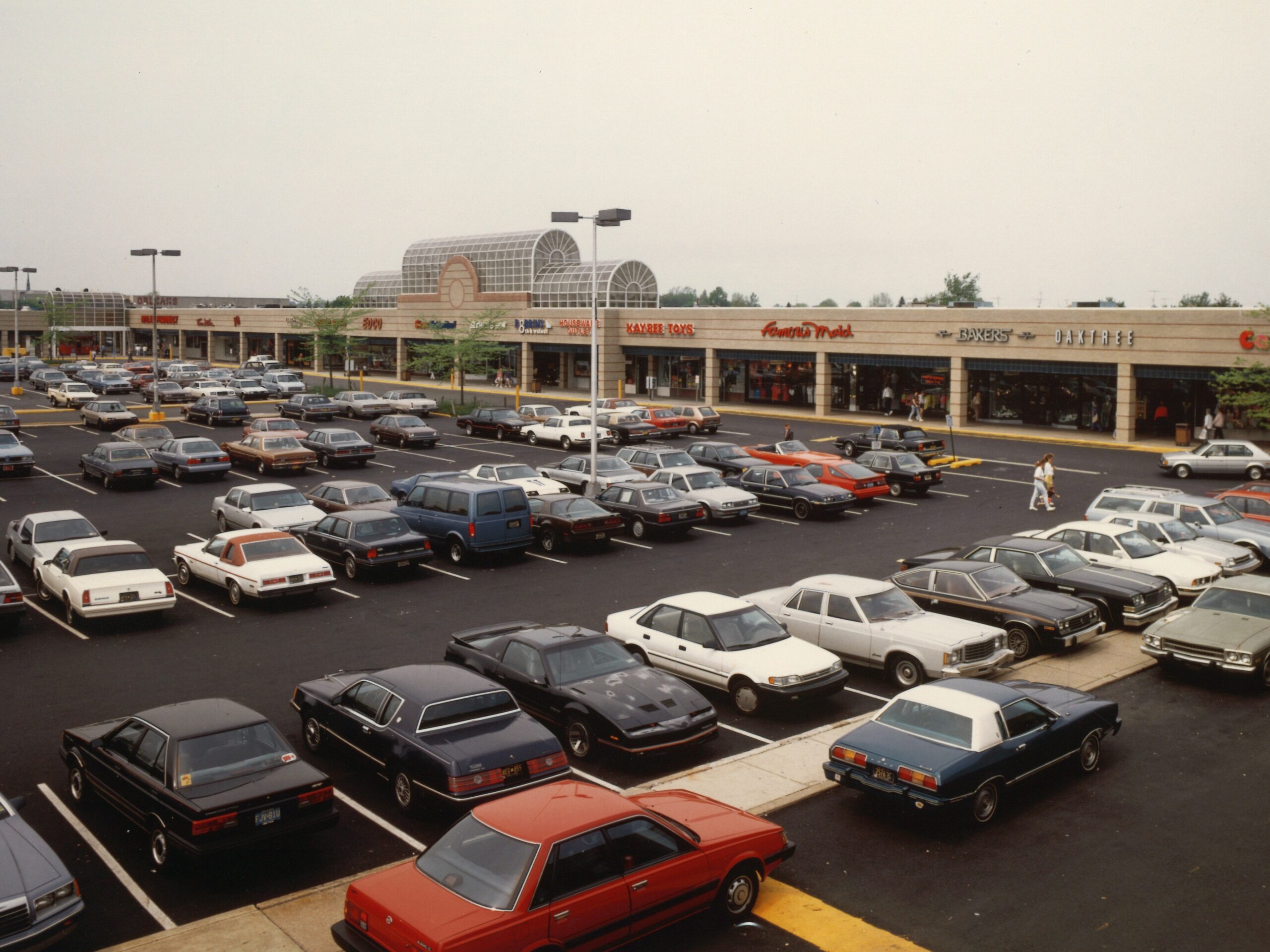
    When the Roosevelt Mall opened in 1964, its main promenade was referred to as “Chestnut Street Northeast,” with several outposts of Center City clothing stores, according to an Inquirer article from the time.

    The shopping center had apparel shops, such as Baker Shoes and Famous Maid, as well as “the Cavalier, a cafeteria-style restaurant with a game room and a retail bakery,” The Inquirer reported. It was anchored by an S. Klein’s discount department store.

    The Roosevelt Mall was built as part of the Roosevelt Boulevard shopping complex, bordered by Cottman and Castor Avenues. The larger development — which also had Gimbels and Lit Bros. department stores — was called the country’s largest “in-town” shopping center at the time.

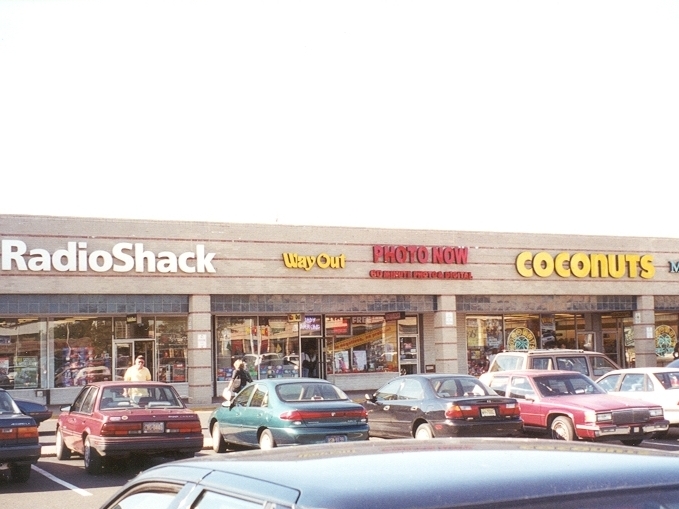
    Roosevelt Mall in Northeast Philadelphia is shown in earlier days, long before Brixmor Property Group remodeled the property.

    Decades later, consumers can buy clothes, home goods, even groceries online with just a few clicks. So shopping centers need more than just retail stores, said executives at Brixmor, which became the Roosevelt Mall’s owner more than a decade ago.

    They said they have intentionally brought in tenants that customers may visit multiple times a week and added more pedestrian walkways, open-air plazas, and outdoor seating.

    “Historically, shopping centers were very utilitarian, and now they’re really becoming more community assets, so we’re really careful about our merchandising mix,” said Ryan Guheen, Brixmor’s senior vice president of development.

    Roosevelt Mall in Northeast Philadelphia is shown in earlier days, long before Brixmor Property Group remodeled the property.

    The latest redevelopment push began around 2020, when Brixmor opened an LA Fitness outpost on the site of a former Turf Club off-track betting venue, near a new Oak Street Health clinic.

    Since then, the company has constructed buildings in underused sections of the parking lot and filled them with popular chain eateries like Raising Cane’s chicken; the American-Chinese food spot Panda Express; and Tous les Jours, a Korean-French bakery and coffee shop.

    The Sprouts organic grocer has driven traffic to the center since it opened in 2024, and a nearby Wonder dine-in food hall and delivery kitchen opened last year.

    Annual customer visits to Roosvelt Mall have increased 13% since Sprouts organic grocer opened there in 2024.

    The 37,000-square-foot under-construction building, set to house a Victoria’s Secret and an Ulta, will also include fast-casual staples like Shake Shack and Cava, which serves Mediterranean bowls and pitas.

    Tenants like these, Guheen said, provide “multiple opportunities for people to stay on property to shop retail, get their workout in, go to the bakery, get a coffee.”

    Some mall retailers have found homes in shopping centers

    As Brixmor executives diversify the tenant mix at their shopping centers, they say they do not see retail stores going extinct.

    In fact, as some indoor malls deteriorate or become residential-focused town centers, “the open-air strip centers benefit,” Vender said, as traditional mall retailers look to open more stores in outdoor complexes.

    Elsewhere in the Northeast, the Franklin Mall, formerly Franklin Mills, has been in decline for years and was recently listed for sale. Real estate investor Dean Adler has said he wants to buy the 137-acre mall and turn it into a youth sports complex with a hotel and Margaritaville-themed water park.

    Seven miles away, the Roosevelt Mall is home to several shops that were once found almost exclusively in enclosed malls, such as Bath & Body Works, Foot Locker, and the forthcoming Victoria’s Secret. These companies’ higher-ups have pivoted in recent years, adding more locations in open-air centers.

    “It’s not like retailers are leaving malls en masse … at least in the best malls,” Finnegan said. But “as they open stores in open-air shopping centers with grocery stores, with fitness uses, with elevated food and beverage, they’re seeing the sales performance” — and then want to keep investing in shopping centers.

    Longer-standing retail tenants are continuing to see success, too. Finnegan said the Roosevelt Mall’s 300,000-square-foot standalone Macy’s is among the company’s top-performing locations in the region, rivaling the King of Prussia Mall store.

    The department store is the center’s largest driver of traffic, recording more than 900,000 annual visits, said Brixmor executives, who are not worried about the department store closing as the Center City store did last year.

    As seen in September, the Macy’s in the Wanamaker Building in Center City now sits empty. It closed last year.

    A Rita’s Water Ice franchise has also stayed put in the Roosevelt Mall for decades, Finnegan said.

    Company executives said they are optimistic this momentum will continue. Along with the under-construction section, redevelopment plans also include another standalone building that has yet to break ground — and the cost of which is not included in the current price tag.

    Finnegan put it simply: “Opportunity begets opportunity.”

  • Stacy Garrity on potentially being the first female governor of Pennsylvania: ‘It’s my least favorite thing to talk about’

    Stacy Garrity on potentially being the first female governor of Pennsylvania: ‘It’s my least favorite thing to talk about’

    If elected in November, Stacy Garrity would become Pennsylvania’s first female governor in the state’s 238-year history.

    Even now, she is one of only two women in history to receive the Republican Party’s nomination for the job.

    The state has never had a woman as its governor; no woman has been elected as U.S. senator; and both times a woman ran for president, she lost the state. Over the last two centuries, Pennsylvania’s political glass ceiling has proven stubbornly resistant to cracks.

    But on the campaign trail against Democratic Gov. Josh Shapiro, Garrity, 62, said she doesn’t give that too much thought.

    “It’s my least favorite thing to talk about,” she said. “I was the oldest of four daughters, and we were just told that we were expected to work hard.”

    Navigating gender dynamics in politics can prove to be a particularly fine balance. Republicans, in particular, often emphasize that candidates should rise on their skills and talent, not personal identity.

    Garrity emphasized her attention is on issues like the power grid, education, and reining in spending, though she recognizes the historic significance of a potential win.

    “Republicans, for the most part, are based on merit, and that’s how I was raised,” said Garrity, who spent decades serving in the Army Reserve and as an executive in the manufacturing industry before becoming state treasurer. When she was reelected in 2024, she broke the record in Pennsylvania for the most number of votes cast in her favor for a statewide office, a distinction formerly held by Shapiro.

    In addition to taking on centuries of male-dominated leadership, Garrity will face other challenges in November.

    She is a Republican who has aligned herself closely with President Donald Trump — including campaigning at his Mar-A-Lago Club in Florida — at a time when Trump has been experiencing historic dissatisfaction among voters and the national political environment favors Democrats.

    And she is running against Shapiro, a Democratic incumbent with a rising national star who is popular even among independents. He has $38 million banked as of May, vastly outpacing Garrity’s $2.8 million. Shapiro is also counting on a strong showing in the midterms to help Democrats win the majority in the U.S. House.

    “I think [voters] are excited to have a first female governor, but I don’t think that is the reason anybody would vote for me,” she said.

    In Pennsylvania and 16 other states

    It is hard to be what you can’t see. And for voters who have never experienced a woman at the top of the hierarchy, it is difficult to imagine what that could look like, experts said.

    It has been 300 years since a woman led Pennsylvania — before it was a state.

    Hannah Callowhill Penn led the colony of Pennsylvania, governing first while her husband, William Penn, suffered several strokes, and then alongside a group of trustees after he died. Over 14 years, she settled boundary disputes, appointed and replaced government officials, and navigated relations with the monarchy in England.

    Other Pennsylvania women made attempts to break gender barriers but came up short. Barbara Hafer ran as a Republican against Democratic incumbent Bob Casey Sr. in the 1990 governor’s race, but lost with just 32% of the vote.

    Former U.S. Rep. Allyson Schwartz lost to Tom Wolf during the Democratic primary for governor in 2014, and Laura Ellsworth was defeated by Scott Wagner in the 2018 Republican gubernatorial primary.

    “It could just be a coincidence, but also it’s very hard to break political traditions, and one of those traditions in Pennsylvania, unfortunately, is male leadership,” said Nichola Gutgold, a professor at Pennsylvania State University’s Lehigh Valley campus, who has researched women in politics.

    Pennsylvania, however, is not alone. There are 17 states that have never had a female senator, and 17 states have never had a female governor, according to the Pew Research Center. That distinction spans geographic ranges and party control.

    Still, Pennsylvania is one of just four states that has never had either, along with Idaho, Indiana, and Colorado. Among them, only Colorado went for Democrats Hillary Clinton and Kamala Harris for president.

    “We have certain variables at play in the Commonwealth of Pennsylvania that make it more challenging for women to run for elected office,” said Dana Brown, executive director of the Pennsylvania Center for Women and Politics.

    The role of the parties on the state and county levels means they have a strong influence on recruiting candidates and pushing them up through the pipeline. Historically, recruiting tended to come from more masculine bases — such as fire stations or township supervisor positions.

    Now, though, “both sides of the aisle recognize that women can win here in Pennsylvania, and so Republicans and Democrats have been purposely recruiting more women,” she said.

    Women have made strides in other Pennsylvania elected offices.

    In Harrisburg, State Rep. Joanna McClinton (D., Philadelphia) is the first woman and second Black person to serve as speaker of the Pennsylvania House. Republican State Sen. Kim Ward of Westmoreland County is the first woman in Pennsylvania history to serve as Senate president pro tempore and Senate majority leader.

    When former Democratic U.S. Rep. Susan Wild, the first woman to represent the Lehigh Valley in Congress, was elected in 2018, “it took a real concentrated effort from [political action committees] and from groups that really wanted to see a woman win to make that happen,” Gutgold said.

    In other cases, as in neighboring New Jersey or Virginia, women have ascended with a combination of fortunate timing, skill, experience, and deft campaigning.

    When Gov. Mikie Sherrill last year became the second woman elected to lead New Jersey, Brown said, “it was a change election for New Jersey, and it was a sign of pushing back against what the federal government is doing with ICE and immigration and also with the economy.”

    Even though Sherrill, a Democrat, shares the same party as her predecessor, Phil Murphy, New Jersey’s vote for a woman represents change, Brown said. “She also worked really, really hard for it, as most women do,” she added.

    Sometimes, female candidates succeed by pushing against expected norms for women by emphasizing military experience or work in male-dominated trades, Gutgold said. Garrity has emphasized her military and business experience on the campaign trail, holding a Veterans for Garrity rally last week.

    “I think that, rhetorically speaking, it would be easier to elect a woman who appears to hold more conservative views, because of the way we, the electorate, still views women’s role in society,” Gutgold said.

    Republican women have scored victories in the Deep South by upholding conservative values such as opposition to abortion and support of gun rights. Kay Ivey holds the governor’s mansion in Alabama, and Nikki Haley previously led South Carolina for two terms. In Tennessee, U.S. Sen. Marsha Blackburn has represented the state since 2018 and publicly repudiated gender-specific titles, such as congresswoman vs. congressman.

    Garrity, on the campaign trail, has also vowed to clean up the “boys will be boys” culture in Harrisburg and has criticized Shapiro’s handling of a sexual harassment case involving a longtime aide.

    The aide, Mike Vereb, abruptly stepped down in 2023, while the administration quietly agreed to pay $295,000 to settle claims from an employee in the governor’s office that Vereb had made repeated sexual advances toward her, and made lewd claims about her and other women.

    “We don’t need to settle for a governor who will sweep sexual harassment and abuse charges under the rug. We don’t need to accept that our state government is a cesspool where intimidation is the norm and public employees fear retribution,” Garrity said during a news conference this year.

    Manuel Bonder, a spokesperson for Shapiro, rejected those accusations.

    “Governor Shapiro has a track record of taking on powerful institutions, exposing sexual abuse, and putting predators behind bars — and he continues to fight to deliver real accountability and justice for survivors here in Pennsylvania,” he said.

    Could Pa. women give Garrity a boost?

    Nationally, women voters tend to lean more toward the Democratic Party, Pew Research Center data show, so it’s unlikely that the Republican Party will attract a huge turnover — even with a female candidate on the top of the ticket.

    Sometimes, however, the gender divide can become even more entrenched. In 2024, for example, when the candidates were broadly polling neck-and-neck, Harris saw a 17-point advantage with Pennsylvania women, while Trump led with men in the state by 11 points, according to a Philadelphia Inquirer/New York Times/Siena College poll.

    Garrity said she is putting together agendas that speak to various coalitions of voters, such as veterans, Latinos, and small-business owners.

    “I don’t think we’ve done specifically females, but that might be a good idea,” she said. A campaign spokesperson added that Garrity would be rolling out women-focused events in the coming weeks.

    Campaigns can target women by speaking directly to certain issues. Democrats have often focused their message on support for reproductive access and abortion rights, especially since the 2022 Supreme Court decision overturning Roe v. Wade.

    According to a Pew Research Center report in March, 64% of women and 55% of men say abortion should be legal in all or most cases. But Garrity has been inconsistent on the issue. She said “Roe was wrong from the beginning” on the day the ruling came out and sold T-shirts on her campaign website that opposed abortion. But in an interview last September, Garrity said she would “respect” Pennsylvania’s current abortion law and would not support a state ban.

    Republicans, meanwhile, often promote public safety and have sought to make women’s sports a wedge issue in recent elections by pushing restrictions on the participation of transgender athletes.

    It is a tactic Garrity will use against Shapiro, who has called attempts to silo transgender athletes discriminatory.

    “A lot of people think that he’s moderate because he likes to be all things to all people, and they don’t understand, he is really for boys competing against girls in sports,” Garrity said.

    There are other issues women candidates are often seen as more trusted on, such as education, healthcare, and children’s needs, Gutgold said.

    Amy Widestrom, executive director of the League of Women Voters of Pennsylvania, said top of mind for members of her organization right now is the right to vote. She said some women have expressed concern that requiring documentary proof of citizenship, which Republicans say is meant to ensure immigrants in the country illegally do not vote, could affect those who change their legal name and do not have matching identification records.

    Appealing to women on these issues can pay off, as they represent a significant voting bloc. Among registered voters in Pennsylvania, 52% are female. Of registered Democrats, 59% are female, and 47% of registered Republicans are female. Roughly 40% of unaffiliated voters are female, according to Widestrom, via voter data.

    But Macy Charles of Concerned Women for America, a socially conservative political nonprofit focused on women, said candidates should speak more expansively when courting women voters.

    “It’s pretty offensive to assume that when we’re talking about issues women care about, it’s only women’s specific issues, like abortion,” said Charles, a legislative strategist. “Women care about the economy, women care about the U.S. borders. Because they have maternal instincts, they care about their families, they care about the well-being of America’s future.”

    Rather than leaning into identity, Charles said, Garrity is reinforcing her reputation of competence.

    “More than just her identity as a woman, she is willing to stand up for common sense and truth and really put families first,” she said.

    Still, Garrity recognizes the achievement her potential victory could bring.

    To be Pennsylvania’s first female governor, “I think it would be great,” she said, “but I think it will be because I am absolutely the best candidate.”

  • A way-too-early Eagles 53-man roster prediction: How might the personnel picture change before training camp begins?

    A way-too-early Eagles 53-man roster prediction: How might the personnel picture change before training camp begins?

    It goes without saying, but we’ll say it anyway. The Eagles still are more than two months away from cutting their roster down to 53 players by the Aug. 30 deadline for the 2026 NFL season.

    A lot can change between now and then.

    It’s almost a guarantee that there will be some player movement on and off the 90-man roster between now and then, and probably even before the Eagles take the field for the first time at training camp at the end of July.

    OK. The necessary caveats are out of the way.

    Who’s going to be on that initial 53-man roster? We’re going to make predictions throughout training camp, and since the Eagles just finished their offseason program and have some downtime before camp begins, it’s worth taking a shot at predicting the roster now. Future iterations of this list will be more informed (not that this one isn’t!).

    Without further ado, here is our initial 53-man roster prediction for the 2026 Eagles — and a first guess some players who will stick around on the practice squad, too.

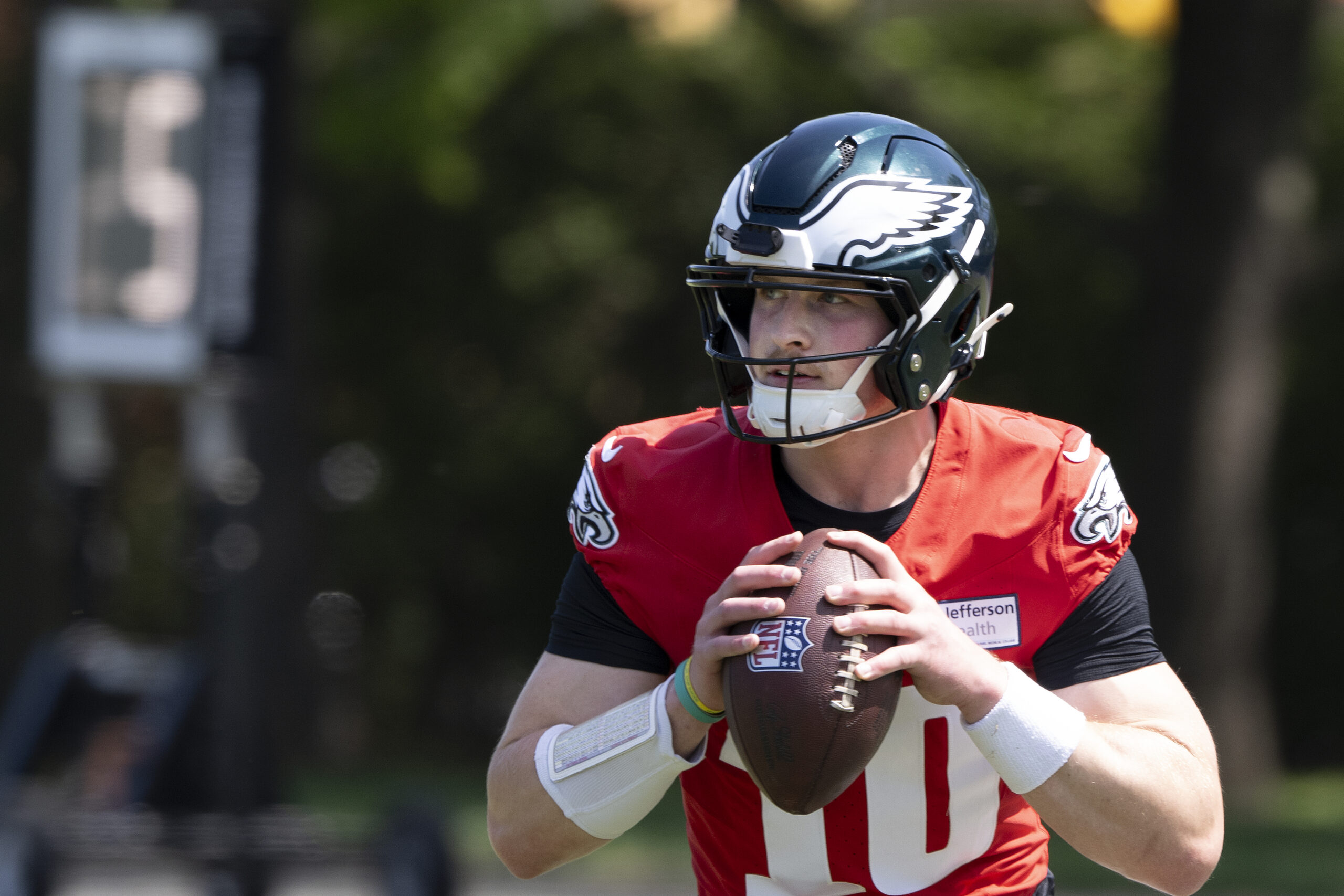
    How much would Cole Payton’s presence on the roster factor into what the Eagles do ahead of him at QB2?

    Quarterbacks (3): Jalen Hurts, Andy Dalton, Cole Payton

    Traded: Tanner McKee

    Practice squad: TBD

    Something’s got to give, right? The Eagles aren’t going to use four roster spots at the quarterback position. They also may be reluctant to expose a fifth-round pick (Payton) to waivers unless his camp is that uninspiring. But Kyle McCord was a sixth-round pick last year and the Eagles were able to pass him through waivers. Still, the Eagles have been rotating Dalton and McKee with the second-team offense throughout the offseason program, which means McKee’s grip on the No. 2 spot has loosened. The Eagles probably are hopeful McKee plays well at camp and in preseason games so they can deal their 2023 sixth-round pick for a draft asset.

    As for that TBD spot in the practice squad, if McKee is dealt, count on the Eagles bringing in another body late in camp with the goal of keeping that player on the practice squad.

    Running backs (4): Saquon Barkley, Tank Bigsby, Will Shipley, Cameron Latu (fullback)

    Cut: Dameon Pierce, Elijah Mitchell, Carson Steele

    Practice squad: Mitchell

    Count Barkley and Bigsby as locks, but behind them is a real competition for roster spots. Shipley gets the nod here, but we’ll see what happens when camp starts rolling. Pierce and Mitchell bring some experience. Steele, meanwhile, is a fullback. Latu is listed as a tight end by the Eagles, but he transitioned to fullback last year and his best path to the roster is at that position. Whether the Eagles keep a fullback or not remains to be seen, but Latu is a pretty solid blocker and has made an impact on special teams.

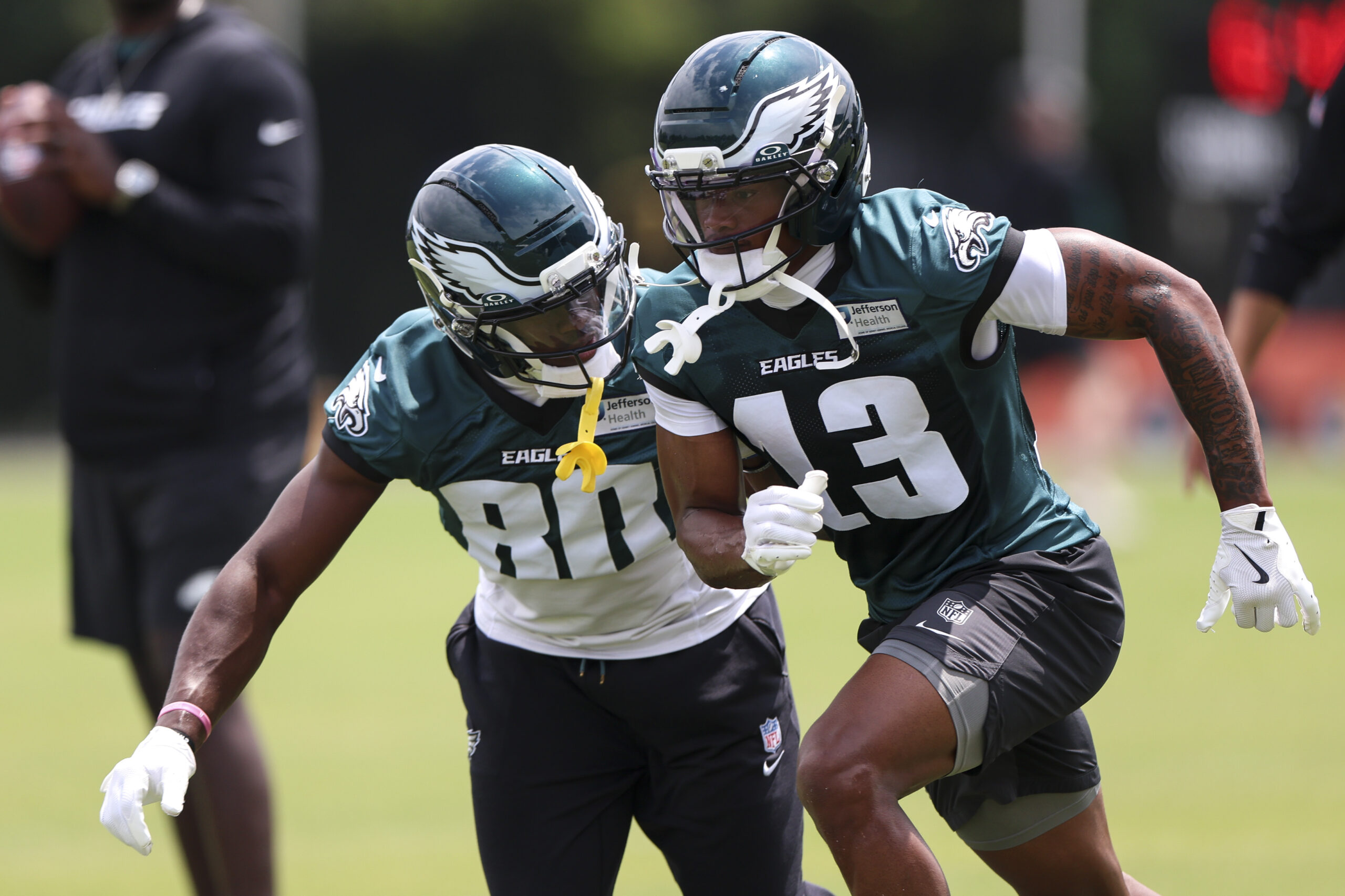
    Darius Cooper (left) and Dontayvion Wicks are part of a crowded receiving corps.

    Wide receivers (6): DeVonta Smith, Makai Lemon, Dontayvion Wicks, Hollywood Brown, Darius Cooper, Elijah Moore

    Cut: Johnny Wilson, Britain Covey, Danny Gray, Quez Watkins, Erik Ezukanma, Samori Toure

    Practice squad: Covey, Wilson

    The Eagles have begun life after A.J. Brown. There’s a pretty clear pecking order as things stand right now. The top four receivers seem pretty etched in stone, but there will be healthy competition for the back end of the depth chart. They could end up keeping five instead of six, too. Cooper and Moore slot in on this first pass and get the nod over Wilson, who should be easy to get through waivers since he’s coming off injury.

    The Eagles liked what they saw out of Cooper, an undrafted free agent, last season and Nick Sirianni raves about the “dirty work” Cooper and Wilson bring to the table. Having them both may be a little redundant. Moore may be considered a relative long shot to make the team, but he has had his moments in the NFL and could push for a spot for a team that might need some more playmaking at wide receiver with A.J. Brown gone. Covey, meanwhile, could slot in on the practice squad and be called upon in the punt return game.

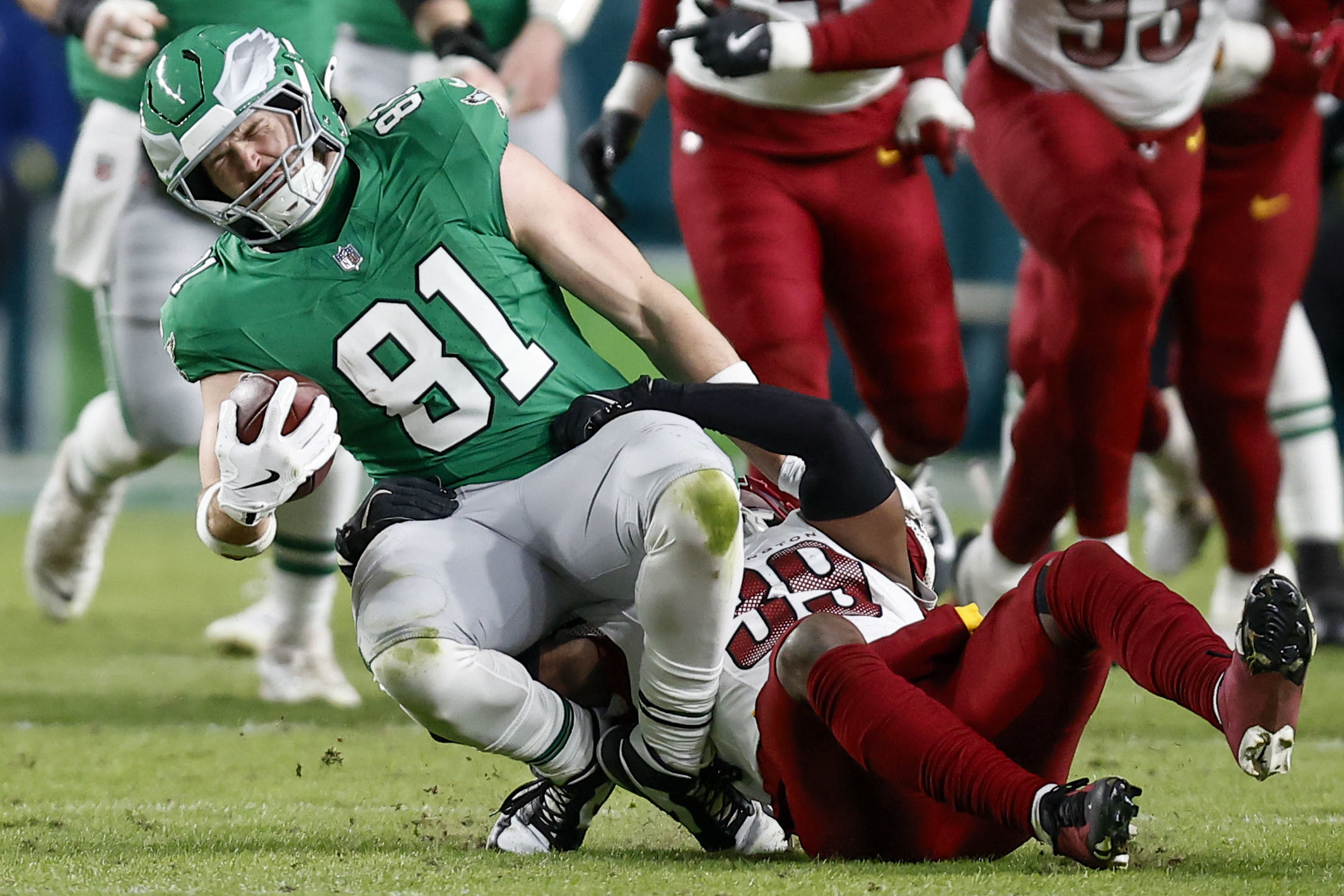
    Can Grant Calcaterra stick on a team with bolstered depth at the tight end position?

    Tight ends (3): Dallas Goedert, Eli Stowers, Johnny Mundt

    Cut: Grant Calcaterra, Stone Smartt, E.J. Jenkins, Dae’Quan Wright

    Practice squad: Wright

    If all goes as planned for the Eagles, this position might be the most boring one in camp when it comes to figuring out who to keep and who to cut. Mundt was brought in to provide a big boost in the blocking department, and the Eagles drafted Stowers in the second round. There’s a world where they keep four, but Calcaterra, who has been a mainstay on the team over the last four seasons, seems like a long shot to make the roster given his deficiencies as a blocker and his slot work being superfluous with Stowers in the mix.

    Offensive linemen (11): Jordan Mailata, Landon Dickerson, Cam Jurgens, Tyler Steen, Lane Johnson, Markel Bell, Fred Johnson, Drew Kendall, Michael Jordan, Micah Morris, Cameron Williams

    Cut: Myles Hinton, Willie Lampkin, Jake Majors, Jaedan Roberts, Hollin Pierce, John Ojukwu

    Practice squad: Hinton, Lampkin, Majors, Pierce

    The five starters are pretty set unless someone wows in camp and pushes Steen for a spot. Behind the starting unit is more talent than there was at season’s end. The Eagles made a concerted effort to add some depth to the offensive line. They brought back Fred Johnson and drafted Bell. The third-round pick might have first dibs on the swing tackle job. They also added some more experience on the interior in Jordan, who started 20 games over the last two seasons. Having Jordan makes it so that Kendall and Morris aren’t the primary backups on the interior. The Eagles likely will have a decision to make on the two tackles they drafted last season: Hinton and Williams. It seems unlikely both make the team.

    Can Uar Bernard progress quickly from major project to a spot on the active roster?

    Defensive tackles (5): Jalen Carter, Jordan Davis, Moro Ojomo, Byron Young, Uar Bernard

    Cut: Ty Robinson, Gabe Hall, Zion Wilson, Ta’Quan Graham

    Practice squad: Robinson, Wilson

    This is a tricky one. How likely is Bernard to be claimed by another team if the Eagles waive him? Remember, the claiming team needs to put the claimed player on the 53-man roster. The first-time football player has some elite athleticism, but he doesn’t know how to play football. It’s hard to justify keeping a player on the 53 that is unlikely to dress for a single game. But Bernard is unique. Robinson is the roster casualty here, but last year’s fourth-round pick gets through waivers in this prediction and gets onto the practice squad, where he can be elevated for game days. Wilson is an intriguing prospect the Eagles probably would like to keep around.

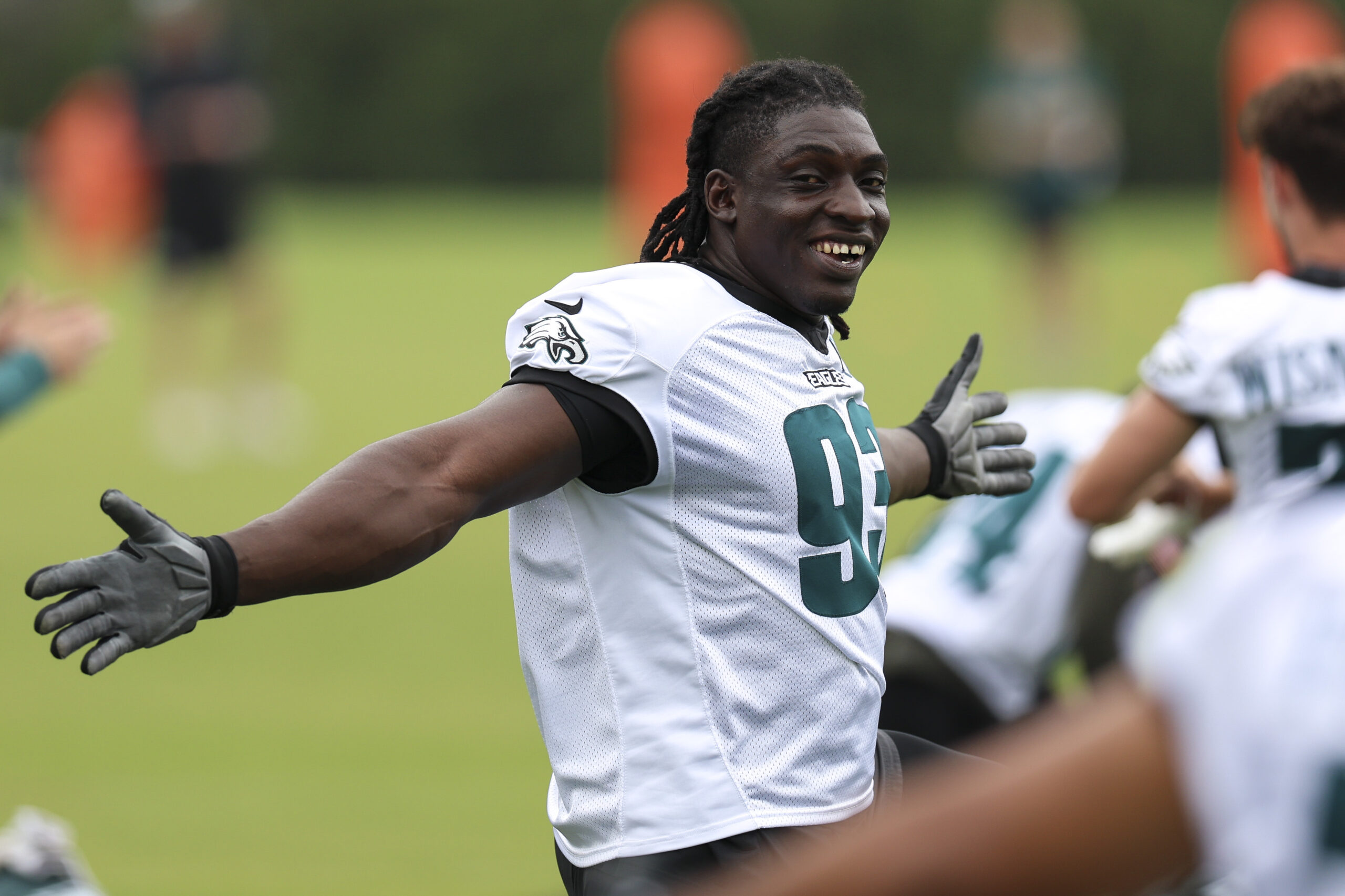
    Edge rushers (5): Jonathan Greenard, Jalyx Hunt, Nolan Smith, Arnold Ebiketie, A.J. Epenesa

    Cut: Keyshawn James-Newby, Jose Ramirez, Joshua Weru

    Practice squad: James-Newby, Weru (IPP)

    The first four spots offer little intrigue. There’s an obvious trio at the top in Greenard, Hunt, and Smith, and Ebiketie, who signed a one-year deal worth more than $7 million, slots in as a rotational rusher. The last spot likely will come down to James-Newby, a seventh-round pick in this year’s draft, and Epenesa, who signed with the Eagles on the day minicamp ended after his free-agent deal with Cleveland fell through following a physical. We’ll give the nod to the experienced Epenesa and put the rookie on the practice squad for now, where he’ll join Weru, who won’t count against the 17-player limit on the practice squad due to his International Pathway Player (IPP) designation.

    Jeremiah Trotter Jr. should see a lot of action at LB during the preseason.

    Linebackers (4): Zack Baun, Jihaad Campbell, Jeremiah Trotter Jr., Smael Mondon Jr.

    Cuts: Chance Campbell, Deontae Lawson

    Practice squad: Chance Campbell

    With Jihaad Campbell recovering from shoulder surgery, Trotter got a chance to shine during the offseason program. The Eagles have two clear starters and a very capable backup in Trotter. Mondon had some moments on special teams last season. Could Chance Campbell push for a roster spot? Special teams would get him there. But the Eagles went heavy at offensive line in this projection and don’t have the space to keep five off-ball linebackers. Chance Campbell should get through waivers cleanly and onto the practice squad.

    Cornerbacks (6): Quinyon Mitchell, Cooper DeJean, Riq Woolen, Jonathan Jones, Kelee Ringo, Mac McWilliams

    Cuts: Jakorian Bennett, Ambry Thomas, Shaun Wade, Tariq Castro-Fields

    Practice squad: Thomas

    The Eagles should have one of the best defensive backfields in the league in 2026. Mitchell and Woolen will man the outside and DeJean, an All-Pro in 2025 like Mitchell, slots into the nickel spot, though he’ll play safety in base. Jones was brought in to provide some more depth on the outside. Ringo has had his chances and seems like a change-of-scenery candidate, but he’s been great on special teams and should earn his spot that way.

    Will Marcus Epps (right) break camp manning a de facto starting role at safety?

    Safety (3): Drew Mukuba, Marcus Epps, Michael Carter II

    Cuts: Cole Wisniewski, Andre’ Sam, Kapena Gushiken, J.T. Gray, Max Pulley, Tucker Large

    Practice squad: Wisniewski, Sam, Gushiken

    We’re going light here for now since DeJean will play some safety. When the Eagles aren’t in base, which is the majority of the time, Epps is, as it stands, the guy who will play next to Mukuba. Carter II is a converted nickel corner who the Eagles will slot in a backup safety spot. Wisniewski was a seventh-round pick who could have some upside. If the Eagles keep 10 offensive linemen, or five receivers, Wisniewski likely makes the team if four safeties are kept. Keeping four is the more orthodox route. But it’s June, and we’ll start our first roster prediction with a little twist.

    Special teams (3): Jake Elliott (kicker), Braden Mann (punter), Rocco Underwood (long snapper)

    No cuts, no practice squad. These are the only three specialists on the roster.

  • Four Frenchmen skipped work to go to the World Cup in Philly. They’re already planning to return for an Eagles game

    Four Frenchmen skipped work to go to the World Cup in Philly. They’re already planning to return for an Eagles game

    Eight years ago, when FIFA announced that the World Cup would be coming to the United States in 2026, a student in France felt a rush of excitement. He and his friends had been watching the international soccer tournament on television since they were kids.

    They’d never seen it in person. The last time their native country hosted the competition was in 1998, before all four Frenchmen were born. In the years since, they’d tried to make it to a game, but to no avail.

    Russia hosted in 2018, but the four friends were unable to get visas. Qatar hosted in 2022, but this time, they were attending different colleges, which made traveling logistically complicated. So, they looked ahead to 2026 and started saving money.

    A heavy France contingent was part of an announced attendance of 68,274 at New York/New Jersey Stadium for their first game of the World Cup.

    One man picked up extra work shifts at his Parisian brasserie. Another taught English lessons on the side. All four made a conscious effort to cut back on drinking and eating out.

    There was one problem. The men worked in upscale restaurants, and summers were extremely busy. The Parisians knew that they wouldn’t be able to get a few days off, let alone a few weeks.

    In the spirit of Ferris Bueller, the 20-something-year-olds decided to tell a white lie. And now, three years and $12,000 in savings later, they are in Philadelphia, enjoying everything it has to offer (unbeknownst to their employers).

    “Momo,” the Parisian waiter who organized this trip, participated on the condition that he and his friends’ last names would be omitted (out of fear of losing their jobs).

    It was a risk traveling here but one he says has been “absolutely” worth it. For more than a week, the Frenchmen have been exploring the city, rating each experience on a 1-to-3 scale.

    Eating through Philadelphia

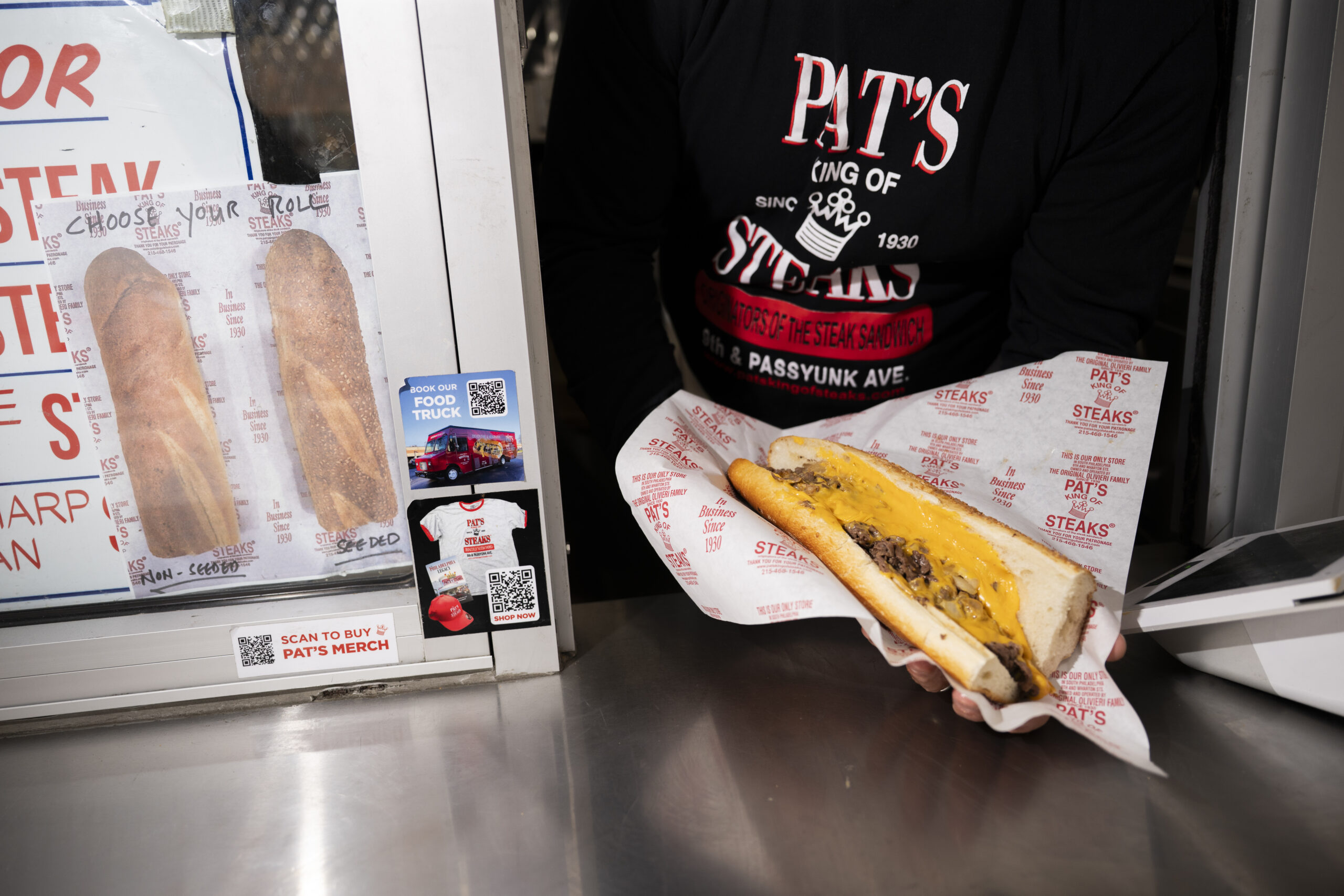
    Their first stop was Pat’s. Momo and his friends — Micha, Anto, and Titi — accidentally ended up at Geno’s. They asked customers where they could find Pat’s, to which he said they responded, “What the [expletive].”

    “We turned around and there’s the building,” Momo said. “And we’re like ‘Ohhhh.’”

    They each bought two cheesesteaks, with a soda and fries, to compare the difference. It was negligible. Pat’s edged out Geno’s in their rating system, just because they thought the “crown on the cup was cooler.”

    What did stand out were the condiments.

    For these four Frenchmen, a trip to Pat’s Steaks was on the menu which they gave the edge to over Geno’s.

    “We had what you call Cheez Whiz,” Momo said. “I’ve never had something like this. It was good. Interesting flavor. It’s not cheese, but it was good anyway.”

    He added: “Micha wanted me to mention that we enjoy ranch sauce. It is very good. We had this brand, Hidden Valley.”

    They’ve since gone to Ricci’s for hoagies. Grandma’s Pizza, Del Rossi’s, and Parc are also on the agenda (that is, if they can get a table at Parc).

    “Somebody told me what the hoagie was yesterday,” Momo said. “I had never heard hoagie. So, I got the hoagie today. It was good hoagie, I think it was Italian hoagie.

    “We gave Ricci’s a 3 [rating]. It was unique. There’s nothing Italian about it. But it was so good. The sandwich itself, you’d never find it in Italy, but it was so unique that we just enjoyed it. So we gave it three stars.”

    This is a substantial amount of food — and the portions are much bigger than they are in France — but the Frenchmen are quickly burning off the calories. They say they are walking approximately “five miles a day” to see the sights (and save some money).

    Exploring the city by foot

    The four friends are partially doing this out of necessity. They are staying at an Airbnb in South Philadelphia. SEPTA isn’t as comprehensive as the train system in Paris. But exploring the city by foot has led to some enlightening experiences.

    One of the first things they saw were “Philadelphia 250″ signs on buildings and billboards. After conversing among themselves, and coming up with no answers, Momo decided to ask a passerby.

    “We said, ‘What is 250?’ ” he said. “‘What are these numbers?’ I asked the man on the street, ‘Sir, what is 250?’ He was like, ‘Our anniversary this year, 250.’

    “And I was like, ‘Oh, OK, yes, yes, yes. I understand.’ Because then I remember the whole Revolutionary War stuff. They were telling me fireworks and baseball and all of this other American stuff that we’ve never seen before. So, we said we’ll stick around and we’ll go to it.”

    Fans of France were in full force during the team’s World Cup match against Senegal. They head to Philly to face Iraq at 5 p.m. Monday.

    Other areas of confusion have included Uber delivery robots (“in Paris, we just have guys on mopeds”) and knowing where you can and cannot smoke a cigarette.

    The smoking alone has led to some interesting encounters. Last Sunday night, while at dinner in Fishtown, the Frenchmen tried to take a smoke break outside a restaurant.

    They were promptly told to relocate, and met another local who had been told the same. They started talking about the Eagles — Momo and Micha want to buy a jersey — and he gave them some recommendations.

    A few minutes later, they said goodbye, and the man signed off with a “Go Birds.”

    “And I was like, ‘Go Birds?’” Momo said. “And he’s like, ‘Go Birds.’ I thought he meant pigeons or seagulls. I didn’t know he meant Eagles.

    “He’s like, ‘People say Go Birds all the time here.’ I was like, ‘Even when the Eagles are not playing?’ He said, ‘Yeah.’ That’s interesting. That would be like saying, ‘Allez Paris Saint-Germain’ when Paris Saint-Germain are not playing. Why would you say it now? Just say it later, when they are playing.”

    A ‘devastating’ encounter with Rocky

    While on another five-mile walk on Wednesday, the Frenchmen decided to see Rocky. They were very excited; Micha and Momo had both watched the film for the first time on their flight over. They weren’t expecting a statue, though.

    The four friends said that they thought Rocky was a real person, and assumed they were en route to meet a world-class boxer.

    Finding out he was fictional was “devastating,” in Momo’s words. But the visit still earned high marks.

    “Me and Micha gave Rocky statue a 10, even though 3 is the highest rating,” he said. “Because we just watched the movie, so we think, ‘Oh this is a 10 rating.’”

    Brazilian and soccer fans climb the steps of the Rocky statue, marked with a FIFA World Cup logo, on Thursday, June 18, 2026, in Philadelphia, ahead of Friday’s FIFA World Cup Group C match between Brazil and Haiti.

    While they were there, the Parisians heard about the Rocky curse. Unlike Ecuador’s fans, they will not be falling victim to it.

    “I said, ‘Sir, we’ve paid too many American dollars to come this far now to watch France lose to Iraq in Philadelphia, so that will not be happening,’” Momo said. “If people come here and I see it happen, I’ll take [the jersey] off myself. I’m not watching France lose here.”

    The four friends, who are staying through the Fourth of July when Philly will host its final World Cup game, have a lot of sights to see until then. On Saturday, they headed to Citizens Bank Park. This week, they’ll try to visit the Philadelphia Museum of Art.

    But the main attraction, of course, is Les Bleus, who will play Iraq at Lincoln Financial Field at 5 p.m. Monday (Fox 29). Anto found himself getting emotional about this earlier in the week.

    His friend asked what was wrong; Anto said he was in disbelief that the Frenchmen were finally on the precipice of their first World Cup.

    “Then I thought about it,” Momo said. “We’ve sacrificed going out with our friends to save up for this. We said on the plane ride, even if something goes wrong we’re going to try to enjoy, because we’ve been saving forever.

    “Even seeing France play one game at the World Cup … I’ll be telling my kids about that for the rest of my life. It’s something that I’ll never forget.”

    The four friends could’ve gone to other American cities. France has also played in New Jersey, and will play in Boston next Friday. But they chose Philadelphia, and are glad they did.

    “It’s funny,” Momo said. “If New York were a little cheaper, we would have gone to New York, and never gotten any of the experiences here. But I’m happy that we picked a city that I feel like most Europeans don’t think about.
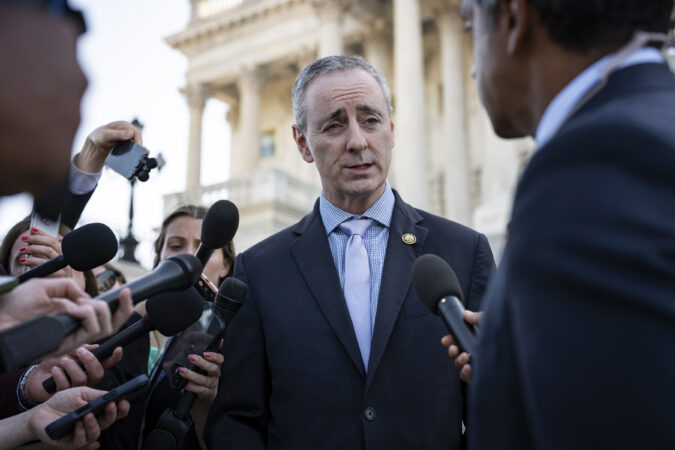
    “They think about New York and Miami and LA. But now I can go home and tell people, ‘Yo, go to Philadelphia. It’s interesting.’”

    He added: “They say that people in Philadelphia are mean and rude. They say the same thing about Paris. It’s not true; the people are very helpful. I feel like people here would help you if you need help, just in the way that people in Paris would do the same. If you need help, people would help you.

    “I have not met one mean person. Super helpful and accommodating and hospitable to me and my friends.”

    The Frenchmen have enjoyed it so much that they are already planning their next trip, to the Linc in the fall.

    It’ll be tricky because the Eagles’ season overlaps with Paris Saint-Germain’s (and the four friends are season-ticket holders). But they’re determined to find a way to make it work.

    “We’ve heard of Eagles before,” Momo said. “I’ve heard of Jalen Hurts and Saquon Barkley, when he jumped over that football player. We will definitely come back. And if not for Eagles, just to explore the city.”

  • Letters to the Editor | June 22, 2026

    Letters to the Editor | June 22, 2026

    Protect democracy

    Your recent editorial on Donald Trump’s losses in the courts and elsewhere correctly described as historic the mounting damage caused by his corruption, incompetence, and cruelty. You also pointed out that Trump is never more dangerous than when he is losing. That said, I don’t think you went far enough by calling on readers to hold Trump and his GOP enablers accountable by voting in the midterms. What makes you think Trump will accept the November results if he is not completely successful in suppressing the vote? Here’s a more effective action plan: Impeach Trump for treason and remove him from office before he subverts the next election. Treason is specifically defined among the constitutional grounds for impeachment, and treason is what Trump has committed repeatedly. He instigated an attack on Congress on Jan. 6, 2021, and indiscriminately pardoned hundreds of the attackers. More recently he pardoned the former president of Honduras who was convicted by a jury of conspiring to smuggle hundreds of tons of cocaine into our country. These acts — giving aid comfort to the enemies of the United States — meet the definition of treason. Notably, Trump has ordered the summary execution of hundreds of noncombatants suspected of lesser crimes. If we follow the Constitution and hold the wrongdoer-in-chief accountable, we will be able to vote — and have our votes count.

    Peter Pinnola, Elkins Park

    No-fail consequences

    The recent article in which some teachers say that there is essentially a “no fail” policy in Philadelphia public schools should incite a community discussion about the consequences of such a policy. To this reader, the policy of passing students to the next grade even though they have not shown up for class — nor completed basic classroom assignments, nor mastered even minimal requirements — is teaching those young people that they can succeed without any effort on their part. Such a policy teaches children to be irresponsible. Why take any personal responsibility to earn your achievements when your success of being promoted is preordained?

    Students need to enter the school year knowing that they are responsible for attending class.

    They are responsible for completing assignments.

    They are responsible for achieving some mastery of the classroom curriculum.

    This is the way the world works. As they grow up, they need to realize that the world does not give them a free pass. They need to learn to be responsible individuals.

    William Cooney Jr., Philadelphia

    Mr. Trillionaire

    Now that Elon Musk has become the world’s first trillionaire, let’s help him figure out what to do with this unfathomable amount of money. Start with paying taxes. Roughly 20% of his worth would certainly help our Social Security fund. Then there is public education, the arts, healthcare, scientific studies — and all the other things that he and DOGE eviscerated. I don’t think he’d even miss a few billion here or there.

    Barbara Gold, Philadelphia

    A year after Elon Musk all but wiped out U.S. aid to the poorest people on the planet, he has become the world’s first trillionaire.

    Because the U.S. Agency for International Development, where I served for 14 years, was eliminated, hundreds of thousands of people have died — including more than 500,000 children. The Lancet concluded that by 2030, aid cuts could lead to 9.4 million additional deaths; 2.5 million are projected deaths of young children. Ebola is one of many deadly diseases on the rise in USAID’s absence; others include bird flu, mpox, HIV/AIDS, diphtheria, polio, and measles. The economic fallout from the ruinous war with Iran is having catastrophic effects on the world’s most vulnerable people overseas, as well as on all of us here at home who are facing the highest inflation rates in years.

    Meanwhile, Musk’s graduation from unaccountable billionaire to unaccountable trillionaire is a galling example of the unprecedented amounts of wealth and power we’re currently witnessing elites accrue.

    We can change this reality only by fixing our broken politics: organizing, demanding more from our elected officials, and electing new leadership willing to actually fight corruption and the tech oligarchs threatening our air, water, privacy, and jobs. Our communities, livelihoods, and values are worth the fight.

    Maura O’Brien, Ardmore

    Keep fields natural

    It’s disheartening to see that Major League Baseball plans to install artificial turf at Richie Ashburn Fields in FDR Park, replacing natural grass that was beautifully maintained by the Phillies.

    That’s three more acres of turf that potentially exposes kids to cancer-causing forever chemicals, in addition to the 30 acres that the city and the Fairmount Park Conservancy plan to install in the FDR Meadows.

    All artificial turf contains PFAS, the “forever chemicals” linked to cancer, liver damage, thyroid disease, decreased fertility, and more. The city itself has sued PFAS makers over these risks, and The Inquirer has reported on them several time in recent years — including a gut-wrenching article on the Phillies players who died of brain cancer after exposure at the Vet.

    Aside from the PFAS, artificial turf has other serious liabilities — it becomes dangerously hot, increases injuries, sheds microplastics, and contributes to climate change, especially when it replaces grass fields, meadows, or woodlands.

    There’s no excuse for endangering our kids’ health and future. They deserve safe, healthy fields, and that means grass, not plastic.

    Rich Garella, Philadelphia

    Sports tix surcharge

    Why not try to add a “schoolkids surcharge” of $1 (yes, just $1) to all Philly sporting events tickets. Let the “team spirit” of the Phillies, Eagles, Flyers, Union, and any other willing teams spread to our very needy school kids and their respective classroom and building needs.

    That way all the fans can earn an easy A+.

    Lynn Taylor Morawski, Abington

    Fund solar

    Regarding your recent editorial on the budgeting process in City Hall and Harrisburg, while an on-time budget is important, a budget is also a chance to make Pennsylvania a better place to live. In an effort to help clean up our air, I advocated for a state budget that includes more renewable energy at PennEnvironment’s recent clean energy Lobby Day.

    Air quality here in Philly, and in many metropolitan areas in Pennsylvania, is so bad that it’s often unhealthy to breathe. Each day, it becomes more clear that we must move toward clean, renewable energy sources that don’t pollute our air and threaten our health. While Harrisburg works to meet this year’s June 30 budget deadline, I urged our legislators to fund the Solar for Schools program to ensure that clean, solar energy is what powers our schools.

    I believe that Pennsylvania communities deserve a healthy and livable future, and together we can make that happen.

    Kaovya Vel, Pennsylvania

    Moderate moniker

    The Inquirer’s fine writing and reporting notwithstanding, I do wish your paper and other media outlets would correctly refer to Rep. Brian Fitzpatrick as “so-called moderate” rather than anointing him as such without the qualifier, as in a recent article. Yes, he sometimes works with Democrats to vote against egregious GOP legislation, but that doesn’t make him a moderate. The late Sen. Edward Kennedy sometimes worked with and voted with arch-conservative Sen. Orrin Hatch, but no one called Sen. Kennedy a moderate. Some statistics show that Fitzpatrick is not in lockstep with the MAGA GOP majority, while a drill-down of his voting record shows that on substantive issues he consistently votes with his party.

    Therefore, the accurate way for the Fourth Estate to describe Fitzpatrick is “Republican Brian Fitzpatrick” or “U.S. Rep. Brian Fitzpatrick.” Leave it to the voters to determine if he’s a moderate or not.

    Scott Chelemer, Mount Laurel

    Join the conversation: Send letters to letters@inquirer.com. Limit length to 150 words and include home address and day and evening phone number. Letters run in The Inquirer six days a week on the editorial pages and online.