LOS ANGELES — Joel Embiid is content to spend his All-Star break on a family vacation after the 76ers’ standout center was not selected as an Eastern Conference reserve by the NBA’s coaches.
“I don’t need any validation from anybody,” Embiid said following the Sixers’ victory over the Clippers on Monday night. “I’m happy where I’m at. I’m excited to be playing every night. If [the All-Star Game selection] didn’t happen, who cares? I get a week off to rest, anyway.”
Embiid may need to keep those plans tentative, however. He still could be named an injury replacement for the game on Feb. 15, with Milwaukee Bucks star Giannis Antetokounmpo out with a calf strain that is expected to keep him sidelined for at least a month.
Sixers coach Nick Nurse and Tyrese Maxey, who earlier was named an All-Star starter for the first time, acknowledged that they were surprised Embiid was not among those selected as a reserve. Embiid’s production has exploded in recent weeks, with the big man averaging 29.6 points on 52.2% shooting along with 7.9 rebounds and 4.4 assists in 18 games since Dec. 23. It has been an impressive progression in Embiid’s recovery from multiple knee surgeries.
“He’s been super dominant,” Nurse said of Embiid before the game against the Clippers. “… I thought, just the general buzz or feel I was getting, was that he would make it.”
Added Maxey: “It’s life. I understand it. He’s going to keep being Joel.”
Embiid and the Sixers (28-21) had been doing some recent campaigning for his inclusion in the midseason showcase for the eighth time in his career. Following a Jan. 9 game at the Orlando Magic, Embiid said he believed he deserved the honor and added, “I think you guys [the media] should start putting the word out that Joel Embiid is back.” And when Maxey was asked at a news conference following a Jan. 22 victory over the Houston Rockets which teammate he would like to join him at All-Star Weekend, he said, “Process!” and tapped the microphone.
“Sixers, put that out there!” Maxey said.
Sixers guard Tyrese Maxey (right) campaigned for teammate Joel Embiid to join him in the All-Star Game.
The Eastern Conference reserves are the Toronto Raptors’ Scottie Barnes, the Detroit Pistons’ Jalen Duren, the Atlanta Hawks’ Jalen Johnson, the Cleveland Cavaliers’ Donovan Mitchell, the Miami Heat’s Norman Powell, the Indiana Pacers’ Pascal Siakam, and the New York Knicks’ Karl-Anthony Towns. They join starters Maxey, Antetokounmpo, Detroit’s Cade Cunningham, New York’s Jalen Brunson, and the Boston Celtics’ Jaylen Brown.
Rookie guard VJ Edgecombe also will represent the Sixers at All-Star Weekend as part of the Rising Stars competition.
For now, Embiid will plan to enjoy his vacation and rest an “ankle thing” that he has been playing through in recent games. And the 2023 NBA MVP reiterated that “there’s only one thing missing” from his personal basketball accomplishments while glancing at his wedding ring, a clear reference to winning an NBA championship.
The school closures and consolidations proposal for Philadelphia schools that was announced in January was not surprising. The district, like many districts across the country, has signaled that it is grappling with declining enrollment, underutilized buildings, and tight budgets. The issue is so pervasive that the consulting firm Bellwether published a full report about it last fall called “Systems Under Strain: Warning Signs Pointing Toward a Rise in School Closures,” warning that many districts would soon face similar decisions.
The process isn’t surprising, either. Seattle similarly wrestled with a school closures plan before it got so complicated that the city simply dropped the issue after intense community backlash, concerns over student well-being, and the realization that there wasn’t a clear plan for how much the closures would chip away at the roughly $100 million budget deficit.
The situation in both Philadelphia and Seattle has many similarities to Chicago’s school closures in 2013. Chicago Public Schools closed 47 elementary schools — the largest national mass closures up to that point.
My colleagues and I at the University of Chicago Consortium on School Research studied that process, releasing reports on families’ priorities and choices in finding new schools, and on staff and students’ experiences, including academic outcomes. The findings from our research offer important lessons and considerations for district leaders and community members in Philadelphia today.
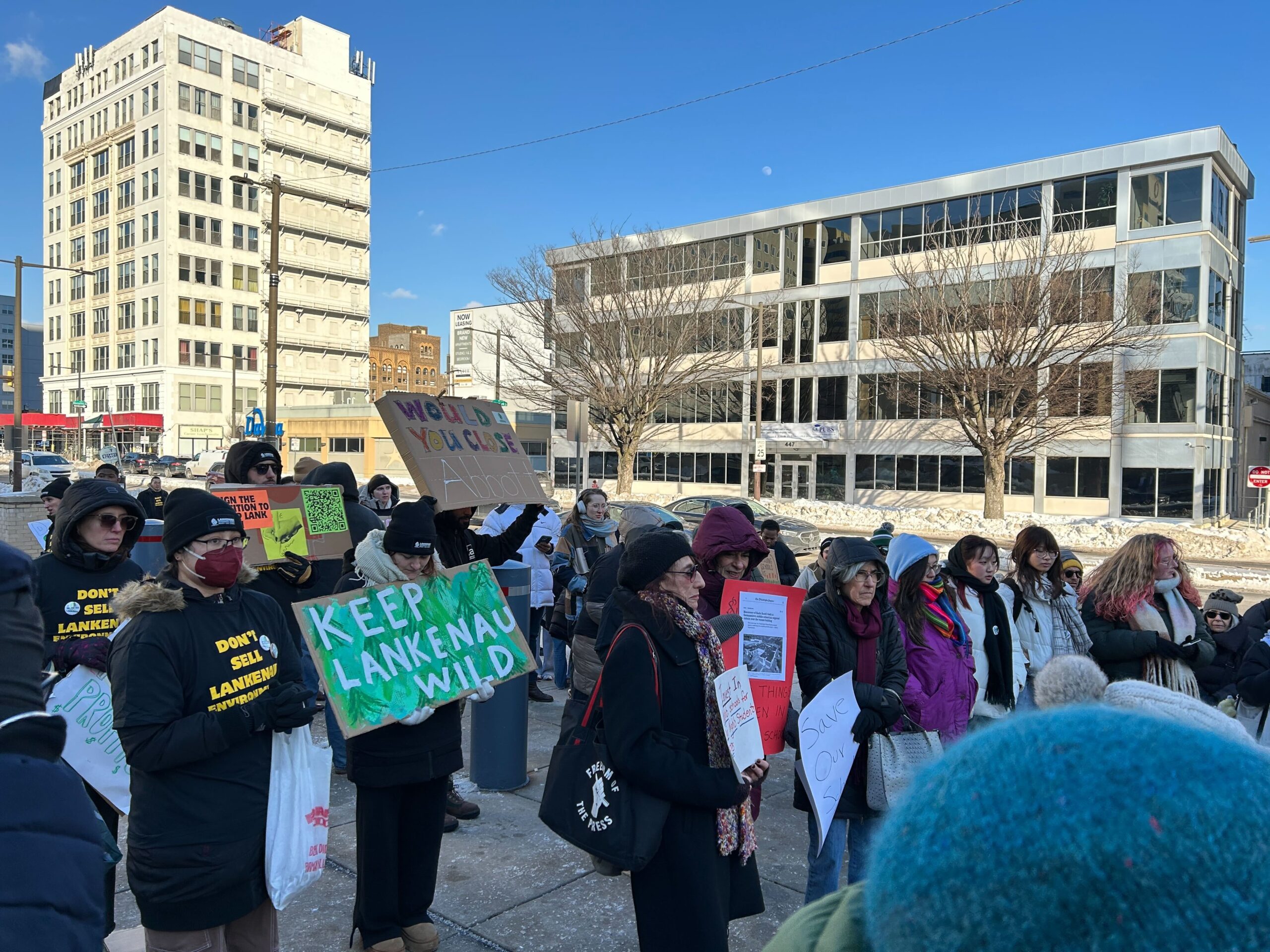
Demonstrators rallied against school closures outside the School District of Philadelphia headquarters in Center City on Jan. 29.
First, school is a very personal space and choice for students and families. Families assess the quality of a school in many different ways, from class size to specific course offerings to the availability of specific extracurriculars.
A school’s reputation, sometimes going back multiple generations, is often a factor. And both safety and accessibility — proximity and available transportation — are always paramount. Closing a school isn’t just an administrative change; it is a profound disruption of community and family life.
Second, logistics matter enormously and proved more difficult than expected in Chicago. The management of closing some schools and merging into others was a massive pain point in Chicago’s school closures.
Some teachers could not find their personally purchased furniture, technology, and classroom supplies. Critical details were overlooked, which caused significant challenges for staff and students. Closures require thorough and transparent operational planning.
But last and most importantly, it is critical to consider the effect of school closures on the people who experience them. In our interviews with both students and staff, we repeatedly heard that they wished their grief and loss had been acknowledged, validated, and addressed.
When we looked at the data, we found that test scores dropped for students whose schools closed — and the drops started the year potential closures were announced, reflecting the effects of uncertainty and upheaval. Test scores also dropped for students whose schools were “receiving schools,” enrolling many of the affected students.
Our University of Chicago colleague, professor Eve L. Ewing, wrote in her commentary in our report that “we must ask how and why we continue to close schools in a manner that causes ‘large disruptions without clear benefits for students.’”
The way this plays out in Philadelphia matters, as young people, families, and educators are already emphasizing. In Chicago, school staff wished for more communication, more transparency, more training on merging school communities, longer-term transitional funding, and more emotional support for adults, whose feelings were still raw three years later when we interviewed them.
Students wished school actions provided better facilities, from building and green space to sufficient toilet paper and warm water. And they wished they had more counselors and social workers, and general emotional support from all school staff, who were, themselves, grieving. Simple yet powerful reminders of what makes schools feel like places of care, connection, and community.
In 2023, our fantastic Chicago education reporters covered the 10-year anniversary of Chicago’s massive school closures in Chalkbeat Chicago and in a WBEZ/Chicago Sun-Times collaboration. The students, families, neighbors, and staff shared similar messages in those stories as they had in our research: being told one thing and experiencing another; seeing the process as “hurtful” and without any benefit to young people or the community; wishing they could see the district and the city investing in schools, housing, and community resources where they live.
Regardless of what final decisions are made, a difficult path lies ahead for school communities across Philadelphia. Chicago’s experience tells us that any district considering school closures needs to plan meticulously, communicate frequently and transparently, and keep the experiences of students, families, and school staff at the center of the process.
Marisa de la Torre is managing director and senior research associate at the University of Chicago Consortium on School Research, part of the Kersten Institute for Urban Education within the Crown Family School of Social Work, Policy, and Practice.
It may not look like it outside, but spring was in the air Tuesday in South Philly.
After a long morning of packing, members of the Phillies front office staff surrounded the first-base gate at Citizens Bank Park and waved their 2026 All-Star Game rally towels as the team truck pulled out and began its journey to spring training in Clearwater, Fla.
The truck — decorated for this year’s All-Star Game, which is July 14 at Citizens Bank Park,— will travel 1,054 miles, passing through eight states before arriving at BayCare Ballpark. Spring training begins in just over a week, on Feb. 11, for pitchers and catchers; the full squad will report on Feb. 16.
Throughout the Phillies’ six weeks in Florida, they’ll need to have all the necessities — from 600 pairs of pants to a single stroller and one very important hot dog launcher — and that’s where the Phillies staff comes in to help.
“Today, we’re packing up the truck,” said Tim Schmidt, a clubhouse attendant for the Phillies. “It’s a pretty long process. I mean, there’s a lot of inventory that goes into it. We have to label everything, we have to put it in bins, and then there’s thousands of items. So, it’s not like it’s just a couple of Nike orders. It’s a lot. It’s time consuming.”
For a job this big, the team has to get an early start. The packing process began two weeks after the end of the season and officially concluded on Tuesday morning. Workers from Old Dominion Freight Line and members of the Phillies staff began loading up the truck’s three 28-foot trailers at about 8 a.m. and didn’t wrap up until 11:40 a.m.
Of course, they did have a little help from the Phanatic, who made some brief appearances — directing traffic and attempting to ride the forklift.
Despite the distraction, workers packed plenty of essential items for any baseball team into the truck, including …
5,000 paper cups
2,400 baseballs
2,000 short- and long-sleeved shirts
1,200 bats
900 pairs of socks
600 pairs of pants
600 batting practice hats
350 pairs of shorts
300 batting gloves
250 batting practice tops
200 fleeces
200 light jackets
200 pairs of assorted shoes
140 batting helmets
125 leather and elastic belts
40 heavy jackets
20 coolers
Several children’s bikes
and one stroller
“I’ve been doing this for nine years,” Schmidt said. “My boss has been doing it for close to, I think, 40 years. So I’m sure there were a couple of hiccups along the way, but now we kind of have it down pat. We know what to do. We know what to bring. We know how much to bring.”
Some of the items still waiting to be loaded into the truck headed to Florida pic.twitter.com/6bDA2VNlcY
Of course they couldn’t forget the most important item of all — the Phanatic’s high-powered hot dog launcher.
“I’ve been asked a couple times today, ‘What’s the unique item?’” Schmidt said. “It’s the hot dog launcher. That’s the last thing to get loaded onto the truck. Once that’s loaded, everyone gets excited because you kind of know you’re done.”
The Phillies will open their Grapefruit League schedule on Feb. 21 against the Toronto Blue Jays in Dunedin, Fla. Spring training ends March 23 with a game in Clearwater against the Tampa Bay Rays.
Opening day for the Phillies is March 26 at home against the Texas Rangers.
Philadelphia is a city of neighborhoods, and at the heart of every neighborhood is a school. Schools are where our children learn, where families gather, and where communities take shape. When our schools thrive, Philadelphia thrives.
That is why the Philadelphia School District’s recently announced Facilities Master Plan is so important — not just for students and educators, but for the future of our entire city.
This plan is about more than bricks and mortar. It is about opportunity. It is about ensuring every child, in every zip code, has access to high-quality academic programs, safe and modern learning environments, and the extracurricular experiences that help young people discover their talents and chart their paths forward.
For too long, inequities in school facilities have mirrored broader inequities across our city. Some students learn in buildings that limit what they can access — advanced coursework, arts and music programs, athletics, career and technical education, and modern technology — while others have more opportunities simply because of where they live. That is not acceptable, and it is not sustainable.
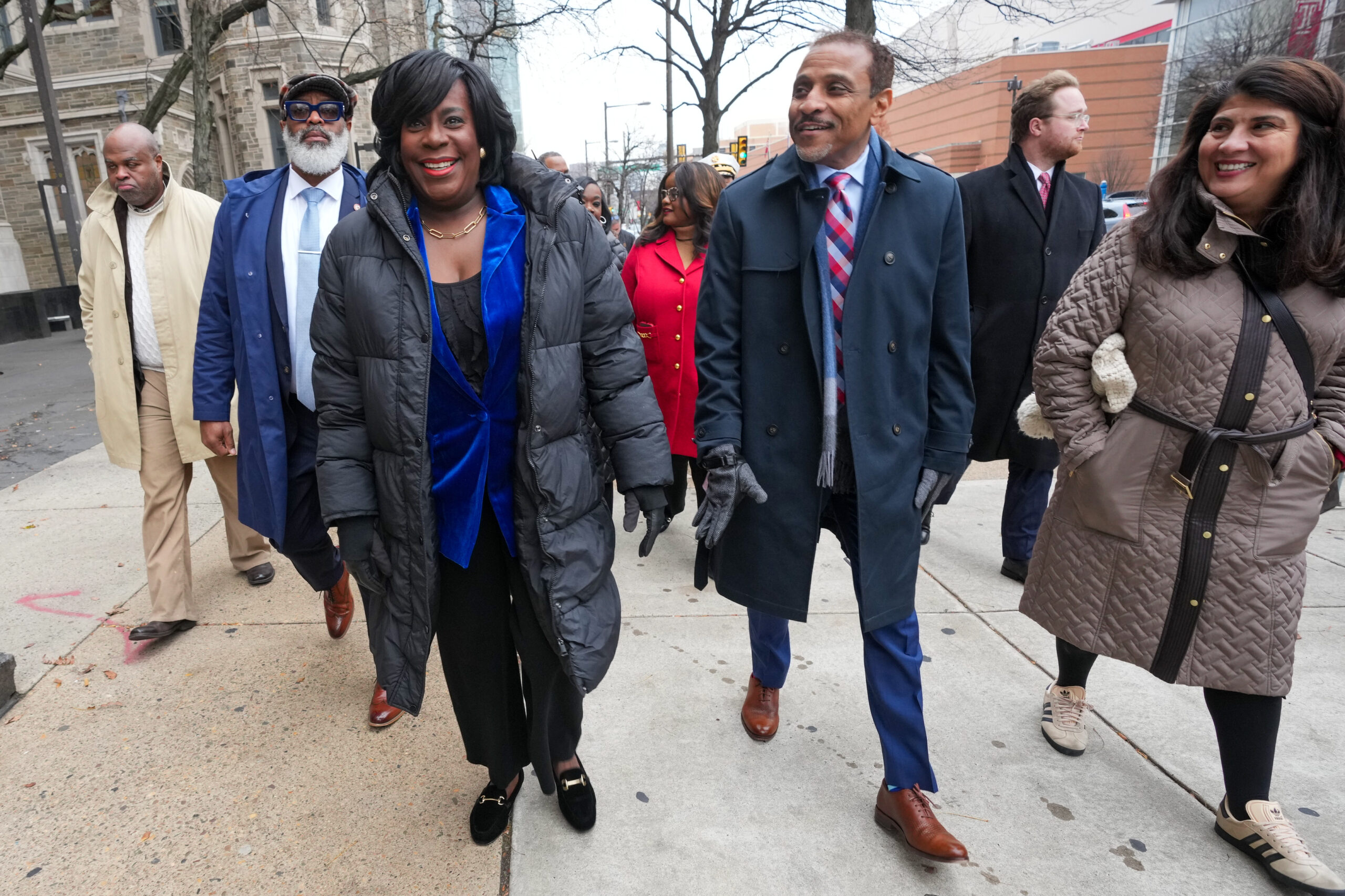
Mayor Cherelle L. Parker and Superintendent Tony B. Watlington Sr. on Temple University’s campus in December 2024. Inequities in school facilities are unacceptable, the pair write.
The Facilities Master Plan directly confronts these challenges. It takes a thoughtful, data-driven approach to aligning school buildings with student needs, enrollment trends, and program quality. The goal is clear: to expand access to strong academic offerings and enriching extracurricular programs across neighborhoods, while making smarter use of resources and improving learning conditions citywide.
Ninety percent of impacted students will be reassigned to schools with comparable or better academic outcomes, and 100% of impacted students will be reassigned to schools with comparable or better academic outcomes and/or comparable or better building conditions.
When students have access to well-equipped schools with robust programs, outcomes improve. Graduation rates rise. Attendance improves. Students are better prepared for college, careers, and civic life. These are not abstract benefits — they translate into a stronger workforce, safer neighborhoods, and a more vibrant local economy.
The impact extends well beyond the classroom. Modernized and rightsized school facilities can anchor neighborhood revitalization. They attract families, support local businesses, and create hubs for community use — from recreation and arts to adult education and workforce training. Investments in schools are investments in communities.
This plan also reflects a commitment to partnership and transparency. It is grounded in community engagement and recognizes that schools do not exist in isolation. The city of Philadelphia and the school district are working together to ensure that planning decisions consider housing, transportation, economic development, and public safety — because when we coordinate our efforts, everyone benefits.
One of us, Mayor Parker, has made clear that creating a safer, cleaner, and greener city with access to economic opportunity for all is critically important to the success of our young people. Strong schools are foundational to that vision.
The other one of us, Superintendent Watlington, has, over the past three years, led a series of sweeping improvements in the district: student attendance, teacher attendance, graduation rates, and test scores in grades four through eight have all increased. During the same period, dropout rates have decreased by more than half.
The Facilities Master Plan brings these priorities together in a way that will drive even stronger and faster progress in an ambitious and responsible manner.
Change is never easy, and conversations about school facilities can be deeply personal. Families care about their schools because schools are part of their identity.
That is why continued engagement and listening will remain central as the plan moves forward. The school district and the city are committed to working with students, families, educators, and community members every step of the way.
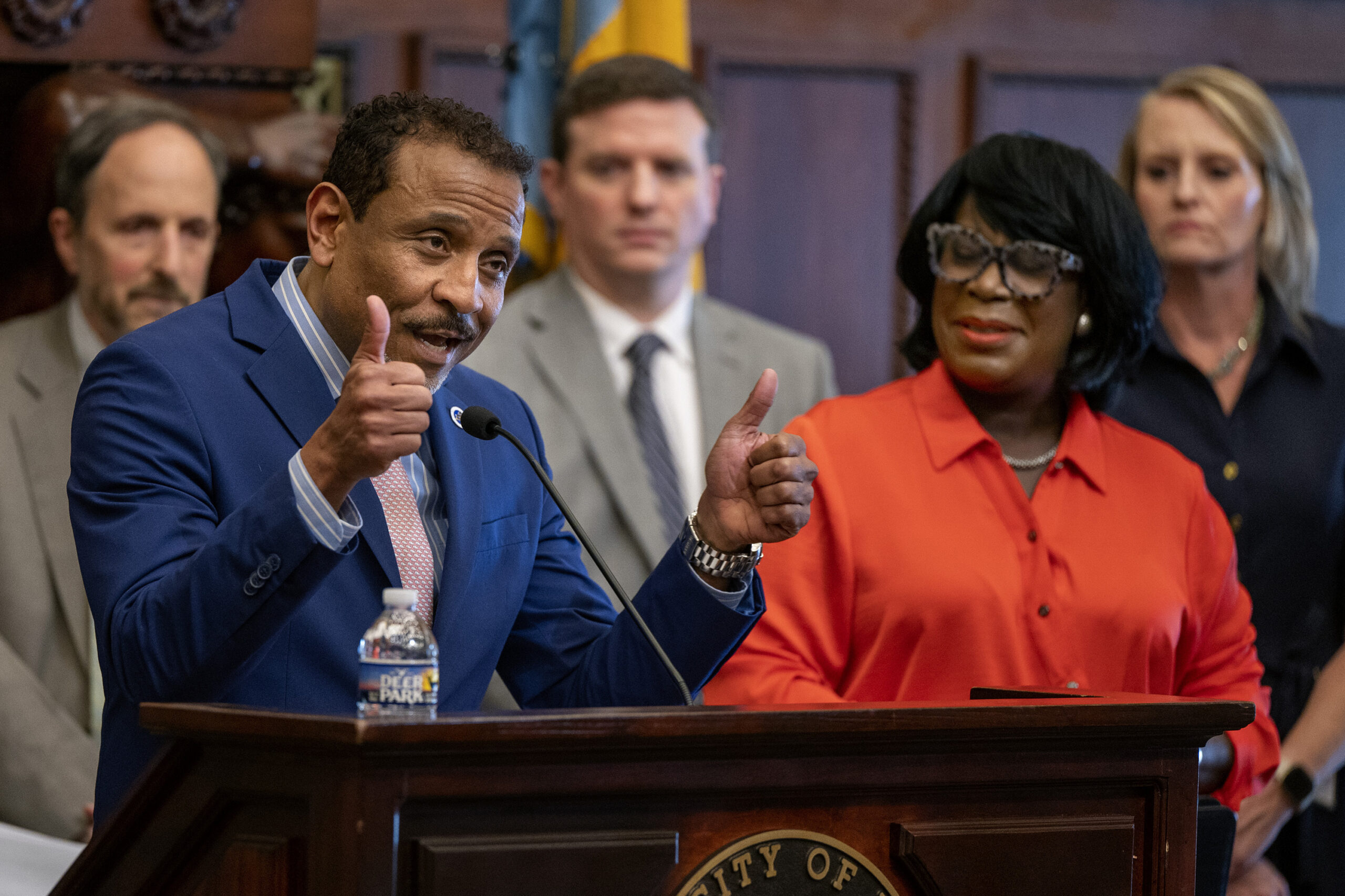
Superintendent Tony B. Watlington Sr. joins Mayor Cherelle L. Parker at a City Hall news conference in August 2024.
What unites us is a shared belief that Philadelphia’s children deserve the best we can offer — and that the city’s future depends on how well we prepare them today.
This Facilities Master Plan is a long-term investment in equity, excellence, and opportunity. It is a commitment to making sure that no matter what zip code a child grows up in in Philadelphia, they have access to high-quality education and enriching experiences that open doors and expand horizons.
By building better schools, we are building a stronger Philadelphia — for this generation and the next.
Tony B. Watlington Sr. is the superintendent of the Philadelphia School District. Cherelle L. Parker is the 100th mayor of Philadelphia.
In the early 2010s, school closures were presented as unavoidable and data-driven. Families were promised efficiency and reinvestment. What many communities experienced instead was lasting harm that never fully healed. That history matters now as the Philadelphia School District advances a new Facilities Master Plan that again relies on closures as a primary tool.
The district argues that consolidating magnet programs into neighborhood high schools will expand access and strengthen those schools as community anchors. That logic assumes program quality can be preserved through reorganization alone. Experience suggests otherwise.
A mission-driven school culture depends on sustained focus and institutional priority. Once reduced to a single track, that culture becomes fragile. Through Lankenau, students are participating in an Environmental Rights Amendment curriculum led by the Pennsylvania Bipartisan Climate Initiative, one rooted in civic engagement as much as environmental literacy. That depth of engagement would be hard to replicate in other schools without a dedicated institutional focus on this work.
Environmental education is especially vulnerable to this kind of dilution. Partnerships with universities and community organizations take years to build. Internship pipelines depend on consistent coordination. Hands-on programs require both space and continuity. When these elements are separated, the whole weakens.
The Board of Education has recommended closing or merging as many as 20 schools, including Lankenau in Roxborough.
Equity concerns also deserve closer attention. Lankenau serves students from across North and Northwest Philadelphia who rely on district-provided transportation. For many families, this school represents access to a learning environment aligned with their interests and ambitions. Closing it narrows those options rather than expanding them.
The Facilities Master Plan emphasizes data analysis, community engagement, and fiscal responsibility. Those factors matter. But they do not capture everything. Some schools provide value that cannot be reduced to enrollment figures or building utilization rates. When a public school consistently prepares students to engage with one of the defining challenges of this century, dismantling it should not be taken lightly.
Climate literacy is not optional. It shapes workforce readiness and civic decision-making. Philadelphia should be strengthening pathways that cultivate this knowledge early and deeply. Offering environmental science only as an honors option signals a retreat from that responsibility.
This proposal is not final. The Board of Education still has time to reconsider. Protecting schools like Lankenau would not undermine the broader goals of modernization or equity. It would reinforce them and affirm that preparing young people for a changing world requires more than consolidation.
Ashlei Tracy is a nonprofit leader with a background in environmental policy and biology. Her work centers around increasing civic engagement, policy literacy, and care for our shared planet.
It’s the same problem that delayed the Space Launch System rocket’s debut three years ago. That first test flight was grounded for months because of leaking hydrogen, which is highly flammable and dangerous.
“Actually, this one caught us off guard,” NASA’s John Honeycutt said Tuesday, hours after the test came to an abrupt halt at Kennedy Space Center.
Until the exasperating fuel leaks, the space agency had been targeting as soon as this weekend for humanity’s first trip to the moon in more than half a century.
“When you’re dealing with hydrogen, it’s a small molecule. It’s highly energetic and we like it for that reason and we do the best we can,” Honeycutt explained.
Officials said the month-long delay will allow the launch team to conduct another fueling test before committing the four astronauts — three U.S. and one Canadian — to a lunar fly-around. It’s too soon to know when the countdown dress rehearsal might be repeated.
Any repairs to deformed or damaged seals, or other components, can likely be completed at the pad, managers said. A return to the Vehicle Assembly Building would likely result in an even longer delay.
The leaks cropped up early in Monday’s loading operation and again hours later, ultimately halting the countdown clocks at the five-minute mark. Launch controllers had wanted to get all the way down to a half-minute in the countdown, but the escaping hydrogen exceeded safety limits.
NASA repeatedly interrupted the flow of liquid hydrogren, which was minus 423 degrees Fahrenheit, in an attempt to warm up the area between the rocket and fuel lines and, hopefully, reseat any loose seals. But that didn’t work and neither did altering the flow of the hydrogen — adjustments that allowed the first SLS rocket to finally soar without a crew in 2022.
With their launch now off until at least March 6, commander Reid Wiseman and his crew were given the all-clear to emerge from quarantine in Houston. They will reenter it two weeks before the next launch attempt.
Wiseman said on the social platform X that he was proud of how the dress rehearsal went, “especially knowing how challenging the scenario was for our launch team doing the dangerous and unforgiving work.”
The extreme cold at the launch site did not contribute to the fuel leaks or any other problem, according to officials. Heaters kept the Orion capsule warm atop the 322-foot rocket, while constant purging protected the rocket and ground systems.
Amit Kshatriya, NASA’s associate administrator, stressed that the Space Launch System is “an experimental vehicle,” with more lessons to be learned. Years between fueling tests and flights don’t help, he added.
“I’m just reminded again almost four days and 40 years from Challenger, nobody sitting in one of these chairs needs to be calling any of these vehicles operational,” Kshatriya said at a news conference.
NASA has only a handful of days any given month to send them around the moon — the first time astronauts will have flown there since 1972. They won’t land on the moon or even go into lunar orbit during the nearly 10-day mission, but rather check out life support and other vital capsule systems ahead of a moon landing by other astronauts in a few years.
NASA sent 24 astronauts to the moon during the 1960s and 1970s Apollo. The new Artemis program is aiming for new territory — the moon’s south polar region — and looking to keep crews on the lunar surface for much longer periods.
Dan McQuade had such a way with words that it’s almost impossible to find the right ones to contemplate a Philadelphia without Dan writing about all the bat-guano crazy things we do here. Dan, who wrote for a variety of sites including glory-days Deadspin and Defector, died from cancer last week. He’d just turned 43 — way too young. We started blogging at the same time in the mid-2000s, and I was blessed to know him from that long-lost scene. He leaves behind his wife, a 2-year-old son, and a remarkable body of work — like essential coverage of the Wildwood T-shirt scene, or his analysis of Sylvester Stallone’s absurd 30-mile run in Rocky II — that people will still be reading and talking about for many years to come.
The twisted, deadly culture of U.S. immigration cops can’t be fixed with training
Border Patrol agents detain a man in Minneapolis on Jan. 11.
The fear was palpable even before the ink had dried on what Donald Trump called his “Big Beautiful Bill” — the 2025 legislation that funneled a whopping $170 billion toward immigration enforcement, including doubling the number of agents in the field from 10,000 to 20,000.
Many warned the surge of inexperienced rookies — indeed, their training was slashed from 90 days to just 47 (or 48) days to race the new agents out into the streets — could lead to acts of police brutality, or worse, as an alphabet soup of Homeland Security agencies donned masks and went after immigrants in agitated urban neighborhoods.
Those whispers became a scream as Americans watched the horrific videos of a masked federal agent walking in front of the family SUV driven by a Minneapolis mom, Renee Good, and then firing three shots that killed her. Seventeen days later, one of the officers in a scrum beating up observer Alex Pretti — apparently not seeing that Pretti had already been stripped of his legal handgun — fired the first blast of what became a volley of 10 shots that killed the 37-year-old Minneapolis intensive care nurse.
On Sunday, the ProPublica newsroom revealed what the U.S. government had successfully kept secret for more than a week: the names of the two agents — both from South Texas — who fired the fusillade of shots that killed Pretti on a busy Minneapolis street.
They were not rookies.
Border Patrol officer Jesus “Jesse” Ochoa, 43 — who, according to his ex-wife, is also a gun enthusiast with 25 pistols, rifles, and shotguns — had his heart set on joining the federal force after earning his criminal justice degree from the University of Texas-Pan American and finally got his wish eight years ago, ProPublica wrote.
The site reported that the other shooter, Raymundo Gutierrez, joined U.S. Customs and Border Protection in 2014 and works for its Office of Field Operations, where he is assigned to a kind of agency SWAT team, involved in high-risk operations.
The men who gunned down Pretti were well-trained and experienced, as was Jonathan Ross, the ICE and former Border Patrol officer who shot and killed Good during their Jan. 7 encounter. Their involvement in the killings that shocked America suggests that moderates calling for reforms at ICE, but not for a radical reworking of immigration enforcement, are failing to understand the much deeper problems.
Garrett M. Graff, a journalist and best-selling author who’s been tracking Border Patrol and its brother agencies since their expansion in the 2000s, told me on Monday that he was not at all surprised the three officers firing the deadly shots were highly experienced.
“I do think it’s enormously relevant that the shooters all have CBP backgrounds,” Graff said. “It’s an agency that routinely uses deadly force outside of the norms of law enforcement in the U.S., and it’s not a surprise to me that in both cases we see agents quick to resort to deadly force.”
Graff added that Ross’ fatal shooting of Good mirrored problems that have existed in the agency for years. He said it “jibes with a 2013 internal report that criticized CBP agents and officers for putting themselves in danger by stepping into the path of vehicles, and firing their guns out of ‘frustration’ rather than fear.”
I reached out to Graff, who was a Pulitzer Prize finalist for his history of the Watergate scandal, because just two days before the ProPublica report, he offered some extraordinary history and background about CPB in testimony before an Illinois state commission that’s looking into misconduct during the 2025 immigration raids there.
Graff’s statement went viral on social media because it detailed a toxic culture at CPB that’s highlighted by shocking levels of criminality among its agents, from on-the-job brutality to off-duty thuggery, as well as domestic violence.
Finding that at least 4,913 Border Patrol agents and CBP officers were arrested over a 20-year period, Graff testified, “Indeed, for much of the 2010s and likely before and since, it appears the crime rate of CBP agents and officers was higher per capitathan the crime rate of undocumented immigrants in the United States.”
Ironic, huh? But why has this happened?
A lot of the problem, Graff testified, lies in the rapid surge of Border Patrol from around 9,200 agents at the time of the 2001 terror attacks to roughly 21,000 by the Obama administration. Those new hires, he said, were hastily recruited with limited background checks, rushed into the field with minimal training, and lacked the arrest powers of more rigorous federal agencies like the FBI.
On the job, this new cadre bonded over a culture that simmered in misogyny and racism, and then boiled over in backing an authoritarian like Trump. “Agents developed a strong tradition of frontier-style justice; its agency motto, ‘Honor first,’ is as much a statement of machismo as it is about integrity,” Graff testified.
This culture has proved lethal long before the frigid streets of Minneapolis. Graff said that CBP agents have been involved in at least 72 deadly shootings or use-of-force incidents since 2010, making it “perhaps the nation’s deadliest law enforcement agency.”
He’s not the only one to suggest that Border Patrol’s problem is its warped culture, not a lack of training or body cams. Jenn Budd, a former Border Patrol agent who became a whistleblower, has described CBP as plagued by abusive officers and a pervasive rape culture. In her memoir, she calls Border Patrol “a criminal organization disguised as a federal law enforcement agency.”
America’s response to the 9/11 attacks — the birth of the U.S. Department of Homeland Security and the dramatic expansion of Border Patrol, as well as the creation of ICE in 2003 — launched a monster that has now blown back against America’s own citizens, in Minnesota and elsewhere.
This fundamental notion — that ICE, CPB, and Border Patrol are rotten way past the point of tinkering around the margins — is what needs to be driving the debate on Capitol Hill. The incremental reforms some top Democrats are pushing, such as body cams or requiring arrest warrants, are fine as stopgap measures, but they would not have saved the lives of Pretti or Good.
The only fix that makes sense is abolishing ICE and all the other post-2001 excesses and returning to just the essential functions that are actually needed: airport security, arresting the relatively small number of violent criminals who enter America, humanely securing the border, and processing people seeking refuge from their violent homelands.
Abolishing ICE and radically reforming the rest of a broken system won’t bring back Good or Pretti, either, but it would be the most fitting and appropriate memorial to America’s slain martyrs of 2026.
Yo, do this!
As things in America have seemed to consistently get worse since the dawn of the 21st century, there was a frequent question: Why are there no great protest songs? You can stop asking now. Bruce Springsteen has channeled the golden era of Nobel laureate Bob Dylan, who sang in outrage over injustices like the assassination of Medgar Evers, with his own instant and electric protest record, “The Streets of Minneapolis.” Recorded and released in the course of a weekend, the Boss honors ICE murder victims Renee Good and Alex Pretti and heaps scorn on their killers. Already the most downloaded song in America, it shouldn’t have taken this for Springsteen to get his first-everNo. 1 single.
Just as everyone predicted at the start of the season, it’s Drake Maye’s New England Patriots against Sam Darnold’s Seattle Seahawks for all the marbles when Super Bowl LX kicks off Sunday night from Santa Clara, Calif. (Yes, that was sarcasm.) Although this is one of the least appealing matchups, on paper, in the history of the Big Game, 2025-26 has — excepting our Eagles — proved the most exciting NFL season in modern memory, so hopefully these two Cinderella QBs will do their part. The real fireworks may come when Trump-unfriendly artists Green Day (!!) and Bad Bunny take the stage. Actual football commences at 6:30 p.m. on NBC.
Ask me anything
Question: Was the Minnesota general strike successful? And what are the prospects of a true national strike? — @exlibrophilly.bsky.social via Bluesky
Answer: The answer to your first question would have to be a yes. It was telling that 60 Minnesota corporations felt compelled to issue a statement (albeit one I viewed as milquetoast) and that the Trump regime started making some partial concessions after thousands of Minnesotans skipped work to take to the streets. On the second part, I noticed there was chatter about a national general strike last Friday, and very little came of it. That’s because a successful nationwide shutdown — something that has never happened before — would require weeks, not days, of planning and committed, full-throated support from the top labor unions and other key organizations like the Democratic Party. Given that the real power in America seems to be economic, I would urge these power brokers to join with regular folks and make it happen.
What you’re saying about …
Newsletter readers feel strongly that — while there’s nothing wrong with proposed reforms such as unmasking, visible badges, marked vehicles, and the proper use of arrest warrants — U.S. Immigration and Customs Enforcement should be abolished, and immigration enforcement should be totally overhauled. Wrote Daniel Hoffman: “Any of the reforms, controls and procedures that the Democrats are likely to impose on ICE are useless as long as Donald Trump is president and he has stooges to carry out his campaigns of vengeance and nationalist bigotry.” Thomas Ceresini agreed: “Dems *should* demand that ICE be abolished immediately, and that CBP be reorganized from top to bottom, purging all the fascists from its ranks.”
📮 This week’s question: Pennsylvania Gov. Josh Shapiro has been all over the news lately with the release of his new book and a controversial passage about the 2024 Kamala Harris campaign. But his stock for president in 2028 seems to be falling. Would you like to see him run for president, or vice president, or neither? Please email me your answer and put the exact phrase “Shapiro 2028” in the subject line.
Backstory on the strange case of Tulsi Gabbard
Director of National Intelligence Tulsi Gabbard enters the Fulton County Election HUB Wednesday as FBI agents seize Fulton County 2020 Election ballots, in Union City, Ga.
Tulsi Gabbard was in the news a lot in the first couple of shocking months after Donald Trump’s 2024 election victory, and for good reason. The 47th president’s stunning pick of the former leftist as his director of national intelligence (DNI) barely made it out of the Senate on a 52-48 vote, with Democrats like Sen. Elizabeth Warren calling Gabbard a likely, if perhaps unwitting, Russian asset because of her history of statements that aligned with the Vladimir Putin regime.
But then something even stranger happened: Gabbard largely disappeared from sight. Most notably, the nation’s intelligence chief was not heard from during the U.S. attack on Venezuela that captured and deposed its strongman leader Nicolás Maduro, and reportedly was excluded from its planning — likely because in her Democratic past, she had vehemently opposed American intervention there. But it was even more jarring when and how Gabbard resurfaced last week: overseeing an FBI raid at the Fulton County, Ga., election hub that the president has long insisted — in a Big Lie with zero evidence — was the epicenter of some type of fraud that prevented his reelection in 2020.
Gabbard’s appearance in Georgia raised many questions, especially since the spy agencies she oversees as DNI are supposed to watch for foreign intelligence threats — not get involved in domestic policy. On Monday, Gabbard sent a letter to key Democratic lawmakers who’d demanded answers, explaining that she monitored the raid because Trump had asked her to be there, and insisting that election security is one of her duties because of the possibility of foreign interference.
The Georgia raid, and Gabbard’s involvement, has sent off all kinds of alarm bells that the Trump regime is planning to gin up a voter fraud case — even though thorough recounts proved that Joe Biden narrowly won Georgia in 2020 — as an excuse for an unprecedented federal intervention in November’s midterm election. We also learned this week that while she was in Atlanta, Gabbard even facilitated a phone call between Trump and several FBI agents involved in the raid, a stunning breach of protocol. On Monday, Trump went on a podcast with his former deputy FBI director, Dan Bongino, and declared that “Republicans ought to nationalize the voting” in 15 unspecified key states. Such a move would mean the end of American democracy as we’ve known it.
Meanwhile, Gabbard is back on the radar in a big way. Also on Monday, the Wall Street Journal reported that the DNI is the subject of an explosive whistleblower complaint that, according to the whistleblower’s attorney, the White House has listed as highly classified and is refusing to share with Congress. Leaders on Capitol Hill need to fight to get this secret information by any means necessary. In the increasingly fraught fight to save the American Experiment, we need to know who Gabbard is really working for.
What I wrote on this date in 2022
Remember affirmative action? Four years ago, the U.S. Supreme Court was still considering the legal challenge to the use of race as a factor in college admissions, which it did strike down later that year, in a foreshadowing of the Trump regime’s much wider war against diversity. On Feb. 3, 2022, I wrote that while the threat to affirmative action was indeed alarming, the existing rules were already failing African American college applicants. I wrote: “In a nation where the Black-white wealth ratio is 20-1, recruiting Black kids was a low priority. These self-inflicted wounds had little to do with the legal status of affirmative action.”
The fallout from the deadly ICE raids in Minneapolis remains the dominant story in America, as reflected in my recent columns. First, I wrote about the looming deep cuts in news reporting at the Washington Post and CBS News, and decried how these self-inflicted wounds — both at the hands of their billionaire Trump-favoring owners — would mean fewer eyes out in the field just as Minnesota was showing the power of bearing witness. Over the weekend, I warned of the regime’s plan for new immigration raids against the beleaguered Haitian refugees of Springfield, Ohio — a scheme that seems on hold for now after a judge ruled late Monday night to continue the protected legal status of these immigrants.
While we still haven’t seen all of the government’s Jeffrey Epstein files — despite the law calling for their full release last December — the massive tranche of documents that did go public last Friday is a gift that keeps on giving for those who track the follies of America’s rich and famous. Not surprisingly, America’s founding and still sixth-largest city has numerous ties to the late financier and convicted sex trafficker. So far, The Inquirer has reported that the U.S. Department of Justice files reveal a surprising relationship between Epstein and Philadelphia-born comic Bill Cosby, who at the time was battling his own flurry of sexual abuse allegations. Epstein even offered to buy Cosby’s home at one point. In a separate story, The Inquirer traced the relationship between the financier and 76ers owner and hedge-fund billionaire Josh Harris, who “had an ongoing business relationship that included numerous phone calls and at least one visit to Epstein’s home in Manhattan.” What’s more, Epstein inquired about buying a plane from a Harris business associate, University of Pennsylvania megadonor Marc Rowan. The Epstein scandal shows that all politics — especially the most tawdry — is local. There’s more to come, but you’ll be locked out without a subscription. Why not sign up today?
By submitting your written, visual, and/or audio contributions, you agree to The Inquirer’s Terms of Use, including the grant of rights in Section 10.
UPPER BERN, Pa. — The Trump administration has quietly purchased a nearly 520,000-square-foot warehouse in Berks County as it plans to convert such facilities into immigration detention centers across the U.S.
The warehouse, located at 3501 Mountain Rd. in Upper Bern Township, was sold to the U.S. government on behalf of the Department of Homeland Security and Immigration and Customs Enforcement for $87.4 million, deed records show. The purchase was recorded on Feb. 2.
Spotlight PA visited the warehouse, which is located about a mile from I-78, on Jan. 15 and witnessed about two dozen individuals touring the exterior of the building. One man who arrived early to the site that day identified himself to a reporter as ICE.
The property was most recently called the Hamburg Logistics Center, and before that was the site of the Mountain Springs Arena, a county landmark known for rodeos and demolition derbies. It neighbors an Amazon warehouse and the Mountain Springs Camping Resort.
The building is one of at least 23 that ICE plans to convert into immigration detention facilities, Bloomberg reports. The Berks County warehouse could house up to 1,500 beds.
ICE also finalized the purchase of a warehouse in nearby Tremont Township, in Schuylkill County, on Monday, according to a deed. The Tremont property is located less than 300 yards from a daycare center and has already faced fierce resident opposition.
A spokesperson for ICE did not answer any questions about the Berks County warehouse purchase and instead lauded the agency’s targeting of “vicious criminals.”
“Thanks to the One Big Beautiful Bill, ICE has new funding to expand detention space to keep these criminals off American streets before they are removed for good from our communities,” the spokesperson said.
Upper Bern Township’s solicitor said in an emailed statement that community leaders learned about the sale on Monday. They declined to answer questions.
“The township was not involved in this transfer and has not received any applications from either the prior or new owners regarding the future use of the property,” the statement reads. “The township has no further comment on this matter at this time.”
State Sen. Chris Gebhard and State Rep. Jamie Barton, Republicans who represent the area, said they have reached out to federal contacts to gather more information on how the Department of Homeland Security plans to use the warehouse.
“Our immediate concerns include the potential loss of property tax revenue for the host municipality, county, and school district, as well as security and perimeter considerations,” the lawmakers said in a joint statement. “We look forward to engaging directly with the appropriate federal officials to address these issues. Once additional information is available, we will provide an update.”
The property is assessed at $22 million and currently pays $198,286 annually in county property taxes under the current tax rate of 9.013 mills. Combined with Hamburg Area School District and township taxes, the loss of tax revenue from the federal government’s purchase would be about $624,000.
State Sen. Judy Schwank (D., Berks) declined to comment on the warehouse purchase on Monday. In an earlier interview with Spotlight PA, she called the then-potential sale “deeply concerning,” especially given the reports of mistreatment of people detained in ICE facilities. She released a statement about “ICE’s action in Minneapolis” on Jan. 27, shortly after federal agents killed Alex Pretti.
“My concern is, knowing the track record of some of these other facilities located throughout the country, it’s not good,” she said. “I don’t necessarily want to see something like that being housed in our county.”
The deed finalized on Monday shows the property was sold to ICE by an LLC connected to PCCP, a national commercial real estate equity firm. The firm purchased the warehouse in 2024 for $57.5 million, deed records show.
Reached by phone Monday afternoon, PCCP partner Greg Eberhardt — who is the authorized signatory for 3501 Mountain Road Owner LLC on the latest deed — denied knowledge of the property and its sale, and refused to comment further.
“I have no idea what you’re talking about,” Eberhardt said before hanging up on a Spotlight PA reporter. “I’m not making company comments.”
Upper Bern Township is situated on the edge of Berks and Schuylkill Counties, with a population of roughly 1,600 people. The community is mostly white, with only 2.8% of residents identifying as another race, according to the 2020 Census.
Bridget Cambria, an attorney with Aldea, a nonprofit that provides pro bono immigration legal services, said the detention center would have a “disruptive” and “chilling” impact on Berks County’s immigrant community.
“If there are people that live freely and at peace knowing that they do the right thing, they can do their immigration process or stay with their family or figure out a way to legalize their status, they’re going to be more afraid to do that with a giant detention center in their backyard,” Cambria said.
A 2022 study by the Detention Watch Center and the Immigrant Legal Resource Center found that immigrants were more likely to be arrested by ICE in counties with more detention bed space.
BEFORE YOU GO … If you learned something from this article, pay it forward and contribute to Spotlight PA at spotlightpa.org/donate. Spotlight PA is funded by foundations and readers like you who are committed to accountability journalism that gets results.
PJM Interconnection — the region’s dominant electric grid operator — is poised to play a central role in the expansion of data centers, as the independent organization has been shoved into the national spotlight and subjected to mounting pressure over the last year.
It has been a frequent target of Shapiro, officials from other states, consumer advocates, and the federal government.
In many ways, PJM may be one of the most consequential Philly‑area institutions that most residents have barely heard of, even though their electricity supply and monthly bills hinge on its decisions.
The organization has faced escalating scrutiny nationwide and across the region because of its position as the country’s largest independent grid operator and the challenges tied to surging energy demand.
What is PJM?
Based in Audubon, Montgomery County, PJM manages the minute-by-minute flow of electricity for 67 million people across 13 states and the District of Columbia.
It helps keep the lights on for 13 million Pennsylvanians.
Why are there concerns about PJM and data centers?
Concerns have risen over the cost to consumers posed by hyperscale data centers — the massive server farms needed to run artificial intelligence — that are poised to come online across Pennsylvania and the U.S.
PJM plays a major role in getting those data centers powered and connected to the regional electrical grid.
Consumer advocates say the data centers are forcing consumers to pay for the new power plants and equipment needed to keep up with that demand. And they fear that huge demand could result in electrical outages during times of peak demand.
Already, consumers have seen electricity prices spike — and that’s before most of the proposed data centers are even built.
How much consumers pay is influenced by an annual auction held by PJM designed to get enough commitments from power producers so that the electrical grid can meet forecast demand for several years and to ensure power during peak times. That is known as grid reliability.
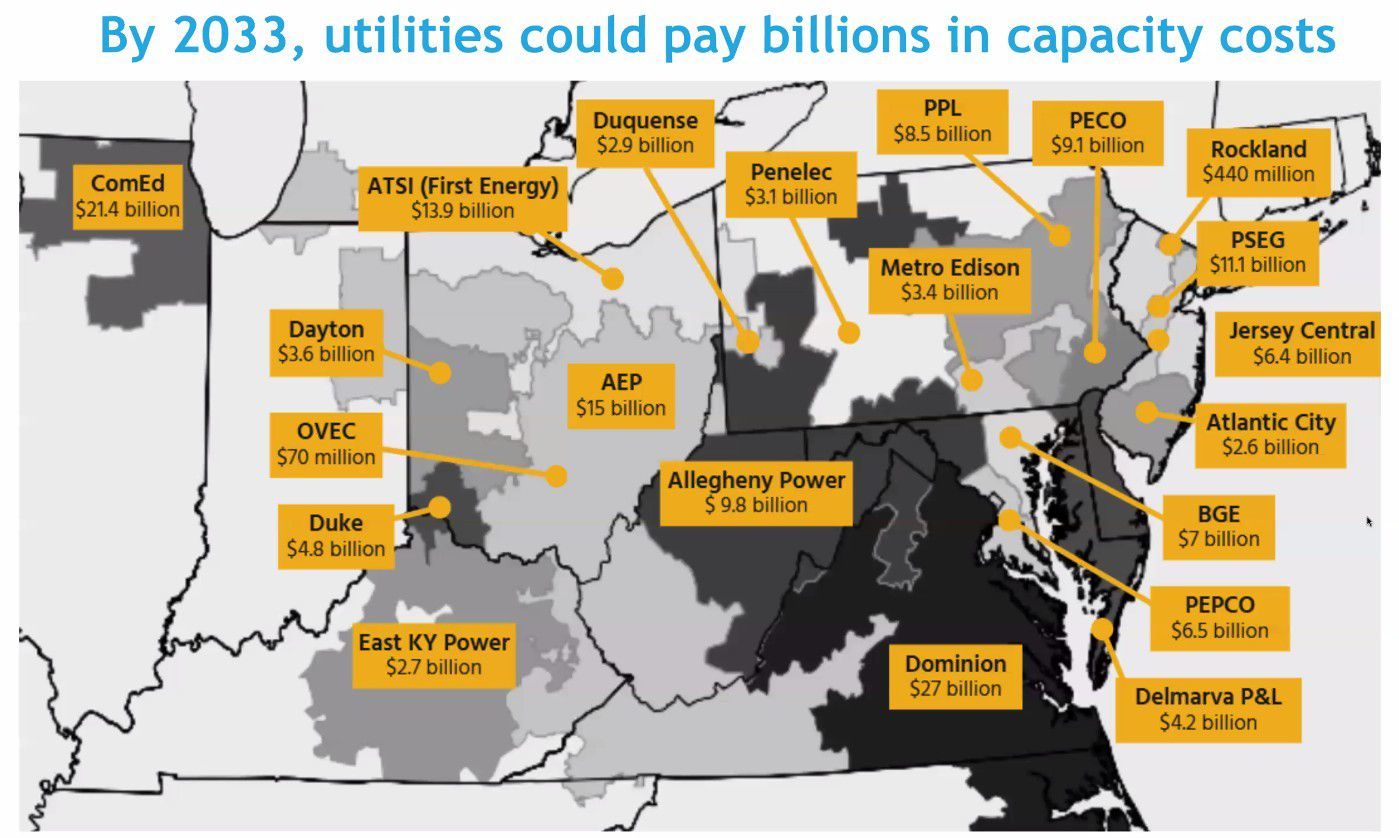
Map produced by The National Resources Defense Council estimates electricity capacity costs to utility companies based on PJM forecasts through 2032.
Why is Gov. Shapiro critical of PJM?
Shapiro and other governors have been sharply critical of how PJM has designed its auction, saying the process lacks transparency.
In a 2024 lawsuit, Shapiro’s office referred to PJM’s decisions as “inept” and responsible for “the country’s most snarled interconnection queue,” in reference to projects lined up for approval to be added to the grid.
After the 2025-26 auction, Shapiro reached an agreement with PJM on a price cap that he said would save consumers over $21 billion and avoid historic price hikes. The cap limited the increase of wholesale electricity payments to power plant owners.
PJM forecasts that data centers will drive a need for more than 30 gigawatts of peak electricity capacity by 2030 — enough to power more than 20 million households, or approximately all the homes in New Jersey, Pennsylvania, Ohio, Virginia, and Maryland, according to the Natural Resources Defense Council (NRDC).
The NRDC says that could lead to another spike in electricity costs through 2033 and cost homeowners and businesses an estimated extra $70 per month.
At the same time, however, officials are also pushing PJM to fast-track data centers.
Late last year, the Federal Energy Regulatory Commission issued an order on so-called colocation that will allow tech companies to plug their data centers directly into power plants.
In January, the Trump administration and a group of governors, including Shapiro, urged PJM to move quickly to boost power supplies and keep bills from rising.
They also want PJM to hold a separate power auction in which tech companies would bid on 15-year contracts to build new power plants. That way, data center operators, not regular consumers, would pay for the power.
Data centers that do not have their own power source and do not volunteer to be cut off from the grid during power emergencies should be billed for the cost of new power plants, they said.
Why do people resist data centers near their homes?
The quick rise of data centers has met stiff resistance from residents who fear the projects will radically alter the character of rural neighborhoods, increase electricity and water costs, and harm the environment.
Developers have submitted applications for at least 20 hyperscale data centers in Pennsylvania. PJM would have to find a way to make sure they can be powered and connected reliably to the grid, or provide their own power.
At least six data centers are being planned or proposed in the Philadelphia region, with some reaching 2 million square feet. Residents have fought the proposals, some of which have run into zoning and planning problems.
Residents of some of those communities are alarmed by a new Pennsylvania House bill (HB 2151), which is backed by Shapiro. It provides a model ordinance designed to speed data center development.
Opponents believe the bill is an attempt by the tech industry to get data centers approved.
“HB2151 would undermine Pennsylvanians’ herculean grassroots efforts to keep dirty data centers out of our communities — it must be stopped,”said Ginny Marcille-Kerslake, an organizer for Food and Water Watch, an environmental advocacy nonprofit.
“This bill pushes Shapiro’s reckless embrace of data centers even further onto communities struggling to grapple with Big Tech’s land, power, and water grab,” she said, calling it a part of “backroom deals” the state is making.
A vote on the bill before the House Energy Committee is scheduled for Wednesday.
What’s next?
Environmentalists and other groups, including some legislators, say a process by PJM to fast-track electricity-producing projects excludes clean energy and gives special treatment to fossil fuel power plants, allowing them to cut ahead in the queue over renewable sources that have waited years to connect to the grid.
That plan calls for changes in PJM policies to bring new power online quickly by providing a streamlined path for state-sponsored power generation projects, improving load forecasts, giving a bigger role in the process to states, and offering ways for data centers to bring in their own power generation while curtailing power in times of system need.
The plan, PJM said, “will also help address the supply-and-demand imbalance that has the potential to threaten grid reliability and is currently driving up wholesale costs that can impact consumer bills.”
Jeff Shields, a spokesperson for PJM, said the imbalance has been created as sources of power generation are being retired without enough new generation coming online to keep pace. At the same time, demand for electricity has increased substantially due to the proliferation of data centers.
“PJM is doing its part to bring new generation onto the system, and any suggestion otherwise is just not true,” Shields said.
He also noted that while PJM does run wholesale power markets, it does not directly set rates for residential, commercial, or industrial customers. Those rates are set by utilities, such as Peco, along with government agencies, such as the Pennsylvania Public Utility Commission.
Jefferson Health is boosting emergency department capacity at Abington Hospital to enable it to receive 100,000 visits annually, up from 80,000 now, the nonprofit health system said Tuesday.
The department, which is also a Level II trauma center, will be named the Goodman Emergency Trauma Center in honor of an unspecified donation from Montgomery County residents Bruce and Judi Goodman. Bruce Goodman is a commercial real estate developer and a longtime Abington board member, Jefferson said.
Jefferson, which acquired Abington in 2015, described the Goodman gift as the cornerstone of a $30 million ongoing fundraising campaign for the hospital’s emergency department.
The project will reconfigure more than 24,000 square feet of existing clinical space and reallocate 10,000 additional square feetfrom a courtyard and a gift shop to the ED to expand capacity from 80 to 116 treatment spaces, Jefferson said.
Also last year, Jefferson announced $19 million in upgrades to the emergency department at Thomas Jefferson University Hospital in Center City. The system also added a 20-bed observation unit in the ED at Jefferson Einstein Philadelphia.