Blog

  • Secret vetting and blocked promotions: Inside Hegseth’s war on diversity

    Secret vetting and blocked promotions: Inside Hegseth’s war on diversity

    WASHINGTON — The Navy’s top leadership believed that Rear Adm. Stephen D. Barnett was by far the best choice to lead the command that oversees the Navy’s bases at home and abroad.

    He had more experience than the other candidates and had successfully managed the aftermath of one of the Navy’s biggest messes, a fuel spill that contaminated an aquifer on a base in Hawaii, sickening thousands.

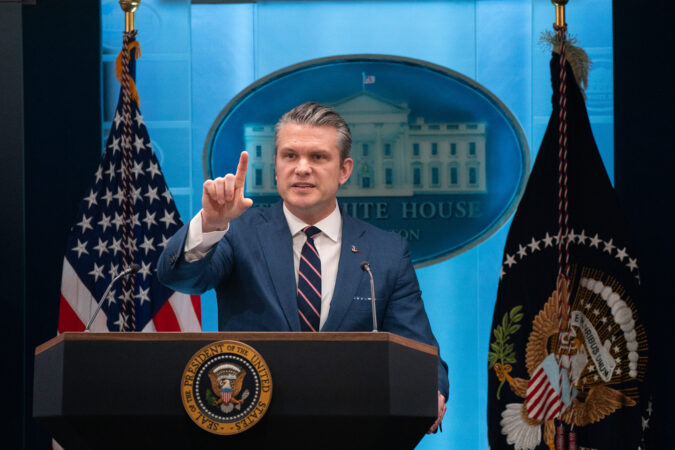
    The final decision this spring fell to Defense Secretary Pete Hegseth.

    To many in the Navy, Barnett’s promotion seemed like a foregone conclusion.

    The officer, however, had a big strike against him. Like other Black military leaders, he had been encouraged by his superiors to help the Navy recruit and retain minority officers, who remain significantly underrepresented in the force. His years-old remarks on the importance of diversity had been flagged in a secret vetting process designed to weed out senior leaders whom Hegseth and his team pegged as a problem.

    Instead of Barnett, Hegseth selected a white officer who was the Navy leadership’s third choice.

    So far this year, Hegseth has blocked the promotions of at least 40 senior officers to general and admiral ranks. About half of those are women or members of minority groups.

    This article, based on interviews with 15 current and former military and administration officials, is a look inside the process Hegseth and his team have used to halt the advancement of senior officers for reasons that have nothing to do with fighting wars or job performance.

    It tells the story of one Black officer — Barnett — whose blocked promotion shocked and angered senior Navy officials.

    The officials discussed sensitive personnel matters on the condition of anonymity. Barnett, who is expected to retire, declined a request for comment. A Pentagon spokesperson did not respond to a detailed list of questions.

    In books and speeches, Hegseth has maintained that the Pentagon’s push over the past decade to build a more diverse force had elevated women and minority officers to senior jobs that they had not earned.

    “When I think about my career in uniform, in almost every instance where there has been poor leadership or people in positions they’re not qualified for, it was based on either the reality or the perception of a ‘diversity hire,’” Hegseth, a former major in the Army National Guard, wrote in his 2024 book The War on Warriors.

    As defense secretary, he has promised to install a new promotion system that will be “ruthlessly meritocratic” and “focused squarely” on “warfighting ability.”

    In practice, though, his approach has made it harder for Black and female officers to get promoted to senior ranks, even when their records are exemplary.

    Such was the case with Barnett. In 2021, he was invited to speak at a Black History Month event at a naval base in Maryland.

    He talked about his career as a flight officer on Navy P-3 Orions, which track enemy submarines. “Just one generation before me, it was nearly unthinkable for a Black person to become a naval aviator,” he said.

    He reflected on his mentors, downplaying the importance of race. “What helped me was people who didn’t look like me,” he said.

    And he spoke about building a force that better represented the nation it serves.

    “As the country becomes more diverse, it makes sense for our military to become more diverse,” Barnett said. “Monolithic organizations cannot and will not survive.”

    At the time, the country was wrestling with the aftermath of the death of George Floyd, an unarmed Black man who was murdered by a white Minneapolis police officer nine months earlier. The Navy had just released a 142-page report with recommendations to remove barriers that had held back high-performing women and minority sailors.

    Five years later, Hegseth was leading the Pentagon. Now Barnett’s remarks were being cited as a reason to deny him a promotion that senior Navy officials said he deserved.

    “It’s Black over white”

    Hegseth has argued that the troops most likely to suffer discrimination in the military are white.

    He traced the problem to the protests and racial reckoning that followed Floyd’s murder. The Pentagon’s generals and admirals, he wrote in his 2024 book, started searching for evidence of institutional bias that did not exist. In the process, he argued, they destroyed the military’s meritocratic culture.

    “It’s Black over white. Female over male. Gay over straight,” Hegseth wrote.

    Internal Pentagon studies told a different story. Nearly a third of Black U.S. military troops reported experiencing racial discrimination, harassment, or both during a 12-month period, according to a survey conducted during President Donald Trump’s first term.

    In his book, Hegseth dismissed such data.

    As secretary of defense, he has fired or sidelined more than two dozen generals and admirals. Among those dismissed were Gen. Charles Q. Brown Jr., the second Black man to serve as chair of the Joint Chiefs of Staff, and Adm. Lisa Franchetti, the first woman to lead the Navy.

    Those ousters were all publicly announced. The extent of Hegseth’s vetoing of generals and admirals selected for promotion has remained secret until now.

    By law, one-star and two-star officers are chosen by promotion selection boards made up of senior military officers. The meetings are so confidential that board members are not permitted to tell others that they are part of the process.

    Last year, Hegseth and his top aides ordered the Army, Navy, Air Force, and Marine Corps to do online searches of the officers selected by the boards, to look for photos, videos, or news articles that might draw Hegseth’s ire, current and former defense officials said.

    The officials undertaking the reviews hoped that if they could show that the officers had been following previous Pentagon policies that Hegseth would allow their nominations to go forward to the White House and Congress for final approval.

    Inside the Pentagon, such material was referred to as “D-ROG,” short for derogatory material.

    Once the reviews led by each military service were complete, Hegseth’s staff conducted their own searches to make sure that the services had not missed or intentionally ignored anything.

    It was not clear whether Hegseth had the authority to pull names off the list. Congress had entrusted management of one-star and two-star promotion boards to the service secretaries, not the secretary of defense.

    The first test case was with an Army one-star promotion board. Last fall, Hegseth ordered Army Secretary Daniel P. Driscoll to remove two Black and two female officers from a 29-person promotion list. Driscoll, citing their decades-long records of exemplary service, repeatedly refused. The standoff lasted months.

    Finally, in March, Hegseth removed the officers’ names from the list and forwarded it to the White House.

    Around the same time, a senior aide to Hegseth accused the Navy, in a handwritten note, of promoting candidates that the defense secretary believed should have been blocked.

    Hegseth’s aides wanted the Navy to form a new promotion board that would choose a new list, Navy officials said.

    The Navy pushed back. Hegseth instead removed nine officers from the Navy’s original 31-person list.

    Soon, Hegseth was pulling officers from nearly every active duty and reserve officer promotion list. Officers who had spoken publicly about the importance of diversity in the ranks were removed from lists. So too were those who had strongly urged their troops to get the COVID vaccine.

    Hegseth has removed a total of 32 officers from Air Force and Navy one-star and two-star promotion lists, defense officials said. The only Black officer and the only female officer were removed from a Marine Corps promotion list. The two Marines’ promotions are in limbo.

    Much of the vetting process has remained shrouded in secrecy. In some instances, officers up for promotions were not told that they had been removed from the lists. Hegseth also has refused to give Congress the names of officers pulled from the lists, officials said. The Senate’s version of the 2027 defense bill would require Hegseth to provide “a written justification and notification” when removing an officer from a promotion list.

    Even the services often are not told why individual officers are vetoed.

    Military officials, though, said they have noticed patterns. Officers who had commanded aircraft carriers or amphibious assault ships have been especially vulnerable. The reason: Those ships have public affairs sailors on board who documented their skippers participating in events related to diversity or the COVID vaccine.

    Now those articles, videos, and photos, posted on the Navy websites, were being used against them, current and former Navy officials said.

    Among those targeted was Vice Adm. Sara Joyner, a three-star fighter pilot who military officials wanted to move to a higher-profile job in the Pentagon.

    Joyner had spoken at events designed to encourage and mentor female aviators and submariners. She also had appeared in a Navy recruiting ad describing her childhood and her trailblazing career as the first woman to command a carrier air wing.

    “One day, everyone will see that I’m not just a girl with a dream,” her character in the 2021 ad said. “I’m a sailor with one.”

    To Hegseth, the appearances and the ad were a big problem.

    Unlike with the one- and two-star ranks, there are no promotion boards for most three-star and four-star generals and admirals. Typically, the service secretaries and service chiefs identify their preferred candidate among two or three choices and present them to the chair of the Joint Chiefs of Staff, who can weigh in. Then the candidates are sent to the defense secretary, who picks a nominee from the shortlist.

    Joyner worked for Gen. Dan Caine, the chair of the Joint Chiefs of Staff, running a team that conducted classified war games and assessments of new weapon systems. Caine urged Hegseth to nominate her for the new position, current and former officials said. He also asked John Phelan, then the Navy secretary, to help persuade Hegseth to reconsider her promotion.

    Their interventions failed. Senior officers who are not promoted are usually expected to leave. The Times was unable to reach Joyner for comment. She retired last fall.

    A high-flying Navy career

    When Barnett joined the Navy in 1991, he never expected he would become an admiral. He didn’t come from a family with a deep history of military service and had not attended the U.S. Naval Academy.

    In 2023, he shared the story of his life and career in an interview with his hometown radio station in Columbia, Tenn.

    Barnett’s interest in the Navy was piqued by one of his fraternity brothers at Tennessee State University, a historically Black college. At the time, he was married with a child. The Navy offered a good salary, adventure, healthcare, and stability.

    “So, one day after thermodynamics class, I joined,” he told the radio host. “I kind of did it on a whim.”

    Barnett, who went by the call sign “Big Daddy,” recalled how much he enjoyed being part of a team. His P-3 surveillance plane had a crew of 11 sailors who flew sorties lasting as long as 10 hours. He rose through the ranks flying more than 250 missions in Iraq and serving in increasingly sensitive commands.

    Then, in 2021, the Navy’s Red Hill Bulk Fuel Facility leaked petroleum into an aquifer in Hawaii that tens of thousands of residents depended on for their drinking water.

    Adm. Samuel Paparo, who was serving as commander of the U.S. Pacific Fleet, asked Barnett to rush to Joint Base Pearl Harbor-Hickam in Hawaii to lead the cleanup.

    “I only need you there for 12 months,” he recalled Paparo telling him. Barnett remained for more than three years, working to decontaminate the aquifer and win back the trust of scared and angry residents.

    In a statement, Sen. Mazie Hirono (D., Hawaii) recalled him as “an important and trusted partner.”

    “He was proactive, communicative, and professional,” she said.

    Barnett’s work fixing Red Hill and experience overseeing three large regional commands made him the Navy’s top pick for a third star and the job running its bases.

    Before senior Navy officials recommended Barnett for the promotion, they searched the internet for anything in his public record that might offend Hegseth. Navy officials hoped that, if they put Barnett’s remarks in context, Hegseth might overlook them.

    Barnett had spoken at a few Black History Month events and talked in interviews about the legacy of service members, like Doris “Dorie” Miller, who became the first Black recipient of the Navy Cross for his heroics at Pearl Harbor. A photo of Miller hung in Barnett’s Hawaii office.

    In 2018, Barnett had appeared at a Navy-sponsored event during LGBTQ Pride month. “Together, we can make the world safer, freer, and more equal for everyone,” he said, according to an article posted on a Navy website.

    His statements were in line with Pentagon policy at the time, the Navy concluded.

    “If one were scrutinizing with extreme sensitivity, the only potential ‘signals’ are those of empathy and inclusivity,” according to an internal review obtained by the New York Times. “His digital footprint is remarkably disciplined and issue focused.”

    Phelan, the Navy’s senior civilian leader, and Adm. Daryl Caudle, its highest-ranking officer, picked Barnett to lead Navy Installations Command. Caine agreed.

    The final decision, though, did not fall to the Navy or the chair. It was made by Hegseth, who decided that Barnett should not advance.

    This article originally appeared in the New York Times.

  • As Juneteenth is celebrated across the U.S., Obama’s presidential center opens in Chicago

    As Juneteenth is celebrated across the U.S., Obama’s presidential center opens in Chicago

    As people gathered across the U.S. to celebrate Juneteenth on Friday, former President Barack Obama and former first lady Michelle Obama welcomed the first visitors to his presidential center.

    The Obamas, joined by former Reading Rainbow host LeVar Burton, also read Where the Wild Things Are to 25 school children at the Chicago Public Library branch inside the center. When the former president read Maurice Sendak’s line about being “king of all the wild things,” Michelle Obama interjected with, “Although there were no kings,” to applause.

    Later, awed guests shook hands with the Obamas against the backdrop of a colorful, 38-foot-tall painting depicting a map of Chicago stretching to the ceiling, inspired by Carl Sandburg’s 1914 poem about the city: “stormy, husky, brawling, City of the Big Shoulders.”

    As the last of the first group of guests passed through, the Obamas quickly exited, and the museum opened its doors to the rest of the visitors.

    Located on a sprawling campus on Chicago’s South Side, the center honoring the nation’s first Black president has been designed to inspire people to make the change they want to see in their own communities. It’s the kind of contemplation that also comes as Americans gathered for Juneteenth, which celebrates the end of slavery in the U.S.

    The holiday marks June 19, 1865, when Union troops arrived in Galveston, Texas, at the end of the Civil War with an order declaring the state’s enslaved people to be free with “absolute equality.” By then, 2½ years had passed since the Emancipation Proclamation declared the freedom of enslaved people in the South.

    “Juneteenth represents not just a commemoration of the end of slavery but it’s also part of the ongoing struggle for absolute equality and that ideal in American life,” said W. Caleb McDaniel, a Rice University professor and author of the Pulitzer Prize-winning book Sweet Taste of Liberty.

    The center’s public opening arrives as a symbolic convergence of legacy and liberation. The nation is deeply divided politically and grappling with renewed questions about the arc of racial progress as the Supreme Court hollowed out the Voting Rights Act, endangering Black political representation in Congress.

    The history of Juneteenth

    This is the fifth year since Juneteenth was designated as a federal holiday by former President Joe Biden, who served as Obama’s vice president. But the celebrations, which began in Texas and then spread across the country, have a rich and long history in Black America, with the day often spent gathering for picnics and cookouts.

    The holiday — a combination of “June” and “nineteenth” — marks the day when U.S. Maj. Gen. Gordon Granger and his troops arrived in the Texas port city with the declaration of freedom in General Order No. 3.

    As the third year of the Civil War neared, President Abraham Lincoln had issued the Emancipation Proclamation declaring the freedom of “all persons held as slaves” in the still rebellious states of the Confederacy. For many, it did not mean immediate freedom but a promise of liberation, to be secured with a Union victory.

    “It really required the force of arms and the success of U.S. armies to enforce the Emancipation Proclamation,” McDaniel said.

    About six months after Granger’s arrival in Galveston, the 13th Amendment abolishing slavery nationwide was ratified.

    Celebrations across the nation this year

    Juneteenth’s birthplace celebrated with a daylong gathering at a Galveston park with music and fireworks, a parade, and a worship service in a historic Black church. Nearby Houston lined up musical artists and a domino tournament at Emancipation Park, established in 1872 by a group of formerly enslaved men.

    Hundreds of other cities across the U.S. announced events over the long weekend, including a parade in Atlanta, a bike ride in Los Angeles, and a festival on Martha’s Vineyard.

    Several cities across the U.S. hosted walks named for Opal Lee, the Texas woman who pushed for years to make Juneteenth a federal holiday. Participants walk 2½ miles to symbolize the 2½ years it took for the Emancipation Proclamation to be enforced in Texas. Lee, known as the “grandmother of Juneteenth,” turns 100 this year.

    Reflecting on a continuing struggle

    Black Texans embraced the date of Granger’s arrival as one to celebrate, even as the Ku Klux Klan was established in Texas by 1868. By the 1880s, “it was difficult to find a significant community in Texas where it wasn’t being marked by African Americans,” McDaniel said.

    “They made it a community celebration, they made it a celebration of not only freedom but also a demonstration of community empowerment and institution-building,” he added.

    Corey D.B. Walker, dean of Wake Forest University’s divinity school, said the holiday offers a way to recognize the nation’s “complex history” and what it means to be a U.S. citizen, especially amid efforts by President Donald Trump’s administration to undermine the retelling of Black history.

    “I think it really reminds people the importance of understanding a fuller, more robust portrait of our nation’s history and the many contributions of many individuals who have contributed to America’s experiment with democracy,” Walker said.

  • Trump administration backs off plan to end ocean monitoring

    Trump administration backs off plan to end ocean monitoring

    WASHINGTON — The Trump administration is abandoning its plan to dismantle a $368 million ocean monitoring system critical to understanding climate change and marine ecosystems, bowing to a bipartisan backlash on Capitol Hill.

    The National Science Foundation had said in May that it would begin this month to remove hundreds of underwater instruments that collect data on coastal flooding, marine heat waves, and other climate and weather events.

    But the agency announced Thursday that it will pause efforts to take apart the system, known as the Ocean Observatories Initiative, while convening an expert panel to determine its future.

    “Effective immediately, NSF will not proceed with further removal or descoping of equipment,” the agency said in a statement.

    The Senate passed a measure Wednesday that would block the government from dismantling the system, with lawmakers in both parties warning that the action would be illegal and would threaten the safety of coastal communities. The Trump administration had also tried to cut the program’s funds the last two years, but Congress restored the money both times.

    In May, the science foundation had said it would send ships to start pulling up instruments anchored to the seafloor off the coasts of Oregon, Washington state, Alaska, North Carolina, and an area between Greenland and Iceland known as the Irminger Sea.

    For the past decade, scientists have used data from these instruments to understand how the ocean is absorbing greenhouse gases from the atmosphere, how marine heat waves could affect fisheries, and how soon a vital ocean current could collapse.

    Fishermen have also checked the real-time, publicly available data on wind and wave conditions before heading to sea. And meteorologists have used these observations to improve forecasts of disasters like hurricanes and tsunamis.

    The National Science Foundation said Thursday that it already had pulled some buoys, sensors, and other instruments from the water off the coasts of Oregon and Washington state, but it was “developing plans to redeploy the equipment after servicing.”

    Edward Dever, a professor of oceanography at Oregon State University who helps manage the instruments off Oregon and Washington, said the agency had removed six of the area’s seven moorings, or deep-sea platforms equipped with sensors. He said finding boats to replace the moorings could take several months.

    “I believe we could have one mooring ready to go before the end of the summer and 1-2 others ready by fall,” Dever said in an email, adding, “Ships are generally scheduled about a year in advance. Scheduling cruises on short notice can sometimes be done, but it is a challenge.”

    The Senate on Wednesday passed the measure to preserve the system by unanimous consent, essentially an agreement by all senators to bypass debate. Though the measure faced an uncertain fate in the House, it was the latest moment when Congress flexed its power of the purse to thwart the Trump administration’s attempts to cut climate and environmental programs.

    The measure was sponsored by Sens. Jeff Merkley (D., Ore.) and Lisa Murkowski (R., Alaska). In an interview Thursday, Murkowski criticized the Trump administration for failing to consult Congress before beginning to remove some monitoring equipment.

    “NSF moved forward on their own, not only unilaterally, but really with no warning, no heads-up,” she said. “They didn’t even bother to check in,” she added, “and that’s where the real foul was.”

    Murkowski said fisheries in Alaska relied on the ocean data to determine how increasing temperatures were threatening certain species. She said other data was crucial to understanding El Niño, the powerful weather pattern that formed this month in the tropical Pacific and could supercharge extreme weather events around the globe.

    The National Science Foundation had said in May that dismantling the monitoring system would save $48 million in operating costs each year. But lawmakers had accused the administration of wasting the $368 million in taxpayer dollars that had funded the installation of the instruments in 2016. And the operating costs represent a tiny fraction of overall government spending.

    “Dismantling the OOI was supreme stupidity,” Merkley said in a statement Thursday.

    Rep. Zoe Lofgren of California, the top Democrat on the House Committee on Science, Space, and Technology, welcomed the administration’s reversal but said she would continue fighting to save the system.

    “This pathetic scheme was illegal,” Lofgren said in a statement Thursday, adding: “My oversight team and I will be following closely what NSF does next. NSF’s next steps must be nothing short of replacing any of the instruments that have already been removed and ceasing all activities to descale until legitimate expert advice has been sought.”

    Backlash had also come from overseas. After the Trump administration announced the plan to dismantle the system, the European Union said it would bolster its own observation of the world’s oceans with an investment of 92 million euros ($107 million).

    Though that move had been planned long before the U.S. retreat, officials in Brussels emphasized the contrast.

    “Extremely worrying signals are coming from the other side of the Atlantic,” Costas Kadis, the EU’s commissioner for fisheries and oceans, said at the time.

    A spokesperson for Kadis did not immediately respond to a request for comment Thursday.

    This article originally appeared in the New York Times.

  • Mangione withdraws emotional disturbance defense in New York case

    Mangione withdraws emotional disturbance defense in New York case

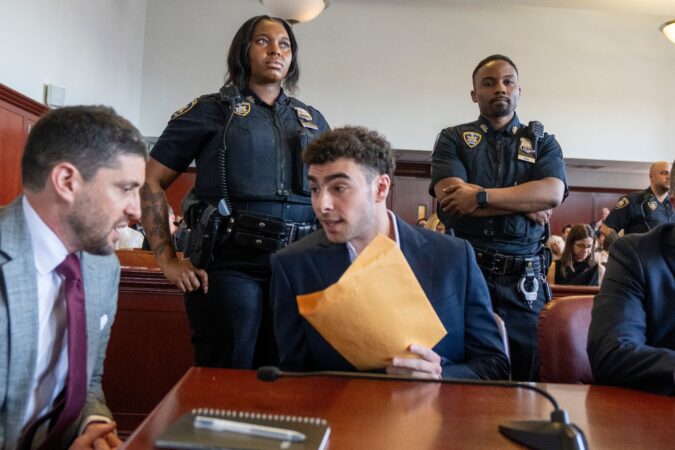
    NEW YORK — In an abrupt reversal, Luigi Mangione’s lawyers said Thursday that they had withdrawn their intent to argue that he was experiencing “extreme emotional disturbance” at the time he was accused of killing a UnitedHealthcare executive in midtown Manhattan in 2024.

    The withdrawal came one day after the New York state judge overseeing the case, Justice Gregory Carro, revealed at a pretrial hearing that Mangione’s legal team had filed a motion in September notifying the court that it was considering the defense.

    In a one-sentence letter, Mangione’s lawyers wrote, “The defense respectfully withdraws CPL [Section] 250.10 notice at this time,” referring to psychiatric evidence.

    Because of the withdrawal, Carro put the documents and transcript that exposed the defense strategy back under seal.

    Mangione, 28, is accused of killing Brian Thompson, the executive, on the morning of Dec. 4, 2024. Surveillance footage showed a man in a hooded sweatshirt emerge from between parked cars, point a handgun affixed with a silencer, and fire at Thompson as he walked toward the entrance of a Hilton Hotel in midtown to prepare for an investor conference.

    Mangione faces federal charges of stalking and multiple state charges, including second-degree murder. In New York state, if defense lawyers can convince a jury that strong emotions resulted in a “profound loss of self-control,” leading to a homicide, the highest charge their clients can be convicted of is manslaughter, which has a maximum sentence of 25 years. The murder charge carries 25 years to life.

    Thursday was the deadline set by Carro for Mangione’s legal team to provide prosecutors with documents related to the psychiatric defense and to explain “what malady it is that this defendant suffers from.”

    The team responded with the withdrawal, and Mangione’s defense strategy now remains publicly unclear. The state trial is scheduled for September, and his federal trial will follow.

    At the pretrial hearing Wednesday, where the potential defense was disclosed, his lawyer, Karen Friedman Agnifilo, made several arguments to keep the psychiatric evidence under seal. She said concealment was essential because “this defense is not available federally.”

    “Mr. Mangione is being prosecuted federally, and this is prejudicial to his federal case about the exact same facts,” she said.

    Joel Seidemann, a prosecutor with the Manhattan district attorney’s office, said at the hearing that his office would “vigorously” fight any request for postponement of the trial’s start date if Mangione’s lawyers continue to explore the extreme emotional disturbance defense.

    Friedman Agnifilo said Seidemann’s statements were “completely unnecessary” because she had not requested a delay.

    As the two lawyers argued, Mangione appeared incredulous throughout the exchange, shaking his head.

    This article originally appeared in the New York Times.
  • FDA panel backs first-of-its-kind flu vaccine using mRNA technology

    FDA panel backs first-of-its-kind flu vaccine using mRNA technology

    WASHINGTON — A new kind of flu vaccine moved a step closer to the U.S. market Thursday as federal health advisers recommended approval of the first made with the same mRNA technology that was key to ending the COVID-19 pandemic.

    The Food and Drug Administration is evaluating Moderna’s new shot, dubbed mFlusiva, for older Americans ahead of the winter flu season. Moderna is seeking full approval for the vaccine’s use in people ages 50 to 64 — along with authorization for use in those 65 and older while it conducts additional testing.

    The FDA’s independent advisory committee evaluated Moderna’s studies of the vaccine and voted unanimously that its benefits appear to outweigh any risks for both age groups. The FDA will consider that recommendation in making a final decision by early August.

    Tens of thousands of Americans die from influenza every year, and older adults are among the most vulnerable. There are various types of flu vaccines already available in the U.S., including three specifically recommended for people 65 and older. But vaccines made with the Nobel Prize-winning mRNA technology are faster to manufacture than other types — something experts say might help if the shape-shifting flu virus mutates in a way that requires suddenly brewing new doses to match.

    “Having this technology available puts us in a better position to be prepared for emerging strains in the future,” said Flor Munoz-Rivas of Texas Children’s Hospital, one of FDA’s advisers.

    In a study of 40,000 people age 50 and older, Moderna’s mRNA vaccine reduced flu cases by about 27% compared with those given another routinely used vaccine brand. In a smaller study of people 65 and older, Moderna’s shot also generated a strong protective immune response compared with a high-dose flu vaccine already recommended for that age group.

    Data showing strong immune reactions “were very compelling,” said FDA adviser Anna Durbin of Johns Hopkins University, adding that “the vaccine looks very promising.”

    Moderna’s Rituparna Das told panelists that the company’s ability to quickly manufacture mRNA vaccines that closely match the latest flu strains could prevent thousands of hospitalizations in older Americans.

    Severe flu cases in the U.S. generally rise in years when the flu shot doesn’t closely match the circulating virus. Moderna officials noted that flu strains for each fall’s vaccines now are chosen several months earlier than the yearly recipe update for COVID-19 shots that mostly are mRNA-based — and there can be a mismatch if the flu virus mutates after the recipe is made.

    At the meeting, FDA vaccine reviewer Timothy Brennan suggested the agency was open to approving the vaccine for older adults ahead of the coming flu season, despite the need for more information about its use in frail seniors or people with weak immune systems.

    If it’s approved, Moderna is planning its required next-step study to include 400,000 people 65 and older, half given the mRNA vaccine and the rest given one of today’s special-for-seniors shots. It’s supposed to repeat that study for two flu seasons.

    Moderna’s data showed no major safety issues, although the shot did cause some temporary reactions including injection-site pain, fever, headache, tiredness, and aches. The latter reactions are common in a variety of vaccines, but occurred somewhat more often than with today’s flu shots. The FDA said that’s typical of mRNA vaccines.

    Those temporary reactions can be a signal that “your immune system is responding,” said Hayley Gans, a Stanford Medicine pediatrician and FDA adviser who stressed it will be important to explain that to vaccine recipients.

    Earlier this year, Moderna’s data was at the center of a highly unusual public dispute as a then-top FDA official blocked the company’s application for its first-of-its-kind shot.

    The embattled vaccine chief at the time, Vinay Prasad, said the company should have compared its shot to a high-dose flu vaccine recommended for seniors rather than a standard-dose brand. It was a sign of FDA’s heightened vaccine scrutiny under Health Secretary Robert F. Kennedy Jr.

    Moderna challenged that decision, noting that FDA staff had approved that main study’s design and citing a separate, smaller study comparing the mRNA shot with a high-dose vaccine for seniors. Days after the spat, the FDA accepted Moderna’s application.

    Moderna also is studying the vaccine in younger adults and plans a separate study in 9- to 17-year-olds this fall.

  • Shining the spotlight on America’s Black Revolutionary Era icons | Shackamaxon

    This Juneteenth edition of Shackamaxon looks at the housing debate in Harrisburg, the recent state Supreme Court decision on skill games, and some Revolutionary Era stories you might not have heard before.

    Erla Dögg Ingjaldsdóttir exits a Santa Monica, Calif., accessory dwelling unit in 2022.

    Preemption the key

    It is increasingly clear that legislators in Harrisburg want to do something about housing affordability in Pennsylvania. What’s less clear is whether they’re willing to take the most necessary step: preempting local governments.

    The recent push to legalize accessory dwelling units, or ADUs, is a classic example of this tension. For the wide coalition of supporters, ADUs — think a backyard apartment — represent an obvious fix to the housing crisis. They allow families to live close to one another without the awkwardness of sharing a kitchen, while empty nesters can monetize their homes without moving and typically rent at affordable rates. There’s also significant demand for them.

    Mario Mascioli, from Acorn Built Homes, says his company gets between 200 and 300 inquiries a month. A recently passed bill in the state House would allow property owners to build one unit per lot and restricts the ability of local authorities to regulate them out of existence.

    It is now up to the state Senate to pass the bill. The Senate’s housing committee has met just twice so far this year. Some Republicans have been reluctant to embrace housing reform, citing a desire to avoid infringing on local control of zoning.

    While the input of local communities will always be part of development politics, housing affordability is a regional issue. Acting as a commonwealth ensures that all of our cities, townships, and boroughs do their share when it comes to new housing — and that no municipality can sabotage ADU construction.

    Additionally, some conservative organizations like Americans for Prosperity have backed the bill. For these groups, property rights and economic opportunity make embracing preemption worthwhile.

    In fact, the coalition to reform housing rules is refreshingly broad. From right-leaning groups like Americans for Prosperity to self-described socialists like State Sen. Nikil Saval, there is a growing understanding that change is essential. This need is underlined by the rapidly increasing costs to purchase a home. In Villanova, even the most affordable options now cost $1 million.

    Unregulated gaming devices known as “skill games” in a barber shop in Hazelton in August.

    Same old slots

    For the entirety of Josh Shapiro’s first term as governor, one question has dominated the revenue side of state budget proceedings. Will Pennsylvania regulate and tax so-called games of skill, and at what rate, and under what authority?

    Proponents of the games argued they are distinct from slot machines and should pay a lower rate. They also want the devices to avoid being placed under the state Gambling Control Board. Critics say otherwise. Some want the machines to be gone altogether, citing their negative impact on communities. Others want them restricted and taxed like slot machines, which can only operate at licensed casinos and hand over most of their revenue to the commonwealth. Efforts by local governments, like Philadelphia’s, to ban the machines have been stymied by the courts.

    At least until this week.

    After years of debate, the state Supreme Court ruled that the devices are actually slots after all, reversing an earlier Commonwealth Court ruling that had maintained there is a difference. This new ruling aligns with my own experience testing the machines. You put in cash, press a button, and hope the symbols align.

    Given this fact, which is now the legal opinion of Pennsylvania, it doesn’t make much sense to tax the machines at a different rate than existing slots. Neither does allowing them to proliferate in every gas station, corner store, and bar that wants them. Like slots, skill games should be limited to operating in designated areas, and access must be controlled by age. They should also be controlled by the same regulators as other gaming devices. While the commonwealth absolutely could use the revenue boost legalizing the machines will bring, the priority should be on mitigating their impact.

    The historian Michael Idriss dressed as Cyrus Bustill, an 18th-century baker who supplied George Washington’s troops at Valley Forge.

    Remembering revolutionaries

    Philadelphia has been known as the home of Ben Franklin and Betsy Ross for centuries and boasts several professional reenactors who bring these Revolutionary Era leaders to life. While both Franklin and Ross have earned their public profiles, they are far from the only local figures worth memorializing.

    Michael Idriss, a former classmate of mine at Temple University who now manages the Museum of the American Revolution’s African American Interpretive Program, has brought another name to light: Cyrus Bustill, an enslaved baker who freed himself, supplied George Washington’s troops at Valley Forge, and helped found the Free African Society of Philadelphia.

    Idriss also helped set up the museum’s Black Founders exhibit, which focused on James Forten, a Black patriot and business owner who funded abolitionist causes.

    Idriss refers to himself as an interpreter rather than a re-enactor and has brought to light a pivotal but until now under-appreciated Founding Father. Bustill’s work has even qualified his descendants, like Joyce Mosley, for membership in the Daughters of the American Revolution, an elite service organization.

    An elder statesman to figures like Forten, Absalom Jones, and Richard Allen, Bustill represents the lesser-known stories of the Free Philadelphians of African descent before, during, and after the revolution. By 1838, there were 20,000 free Black Philadelphians.

    In many ways, their story should sound familiar. After the revolution, many felt that America should live up to its lofty ideals. Pennsylvania passed a law ensuring gradual emancipation, and many people of all races became abolitionists. Then came the backlash. A populist and crass president had come to power and Black stories were buried. It sounds sadly familiar, doesn’t it?

  • More than a championship: Inside La Salle’s ‘super special’ boys’ lacrosse season

    More than a championship: Inside La Salle’s ‘super special’ boys’ lacrosse season

    Two years ago, La Salle College High School fell to Radnor in the PIAA 3A boys’ lacrosse championship. Just last Saturday, the Explorers flipped the script.

    La Salle earned its first state crown since 2019 and sixth overall title after defeating Radnor, 16–9. The Raptors were making their sixth consecutive championship appearance. The victory, however, was the culmination of a season that hardly began according to plan.

    La Salle opened the year 1–2 after losses to St John’s College High School in Washington, D.C, and Malvern Prep. While head coach Jack Forster understood that his team was up against tough competition, he knew they were leaving a ton on the table, especially with a roster consisting of seven seniors who are committed to Division I schools.

    “I remember Coach Forster in the locker room before the [next] game was like, ‘I’m sick of telling people that we almost had them. Let’s go out there and win, and put all those little things together,’” said senior long-stick midfielder Johnny Wachs, who will play at Jacksonville University.

    The Explorers went on go undefeated in Catholic League play and won 21 of 22 games en route to a state final victory.

    “I think we kind of just took [the losses] as learning opportunities,” said senior attacker Will Trymbiski, who scored five goals in the championship game. “We saw the cracks in the sidewalk and knew how to fill them.”

    Forster also believes that his team’s transformation occurred during their spring break trip to Bradenton, Fla. While there, the Explorers picked up a decisive 9-5 win over IMG Academy, but lacrosse was secondary to the relationships developed across the team.

    “Just being around each other all week — and guys getting to know everybody and not just their class, and [upperclassmen] bringing the freshmen and sophomores along. … [The trip] was a big turning point for our team,” Wachs said.

    “Some of the kids I talk to most are underclassmen. I feel like that made us a better team, because there was no separation between classes.”

    This year’s senior class made sure to savor their last season playing together. Trymbiski and midfielder Dylan Malone, who’s heading to Duke in the fall, had played together since second grade, when the two were on the same club lacrosse team.

    “It was super special to finish off the season with him and finish off the season in that way with him,” Trymbiski said.

    This year’s seniors are most proud of the legacy they’ll leave behind.

    La Salle has consistently been a dominant program and hasn’t dropped a Catholic League game in four years.

    Before last weekend, the Explorers last won a state title in 2019, which marked their longest drought since winning their first in 2004. After going the distance this season, the seniors believe that they’ve left behind a structure that will return La Salle to the championship, even without their presence.

    “Leaving a blueprint behind for underclassmen to follow, having leadership where you’re not too strict and not too lenient is where we had a great balance, and we found equilibrium between the two,” said Malone.

    Trymbiski added, “I’m most proud of how the senior leaders handled this team, and hopefully for years to come, we can have a huge [winning] streak for La Salle.”

  • Flu sickens some 160 troops at Lackland Air Force Base in Texas

    Flu sickens some 160 troops at Lackland Air Force Base in Texas

    More than 150 troops at Lackland Air Force Base in Texas have been infected with influenza over the past three weeks — a major outbreak less than two months after Defense Secretary Pete Hegseth said American troops would no longer be required to be vaccinated against the flu.

    The Air Force said in a statement Thursday that the 37th Training Wing, which is at Lackland, “has been managing a localized influenza outbreak among trainees at Basic Military Training.”

    About 160 people have become ill, according to two people familiar with the matter who spoke on the condition of anonymity because of the sensitivity of the issue. More than 36,000 military recruits come through the 37th Training Wing each year.

    The Air Force did not immediately respond to a question about whether the troops who contracted the flu had been vaccinated. The outbreak was first reported by the New York Times.

    People showing symptoms are being isolated and treated, and medical personnel are also monitoring those who were in close contact with sick individuals, according to the Air Force statement. Recruits will return to training once they’re cleared by medical staff.

    The Air Force also said in a news release earlier this week that Keon McDaniel, who was in his sixth week of basic military training, died after experiencing a medical emergency and being transported to nearby Brooke Army Medical Center. The Air Force is investigating whether his death is related to the outbreak, but that review is still underway, a U.S. official said, speaking on the condition of anonymity because of the sensitivity of the issue.

    In April, Hegseth announced he would be rolling back a decades-old mandate requiring U.S. troops to receive the annual flu vaccine. The defense secretary called the requirement “overly broad” and said that soldiers would be able to take the vaccine if they believed it was in their best interest, describing it as an effort to “restore freedom and strength to our joint force.”

    Chief Pentagon spokesperson Sean Parnell said Thursday in a statement that the Department of the Army, Department of the Navy, Department of the Air Force, National Security Agency, and Defense Health Agency had been granted permission to require the vaccines in certain circumstances.

    “The decisions were based upon thorough risk assessments and are designed to maximize operational readiness, lethality, and force generation, while safeguarding at-risk populations,” Parnell said, adding that the military components requesting the exceptions are responsible for their implementation.

    Undersecretary of Defense for Personnel and Readiness Anthony Tata told members of Congress last month that the Pentagon was reviewing exceptions for service members in environments such as basic training, submarines, ships, and Army Ranger School.

    The Times reported Thursday that in the midst of the recent outbreak, the Air Force was granted an exception to the new voluntary vaccine policy, requiring that recruits at Lackland get flu shots. The Air Force did not immediately respond to questions from the Washington Post about whether that exception had been put in place.

    Influenza rates are considered low right now nationally and in Texas, according to tracking by the Centers for Disease Control and Prevention and the Texas state health department. But living in close quarters could exacerbate an outbreak, as flu is spread mainly when people cough, sneeze, or talk.

    The flu vaccine is not a cure-all; it is much less effective in preventing infections than vaccines such as the one for measles, mumps, and rubella, which the CDC says prevents measles in about 97% of cases when patients have received two doses. But multiple studies have shown the flu vaccine reduces the disease’s severity and averts hospitalizations and deaths.

    However, Health Secretary Robert F. Kennedy Jr. has a long history of disparaging vaccines. As health secretary, he stopped a flu awareness campaign and downgraded the recommendation for childhood shots.

    The U.S. military first mandated the flu vaccine in 1945, at the end of World War II — in part to hedge against the threat of biological warfare and because the influenza pandemic of 1918 to 1920 had hindered American troop readiness during World War I, killing more than 26,000 American soldiers. The mandate was briefly withdrawn in 1949 but reinstated in the 1950s.

    Military vaccine mandates were a campaign issue for President Donald Trump, who promised during his 2024 campaign to rehire individuals who had lost their jobs over the military’s requirement that service members be vaccinated against the coronavirus.

    “I will rehire every patriot who was fired from the military with an apology and with backpay,” Trump said at the time, which he went on to do in an executive order in January last year.

  • The blue paint is peeling off the Reflecting Pool

    The blue paint is peeling off the Reflecting Pool

    For days, workers have been trying to rid the Reflecting Pool of algae after a more than $14 million renovation that President Donald Trump said was “done properly” and “could last for 100 years.”

    But now workers have another problem to contend with: peeling paint. On Thursday, a sheet of the pool’s surface — painted in American Flag Blue, a color selected by the president — was seen floating on the north side of the pool. It undulated in the water as curious tourists gathered, some of whom had come to see the green algae.

    At 5:35 p.m. on Thursday, a worker came to remove the sheet of pool surface, telling a Washington Post photographer not to photograph it, despite being on public land.

    The Interior Department did not immediately respond to questions about the paint and why the pool surface is separating. The agency said in a statement on Wednesday that it is treating the pool with hydrogen peroxide and “high-tech nanobubble ozone technology” to effectively cut off the algae’s food supply.

    On Thursday, the Interior Department press office posted on X that “the Reflecting Pool water is crystal clear, and our National Park Service team is now vacuuming up the bottom of some parts of the Reflecting Pool — just like the destroyed Iranian Navy resting on the bottom of the Persian Gulf.”

    Indeed, some areas of the Reflecting Pool were looking cleaner compared with earlier in the week. Workers in chest-high waders stood in the middle of the pool and vacuumed the algae. The neon green-tinted water could be seen pouring out of tubes into nearby drainage grates. The center of the pool, though, was still neon green, and residual algae remained in the cleaned portions of the pool.

    Within days of the renovation’s completion, the Reflecting Pool had more algae in it than at any recorded point in the month of June for at least five years, according to a specialized analysis of satellite data.

    The Reflecting Pool renovation, Trump has said, was prompted by a friend visiting from Germany who called the water “filthy, dirty … disgusting looking.” Algae has been a consistent problem for the pool and quickly reappeared after a $34 million renovation that was completed in 2012.

    But this time would be different, the president promised. He touted his pool-building experience and praised the workmanship of his contractor, who got the job in a no-bid contract.

    “I’m very proud of it,” Trump said in the Oval Office on June 3, saying that his six-week project had finally solved the pool’s yearslong leaking issues. “I’m very good at building things and constructing things.”

    “This was not a paint job,” Trump wrote on Truth Social on June 5. “This was highly sophisticated material, industrial strength, that could last for 100 years, applied by very talented people.”

    On Friday morning, the president reposted an artificial intelligence-generated video showing him filling the Reflecting Pool with what appeared to be critics’ tears (and blue-tinted water) on Truth Social.

    The Cultural Landscape Foundation, a local advocacy organization, sued to stop Trump’s changes to the Reflecting Pool, but the work was completed before a judge could issue a ruling.

    One of the reasons TCLF filed its lawsuit is because the National Park Service did not perform a review as per the National Historic Preservation Act, said Charles A. Birnbaum, the organization’s president and CEO.

    Under that review, they would have been required to consult subject area experts who could “identify potential problems — like algae and exfoliating paint — and, perhaps, suggest solutions,” said Birnbaum in a statement to the Post. “Instead, the Park Service granted themselves a ‘streamlined review,’ which they admitted was done under pressure from ‘White House leadership’ even though the project was ineligible.”

    He concluded: “We can see the result.”

  • Meloni slams Trump’s claim she ‘begged’ for a photo with him as Italy’s top diplomat cancels U.S. trip

    Meloni slams Trump’s claim she ‘begged’ for a photo with him as Italy’s top diplomat cancels U.S. trip

    ROME — The Italian government closed ranks on Friday to slam U.S. President Donald Trump over his claim that Premier Giorgia Meloni had “begged” for a photo with him during the recent G7 summit, a pushback that suggested America’s longtime European ally had had enough of Trump’s boasting and criticism.

    Italian Foreign Minister Antonio Tajani abruptly canceled a planned trip to the United States this weekend, calling Trump’s claims “serious and offensive” toward Meloni and all of Italy.

    Meloni for her part posted a video calling Trump’s claims “completely fabricated” and expressing astonishment that he would invent such things about an ally.

    “Italy and I do not beg,” she said pointedly.

    Trump had made the comments in an interview broadcast Friday on the La7 network. The La7 correspondent had asked Trump about Ukraine, but Trump raised Meloni and the conversation turned to their meeting during the just-concluded G7 meeting in Evian-les-Bains, France. Meloni and Trump were filmed speaking at several moments, including alone on a small sofa.

    According to La7, Trump said Meloni had “begged” him for a photo-op. Trump said he wasn’t obliged to do it but that he felt sorry for her and agreed, La7 said. The broadcaster put a dubbed version of the conversation online, not the original English audio.

    Meloni is astonished and defiant

    Trump’s posturing underscored how his alliance with Meloni — long seen as one of his closest friends in Europe — has frayed over his war in Iran, his tariffs against Europe, and his complaints when anyone disagrees with him.

    He turned on Meloni in April after she refused to support his war in Iran and stood up for Pope Leo XIV when Trump lashed out at the pontiff.

    But Meloni’s strong response on Friday suggested she no longer fears Trump’s verbal attacks — attacks that could actually play in her favor in a country where public opinion of the American president has chilled, said Lorenzo Castellani, a political scientist at Rome’s Luiss Guido Carli University.

    “In some ways this was a favor to Giorgia Meloni, in the sense that she was accused until a few months ago of being a sort of Trump’s vassal in Europe,” he said.

    In her video, Meloni said she was responding to Trump’s claims because “certain things deserve an immediate response.”

    “Donald Trump’s statements are completely fabricated. I am frankly stunned,” she said. “I don’t know why the president of the United States behaves this way toward his own allies. After all, this isn’t the first time this has happened.”

    It was an apparent reference to an interview Trump gave to Italian daily Corriere della Sera in April in which he criticized Meloni’s refusal to back the U.S.-Israel war in Iran. Meloni didn’t respond publicly at the time. By Friday, it appeared she had had enough of his boasts and broadsides.

    “I can only say that it’s a shame he doesn’t show the same resolve toward the enemies of the West, toward the enemies of the United States — toward leaders with whom he, on the other hand, is much more accommodating,” Meloni said Friday. “But there’s one thing he must remember: Italy and I do not beg.”

    The White House did not return an immediate request for comment on Meloni’s remarks.

    Meloni had initially sought to build on longstanding strong U.S.-Italian ties when Trump began his second term, and had positioned herself as a “bridge” between Washington and the European Union. She was the lone EU head of state to attend his inauguration.

    But relations have frayed over the U.S. war in Iran, which Meloni has said was illegal, and Trump’s position on Ukraine, which Italy strongly supports. Trump’s tariffs and strong U.S. support of Israel over its war in Gaza have been other points of contention.

    Italian officials close ranks around Meloni

    By Friday afternoon, solidarity for Meloni had poured in from across the government and political spectrum, and included a call from President Sergio Mattarella, Italy’s respected head of state.

    “Whoever attacks @GiorgiaMeloni attacks all of us,” posted Transport Minister Matteo Salvini.

    Justice Minister Carlo Nordio referenced the sacrifice of American troops in World War II in underlining the harm to U.S.-Italy relations caused by Trump.

    “The thousands of crosses marking the graves of American soldiers who died to free us from Nazi-Fascist dictatorship did not deserve such a painful blow to our fraternal ties,” Nordio said on X.

    Defense Minister Guido Crosetto said he didn’t believe Meloni would ever beg someone for a photo, “not even under threat.”

    Tajani had been due to travel to the U.S. on Sunday to take part in an Italy-U.S. business forum in Miami during which he was to have meet with U.S. Secretary of State Marco Rubio, according to a U.S. State Department announcement of the meeting.

    A ‘fantastic’ friendship frays

    Meloni and Trump had gotten off to a strong start, and the two leaders are ideologically aligned on many issues. As the head of a far-right party, Meloni backs curbing migration and promoting traditional values.

    Weeks before Trump’s 2025 inauguration, Meloni met Trump at his Mar-a-Lago retreat, a visit that she said went “beyond expectations.” It was, she said at the time, “an opportunity to confirm a relationship that promises to be very solid.’’

    In the months after, Trump had praised her repeatedly, as “fantastic,” “incredible,” beautiful, and a friend.

    But stark differences emerged over Ukraine. More recently, Meloni sharply warned against U.S. threats to take Greenland by force, saying she didn’t believe Washington would go so far and that regardless Italy would never support such a move.

    Meloni also received support from an unlikely ally in Europe: Spain’s Socialist Prime Minister Pedro Sánchez, who was on Friday asked about the back and forth on the sidelines of a European Council meeting.

    “About Meloni, first and foremost, all my solidarity,” he told reporters. “Secondly, I not only say this publicly in a response to your question, but also in private during the European Council meeting I offered her all my solidarity against this attack that is not political or personal … I really don´t know how to qualify it.”