Mike Schmidt returned to the Phillies television booth Thursday night, but not to call the game.
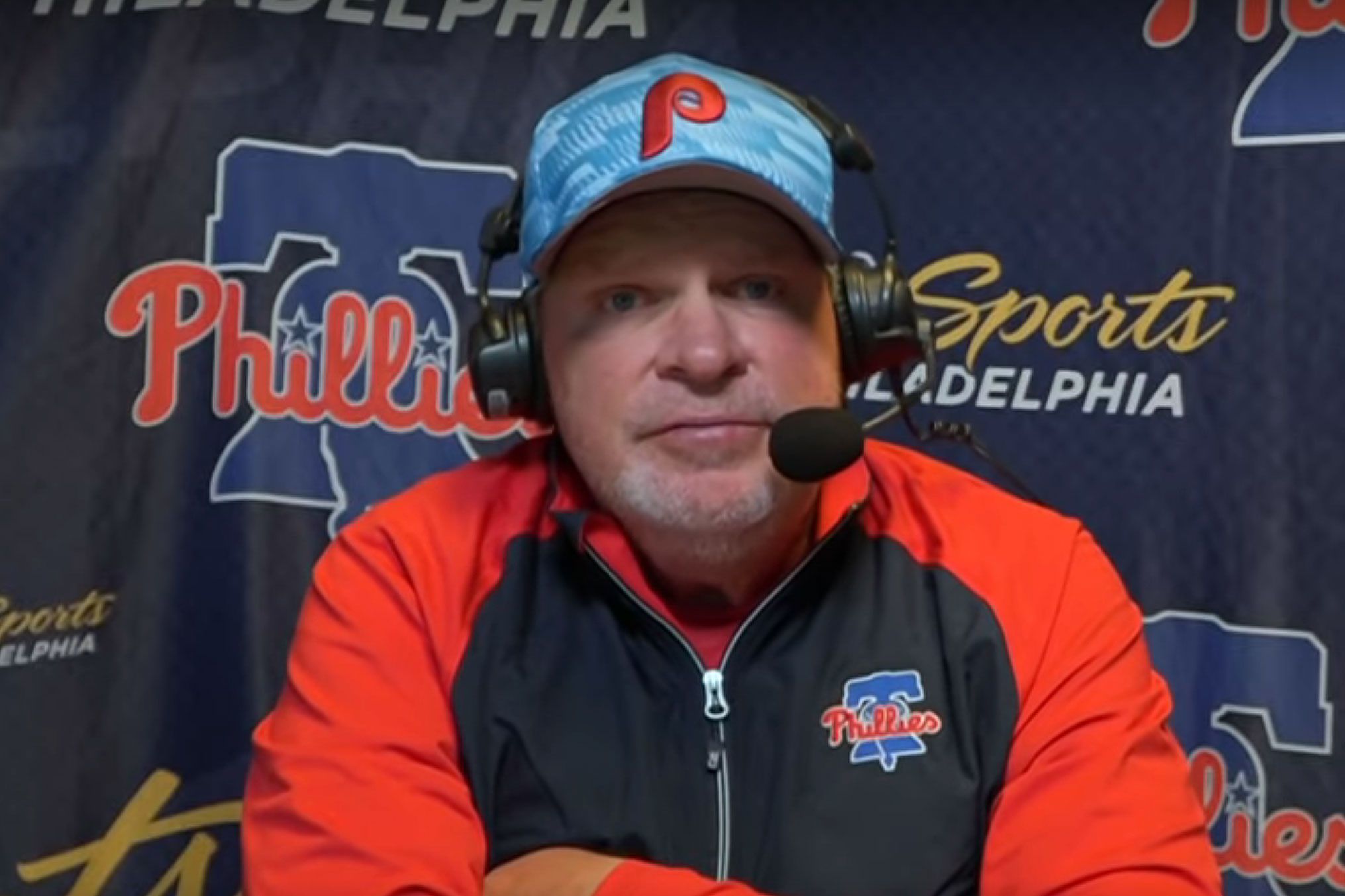
The Phillies legend walked away from NBC Sports Philadelphia this season after 12 years as a part-time announcer, but jumped back in the booth Thursday night to spend the fourth inning with Tom McCarthy, John Kruk, and fellow Hall of Famer George Brett.
It was a fascinating way to spend 20 minutes, especially considering the many ways Schmidt and Brett are linked. Two of the best third baseman in the history of the game, taken one behind the other in the 1971 MLB draft. Brett had 1,596 career RBIs, while Schmidt had 1,595 (Brett “hired someone to go back through his career and find an RBI” Schmidt once jokingly claimed).
And of course, there’s the 1980 World Series, where the Phillies defeated the Royals and Schmidt was named MVP, which Brett said was “hard to swallow.” They were both named the respective MVPs of their leagues that season, with Brett ending the season with a batting average of .390.
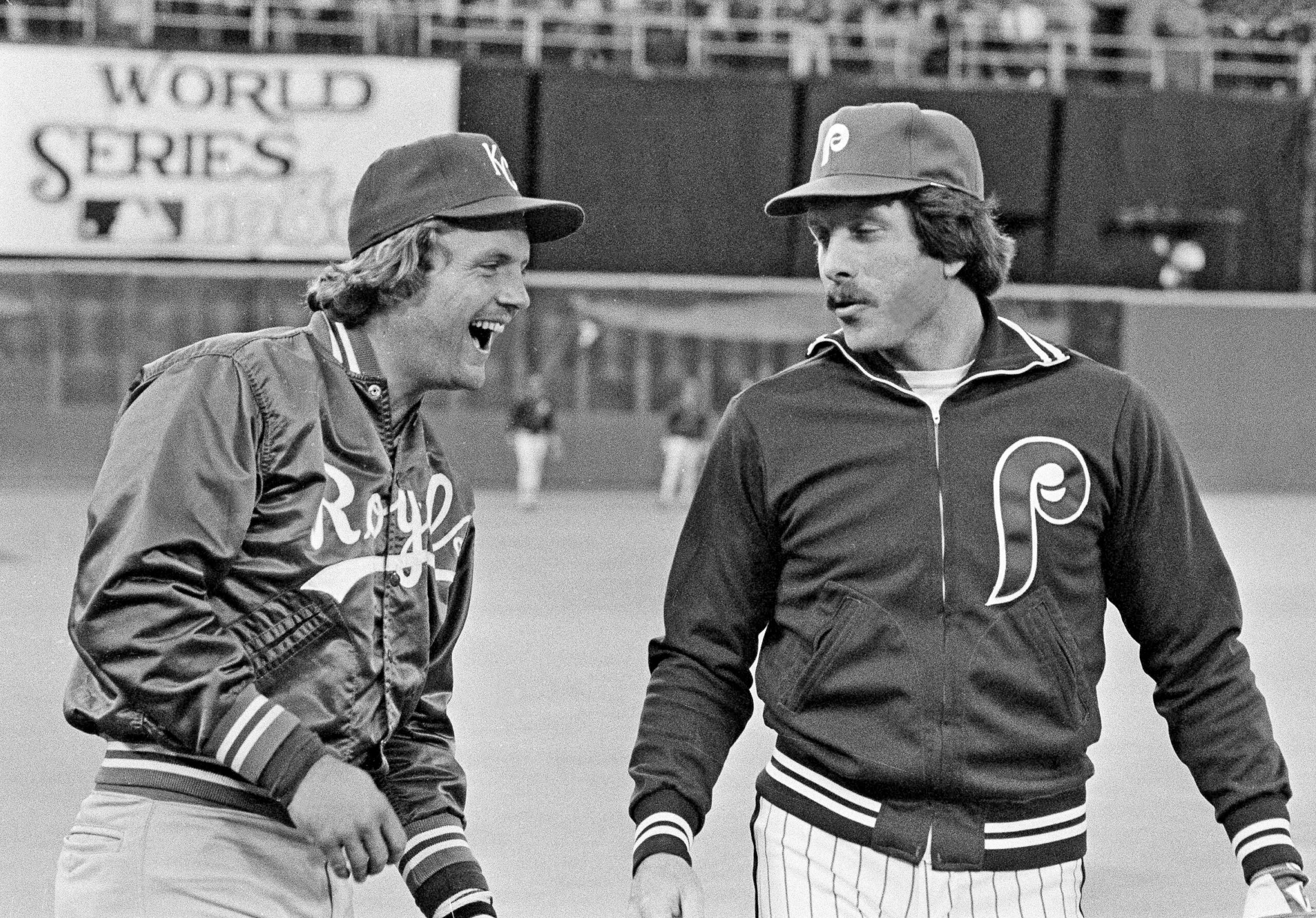
George Brett and Mike Schmidt, seen here ahead of Game 1 of the 1980 World Series.
“By the way, I had .260 in the bag,” Schmidt joked. “I went 0-10 in the last series and dropped down to .250.”
“I feel so bad for you, Mike. You only had 50 home runs that season,” Brett shot back.
For the record, Schmidt ended the 1980 season with 48 home runs and 121 RBIs.
Schmidt and Brett compared stats, busted chops, and shared a life-long friendship borne through intense competition on the field.
“I hated him. I didn’t like him at all,” Brett said, noting Schmidt beat him “every time I played against him.”
At one point, Phillies announcer Ben Davis, positioned in the dugout during the game, chimed in to note that between Schmidt, Brett, Phillies manager Don Mattingly, and Mets announcer Keith Hernandez, there were 31 Gold Gloves and 9,723 hits in the building.
“Who’s that talking?” Brett jokingly replied before taking a shot at himself.
“They always say you got 3,000 hits. I say, ‘No, I made 7,000 outs,’” Brett said, turning to Schmidt. “How many outs do you think you made?”
“Well, I know I made 7,000 strikeouts. I mean, I can count those,” Schmidt said.
The two even joked about their current roles. Brett serves as the Royals’ vice president of baseball operations, while Schmidt complained he can’t get a title with the Phillies.
“John Middletown, if you’re listening, give Mike a title,” Brett said. “I’m Mike Schmidt, and I own this stadium.”
So why was Brett in town for a Phillies-Mets game? To help Schmidt promote his “Play Sun Safe” skin cancer awareness campaign, something he’s been passionate about since being diagnosed with melanoma in 2013. As part of his partnership with the Phillies, 12 sunscreen stations have been placed across Citizens Bank Park during games.
As interesting as the pairing and the history was, the broadcast did lose focus of the game at times. Thankfully, McCarthy and company refocused after Derek Hill drove in Bryson Stott to tie the game in the bottom of the fourth.
Phillies head to national TV, but Kruk will still be around
John Kruk will jump to NBC Sunday to call the Phillies on national TV.
The Phillies have Friday night off, but NBC Sports Philadelphia won’t be broadcasting the team again until Monday.
Saturday night’s game will air on Fox, with Joe Davis and John Smoltz calling the game and Ken Rosenthal reporting from Citizens Bank Park. Chris O’Connor, the brother of Pennsylvania State Police Corporal Timothy O’Connor, who was shot and killed during a Chester County traffic stop in March, will throw a ceremonial first pitch.
NBC will take over for Sunday Night Baseball, with Kruk back on the network to broadcast the game alongside play-by-play announcer Jason Benetti and former Mets pitcher John Franco.
While Benetti is the voice of baseball on NBC, the network decided to turn to a rotating crew of analysts to call each game, one representing each team on the field. It’s largely a response to the biggest complaint networks hear when broadcasting baseball games — fans just want to hear their local announcers.
It’s the second game Kruk has called for NBC this season, though the first — an April loss to the Atlanta Braves — only streamed on Peacock. Hopefully this time Kruk will be a bit luckier for the Phillies. Having Zack Wheeler (6-1, 2.01 ERA) on the mound should help.
The Phillies will be back on Peacock July 5 when they take on the Pittsburgh Pirates, but they won’t be alone. Peacock will exclusively stream 13 baseball games that day as part of an event NBC is calling “Star-Spangled Sunday.”
window.addEventListener(“message”,function(a){if(void 0!==a.data[“datawrapper-height”]){var e=document.querySelectorAll(“iframe”);for(var t in a.data[“datawrapper-height”])for(var r,i=0;r=e[i];i++)if(r.contentWindow===a.source){var d=a.data[“datawrapper-height”][t]+”px”;r.style.height=d}}});
Phillies news
Andrew Painter has a 1-8 record and 7.06 ERA, and opponents are batting .404.
Vineland’s public school teachers are having an easier timewith the question of what to wear to work — at least for the final days of the school year.
In a move to boost morale in the South Jersey school system and make teachers’ lives easier this spring during a hectic testing period, the district eased its dress policy to allow denim jeans until the end of the school year on June 25.
Teachers love it and hope it will continue in September.
“It’s one small way to make the world of work a little friendlier,” said Vineland Education Association president Louis Russo, a social studies teacher. “It’s one small thing off of their shoulders.”
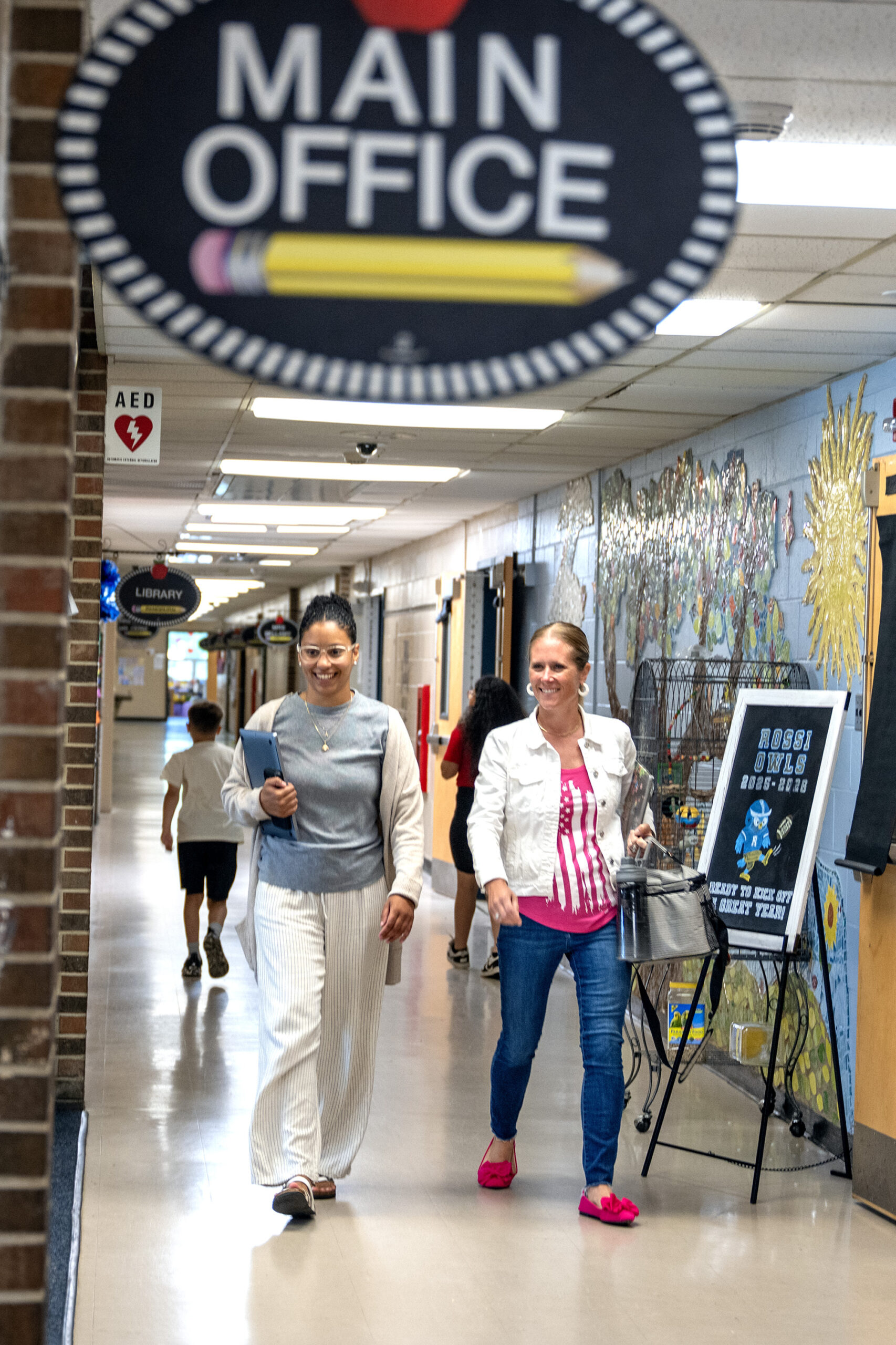
Teachers Andrea Ruiz (left) and Elaine Petrini (right) at Rossi Elementary in Vineland on June 9. The teachers are allowed to wear jeans until the end of the school year.
School board president Cedric Holmes said the Cumberland County district notified employees when they returned from spring break in April that they could wear jeans any day of the week under a pilot program.
Holmes said there had been rumblings among staff because the district — the largest in Cumberland County, with 11,000 students — had to extend the school year to make up snow days. Vineland‘s June 25 last day of school isamong the latest in the region.
The months following spring break are among the toughest with students undergoing standardized state testing, Holmes said. There are also end-of-the year field trips and outings when it makes sense to allow more relaxed clothing, he said.
“It was important to the board that staff felt that we saw the stress of all of that of this as a practical way to give a morale boost for the end of the year,” Holmes said.
Teachers typically dress a bit more formally for school.According to Vineland’s policy, female teachers must wear skirts, slacks, skorts, or dresses with blouses or sweaters, or school uniform. The skirt, skort, or dress should not exceed three inches above the knee.
Male staffers can wear suits or slacks with jackets and ties, sweaters, school uniform, or sports or dress shirts. Deemed unacceptable for both are sneakers, flip-flops, bedroom slippers, combat boots, and work boots. There are exceptions for teachers attending field trips or who work in specialized areas such as health and physical education or arts.
The district also has a uniform policy for students, but Holmes said that has been relaxed and the board also plans to reexamine that policy.
New Jersey’s 600 school districts set their own policies for staff and students.
Steve Baker, a spokesperson for the New Jersey Education Association, which represents 200,000 teachers and support staff, said the union supports the efforts in Vineland “to develop policies that help create a positive learning and working environment for students and staff.“
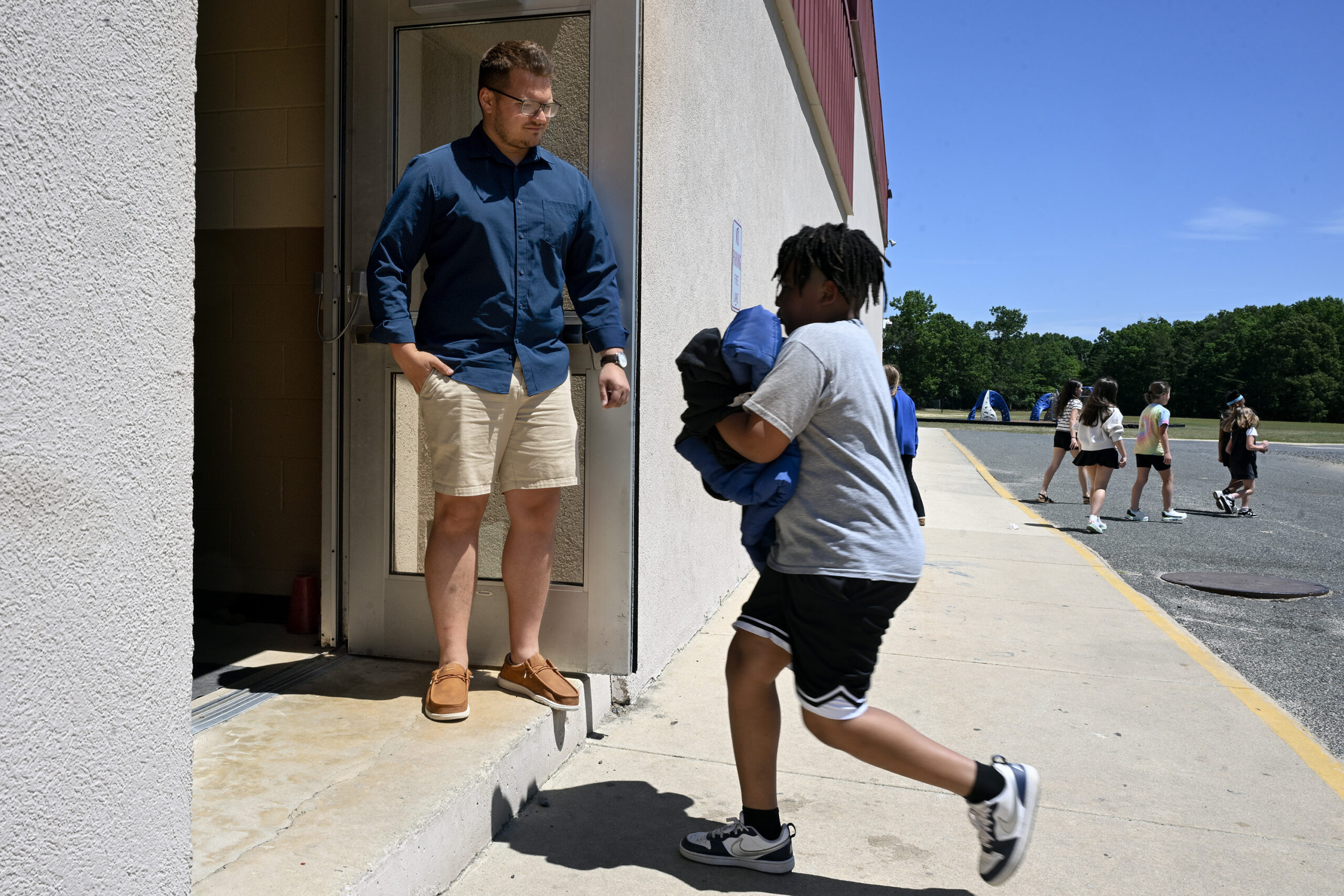
On a busy morning last week at Anthony Rossi Elementary in Vineland, third-grade teacher Jeffrey Martine stood in front of the class dressed in khaki shorts, a button-down blue dress shirt, and slip-on loafers. As an added bonus, it was a dress-down day, which allowed teachers to wear casual attire beyond jeans.
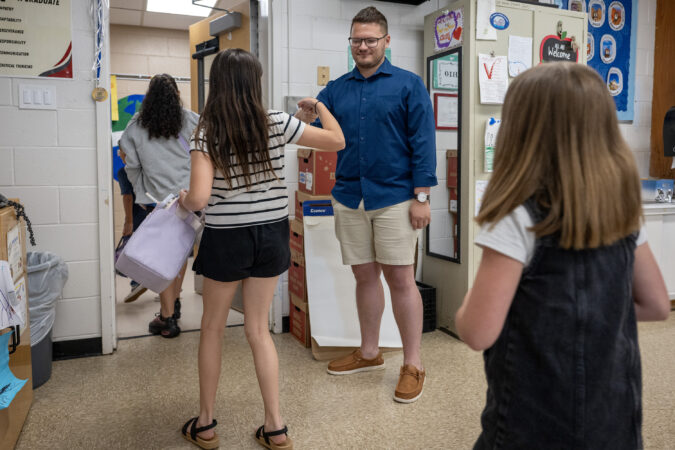
Jeffrey Martine, a teacher at Rossi Elementary in Vineland, greets a student at the school last week.
“If you do your job well, you have to be able to move,” Martine said. “I’m all about comfort.”
Students in Martine’s gifted and talented class were spread around the room working on a project in small groups. Some sat at desks making posters, while others were stretched out on the floor.
“I don’t think professionalism and comfort are mutually exclusive,” Martine said. “Teachers should be judged more on how they interact with their students than the pants they select.”
Holmes acknowledged the dress code was outdated and revisions are needed. The board plans to review the changes implemented this spring and may allow teachers to wear jeans during the new school year, he said.
“It was time for a change,” said Kaitlynn Rossi, a long-term substitute teacher. “People don’t dress like that.”
Teacher dress codes have evolved nationally over the years, especially during the pandemic, when more casual attire was the norm.
Based on responses from teachers around the world, the website We are Teachers in 2024 compiled a list of “16 Ridiculous Dress Code Rules for Teachers You Won’t Believe Are Real.” The list included prohibiting hats, capri pants, pants with pockets, UGGs, hoodies, or dark underwear.
In Philadelphia, where classes ended last week, there is no system-wide dress code for staff. Arthur Steinberg, president of the Philadelphia Federation of Teachers, which represents about 14,000 teachers, counselors, nurses, secretaries, and other workers, said employee dress typically does not come up as an issue.
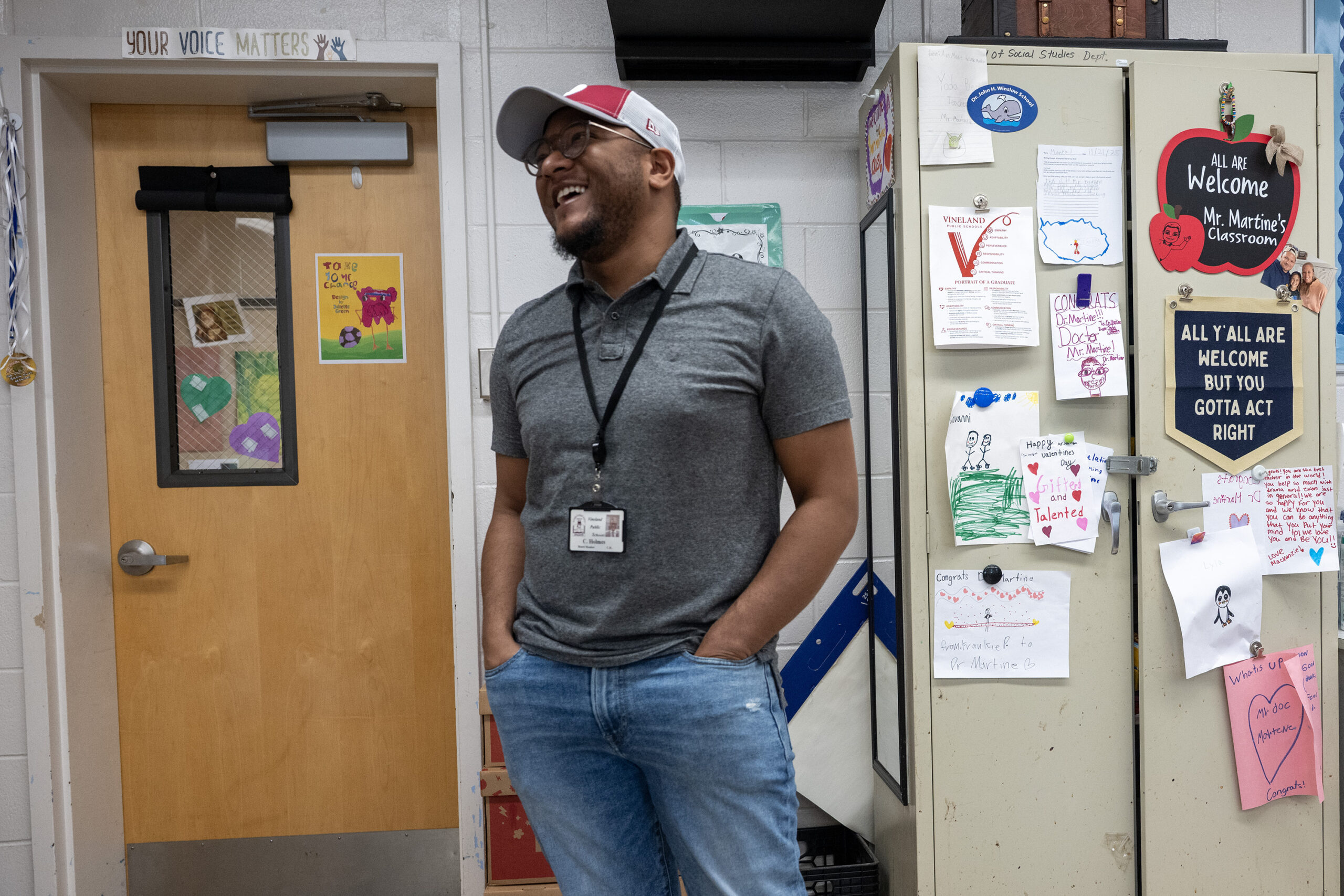
School board president Cedric Holmes at Rossi Elementary in Vineland last week. Holmes said the teacher dress code policy was relaxed in an effort to improve morale at the end of the school year.
Holmes said teachers have responded well to the changes in Vineland and there have been few infractions, like torn or ripped jeans.
Before Vineland implemented the pilot dress code, teachers were allowed to wear jeans only for special days. The schools sponsor fundraisers that allow teachers to pay $2 to wear jeans. Students are allowed to wear jeans on dress-down days determined by their school principal, and they do not have to pay.
Fourth-grade teacher Andrea Ruiz said dressing more casually helps her students see her differently. A sign in her classroom says: “Be the best version of you.” She enjoys sitting with students on the carpet in her classroom or playing kickball on the playground.
“We’re meeting them where they are,” said Ruiz, who was wearing a gray T-shirt and striped pants. “It’s definitely something different for us.”
Teacher Kaitlynn Rossi with students at Rossi Elementary in Vineland last week.
Timothy Purnell, executive director of the New Jersey School Boards Association, said a decision as simple as allowing jeans can have an impact on the learning environment.
“If jeans support a positive environment during testing, that’s a local call we respect,” Purnell said.
Russo believes a less-stringent dress code will help attract and retain younger teachers amid a national teacher shortage. He wants them to still dress in a manner that gets respect from students.
“We just have to find the right balance,” Russo said.
Staff writer Kristen A. Graham contributed to this article.
Popular Main Line bakery The Buttery is officially opening its doors in Bryn Mawr this weekend, marking the third location in a growing collection of cafésowned by husband-and-wife duo John and Silenia Rhoads.
Known for its sourdough breads, homemade pastries, and seasonal dishes, The Buttery describes itself as “part village bakery, part coffee shop, and part scratch kitchen.”
The Rhoadses opened the first Buttery location in Malvern in 2015 and have since expanded into the Ardmore Farmers Market and now Bryn Mawr, at 836 W. Lancaster Ave. The Buttery previously had a satellite location at the Malvern train station, which closed in December.
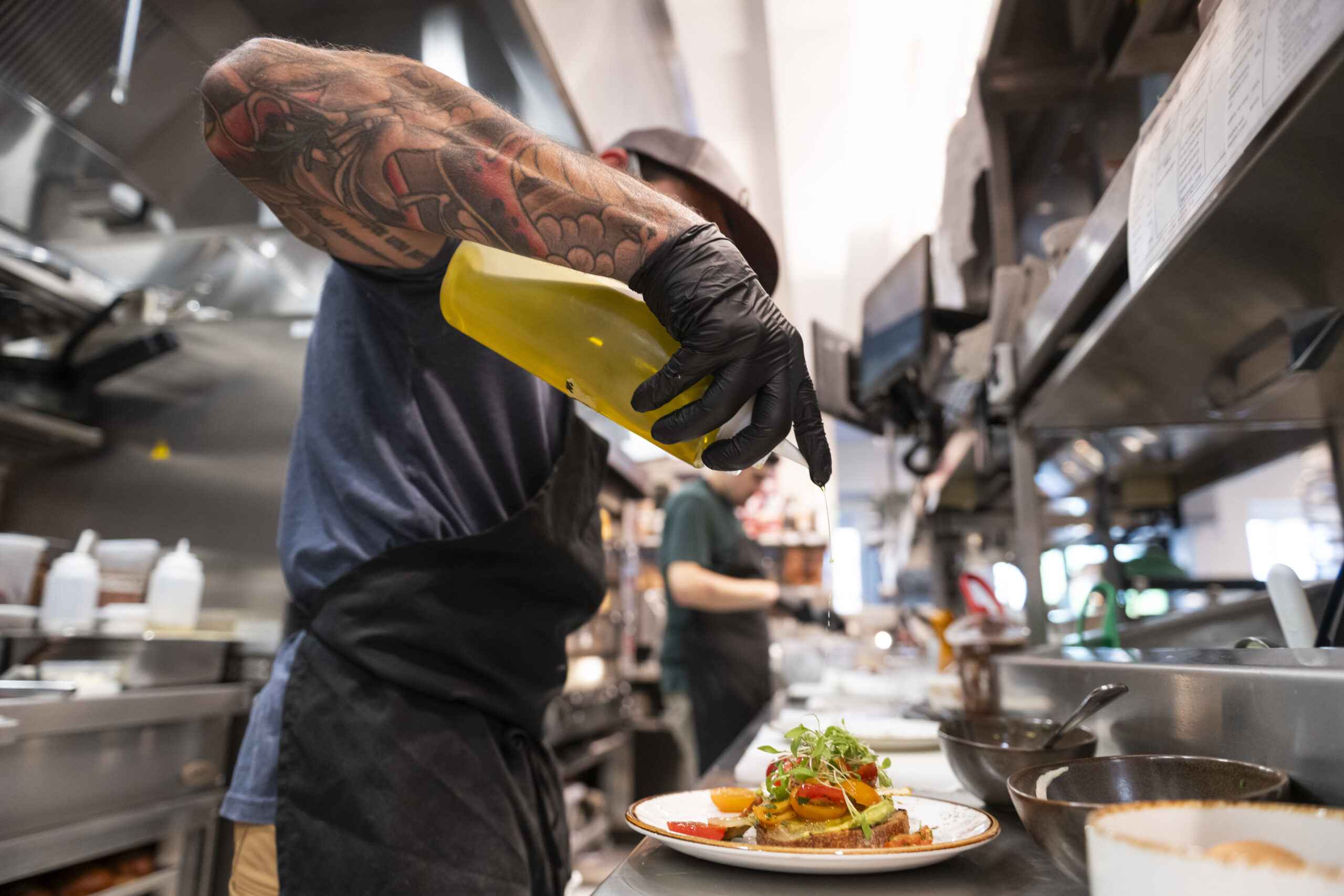
Vinny Petraglia, culinary operations director, drizzles olive oil on the avocado toast at The Buttery in Bryn Mawr.
Joli Ridenour, The Buttery’s community manager, said customers have been asking the bakery to expand for years. When they opened in Ardmore in October, patrons were over the moon about not needing to drive to Malvern to get their beloved kouign-amann and sourdough.
John Rhoads grew up in Devon, and he, Silenia, and their three teenagers now live in Paoli, so finding another outpost on the Main Line just felt right.
Bryn Mawr felt like “a good center point on the Main Line,” John Rhoads said.
“We’re so excited to be in this town. There’s such a hustle and bustle,” Silenia Rhoads said, adding that she’s already seen a “sense of community.”
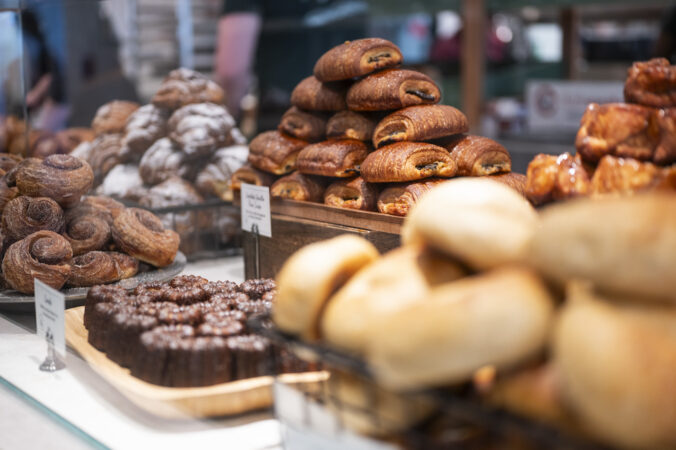
At the bakery’s soft opening on Wednesday, loaves of sourdough and baguettes peeked out from behind long glass cases stuff with butter croissants, lemon currant scones, and fresh bagels. Packaged cookies, branded T-shirts, and bags of homemade granola lined the walls, and customers stopped to chat with the Rhoadses.
The 82-seat café is spacious, laid out with long communal tables, corner booths, and scattered two- and four-tops. The Buttery team wanted multiple kinds of seating options to allow for different dining experiences, from neighbors grabbing a quick coffee to families coming in for a long lunch.
Silenia (left) and John Rhoads, owners of The Buttery, at their new location in Bryn Mawr. Said Joli Ridenour, The Buttery’s community manager, “We want people to feel really at home and welcome and like they’re walking into an old friend’s house.”
“We want people to feel really at home and welcome and like they’re walking into an old friend’s house,” Ridenour said.
The Buttery’s Bryn Mawr location is serving its full breakfast and lunch menu, which includes bagels, quiches, sandwiches, open-face tartines, salads, and speciality Passenger coffee and tea drinks. The Rhoadses said they are hoping to expand to dinner service, as they have in Malvern, in the fall or winter.
Ridenour said the bakery always tries to source locally, milling flour out of local grain and purchasing eggs from Highspire Hills Farm in Glenmoore. Almost everything is made in-house, including roasting their own meat for roast beef sandwiches.
What to order? The Buttery’s staff says you can’t go wrong. The sablé cookie, a buttery French shortbread cookie, is a signature dish. Silenia Rhoads recommends the seasonal panzanella salad, made with fresh smashed cucumber, asparagus, homemade croutons, and a potpourri of herbs. The breakfast sandwich, serviced with harissa aioli on an everything brioche bun, is also a fan favorite.
Turkish eggs with homemade naan at The Buttery in Bryn Mawr.
The Buttery has been able to expand in large part due to a bakehouse the Rhoadses opened in Norristown a year ago. With more space and a centralized food preparation location, the bakehouse has “enabled us to set our sights on more,” John Rhoads said.
The couple said a Northern Liberties location will open later this year, and further growth is on the horizon for 2027.
The Buttery’s Bryn Mawr grand opening will kick off on Saturday. The bakery will debut a special Bryn Mawr-only pastry, a lemon poppy kouign amann baked with house-made creamy poppy seed spread and lemon sugar. The first 50 customers will get a branded tote bag and the first 100 will get a sablé cookie, on both Saturday and Sunday.
The Buttery will be open daily from 7 a.m. to 5 p.m., with kitchen service until 3 p.m.
This suburban content is produced with support from the Leslie Miller and Richard Worley Foundation and The Lenfest Institute for Journalism. Editorial content is created independently of the project donors. Gifts to support The Inquirer’s high-impact journalism can be made at inquirer.com/donate. A list of Lenfest Institute donors can be found at lenfestinstitute.org/supporters.
“This is the day he will die,” thought Roy Reed, a reporter for the New York Times.
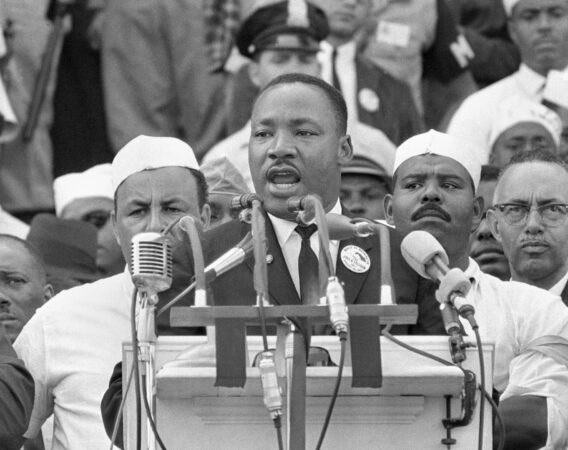
On June 21, 1966, Reed was standing behind Martin Luther King Jr., who was surrounded by about 300 hostile white people in Philadelphia, Miss. King had led a delegation from the Meredith March Against Fear to commemorate the second anniversary of the killings of the civil rights activists James Chaney, Andrew Goodman and Mickey Schwerner.
King was trying to navigate a rocky path full of obstacles: the threats of southern racists, a frayed alliance with President Lyndon B. Johnson and dissent within the civil rights movement.
His response showcased his greatest gifts — and his actions on June 21 painted a nuanced picture of what made King so influential. Much of our historical memory of the civil rights leader deifies him, a marker of the nation’s racial progress. It also, however, dramatically oversimplifies the man and the movement he helped lead. It cloaks the divisions within the civil rights movement, along with King’s struggle to harness different factions and tactics toward his goals.
The enshrinement of King also prevents Americans from seeing just how he married the ideals of American democracy with the righteous struggles of Black Americans. It eludes how he exhibited both spiritual power and political acumen. Looking at King’s actions during the Meredith March, by contrast, spotlights three of his most important roles in the civil rights movement: as an icon of moral courage, as a lodestone for Black activism and as an architect of sustainable ideals for a social justice movement.
All of these qualities were on display on the extraordinary day of June 21, 1966.
The Meredith March began on June 5 with one man, James Meredith, who had planned to walk from Memphis to Jackson, encouraging voter registration. On the second day, he got shot, and though he survived, the major civil rights organizations transformed his quest into a mass march.
By the time King gathered with the activists in Mississippi two weeks later, the big story was Black Power. On June 16, Stokely Carmichael introduced the new slogan as a message of self-determination. It implicitly criticized King’s bedrock values of nonviolence and racial integration.
On the morning of June 21, King met the marchers at a Black church — and he looked scared, with good reason. Philadelphia, in west-central Mississippi, was off the main route of the march. Instead of protection from the state police, the marchers were under the jurisdiction of Cecil Price, the deputy sheriff at the center of the federal conspiracy trial the three civil rights activists’ killing.
During their procession to Philadelphia’s town square, the marchers were jeered, spat upon and sprayed with hoses. The air was thick with danger.
Surrounded by his flock and his foes, King steeled himself. “I am not afraid of any man,” he proclaimed. “We are going to work together for freedom. We are here to save America.”
Despite the hostile crowd, King didn’t duck the heinous violence that the march was commemorating. He remembered the movement’s martyrs. “I believe in my heart that the murderers are somewhere around me,” he intoned.
“They’re right behind you!” shouted a white boy. The mob hooted. Price smirked.
As the activists left, the mob tossed eggs, rocks and bottles. Scuffles broke out. The marchers reached the Black district just before some white toughs arrived, brandishing knives, wrenches and ax handles.
Made By History sponsors. FOR USE ON MADE BY HISTORY STORIES ONLY.
Confronted by murderous hatred, he was a model of resolve and principle. His fortitude reassured his fellow marchers and it projected the movement’s integrity to the broader public.
After his speech in Philadelphia, King boarded a tiny, twin-engine plane for Sunflower County, in the Mississippi Delta, to speak at a voter registration rally.
“It was like a messiah walking through the community,” recalled local organizer Charles McLaurin. Alongside the legendary Fannie Lou Hamer, McLaurin had led a 10-mile march from the town of Sunflower to the county courthouse in Indianola.
There, King revealed his magnetic power. Wherever he went, Black folks followed. Because he was in Indianola, over 300 people attended the rally. As was the case throughout King’s life, his reputation attracted a big turnout and his charisma compelled political participation. More than any other figure, he drew people into the southern civil rights movement.
King’s day was not yet done. He got back on the plane, headed for Yazoo City, on the southern edge of the Delta, where the Meredith Marchers had stopped for the night.
King arrived for a nighttime rally in a public park. Radical activists gave speeches promising bloody retaliation if white people attacked them again. They won roars from the large crowd. Black Power, with its vows for self-defense and independence, struck emotional chords that exposed the widening fault lines in the movement.
Yet, even as the crowd cheered the rhetoric of Black militants, it reserved its greatest adoration for King. To reach the podium, he waded through the masses. Old ladies jostled each other to touch him, while weathered farmers pressed their palms into his.
And as this tumultuous, grueling day turned into a sweaty, bug-filled night, King painted a vision for the movement. He understood the need for Black political power. He acknowledged that Mississippi was afflicted by oppression. But segregation and violence were plagues on everyone, Black and white. To survive, to thrive, Black people needed a “coalition of conscience.”
“Now,” he said, “I’m ready to die myself.” In his classic style, he weaved together the rhythms of the pulpit with the ideals of American democracy.
“When I die I’m going to die for something, and at that moment, I guess, it will be necessary, but I’m trying to say something to you, my friends, that I hope we will all gain tonight, and that is that we have a power.” He recalled the movement’s great triumphs and celebrated their destiny to redeem the nation. In the process, he touched people’s souls.
By insisting on his ideals, and by summoning his greatest oratorical powers, King maintained his slippery grasp on the march’s message. In its final days, the Meredith March encountered more violence, including a tear gas attack in the town of Canton. Yet amid the cries of Black Power, the marchers maintained the discipline of nonviolence. They arrived in the capital city of Jackson for the largest civil rights demonstration in the history of Mississippi, signaling the resonance of mass protest in the lives of Black Americans
On the Meredith March, King illustrated why his birthday is a federal holiday, a memorial in the National Mall’s Tidal Basin celebrates his legacy and nearly 1,000 streets bear his name. He was neither a saint nor the movement’s single leader. But he exhibited the qualities of leadership, in the service of forging a genuine democracy.
King demonstrated profound courage, setting a meaningful example. He pulled followers into his orbit, articulating principles that resonated with people. And he insisted that a crusade for justice demanded the best of its advocates, investing their cause with the deepest meaning.
Throughout his glorious and tragic journey with the civil rights movement, King shared these blessings. Sometimes he did it all on one single day.
Made by History takes readers beyond the headlines with articles written and edited by professional historians. Opinions expressed do not necessarily reflect the views of The Inquirer.
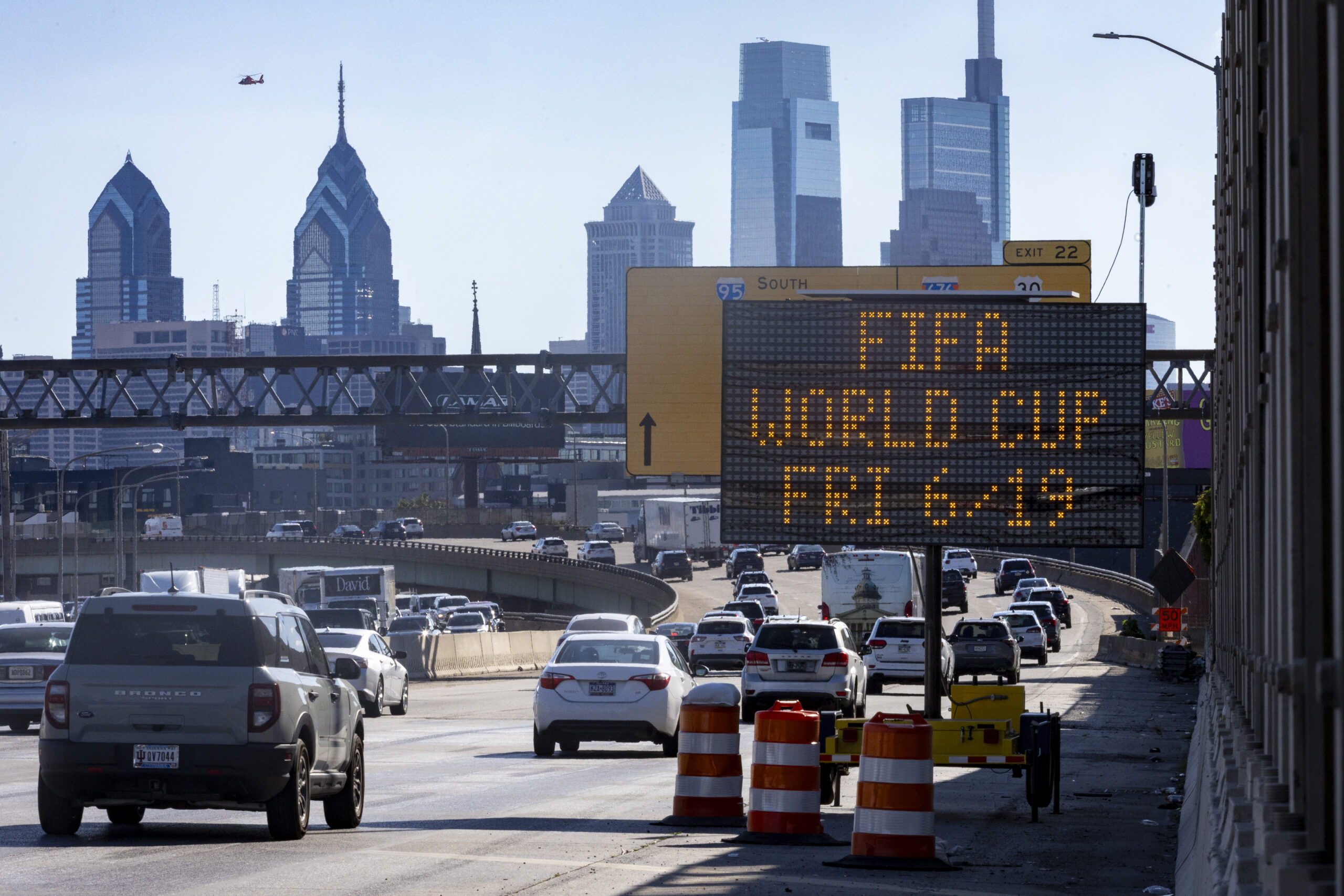
Haiti’s June 19 World Cup match against soccer’s most decorated nation, Brazil, held at Philadelphia’s Lincoln Financial Field, encapsulates the contradictions at the heart of FIFA’s flagship event this summer.
A traffic sign on I-95 informs drivers of expected traffic delays to occur because of the World Cup match — Brazil is set to face Haiti — on Friday at Lincoln Financial Field in Philadelphia.
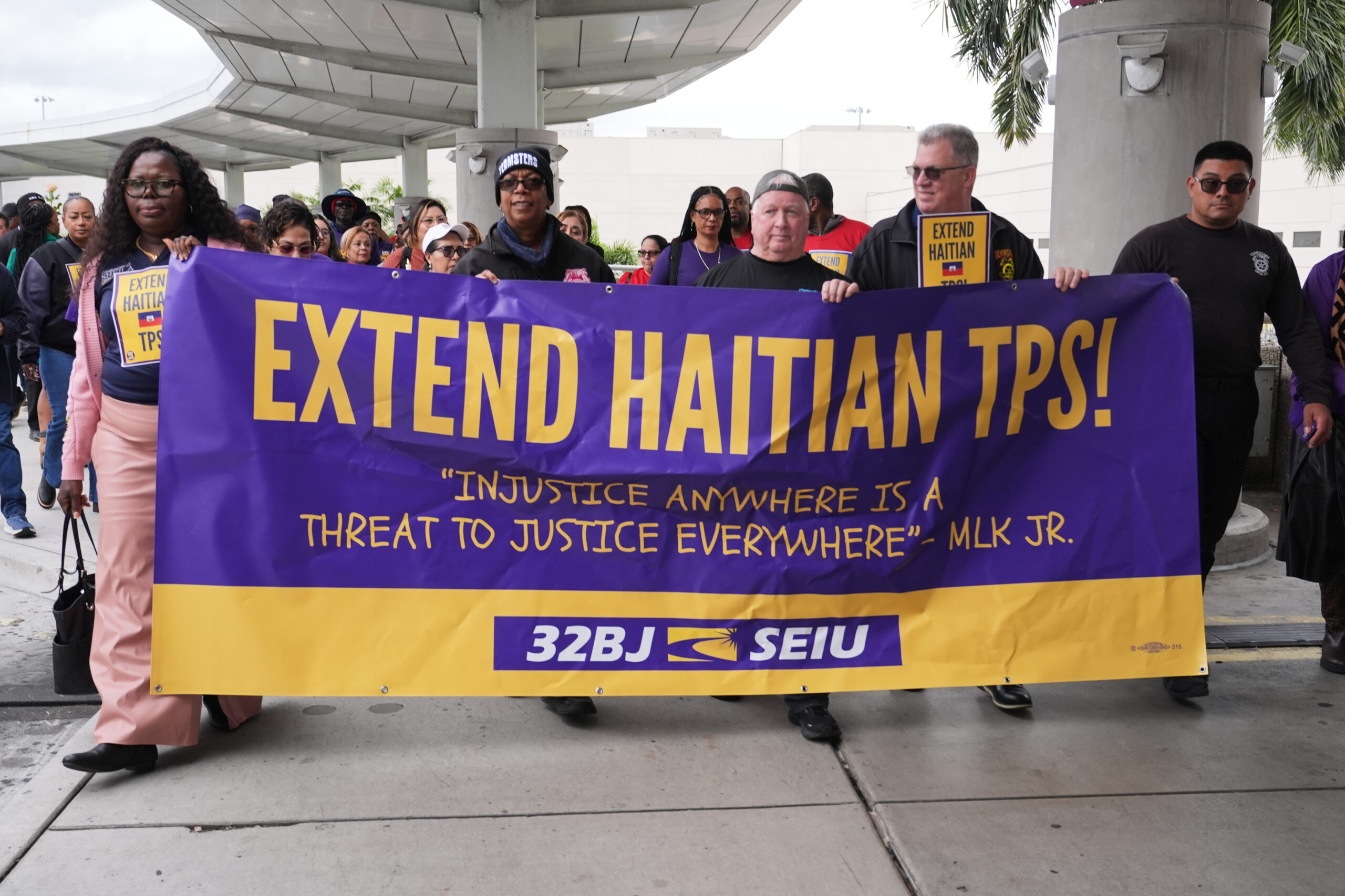
The World Cup — and Haiti’s first appearance in it since 1974 — is a welcome distraction from the humanitarian and security crisis at home. For many Haitians, however, the Trump administration’s cruel immigration policies, including its effort to terminate this Caribbean country’s temporary protected status (TPS) — a form of protection against deportation to dangerous situations — casts a shadow over the tournament.
Since a catastrophic 2010 earthquake, Haitians have dealt with one disaster after another, including a cholera epidemic, devastating hurricanes, increasing violence, and chronic political instability.
The current crisis, during which criminal groups have consolidated control over most of the capital, Port-au-Prince, and expanded to at least four more of Haiti’s 10 regions, has killed thousands, displaced more than 1.5 million people, and led to widespread sexual violence.
Even before the World Cup began, the odds were stacked against Haiti’s “Grenadiers” — a nickname that pays homage to the revolutionary soldiers who fought for Haiti’s independence in 1804. The squad managed to top their regional qualifying group for the tournament despite not being able to play a single game on home soil; their national stadium is in an area controlled by criminal groups. It was a remarkable feat — one that ended Haiti’s 52-year wait to participate in another World Cup, and became a source of immense pride for Haitian soccer fans around the world.
Haiti fans cheer during the World Cup Group C soccer match between Haiti and Scotland in Foxborough, Mass., near Boston, on June 13.
For the coming weeks, Haitians will be celebrated on the world stage and their players welcomed with open arms, but their fans may find their paths to the stadiums — or to the United States itself — inaccessible.
In Philadelphia, many by now will have already seen proud Haitian fans sporting their team’s blue and red jerseys. But while the World Cup inspires hope and pride for Haitians living in the U.S., the Trump administration’s immigration policies, including the possibility of U.S. Immigration and Customs Enforcement presence at or near World Cup venues, may elicit anxiety, fear, and exclusion.
Haiti is one of 39 countries affected by U.S. government travel restrictions that prevent fans from supporting their countries in person this summer. Although the ban includes an exception for athletes, Woodensky Pierre, the only Haitian player based in the country, missed a vital pre-tournament match after his U.S. visa wasn’t approved in time. He landed at Miami airport shortly after the game began and was later embraced by his teammates on the pitch at the final whistle.
It is the attempts to terminate Haitians’ temporary protected status, however, that pose the most serious human rights concerns for Haitians who are already in Philadelphia and other cities.
Under U.S. law, the Department of Homeland Security can designate a country for this status when conflict, environmental disasters, or other circumstances temporarily prevent its nationals from returning safely, or when the country cannot adequately handle their return.
TPS protects beneficiaries from removal, allows them to apply for work and travel authorization, and prevents Homeland Security officials from detaining them solely based on their immigration status.
Haiti first received this designation after the 2010 earthquake. Since then, and because conditions in Haiti itself have not improved, hundreds of thousands of Haitians in the U.S. have built lives, raised families, and become essential contributors to local communities, including in Philadelphia. Approximately 330,000 Haitians now have TPS in the United States.
Haitian TPS holders in the U.S. need stability, protection, and a durable path forward, writes Robbie Newton.
The Trump administration is now trying to strip Haitians of this protection.
Despite clear evidence that the human rights crisis in Haiti is worsening, the Department of Homeland Security insists that “country conditions have improved to the point where Haitians can return home safely.” A Supreme Court decision on the legality of ending this protection is expected this summer.
Residents flee their homes to escape clashes between armed gangs in Port-au-Prince, Haiti, in May.
Terminating the protection would have devastating consequences, exposing hundreds of thousands of Haitians to detention and possible return to the “cataclysmic” situation unfolding at home, where they would face serious risks of kidnapping, extortion, and other abuses by criminal groups.
For the 15,000 Haitians protected by TPS in the state of Pennsylvania, making it to the World Cup and cheering on their team represents a powerful symbol of hope and unity at a precarious time for the community.
Other soccer fans who root for the underdog will very likely cheer on Haiti as it makes its way through all of its Group C matches (and, hopefully, into the knockout stage). But support for Haiti should extend beyond the World Cup. The U.S. government should renew temporary protected status for Haitians.
Haiti’s Grenadiers deserve their place at the World Cup. For Haitian TPS holders in the U.S., the stakes go far beyond the tournament.
Robbie Newton is a senior coordinator and in the sport and human rights team at HumanRights Watch.
Shriners Children’s Philadelphia was not cited by the Pennsylvania Department of Health for any safety violations between April 2025 and March of this year.
The specialty children’s hospital is part of Shriners Hospitals for Children, a Florida-based nonprofit that operates health facilities across the country.
Here’s a look at the publicly available details:
July 15, 2025: Inspectors came to investigate a complaint but found the hospital was in compliance. Complaint details are not made public when inspectors determine it was unfounded.
I remember the four-month-old boy, unmoving in his hospital bed, who had suffered severe brain damage from a sleep accident. This four-month-old boy had slept on the couch with a parent. When morning came, he was lying between couch cushions and not breathing.
Paramedics revived the baby and took him to a hospital. The baby survived, but his brain went so long without oxygen that he would likely never grow up to walk or talk. He was the first of too many babies that I have seen who sustained severe injuries, or have died, from suffocation or Sudden Infant Death Syndrome (SIDS).
Parents visiting in pediatrician’s offices in the last 30 years have probably heard us talk about “safe sleep.” We see a lot of misinformation and confusion about sleep practices these days, with social media rife with images of sleeping babies in hazardous conditions. Serene captions misleadingly encourage improper positioning and unsafe environments.
Many people who get their health information online are unaware of what “safe sleep” means.
The American Academy of Pediatrics (AAP) defines safe sleep as having babies sleep solo on their backs on a firm, flat mattress. Loose blankets, pillows, toys, or other soft objects should be kept out of the sleep space. In pediatric clinics, we call these recommendations the “ABCs” of safe sleep: Alone, on their Back, in a Crib.
We know this advice saves lives. After the AAP recommended that babies be placed on their backs to sleep in 1992 rates of SIDS plummeted by over 50% in 10 years. Yet this progress has plateaued. SIDS remains the leading cause of death in children under 1.
Frances Avila-Soto is a physician in her second year of residency training at the Children’s Hospital of Philadelphia.
As pediatricians, we still have work to do to prevent SIDS deaths. For starters, we must address persistent racial and ethnic disparities.
Black and American Indian/Alaska Native infants throughout the 2010s were more than double or triple as likely to die of SIDS, compared with white infants. The reasons are complex. Low socio-economic status, unemployment, and housing instability are associated with higher risk for SIDS. These issues often stem from systemic racism.
We can’t trace how many SIDS deaths result from online misinformation. That makes me all the more committed to talking about the importance of safe sleep practices.
At my primary care clinic in South Philadelphia, I see patients from a wide range of cultural and ethnic backgrounds. I often hear questions about babies sleeping from families flooded with conflicting information from social media or their peers.
Here are some common concerns, and what I share to educate families:
“I’m worried that if they’re not next to me, I won’t notice if something is wrong.”
Avoiding bedsharing doesn’t mean your baby can’t be near you. The AAP recommends sleeping in the same room as your baby for at least the first six months. This means you can keep an eye on them and comfort them easily, but they still have their own space where they can sleep safely.
“Our babies have always slept in bed with us. It’s part of our culture.”
It is true that cultures have different sleep practices. But the sleep environment can also be different in many countries — including bedding/mattresses, the house, environmental exposures, and other factors. Here in the U.S., we know from decades of research that following the ABCs is what’s safest for your baby.
“My baby will only sleep in my arms. They won’t sleep when I put them in the crib.”
Babies are constantly learning new skills, such as rolling, eating, and babbling. They can learn to sleep on a new surface. It’s all about establishing a routine. You can still comfort and hold your baby until they fall asleep, then move them to their own sleep surface. If you must share a bed with your baby — or worry that you may fall asleep while your baby is in your bed — make sure to remove any pillows, sheets, blankets, or any objects that could cover your baby’s face.
Your pediatrician is not judging you by asking how your baby is sleeping. We know how challenging sleep is with infants. We want your baby to be safe and to minimize harm from confusing or misleading advice.
Discuss questions about safe sleep with your pediatrician. You can also visit CHOP’s Pediatric Health Chat for more information on safe sleep and children’s health.
The views expressed in this article are those of the authors and not necessarily those of CHOP. This information is not intended to provide medical advice, diagnosis, or treatment. Always consult a qualified healthcare professional regarding any health or medical concerns.
Frances Avila-Soto is a physician in her second year of residency training at the Children’s Hospital of Philadelphia, with a focus on leadership development in issues involving equity, advocacy, and policy.
At 102, Cyrus Bloom does not pretend that old age is pleasant.
“It’s hard,” he said during a recent interview at his Center City apartment. He can barely walk, even with a walker, and he lives with the constant fear of falling. His short-term memory is shot, too. Walking into a room to get something, only to forget what he went there for, is an everyday occurrence. “It’s terrible,” he said matter-of-factly.
But his long-term memory? That’s a different story.
Bloom can still recall names, places, and details from more than 80 years ago, when he was one of the 16.4 million Americans who served in World War II. He can rattle off the details of his first assignment as a meteorologist with the Army Air Corps and the names of the bomber bases that dotted the coast of England where he was stationed. He remembers everything about “the very big war,” as he called it, even though he spent most of his life not talking about it.
Bloom, who was born in Newark, N.J., was a sophomore at Columbia University when he enlisted with the Army Air Corps and began training as a meteorologist. It was March 1943. He received his commission as a second lieutenant on June 6, 1944, the same day the Allied forces landed on the beaches of Normandy.
The invasion, Bloom noted, had originally been scheduled for June 5. But bad weather over the English Channel prompted Gen. Dwight D. Eisenhower to postpone it for a day. Bloom had no role in that decision; he had only just completed his training. But the delay demonstrated how heavily the Allied war effort depended on accurate weather forecasts.
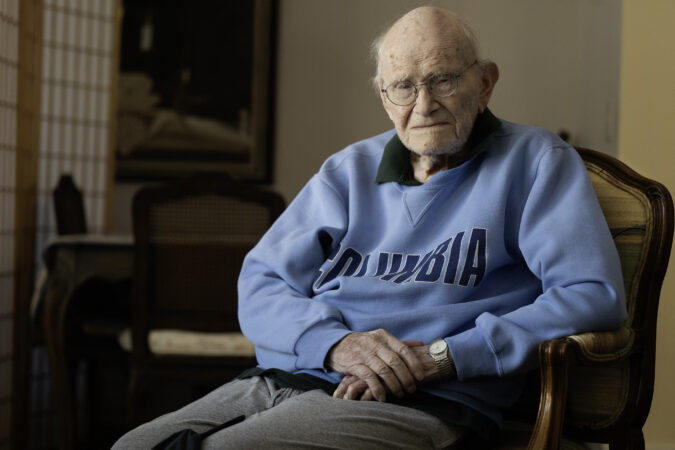
Cyrus Bloom, 102, is photographed at his home in Philadelphia on Tuesday, June 9, 2026. Bloom worked as a meteorologist during World War II.
Bloom’s first assignment took him to Bergstrom Air Force Base in Austin, Texas. There, he and the other meteorologists gathered reports on temperature, wind, and air pressure from weather stations across the country. They plotted the information on maps and drew isobars — lines connecting places with the same air pressure — by hand. Those lines revealed high- and low-pressure systems and helped meteorologists predict how the weather would move.
In September 1944, the Army sent Bloom overseas. Like so many young soldiers, he had never been abroad before. Today, he remembers every step of the journey. He left Washington on a military transport plane bound for Europe. The first stop was Goose Bay, Labrador, in northeastern Canada, where the plane refueled.
“It was just wilderness,” Bloom recalled, “very rugged country.”
From there, he flew across the Atlantic to Prestwick, Scotland, then continued south to London. The Army later sent him to the Cotswolds for additional training in British forecasting procedures. He remembers the region for its thatched-roof houses.
His final assignment took him to East Anglia, on England’s eastern coast. The countryside was crowded with airfields used by the U.S. Eighth Air Force, which carried out bombing missions over Germany. Bloom was stationed at Bovingdon, code-named Earl’s Court. His job was to brief bomber crews on the weather they could expect en route to Germany. His briefings were based on forecasts prepared at Eighth Air Force headquarters, which was called Pinetree.
“Everything had a code name,” Bloom said.
That world of code names, weather maps, and high-stakes forecasts is the subject of Pressure, a new film about the meteorologists who advised Eisenhower in the tense days before D-Day. In the film, a meteorologist stands at the center of a decision that could determine the fate of the war. But Bloom describes his own wartime work in much plainer terms. Asked whether it felt consequential, he said he did not think about it that way.
“I was simply doing what I was supposed to do,” he said.
After the war, Bloom returned to college and then attended Columbia Law School. His college roommate was also a veteran. So was almost everyone in his law school class. But none of them talked about the war. Bloom and his roommate didn’t even know what the other one did in the war.
“Everybody knew that they had served,” Bloom said, “but nobody knew how they served.”
The silence continued as Bloom built a life after the war. He became a litigator and, in 1962, married Nanette, who is 13 years younger. They raised two sons in South Orange, N.J. But Bloom rarely spoke to his family about his service. His son Josh said they didn’t hear much about it until Bloom was around 90, and they interviewed him about it.
“It’s funny,” Bloom said of the veterans he knew. “They had the biggest experiences of their lives having been at war, but nobody talked about it.”
For most of his own life, neither did he. And yet, when asked to name the biggest experience of his century-long life, a period that included the moon landing and the collapse of the Soviet Union, Bloom didn’t hesitate.
Think you know your news? There’s only one way to find out. Welcome back to our weekly News Quiz — a quick way to see if your reading habits are sinking in and to put your local news knowledge to the test.
Question 1 of 10
A rowhome hosting the only collaborative Keith Haring mural that still stands in its original location is up for rent. What neighborhood is it located in?
CorrectIncorrect. XX% of other readers got this question right.
On the corner of 22nd and Ellsworth Streets in Point Breeze, We The Youth stands on the facade of a 1,797-square-foot, three-story rowhouse that's up for rent. Its location was important to Haring. He didn’t want it to be somewhere too upscale or trendy, according to collaborators.
Question 2 of 10
Roxanne, the Michelin-recognized restaurant that an Inquirer report revealed lacked a restaurant license, has reopened. What new features does it have?
CorrectIncorrect. XX% of other readers got this question right.
With a license to operate and passed health inspection, Roxanne’s reopening comes with several new features, including a BYOB format and a lunch menu.
story continues after advertisement
Question 3 of 10
Philly’s Cathedral Basilica is the canvas for a new immersive light show. "Luminiscence" will bring the interior walls of the Cathedral Basilica of SS. Peter and Paul to life through August with a light show set to classical music. Philadelphia is only the second U.S. city to host a production. Which city was the first?
CorrectIncorrect. XX% of other readers got this question right.
“Luminiscence” events — which are specifically designed for cathedrals and basilicas — began in France. Philadelphia is only the second U.S. city to host a production. The first was held at the Basilica of Saint Mary in Minneapolis last year.
Question 4 of 10
A free giveaway item at FIFA Fan Festivals nationwide, including Philadelphia’s, has gone viral and is drawing hours-long lines. What is the giveaway item?
CorrectIncorrect. XX% of other readers got this question right.
Mimicking a Pandora bracelet, Bank of America’s free Fan Bands are composed of a red, blue, or black woven band and an assortment of five metal beads that lace through. Available beads include numbers, flags, a FIFA World Cup trophy, and several city-specific designs that pair with World Cup host cities. The Fan Bands have prompted extremely long lines each day of Fan Fest.
Question 5 of 10
Royal Sushi & Izakaya Chef Jesse Ito was one of two Philaelphia-based James Beard Award recipients this week. Ito won for Best Chef, a title he said has been “a long ride.” Ito has been up for the award before. How many times was he nominated in total?
CorrectIncorrect. XX% of other readers got this question right.
The chef behind the Queen Village omakase counter and its more casual bar and restaurant has been nominated nine times for the award, which honors the top culinary talent across Pennsylvania, New Jersey, Delaware, Maryland, Virginia, and Washington. This go-around, Ito beat out two-time finalist Amanda Shulman — whose Her Place Supper Club earned one of Philly’s first Michelin stars last year — and Omar Tate and Cybille St.Aude-Tate of Honeysuckle, who transformed their cafe-market into a Michelin-recommended prix fixe restaurant in 2025.
Subscribe to The Philadelphia Inquirer
Our reporting is directly supported by reader subscriptions. If you want more journalism like this story, please subscribe today.
This big chain is implementing its own delivery drones across Philadelphia in an effort to battle with Amazon:
CorrectIncorrect. XX% of other readers got this question right.
Wing, the first company to offer commercial drone delivery to homes in the United States, announced this week that it will expand its partnership with Walmart to bring drone service to seven new cities, including the City of Brotherly Love, sometime in 2027. It’s the latest chapter in a high-speed delivery war between Walmart and Amazon.
Question 7 of 10
Rita’s Italian Ice & Frozen Custard has added a new limited-edition flavor to its summer menu. It’s called ‘mermaid’ and is only available for about a month. What’s one of its primary ingredients?
CorrectIncorrect. XX% of other readers got this question right.
Mermaid Italian Ice is a vibrant pink flavor that combines berry and marshmallow and comes topped with glitter. The Bensalem-born water ice purveyor is offering the flavor at all 600 Rita’s locations nationwide until Sunday, July 19.
Question 8 of 10
It’s believed this one gesture destined Ecuador to lose on Sunday against Ivory Coast in the FIFA World Cup game played in Philadelphia:
CorrectIncorrect. XX% of other readers got this question right.
Despite warnings throughout the day, Ecuador fans dressed the Rocky statue in a jersey and team flag, perhaps plaguing the team to a loss out of their control. The “Rocky statue curse” is a famous jinx that comes into effect when a team’s fans dress the boxer in an opposing team’s gear. Ecuador fans could be seen Monday leaving Rocky offerings in an attempt to reverse the curse. Brazil fans and Pennsylvania’s tourism office have also issued warnings about the curse.
Question 9 of 10
The Stonewall Riots in 1969 became a watershed moment in the fight for queer rights. But four years earlier, LGBTQ activists gathered at this Philadelphia spot for the first Remembrance March:
CorrectIncorrect. XX% of other readers got this question right.
On July 4, 1965, gay activists Frank Kameny, of Washington, D.C., Craig Rodwell, of New York, and Barbara Gittings, of Philadelphia, gathered 40 of their LGBTQ brethren in front of Independence Hall to demand equality. Held four years before the Stonewall Uprising in 1969, the march made history as the country’s first gay rights demonstration. That 1965 march became an annual protest, now known as the Remembrance March.
Question 10 of 10
A federal court reached a ruling this week involving exhibits at the President's House Site, which has been at the center of a court dispute regarding which agency controls the content the public sees. The exhibits discussed in the lawsuit primarily tell the story of:
CorrectIncorrect. XX% of other readers got this question right.
A three-judge Third Circuit Court of Appeals panel unanimously agreed Thursday to toss out an injunction issued by a Philadelphia district court judge in February that ordered the National Park Service to restore interpretive panels telling the history of the nine individuals who were enslaved by Washington at the President’s House. The judges further found that the federal government’s proposed replacement panels, which historians say whitewash Washington’s role in slavery, “are full of historical context.”
Your Results
You have skipped .
You scored XX out of 10.
The average reader scored XX out of 10
Seems like you’ve been skimming more than reading there, buddy. There’s always next week.
You’ve read some articles (or made some educated guesses) but we wouldn’t come to you first for our local news recaps. Better luck next week!
Do you work here? You’re a local news stan with the latest updates on Philly happenings. Your friends definitely ask you for summaries on what’s going on and it shows.
Father’s Day will hit a little differently this year for Don and Preston Mattingly. After years of working in baseball for different teams, often on opposite sides of the country, they are together with the Phillies as the first father-and-son manager-and-GM combination ever. Preston Mattingly joins Phillies Extra to discuss working with his dad, as well as the Phillies’ decision to demote Andrew Painter to the minors and their preparations for the trade deadline. Watch here.