Blog

  • Cracks spread through Northern Liberties rowhouses after developer built nearby

    Cracks spread through Northern Liberties rowhouses after developer built nearby

    Brian and Robyn Emmons can’t sell their 12-year-old, $900,000 rowhouse in Northern Liberties in its current state.

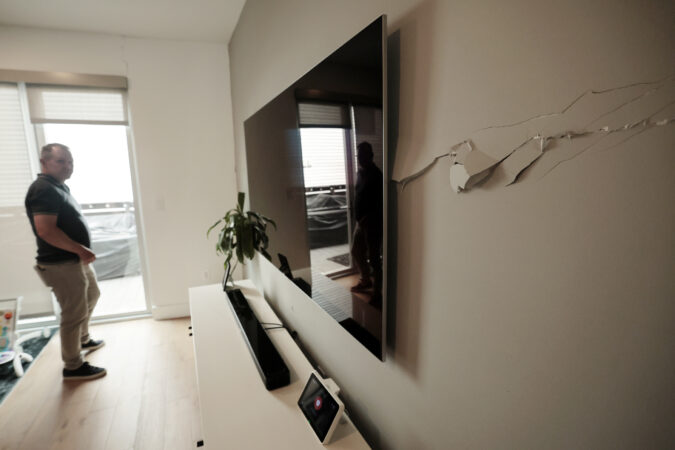
    Fissures have spread across some of the walls in their home — which was built in 2014 — and cracks radiate from many doors and windows.

    Three of their neighbors on Brown Street face similar issues. They say their homes were damaged by an apartment building constructed in 2023 that’s so close to the rear of their house they can almost touch it.

    One family moved out after the city Department of Licenses and Inspections declared their home unsafe in 2024.

    The Emmonses want to move to South Jersey, closer to family. Instead, as they wait for their second child to be born, they feel trapped.

    “The fact that my neighbor was issued an order not to occupy the house, and it’s attached to our house, it’s just really scary,” said Brian Emmons, who has been a real estate developer in Philadelphia for almost 20 years. “We are stuck.”

    Along with two neighbors, the Emmonses are suing the developer of the apartment building: Brian Zoubek, president and CEO of Zoubek Properties, who has built 250 houses in Philadelphia over his roughly decade-long career.

    Since graduating from Duke University in 2010, where he played basketball for the Blue Devils, including on the national champion team that year, Zoubek tried his hand at a few occupations before settling on development. He has expanded his business to the Jersey Shore, recently debuting 10 almost million-dollar townhouses at a news conference with New Jersey Gov. Mikie Sherrill.

    “I’m extremely proud of what we’ve built in Philadelphia,” Zoubek said in an email. “I put my own name on my work because I stand behind every project we build.”

    Zoubek faces lawsuits from the owners of three properties, all alleging that he damaged their Brown Street homes. An Inquirer review of court records found that Zoubek’s companies were similarly taken to court over allegations of sloppy construction practices by their contractors in at least three prior development projects.

    The eastern end of Brown Street with rowhouses (gray), the new apartment building Zoubek built next door (white), and the former school he transformed into apartments (red brick).

    The Northern Liberties rowhouses

    Emmons and his neighbors sued last year alleging that the damage to their homes is the direct result of Zoubek’s redevelopment of the Mifflin School, built in 1825, just to the north of their homes.

    In mid-2021, Zoubek purchased the property — the oldest surviving public school building in Philadelphia — and carved it into 15 apartments with 14 more wedged into a four-story addition on a small lot between the Brown Street homes and the historic structure.

    The recent lawsuits contend that the developer dug too deep while excavating the basement of the new building and damaged their adjacent foundations. Within the three homes — which The Inquirer toured with Emmons — cracks grow in walls, floors slant, the shared garage leaks, and residents have struggled to open some windows and doorways.

    The other two homeowners declined to speak on the record, citing the ongoing lawsuits. The residents of a fourth house have resolved their case against Zoubek.

    “We are aware of the pending litigation and are actively defending these claims,” Zoubek said in an email. “Given the involvement of multiple parties, we are engaged in ongoing discovery and investigation and are confident the process will bear out the facts.”

    Zoubek was named in two earlier lawsuits that accused his construction crews of slapdash work that damaged neighboring properties. A third suit alleged that his company’s work triggered a floor collapse that injured two deliverymen.

    Zoubek said in a statement that all prior suits have been resolved.

    For Emmons, the experience on Brown Street has an irony to it. Ten years ago, he was the face of development in Philadelphia as president of the Building Industry Association (BIA) — a real estate advocacy group — and vice president of a development firm Toll Brothers runs in the city.

    Usually in the position of advocating for new development, Emmons counseled his neighbors when the project was announced that it was allowed by the property’s zoning and not worth resisting. But he did ask his fellow developer about his plans for the new apartment addition to the Mifflin School.

    A gaping crack in a first-floor wall in a home at 301B Brown St. in Philadelphia.

    “He clearly was doing things the wrong way,” Emmons said. “And I know that because I’m in the construction industry.”

    Zoubek contests Emmons’ assertion. He argues that many of his 30 building projects in Philadelphia involve basement excavation next to existing properties and that the Mifflin School project was fully permitted and supervised by skilled professionals.

    “That experience, combined with the engineering oversight on this project, reflects how seriously we take this work,” Zoubek said in an email. “After concerns were raised, the project was reviewed by L&I, which did not issue violations or take enforcement action.”

    A trail of lawsuits

    Zoubek has been building in the Philadelphia area for more than 10 years, mostly developing small apartment buildings or a handful of rowhouses in the city’s booming river ward neighborhoods.

    Zoubek, at 7-foot-1-inch, was a basketball star at Haddonfield Memorial High School and got into real estate after a stint running a cream puffery and, later, as a real estate agent for Cushman Wakefield.

    He started his own firm, Zoubek Properties, in 2014 and a related construction management company called Z Builds. He also cofounded another company, Catalyst City Development, with childhood friend Tyler McNeil.

    As his construction business grew, his enterprises were drawn into complex litigation alleging property damage or injury caused during construction.

    Brian Zoubek in his now defunct cream puff shop Dream Puffz, a pre-development venture, in 2012.

    According to one lawsuit, Catalyst, the company Zoubek cofounded, and Manayunk-based Grit Construction worked together on a small development on Hope Street in Northern Liberties in 2019. During construction, Grit ruptured a lateral pipe connecting a sewer main to a strip of nearby businesses facing an adjacent block of Front Street.

    Exhibits from that lawsuit show Zoubek proactively contacted the neighboring property owner, reassuring him that his crews had quickly rerouted the noxious flow by splicing in PVC piping until a more permanent fix could be made.

    “Broke some sort of line,” Zoubek texted to the adjacent property owner, along with a photo of the messy scene. “So we put in a temp one.”

    But a week later, business owners next door were complaining about chronic plumbing issues. The temporary line had become clogged with rubble and other debris from the ongoing construction.

    According to the suit, in June, the toilets and sinks at a packing business on Front Street erupted as sewage backed up and flooded into the commercial unit. The next day, a barbershop next door was inundated with filth.

    A plumber came out to snake out the line but discovered that Zoubek’s crews had capped the severed line. Eventually, tenants fled.

    “Our tenants cannot continue with sewage backed up into their space,” a property manager for the commercial units next door wrote to Zoubek, in a 2020 email.

    Zoubek said that the case had settled but offered few other details: “The matter was ultimately resolved between the parties.”

    Zoubek Properties had also hired Grit and contractor All-State Services to demolish a building under the El in Fishtown in 2019 and build several new apartments.

    In 2021, the owner of a neighboring apartment complex sued, saying that during teardown crews punched holes in the side of the adjacent building, damaging its roof, framing, and supports.

    According to that complaint, tenants told a property manager about “a big noise and shaking in the building” during the demolition process.

    After arriving on the scene a short time later, the manager “observed All-State Services employees drinking alcohol while on the job and stumbling down off of heavy equipment,” the complaint said.

    Zoubek said that his contractor eventually repaired the wall and that a claim for further damages was handled by the two insurance carriers.

    “The matter is fully resolved,” he said.

    The new luxury townhouses on Kentucky Avenue known as the Residences at Orange Loop in Atlantic City, which Zoubek revealed with New Jersey politicians earlier this year.

    As that suit unfolded, Zoubek had another project underway in Old City, again for a small apartment complex on the 100 block of North Third Street.

    In 2021, two deliverymen bringing in elevator counterweights for the construction project were told to use a rear entrance to deposit their cargo, according to a personal injury lawsuit filed the next year.

    The suit contends that both the delivery company and the workers quizzed Zoubek’s crews about whether the rear entrance of the partially constructed building was structurally sound enough to handle the extreme weight of their load. They were assured that it had been inspected and was safe.

    Instead, the floor collapsed, sending the men and their equipment crashing into the basement, injuring both delivery workers.

    The suit was later settled for $6.5 million default judgment against the subcontractor.

    “That matter was resolved through the appropriate legal and insurance processes,” Zoubek said.

    Construction damages 50 rowhouses a year

    Lawsuits and claims of construction damage are endemic to the real estate industry. And building in the tight confines of Philadelphia’s dense rowhouse neighborhoods can be especially contentious.

    A 2023 Inquirer investigation found that 50 rowhouses a year have been rendered unsafe by construction next door.

    In the case of Brown Street, a spokesperson for Zoubek pointed The Inquirer to the website of Fortis Construction & Design, which built the five rowhouses there in 2014 and is now suspended by the city for “unpermitted, potentially dangerous underpinning and excavation.”

    Cracks on the exterior of a home at 303A Brown St. in Philadelphia (left) on June 9.

    Emmons, however, argues that the fault lies with Zoubek: The extensive damage to the Brown Street homes appeared only after the basement was dug out for the expansion of the Mifflin in 2023.

    “He can point the finger all he wants, but I hope he lies awake at night praying nobody gets injured or killed,” Emmons said in an email.


  • World Cup exposes growing global rift over prediction markets

    World Cup exposes growing global rift over prediction markets

    This year’s World Cup is the first since prediction markets such as Kalshi and Polymarket exploded to popularity as a new way to bet on sports.

    Fans in the U.S. are free to collectively wager billions of dollars on the tournament, but a growing number of other countries are making it harder to access the platforms offering those bets. Whether fans can bet on how many goals Kylian Mbappé scores for France or who wins the tournament may depend on where they live. In some cases, fans may not be able to bet at all.

    In just the last few weeks, Spain, Indonesia, and India have joined the growing list of countries — including most of the European Union and large parts of Asia — that have put in place temporary or permanent measures to cut off access to the Kalshi and Polymarket websites and apps.

    Brazil shut down 27 prediction platforms in April, including Kalshi, whose co-founder, Luana Lopes Lara, is Brazilian, leaving the company scrambling shortly after it launched in the country.

    Regulators have intensified their scrutiny of prediction markets as the companies have expanded rapidly around the world, offering a new kind of financial contract that straddles the line between gambling and financial speculation.

    Some countries view the new types of financial contracts offered by the prediction markets as a form of gambling and subject them to betting laws. Others argue that they should fall under securities or derivatives rules. The start-ups have used the legal uncertainty around their new products to offer them to customers even as regulators struggle to catch up.

    “Prediction markets are entering the same phase every novel financial primitive eventually enters: first hobbyist market, then mass attraction, then legitimacy fights,” said Dovey Wan, founding partner of Primitive Ventures, a backer of prediction market platform Opinion Labs. “The recent bans mean the category has become important enough to regulate.”

    Prediction market operators argue their platforms provide valuable information by aggregating collective forecasts on everything from economic indicators to geopolitical events. Critics counter that the contracts can encourage excessive speculation, and also open new opportunities for insider trading, alongside the ethical issues created by making it possible to bet on the war and other matters of life and death.

    “Betting isn’t new,” said Chris Holland, partner at Singaporean consulting firm HM Strategy. “What’s new is the structure.” Because prediction market contracts are typically classified as derivatives, they fall outside gambling licensing frameworks, he added. “That gap is an open invitation to insiders.”

    Though Kalshi and Polymarket are by far the largest prediction companies, many more are expanding globally, including Opinion Labs, which is backed by Binance cofounder Changpeng Zhao’s family office YZi Labs, and Coinbase Ventures-backed Limitless.

    A number of exchanges have cut marketing deals with soccer leagues and teams ahead of the World Cup to increase their visibility around the tournament.

    The markets are big business, and growing. On Monday, Piper Sandl analyst Patrick Moley wrote that the World Cup was “like the Super Bowl every day,” and was driving record daily volumes on Kalshi.

    Polymarket recorded around $2.8 billion in notional trading volume across its international and U.S. exchanges in the first week of June, according to user-compiled data on Dune Analytics, up from $2.1 billion a week earlier. Kalshi reported about $4.5 billion over the same period, up from $4.2 billion.

    Creating a regulatory framework that restricts the sites is proving a challenge for country-specific regulators. The companies have been rapidly expanding around the world, unlike traditional gambling companies that are generally restricted to a specific jurisdiction. The use of virtual private-networks and cryptocurrencies make it easier to operate without going through local financial firms and regulators, and makes it difficult to completely shut the platforms down.

    India’s government said users were able to access “illegal and blocked” prediction markets and said “Polymarket and a few other similar sites” were enabling the use of virtual private networks to circumvent the national ban, The government asked internet providers to cut off access to the platforms.

    Polymarket and Kalshi’s terms of service already prohibit people from signing up in certain countries, including many that have recently taken steps to crack down on the sites. They’ve also strengthened safeguards against insider trading and market manipulation as prediction markets face growing scrutiny.

    Polymarket is partnering with blockchain analytics firm Chainalysis Inc. to help police its platform related to suspicious trades.

    “We welcome the opportunity to collaborate with Spain, Brazil, and other countries on a path forward that supports responsible innovation, transparency, and user protection in prediction markets,” a Polymarket spokesperson said in an email. The firm monitors for insider trading and other illegal activity, consistent with other markets, the spokesperson added.
    Opinion Labs has restricted access for users from various jurisdictions and blocked any sanctioned addresses, said Alex Chan, chief investment officer, in an emailed response. “We are working closely with a number of local authorities toward launching compliant local platforms.”

    Kalshi and Limitless didn’t respond to email seeking comments.

    For now, prediction markets remain legal in a patchwork of jurisdictions, but the direction of travel is becoming clearer: Governments are increasingly unwilling to let platforms operate in a regulatory gray zone.

    Emily Nicolle, Sidhartha Shukla, Alice French, Yian Lee, Betty Hou, Lulu Yilun Chen, and Amanda Wang contributed to this article.

  • South Jersey’s Lavar Scott, one of NASCAR’s three Black drivers, is chasing greatness and not looking back: ‘There was no Plan B’

    South Jersey’s Lavar Scott, one of NASCAR’s three Black drivers, is chasing greatness and not looking back: ‘There was no Plan B’

    LONG POND, Pa. — Lavar Scott is accustomed to reaching top speeds around a racetrack. But earlier this month, less than 24 hours before his race at Pocono Raceway, he took a beat.

    Standing in front of a room of about 40 people at Holy Ghost Distillery, roughly 10 miles west of the track, Scott, a Carneys Point, Salem County, native, told stories about his racing family.

    “One time, my grandmother raced my grandfather, and she flipped her Mustang,” Scott told the room, which was greeted with a chorus of laughs.

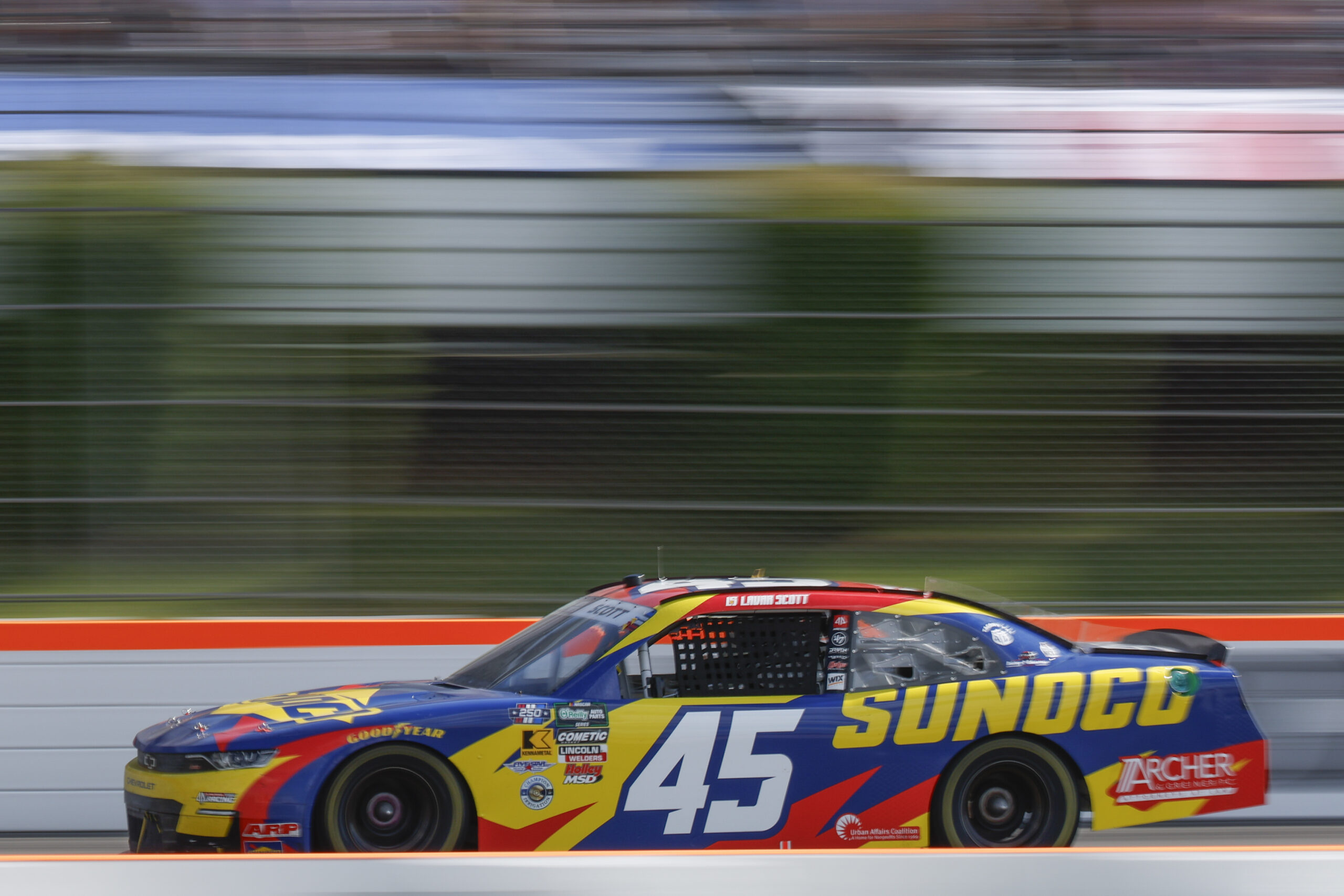
    It was insight into the racing family that molded him. Lavar’s path started at 4 years old, when his grandfather built him a go-kart. He couldn’t race with an engine for another year, but his grandparents pushed him around the track anyway. Now, he’s racing through NASCAR’s Drive for Diversity program and into the sport’s second tier, the O’Reilly Auto Parts Series, where he drives the No. 45 car.

    Scott, just 22, exudes confidence in every room that he’s in. When he tells novice racing fans his age, they can’t believe it. Those two hours at Holy Ghost Distillery — he was meeting with people connected to David Weinstein, a partner at Archer & Greiner, a law firm that serves as one of Scott’s racing sponsors — also displayed the business side of being a professional driver.

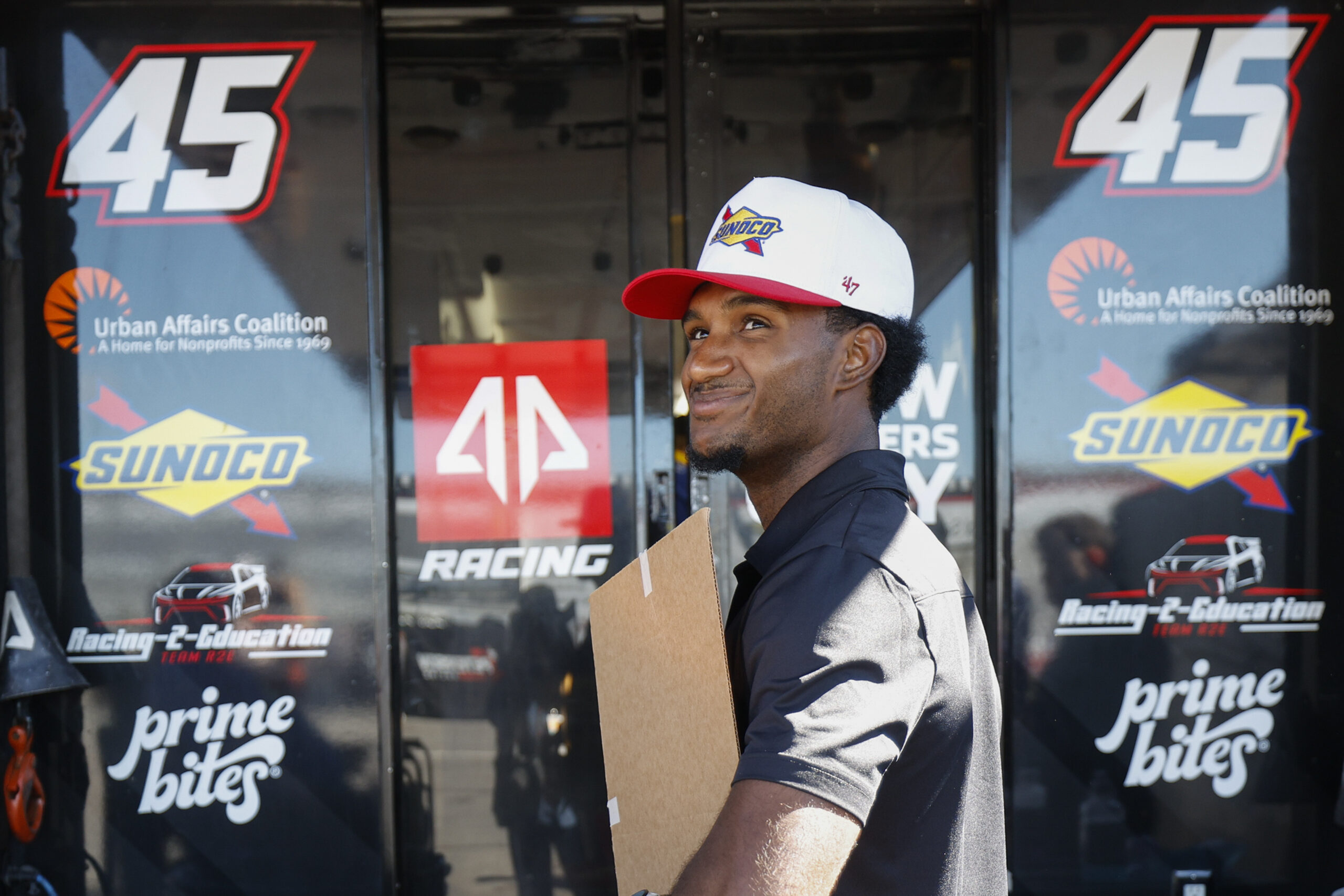
    “As a driver, you can’t just be fast, right? You have to be fast and be a good business guy, and me being 22 and having to learn that so fast is really challenging,” Scott told The Inquirer inside his Alpha Prime Racing car hauler at Pocono Raceway’s infield. “[I’m] trying to put sponsors together and get more resources, to have better resources to make our cars faster, right?

    “The people that can kind of stay grounded and the people that do the work every day are usually the ones that get past those challenges, and I’m in the middle of that right now. I’m just working to get to the other side.”

    His family and the village that raised him, from South Jersey to North Carolina, keep him grounded. And it was apparent just how much he leans on those closest to him.

    Lavar Scott (right) has leaned on his family, including his mother Sonia (center), as his climbed the racing ranks.

    “It’s almost no surprise, because he damn near guaranteed himself, ‘That’s what I’m going to do,’” Wayne Scott Jr., Lavar’s uncle, said at Pocono Raceway. “And there was no alternative. There was no Plan B; there’s no second job. … That was his game plan, and he stuck to it. Here he is living his dream, not done yet, but he’s living it.”

    Added Lavar, one of three active Black drivers in NASCAR: “The support [from] my family is a need. I need to have the support to feel good, right? If they didn’t support me, I don’t know how I would go about my day. I really care about what they think. They’re my family, [they’re the] reason why I’m here now.”


    In the southwest corner of Pocono Raceway sits the Pocono Quarter Midget Raceway, which hosts races for kids ages 5 to 16. Scott’s eyes were fixed on the youngest age group driving go-karts with cages on top to protect them from injury. He beamed while watching the kids circle the dirt track because it reminded him of his start in racing and his first-ever win, on a dirt track when he was 5. He was hooked.

    As he watched from the chain-linked fence that separated the stands from the track, a few teenagers recognized Scott from his racing TikToks and asked for pictures and autographs.

    Lavar Scott (back right) poses with kids who compete at Pocono Quarter Midget Raceway, located near Pocono Raceway, on June 12. Scott got his start racing on similar dirt tracks.

    But he wasn’t just at the track to watch and take a trip down memory lane. He offered words of encouragement to the kids and took a group picture. It marked the first time in two years a NASCAR driver came to speak at the track during Pocono weekend.

    “I started where you guys are,” Scott told the group of about 40 kids. “Some of your parents, I raced against. I’m proud of you guys. It’s really cool what you’re doing. Being back at this type of track brings back memories. … It means a lot [to me] to be here with you.”

    It was a reminder, too, of his own racing journey and family ties. It began with grandfather Wayne Sr., who became interested in cars when he was in high school.

    Lavar Scott (center) shown with his grandfather and mother after winning a race during his childhood.

    Wayne Sr. got into drag racing, often with his friends. His love for drag racing was passed down to Lavar’s mother, Sonia, who was National Hot Rod Association certified and “very competitive” as she raced all over Pennsylvania, New Jersey, and Delaware.

    “She didn’t want to leave the track until she beat her time, and at that time, she was one of only a few women out there racing,” said Waynetta Scott, Lavar’s aunt and Sonia’s little sister. “There’s a [nine-year age] gap between us … but just watching her really inspired me to just know that you can be the only female out here and dominate, and she had that mindset to go against the men at that time.”

    What helped feed Lavar’s racing career, Wayne Jr. says, is Scott’s Auto, which Wayne Sr. opened in 1978. It has become a family business, and Sonia, Wayne Jr., and Waynetta work at the Carneys Point shop.

    “We grew up at our auto mechanic shop, and it’s like a second home, so we’ve just always been around cars and in that competitive nature,” Waynetta said. “Like how everyone goes and watches the Phillies, we went to a racetrack. That’s how we congregated and enjoyed our family time together.”

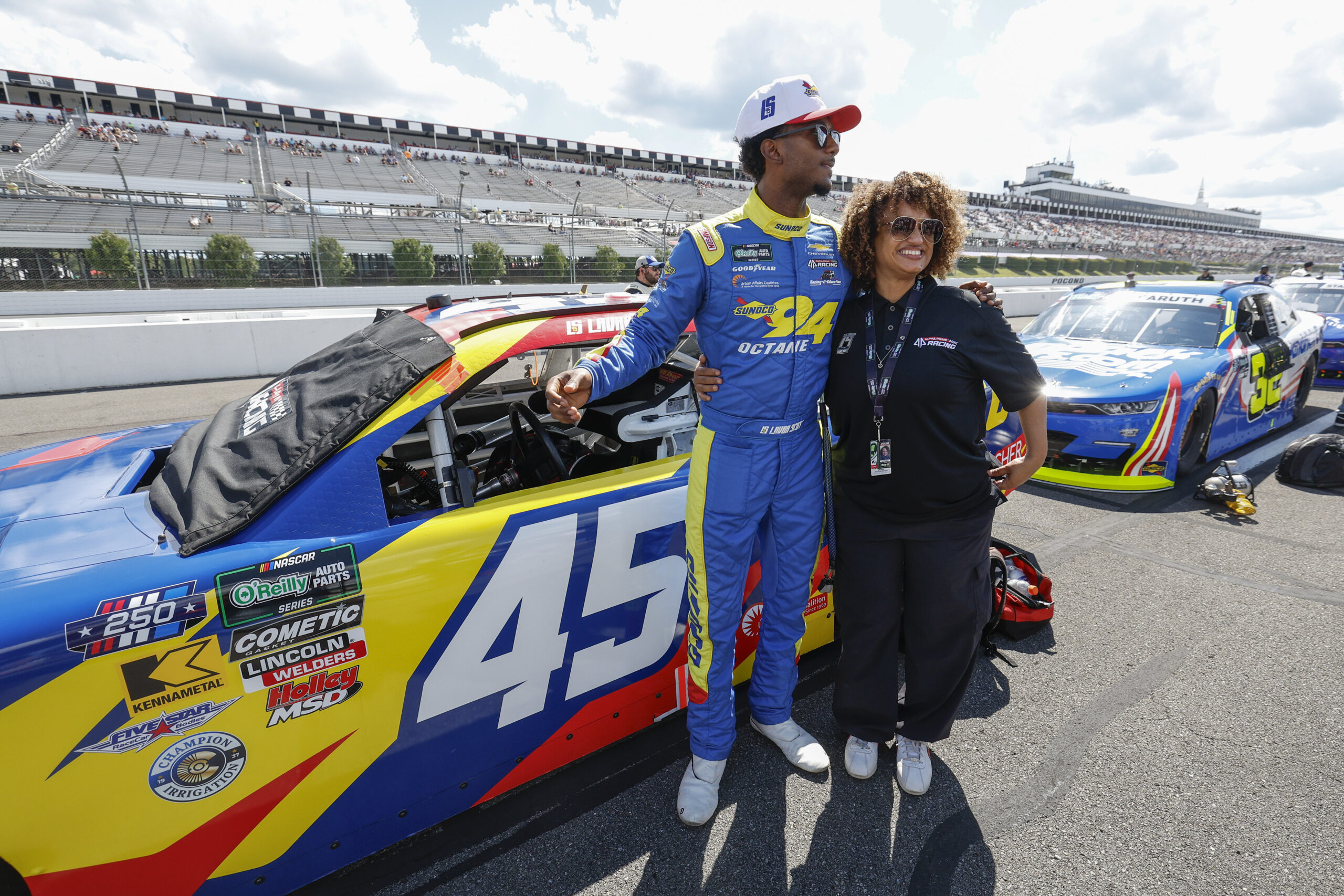
    Sonia Scott (left) stops for a picture with her son before Sunday’s race at Pocono.
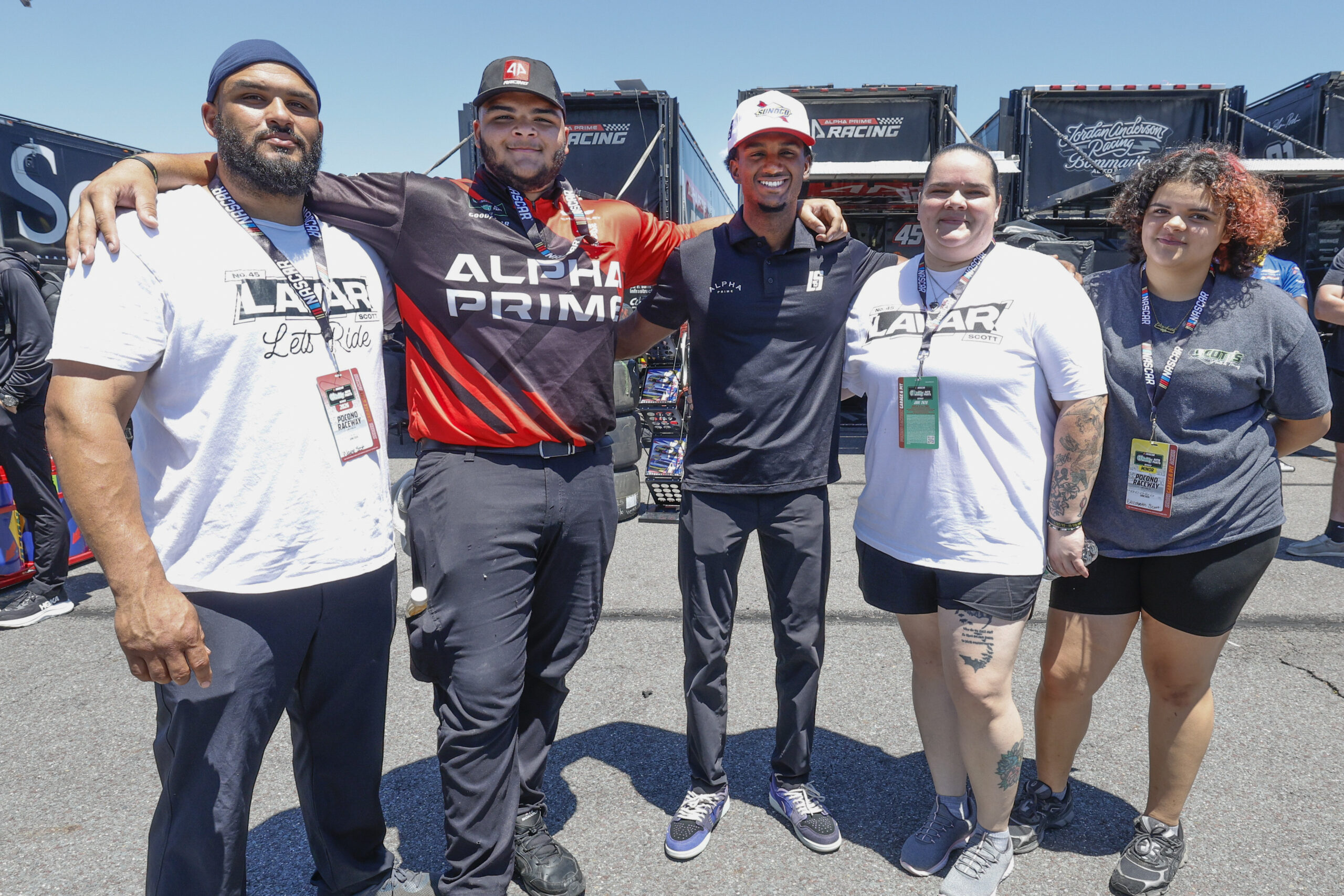
    Racing is a family affair for the Scott family. Wayne Scott Jr. (left), Wayne Scott III, Shanel Scott, and Elizabeth Scott pause for a photo with Lavar Scott (center) in the garage area.

    Lavar’s older brother, Jerome, who also goes by Wayne, and Lavar “have been competing and everything their whole life,” said their uncle, Wayne Jr. Lavar and his brother would race their uncle and cousin, Wayne III. But Lavar, Wayne Jr. says, didn’t appreciate his uncle’s driving.

    “He [said] he’s scared to get close to me on the track because I’m a wild driver, I guess you’ll say,” Wayne Jr. said with a chuckle. “I’m having fun out there. … I was like, ‘I’m just giving you some experience. You never know what you might get into out there [on the racetrack]. So take it as a lesson because everything’s unpredictable.’ I told him, ‘I’m glad I can help.’”


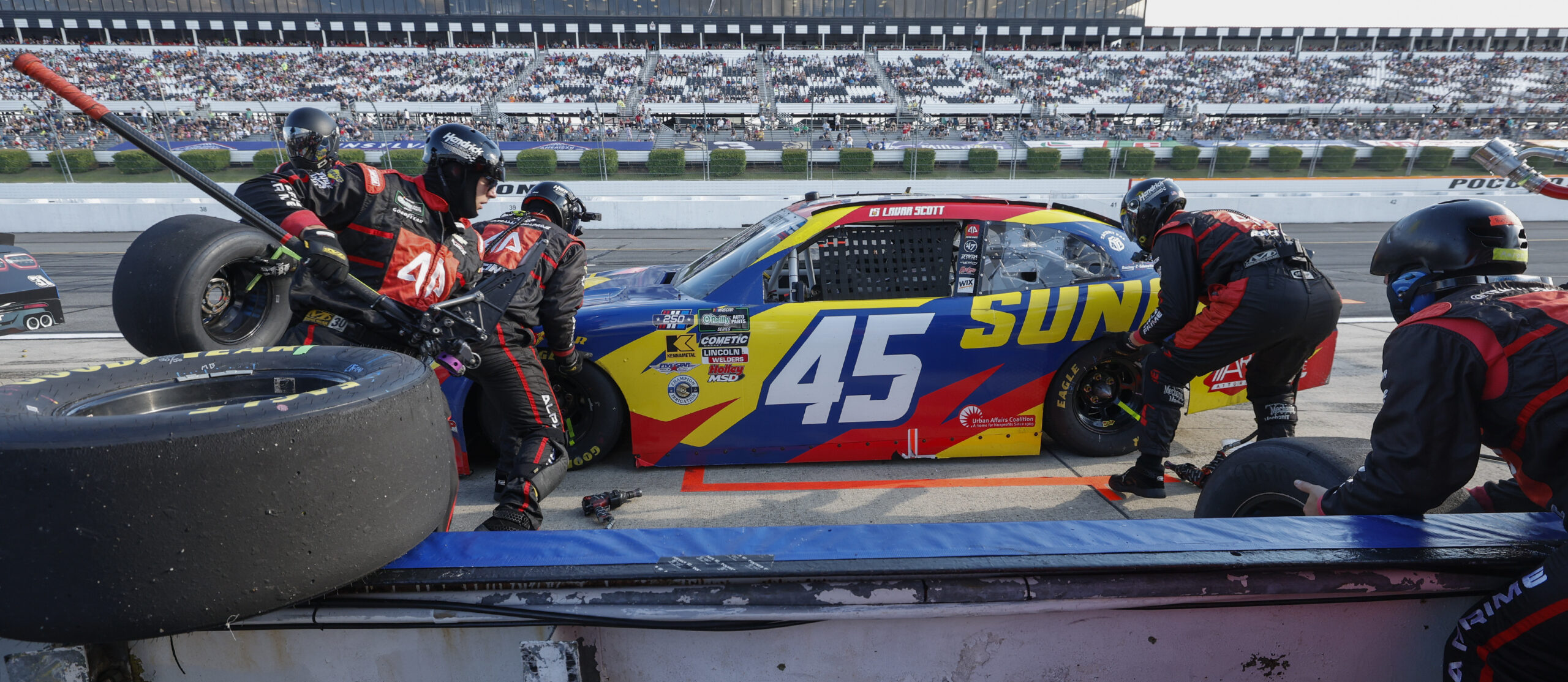
    Lavar Scott’s pit crew works on the #45 Sunoco Chevy during NASCAR’s O’Reilly Auto Parts series at Pocono Raceway.

    Lavar Scott has been chasing the winning feeling since his first race roughly 17 years ago. It’s been almost five years since Scott was last in the winner’s circle, even as he moved through NASCAR’s Drive for Diversity program.

    “It’s a feeling that when I go to bed, I think about, [when I] wake up, [I] think about, [when I] sleep, [I am] thinking about. It’s just the feeling of standing on top of your car after a win and [celebrating] with your friends and family and knowing you did your job really well that day,” said Scott, who has four top 20 finishes in the Auto Parts Series. “Knowing the work you’re putting in is paying off … I get kind of super emotional talking about it, because [racing] really, really matters to me.”

    Scott signed with Alpha Prime Racing team last December, about two months before Jusan Hamilton was appointed as team president. Hamilton became NASCAR’s first Black team president a few years after he became the sport’s first Black racing director in 2017.

    Hamilton, who was a racer himself while growing up in Ithaca, N.Y., had known Scott for seven years and sees a lot of himself in Scott.

    “I see someone who works hard, continues to be a student of the sport,” Hamilton said. “He’s just on a platform now where he knows all the work that he puts in is going to maximize tomorrow, and I just see him continue to put that work in and try and be a better driver and on the track and a better person off the track to support the rest of it.”


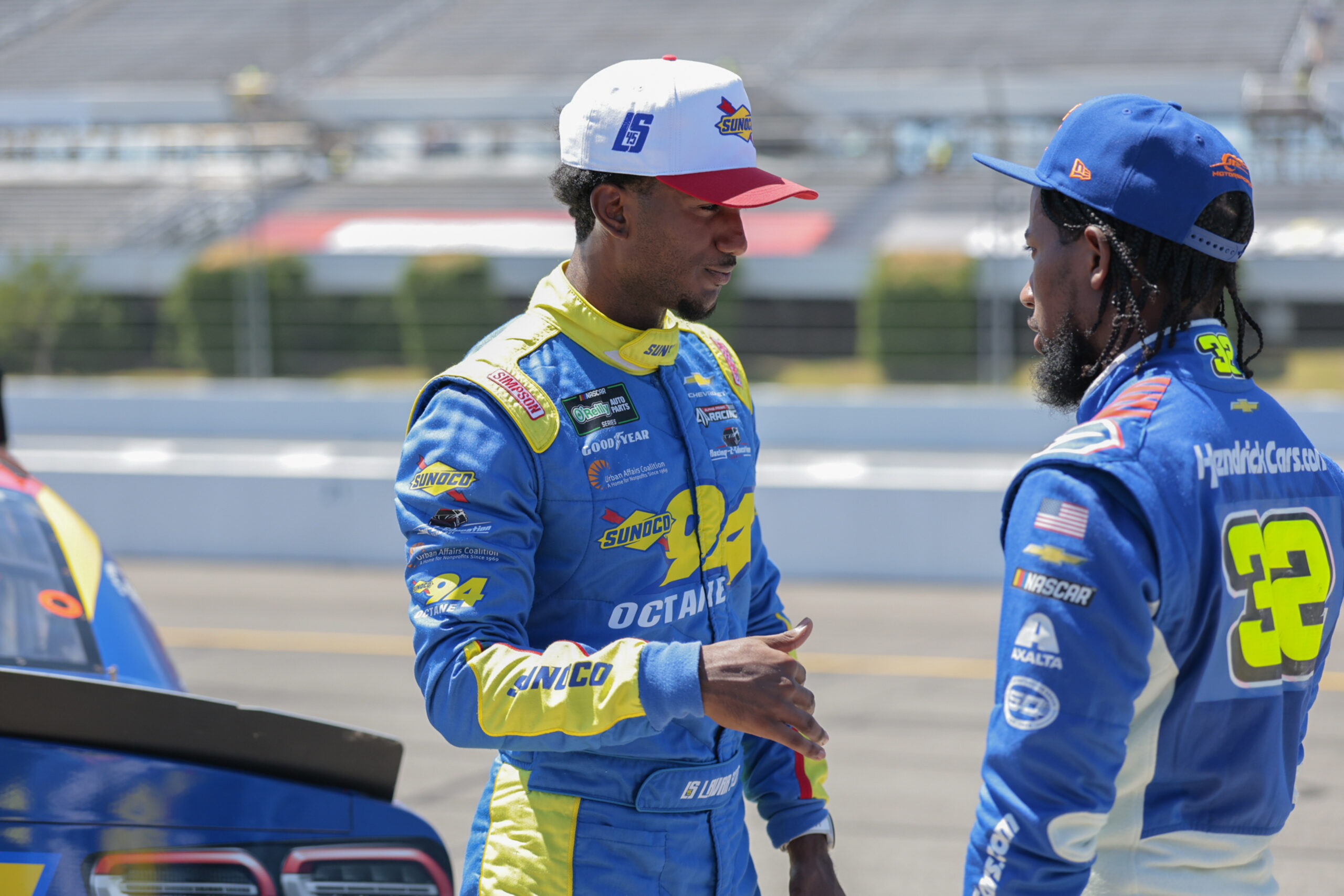
    Rajah Caruth (right) is one of Scott’s competitors, and another of NASCAR’s young Black drivers.

    Beyond what Scott is doing on the racetrack, what he is doing off it is catching young fans’ attention in the Philly area and beyond. Last fall, Scott entered a partnership with Philadelphia-based Urban Affairs Coalition, a nonprofit that works “to improve the quality of life in the region, build wealth in urban communities, and solve emerging issues.”

    Through this partnership, UAC launched Team Racing-2-Education, which aims to introduce young people to careers in engineering, data analytics, automotive tech, and media production within motorsports. Recently, Alpha Prime Racing launched a national workforce development initiative in partnership with UAC and Team Racing-2-Education to “immerse students and young adults in hands-on experiences across race team operations, engineering, mechanics, logistics, marketing, content production, business operations, and event management.”

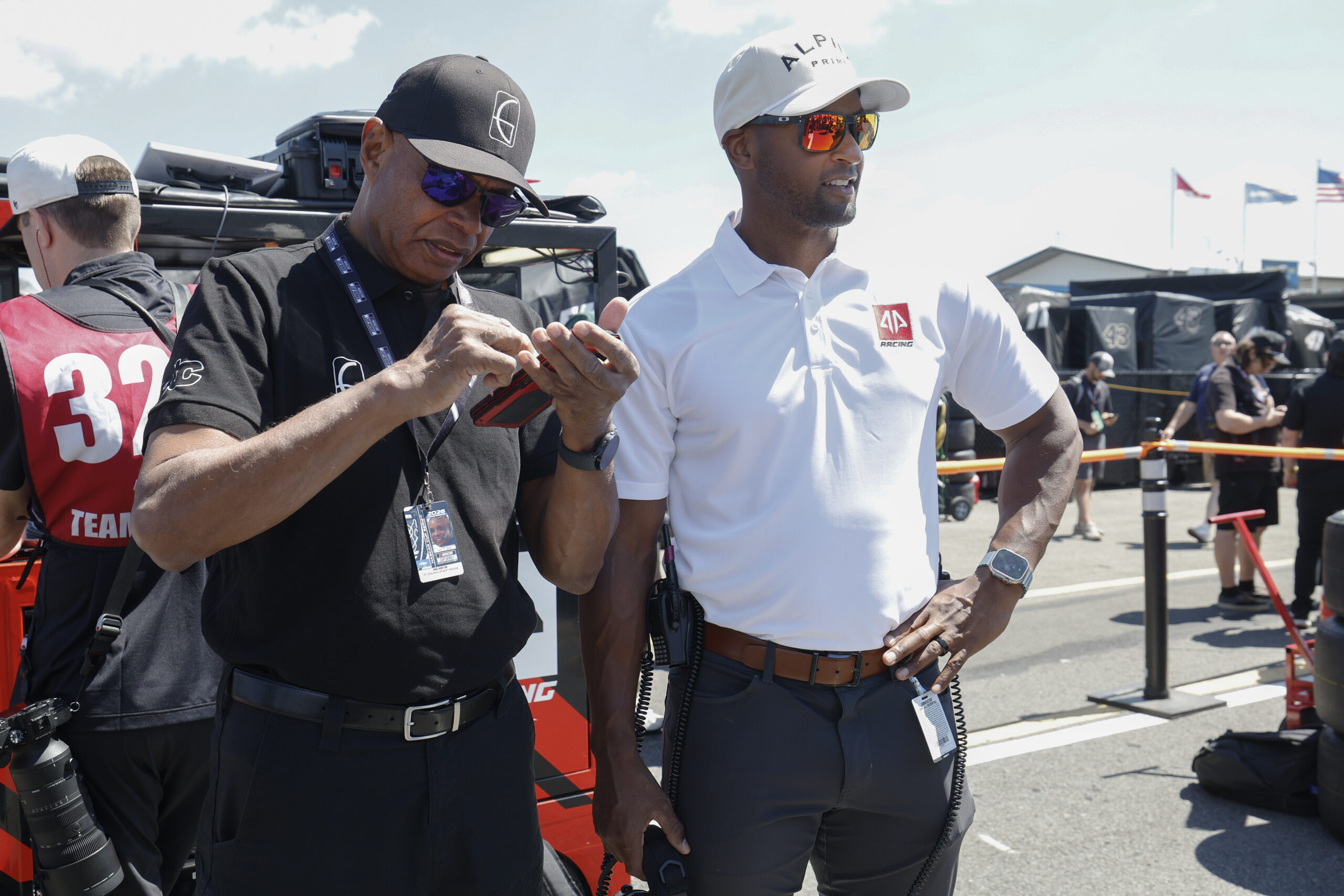
    Driving coach Phil Horton (left) and Alpha Prime Racing president Jusan Hamilton are in Lavar Scott’s corner.

    “It’s something I really take very seriously, and want to help grow and change, and bring a lot more people into the sport,” Scott said. “I think our partnership [with UAC] and our goals align really well. … It’s been really cool, and the work that’s being done is definitely making a change, but there’s still a lot more to be done, and we’re working hard every day to kind of continue that.

    “On my side of things, I want to see more simulators be available to the youth and to kids, and let them gain interest. When you go to your local middle school or high school, you walk into a gym, you see your basketball courts there, you go outside for football with your friends, right? But I think there’s a way to just get some [racing simulators] into different places to have it accessible to them to play.”

    Added Hamilton: “It’s really been our culture of Alpha Prime to bring new people into the sport to give them a foundation to learn and grow in a team that supports that because a lot of the big [NASCAR] teams, they just want people that are turnkey and can go straight to work without training. They don’t want to take the time to train because that’s loss of performance for them in their eyes, so we kind of serve that position of the sport.”

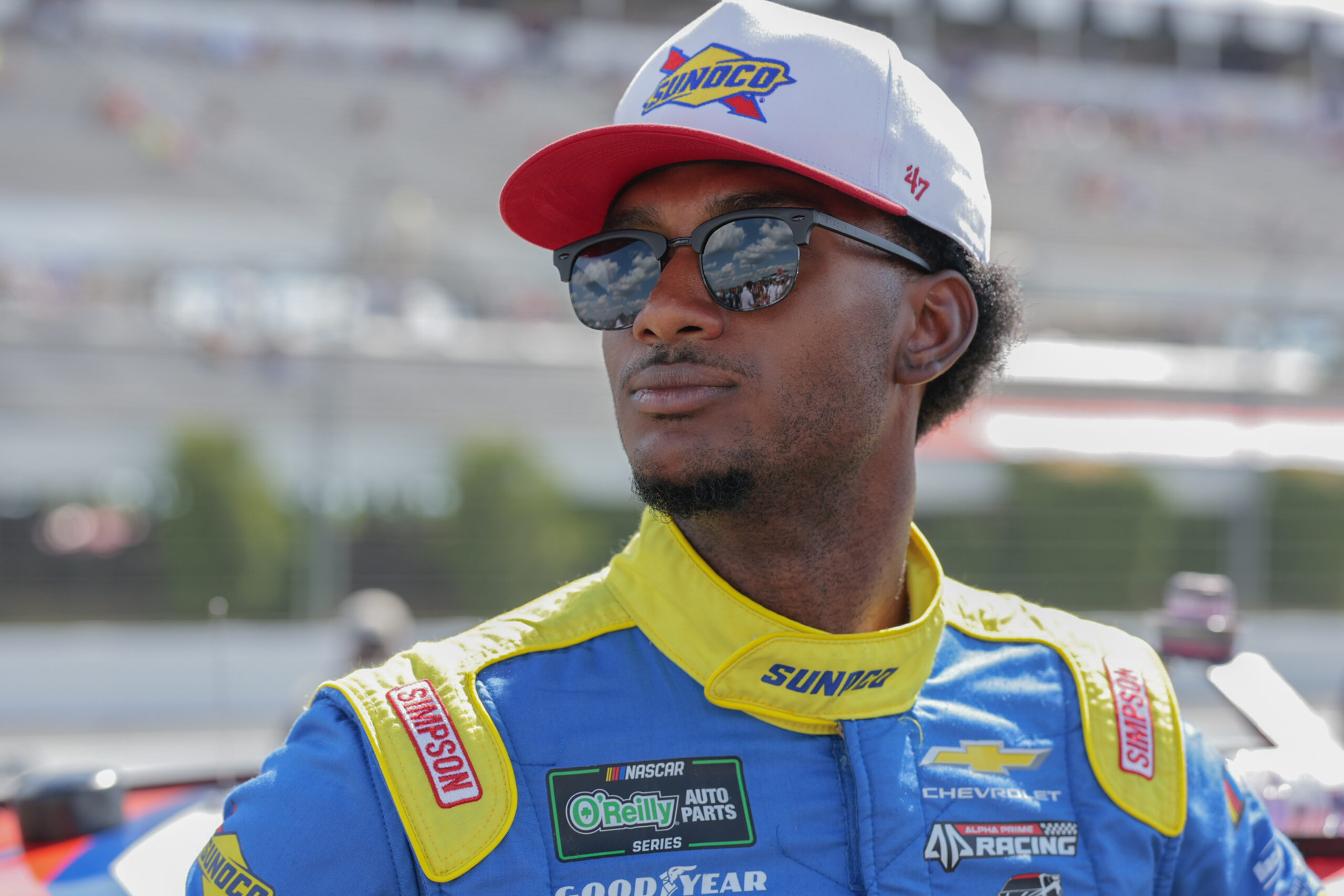
    Lavar Scott is becoming more well-known among racing fans.
    Scott waves to a young fan at Pocono.

    Scott also had an autograph signing early Saturday morning. Children and adults, excited to meet him, walked up to his hauler and grabbed a poster for him to sign.

    That has become a regular occurrence as Scott’s profile has grown. He says he can “hear little kids say, ‘Hey, that’s Lavar Scott,’” and added that it’s ”super cool” to have those interactions.

    A visit with a children’s hospital earlier in the week, though, helped put things in perspective.

    “[I was] speaking with this girl, and she had to be about 9 years old, and she said … ‘I think this is the coolest thing ever, that I get to meet you,’” Scott said. “[I said], ‘So you think today, meeting me is the coolest thing ever?’ She said, ‘This is the coolest thing I’ve done in my life, is to meet you,’ and that hit hard for me. That was — I don’t want to say motivating, but it touched on a different level.”


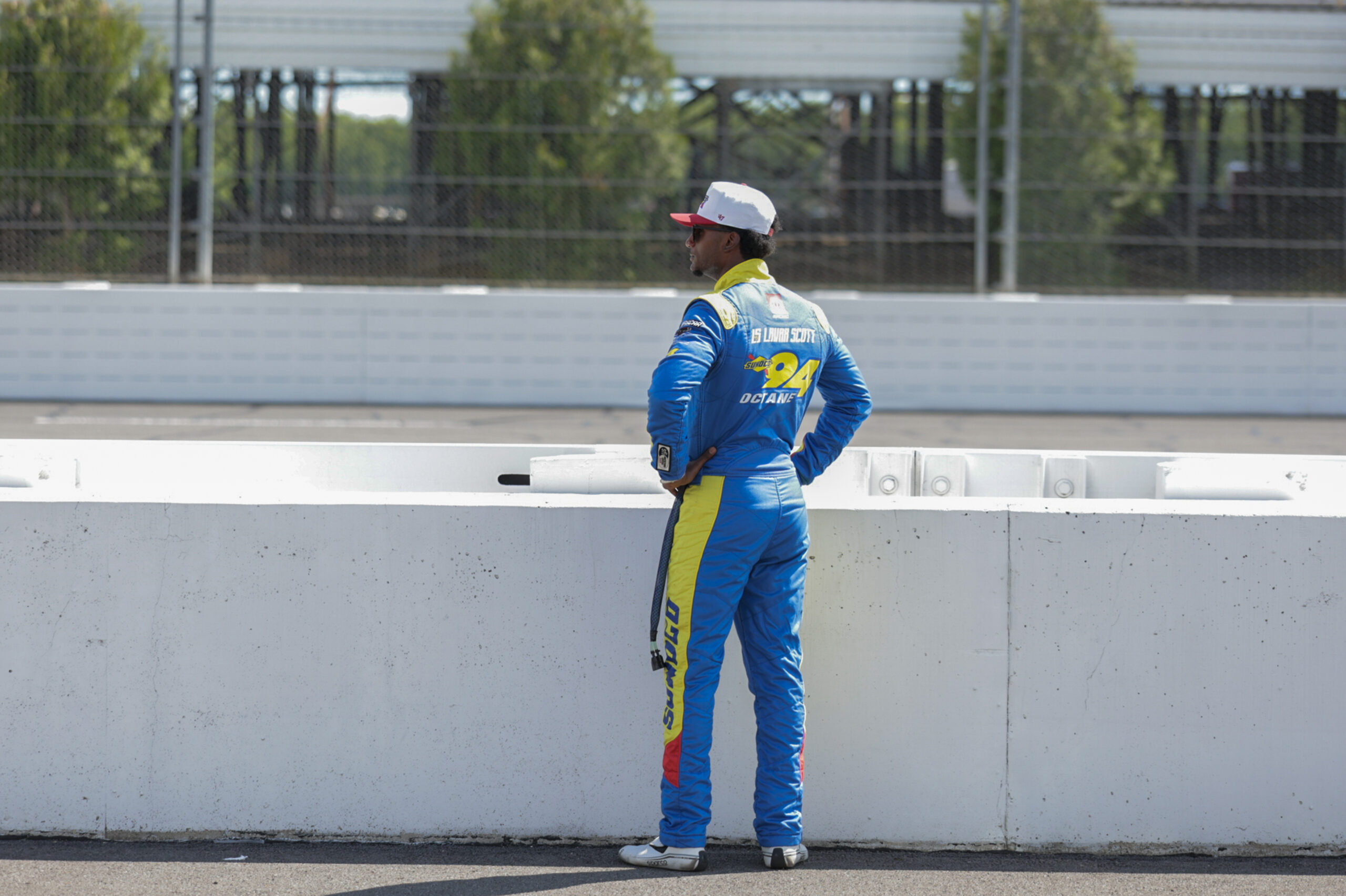
    Lavar Scott takes a moment alone before his race in NASCAR’s O’Reilly Auto Parts series at Pocono Raceway.

    Scott walked away from his No. 45 car with Sunoco, a Chevrolet with a blue, yellow, and red color scheme. He walked toward the wall separating pit road from the straightaway just past the start/finish line before the national anthem and flyover.

    He needed a moment to collect himself and refocus. He had spent the hours leading up to the 4 p.m. race on Saturday striking a balance of focus on the race and his laid-back, playful energy around family and friends.

    While it was all business in the morning for practice and qualifying, he enjoyed the company of his uncle, Wayne Jr.; aunts Shanel and Waynetta; cousins Wayne III (who works on the No. 44 car for Alpha Prime Racing as a pit crew member) and Elizabeth; and mother, Sonia, after securing his 25th starting spot.

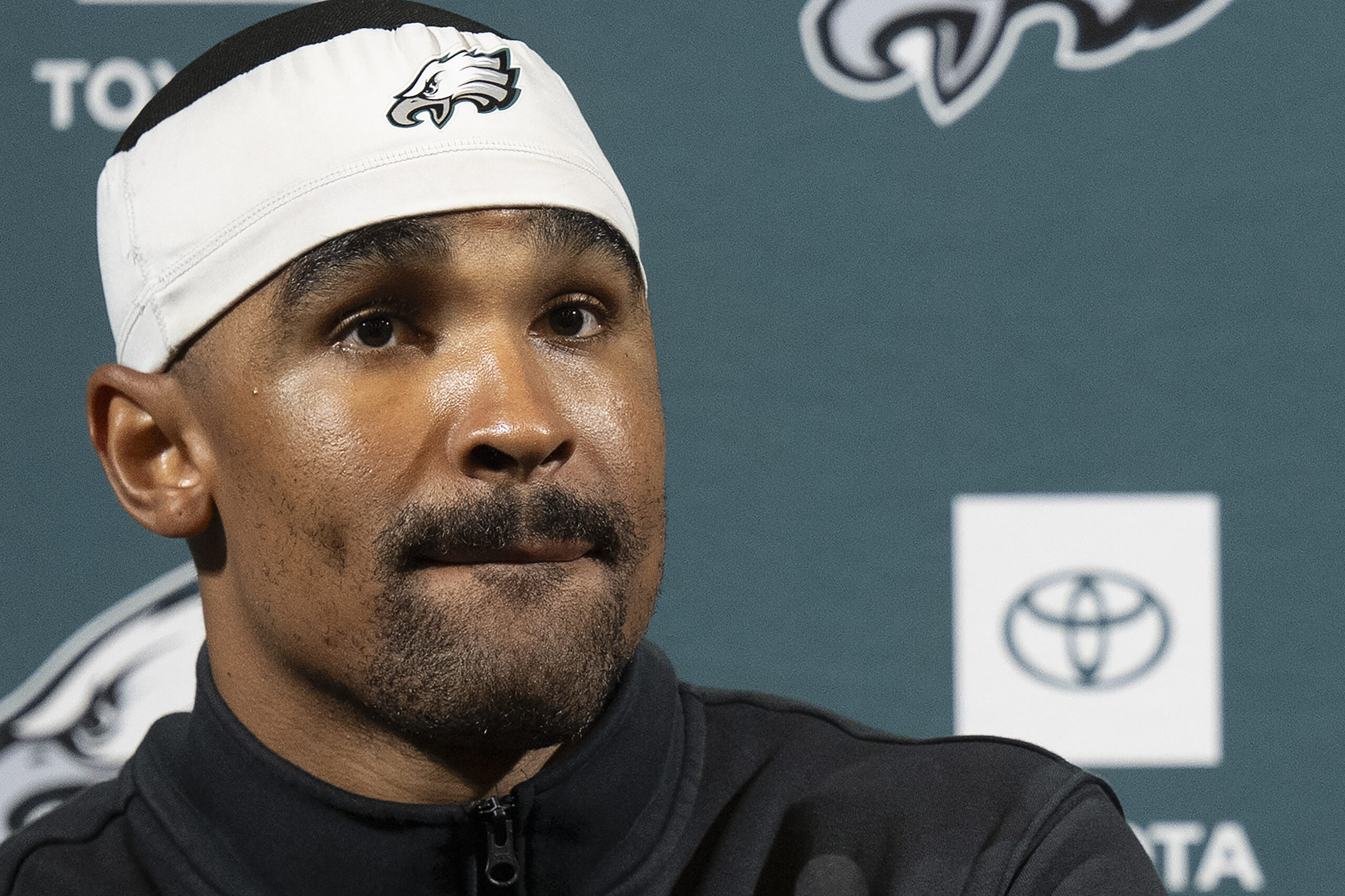
    Jalen Hurts is entering his seventh season with the Eagles.
    Lavar Scott compared his mentality around racing to how Hurts approaches football.

    His racing approach, Lavar says, is reminiscent of an NFL player who is revered in the Philly area.

    “I do respect Jalen [Hurts], how he goes about things, being very quiet, processes things differently … and I think that’s how my guys view me,” said Scott, who connected with the Eagles quarterback recently. “No matter what’s going on, that Lavar’s going to show up prepared and ready to go.”

    Once it was time to climb into his car, the rest of the Scott family watched anxiously from his pit box, listening to the in-car radio communication to glean information they couldn’t see on the track.

    Lavar Scott operates on the straightaway under one of the many cautions in NASCAR’s O’Reilly Auto Parts series at Pocono Raceway.

    Every time Lavar’s No. 45 car zoomed by at around 190 miles per hour, a friend or family member would point out his car, trying to get a glimpse of their star fighting for track position.

    “I get starstruck when I see him in his suit and in his race car,” Waynetta said. “I know he loves his family. We’re so family-oriented that it just gives him that comfort and the support and the confidence to know that he can go out there and be all that he can be. He does [racing in NASCAR] well, and he’s not alone in this battlefield.”

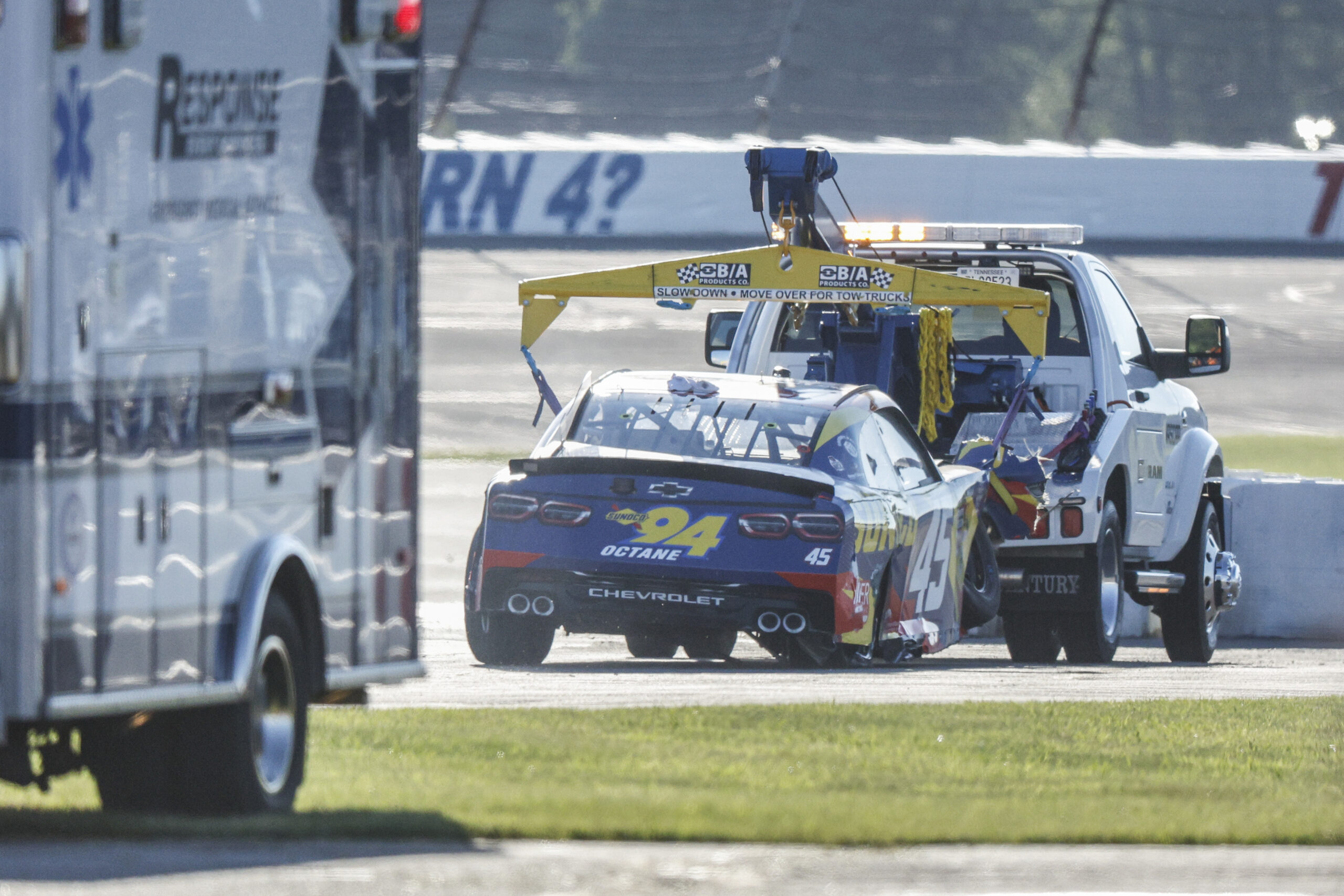
    Though Scott’s first race at Pocono Raceway didn’t end the way he was hoping — he was knocked out of the race with five laps to go to finish 29th — it was clear from listening to his spotters through his car communication that he was maximizing his opportunities to move up through the field after starting toward the back. He was inside the top 15 at one point.

    Lavar Scott was just five laps from the end of the race when he crashed on Turn 3 on June 13 at Pocono Raceway. Scott was uninjured in the crash.
    Lavar Scott getting a hug from his aunt Shanel in the garage area after he crashed on the 95th lap.

    Those closest to him believe this is just the beginning for Scott as he navigates the delicate balance of racing and relationship building.

    “I think what Lavar is doing is certainly going out there and competing at the highest level, which is fantastic. I think he’s learning as he goes as well, but making some really good progress,” NASCAR CEO Steve O’Donnell said recently. “A guy who we’d love to see continue to climb the ladder in NASCAR, and he’s done it the right way. He’s put in the time, and he’s working with a great race team. I’m excited to see how it plays out throughout the year.”

    Added Hamilton: “As long as [his] partnerships continue to grow, the sky’s the limit, really, for Lavar. The goal for all the drivers that we brought in on the NASCAR side, when I was working in that capacity, was for them to get to the Cup Series, and I think that’s still an attainable goal for him as long as everything else continues to work in his favor off racetrack.”

    Lavar Scott recently partnered with a Philly nonprofit, the Urban Affairs Coalition on its Racing-2-Education initiative.
  • Letters to the Editor | June 19, 2026

    Letters to the Editor | June 19, 2026

    Birthday spectacle

    Donald Trump built an arena at the White House to stage a UFC fight on his birthday. It is an abomination, which means it is loathsome and disgusting. Not only is it disgusting to look at but also detestable for the violence and greed it displays and promotes. The “fight scape” should be revolting to those who appreciate American constitutional values.

    I want to point out that the arena is an abomination in the matter of religious faith, too. Biblically speaking, an abomination was (and is) something ritually and ethically repugnant to God and to those who follow a religious path. Called “detestable things,” abominations were objects associated with idolatry and heathen deities, unclean or prohibited foods, and offensive violation of religious customs. A revolting example of this was the attempt by the Roman emperor Caligula, in 40 A.D., to have his statue erected in the temple in Jerusalem.

    The arena is another effort by President Trump to spread his name, image, and likeness in areas of American public life, so he can stand foremost in the eyes of our nation’s people. His face is on banners, and his name is on buildings. He has his (blessed) statue. He’s looking for approval and idolization, but these attempts strike me more like a meandering dog profanely marking his territory.

    His birthday festival usurped Flag Day. Trump appeared as the main attraction for his birthday — and he will also make July Fourth all about himself as well. His UFC fights happened. He hinted that the arena may stay up beyond that date. What for? Maybe he will try to establish new gladiatorial games holding matches between UFC champions and Mr. Trump’s “enemies.” What could be more detestable? That’s a big “thumbs down.” We already have enough bloodshed, corruption, and violence. One abomination at the White House is already too many.

    The Rev. Jack McAnlis, Langhorne

    Water weaponized

    A reported U.S. attack on two water reservoirs in southern Iran shortly before the ceasefire was announced left 20,000 people without access to drinking water, according to the Mizan news agency in Iran. In a statement, the local Iranian water utility company said the reservoirs were “targeted and completely destroyed” in the U.S. strikes in the Bemani area of Sirik in Iran. If true, it would be a crime against humanity, something no American would want our country to do.

    Andrew Mills, Lower Gwynedd

    Join the conversation: Send letters to letters@inquirer.com. Limit length to 150 words and include home address and day and evening phone number. Letters run in The Inquirer six days a week on the editorial pages and online.

  • Dear Abby | Son of late friend brings feral kids along for visits

    DEAR ABBY: My husband’s best friend died when we were in our early 30s. His son, “Marty,” recently moved back to the area with his wife and three boys. We think of them as family.

    My husband often needs help with heavy handyman jobs. (I was diagnosed with cancer and am unable to help him.) He frequently recruits Marty for this kind of help, and Marty always brings along his wife and kids. They don’t watch or discipline the kids, and I’m exhausted. Is it really up to me to parent their kids while they are here giving us a hand?

    — BOTHERED IN UTAH

    DEAR BOTHERED: It certainly looks like it. Unless you find the courage to remind the wife that you are not in good health and need the children to “tone it down,” the situation isn’t going to change. If you cannot bring yourself to do that, then consider arranging to “visit a friend” when you know they are coming.

    ** ** **

    DEAR ABBY: My wife meets once a week with several other Christian women to discuss various topics. Everyone gets to the meeting on time except one woman, “Florence,” who typically arrives just a few minutes before the meeting is over. The others have tried ending the meeting just as she comes in to encourage her to come on time, but it has had no effect.

    Last week, they had a three-hour lunch party. In an attempt to get Florence there on time, the hostess had told her they were shutting down after three hours as she had other things to do afterward. However, Florence arrived 15 minutes after the party was over. My wife is at a loss about how to get the woman to arrive for the beginning. Should they just exclude her?

    — FRUSTRATED GROUP IN TEXAS

    DEAR FRUSTRATED: What Florence has been doing is consistent and insulting. If she were interested in doing anything more than making a “personal appearance,” she would arrive at the appointed time as the rest of the women do. Yes, because of her rude and inconsiderate behavior, they should scrub her from the invitation list.

    ** ** **

    DEAR ABBY: We are grandparents. When our son, daughter-in-law and grandchildren visit, we want to do a lot of things and take them places. But I often feel like I am pushing my daughter-in-law. She says her life is hectic with work and activities for the kids. She just wants to sit in my house. I want to get out.

    We are arguing because we can’t come up with a plan that everyone is agreeable with. Is it proper for me to ask her if we could take the kids while she rests at home? I’m not sure she would like that. How can we work this out so everyone is happy?

    — TRYING TO HELP IN THE EAST

    DEAR TRYING: Your daughter-in-law has already told you she would be happy sitting quietly in your home. Tell her this is her vacation as well as the kids’, and there is a way for everyone to be happy if she will allow you and your spouse to take the kids for outings. If you do, you might find that she is not only open to the idea, but also relieved.

  • Horoscopes: Friday, June 19, 2026

    ARIES (March 21-April 19). As schoolchildren released for recess know, it’s a pleasure to let off some uninhibited energy, especially when you’ve been cooped up in a highly structured environment. The cosmic school bell will ring for you today. Go claim your place on the playground.

    TAURUS (April 20-May 20). You deal with stress better when you can spot the absurdity in a situation instead of getting stuck in irritation. Humor helps you stay loose when life gets weird. When you can laugh at the chaos a little, the inconveniences bounce off you.

    GEMINI (May 21-June 21). There are some enchanted logistics in play today. The practical parts of life begin cooperating with your dreams instead of obstructing them. It’s not every day that schedules, money and timing align as well as this!

    CANCER (June 22-July 22). Anyone can feel good around “yes” people, but it takes a very evolved person to seek out the “no” people and hear what they have to add. The critics make you better, stronger, sharper and more impervious to pain.

    LEO (July 23-Aug. 22). Your understanding of love keeps changing. Sometimes affection is shown through gestures, touch and thoughtfulness. But often it’s the practical, repetitive and sacrificial behaviors you enact for your loved one that indicate the deepest devotion.

    VIRGO (Aug. 23-Sept. 22). The body, mind and spirit all work together. You think better when you eat better, and when your heart is filled with love, you feel like expressing yourself through movement. Anything you improve through joy will affect all parts of you.

    LIBRA (Sept. 23-Oct. 23). You’ll be accounting for tasks done and undone and reflecting on how it went down — the hits and misses, the expectations and surprises, the soft impressions plus some hard numbers. Your realism here will ultimately be your success ticket.

    SCORPIO (Oct. 24-Nov. 21). Have a little more faith. Even foolish faith will do. Today it’s better to be naive than to be jaded. The energy of happiness attracts more joy. The energy of cynicism fulfills its own prophecy.

    SAGITTARIUS (Nov. 22-Dec. 21). You constantly strive for a better understanding of the other person’s perspective. Empathy is the strength that doesn’t call attention to itself. Though relating to others is an act of kindness, it’s also a strategy that helps with today’s challenge.

    CAPRICORN (Dec. 22-Jan. 19). If you don’t make intentional choices about your priorities and limits, life makes them for you. It may work for a few hours or days, but eventually, attempting to handle too many different responsibilities at once becomes unsustainable.

    AQUARIUS (Jan. 20-Feb. 18). You want to succeed at work, maintain relationships and pursue creative goals. You’ll do it, just not all today. These feelings of overwhelm come from unnecessarily conflating the time frame. Avoid compressing too much into one imagined moment.

    PISCES (Feb. 19-March 20). You’ll think deeply and extend your insight into the past and future. Some call such vigilance “overthinking” because they can’t relate. It’s natural to assume that everyone is like you, but many aren’t paying close attention, so you need to.

    TODAY’S BIRTHDAY (June 19). It’s your Year of the Aegis, in which you are protected by a shield like Athena’s — forged from wisdom, preparation and strong boundaries. You handle intensity with composure, earning trust, authority and strategic advantage along the way. More highlights: Enriching friendships. Your work gains attention from stylish and influential people. You’ll solve a long-running problem with elegance and make money doing it. Aquarius and Leo adore you. Your lucky numbers are: 5, 11, 28, 32 and 13.

  • Mauricio Pochettino keeps Christian Pulisic’s status a mystery ahead of USMNT-Australia

    Mauricio Pochettino keeps Christian Pulisic’s status a mystery ahead of USMNT-Australia

    SEATTLE — There was no surprise news about Christian Pulisic from U.S. men’s soccer team manager Mauricio Pochettino in his news conference before Friday’s game against Australia (3 p.m., Fox29, Telemundo 62). Pochettino did not rule the star playmaker in or out, and that was not surprising.

    “As you know, he was training in an individual way the whole week,” Pochettino said. “But like always, I think tonight, the day before the game, we have a meeting with our medical area, and we will assess the whole group, the players, and tomorrow we will communicate all the things that we can agree tonight.”

    Pulisic was seen briefly at the start of Thursday’s practice, then headed off to work on his own. When he arrived, he wasn’t wearing the sleeve over his injured left calf that he sported on Wednesday. But after a few minutes, he sat down on a bench by the sideline and put it on.

    “He is evolving, he is much better from [last] Friday,” Pochettino said. “I think at the moment we’ll see. … He’s doing a massive effort trying to be ready.”

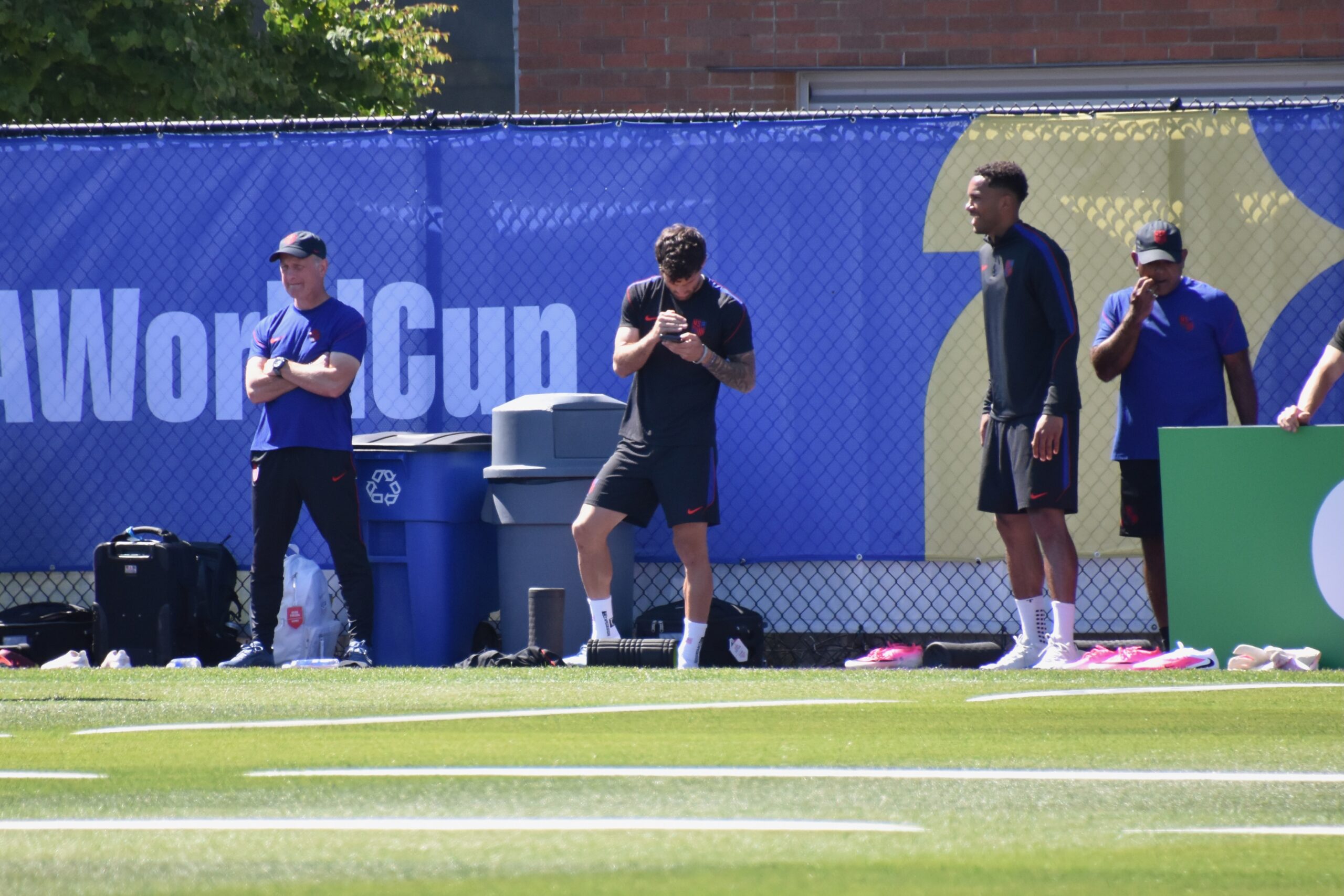
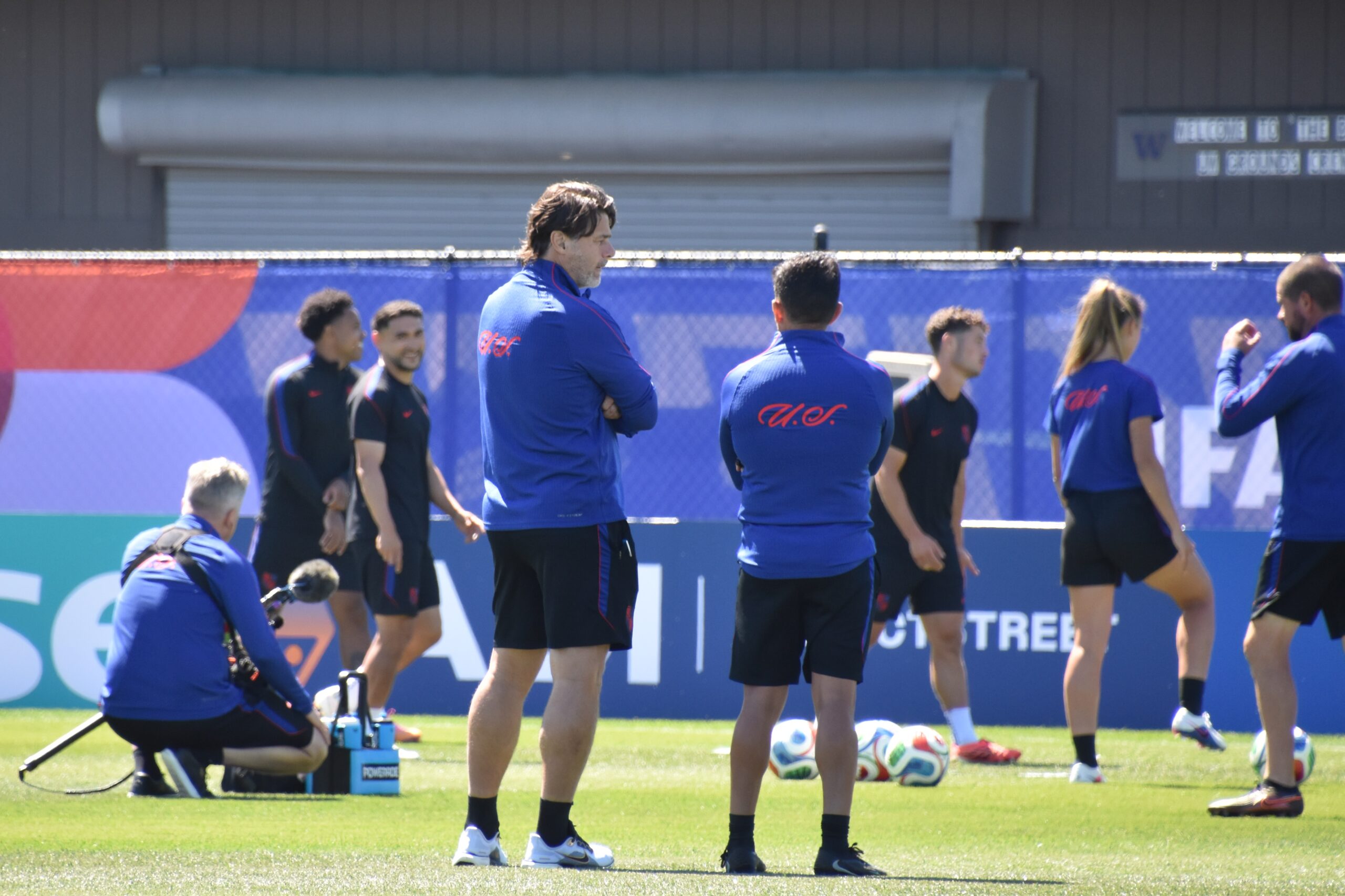
    Mauricio Pochettino (left) and his top assistant Jesús Pérez at Thursday’s practice.

    The manager also praised Pulisic for being “strong and with a great mentality” as the Hershey native works to be ready for kickoff.

    Asked who might play if Pulisic can’t go, Pochettino didn’t answer. This was no surprise either.

    “I will tell tomorrow if that is the situation,” he said. “At the moment, we are evaluating all the possibilities just in case, and then we will decide when we have the confirmation in one or another direction tonight.”

    What is no secret is that when these teams met in a friendly in suburban Denver in October, it was far from friendly on the field. Australia played a physical game, with a focus on Pulisic that forced him off the field injured in the 31st minute.

    When Christian Pulisic (center) first appeared Thursday, he wasn’t wearing the sleeve over his injured calf that he wore Wednesday. He put it on later.

    All of the U.S. players are ready for round two, and so is the manager.

    “I think we need to play on the edge of the line, not crossing the lines of the rules,” Pochettino said. “I think we are going to try, all, to be very close to this thin line. That allows us to take some advantage [with] the rules.”

    Later in the day, Australia manager Tony Popovic was asked if he expects this game to be similar to the last. He didn’t answer directly.

    “Since then we feel we’ve improved,” he said. “We’re a better team now than what we were in October and I’m sure the U.S. is as well.”

    Popovic also was asked if he expects Pulisic to play.

    “I’m sure he’ll play if he’s fit — he’s one of their best players, an outstanding footballer,” Popovic said. “We expect Christian to definitely play if he’s available, and if he’s not, we’ve looked at some of the players that have played when he hasn’t been there.”

    A soft spot for Argentina and Messi

    Pochettino grew up in Argentina, played 20 times for his country (including at the 2002 World Cup), and like many Argentines is fiercely proud of his roots. So of course he was thrilled to see the Albiceleste start its World Cup campaign by routing Algeria, 3-0, with a hat trick from Lionel Messi — whom Pochettino coached at Paris Saint-Germain in the 2021-22 season.

    “I am Argentino, and I really enjoyed the performance,” Pochettino said, quickly adding “but I’m going to give my life for the USA.”

    He didn’t have to worry about offending anyone this time.

    “I think it’s difficult to describe Messi,” Pochettino said. “Six World Cups, all that he achieved in his career in different clubs [in] collective and individual ways — woof. Is he the best? For sure, yes.”

    (Not that he was ever going to answer with Brazil’s Pelé, Argentina’s foil for decades; or Portugal’s Cristiano Ronaldo, Messi’s modern foil.)

    “Argentina is an amazing team,” Pochettino said of the reigning champions, noting his friendship with their manager Lionel Scaloni and some of his staff. “Lionel is, for me, the best coach today in this World Cup. … The fans — amazing.”

    The packed crowd of Argentina fans in Kansas City on Tuesday.

    He paused there to make a gesture showing the importance of Argentina’s legendary fan base, that has filled stadiums to the brim for decades. Kansas City’s Arrowhead Stadium was the latest to see the show, as a full house roared into the night.

    “And then the cherry [on top]? Messi,” Pochettino concluded.

    Big man on campus

    This isn’t Pochettino’s first trip to Seattle. In 2014, his first game with England’s Tottenham Hotspur was a friendly against the Sounders at the same stadium he’ll work Friday.

    “I saw the ambience and the atmosphere and the people, and I hear that they are very passionate people here,” he said. “I’m looking forward [to] tomorrow, to share all together a great night, I hope with a good result and good performance.”

    The vibrant scene in Seattle as Fox’s studio show goes on air:

    #USMNT

    [image or embed]

    — Jonathan Tannenwald (@jtannenwald.bsky.social) June 18, 2026 at 2:23 PM

    At one point during Thursday’s practice, Pochettino walked to the end of the field, then up a hill behind the net, took out his phone, and recorded a little video. What was that about?

    He joked in the news conference that it was “to see how everything looks without me,” mocking Argentines’ reputations for big egos. He also joked that he was watching for spies, though that line fell a little flat in a sport where spying actually happens.

    As it turned out, he was just taking a video for himself, with a view in front of him of Lake Washington and the facilities on a classically big-time American college campus. Though the U.S. team was only there for a short time, Pochettino appreciated the setting.

    “It was amazing, beautiful facilities,” he said. “We know that they were working for months, only for us to spend maybe an hour and a half, two hours. … Thank you to the people that made it possible to have, in perfect condition, the field and all the facilities.”

  • Mets jump on José Alvarado in seventh inning of Phillies’ 6-4 loss

    Mets jump on José Alvarado in seventh inning of Phillies’ 6-4 loss

    José Alvarado thought the inning was over.

    The Mets had already scored one run against the Phillies reliever to break the 3-3 tie in the seventh, and threatened for more with two runners on. But Marcus Semien fouled a cutter back into J.T. Realmuto’s glove for what Alvarado thought was an inning-ending strikeout, and he started to walk off the mound.

    Home plate umpire Brian Walsh checked the ball and found a dirt mark on it, proving that it had touched the ground before entering Realmuto’s glove. It gave the Mets second baseman a new life. And Semien made the most of it, sending Alvarado’s next pitch to the center field wall, above a jumping Justin Crawford.

    “It ends up being the right call,” interim manager Don Mattingly said. “Not a call I like, but the right call.”

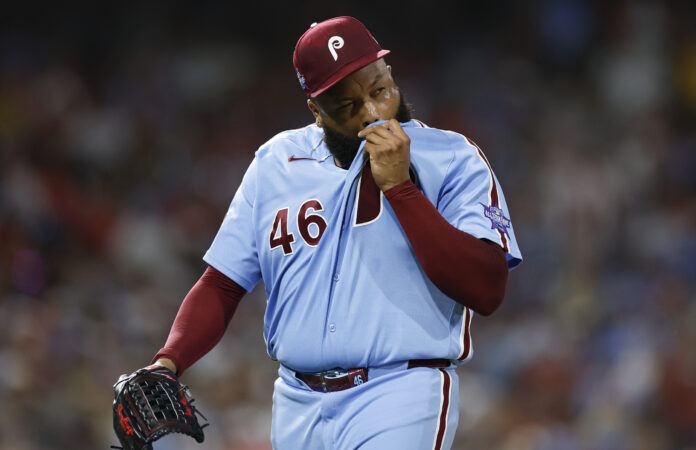
    What was nearly an inning-ending strikeout instead became a bases-clearing triple, putting the Mets ahead to beat the Phillies, 6-4, in Thursday’s series opener. Alvarado, whose season ERA has risen to 6.58, was charged with the loss.

    Alvarado was nearly out of the inning even before that. He had allowed a leadoff single to start the seventh inning, but battled back to induce a line out and pop out, respectively, from Bo Bichette and Juan Soto, who had been the Mets’ most dangerous hitter all night. He then brought pinch-hitting Mark Vientos to a 1-2 count.

    But Alvarado lost his command, throwing three straight cutters in the dirt to walk Vientos. He allowed another pinch-hitter to reach when Eric Wagaman singled, bringing up Semien.

    “Hitters feel confident that they can hit against me right now,” Alvarado said through team interpreter Diego D’Aniello. “It seems like 100 mph is something they see a lot at this level. It’s not surprising anymore. They’re just hitting well against me right now.”

    All three hits Alvarado gave up on Thursday came on his sinker. Hitters are batting .333 against the pitch this year, and .268 on his cutter.

    After the Phillies optioned fellow lefty Tanner Banks earlier on Thursday, it is more crucial that Alvarado turns his season around. Alvarado and Tim Mayza are the Phillies’ only left-handed options on the roster, though Kyle Backhus (left elbow inflammation) is progressing on his rehab assignment and is nearing a return.

    “We’re a nick away from catching strike three, just touches the ground. So we just keep paying attention to him,” Mattingly said of Alvarado. “But, I mean, the ball’s coming out, it’s not like he’s down in velo or anything like that. Just got to get the ball to the right spots.”

    It didn’t help that the Phillies’ bats went cold after the fourth inning. After the Mets jumped out to an early lead against starter Aaron Nola, courtesy of a pair of solo homers from Soto and an RBI double A.J. Ewing hit over Brandon Marsh’s head in right field, the Phillies chipped away to tie it in the fourth.

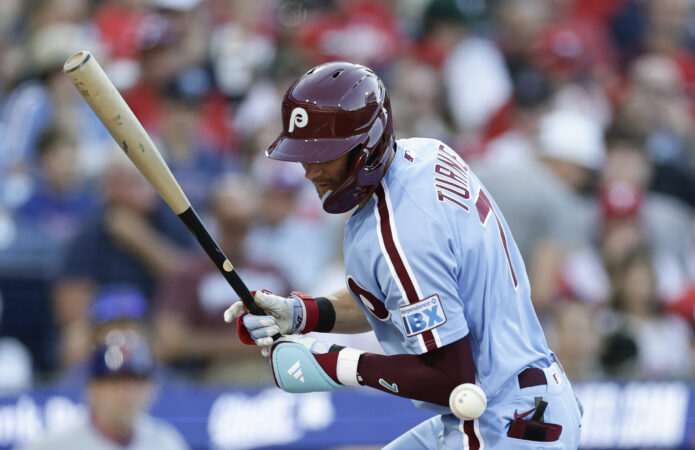
    Trea Turner was hit by a sweeper in the leg in the bottom of the first, and he scored on a single from Alec Bohm. Turner was later taken out of the game with a bruised right calf.

    “He said he had trouble on defense, felt like he was a liability on defense, so he couldn’t really move,” Mattingly said, adding that he hoped the day off Friday would help Turner be ready for Saturday night’s game.

    Bohm delivered another RBI in the third, doubling to drive in Kyle Schwarber and cut the Mets’ lead to 3-2. The Phillies’ designated hitter had reached first on a dropped third strike from Mets catcher Francisco Alvarez, and advanced to second when Alvarez botched the throw to first.

    In the fourth, Derek Hill tied the game at 3, singling up the middle to drive in Bryson Stott. But that proved to be the Phillies’ final hit until the ninth inning, as the bats fell mostly silent against the Mets bullpen.

    Phillies pitcher Aaron Nola allowed seven hits, but he limited the Mets to three runs to keep his team within striking distance.

    Nola allowed seven hits, but he limited the Mets to three runs to keep his team within striking distance. Seth Johnson and Bryse Wilson, who both had been recalled earlier on Thursday, each appeared in relief. Johnson retired the side in order in the sixth with a pair of strikeouts on his 99-mph fastball, while Wilson pitched a scoreless eighth and ninth after the Mets took the lead against Alvarado.

    “Seth was good tonight,” Mattingly said. “He’s been throwing the ball good in triple A, one of the best relievers in triple-A baseball. So stuff was good, threw in the strike zone, attacked, so it was good.”

    Down to their final out in the ninth, the offense showed a little life. Gabriel Rincones Jr., pinch-hitting for Hill, delivered the Phillies’ first hit since the fourth on an infield single to Bichette. Crawford followed it up with an RBI single to bring up Schwarber, representing the winning run with two on base.

    Schwarber worked a 2-2 count against Devin Williams, and hit a sharp liner, 104.6 mph off the bat, but it was straight at right fielder Brett Baty for the final out.

  • Phillies’ Trea Turner exits game vs. Mets after being hit by pitch

    Phillies’ Trea Turner exits game vs. Mets after being hit by pitch

    For the second time this week, Trea Turner left a game early after being hit by a pitch.

    The Phillies shortstop departed Thursday’s 6-4 loss to the Mets with a bruised right calf after taking a 79.2 mph sweeper off the leg from Sean Manaea in the first inning. Turner remained in the game initially as a baserunner, scoring a run, but was replaced at shortstop by Edmundo Sosa in the third inning.

    Sosa switched from left field, where he had started the game. Justin Crawford entered the game in center, sliding Derek Hill to right field and Brandon Marsh to left.

    “Got hit in a tough spot, right above the bottom of the calf towards the bottom, where he starts getting into the Achilles,” interim manager Don Mattingly said. “He was having trouble putting pressure, pushing off. … He said he was having trouble on defense, felt like he was a liability on defense, so he couldn’t really move. Day off [Friday], hopefully it’ll be good by the night game [Saturday]. We’ll see.”

    Turner exited Monday’s game against the Marlins with a bruised right wrist after getting drilled with a fastball, and sat out on Tuesday as it was still inflamed.

    In his return to the lineup Wednesday, Turner finished with three hits, and said he felt like he was “on a good track” at the plate.

  • The Philly school board voted to nonrenew a charter run by a veteran administrator

    The Philly school board voted to nonrenew a charter run by a veteran administrator

    The Philadelphia School Board voted Thursday to nonrenew a charter school run by a veteran former district administrator, pointing to poor test scores and operational problems.

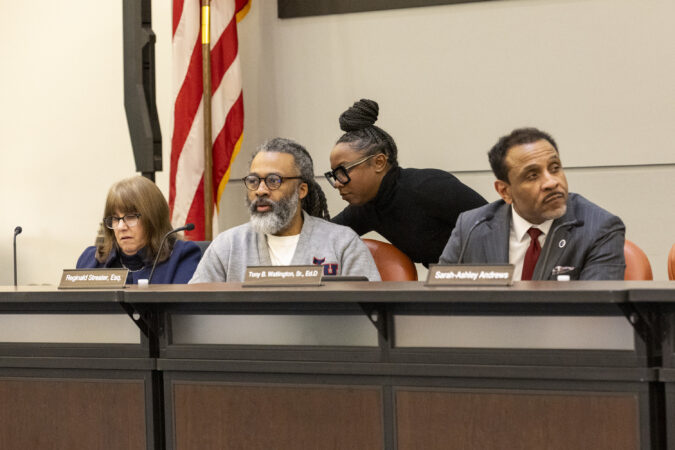
    The board voted 8-0 to nonrenew Global Leadership Academy Southwest at Huey, a charter run by Naomi Johnson-Booker, who operates another GLA charter in West Philadelphia. Board member Whitney Jones abstained, citing personal reasons.

    Charter schools are publicly funded but independently managed. In Philadelphia, about one-third of public school students attend brick-and-mortar charters.

    “We have a responsibility that is clear … to protect every child’s right, civil right, to a high-quality public education,” said the board’s president, Reginald Streater. He noted that GLA Southwest, a K-8 enrolling close to 600 students at 52nd and Pine Streets, has posted poor academic performance, with only 7% of students scoring proficient or advanced in math on the Pennsylvania System of School Assessments in 2025.

    The school also has poor student attendance, and has not met district governance and financial standards, with conflicts of interest in counsel representation, insufficient cash on hand, and “questionable financial payment plans,” Streater said.

    Noting GLA Southwest’s status as a Renaissance school — a former district school handed over to charter management a decade ago as part of an initiative to turn around failing schools — Streater said it was the board’s obligation “to do everything we can to create seats or incentivize seats that truly support student achievement, and as a Renaissance school, to complete the turnaround.”

    The board’s vice president, Sarah-Ashley Andrews, said the fact that the charter didn’t meet academic, operational, or fiscal standards on the district’s evaluation was “a clear red flag.”

    The vote doesn’t mean GLA Southwest will close, but triggers public hearings on the school’s performance.

    Supporters of the charter said the school’s test scores weren’t a full reflection of its value to students and the community.

    Zenobia Story, the school’s principal, said students had been improving, with proficiency on the state’s English language arts tests growing from 9.6% in 2022 to 22.4% in preliminary 2026 results.

    The results tell “a story of progress, not stagnation,” and “a school community moving in the right direction,” Story said. “The response should not automatically be closure.”

    Nutina Martin, the school’s director of climate and culture, said the school had inherited “significant climate and safety challenges.” But she said it had transformed since it became a charter in 2016, when there were 147 out-of-school suspensions in a single school year, Martin said. Now, she said, there were fewer than 30.

    Streater said the charter’s nonrenewal hearings would give the school “an opportunity under oath with evidence” to support statements made by staff Thursday.

    The board pulled a planned vote to nonrenew Philadelphia Montessori Charter School, in light of a Common Pleas judge’s order Wednesday to delay the vote following a lawsuit brought by the charter.

    Philadelphia Montessori’s executive director, Amanda Wilson, said the board had “created needless uncertainty” for the school’s families and staff.

    Streater said the board was “simply trying to do our duty, in being responsible charter school authorizers” and fiscal stewards.

    Spending on SEPTA

    In other business, the school board agreed to spend up to $34 million on SEPTA fare cards for students in the 2026-27 school year. Officials estimate 62,000 district, charter, and parochial school students are eligible for free fare cards — but that money is reimbursed through a state transportation subsidy.

    SEPTA, with district cooperation, is warning students that they have to use those cards. It’s launching a crackdown on student fare evasion in the coming school year.

    Transit system officials, who said they’re losing an estimated $11 million annually on students not swiping their fare cards.

    Under the new fare diversion system, any student caught not swiping their card — technically a theft of service offense — will begin receiving formal warnings that will also be sent to transportation liaisons at their schools.

    After a student’s third warning, they would receive a theft of service citation and court referral.

    Money for technology and to fix a closing school

    The board also voted to spend $4.1 million on technology — an advanced Google system officials said was “foundational to the district’s educational and operational objectives” and GoGuardian, an internet-filtering service.

    The contract for both services lasts through 2029.

    Also approved was $3.4 million worth of repairs to John B. Stetson Middle School in Kensington, one of the 17 schools the board voted earlier this year to close.

    Students, teachers and supporters rally before a community meeting at John B. Stetson Middle School on Thursday, Feb. 12, 2026 in Philadelphia. Stetson is one of 20 Philly public schools facing closure.

    Stetson is getting a new roof and masonry repairs, work that’s necessary, according to board documents, “to preserve and protect the building’s structural integrity and long-term functionality.”

    According to the facilities plan the board adopted in April, the school will begin phasing out grades, eventually closing in the 2029-30 school year. Stetson will remain in district hands, used as “swing space” — a place to house district students or programs that need a temporary spot to learn.

    Members of the Stetson community fought to keep their school open, objecting to the district’s years of neglect of their building.

    Some schools closed by the board are mostly empty; Stetson is about 60% full, but its building was judged to be in “unsatisfactory” condition.

    Memphis Street back to the district

    The board also moved to formally return a Port Richmond charter school back into its fold.

    Memphis Street Academy at J.P. Jones, a former district school run by the nonprofit American Paradigm since 2012, was ordered by a judge last year to surrender its charter after a long legal battle.

    The board first moved to close Memphis Street in 2022 after the school missed the mark on meeting conditions it had previously agreed to.

    To make the reabsorption of the school official, the board had to vote to report “Memphis Street Middle School” to the Pennsylvania Department of Education as a new district school opening in the fall. The school will serve students in grades 6 through 8; the current Memphis Street Academy also educates fifth graders.

    In its first go-round as a district school, the building was known as John Paul Jones Middle School.