Blog

  • Davidson ousts St. Joe’s from the A-10 Tournament with 64-59 victory

    Davidson ousts St. Joe’s from the A-10 Tournament with 64-59 victory

    Davidson held off St. Joseph’s for a 64-59 victory in an Atlantic 10 Conference quarterfinal on Friday in Henrico, Va.

    St. Joe’s leading scorer, guard Gabby Casey, was limited to five points on 2-of-12 shooting. Aleah Snead led the Hawks with 23 points on 9-of-11 shooting. Forward Faith Stinson added 14 points and eight rebounds. Davidson forced 19 St. Joe’s turnovers and limited the Hawks (20-11, 11-5) to just two made threes.

    Two free throws by Snead cut Davidson’s lead to 60-59 with 27 seconds left. The Hawks forced a turnover on the next possession, giving them a chance to take the lead. St. Joe’s turned to Snead, who took the ball off a screen and drove to the basket, but she collided with a Davidson defender and was called for a charge. The Wildcats made both free throws to help stave off the Hawks.

    St. Joe’s will now wait and see if it earns an invitation to the Women’s National Invitation Tournament or Women’s Basketball Invitation Tournament.

  • Acquiring David Jiříček is the latest example of the Flyers’ unorthodox approach to rebuilding. It’s worth the risk.

    Acquiring David Jiříček is the latest example of the Flyers’ unorthodox approach to rebuilding. It’s worth the risk.

    With one trade Friday morning, the Flyers got more interesting. Not immediately. They’re still likely to miss the playoffs this season, which would be the sixth in a row that they’ve failed to qualify for the postseason. For all that time and longer, they’ve been the NHL’s version of late-career Martin Scorsese: Back in the day, they were great and fascinating, and now they’re one suspenseless snoozefest after another. (Seriously, has Killers of the Flower Moon ended yet?)

    Their decision to send winger Bobby Brink to the Minnesota Wild for defenseman David Jiříček was an eyebrow-raiser, though. The move in and of itself wasn’t all that surprising, in that the Flyers have a surplus of wingers both on their roster and in their farm system. They were bound to say goodbye to one of them at this trade deadline, and Brink was a prime candidate: At 24, he’s a relatively promising player on a cap-friendly contract.

    No, the intrigue of the Brink trade comes from its context. It’s the latest thread in a larger pattern that general manager Danny Brière and team president Keith Jones have been weaving since they took control of the Flyers’ player-personnel department in 2023. Rather than having the team bottom out over a full season or two and ending up with a pick or picks that are at worst among the top five in their drafts, the Flyers are taking risks, some more calculated than others, by acquiring young players who were high draft picks for other clubs.

    They did it with Jamie Drysdale, whom the Anaheim Ducks had picked sixth in 2020 before trading him to the Flyers for Cutter Gauthier in January of 2024. They did it with Trevor Zegras — another Ducks draftee, ninth overall in 2019 — when they got him last offseason for Ryan Poehling and two draft picks. They did something similar in 2023 when they drafted Matvei Michkov, who fell to them at No. 7 in part because of worries among NHL clubs that he wouldn’t be leaving Russia for three years, if he was able to leave at all.

    Now they’ve done it with Jiříček. Drafted sixth overall in 2022 by the Columbus Blue Jackets, he reportedly was unhappy that the Blue Jackets thought he needed to spend time in the minors. They shipped him to Minnesota in November 2024; there, he bounced between the Wild and its farm team until Friday.

    Flyers forward Trevor Zegras has been a shrewd addition after struggling the past two seasons in Anaheim.

    At first glance, that’s not an especially appealing player profile: a high draft pick who has been traded twice before his 23rd birthday, once because he was malcontented, once because he couldn’t stick on an NHL roster. And it’s generally acknowledged that Jiříček’s skating has to improve substantially. Still, he is just 22, and he is 6-foot-4 and rugged, and he has a booming slap shot. There are tools there, and there is still time for him to mature into the player he was projected to be.

    The Flyers are attempting a daring bit of raindrop-dodging here. They haven’t tanked. They don’t want to tank. They believe it would be corrosive to the franchise as a whole and to the locker room in particular (and it certainly would be to their ticket-sales department). So they are banking — and a team source confirmed Friday that this element was part of their approach — that head coach Rick Tocchet, his staff, and the other power people in the organization can cultivate a strong enough culture that Drysdale, Zegras, Jiříček, and players like them can develop and thrive here even though they didn’t elsewhere.

    Michkov is again an instructive example in this regard. After entering the season out of shape and seeing Tocchet limit his ice time, he has been a better player since the Olympic break. The fears within the fan base that Tocchet was angering or alienating him have quelled, and Tocchet’s strategy for handling the most important player on the roster seems to be working, for the time being anyway.

    Drysdale hasn’t been the same caliber of player that Gauthier has been — someday, someone will get the full story on why the relationship between the Flyers and Gauthier deteriorated to the point that they felt they had to trade him — but he has come a long way and is just 23. Zegras, 24, has been an excellent addition so far. The Flyers are in need of two major components of a Stanley Cup-contending team — a No. 1 center and a No. 1 defenseman — and Jiříček’s pedigree suggests that he can one day be a top-tier defenseman, assuming a team can figure out how to get the best out of him.

    He may or may not become that kind of player. Whether he does or doesn’t isn’t really the point. The point is that the only way the Flyers are going to return to respectability again is by taking some chances and having those gambles pay off. They’re past playing it safe. They might end up exactly where they are now or in even worse shape, but at least they’ve stepped into the casino.

    Danny Brière has taken an unconventional and risky path to rebuilding. Time will tell if it pays off.
  • An Upper Darby restaurant is reportedly closing a year after appearing on Gordon Ramsay’s show

    An Upper Darby restaurant is reportedly closing a year after appearing on Gordon Ramsay’s show

    When Steve and Kelly Wilson appeared last year in an episode of Gordon Ramsay’s Secret Service — a FOX reality show in which the celebrity chef lends a hand to struggling restaurants — it appeared to be a victory for their Upper Darby barbecue establishment, Wilson’s Secret Sauce.

    In the episode’s final moments, after executing a significant makeover, Ramsay stands with the Wilsons in the restaurant’s dining room, which is brimming with patrons.

    “A full house,” Ramsay tells the couple. “Get used to it.”

    The reality, though, has apparently been different.

    Just a year after Ramsay’s reality-TV glow-up, the Wilsons told Philadelphia magazine this week that they’d elected to close the restaurant and sell the building after a year of declining business.

    From the start, the couple’s restaurant was an unlikely endeavor. Their foray into the local food scene came around 2010, when Steve — a former mechanic — began a barbecue catering service from their home. But when demand jumped in the ensuing years, they eventually decided to open a brick-and-mortar restaurant.

    Kelly, at least, was not exactly thrilled with the idea.

    “[Steve] came home from bowling and asked me if I wanted to open up a restaurant — I literally said, ‘[Expletive] no,’” she said on the episode of Secret Service. “‘I’ve never worked in one, you’ve never worked in one, and I don’t think we could work together all day long.’”

    Nevertheless, Wilson’s Secret Sauce debuted in 2018 in Upper Darby, specializing in barbecue dishes while also serving everything from pizza and lobster to egg rolls.

    But stress quickly ensued, and when Ramsay came to town last March, he set about transforming the restaurant.

    Over the course of the 43-minute episode, Ramsay chastised the couple for everything from food hygiene to kitchen inefficiencies before helping implement a variety of changes aimed at ensuring the restaurant’s survival.

    Among the various changes pushed by Ramsay was significantly shrinking the restaurant’s expansive menu, which the couple did, whittling their dozens of menu items down to just 13.

    But the Wilsons later told Philadelphia magazine that business slowed after Ramsay’s suggested change, at least in part because customers missed the items that had been cut from the menu.

    “We had a lot of customers coming in from day one of the new menu begging us to bring the old menu back,” Kelly Wilson told the magazine. “We were getting lost with his menu, and our menu really worked a lot better.”

    While the Wilsons’ sit-down restaurant is set to close, they said they’ll continue the catering service that was once their bread-and-butter, operating out of a shared “ghost kitchen.”

  • Painted Bride’s new executive director is an arts leader who, many years ago, interned at the arts organization

    Painted Bride’s new executive director is an arts leader who, many years ago, interned at the arts organization

    Nearly a year after longtime executive director Laurel Raczka announced she was stepping down from her post at Painted Bride Art Center, the arts organization has found a new leader.

    Risë Wilson is the organizations’s new executive director, succeeding Raczka, who led the Bride for 26 years.

    Th exterior of Painted Bride Art Center Project Space, 4029 Cambridge St., Philadelphia, Wednesday, September 3, 2025.

    With this appointment, Wilson, a Germantown native, will be returning to her hometown and the organization that kick-started her arts career nearly 30 years ago.

    Wilson interned at the Bride under Raczka and former leader Gerry Givnish, who transformed the former cooperative gallery into an alternative performance space.

    “That experience changed my life,” Wilson said in a statement, responding to questions from The Inquirer, “setting me on a course to develop my own socially-engaged artistic practice while championing fellow artists committed to community-based work.”

    Executive director Laurel Raczka and Painted Bride board chair John Barber at the Painted Bride Art Center Project Space, 4029 Cambridge St., Philadelphia, Wednesday, Sept. 3, 2025.

    For the past two decades, Wilson has engaged with that work in Brooklyn, spearheading organizations such as the Laundromat Project, using art as a tool for community building and engagement.

    Wilson’s career has spanned public engagement, artist development, strategic planning, and philanthropic practice. Her previous roles include being the inaugural director of philanthropy at the Robert Rauschenberg Foundation. She has also worked with the Ford Foundation, Parsons: The New School for Design, MoMA, and the International Center for Photography.

    The community organizer and activist holds a bachelor of arts degree from Columbia University, where she was a Kluge Scholar, and a master of arts degree from New York University, where she was a MacCracken Fellow.

    The former Painted Bride with the iconic mosaic by Isaiah Zagar. Photo taken on Oct. 18, 2023.

    After years at 52nd and Market Streets, the Painted Bride recently moved to a 3,200-square-foot performance space in East Parkside. In her statement, Wilson said she’s stepping in at a time when “we all need to protect and exercise our imaginations.”

    The Bride’s storied commitment to supporting artists and “culture-bearers” is one of many reasons the role resonated so strongly with her.

    “I feel privileged to work for a cultural institution long committed to cultivating the conditions for artists to thrive, for dialogues to deepen, and for each of us to be the authors of our own story,” Wilson said in her statement.

    As she transitions into her new role, Wilson is planning more artist-centered programming and “public-facing cultural dialogue,” which includes added workshops, public discussions, and collaborative projects.

    She’s also working on strengthening collaboration between artists, neighborhood organizations, and the city’s cultural partners. These efforts, Wilson wrote, will firmly establish the Bride’s role as a “civic cultural space.”

    Raczka said she’s confident the organization will continue to be a place for artist development and community engagement under Wilson.

    “I’m excited to see [Wilson] bring her leadership and vision to this next chapter,” Raczka said. “Her work has long centered artists as essential contributors to civic life, and I believe the Bride will continue to grow as a vital cultural space under her stewardship.”

  • Marilouise H. James, retired longtime schoolteacher and home and school visitor, has died at 101

    Marilouise H. James, retired longtime schoolteacher and home and school visitor, has died at 101

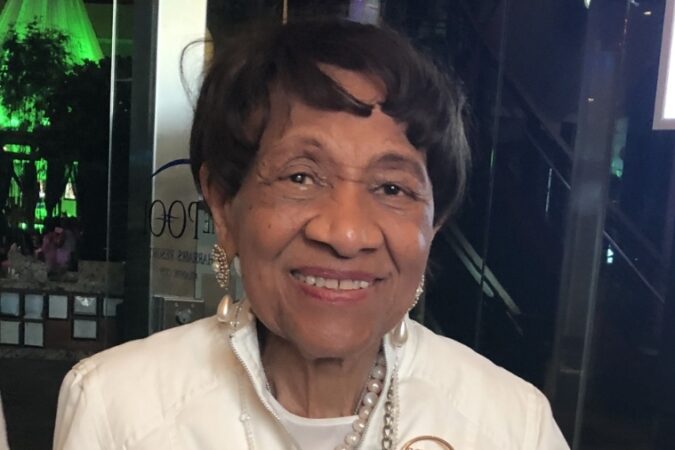
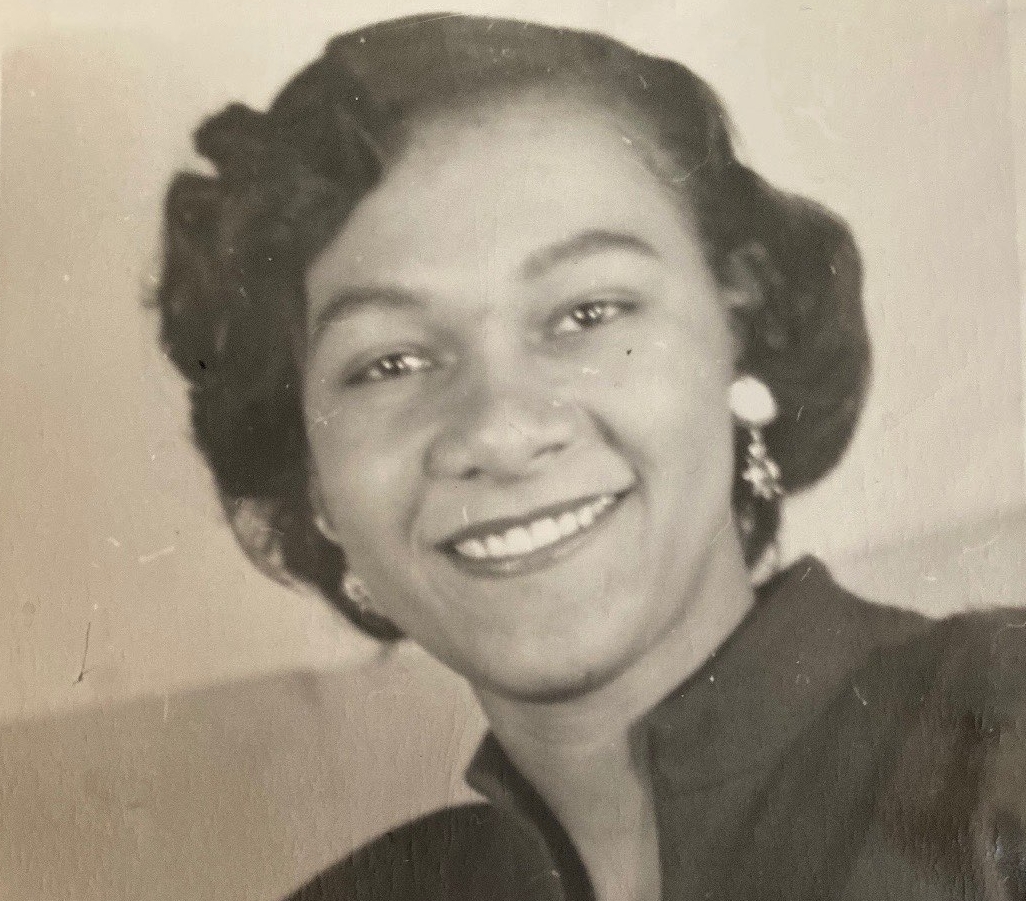
    Marilouise H. James, 101, formerly of Willingboro, a retired English and social studies teacher for the Philadelphia School District, certified home and school visitor, 80-year member of Alpha Kappa Alpha Sorority Inc., mentor, and volunteer, died Friday, Feb. 13, of age-associated decline at the Masonic Village retirement community in Burlington.

    Naturally empathetic and energetic, Mrs. James was skilled at spelling, language, and assisting students in school and families at home. Beginning in the late 1940s, she taught English and social studies at the old Sulzberger Middle School in West Philadelphia, social studies at Audenried Junior High School in South Philadelphia, and English at Northeast High School.

    She appreciated the beauty and nuances of the French language as a girl and earned second place in a statewide spelling bee in Delaware. Later, when she saw that students at Sulzberger had no French Club, she started one.

    “She was one of a kind,” said her niece Sonya Thompson. “Big smile. Big laughter. Big heart.”

    Mrs. James (center) and her daughters, Lisa (left) and Shelley, all joined Alpha Kappa Alpha Sorority Inc.

    Mrs. James earned a bachelor’s degree in French at Temple University, a master’s degree in counseling at Antioch University, and teaching certifications in English, French, social studies, home and school visiting, and guidance counseling.

    When her children came along in the 1950s, she left the classroom and, as a school district home and school support expert, managed difficult situations regarding student truancy and behavior, and crisis intervention at homes. She retired in the late 1980s.

    “She was the easiest person to talk to,” said her daughter Lisa James-Beavers. “She was warm and never judgmental. She made you feel like she always knew you.”

    Mrs. James was an active mentor in Alpha Kappa Alpha for 80 years, and her sorority sisters threw a 101st birthday party for her last August. She was a charter member of the Gamma Epsilon chapter in Philadelphia in 1945, moved to the Theta Pi Omega chapter in South Jersey in 1969, and served as its vice president, secretary, assistant secretary, treasurer, and in other roles.

    Mrs. James graduated from Howard High School at 16 after skipping two grades.

    “If anyone ever needed a smile, Soror Marilouise was always there ready to share one,” a friend said on Facebook.

    She also joined the Sickle Cell Anemia Resources Board and the Board of the Black Adoption Consortium. She belonged to the Rancocas Valley chapter of the Links Inc. and was a charter member of the Burlington-Willingboro chapter of Jack and Jill of America Inc.

    She volunteered as a patient representative at what is now Virtua Willingboro Hospital and as a library assistant at Twin Hills Elementary School. “She was a walking, talking breath of fresh air,” her niece said. “She taught all of us that kindness matters. She always said, ‘I am doing the best I can for as long as I can.’”

    Friends called her “a radiant inspiration and a true joy” and “a beautiful phenomenal woman” in online tributes. Her family said: “She did not simply experience joy. She created it. She carried it into every room, poured it into every relationship, and planted it in the hearts of all who knew her.”

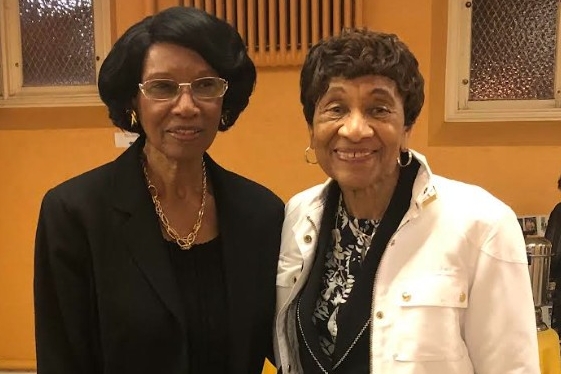
    Mrs. James (right) was fun and funny, her family said.

    Marilouise Holland was born Aug. 23, 1924, in Milford, Del. She grew up in Wilmington and graduated from Howard High School at 16 after skipping two grades.

    She met Raymond James in Philadelphia, and they married in 1953. They had a son, Dennis, and daughters Shelley and Lisa, and lived in Lansdowne before moving to Willingboro in 1969. Her husband died in 1979.

    Mrs. James was fun and funny, her family said. She had an infectious laugh, loved shopping, and was, they said, “always stylish from head to toe.”

    She enjoyed hosting her family for reunions. Her niece said: “Her hospitality was off the charts.” Her daughter Lisa said: “She was easy to be around.”

    Mrs. James (front right) enjoyed time with her family.

    She read often and belonged to a book club. She saw shows at the Walnut Street Theatre for more than 25 years and attended Corpus Christi Catholic Church in Willingboro.

    She liked pizza on Friday nights and doughnuts after Sunday Mass. Her family said it was only fitting that she died during Black History Month. Her life, they said, was “a reflection of the barriers she broke and the lasting legacy she carved.”

    In addition to her children, Mrs. James is survived by seven grandchildren, five great-grandchildren, a sister, and other relatives. A sister and a brother died earlier.

    Services were held earlier.

    Donations in her name may be made to the EAF Theta Pi Omega Chapter Scholarship Fund, Box 2902, Cherry Hill, N.J. 08034.

    Mrs. James (right) and her sister, Betty
  • Russia is providing Iran intelligence to target U.S. forces, officials say

    Russia is providing Iran intelligence to target U.S. forces, officials say

    Russia is providing Iran with targeting information to attack American forces in the Middle East, the first indication that another major U.S. adversary is participating — even indirectly — in the war, according to three officials familiar with the intelligence.

    The assistance, which has not been previously reported, signals that the rapidly expanding conflict now features one of America’s chief nuclear-armed competitors with exquisite intelligence capabilities.

    Since the war began Saturday, Russia has passed Iran the locations of U.S. military assets, including warships and aircraft, said the three officials, who spoke on the condition of anonymity because of the matter’s sensitivity.

    “It does seem like it’s a pretty comprehensive effort,” one of the people said.

    Reached by The Washington Post on Friday, Dmitry Peskov, the Kremlin spokesman, declined to comment on the intelligence findings. Moscow has called for an end to the war, which it labeled an “unprovoked act of armed aggression.”

    The extent of Russia’s targeting assistance to Iran was not entirely clear. The Iranian military’s own ability to locate U.S. forces has been degraded less than a week into the fighting, the officials said.

    Six U.S. troops were killed and several others were injured by an Iranian drone attack Sunday in Kuwait. Iran has fired thousands of one-way attack drones and hundreds of missiles at U.S. military positions, embassies and civilians, even as the joint American-Israeli campaign has hit more than 2,000 Iranian targets — including ballistic missile sites, naval assets, and the country’s leadership.

    “The Iranian regime is being absolutely crushed,” said a White House spokeswoman, Anna Kelly, without commenting on any Russian aid to Iran. “Their ballistic missile retaliation is decreasing every day, their navy is being wiped out, their production capacity is being demolished, and proxies are hardly putting up a fight.”

    The CIA and the Pentagon declined to comment.

    When asked this week about his message to Russia and China, which are among Iran’s most powerful backers, Defense Secretary Pete Hegseth said that he didn’t have one and that “they’re not really a factor here.”

    Two of the officials familiar with Russia’s support for Iran said that China did not appear to be aiding Iran’s defense, despite close ties between the two countries.

    In a statement, the Chinese Embassy in Washington referred to Beijing’s diplomatic efforts to engage with partners in the region since the war began and said that the conflict should be “immediately ceased.”

    Analysts said that the sharing of intelligence would fit the pattern of Iran’s strikes against U.S. forces, including command and control infrastructure, radars and temporary structures, like the one in Kuwait where six service members were killed.

    Iran is “making very precise hits on early warning radars or over-the-horizon radars,” said Dara Massicot, an expert on the Russian military at the Carnegie Endowment for International Peace. “They’re doing this in a very targeted way. They’re going after command and control,” she added.

    Iran possesses only a handful of military-grade satellites, and no satellite constellation of its own, which would make imagery provided by Russia’s much more advanced space capabilities highly valuable — particularly as the Kremlin has honed its own targeting after years of war in Ukraine, Massicot said.

    Nicole Grajewski, who studies Iran’s cooperation with Russia at the Harvard Kennedy School’s Belfer Center, said that there had been a high level of “sophistication” in the Iranian retaliatory strikes, both in what Tehran has targeted and in its ability in some cases to overwhelm U.S. and allied defenses.

    “They’re getting through air defenses,” she said, noting that the quality of Iran’s strikes appeared to have improved even from its 12-day war with Israel last summer.

    The Pentagon is quickly burning through its supply of precision arms and air defense interceptors, people familiar with the matter have told the Post, underscoring concerns raised by Gen. Dan Caine, chairman of the Joint Chiefs of Staff, as President Donald Trump deliberated whether to approve the operation. The administration has sought to downplay Caine’s assessment.

    Russia’s assistance reshuffles how various countries have engaged in a proxy war since Russia’s 2022 full-scale invasion of Ukraine. Throughout that conflict, U.S. adversaries including Iran, China and North Korea have provided Russia with either direct military aid or material support for Moscow’s vast defense industry. The United States has given Ukraine tens of billions of dollars’ worth of military equipment and shared intelligence on Russian positions to improve Kyiv’s targeting.

    On Thursday, Ukrainian President Volodymyr Zelensky posted on X that the Trump administration had requested assistance in helping protect against Iranian drones and that Kyiv would provide “specialists” in response.

    Iran has been one of Russia’s chief backers during the Ukraine war, sharing the technology to produce cheap one-way attack drones that have repeatedly been used to overwhelm Kyiv’s air defenses and exhaust Western stocks of interceptors donated to protect Ukrainian cities.

    “The Russians are more than aware of the assistance that we’re giving the Ukrainians,” said one of the officials familiar with Moscow’s support for Tehran. “I think they were very happy to try to get some payback.”

    The quality of Russia’s intelligence collection is not on a par with America’s but still ranks among the world’s best, this person continued.

    The Post has previously reported that despite the blow to one of its closest partners, the Kremlin sees possible advantages in a prolonged war between the U.S. and Iran, including higher oil revenue and an acute crisis that distracts America and Europe from the war in Ukraine.

    Iran, whose supreme leader was killed early in the conflict, could become the latest country to lose a pro-Russian government in recent years, following a Syrian uprising in late 2024 that ousted longtime dictator Bashar Assad and the U.S. military raid to seize Venezuelan President Nicolás Maduro in January.

    Still, the lack of direct military involvement from Moscow is in part a sign of its need to focus elsewhere, Massicot said.

    The Kremlin, she said, is “very much considering this is not their problem and not their war. From a strategic calculus perspective, Ukraine is still far and away the number one priority.”


  • Mother of 20-year-old killed in Lincoln University homecoming shooting sues school

    Mother of 20-year-old killed in Lincoln University homecoming shooting sues school

    The mother of Ju’Juan Jeffers, the 20-year-old man killed during a shooting at Lincoln University homecoming last October, has filed a lawsuit against the school, the university police chief, and others.

    Attorneys for Marchelle Hargroves, Jeffers’ mother, allege that Lincoln prioritized the “college experience” over safety and, in doing so, fostered a campus culture that permitted violent and sometimes fatal acts,” according to the suit filed Friday in Common Pleas Court in Philadelphia.

    “Lincoln University allowed unrestricted public access to its homecoming events and negligently failed to implement or enforce adequate security measures, including … controlled entry points, attendee screening, handheld wands, metal detectors and/or bag checks,” the suit said.

    Jeffers, of Claymont, Del., was one of seven people shot at the Oct. 25 event; he was the only one who died.

    Jeffers was not a student at Lincoln, but had been invited to attend, according to the suit.

    A university spokesperson said the school does not comment on active litigation. Its police chief, Marc Partee, declined comment.

    Also named as a defendant in the lawsuit is Zecqueous Morgan-Thompson, who was charged with possessing a concealed firearm without a license at the event, but has not been charged in Jeffers’ shooting. Prosecutors have said Morgan-Thompson is not a student at Lincoln, nor an alumnus, and that it had been unclear why he was on campus. Law enforcement officials said after the shooting that they had confirmed a match between a fired .380 cartridge at the scene and the Glock 28 semiautomatic pistol that Morgan-Thompson had.

    Morgan-Thompson, the lawsuit said, fired a round during the event, “thereby helping to incite the crowd, which negligently and recklessly contributed to the shooting death of Mr. Jeffers.”

    Morgan-Thompson’s attorney in his criminal case did not immediately respond to a request for comment Friday. A trial is scheduled this month for Morgan-Thompson; no other charges have been filed in connection with the homecoming shooting or Jeffers’ death.

    Other defendants listed in the lawsuit complaint include unnamed Lincoln security officers, as well as unnamed outside companies that Lincoln hired to provide additional security.

    Michael T. van der Veen, an attorney for Hargroves, described Jeffers as an honor student, chess player, and “dedicated athlete” who wanted to serve in the military and start his own clothing company.

    “He loved basketball and played throughout his school years,” van der Veen said at a news conference Friday announcing the suit. “He had a beautiful life ahead of him.”

    At a board of trustees meeting last month, the university announced new safety plans for large events, including holding no outdoor events after dusk, screening guests, and allowing only one registered guest per student for the upcoming Spring Fling event in April.

    Lincoln, a historically Black university with 1,650 students in rural Chester County, has been under pressure from its neighbors and Lower Oxford Township to make changes since the shooting.

    Several officials in Lower Oxford had reported ongoing problems with parking, trash on neighbors’ lawns, disturbances, and, in some cases, crime when the university hosts events. After thousands gathered for homecoming, emergency personnel had to use all-terrain vehicles to transport patients on stretchers because ambulances could not access the campus, given how many cars were parked around the venue, they said.

    The township’s board of supervisors is expected to vote at their meeting at 7 p.m. Monday on a special events ordinance that would require a permit process for large events.

    According to the lawsuit, thousands packed Lincoln’s International Cultural Center parking lot after the homecoming football game, and there was alcohol consumption.

    It took hours for Jeffers to receive medical care after he was shot, the complaint says, because the roads were clogged around the university.

    “Multiple invitees were forced to render emergency medical aid because emergency medical personnel could not promptly access and reach him,” the suit said. “Lincoln University knew or should have known that the Homecoming football game and celebrations would attract a substantial number of attendees to its campus and were on notice of the need for protocols for adequate safety of and about the University.”

    Partee, the Lincoln police chief, “failed to take reasonable steps to correct or remedy these dangerous conditions,” the suit said.

    Concerns about behavior during large events had been raised with Lincoln officials by township officials and others over several years, but no adequate action was taken, the suit said.

  • Justice Department targets Cuban officials, aims for indictments

    Justice Department targets Cuban officials, aims for indictments

    The Justice Department has formed a working group to examine possible federal charges against officials or entities within Cuba’s government, according to an official familiar with the group.

    The formation of the group could be a significant step in the Trump administration’s public push to topple the regime in Cuba.

    Officials from government agencies including the Treasury Department will be part of the recently formed group. Treasury’s involvement could mean the Trump administration is considering further sanctions against Cuba, already the subject of intense U.S. economic sanctions.

    The working group is exploring potential crimes related to immigration, economics, and more. Another person familiar with the working group said federal prosecutors in Florida are also working with local partners in the state to bring potential charges against Cuban officials.

    The effort to bring charges against Cuban officials coincides with President Donald Trump saying that his administration is eyeing Cuba as the next country whose government might be overthrown, following the capture of Venezuela’s Nicolás Maduro in early January and the killing of Iran’s supreme leader last Saturday.

    “We want to finish this one first,” Trump said Thursday, referring to the current attack on Iran. It “will be just a question of time” before Cuba’s government falls, and “you and a lot of unbelievable people are going to be going back to Cuba, hopefully not to stay,” he told a White House audience that included a large number of Republicans from South Florida, many of Cuban descent.

    “I just want to wait a couple of weeks,” he added. On Friday, in an interview with CNN, he repeated that Cuba “is going to fall very soon.”

    The U.S. Attorney’s Office in the Southern District of Florida — which includes Miami, the center of the Cuban exile community — will be overseeing the prosecution group, according to the official familiar with the matter, who, like others in this article, spoke on the condition of anonymity to discuss an internal plan that has not yet been made public.

    Jason Reding Quiñones, who heads the office, is also overseeing a probe aimed at former officials of the Joe Biden and Barack Obama administrations whom Trump accuses of bringing politically motivated investigations against him.

    “Federal prosecutors from across the country work every day to pursue justice, which includes efforts to combat transnational crime,” a Justice Department spokesperson said in a statement.

    The Cuba prosecution effort could, in part, follow the model the administration used to remove Maduro from power. The Justice Department indicted Maduro in 2020, although the leader was not extradited at the time. In January, the administration launched an attack on Venezuela, capturing Maduro and bringing him to New York to face charges.

    Several former prosecutors from the Miami U.S. attorney’s office told the Washington Post that they were not surprised that the office would be leading an effort specifically focused on Cuba-related prosecutions. The Miami office has a long history of handling high-profile cases involving wrongdoing tied to the Cuban regime.

    The U.S. has, for example, long charged that GAESA, a military business conglomerate that controls vast portions of the Cuban economy, including tourism, foreign imports, and currency flows, is a center of state corruption.

    In 2024, the office secured the conviction of Victor Manuel Rocha, a former U.S. diplomat who admitted to gathering intelligence for Cuba for more than four decades while holding sensitive roles in the U.S. State Department and National Security Council.

    Attorneys in the office also led a significant prosecution in the early 2000s against five Cuban intelligence officers who were arrested in the United States and accused of seeking to infiltrate anti-Castro Cuban American groups. The group, known as the Cuban Five, was convicted at trial. President Barack Obama released several of its members in a 2014 prisoner exchange as part of his administration’s efforts to establish more normalized relations with Cuba.

    Last month, several Republican members of Florida’s congressional delegation urged Attorney General Pam Bondi to reopen an investigation into a 1996 incident, in which Cuban forces shot down two unarmed civilian planes operated by a Miami-based Cuban exile group called Brothers to the Rescue. Four people were killed.

    The group was scouring nearby waters for refugees seeking to escape to the U.S. at the time.

    The U.S. lawmakers, in a Feb. 13 letter, alleged that Raúl Castro, Cuba’s former president and brother of Fidel Castro, ordered the attack while serving as the head of the nation’s military.

    They pushed Trump administration officials to indict him and cited audio recordings of Raúl Castro discussing the incident that they said could help build a case.

    “We believe unequivocally that Raul Castro is responsible for this heinous crime,” read the letter signed by Reps. Mario Diaz-Balart, María Elvira Salazar, Carlos A. Gimenez, and Nicole Malliotakis. “It is time for him to be brought to justice.”

    Last week, the Supreme Court heard arguments on the efforts of two U.S. companies seeking compensation for assets seized by Cuba 65 years ago. Success in those efforts could open the door to a large number of additional lawsuits.

    Officials from South Florida have also urged the Justice Department to take action against the Cuban regime over a recent incident in which Cuban soldiers opened fire on a speedboat registered in Florida as it approached the island. The gunfire killed four of the boat’s armed passengers, including a U.S. citizen, and wounded another six.

    Cuban officials charged the survivors this week, alleging that they and those killed were Cubans living in the United States intent on infiltrating the island to commit acts of terrorism.

    The U.S. attorney for the Southern District of Florida, Reding Quiñones, expressed skepticism about that conclusion in a statement shortly after the shooting, saying: “The facts remain unclear and conflicting.”

    He vowed a thorough investigation.

    “We will follow the facts wherever they lead and pursue answers through every legal and diplomatic channel available,” he said. “We owe that to the victims, their families, and to the rule of law. More to come as we learn more.”

  • Justice Dept. releases missing Epstein documents with Trump allegations

    Justice Dept. releases missing Epstein documents with Trump allegations

    The Justice Department on Thursday publicly posted additional records related to convicted sex offender Jeffrey Epstein, including some that include allegations against President Donald Trump, following sharp criticism of the agency’s handling of the issue.

    The agency said the files, which include details from FBI interviews with a woman who told authorities she had been sexually assaulted by Trump and Epstein, had not been previously released because they were incorrectly determined to be duplicates of other records. The Justice Department has posted millions of pages of Epstein-related records online, including investigative materials, following the passage of a law last year mandating their release.

    The woman, who was interviewed by the FBI in 2019, accused Trump of sexually assaulting her decades earlier when she was a minor. No evidence has emerged publicly to corroborate that accusation. The White House called the allegations against Trump “completely baseless accusations, backed by zero credible evidence.”

    The additional records were posted as Trump and his administration have struggled to combat controversies involving the release of files connected to Epstein, who died in federal custody in 2019 while facing charges of sex-trafficking and abusing girls.

    The Justice Department has faced particular criticism over its response to the Epstein Files Transparency Act, a measure passed by Congress last year that demanded the agency make public a wide array of records by mid-December. While the agency did release more than 100,000 pages by that point, it did not make public most of its files until weeks later, well after the deadline.

    Lawmakers have faulted the Justice Department for missing the deadline, failing to redact some information related to victims’ identities and redacting other information. Last month, after multiple media outlets reported that summaries of the woman’s account had not been included, the Justice Department said it was examining whether it wrongly withheld records containing allegations against Trump, who had been friends with Epstein for years before they had a falling out.

    On Thursday, the Justice Department said in a social media post that it had discovered that “15 documents were incorrectly coded as duplicative.” Among these records were notes from multiple FBI interviews with the woman, who spoke to authorities following Epstein’s arrest in 2019.

    According to the interview notes, the woman told investigators that she had been sexually assaulted by Epstein and Trump during separate incidents in the 1980s, when she was a minor. The Washington Post has been unable to corroborate these allegations or reach the woman.

    Though summary reports of three of her FBI interviews were not included in files previously released by the administration, the Justice Department had already posted a report on one of the interviews as well as a summary file referencing the woman’s allegations against Trump.

    Karoline Leavitt, the White House press secretary, pushed back against the allegations in a statement Friday.

    “The total baselessness of these accusations is also supported by the obvious fact that Joe Biden’s [Justice Department] knew about them for four years and did nothing with them — because they knew President Trump did absolutely nothing wrong,” Leavitt said. “As we have said countless times, President Trump has been totally exonerated by the release of the Epstein Files.”

    The Justice Department this week said it had “not deleted any files from the library,” and a spokeswoman called it “the most transparent Department of Justice in history.”

    In addition to the FBI interviews, the Justice Department said Thursday that federal officials in South Florida had separately concluded that five prosecution memos “initially marked as privileged could be released while still protecting the privileged materials.” Those were also released, the agency said.

    The release of the FBI interviews and other documents came a day after the House Oversight and Government Reform Committee voted to subpoena Attorney General Pam Bondi, escalating tensions between Congress and the administration.

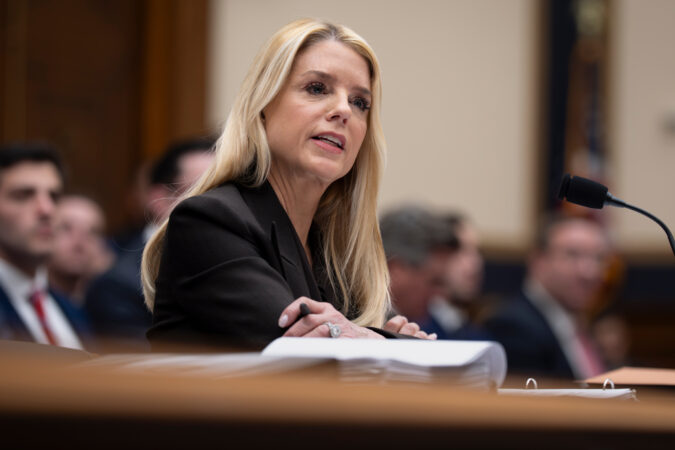
    Bondi, testifying last month before Congress, said the Justice Department “spent thousands of hours painstakingly reviewing millions of pages to comply with Congress’s law.”

    It was not clear how Bondi intends to respond to the subpoena, which compels her to appear before the committee for a closed-door deposition about the Justice Department’s release of the Epstein records.

  • Philadelphia Museum of Art hires a new chief financial and operating officer

    Philadelphia Museum of Art hires a new chief financial and operating officer

    Philadelphia Museum of Art director and CEO Daniel H. Weiss has hired a longtime associate to be the museum’s new executive vice president and chief financial and operating officer.

    Mitchell Lee Wein will oversee finances, facilities, operations, risk management, and strategic initiatives, the museum announced Friday.

    Weiss and Wein worked together in similar roles when Weiss was president of Haverford College and, before that, at Lafayette College. Wein, 63, has extensive experience on the financial and operations side of nonprofit organizations, but has never worked in a museum.

    A Philadelphian for more than three decades, he takes up the new post April 22.

    “It’s such an important institution that I’m happy to play a role for as long as I can and leave it better for the future. I think the mission is critical,” said Wein. “When I was in the private sector I thought about how we attract firms to Philadelphia, how people can have a great experience here, and the museum plays a role in that. I smile when I think about the opportunities.”

    Mitchell Lee Wein, newly named CFO and COO of the Philadelphia Museum of Art.

    Wein is currently senior vice president for finance and COO at the Brookings Institute, the Washington, D.C.-based think tank. He was senior vice president for administration and finance at Haverford College and held a similar position at Lafayette College. Previously, he was managing director in investment banking with UBS Investment Bank/UBS PaineWebber, and, before that, at PNC Capital Markets.

    Weiss took over the museum in December and has been making a series of changes in the executive leadership team as he determines how to close the operating deficit and revive attendance. He must decide what to do about paused expansion plans and much-needed maintenance on existing buildings. And he will consider whether to re-open to the public the Ruth and Raymond G. Perelman Building, the museum’s major addition that closed during the pandemic.

    Among Weiss’s early moves: he reversed the name change that had been unveiled months earlier as part of the museum’s widely-panned rebranding.

    Wein says he has been following coverage of the museum’s challenges and reading financial statements in preparation for his start. He said he looked forward to developing a plan for the museum “in support of what Dan has outlined along with other colleagues.”