Blog

  • How medical misinformation is changing the exam room | Expert Opinion

    How medical misinformation is changing the exam room | Expert Opinion

    A glance at the clock told me that I had only five more minutes to finish examining my patient in his early 60s.

    During my family medicine rotation at a primary care clinic affiliated with Cooper Medical School of Rowan University, where I am training to become a physician, we are usually allotted 20 minutes for a standard patient checkup. In that time, I have to cover a patient’s medical history, review their medications, conduct a physical exam, and discuss test results.

    I had little time for conversation about my patient’s bloodwork, where a few numbers popped up as concerning. His total cholesterol and LDL (harmful cholesterol) had climbed sharply since his last visit. I entered the values into a cardiovascular risk calculator, a routine step in deciding whether to start medication. My patient also smoked and had a family history of heart disease.

    The calculation assessed his 10-year risk of heart attack or stroke as near 20%. That’s well above the 7.5% risk threshold where we typically recommend starting treatment.

    I explained the results and encouraged my patient to consider starting a statin to lower his cholesterol.

    He shook his head. “I Googled it. I wasn’t too pleased with the side effects. What good is preventing heart disease if I get muscle breakdown? There are doctors online saying they’re overprescribed,” he told me.

    I walked him through the evidence. Yes, muscle pain can happen, and in rare cases, more serious muscle injury. I urged him to look past fears of rare side effects, but he wasn’t convinced. “It sounds like the medication lowers the risk of some things and raises the risk of others,” he said.

    Conversations like this reveal how medical misinformation enters routine care decisions. It starts with an article read online, a TikTok video about side effects, a social media thread questioning whether doctors overprescribe. Over time, this incomplete information reshapes how patients weigh risk. Like my patient, some end up fearing rare complications more than than the threat posed by common diseases.

    The consequences extend to issues like vaccine hesitancy. Unsubstantiated fears of side effects and debunked links to autism have led many parents to forgo routine immunizations. We are already seeing the results in rising outbreaks of preventable diseases like measles.

    In medical school, I have seen that doctors rarely can promise certainty. My profession pieces together evidence and offers guidance based on what is most likely to happen, not what is guaranteed. We talk in terms of risk and percentages.

    That nuance can feel unsatisfying, especially when someone else — a friend, family member, influencer — is making bold, confident claims about hidden harms. In high-stakes situations, it’s easy to mistake that confidence for competence.

    To earn this patient’s trust, I needed a different playbook. As my allotted minutes for his visit ran out, I stepped out of the exam room to briefly to discuss his case with my attending physician. We re-entered the room together, and the experienced doctor showed me a different approach.

    He didn’t start talking about statistics. Instead, he listened carefully and acknowledged the patient’s concerns. Yes, muscle symptoms can happen. No medication is completely without risk.

    Then he reframed the conversation. What would a heart attack mean for your life? What is most important to you?

    The tone in the room shifted. The discussion stopped being about whether the internet was right or wrong and became about values and tradeoffs. Neither of us was trying to “win” the argument. We wanted to show our interest in the patient.

    Misinformation is best addressed with transparency and a willingness to acknowledge uncertainty and meet patients where they are. These conversations take time, but are necessary.

    Misinformation doesn’t disappear if we ignore it, overwhelm it with data, or lean on whatever authority we think comes with a white coat. It goes away when patients feel heard, when risks and benefits are explained plainly, and when trust is built one conversation at a time.

    Ian Millstein is a rising fourth-year medical student at Cooper Medical School of Rowan University, currently pursuing an MPH in Health Management at the Harvard T.H. Chan School of Public Health.

  • U.S. soldiers who died in the Iran war remembered for their service and devotion to their families

    U.S. soldiers who died in the Iran war remembered for their service and devotion to their families

    WEST DES MOINES, Iowa — Sgt. Declan Coady had been checking in with his family from Kuwait every hour or two after the U.S. and Israel launched their military campaign against Iran, even as Tehran launched retaliatory strikes against Israel and Persian Gulf Arab states that host U.S. armed forces.

    When he didn’t respond to messages Sunday, “most of us started to wonder,” Coady’s father, Andrew, told the Associated Press. “Your gut starts to get a feeling.”

    A drone strike at a command center in Kuwait killed Coady, 20, of West Des Moines, Iowa, and five other members of the U.S. Army Reserve who worked in logistics and kept troops supplied with food and equipment.

    The other soldiers identified Tuesday by the Pentagon were: Sgt. 1st Class Nicole Amor, 39, of White Bear Lake, Minn.; Capt. Cody Khork, 35, of Winter Haven, Fla.; and Sgt. 1st Class Noah Tietjens, 42, of Bellevue, Neb. U.S. Army base Fort Knox wrote on Facebook that the names of the other two will be released once next-of-kin notifications are complete.

    The soldiers were assigned to an Army Reserve unit headquartered in Des Moines, Iowa, which is temporarily operating under the 1st Theater Sustainment Command at Fort Knox in Kentucky.

    “Sadly, there will likely be more, before it ends. That’s the way it is,” President Donald Trump said of the deaths. Trump will attend the dignified transfers of the soldiers when they arrive in the U.S., the White House said Wednesday. The ritual honors service members killed in action.

    Defense Secretary Pete Hegseth said the military “ensured that the maximum possible defense and maximum possible force protection was set up before we went on offense.”

    “The terms of this war will be set by us at every step,” Hegseth said Wednesday.

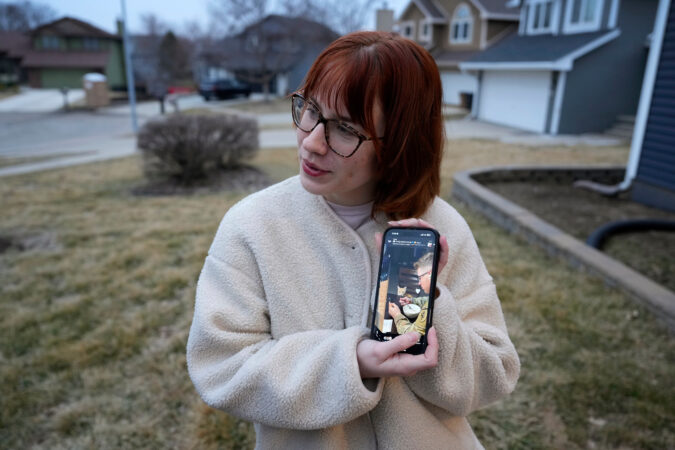
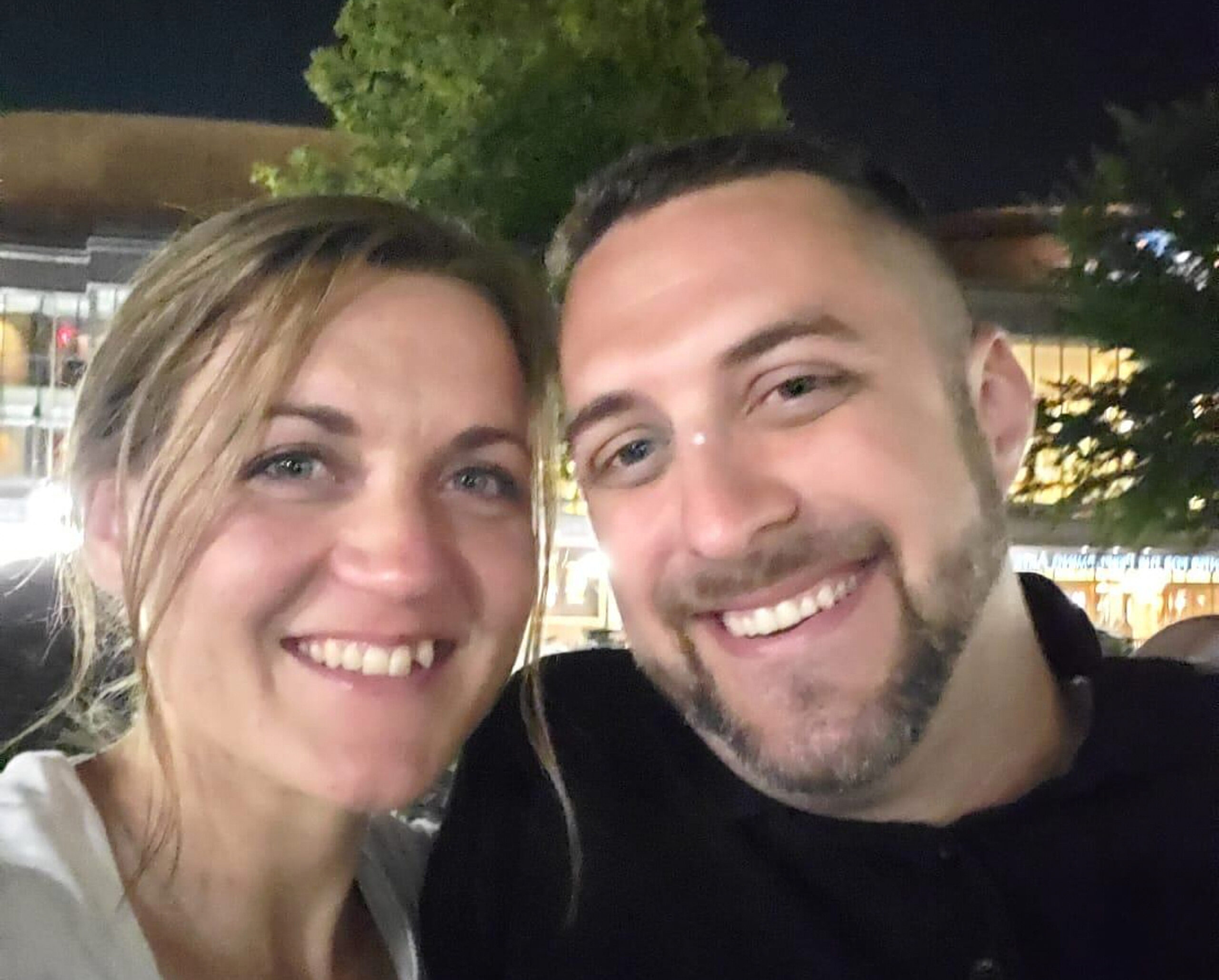
    Nicole Amor and Joey Amor in an undated photo.

    A mother of two who loved gardening

    Amor, 39, was an avid gardener who enjoyed making salsa from the peppers and tomatoes in her garden with her son, a senior in high school. She also enjoyed roller-blading and bicycling with her fourth-grade daughter.

    A week before the drone attack, Amor was moved off-base to a shipping container-style building that had no defenses, Joey Amor said.

    “They were dispersing because they were in fear that the base they were on was going to get attacked and they felt it was safer in smaller groups in separate places,” he said.

    He last spoke to her about two hours before she was killed. He said she was working long shifts and they had been messaging about her tripping and falling the night before.

    “She just never responded in the morning,” he said.

    Childhood friend Natalie Caruso wrote on Facebook that she was “absolutely heartbroken” about Amor’s death.

    “Nicole was always up for an adventure and she had such a contagious laugh!” Caruso wrote Wednesday. ”Growing up next door to you was some of my fondest childhood memories!”

    ‘He loved being a soldier’

    Coady had just told his father last week that he had been recommended for a promotion from specialist to sergeant, a rank he received posthumously.

    He was among the youngest people in his class, trained to troubleshoot military computer systems, but he impressed his instructors, Andrew Coady said Tuesday.

    “He trained hard, he worked hard, his physical fitness was important to him. He loved being a soldier,” Coady said. “He was also one of the most kindest people you would ever meet, and he would do anything and everything for anyone.”

    Coady trained as an information technology specialist with the Army Reserves and was studying cybersecurity at Drake University in Des Moines. He was taking online classes while in Kuwait and wanted to become an officer.

    “I still don’t fully think it’s real,” his sister Keira Coady said. “I just remember all of our conversations about what he was going to do when he came back.”

    A calling to serve his country

    Khork was very patriotic and drawn from a young age to serving the U.S., his family said in a statement Tuesday.

    He enlisted in the Army Reserve and joined Florida Southern College’s ROTC program.

    “That commitment helped shape the course of his life and reflected the deep sense of duty that was always at the core of who he was,” said his mother, Donna Burhans, father, James Khork, and stepmother, Stacey Khork, in a statement.

    Khork also loved history and had a degree in political science.

    His family described him as “the life of the party, known for his infectious spirit, generous heart, and deep care for those who served alongside him and for everyone blessed to know him.”

    Abbas Jaffer posted Monday on Facebook about his friend of 16 years.

    “My best friend, best man, and brother gave his life defending our country overseas,” Jaffer said.

    A loving father and husband

    Tietjens lived with his family in the Washington Terrace mobile home park in the Omaha suburb of Bellevue, Neb. He was married with a son, according to a Facebook page.

    Tietjens earned a black belt in Philippine Combatives and Taekwondo and was “an instructor who gave his time, discipline, and leadership to others,” the Philippine Martial Arts Alliance said in a Facebook post.

    On the mat and as a soldier, “he carried the same values: honor, discipline, service, and commitment to others,” the organization said.

    Army Staff Sgt. Jeff Coleman said Tietjens was his mentor.

    “You could call him day or night,” Coleman told KETV. “He always took the time, you know, he made you feel important. And that’s hard to find sometimes in the military.”

    Nebraska Gov. Jim Pillen on Wednesday ordered U.S. and state flags flown at half-staff until the evening of Tietjens’ burial. State lawmakers held a moment of silence Wednesday to honor the fallen soldier.

    “Noah stepped up to serve and defend the American people from foreign enemies around the world — a sacrifice we must never forget,” Pillen wrote in a tribute Tuesday.

    “We are holding the Tietjens family close in our hearts during this unbelievably difficult time and will keep them in our prayers,” he said.

    Tietjens’ cousin Kaylyn Golike asked for prayers, especially for Tietjens’ 12-year-old son, wife, and parents, as they navigate “unimaginable loss.”

    “We lost a brave soldier this weekend and many hearts are broken,” Golike wrote on Facebook Tuesday.

  • Talarico wins Texas Senate Democratic nomination while Cornyn and Paxton head to Republican runoff

    Talarico wins Texas Senate Democratic nomination while Cornyn and Paxton head to Republican runoff

    DALLAS — State Rep. James Talarico topped Congresswoman Jasmine Crockett in an expensive and fiercely contested Texas Senate Democratic primary that once again has the party dreaming of a big upset in November.

    Who Talarico will face depends on a May runoff between longtime Republican Sen. John Cornyn and MAGA favorite Ken Paxton — a race expected to get increasingly nasty over coming months and could hinge on whether or not President Donald Trump offers an endorsement.

    Texas, along with North Carolina and Arkansas, on Tuesday kicked off midterm elections with control of Congress at stake and against the backdrop of the U.S.-Israeli war with Iran.

    No Democrat has won a statewide race in the reliably Republican state in over 30 years, but in a statement after his victory, Talarico proclaimed “We’re about to take back Texas.”

    Crockett concedes

    Crockett on Wednesday conceded the primary in the Texas Senate race to Talarico.

    The congresswoman called on the party to unify behind the state representative, who clinched the nomination overnight.

    “Texas is primed to turn blue and we must remain united because this is bigger than any one person,” Crockett said in a statement. ”This is about the future of all 30 million Texans and getting America back on track.”

    Crockett’s campaign had said she planned to sue over voting issues in Dallas and she spoke only briefly on Tuesday night to warn that “people have been disenfranchised.” A spokesperson did not immediately respond to a question about those plans.

    Republicans head to round 2

    Cornyn, meanwhile, is seeking a fifth term but is facing a tough challenge from Paxton, the state attorney general. Cornyn hopes to avoid becoming the first Republican senator in Texas history to seek reelection and not be renominated.

    The GOP contest also featured U.S. Rep. Wesley Hunt, who finished a distant third and conceded. But him making it a three-way race made it tougher for any candidate to reach the 50% vote threshold needed to win the nomination outright and avoid the May 26 runoff.

    All three campaigned on their ties to Trump, who did not make an endorsement in the race. Now both Cornyn and Paxton will again fiercely compete to curry the president’s favor.

    Cornyn was facing a tough enough battle that he didn’t hold an election night party. Instead, in comments to reporters in Austin, he sought to make the case that a runoff win by Paxton would leave “a dead weight at the top of the ticket for Republicans.”

    “I’ve worked for decades to build the Republican Party, both here in Texas and nationally,” Cornyn said. “I refuse to allow a flawed, self-centered and shameless candidate like Ken Paxton to risk everything we’ve worked so hard to build over these many years.”

    Addressing supporters in Dallas, Paxton made a point of saying he felt like he had during a recent trip to Mar-a-Lago, Trump’s Florida estate. He also proclaimed: “We proved something they’ll never understand in Washington.”

    “Texas is not for sale,” he said.

    Cornyn’s cool relationship with Trump is part of what made him vulnerable. He and allied groups spent at least $64 million in television advertising alone since July to try stabilize his support.

    Paxton, who began campaigning in earnest only last month, has made national headlines for filing lawsuits against Democratic initiatives. He remained popular in Texas despite a 2023 impeachment trial on corruption charges, of which he was acquitted, and accusations of marital infidelity by his wife.

    Senate GOP leaders, who are backing Cornyn, worry that Paxton’s liabilities would make it harder to defend the seat if he is the nominee — and require significant spending that could be better used elsewhere.

    Confusion at some polling places

    In the Democratic campaign, Crockett and Talarico each argued that they would be the stronger general election candidate in a state that backed Trump by almost 14 percentage points in 2024.

    Voting was extended in Dallas County and Williamson County, outside Austin, after voters reported being turned away and directed to different voting precincts because of new primary rules. Paxton’s office later challenged a decision keeping the polls open longer, and the state Supreme Court ruled that ballots cast by people not in line by 7 p.m. should be separated from others.

    It was not immediately clear how the court’s action would be carried out or how many eligible ballots remained to be counted in Dallas County, Crockett’s home base. Crockett said she would seek legal action after voting was concluded.

    And in Harris County, which includes Houston, a spokesperson said that as of 10 p.m. there were still voters at 20 centers.

    Democratic race featured clash of styles

    Crockett and Talarico waged a spirited race as Democrats look for their first Senate win in Texas since 1988.

    Crockett has built a national profile for zinger attacks on Republicans and focused on turning out Black voters in the Dallas and Houston areas. Talarico, a seminarian who often references the Bible, held rallies across the state, including in heavily Republican areas.

    “We are not just trying to win an election,” a jubilant Talarico told supporters in Austin before the race was called. “ We are trying to fundamentally change our politics. And it’s working.”

    Dallas voter Tanu Sani said she cast her ballot for Talarico because he “really spoke to me in the way he tries to unify.”

    Tomas Sanchez, a voter in Dallas County, said he supported Crockett because “she cares about immigrants, she cares about the American people in a way that a lot of the Republicans have proven they haven’t.”

    Talarico outspent Crockett on television advertising by more than four to one as of late February. He got a burst of attention — and campaign contributions — last month from CBS’ decision not to air his interview with late-night host Stephen Colbert, who said the network pulled the interview for fear of angering Trump’s FCC.

    Other key primaries

    Texas’ races also featured new congressional district boundaries that GOP lawmakers — urged on by Trump — redrew to help elect more Republicans. The result matched several Democratic incumbents in primary fights and set up new general election battlegrounds.

    Republican former Rep. Mayra Flores was attempting a comeback but was defeated by Eric Flores, a lawyer endorsed by Trump, for the nomination to run against Democratic Rep. Vicente Gonzalez. Mayra Flores made history in a 2022 special election as the first Republican to win in the Rio Grande Valley in 150 years but lost her bid for a full term later that year.

    Incumbent Republican Rep. Dan Crenshaw lost his primary to state Rep. Steve Toth, who was endorsed by Sen. Ted Cruz.

    Another incumbent GOP incumbent, Rep. Tony Gonzales, was considered vulnerable after an alleged affair with a staffer who killed herself. He was challenged by gun manufacturer and YouTube influencer Brandon Herrera, who calls himself “the AK guy.” The two will head to a runoff in a district that includes Uvalde, site of a deadly 2022 shooting at Robb Elementary School.

    Former Major League Baseball star Mark Teixeira clinched the Republican primary to succeed GOP Chip Roy in southwest Texas.

    Democrat Bobby Pulido, a Latin Grammy winner, won his party’s primary in South Texas against physician Ada Cuellar. Pulido will face two-term Republican Rep. Monica De La Cruz.

    In suburban Dallas, Democratic Rep. Julie Johnson was facing former Rep. Colin Allred, a former NFL linebacker and 2024 Senate nominee.

    Democratic Rep. Al Green was fighting to stay in office after his Houston-based district was drawn to lean Republican. Green, 78, ran in a newly drawn district against Democratic Rep. Christian Menefee, 37, who won a January special election for the current 18th District.

    Republican Gov. Greg Abbott easily won his primary and will face Democratic state Rep. Gina Hinojosa. Roy advanced to a primary runoff with Mayes Middleton for attorney general.

  • The Sixers were terrible, but their former coach shined on NBC’s throwback broadcast

    The Sixers were terrible, but their former coach shined on NBC’s throwback broadcast

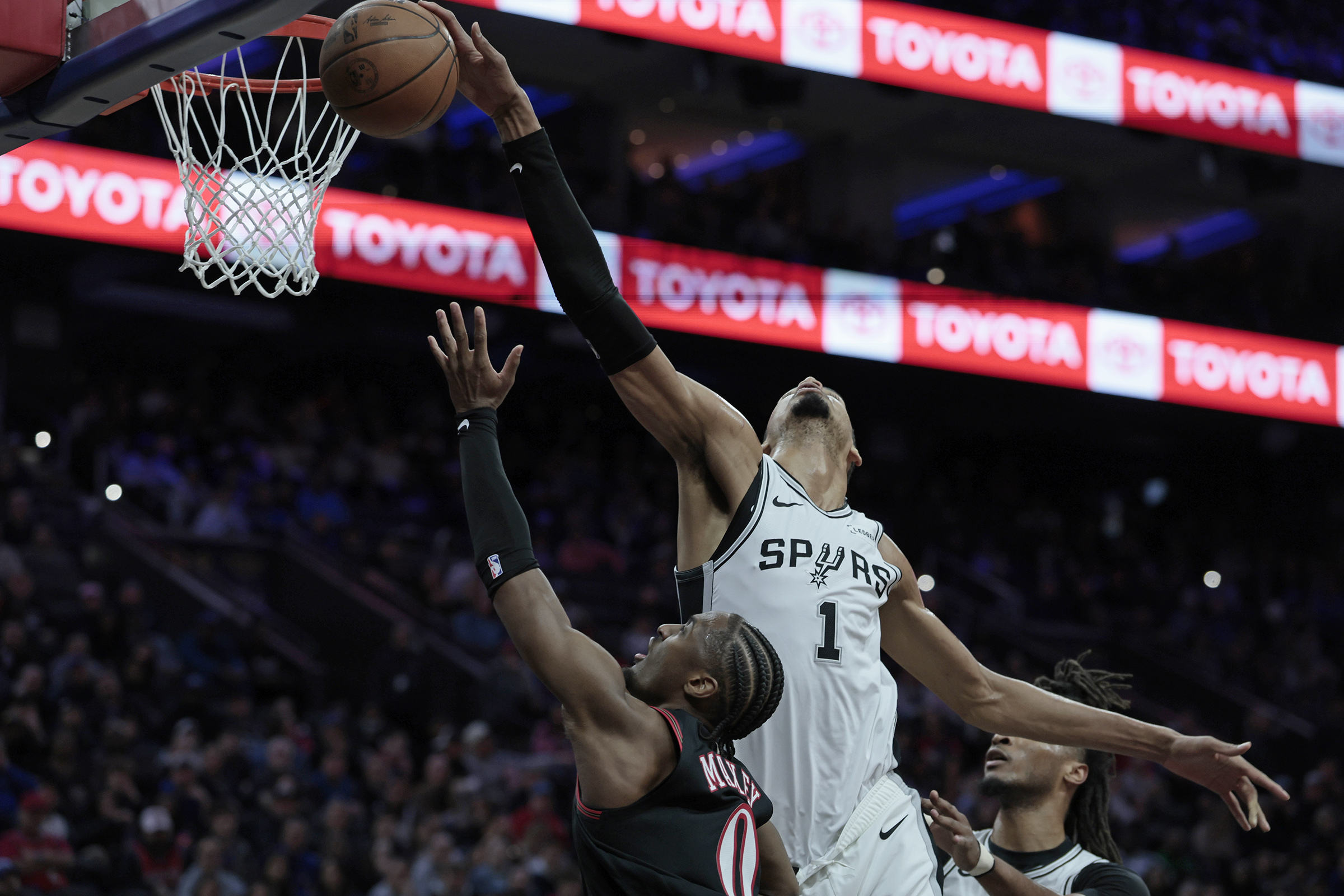
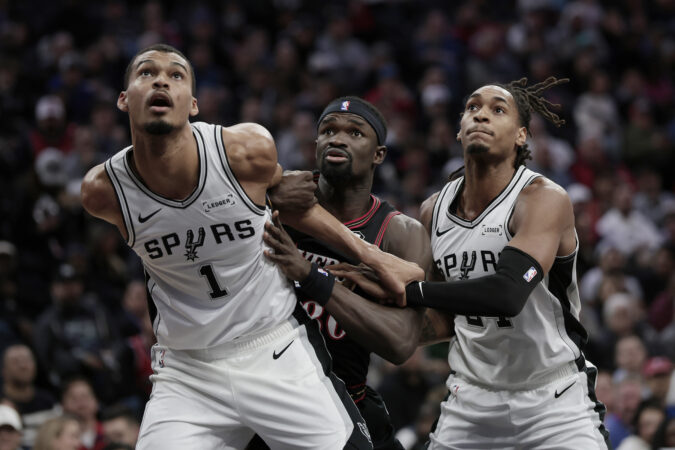
    The Sixers’ miserable loss to Victor Wembanyama and the San Antonio Spurs Tuesday was forgettable, but NBC’s throwback broadcast was something to remember.

    From the retro opening to the “Roundball Rock” theme to the 1990s-style graphics, everything NBC put together was pitch perfect. Even the retro scorebug captured the feel of NBC’s heyday covering the league in the 1990s and early 2000s, though back then the network didn’t keep the score on the screen out of fear of driving viewers away during blowouts like Tuesday night.

    In their first season broadcasting NBA games since 2002, NBC assembled a who’s who of former talent for Tuesday’s broadcast. Bob Costas, calling his first NBA game in 24 years, ably weaved back and forth from nostalgia to the action on the court, at least until the Spurs put the game out of reach in the third quarter.

    “It’s been nothing but pain for the Sixers tonight,” Costas said alongside longtime NBA analysts and former coaches Mike Fratello and Doug Collins.

    Costas also managed to squeeze the line “Two great Dicks” into the broadcast, referencing famed sportscaster Dick Enberg and former NBC Sports chairman Dick Ebersol.

    “Two great Richards,” Costas jokingly added.

    Initially, NBC planned to bring back Marv Albert, but the iconic NBA announcer had some health issues related to his voice and was unable to participate.

    Former NBC host and reporter Ahmad Rashad (who once played a preseason game for the Sixers alongside Charles Barkley) also wasn’t part of the broadcast. It’s not clear why Rashad wasn’t in South Philly alongside his former colleagues Tuesday night, but Costas gave him a special shoutout during the broadcast.

    “One of my favorite people I ever worked with in any sport,” Costas said. “Great company, terrific sense of humor. A lifelong friend.”

    The connections past and present were everywhere. Sixers point guard Kyle Lowry, among the few players on the court old enough to have watched the NBA in the 1990s, was drafted by NBC analyst Mike Fratello when he was still head coach of the Memphis Grizzlies in 2006.

    Heading into halftime, Spurs point guard Dylan Harper was interviewed by longtime NBC reporter Jim Gray, who interviewed Harper’s father, five-time NBA champion Ron Harper, many times over the years.

    “It really is Throwback Tuesday now,” Costas joked during the broadcast. “We’re now talking to the sons of guys we covered.”

    Doug Collins should be calling more NBA games

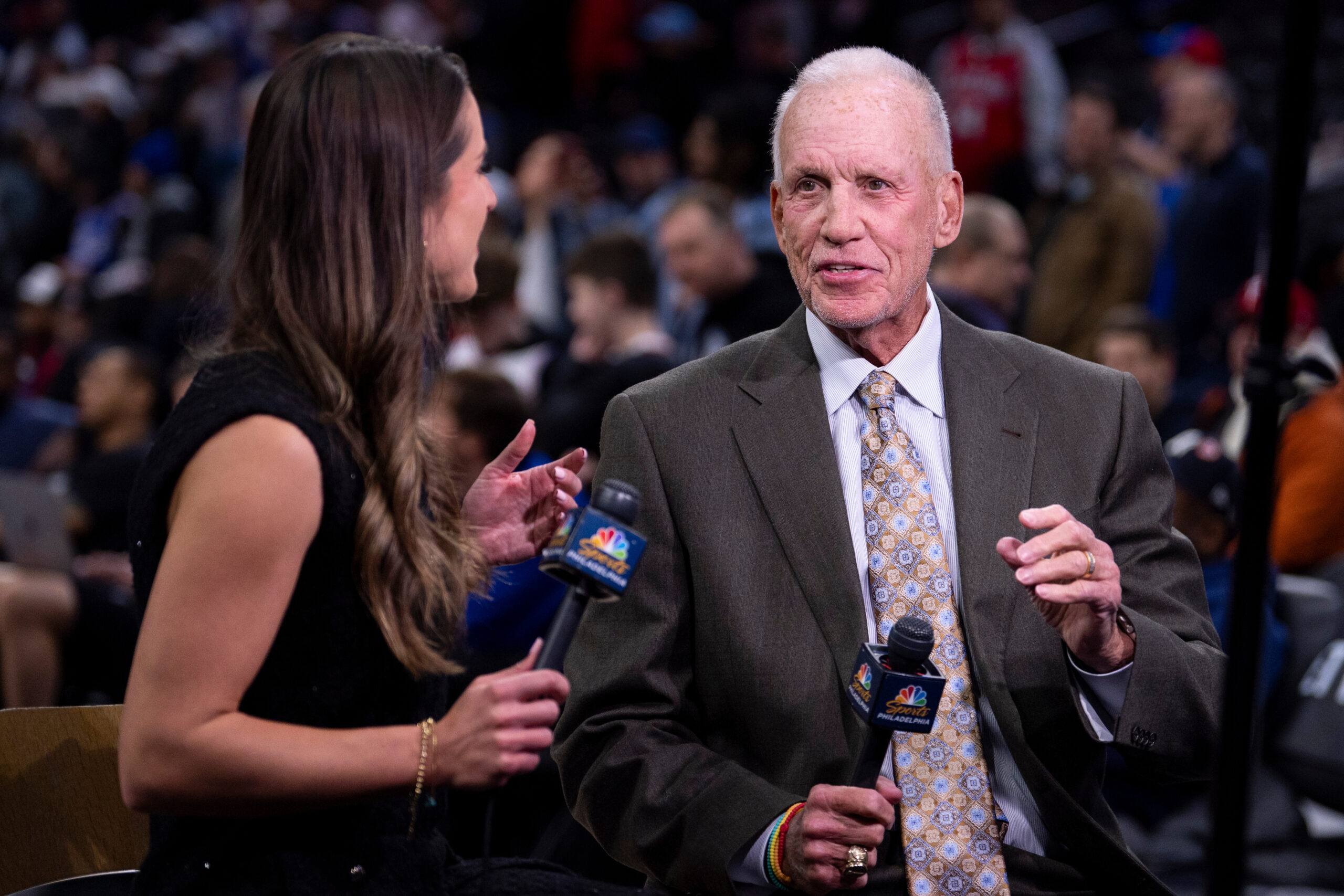
    Doug Collins speacks to NBC Sports Philadelphia’s Ashlyn Sullivan ahead of Tuesday’s Sixers-Spurs game.

    As far as the nuts and bolts of the broadcast, Collins was on top of things all night. In the first quarter, the former Sixers player and head coach quickly pointed out after a Wembanyama block it was the 24th game this season he’s had at least three blocks, leading the NBA.

    Later in the first half, when Costas mentioned the Thunder as one of the few teams that might challenge the Spurs in the playoffs, Collins quickly noted San Antonio won four of their five games against Oklahoma City this season.

    During the second half, with the game well out of reach for the Sixers, Collins recalled back to his own coaching days trying to get thrown out of a game he could no longer watch.

    “One of the old-time referees ran by the bench, stopped me, and said, ‘Listen, I know what your doing. You’re trying to get thrown out. You’re going to stay here and watch the same crap I’m watching,’” Collins recalled. “I couldn’t even get thrown out!”

    As Sports Media Watch’s Jon Lewis noted, Collins sounded like “not a moment has passed since he last called games for ESPN years ago.”

    In recent years, Collins has divided his time between homes in Arizona and West Chester, where he’s able to watch his grandchildren play basketball. Collins said he’d love to come back and call more games, but some health issues with his feet and legs have held him back.

    “It’s hard for me to travel,” Collins told The Inquirer before the game. “Otherwise, I’d still be working.”

    Interestingly, a lot of Sixers fans probably missed NBC’s throwback coverage, since NBC Sports Philadelphia’s broadcast was a strictly 21st century production featuring regular announcers Kate Scott and Alaa Abdelnaby. But most viewers probably changed the channel by the third quarter anyway.

    Scott and Abdelnaby will be back Wednesday to call the Sixers’ game against the Utah Jazz at 7:30 p.m. on NBC Sports Philadelphia.

    Sixers standings

    Eastern Conference

    window.addEventListener(“message”,function(a){if(void 0!==a.data[“datawrapper-height”]){var e=document.querySelectorAll(“iframe”);for(var t in a.data[“datawrapper-height”])for(var r,i=0;r=e[i];i++)if(r.contentWindow===a.source){var d=a.data[“datawrapper-height”][t]+”px”;r.style.height=d}}});

    Upcoming Sixers TV schedule

    • Wednesday: Jazz at Sixers, 7:30 p.m. (NBC Sports Philadelphia)
    • Saturday: Sixers at Hawks, 6 p.m. (NBC Sports Philadelphia, NBA TV)
    • Monday: Sixers at Cavaliers, 7 p.m. (NBC Sports Philadelphia)
    • Tuesday, March 10: Grizzlies at Sixers, 7 p.m. (NBC Sports Philadelphia)
    • Thursday, March 12: Sixers at Pistons, 7 p.m. (Amazon Prime Video)
    • Saturday, March 14: Nets at Sixers, 1 p.m. (NBC Sports Philadelphia)
    • Sunday, March 15: Trail Blazers at Sixers, 6 p.m. (NBC Sports Philadelphia)
  • Senate to vote on forcing Trump to end Iran strikes; John Fetterman says he’ll oppose it

    Senate to vote on forcing Trump to end Iran strikes; John Fetterman says he’ll oppose it

    The Senate is scheduled to take an initial vote Wednesday on blocking President Donald Trump from ordering further strikes on Iran, offering the first test of Congress’s support for a campaign that Trump launched without its consent.

    Democrats — along with Sen. Rand Paul (R., Ky.) — are forcing a vote on a war powers resolution over the opposition of most Republicans, who control the Senate. Democrats are imploring a handful of Republicans to break with their party to end the conflict and reassert Congress’s control over declaring war.

    At least four Republicans besides Paul would need to support the resolution for it to pass if every senator is voting. One Democrat, Sen. John Fetterman of Pennsylvania, has said he will oppose it.

    “I pray so hard for my colleagues to exercise the judgment that this is not the right time for more war,” Sen. Tim Kaine (D., Va.) said Monday on the Senate floor.

    But the resolution faces tough odds.

    Congress has voted on seven other war powers resolutions since June, all of which failed. Most Republicans support the U.S. and Israeli air campaign that started Saturday, which has killed Ayatollah Ali Khamenei and other top Iranian leaders, and they are working to defeat the resolution.

    “We should let him finish the job,” Sen. Lindsey Graham (R., S.C.) told reporters, referring to Trump. “We should cheer him on, in my view.”

    The House is set to vote Thursday on a similar war powers resolution, which Speaker Mike Johnson (R., La.) said he believes he has the votes to defeat.

    “The idea that we would take the ability of our commander in chief … to finish this job is a frightening prospect to me,” Johnson told reporters. “It’s dangerous, and I am certainly hopeful — and I believe we do — have the votes to put it down.”

    Even if the resolution passes the Senate and the House, Trump could veto it. Overriding Trump’s veto would require a two-thirds majority in both chambers. No war powers resolution has ever overcome a veto.

    The Senate vote Wednesday is an initial procedural vote to advance the resolution, and any Republicans who support it could still oppose its final passage.

    That’s what happened in January, when five Republicans — Sens. Lisa Murkowski of Alaska, Susan Collins of Maine, Josh Hawley of Missouri, Todd Young of Indiana, and Paul — voted with Democrats to advance the resolution blocking strikes on Venezuela. But Hawley and Young flipped days later after Trump wrote on social media that they “should never be elected to office again,” though they extracted some concessions.

    Democrats wanted to force a vote on the Iran resolution before the strikes, which Kaine said last week would increase its odds of passing. But they did not do so, in part because negotiations between the Trump administration and Iran were still underway.

    Some Democrats have compared Trump’s strikes on Iran to the Iraq War, although President George W. Bush sought and received authorization from Congress before the U.S. invasion in 2003. Trump has not asked for authorization to strike Iran.

    “I pray that my colleagues will vote to end this dangerous and unnecessary war that has already resulted in the loss of six servicemembers and injured others,” Senate Minority Leader Chuck Schumer (D., N.Y.) said in as statement. “We owe it to those in uniform, their families, and all Americans to not make the same mistakes that we made in Iraq and Afghanistan.”

    The U.S. invaded Afghanistan in the aftermath of the Sept. 11, 2001, attacks and occupied the country for nearly 20 years. While U.S. forces succeeded in killing Osama bin Laden, the architect of the attacks, in Pakistan in 2011, they never defeated the Taliban, which had sheltered bin Laden. The Taliban overthrew the American-supported Afghan government weeks before U.S. forces withdrew and remains in power.

    The War Powers Resolution, which Congress passed in 1973 in response to the Vietnam War, allows a single lawmaker to force a vote to withdraw U.S. forces from a conflict or to block strikes when hostilities are imminent. It also requires the president to withdraw forces after 60 days — or 90 days if the president seeks an extension — unless Congress declares war or authorizes the use of military force.

    Senate Majority Leader John Thune (R., S.D.) said Tuesday that he does not believe the Trump administration needed to seek authorization to continue the Iran campaign even if it lasts for longer than 90 days.

    “I think the president has the authority that he needs to conduct the activities, the operations that are currently underway there,” Thune told reporters.

    Secretary of State Marco Rubio, Defense Secretary Pete Hegseth, and other administration officials held briefings for lawmakers Tuesday, which Sen. Chris Murphy (D., Conn.) said convinced him that the campaign could last a long time.

    “I think they have contempt for Congress,” Murphy told reporters. “They have no plans to come to Congress for any authorization, even if they were to insert ground forces.”

  • Gossiping about the boss? It might be a good thing, per new study

    Gossiping about the boss? It might be a good thing, per new study

    Gossip often gets a bad rap.

    It can be seen as frivolous or hurtful, and not typically encouraged.

    Still, “there seems to be something about it that makes people a little bit giddy, or excited to be gossiping,” says Rebecca Greenbaum, a professor at Rutgers University School of Management and Labor Relations.

    In a recent study, Greenbaum and co-authors focused on the role of gossiping in the workplace. They found that talking about the boss behind their back can present a benefit: bonding among colleagues, and more cooperation. Their findings were recently published in the Journal of Business Ethics.

    The study surveyed hundreds of participants who were asked to report if they had gossiped about the boss that day and how they acted afterward. Colleagues of some of the participants were also surveyed.

    The study results show that on days when employees talked about the boss, they were likely to experience negative feelings such as guilt or shame, and avoid the boss. After gossiping, employees also reported feeling more of a sense of belonging with their colleagues.

    “It doesn’t necessarily mean we’re saying ‘go out and gossip’ because we want you to feel closer to one another,” said Greenbaum. “It’s just that it provides one explanation for why people probably do engage in gossip, because they are getting this benefit from feeling closer to one another.”

    This conversation has been edited for length and clarity.

    What role has gossip typically played in the workplace? Is it positive? Negative?

    In most of the research [until now] … oftentimes it was just looked at more negatively, or it was [discussed] much more in terms of being the victim of gossip. So if I found out someone was speaking poorly about me, how would I feel? I would probably feel angry. I’d feel hurt, I’d feel sad.

    But where [we] really took this in a different direction was focusing much more on the person engaging in the gossip. From that standpoint, not as much research had been done in terms of how people react to their own behavior. So for example, do people really see it as bad? That was one thing we were curious about.

    What do you hope people will take away from the study?

    Keep in mind the boss is someone who can give you rewards, they can punish you — so it’s a little bit more high-stakes to talk badly about a boss compared to maybe just you talking bad[ly] about a coworker or neighbor or something like that.

    We have these emotional reactions sometimes because they serve to protect us. So if you feel … shame and guilt, [for example], it’s telling you that you need to course correct.

    We not only need to protect ourselves individually, but we have this relational need that has to do with our survival too. When people gossip, and then they respond to that gossip by feeling emotionally closer, and like they belong with their group a bit more, that can also facilitate a person’s sense of survival.

    If you have this common enemy, like a boss who’s a jerk to you and he’s mean, sometimes it can feel even better for your sense of belonging to gossip about him.

    Why does it matter if colleagues feel connected to one another?

    Oftentimes people have to engage in teamwork. You need to cooperate, collaborate, come up with creative ideas together, advance some type of project. Even if you aren’t necessarily working together, there’s another big aspect of what we do in organizations, which is not engaging in counterproductive behaviors towards one another. [A colleague might say], “I have a kid at home who’s sick, I was supposed to give this presentation. Can you give it?” If we feel closer with one another, we might be more willing to cooperate with some of those requests that come our way.

    What if you and colleagues like the boss? How do you build that sense of bonding?

    If we have leaders who are good to us, we’re more willing to help them out. There’s basically a role modeling effect where people within the workforce end up treating each other with more dignity and respect too. So if you have a good boss, that’s actually the best scenario, because you don’t have to gossip and experience some of those negative types of emotions.

    Are there any other benefits of having a bad boss?

    I’m asked about this a lot, because I’ve been studying dysfunctional leadership for so long. I know there’s some research out there that shows that, for example, if you do have an abusive boss — that boss who might yell at you, ridicule you, tell you you’re stupid, whatever it may be — sometimes it can get people behaving better, performing better, but it’s short-lived.

  • March’s new restaurants | Let’s Eat

    March’s new restaurants | Let’s Eat

    What’s cooking this month: How about Puerto Rican barbecue, an Italian “kitchen and bar,” a six-course tasting-menu BYOB, and a Center City Mexican destination that is flat-out gorgeous?

    Also in this edition:

    • Hot bakery news: Metropolitan Bakery is changing hands after nearly 33 years, and farmers-market favorite Manna Bakery will take over Essen’s shuttered spot in Kensington.
    • Two new hit restaurants: Craig LaBan visits Peter Chang’s Chinese offerings in the suburbs.
    • Late-night coffee: Step inside the new Shibam.

    Mike Klein

    If someone forwarded you this email, sign up for free here.

    March’s new restaurants

    The March crop of new options is all over: Popup Bagels in Ardmore; Cugini’s in Upper Bucks; Carmen’s Table, Duo Restaurant & Bar, and 1793 in South Jersey; Bengaluru Cafe in Northern Liberties; and Mi Vida in Center City. Read on for the rundown.

    Angelo’s Pizzeria is expanding

    Angelo’s Pizzeria, having outgrown its original spot on South Ninth Street, is opening a second location across South Philly. With a kitchen five times the size, owner Danny DiGiampietro calls this one a “fun factory.”

    One chef with two Chinese hits

    Peter Chang, a onetime chef at the Chinese Embassy in Washington, D.C. with multiple James Beard nominations, has hit the burbs with two new restaurants: one in King of Prussia and another in Colmar, north of Montgomeryville. Be bold and “skip the impulse to order General Tso’s,” urges critic Craig LaBan, who says both spots are “already worthy additions to the suburban dining scene.

    Hot bakery news

    .

    Metropolitan Bakery, one of the pioneers of Philly’s artisan baking scene, is shutting down its 19th Street shop after nearly 33 years as owners sell the company. The buyer, Merzbacher’s in Germantown, will keep its brand, bread line, and wholesale business. Read on for Jenn Ladd’s exclusive.

    Saif Manna, who started his bakery biz several years ago in his Temple dorm, is taking over the former Essen Bakery in Kensington. Manna Bakery specializes in Levantine and Palestinian goods, both sweet and savory.

    The best things we ate last week

    We chased away the late-winter chill with stops in Ardmore for belly-warming bourbon chicken dish, and in Rittenhouse for a steaming bowl of a Philly classic snapper soup as well as a ginormous, pillowy-soft cinnamon bun.

    Scoops

    In Rittenhouse dish: Shiroi Hana’s building at 222 S. 15th St., next to Good Dog Bar, has been sold to Simon Atiya, who with his brother owns Giovani’s Bar & Grill, around the corner on Chestnut. Atiya tells me that this will be a solo dining project. There’s no timeline or even concept to discuss, as he wants to install one vibe for the ground floor and another upstairs. “I’ve walked past the building for over 20 years,” said Atiya, whose family had the old Sound of Market and Soundworks stores near the old Gallery. Given McGlinchey’s availability and the new Amma’s South Indian Cuisine, Atiya said he sees 15th Street evolving into a dining destination akin to 13th Street. “I want to be part of that,” he said. Nadia Bilynsky and Veronica Blum of MPN represented the seller, and Wes Deming of KW Commercial represented Atiya.

    Blank Street, the fast-growing Brooklyn-born coffee/matcha brand, has signed at the University of Pennsylvania, where its first Philly location will open late this summer at 3603 Walnut St., formerly Bluemercury.

    Almost Home General’s location in Old City has closed, and it’s tied into the undoing of Glu Hospitality.

    Restaurant report

    Shibam Coffee, a Yemeni coffeeshop that’s new to West Philadelphia, is a rare one, indeed: It’s open until midnight on Fridays and Saturdays. Hira Qureshi stopped in for a late-night snack and explains it all.

    Briefly noted

    Fifteen bars and restaurants are participating in a tie-in with the Pennsylvania Horticultural Society with deals surrounding the Philadelphia Flower Show. List is here.

    Mount Airy CDC has rounded up 13 businesses for its second annual restaurant week, from March 9-15. Participants include Doho, offering a family-style five-course dinner for two ($100), including tuna crudo, gnocchi, and short rib, as well as a vegan option that includes sweet potato tostones, pappardelle, and stuffed cabbage tempura. Bar Lizette will offer a three-course menu ($45), including pan-seared pink snapper as well as vegetarian options like chocolate pot de crème. Toska Restaurant & Brewery will have a four-course dinner menu ($40) that features some of their most popular items like shrimp scampi fettucine, wood-fired pizza, Albanian sujuk sausage, and a three-course beer pairing ($18+). Details are here.

    The American Vegan Society will name its pick for the Best Vegan Cheesesteak in Philly on April 13 at the Philadelphia Ethical Society. During the finals, competitors also will collaborate on what’s billed as the world’s largest vegan cheesesteak, which (in semiquincentennial spirit) will measure 76 inches. Voting will run March 30 to April 8 at americanvegan.org. The first 76 people who sign up to attend will receive an bite of the sandwich along with a sticker saying they helped to eat it.

    Stina in West Passyunk made its bones during the pandemic with the pikilia, a family-style feast of dips, meats, and hot pita served in a pizza box and available only for takeout. (Craig called it a “grazer’s delight.”) Chef Bobby Saritsoglou is now offering it at the table, for $65 per person. Full table, minimum of two people.

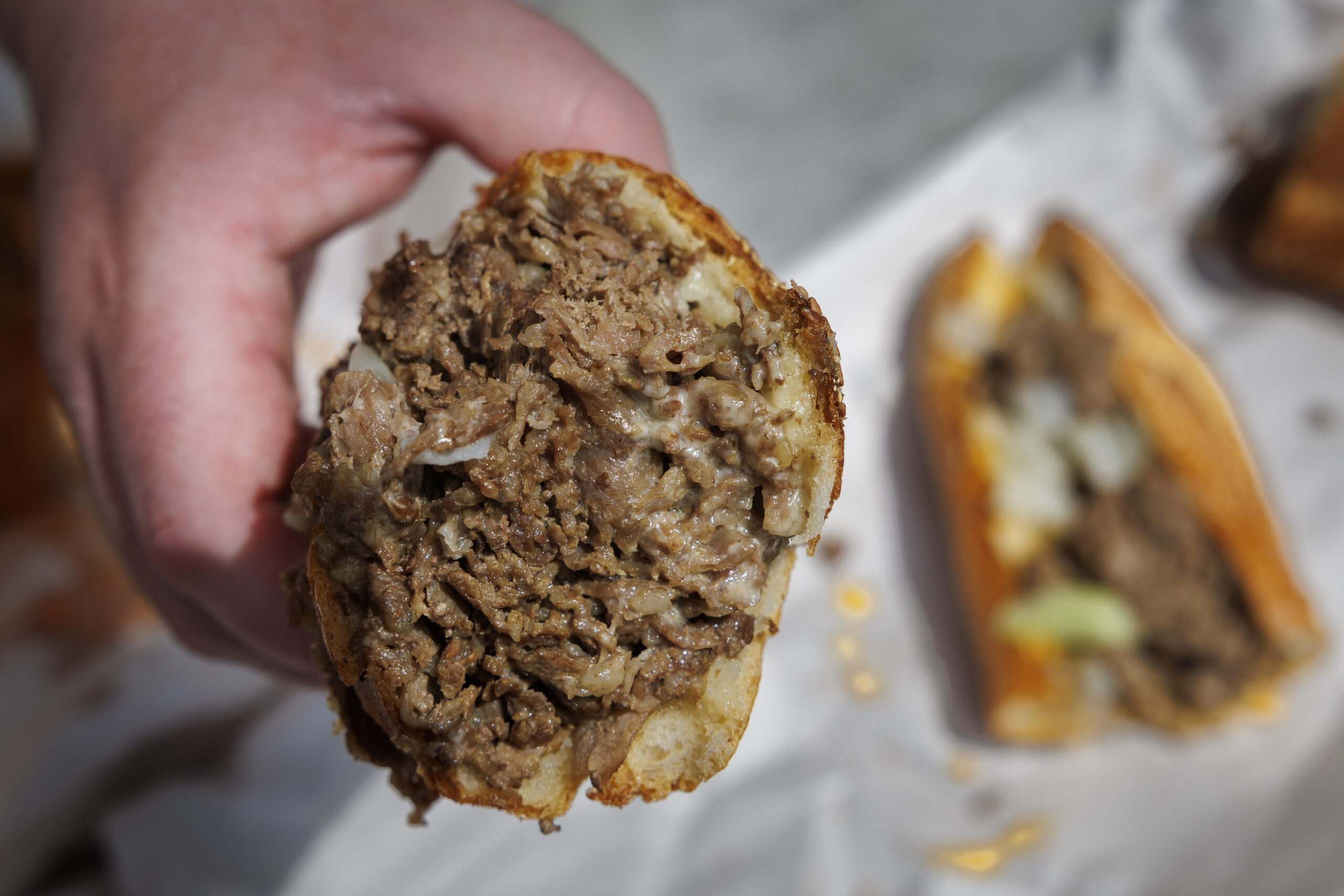
    Grace Tavern on Grays Ferry Avenue will donate proceeds from this month’s sale of its roast pork sandwiches to help fund capital improvements to Triangle Plaza, across the street. The sandwich features roasted pork, long hots, pork jus, and melted provolone on a grilled Mighty Bread baguette for $12.

    Davio’s in King of Prussia will host a Bellemille olive oil dinner at 6 p.m. March 25 ($110pp, optional wine pairing for $55), a multicourse tasting built around Tuscan extra-virgin olive oil from Alexa Dombkoski, the Tuscany-based daughter of Davio’s GM Michael Dombkoski. Each course incorporates Bellemille’s single-estate oil: tuna carpaccio and egg fettuccine with morels, a 55-day prime strip, a semolina-olive oil cake with lemon gelato. Details are here.

    Last week’s newsletter included a callout for carrot cake cheesecake. Alert reader Mitchell H. noticed that Pine Street Grill, the newcomer from chefs Amanda Shulman and Alex Kemp at 23rd and Pine Streets, offers a cake (above), studded with rum raisins and topped with cream cheese mousse. Want a DIY version? Reader Helene A. recommends this recipe from King Arthur Baking.

    ❓Pop quiz

    Where is Joe Beddia, one of Philadelphia’s most acclaimed pizzaioli, opening his next restaurant?

    A) King of Prussia

    B) London

    C) Olde Kensington

    D) Los Angeles

    Find out if you know the answer.

    Ask Mike anything

    I am hoping that you could recommend quiet restaurants in Philadelphia, particularly in Center City. I know that many people like a lively vibe with loud music, but there seem to be very few options for restaurants with low decibel levels where it is easy to have a conversation without yelling. — Janet W.

    “Quiet” can be a loaded concept. Even the most placid restaurant, with wide-spaced tables and fabric-covered walls to soak up noise, can feel like a subway station if a nearby party begins shrieking. BYOBs, which don’t have bars to amp the acoustics, tend to be quieter. Timing matters, too. The simple suggestion is to go early. Estia, the upscale Greek trio in Center City, Radnor, and Marlton, opens for dinner at 3 p.m. You can catch a quiet meal at Bloomsday on Headhouse Square at 4 p.m.; Enswell, the stylish Euro spot in the Touraine, at 4:30; or Talula’s Garden in Washington Square and Little Nonna’s in Washington Square West at 5. Sor Ynez, the Mexican restaurant in the Wheelhouse building in Kensington, and Southwark in Queen Village handle noise well, too. Even for a tiny spot, Little Fish in Bella Vista delivers reasonable volume. Perhaps the quietest of them all is Lacroix at the Rittenhouse, where the food speaks volumes. Any recommendations, readers? Share them!

    📮 Have a question about food in Philly? Email your questions to me at mklein@inquirer.com for a chance to be featured in my newsletter.

    By submitting your written, visual, and/or audio contributions, you agree to The Inquirer’s Terms of Use, including the grant of rights in Section 10.

  • ‘Kind of morbid’: Health premiums threaten their nest egg. A terminal diagnosis may spare it.

    ‘Kind of morbid’: Health premiums threaten their nest egg. A terminal diagnosis may spare it.

    COLUSA, Calif. — Early on, Jean Franklin got some career advice she followed religiously: “Pay yourself first.” So she did, socking away hundreds of thousands of dollars in retirement savings by the time she became a stay-at-home mom at age 41.

    She and her husband, Charles, a former high school teacher who goes by Chaz, planned to retire comfortably in the three-bedroom house where they raised their kids about 60 miles northwest of Sacramento.

    But early last year, the 63-year-old became unsteady on her feet. One morning in May, she woke up with slurred speech and landed in the hospital, then rapidly lost the ability to move the right side of her body.

    In August, as doctors continued to puzzle over a possible diagnosis, the couple received a notice saying that on Jan. 1 their combined healthcare premium payments through the state insurance exchange would shoot up from $540 a month to $3,899 a month. The reason: Federal enhanced premium subsidies expiring at the end of last year would no longer offset their payment.

    They immediately canceled a monthlong cruise they’d been planning with friends and looked through their retirement accounts.

    “Now, instead of thinking about where we can go in our retirement, we’re asking the question, ‘Are we still going to be able to stay where we are because of the healthcare costs?’” said Chaz, who retired in 2021 at age 59.

    Then they received more bad news. In October, at the age of 63, Jean was diagnosed with ALS, a debilitating disease that will eventually leave her unable to speak, swallow, or breathe on her own. But Jean’s condition allowed her to enroll in Medicare, the federal health insurance program that covers adults 65 and older and people with disabilities. The diagnosis saved them roughly $1,600 a month in premiums — little comfort as Jean lost her ability to walk, bathe, and dress herself.

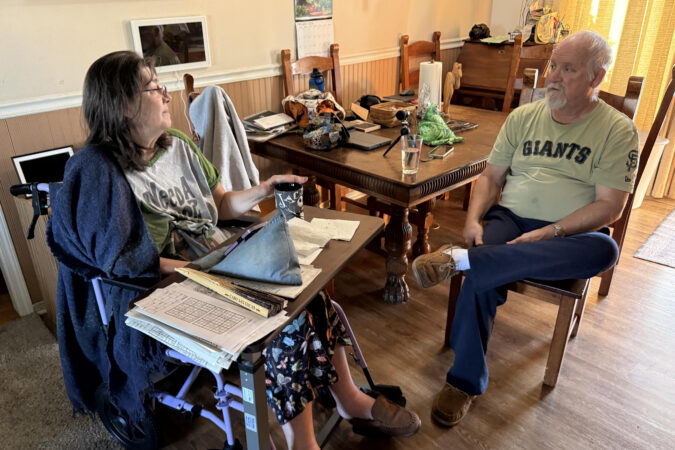
    “It’s kind of morbid that, because of my diagnosis, I got put on Medicare right away, so at least we don’t have to pay that out-of-pocket,” Jean said, sitting in a wheelchair in her living room, a quilt draped over her legs to guard against the intense chills she now often gets. “We’re not going to get buried under this.”

    Yet the premiums for Chaz’s plan and her Medicare remain a significant strain on their finances. The $2,300 a month they now owe, which includes roughly $342 in premium payments for Jean’s Medicare supplemental insurance, is higher than their monthly mortgage and eats up more than a quarter of their budget.

    The Franklins are among the 22 million people across the nation facing greater financial pressure after Congress chose not to extend 2021 enhanced federal subsidies. That assistance helped more than double enrollment in Obamacare plans to over 24 million.

    The Congressional Budget Office estimated in 2024 that, without an extension of the tax credits, the number of uninsured Americans would climb by 2.2 million this year alone. As of January, nationwide enrollment in ACA plans was down about 1.2 million year over year, though experts say it could be months before the full effects of rising premiums are known, as people miss payments and lose coverage.

    The groups hit hardest will be early retirees, middle-income earners, and people living in high-cost states, said Stacey Pogue, a senior research fellow at the Center on Health Insurance Reforms at Georgetown University. The Franklins are all three.

    “They fell off what we call a subsidy cliff,” Pogue said. “It’s very, very shocking, the amount that a person would have to absorb.”

    That’s because the expanded tax credits made the biggest difference for people nearing retirement age who sat just above previous income eligibility thresholds, Pogue said. People such as the Franklins, who likely wouldn’t have qualified for financial help before expanded credits were implemented, are now losing that support at a time when insurers have responded to the uncertainty by dramatically raising rates.

    Roughly half of people who were expected to lose eligibility for premium tax credits were ages 50 to 64, according to an analysis by KFF, a health information nonprofit that includes KFF Health News.

    Republicans who opposed the extension have said the premium assistance went directly to insurance companies rather than consumers, incentivizing fraud and wasteful coverage. They also say the enhanced subsidies, which had no upper income limit for eligibility, were far too generous in capping premium payments at 8.5% of income, no matter how much an enrollee made.

    “Most Americans would agree that taxpayers should not be subsidizing the health insurance of someone making $250,000,” U.S. Rep. Ken Calvert, a California Republican who voted against an extension in January, wrote in an Orange County Register op-ed. “I cannot accept the simple extension of a program that will line the pockets of insurers and is riddled with fraud at the expense of the American taxpayer.”

    Patient advocates say the premium increases and expiration of subsidies have forced people into difficult choices. “The young people who are healthy are the first to say, I’m going to roll the dice” and forgo coverage, said Rebecca Kirch, executive vice president of policy and programs at the National Patient Advocate Foundation. “Those who are remaining in the system — because they have no choice — are holding off care, they’re holding off their meds, they’re going without necessary food.”

    Jean Franklin, center, laughs with her sons, Louis (right) and Charlie, and Charlie’s girlfriend, Masha Billingsley. Charlie and Louis have helped their mother get dressed and get in and out of her wheelchair since she was diagnosed with ALS last year. (Christine Mai-Duc/KFF Health News)

    While the Franklins are getting by, they have relied on their sons to pay for a motorized recliner to assist with lifting Jean and a handicap van to transport her. Chaz, who broke a tooth a year ago, delayed fixing it because a crown would cost him $1,000.

    This year, the couple will draw $36,000 more than they had anticipated from their retirement savings, most of it to cover Chaz’s insurance premiums.

    “I have a nest egg,” Chaz said. “But there’s a lot of people around here who don’t.”

    For a while, he was outraged.

    “I wish Congress would get off their butts and solve this issue,” said Chaz, who is a registered Republican but blames both sides of the aisle. “You’re so busy bickering over stupid crap and it’s both parties pointing fingers and blaming. Where was this discussion two years ago?”

    Now, Chaz said, he’s focused on making Jean, his wife of 27 years, as comfortable as possible.

    Before she got sick, they did practically everything together — hiking, traveling, tai chi, amateur photography, and bug-hunting. One of her favorite specimens was the rain beetle, a fuzzy scarab-like insect that can’t feed as an adult, relying solely on fat stores from its larval stages.

    In the mornings, Chaz and their sons, Charlie and Louis, take turns lifting Jean, dressing her, and helping her use the bathroom. It’ll be fodder for the counselor, she jokes to her sons, when they inevitably need therapy later in life.

    Most days, Jean’s outdoor adventures rarely extend beyond being wheeled to her back patio, where she loves to watch their backyard chickens bobble around. Chaz’s stubbornness makes him a great patient advocate. Charlie always seems to know exactly when she needs a big hug, and Louis tells jokes that can still make her snort with laughter.

    “I don’t know what I would do without my boys making me laugh,” she said.

    In December, Chaz will turn 65, old enough to qualify for Medicare himself. “After this year — knock on wood — we should be OK,” Jean said, before pausing and shooting her husband a wry smile.

    “Well, you’re gonna be OK.”

    KFF Health News is a national newsroom that produces in-depth journalism about health issues and is one of the core operating programs at KFF — the independent source for health policy research, polling, and journalism.

  • U.S. sinks Iranian warship as Iran vows to destroy military and economic infrastructure in Mideast

    U.S. sinks Iranian warship as Iran vows to destroy military and economic infrastructure in Mideast

    DUBAI, United Arab Emirates — A U.S. submarine sank an Iranian warship in the Indian Ocean, as Washington and Israel intensified their bombardment Wednesday of Iran’s security forces and other symbols of power. Iran launched more missiles and drones and warned of the destruction of military and economic infrastructure across the Middle East.

    The tempo of the strikes on Iran was so intense that state television announced the mourning ceremony for Iranian Supreme Leader Ayatollah Ali Khamenei, who was killed at the start of the conflict, would be postponed. Millions attended the funeral of his predecessor, Ayatollah Ruhollah Khomeini, in 1989.

    The U.S. and Israel launched the war Saturday, targeting Iran’s leadership, missile arsenal, and nuclear program while suggesting that toppling the government is a goal. But the exact aims and timelines have repeatedly shifted, signaling an open-ended conflict.

    President Donald Trump praised the U.S. military Wednesday for “doing very well on the war front, to put it mildly.” Later in the day, fellow Republicans in the U.S. Senate stood with Trump on Iran as they voted down a resolution seeking to halt the war.

    Israel also traded fire with the Iranian-backed Hezbollah insurgent group in Lebanon, while Iran fired on Bahrain, Kuwait, and Israel. As the conflict spiraled, Turkey said NATO defenses intercepted a ballistic missile launched from Iran before it entered Turkey’s airspace.

    The war has killed more than 1,000 people in Iran, more than 70 in Lebanon, and around a dozen in Israel, according to officials in those countries. It has disrupted the supply of the world’s oil and gas, snarled international shipping, and stranded hundreds of thousands of travelers in the Middle East.

    Both sides are unrelenting

    Defense Secretary Pete Hegseth said a torpedo from an American submarine sank an Iranian warship Tuesday night in the Indian Ocean.

    Sri Lankan authorities said 32 people were rescued from the ship, which they said had 180 people on board and sank outside Sri Lanka’s territorial waters. The country’s navy said it recovered 87 bodies.

    Israel said it hit buildings associated with Iran’s Basij, the all-volunteer force of the paramilitary Revolutionary Guard that conducted a bloody crackdown on protesters in January. Thousands of people were killed and tens of thousands detained.

    The Israeli military hit buildings associated with Iran’s internal security command. Israel and the U.S. have said they want to see Iranians overthrow the country’s theocracy, and strikes against Iran’s internal security forces may be aimed at hastening that.

    However, Iranian Foreign Minister Abbas Araghchi said over the weekend that its forces have decentralized leadership, with units acting largely on their own according to general orders, which could blunt the effect of attacks on top command and control hubs.

    Iranian state television showed the ruins of buildings in Tehran, with interviewees saying the attacks damaged their homes. Strikes have also been reported in the Shiite seminary city of Qom targeting a building associated with a clerical panel set to pick Iran’s next supreme leader. Iranian media said it was empty at the time.

    Shifting timelines for U.S. operations

    During his Pentagon briefing, Hegseth did not give a definitive timeline for U.S. operations.

    “You can say four weeks, but it could be six. It could be eight. It could be three,” he said. “Ultimately, we set the pace and the tempo. The enemy is off-balance, and we’re going to keep them off-balance.”

    Adm. Brad Cooper, the top U.S. military commander in the Middle East, said American forces have damaged Iran’s air defenses and taken out ballistic missiles, launchers, and drones. Israeli military spokesperson Brig. Gen. Effie Defrin said such damage has led to a decline in launches from Iran.

    U.S. and Israeli military officials say launches from Iran have declined as the war has progressed. Israel’s Homefront Command announced it was easing restrictions that closed workplaces nationwide. It said workplaces could reopen Thursday if there is a shelter nearby. Schools were to remain closed.

    Still, air-raid sirens and explosions could be heard across central and northern Israel on Wednesday. Israel’s military said Iran launched missiles toward the country. Hezbollah also fired rockets, as Israel pounded targets in the suburbs of the Lebanese capital, Beirut.

    Iran has also struck around the region, and air sirens sounded Wednesday across Bahrain, home to the U.S. Navy’s 5th Fleet.

    At least 1,045 people have been killed in Iran, the country’s Foundation of Martyrs and Veterans Affairs said Wednesday. Eleven people have died in Israel. Six U.S. troops have been killed.

    The death toll has exceeded 70 in Lebanon, where the health ministry said Wednesday that three people died when drone strikes hit two vehicles on a Beirut highway. The Israeli military said it was targeting a Hezbollah member.

    Israel says its offensive had been planned for midyear

    Israeli Defense Minister Israel Katz said the offensive against Iran had originally been planned for mid-2026, but “the need arose to bring everything forward to February.”

    He listed events inside Iran, Trump’s positions, “and the whole possibility of creating a combined operation here” as reasons.

    The protests in Iran put unprecedented pressure on its leadership. Trump threatened military action in response to the crackdown before shifting his attention to Iran’s disputed nuclear program.

    White House press secretary Karoline Leavitt said Wednesday that the U.S. launched its operation partly out of concern Iran might strike American personnel and assets in the region first. A phone call between Trump and Israeli Prime Minister Benjamin Netanyahu before the airstrikes began was also “important with respect to the timeline,” she said.

    Energy supplies in the crosshairs

    Iran’s paramilitary Revolutionary Guard issued its most intense threat yet, saying the strikes against it would result in “the complete destruction of the region’s military and economic infrastructure.”

    A Maltese-flagged container ship was attacked Wednesday while passing through the Strait of Hormuz, the narrow mouth of the Persian Gulf through which about a fifth of the world’s oil is shipped. The ship was hit by two missiles, sparking a fire, according to Malta’s transport minister, Chris Bonett. Its 24 crew members were rescued.

    Tanker traffic through the strait has fallen by about 90% compared with prewar levels, shipping tracker MarineTraffic.com said Wednesday.

    Oil prices have soared as Iranian attacks have disrupted traffic through the strait, and global stock markets have been hammered over worries that the spike in oil prices may grind down the world economy.

    Iran’s clerics are choosing a new supreme leader

    Iran’s leaders are scrambling to replace Khamenei, who ruled the country for 37 years. This is only the second time since the 1979 Islamic Revolution that a new supreme leader is being chosen.

    Potential candidates range from hard-liners committed to confrontation with the West to reformists who seek diplomatic engagement. Mojtaba Khamenei, Khamenei’s son, has long been considered among them, though he has never been elected or appointed to a government position.

    In a sign that Iran’s leadership will seek to consolidate its power as it faces its biggest crisis in decades, the head of the judiciary warned that “those who cooperate with the enemy in any way will be considered an enemy.”

    The Israeli defense minister threatened whomever Iran picks to be the country’s next supreme leader.

    “Every leader appointed by the Iranian terror regime to continue and lead the plan to destroy Israel, to threaten the United States and the free world and the countries of the region, and to suppress the Iranian people — will be a target for elimination,” Katz wrote on X.

  • U.S. soldiers killed in Iranian drone strike on operations center had little protection

    U.S. soldiers killed in Iranian drone strike on operations center had little protection

    WASHINGTON — An operations center targeted by an Iranian drone strike that killed six American soldiers on Sunday was located in the heart of a civilian port in Kuwait, miles away from the main Army base, according to satellite images and a U.S. official.

    The husband of one of the slain soldiers, who was part of a supply and logistics unit based in Iowa, told the Associated Press on Tuesday that the hub was a shipping container-style building and had no defenses.

    The development, reported earlier by CNN and CBS News, raises questions about the safety precautions that the U.S. military had in place as it, along with Israel, launched an attack on Iran, which has responded with retaliatory strikes against several countries in the region, including Kuwait. President Donald Trump and top defense leaders say more American casualties are likely.

    Defense Secretary Pete Hegseth said Monday that the six soldiers were killed in a “tactical operations center” when a projectile made its way past air defenses. A day later, the Pentagon confirmed it was a drone strike in Port Shuaiba when announcing the names of four of the soldiers who were slain.

    A satellite image taken Monday and reviewed by the AP showed the main building in the complex destroyed, with a trail of black smoke rising from it. It is located in the heart of Port Shuaiba, a working seaport and industrial area just south of Kuwait City. The U.S. official, who spoke on condition of anonymity to discuss a matter under active investigation, confirmed the image depicted the location of Sunday’s attack.

    The Army base, Camp Arifjan, is more than 10 miles to the south. The operations center was just a little over a mile from some of the piers where merchant ships would offload cargo containers and was surrounded by oil storage tanks, refineries, and a power plant.

    Joey Amor, husband of Sgt. 1st Class Nicole Amor, said his wife had been moved off-base to what he described as a shipping container-style building a week before the Iranian strike. The 39-year-old from White Bear Lake, Minn., was one of the soldiers killed in the attack.

    “They were dispersing because they were in fear that the base they were on was going to get attacked, and they felt it was safer in smaller groups in separated places,” he said.

    After news reports about the operations center emerged, chief Pentagon spokesperson Sean Parnell said on social media that the “secure facility was fortified with 6-foot walls.” He said the military has “the most extensive Air Defense umbrella in the world over the Middle East right now and control of the skies is increasing with every wave of airpower.”

    Parnell’s office did not respond to questions about what role the walls would have played in defending against a drone attack or what air defenses were present in range of the command center at the port.

    Capt. Tim Hawkins, a spokesperson for U.S. Central Command, said “it would be inappropriate to comment given the incident is under investigation.”