Blog

  • Repression turns to rage after quakes in Venezuela

    Repression turns to rage after quakes in Venezuela

    LA GUAIRA, Venezuela — As postquake efforts in Venezuela start shifting from rescue to recovery, a crack has opened in Venezuelan society, and people are speaking out against their repressive government with a force and openness that has not been seen in years.

    Across La Guaira, the northern state hardest hit by the twin quakes, grieving citizens have shouted down police officers and national guard members, accusing them of standing by as civilians and international aid workers dig for the living, and now, the dead.

    In interviews, Venezuelans are openly criticizing the country’s ruling party and its leader, Delcy Rodríguez, something that would have been unthinkable just a year ago.

    They are also turning their anger toward the Trump administration, which has spent the last few months facilitating economic deals between U.S. companies and Venezuela, and has stood by the government’s management of the disaster.

    Inside Venezuela, fears of imprisonment, torture, and forced exile, once powerful incentives for silence, are being pushed aside as feelings of frustration and impotence grow.

    “Why would I be afraid?” said José Silva, 47, who on Friday was resting on a sidewalk not far from a giant public housing complex now turned to rubble. Some 700 families had lived inside.

    Silva’s clothes were drenched with sweat; it was evening, only partway through his 10th day pulling survivors and bodies from under slabs of concrete. He lashed out at the government: the police were rescuing only their own, he said, and the government had sent only “second rate” tools.

    “Why would I be afraid,” to speak out, he said, “if I was born to die?”

    This anger runs parallel to growing political tension over the leadership of Rodríguez. When U.S. forces captured her predecessor, Nicolás Maduro, in January and greenlit her ascension from vice president to president, the Trump administration characterized Rodríguez as a force of stability.

    Before the quake, President Donald Trump said that she was doing a “very good job” running the country.

    But criticism of her government’s response to the disaster, particularly in the critical first 72 hours when victims are most likely to be rescued alive, and the growing fury in the streets, has raised questions about whether she can cement that stability.

    The public outrage could also complicate the Trump administration’s strategy of supporting Rodríguez so the United States can benefit from Venezuela’s resources.

    Trump’s envoy to Venezuela, John Barrett, has supported Rodríguez, saying in a television interview after the quakes that Washington had “a great deal of confidence” in the Venezuelan authorities.

    But in recent days a chorus of hard-line congressional Republicans have doubled down on criticism of her management, calling for political change as soon as possible.

    “They’re failing at their job right now,” Rep. Carlos Gimenez (R., Fla.) said in an interview with CNN, calling Rodríguez an “interim dictator.”

    Venezuelans have gathered outside the U.S. Embassy, pleading with Barrett to do more to help victims. One man, yelling into news media microphones outside the embassy recently, harangued Barrett for sitting with government officials the United States had once deemed criminals and terrorists, while victims suffered “just two blocks away.”

    “The grievance is indeed directed at John Barrett,” he shouted. “Why has he not sat with Venezuelan civil society — the honest ones, the ones who haven’t stolen anything?”

    Maria Corina Machado, the country’s popular opposition leader, has been trying to get back into the country, but she does not have a passport, or permission from Rodríguez or the United States, to enter Venezuela.

    At a news briefing on Thursday, Rodríguez defended her government’s response to the disaster, saying she had immediately dispatched 4,000 government workers to respond to the quakes, a number that had grown to 19,000.

    “What happened in Venezuela on June 24 was a natural tragedy of a scale we never imagined,” she said.

    In response to accusations of a poor state response, Rodríguez asserted repeatedly that “media laboratories” were inventing a narrative of chaos.

    As evidence of the government’s mobilization, official social media accounts have heavily publicized a handful of state-supported rescues, including one in which dozens of well-equipped emergency workers from Chile rescued a man who had survived a week in the rubble. Rodríguez visited the man at the hospital.

    But these videos contrast sharply with the reality in La Guaira, where civilians in sneakers and T-shirts are doing a vast amount of the rescue and recovery work, using shovels and pickaxes and their bare hands to pull friends, neighbors, children, spouses, siblings, and parents from the rubble. Some lack masks to protect themselves from the dust and stench of decomposing bodies.

    Rodríguez was widely criticized in Venezuela as out of touch after she was photographed wearing a luxury ski jacket, a logo of the Italian brand Moncler on her arm, to visit quake victims.

    “It’s a lie that the government is helping,” Silva said.

    Soon after he spoke, darkness fell. Not far way, a group of men had just discovered five bodies in a hole they had dug in the side of the mountain of broken concrete.

    The men wrapped the bodies in sheets and then laid them gently on the ground. Survivors looking for relatives crowded around, pulling back the sheets to try to identify the deceased. One was the body of a little girl. The others were unrecognizable.

    Thousands of people are now homeless, and the death toll, officially over 3,500, is likely to be far greater. In the coming weeks, the government will be under intense pressure to address an increasingly complex humanitarian crisis.

    Outside of another collapsed public housing building, Kimberling León, 39, a resident of the complex, described the government response in the hours and days after the quakes hit.

    She was searching for her sons, ages 9 and 13, who she believed were trapped in the rubble.

    “The police came by, normal, filming, they didn’t help us,” she said, her voice flat, like a person still in shock.

    “We said to them: ‘help us, help us,’ they didn’t come to our aid. We started digging with our hands, but the smoke was too much, the flames rose high, the gas tanks had exploded.”

    The second or third day, a shovel and pickax arrived, she said.

    “We started digging, digging, digging. We called for machines to help, but they just passed us by, headed to the private buildings” where people could pay, she said.

    Silence has been one of the most valuable commodities in La Guaira, as rescuers try to make out the taps and calls of any living that might still be buried in the rubble.

    Often, rescuers shoot a fist in the air and call for quiet, instructing drivers to cut motors and people to stop walking.

    On a recent day, profanities rained down on the interior ministry workers who rolled past a silent zone with sirens blaring. Civilians banged on the car in anger.

    While the quakes have opened space for people to vent years of pent up fury, this public outcry could also spur a crackdown, leading to questions about how the United States would respond to any repression.

    The last major social outburst was in 2024, after the ruling party stole a presidential election.

    Venezuelan officials halted protests in a matter of days by sending the military into the streets, killing protesters and locking up civilians accused of minor expressions of dissent.

    Last week, a volunteer rescuer named Wilmer Cruz who had been filmed speaking out about the government response disappeared, according to human rights groups.

    When activists publicly accused the government of retaliating against Cruz, the authorities released him from prison.

    Oscar Murillo, who leads Provea, a human rights group, said the arrest highlighted for him that the quakes have not changed the “authoritarian model” in Venezuela.

    This article originally appeared in the New York Times.
  • George E. Johnson, who built a Black hair care empire, dies at 99

    George E. Johnson, who built a Black hair care empire, dies at 99

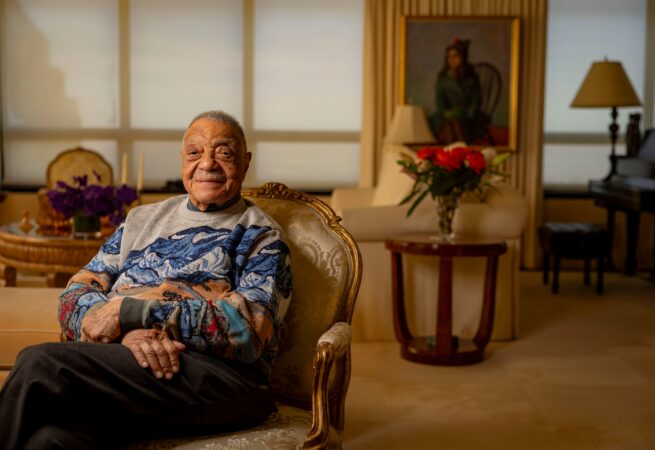
    George E. Johnson, a hair care magnate who rose from a sharecropper’s cabin to found, with his wife, Joan, what was said to be the first Black-owned company listed on a major American stock exchange, and who made a fortune on products like Ultra Sheen and Afro Sheen, died on Monday at his home in Chicago. He was 99.

    His death was confirmed by his second wife, Madeline Murphy Rabb, who said the cause was respiratory illness.

    Long before sports figures, entertainers, and Fortune 500 executives commanded sky-high salaries, the Johnson Products Company, which sold Black hair products and cosmetics, made its founder, Mr. Johnson, one of the nation’s wealthiest African Americans.

    He also helped found one of the first, and largest, Black-owned banks, the Independence Bank of Chicago, where he served as chairperson until it was sold in 1995. And for decades, Johnson Products indirectly influenced pop culture through its sponsorship of the nationally syndicated television dance show Soul Train.

    Johnson Products originated in the laboratory of Samuel B. Fuller, a Black cosmetics entrepreneur, where Mr. Johnson worked after dropping out of high school. Up to that point, his experience — starting at the age of 9, when an aunt gave him a shoeshine box — had been menial jobs.

    Mr. Johnson started at Fuller Products as a salesperson — “carrying the black bag,” as he put it — though he initially found it distressing to peddle pomade and face powder amid urban deprivation.

    “I had a problem with it unless I really needed money,” he said in an interview for this obituary. “Then I would sell like hell.”

    After requesting to work indoors, Mr. Johnson created his first product, a hair relaxer for men he called Ultra Wave. With Fuller’s blessing, Mr. Johnson teamed up with his wife and a barber to found Johnson Products in 1954.

    After one branch of a finance company rejected his request for a business loan as a “ridiculous” idea, Mr. Johnson secured the $250 in seed money from another branch by saying he needed the funds to take Joan on a vacation to California. Those early financing troubles later inspired him to help start a bank.

    He found himself on the road again to peddle his product when his partnership with the barber soured. From his station wagon, he sold Ultra Wave and other products to barbers from the Upper Midwest to New York City.

    But he soon found that barbers were not loyal. “They couldn’t resist the next deal that came along, although it involved poor quality, cheaper stuff,” Mr. Johnson told the New York Times in 1976.

    So he started eying beauty shops, where he observed women using hot combs and mineral oil to straighten hair, a smoky and unhealthful process. He modified Ultra Wave for the women’s market, creating Ultra Sheen, which he said reduced smoke by as much as 75% and could be used in the home.

    Sales took off. In the 1960s, the company had an estimated 80% of the Black hair care market, and by 1970 it had annual sales of $12.6 million, or more than $100 million today. The company listed on the American Stock Exchange in January 1971.

    Johnson Products spent heavily on advertising in its heyday — $5 million in 1975, or more than $31 million today — and was the first Black-controlled company to sponsor a national television program, Soul Train, which aired weekly for almost 35 years, until 2006.

    (Johnson Products is not related to Johnson Publishing Company of Chicago, the former publisher of Ebony and Jet magazines. Nor is it related to Robert L. Johnson, a co-founder of Black Entertainment Television.)

    Cultural and regulatory challenges — and even severe weather — exacted a toll on Johnson Products, which was struggling for survival by the late 1970s and posted its first loss in the mid-1980s.

    The company, which relied on straighteners, was late to adapt to the growing popularity of Afro hairstyles in the 1960s. Near the end of that decade, its reformulation of Ultra Sheen as Afro Sheen resulted in a poor product for long, curly hair, Mr. Johnson acknowledged.

    In the 1970s, a Federal Trade Commission investigation into the marketing of hair straighteners disrupted the industry, and in 1976 Johnson Products negotiated a consent order to add a warning that its products containing sodium hydroxide, or lye, and could cause scalp irritation and eye injury. This was over a year before Revlon, its far larger competitor, agreed to similar warning labels, a lag that may have given Revlon an edge with Black consumers.

    While African Americans made up a small part of Revlon’s market, they represented almost all of Johnson Products’, and its share of the relaxer market skidded to 45% from 85% in two years.

    Mr. Johnson also said he faced racial discrimination, contending that distributors “don’t seem to want Black products to be exposed to all Americans.”

    In early 1979, a heavy snowstorm in Chicago brought the company to a near standstill for more than a month, blocking truckers from transporting supplies or shipments and damaging its plant.

    George Ellis Johnson was born June 16, 1927, in a sharecropper’s shack in Richton, Miss., and moved to Chicago with his mother, Priscilla, when he was 2. Although his education ended in 11th grade, he was awarded nine honorary doctorates over his lifetime.

    Last year, Mr. Johnson published Afro Sheen: How I Revolutionized an Industry with the Golden Rule, From ‘Soul Train’ to Wall Street, a memoir, written with Hilary Beard.

    Joan Johnson wound up with control of the company when the couple divorced in 1989. After some disruptions, including the departure of her son Eric as president and CEO, she sold Johnson Products to the Ivax Corporation in 1993, netting about $32 million, or about $75 million today.

    The Johnsons remarried in 1995. She died in 2019.

    In addition to Rabb, whom he married in 2022, Mr. Johnson is survived by his sons, Eric, John, and George Jr.; his daughter, Joan; 10 grandchildren; and seven great-grandchildren.

    Ivax sold the company to Procter & Gamble in 2004 before it was bought by a consortium of African American investment firms in 2009.

    “When I think about pioneers, the real pioneers are the people who are able to make a path where none exists,” Eric Johnson told CNN after his mother died in 2019. “Johnson Products in many ways was that company. She and my father had no provided path. They created a path where there was none.”

    This article originally appeared in the New York Times.
  • Democrats begin to clash over who replaces Platner even before he exits

    Democrats begin to clash over who replaces Platner even before he exits

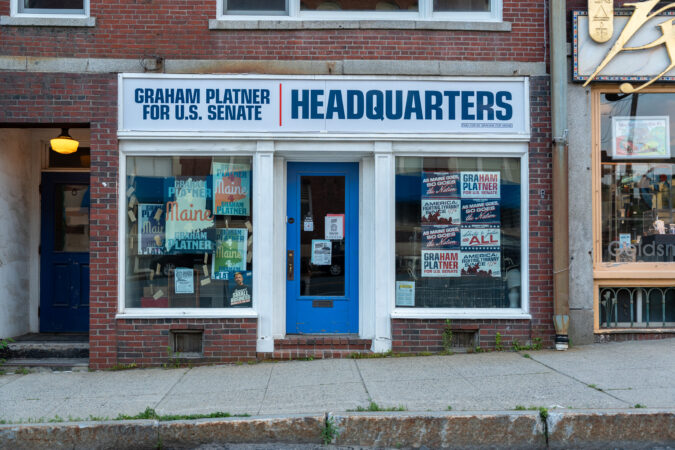
    The implosion of Graham Platner’s campaign for Senate in Maine after an accusation of rape has ripped open divisions inside the Democratic Party as its progressives and moderates battle to pick his successor even before he has said he will step aside.

    National Democrats have grown alarmed that a seat seen as crucial to winning control of the Senate could be slipping from the party’s grasp. Platner had survived a series of controversies — about a tattoo with Nazi symbolism, inflammatory old Reddit posts, and his relationships with women — but many in the party abandoned him after the rape accusation, including the leaders of the Maine Democratic Party and Senate Minority Leader Chuck Schumer.

    They have demanded that Platner step down before a Monday deadline for him to be replaced on the ballot to find a new Democrat to run against Sen. Susan Collins, a longtime Republican fixture in the state. The main super political action committee for Democratic Senate candidates said it would redirect $24 million in ad reservations to other states if he remained.

    Sen. Bernie Sanders (I., Vt.), one of Platner’s earliest and most prominent backers, joined the chorus on Tuesday afternoon.

    “I have spoken with Graham Platner about the best path forward for Maine,” Sanders said in a statement. “In light of these very serious allegations, I have recommended that he step aside.”

    Platner, who has denied the allegation, said on a private call with his campaign staff on Monday evening that he believed he still had leverage to influence which candidate would replace him on the ticket, according to three people familiar with the conversation. On the call, he did not announce plans to withdraw but implied such a decision would be coming, the people said.

    Platner’s campaign had stopped running ads on Meta’s platforms, such as Facebook and Instagram, as of Tuesday, according to the company’s ad disclosure database. He had been running multiple ads as recently as Monday evening.

    The drama comes almost exactly two years after the Democratic Party was roiled by the exit of Joe Biden, then the president, from his reelection race and the speedy anointment of Vice President Kamala Harris as the Democratic nominee. That process — and Democrats’ ultimate loss in 2024 — has left deep scar tissue for many in the party.

    Many on the left — including, it appears, Platner himself — want any replacement to come from the progressive wing of the party after he won the primary over Gov. Janet Mills, a moderate two-term Democrat, who withdrew over a month before the election.

    “To the Democratic establishment: This is not your opening,” said Joseph Geevarghese, executive director of Our Revolution, a group that emerged from Sanders’ 2016 presidential campaign. Referring to Senate Democrats’ campaign arm, he added, “Mainers did not vote by an overwhelming margin against Janet Mills and the DSCC’s handpicked pick just to be handed another status-quo candidate anyway.”

    On the flip side, many in the party establishment believe those on the left should show some humility after Platner’s collapse.

    A range of Democratic groups and activists engaged in the politics of “I told you so.”

    “When women raise the alarm, listen,” said a social media post from EMILY’s List, a group that works to elect Democratic women and that had backed Mills. “Graham Platner’s behavior is disqualifying (AS WE HAVE SAID THIS WHOLE DAMN TIME), and he should end his campaign.”

    On Tuesday morning, more Democrats who are ideological allies of Platner called for him to step aside, including New York City Mayor Zohran Mamdani.

    “I believe that it’s time for him to drop out of the race,” Mamdani said when asked at a news conference. “I think the focus of today should be to respond to the gravity of what so many of us have read, and I think the only appropriate response is for the campaign to come to an end.”

    Mamdani and Platner share several advisers, including Morris Katz and Rebecca Katz of the Fight Agency.

    The progressive group MoveOn also dropped its endorsement.

    As the situation in Maine threatened to spiral out of control, Schumer and the Democratic Senatorial Campaign Committee are set to host major donors this week for a fundraising retreat at the Broadmoor in Colorado Springs. Donors are asked to contribute $44,300 to attend, according to a copy of the invitation.

    The event, which was previously scheduled, was billed as a “special weekend to discuss the DSCC’s strategy and campaigns for taking back the Democratic Senate majority,” but now talk is likely to be consumed by the developments in Maine.

    Platner can be replaced as the Democratic nominee if he withdraws voluntarily by Monday. The state Democratic Party would then have until July 27 to pick his replacement, under state law. But the law does not dictate how the state party itself needs to pick Platner’s replacement.

    What that would look like remains unclear. The options under discussion include a convention or a statewide caucus in late July.

    “We ask for your patience as this work continues,” Devon Murphy-Anderson, the state party’s executive director, wrote in a message to committee members on Tuesday, adding: “Whatever process is ultimately adopted must reflect our Democratic values. It should be open, inclusive, transparent, and fair.”

    A range of candidates are being discussed, with some early attention on those who ran and lost the primary for governor this year. Those Democrats include Troy Jackson, a former president of the Maine Senate; Nirav Shah, a former director of Maine’s public health agency; and Shenna Bellows, Maine’s secretary of state. But some Democrats were concerned about elevating someone who just lost.

    Supporters of Jackson, who had backed Platner in the primary, created a Draft Troy website, and he filed paperwork with the Federal Election Commission for a Senate exploratory committee. Shah put out a statement that said he had received “hundreds of encouraging messages,” adding that anyone who ran for the nomination should commit to a televised debate and “multiple town halls across every corner of the state.”

    Another possible candidate is Dan Kleban, a co-founder of the Maine Beer Co., a brewery outside Portland. He briefly ran for Senate last year before dropping out and endorsing Mills. But like Platner, he has never held elected office or been through the rigors of a campaign.

    Yet another possibility is Jordan Wood, who also previously ran for Senate and dropped out. Wood ran instead in the primary for Rep. Jared Golden’s House seat and lost.

    Golden, a moderate Democrat and veteran who holds the most pro-Trump House seat of any Democrat in Congress, is retiring and previously said he was ready to step away from elected office.

    In recent days, Golden has fielded calls gauging his interest in a run for Senate, according to two people familiar with those conversations who spoke on the condition of anonymity to describe private discussions.

    Golden has not commented since the latest allegations against Platner emerged.

    More unconventional picks were being bandied about, as well. One Democratic firm in recent days included actor Patrick Dempsey in a poll. (He was viewed favorably by 52% of voters in the survey.) Others floated the popular liberal historian Heather Cox Richardson, who is based in Maine.

    Some Democrats erupted after the news emerged that Platner wanted a replacement who was aligned with him politically. One person familiar with the Platner campaign’s internal discussions said Monday that Platner would seek a guarantee he would be replaced by someone in agreement with “the values and vision and policy agenda” that he had pressed.

    Others argued that under the circumstances, Platner’s support would be damaging.

    Joe Baldacci, a state senator who ran and lost in the primary for Golden’s House seat this year, said the idea that Platner would bless a replacement would be the equivalent of “tying a lead weight” to the person.

    “After you have put the Democratic Party in a shambles and undermined all Democratic candidates running for office in Maine then you should have no say in who will be your successor,” Baldacci wrote on social media. He added, “Any connections to Platner will doom that person’s campaign from the very beginning.”

    This article originally appeared in the New York Times.
  • Hackers stole private information of more than 50,000 clients from a Philly-based law firm, lawsuits say

    Hackers stole private information of more than 50,000 clients from a Philly-based law firm, lawsuits say

    Cybercriminals duped a Blank Rome attorney into sharing the personal information of 57,554 former and current clients, two federal lawsuits filed Monday say.

    The firm, which is headquartered in Philadelphia and has 15 other offices nationwide, notified impacted clients a month after the incident, according to the complaints.

    The two nearly identical proposed class-action lawsuits, filed in the Eastern District of Pennsylvania by former Blank Rome clients from California, accuse the firm of negligence, breach of contract, and violation of consumer protection laws, among other claims.

    Blank Rome failed to use industry standards for cybersecurity and to comply with safeguards mandated by a federal medical privacy law, according to the complaints. It also didn’t appropriately train staff to identify these types of cyber schemes, the suits said.

    The lawsuits asks a judge to certify the class action on behalf of all people impacted by the breach, award them damages, and order action to ensure their identities are protected.

    “The exposure of one’s Private Information to cybercriminals is a bell that cannot be unrung,” the suits say. “Before this data breach, its current, former, and prospective clients’ Private Information was exactly that — private. Not anymore.”

    The incident was limited to one attorney and the firm’s network was never breached, a Blank Rome spokesperson said.

    “We are committed to protecting our clients’ information and maintaining the trust they place in us,” the firm’s statement said. “We believe the lawsuit has no merit and will aggressively defend against it.”

    The firm disputed that all people impacted were clients, but did not say who else was impacted.

    The attorney who filed the two lawsuits did not respond to a request for comment.

    Class-action lawsuits following cybersecurity breaches have become increasingly common. Earlier this year, Comcast agreed to pay $117.5 million to settle two dozen suits over a 2023 data breach, and the University of Pennsylvania was sued multiple times over an October breach that impacted fewer than 10 people.

    They are also lucrative for class attorneys who can pocket as much as a third of the settlement’s amount.

    The Blank Rome data breach took place on May 21 after an “unauthorized third party” posing as a member of the firm’s IT department instructed a Blank Rome attorney to upload files to an external Google Drive, according to a notice of breach attached to the complaint.

    Clients began receiving notice on June 26, the suits say.

    The firm identified the breach within two hours, deleted all the files on the drive, and opened an investigation, the notice said. Blank Rome also notified law enforcement.

    The notice was sent to clients whose information, which included names and Social Security numbers, was stolen. Clients’ addresses, dates of birth, driver’s license numbers, passport numbers, and medical and health insurance information were also potentially obtained by the hackers, the notice said.

    Blank Rome provided complimentary credit monitoring to impacted clients, the notices said, and has taken internal steps “mitigating similar risk,” including by working with cybersecurity professionals.

    “We are notifying you of this incident and want to assure you that we take it seriously,” the firm’s notice said.

  • Noel Acciari is going from a hated Penguin to a (hopefully?) beloved Flyer. He said he’s excited to join a team on the rise.

    Noel Acciari is going from a hated Penguin to a (hopefully?) beloved Flyer. He said he’s excited to join a team on the rise.

    Noel Acciari has gotten a few text messages and calls since July 1.

    They came from friends, family, and a few other people, all saying the same thing: “You fit the Flyer mold.”

    That was why the Flyers targeted the unrestricted free agent who checked a lot of boxes, including “experience, playoff experience, the hardness, the fourth-line role, face-offs, the leadership,” according to general manager Danny Brière.

    The veteran forward inked a two-year deal that carries a $2.8 million average annual value. Acciari, 34, is now heading east on I-76 after spending three seasons in Pittsburgh.

    “Choosing Philly was an easy decision,” he said during a Zoom news conference on Tuesday. “Seeing how their momentum was after the break, and it’s a young team, to be able to do what they did was pretty special to watch and play against, and I just wanted to be a part of that.”

    The Flyers’ Trevor Zegras and then-Penguins forward Noel Acciari tangle during a game on Oct. 28, 2025.

    The forward was on the Penguins team that lost in the opening round of the Stanley Cup playoffs to the Flyers. Brière noted that it was difficult for the Flyers to play against Acciari, who brings a physical, defensive game with high-end prowess on the penalty kill, similar to what Garnet Hathaway did for three seasons before he was traded to the Florida Panthers right before the draft.

    Acciari is a natural center who has played a lot of wing, including in Pittsburgh. He combined with Connor Dewar and Blake Lizotte to make up one of the league’s top fourth lines. This past season, he had 13 goals, 25 points, won 52% of his faceoffs, and had an impressive plus-14 rating in 67 games.

    He posted one assist in the six playoff games against Philly — Brière said it was because of the Flyers’ stingy defense — but dominated in the face-off circle, winning 61% of his draws.

    His prowess in the dot will help bolster a team that has not re-signed Luke Glendening, who won 57.2% of his faceoffs with the Flyers. Glendening, a late-season addition, was the team’s only right-handed centerman, and now Acciari holds that title. Across all 82 games last season, the Flyers collectively won only 49.5% of faceoffs; they improved against the Penguins in the playoffs but were worse against the eventual Stanley Cup champion Carolina Hurricanes.

    “If it’s not on a score sheet, I want to help out the team in any way possible, whether it’s blocking a shot, winning a faceoff, or throwing a big hit,” said Acciari. “All the little things that helped me throughout my career, and I’d love to bring [them] on over to Philly.”

    Noel Acciari (right) had 13 goals, 25 points, and an impressive plus-14 rating in 67 games last season for the Pittsburgh Penguins.

    A veteran of 585 career games with the Boston Bruins, Florida Panthers, St. Louis Blues, Toronto Maple Leafs, and Penguins, Acciari has amassed 81 goals and 144 points. One of the biggest draws for him was the Flyers’ locker room. He says he saw how tight the team is, the excitement they had, and how much fun they were having, and he wanted to be a part of it.

    He also knows a few Flyers. He played with Owen Tippett in Florida and Joseph Woll in Toronto and overlapped with Dan Vladař in the Boston organization. He also worked with Flyers assistant coach Todd Reirden in Pittsburgh.

    There’s also his interaction during the regular season with Trevor Zegras. The two were part of a melee that saw both players tossed after Acciari wasn’t too happy with the Flyers forward for knocking off his helmet. So while Acciari has spoken to the guys he knows, has he chatted yet with Zegras?

    “I have not talked to Trevor yet, but I bet that will come soon enough,” he said after grinning when Zegras’ name was brought up. “But, you know, it’s all water under the bridge. Have a good laugh at it now. He does what he needs to do on the ice to get under guys’ skin, and he does a good job, and he’s effective at it.”

    He’s excited to now be on the same side as Zegras — and Philadelphia’s fans.

    “Just being a part of that Pennsylvania rivalry, I got to experience it on the other side, which was a lot of fun,” he said. “And just seeing how passionate the fans are, which is unbelievable, and to be able to experience it with their cheering for you this time. I’m so excited for, and I’m glad to have them on my side now because they are very passionate, and they’re all up in your face.

    “It’s fun to play against, but at the same time, I’m happy I get to play on the same side.”

  • Judge rejects Justice Department attempt to get names of 2020 election workers in Fulton County

    Judge rejects Justice Department attempt to get names of 2020 election workers in Fulton County

    ATLANTA — The U.S. Department of Justice cannot have the names and personal contact information for every person who worked during the 2020 election in Georgia’s Fulton County, a federal judge ruled Tuesday.

    The Justice Department in April obtained a grand jury subpoena seeking the names and personal contact information of county employees and volunteer poll workers. President Donald Trump has long claimed without evidence that widespread voter fraud in Georgia’s most populous county, a Democratic stronghold, cost him victory in the state in 2020.

    Fulton County asked a judge to quash the subpoena, arguing it was meant to “target, harass, and punish the President’s perceived political opponents” and that it was “grossly over broad and untethered to any reasonable need.”

    “Given the low need for the subpoenaed information and the highly burdensome nature of the disclosure of the same, the Subpoena is unreasonable and must be quashed,” U.S. District Judge William Ray wrote in his ruling, calling the scope of the request “staggering.”

    Emails seeking comment were sent to both the Justice Department and Fulton County.

    While grand juries often work with federal prosecutors to investigate alleged crimes, “that does not give the DOJ the right to use the Grand Jury to do whatever the DOJ wants,” he wrote.

    Even if the records sought by the Justice Department could help find people who worked for the county during the 2020 election who support the theory that the election was unfair, the information couldn’t be used to charge anyone, Ray wrote.

    “That is because the statute of limitations for any possible crime arising from the 2020 Election has long expired,” he wrote.

    The subpoena came after the FBI in January served a search warrant at the Fulton County election hub and seized hundreds of boxes of ballots and other documents from the 2020 election. A federal judge in May denied the county’s request to force the federal government to return the ballots.

    The Justice Department argued in a court filing that the subpoena was the “next step in the normal investigative process” and that it seeks “records identifying persons with relevant knowledge.”

    Kamal Ghali, a lawyer for the county, argued that the subpoena “will chill participation by election workers” and that the statute of limitations for any of the alleged misconduct had already lapsed.

    Justice Department lawyer William McComb argued the statute of limitations issue is not relevant at the investigative stage. The point of the investigation is to figure out what charges can be brought, he said.

    “My point is, as we sit here now, we are not sure what charges can be brought. That’s the whole point of the investigation,” he said.

    The request for election workers’ contact information, McComb said, “would simply be a pathway to determine and speak with and interview certain individuals who worked at the polls who may have seen, heard or done something in and of themselves.”

    The judge noted that the Justice Department had expressed concern about possible criminal actions in the years that followed the election, including an alleged failure by the county to preserve electronic ballot images. But he pointed out that the subpoena seeks information related to what happened during the 2020 election and its immediate aftermath.

    “In these hyper-political times in which we currently live, there are sure to be some who disagree with this decision because they believe the allegations of fraud in the 2020 Election and believe that ‘light’ should be brought to those claims,” Ray wrote.

    He added that nothing prevents continued investigation into those allegations by people who believe those claims — such as Congress or even the Justice Department — but the power of the grand jury, “which exists to investigate potential crimes and to bring viable indictments,” cannot be used for that purpose. Otherwise, anyone in power could use the grand jury process to subpoena personal information of citizens “with no legitimate law enforcement purpose,” he wrote.

    “Thus, everyone, whether you support the President or you do not, or whether you believe the 2020 Election was fair or believe that it was not, should be concerned about the DOJ’s ability to utilize the power of the Grand Jury to appropriate your private information without a legitimate purpose,” Ray wrote.

  • Patti LaBelle to sing anthem at MLB All-Star Game; Jennifer Hudson, Boyz II Men, and Miles Teller also to perform

    Patti LaBelle to sing anthem at MLB All-Star Game; Jennifer Hudson, Boyz II Men, and Miles Teller also to perform

    Major League Baseball is pulling out all the stops for next week’s All-Star Game — including employing some of Philadelphia’s own to get the party started.

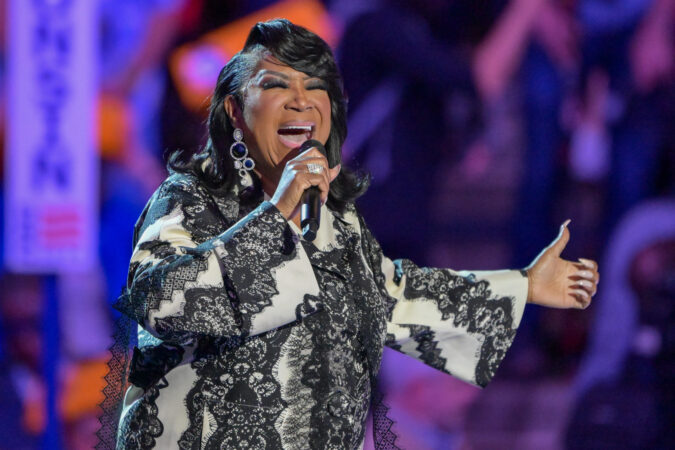
    On Tuesday, MLB announced the slate of entertainment for its midsummer classic at Citizens Bank Park (July 14, 8 p.m., Fox29). Philly native and “Godmother of Soul” Patti LaBelle will perform the national anthem, while EGOT winner Jennifer Hudson is slated to sing “America the Beautiful.” Philadelphia R&B group Boyz II Men and Top Gun: Maverick star Miles Teller, a Downingtown native, also headline the game’s entertainers.

    “As we gather to celebrate America’s 250th birthday, Philadelphia is the perfect stage to bring this milestone to life,” MLB chief marketing officer Uzma Rawn Dowler said in a statement. “… This lineup captures the unique energy of the city while honoring how baseball has been a part of the American spirit for 250 years.”

    LaBelle will be accompanied by the Military District of Washington Joint Chorus and West Point Band for her rendition of “The Star-Spangled Banner.” LaBelle, 82, was born in Southwest Philadelphia, attended Bartram High School, and resides in Villanova. In 2019, the city honored the two-time Grammy winner by renaming a block of Broad Street between Spruce and Locust “Patti LaBelle Way.”

    “I’m a Philadelphia girl,” LaBalle told The Inquirer in February. “It’s laid back, comfortable. … How I like it.”

    Hudson also will have some backup and will perform “America the Beautiful” alongside the Philly Pops and the U.S. Army Old Guard Fife and Drum Corps. In 2022, Hudson, then 40, became the third-youngest person, and youngest woman, to have won each of entertainment’s biggest awards — an Emmy, Grammy, Oscar, and Tony. The Chicago native is the only All-Star performer who does not boast direct Philadelphia ties, but she is no stranger to playing in the city — just last month, her tour with Josh Groban stopped at Xfinity Mobile Arena. Most notably, the “Spotlight” singer headlined the Wawa Welcome America Festival in 2019.

    It is unclear if Boyz II Men will be diving into its extensive discography during its performance. After the fifth inning, the group will provide the soundtrack to the league’s Stand Up To Cancer placard moment — in which fans will hold up signs for their loved ones who have been affected by cancer. MLB first started the tradition in Philadelphia during the 2009 World Series.

    Miles Teller, the only nonmusician on the list, will be lending his voice to a “stirring tribute of baseball’s impact on American life,” according to MLB. The task is fitting for the actor, who has made his Phillies fandom known over the years. During the 2022 World Series, in which the Phillies fell to the Houston Astros in six games, Teller was a mainstay at Citizens Bank Park. He told The Inquirer he had befriended Phillies pitcher Aaron Nola and then-first baseman Rhys Hoskins. The Whiplash actor even texts with play-by-play announcer Tom McCarthy.

    “It’s a pretty big year,” Teller said in 2022. “Top Gun. Also, I turned 35, which feels like a number. [I] hosted Saturday Night Live for the first time. And the Phillies, man. I’ve always lived and died with the Phillies, dude. That’s always been the most important thing to me.”

  • Trump-promoted Freedom Fuel gas stations are opening around Philly. Here’s what we know.

    Trump-promoted Freedom Fuel gas stations are opening around Philly. Here’s what we know.

    Philadelphia-area drivers can now fill up their tanks with less-expensive gasoline promoted by President Donald Trump’s administration, but details on the entire enterprise remain scarce.

    The White House on Tuesday announced the opening of the first Freedom Fuel gas station in Upper Dublin Township, at a former Sunoco station.

    In the undated video, drivers happily filled their tanks for $3.47 a gallon, which the White House said was to honor “our 47th President.” That’s cheaper than the least-expensive gas at nearby stations, according to prices posted by GasBuddy.

    The Freedom Fuel station in Dresher is near a McDonald’s and across the street from a shopping plaza. But what sets it apart from other nearby gas stations is the assortment of American flags planted across its footprint — and the cheaper gas.

    While a nearby Citgo station, about five minutes away, prices regular gas at $3.79 a gallon, and a Gulf offers it at $3.85, Freedom Fuel offers it at $3.47 a gallon.

    For many patrons stopping by Tuesday afternoon, the branding was new — and secondary to savings.

    The Freedom Fuel Network gas station at 1400 Dreshertown Road in Dresher.

    Jessiah Brice, 25, said the Freedom Fuel station was convenient because it is near her job. She had noticed the new branding after the July Fourth holiday and had no idea what it was about, but she welcomed the idea regardless of the affiliation with Trump.

    “Gas should be cheaper,” she said. “My only issue is: How is it $3.47 here and $5 by me?”

    Another gas buyer, who declined to give her name out of privacy concerns, said she had heard of Trump’s efforts to bring cheaper gas to people but had not connected it to her local gas station.

    “What’s not to love?” said another patron, before driving away with a full tank.

    Seyer Hamidi, 36, stumbled upon the station after picking up his car, which he likes to fill up with premium gas, from the mechanic. He, too, welcomed the idea.

    “Gas is going to be high whether you’re a Republican or Democrat,” the Republican said, noting the cheaper gas was a step in the right direction.

    A lot remains unclear, including the names of the participating businesses and how they are able to sell gasoline cheaper than nearby competitors.

    A White House spokesperson confirmed that a website for the Freedom Fuel Network, which showed 25 locations across the Philadelphia region and South Jersey, was accurate. The White House did not confirm that all 25 locations are open and did not provide information about the company.

    The list includes stations in Elmwood Park, Bustleton, and Hunting Park, but it was unclear if every location on the Freedom Fuel website was open.

    A White House spokesperson said the Freedom Fuel Network was a private company and not a government program, adding that the company was not purchasing gasoline at a discount and that the administration has not provided funding. The spokesperson said the business was simply making gas more affordable for drivers in Pennsylvania and New Jersey but did not elaborate.

    The company behind the Freedom Fuel Network did not respond to a request for comment.

    The fuel pumps at the Freedom Fuel Network gas station at 1400 Dreshertown Road in Dresher.

    Beyond that, not much information was available beyond the White House social media post and a statement made by Trump, who wrote on his Truth Social account last week that a “very smart retailer” located throughout the Northeast was “stepping up” to offer a discount at the pump.

    Patrick De Haan, head of petroleum analysis at GasBuddy, crunched the numbers and said there was no profitable way for Freedom Fuel stations to sell gas so cheaply.

    “Stations selling at this price, it’s not sustainable,” De Haan said. “Generally, when losses happen, somebody’s got to pay for it.”

    De Haan had no insight on who owns the stations or what deals they might have made to purchase gas, but did confirm many of the stations exist in GasBuddy’s database, though the names were “vastly different.”

    Gas prices have been dropping in recent weeks after peaking in May. Prices soared after the United States attacked Iran and the Strait of Hormuz — a key shipping lane — was shut down.

    The average cost of a gallon of gas in Philadelphia on Tuesday was $3.95, according to AAA. That was up nearly 20% from this time last year, when the cost of a gallon of gas averaged $3.31.

  • A new Sprouts Farmers Market is opening in South Jersey this summer

    A new Sprouts Farmers Market is opening in South Jersey this summer

    Another Sprouts Farmers Market is coming soon to South Jersey.

    The Sprouts in Washington Township is set to open Aug. 28, the company announced Tuesday in a statement.

    The 23,000-square-foot organic grocery store is under construction on Egg Harbor Road in Sewell, with an attached 6,400-square-foot storefront for lease, according to marketing materials for the new development.

    Sprouts plans to bring on about 90 full- and part-time employees, with hiring events scheduled next week for Tuesday and Wednesday at the Double Tree by Hilton in Cherry Hill.

    This Sprouts in South Philadelphia opened in 2018.

    The Washington Township location will be the Phoenix-based chain’s fourth in South Jersey. The grocer, which specializes in organic, gluten-free, and plant-based products, also has stores in Haddon Township, Marlton, and West Deptford.

    Across the river, the company operates four Philadelphia locations, including Roosevelt Mall in the Northeast and the new Rivermark complex in Northern Liberties, as well as two Montgomery County stores in Upper Dublin and Montgomeryville.

    The chain has a location under construction in Limerick, and recently signed a lease for the never-opened Amazon Fresh in Havertown, with a Sprouts opening expected early next year.

    While some other chain grocery stores have closed locally, and some consumers have cut back due to higher prices, Sprouts is expanding, with a goal to open 40 stores nationwide by the end of 2026, according to a recent earnings report.

    Sprouts executives said on the earnings call that they are also taking steps to improve affordability, including store promotions like $5 Sushi Wednesday and price reductions on increasingly expensive items like coffee.

  • NATO unveils billions in arms deals to prove its firepower as Trump again demands Greenland

    NATO unveils billions in arms deals to prove its firepower as Trump again demands Greenland

    ANKARA, Turkey — President Donald Trump on Tuesday insisted that the United States should be in control of Greenland rather than NATO ally Denmark, renewing tensions in Europe even as the trans-Atlantic military alliance was announcing billions in arms deals at a summit in an attempt to appease the mercurial U.S. leader.

    Trump called the semiautonomous island “an important part” for the United States, as he repeated the false claim that it’s surrounded by Chinese and Russian ships and said he won’t let Greenland be threatened.

    “That should be controlled by the United States, not by Denmark,” Trump told reporters during a meeting with Turkish President Recep Tayyip Erdogan in Ankara.

    The NATO alliance was founded on the principle that its 32 members will defend each others’ territory and not threaten to seize it. At the summit, European countries and the alliance’s secretary-general, Mark Rutte, were already working overtime to address another longstanding Trump complaint: that European allies do not spend enough on their own defense.

    Separately, Trump announced that the U.S. will lift sanctions on Turkey that were issued after Ankara purchased a Russian missile defense system that led to the country being kicked out of the F-35 fighter jet program — in a nod to his warm ties with summit host Erdogan.

    Trump cites Erdogan ‘chemistry’ as he lifts obstacle on F-35s

    Turkey’s purchase in 2019 of Russian-made S-400 missile defense systems sparked years of tensions, despite the warm personal relationship between Trump and Erdogan dating back to the U.S. president’s first term.

    Legal hurdles remain before Turkey could be fully admitted back to the U.S. F-35 program, but the removal of sanctions issued under the Countering America’s Adversaries Through Sanctions Act would help ease that process. Regaining access to the F-35s is a top goal of Erdogan.

    “We’re going to be taking the sanctions off, OK?” Trump said in response to a question, saying Secretary of State Marco Rubio, Treasury Secretary Scott Bessent, and Defense Secretary Pete Hegseth were working on the issue.

    Trump said the possibility of selling F-35s to Turkey is “something certainly we’d consider” given the countries’ relationship, and that “Turkey’s been, in many ways, much more loyal than other countries that we think would be loyal.”

    Erdogan expressed hope that the U.S. will sell the F-35s, saying the U.S. president always stands by his word.

    Trump and Erdogan showed off their fondness for each other. Erdogan greeted Trump with an elaborate ceremony involving military officials on horseback and jets overhead emitting red, white, and blue smoke.

    Asked what makes their relationship so strong, Trump said there’s “a chemistry that works between us,” adding that “Sometimes you get along with the toughest people, like him.”

    Turkey’s access to U.S. F-35s could complicate relationships elsewhere. Israeli Prime Minister Benjamin Netanyahu said he has urged Trump not to sell the fighter jets to Turkey, saying it would put Israel in danger.

    “This is not a force for peace and stability,” Netanyahu said on CNN. “When you give them that power, you’re going to see aggression its wake.”

    There is also opposition among U.S. lawmakers to Turkey having the F-35s as long as the Russian missile defense system remains in its possession. Even if sanctions are lifted, the Trump administration still faces restrictions under U.S. law that prevent Turkey from being able to purchase the fighter jets if it owns the S-400s.

    NATO has ‘moment of great pride’ on defense

    Earlier in the day, NATO showcased military projects worth billions of dollars — an investment Rutte called “money well spent” and one clearly meant to try to satisfy Trump.

    Rutte was speaking to government ministers and defense industry officials at a forum billed as NATO’s “big reveal,” to the thrum of techno music.

    NATO does not own weapons — these are the property of member countries — but it has 14 AWACS early warning radar surveillance planes that are about 50 years old, along with newer surveillance drones.

    A deal to replace the aging planes was announced Tuesday. Swedish manufacturer Saab will supply up to 10 new GlobalEye surveillance aircraft for a 10-nation consortium, Swedish Prime Minister Ulf Kristersson announced.

    “It’s a moment of great pride,” he said.

    Some projects will be paid for with funds from a system of cheap loans for defense purposes set up by the European Union, comprising up to $170 billion raised on capital markets.

    Representatives from 15 nations announced a multinational effort to buy air-to-air refueling and transport planes from Airbus. Then Rutte announced a four-country effort to purchase as many as five new Triton surveillance drones.

    Rutte had told reporters on the eve of the two-day summit that “we will announce tens of billions in new contracts.” However, at Tuesday’s event, no dollar figures were given and the display included some projects long since agreed upon.

    Ukraine’s Zelensky pushes for NATO entry

    Separately, Ukrainian President Volodymyr Zelensky made a fresh appeal for his country to be allowed to join the alliance, saying his country’s armed forces are highly experienced and would boost NATO’s defense capabilities.

    He highlighted Ukraine’s ability to strike deep inside Russia and hit oil refineries and other energy targets. He said Ukraine’s armed forces are “eliminating” on average 30,000 Russian troops every month. He is set to meet with Trump on Wednesday in Ankara.

    “Frankly we take no pride in this,” Zelensky said, noting that the war with Russia — now in its fifth year — is one “we did not seek but one we are forced to fight.”

    Concern is mounting among some European countries that Russia might be preparing a hybrid attack — a combination of conventional warfare with tactics like cyberattacks — on the continent as Russian President Vladimir Putin struggles to secure victory in Ukraine.

    Yet a senior NATO official, speaking on the summit’s sidelines, said that despite some “reckless” actions by Russia, including airspace violations over Poland, Romania, and Estonia, the alliance has been successful in deterring Moscow from any potential attack on a member country. The official insisted on anonymity to brief reporters.