Blog

  • Israeli officials say Iran’s Supreme Leader Khameini has been killed

    Israeli officials say Iran’s Supreme Leader Khameini has been killed

    DUBAI, United Arab Emirates — Iranian Supreme Leader Ayatollah Ali Khamenei died following a major attack by Israel and the United States, Iranian state media confirmed early Sunday, throwing the future of the Islamic Republic into doubt and raising the risk of regional instability.

    President Donald Trump announced the death hours earlier, saying it gave Iranians their “greatest chance” to “take back” their country.

    Iranian state television and the state-run IRNA news agency did not report a cause of death for the 86-year-old.

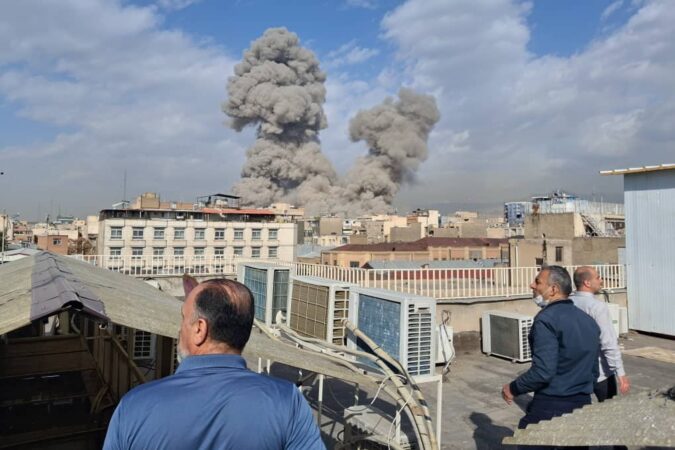
    The death occurred after a joint U.S. and Israeli aerial bombardment that targeted Iranian military and governmental sites.

    The president also said “heavy and pinpoint bombing” was to continue “uninterrupted” through the week or longer.

    Trump in his post called Khamenei “one of the most evil people in history.”

    Trump said that Khamenei “was unable to avoid our Intelligence and Highly Sophisticated Tracking Systems and, working closely with Israel, there was not a thing he, or the other leaders that have been killed along with him, could do.”

    In a nationally televised address, Israeli Prime Minister Benjamin Netanyahu said there were “growing signs” that Khamenei had been killed when Israel struck his compound early Saturday.

    Shortly after the address, two Israeli officials said Israel had confirmed his death. The officials both spoke to the Associated Press on condition of anonymity pending a formal announcement and gave no further details.

    Khamenei succeeded Ayatollah Ruhollah Khomeini, the leader of the 1979 Islamic Revolution. He had the final say on all major policies, leading Iran’s clerical establishment and its paramilitary Revolutionary Guard — the two main centers of power in the country’s theocracy.

    As the attack on Iran unfolded, Trump urged the Iranian public to “seize control of your destiny” by rising up against the Islamic leadership. In a video announcing the “major combat operations,” Trump told Iranians, “When we are finished, take over your government. It will be yours to take. This will be probably your only chance for generations.”

    Iranian state media, citing the Red Crescent, on Saturday evening said at least 201 people had been killed and more than 700 injured. Iran retaliated by firing missiles and drones toward Israel and U.S. military bases in the region, and exchanges of fire continued into the night.

    Some of the first strikes on Iran appeared to hit near the offices of the 86-year-old Khamenei. Before Israeli officials confirmed the death, Iranian Foreign Minister Abbas Araghchi told NBC News that Khamenei and President Masoud Pezeshkian were alive “as far as I know.” He called the attack “unprovoked, illegal, and absolutely illegitimate.”

    The strikes during the holy fasting month of Ramadan opened a stunning new chapter in U.S. intervention in Iran, marking the second time in eight months that the Trump administration has attacked the Islamic Republic during talks over its nuclear program.

    About 12 hours after the attacks began, the U.S. military reported no U.S. casualties and minimal damage at U.S. bases despite “hundreds of Iranian missile and drone attacks.” It said targets in Iran included Revolutionary Guard command facilities, air defense capabilities, missile and drone launch sites, and military airfields.

    Various members of Iran’s leadership were targeted in the attack. Israel said it killed the commander of the Iranian Revolutionary Guard Corps and the country’s defense minister. The Israeli military also said its strikes killed the secretary of the Iranian Security Council, a close adviser to Khamenei.

    Israel said the strikes had targeted three locations in Tehran where intelligence had indicated that top Iranian officials were gathered. Neither Iran nor the U.S. commented on or confirmed Israel’s claims about the Iranian leadership.

    Even if Iran’s top leaders have been killed, regime change is not guaranteed.

    Democrats decried that Trump had taken action without congressional authorization. White House spokesperson Karoline Leavitt said the administration had briefed several Republican and Democratic leaders in Congress in advance.

    The U.N.’s nuclear watchdog said on X it was closely monitoring developments and had seen “no evidence of radiological impact.”

    Iran was in a “near-total internet blackout,” advocacy group NetBlocks said.

    Months of rising tensions

    Tensions have soared in recent weeks as American warships moved into the region. Trump said he wanted a deal to constrain Iran’s nuclear program, as the country struggles with growing dissent following nationwide protests.

    The trigger for Saturday’s strikes appeared to be the unsuccessful latest round of nuclear talks on Thursday. They also reflected dramatic changes that have left Iran’s leadership in its weakest position since the Islamic Revolution nearly half a century ago.

    Israeli and American strikes last June greatly weakened Iran’s air defenses, military leadership, and nuclear program. A regionwide conflict sparked by Hamas’ Oct. 7, 2023, attack on Israel has left Iran’s network of proxies across the Middle East greatly weakened. U.S. sanctions and global isolation have decimated Iran’s economy.

    Iran responded to the latest strikes by launching missiles and drones targeting Israel and strikes targeting U.S. military installations in Bahrain, Kuwait, and Qatar. Israel’s military said Iran fired “dozens” of missiles at Israel, with many intercepted. Emergency responder Magen David Adom noted 89 “lightly injured” people.

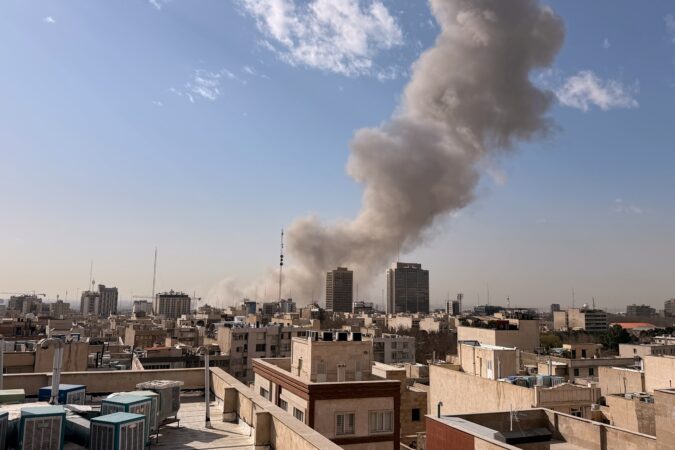
    At least three explosions were heard Saturday evening near the Intelligence Ministry building in northern Tehran, witnesses said, adding that air defense systems had begun operating there. Israel’s military said it had begun new strikes against missile launchers and aerial defense systems in central Iran.

    In southern Iran, at least 85 people were reported killed when a girls school was struck, and dozens more were wounded, the local governor told Iranian state TV.

    Capt. Tim Hawkins, a U.S. Central Command spokesperson, said he was “aware of reports” that a girls school was struck and they were looking into them.

    Iran’s state news agency IRNA said at least 15 people were killed in the southwest, quoting the governor of Lamerd, Ali Alizadeh, as saying a sports hall, two residential areas, and a hall near a school were hit.

    Flights across the Middle East were disrupted, and air defense fire thudded over Dubai, the United Arab Emirates’ commercial capital. Shrapnel from an Iranian missile attack on the UAE capital killed one person, state media said.

    Attack was coordinated between Israel and U.S.

    “Active and serious negotiations have yet again been undermined,” Oman’s Foreign Minister Badr al-Busaidi, a key mediator of the nuclear talks, said on X. “Neither the interests of the United States nor the cause of global peace are well served by this.”

    Israel said the operation has been planned for months with the United States. Air Force pilots were striking “hundreds of targets across Iran,” Israeli military chief of staff Lt. Gen. Eyal Zamir said in a statement.

    Targets in the Israeli campaign included Iran’s military, symbols of government, and intelligence targets, according to an official briefed on the operation, who spoke on condition of anonymity to discuss nonpublic information on the attack.

    Trump, in seeking to justify the military action, claimed Iran has continued to develop its nuclear program, despite his assertion last year the program had been “obliterated” by an earlier round of strikes.

    He acknowledged Saturday that there could be American casualties, saying “that often happens in war.” It was a notable statement from a U.S. leader who swept into office on an “America First” platform and vowed to keep out of “forever wars.”

    Trump also said he was aiming to “annihilate” the Iranian navy and destroy regional proxies supported by Tehran. He called on the paramilitary Iranian Revolutionary Guard to lay down arms, saying members would be given immunity or face “certain death” if they didn’t.

    Iran had said it hoped to avert a war, but maintained its right to enrich uranium. It did not want to discuss other issues such as its long-range missile program or support for armed groups like Hamas and Hezbollah.

    Iran has said it hasn’t enriched since June, but it has blocked international inspectors from visiting the sites the U.S. bombed. Satellite photos analyzed by the Associated Press have shown new activity at two of those sites, suggesting Iran is trying to assess and potentially recover material.

    Iran on Saturday requested an urgent session of the International Atomic Energy Agency’s Board of Governors about “these threats to safeguarded nuclear facilities,” according to a letter posted by the semiofficial Tasnim news agency.

    Trump had threatened military action but held off following Iran’s recent crackdown on protests spurred by economic grievances that evolved into a nationwide push against the ruling clerics.

    The Human Rights Activists News Agency says it confirmed more than 7,000 deaths in the crackdown and is investigating thousands more. The government has acknowledged more than 3,000 killed.

    Now, Iranians are likely to be wary about taking to the streets again because the Revolutionary Guard has demonstrated its ruthlessness, said Kamran Matin, an expert on Iran at the University of Sussex in southern England.

    Regional effects

    The strikes could rattle global markets, particularly if Iran makes the Strait of Hormuz unsafe for commercial traffic. A third of worldwide oil exports transported by sea passed through the strait in 2025.

    Saudi Arabia said Iran had targeted its capital and eastern region in an attack that was repelled. Bahrain said a missile attack targeted the U.S. Navy’s 5th Fleet headquarters in the island kingdom, and three buildings were damaged in the capital, Manama, and Muharraq city by drone strikes and debris from an intercepted missile.

    Kuwait’s civil aviation authority said a drone targeted the main international airport, injuring several employees. Kuwait’s state-run news agency said three troops were injured by shrapnel from strikes that hit Ali Al-Salem air base. Explosions could also be heard in Qatar. Jordan said it “dealt with” 49 drones and ballistic missiles.
  • European leaders call for resumption of U.S.-Iran negotiations

    European leaders call for resumption of U.S.-Iran negotiations

    BRUSSELS — How long will it last? Will it grow? What will it mean to us — and to global security overall? Those questions echoed across the Middle East and the planet Saturday as world leaders reacted warily to U.S. and Israeli strikes on Iran that sowed concerns of a broader conflict. The U.N. Security Council scheduled an emergency meeting.

    Perhaps cautious about upsetting already strained relations with U.S. President Donald Trump, many nations abstained from commenting directly or pointedly on the joint strikes but condemned Tehran’s retaliation. Similarly to Europeans, governments across the Middle East condemned Iran’s strikes on Arab neighbors while staying silent on the U.S. military action.

    Other countries were more explicit: Australia and Canada expressed open support for the U.S. strikes, while Russia and China responded with direct criticism.

    The U.S. and Israel launched a major attack on Iran on Saturday, and Trump called on the Iranian public to “seize control of your destiny” by rising up against the Islamic theocracy that has ruled the nation since 1979. Iran retaliated by firing missiles and drones toward Israel and U.S. military bases in the Middle East.

    Some leaders urge resumption of talks

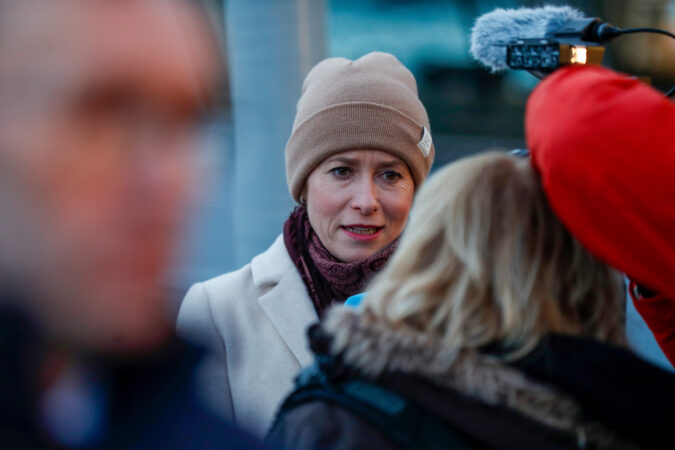
    In a statement, British Prime Minister Keir Starmer, French President Emmanuel Macron, and German Chancellor Friedrich Merz called on the U.S. and Iran to resume talks and said they favored a negotiated settlement. They said their countries didn’t take part in the strikes on Iran but are in close contact with the U.S., Israel, and partners in the region.

    The three countries have led efforts to reach a negotiated solution over Iran’s nuclear program.

    “We condemn Iranian attacks on countries in the region in the strongest terms. Iran must refrain from indiscriminate military strikes. We call for a resumption of negotiations and urge the Iranian leadership to seek a negotiated solution. Ultimately, the Iranian people must be allowed to determine their future,” they said.

    Later, at an emergency security meeting, Macron said France was “neither warned nor involved” in the strikes. He called for intensified efforts for a negotiated solution, saying “no one can think that the questions of Iran’s nuclear program, ballistic activity, regional destabilization will be settled by strikes alone.”

    The 22-nation Arab League called the Iranian attacks “a blatant violation of the sovereignty of countries that advocate for peace and strive for stability.” That coalition of nations has historically condemned both Israel and Iran for actions it says risk destabilizing the region.

    Countries that maintain diplomatic ties with Israel — including Morocco, Jordan, and the United Arab Emirates — denounced Iranian strikes targeting U.S. military bases in the region including in Kuwait, Bahrain, Qatar, and the Emirates.

    Saudi Arabia said it “condemns and denounces in the strongest terms the treacherous Iranian aggression and the blatant violation of sovereignty.” Oman, which has been mediating the talks between Iran and the U.S., said in a statement that the U.S. action “constitutes a violation of the rules of international law and the principle of settling disputes through peaceful means, rather than through hostility and the shedding of blood.”

    Careful wording is (mostly) the order of the day

    Countries in Europe and the Middle East used careful wording, avoiding perceptions that they either support unilateral American action or are directly condemning the United States.

    Others were more blunt. Russia’s Foreign Ministry called the strikes “a pre-planned and unprovoked act of armed aggression against a sovereign and independent U.N. member state.” The ministry accused Washington and Tel Aviv of “hiding behind” concerns about Iran’s nuclear program while actually pursuing regime change.

    Similarly, China’s government said it was “highly concerned” about the U.S. and Israeli strikes on Iran and called for an immediate halt to the military action and a return to negotiations. “Iran’s sovereignty, security and territorial integrity should be respected,” a Chinese Foreign Ministry statement said.

    Meanwhile, Australian Prime Minister Anthony Albanese said his country supports the United States in its effort to stop Iran from obtaining an atomic bomb. He described Iran’s current leadership as a destabilizing force and noted two attacks on Australian soil that were blamed on Tehran. Last August, Australia cut off diplomatic relations with Iran and expelled its ambassador after accusing it of orchestrating two antisemitic attacks in the country.

    Despite recent tensions with the U.S., Canada too expressed its support for the military action. “The Islamic Republic of Iran is the principal source of instability and terror throughout the Middle East,” Prime Minister Mark Carney said.

    The United Nations chief condemned the U.S.-Israeli airstrikes on Iran and called for an immediate return to negotiations “to pull the region, and our world, back from the brink.”

    Secretary-General António Guterres told an emergency meeting of the U.N. Security Council on Saturday that everything must be done to prevent further escalation. “The alternative,” he warned, “is a potential wider conflict with grave consequences for civilians and regional stability.”

    Guterres also condemned Iran’s retaliatory attacks for violating the sovereignty and territorial integrity of Bahrain, Iraq, Jordan, Kuwait, Qatar, Saudi Arabia, and the United Arab Emirates.

    Israel’s U.N. Ambassador Danny Danon, speaking to reporters before the meeting, said it was “hypocrisy” to condemn the airstrikes. He said Iran is responsible for the actions of its proxies in the Middle East and for its nuclear and missile programs, and Israel and the U.S. acted “to prevent an irreversible and immediate threat.”

    Concerns expressed for ‘new, extensive’ war

    Palestinians in the occupied West Bank said they were largely unfazed as war erupted Saturday, barely pausing as booms echoed across the sky from Israel’s Iron Dome intercepting missiles overhead.

    Unlike Israel, Palestinian cities have no warning sirens or bomb shelters, despite the risk of falling debris or errant missiles. As people sheltered less than 10 miles away in Jerusalem, streets in Ramallah swarmed with shoppers browsing meat counters, vegetable stalls, and Ramadan sweets, some stopping to record the sounds of distant sirens and missile interceptions.
    But as Israel closed checkpoints to the movement of people and goods on Saturday, gas stations saw longer-than-usual lines as residents filled spare canisters in case of supply disruptions.

    Nervousness is perceptible across multiple countries as people fear a full-scale war engulfing the region. Norwegian Foreign Minister Espen Barth Eide told Norwegian broadcaster NRK that he was concerned the failure of negotiations between the U.S. and Iran meant a “new, extensive war in the Middle East.”

    The Nobel Peace Prize-winning International Campaign to Abolish Nuclear Weapons condemned the U.S. and Israeli strikes on Iran in harsher words. “These attacks are totally irresponsible and risk provoking further escalation as well as increasing the danger of nuclear proliferation and the use of nuclear weapons,” said its executive director, Melissa Parke.

    EU leaders issued a joint statement Saturday calling for restraint and engaging in regional diplomacy in hopes of “ensuring nuclear safety.”

    “We call on all parties to exercise maximum restraint, to protect civilians, and to fully respect international law,” the statement from European Commission President Ursula von der Leyen and European Council President António Costa said.

    The Arab League, too, appealed to all international parties “to work towards de-escalation as soon as possible, to spare the region the scourge of instability and violence, and to return to dialogue.”

  • Trump: ‘Freedom’ for Iran is goal of ‘major military operation’

    Trump: ‘Freedom’ for Iran is goal of ‘major military operation’

    President Donald Trump told The Washington Post early Saturday that his main concern is “freedom” for the Iranian people as the U.S. launched military strikes in the country.

    A U.S. official said a multiday operation against Iran began at about 1 a.m. Eastern time with a salvo of ship-launched Tomahawk cruise missiles and air-launched munitions from U.S. Air Force and Navy jets.

    Iran quickly launched counterstrikes in response to the attack, which the Trump administration has named “Operation Epic Fury.” Multiple U.S. military bases were targeted by Iran, the official said, including the support facility for its 5th Fleet ships in Bahrain, according to the country’s state-run news service.

    While the operations are ongoing, no U.S. service members have been injured, the official said, who spoke on the condition of anonymity to provide details that had not yet been publicly announced. Israel said it also launched attacks on Iran on Saturday.

    “All I want is freedom for the people,” Trump said in a brief phone interview shortly after 4 a.m., when asked what he hopes his legacy will be as a result of the military action and a push for regime change in Iran.

    “I want a safe nation, and that’s what we’re going to have,” the president said, his first reportable remarks since announcing “major combat operations” in a video message around 2:30 a.m.

    Trump spoke from Mar-a-Lago, his home in Palm Beach, Fla., where he arrived Friday night just hours before the military strikes began. He spoke to the Post as television news played in the background.

    Despite his previous criticism of U.S. involvement in Middle Eastern wars particularly American lives lost during efforts to topple and install new regimes — Trump on Saturday made the case for the United States helping to bring about regime change in the country. In the video address, Trump urged Iranians once the strikes cease to “take over your government,” telling them “this will be probably your only chance for generations.”

    Trump also conceded that U.S. troops were putting their lives at risk in this effort.

    “The lives of courageous American heroes may be lost and we may have casualties,” Trump said in his taped remarks. “That often happens in war. But we’re doing this, not for now. We’re doing this for the future, and it is a noble mission.”

    Less than a year ago, while visiting the Middle East, Trump decried the “so-called nation builders” who “wrecked far more nations than they built.”

    “And the interventionalists were intervening in complex societies that they did not even understand,” Trump said in May at an investment conference in Riyadh, the capital of Saudi Arabia.

    Now, the president is portraying himself as the one willing to assume substantial risk to save the Iranian people, urging them to “seize control” of their “destiny” with U.S. help.

    “No president was willing to do what I am willing to do tonight,” Trump declared in the eight-minute video, which he said was filmed shortly after the attacks began in the early hours Saturday. He stood behind a lectern, wearing a white “USA” ball cap.

    “Now you have a president who is giving you what you want, so let’s see how you respond,” he said, speaking to the Iranian people. “America is backing you with overwhelming strength and devastating force.”

    Trump’s case to the American people for taking the country to war with Iran has never been urgently articulated.

    While the president said the objective of the strikes is to “defend the American people by eliminating imminent threats from the Iranian regime,” in his video about the attacks, Trump accused Iran of a litany of sins: from working to build a nuclear weapon to roadside bombs to a campaign of “mass terror” he said the regime has carried out against the U.S. “for 47 years.”

    Trump invoked the 1979 hostage crisis, in which 66 Americans were taken hostage at the U.S. Embassy in Tehran, and the 1983 bombing of U.S. Marine barracks in Beirut, in which 241 Americans were killed. He said Iran was “probably involved” in the al-Qaeda attack on the USS Cole in 2000 in Yemen.

    “I built and rebuilt our military in my first administration,” Trump said, “and there is no military on Earth even close to its power, strength or sophistication.”

    While speaking to the Post, the president did not take additional questions about the scope of ongoing operations or the potential for U.S. troop involvement on the ground. On Thursday, Vice President JD Vance said in an interview with the Post that any operation Trump initiates in Iran would not result in the U.S. becoming involved in a drawn-out war.

    “The idea that we’re going to be in a Middle Eastern war for years with no end in sight – there is no chance that will happen,” Vance said.

    Foreign policy experts have warned that, unlike the limited strikes the U.S. launched against Iranian nuclear sites in June, a wider conflict with Tehran could embroil Washington for years.

    Trump’s views on U.S. intervention in the Middle East have evolved over time, with the president initially expressing support for the Iraq War at its outset more than two decades ago, before months later calling it a “terrible mistake.”

    He built his political brand as an “America First” president opposed to adventures overseas, decrying the Iraq War during his 2016 campaign and in 2024 pledging a “stop to the endless wars and a return to peace in the Middle East.”

    “We defeated [Islamic State] in record time, but we had no wars,” Trump said in his November 2024 election night victory speech, referring to his first term. “They said, he will start a war. I’m not going to start a war. I’m going to stop wars.”

  • Five things not to miss at the Philadelphia Flower Show this year

    Five things not to miss at the Philadelphia Flower Show this year

    Root systems are literal and figurative in our language — there are those you can see and touch and eat, and those invisible to the eye that connect us to the people and places that have brought us to this moment.

    Both type of roots are important to our past and future and both are explored at the Philadelphia Flower Show this year by gardeners and artists whose exhibits bring to life the show’s theme, “Rooted: Origins of American Gardening.”

    As the nation marks its 250th anniversary, the Flower Show celebrates its 197th year by looking back at the history of gardening in the United States. This is the “final chapter in a three-year trilogy” of themes that began in 2024 with “United by Flowers,” which explored current gardening connections, and continued last year with “Gardens of Tomorrow.”

    The most notable difference at this year’s Flower Show, which runs through March 8 at the Pennsylvania Convention Center, is that the marketplace has been moved out of the main exhibition halls on the upper floor to a separate space below. It’s a welcome change that provides more space for exhibits and visitors and makes the overall experience feel less crowded and commercial.

    I went rooting around the Flower Show during a media and members event on Friday. As always, the entrance garden — this year’s is “The Forest Floor” — is a can’t-miss, mainly because you have to walk through it to get in. But after that, here are five other interesting things I suggest making sure to see if you visit this year’s Flower Show.

    All the world’s a stage

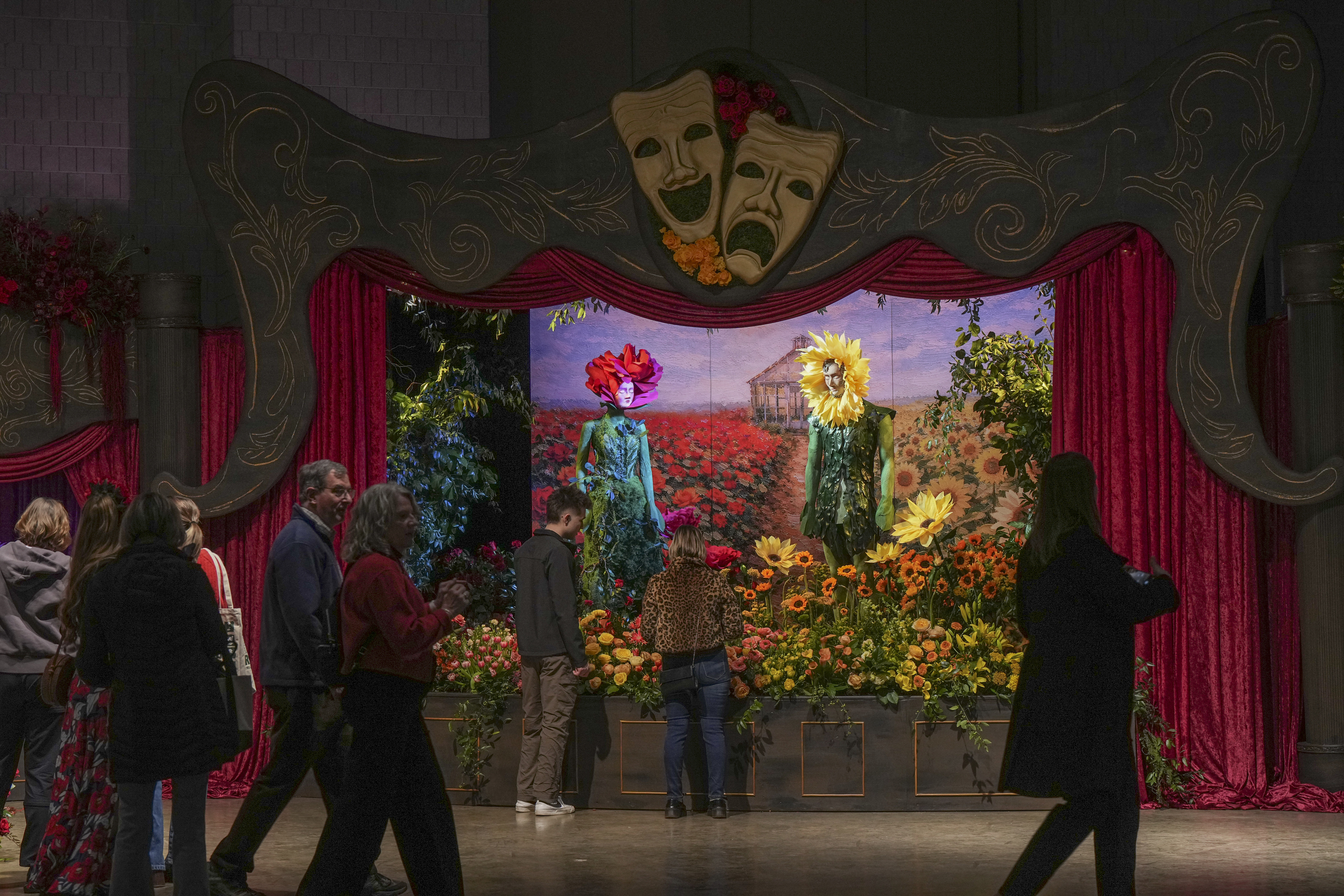
    “Rooted in Love” is a theatrical floral exhibit by Jennifer Designs of Mullica Hill that brings together horticulture and Shakespeare.

    That which we call a rose by any other word would smell as sweet, but what if a rose was chosen by central casting to play Juliet? How sweet would that be?

    Jennifer Designs of Mullica Hill shows us in its exhibit, “Rooted in Love,” in which an anthropomorphized rose and sunflower play the star-crossed lovers in William Shakespeare’s Romeo and Juliet on a stage overflowing with flowers.

    While the connection to this year’s theme is a bit tenuous — the exhibit “explores the language of horticulture and Shakespeare” — I’m giving it a pass, mostly because I love Shakespeare but also because this display is absolutely stunning.

    A Flower Show guest looks at William Shakespeare in the “Rooted in Love” exhibit by Jennifer Designs of Mullica Hill.

    Beyond the main scene, there’s a life-size recreation of the Bard made of flowers, a “Bloombill” complete with a cast and crew list, and flower box seats on either side of the stage.

    The shop around the corner

    Robertson’s Flowers & Events of Wyndmoor digs into its own roots — dating back 99 years — with a charming life-size recreation of its Chestnut Hill corner store.

    Each of the four window displays of the 360-degree exhibit celebrate a different era of floristry, from the formal and feather-accented styles of the early 20th century to the neon-lit early ’90s.

    Visitors look at Robertson’s Flowers & Events’ “Windows into the Past,” at the Philadelphia Flower Show.

    Just as impressive as the structure and display itself is the lush rooftop garden atop the entire building, which teems with orchids and greenery and metaphorically “extends its roots downward,” connecting the shop with the community.

    It’s so tiny!

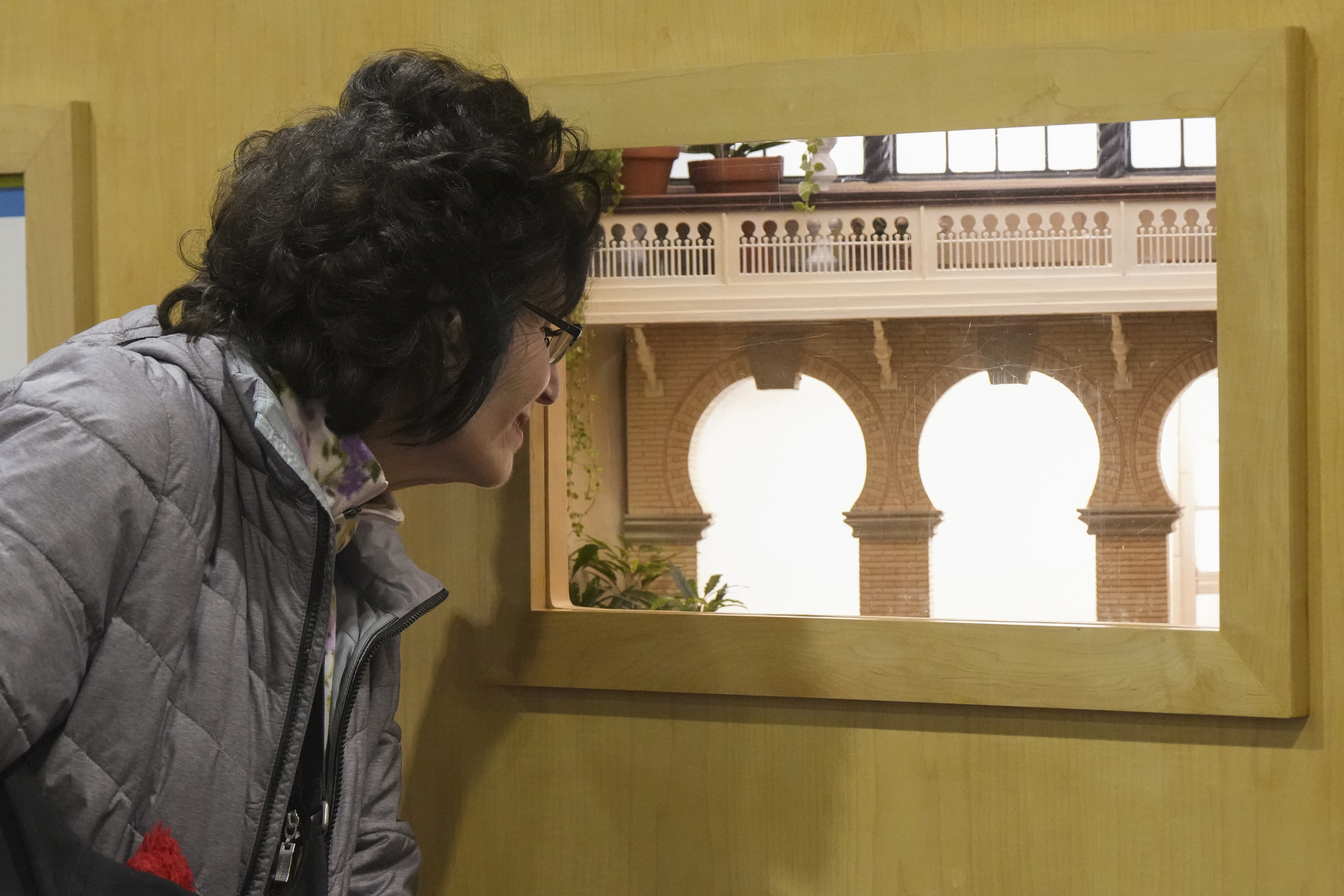
    It is here I must make a confession: My favorite part of the Flower Show every year, without fail, is the “Miniature Settings” category, which I call “the dioramas.” This is because I love tiny things and because my dream when I retire is to search for seashells and make dioramas.

    I’ve hesitated putting it on my must-see list in previous years because I am 110% biased and because the line to see these mini scenes is always long (I waited about 15 minutes on Friday). But this year’s — which challenged participants to create a setting for an event that happened between the prehistoric era and 1900 — truly is a must-see for Philly lovers.

    A visitor to the Flower Show looks at the “Philadelphia’s Centennial Exhibition: Opening Day, 1875,” one of the exhibits in Miniature Settings category.

    While some folks made scenes of the last night in Pompeii or the Roswell UFO crash site, it’s the three Philly-themed dioramas that stood out to me. There’s Benjamin Franklin’s garden, with a floating kite and key and inventive lighting effects; the interior of Independence Hall; and Horticulture Hall at Philadelphia’s Centennial exhibition.

    Understood the assignment

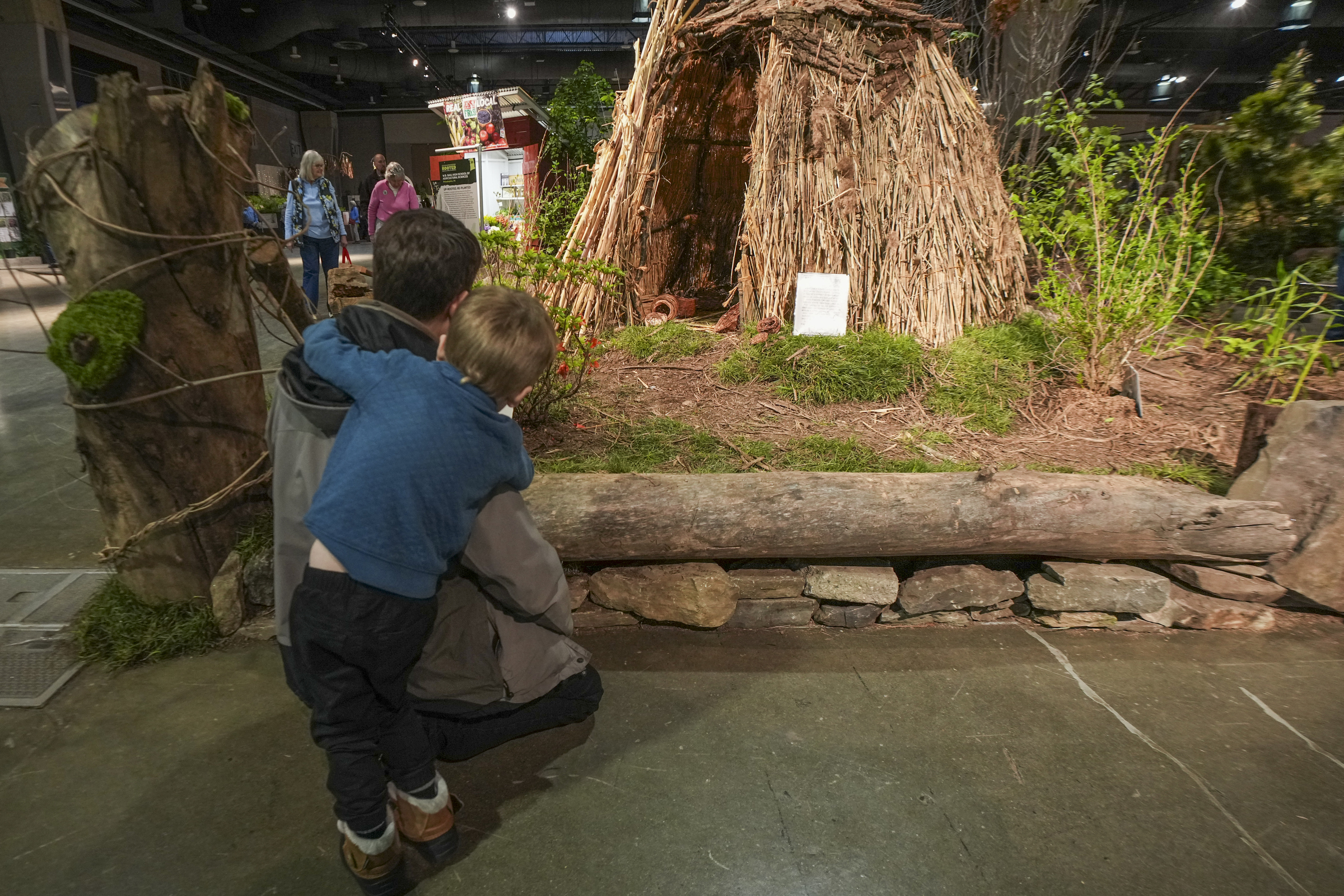
    With it’s late fall setting and its stark use of flowers and color, the exhibit from W.B. Saul High School of Agricultural Sciences in Roxborough isn’t as eye-catching as many others, initially, but if you take the time to study it and read the placards, it’s by far the most moving, emotionally.

    “Up-Rooted, Re-Planted,” explores the roots of our region through the Lenape people, the original Indigenous inhabitants who lived here before being uprooted by European settlers.

    A babbling brook runs through a wooded autumn setting that seems just on the brink of winter. A placard in a dugout canoe tells the story of how the Lenape were forced to move westward. And a sturdy wigwam built by hand keeps the food and firewood within it dry.

    Andrew Luedders and Lukas Luedders look at W.B Saul High School of Agricultural Sciences’ exhibit “Up-Rooted, Re-Planted.”

    Out of all of the exhibits, this was the most on-point when it came to theme and the most profound when I spent some time with it. It’s also a really good learning moment for kids, which is particularly wonderful because it was built by students. I saw several adults kneeling down to read the placards to children and share the story of the people who first planted roots in what is now Philadelphia.

    The fun is in details

    Some of my favorite moments at the Flower Show this year were small ones I didn’t expect. Throughout the event hall, there are trash cans filled not with garbage, but with daffodils, tulips, and lilacs. It’s a small but sweet touch that adds a bit of whimsy.

    In the “Garden Design” section, there’s an exhibit which repurposes stone blocks as books with punny titles written on them like Where the Wild Plants Are, War and Peas, and A Kale of Two Cities.

    Tulips in a trash can at the Philadelphia Flower Show.

    At the American Landscape Showcase exhibit, there’s a display called “American Anemoia” featuring an overgrown ornamental garden at a vacant house. Nailed to the fading white picket fence of the house is a citation from the city of Philadelphia for weeds and mowing.

    If that isn’t rooted in truth, I don’t know what is.

    The Philadelphia Flower Show continues through March 8 at the Pennsylvania Convention Center, 11th and Arch Streets. Hours: 10 a.m. to 8 p.m., except until 6 p.m. on March 8. Ticket prices vary depending on person’s age and day and time of entrance. Information: phsonline.org or 215-988-8800.

  • Snowball standoff | Morning Newsletter

    Snowball standoff | Morning Newsletter

    Good morning. It’s a mostly sunny Saturday.

    Philly’s surprisingly cold and snowy winter isn’t done yet. Resident weather expert Tony Wood breaks down what went wrong with the outlooks, and some big changes on the way.

    Heavy snowfall in the area means snowmen, sledding, and snowball fights. But what if you’re randomly hit, unprovoked, by teenage strangers? We discuss.

    Plus, there’s news about one of America’s most popular diet trends, the state of Philly’s pension fund, and our report card for this week’s news.

    Scroll along for these stories and more.

    — Paola Pérez (morningnewsletter@inquirer.com)

    If someone forwarded you this email, sign up for free here.

    What you should know today

    Iced by teens

    This week, we’re answering this reader question on a bit of winter warfare: Two random teenagers threw snowballs at me, a grown man. One hit me in the face and knocked off my glasses. Was I, a grown man, allowed to throw the world’s fastest revenge snowball? Or should I have just yelled a few expletives and moved on (what I actually did)?

    To help, Inquirer editor Evan Weiss recruited life and culture reporters Jason Nark and Mike Newall. The group weighed the dangers of unprovoked snowballs, the value of retaliatory throws, and even brought up moving to warmer climates altogether (lol). Jason, who pointed out that our neighbors in New York City are also dealing with snowball related incidents, put it quite simply: “No one likes a snowball to the face.”

    Read along for my colleagues’ full chat. And if you’re looking for advice (or just want to share your takes), we’re all ears. Send in your pressing questions here.

    One viewpoint

    In this week’s Shackamaxon, Inquirer columnist Daniel Pearson unpacks the race to replace U.S. Rep. Dwight Evans, a security snafu at Gov. Josh Shapiro’s mansion, and calls for some basic sense about security.

    He also analyzes the rise of cameras around Philadelphia.

    “Over the last few years, Philadelphians have increasingly come under surveillance,” Pearson writes. “This surge in surveillance has led to some residents bemoaning what they view as a cash grab.”

    Read on for Pearson’s perspectives.

    📍 Find the location

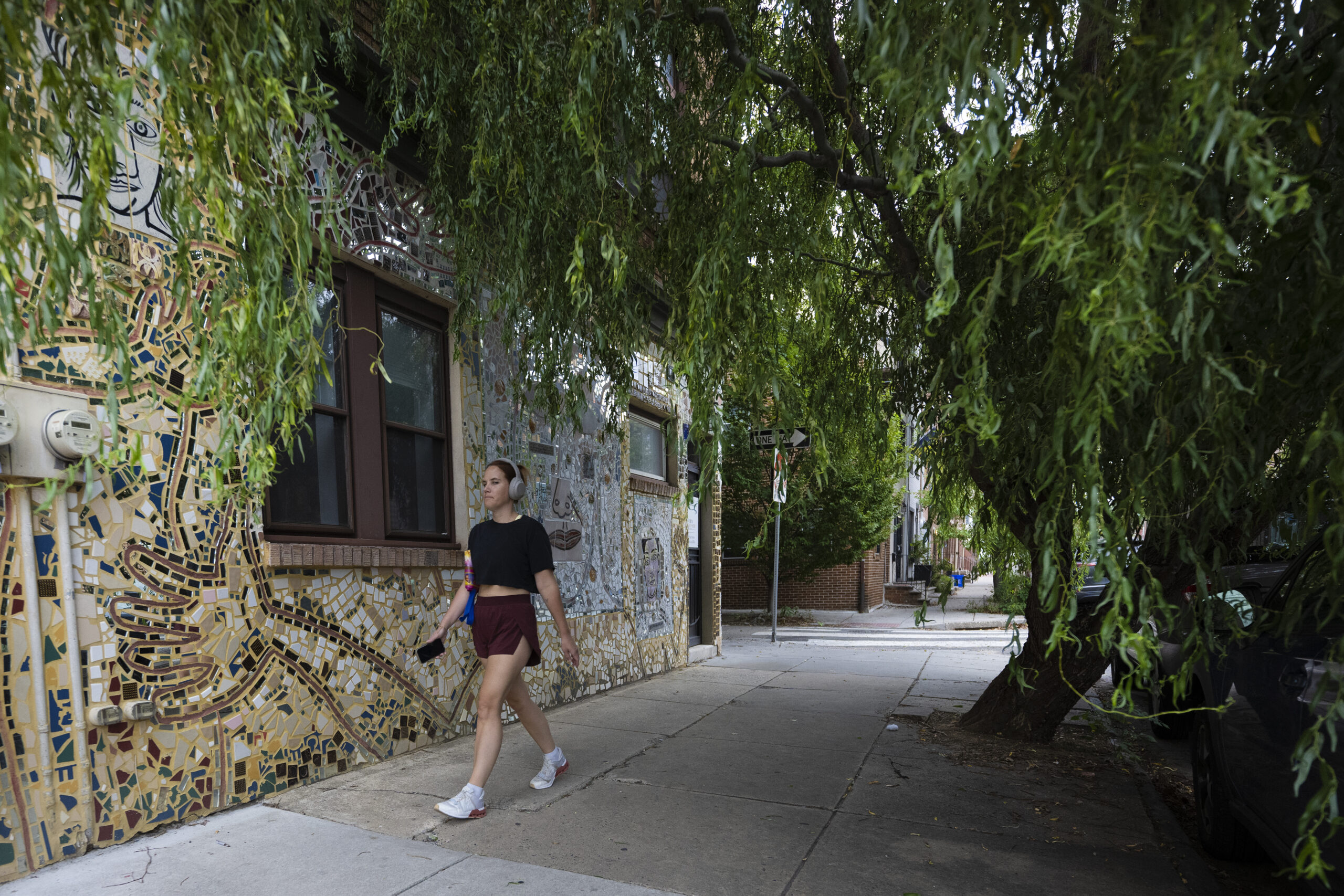
    Every Saturday, we’ll show you a photo taken in the Philly-area, you drop a pin where you think it was taken. Closer to the location results in a better score. This week’s theme is about the art of the late Isaiah Zagar. Good luck!

    Where can you find this mosaic by Isaiah Zagar? Our weekly game puts your knowledge of Philly’s streets to the test. Check your answer.

    🧩 Unscramble the anagram

    Hint: 300-year-old village in western Chester County

    CHEVRON LILAC

    Email us if you know the answer. We’ll select a reader at random to shout out here.

    Cheers to Eileen Cleary who correctly guessed Friday’s answer: Our Missing Hearts. Celeste Ng’s dystopian novel is this year’s One Book, One Philadelphia pick.

    We were there

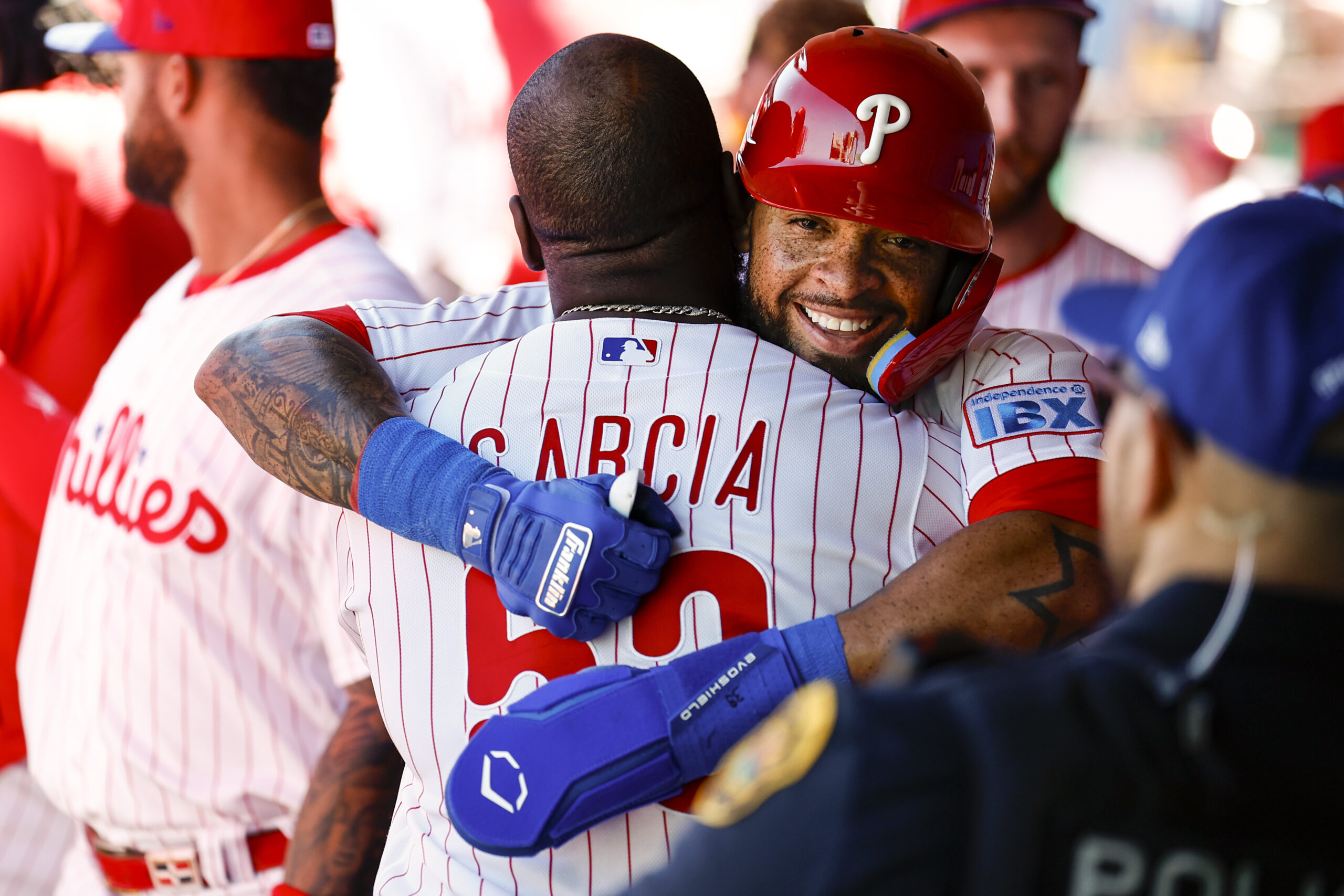
    Phillies shortstop Edmundo Sosa hugs new outfielder Adolis García during Wednesday’s 5-3 win over the Detroit Tigers in Clearwater. The victory was the Phillies’ first of spring training.

    This cheerful celebration, captured by staff photographer Monica Herndon, was among our best sports photos of the week.

    Edmundo Sosa and Adolis García consider themselves more like brothers than friends. After García signed a one-year deal with the Phillies this winter, they are reunited once again, with the “same goal.”

    Somewhere on the internet in Philly

    We all saw the viral video of Saladine Sharad riding his scooter on Lincoln Drive, but another funny scooter moment materialized from the recent winter storm, this time featuring Bad Bunny.

    Speaking of the storm, this “emergency cheesesteak” is all the rage. And please… don’t be this guy.

    I can’t be the only one going “awww” at these adorable baby penguins at Adventure Aquarium in Camden. 🥺

    And what constitutes a “hidden gem” around here? One Philadelphian shares her hot take.

    👋🏽 Thanks for stopping by. Take care, and I’ll see you tomorrow.

    By submitting your written, visual, and/or audio contributions, you agree to The Inquirer’s Terms of Use, including the grant of rights in Section 10.

  • What’s new at the zoo

    What’s new at the zoo

    Open for more than 150 years, America’s first zoo continues to flourish as an epicenter of family fun, attracting millions of visitors annually. The Philadelphia Zoo is shaking off winter with new adventures and attractions this spring that are worth checking out.

    “This year will be another great year to visit Philadelphia Zoo,” said Jo-Elle Mogerman, the zoo’s president and CEO. “Come first for Hollenstein Ross Penguin Point with a new species to the Philly Zoo, Magellanic penguins. Come again for Carey Bear Country, a state-of-the-art facility designed for the care and conservation of endangered bears, allowing our guests to get closer to them than ever before.”

    There are other new experiences, too, like the 100-foot Pherris Wheel, opening for daily rides on March 28.

    “These new additions bring our mission of sharing our passion for conservation and creating transformative memories further to life,” Mogerman said.

    Here are the top must-sees at the Philadelphia Zoo this spring:

    Carey Bear Country

    Thanks to a gift from the W.P. Carey Foundation and other donors, Bear Country has leveled up with a massive expansion, including a third bear habitat and a fresh new name: Carey Bear Country, opening this spring.

    Updates include a cozy den space for breeding and a spacious glass viewing area for visitors. Keep your eyes peeled for the arrival of a dynamic duo of Andean bears. You’ll be able to spot them by their semicircular white or yellow markings around their eyes that resemble glasses.

    And don’t miss the one single sloth bear, with more of his furry friends to arrive at a later date. Find them with their distinctive “V” or “Y” markings on their chests.

    A rendering of the new Zoo360 crossing over Carey Bear Country at the Philadelphia Zoo.

    Zoo360

    The wildly popular and clever Zoo360, an innovative see-through mesh animal trail that allows a variety of animals to roam around and above the zoo, has just added an extension in Carey Bear Country’s third bear habitat.

    Proud Philadelphia fact: The Philadelphia Zoo is the first zoo to have this type of mesh animal trail. The zoo has several animal trails throughout the park, with a different mesh trail for each set of animals. From big cats (snow leopards and lions), smaller primates (black-and-white colobus monkeys), great apes (gorillas and Sumatran orangutans), and red pandas, now the bears will have the same opportunity to explore.

    “When Zoo360 first launched in 2011, it was revolutionary in the zoo world, so much so, that now more than 70 zoos around the globe have designed and built their own versions,” Mogerman said.

    The Philadelphia Zoo previously had Humboldt penguins (pictured here), but now it will house Magellanic penguins exclusively.

    Hollenstein Ross Penguin Point

    Say a frosty welcome to the Magellanic penguins at Hollenstein Ross Penguin Point. These first-time visitors will be the only colony of penguins there. Named for the Strait of Magellan, this species is native to the coastal regions of South America.

    Choose from several vantage points in which to view them: Head to the lower area to watch these excellent swimmers, capable of reaching speeds of 15 mph, frolic in a 250,000-gallon pool, or venture to the upstairs viewing gallery, where you can watch them through crystal-clear glass as they waddle and dive their way around.

    You can’t miss their tuxedolike black-and-white feathers and their donkey-sounding noises.

    ZOOtopiaries: Nature’s Sculptures debuts in April at the Philadelphia Zoo.

    ZOOtopiaries: Nature’s Sculptures

    Back from its popular launch last year, the ZOOtopiaries: Nature’s Sculptures installation is debuting in April. These three-dimensional mosaic topiaries of animal designs will be crafted from 22 plant species, including joyweeds, hens and chics, and sedums.

    These sculptures will be playfully interspersed in the garden beds throughout the zoo. Some of last year’s favorites will appear again this year, including the preening peacock and giant giraffes, which tower at 21 feet high and weigh 9,400 lbs.

    New topiaries this year include a terrific giant tortoise, a bright-eyed bear, and a brilliant bald eagle. Get an up close look to see if you can discover what plants and flowers are used in these designs showcasing the interconnection of art, plants, and animals.

    The Zoo’s new Ferris wheel is open daily starting March 28.

    Pherris Wheel

    Get a spectacular bird’s-eye view of the animals 10 stories below while riding the Zoo’s first Ferris wheel.

    Open daily starting on March 28, the wheel offers scenic views of the city skyline, the Art Museum, and the Schuylkill. Guests must be 32” to ride, and children must be accompanied by an adult. Tickets must be purchased online ($8) or at the zoo.

    “The Pherris Wheel has a number of fantastical light and color shows it cycles through,” Mogerman said. “Throughout the year, we will also be using the lights on the wheel to celebrate all the big sporting events happening in the city: the Flyers, the Sixers, the Phillies, the MLB All-Star Game, the FIFA World Cup, and the Eagles.”

    The Festival of Colors celebrates Holi at the Philadelphia Zoo on April 25, 2026.

    Festival of Colors

    This popular festival, presented in partnership with the Council of Indian Organizations, is back for more fun. The one-day event on April 25 celebrates Holi, the festival of colors celebrated in India and its diaspora. With colors, flowers, and festivities, it marks the end of winter and the arrival of spring.

    This zoo celebration includes Indian music, food, and dancing, featuring artists from Philadelphia’s Indian American community. Throw colored powders (called gulal) at each other and into the air, where red represents love, green for new beginnings, and yellow for prosperity.

    Enjoy this fun day and play with water and share sweet foods. Festival of Colors is included in general admission and zoo membership.

  • Philly’s surprisingly cold and snowy winter isn’t over yet, but big changes are coming

    Philly’s surprisingly cold and snowy winter isn’t over yet, but big changes are coming

    Robert Koopmeiners is up to here with this winter and is among the masses more than ready for the atmosphere to flip the switch.

    “It’s getting kind of old,” he said. But he wasn’t complaining about Arctic freezes, or winter storms, or black ice, or hideously darkening mountains of plowed snow.

    He was talking about the weather in Colorado, where he is a National Weather Service meteorologist, where bone-dry Denver has set nine high-temperature records since Dec. 1, where wildfire alerts were in effect, and water is getting scarce.

    Warm West, cold East, and vice versa are standard fares in the great national atmospheric seesaw that hasn’t been doing much seesawing lately, as if a boulder has been placed atop our end of it.

    That’s the result of an atmospheric roadblock for the ages in the high latitudes around Greenland, meteorologists say, that has allowed winter to reappear with a ferocity not experienced in several years in the Northeast, and a winterlong spring in parts of the West. The cold in the East may even be related to rising global temperatures.

    The result for the Philadelphia region has been one of the colder and snowier meteorological winters — the Dec. 1 to Feb. 28 period — on record. Officially Philadelphia has had more days of snow cover of an inch or more than in the five seasons ending with the winter of 2023-24 combined.

    After quite a wintry start to the new week, with even some more snow possible, a major warmup is due to begin with a spring teaser possible next weekend. (It may turn colder the second half of the month, but that can wait.)

    In the meantime, the atmosphere is enjoying a belly laugh over the preseason outlooks for the winter of 2025-26.

    Philadelphia’s winter scorecard

    By convention, the weather community divides the seasons into three-month increments. In part that’s in recognition of the fact that weather often has an adversarial relationship with astronomy. For example, it has snowed, and hit 90 degrees, in the astronomical spring, the period between the vernal equinox and summer solstice.

    The day before Easter in 1915, Philadelphia was socked with 19 inches of snow, despite a forecast of “Unsettled, rain likely.”

    For the three-month 2025-26 winter period, official temperatures at Philadelphia International Airport have averaged a shade over 33 degrees, putting it in the top third for coldest winters in the period of record dating to the late 19th century.

    The official snow total is in the top 20% of all winters on record. The normal through February is just under 20 inches.

    What forecasters predicted would happen

    Zero. That would be the number of publicly available winter outlooks that predicted Philly would experience 30.1 inches of snow, 150% of normal.

    AccuWeather Inc. and 6abc went with 14 to 18 inches. Fox29 called for 16 inches, and 17 days of snow cover. At last count, that snow-cover count was up to at least 35. Other forecast services called for normal — 23.1 inches — or slightly above-normal snowfall.

    Regarding temperatures, all the outlooks foresaw normal — the three-month average is 36.1 degrees — to above-normal temperatures for the Philly region, save for Arcfield Weather, a private-sector company, which went for below.

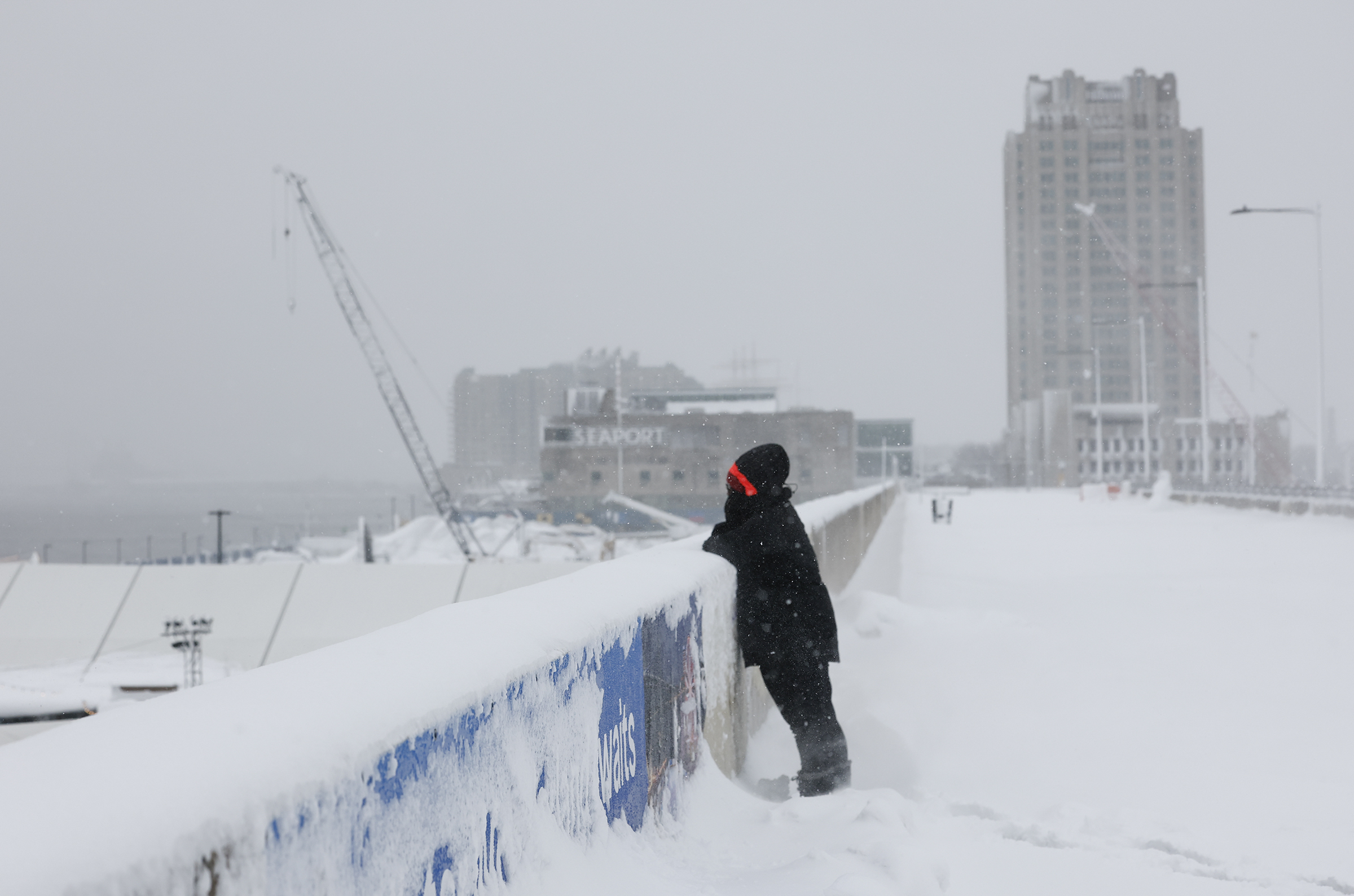
    Nicole Swinson looks into Penn’s Landing while standing in the snow on Monday, Feb. 23, 2026.

    ‘Blocking’ has been the leitmotif of Philly’s winter

    If it seemed that what happened kept happening, that was more than perception.

    It was the result of particularly vigorous “blocking” in the vicinity of Greenland in which high pressure, or heavier air, persists in the upper atmosphere. It was a massive obstruction that kept directing cold air and storms toward the East while toasting the West, said Climate Prediction Center branch chief Jon Gottschalck.

    The East got stuck under a “trough” of upper-air low pressure that favored storminess and cold, he added. The West, quite the opposite.

    “The blocking pulled the storms eastward, and the cold followed,” said Paul Pastelok, Accuweather’s longtime seasonal forecaster. “We should have caught on to that.”

    In addition, an upper-air pressure pattern over the Arctic — the Arctic Oscillation — was stuck in its negative phase from December until recently, said climate center meteorologist Laura Ciasto, with negative consequences for local winter-phobes.

    When it’s negative, the weather-moving west-to-east jet stream winds can become more active at the midlatitudes where we live, and the conditions colder and stormier. The oscillation has had “an interesting winter,” she said. “Typically,” she said, “we expect the AO to fluctuate.”

    Related to the oscillation’s behavior were episodes of “polar vortex stretching,“ said Ciasto. The vortex’s powerful winds usually trap cold air in the Arctic, but on occasion they weaken and ”stretch,“ allowing cold air to spill southward.

    Another explanation for why the forecasts went awry may be an obvious one: We’re not used to this level of Arctic cold or prodigious snowfalls like the Sunday-Monday event that creamed parts of the region with 20 inches or more. “We have simply gone many years without experiencing a storm like this,” said Owen Shieh, warning coordination meteorologist at NOAA’s Weather Prediction Center.

    Did the world suddenly grow colder?

    No, the planet didn’t cool off precipitously. In fact, said Pastelok, the blocking may have been related to warming-related sea-ice reductions near Greenland. The solar energy absorbed by freshly freed waters could have effects on pressure patterns in the high atmosphere, he said, adding that for now, that’s only a hypothesis.

    While the world evidently cooled slightly last year after a record 2024, according to NOAA’s database, it’s still about 2 degrees Fahrenheit warmer than the 20th-century average, the supply of Arctic air isn’t quite as it used to be.

    As it turns out, Philly’s winters in the 21st century have trended milder, with average temperatures about 2 degrees Fahrenheit above long-term averages.

    The overall warming trend has been one reason the climate center has had the odds favoring above-normal winter temperatures for Philly for the last seven consecutive winters. And they indeed were above normal for six straight years — but not seven.

    Retired climate center forecaster Mike Halpert once remarked that while sticking with the trend can be a smart bet, “some years you’re going to be woefully wrong.”

  • Chesco pet sitters are watching more than dogs and cats — chickens, goats, and sheep need care, too

    Chesco pet sitters are watching more than dogs and cats — chickens, goats, and sheep need care, too

    When Nora Murphy Kramp walked away from her veterinary assistant career to pet sit full time, she didn’t expect that years later, a large chunk of her clientele would be chickens.

    And goats. And pigs. Oh, my.

    “It’s more common than not,” said Murphy Kramp, founder of Chester County Canines, based near Malvern. “Basically, if it’s, ‘Hey, come take care of my dogs,’ if they happen to have a nice backyard, a year later, it’s like, ‘Oh, hey, come take care of my dogs. We have six chickens now — them, too.’”

    There was a boom of people getting pets during the height of the COVID-19 pandemic. Aside from more traditional pets, that uptick also included chickens, pet sitters say. And an even bigger push occurred last year: As the cost of eggs inflated, people figured they would do it themselves.

    But for some of her clients, chickens are just the start: Some have added goats and sheep to their little homesteads, too.

    Chester County is a ripe place for it, merging its strong agricultural past and the growing number of residents.

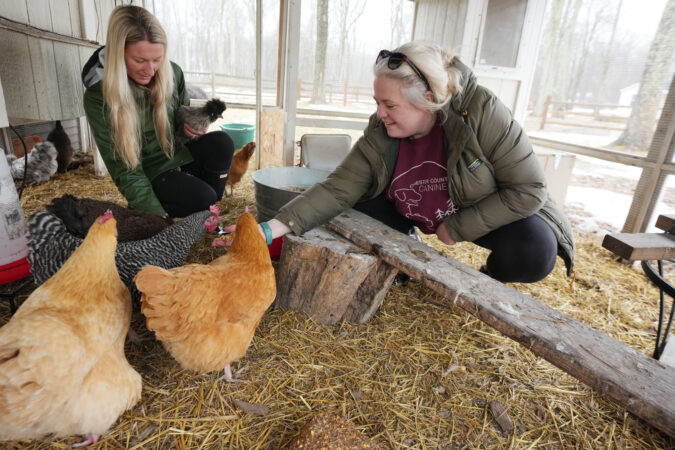
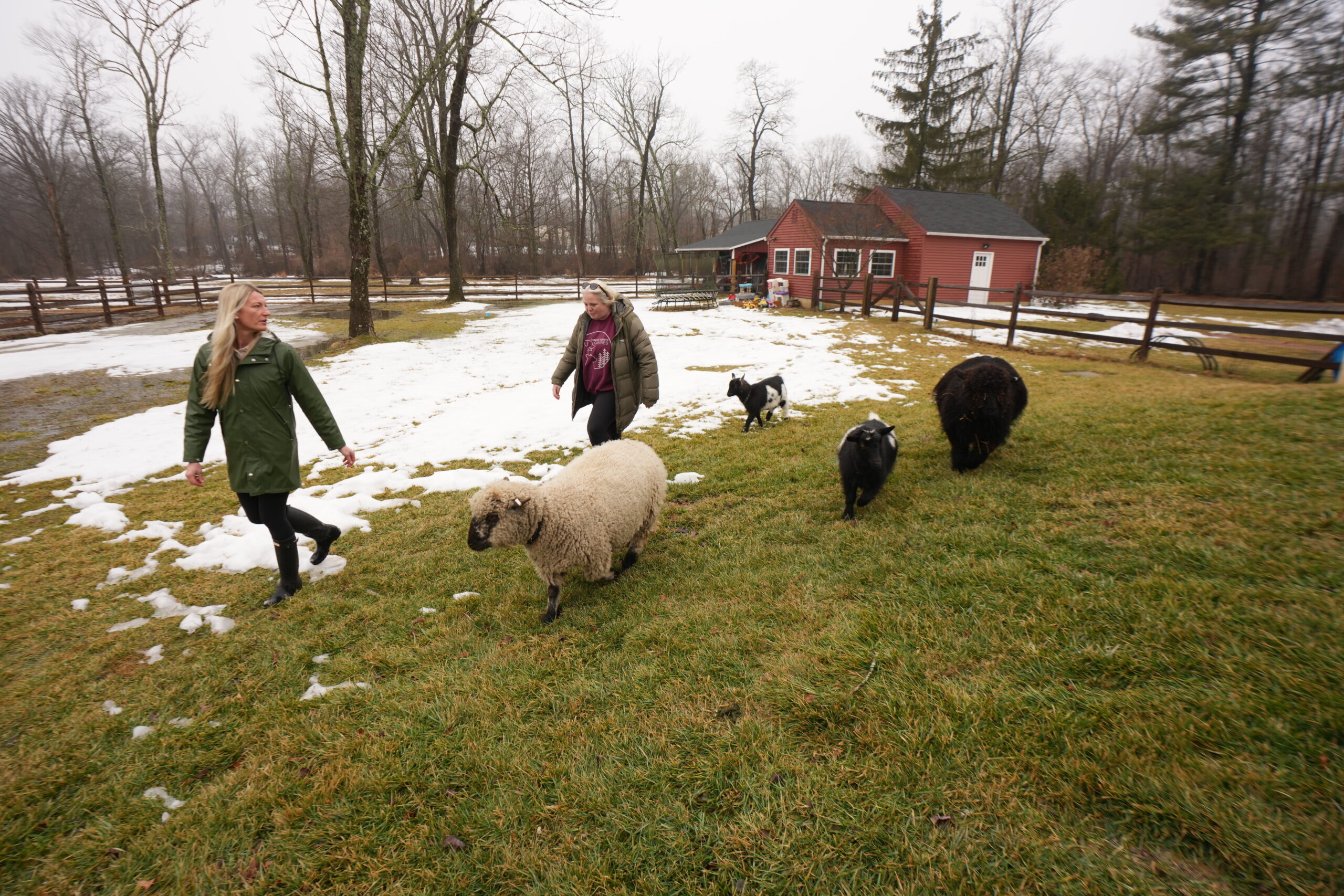
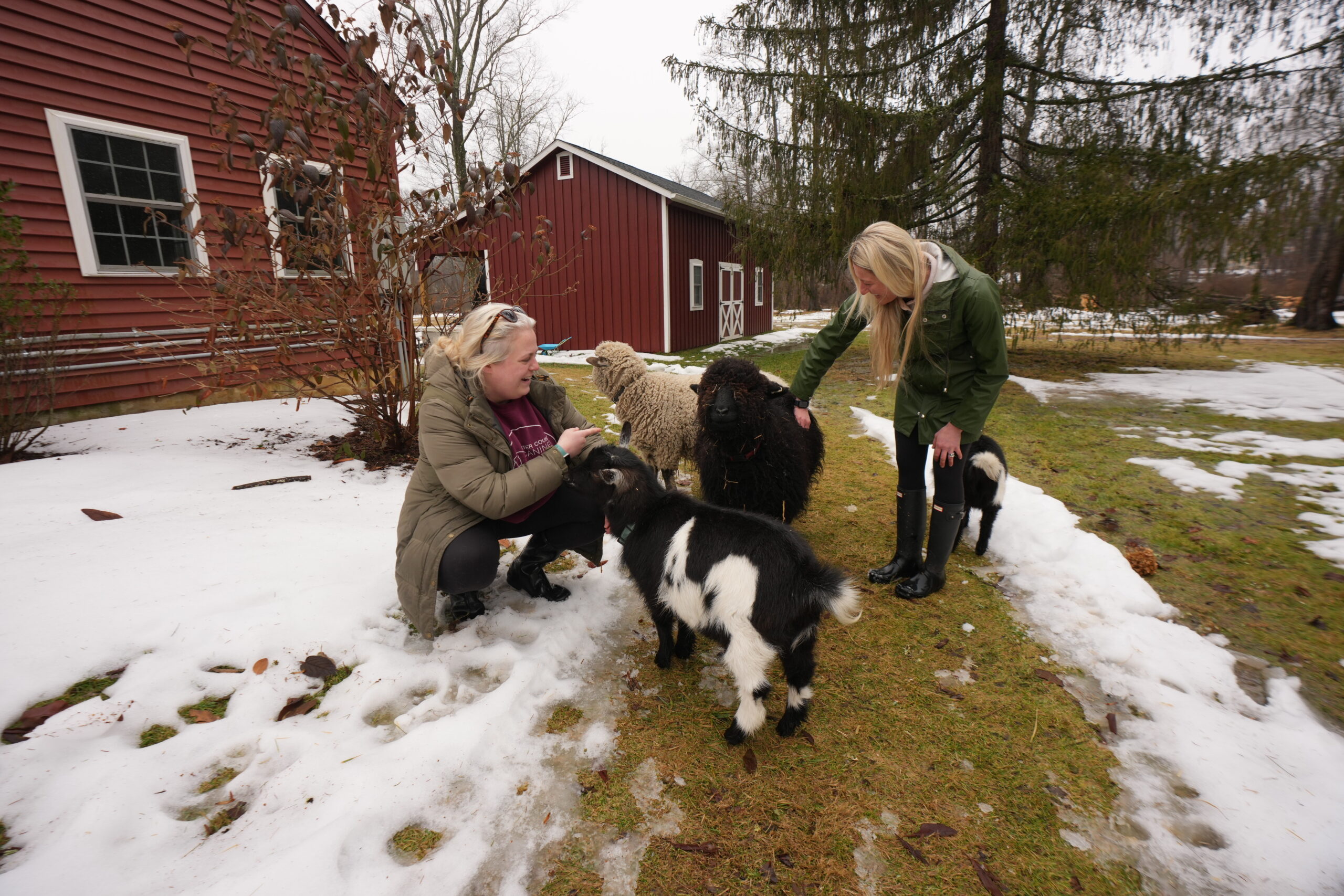
    Julie Gunderson, left, and her pet sitter Nora Murphy Kramp, right, at Gunderson’s house with her farm animals, in Chester County, Pa., Feb. 20, 2026.

    Over time, development has increased along with population — the county is one of the fastest-growing in the state — bringing all the amenities one could ask for. But with many municipalities having ordinances friendly to homesteading, allowing residents to farm animals with enough acreage, or chickens if the coop can be far enough from the house, more and more people have been embracing the so-called country life. (Murphy Kramp had to enter a “chicken lottery” to secure her own chickens last spring, due to the surge in popularity. A study last year found that there are more than 85 million backyard chickens nationwide, rivaling the population of cats and dogs.)

    When people leave Philadelphia, with its tightly packed rowhouses or apartments, getting chickens can be one of the first things they do, observed Shiena Powelson, the owner of I Sit, They Stay, a pet-sitting business based in Chester County near Pottstown.

    “There’s a lot of open spaces out this way, where there’s purposely no building going on, so it allows people to have these animals without being on top of the neighbor,” Powelson said. “On my road, I have these young families that have the chicken coops, but then there’s also a 15-acre horse farm four houses down from me. It’s a nice mix.”

    Powelson, who grew up in an animal-loving family that ran a pet store in Pottstown, started her career as an educator at the Philadelphia Zoo. On the side, she fostered her pet-sitting business, and moved to it full time about 15 years ago. From the jump, she has had an interesting assortment of pets to care for: reptiles and exotic birds. She used to sit for full-on farms, mucking horse stalls or caring for sheep, but now she is finding more of a hybrid: people who live in residential communities but have chickens, ducks, and even pot-bellied pigs.

    Julie Gunderson, left, and her pet sitter Nora Murphy Kramp, right, at Gunderson’s house with her farm animals in Chester County.

    “When you pull in this development, you would never expect there would be two pot-bellied pigs living in the development,” she said.

    Chickens, she has found, tend to be a familial thing, where parents teach their kids where the food comes from and how to care for the animals.

    John Marshall, one of Powelson’s clients, grew up in Montgomery County and had a friend whose family had chickens. He thought it was awesome. With his own land, he decided to get his own. Now, the 54-year-old has had chickens on his couple of acres in the Pottstown area for about 30 years.

    “It’s amazing, because it’s like having a dog. People just fall in love,” Marshall said. “They just become your little buddies. A lot of people think they’re real hard to take care of, but they’re not, if you set the coop up right.”

    Caring for farm animals requires a different part of Powelson’s brain — digging back into her zoo background. Does she have her boots for muddy coops? Does she have her heavy jacket to work outside when it’s 10 degrees?

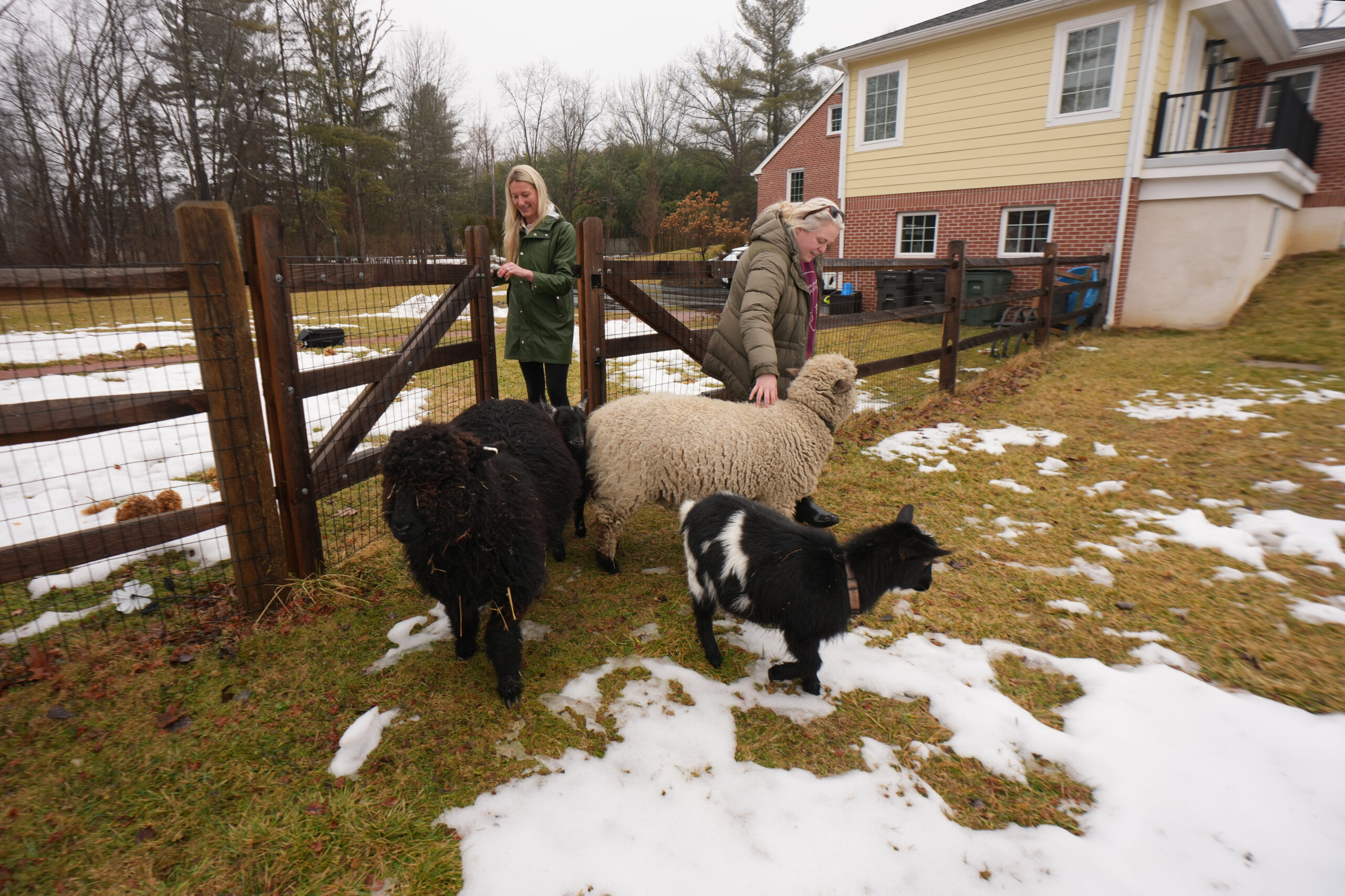
    Nora Murphy Kramp, left, and her client Julie Gunderson, right, at Gunderson’s house with her farm animals, in Chester County, Pa, Feb. 20, 2026.

    “It feels very different when I’m going to let someone’s dog out and can just hang out with them,” she said. “It’s a nice variety.”

    With chickens and other farm critters, there are stalls to clean and muck. Murphy Kramp gets there at the crack of dawn to feed the animals.

    During one hot summer, she told a client, Julie Gunderson, that she probably needed a fan for the chicken coop. From vacation, Gunderson ordered one, and Murphy Kramp assembled it and set it up. It gave Gunderson peace of mind, knowing someone was that hands-on with her chickens while she was away.

    “I had talked to a lot of people along the way who have slightly bigger operations — still backyard farms — but they would tell me, ‘Oh, you’ll never get away together, someone’s always going to have to stay home to take care of the animals,’” Gunderson said. “I just feel very fortunate to have found Nora. I really trust her.”

    Gunderson, 38, didn’t grow up on a farm, or with pets other than dogs. But she had an early appreciation of farm animals, spending time at the barn with her grandfather in Rhode Island. She decided to give chickens a try during the COVID-19 pandemic, after she went from working full time to staying at home with her first child to everything shutting down in rapid succession.

    With five acres of land, and a county friendly to backyard farms like hers, it felt seamless to add two goats and two sheep a few years later.

    It has been a way for her to learn a new skill, and to do something with her family, she said.

    “It was kind of just like, how do I kind of get something new that educates me and teaches me something similar to how I felt when I was working, where I feel like I’m growing in some way,” she said.

    With her three kids, all under age 6, they gather eggs and clean up the goat and sheep barn.

    “If people are on the fence, I say do it,” she said. “There are plenty of pet sitters to help you when you need to get away.”

  • Potential Eagles targets at the scouting combine: Which top tight end, secondary prospects do Birds have in their sights?

    Potential Eagles targets at the scouting combine: Which top tight end, secondary prospects do Birds have in their sights?

    INDIANAPOLIS — In each of the past two drafts, the Eagles diverged from their typical first-round philosophy.

    In 2024, general manager Howie Roseman ended the organization’s 22-year drought in selecting a defensive back in the first round when he drafted Quinyon Mitchell. Last year, Roseman and the Eagles drafted South Jersey native and linebacker Jihaad Campbell, from a position that had previously not been an early-round priority.

    The Eagles roster needs retooling heading into the 2026 season, and among the potential needs are at safety and tight end. The Birds have never drafted a first-round safety and haven’t selected a tight end that early since 1988.

    With tight ends Dallas Goedert, Grant Calcaterra, and Kylen Granson, and safeties Marcus Epps and Reed Blankenship all set to be free agents, could Roseman and the Eagles buck another trend?

    Here is what we’ve learned about the Eagles’ interest in draft prospects so far at the 2026 NFL Scouting Combine:

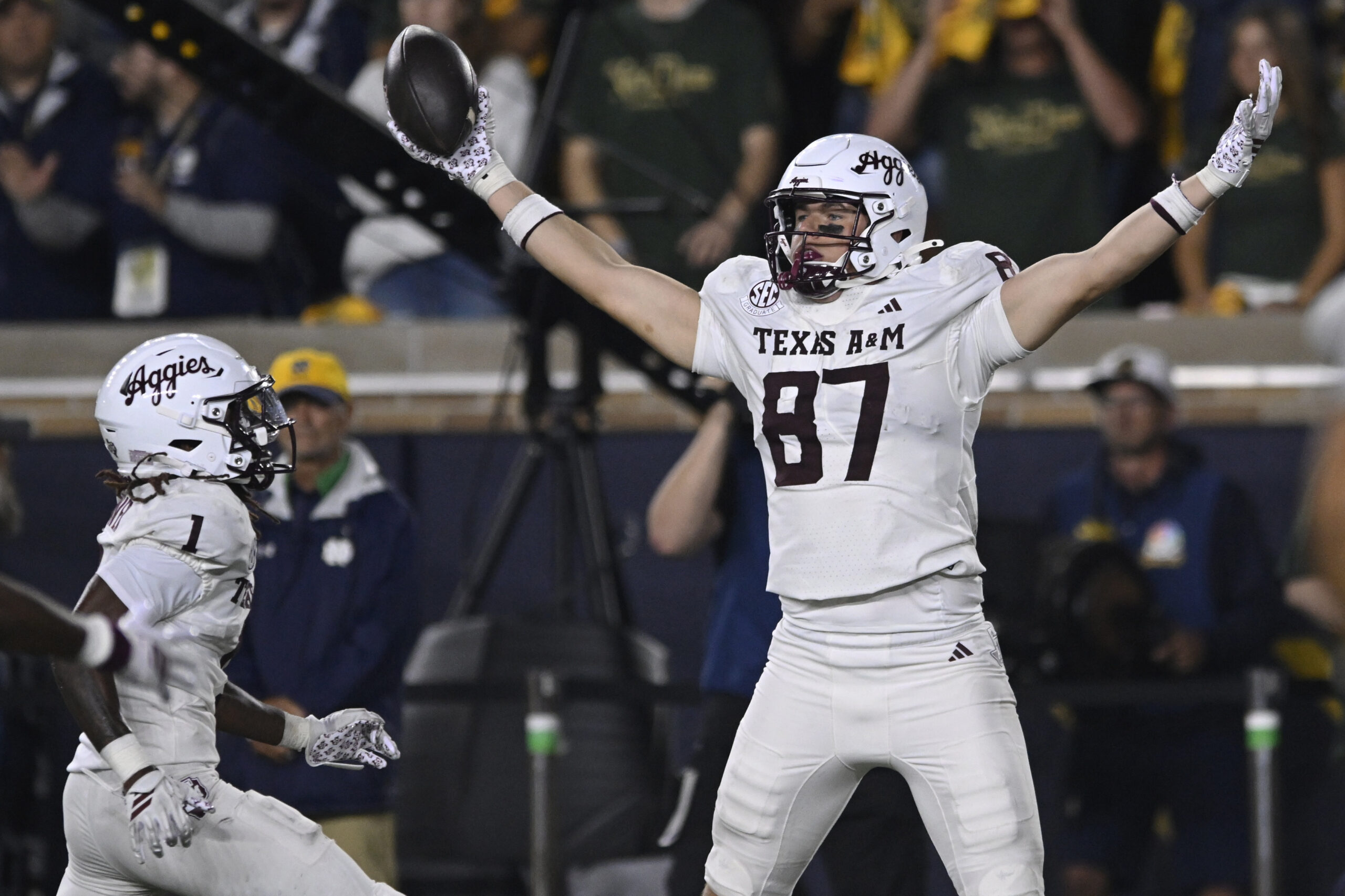
    Texas A&M’s Nate Boerkircher (87) could be an answer for the Eagles at tight end.

    Interest in tight ends is real

    The Eagles have spent a significant amount of time speaking with tight ends this week in Indianapolis. Roseman recently talked about needing “more of a diverse skill set at that position” last season.

    The prized player of the group is Oregon’s Kenyon Sadiq, the consensus top tight end of this class, but he had not yet met with the Eagles when he held his podium session Thursday afternoon.

    There were several other players the Eagles did meet with, informally and formally. NC State’s Justin Joly, Georgia’s Oscar Delp, Ohio State’s Max Klare, Texas’ Jack Endries, Vanderbilt’s Eli Stowers, and Ole Miss’ Dae’Quan Wright were among the players who met with the Eagles this week.

    Klare, Delp, Joly, and Stowers are more like the tight ends the Eagles have drafted in the past, majoring as receivers with deficiencies as blockers, while Endries and Wright are a little more well-rounded as blockers.

    Eagles running backs coach Jemal Singleton coached Texas A&M’s Nate Boerkircher at the Senior Bowl as part of Eagles D-line coach Clint Hurtt’s staff, and Boerkircher met informally with the Eagles this week at the combine. Boerkircher plays a more traditional in-line tight end role and is a physical blocker who revels in doing the dirty work that doesn’t always equate to targets and catches.

    “I think [NFL teams] like my toughness and my high motor,” Boerkircher said Thursday. “I don’t have, you know, crazy stats. So that limited stats thing is brought up a little bit, and we talked about that, but [my film] shows what it needs to show.”

    Ohio State’s Will Kacmarek is one of the best blocking tight ends in the draft class, and while there hasn’t been any reported interest from the Eagles, he would be a welcome addition to a room that needs that type of player.

    Even if the Eagles don’t draft Sadiq in the first round, there are several other players that seem to be piquing the team’s interest.

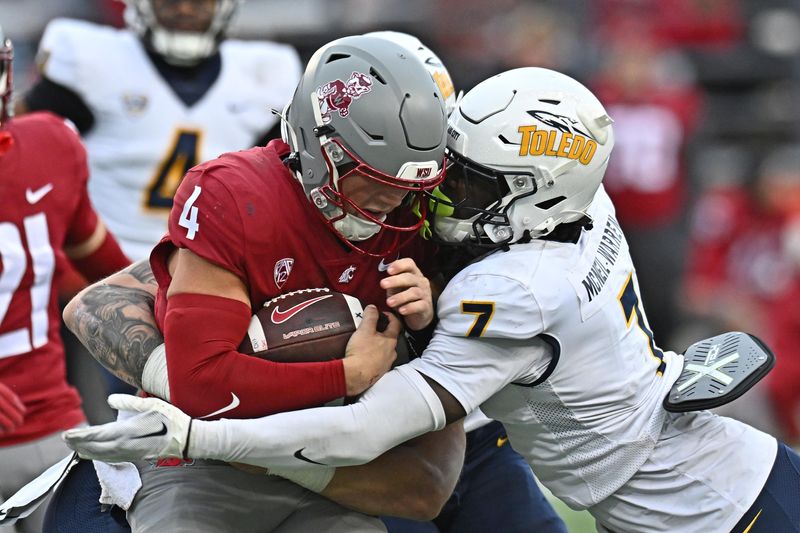
    Toledo safety Emmanuel McNeil-Warren could follow former secondary teammate Quinyon Mitchell to the Eagles.
    Another Toledo prospect?

    The Eagles struck gold by drafting Mitchell from Toledo, which continues to churn out NFL secondary talent. And there are three more players from the Rockets program in this class.

    There’s one specifically, though, that the Eagles brought in for a formal interview, and that’s safety Emmanuel McNeil-Warren. The 6-foot-3 player is explosive, can defend the run, and has short-area coverage ability. He has excellent ball skills to intercept the ball and force fumbles, and was teammates with Mitchell for two years at Toledo.

    “[Mitchell] was a motivation for us, so he just pushed us to be great, pushed us to work hard every day and be the best person we could be,” McNeil-Warren said of his former teammate. “Just coming in [to Toledo], knowing you got a chip on your shoulder, especially for a small school … just the work ethic we put in, we just got to keep grinding.”

    McNeil-Warren tested well for his size at the combine, running a 4.52-second 40-yard dash, jumping a 35.5 inch vertical, and a 10-foot, 2-inch broad jump. He is among two other safeties that could go in the first round, which includes consensus top-10 pick Caleb Downs and Oregon’s Dillon Thieneman, who had an outstanding testing session.

    Even with limited reported interest in the position group, the Eagles should strongly consider drafting a safety with a deep group this year. They may be waiting to bring other top safety prospects in for pre-draft visits over the next month.

    Wide receiver Deion Burks (4) is a player the Eagles have met with in Indianapolis.

    Quick hitters

    • The Eagles like drafting edge rushers early and often, and it seems like they’re showing interest in bigger body types. They have met with Penn State’s Dani Dennis-Sutton (6-6, 256 pounds), Michigan’s Derrick Moore (6-4, 255), and Duke’s Wesley Williams (6-4, 256). They also showed continued interest in Western Michigan’s Nadame Tucker (6-2, 247), who was praised by Hurtt during the Senior Bowl, and Central Florida’s Malachi Lawrence (6-4, 253), who received interest from the Eagles at the East-West Shrine Bowl.

    • Could fullback be of interest for the Eagles in 2026 under new offensive coordinator Sean Mannion? If he does take elements from Sean McVay and Kyle Shanahan’s offense, it could include a plan for the position. The Eagles met with Michigan fullback Max Bredeson at the Shrine Bowl. He’s a former high school quarterback and models his game after Alec Ingold, who was in Mike McDaniel’s Shanahan-inspired offense the last two years in Miami.
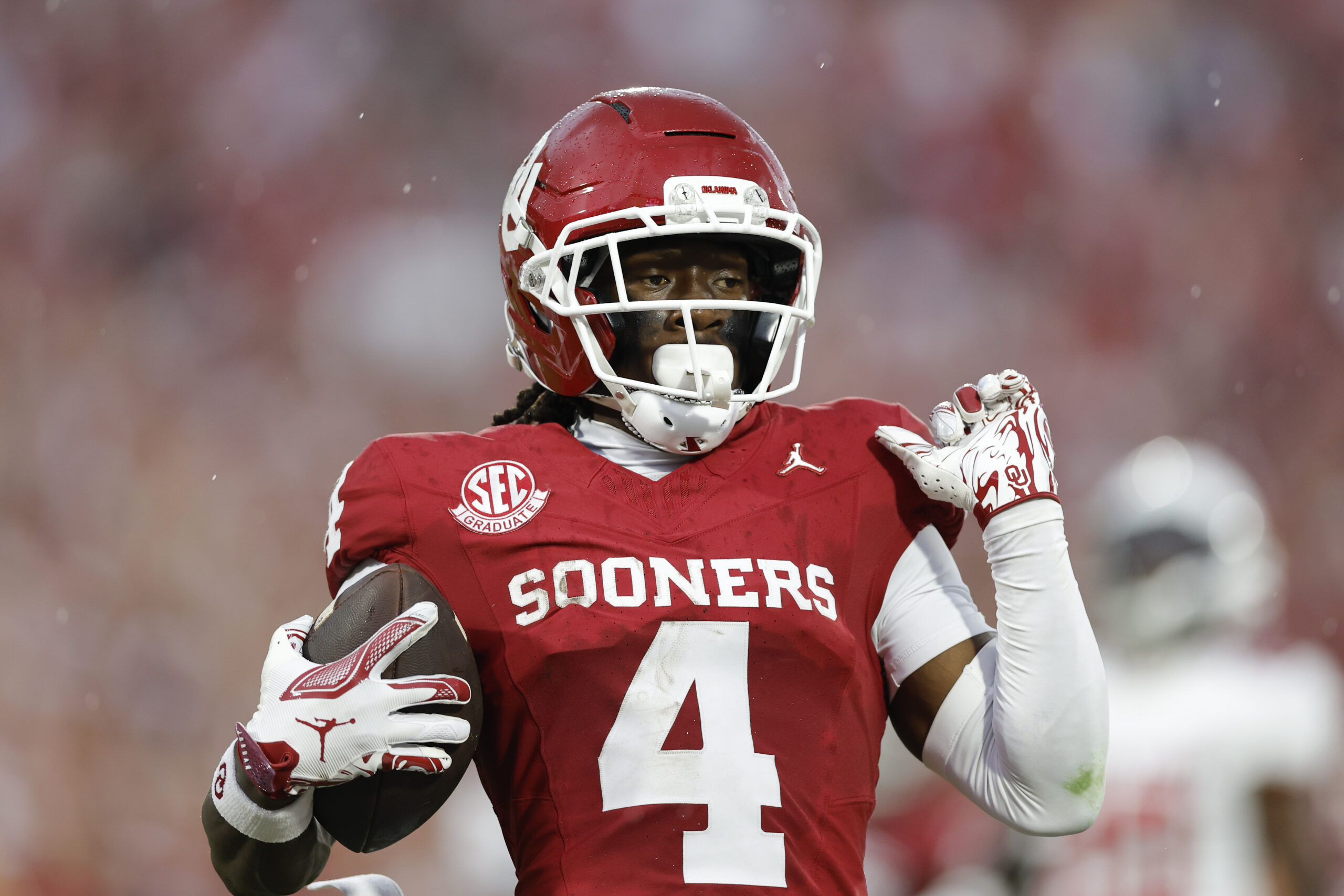
    • The Eagles have met with three receivers so far at the combine, and they’re all in the same mold: slot receivers that can win vertically and over the middle of the field. Clemson’s Antonio Williams, Mississippi State’s Brennan Thompson, and Oklahoma’s Deion Burks are among the list, and Thompson could challenge for being the fastest player at the combine. Williams is particularly interesting considering his ability to block and was a versatile weapon in Clemson’s offense last season.
  • Snacktime’s bassist couldn’t imagine living anywhere but South Philly | How I Bought This House

    Snacktime’s bassist couldn’t imagine living anywhere but South Philly | How I Bought This House

    The buyer: Sam Gellerstein, 32, musician

    The house: A 1,344-square-foot rowhouse with two bedrooms and 1½ baths built in 1923

    The price: Listed for $335,000, purchased for $346,000

    The agent: Chris Coulton, BMB Living Real Estate

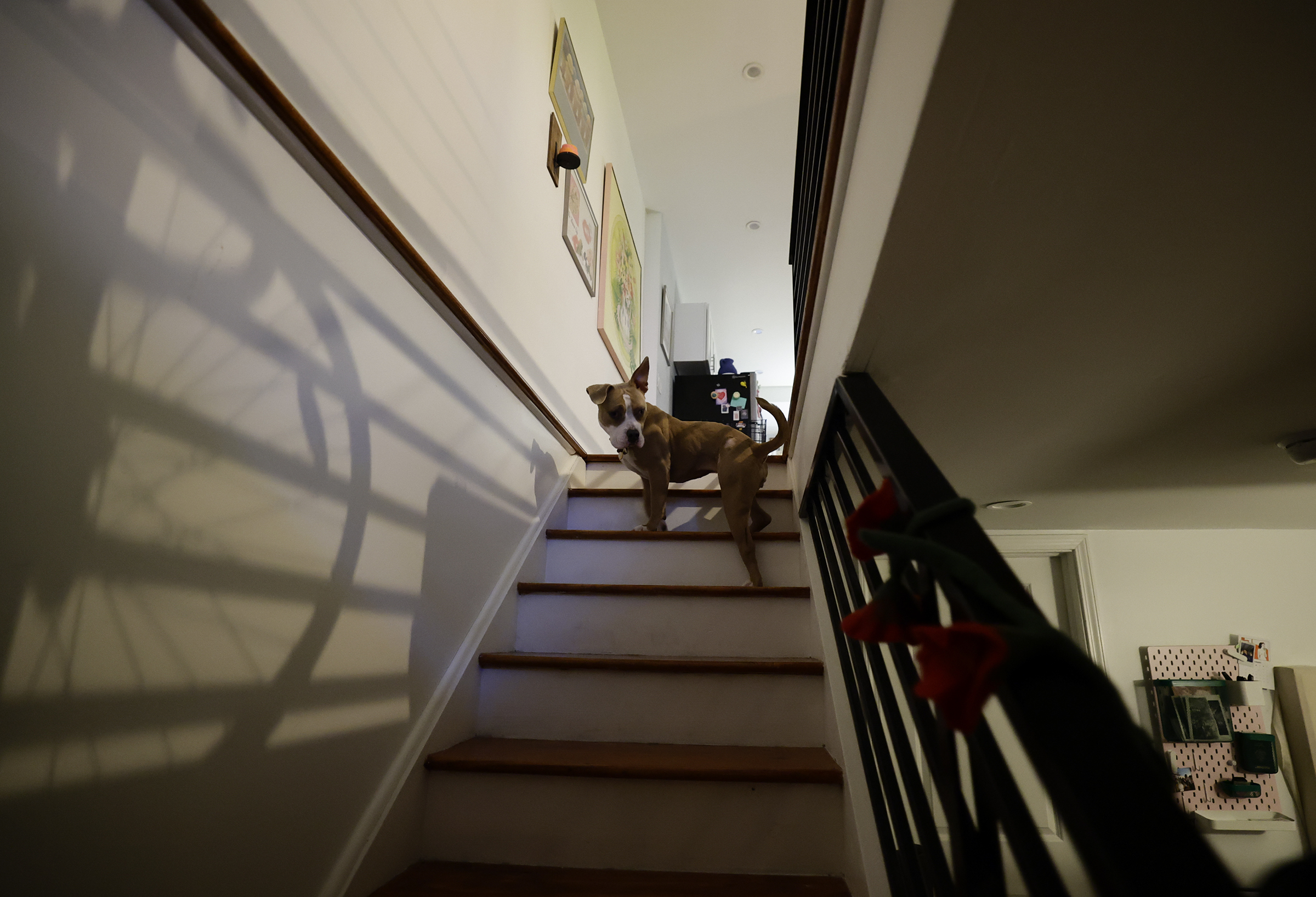
    Mooshy the dog stands on the steps leading to the basement of the South Philadelphia home of Sam Gellerstein and Sara Sarmiento on Friday, Feb. 27, 2026.

    The ask: Sam Gellerstein wanted space.

    He’d been in South Philly for the better part of a decade, and he loved the area. But his one-bedroom off East Passyunk Avenue was starting to feel small. What’s more, after a three-year long-distance relationship, his partner, Sara Sarmiento, was moving to Philadelphia from South Florida. He needed a place big enough for both of them — and big enough to support a future family.

    The one-bedroom “was cool for me as a person living by myself,” said Gellerstein, who cofounded and plays bass for Philly band Snacktime. “But wanting to have a dog and start a family, we wanted to have a nice, big house, and we wanted to be around cool stuff.”

    It was important to stay in South Philly and to be able to have friends and family visit, too — so extra living spaces were a must. He and his partner also wanted something they could make their own.

    “My girlfriend’s an amazing artist, and I like to think I have some style myself, so it was really important to have a place we could put our touches on,” Gellerstein said. “We didn’t want to just hang up the pictures and be like, ‘This is our place.’ We wanted to be able to put our personality into it.”

    Sara Sarmiento sits with Mooshy in the South Philadelphia home on Friday, Feb. 27, 2026. She and boyfriend Sam Gellerstein closed on the home in August.

    The search: Their search began last June. Gellerstein estimates that they looked at about 15 houses — pretty much all of them south of Washington Avenue. One, near 13th and West Ritner Streets, seemed promising. “It was a really beautiful house with one of the craziest backyards I’ve ever seen in Philly,” he said. “Really amazing high ceilings. It was really special.” The downside was that it didn’t have central air, and the basement was in need of significant work. So when they submitted an offer and didn’t get it, it wasn’t the end of the world. Not long after, they found The One.
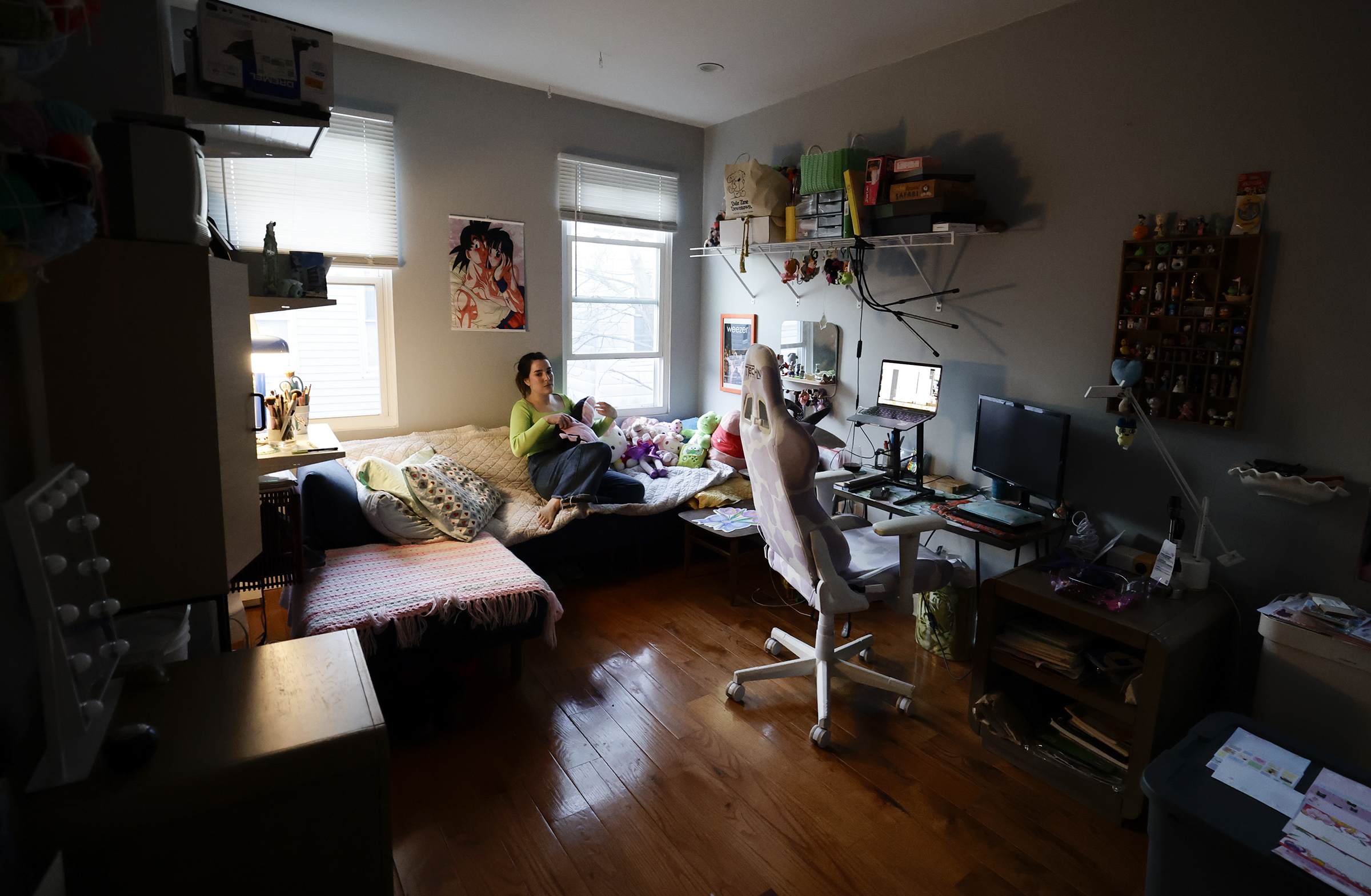

    The appeal: Unlike the previous house, this one had central air as well as a mostly finished basement. They liked that this house didn’t need a ton of work and that the money they’d save on renovations could be used on other things. Gellerstein loved the standalone bathtub. It also had a backyard and was next to Wharton Square Park.

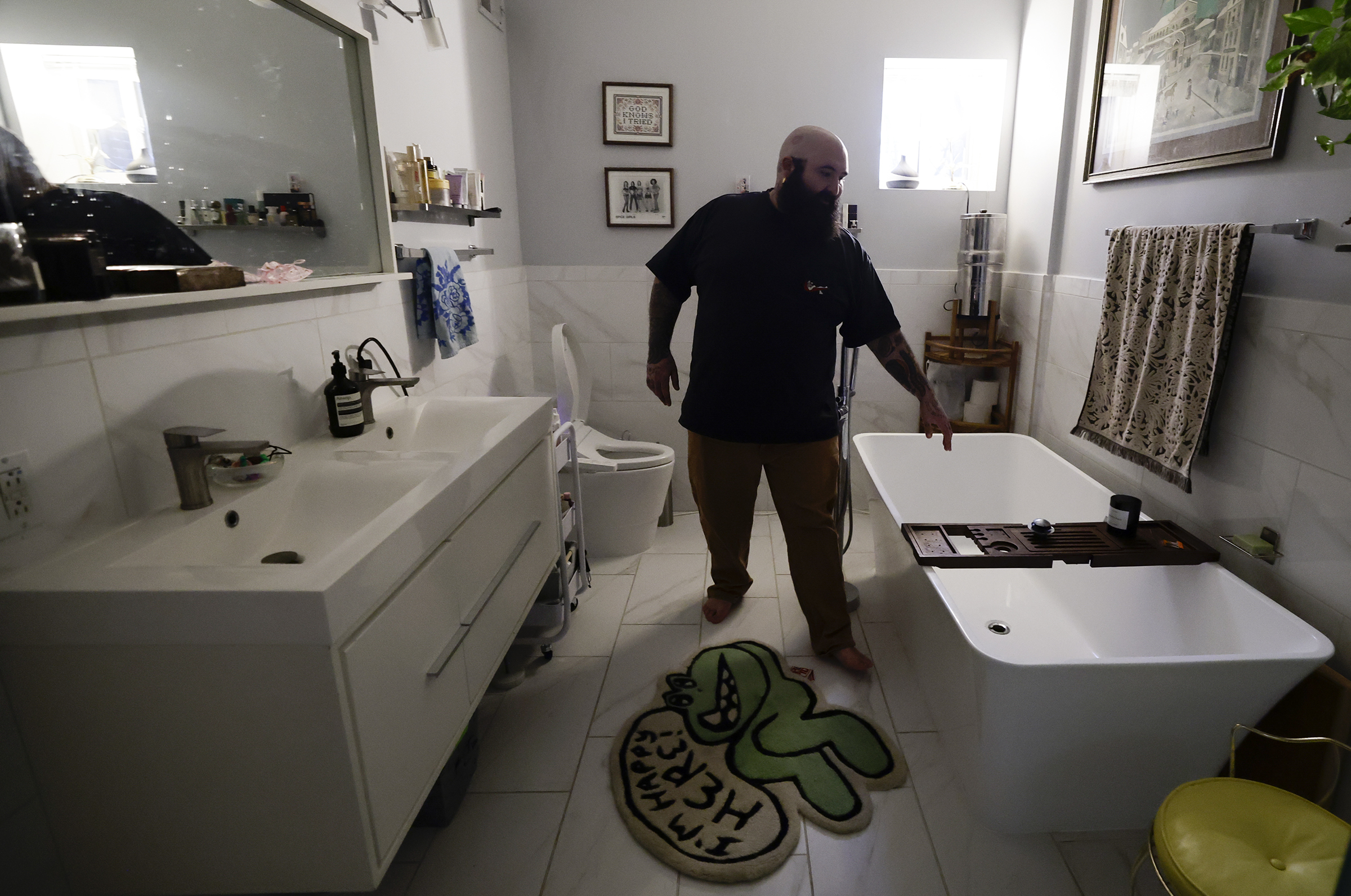
    Sam Gellerstein in the second-floor bathroom of his South Philadelphia home on Friday, Feb. 27, 2026. The bathtub was one of his favorite features when considering the home.

    The decision to make an offer was easy. “There wasn’t too much drama in selecting the house,” Gellerstein said.

    The deal: The home had multiple offers, so the couple put in a bid over asking price. Ultimately, they offered $346,000, and the bid was accepted. As part of the negotiation, the couple agreed to informational inspection, and the seller offered $11,000 to help with closing costs.

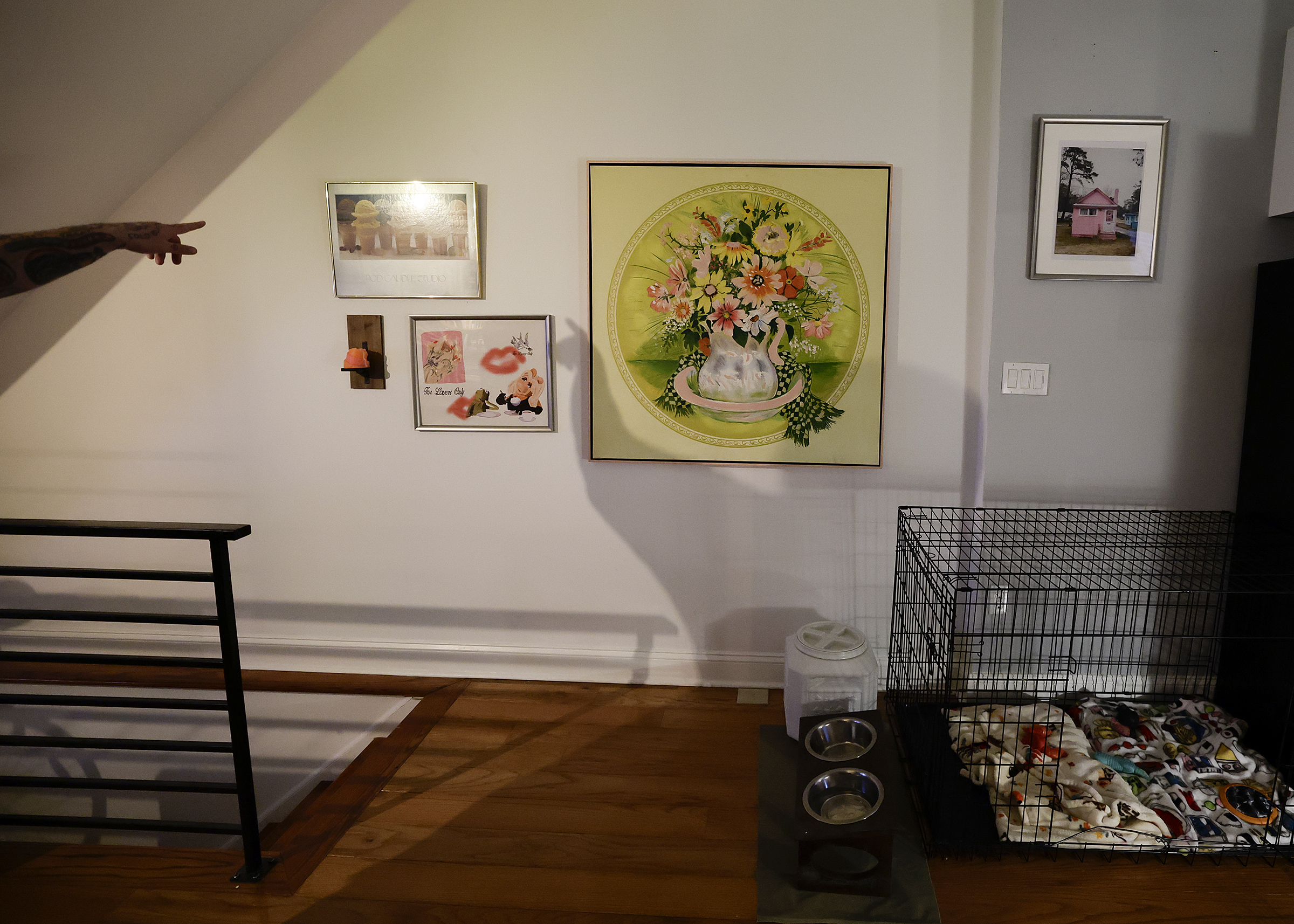
    Art work hangs in the South Philadelphia home of Sam Gellerstein and Sara Sarmiento on Friday, Feb. 27, 2026. They wanted a home that would allow them to put some of their own personality into the space.

    The money: “I had some money that I found in a couple different accounts that I’d been saving up in, and I used some of my old retirement money from a previous job,” Gellerstein said. All told, they put $19,000 down and were able to secure a monthly mortgage payment of $2,375.

    The move: Gellerstein hired movers to take his belongings from the one-bedroom to the new home, and the couple used a moving van to get his partner’s things from Florida to Philly.

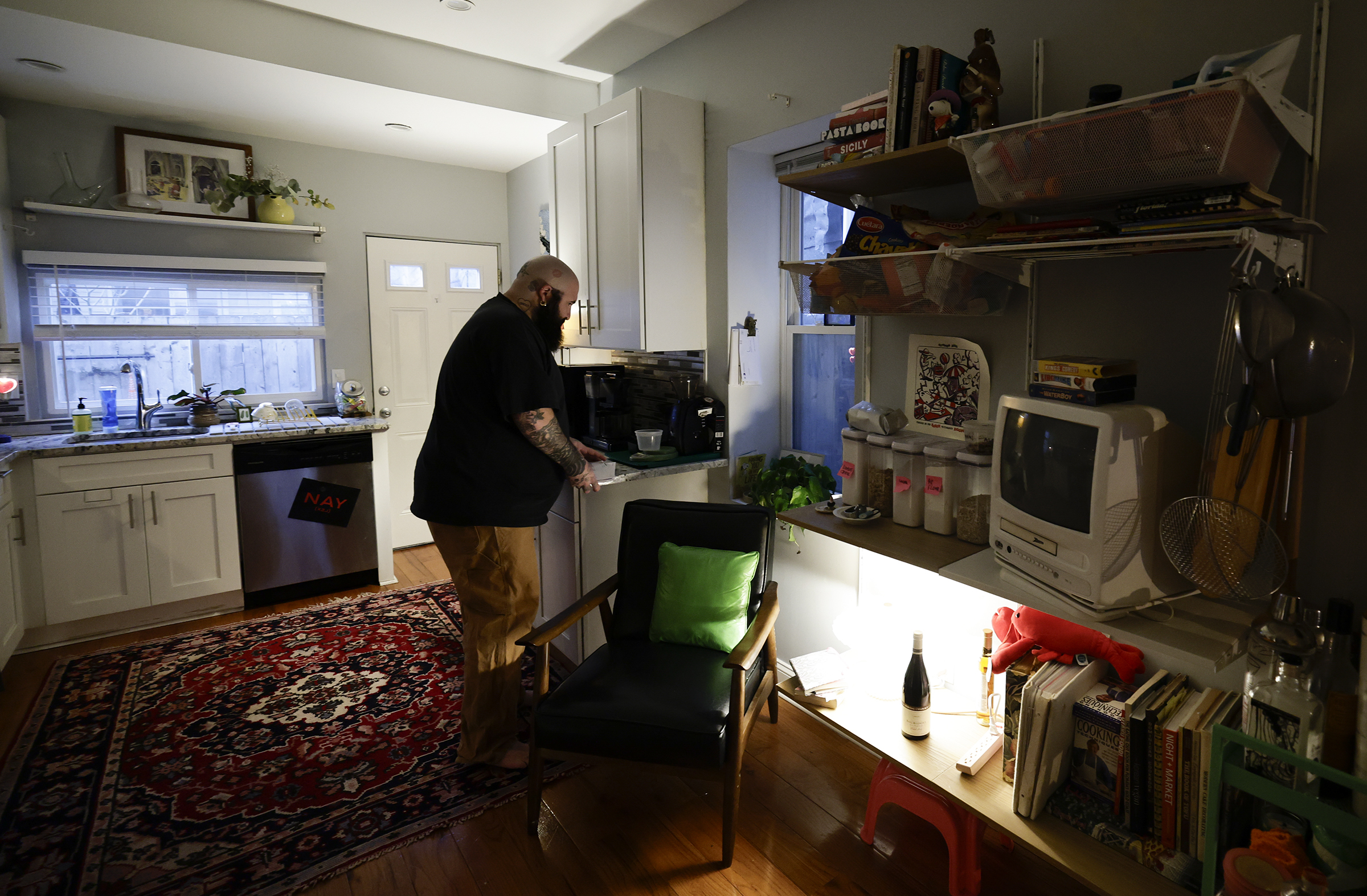
    Sam Gellerstein in the kitchen of his South Philadelphia home on Friday, Feb. 27, 2026.

    Any reservations? With the exception of a dryer that needed replacing shortly after moving in, “the house has been very good to us,” Gellerstein said. “It held up through these cold winter months, nothing crazy happened, so we’re really grateful.”

    He’s loving the basement, particularly. “We put a [vintage] Herman Miller cubicle down in the basement and separated it off from the den so it almost functions as another little tiny room,” he said. And after years spent working in a cramped bedroom, the added space has been revelatory.

    Sam Gellerstein sits at his basement music work area in his South Philadelphia home on Friday, Feb. 27, 2026.

    “It’s really nice to be able to work and write music and compose and get my emailing done,” he said.

    Having a fenced-in backyard has been great for the couple’s new pit bull, Mooshy, on mornings when a long walk isn’t possible. Next on their to-do list is turning an unfinished portion of the basement into an additional bathroom.

    Sara Sarmiento sits in her second-floor office in the South Philadelphia home she shares with boyfriend Sam Gellerstein. She recently moved to Philadelphia from Florida.

    Life after close: They’ve quickly fallen in love with the neighborhood, which they’ve found incredibly welcoming. “The block is super tight,” Gellerstein said. Meanwhile, a collection of nearby restaurants and coffee shops offers plenty to do.

    “We put a lot of work into getting this house that’s perfect for us,” he said. “Who knows what the future might hold? But we don’t view this as a starter house — we view this as our house.”

    Did you recently buy a home? We want to hear about it. Email darnett@inquirer.com.

    A cookie jar and lamp in the South Philadelphia home of Sam Gellerstein and Sara Sarmiento. Purchasing a home that didn’t need significant work allowed them to save money for additions they wanted to make, rather than needed.