Blog

  • FIFA held a surprise World Cup presale this week aimed at select fans — but ticket prices were again sky high

    FIFA held a surprise World Cup presale this week aimed at select fans — but ticket prices were again sky high

    Many soccer fans hoping to score early World Cup tickets have been unable to do so after missing out on previous presale windows. In an effort to appease those fans, FIFA offered a 48-hour special opportunity for supporters to purchase tickets to select matches in their desired markets. But prices remained sky high, availability was severely limited, and details — like where you’d actually be sitting — were minimal.

    Over the course of three separate presales, which began in September with a special draw for Visa cardholders, FIFA claims more than 500 million fans have expressed interest, with many registering in ticket lotteries. These lotteries and presales come before what’s expected to be a free-for-all in April, FIFA’s last-minute sales phase, in which tickets will be available on a first-come, first-served basis, “processed as real-time transactions.”

    So the surprise that FIFA offered a special, unannounced 48-hour presale to select fans — starting at 11 a.m. on Wednesday and ending the same time on Friday — came as a welcome shock for those looking for seats before they hit the secondary market.

    However, for some fans, the real shock arrived after they bypassed FIFA’s queue and gained access to the ticket portal. By Friday morning in Philadelphia, the only game left available was the Group E match between the Ivory Coast and World Cup first-timers Curaçao on June 25 (4 p.m., FS1).

    It’s unknown if FIFA offered more than one match during this special presale or if it was just that one match, and requests for comment to its media team regarding the number of matches made available, as well as the number of matches in neighboring markets like New York for this presale, went unanswered at the time of this report.

    Select fans looking to attend the World Cup in Philly were granted a special presale this week, but were still faced with high prices for match tickets to one game by Friday.

    FIFA, which offers tickets in three categories ranging from Category 1 (the most expensive) to Category 3 (the least expensive), had seating in this special presale only for Categories 1 and 2 remaining on Friday morning. They started at $360 per ticket. For a seat in Category 1? $450.

    These prices mirrored the original ticket prices for matches in Philly when they were first released in December, with Category 2 tickets in this latest special presale just $20 cheaper than the original $380 asking price.

    Following global backlash in that same month, FIFA offered what they called a Supporter Entry Tier ticket, selling off a few hundred Category 3 seats across all 16 venues for just $60.

    Lincoln Financial Field will host six World Cup matches, including a July 4 Round-of-16 knockout match.

    However, it appears prices, fueled by FIFA’s employment of dynamic pricing for the first time in World Cup history, are back in the hundreds of dollars.

    To some in this latest presale, the juice just didn’t feel worth the squeeze.

    “Who can afford that for that game?” said Daniel Quinn, a Northeast Philly native who works in retail management. Quinn said he didn’t even notice the email from FIFA until Thursday night, as it hit his spam folder.

    He rushed to the portal on Friday morning to see what was left.

    “I just stared at my phone and laughed,” Quinn said. “Listen, I know it’s the World Cup, but I can’t justify paying $360 to watch a game where I can’t tell you a single soul playing on the field. Like, I know the Ivory Coast has good players, but for that to be the only game available and then to offer seats at those prices, just felt silly.”

    One more surprise remained. The presale still only guaranteed fans what’s known as a “right to buy” ticket, meaning that seat selection, even after purchasing, remained a mystery and would only be made available as the match drew closer.

    “Why are these still right to buy tickets?” Quinn continued. “This late in the game, I should know where I’ll sit so I can make an informed decision. Does a Cat 1 seat get me in the back [of the lower bowl] at the Linc, or a Cat 2, where I’m sitting up higher, but I might be in front? If you’re going to spend that type of money, I feel like you should at least know that.”

    The total cost for two tickets for the June 25 game between the Ivory Coast and Curaçao inclusive of taxes and fees through a special presale FIFA offered select fans on Wednesday.

    Earlier this week, a FIFA spokesperson told The Athletic that the fans chosen for its latest presale were “a defined group of applicants” selected in order to maximize fairness and acknowledge fans who have already demonstrated strong interest in the tournament.”

    But the fact that, with just hours left before the Friday mid-morning deadline, the opportunity was availability for one game across the five group-stage matches coming to Philly beginning June 14, and that the cost to attend was still so high, rubbed soccer fans like Quinn the wrong way.

    “Listen, shoutout to the people who can afford these [tickets],” he said. “I’m a lifelong soccer fan, and I’ve been to a lot of [soccer] games at the Linc. I went to the Club World Cup last year, and having the World Cup not just here in the States but literally where the Birds play feels like a bucket list [item]. But I think I’ll wait, man. Either these [ticket prices] drop because there are people like me who are laughing at what they’re charging, and prices will go way down, or people will snatch these up, and I’ll watch it for free on TV.

    “At this point, either way works for me.”
  • Attorney general announces indictments against 30 more people who protested at a Minnesota church

    Attorney general announces indictments against 30 more people who protested at a Minnesota church

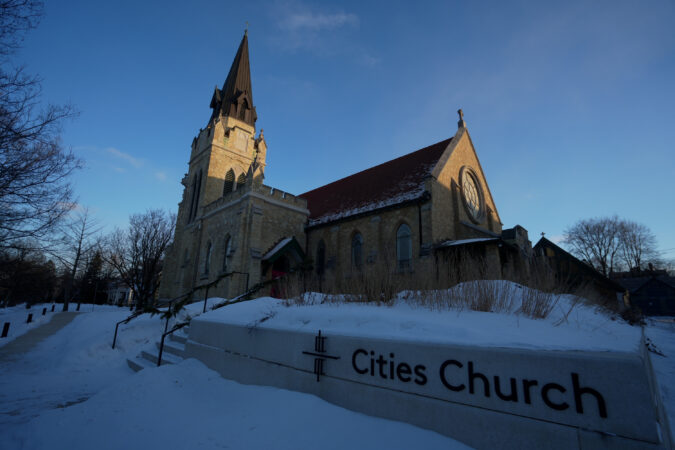
    Attorney General Pam Bondi announced charges Friday against 30 more people who are accused of civil rights violations in a January protest inside a Minnesota church where a pastor works for Immigration and Customs Enforcement.

    Bondi said on social media that 25 people were in custody and more arrests would follow. The new indictment comes a month after independent journalists Don Lemon and Georgia Fort and prominent local activist Nekima Levy Armstrong were charged for their alleged roles in the protest at Cities Church in St. Paul.

    Bondi accused the group of attacking a house of worship.

    “If you do so, you cannot hide from us — we will find you, arrest you, and prosecute you,” she wrote on social media.

    In total, 39 people now face charges of conspiracy against religious freedom and interfering with the right of religious freedom.

    A livestreamed video posted on Facebook shows people interrupting services at Cities Church on Jan. 18 by chanting “ICE out” and “Justice for Renee Good,” a reference to the woman who was fatally shot by an ICE officer in Minneapolis on Jan. 7.

    The new defendants will have an initial court appearance and a magistrate judge will set conditions for their likely release. Lemon and Fort said they were at the church as journalists covering news. Levy Armstrong was the subject of a doctored photo posted by the White House showing her crying during her arrest. The three have pleaded not guilty.

    Protesters descended on Cities Church after learning that one of the church’s pastors also serves as an ICE official. The protest drew swift condemnation from Trump administration officials and conservative leaders for disrupting a Sunday service.

    The indictment says the “agitators” entered the church in a “coordinated takeover-style attack” and engaged in acts of intimidation and obstruction.

    “Young children were left to wonder, as one child put it, if their parents were going to die,” the indictment says.

    A lawyer for the church praised the Justice Department for charging more people.

    “The First Amendment does not give anyone — regardless of profession, prominence, or politics — license to storm a church and intimidate, threaten, and terrorize families and children worshipping inside,” Doug Wardlow said in a statement.

    The revised indictment adds new allegations when compared to the original filed in January.

    It says two people “conducted reconnaissance” outside the church a day before the protest and recorded their visit on video, with one saying, “My thoughts are to be able to close up this whole alleyway right here.”

    The court filing quotes one protester as chanting in the church, “This ain’t God’s house. This is the house of the devil.”

    Levy Armstrong defended the protest shortly after it occurred. She said critics needed to “check their hearts” if they were more concerned about a disruption than the “atrocities that we are experiencing in our community.”

    The protest came at a tense time in Minnesota, where the Trump administration sent thousands of federal officers for Operation Metro Surge after a series of public fraud cases where the majority of defendants had Somali roots. Officers frequently deployed tear gas for crowd control in neighborhood clashes with residents, often detaining them along with immigrants.

    Good, 37, was shot in Minneapolis. In another fatal shooting a week after the church protest, a federal officer killed 37-year-old nurse Alex Pretti.

    Nationwide demonstrations erupted in response, followed by a change in Operation Metro Surge’s leadership and the eventual wind-down of the immigration enforcement operation. Roughly 400 ICE officers and Homeland Security agents were expected to remain in Minneapolis by early March, down from roughly 3,000 at the peak, according to a court filing.

    Since then, the Twin Cities have grappled with the impact to communities and the local economy. Minneapolis said it suffered an impact of $203 million due to the operation, with tens of thousands of residents in need of urgent relief assistance.

    Separately, a woman who was at the church service has filed a lawsuit against some people who were charged, alleging emotional trauma and an inability to exercise her religion that day.

  • Trump raises the possibility of a ‘friendly takeover of Cuba’ coming out of talks with Havana

    Trump raises the possibility of a ‘friendly takeover of Cuba’ coming out of talks with Havana

    WASHINGTON — President Donald Trump said Friday that the U.S. is in talks with Havana and raised the possibility of a “friendly takeover of Cuba” without offering any details on what he meant.

    Speaking to reporters outside the White House as he left for a trip to Texas, Trump said Secretary of State Marco Rubio was in discussions with Cuban leaders “at a very high level.”

    “The Cuban government is talking with us,” the president said. “They have no money. They have no anything right now. But they’re talking to us, and maybe we’ll have a friendly takeover of Cuba.”

    He added: “We could very well end up having a friendly takeover of Cuba.”

    Trump didn’t clarify his comments but seemed to indicate that the situation with Cuba, a communist-run island that has been among Washington’s bitterest adversaries for decades, was coming to a critical point. The White House did not respond to requests for more information Friday.

    The president also said that Cuba “is, to put it mildly, a failed nation” and “they want our help.”

    His remarks came two days after the Cuban government reported that a Florida-registered speedboat carrying 10 armed Cubans from the U.S. opened fire on soldiers off the island’s north coast. Four of the armed Cubans were killed, and six were injured in responding gunfire, according to Cuba’s government. One Cuban official also was injured.

    Cuba has been on Trump’s mind since at least early January, after U.S. forces ousted one of Havana’s closest allies, Venezuela’s socialist President Nicolás Maduro. Trump suggested in the aftermath of that raid that military action in Cuba might not be necessary because the island’s economy was weak enough — particularly in the absence of oil shipments from Venezuela that stopped after Maduro was taken into custody — to soon collapse on its own.

    “We’ve had a lot of years of dealing with Cuba. I’ve been hearing about Cuba since I’m a little boy. But they’re in big trouble,” he said Friday.

    Then, noting the exile community from the island living in the U.S., Trump said there could be something coming that “I think [is] very positive for the people that were expelled, or worse, from Cuba and live here.” He did not elaborate.

    The U.S. has maintained a strict trade embargo on Cuba since 1962, the year after a failed, CIA-sponsored invasion of the island at the Bay of Pigs. Trump nonetheless indicated earlier this month that talks with Cuban officials were underway.

    Cuba’s government confirmed earlier this week that it was communicating with U.S. officials following the shooting of the American boat. Rubio has said the U.S. Department of Homeland Security and Coast Guard are investigating what happened.

    An executive order that Trump signed in late January pledged to impose tariffs on countries providing oil to Cuba, threatening to further cripple a country already plagued by a deepening energy crisis, though U.S. authorities have since indicated that oil from Venezuela can be sold to Cuban interests in some cases.

    Carlos Fernández de Cossío, Cuba’s deputy foreign minister, posted, then later deleted on Friday that “the US maintains its fuel embargo against Cuba in full force, and its impact as a form of collective punishment is unwavering.”

    “Nothing announced in recent days changes this reality,” he wrote on X before the post was removed. “The possibility of conditional sales to the private sector already existed and does not alleviate the impact on the Cuban population.”

    Meanwhile, 40-plus U.S. civil society organizations sent a letter to Congress on Friday asking that it “press the Trump administration to reverse its aggressive policy towards Cuba” and saying that efforts to cut oil shipments to the Caribbean island would spark a humanitarian collapse.

    Signees included the Alliance of Baptists, ActionAid USA and the Presbyterian Church.

    “Policies that deliberately impose hunger and mass hardship on millions of civilians constitute a form of collective punishment, and as such are a grave violation of international humanitarian law,” the letter reads.

  • Bronze Age swords and arrowheads dating back almost 4,000 years are seized by CBP in Philly

    Bronze Age swords and arrowheads dating back almost 4,000 years are seized by CBP in Philly

    It’s a tale as old as time — or about 3,600 years, anyway.

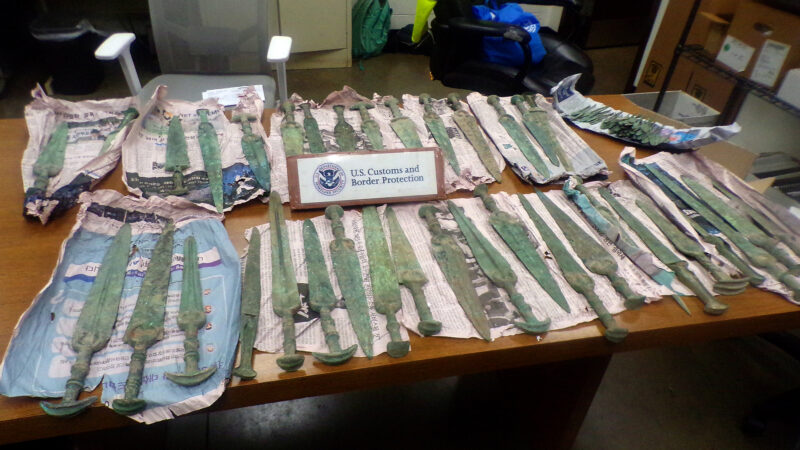
    U.S. Customs and Border Protection on Friday announced the seizure of 36 Bronze Age-era short swords and 50 arrowheads following their arrival in Philadelphia in October. Considered cultural artifacts, the items were imported into the United States without proper permitting, and were likely the product of “illicit excavations of burial sites,” federal officials said.

    Now, they may soon be returned to Iran, where they are believed to have originated and date from 1600 to 1000 BCE.

    CBP tries “to repatriate them to their rightful owners, which in this case would be the country,” said agency spokesperson Stephen Sapp. “So they can retain a piece of their cultural history.”

    The Bronze Age is considered to have spanned from 3300 to 1200 BCE, a historical period during which bronze — an alloy of copper and tin — was the prevailing metal used for making weapons and tools. What is today considered Iran was a pivotal area during that time, serving as an important trade route connector and bronze producer.

    The items arrived in Philadelphia on Oct. 16 via an express delivery flight from the United Arab Emirates, having been “mis-manifested,” as Sapp put it, as “metal decoration articles.” CBP officers went on to X-ray the shipment, and discovered objects that resembled swords, prompting them to open up the items.

    Inside, they saw what appeared to be ancient-looking swords and arrowheads covered in the teal patina of oxidized bronze. Suspecting the items to be of antiquity, the officers detained the shipment for additional investigation.

    CBP officers worked with the Antiquities Unit of the department’s National Targeting Center to determine the historical and cultural value of the swords and arrowheads. That unit sought assistance from an archaeologist associated with an unnamed Philadelphia university for more information. The archaeologist later pegged them as hailing from what is today the northeastern area of Iran and dating back as far as 3,600 years.

    Being that old, the items were considered to be the historical and cultural property of their origin nation. Many countries, federal officials noted, have laws that require official permission to export such items.

    Investigators also reached out to the person who imported the items, and found that they did not have the documentation that would allow them to obtain the objects. As a result, even if the items were legally purchased, they were not able to be lawfully imported into the United States.

    “That’s the key thing. If it is considered an artifact, or historical or cultural property of a country, that country has to permit that commodity leaving,” Sapp said. “Generally, you are going to be able find there is a black market — or a market, period — for all things.”

    Sapp added that no criminal charges have been filed in the incident. However, he noted that the importer is now known to investigators, and lost the shipment as a result of the investigation.

    Elliot N. Ortiz, CBP’s acting area port director in Philadelphia, said in a statement that officers “strive to rescue cultural artifacts from the grips of illicit international traders.” Items are often smuggled into the United States using “deceptive practices” that both violate import laws and “undermine efforts to preserve and protect the integrity of cultural history,” he added.

    The investigation lasted about four months — a length of time Sapp said is not unusual in cases like this. Largely, he added, it comes down to investigators doing the due diligence when it comes to seeking the importer’s permitting, as well as allowing archaeologists to properly investigate the items to determine their age and origin.

    “We aren’t going to give an archaeologist a day or two to look at this stuff,” Sapp said. “They need to be able to make sure they are accurate to the best of their ability, so when they give their determination, we can trust that to be truthful.”

    Now, CBP officers will hold on to the items until the agency issues a disposition order. When that will happen exactly, Sapp said, has not yet been determined.

  • Rasmus Ristolainen is again the subject of trade rumors. But this year could be different.

    Rasmus Ristolainen is again the subject of trade rumors. But this year could be different.

    Standing in the locker room on Tuesday after his first practice with the Flyers since returning from a bronze-medal-winning twirl at the 2026 Milan Cortina Olympics, Rasmus Ristolainen didn’t let the question finish before agreeing.

    “Your name has popped up around trade deadlines in your time here,” the reporter started.

    The Flyers defenseman interjected with a smile — or maybe a smirk — and a “Yep.”

    He’s still here, but like sand through an hourglass, is this the year the days of Ristolainen in Philly run out? Decisions will have to be made by 3 p.m. on March 6.

    “Yeah, obviously, those are things you can’t really control,” Ristolainen said. “You obviously try to do your part, get better every day, and what happens, happens.”

    What makes this year different from last year, when his name was brought up, is that the big Finn is healthy — his last two seasons were shut down in February and March — and has a more favorable contract. He has one more season left (at a relatively cheap $5.1 million) on the deal he signed with then-general manager Chuck Fletcher in 2022.

    There’s also the fact that in the days leading up to the trade deadline last year, then-coach John Tortorella famously said of the 6-foot-4, 208-pound blueliner: “If you trade him Friday, then on Saturday, you say, ‘[Expletive], I need a big, right-handed defenseman.’” But now Oliver Bonk (6-2, 205) is playing well at Lehigh Valley of the American Hockey League, and Spencer Gill (6-4, 213) is climbing the depth chart.

    Couple that with his impressive performance at the Olympics, and teams are circling. During the almost-two-week tournament in Italy, Ristolainen showcased a physical, two-way game while posting three assists, tied a tournament-best plus-9 rating, and won a bronze medal he’s happy he didn’t lose after the game.

    Ristolainen, left, won a bronze medal with Finland at the Milan Cortina Olympics earlier this month.

    Does his play at the Olympics give him confidence moving forward?

    “I hope so,” the 31-year-old said. “Obviously, I feel really confident about my game, so hopefully I can bring it here, and we have a good run here.”

    But “here” may be changing.

    There are suitors, and a source told The Inquirer that more and more teams are checking in on him every day. One team interested is the Edmonton Oilers, according to Daily Faceoff, and The Inquirer can confirm that they also were looking at the defenseman last season before he got hurt. Daily Faceoff also mentioned the Dallas Stars, who have several Finns on the roster, including Ristolainen’s roommate in the athlete village at the Olympics, Mikko Rantanen.

    Dallas was one of eight teams listed as having a scout at the Flyers’ game Wednesday in Washington. However, it’s fair to note that one was with the New York Rangers, whom the Flyers beat in overtime on Thursday. There again were more than a half-dozen scouts on hand for the Rangers game, with the Chase Bridge’s scout row packed to the gills. Although the teams are not listed at Madison Square Garden, The Inquirer could identify at least six of the organizations that were there, including the Oilers.

    Although several scouts are regulars in the area, when asked if they were there to see Ristolainen, one scout responded: “Isn’t everyone?”

    Already an interesting piece for teams because of his size and a highly coveted right shot, the defenseman is strong in his own end and has some offensive upside — Wednesday night in the Flyers’ 3-1 loss to the Capitals, Ristolainen weaved around the defense as he came down from the point and put a good shot on goal. According to Natural Stat Trick, he had four shot attempts, three of which were from high-danger spots, three scoring chances, and one blocked shot.

    On Thursday night, under the bright lights of Broadway, Ristolainen had one shot on goal — a low point shot through traffic that created a rebound for Carl Grundström, who snagged it and sent a tricky turnaround shot on goal from the slot. The Flyers had just eight shot attempts and seven shots on goal when he was on the ice, while the Rangers had 19 and 14; however, the Sam Carrick opening goal was a bad miscue by Sam Ersson, and he was on the ice for Trevor Zegras’ game-tying goal.

    Ristolainen, now in his 13th NHL season, has never made the playoffs.

    With the Flyers’ playoff hopes dwindling by the minute — as of Friday afternoon, they are eight points back of the last spot in the Metropolitan Division and the Eastern Conference’s second wild card — a change of scenery could help the Finn make the first postseason appearance of his career. He’s in Season 13 and is currently the longest-tenured active player without a postseason game, having played in his 797th game on Thursday.

    “I feel like that’s why you play the game. You want to win, and that’s where I feel I’m at my best,” Ristolainen said Tuesday. “And in the tournament, it was nice to obviously play games that mean so much.

    “That’s always what I believe, I trust in myself,” he added, “and the bigger the stage is, I feel, the better I perform.”

    Like Sean Walker two seasons ago and Scott Laughton last year, could the clock be ticking on Ristolainen’s tenure in Philly?

    It sounds like teams won’t start ramping up legitimate offers for a few more days — as their teams lay the groundwork for the rest of the season, desperation sets in, and options dwindle — and the Flyers are listening. But, like the return for those two players, the Flyers’ brass would like a first-round pick.

    In the end, it does take two to tango. So who wants to dance in March?

  • Almost Home’s Old City coffeehouse shutters, months after severing ties with troubled Glu Hospitality

    Almost Home’s Old City coffeehouse shutters, months after severing ties with troubled Glu Hospitality

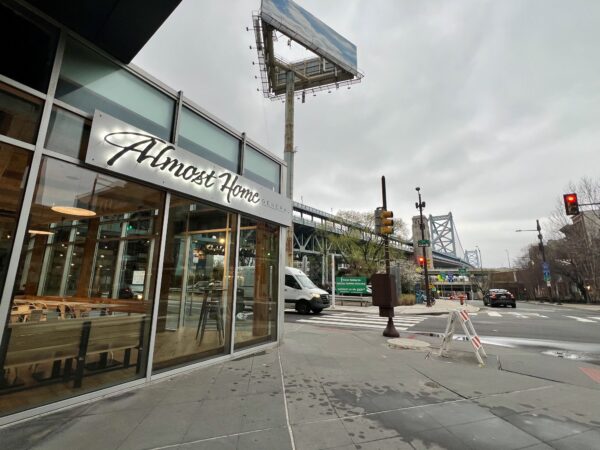
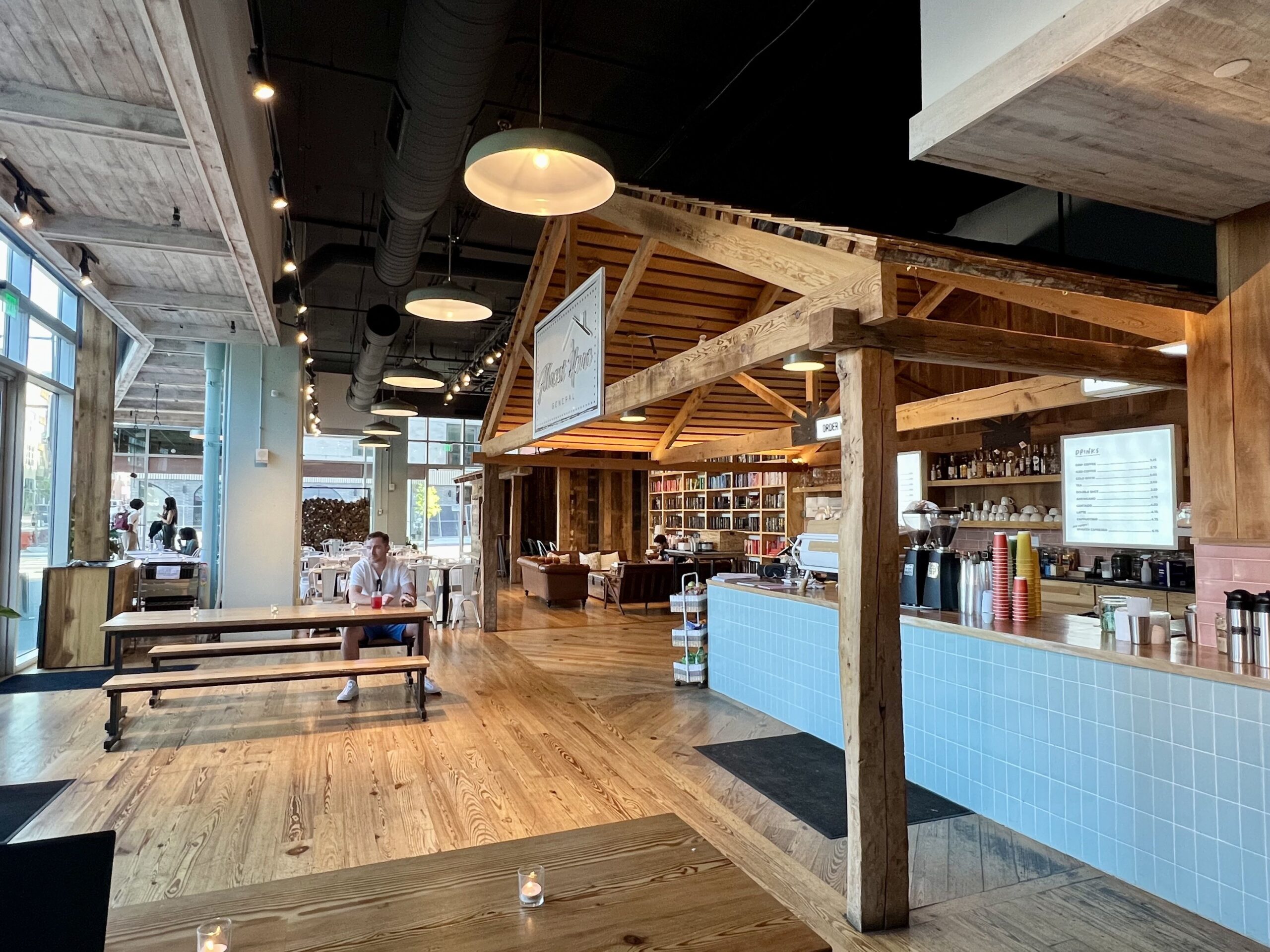
    Almost Home General’s Old City coffeehouse closed this week, capping a complicated two-year joint venture between the Jersey Shore-based chain and Glu Hospitality, the now-disbanded restaurant group that operated the location.

    Robbie Doran, who founded Almost Home in 2000 in Monmouth County, said his company was moving on and plans to open a coffee shop and grocery store of its own at Beach Street Landing in Northern Liberties. They will join Almost Home’s other Philadelphia location, on the ground floor of the Hagert & York development in East Kensington.

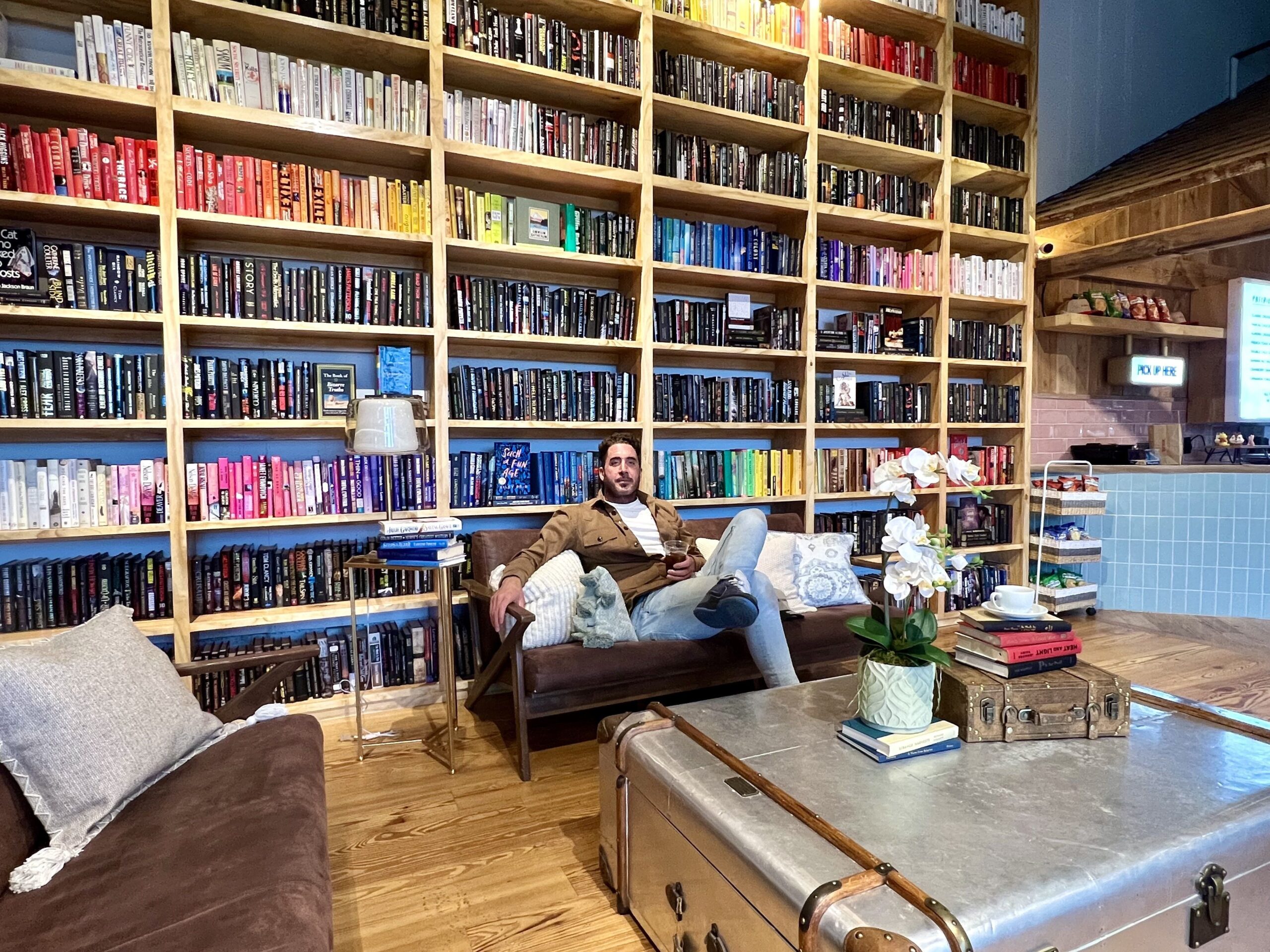
    Owner Robbie Doran in the lounge area at Almost Home, 205 Race St.

    Almost Home’s relationship with Glu began around 2023, when Glu founders Tim Lu and Derek Gibbons approached Doran, whom they knew from working in the New York City nightlife scene.

    “They wanted my brand,” Doran said. “I saw the growth with Glu and assumed they knew what they were doing.”

    At the time, Glu was on a tear of openings since its founding in 2019, at one point operating the chain Bagels & Co. alongside seven other vibey restaurants, including Northern Liberties’ Figo and the subterranean Center City ramen bar Chika, both now shuttered.

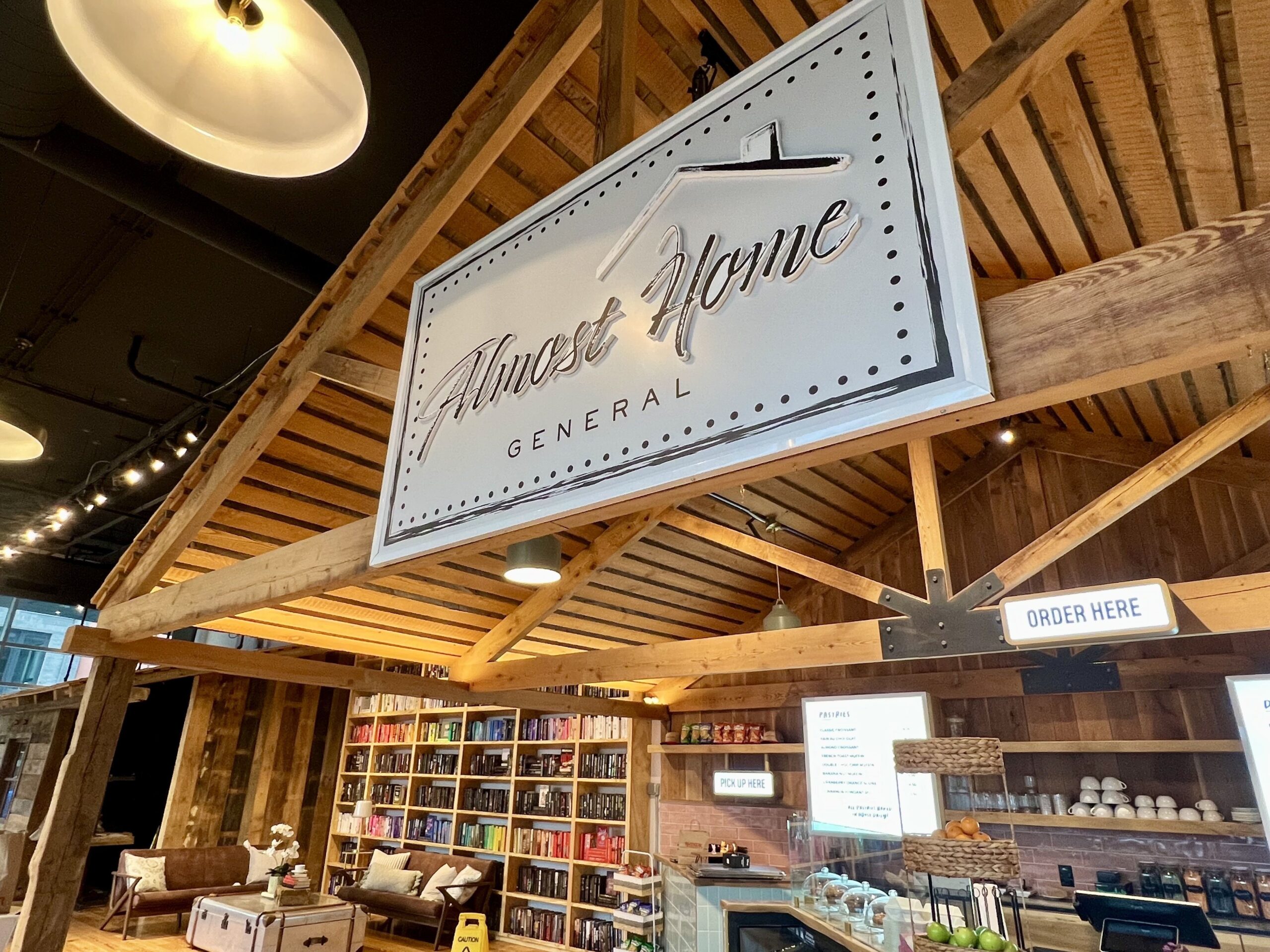
    In April 2024, Glu and Doran opened the Almost Home location at the corner of Second and Race Streets, on the ground floor of the Bridge on Race building beside the Ben Franklin Bridge. The coffee shop offered cocktails alongside full brunch and dinner menus, and was an immediate hit on social media thanks to its over-the-top lattes and photogenic color-coded bookshelves.

    Almost Home opened in April 2024, replacing a coffeehouse/retailer called United by Blue.

    Doran said the arrangement began to break down early last year after broader issues surfaced at other Glu-owned restaurants. In addition to allegations of wage theft, Glu was running afoul of state liquor laws by using off-premises catering permits, rather than full liquor licenses, to sell alcohol at both Almost Home and Figo. Two other former Glu restaurants — Chika and Izakaya Fishtown — were operating under expired liquor licenses.

    “When things started falling apart, it happened fast — within about two weeks, everything came crashing down,” Doran said. “We were finding things out from the news before hearing about them internally, which isn’t how a partnership should work.”

    Glu partners Derek Gibbons (left) and Tim Lu at Figo in December 2022.

    In March 2025, Lu and Gibbons announced that the entire company was defunct. Later that month, Glu investor Carlton Smith filed a civil suit in Common Pleas Court, alleging that Lu, Lu’s brother, and three men Smith believed to be Almost Home General employees had assaulted him inside the cafe in spring 2024 after Smith asked Lu to return his $100,000 investment; that lawsuit is listed as pending.

    After Glu shut down, Doran said he dissolved Almost Home’s partnership. From then on, Doran said, Lu ran the Old City cafe.

    The shop faced operational challenges. In September 2025, the cafe was shut down by the Philadelphia Department of Health after a failed health inspection found evidence of mouse droppings and uncontained rat poison throughout the kitchen. The report’s findings drew attention on social media that Lu said the business could not bounce back from.

    “The report itself wasn’t unusual from an operational standpoint,” Lu said. “But someone on social media amplified it and added commentary that made it seem worse than it was.”

    Dining room at Almost Home, 205 Race St.

    Other factors contributed to the decline, Lu said, including a harsh winter that caused foot traffic to slow further. “At the end of the day, the business just wasn’t sustainable,” Lu said.

    Doran, who operates eight Almost Home General locations in New Jersey in addition to the East Kensington shop, said the experience affected his business beyond Philadelphia.

    “A lot of the blame fell on him,” Doran said of Lu. “But ultimately, the decisions that were made had ripple effects. Some of that fallout affected me as well, even though I wasn’t involved in those decisions.”

    Doran emphasized that he doesn’t view Lu as solely responsible for the outcome and said he has focused on supporting staff affected by the closure. “I’ve been reaching out to employees to make sure they’re taken care of,” Doran said. “I’m not going to let staff get hurt in the process.”

  • Gov. Mikie Sherrill says new state taxes on ICE detention centers in N.J. are ‘on the table’

    Gov. Mikie Sherrill says new state taxes on ICE detention centers in N.J. are ‘on the table’

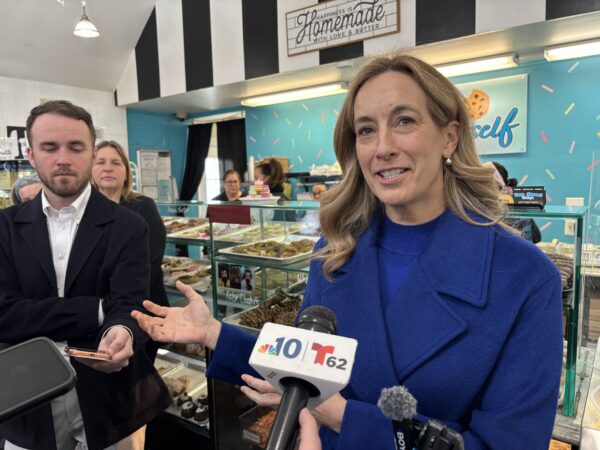
    New Jersey Gov. Mikie Sherrill said Friday that “all options are on the table” when asked by The Inquirer whether she would support adding a new tax on ICE detention centers in the state.

    A bill introduced in both the state Assembly and Senate last week would implement a 50% tax on the gross receipts of private detention centers in the state and send that money to a fund for immigration services in the state. It has not yet been put up for a vote in either chamber.

    Sherrill expressed opposition to new U.S. Customs and Immigration Enforcement detention facilities in the Garden State and said the state can ensure the federal government is following proper legal processes as it buys up warehouses and seeks to expand confinement capacity.

    “We’re looking at ways so that we can make sure that we’re demanding that anybody who wants to move into our state is following the rules and not going against our values,” the Democratic governor added during a local business stop at Two Sweet Boutique in Deptford on Friday.

    The legislative effort is led in part by progressives who were just elected to the legislature in November — Assembly members Ravi Bhalla and Katie Brennan, both North Jersey Democrats.

    On a national level, Sens. Andy Kim and Cory Booker, both Democrats, introduced legislation on Thursday that would ban President Donald Trump’s administration from purchasing or converting warehouses for immigration detention or processing.

    The efforts come amid bipartisan opposition to an immigration detention center planned for an industrial warehouse in Roxbury, a North Jersey township where an ICE officer recently fired a gun.

    Sherrill wrote a letter to Homeland Security Secretary Kristi Noem on Friday expressing her opposition to the plan, which the governor said involves housing up to 1,500 beds in a 470,000-square-foot facility that currently has just two bathrooms.

    “They really just have not gone through a thoughtful process,” she said during her Gloucester County stop. “It’s going to put some pressure on the town as well, and these types of facilities have a history of not being built in a way that is safe for prisoners.”

    New Jersey has existing ICE detention centers at Delaney Hall in Newark and in Elizabeth. The agency has also floated the idea of confining people at Joint Base McGuire-Dix-Lakehurst.

    “This is not a warehouse that’s fit for human habitation, and they say they’re putting 1,500 people in there,” she said of the Roxbury plan. “So there is a lot we can do as a state to prevent this.”

    In her Friday letter to Noem, Sherrill denounced the Department of Homeland Security’s lack of transparency around their Roxbury plans — a criticism that Pennsylvania Gov. Josh Shapiro, who opposes ICE warehouse facilities in Pennsylvania, has also lodged against the agency.

    Protests erupted in Roxbury after the Washington Post included it as a site that ICE was considering. Confusion later ensued after DHS, which oversees ICE, put out contradictory statements to the media over whether they were purchasing a warehouse for a detention center there.

    Sherrill also told Noem in her letter that the state will “assess all options to protect the community’s infrastructure, public safety, health, and long-term economic stability,” using “every tool at our disposal.” She said the ICE detention centers in the state and elsewhere are known for “deplorable conditions,” such as overcrowding, undrinkable water, rotten food, and insufficient healthcare.

    “In short, DHS’s treatment of human beings — citizen and noncitizen alike — reflects a chilling disregard for both human life and the rule of law,” she said in the letter. “New Jersey will not be complicit in this.”

  • First bullpen session in six months for Phillies’ Zack Wheeler felt ‘natural’

    First bullpen session in six months for Phillies’ Zack Wheeler felt ‘natural’

    CLEARWATER, Fla. — Before Zack Wheeler’s first bullpen session in over six months on Thursday, he didn’t have any expectations.

    He knew he was going to throw only fastballs. That’s fairly typical for a pitcher beginning a ramp-up, because spinning the ball and throwing breaking balls requires more torque and therefore puts more pressure on the elbow. Wheeler has spun the ball during flat ground sessions and hopes to mix his offspeed offerings in more of his next few bullpens.

    But other than knowing every pitch would be a sinker or four-seam, he had no expectations.

    “I didn’t know how to feel [Thursday] or know what I was going to feel like [Thursday],” Wheeler said. “But I felt good. I felt smooth, natural.”

    This is uncharted territory, as recovering from the venous thoracic outlet surgery Wheeler underwent on Sept. 23 is not like a typical injury. And throughout the process, Wheeler has focused on going at his own pace, rather than comparing himself to other MLB pitchers who have had the same surgery.

    Wheeler, who had a blood clot near his right shoulder removed, is not viewing it as a sigh of relief, but rather another box ticked off in a long list of them.

    “The first one’s throwing a baseball,” he said, “then the next one is throwing long toss; usually that feels good, and then getting off the mound, getting into a game, facing live hitters is probably the next one. You just have those checkmarks along the way.”

    He added that he was at about 80-85% of max effort on Thursday. The Phillies have declined to publicize the radar gun readings of Wheeler’s bullpen.

    In a typical year, Wheeler doesn’t have a set number of times he throws before arriving at camp. Sometimes he’ll arrive not having touched a mound yet, and other times he’ll have had four or five sessions already.

    “It just depends. There’s been years where I came in and I’m basically at where I’m at right now. It’s a little different, but at the same time, I’m not too far behind,” Wheeler said.

    Manager Rob Thomson described Wheeler’s shoulder Thursday as “stronger than it’s ever been.” Wheeler said he agreed with that.

    “I’ve been strengthening it all offseason. I’ve got to give a lot of credit to Paul [Buchheit], the head trainer,” Wheeler said. “He’s been working with me all offseason, a few times a week, and he’s helped me get my arm a lot stronger. You’ve just got to help protect the area as much as possible. Concentrate a lot on the shoulder strengthening and just overall body. Hopefully, that helps out for the long run.”

    Zack Wheeler (right), with Aaron Nola, has a bullpen session planned for Sunday.

    Wheeler doesn’t know if he will be able to get into a game before camp ends. The Phillies are aiming to get him on a regular build-up schedule, which is two days off between bullpen sessions. His next bullpen is planned for Sunday, where he will throw 25 pitches and start mixing in his splitter with the fastballs.

    If he takes things slow, does he think there could be any benefit when October rolls around?

    “If I’m ready to go, I’m ready to go,” Wheeler said. “I don’t think I have any problem when October comes, usually. So I don’t think this year is any different than any other year, trying to preserve-wise.”

    For his teammates, it’s been great just to have Wheeler back around them this spring.

    “Just having his presence around is always good,” fellow starter Jesús Luzardo said. “Having his advice, him just being around adds that level of veteran — that we already have, obviously, with [Aaron] Nola and [Taijuan Walker], and we have other guys — but it’s just another added voice in the back of our heads that we can bounce ideas off of.”

    Added Nola: “I didn’t see his bullpen, but heard it went well. I’ve just seen him throwing out on the fields, and he looks normal. Looks like Wheels.”

  • The Philadelphia Museum of Art will have ‘pay what you wish’ admission on Friday evenings

    The Philadelphia Museum of Art will have ‘pay what you wish’ admission on Friday evenings

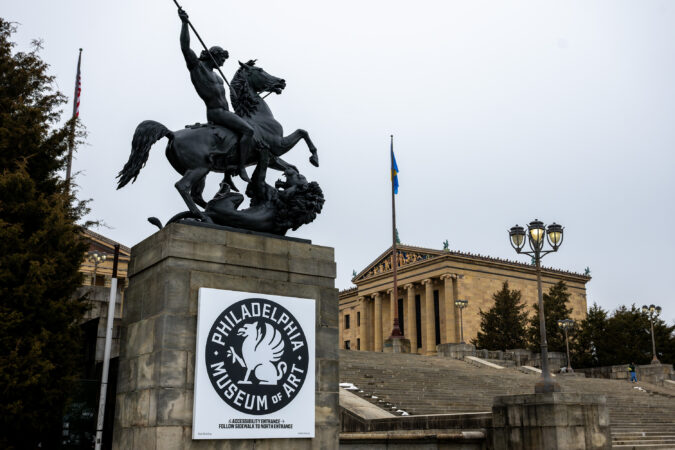
    Philadelphia Museum of Art patrons will once again be able to decide for themselves what to pay at the gate Friday evenings.

    The museum, eager to change the message to a positive one after a season of “drama and conflict,” will offer admission on a pay-what-you-wish basis every Friday evening for five months starting April 10.

    Regular admission to the museum can be as high as $30 per ticket, and the initiative, announced Friday, recognizes that cost excludes or deters some visitors.

    “We wanted to remove the barrier,” said museum director and CEO Daniel H. Weiss.

    The program, dubbed “Independent Fridays,” coincides with the nation’s 250th celebrations and the opening of “A Nation of Artists,” an expansive, two-museum exhibition of American works at the PMA and Pennsylvania Academy of the Fine Arts built around the collection of Phillies managing partner John Middleton and his family.

    The museum previously had pay-what-you-wish Friday evenings, but, because of the expense, canceled the program in summer 2024, when Sasha Suda was director. To underwrite its reinstatement, the museum put in place special funding from board chair Ellen T. Caplan and her husband, Ron, and the William Penn Foundation.

    Caplan said that her own visits to the museum when she was growing up in Philadelphia happened through the pay-what-you-wish program, so to help fund it now “feels like a full-circle moment.”

    Although the current funding underwrites pay-what-you-wish Friday evenings only through the Friday before Labor Day, leaders said it could continue.

    “I’m hoping this will inspire others to underwrite it going forward,” Caplan said.

    Daniel H. Weiss, director and CEO of the Art Museum, walks through museum galleries with staffer Laura Coogan (left) Jan. 7, 2026.

    At the moment, the museum is planning to return to its regular half-off discounted rates on Friday evenings ($15 for general admission), after Sept. 4. Admission on the first Sunday of every month continues to be pay-what-you-wish, and anyone 18 years old or under is admitted free any day, any time.

    The public signals coming from Philadelphia’s major, comprehensive art museum in the past several months have mostly been about a controversial name change and rebrand, and the acrimonious dismissal of Suda and the legal wrangling in its aftermath. After several months of calling itself the “Philadelphia Art Museum,” the institution has reverted to its previous, longtime name.

    The museum’s dispute with Suda will be settled through arbitration, not through a trial with jury, a Common Pleas Court judge recently ruled.

    Weiss said that reinstating pay-what-you-wish Friday evenings was partially about “turning the page. We want people to appreciate the museum for what it has been, not for the drama and conflict.”

    Admission income is critical to the museum’s bottom line. In fiscal year 2025, earned revenue accounted for a third of the museum’s income, with the rest covered by contributed revenue, such as donations.

    But it’s not clear that offering more pay-what-you-wish spots on the calendar will result in overall lower ticket income. The museum piloted the return of the Friday evening program for the final three weeks of its recent Surrealism show, and admission revenue came in 20% higher than in the previous three weeks.

    In the same period, attendance received a boost of 128%, according to the museum.

    Of the ultimate net effect of pay-what-you-wish on revenue, “Over the long-term we don’t know,” said Weiss. But, he added: “Having it underwritten allows us to not worry about that.”

  • Moms’ group says they had to ‘step in’ to help search for Nancy Guthrie

    Moms’ group says they had to ‘step in’ to help search for Nancy Guthrie

    NOGALES, Mexico — Lidia Hernandez has been searching for her son, lost to drug violence in Mexico, for seven years. But she spent this week scouring rocky dirt for clues in the disappearance of a far more well-known crime victim — Nancy Guthrie.

    On Sunday, Hernandez posted fliers on the mailbox at Guthrie’s home in the Catalina Foothills north of Tucson. On Wednesday, she led a group of other “Searching Mothers” in prayer across the border in Mexico as they tried to find out whether Guthrie had been taken there. On Thursday, she returned to Guthrie’s neighborhood once again.

    Hernandez said her group, the Searching Mothers of Sonora, feels authorities aren’t doing enough to find Guthrie, the 84-year-old mother of “Today” anchor Savannah Guthrie who was reported missing on Feb. 1.

    It’s a common refrain for the mothers, who have used pickaxes and shovels to locate hundreds of bodies of victims of drug and gang violence in Mexico themselves over the years, decrying government inaction all the while.

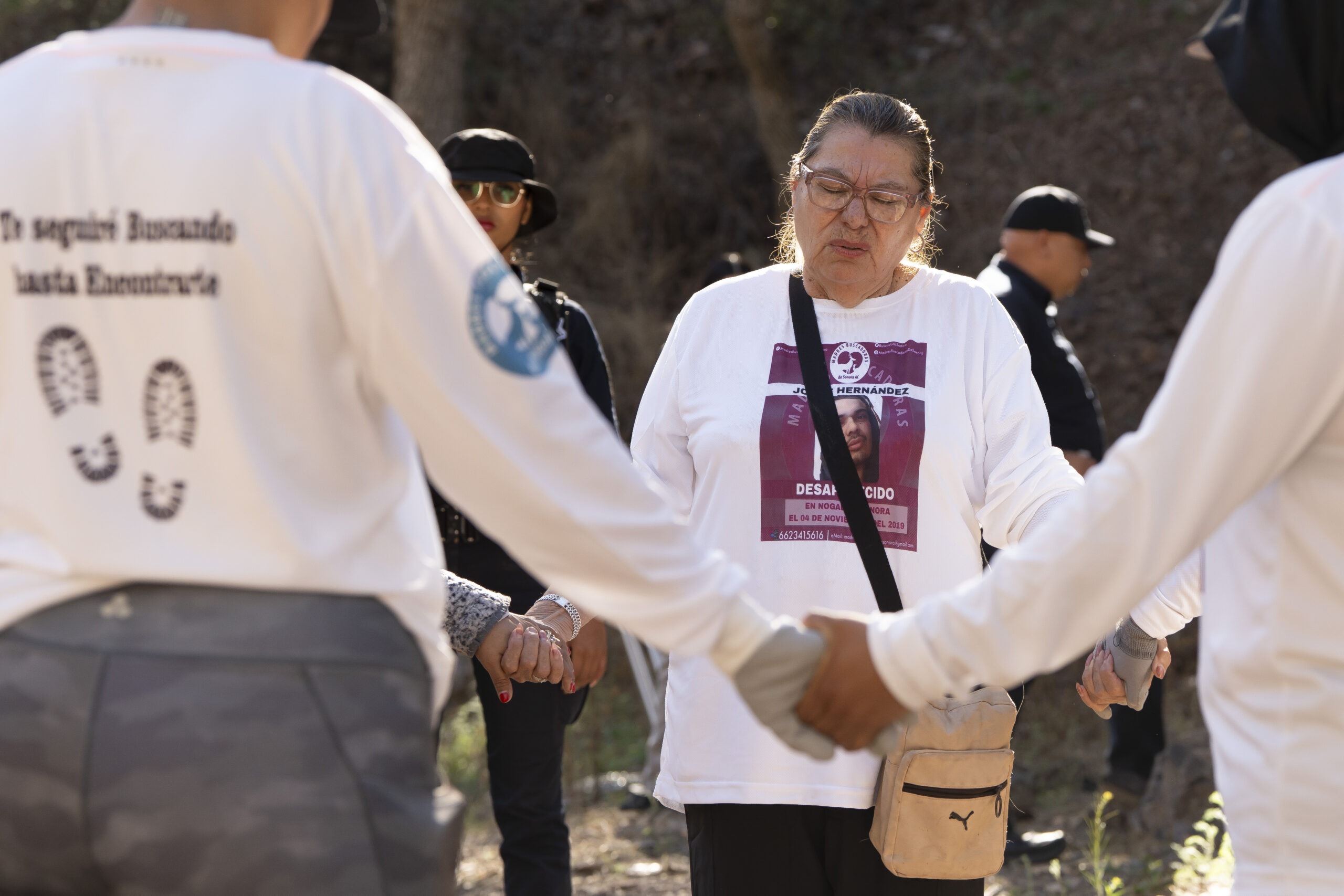
    “They’re not looking for her!” Hernandez, 66, a retired food service worker from Nogales, Arizona, said. “So we have to step in.”

    Lidia Hernandez leads the Searching Mothers of Sonora in prayer during their search for Nancy Guthrie on Wednesday in Nogales, Mexico.

    As the investigation entered its fourth week, unauthorized search parties have exacerbated the chaos surrounding the high-profile case, which has gripped the nation and attracted media, true-crime streamers and curiosity seekers to the area around Guthrie’s spacious home.

    The Pima County Sheriff’s Department has tried to calm the situation, asking in a statement Saturday that volunteer searchers back off and let the investigators do their jobs. On Thursday they instituted new parking restrictions around the house.

    “We appreciate their concern, and we all want to find Nancy, but this work is best left to professionals,” the sheriff’s office said on a post on X.

    Despite the sheriff’s office admonitions, the informal search parties have continued, including members of the United Cajun Navy — a volunteer group that normally responds to hurricanes — arriving in town midweek with sniffer dogs and drones. The sheriff’s office referred additional questions about the new searchers back to its Saturday post.

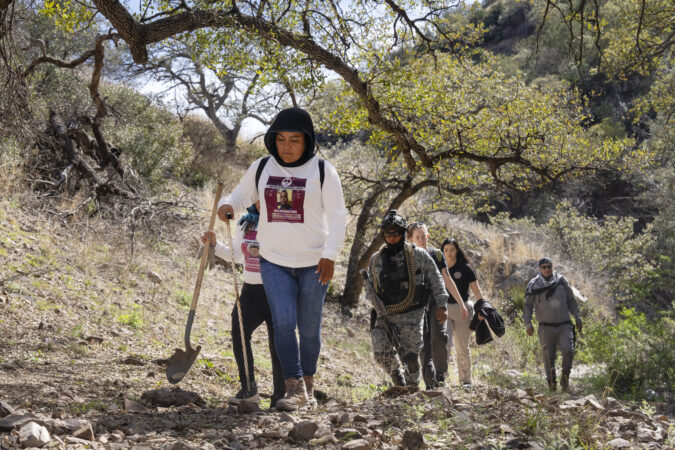
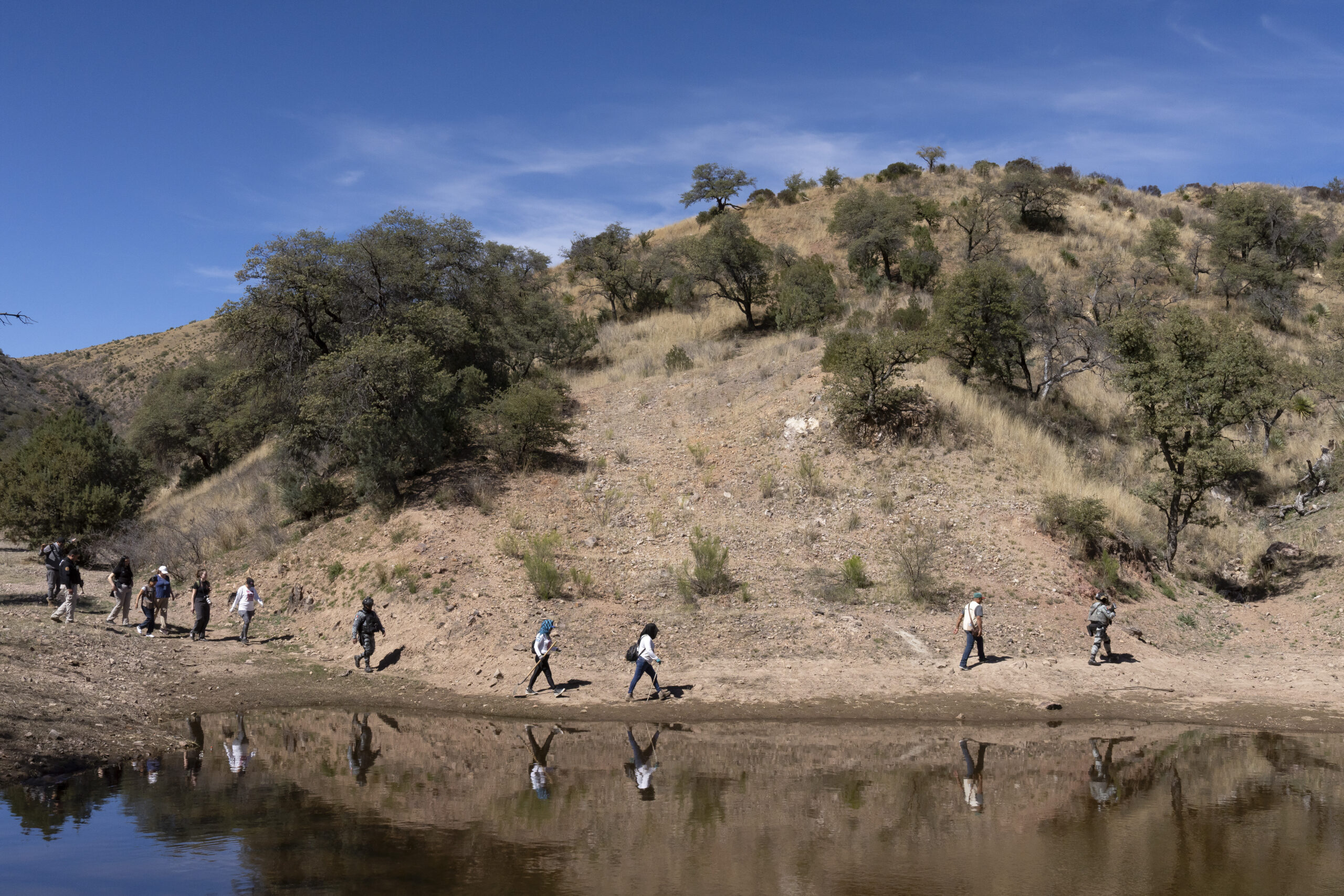
    The Searching Mothers hike through Nogales, Mexico, during their search.

    This week, the pace of the investigation appeared to slow, as investigators await the results of a complicated DNA test that could take weeks, authorities have said. Separately, ABC News reported that the FBI was downscaling its operations in Tucson and moving agents back to Phoenix. But thousands of citizens continue to call in tips to the FBI — more than 23,000 so far, authorities said. The Guthrie family this week offered a $1 million private award for information about their mother’s whereabouts.

    “We still believe in a miracle,” Savannah Guthrie said in an Instagram video.

    Amateur sleuths — especially those analyzing clues in web forums — have proliferated in recent years and sometimes do more harm than good, experts say. In the Guthrie case, for example, some have continued to speculate online that the Guthrie family could be involved, despite the fact that Pima County Sheriff Chris Nanos cleared them as suspects.

    Tricia Arrington Griffith, who manages the web forum for true-crime buffs called Websleuths, attributes the intense interest in the case to Savannah Guthrie’s fame and the possibility that her mother could still be alive.

    “Time of the essence,” she said. “You tell people somebody out there is in trouble and with a bad guy and might die? People will move heaven and earth to try and help.”

    On Wednesday, Hernandez and the Searching Mothers traveled on a dirt road, deep with ruts about an hour south of Guthrie’s home, to a remote area with cacti and mesquite trees near the U.S.-Mexico border. The border wall, a rust-colored ribbon, unspooled in the northern distance over the dun-colored landscape.

    Hernandez led the group in prayer before they hoisted shovels and metal rods and began combing the earth, looking for disturbed ground, which might indicate a burial. If they saw a telltale disturbance, they began immediately driving metal rods deep into the ground and pulling them back, sniffing the ends for the smell of a decomposing corpse.

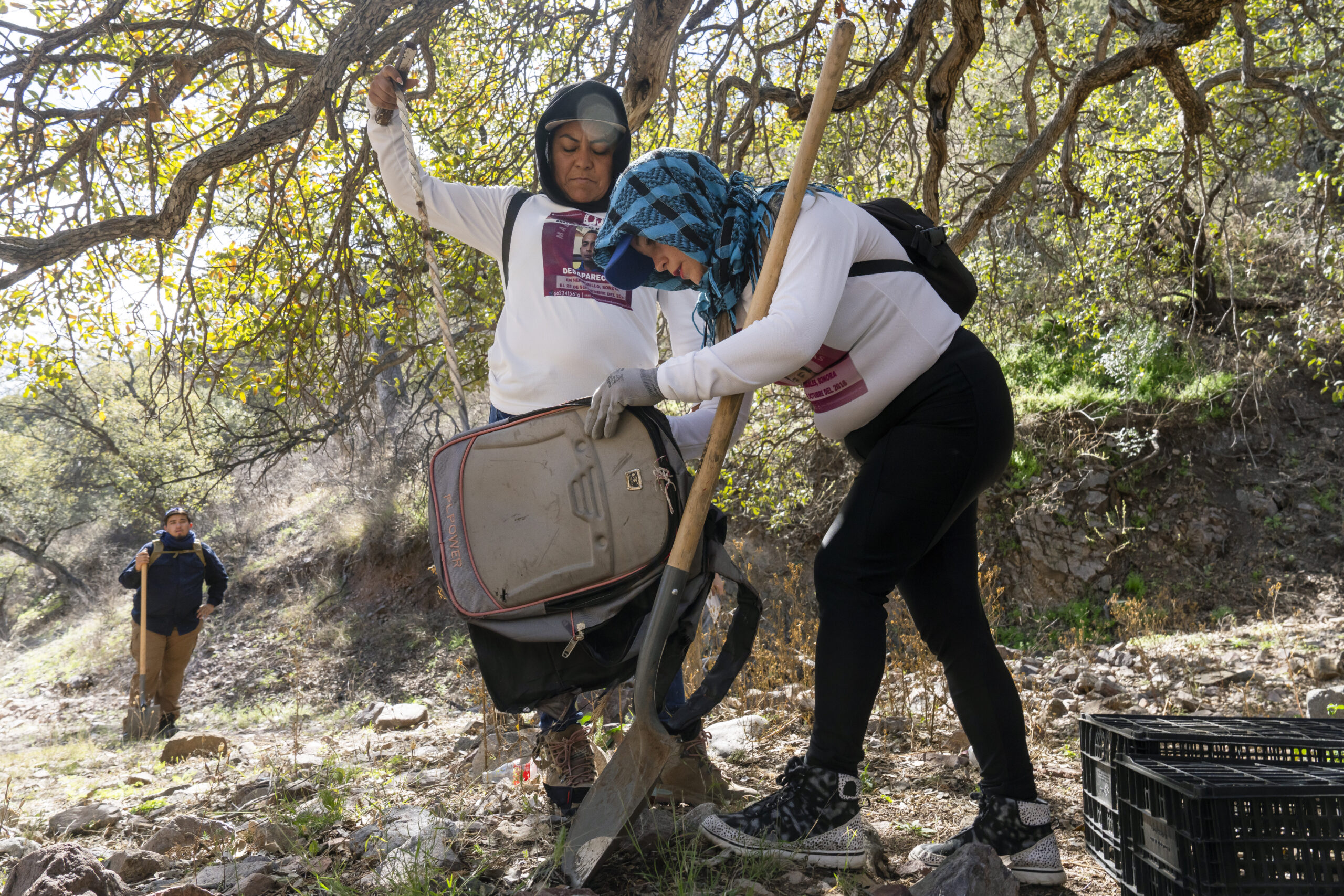
    The Searching Mothers inspect a backpack found in a canyon commonly used by border crossers.

    For Hernandez, the grim work has been a boon, a constructive activity she has embraced in the pain and uncertainty she has lived with since her son, Jorge, 28, disappeared in Nogales on Nov. 4, 2019. Like the other mothers, she wears a white T-shirt with a purple logo and photo of her son above the word “DISAPPEARED.”

    When Nancy Guthrie vanished, she felt an immediate affinity for the Guthrie family, she said.

    “It was pain, and sadness, the same feeling that the mothers go through — every day, every week, every year,” she said. “The pain is permanent.”

    The Searching Mothers had received an anonymous tip, the group’s leader, Ceci Patricia Flores Armenta, said, pointing them to this area — a swath of forested land crisscrossed with narrow pathways used by migrants and drug traffickers.

    “They told us, ‘If they wanted to take her across to Mexico, this would have been the best way to take her,’” she said.

    She brushed off criticism from authorities that the volunteer searchers are at risk of hampering the investigation.

    “The [police] are not searching underground — they’re doing investigations, they’re waiting for someone to hand her over alive, or she’s in a place where they won’t be able to find her,” Flores said. “If we managed to find her, with our technology — which is only a shovel and a bar — I think they’d end up embarrassed.”

    She continued: “They say we’re violating the investigation, but what investigation? They’ve had a month and they haven’t been able to resolve the case. And so they must let the mothers participate.”

    Investigators for Mexico’s lead criminal agency do not believe Guthrie has been taken across the border, according to Agent Alberto Osona Guerrero, who was at the scene of mothers’ search Wednesday.

    “The truth is, it’s very difficult to transport a person against their will and cross them into Mexico,” Osona Guerrero said. The mothers might find a body, he said, but likely not the one they’re looking for.

    Flores founded the group in 2019 to search for the tens of thousands of missing — more than 130,000 according to the government’s last count — victims of drug cartels and gang violence who are left in shallow graves or burned. She has two sons who have been kidnapped, and despite her public pressure, authorities have given her no indication of their whereabouts.

    The mothers don’t try to find the perpetrators of crimes, instead focusing on reuniting families or providing closure when they find remains, which they call “treasures.” They’ve had some success. Volunteer mother groups in Flores’s home state of Sonora have found five missing people just this year, according to the state’s commission on missing people.

    In 2024, Flores and other mothers searching outside Mexico City found a clandestine dumping ground filled with human remains, and was criticized by a local prosecutor for disturbing evidence, according to an Associated Press account of the discovery. Her response? Do your job.

    On Wednesday near the border, Flores and other volunteers found a spent shell casing on the ground. Flores directed them where to dig.

    “Here, this is where they would have fallen,” she said, as the volunteers began swinging pickaxes, the sound of metal hitting rock resonating through the small grove of trees. But after digging for an hour, they found nothing.

    Ceci Patricia Flores Armenta, founder of the Searching Mothers of Sonora, smells the dirt for any sign of a decomposing corpse.

    Other searchers, including Yolanda Veronica Paredes, a local resident who also lost her son in a kidnapping, followed a stream bed deep into the hills, toting their shovels. They passed a small lake, the bleached ribs of a dead cow, a shrine to the Virgin Mary and the detritus of wanderers along the narrow path — a sock, an empty Pall Mall package, a discarded bottle of orange soda.

    They reached a trash pile in the woods and began to dig. Soon, Paredes pulled up a clump of earth and sniffed deeply.

    “I smell something dead!” she said. She and the other searchers began digging and pulled up more trash, including a fraying windbreaker. But eventually they reached a point that required stronger tools than what they had brought with them. They conferred and decided to return the following day — with a pickax.

    As the search wrapped up for the day, Fernandez said she would continue looking for Guthrie as long as her disappearance remains unsolved. But she said her hope in finding her alive was waning and believed her spirit had left the earth.

    “She is not there,” Fernandez said sadly.