Blog

  • Moms’ group says they had to ‘step in’ to help search for Nancy Guthrie

    Moms’ group says they had to ‘step in’ to help search for Nancy Guthrie

    NOGALES, Mexico — Lidia Hernandez has been searching for her son, lost to drug violence in Mexico, for seven years. But she spent this week scouring rocky dirt for clues in the disappearance of a far more well-known crime victim — Nancy Guthrie.

    On Sunday, Hernandez posted fliers on the mailbox at Guthrie’s home in the Catalina Foothills north of Tucson. On Wednesday, she led a group of other “Searching Mothers” in prayer across the border in Mexico as they tried to find out whether Guthrie had been taken there. On Thursday, she returned to Guthrie’s neighborhood once again.

    Hernandez said her group, the Searching Mothers of Sonora, feels authorities aren’t doing enough to find Guthrie, the 84-year-old mother of “Today” anchor Savannah Guthrie who was reported missing on Feb. 1.

    It’s a common refrain for the mothers, who have used pickaxes and shovels to locate hundreds of bodies of victims of drug and gang violence in Mexico themselves over the years, decrying government inaction all the while.

    “They’re not looking for her!” Hernandez, 66, a retired food service worker from Nogales, Arizona, said. “So we have to step in.”

    Lidia Hernandez leads the Searching Mothers of Sonora in prayer during their search for Nancy Guthrie on Wednesday in Nogales, Mexico.

    As the investigation entered its fourth week, unauthorized search parties have exacerbated the chaos surrounding the high-profile case, which has gripped the nation and attracted media, true-crime streamers and curiosity seekers to the area around Guthrie’s spacious home.

    The Pima County Sheriff’s Department has tried to calm the situation, asking in a statement Saturday that volunteer searchers back off and let the investigators do their jobs. On Thursday they instituted new parking restrictions around the house.

    “We appreciate their concern, and we all want to find Nancy, but this work is best left to professionals,” the sheriff’s office said on a post on X.

    Despite the sheriff’s office admonitions, the informal search parties have continued, including members of the United Cajun Navy — a volunteer group that normally responds to hurricanes — arriving in town midweek with sniffer dogs and drones. The sheriff’s office referred additional questions about the new searchers back to its Saturday post.

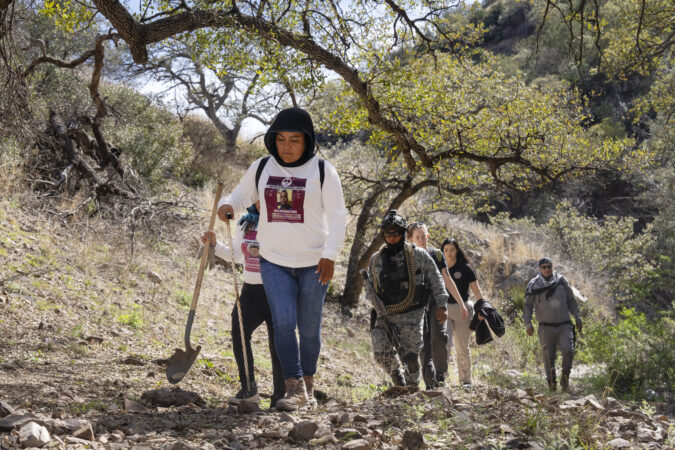
    The Searching Mothers hike through Nogales, Mexico, during their search.

    This week, the pace of the investigation appeared to slow, as investigators await the results of a complicated DNA test that could take weeks, authorities have said. Separately, ABC News reported that the FBI was downscaling its operations in Tucson and moving agents back to Phoenix. But thousands of citizens continue to call in tips to the FBI — more than 23,000 so far, authorities said. The Guthrie family this week offered a $1 million private award for information about their mother’s whereabouts.

    “We still believe in a miracle,” Savannah Guthrie said in an Instagram video.

    Amateur sleuths — especially those analyzing clues in web forums — have proliferated in recent years and sometimes do more harm than good, experts say. In the Guthrie case, for example, some have continued to speculate online that the Guthrie family could be involved, despite the fact that Pima County Sheriff Chris Nanos cleared them as suspects.

    Tricia Arrington Griffith, who manages the web forum for true-crime buffs called Websleuths, attributes the intense interest in the case to Savannah Guthrie’s fame and the possibility that her mother could still be alive.

    “Time of the essence,” she said. “You tell people somebody out there is in trouble and with a bad guy and might die? People will move heaven and earth to try and help.”

    On Wednesday, Hernandez and the Searching Mothers traveled on a dirt road, deep with ruts about an hour south of Guthrie’s home, to a remote area with cacti and mesquite trees near the U.S.-Mexico border. The border wall, a rust-colored ribbon, unspooled in the northern distance over the dun-colored landscape.

    Hernandez led the group in prayer before they hoisted shovels and metal rods and began combing the earth, looking for disturbed ground, which might indicate a burial. If they saw a telltale disturbance, they began immediately driving metal rods deep into the ground and pulling them back, sniffing the ends for the smell of a decomposing corpse.

    The Searching Mothers inspect a backpack found in a canyon commonly used by border crossers.

    For Hernandez, the grim work has been a boon, a constructive activity she has embraced in the pain and uncertainty she has lived with since her son, Jorge, 28, disappeared in Nogales on Nov. 4, 2019. Like the other mothers, she wears a white T-shirt with a purple logo and photo of her son above the word “DISAPPEARED.”

    When Nancy Guthrie vanished, she felt an immediate affinity for the Guthrie family, she said.

    “It was pain, and sadness, the same feeling that the mothers go through — every day, every week, every year,” she said. “The pain is permanent.”

    The Searching Mothers had received an anonymous tip, the group’s leader, Ceci Patricia Flores Armenta, said, pointing them to this area — a swath of forested land crisscrossed with narrow pathways used by migrants and drug traffickers.

    “They told us, ‘If they wanted to take her across to Mexico, this would have been the best way to take her,’” she said.

    She brushed off criticism from authorities that the volunteer searchers are at risk of hampering the investigation.

    “The [police] are not searching underground — they’re doing investigations, they’re waiting for someone to hand her over alive, or she’s in a place where they won’t be able to find her,” Flores said. “If we managed to find her, with our technology — which is only a shovel and a bar — I think they’d end up embarrassed.”

    She continued: “They say we’re violating the investigation, but what investigation? They’ve had a month and they haven’t been able to resolve the case. And so they must let the mothers participate.”

    Investigators for Mexico’s lead criminal agency do not believe Guthrie has been taken across the border, according to Agent Alberto Osona Guerrero, who was at the scene of mothers’ search Wednesday.

    “The truth is, it’s very difficult to transport a person against their will and cross them into Mexico,” Osona Guerrero said. The mothers might find a body, he said, but likely not the one they’re looking for.

    Flores founded the group in 2019 to search for the tens of thousands of missing — more than 130,000 according to the government’s last count — victims of drug cartels and gang violence who are left in shallow graves or burned. She has two sons who have been kidnapped, and despite her public pressure, authorities have given her no indication of their whereabouts.

    The mothers don’t try to find the perpetrators of crimes, instead focusing on reuniting families or providing closure when they find remains, which they call “treasures.” They’ve had some success. Volunteer mother groups in Flores’s home state of Sonora have found five missing people just this year, according to the state’s commission on missing people.

    In 2024, Flores and other mothers searching outside Mexico City found a clandestine dumping ground filled with human remains, and was criticized by a local prosecutor for disturbing evidence, according to an Associated Press account of the discovery. Her response? Do your job.

    On Wednesday near the border, Flores and other volunteers found a spent shell casing on the ground. Flores directed them where to dig.

    “Here, this is where they would have fallen,” she said, as the volunteers began swinging pickaxes, the sound of metal hitting rock resonating through the small grove of trees. But after digging for an hour, they found nothing.

    Ceci Patricia Flores Armenta, founder of the Searching Mothers of Sonora, smells the dirt for any sign of a decomposing corpse.

    Other searchers, including Yolanda Veronica Paredes, a local resident who also lost her son in a kidnapping, followed a stream bed deep into the hills, toting their shovels. They passed a small lake, the bleached ribs of a dead cow, a shrine to the Virgin Mary and the detritus of wanderers along the narrow path — a sock, an empty Pall Mall package, a discarded bottle of orange soda.

    They reached a trash pile in the woods and began to dig. Soon, Paredes pulled up a clump of earth and sniffed deeply.

    “I smell something dead!” she said. She and the other searchers began digging and pulled up more trash, including a fraying windbreaker. But eventually they reached a point that required stronger tools than what they had brought with them. They conferred and decided to return the following day — with a pickax.

    As the search wrapped up for the day, Fernandez said she would continue looking for Guthrie as long as her disappearance remains unsolved. But she said her hope in finding her alive was waning and believed her spirit had left the earth.

    “She is not there,” Fernandez said sadly.
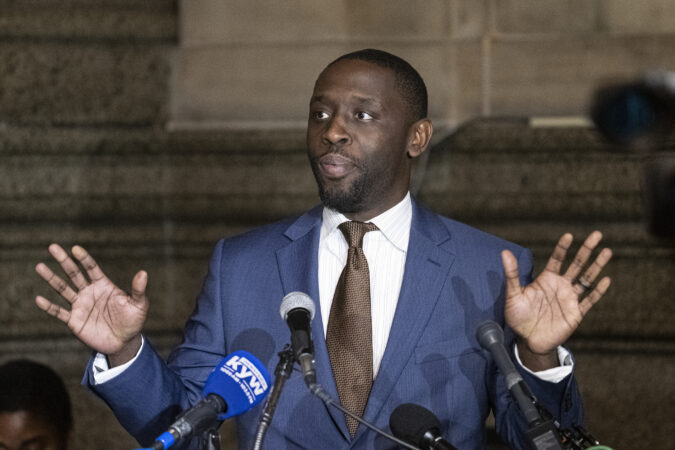
  • Should Philly politicians have to resign to campaign for new seats? Voters will get to weigh in — again | City Council roundup

    Should Philly politicians have to resign to campaign for new seats? Voters will get to weigh in — again | City Council roundup

    For the third time in two decades, Philadelphia voters this May will have the opportunity to weigh in on a city rule requiring local elected officials to step down from their current jobs if they want to seek higher office.

    Voters rejected City Council’s first two attempts to get rid of the resign-to-run rule, which requires a ballot measure because it is part of the city’s Home Rule Charter.

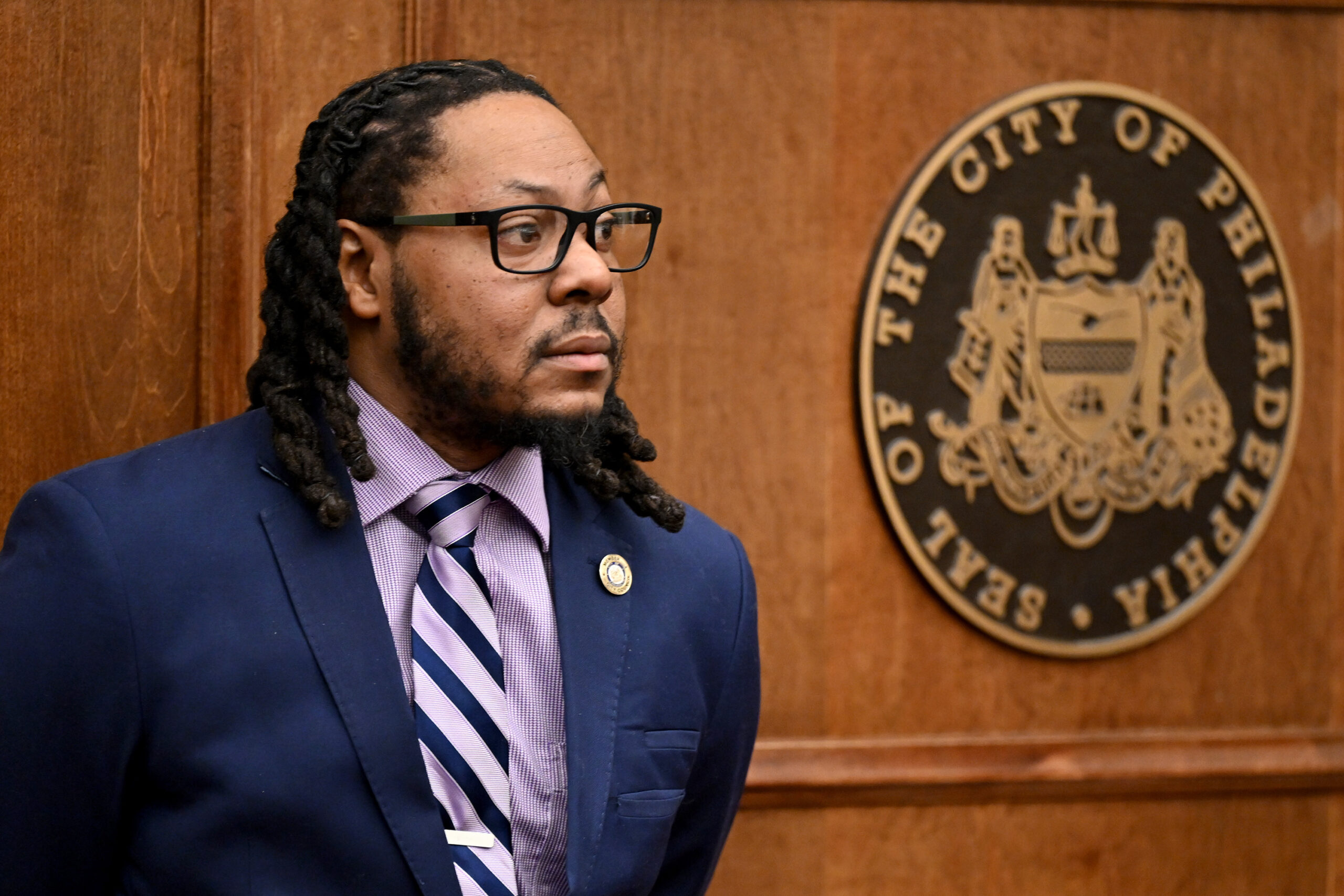
    The latest proposal, which Council approved Thursday in a 15-1 vote, will go before the voters during the May 19 primary election. Councilmember Isaiah Thomas, who authored the measure, is hopeful it will be approved because his proposal is more limited than Council’s previous attempts.

    “Reforming the resign-to-run rule for local elected officials is a critical first step towards ensuring Philadelphians have the best representation possible at all levels of government,” Thomas said in a statement.

    Rather than eliminating the resign-to-run rule, Thomas’ proposal would amend it to allow all elected city officials except the mayor to run for state or federal offices without resigning. (Council members would still have to step down if they wanted to run for mayor, and mayors would still have to resign to seek any other office.)

    What was this week’s highlight?

    Why stop there? Councilmember Jeffery Young Jr. cast the only vote against Thomas’ proposal.

    He said afterward that he believes a measure to alter the resign-to-run rule should be paired with another charter amendment: one that would impose term limits for Council members.

    “I do believe that we should be limited as elected officials,” said Young, a first-term Council member representing North Philadelphia and parts of Center City. “I do think that as a public office, we shouldn’t do these jobs forever.”

    Young’s position echoes that of the Committee of Seventy, Philadelphia’s business-backed good-government group. Committee of Seventy CEO Lauren Cristella told Council last year that pairing a resign-to-run change with term limits would provide “comprehensive, not piecemeal, reform.”

    The group proposed limiting Council members to three four-year terms. Young said he is open to negotiating about what the right number of terms should be.

    What else happened?

    Never read the comments: Is serving on City Council a “real job”?

    Not according to a recent Instagram comment from Young, whose taxpayer-funded salary is about $166,000 per year.

    On Wednesday, Instagram user Alan Fisher criticized the lawmaker in a comment left on an Inquirer video about a controversial zoning bill that Young had authored.

    “Jay Young is a joke of a councilperson and I cannot wait till he’s replaced,” wrote Fisher, who posts about urbanism issues and has thousands of followers across his social media accounts.

    Young replied: “me too so I can get a real job.”

    After Council ended Thursday, Young said the comment was not an indication of his political future.

    “I’m joking,” he told reporters. “The guy called me a joke, and I made a joke.”

    Councilmember Jeffery Young, Jr. in chambers as City Council meets Dec. 11, 2025.

    The backstory: Young, who represents the North Philadelphia-based 5th District, had proposed a zoning bill to prevent the former Hahnemann University Hospital site on North Broad Street from being redeveloped into housing. Young said he was hoping to see the site return to being an employment hub.

    But instead, his efforts to change the area’s zoning led to a rush of housing permit applications from developers hoping to beat him to the punch as his proposal made its way through the legislative process. He has since pressed pause on the bill, and The Inquirer video laid out how the saga had unfolded.

    In a Council speech Thursday, Young appeared to walk back his comment, although he did not directly mention the episode.

    “People say a lot of vile stuff about us. It seems like we’re not allowed to have a sense of humor about it,” Young said. “But I want my constituents to know that in the 5th Council District, we are fighting each and every day to improve their lives.”

    The Instagram comment was not the first time Young has provided curious commentary about his political future.

    Late last year, when The Inquirer asked if he planned to run for reelection in 2027, Young said: “It’s not up to me to make that decision. … It’s up to the people of the 5th District.”

    Usually, the people’s will is discerned through elections. Young, who has already drawn a potential opponent in next year’s race, said he will instead take the pulse of the 5th District by reaching out to people before deciding whether to seek a second four-year term.

    At the time, Young seemed to think being a member of Council was a real job.

    “I like doing my job,” he said last year.

    Quote of the day

    Jerome Richardson, 21, a senior at Temple who is a native of St. Paul, has been charged along with journalist Don Lemon for an anti-ICE protest at a Minnesota church last month.

    Temple student honored: Council on Thursday recognized Jerome Richardson, a Temple University senior who was arrested by federal authorities on charges connected to a January protest in his native St. Paul, Minn.

    During the surge in immigration enforcement activities and civil unrest in the Twin Cities this winter, protesters interrupted a service at a church whose pastor is also a federal immigration officer.

    The fallout from the demonstration led to the controversial arrest of former CNN anchor Don Lemon, who live-streamed the event and said he was covering it as a journalist. Richardson said in a video he assisted Lemon “by helping with logistics and connecting him with local contacts” and posted a text-message exchange in which Lemon said Richardson could “produce” for him.

    Richardson turned himself in to federal authorities in Philadelphia earlier this month. His case is pending, along with those of Lemon and other defendants.

    “Whenever journalists are under attack, we are all under attack,” Richardson said in a speech to Council.

    Staff writers Anna Orso, Jake Blumgart, and Ryan W. Briggs contributed to this article.

  • Transgender youths are targeted in Scouting America changes pushed by the Pentagon

    Transgender youths are targeted in Scouting America changes pushed by the Pentagon

    WASHINGTON — Scouting America will alter several policies at the urging of the Pentagon, including one targeting transgender youths, Defense Secretary Pete Hegseth said Friday as he pushes a campaign against military support for diversity, equity, and inclusion efforts.

    Some of the changes mirror what the organization suggested to the Pentagon in January, including discontinuing its Citizenship in Society merit badge, introducing a Military Service merit badge, and waiving registration fees for the children of military personnel.

    Under Hegseth, the Pentagon has taken aim at the military’s partnership with Scouting America, decrying its historic rebrand in 2024 from the Boy Scouts of America and other changes in recent years that he sees as part of “woke culture” efforts that he wants to root out.

    Hegseth said in a video posted on X that Scouting America will require its members to use their “biological sex at birth and not gender identity.” He said applications will list only options for male and female and the one checked must match the applicant’s birth certificate. The group would clarify that youths of opposite genders assigned at birth cannot share bathrooms, tents, or other similar spaces, he said.

    Hegseth said the Pentagon will “vigorously review” the changes Scouting America has made in six months and cease its support of the organization if it fails to comply.

    “We hope that doesn’t happen, but it could,” Hegseth said. “Ideally, I believe the Boy Scouts should go back to being the Boy Scouts as originally founded, a group that develops boys into men. Maybe someday.”

    Scouts keep new name and female membership

    In a statement Friday, Scouting America didn’t mention the policy change targeting transgender youths but noted its need to comply with an executive order from President Donald Trump targeting DEI programs.

    The Irving, Texas-based organization also pointed out that it maintained its new name and “preserved our service to the more than 200,000 girls who participate in our programs.”

    The organization began allowing gay youths in 2013, ended a blanket ban on gay adult leaders in 2015, and announced in 2017 that it would accept transgender students. It began accepting girls as Cub Scouts as of 2018 and into the flagship Boy Scout program, renamed Scouts BSA, in 2019.

    Scouting America said the policy changes deepen the organization’s century-old partnership with the military, which has included Scouts meeting on or near military installations in the U.S. and abroad.

    “Scouting America is one of the most reliable pipelines to the United States Armed Forces our country has ever known,” the organization added. “Scouts are significantly more likely to serve in uniform than the general population. Eagle Scouts are heavily represented in ROTC programs, service academies and military leadership tracks.”

    Pentagon threatened to pull support

    Hegseth’s other anti-DEI efforts have ranged from ending all military training at “woke” Harvard to claiming that the independent military newspaper Stars and Stripes will no longer include “woke distractions.” He rolled out the move with Scouting America on Friday as tensions have escalated with Iran and the Trump administration considers possible military action after massing the largest force of U.S. warships and aircraft in the Middle East in decades.

    The Pentagon said earlier this month that it was reviewing its relationship with Scouting America, claiming it had “lost its way” in many ways and calling the organization’s DEI efforts “unacceptable.”

    “Scouting America’s leadership has made decisions that run counter to the values of this administration,” the Feb. 6 statement said, ”including an embrace of DEl and other social justice, gender-fluid ideological stances.”

    The Pentagon previously said it and Scouting America were nearing an agreement to continue their partnership if the organization “rapidly implements the common-sense, core value reforms.”

    The U.S. military and the Boy Scouts have had longtime ties, including the military providing logistical support for the National Boy Scout Jamboree since its inception in 1937. The military also has maintained a strong relationship with the Eagle Scouts, whose members often enlist.

    In a statement last year, Scouting America raised concerns following a report from NPR that the Pentagon planned to cut support for Scouting programs on military bases as well as for the National Jamboree and would eliminate increases in pay grade for Eagle Scouts who enlist.

    The group told Hegseth last month that after hearing his suggestions, it had come up with a plan, which besides the badge changes included holding a ceremony to rededicate itself to leadership, duty to God, duty to country and service, as well as dissolving its DEI board committee.

    Cultural forces and significant changes

    Founded in 1910, the Boy Scouts of America achieved a vaunted status in the U.S. over the decades, with pinewood derbies, the Scout Oath, and Eagle Scouts becoming part of the lexicon.

    Since then, the organization has faced controversies and significant changes.

    Ruling in a 1992 lawsuit from an assistant scoutmaster expelled over his sexual orientation, the U.S. Supreme Court said the Scouts could maintain membership and leadership criteria that excluded gay people.

    The ban ended in 2013. Two years later, the organization ended its blanket ban on gay adult leaders while allowing church-sponsored Scout units to maintain the exclusion for religious reasons. In 2017, the Boy Scouts announced that they would allow transgender children who identify as boys to enroll in their boys-only programs.

    The Boy Scouts also faced a flood of sexual abuse claims and sought bankruptcy protection in 2020s. In 2023, a judge upheld the $2.4 billion bankruptcy plan allowing the organization to keep operating while compensating more than 80,000 men who filed claims saying they were sexually abused while in scouting.

    Last year, Scouting America president and CEO Roger Krone acknowledged some backlash to the rebrand but described the overall response as a positive one that generated wider interest.

    “The fact that we were going with a more kind of gender-neutral name, a lot of people kind of wanted to know more about it,” Krone said.

    The organization said it saw a gain in membership of about 16,000 new scouts, less than 2% from the prior year. The organization said at the time that it had just over 1 million members.

  • Slavery exhibits at President’s House on Independence Mall could be permanently restored under new bill from Brendan Boyle

    Slavery exhibits at President’s House on Independence Mall could be permanently restored under new bill from Brendan Boyle

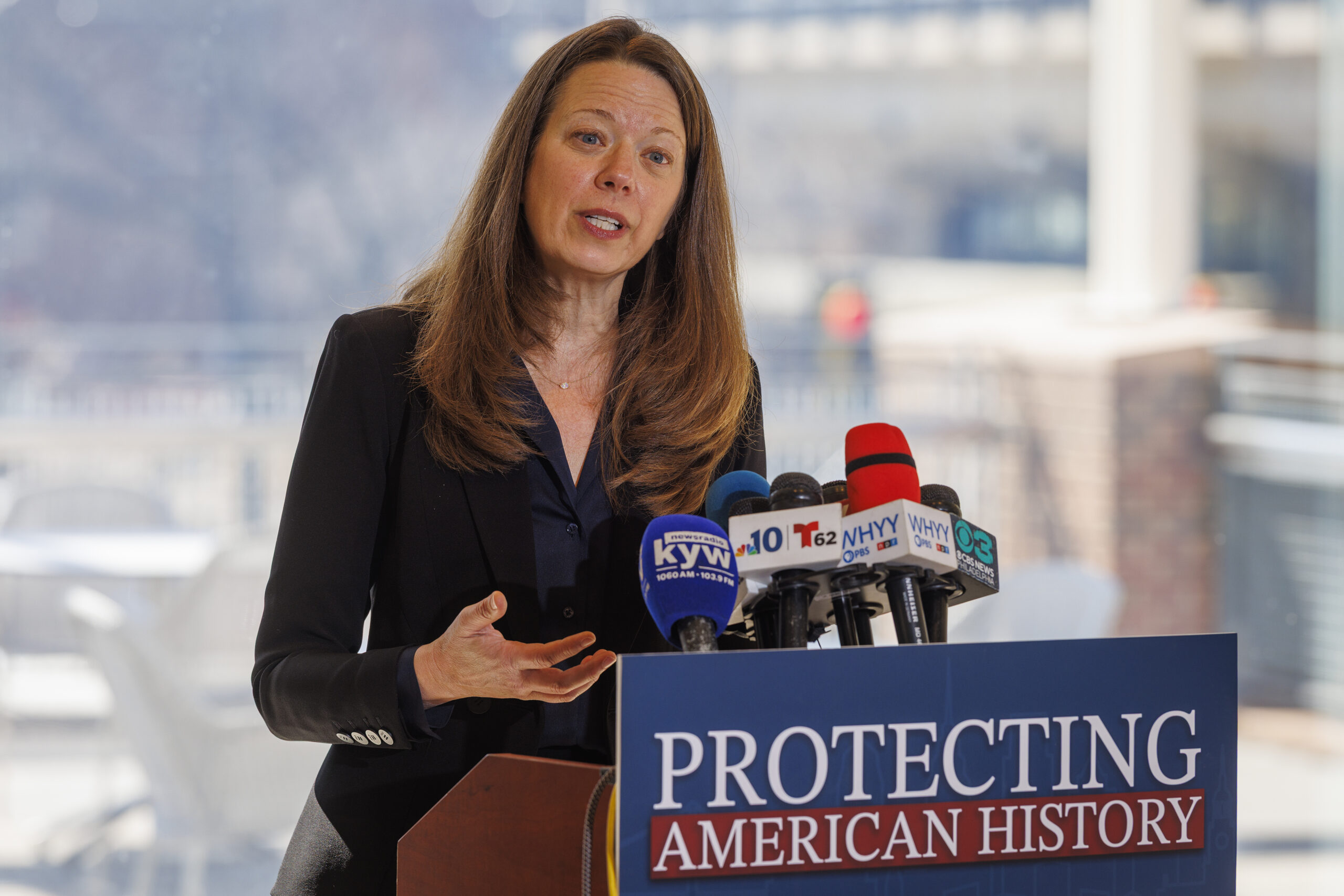
    U.S. Rep. Brendan Boyle (D, Philadelphia) announced legislation Friday that would permanently restore all exhibits to the President’s House Site that were removed by the Trump administration in January.

    The proposed Protecting American History Act comes as the future of the President’s House, which memorializes the nine people George Washington enslaved in Philadelphia, remains in limbo as a legal battle between the City of Philadelphia and the federal government continues to play out.

    “It is only dictatorships and communist countries that whitewash their history and give an official version, rather than the accurate version,” Boyle said during a news conference Friday. “Frankly, the most American thing in the world is to discuss and debate our nation’s history. It improves who we are as a people and where we’re going.”

    The National Park Service last month removed educational panels from the site under President Donald Trump’s executive order forbidding displays at national parks that “inappropriately disparage Americans past or living.”

    Some of that material was restored last week after a judge ruled in favor of the city, but those efforts were paused by a federal appeals judge while considering the Trump administration’s motion for a stay. The appeal of the lower federal court’s injunction that ordered them to restore the displays is also underway.

    “Court decisions alone are not enough… History should not depend on the whims of one federal judge. This issue is bigger than just one exhibit, as important as it is. This is about the history of our entire nation and our people,” Boyle told reporters Friday at the Independence Visitor Center.

    With Independence Hall towering behind him, Boyle said the bill calls for restoring all historical exhibits at the park, including the President’s House, to its status on Jan. 21, the day before the displays were taken down. It will also shield all historical displays at Independence National Historical Park, which Boyle’s district includes, from any future government censorship.

    The President’s House opened in 2010 after years of advocacy by local Black leaders. It juxtaposes the cruelty of slavery against the nation’s founding ideals.

    Michael Coard, an attorney and leader of Avenging the Ancestors Coalition, which helped shape the President’s House, said in a statement that his group is looking forward to working with Boyle on the legislation and will reach out to both Democratic and Republican lawmakers.

    “From day one, we have said this is not a partisan issue,” Coard said in a statement. “This is an American issue. The full history of our nation deserves to be told without censorship or political interference.”

    U.S. Rep. Brendan Boyle announces legislation called the Protecting American History Act at the Independence Visitor Center, Friday, Feb. 27, 2026.

    U.S. Reps. Dwight Evans and Mary Gay Scanlon, who also represent parts of Philadelphia, are the lead cosponsors on the legislation.

    The Democrats also joined Boyle last month in writing to Interior Secretary Doug Burgum and Acting National Park Service Director Jessica Bowron seeking answers about the President’s House by Jan. 30. As of Friday, the Trump administration officials had yet to respond, Boyle said.

    Boyle said that he has discussed this bill with Republican colleagues in the House, and they have expressed support, but it’s uncertain whether those lawmakers will publicly support his bill or whether it’ll receive a vote in the GOP-controlled chamber.

    In addition to lawmakers, Boyle’s bill is supported by the Rev. Beth Hessel, executive director of the Athenaeum of Philadelphia, a historic membership library, and Sean Connolly, executive director of Arch Street Meeting House, a Quaker historical site.

    Hessel and Connolly are two of the many Philadelphians who have joined the growing community activism to help preserve the story of the President’s House.

    Rev. Dr. Beth Hessel, executive director of the Athenaeum of Philadelphia, speaks in support of legislation from U.S. Rep. Brendan Boyle that would restore exhibits at the President’s House.

    The legislation focuses solely on Philadelphia, but the hope is, Boyle said, that it can serve as a model for other lawmakers throughout the country as the Trump administration attempts to rewrite history ahead of the nation’s 250th anniversary.

    Other historic sites and national parks have also had educational material removed in recent weeks, including the Grand Canyon, where the National Park Service took down signage about the mistreatment of Native Americans.

    Boyle said the present day is almost a full-circle moment from the country’s founding, comparing Trump to King George III.

    “Almost exactly 250 years ago, our founders were dealing with an out-of-control, dictatorial ‘Mad King.’ They opted on the side of honesty and truth and idealism… it is toward that more perfect union you still strive today.”

  • All charges dropped against personal injury attorney Leonard Hill in Center City shooting case

    All charges dropped against personal injury attorney Leonard Hill in Center City shooting case

    All charges were dropped against Leonard Hill, a prominent personal injury attorney accused of aggravated assault and related crimes for shooting and injuring a man during an altercation outside a Center City cigar bar in 2023.

    Prosecutors dropped the charges Friday morning shortly before Hill, 56, was set to go to a bench trial before Common Pleas Judge J. Scott O’Keefe.

    In addition to aggravated assault, Hill will not face charges of possessing an instrument of a crime, simple assault, recklessly endangering another person, and tampering with evidence.

    Aggravated assault, a felony and the most serious of those offenses, carries a sentence of up to 20 years in prison if convicted.

    Hill’s attorney, Fortunato N. Perri, declined to comment on the decision.

    The outcome marks a victory for Hill, who had previously hoped to resolve his case through the city’s diversion program rather than a courtroom.

    Last year, in a highly unusual move in an aggravated assault case, the District Attorney’s Office offered to admit Hill to the diversion program instead of going to trial.

    Had Hill participated, his case would have been expunged after completing a period of probation and community service, surrendering the legally owned firearm police recovered from his Bala Cynwyd home, and donating $25,000 to an anti-violence group.

    District Attorney Larry Krasner said in an interview at the time that request was “specifically my decision.” The district attorney called information about the case, some of it revealed after Hill’s arrest, both unique and highly unusual, though he declined to elaborate.

    A spokesperson for the District Attorney’s Office declined to comment Friday.

    After prosecutors sought diversion last February, Municipal Court Judge William Austin Meehan Jr. denied prosecutors’ request.

    The judge said Hill’s case was not appropriate for diversion, which is typically reserved for cases involving relatively minor offenses, and urged prosecutors to resolve the case through different means.

    It’s rare for those accused of shootings to be offered diversion, otherwise known as the Accelerated Rehabilitative Disposition. Several nonfatal shooting cases have ended with diversion since 2011: participants usually include those charged with nonviolent offenses such as DUIs, petty theft, or drug possession.

    Attorneys for Hill — whose billboards advertising his legal services feature prominently on Philadelphia’s freeway system — maintained their client acted in self-defense when firing twice at a man outside the Ashton Cigar Bar on the 1500 block of Walnut Street.

    The episode began when Hill and a bar manager tried to separate a woman and another man she said was intoxicated and accosting her, according to court documents.

    The confrontation spilled outside, where Hill and the man began to argue. Hill drew a firearm and fired once during the argument, the court documents said. Hill fired again as the man ran away, striking the 38-year-old in the calf.

    Hill left the scene and changed his clothes before returning, and did not tell officers who responded to the bar that he had fired shots, according to the documents. Investigators recovered video of the shooting and interviewed the bar manager, who identified Hill as the shooter but said he had fired in self-defense.

    Perri, Hill’s attorney, later said the man who Hill shot had been wielding a knife — a detail not included in his arrest paperwork — and said his client made a “split-second decision” to defend himself and others in a dangerous situation.

    Prosecutors’ decision to offer Hill diversion last year did not come without criticism.

    Keisha Hudson, head of the Defender Association of Philadelphia, told the Inquirer in February 2025 that she could not recall a single instance in which one of the organization’s clients was offered diversion after shooting someone.

    She said the case’s handling was emblematic of a justice system that treats poor defendants and those with money differently. She did not immediately respond to a request for comment Friday.

    Staff writer Ellie Rushing contributed to this article.

  • The NFL salary cap is going up $22 million per team this year. What does that mean for the Eagles?

    The NFL salary cap is going up $22 million per team this year. What does that mean for the Eagles?

    For a fifth straight year, the NFL salary cap is on the rise.

    The league informed its clubs on Friday that the base salary cap will rise to $301.2 million for the 2026 season, a $22 million increase from 2025’s figure. This is the first time in the history of the NFL salary cap that it has crossed the $300 million threshold.

    The salary cap has now risen 7.88% since last year’s league-wide limit of $279.2 million, marking the lowest rate of growth since 2020, when it rose 5.31% at the beginning of the COVID pandemic. Last season, the salary cap increased 8.69%.

    While the salary cap is rising, so are the Eagles’ cap charges in 2026. According to Over The Cap, the Eagles will be sitting at approximately $13.8 million in cap space come the start of the new league year on March 11.

    That rough figure does not include the space that will be required to sign the 2026 draft class, so the team’s effective cap space is likely lower.

    Thus, general manager Howie Roseman will have to do some maneuvering if he wants to make free-agent additions this offseason. He already tempered expectations regarding potential external free-agent signings this offseason on Feb. 20, stating that it’s the team’s priority to attempt to retain its own players instead.

    “It’s going to be hard for us, unless we make major moves to subtract, to really make some sort of splash move that costs money because we like the players we have drafted and want them as a big part of our next few years as well,” Roseman said.

    The majority of those homegrown players in line for imminent extensions are on defense, including Jordan Davis, Jalen Carter, Nolan Smith, and Moro Ojomo. Other defensive players on rookie deals, such as Quinyon Mitchell, Cooper DeJean, and Jalyx Hunt, will have to be addressed in the coming years.

    Carter and Smith, the Eagles’ 2023 first-round picks, are eligible to have their fifth-year options exercised this offseason. Now that the cap has been set, the NFL also reportedly shared fifth-year option amounts with clubs on Friday.

    By making two Pro Bowls, Carter has solidified himself in the highest salary tier, potentially earning himself a base salary of $27.1 million in 2027 if exercised. Smith is in the lowest tier at $13.8 million.

    Extensions for Jordan Davis (left) and Jalen Carter are expected to be on the Eagles’ radar.

    Jalen Hurts could also warrant an extension or a restructure, given that his cap hit jumps to $32 million in 2026 (approximately 10.2% of the salary cap).

    The Eagles have several pending unrestricted free agents that could be in line for paydays, either with the Eagles or elsewhere, including Jaelan Phillips, Dallas Goedert, Nakobe Dean, and Reed Blankenship. Given the team’s financial situation, it will be a challenge to retain any one of them.

    Still, Roseman emphasized that attempting to keep some of the Eagles’ pending free agents will be at the top of his to-do list this offseason.

    “I think from a big picture perspective, we want to build a team that every year has a chance to compete for championships, that drafts really well and signs their own players and just sporadically goes into free agency,” Roseman said. “That’s what we’re trying to do. And sometimes as much as you want to add from outside and you want to change it up, you got to make a decision to keep the players you know have played well and are part of your culture.”

  • Cheltenham is considering switching school photo companies after claims related to Epstein

    Cheltenham is considering switching school photo companies after claims related to Epstein

    The Cheltenham School District said Friday it’s considering a change in school picture companies following social media posts linking its current provider to a billionaire associated with Jeffrey Epstein.

    In light of news reports about Lifetouch, “the district is exploring all options for future student portrait services,” Superintendent Brian Scriven said in a message to the community Friday.

    A number of school districts nationally have canceled plans for photos by Lifetouch after posts connecting the company to Leon Black, former CEO of Apollo Global Management, who met regularly with Epstein, the Associated Press reported.

    Under Black’s leadership, funds managed by Apollo bought Lifetouch’s parent company, Shutterfly, in 2019.

    Posts outlining that link have spread across social media, some telling parents they should worry about where their children’s images are being stored.

    Lifetouch has said it has no connection to Epstein, and cited news reports that the company’s name hasn’t appeared in the Epstein files.

    “Claims of any relationship between Epstein and Lifetouch are completely false,” the company said in an FAQ on its website. It noted that Epstein died before Apollo acquired Shutterfly in September 2019, and said it has “never shared student images with any third party, including Apollo Global Management.”

    Cheltenham hadn’t received complaints from parents, but issued Friday’s message “proactively,” said spokesperson Kevin Kaufman.

    In the message, Scriven said Lifetouch would still take K-8 pictures this spring, but told parents they could opt out of photos by talking with their principal. He also pointed families to instructions on how to request that Lifetouch delete images of their children.

    “We understand that media reports such as these about business associations involving prominent individuals can raise questions for families and staff,” Scriven said.

    He noted Lifetouch’s stated commitment to student privacy, and said “at this time, there is no indication of any impact on student safety, district operations, or the services provided in our schools. Nevertheless, we are conducting appropriate due diligence consistent with policies.”

  • Jeffrey Epstein claimed he championed Penn’s ‘quantum gravity program’ — but he confused the university with Penn State

    Jeffrey Epstein claimed he championed Penn’s ‘quantum gravity program’ — but he confused the university with Penn State

    People mix up the University of Pennsylvania with Pennsylvania State University so often, alumni at the Ivy started making novelty T-shirts that read “Not Penn State.”

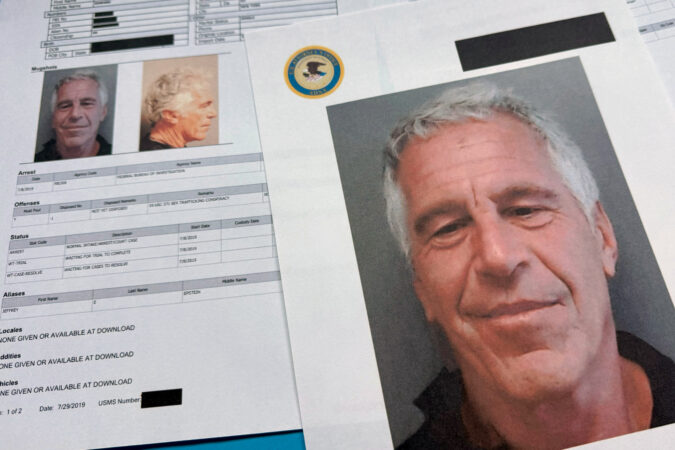
    You can add another name to the list of offenders: Jeffrey Epstein.

    The convicted child-sex solicitor was also a prolific donor to scientific research programs through the Jeffrey Epstein VI Foundation. A tranche of the disgraced financier’s emails released by the U.S. Department of Justice contains descriptions of dozens of pet projects the foundation supported at elite institutions.

    But one of them, the “Quantum Gravity Program” at the University of Pennsylvania, is something of a whodunit involving theoretical physicists in three different countries.

    Epstein was a self-proclaimed backer of “cutting-edge science,” and the Quantum Gravity Program is mentioned dozens of times in his personal records. The program and its affiliation with Penn are even referenced today on the Wikipedia page for his foundation.

    But there is no other evidence a program by that name ever existed at Penn.

    After a series of at-times-uncomfortable calls with confused spokespeople and academics, The Inquirer discovered that Epstein was, in fact, involved with financing researchers in the 1990s at a similarly named program based at Penn State — sometimes referred to as the “loop quantum gravity program.”

    A spokesperson for the state-funded university said Epstein’s name was attached to a 1990s grant made through an intermediary nonprofit in support of former PSU physics professor Lee Smolin, who helped lead the loop quantum gravity program and maintained ties with Epstein for years afterward.

    German theoretical physicist Olaf Dreyer sought out a doctorate at PSU at that time in hopes of working on the loop gravity program, and said Epstein’s decades-old claim that he had supported such a program at Penn was a classic case of mistaken academic identity.

    “The ‘quantum gravity program’ is the program at Penn State,” Dreyer said via email Thursday from Frankfurt, Germany. “It was the loop quantum gravity program that brought me to Penn State.”

    Dreyer said that Smolin helped lead the program during his time at the state university, and that the scientist had procured funding from Epstein for the Penn State program.

    “Smolin had the connections to Epstein,” he said. “Lee stayed connected to Epstein long after Epstein‘s conviction.”

    Jeffrey Epstein at a dinner he hosted at Harvard University on Sept. 9, 2004 with Harvard Professors Alan Dershowitz, Stephen Pinker, Princeton Professor Robert Trivers, Larry Summers, E.O. Wilson,, Marvin Minsky, Lisa Randall, Martin Nowak. and Alan Guth. Epstein is in the back row, second from the right. Lee Smolin, a former PSU physics professor, is in the middle row, far left.

    A spokesperson for Penn State cited a publicly available research paper from 1999 that showed Smolin’s quantum gravity research was funded by the “Jesse Philips Foundation.” But after reviewing the university’s grants database at The Inquirer’s request, the spokesperson confirmed that Epstein’s name appeared on paperwork related to that foundation gift.

    The Jesse Philips Foundation was created by the eponymous Dayton industrialist, who died in 1994. After his death, his widow, Caryl Philips, took over the foundation, which is now known as the Jesse and Caryl Philips Foundation. A request for comment from the foundation was not immediately returned.

    A record of another philanthropic donation made in 1998 was described as coming from “J. Epstein Foundation and Jesse Philips Foundation.” And Epstein’s emails indicate Caryl Philips was in contact with both Epstein and his confidant, convicted child sex trafficker Ghislaine Maxwell, as late as 2010.

    Dreyer said it was his understanding that Smolin was being funded by Epstein directly.

    “He used money from Epstein to pay for grad students,” Dreyer said.

    Reached by email, Smolin confirmed Epstein was behind the foundation grant at the time, which allowed him to leave PSU to pursue his research abroad. “These arrangements had nothing to do with UPenn,” he said.

    Smolin’s ties to Epstein are now well documented. He was quoted praising Epstein’s support for his research on an Epstein Foundation website.

    “I was extraordinarily fortunate to encounter someone who asked me, ‘What would you really like to do? What is your most ambitious and crazy idea?,’” the quote reads. “Then, unexpectedly and generously, Jeffrey Epstein gave me the chance to try to make good on my answers.”

    After his time at PSU, Smolin went on to cofound the Perimeter Institute for Theoretical Physics, in Toronto, Canada, now one of the top research programs for theoretical physics in the world. Dreyer followed the physicist to the Perimeter Institute after obtaining his doctorate in 2001, and recalled Smolin taking a group photo of his team to send to Maxwell for inclusion in Epstein’s now-infamous 50th “birthday book.”

    “You can imagine how happy I am to be included in that book,” he joked.

    Newly released emails from the U.S. Department of Justice (DOJ) disclosed Smolin had kept up a relationship with the financier during this time — and well after Epstein’s 2008 conviction — which led to his ouster in February from the Perimeter Institute.

    Epstein’s professed involvement at Penn came as a shock to administrative faculty and longtime physics professors at the West Philadelphia university.

    The financier first alluded to the supposed Penn program in a rambling email to his personal assistant in 2006, according to emails released as part of the Epstein Transparency Act. He later commissioned a more detailed description of the foundation’s activities, including a mention of the Penn program on an official philanthropic website that debuted in 2010.

    The original text, which was often appended to Epstein’s curriculum vitae ahead of speaking engagements, was likely written in the 2000s by literary agent John Brockman, according to later email exchanges attributing the writing to him. Brockman, who could not be reached for comment, helped Epstein cultivate scientific relationships and promote his foundation.

    Epstein’s description of his foundation’s activities underwent several rewrites or revisions, including one iteration alluding to the foundation supporting science programs at a “Penn University” — which also does not exist.

    While Epstein’s personal records mention the program at Penn dozens of times, a Penn spokesperson said the university was unfamiliar with Epstein’s long-claimed affiliation until the DOJ record release in December.

    “Penn is not aware of a so-called ‘Quantum Gravity Program’ referenced in Jeffrey Epstein’s bio and has no records of his involvement,” said university spokesperson Matthew Grossman in a statement.

    Burt Ovrut, a theoretical physicist who helped lead the physics department at Penn, said he would have known if such a program ever existed.

    “I would have heard of this,” said Ovrut, who remains a professor emeritus. “We don’t tend to have private grants in theoretical physics.”

    The fallout from the Epstein saga has ensnared numerous other universities with ties to the billionaire investor, rocking institutions like Princeton, the Massachusetts Institute of Technology, and Harvard, where the Epstein scandal led to resignation of former president Larry Summers, who was raised in Penn Valley, a Philadelphia suburb.

    The lure of Epstein’s wealth and interest in obscure academic fields was powerful.

    While Penn had no official relation with Epstein’s foundation, its staffers were not immune to his temptations. In 2012, for instance, a Penn professor wrote to Epstein seeking funding for immersive research on African hunter-gatherer societies. There was no response.

    Dreyer, the German physicist, also solicited Epstein for his own research funding in 2009 on the advice of a colleague. While he, too, was never funded, he regrets that he did not do his own due diligence on Epstein.

    “If only I had done some research,” he said.

    Editor’s note: This article has been updated to include a comment from Smolin regarding the grant.

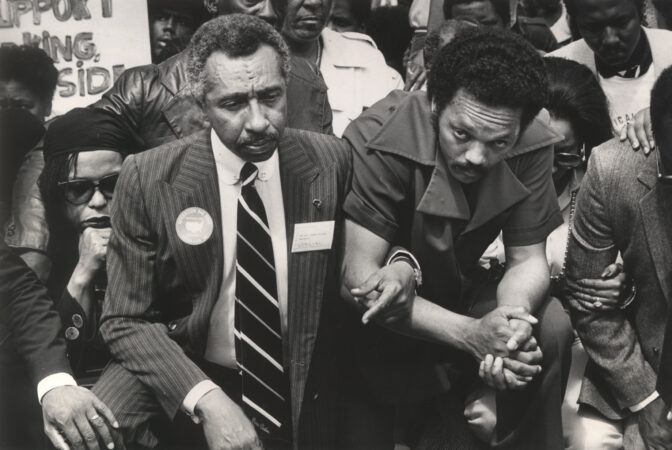
  • ‘Our heroes are dying.’ Why Jesse Jackson’s death leaves a void.

    ‘Our heroes are dying.’ Why Jesse Jackson’s death leaves a void.

    In the early-morning hours after the Rev. Jesse Jackson died on Feb. 17, his family called another prominent pastor for prayer and solace. “A mighty lion has passed,” Bishop William Barber recalled the family saying.

    “I’ve been thinking about that imagery,” said Barber, who leads Repairers of the Breach, an organization that aims to bring moral and religious language to causes such as safeguarding voting rights and alleviating poverty. “Because lions, they protect the pride, but they also expand the territory of the pride.” And Jackson expanded the notion of civil rights in America, he said: from the Black community to the full spectrum of people seeking justice.

    Thousands are expected to pay respects Friday as Jackson’s remains lie in repose at Rainbow/PUSH headquarters in Chicago, following the decision by House Speaker Mike Johnson (R., La.) to decline to allow Jackson to lie in honor at the U.S. Capitol.

    Jackson’s death at age 84 comes at a perilous time for the civil rights crusade he helped lead for decades. Most of his iconic contemporaries are gone as President Donald Trump attacks their hard-fought principles, declaring war on diversity, equity, and inclusion initiatives while the foundational achievement of the civil rights movement, the 1965 Voting Rights Act, may be on the verge of being overturned by the U.S. Supreme Court.

    “Our heroes are dying, and the question has to be asked: Who comes next or what comes next?” said author and political commentator Bakari Sellers. “This new era of regression, this new era of Trumpism, has shown clearly that … our new leaders [are] not able to meet the moment.”

    It’s a major test of the movement in a fragmented landscape of social media and political division with no clear successor generation to rally a response. The wellspring that produced leaders such as Jackson and the Rev. Dr. Martin Luther King Jr. — the Black church — no longer plays the same role. Institutional religion doesn’t have the authority or power it once did in the United States, experts said, and the religious right for decades has been more loudly — and successfully — merging its view of Christianity and politics.

    “The Black church isn’t as important as it was. It’s harder to have a figure come out of that tradition and command the power and respect that Jesse Jackson did,” said Claflin University historian Robert Greene II. “It’s hard to imagine someone today being able to enter the political realm already seen as a moral authority.”

    If there is to be a robust defense of civil rights, many believe it will come from Jackson’s legacy of expansion — using the Voting Rights Act to get more people of color into voting booths and into elected office; broadening the definition of civil rights to include all marginalized communities, such as LGBTQ people and people with disabilities, in a common cause; and pushing beyond political rights to economic rights.

    In some ways, the fact that there is no obvious individual to take the mantle is part of Jackson’s legacy, say civil rights activists, elected leaders and scholars. He advocated for leaders at all levels of government and activism carrying out different parts of the mission.

    “We have democratized leadership in the civil rights movement and spread it throughout the country,” Virginia lawmaker Don Scott said.

    Scott said his own life found a new purpose when he was a college sophomore in 1984 and met Jackson, who was running for president. Forty years later, Scott became the first Black person elected speaker of the Virginia House of Delegates.

    “That’s the legacy of Jesse Jackson — he empowered a whole lot of folks to lift up their voice,” Scott said.

    Bryan Stevenson, a lawyer and founder of the Equal Justice Initiative, said it’s important to remember the historical arc of the civil rights movement. After the Civil War, Black men had a brief moment when they were able to participate in democracy. Then Jim Crow swooped in and disenfranchised Black voters in the South for more than half of the 20th century.

    During that time, without access to elected office, Black Americans looked elsewhere for leadership and resistance. Black churches filled that void, giving rise to the civil rights movement, Stevenson said, exemplified by King and other figures — such as Claudette Colvin, John Lewis and Fannie Lou Hamer — who blended the tone of the pulpit with politics.

    The Rev. Al Sharpton speaks on the final day of the 2024 Democratic National Convention in Chicago.

    Younger generations of pastors — including those from more conservative traditions — were “inspired to be not just pastors but prophets as well,” said Tyler Burns, a Florida pastor and director of the Witness, a multimedia organization aimed at elevating the voices of Black Christians.

    Today there are some figures who echo Jackson in their focus on combining Black Christianity and politics to serve the disenfranchised, including U.S. Sen. Raphael G. Warnock (D., Ga.) and Barber, a North Carolina organizer who founded the Center for Public Theology & Public Policy at Yale University.

    But Jackson was one of a kind, said Jemar Tisby, a historian, writer, and podcaster on race and religion. He represented “the longer Black freedom struggle,” Tisby said, and harnessed a blend of charisma, ambition, and eloquence to an unusual moment of political opportunity.

    The Voting Rights Act of 1965, and Jackson’s immediate recognition of the door that it opened, “radically changed the opportunity for Black leadership,” Stevenson said. Jackson was particularly effective at voter registration, preaching the power of politics.

    “It’s a different landscape today as a result,” Stevenson said.

    The Supreme Court has already weakened much of the 1965 Voting Rights Act and will rule on whether to strike down its last major pillar in the coming months. The court could further limit the use of race in drawing legislative maps, which would most likely lead to a decline in the number of minorities holding public office.

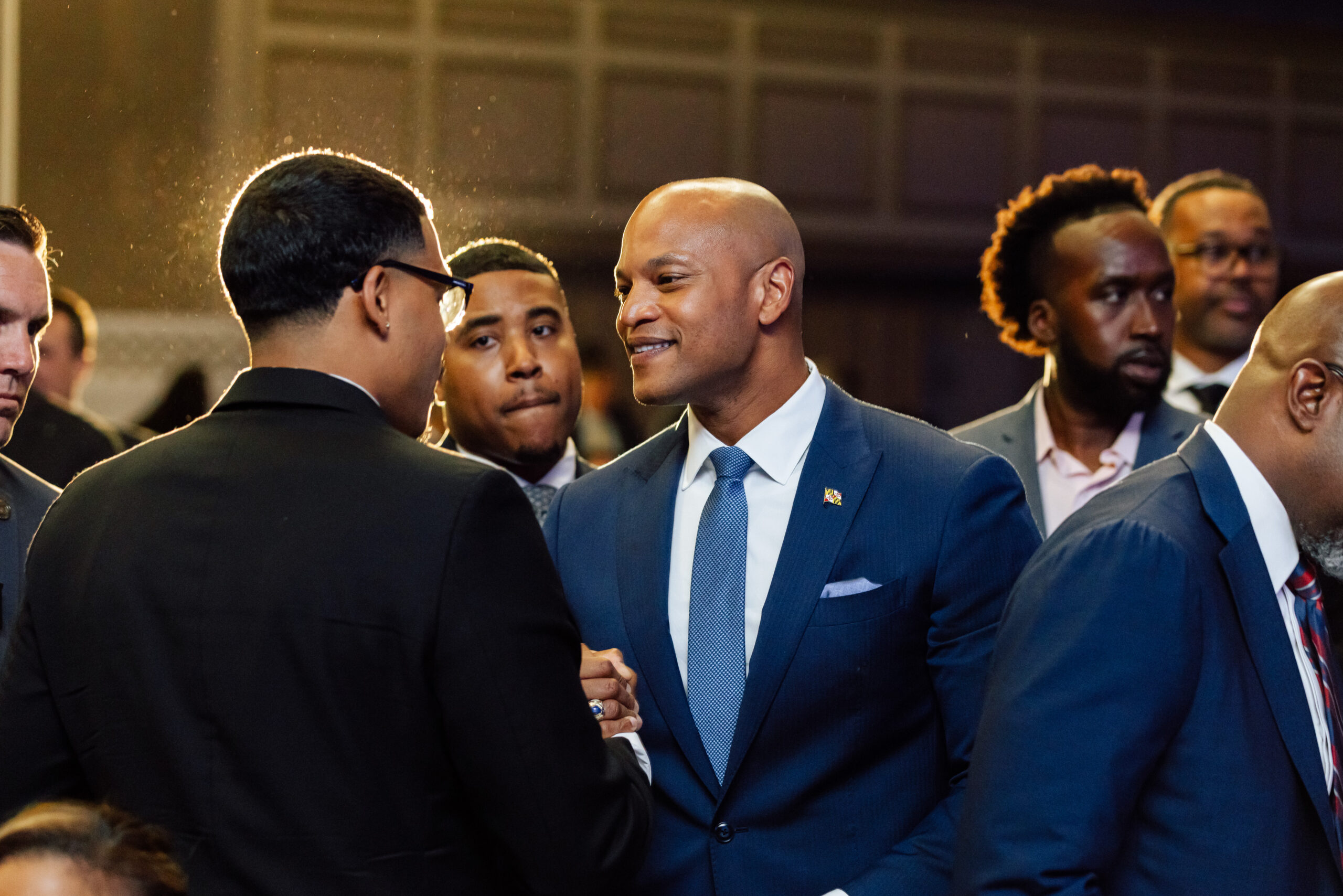
    Maryland Gov. Wes Moore, the state’s first Black governor and among only three African Americans ever elected governor of any state, said that “an attack on the VRA is in many ways an attack on decades of progress.”

    Maryland Gov. Wes Moore speaks with supporters at a Democratic Party gala in Baltimore last June.

    Jackson’s pivot after the passage of the law, which helped Black officials win congressional and legislative seats, spurred the movement’s success, Moore said. “He was able to make the transition from demanding change to saying, ‘I want to be one of the people to help make it,’ right? Because he understood that part of the power of the civil rights movement was the fact that they were able to get into rooms.”

    The Brennan Center for Justice at the NYU School of Law has tracked efforts to roll back access to the ballot box around the country, including states imposing voter ID laws, making registration more difficult, and aggressively purging voter rolls. Those actions are part of what Georgia politician Stacey Abrams calls “the exercise of diminishing democracy … [and] a wholesale attack on the pluralism of America.”

    Abrams, a former Georgia state lawmaker and gubernatorial candidate, said Jackson’s legacy is key to fighting back. His Rainbow/PUSH Coalition framed the fight for civil rights broadly, as “how do we make America meet its obligations to all its people,” Abrams said.

    That not only brought more marginalized groups into the struggle, she said, but it expanded the idea of civil rights beyond the political realm. “Now that we had voting rights and civil rights, we also had to have access to economic rights,” Abrams said.

    For all the years Jackson carried on his fight, “the through line was always that he worked to bring more people into the process … [so that] as many people as possible believe they have the right to participate,” she said.

    Former Richmond Mayor Levar Stoney — who, until term-limited out of office in 2025, was part of a new generation of young Black mayors around the country — said the effectiveness of Jackson’s work can be seen in state and local offices in the South, where minorities and women have made huge strides in representation.

    The phenomenon cuts across generations, Stoney said, pointing out that in Virginia, 82-year-old L. Louise Lucas is the first Black woman to serve as president pro tempore of the state Senate; Scott, 60, is the first Black speaker; and Jay Jones, 36, is the first Black person elected as the state’s attorney general.

    Apart from President Barack Obama, Stoney said, “I can’t foresee us ever looking to one singular leader.” He added, “There’s a collective of leaders now, [and] we expect to be represented by someone who looks like us.”

    What might be lost, though, is the unifying emotional resonance of a figure such as Jackson. One element that gets overlooked, Sellers said, is that Jackson, King, and other leaders of the day “were more patriotic than most.”

    They were able to “look at this country and call out its failures, call out its broken promises, and then try to reimagine her for what she should look like, which is an inclusive society built in the image of us all.”

    Jackson was able to lend that stature to others, which is what several remembered this week in the lead-up to his memorial services.

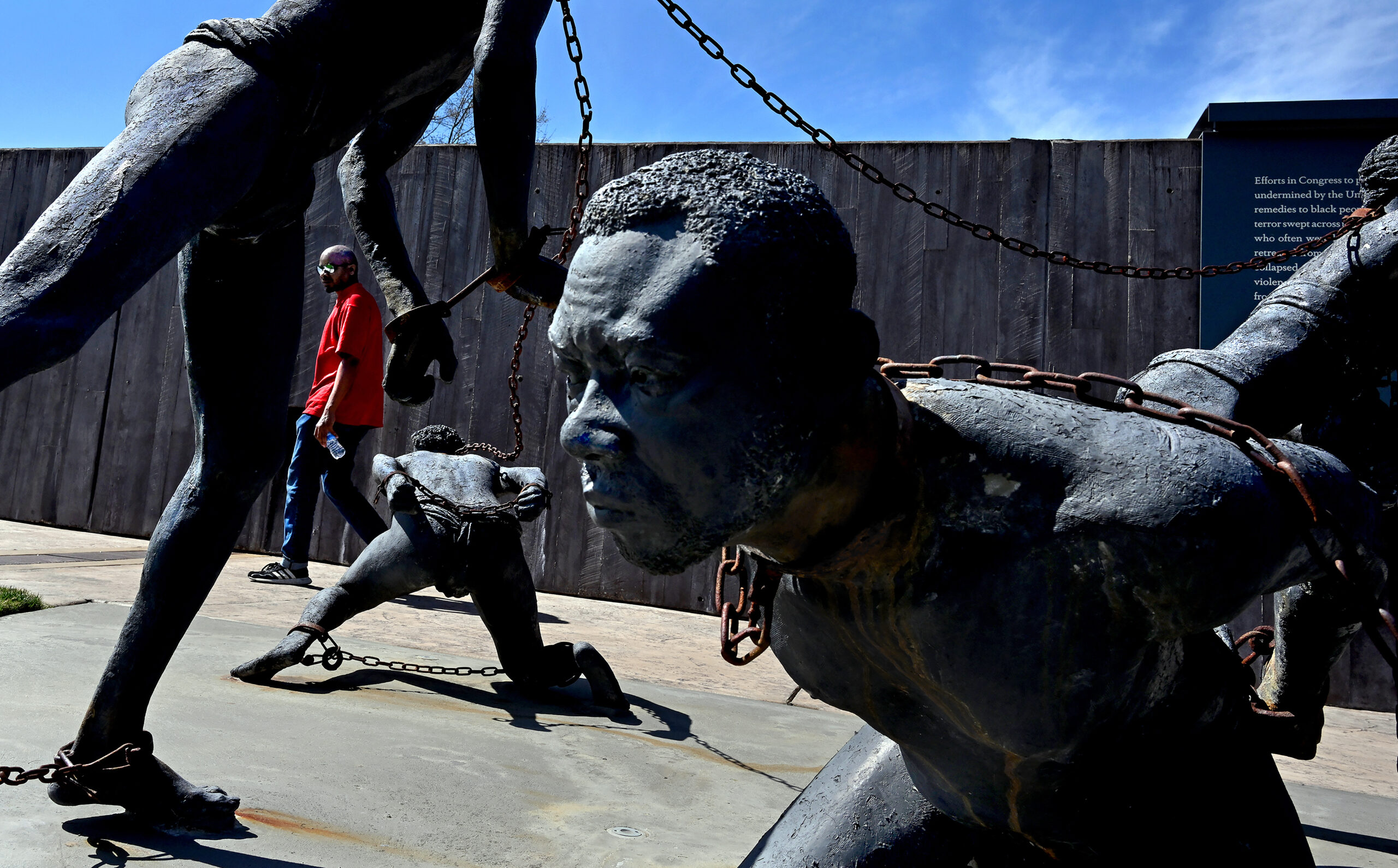
    Stevenson said he regularly conferred with Jackson in creating the National Memorial for Peace and Justice in Montgomery, Ala., which recognizes more than 4,000 African Americans lynched during the Jim Crow era. At the dedication for an affiliated memorial in 2024, Jackson had traveled to the ceremony but by then was using a wheelchair and had difficulty communicating. As Stevenson spoke before the crowd, he looked out and saw Jackson, who held his fingers in the shape of a heart.

    A work by Ghanaian artist Kwame Akoto-Bamfo depicting enslaved people in bondage is on display at the National Memorial for Peace and Justice in Montgomery, Ala.

    “It was so moving to me,” Stevenson said. “And I told him, you know, you had me almost in tears.”

    Abrams recalled the night in 2018 when it became clear that she had narrowly lost the election for Georgia governor. Jackson was on hand as she prepared to concede before supporters, and some of her staff tried to get him to move into a VIP area backstage. He refused.

    “He said: ‘I want to be here when she comes downstairs. I know what [defeat] feels like, and I need her to know that the work she’s done continues and she should still be proud,’” Abrams said.

    Barber said he intends to honor Jackson’s legacy by convening a group in the coming weeks to study his speech at the 1988 Democratic convention — when his performance in the primaries brought him closer to the presidential nomination than anyone thought possible — to galvanize a new voter movement.

    In the speech, Jackson called for unity to “keep hope alive,” and said he cherished America not as a uniform blanket but as a quilt.

    “My prayer and hope,” Barber said, “is that we’re working toward that end and bringing folk together. And that the dying of Jesse will not cause us to just say, ‘Woe is us’ and ‘Oh, just look at what he did.’ Because commemoration is not how you remember people like him. You remember people like him by engagement. By recommitting yourselves.”

  • US wholesale prices arrive hotter than expected, up 0.5% from December and 2.9% from a year ago

    US wholesale prices arrive hotter than expected, up 0.5% from December and 2.9% from a year ago

    WASHINGTON — U.S. wholesale prices came in hotter than expected last month.

    The Labor Department reported Friday that its producer price index, which measures inflation before it hits consumers, rose 0.5% from December and 2.9% from January 2025. Economists had forecast a 0.3% increase for the month and 1.6% year over year, according to a survey by the data firm FactSet.

    Excluding food and energy prices, which bounce around from month to month, so-called core wholesale prices rose 0.8% from December and 3.6% from January 2025 — both higher than forecasters had expected. The year-over-year increase in core prices was the biggest since March of last year.

    Driving the increase was an uptick in the wholesale price of services, led by higher profit margins for retailers and wholesalers. The increase suggests that companies are passing along the cost of President Donald Trump’s tariffs to their customers.

    “Retailers’ tariff bill has come down marginally in the last few months, but they have continued to lift their selling prices,” Samuel Tombs, chief U.S. economist at Pantheon Macroeconomics, wrote in a commentary.

    And core good prices climbed 0.7% from December and 4.2% from January 2025 on hefty increases in the prices of cosmetics, pet food, some metals, and metal-cutting machinery.

    Energy prices were down as gasoline prices dropped 5.5% from December and 15.7% from a year earlier. Wholesale food prices also fell.

    The producer price report comes two weeks after the Labor Department reported that consumer prices rose just 2.4% last month compared to a year earlier, closing in on the Federal Reserve’s 2% target.

    Economists had worried that Trump’s double-digit taxes on imports would drive inflation higher. Their impact has so far been more modest than expected — although inflation remains higher than the Fed would like.

    Wholesale prices can offer an early look at where consumer inflation might be headed. Economists also watch it because some of its components, notably measures of health care and financial services, flow into the Fed’s preferred inflation gauge — the personal consumption expenditures, or PCE, price index.

    In December, PCE inflation rose faster than economists had forecast, climbing 2.9% from a year earlier — biggest such increase since March 2024.

    The Fed cut its benchmark lending rate three times last year to support a sluggish job market. But the Fed been reluctant to cut further until it sees what happens to inflation. After Friday’s producer price report, economist Ben Ayers of Nationwide said, “We expect the Fed to remain on pause during its upcoming March meeting.’’