Blog

  • Three Flyers questions to ponder ahead of the NHL trade deadline

    Three Flyers questions to ponder ahead of the NHL trade deadline

    NEW YORK ― The Flyers’ season is on a precipice.

    Although they didn’t gain any ground in the playoff race, as the New York Islanders and Boston Bruins each won, the Flyers remain in the hunt with their 16th comeback win of the season. Trailing 2-0, they beat the Eastern Conference’s worst team, the New York Rangers, 3-2 in overtime on Thursday.

    As the minutes tick off to the NHL trade deadline next Friday at 3 p.m., here are three questions to ponder.

    Inconsistency continues to plague Flyers goaltender Sam Ersson.

    Will the real Sam Ersson please stand up?

    The Flyers’ goalie situation has been a mix of emotions for years, and for most of this season, there has been a question mark around the play of Sam Ersson. No longer the Flyers’ No. 1 goalie, can he even be the Flyers’ No. 2? Inconsistency has plagued the Swedish netminder.

    In the first two minutes of the game, Ersson made two ridiculous saves. First, he robbed Rangers defenseman Adam Fox with the glove after a neutral zone turnover led to a four-on-one with just Travis Sanheim back. Travis Konecny tried to hit Christian Dvorak, but the puck was picked off by Mika Zibanejad, who found Fox charging backdoor less than 30 seconds in.

    Around a minute later, he stopped a Noah Laba shot from above the circle, which he shot as Emil Andrae knocked him down. That wasn’t the big save; that was two seconds later when Brendan Brisson drove around Denver Barkey to get the rebound. Everyone looked behind Ersson — including Ersson — but he had made the save.

    “I think the first 10 minutes of the first period, we were kind of running around, just giving them pop turnovers and ‘Biggie’ made a ton of great saves for us,” said forward Trevor Zegras.

    But then, around the halfway mark of the period, Ersson allowed a weak goal to Sam Carrick. The forward sent a quick turnaround shot on goal from the half-wall that went five-hole on the Swedish netminder. And in the second period, Alexis Lafrenière scored to make it 2-0 — although the 2020 first-overall pick was left wide-open after Noah Cates lost him in the corner.

    Ersson then clamped down and stopped the next 15 shots on goal — each save bigger than the next. He tracked the puck well, kicked the pad out, flashed the leather, and as coach Rick Tocchet said, he battled.

    “He dug in there. … And even going down 2-0, this is where you’ve got to have that resolve. We’ll kind of give him some more of that confidence; we’ll get him in there again, and we’ll see how he goes,” Tocchet said.

    Is Matvei Michkov poised for another strong finish to the season?

    Can Matvei Michkov find his joy?

    Like Ersson, questions have swirled around the young Russian winger, too. For Michkov, those are about his conditioning, his production, his ice time, and his lack of overtime play.

    There’s a good chance a lot of those were answered on Thursday.

    Last year, after the 4 Nations Face-Off Tournament break, Matvei Michkov scored 10 goals and 27 points in the final 25 games of the season. Two games into the final 26 this season, he has two goals — both coming against the Rangers.

    His first goal cut New York’s lead in half when he scored on the power play midway through the second period. Owen Tippett had the puck along the left wing boards, evaded New York defenseman Will Borgen, and passed the puck to Cates in the left circle. The centerman then sent it quickly to Michkov sitting backdoor at the right post for the slam-dunk goal past Igor Shesterkin.

    It was his 14th goal and third on the power play this season.

    “I thought the one he scored for us, the first one, was a timely one, and it kind of helped us calm down and get us back into it,” forward Travis Konecny said. “And, it was good, yeah, he’s playing great. He looked fast. He looked confident with the puck.”

    After doing two-a-days off the ice for seven days during the break — one session focused on strength and another on conditioning and stamina while he stayed off the ice — Michkov looked stronger. It was notable in the dwindling minutes of the third period, when he made a move between his own legs to get around Fox and drive to the net. The only problem? He then continued into his countryman, Shesterkin, and was called for goaltender interference with nine seconds left in regulation, with the score tied.

    His teammates killed off his penalty, and Michkov, who entered the game with the 10th most minutes in the extra session, finally got some time — granted, it was four-on-four. There was a mad scramble for the puck after Ersson stoned Zibanejad and tried to cover up, but the puck eventually popped out to Sean Couturier in the Flyers’ end, and he fed Michkov.

    The forward carried the puck down into the zone and blew by J.T. Miller — yes, his skating stride looked great, unlike an earlier overtime session this season. And yes, he carried it down the left side two days after he said he was “happy” playing on the right side — before beating Shesterkin again. After scoring three overtime game-winners last season, he got his first of the year on Broadway to give the Flyers their third overtime win in 11 games this season.

    “Anytime he gets a good look like that, when you can get him clear cut — you watch him in practice — he’s going to have a pretty good chance to score a goal,” said Konecny, who seemed to offer words of encouragement to Michkov after the game-winner.

    Added Tocchet: “That was a [heck] of a goal, that second goal; Shesterkin’s a [heck] of a goalie. He went five-hole there. He sold it, you know, that’s the stuff that he can do … He had some confidence yesterday [against the Washington Capitals] so he’s getting some confidence here.”

    Will Flyers defenseman Rasmus Ristolainen be on the move by the trade deadline?

    Where do things stand one week from the trade deadline?

    Two games into their return, and like most of this season, the Flyers struggled to put in a complete 60-minute effort. On Wednesday in Washington, D.C., they came out jumping but couldn’t sustain it. On Thursday, the Rangers had the energy early as they skated in their first game back.

    It makes it hard to gauge if the Flyers should be sellers or buyers, but they do still trail by eight points in the race for the final Metropolitan Division spot and the last wild card.

    But as Konecny said, they “just kept battling back,” like they’ve done all year. The game marked the 39th time the opposition scored first.

    “I guess where we’re at in the standings, the last 25 I guess — yesterday, 26 — are all playoff-type games for us, and we got to do something special down the stretch to get in,“ Zegras said.

    ”And I think we all know that. Yesterday, I thought, for the most part, played a good game, just gave up a couple of weak-side goals that we’ve been trying to clean up.”

    The scouts were out, however, for the last two days. On Wednesday in Washington, D.C., eight teams were represented, with one being the Dallas Stars, a team rumored to be interested in defenseman Rasmus Ristolainen. The Rangers do not identify team affiliates for scouts who are present at home games, and while there were many, The Inquirer could identify a scout from the Vegas Golden Knights, New York Islanders, Tampa Bay Lightning, Anaheim Ducks, Edmonton Oilers, and Winnipeg Jets.

    Not everyone was there to see Ristolainen, and several are regulars, but ‘tis the season.

  • One year of inspections at Jefferson Abington Hospital: December 2024 – November 2025

    One year of inspections at Jefferson Abington Hospital: December 2024 – November 2025

    Jefferson Abington Hospital was cited by the Pennsylvania Department of Health for sanitation problems in its trauma center last year.

    The incident was among more than a dozen visits health department inspectors made to the Jefferson Health facility between December 2024 and November 2025.

    Here’s a look at the publicly available details:

    • Dec. 4, 2024: Inspectors followed up on a July 2024 citation for failing to report an incident in which a mental health patient ran away from the hospital and security staff left the hospital’s campus to apprehend them.
    • Dec. 23: The Joint Commission, a nonprofit hospital accreditation agency, renewed the hospital’s accreditation, effective September 2024, for 36 months.
    • Jan. 16, 2025: The hospital was cited for sanitation issues, including several dirty triage bays, a brown substance under a patient’s head and on the floor, and a black, sticky substance on a hospital bed wheel. Administrators retrained maintenance workers on cleaning protocol and assigned additional staffers to ensure daily cleaning.
    • Jan. 16: Inspectors came to investigate a complaint and for a monitoring survey but found the hospital was in compliance. Complaint details are not made public when inspectors determine it was unfounded.
    • Jan. 28: Inspectors visited for a mental health monitoring survey and found the hospital was in compliance.
    • Feb. 19: Inspectors came to investigate a complaint but found the hospital was in compliance.
    • March 12: Inspectors came to investigate a complaint but found the hospital was in compliance.
    • April 17: Inspectors followed up on the January citation regarding sanitation issues and found the hospital in compliance.
    • May 29: Inspectors came to investigate two complaints but found the hospital was in compliance.
    • July 16: Inspectors came to investigate a complaint but found the hospital was in compliance.
    • Sept. 5: Inspectors came to investigate a complaint but found the hospital was in compliance.
    • Sept. 18: Inspectors came to investigate a complaint but found the hospital was in compliance.
    • Nov. 5: Inspectors came to investigate a complaint but found the hospital was in compliance.
  • Jeff Galloway, Olympic runner who inspired ‘Jeffing’ technique, has died at 80

    Jeff Galloway, Olympic runner who inspired ‘Jeffing’ technique, has died at 80

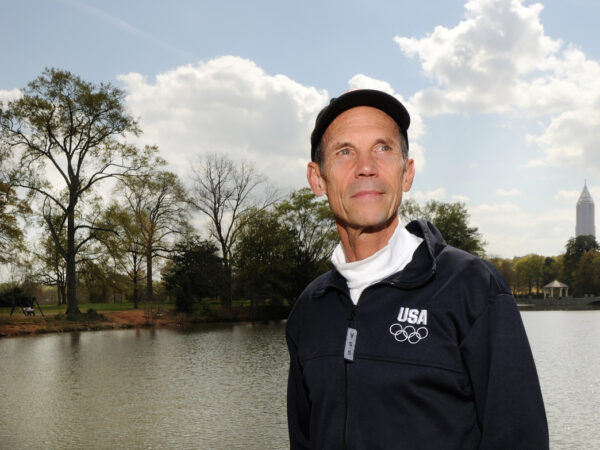
    Jeff Galloway, an Olympic distance runner who inspired hundreds of thousands of Americans to exercise by extolling the virtues of taking walking breaks during races — or “Jeffing,” as adherents called his signature method — died Feb. 25 in Pensacola, Fla. He was 80.

    Mr. Galloway died in a hospital after suffering a stroke, his son Westin Galloway told the Washington Post.

    Mr. Galloway described himself as an average runner as a teen who enrolled in his first marathon in Atlanta “because of the size of the trophy” and, by persistence more than talent, ascended to the U.S. Olympic team. For the 1972 Olympics in Munich, he qualified for the 10,000-meter race and was an alternate for the marathon. The next year, he set a U.S. record in the 10-mile road race.

    Despite reaching the peaks of his grueling discipline, Mr. Galloway became most widely known for a training program with an everyman philosophy that spoke to reluctant runners and preached, of all things, walking.

    Mr. Galloway began pioneering what he called a “Run Walk Run” technique — taking breaks to walk during training runs and even races — in the 1970s as he taught running to beginners. He championed the method as a way to reduce injury, control fatigue and, most importantly, motivate newcomers to “get off of the couch and run.”

    Legions of new runners did just that. Mr. Galloway’s philosophy, espoused in books and an online training program, has reached more than a million people, his organization has said, and changed how athletes approach distance running.

    Mr. Galloway had “the ability to empower runners, or people that didn’t even see themselves as runners,” his son Westin said, “giving them the space to be the athlete or the person that they never thought they could be through the benefits of exercise.”

    John Franks Galloway was born in Raleigh, N.C., on July 12, 1945. His father was an educator and a sailor in the Navy; his mother worked at a private school in Atlanta that his father founded.

    Mr. Galloway, who grew up in Atlanta, was not initially a prodigious running talent. He enrolled in a track conditioning program in eighth grade because his school required sports participation each quarter and the track coach was rumored to be the most lenient of the sports instructors, he wrote on his website.

    “I can identify with the struggles of sedentary, overweight adults and kids, for I was one,” Mr. Galloway wrote.

    Two months of running through forest trails got him hooked. Mr. Galloway qualified for the state high school championships in Georgia his senior year, then attended Wesleyan University, where he studied history and was an all-American runner.

    Mr. Galloway served for three years in the Navy after college, a tour that sent him to Vietnam. Upon returning to the United States in 1970, he enrolled in graduate school at Florida State University with the goal of qualifying for the upcoming Olympics.

    Even after years of training, it felt like a long shot, Mr. Galloway wrote. On a 90-degree summer day at the 1972 national championship in Seattle, he squeaked onto the 10,000-meter Olympic team in a close race — perhaps because he took it slow.

    “Many of the runners had started too fast, and I did not,” Mr. Galloway recalled on his website. “I found myself catching up to the stragglers, passing one, then another.”

    As a fitness boom took hold in the U.S. after the Munich Olympics, Mr. Galloway founded a running store, Phidippides, opened vacation fitness camps, and wrote several books about running. “Jeffing,” or “the Galloway method,” became his most famous innovation.

    At running clinics across the country, Mr. Galloway promoted his framework. Giving runners permission to take walking breaks while training encouraged beginners, he said, and the staggered runs could help even veteran marathoners improve their times. His charm and relentless focus on reaching novice runners set him apart from other instructors, Westin Galloway said.

    “A lot of coaches were very focused on faster times and pushing people’s bodies to do the best that they could,” he said. “And he kind of looked at it from the other perspective of, running has an amazing way of changing a person’s life, and if he could get more people out there doing it, the world would be a better place.”

    Mr. Galloway remained a fixture of the running community and continued to run and help organize races as he grew older. At 70, he ran the Marine Corps Marathon in Arlington in honor of a Marine killed in the 2015 Chattanooga, Tenn., shooting at a Navy operations center. He returned to running after suffering a heart attack in 2021 that kept him hospital-bound for almost a month.

    In the months before his death, Mr. Galloway had been fixated on run-walking another race at the age of 80. He had planned to run the Honolulu Marathon in December but fell and broke his kneecap. That didn’t discourage him, either, he told the New York Times in December.

    “Doing another marathon, to me, feels like the strongest goal I’ve ever had in my life,” Mr. Galloway said to the Times.

    Mr. Galloway is survived by his wife, Barb, 72; his sons Westin and Brennan; and six grandchildren. They are all runners, and Westin manages Mr. Galloway’s organization that continues to share his training program with runners around the world.

    “Jeffing” has recently seen a renewed surge of interest, Westin Galloway said, as more people have taken up running since the coronavirus pandemic. Asked whether the influx of new adherents made Mr. Galloway proud, Westin demurred.

    “He was happy talking to a single individual,” Westin said. “He didn’t care about numbers. He didn’t care about getting on the news or having big stories published about him. He cared about helping one person at a time.”

  • The Trump administration is detaining and questioning refugees already admitted to the U.S.

    The Trump administration is detaining and questioning refugees already admitted to the U.S.

    ST. PAUL, Minn. — Their family spent years opposing Venezuela’s socialist system.

    The government retaliated by sending men to beat the father, a state oil company worker whom it accused of being uncooperative. Other relatives were threatened.

    The situation became so untenable that the family fled the country for the United States in 2021 after it obtained refugee status, according to one of the daughters, a 24-year-old clothing salesperson who was interviewed by The Associated Press.

    The six siblings and their parents settled in Minnesota in 2023, living peaceful lives until the Trump administration said it was casting new scrutiny on refugees. One priority is those admitted to the U.S. under former President Joe Biden, whom the government accuses of prioritizing quantity over detailed screening and vetting, with an initial focus on 5,600 refugees who settled in Minnesota and are not yet permanent residents, making them particularly vulnerable.

    Last month, three masked officers got out of a black SUV with tinted windows outside a St. Paul apartment complex, handcuffed the Venezuelan woman and her mother and told them their legal status was under review, according to the woman, who asked for anonymity for fear of retaliation.

    Overturning years of precedent, immigration authorities have arrested or questioned dozens of refugees in Minnesota, attorneys and advocates say, with more detentions likely to come nationwide.

    In January, a federal judge ordered a temporary halt to the arrest and detention of refugees in Minnesota while a lawsuit challenging the “revetting” continues. The judge ordered the immediate release of all refugees detained in Minnesota, and those taken to Texas.

    Three refugees told The Associated Press that whatever happens, the rounds of inconclusive interviews with immigration authorities well after they thought their status was safe has them questioning their futures in the U.S. and living in constant fear.

    The young woman from Venezuela hasn’t returned to her job at a clothing factory. A man who fled persecution in Myanmar won’t walk on the streets of Minneapolis without a letter from his church appealing for immigrants to “be treated humanely.” A Congolese refugee arrested in St. Paul despite her refugee status says “everything that’s happened feels like a movie.”

    A change in US treatment of refugees

    Welcoming refugees has been a source of bipartisan agreement in the U.S. since Congress passed the Refugee Act with overwhelming support in 1980.

    The act helped make refugee applications some of the immigration system’s most heavily scrutinized. Government decisions that someone was persecuted for who they are or what they believe are rarely second-guessed, and revisiting refugee status that’s already been granted is a major blow to legal tradition, advocates say.

    “They’ve been heavily vetted and were admitted by the government with approval,” said Beth Oppenheim, chief executive officer of HIAS, a major refugee aid group.

    Once a refugee is admitted to the U.S. through the resettlement program, the only way to strip them of their status is to prove that they should never have been admitted, Oppenheim said. That is why the Trump administration is interviewing people again, she said.

    Matthew Tragesser, a spokesman for U.S. Citizenship and Immigration Services, said in a written statement refugees “are REQUIRED to be subject to a full inspection after a year within the United States.”

    “This is not novel or discretionary; it is a clear requirement in law,” he wrote.

    While it is correct that refugees must apply for green cards one year after admission — a change of status that brings a renewed layer of scrutiny — the administration is breaking with decades of tradition by revisiting initial decisions to admit people as refugees, and then detaining them while they are under review.

    “Arresting, detaining, and rescreening refugees are all new changes which will inflict grave harm on vulnerable populations,” said Smita Dazzo, deputy director of U.S. programs at HIAS.

    Venezuela to Minnesota to Houston and back

    In January, U.S. Immigration and Customs Enforcement took the Venezuelan women to Houston on a flight where migrants were shackled at the wrists and ankles and forbidden from talking. The daughter said she was told she was there for green card interviews and isolated in a cold room with no food, water or anything warm to cover her. She said she refused to sign documents without an attorney present.

    “They told us, ‘Your status is worthless. You’re illegal,’” she said. “What we went through is something I wouldn’t wish on anyone … We were supposed to arrive in this country with refugee status, and we thought we would be protected here. But right now, at this moment, it is quite the opposite.”

    The women were released after successfully filing habeas corpus petitions in federal court, part of a flood of last-ditch attempts at freedom under a Trump policy denying bond hearings in immigration court. Friends of their attorney drove them back to Minnesota at their own expense. Since then, the younger woman has been too afraid to leave the house.

    The pastor who received a letter and went to the interview

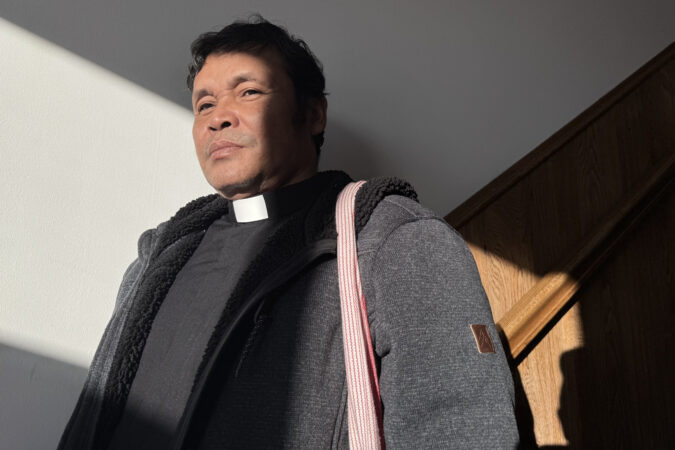
    Saw Ba Mya James, a 46-year-old ethnic Karen father of three who fled military persecution in Myanmar, arrived in St. Paul last year after obtaining refugee status with help from a local church.

    Despite a pending green card application, the Anglican pastor did not attend church for weeks after friends advised him to avoid going outside.

    “I was told to stay at home, so I listened, and I prayed to God with my family,” James said.

    James received a letter Feb. 2 ordering a “post-admissions refugee reverification” at the U.S. Citizenship and Immigration Services St. Paul field office, according to a copy reviewed by The Associated Press.

    During an interview that lasted several hours, an officer pressed James with questions he said he already addressed extensively before being admitted to the U.S. The officer said the review was needed because an inexperienced employee handled James’ initial vetting.

    Within two weeks of the interview, James got another letter asking that he and his family provide fingerprints, which his attorney took as a positive sign.

    Still, James remains wary of being detained. He faithfully carries his church sponsors’ letter appealing for him and other immigrants to “be treated humanely as fellow image-bearers of God.”

    The Congolese refugee arrested arriving at work

    A Congolese woman settled in the Twin Cities area in November 2024 with refugee status, working in the hospitality business as the breadwinner for her husband and four children.

    She said an immigration officer approached her parked car when she arrived for work at 7 a.m. on Jan. 14 in St. Paul, saying he knew her name and that she was a refugee. After telling her to exit the vehicle to answer questions, he handcuffed her despite her efforts to show a work authorization document and identification.

    The woman, who spoke on condition of anonymity because she fears reprisals, was flown to Houston to be questioned in detail about her experiences in the Congo, Uganda and the United States. She and other refugees refused to sign documents to be sent back to their home countries. She was released Jan. 18 without any ID documents to book a flight to Minneapolis. A manager at her company flew to Houston and drove her 17 hours back home.

    “If I told you I’m feeling OK, I’d be lying to you,” she said.

  • School closures demonstrate the urgency of educational choice

    School closures demonstrate the urgency of educational choice

    Nearly 5,000 Philadelphia students face a tough decision after the recent announcement of school closures in the district. As they begin searching for a new school, many will find the process overly fraught and needlessly complicated due to bad policies that have limited their choices.

    Charter schools are one popular option. About 41% of Philadelphia’s public school students have chosen these kinds of schools — including both cyber and brick-and-mortar charters.

    But transferring to a charter school isn’t a sure thing. In fact, charter schools host lotteries for interested students. For the 2025-26 school year, nearly 26,000 students applied, but only about 10,000 across the district were lucky enough to win a seat. The rest went on a waiting list.

    Philadelphia School District officials created this bottleneck. Despite the high demand for these schools, the school board has denied new charter school applications year after year. Even after approving its first charter school in nearly a decade, the board negated this progress by proposing to close several more charters.

    Harrisburg isn’t helping, either.

    Pennsylvania lawmakers continue to gut another popular alternative: cyber charters. This year’s budget robbed cyber charters of almost $178 million, which many bad-faith partisans euphemistically called “savings.” And as if those cuts weren’t enough, Gov. Josh Shapiro offered more doublespeak in his recent budget address, proposing to “redirect” another $250 million away from cyber charters.

    So, how about transferring to a private school?

    Last year, Pennsylvania awarded more than 101,000 tax credit scholarships to students seeking private alternatives to their neighborhood schools. Almost one-third of those scholarships went to Philadelphia students. Locally, the Children’s Scholarship Fund Philadelphia (CSFP) provides more than 6,800 scholarships to low-income K-8 students in the city. In December, CSFP held its own lottery day, calling hundreds of parents to tell them the good news.

    But many more families weren’t so lucky — all thanks to bad politics.

    Scholarships needed

    Statewide, nearly 70,000 tax credit scholarship applicants were turned away due to program caps. Demand for these scholarships has outpaced supply, leaving far too many students stuck in schools that don’t work for them.

    Lifeline Scholarships could have filled this gap. This transformative program would have awarded $100 million in scholarships to students attending Pennsylvania’s lowest-achieving schools — 35% of whom live in Philadelphia.

    This program nearly became a law. But Shapiro, who promised that “every child — no matter their zip code — has the opportunity to succeed,” unceremoniously vetoed the program.

    The governor has also fumbled a new federal opportunity: the Education Freedom Tax Credit (EFTC). He has yet to commit to participating in this new program, which enables donors to contribute dollar-for-dollar tax-deductible scholarships up to $1,700. Projections estimate the EFTC could provide $483 million in scholarships for Pennsylvania students.

    So far, 27 states have indicated they will opt into the EFTC. Even Shapiro’s Democratic colleague, Colorado Gov. Jared Polis, officially opted in, calling the decision a “no-brainer.”

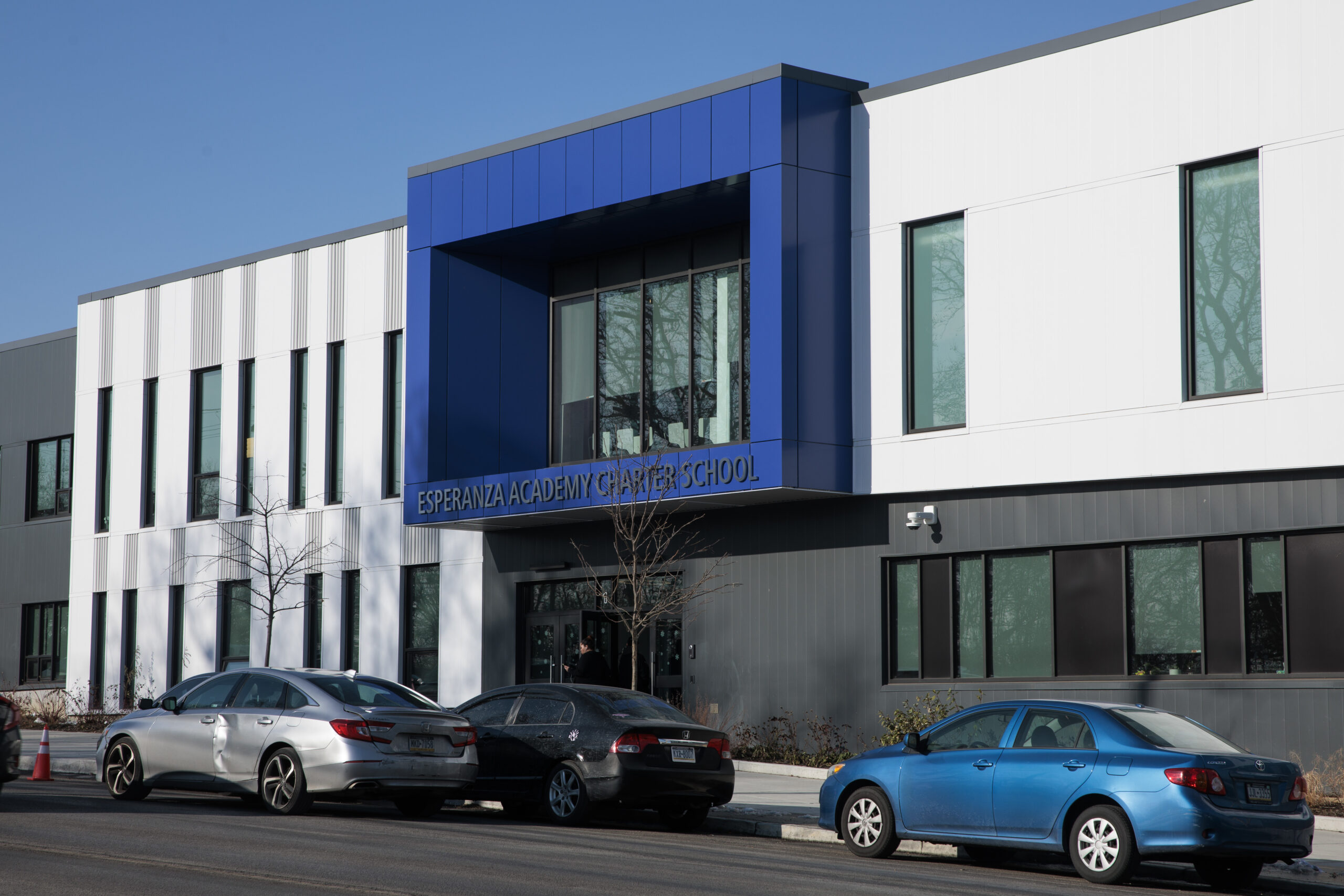
    The exterior of the Esperanza Academy Charter School at 201 W. Hunting Park Ave. in Philadelphia.

    Time after time, public officials have denied educational opportunities for students who need them the most. Moreover, these policymakers have painted themselves into a corner: After decades of forcing students to attend schools based entirely on their zip code, the powers that be seem unprepared when those schools disappear.

    Families need genuine options. Parents should be empowered to choose the learning environment that best meets their needs — whether that’s a local district school, a charter school, a private school, a cyber school, a microschool, or homeschooling.

    Lawmakers must reverse course and empower families with educational opportunity. This means expanding the commonwealth’s successful scholarship programs, enacting new ones like Lifeline Scholarships, opting in to the federal tax credit, and ending the ongoing war against charter schools.

    School choice recognizes that a one-size-fits-all system isn’t realistic. And judging by the declining enrollment of public schools and the rising popularity of their alternatives, Pennsylvania families have already sent an unambiguous message to policymakers: They want more educational choices.

    It is incumbent upon us to give it to them.

    Andrew Lewis is president and CEO of the Commonwealth Foundation, a free-market think tank. David P. Hardy is the president of Girard College and a distinguished fellow at the Commonwealth Foundation.

  • Trump’s State of the Union got you down? Imagine its impact on our children.

    Trump’s State of the Union got you down? Imagine its impact on our children.

    The State of the Union is supposed to be a ritual of reassurance. The president enters the chamber of the United States Congress, lawmakers rise and applaud, and for one choreographed evening, we tell ourselves a story about who we are. We are strong. We are resilient. We are advancing.

    However, on Tuesday night, President Donald Trump delivered a sprawling, raucous narrative about economic revival, border tightening, partisan battles, and a vision of America in a “golden age.”

    As I watched the speech’s cadence — the applause lines, the assaults on political opponents, the relentless assertion of national triumph — a question kept rising in me, a question that is rarely spoken but always present: What does this mean for our children? As I listened, I found myself thinking less about gross domestic product and more about their interior lives.

    For adults accustomed to political combat, this is familiar terrain. But for children — particularly those in immigrant families, children of color, or children whose identities have been politicized — the message can register differently.

    When leaders describe certain groups as dangerous or burdensome, children who see themselves reflected in those groups internalize subtle but corrosive questions: Am I safe here? Do I belong?

    Research on childhood trauma and adverse childhood experiences tells us that chronic exposure to fear — even secondhand fear — can activate the body’s stress systems. Elevated cortisol, persistent hypervigilance, difficulty concentrating: These are not ideological reactions. They are biological responses.

    A child who hears repeated warnings of danger in their community, or who worries that a parent could be detained or deported, does not experience politics as theater.

    Five-year-old Liam Conejo Ramos is taken into custody by federal immigration officers as he returns home from preschool in Columbia Heights, Minn.

    In her landmark book Trauma and Recovery, psychiatrist Judith Lewis Herman writes that trauma is “an affliction of the powerless.” It arises when people are subjected to overwhelming forces and deprived of control. Trauma is not merely a bad experience; it is an experience that shatters the basic assumptions of safety, trust, and meaning. It reorganizes the brain around vigilance and fear.

    Herman was writing about survivors of war, domestic violence, and political terror. But the framework she provides is disturbingly relevant to our civic culture. Trauma flourishes in conditions of sustained unpredictability, humiliation, and threat. And for many children in America over the past several years, unpredictability and threat have not been abstractions. They have been ambient conditions.

    Two immigrant children play in a safe house in Minneapolis in January, after volunteers relocated them from their home to protect them from federal agents.

    Consider the moments in the speech when the president highlighted crimes committed by undocumented immigrants to justify harsher enforcement. Or the policy of family separation at the southern border — a decision that, whatever one’s views on immigration enforcement, resulted in children being forcibly separated from their parents. Developmental psychologists have been unequivocal: abrupt separation from primary caregivers activates the body’s stress response at extreme levels. Prolonged activation can alter brain architecture. The child does not interpret the experience as a policy dispute.

    The child experiences terror.

    Or consider the speech’s emphasis on rooting out ideological enemies within institutions — universities, federal agencies, the press. When authority figures repeatedly signal that institutions are corrupt or hostile, children can lose faith in the very structures meant to protect them.

    Herman writes that trauma often involves a “betrayal of trust” by systems that are supposed to provide safety. When public discourse paints schools, courts, or civic bodies as fundamentally illegitimate, children absorb that distrust.

    A woman and a child hold hands as they walk down a street in the predominantly Somali neighborhood of Cedar-Riverside in Minneapolis in 2022.

    When leaders speak in ways that categorize certain groups as threats or burdens, children who identify with those groups absorb the message. Even children who do not belong to those groups learn something about how power operates: that dignity is conditional.

    For some viewers, Trump’s anecdotes reinforced the case for stronger borders. For others — including children in mixed-status families — they reinforced a sense of collective suspicion. Trauma researchers note that when individuals feel stigmatized or collectively blamed, it can produce what psychologists call “identity-based stress,” a chronic strain associated with anxiety and depression.

    None of this is to deny the president’s right to advocate his policies. Nor is it to suggest that only one party’s rhetoric carries emotional consequences. But the tone and themes of this particular address — siege, dominance, humiliation reversed through force — echo dynamics that trauma science has long identified as destabilizing when internalized by the powerless.

    A child who hears repeated warnings of danger in their community, or who worries that a parent could be detained or deported, does not experience politics as theater, writes Jack Hill.

    Children are, by definition, powerless in the civic sphere. They do not vote. They do not shape policy. They rely on adults and institutions for stability. When those adults present the world as perpetually on the brink, the child’s sense of baseline safety erodes.

    There is also the matter of modeling. Children learn not only from what leaders say but how they say it. When applause lines are built on mockery or derision of opponents, when strength is defined primarily as crushing adversaries, children receive lessons about conflict resolution. If politics is portrayed as a zero-sum battle between good and evil, compromise looks like betrayal. Empathy looks like weakness.

    Herman’s framework suggests that healing from trauma requires three stages: safety, remembrance and mourning, and reconnection. Safety comes first. And safety, at its core, is relational. It is built through consistent, attuned caregiving and through trustworthy institutions. This is where parents face an immense challenge.

    How do you cultivate a child’s sense of security in a culture that often amplifies alarm? The first task is to build a counter climate at home. When children hear rhetoric about invasions or enemies, parents can contextualize without dismissing. “The president believes these policies will make the country safer,” one might say. “There are different views. What matters here is that you are safe, and we are together.” Research on co-regulation shows that children borrow calm from steady adults. The parent’s tone becomes a neurological anchor.

    Second, parents can help children develop narrative competence. Trauma fragments experience; it turns events into isolated flashes of fear. By inviting children to talk about what they heard in the speech — what confused them, what worried them — parents help integrate those fragments into a coherent story. “What did you notice?” “How did that make you feel?” Such questions restore a sense of agency.

    It is vital that children experience inclusive communities. Faith groups, sports teams, neighborhood networks — these are not luxuries. They are buffers, writes Jack Hill.

    Third, parents can double down on belonging. In a speech that emphasized insiders vs. outsiders, strength vs. weakness, it is vital that children experience inclusive communities. Faith groups, sports teams, neighborhood networks — these are not luxuries. They are buffers. Studies consistently show that a single stable, supportive relationship can dramatically reduce the long-term impact of stress.

    Fourth, parents can model moral steadiness. If adults respond to polarizing rhetoric with rage and contempt, children learn that the world truly is at war. If adults respond with firm but measured disagreement, children learn that conflict can be navigated without annihilation. Moral clarity does not require hysteria.

    The deeper issue, however, extends beyond individual households. When a president frames national life primarily through threat and triumph, he shapes the emotional climate of the country. Emotional climates matter. They influence how children perceive their future, their neighbors, and themselves.

    The State of the Union is often measured by applause, polling bumps, or market reactions. But there is another metric — harder to capture, yet profoundly consequential: the degree to which our public discourse expands or contracts a child’s sense of safety.

    A nation can declare itself strong. But if its children are chronically anxious, if they feel stigmatized or uncertain of belonging, that strength is brittle.

    Herman reminds us that trauma is not destiny. Recovery is possible. Human beings are resilient, especially when supported by love and connection. The same is true for societies. We can choose rhetoric that rallies without terrorizing, that fortifies without dehumanizing, that inspires without humiliating.

    The real state of our union is written not only in economic reports but in the bedtime questions children ask. “Will we be OK?” “Do we belong?” “Is this place safe?”

    If our politics cannot answer those questions with a steady yes, then all the declarations of greatness ring hollow.

    The task before us is not simply to win arguments, but to cultivate a civic culture in which children can grow without chronic fear. That is not a partisan project. It is a moral one.

    Jack Hill is a diversity consultant, child advocate, journalist, and writer.

  • 🚎 Caught double parking | Morning Newsletter

    🚎 Caught double parking | Morning Newsletter

    It’s set to be a sunny Friday, Philly.

    Drivers who illegally park in SEPTA trolley lanes and stops could soon be caught in the act by automated enforcement cameras.

    And two of 20 city schools slated for closure would be spared under a revised district plan, presented during a heated school board meeting Thursday.

    — Julie Zeglen (morningnewsletter@inquirer.com)

    If someone forwarded you this email, sign up for free here.

    The trolleys have eyes

    A warning to all who insist on double parking in the path of the 34 while they make a quick stop into a shop on Baltimore Avenue: The trolley will soon be watching — and tattling.

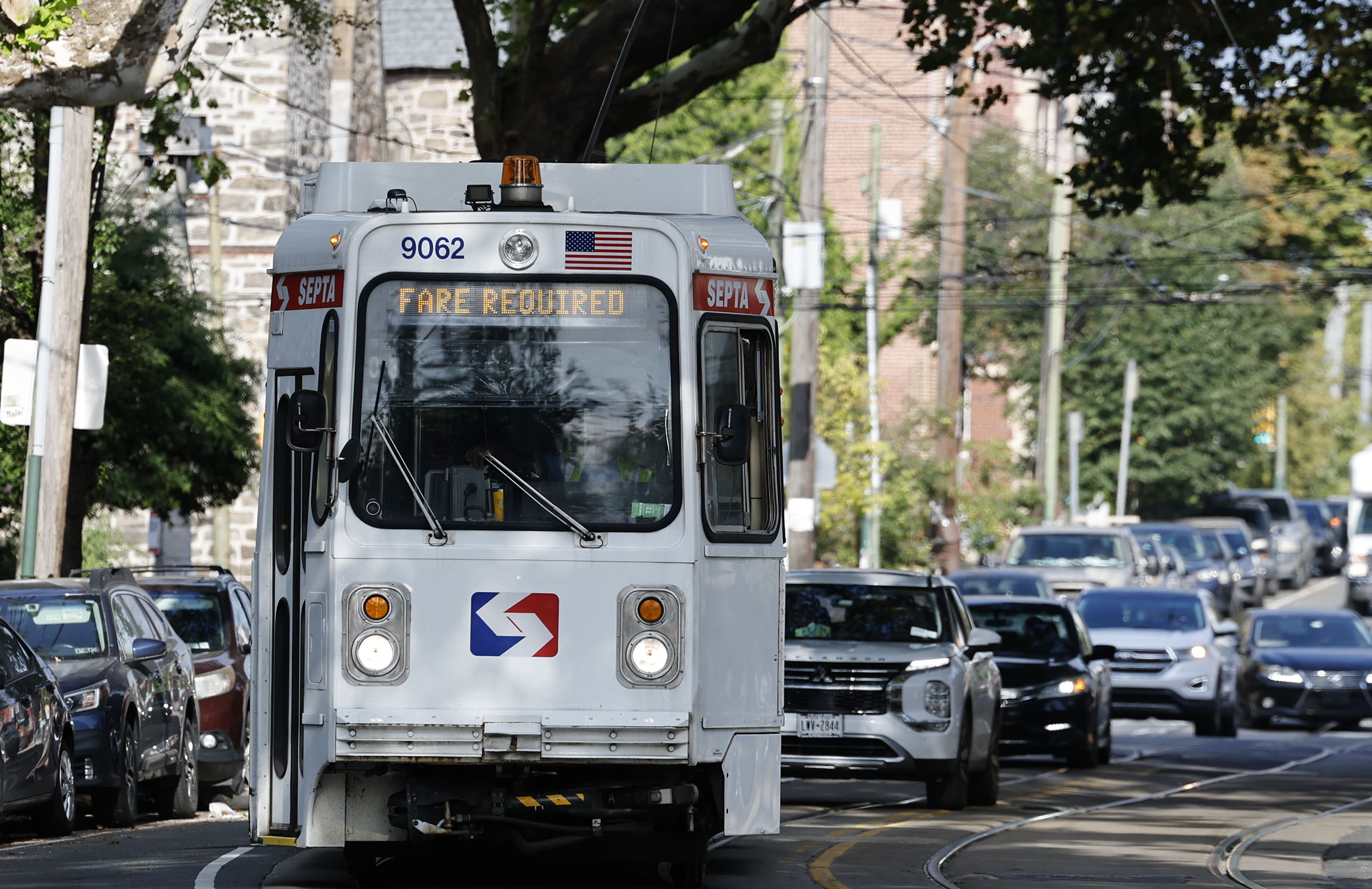
    🚎 As of Monday, artificial intelligence-powered cameras will be mounted on 30 trolleys on six lines in Philadelphia to catch drivers breaking no-parking rules. Violations will carry a $51 fine beginning April 1.

    🚎 The new system is meant to benefit riders whose commutes are slowed by stagnant vehicles — trolleys run on fixed rails, so they are unable to steer around them — or who must dodge them when alighting.

    🚎 The technology is already at work on 152 SEPTA buses.

    Transportation reporter Tom Fitzgerald explains how it works.

    In other SEPTA news: Chief executive Scott A. Sauer on Thursday was given a three-year contract with an annual salary of $395,000.

    And more AI news: A Gloucester County lawmaker’s new bill aims to get ahead of AI surveillance in New Jersey schools.

    Off the chopping block

    Conwell Middle School in Kensington and Motivation High School in Southwest Philly, both small magnets with powerful political allies, have been cut from the Philadelphia School District’s proposed closure list.

    The district’s revised $2.8 billion facilities plan was announced by Superintendent Tony B. Watlington Sr. at a Thursday school board meeting. Eighteen schools are still slated for closure, while six would be colocated, and 159 would be upgraded.

    Watlington also shared a new plan for Lankenau High: The city’s environmental science magnet is still slated to close, but is now pitched to move into Saul High instead of Roxborough High.

    Next, the board is expected to vote in the coming weeks. Schools would begin closing in 2027, and building upgrades would take several years.

    Education reporter Kristen A. Graham has more details.

    Further reading: See more from Thursday’s lengthy meeting, where school community members shared their frustration and anguish over the district plan.

    What you should know today

    • New Jersey joined the growing list of states sued by the Department of Justice after refusing to share personal information of voters.
    • Gov. Josh Shapiro on Thursday pledged to block the Trump administration’s plans for immigration detention centers in Berks and Schuylkill Counties.
    • An affidavit about the student arrests that came after a Quakertown protest last week offers the most detailed account yet of what law enforcement officials say happened that day, but doesn’t mention what appeared to be the chokehold of a teen girl. Community members accused the Quakertown school board Thursday of failing to keep students safe. Plus: The protest has brought scrutiny to Quakertown police chief Scott McElree’s unusual dual role — he is also borough manager — and his controversial social media posts.
    • A sixth person associated with the Young Bag Chasers gang was arrested Wednesday and is expected to be charged with two homicides, prosecutors said. See a timeline of the crimes authorities say led to the arrests of 19 people affiliated with several Philadelphia gangs, including YBC, who they say are responsible for shooting nearly three dozen people in two years.
    • Five city police officers say in a new federal lawsuit they were skipped over for promotions because of a policy change to promote diversity in the municipal workforce.
    • Should Philly politicians have to resign to campaign for new seats? After Thursday’s City Council approval, voters will get to weigh in — again.
    • Walmart delivery drivers in Pennsylvania will receive about $1.4 million as part of a multi-state settlement over withheld tips and other fees.
    • While Congress debates a ban on hemp-derived THC, a smaller push for regulation in Pennsylvania hopes to put THC drinks in beer stores and regulate hemp alongside medical marijuana.

    Plus: What do museums do with their items that aren’t on exhibit?

    Welcome back to Curious Philly Friday. We’ll feature both new and timeless stories from our forum for readers to ask about the city’s quirks.

    This week, we have an explainer from reporter Michelle Myers on what happens to artworks, artifacts, and other museum ephemera when they’re not on display. Surely they’re not just stacked in a basement, collecting mothballs — right?

    Indeed, oftentimes they’re on loan, used for research, or undergoing restoration. Some items are so fragile, they could even be damaged if they’re not stored away for most of their lives. Here’s the full story.

    Have your own burning question about Philadelphia, its local oddities, or how the region works? Submit it here and you might find the answer featured in this space.

    🧠 Trivia time

    When Team USA beat out Canada for the men’s hockey gold medal in the 2026 Winter Olympics, how did the players honor late New Jersey native Johnny Gaudreau?

    A) They wore special jersey patches with Gaudreau’s initials

    B) They announced a new scholarship during a postgame speech

    C) USA Hockey renamed the trophy in honor of Gaudreau for 2026

    D) They carried Gaudreau’s No. 13 jersey on the ice

    Think you know? Check your answer.

    What we’re …

    🐄 Remembering: When William Penn presided over Pennsylvania’s one and only witch trial.

    🚗 Noting: The 250th anniversary license plate design that’s leaving some drivers with false tolls.

    🏀 Cheering on: Father Judge’s 76-year-old basketball coach and school symbol.

    🩰 Welcoming: Alvin Ailey’s dance company back to Philly this weekend.

    🗣️ Considering: A combative political culture’s impact on American children.

    🧩 Unscramble the anagram

    Hint: This year’s One Book, One Philadelphia pick

    ERASING HUMORISTS

    Email us if you know the answer. We’ll select a reader at random to shout out here.

    Cheers to Darrell Klassen, who solved Thursday’s anagram: Germantown Mennonite Meetinghouse. The site will host Philadelphia Historic District’s latest firstival, focused on how Germantown became the building block of the abolitionist movement.

    Photo of the day

    The Imhoptep Institute Charter players lock arms for the national anthem before the PPL Girls Basketball Championship at La Salle University on Sunday.

    Thanks for ending your week with The Inquirer. Paola has you covered with this weekend’s news. Until we meet again in your inbox, be well.

    By submitting your written, visual, and/or audio contributions, you agree to The Inquirer’s Terms of Use, including the grant of rights in Section 10.

  • What is ‘Jeffing’? This walk-run technique can help you get in shape.

    What is ‘Jeffing’? This walk-run technique can help you get in shape.

    If you’ve ever watched a race, you may have seen some runners whiz by, others resolutely jog forward — and a sizable group slow down to a walking pace, sometimes just a few minutes after passing the start line.

    No, they don’t need your cheers to “just keep going!” Rather, it’s likely those walk breaks are calculated. It’s all part of a time-honored technique known as “Jeffing,” and runners have been using it for decades in training runs and in major races like the New York City Marathon.

    While this method is pretty well known among runners, it’s not only for those looking for personal records. Rather, it can be a great way for people to add a little oomph to their walking workouts and gain even more health-promoting benefits. Here’s everything you need to know.

    What is ‘Jeffing’?

    Simply put, Jeffing is a technique that intersperses walk breaks with running bouts to help ward off fatigue and boost endurance. This type of cardio, or aerobic, workout goes by many different names in the running community — run-walk, run-walk-run, the Galloway method, and, of course, Jeffing.

    The last two are nods to Olympian Jeff Galloway, who began using this method in 1973 while instructing a beginner running class at a university. (Galloway himself has no particular preference for which term is used. “I’m honored to be a verb,” he said.)

    Galloway ran weekly with the 22 students in the program, who naturally divided into three pace groups based on their abilities. “Whenever anybody started huffing and puffing in any group, I would have everybody walk.” Galloway said.

    All of the participants stuck with the program for the entire 10 weeks, and all were able to complete their final goal: finishing either a 5K or 10K race. The walk breaks, Galloway believed, played a vital role in that.

    In this earliest iteration of Jeffing, there was no set timing on when to start walking and for how long to do so. But after further refining, it soon became clear to Galloway that the important part is to slot in walking breaks before you feel gassed.

    “Because you’re taking those walk breaks from the beginning, before you’re tired, before you need them, it feels great,” said Chris Twiggs, the chief training officer of Galloway Training. “It really does feel like you’re cheating because you’re pushing the fatigue toward the end.” When Twiggs used the method for the first time at the 1995 Walt Disney World Marathon, he ended up with about a 15-minute personal record.

    The 30-30 method — a 30-second run and 30-second walk — is one of the most popular ways to approach Jeffing, said Galloway. However, if a 30-second run is too challenging, you can scale it back: Twiggs often has walkers start with a 10-second run, 50-second walk, and then adjust from there.

    “There’s an almost unlimited way to go about it,” said Kate Baird, a certified running coach and exercise physiologist at the Hospital for Special Surgery. That’s part of what makes it so beginner-friendly.

    What are the benefits of the run-walk method?

    First and foremost, run-walk is a type of aerobic workout that helps improve heart health, said Neel Chokshi, the medical director of the Sports Cardiology and Fitness Program at Penn Medicine. Consider it “interval training-lite,” he said. “The benefits of run-walk mirror general interval training in terms of the gains that people can get.” Specifically, alternating between high- and low-intensity efforts allows you to push hard when it’s time.

    Over time, your heart will adapt to those repeated exposures to higher intensities, Chokshi said. Adaptations include being able to pump more blood with each heartbeat, a reduction in resting heart rate, and increased blood flow through the arteries.

    Interval training also improves your VO2 max, or how efficiently your body uses oxygen during exercise. This results in better endurance and is also linked to longevity, said Chokshi.

    Another great thing about Jeffing is that you can get all of these heart-health benefits while reducing the amount of high-impact stress you’re putting on your muscles, tendons, and ligaments. When Galloway first tried this method in the university’s beginner running course, a huge takeaway was that not one participant got injured during the program. That’s big, since beginner runners are at higher risk — they get injured at more than twice the rate as more experienced ones, according to a 2019 study out of the Netherlands.

    Finally, you can’t ignore the mental benefits. If you want to scale up your cardio workouts but are daunted by the idea of running nonstop, Jeffing is a great way to overcome that mental hurdle, said Chokshi. Knowing you will have walk breaks coming can help you build the confidence that you can complete your workout — and finish it strong, said Twiggs.

    Here’s how to try the run-walk method yourself

    While there’s no set way to use the method, there are a few things you should keep in mind to make the most of it.

    1. Get the right shoes

    Because running brings a higher impact than walking, proper gear becomes even more important, said Twiggs. You might need more cushioning than a walking shoe, or some kind of motion control if your foot rolls inward or outward with each stride, he said. A running specialty store can help you pick out a pair that works for your anatomy and biomechanics.

    2. Start small

    While folks use run-walk in multihour marathons and training runs, these workouts don’t need to be nearly as long — and they shouldn’t be if you’re a beginner. Anywhere from 10 to 30 minutes is a great starting place, said Baird. Once you’re more comfortable with it, you can shoot for 30 to 45 minutes, Twiggs said.

    3. Warm up your body

    Getting your blood flowing before a workout can loosen up your muscles and gradually increase your heart rate, Chokshi said. You want to do a general, full-body warmup, since running includes pretty much every muscle in your body, including those in your lower body, upper body, and core. Moves like hamstring sweeps, lunges with thoracic rotation, and cat-cows are solid choices.

    4. Choose your intervals

    The 30-second run, 30-second walk tends to be the most popular utilization of the program, but “there’s no perfect run-walk ratio that everyone should be aspiring to,” said Twiggs. If you feel like you can’t catch your breath when running for 30 seconds, you can shorten that segment. If you feel strong, you can bump it up to 40 seconds, 60 seconds, or even a few minutes and see how your body reacts.

    5. Slow down

    Your run effort shouldn’t be a heart-pumping sprint — you want to keep it more moderate so you have the energy to do it all over again during your next interval. “A really good gauge is if you can carry on a conversation,” Twiggs said.

    6. Make time for recovery

    Even if you feel great after a workout, you shouldn’t do it every day. “Take one to two days between those workouts when it’s new,” Baird said. If you feel sore or tight in one particular spot, that might be your cue to give that area some extra attention during your warmup or next strength-training workout.

    7. Don’t consider it a means to an end

    The more you run-walk, the more you may want to play with your intervals, gradually increasing your run efforts as you gain more endurance. But it’s important to remember that you don’t have to use this method to reach a continuous running goal if that’s not what you want, said Galloway. You can stick with run-walk and still reap the benefits of running.

  • William Penn presided over Pennsylvania’s one and only witch trial on this week in Philly history

    William Penn presided over Pennsylvania’s one and only witch trial on this week in Philly history

    Pennsylvania’s one and only witch trial started over cow’s milk.

    “If your cow is not giving milk, it’s obvious that somebody put a hex on it,” Doug Miller, who runs William Penn’s estate Pennsbury Manor, said to explain the thinking of the time.

    In the 1680s, neighbors accused Margaret Mattson, who was of northern European descent and didn’t speak English, of putting a hex on local people.

    Although Pennsylvania was William Penn’s colony, it was still part of England. And in English rule, witchcraft was a capital offense.

    Witch trials had been held throughout England and elsewhere in Europe, but only a few had been held in the colonies. And this would be the first in Pennsylvania.

    On Feb. 27, 1684, William Penn himself presided over the witch trial in Philadelphia.

    He arranged for a prominent citizen, Lasse Cocke, who was also Penn’s chief negotiator with the Lenni-Lenape, to act as an interpreter.

    Three witnesses testified that Mattson had cast a spell over her neighbor’s cattle, which had not been giving milk. Over a daylong trial in Philadelphia, a jury ultimately found Mattson guilty of having “the common fame of a witch, but not guilty in the manner in form that she stands indicted.”

    So, yes, she had the reputation of being a witch, but there was no evidence she participated in any witchcraft.

    “This was a crafty way on his part to avoid harsh punishment for her and any hint of a death penalty under English law,” Miller said.

    Mattson and a co-defendant, Yesro Hendricksen, whom we don’t know much about, were each fined 50 pounds, which was a chunk of change back then, Miller said.

    Quakers at this time would expect the person to put forth a bond similar to bail today.

    It was called a peace bond, and it was good for six months.

    Eight years later, witch hysteria would hit Salem, Mass., and kick off the infamous witch trials.

    “The fact that he really didn’t want to encourage the idea that there were witches,” Miller said, “or inflict a penalty on somebody he felt was not guilty of what she was accused, speaks highly of Penn.”

  • What museums do with their items that aren’t on exhibit

    What museums do with their items that aren’t on exhibit

    A person can spend hours at one of Philadelphia’s museums and still walk out feeling like they didn’t get to see it all. But it isn’t just a feeling.

    Most museums don’t put their full collections on display, said Laura Hortz Stanton, director of collections at the Penn Museum.

    Curators decide what objects can best tell what their exhibition is trying to convey.

    That led a reader to ask Curious Philly, The Inquirer’s forum for answering questions, what happens to the items that don’t make the cut?

    » ASK US: Have something you’re wondering about the Philly region? Submit your Curious Philly question here.

    “They are definitely not just sitting there getting dusty in a room,” Hortz Stanton said.

    In storage getting dusty?

    Hortz Stanton said thousands of non-exhibited items in the Penn Museum’s collections found other purposes last year. And, 5,000 college students were able to use them for classes and research.

    “A lot of things happen when objects aren’t on display, everything from conservation to research to documentation,” said Hortz Stanton.

    Museums aim to protect their inventory, while still keeping items available.

    The Museum of the American Revolution has a collection of 5,000 historical objects, such as archaeological material, documents, paintings, prints, and other items. But only about 300 items are on exhibit.

    “They are not buried away and never to be seen again; we store all the collection here at the museum,” said Matthew Skic, director of collections and exhibitions. “Many of our documents are not on display because they are extremely light-sensitive, but we take them on rotations.”

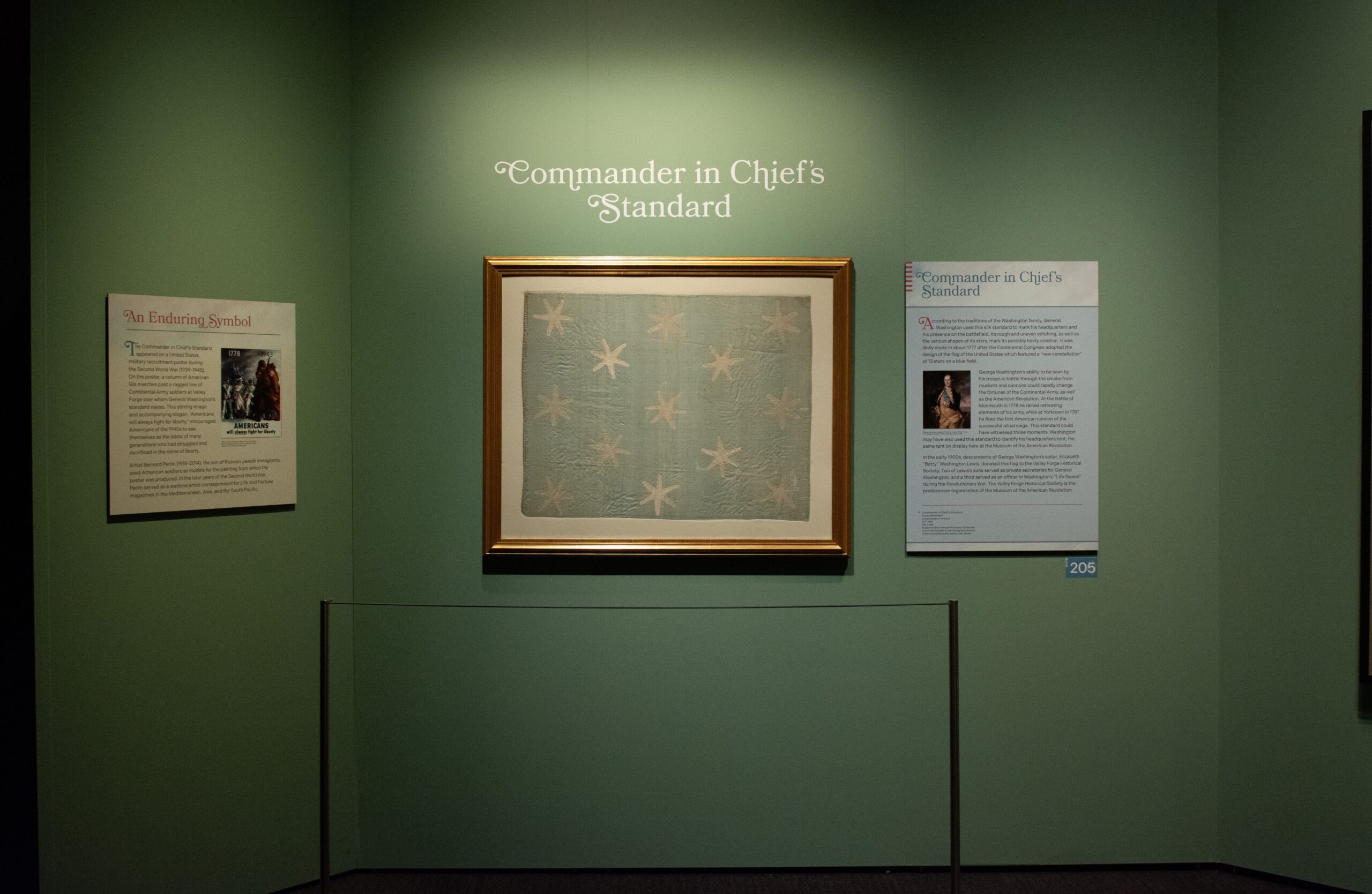
    George Washington’s headquarters flag, for example, was put out for a special exhibition in 2025. The display was short-lived due to the brittleness of the silk. It’s now back in storage.

    George Washington’s Headquarters Flag (also known as the Commander-in-Chief’s Standard). This flag has been on display only twice at the Museum of the American Revolution.

    They are not the only ones keeping a rotation of unexhibited items for preservation. The Independence Seaport Museum keeps 60% to 80% of its 10,000 items in storage throughout the year.

    ”People often will say: Why are you hoarding all this stuff?” said Peter Seibert, the museum’s president and CEO. “That’s not the case; we want to get them out, it’s just that sometimes that is not always possible.”

    His museum has items as small as a thimble and as big as a submarine and the cruiser Olympia. Keeping textiles safe from moths and documents from crumbling requires proper conditions, including acid-free boxes.

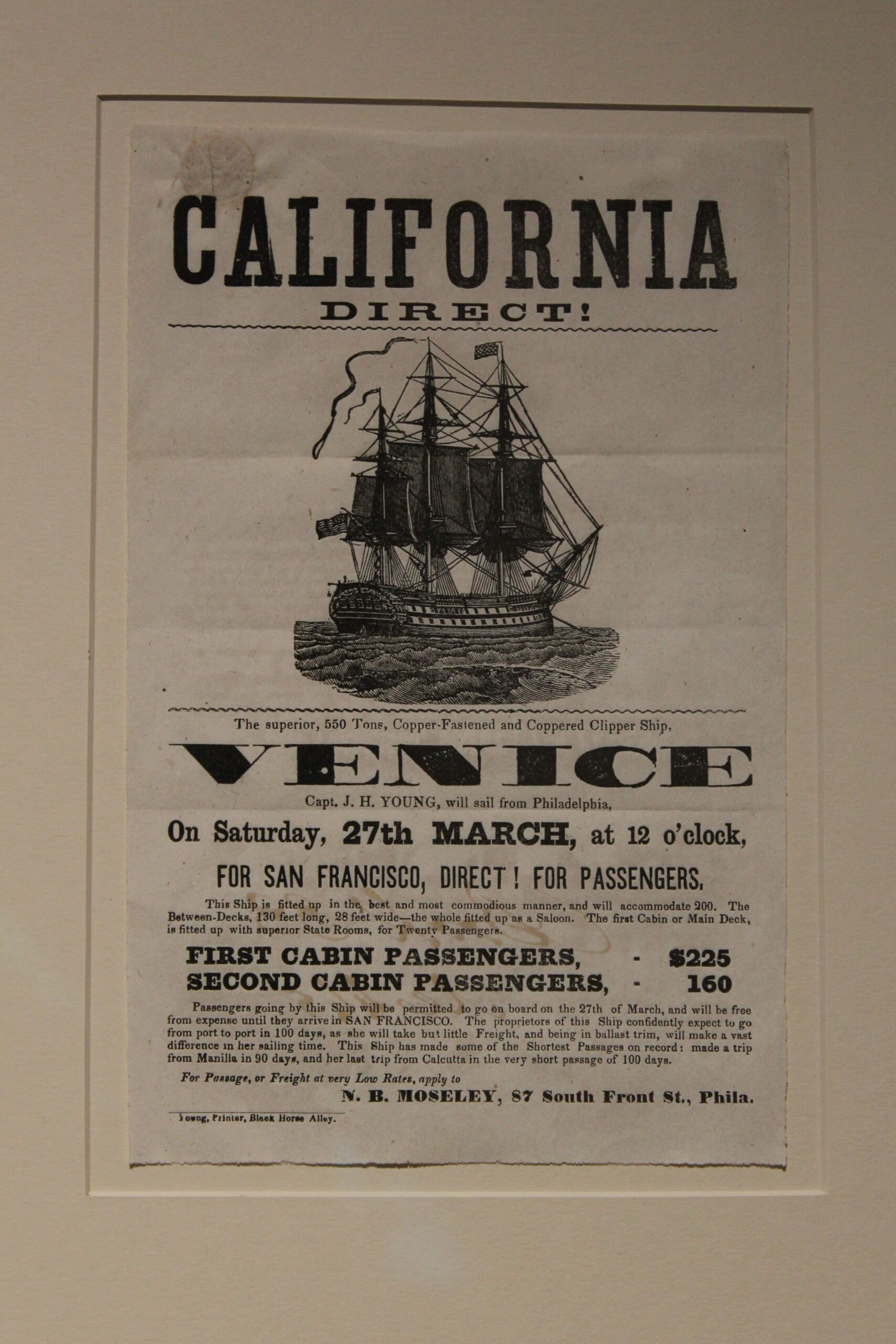
    Broadside advertising for Philadelphians to go to California in 1848. Handout: Independence Seaport Museum.

    For less-fragile items, life can go places.

    Museums often loan storage items to one another. Penn Museum, for example, recently loaned part of its collection to the Zayed National Museum in Abu Dhabi.

    This doesn’t mean Philadelphians have lost the chance of seeing those items. Philly museums have benefited from getting items from other institutions — such as the lunar module, which the Smithsonian lent to the Franklin Institute for 49 years. These days, however, lending contracts are much shorter, typically a year or two, Hortz Stanton said.

    When storage used to be alive

    “Collections are not storage; they are a living resource,” said Paul Callomon, the Academy of Natural Science malacology collections manager.

    He views the 21 million items in the academy’s collection as an active resource to scientists all over the world. His department, in particular, has the third-largest shell collection in the world, he said, as well as a variety of fish, plants, and microscopic algae that are not usually available to everyday visitors.

    Ornithology collection manager Jason Weckstein sees the non-exhibited items being put to use daily.

    ”We make study skins, so we actually skin the bird, and we retain the skin and dissect the body,” he said. “We take tissue samples and take data on the internal organs of the body.”

    Conservation matters

    For years, Penn Museum had two large 14th-century Buddhist murals on display in its rotunda space, but construction forced them to be pulled down for their protection. What began as a precaution turned into a multiyear mural conservation project.

    “Over time, things may crack or materials may weaken; our conservationists are able to stabilize this object so they can be stored safely or eventually reinstalled,” Hortz Stanton said.

    The conservation process involves documenting the condition of the items, looking at what it needs for long-term care, cleaning, and taking measures to stabilize an object, said Skic.

    How to access things in storage

    The Academy of Natural Sciences and Penn Museum have many of their items cataloged in an online database. Researchers and students anywhere can request to see materials.

    For Hortz Stanton, this conserves resources and protects fragile items.

    ”We are just one short part of the history of the things we are taking care of, a blip in time,” Hortz Stanton said. “The hope is that these objects are preserved for future generations.”

    To make the items more available to the public, the academy holds a members’ night once a year. Animals, field books, photographs, and experimental projects not normally on exhibit become available for a night of knowledge.

    Octopus not normally exhibited at the Academy of Natural Science. People can see it during members’ night.

    Not a member? Callomon said anyone can tour the collection if they make arrangements.

    “Bird clubs come for behind-the-scenes tours, and artists actually use our collection for bird field guides to study specimens,” Weckstein added.

    The Museum of the American Revolution is also a bit more flexible with its collection, even granting access to descendants of Revolutionary War soldiers and people working on historical projects, Skic said.

    “These items are tangible connections to America’s founding era,” Skic said. “They serve as a way to learn about those events and make sure people know these are real people, real events, and that those events continue to shape our lives today.”