Joseph R. Syrnick, 79, of Philadelphia, retired chief engineer and surveyor for the Philadelphia Streets Department, president and chief executive officer of the Schuylkill River Development Corp., vice chair of the Philadelphia City Planning Commission, former adjunct professor, college baseball star at Drexel University, mentor, and “the ultimate girl dad,” died Saturday, Jan. 17, of cancer at his home in Roxborough.
Reared on Dupont Street in Manayunk and a Roxborough resident for five decades, Mr. Syrnick joined the Streets Department in 1971 after college and spent 34 years, until his retirement in 2005, supervising hundreds of development projects in the city. He became the city’s chief engineer and surveyor in 1986 and oversaw the reconstruction of the Schuylkill Expressway and West River Drive (now Martin Luther King Jr. Drive) in the 1980s, and the addition of new streetlights and trees on South Broad Street and the upgrade of six city golf courses in the 1990s.
He was an optimist and master negotiator, colleagues said, and he worked well with people and the system. “You have concepts that seem simple,” he told The Inquirer in 1998. “But when you commit them to writing, they raise all kinds of other questions.”
In 2000, as Republicans gathered in Philadelphia for their national convention, Mr. Syrnick juggled transit improvements on Chestnut Street and problems with the flags on JFK Boulevard. He also helped lower speed limits in Fairmount Park and added pedestrian safety features on Kelly Drive.
He beautified Penrose Avenue and built a bikeway in Schuylkill River Park. He even moderated impassioned negotiations about where the Rocky statue should be placed.
Since 2005, as head of the Schuylkill River Development Corp., he deftly partnered with public and private agencies, institutions, and corporations, and oversaw multimillion-dollar projects that built the celebrated Schuylkill River Trail, renovated a dozen bridges, and generally improved the lower eight-mile stretch of the Schuylkill, from the Fairmount Dam to the Delaware River, known as Schuylkill Banks.
In an online tribute, colleagues at the Schuylkill River Development Corp. praised his “perseverance and commitment to revitalizing the tidal Schuylkill.” They noted his “legacy of ingenuity, optimism, and service.” They said: “Joe was more than an extraordinary leader. He was a great Philadelphian.”
Dennis Markatos-Soriano, executive director of the East Coast Greenway Alliance, said on Facebook: “He exuded confidence, humility, and unwavering commitment.”
Mr. Syrnick reviews plans to extend a riverside trail in 2009.
Mr. Syrnick was a constant presence on riverside trails, other hikers said. He organized regattas and movie nights, hosted riverboat and kayak tours, cleaned up after floods, and repurposed unused piers into prime fishing platforms.
“Great cities have great rivers,” Mr. Syrnick told The Inquirer in 2005. “Here in Philadelphia, we have Schuylkill Banks.”
He was a Fairmount Park commissioner for 18 years, was named to the Philadelphia City Planning Commission in 2008, and served as vice chair. He lectured about the Schuylkill often and taught engineering classes and led advisory panels at Drexel. In 2015, he testified before the state Senate in support of a waterfront development tax credit.
Friends called him “a visionary,” “a true hero,” and “a Philly jewel.” One friend said: “He should be honored by a street naming or something.”
Mr. Syrnick (fourth from left) and his family pose near a riverboat.
Paul Steinke, executive director of the Preservation Alliance for Greater Philadelphia, said on Facebook: “He left his native Philadelphia a much better place.”
Mr. Syrnick was president of the Philadelphia Board of Surveyors and active with the American Society of Civil Engineers, the Engineers’ Club of Philadelphia, and other organizations. At Drexel, he earned a bachelor’s degree in civil engineering in 1969 and a master’s degree in 1971.
In 2024, Drexel officials awarded him an honorary doctorate for “his visionary leadership in engaging diverse civic partners to revive the promise of a waterfront jewel in Philadelphia.”
He played second base on the Roman Catholic High School baseball team. He was captain of the 1968 Drexel team and later played against other local standouts in the old Pen-Del semipro league.
Mr. Syrnick (center in white shirt) had all kinds of way to publicize fun on the Schuylkill. This photo appeared in The Inquirer in 2007.
Most of all, everyone said, Mr. Syrnick liked building sandcastles on the beach and hosting tea parties with his young daughters and, later, his grandchildren. He grew up with three brothers. Of living with three daughters, his wife, Mary Beth, said: “It was a shock.”
His daughter Megan said: “It was a learning experience. Whether it was sports or tea parties, he became the ultimate girl dad.”
Joseph Richard Syrnick was born Dec. 19, 1946, in Philadelphia. He spent many summer days riding bikes with pals on Dupont Street and playing pickup games at the North Light Community Center.
He knew Mary Beth Stenn from the neighborhood, and their first date came when she was 14 and he was 15. They married in 1970, moved up the hill from Manayunk to Roxborough, and had daughters Genevieve, Amy, and Megan.
Mr. Syrnick received his honorary doctorate from Drexel in 2024.
Mr. Syrnick enjoyed baseball, football, and golf. He was active at St. Mary of the Assumption and Holy Family Churches, and he and his wife traveled together across Europe, Africa, the Middle East, and Asia.
“He was humble,” his daughter Megan said. “He was quiet in leadership. He always said: ‘It’s the team.’”
In addition to his wife and daughters, Mr. Syrnick is survived by seven grandchildren, his brother Blaise, and other relatives. Two brothers died earlier.
Visitation with the family is to be from 6 to 8 p.m. Friday, Jan. 23, at Koller Funeral Home, 6835 Ridge Ave., Philadelphia, Pa. 19128, and 9:30 a.m. Saturday, Jan. 24, at Holy Family Church, 234 Hermitage St., Philadelphia, Pa. 19127. A Mass celebrating his life is to follow at 11 a.m.
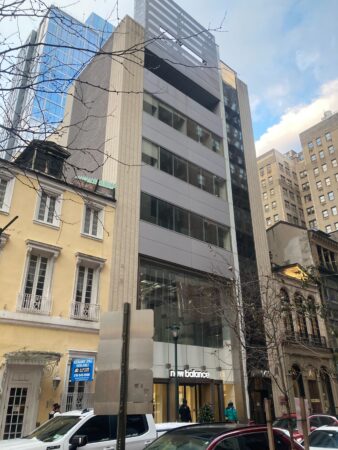
Another Philadelphia office building has sold for a small fraction of what it last changed hands for, this time in the heart of Center City’s retail district.
The six-story property at 1619 Walnut St. was purchased by Marc Zollinger, a Swiss investor and CEO of the company MZP AG, which is listed as the purchaser. Zollinger’s LinkedIn profile shows that he formerly worked in Philadelphia for Miller Investment Management.
The property sold for over $5 million, a dramatic decrease from when the seller Nuveen Real Estate purchased it in 2013 for over $19 million, according to a person familiar with the sale.
Neither Nuveen or Zollinger responded to a request for comment.
The office space in 1619 Walnut is wholly vacant, although real estate firm Keller Williams still holds a lease for two floors of now empty office space.
The retail picture at the property is more positive, with shoe seller New Balance occupying nearly 4,000 square feet on the ground floor with a lease that expires in 2035.
The sale price is seen as an unusually good deal for the location. Although the second-tier office space available in the building is the exact kind of product that has been hard hit by the rise of hybrid work since the COVID-19 pandemic, the upper floors of 1619 Walnut are seen as ideal for conversion into apartments.
“The sale price is an anomaly. … [Zollinger] bought it at an astoundingly good price,” said Larry Steinberg, head of the urban retail division for real estate services firm Collier’s Philadelphia office, who was not involved with the deal. “It would make a lovely residential conversion.”
The property’s sale was handled by JLL, a real estate services company, which advertised the building as an ideal office-to-residential conversion. The property enjoys the most flexible zoning in Philadelphia’s code, making such a transition relatively simple.
“With rectangular floorplates measuring approximately 4,900 square feet, the floor plan of the building makes it an ideal candidate for a conversion to boutique residential,” reads JLL’s promotional materials for the sale. “Given the existing layout of each floor, the redevelopment would accommodate a variety of modern open layouts with access to an abundance of natural light.”
JLL estimates that the office floors could accommodate up to 20 residential units, depending on the size of the apartments.
The building was purpose built for KYW radio in 1937 and, later, its television division. The influential Mike Douglas Show was based out of the building for much of its run, employing Roger Ailes, later of Fox News fame, in the late 1960s. In the early 1970s, John Lennon and Yoko Ono guest-hosted the show from the building for a week, interviewing people including Chuck Berry and Ralph Nader.
More recently, between 1997 and 2009, 1619 Walnut was home to the influential French restaurant Brasserie Perrier.
JLL’s Jim Galbally, who led the sales team, told real estate analytics firm CoStar that the purchase represented a “rare opportunity to acquire a retail, mixed-use asset along Walnut Street, Philadelphia’s premier high avenue.”
A Texas jury on Wednesdayacquitted a former Uvalde school police officer on 29 counts of child endangerment after he remained outside Robb Elementary School instead of immediately confronting the gunman who killed 19 children and two teachers in their classrooms in 2022.
The verdict is a major setback for prosecutors, who portrayed the case against Adrian Gonzales as a way to deliver justice and accountability for one of the deadliest school shootings in U.S. history.
Instead, jurors appeared to agree with Gonzales’ lawyers, who described him as unfairly singled out among the hundreds of law enforcement officers who arrived on the scene — a response that investigators said was marked by significant communication failures and poor decision-making.
Had he been convicted, Gonzales, 52, faced up to two years in prison.
The former officer of the six-member Uvalde Consolidated Independent School District Police Department was one of the first law enforcement personnel to respond on that sunny May day, when a teenage shooter walked into Robb Elementary through an unlocked door and opened fire inside two adjoining fourth-grade classrooms.
Prosecutors argued that Gonzales bore particular responsibility for the tragedy. They focused on his initial encounter with a frantic woman fleeing the school, who pointed toward the general location of the shooter as gunfire was heard inside, and his subsequent decision not to immediately rush in, which they said went against his active-shooter training.
However, defenselawyers noted that four other officers got to the school at almost the same time but also did not enter right away to confront the gunman. Unlike Gonzales, three of them were in a position to see the assailant, his lawyers said. One thought he spotted the shooter outside the school and asked for permission to fire, his superior officer testified.
Minutes after he arrived, Gonzales did go into the school with several other officers. Gunman Salvador Ramos, armed with an AR-style rifle, shot at them, grazing two, and the group retreated.
Nearly 400 officers ultimately converged on the school but did not breach the classroom where Ramos was located until more than an hour after he’d entered the building. A tactical unit shot and killed him.
Emotions ran high during the three-week trial, which featured wrenching testimony from teachers who survived the shooting and parents whose children were among the murdered and wounded.
The prosecution is “trying to hijack your emotion to circumvent your reason,” defense attorney Nico LaHood told jurors. Gonzales was “easy pickings,” he said. “The man at the bottom of the totem pole.”
Both of Gonzales’ lawyers repeatedly acknowledged the grief of families and the community. “There’s nothing that’s going to bring these kids back,” Jason Goss said during closing arguments Wednesday. “Nothing is ever going to solve that pain.”
But, he added, “You do not honor their memory by doing an injustice in their name.”
Gonzales is one of two former officers to be charged in connection with the mass killing. Pete Arredondo, the former chief of Uvalde’s school district police, is also set to stand trial on charges of child endangerment. Arredondo has pleaded not guilty.
Wednesday’s verdict marks the second time that a jury has declined to convict a school police officer for failing to stop a school shooting. In 2023, Scot Peterson, a sheriff’s deputy who worked as a security officer at Marjory Stoneman Douglas High School in Parkland, Fla., was acquitted of similar charges. Five years earlier, a gunman had killed 17 students, teachers and staff members at the school.
Gonzales’ trial took place before Judge Sid Harle in Corpus Christi, more than 200 miles from Uvalde, after the defense argued that a change of venue was necessary to obtain an impartial verdict. Jurors began deliberating early afternoon Wednesday.
Gonzales, in a blue suit and a tie patterned with crosses, wept and hugged one of his lawyers after the verdict was read. He had not testified in his own defense, but prosecutors played an hour-long video, recorded not long after the shooting, in which he recounted his actions at the school.
Christina Mitchell, the district attorney for Uvalde County, had told jurors that returning a guilty verdict would send a message to all law enforcement officers about their duties to members of the public and children in particular.
The children inside Robb Elementary had followed their lockdown training, staying quiet and hidden, she said, while Gonzales did not run to confront the shooter, as his training suggested.
“We’re not going to continue to teach children to rehearse their own death and not hold [officers] to the training that’s mandated by the law,” Mitchell said. “We cannot let 19 children die in vain.”
Mothers of several of the children killed in the massacre cried together outside the Nueces County courthouse Wednesday night. Relatives of another victim, 9-year-old Jacklyn Cazares, reacted with fury immediately after the verdict.
“I’m angry,” said her father, Javier Cazares, in video provided by local television station KSAT. “We had a little hope, but it wasn’t enough.”
The University of Pennsylvania has received an $8 million gift to redesign how it trains doctors at the Perelman School of Medicine, Penn officials announced Thursday.
Incorporating technology, AI, and data to create customized learning pathways for Penn medical students is an overarching goal. The effort comes at a time when increasingly easyaccess to medical information and changes in care delivery are leading medical schools nationwide to revamp their curricula.
The gift to Penn is from New York-based RTW Foundation, a philanthropy associated with the life sciences investment firmfounded by Perelman School graduate and Penn Medicine board member Rod Wong. Penn said the gift from Wong, and his wife, Marti Speranza Wong, is the largest single donation to support curriculum innovation at the medical school, which dates back to 1765.
At a news conference announcing his donation Thursday, Wong recalled his time atthe medical school right after its last major overhaul of the curriculum in 1998. One update underPenn’s “Curriculum 2000” revamp was recording and making lectures available online — a relatively innovative move at the time (YouTube wouldn’t be created for another several years).
“Technology has changed, and obviously we’re at this same inflection point because of AI and data science,” said Wong, who is managing partner and chief investment officer at RTW Investments LP.
Penn alumnus Rod Wong (center) sits with dean of Perelman School of Medicine Jonathan A. Epstein (left) after signing the gift agreement.
The vast majority of the $8 million gift will go toward hiring data scientists and engineers, supporting faculty, and building and acquiring the platforms needed to deliver the new curriculum.
Technology will be incorporated into new training techniques, such as byusing augmented or virtual reality to assist in learning anatomy, developing knowledge needed to diagnose illnesses and develop treatment plans, and mastering clinical skills such as IV placement and suturing.
For example, students can practice taking a person’s medical history or doing a physical exam on a virtual patient, while an AI agent is there to give feedback in real time.
“It’s really adaptive to the individual learner, but you do it at your own pace, on your own time,” said Lisa Bellini, executive vice dean of the medical school and a leader on the project.
The redesign will take place over the next three years as school leaders consult with stakeholders and work on building the platform.
Some of Wong’s gift will be used to create a biannual endowed lecture in business and entrepreneurship that will bring leaders in medicine and healthcare innovation to campus. The gift will also establish the Roderick Wong Entrepreneurship Pathway, which will provide mentorship, workshops, and project-based learning to students with business interests.
“We really need to incorporate the fundamentals of how best to use technology responsibly within the practice of medicine and create something incredibly enduring, because you’re not going to go through this exercise every three years,” Bellini said.
The Perelman School of Medicine is embarking on its curriculum revamp at a time when medical education is evolving at many schools.
Some medical schools have concentrated the traditional two years spent learning science into one year to give students more time to learn how to interact with patients and collaborate with other medical professionals.
A three-year medical school option is offered at institutions such as the Pennsylvania State University College of Medicine to speed doctors into the clinic and reduce students’ debt loads.
Jennifer Kogan, vice dean for undergraduate medical education at the Perelman School of Medicine, is a leader in the curriculum revamp.
Faster, flexible learning
Like most medical schools, Perelman has a standard curriculum where students take foundational science courses for a stretch of time and then transition to the hospital to gain clinical experience.
This can lead to some students repeating courses that they already mastered in college.
“If you were a biochemistry major as an undergrad, do you really have to take biochemistry again?” said Jennifer Kogan, vice dean of undergraduate medical education and a leader on the redesign project. “How could you better use that time to achieve whatever your career goals are?”
Leaders at Penn want to give students the flexibility to adjust their timelines based on their skill sets and goals.
Instead of setting a fixed time for how long a class or rotation will take, a student who masters a skill more quickly should be able to move on and devote their time to other interests, such as research or entrepreneurship.
Many students at Penn pursue dual degrees or research fellowships that end up adding a fifth year of medical school. Penn leaders hope adding flexibility to the curriculum could enable students to instead finish in four years or “maybe even three,” Kogan said. (The possibility of a three-year path is not yet guaranteed but will be explored.)
“It will be better set up to support students like me who have had to use significant federal loans to finance their way through medical school and might have benefited from the condensed training timeline,” said Alex Nisbet, a fourth-year medical student at Perelman who spoke at the signing event.
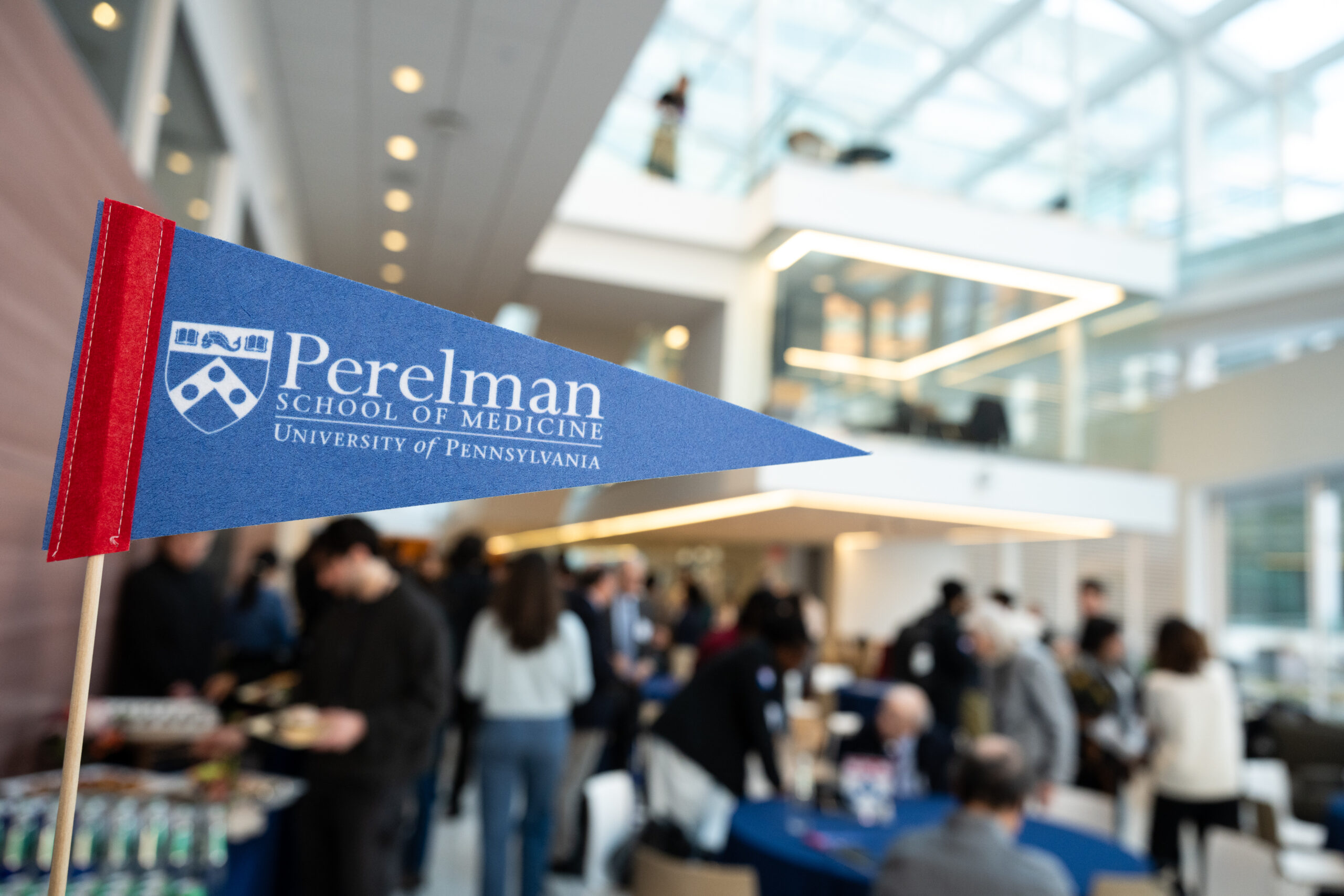
An attendee holds a pennant flag representing the Perelman School of Medicine.
The school will leverage data and AI to assess how individual students are progressing in what they’re calling a “precision education model.”
Though parts of the program will be piloted over the next three years, the first class to see the full implementation of the curriculum will be in the fall of 2029.
In total, 159 buildings would be modernized, while six schools would co-located inside existing buildings
The plan will be presented to the school board Feb. 26, with a board vote expected sometime this winter.
// Timestamp 01/22/26 6:23pm
Philly could close 20 schools, co-locate 6, and modernize 159: Superintendent Watlington shares his facilities plan
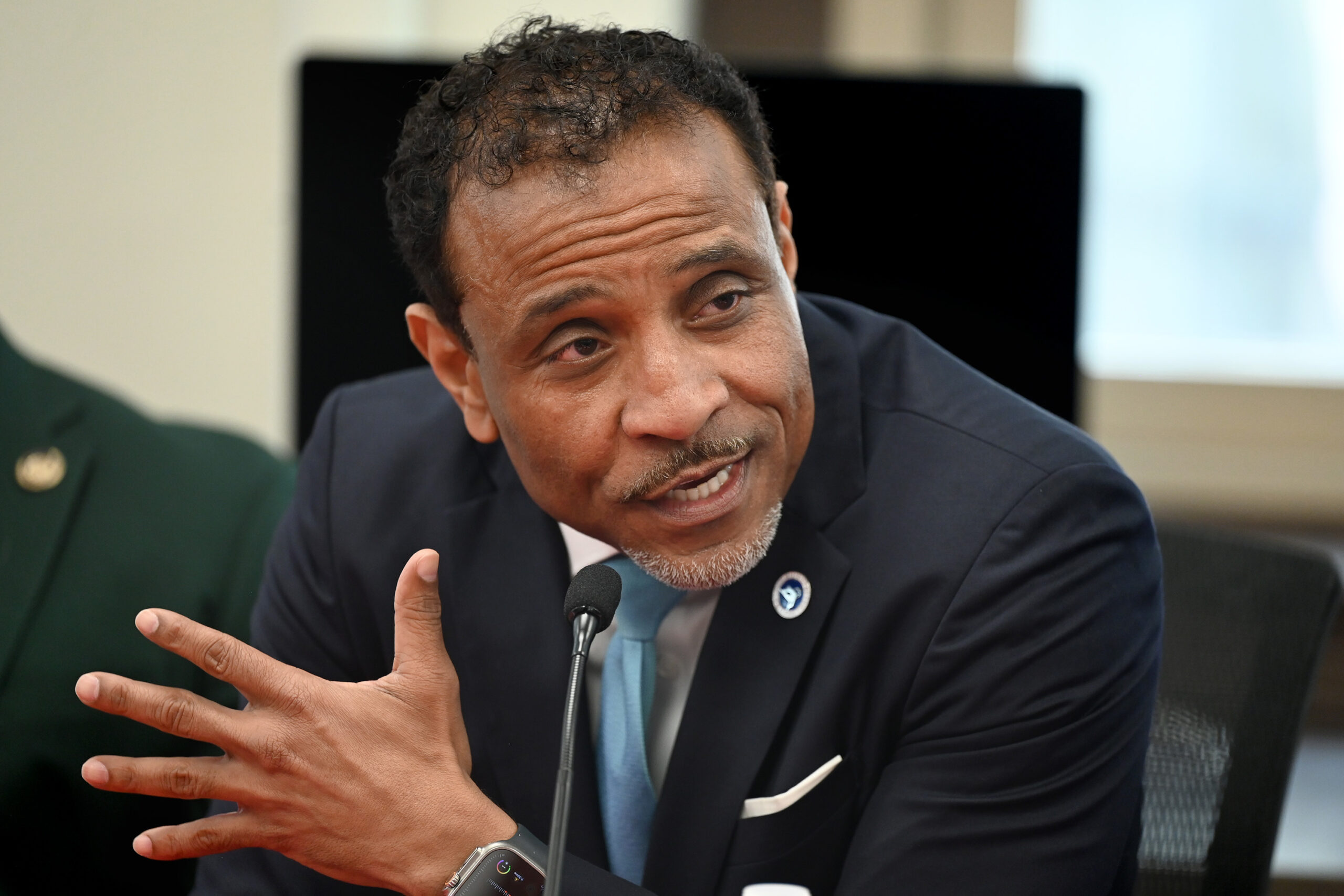
****Embargoed until 5pm on Thursday January 22, 2026 ***Superintendent of the School District of Philadelphia Tony B. Watlington at a press conference to announce the plan for the first draft of the Philadelphia facilities master plan during a press conference at the Philadelphia School District Headquarters, in Philadelphia January 20, 2026.
Wholesale changes are coming to the Philadelphia School District, with Superintendent Tony B. Watlington Sr. poised to propose a massive reshaping of the system, including closing 20 schools.
The plan, years in the making, would touch the majority of the district’s buildings and bring change to every part of the city: over a decade, 159 would be modernized, six co-located inside existing schoolbuildings, 12 closed for district use, and eight closed and given to the city.
At least one new building would be constructed.
The 20 closures, which would not begin to take effect until the 2027-28 school year, would be scattered through most of Philadelphia, with North and West Philadelphia hardest hit.
Watlington released some details of the blueprint Thursday — including the list of proposed school closures—and acknowledged that the changes will roil some communities.
Watlington is scheduled to present his proposal to the school board next month, with a board vote on the plan expected this winter.
Mayor Cherelle Parker defends district’s plan: ‘A clear-eyed look at really what matters for our children’
Mayor Cherelle L. Parker on Thursday praised the community engagement process Superintendent Tony B. Watlington Sr. conducted before issuing the facilities plan and defended the school district from critics.
“It is ambitious, it’s thorough, and it’s grounded in what I believe matters most, and that’s achieving the best outcomes for our students,” Parker told reporters. “I’m proud that the district has taken what I would describe as a clear-eyed look at really what matters for our children.”
Watlington’s outreach efforts, she said, stood in stark contrast to the district’s handling of the last round of school closures in the early 2010s, when Parker was a state representative.
“All this communication didn’t happen before, and I know because I was there,” Parker said. Criticism of the plan, she said, is to be expected.
“There are going to be some people who are going to politically try to use this as an anchor, for politics, to raise funding, to just point fingers and say what’s wrong and criticize the district’s leadership,” Parker said. “It’s a part of the process. … But there is no one who can question Dr. Watlington and his exec team.”
The Philadelphia school district’s facilities plan did not go over well in City Council
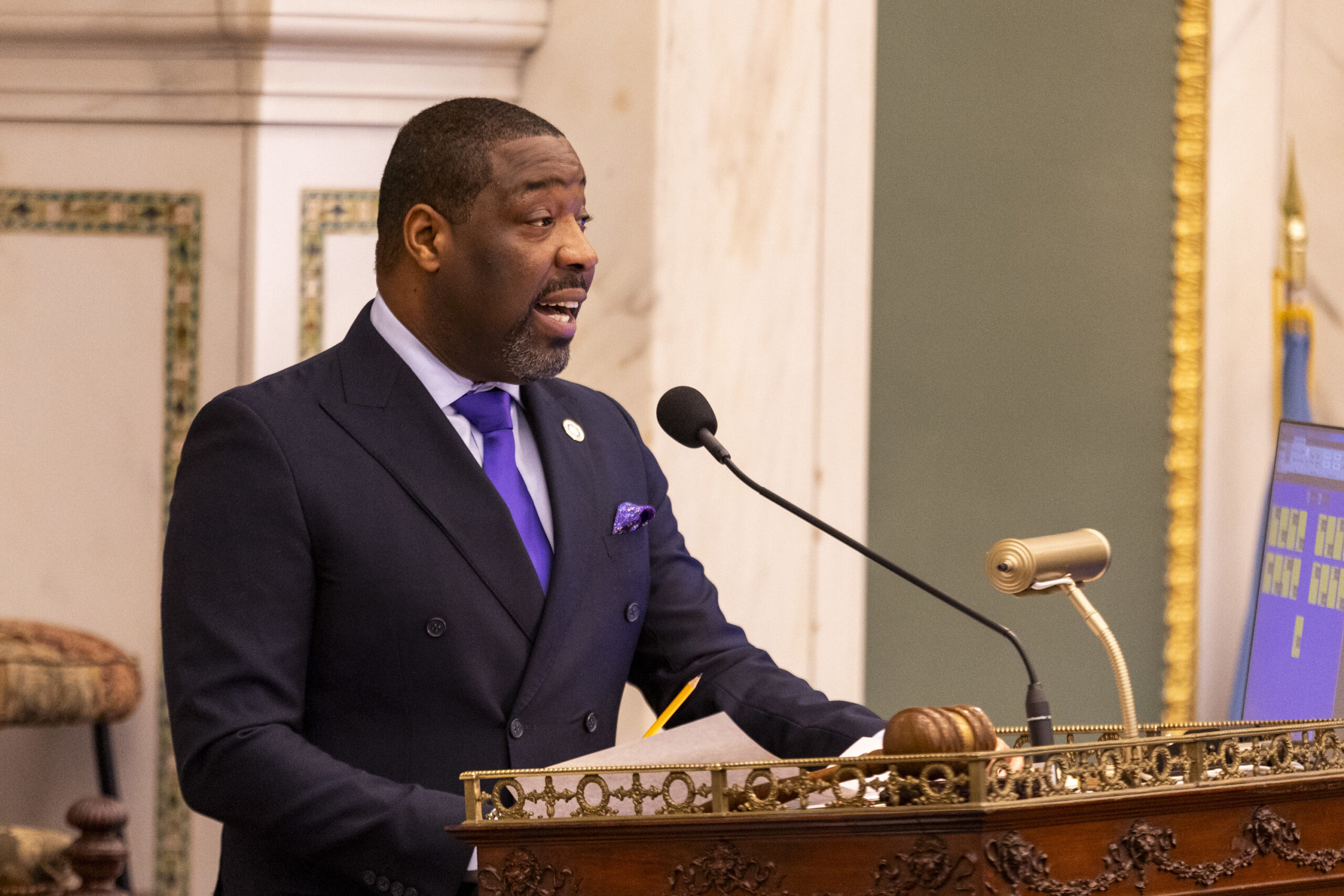
City Council President Kenyatta Johnson speaking at the City Council’s first session of the year in Philadelphia, Pa., on Thursday, Jan. 22, 2026.
City Councilmember Jamie Gauthier said the Philadelphia school district showed “just a complete lack of thought and consideration for really important programs” when crafting its long-anticipated facilities plan, released Thursday.
Council President Kenyatta Johnson said his members had “a lot of concerns.”
And City Councilmember Jeffery “Jay” Young Jr. went so far as to propose amending the city Home Rule Charter to allow Council to remove the school board members who will consider the proposed closures.
“If you are closing schools during a literacy crisis, then you should be held directly accountable to the people you serve,” Young said.
In many ways, it’s unsurprising Council members would speak out against a plan that would close or consolidate schools in their districts. But the pushback from lawmakers Thursday was notably strong, and Young’s proposal to allow Council to remove school board members could dramatically reshape the politics of the district.
Schools plan draws mixed reactions from state lawmakers representing Philly in Harrisburg
The School District of Philadelphia’s plan to close 20 schools through an overhaul of the system received mixed feelings from state lawmakers representing the city in Harrisburg, ranging from careful optimism to concern.
Lawmakers in Harrisburg are responsible for distributing billions of state dollars for public education, including any funding increases. These funds are critically important in Philadelphia, whose tax base alone only meets about a quarter of the needs of its students.
It’s unlikely that any school closures will impact the district’s annual funding from the state, but will likely be a part of conversation as budget talks resume next month for the upcoming fiscal year.
Rep. Andre Carroll, a Democrat who represents parts of Northwest Philadelphia, was driven to run for office by the 2013 closure of his alma mater Germantown High School, which closed during the district’s last round of shutdowns. Now, he has three schools in his district set to close, merge, or co-locate that he worries will negatively impact local students.
“I’m very scarred by that situation and that experience,” Carroll said. “I fear there’s young people in my district that are about to experience the same thing.”
The three schools slated for closure in Carroll’s district are: Building 21 (to be co-located at Martin Luther King High School and building given to the city), General Louis Wagner School (closing but building use is unknown) and Parkway Northwest High School (merging into MLK as an honors program and building used as district swing space).
Carroll said he’s particularly concerned about Wagner’s closure, as it’s the only public middle school in West Oak Lane.
He’s also concerned about the district giving the empty buildings to the city, making the city responsible with their upkeep until they are sold or repurposed. This is especially top of mind to him, he said, because he represents the area where 23-year-old Kada Scott’s body was found last year. Her remains were found on the grounds of the former Ada H.H. Lewis Middle School that’s been closed since 2008 that has over the years become a hotspot for illegal dumping, squatting and other criminal activity. More vacant school properties could attract more crime and community issues in his district, Carroll said.
And if the city sells off the empty properties, he wants to make sure they reach a different fate than that of his alma mater Germantown High, which is now luxury apartments.
“What I fear is that we’re going to continue to see these school buildings turned into unaffordable housing,” Carroll added.
For Rep. Mary Isaacson, a Democrat whose district includes Fishtown, has almost the opposite problem: Schools in her district are often overcrowded due to the area’s population and development boom. One school in her district — Penn Treaty High School currently for students grades 6-12 — will be closed and expanded to become the new site of Bodine High School.
“Right now, I’m taking it as a ‘wait and see,’” Isaacson said. “This has to go through the process with the school board. There probably will be changes. Putting forth the plan doesn’t mean it’s rubber-stamped.”
“I do credit the school district with trying to move forward, modernizing and addressing a lot of the facility issues as part of this plan that have plagued the city of Philadelphia and their aging infrastructure,” she added.
Isaacson said she hopes the district revisits its catchment areas created years earlier to account for her district’s development boom.
“My community schools are bursting in most places,” Isaacson said. “I look forward to having discussions about making room for growth, which may not be the same issues that some others are experiencing in other parts of the city.”
District’s announcement echoes closures from more than a decade ago, Stand Up for Philly Schools coalition member says
For Akira Drake Rodriguez, another member of the Stand Up for Philly Schools coalition, the district’s announcement echoed the highly controversial School Reform Commission closures more than a decade earlier.
“The way this process was presented was trying to not repeat the mistakes of the 2013 closures,” said Rodriguez, an assistant professor of city and regional planning at the University of Pennsylvania who was part of a district advisory group during its planning stages. Yet “the rollout was bumpy,” with some principals of affected schools informing their staffs, and others not, Rodriguez said. “It did not feel like it was done with the care and engagement they knew and were trying to address in this process.”
Rodriguez noted that Tilden Middle School in Southwest Philadelphia was now slated for closure, after absorbing the populations of the Shaw and Tilden middle schools shuttered by the SRC.
“That’s a school you would invest in,” she said. She questioned where students would go instead: “That whole neighborhood of Southwest Philly is charter schools. Do you really think they’re going to stay in traditional public schools when you close Tilden?”
She predicted enrollments at some schools marked for closure would plummet as parents face uncertainty around their futures.
“The district hasn’t really given people a ton of confidence around managing large-scale modernization efforts,” Rodriguez said.
Council President Kenyatta Johnson endorses proposal that would allow city lawmakers to remove school board members
Council President Kenyatta Johnson said Thursday that city lawmakers had “a lot of concerns” about the school district’s facilities plan and would do their “due diligence” to evaluate it.
“I’m sure it’s going to be a very, very robust process,” Johnson told reporters. “These are only recommendations. This isn’t the final product.”
Notably, Johnson immediately endorsed a new proposal by Councilmember Jeffery “Jay” Young Jr. that would allow Council to remove school board members, potentially reshaping the politics of the district. Currently, the mayor appoints the nine-member board, and Council votes to confirm them.
Young’s proposal, an amendment to the city Home Rule Charter, would require voter approval if Council adopted it. Johnson’s endorsement Thursday likely means it has a good choice of at least getting through Council.
“It’s a good check and balance in terms of the process, and also allows us to have the ability and the opportunity to make sure that anything that the school board does is done with transparency,” Johnson said. “I‘m always for, as members of City Council and this body in this institution, having the opportunity to provide accountability.”
‘You’re piling too many kids per classroom. What are the kids learning?’
Letitia Grant, 41, was frustrated to learn that her daughter’s Penn Treaty School was marked for closure in the district’s plan.
“That sucks. That can’t happen,” she said.
Her daughter is in eighth grade at the Fishtown school, and would have stayed at Penn Treaty through her high school graduation. Grant said her daughter loves her teachers and guidance counselor, and has many friends whom she’d miss.
Grant was worried that the district’s consolidation plan could mean larger class sizes and less individual attention for her daughter at a new school. As her daughter and a friend hung out on the sidewalk after dismissal, they stopped their biology teacher to chat. Grant said he was her daughter’s favorite.
“You’re piling too many kids per classroom. What are the kids learning?” she said.
// Timestamp 01/22/26 3:25pm
Councilmember Jamie Gauthier says district’s planning lacked ‘thought and consideration’ for important programs
City Councilmember Jamie Gauthier said the Philadelphia School District showed “just a complete lack of thought and consideration for really important programs” when crafting its long-anticipated facilities plan.
Gauthier said the plan would limit opportunities in her West Philadelphia-based 3rd District. She pointed to changes including Robeson High School and Parkway West ceasing to exist as standalone schools (Robeson would merge into Sayre and Parkway West into SLA Beeber) and The Workshop School co-locating with Overbrook High School.
“What are people supposed to do for good high school options in West Philadelphia?” Gauthier said .
Gauthier added that while Superintendent Tony B. Watlington Sr. has talked at length about avoiding the mistakes of the district’s widely criticized 2012 school closure plan, it appears doomed to repeat that history.
“That’s a great thing to hold up every time we have this conversation, but how are you solving for it?” Gauthier said. “You can’t state all of the things that went wrong and then present a plan that seems to lack care in the same way as the plan in 2012.”
Proposed school closures are ‘deeply troubling,’ Academy at Palumbo parent says
Edwin Mayorga, an Academy at Palumbo parent and member of the Stand Up For Philly Schools coalition, called the planned school closures “deeply troubling.”
“Closing schools straight off is never to me the right answer,” said Mayorga, an associate professor of educational studies at Swarthmore College who said SUPS is planning to rally outside district headquarters next Thursday to oppose the closures. “It’s about asking ourselves, what are the conditions that have produced a school that has declining enrollments, or toxic conditions in the facility, and trying to start from there?”
Mayorga said he was still concerned the district hadn’t adequately engaged with the community. While the district touted 8,000 responses from a citywide survey, Mayorga questioned how extensively it was promoted.
He also expressed skepticism of its findings: When his wife filled it out, Mayorga said, she was asked to choose between options she felt should all be priorities — like a neighborhood high school, and clean facilities.
“How much did that survey really tell us? They’re framing it as a mandate,” said Mayorga, who noted that the Palumbo HSA wasn’t given notice of the plan for a new middle school.
He also said the district’s plan seemed to “bury” the facilities needs of many of its aging buildings — citing Southwark Elementary’s troubles as just one example.
“With all the money involved here … we’re still struggling to ensure all the schools across the city are operating in well-supported ways,” he said.
Search tool: Check how your school could be impacted
window.addEventListener(“message”,function(a){if(void 0!==a.data[“datawrapper-height”]){var e=document.querySelectorAll(“iframe”);for(var t in a.data[“datawrapper-height”])for(var r,i=0;r=e[i];i++)if(r.contentWindow===a.source){var d=a.data[“datawrapper-height”][t]+”px”;r.style.height=d}}});
Newly introduced legislation seeks to allow City Council to remove members of the school board
One lawmaker on Thursday said he planned to oppose some of the closures proposed by the school district and brought legislation that would allow City Council to remove members of the school board.
Councilmember Jeffery “Jay” Young, Jr., a Democrat who represents the North Philadelphia-based fifth district, introduced legislation to amend the city’s Home Rule Charter to give council the authority to remove board members, which it is not currently empowered to do. To become law, Council would need to pass legislation and a majority of voters would have to approve it through a ballot question.
Young said it’s necessary to ensure accountability.
“If you are entrusted with $5 billion in public funds, if you are closing schools during a literacy crisis, then you should be held directly accountable to the people you serve,” Young said. “This moment really demands our leadership.”
He added: “Our children deserve stability. And above all, they deserve leaders who are willing to fight.”
The legislation is also no doubt in response to a 2024 episode involving school board member Joyce Wilkerson, whom Council tried to deny a seat on the board by withdrawing her nomination. But Mayor Cherelle L. Parker took advantage of a loophole in the law and asked Wilkerson to serve on the board indefinitely.
Alliance for Philadelphia Public Schools blasts district’s plan, vows to oppose closings
The Alliance for Philadelphia Public Schools — a group made up mostly of retired district staff who are frequently critical of the district — blasted the district’s plan and the process it used to get there, and vowed to oppose closings.
“Closing public schools that serve as community anchors has been and will again be devastating,” Lisa Haver, group coordinator and a co-founder, said in a statement. “Members of the school communities affected have been given very little time to organize and fight to save their schools before the board’s final vote.”
Watlington is scheduled to present his plan to the school board on Feb. 26, but a vote has not been set. District officials said it was expected sometime this winter.
Group members also questioned why the district “would give away valuable properties to the city, and why the city would not pay for buildings out of its $4.6 billion capital budget.”
Philadelphia Education Fund president is ‘feeling optimistic’ about schools plan
Farah Jimenez, president of the Philadelphia Education Fund, called the plan “incredibly ambitious,” presenting new opportunities for students. For instance: Centralizing many career and technical education offerings, which could help more kids access them, Jimenez said.
But Jimenez, who served on the former state-appointed School Reform Commission after it voted in 2013 to close more than 20 Philadelphia schools, also predicted challenges — including managing expectations.
“With a lot of change comes a lot of anxiety,” Jimenez said, noting schools’ role not just as places of education, but as community hubs.
The district also will have to think about “the brand around some of these community schools,” Jimenez said, and how to co-locate schools with “arguably some differences in culture and make sure people feel like that is a win-win for both student populations.”
The district is planning to give eight school buildings to the city, which Jimenez said reflected a lesson learned from the SRC. When the commission tried to put school buildings on the open market, “it didn’t end up being the win we expected,” she said.
While the SRC’s closure decisions were driven by financial constraints, “it feels like these changes are being made to improve experiences for students and educators,” Jimenez said. She said she was “feeling optimistic about it, because in Philadelphia we have a tendency to not do hard things.” If done well, the plan could be “incredibly exciting.”
Closure plan is ‘a loss for Philadelphia,’ principals union president says
Dr. Robin Cooper, president of CASA, the Philly principals’ union goes to her notes while the principals stream a Facebook live town hall meeting on April 7,2021. Teamsters International Rep. Michael Clark is on left.
Robin Cooper, president of the union that represents district principals, said the effects of Thursday’s announcement will be felt for years.
“It’s a loss of history, a loss for Philadelphia,” said Cooper. “Schools are a family, and some families are breaking up.”
Cooper said she understands the math — the district has a lot of old buildings, many of which are have decades of deferred maintenance. A state court affirmed that the district has been underfunded for generations.
“We know that change is inevitable, but this is difficult because we are talking about our schools,” Cooper said. “My members are in shock. And we’re figuring out how do we continue to provide a stable environment for our school staffs and our students and parents.”
Though no closings would happen until the 2027-28 school year, Watlington said, the announcement was likely to have a destabilizing effect immediately. Site selection — the process by which teachers and other school staffers can apply for new jobs in the district — opens soon, and though they won’t be forced to find new positions immediately, some employees will likely move to jump now, before they’re pushed.
Workshop School founder skeptical of Philly school closure plan
Simon Hauger said closing schools like Overbrook High will be “politically not easy.”
As the district released the school closure plan, Simon Hauger, founder of the Workshop School, was skeptical.
Given the school system’s billions of dollars in deferred maintenance, “the district does not have the talent and capacity to actually solve this problem,” Hauger said. “To me, that’s the part that’s most frustrating … This is not their expertise. The solutions they’re offering are not going to be good solutions.”
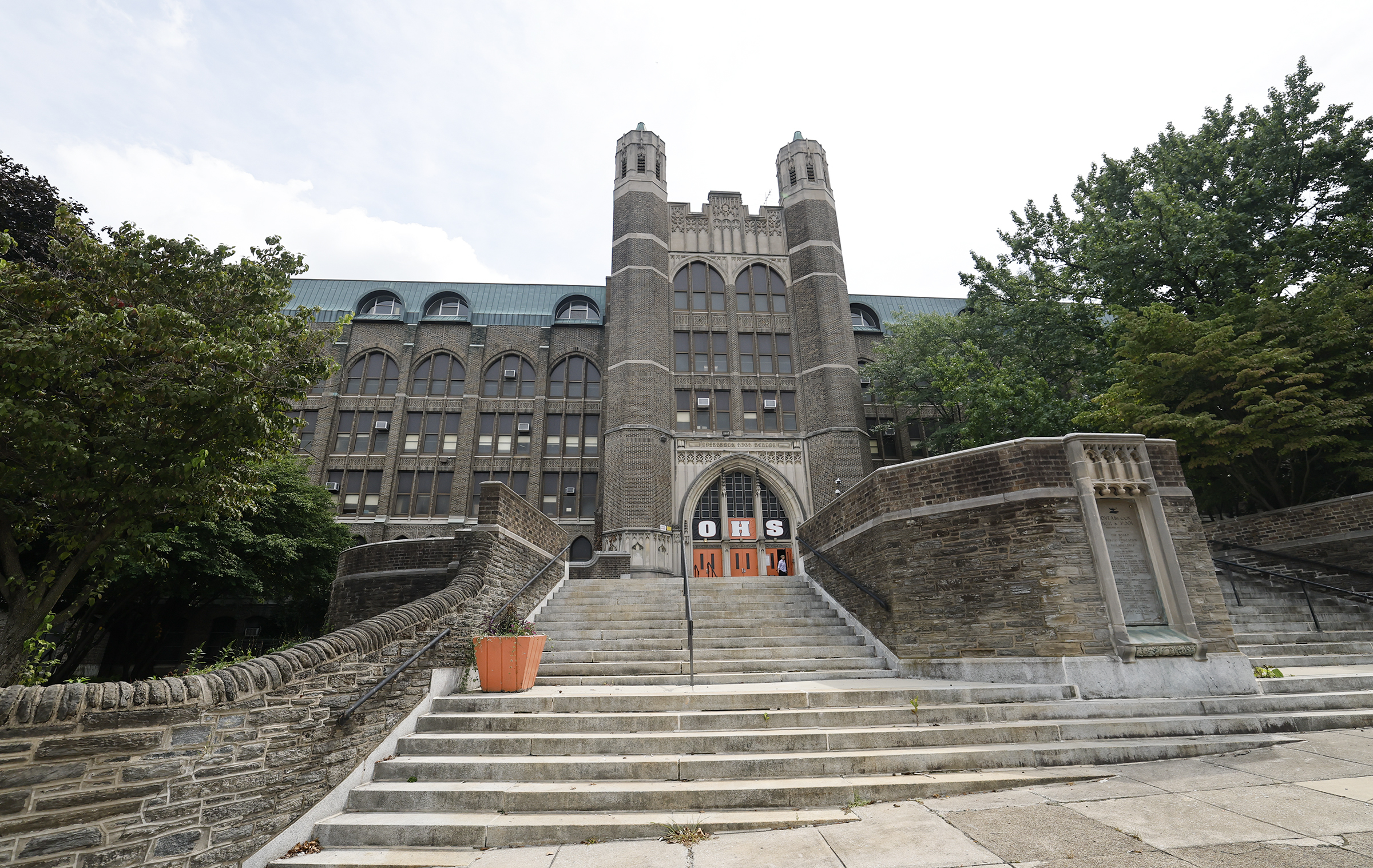
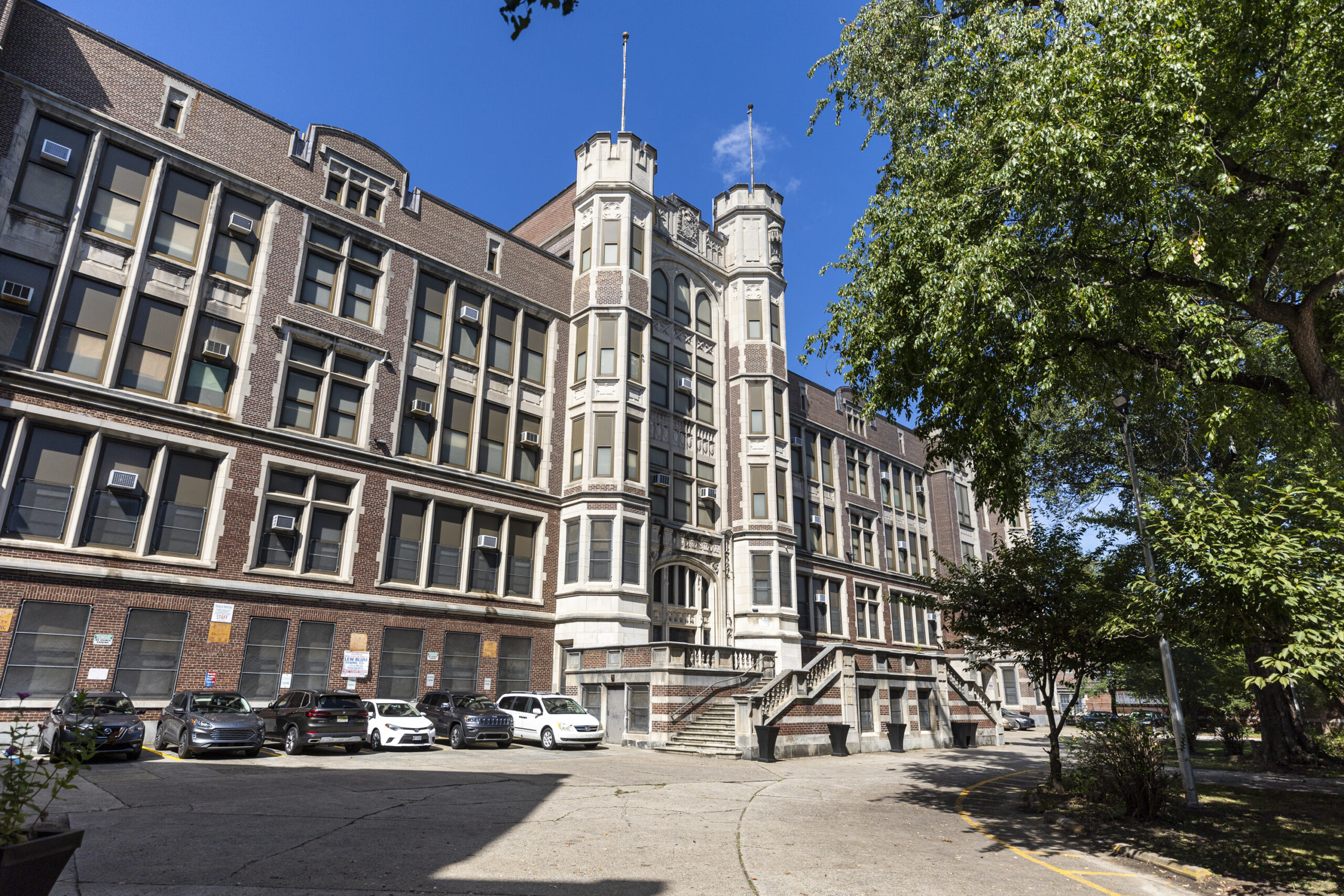
Under the plan, Workshop would move into the under-enrolled Overbrook High School in West Philadelphia — which “would be fine,” Hauger said. “There’s good stuff at that building.” But that only makes Overbrook, which Hauger estimated takes millions to run, “slightly more utilized,” he said. “It doesn’t make sense to me.”
The problem, Hauger said, is that closing a school like Overbrook High, which was not slated to shut, is “politically not easy.”
Philly City Council members express concerns about school closure plan
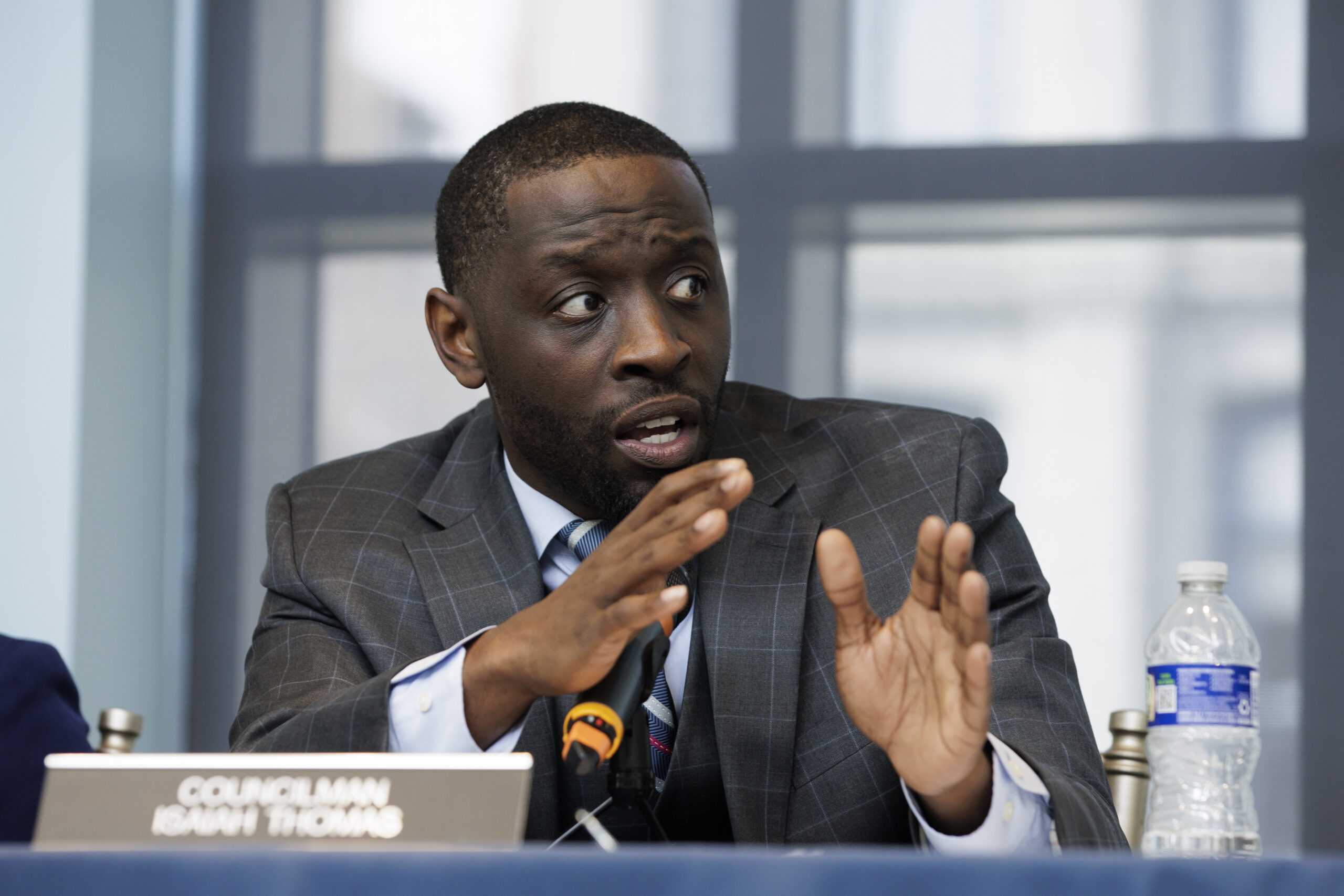
Councilmember Isaiah Thomas, seen here in April, said he would oppose the closure of Russell Conwell Middle School in Kensington.
City Council members were meeting Thursday morning during the first meeting of the year as news of the school district’s facilities plan became public. Several members, who were briefed on the plan earlier this week, said they understood the need to close and consolidate schools but have concerns about how individual closures could impact communities.
“I’m Philly-born and raised, so there’s always like an emotional attachment to schools,” said Councilmember Isaiah Thomas, a Democrat who chairs the Education Committee. “They are a pillar in a lot of neighborhoods. Whenever you step into a conversation like this, you are always going to be super emotional.”
For example, Thomas attended Russell Conwell Middle School in Kensington, which is slated for closure under the facilities plan. He said he will “adamantly” oppose the district shutting Conwell’s doors.
Thomas did praise the district’s process for drafting its plan and said Superintendent Tony Watlington engaged in an open dialogue with lawmakers.
The district, he said, acted with clear “intentionality.”
Councilmember Curtis Jones Jr., whose district includes parts of West and Northwest Philadelphia, said some of the changes are encouraging, including an expansion of career and technical education planned for some schools, including Overbrook High School. Increasing the student body at the school instead of electing to close it, Jones said, is “right on point.”
Jones also said some co-locations make sense — “like a great peanut butter and jelly mix” — but others could combine students who come from different neighborhoods and backgrounds. He said the district must consider what merging those populations means for classroom dynamics.
“The places where the kids come from, that is always a dynamic that is under considered,” Jones said. “If I live in this neighborhood and got to travel to that neighborhood, what are the historical dynamics? That granular detail needs to be discussed.”
Philly teachers union president blames ‘chronic underfunding’ for school closing plan
Philadelphia Federation of Teachers president Arthur Steinberg, seen here in September at Murrell Dobbins Career & Technical Education High School.
Arthur Steinberg, president of the Philadelphia Federation of Teachers, said he’s waiting to see more granular details of the plan, including the list of schools that will be upgraded and what fixes are promised, and hopes information about how much weight was given to every factor that went into the decisions.
But, Steinberg said, “it is devastating for any community to lose their school — the parents, the kids and the staff.”
As for the process that led the district to this moment, Steinberg said it was abundantly clear even to advisory panel members that their viewpoints were just points of information for Watlington’s administration, that no promises about heeding any advice were made.
Either way, the closure of 20 schools and more changes that will have ripples across the city for years to come all lead back to one factor, he said.
“Without the chronic underfunding of the district,” said Steinberg, “we wouldn’t have gotten to this point.”
A copy of the Philadelphia School District’s facilities master plan.
Outrage mounted for some Thursday morning as district officials began quietly notifying affected communities and groups.
“It’s heartbreaking,” said Sharee S. Himmons, a veteran paraprofessional at Fitler Academics Plus, a K-8 in Germantown. “It feels like a family member is dying.”
Himmons is enrolled in the district’s paraprofessional pathways program, taking college courses to earn her degree and teacher certification. She was sitting in her math class at La Salle University when she found out Fitler was slated for closure. She began crying. She failed a test she was taking because her concentration was shot, she said.
“This school is such a staple in the neighborhood,” she said. Fitler is a citywide admissions school, but draws many students from the area. Himmons’ own sons attended Fitler, and she wanted to teach there after her college graduation.
“This isn’t over,” she said. “We’re going to fight — hard.”
Philadelphia School District Superintendent Tony B. Watlington, seen here in September.
Wholesale changes are coming to the Philadelphia School District, with Superintendent Tony B. Watlington Sr. poised to propose a massive reshaping of the system, including closing 20 schools.
The plan, years in the making, would touch the majority of the district’s buildings: over a decade, 159 would be modernized, six co-located inside existing buildings, 12 closed for district use and eight closed and given to the city.
One new building would be constructed.
Change would come to every part of the city, but not until 2027-28. Closures would be scattered through most of Philadelphia, with North and West Philadelphia hardest hit.
Philadelphia, the nation’s eighth largest school system, now has 216 schools in 307 buildings, the oldest of which was built in 1889. It has 70,000 empty seats citywide, though some of its schools, especially those in the Northeast, are overcrowded.
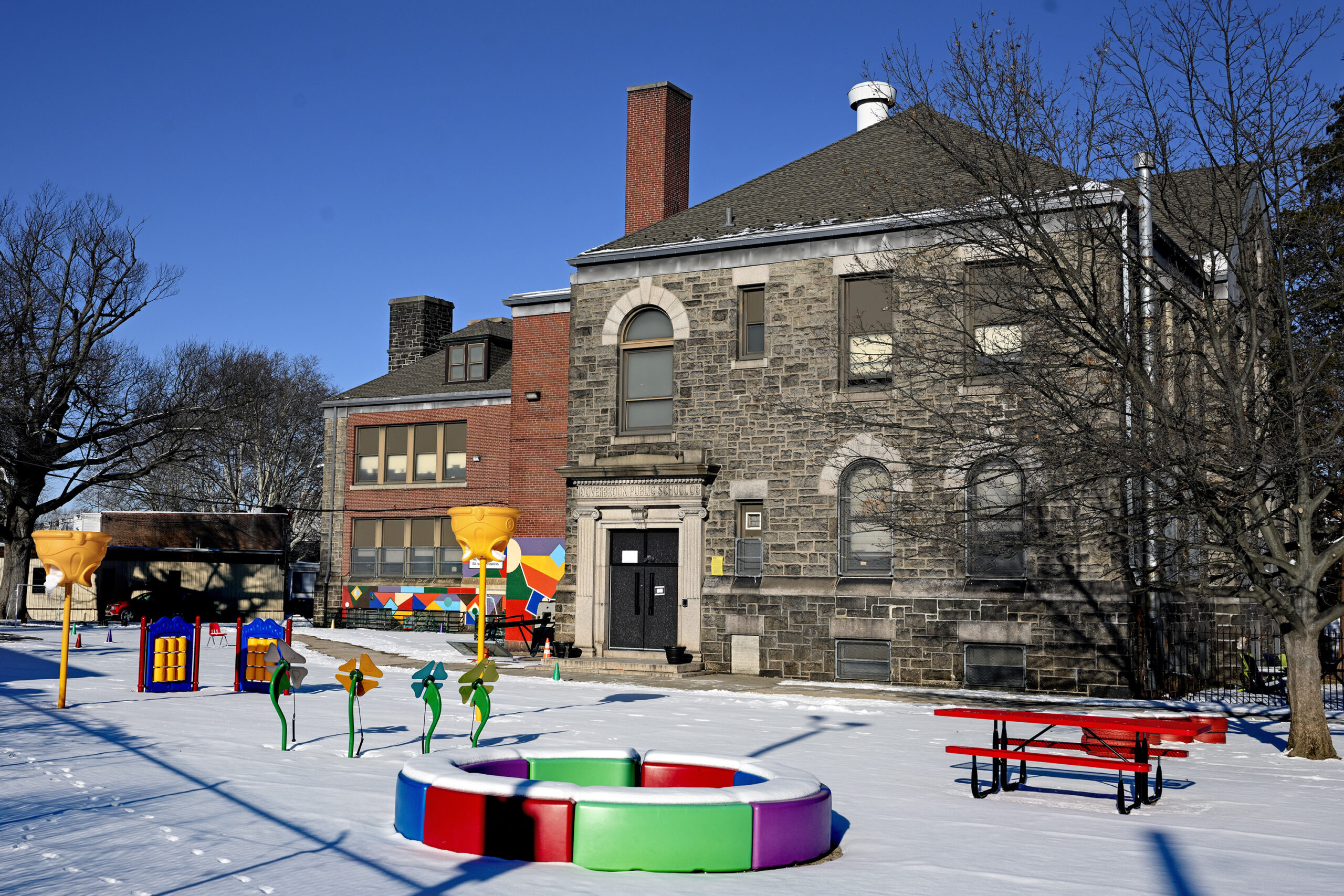
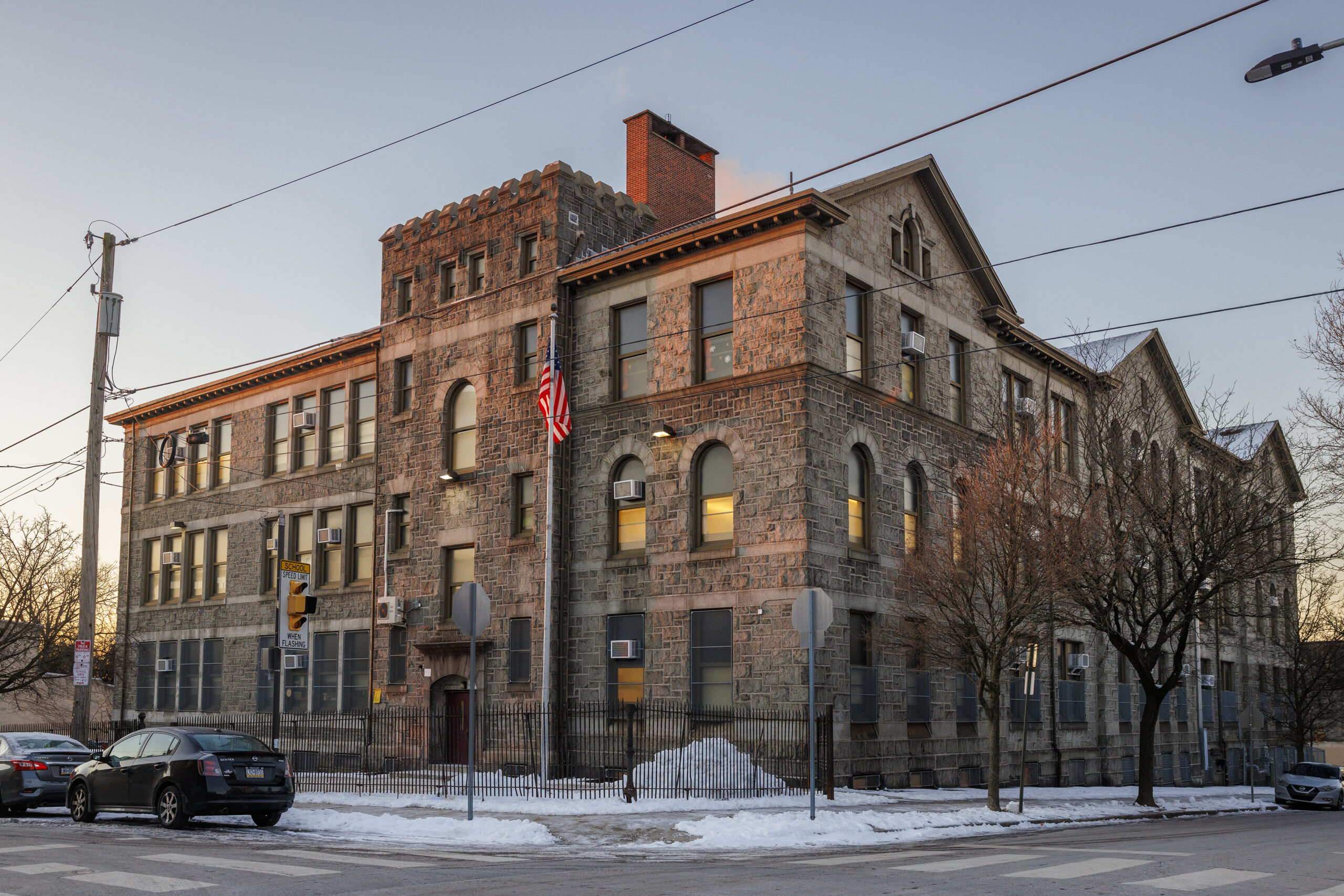
Overbrook Elementary is among the schools that would close.
Here are the 20 schools that would close under Superintendent Tony B. Watlington Sr.’s revitalization plan:
Elementary schools
Blankenburg
Fitler
Ludlow
Overbrook
Pennypacker
Morris
Waring
Welsh
Middle schools
AMY Northwest
Conwell
Harding
Penn Treaty
Stetson
Tilden
Wagner
High schools
Lankenau
Motivation
Parkway Northwest
Parkway West
Robeson
(function() {
var l2 = function() {
new pym.Parent(‘school_closing1’,
‘https://media.inquirer.com/storage/inquirer/projects/innovation/arcgis_iframe/school_closing1.html’);
};
if (typeof(pym) === ‘undefined’) {
var h = document.getElementsByTagName(‘head’)[0],
s = document.createElement(‘script’);
s.type = ‘text/javascript’;
s.src = ‘https://pym.nprapps.org/pym.v1.min.js’;
s.onload = l2;
h.appendChild(s);
} else {
l2();
}
})();
Some of those schools, like Lankenau and Robeson, would become programs inside other schools — Roxborough High for Lankenau, and Sayre for Robeson. Others would close outright, with students assigned elsewhere.
Students at the affected schools would move into schools with similar or better academic outcomes or building conditions, or schools that are better by both measures, Watlington said. Transition resources would be available for schools, students and families from closing schools and for schools that take in new students.
Watlington said he did not anticipate job losses as a result of the closures.
Frankford High School is an example of a Philly school that has been modernized.
Most schools — 159 — would be modernized under the proposed plan. (Frankford High, which closed for two years because of asbestos issues and just re-opened this fall with $30 million of work to spruce it up, is an example the district cited of a modernization.)
An additional 122 fall into the “maintain” category, meaning they’ll just receive regular upkeep.
Six facilities would be co-located, meaning they would be two separate schools housed under one roof, each with its own principal and team.
Twenty schools would be closed.
A lot of shuffling is planned. Penn Treaty, now a 6-12 school in Fishtown, would close in its current form, but the building would stay open, housing the current Bodine High School, a magnet in Northern Liberties. Bodine’s building would become the home of Constitution High, which now occupies a rented space in Center City.
The school system would see sweeping changes: 20 school closures, six co-locations, more than 150 modernization projects and one brand-new building.
All parts of the city would be affected under the blueprint, which will be formally presented to the school board Feb. 26 and is not final.
The $2.8 billion project is necessary, officials said, because of 70,000 extra seats across the district, poor building conditions in many schools, and disparities in program offerings.
Here’s a breakdown of Watlington’s plan:
If you are reading this story and cannot see the charts, click here.
window.addEventListener(“message”,function(a){if(void 0!==a.data[“datawrapper-height”]){var e=document.querySelectorAll(“iframe”);for(var t in a.data[“datawrapper-height”])for(var r,i=0;r=e[i];i++)if(r.contentWindow===a.source){var d=a.data[“datawrapper-height”][t]+”px”;r.style.height=d}}});
window.addEventListener(“message”,function(a){if(void 0!==a.data[“datawrapper-height”]){var e=document.querySelectorAll(“iframe”);for(var t in a.data[“datawrapper-height”])for(var r,i=0;r=e[i];i++)if(r.contentWindow===a.source){var d=a.data[“datawrapper-height”][t]+”px”;r.style.height=d}}});
window.addEventListener(“message”,function(a){if(void 0!==a.data[“datawrapper-height”]){var e=document.querySelectorAll(“iframe”);for(var t in a.data[“datawrapper-height”])for(var r,i=0;r=e[i];i++)if(r.contentWindow===a.source){var d=a.data[“datawrapper-height”][t]+”px”;r.style.height=d}}});
Wholesale changes are coming to the Philadelphia School District, with Superintendent Tony B. Watlington Sr. poised to propose a massive reshaping of the system, including closing 20 schools.
The plan, years in the making, would touch the majority of the district’s buildings and bring change to every part of the city: over a decade, 159 would be modernized, six colocated inside existing schoolbuildings, 12 closed for district use, and eight closed and given to the city.
At least one new building would be constructed.
The 20 closures, which would not begin to take effect until the 2027-28 school year, would be scattered through most of Philadelphia, with North and West Philadelphia hardest hit.
Watlington released some details of the blueprint Thursday — including the list of proposed school closures—and acknowledged that the changes will roil some communities.
Watlington is scheduled to present his proposal to the school board next month, with a board vote on the plan expected this winter.
(function() {
var l2 = function() {
new pym.Parent(‘school_closing1’,
‘https://media.inquirer.com/storage/inquirer/projects/innovation/arcgis_iframe/school_closing1.html’);
};
if (typeof(pym) === ‘undefined’) {
var h = document.getElementsByTagName(‘head’)[0],
s = document.createElement(‘script’);
s.type = ‘text/javascript’;
s.src = ‘https://pym.nprapps.org/pym.v1.min.js’;
s.onload = l2;
h.appendChild(s);
} else {
l2();
}
})();
Philadelphia, the nation’s eighth-largest school system, now has 216 schools in 307 buildings, the oldest of which was constructed in 1889. It has 70,000 empty seats citywide, though some of its schools, especially those in the Northeast, are overcrowded.
But, Watlington said, “this is not just about old buildings.” Philadelphia’s academics are improving, and faster than most big-city districts, but most of its students still fail to meet state standards — just 21% hit state goals for math, and 35% for English.
“We must find ways to more efficiently use all of our resources so that we can push higher-quality academic and extracurricular programming and activities into all of our schools across all the neighborhoods of Philadelphia, while at the same time addressing under- and overenrolled schools,” the superintendent said.
If the school board adopts Watlington’s plan as proposed, the number of empty space in school buildings would decrease, with district schools going from a 66% utilization rate to 75%. The changes would also allow for the district to offer more students prekindergarten, algebra in eighth grade, and career and technical education and Advanced Placement courses, officials said.
“Part of the problem here is there’s so much disparity in the School District of Philadelphia,” said Watlington, who suggested the plan will improve equity.
Every building judged in “poor” or “unsatisfactory” condition — there are now 85 citywide — would either close or be upgraded within a decade, though the information released Thursday did not include details on upgrade plans.
There are no guarantees, however. The plan comes with a $2.8 billion price tag — only $1 billion of which the district will cover with its capital funds. The rest of the money is dependent on state and philanthropic support, neither of which is a given.
If the extra funding does not come through, Watlington said, fewer schools in disrepair could be modernized, or the district would have to make other revisions to the plan.
Officials said a backup plan would take longer to complete — 16 years, instead of a decade. The $1 billion version would not allow the school system to upgrade all schools currently rated unsatisfactory or poor. Instead, it would have 45 buildings in the those categories in 2041.
A possible closure list
Watlington indicated he wants to close these schools: Blankenburg, Fitler, Ludlow, Robert Morris, Overbrook Elementary, Pennypacker, Waring, and Welsh elementary schools; Conwell, AMY Northwest, Harding, Stetson, Tilden, and Wagner middle schools; and Lankenau Motivation, Parkway Northwest, Parkway West, Penn Treaty, and Robeson high schools. (Some of those schools, like Lankenau and Robeson, would become programs inside other schools — Roxborough High would use Lankenau, and Sayre would useRobeson. Others would close outright, with students assigned elsewhere.)
And he named six schools that would move into other school buildings while maintaining their individual structure and identity: Martha Washington, Building 21, the Workshop School, the U School, a new Academy at Palumbo Middle School, and a new K-8 year-round school.
Students at the affected schools will all move into schools with similar or better academic outcomes or building conditions, or schools that are better by both measures, Watlington said. Transition resources will be available for schools, students, and families from closing schools and for schools that take in new students.
The changes will also affect far more students than those in the 20 schools being shut down or in those sharing locations; closures mean the district would eventually need to redraw at least some school catchment boundaries, which dictate the neighborhood school each child attends.
Watlington said he did not anticipate job losses as a result of the closures.
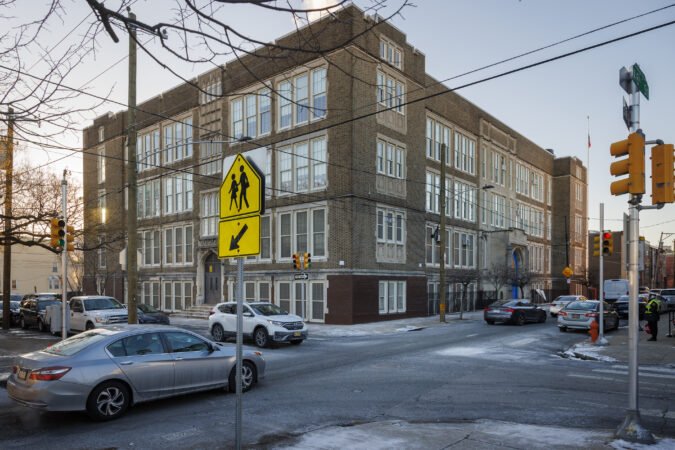
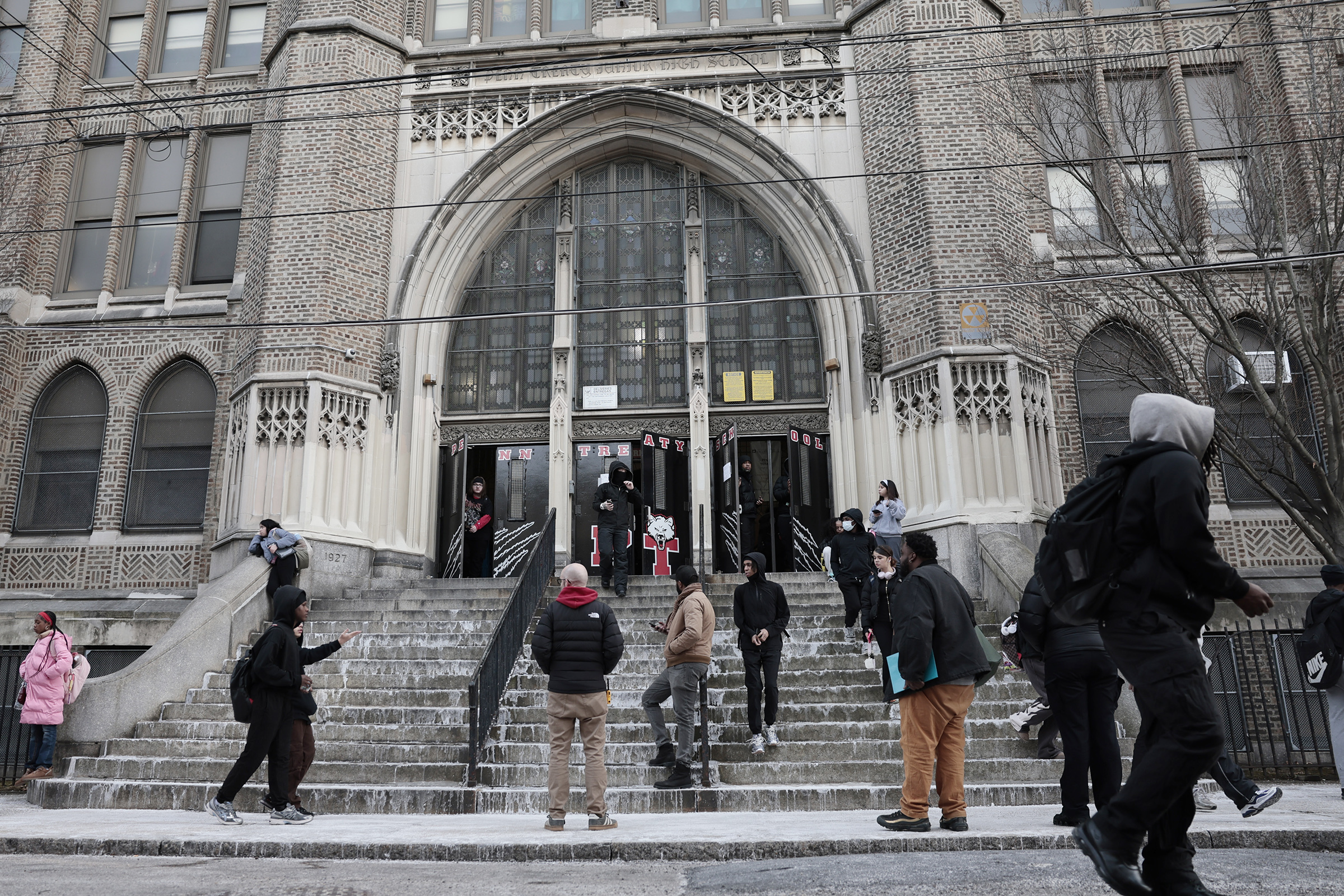
School officials stand by outside for afternoon dismissal at Penn Treaty Middle School, 600 East Thompson Street, in Philadelphia on Thursday, Jan. 22, 2026.
Fewer transitions, more standard grade configurations
Officials said they arrived at the blueprint after analyzing data and gathering feedback across the city — in meetings and surveys, and based on wisdom from advisory panels and a planning team. (Some advisory panel members said they had real concerns about the process, felt they got too little information, and saidtheir input was not seriously considered. Some had called for a pause in the process and a plan with no closings.)
Parents, staff, and community members identified four main themes that informed the recommendations, Watlington said: strengthening K-8 schools, reinvesting in neighborhood high schools, reducing school transitions for students, and expanding access to grades 5-12 criteria-based high schools.
The plan dramatically shrinks the number of grade spans in the district.
Currently, there are 13 different kinds of school configurations. Going forward, there be just six grade bands: K-4, K-8, K-12, 5-8, 5-12, and 9-12. (Six schools will be exceptions, however.)
Philadelphia is leaning into a “strong K-8 model,” Watlington said. He recommended closing six middle schools, with some elementary schools adding grades to accommodate.
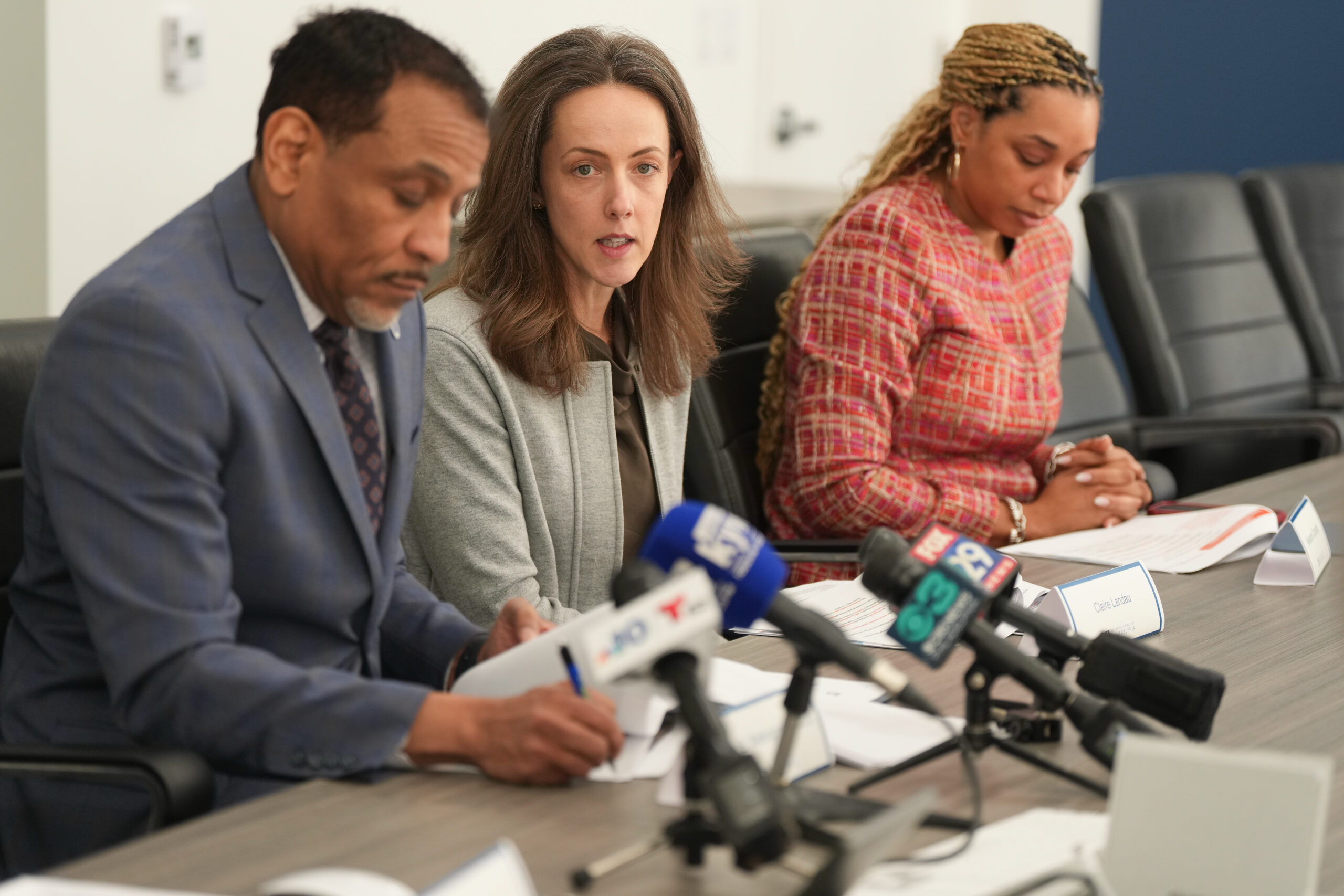
From left to right, Superintendent Tony B. Watlington, senior adviser Claire Landau, and chief of communications and customer service Alexandra Coppadge speak to reporters on Tuesday about their proposed master plan for Philadelphia schools.
It is also turning some high schools that now house four grades into middle-high schools, with 5-12 spans. South Philadelphia High will get investments to its career and technical education space and add fifth through eighth grades, for instance. A new Palumbo Middle School will open, colocated with Childs Elementary in Point Breeze; its students will get preference for admission to the Academy at Palumbo, a South Philly magnet.
Investments in the Northeast, and elsewhere
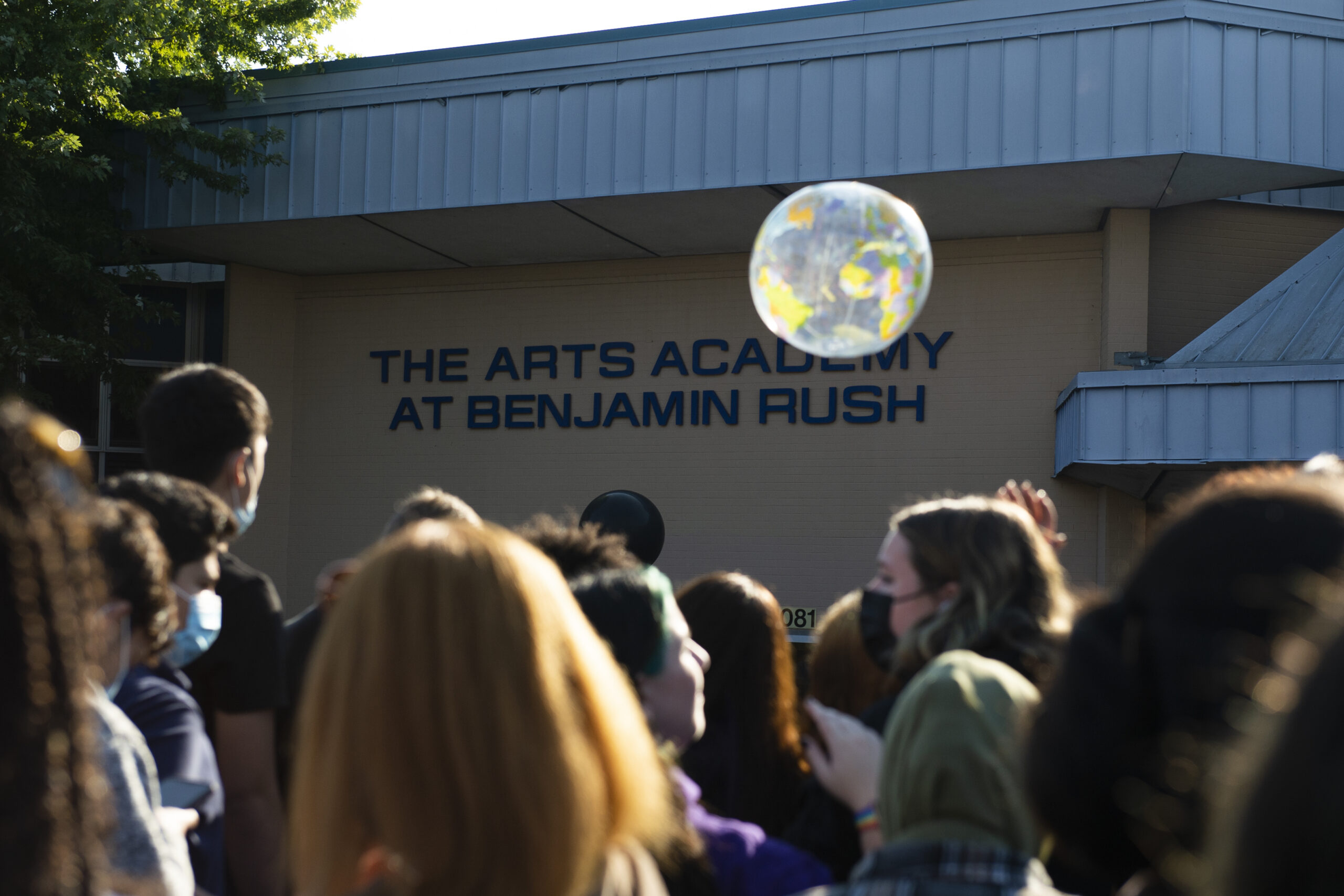
The single from-scratch construction announced will be in the Lower Northeast — a new Arts Academy at Benjamin Rush, a popular magnet now in the Far Northeast. That new building, which will house students in fifth through 12th grades, would rise on the site of the old Fels High School in Oxford Circle.
A new neighborhood high school will open in the current Rush Arts building, if the plan is approved.
The Arts Academy at Benjamin Rush, shown in this 2022 file photo, will move to a new building constructed in the lower Northeast under the facilities master plan now under consideration. A new catchment high school would open in the Rush Arts building.
Comly, Forrest, and Carnell — all Northeast schools — would be modernized and get additional grades to relieve overcrowding.
Masterman, one of the city’s top magnets, has long been overcrowded — its middle school would move to Waring, in Spring Garden, one of the closing schools.
“It’s really important to note this is not a plan to just funnel resources into the Northeast part of Philadelphia, where the population is increasing faster or in a different way than other parts of the city,” Watlington said. “This is not just build out, invest in some areas, divest in others.”
Learning from past mistakes
Watlington said he knows the plan will be difficult for some to swallow, and does not achieve every aim.
But, he said, “we are not going to make good the enemy of perfect.”
Still, Watlington and others vowed this closure process — the first large-scale closures in more than a decade — would not repeat the mistakes of 2012 and 2013, when 30 schools were shut to save money.
A new transition team will focus on what students and schools need, from social and emotional supports to safety and academic help.
School board president Reginald Streater and Superintendent Tony B. Watlington Sr. are shown in this 2025 file photo.
“These families will get gold-standard, red-carpet treatment directly from the superintendent’s office,” Watlington said.
The superintendent said he will urge the board to “strongly consider” his recommendations.
“We have one shot to get this right,” Watlington said. “We believe this is as good a plan as we can bring to the board, and so we’re going to recommend strongly that the board adopt these recommendations.”
School board president Reginald Streater said the facilities planning process was “critical” to bettering student outcomes.
Watlington, Streater said in a release, has led “meaningful community engagement with families, educators, and community members across our city. The board looks forward to receiving the full set of recommendations and carefully considering them as we work together to ensure all of our school facilities and student rostering practices best support access to high-quality educational experiences and opportunities for all students.”
Mayor Cherelle L. Parker gave good marks to the plan.
“It is ambitious, it’s thorough, and it’s grounded in what I believe matters most, and that’s achieving the best outcomes for our students,” Parker told reporters. “I’m proud that the district has taken what I would describe as a clear-eyed look at really what matters for our children.”
‘It feels like a family member is dying’
Outrage mounted for some Thursday as district officials began notifying affected communities and groups.
“It’s heartbreaking,” said Sharee S. Himmons, a veteran paraprofessional at Fitler Academics Plus, a K-8 in Germantown. “It feels like a family member is dying.”
Himmons is enrolled in the district’s Pathways to Teaching program, taking college courses to earn her degree and teacher certification. She was sitting in her math class at La Salle University when she found out Fitler was slated for closure. She began crying. She failed a test she was taking because her concentration was shot, she said.
Fitler Academics Plus Elementary School in Germantown is among the 20 schools that would close under the proposed plan.
“This school is such a staple in the neighborhood,” she said. Fitler is a citywide admissions school, but draws many students from the area. Himmons’ own sons attended Fitler, and she wanted to teach there after her college graduation.
“This isn’t over,” she said. “We’re going to fight — hard.”
Arthur Steinberg, president of the Philadelphia Federation of Teachers, said he is waiting to see more granular details of the plan, including the list of schools that will be upgraded and what fixes are promised, and hopes for information about how much weight was given to every factor that went into the decisions.
But, Steinberg said, “it is devastating for any community to lose their school — the parents, the kids, and the staff.”
As for the process that led the district to this moment, Steinberg said it was abundantly clear even to advisory panel members that their viewpoints were just points of information for Watlington’s administration, that no promises about heeding any advice were made.
Either way, the closure of 20 schools and more changes that will have ripples across the city for years to come all lead back to one factor, he said.
“Without the chronic underfunding of the district,” Steinberg said, “we wouldn’t have gotten to this point.”
Robin Cooper, president of the union that represents district principals, said the announcement was destabilizing, even though officials had warned closings were coming.
“It’s a loss of history, a loss for Philadelphia,” Cooper said. “Schools are a family, and some families are breaking up.”
Staff writer Sean Collins Walsh contributed to this article.
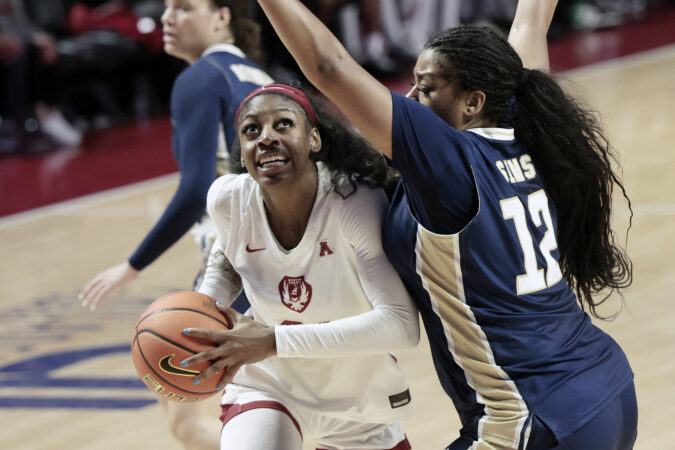
Entering Tuesday’s game against South Florida, Temple coach Diane Richardson and her staff held a meeting with the players to provide some clarity about their roles on the court.
The Owls were reeling from a three-game losing streak and fresh off a lopsided loss to East Carolina on Jan. 17. The meeting proved to be what they needed to get back on track.
Against South Florida, which entered Tuesday second in the American Conference standings, Temple played cohesively, which Richardson hadn’t seen lately. The result: an 86-83 win in which the Owls (8-10, 2-4 American) shot 52.7% from the field and had four players score in double figures.
“I’m really pleased that they stepped up and realized that we have to play together,” Richardson said. “It’s a tough conference. When we play together, it makes a big difference, and as I look at the stats, I think we did pretty well in most of the categories. The biggest one was that we only had 11 turnovers. But, again, that’s confidence in each other and playing together.”
Guard Kaylah Turner was one of the main benefactors of the meeting, rediscovering her role.
The junior shot 29.8% from the field in the Owls’ first five conference games and struggled with inefficiency and taking quick shots. Turner, who was named preseason first-team all-conference, looked like herself on Tuesday.
She shot 7-for-15 from the field and found her spots to knock down jumpers. She also used her speed to get to the basket for easy layups and finished with a game-high 23 points.
“It makes it 100 times easier when my teammates are always telling me, be confident in my shot, continue to drive, even if I miss two layups or miss a three-pointer,” Turner said. “I’ve got coaches who say the same thing.”
With Temple’s leading scorer back in her groove, the rest of the offense fell into place.
Richardson wasn’t happy with Temple’s 5-of-23 shooting from three against Tulane on Jan. 13. She wanted the team to play faster and get more looks near the basket. The Owls fed the ball inside vs. South Florida, which led to a big game from forward Saniyah Craig.
The Jacksonville transfer flourished in the post and scored a season-high 22 points, including 10-for-13 shooting from the free-throw line. Despite having less of an emphasis on three-pointers, Temple still went 8-for-16 from deep, led by forward Jaleesa Molina, who made all four of her attempts and finished with 19 points.
Guard Tristen Taylor also finished with 16 points, meaning 80 of Temple’s 86 points came from four players.
“I think we were more efficient with the things that we did today,” Richardson said. “We were more efficient in ball security. We were more efficient in our shots. I think those made a difference, even though it doesn’t show on the stat sheet. That’s what I told them in the locker room, the things that are not on the stat sheet was the defense, was the intensity, and was the bench. The bench was really into the game, and they were cheering them on.”
With clarity in their roles, the Owls got back to playing their brand of basketball. Richardson’s equal opportunity offense was in full effect, her team was connected and playing together, and it resulted in a statement win.
They will look to carry their newfound momentum into the middle of American play, starting with a home game against Charlotte on Saturday (2 p.m., ESPN+).
“This is a great win, but we’re nowhere near done,” Turner said. “So we’re going to lock in the next practice, and we’re going to make sure we start the beginning of practice how we started this game, and we’re going to practice the entire way so we transfer it to this weekend.”
Added Taylor: “I think our biggest thing is just don’t be complacent right now.”
A lifeline for Montgomery County’s low-income and homeless residents is running out of time.
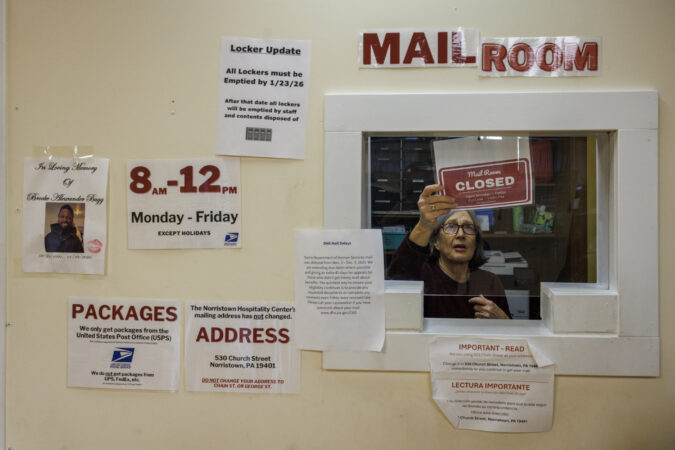
The Norristown Hospitality Center, a nonprofit day shelter offering free meals, showers, laundry, legal aid, and other services, must move out of its home by the end of January.
Last year, the Hospitality Center offered services to 1,400 people, roughly a third of whom lacked housing, according to executive director Sunanda Charles. No other similar day shelters offer the same array of services in the immediate area.
“The community would be losing a very vital resource,” Charles said.
The Norristown Hospitality Center, which provides services for the homeless, is looking for a new location.
The Hospitality Center, which opened in 1992, has been heading toward this inflection point since it vacated its home of over two decades at 530 Church St. by the end June 2025.
It arranged a six-month lease with the Senior Adult Activities Center of Montgomery County, originally set to expire on Dec. 31. The center was granted a one-month extension, but is still searching for its next temporary and permanent home.
Zoning woes
The Hospitality Center’s search for a new location has been complicated by the organization’s needs and vocal NIMBYism.
The Hospitality Center’s longtime Church Street home was owned by St. John’s Episcopal Church, which notified the center in 2024 it needed to vacate the building. Charles said the church told them it was because of concerns about the optics of visitors loitering outside. The notice came as a surprise, she said, but they were given a year to find their next location.
St. John’s Rev. Christopher L. Schwenk disputed Charle’s characterization of why the church required the Hospitality Center to vacate the building, and said the center did not report property damage in 2023 that required renovations, and failed to pay rent on time for seven months of that year.
“After months of conversation with Director Sunanda Charles, and then the Center’s Board, we made the difficult decision to end their lease due to breach of contract. Director Charles’ characterization of this decision as rooted in ‘the optics of loitering’ is as disappointing as it is false. We see Christ in the faces of our neighbors living in homelessness and are proud to continue serving them right here on Church St.,” he said in a statement.
The Hospitality Center only shut down for three days as staff moved operations to the Senior Activities Center, but they knew this home would be temporary. Charles said the Senior Activities Center received funding for extensive renovations through the American Rescue Plan Act, which would expire if they don’t begin construction soon.
After a process of careful planning and community outreach, the Hospitality Center identified a new building at 336 E. Moore St. and entered a purchasing agreement for it in December 2024.
Mike Kingsley, program manager at the Norristown Hospitality Center, greets clients as they enter the center for breakfast Friday.
But doing so required a zoning variance request, which brought the matter before the Norristown Zoning Hearing Board in May. The proposed building was located in a residential area, which ignited the public. Norristown residents testified for hours both for and against the Hospitality Center’s move, with some speaking about the essential services the center provides, while others worried about those suffering from substance abuse loitering where their children are.
The board ultimately voted 2-1 against the center’s request.
“I get to see firsthand those who are truly living on the margins of the city of Norristown. It is extremely disappointing — the whole ‘not-in-my-backyard’ attitude — it’s disheartening,” the Rev. Andrea Gardner, board president of the Norristown Hospitality Center, told The Times Heraldfollowing the vote.
Charles said that the Hospitality Center has learned important lessons about the regulatory process and building community support from that experience as it searches for other options.
But most potential properties in Norristown would require a similar variance request or special exemption for the Hospitality Center to move in. When that time comes, Charles anticipates needing to argue again for the center’s existence in the heart of Norristown.
“These are people in the community. It is the community’s responsibility as well. Everyone can make a difference. And sometimes, the difference may be in the perspective of how you view people,” she said.
Staying in position
Until the Hospitality Center’s future is settled, Brian Van Scoyoc plans to keep spending every day there that he can.
Van Scoyoc, 54, has been homeless for about five years, since the Norristown home he shared with his ex-girlfriend caught fire and burned down. His ex had to pull him back from jumping into the blaze to rescue his dog, Loggie, who died in the fire.
“I got sort of displaced and didn’t know where to go or what to do,” he said.
He’s worked odd jobs here and there, spending his nights at a shelter or in a tent in the woods. But his visits to the Hospitality Center have been a welcome reprieve.
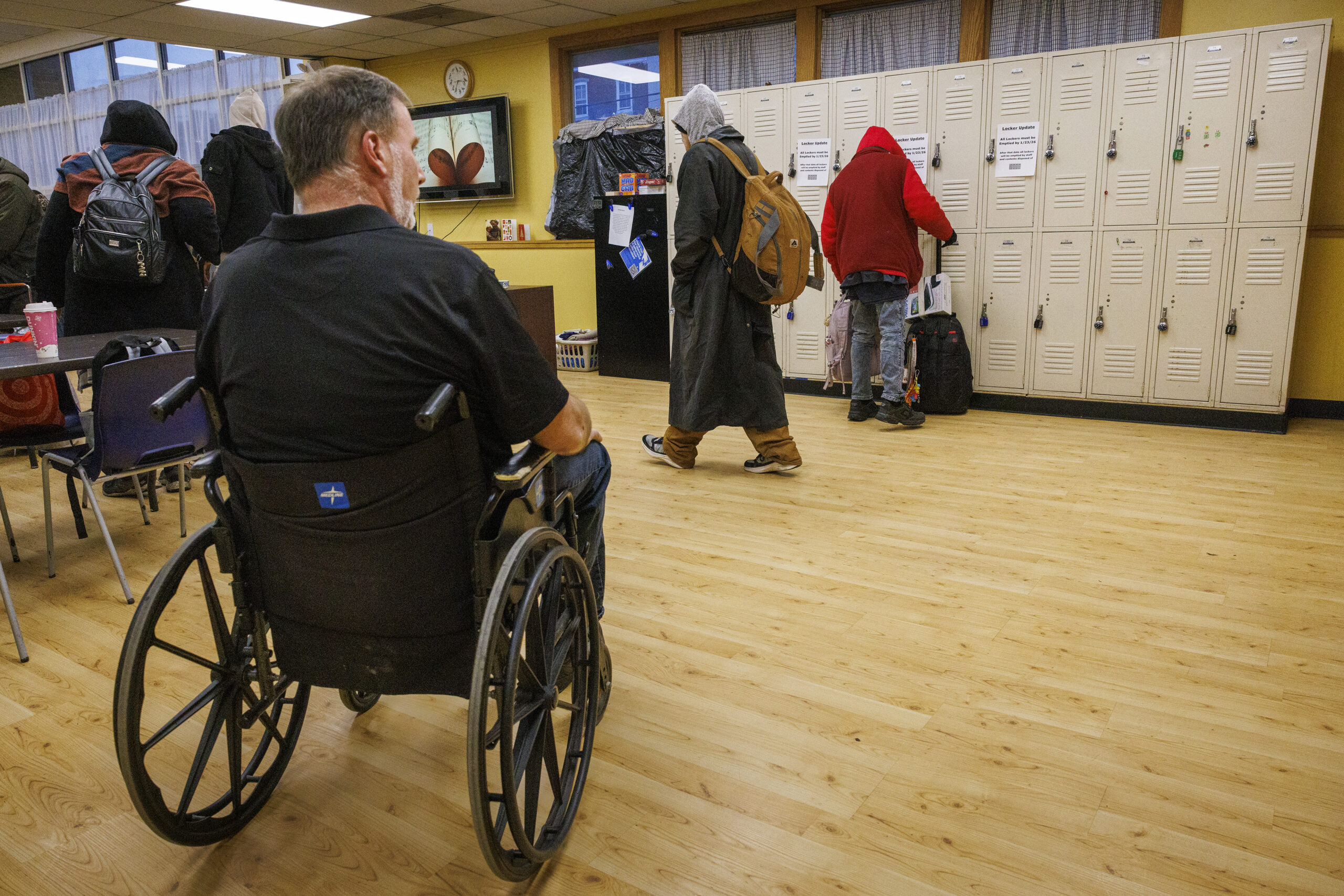
He comes for coffee and breakfast to start his day, a pleasant escape from the cold early mornings after the overnight shelter closes its doors. He enjoys the chance to chat, watch TV, and play games with the other visitors, and appreciates the center’s laundry and legal aid services. Having a place to plug in his phone and store his belongings in a locker are helpful too, he said.
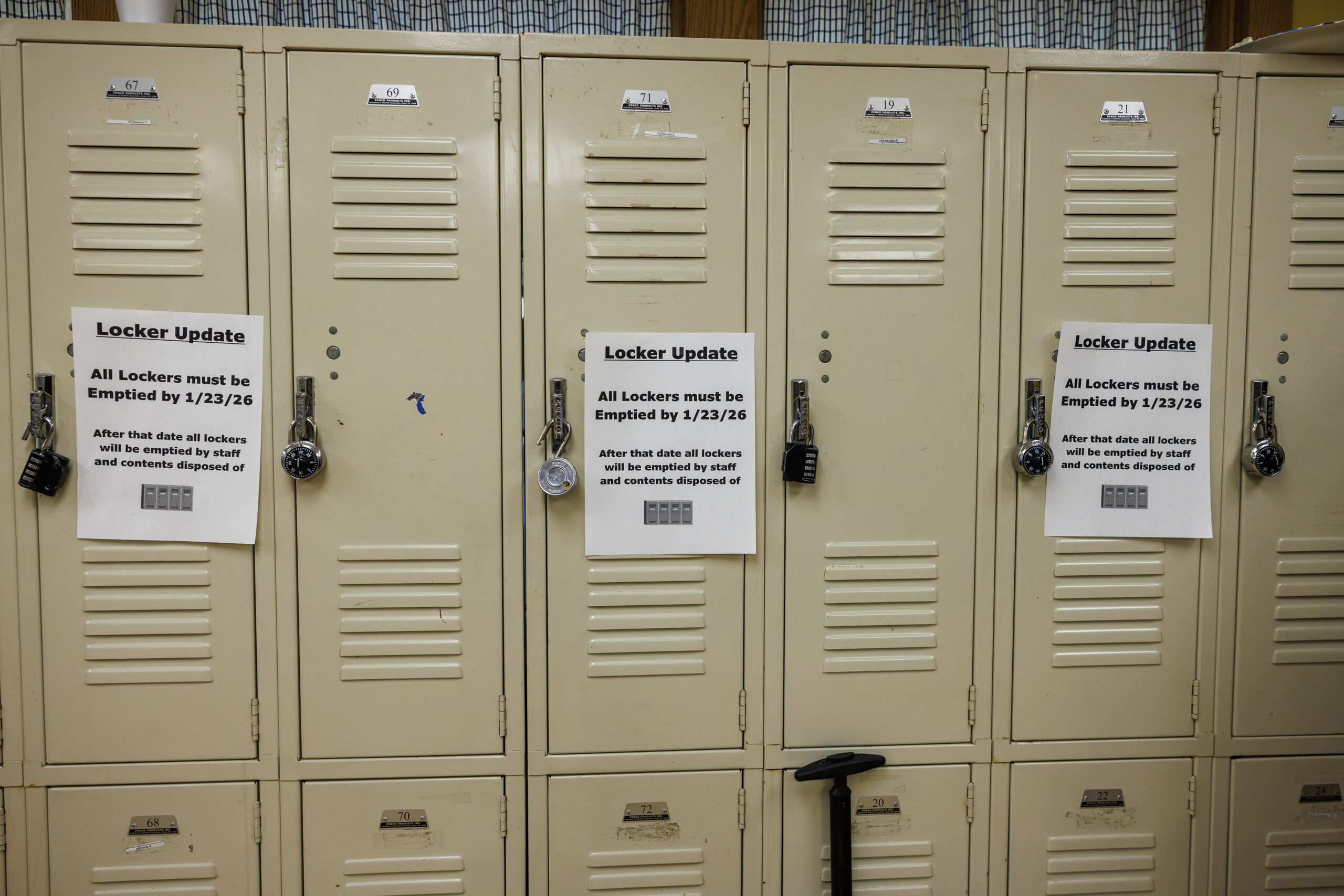
Lockers at the Norristown Hospitality Center have been posted so clients know to empty them by Jan. 23.
Van Scoyoc recently picked up frostbite after spending a night in his tent when he believes he didn’t let his wet feet dry properly. It’s difficult and painful for him to walk, so the center has helped arranged rides for him to get around.
If the Hospitality Center were to close for an extended period time, Van Scoyoc said it would be a great distress.
“It’s a great place to be. You should go check it out,” he said.
As news has spread of the center’s plight, Charles said she’s received countless calls and emails from people who used its services in the past. They’ve expressed their support and gratitude, as well as their sadness at hearing that the center is up against the clock.
One voicemail in particular has kept Charles motivated. A woman who spent time at the center in 2009 called her to share that she has been sober since connecting them, and is no longer homeless. She said in her message: “God is going to do a wonderful thing for you. Stay in position,” according to Charles.
“We do believe there is a plan for us. And we are excited about it,” Charles said.
As soon as the snow stops falling, it’s time to get shoveling. In Philadelphia, you have six hours to clear the sidewalks in front of your home before facing potential fines, according to city rules.
For residents, whether you rent or own, here’s what you need to know.
Can I get fined for not shoveling my sidewalks?
Yes. Fines range from $50 to $300 for those who violate city snow-removal rules.
How much time do I have to clear my sidewalks?
You have six hours after the snow stops falling to clear your sidewalks.
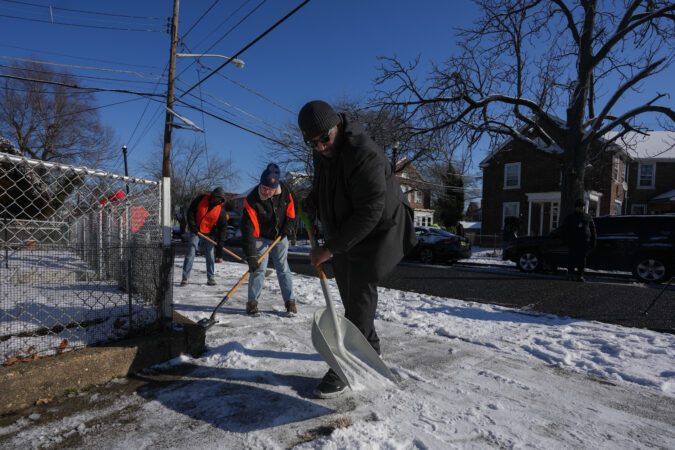
From left: Philadelphia Zoo Garden service workers Joseph Mineer, of Fairmount, Naeem Price, of North Philadelphia, and David Wallace, of Southwest Philadelphia, clear snow from the sidewalks near the bus drop-offs in Philadelphia on Saturday, Jan. 17, 2026.
Who’s responsible for clearing the sidewalks? What if I’m a renter?
Whether you rent or own, you’re responsible for clearing a path, unless you live in a multifamily dwelling, like an apartment building or a building with more than one unit. In this case, the building owner or agent is responsible for snow removal.
What about businesses?
For businesses, clearing sidewalks and parking lots is the responsibility of the property owner, said Chris Young, communications manager for the Streets Department.
The city is responsible for clearing sidewalks at city facilities.
How wide do I need to make the path?
A path must be at least 3 feet wide, unless the width of the pavement from your property line to the curb is less than that. In that case, your path can be narrower but has to be at least one foot wide. Paths must be thoroughly cleared, and you can’t dump the snow and ice into the street. Pro tip: Push and clear snow toward your building.
You can use a commercial deicer to salt your sidewalk or driveway, and it’s a good idea to apply it as soon as you see a light layer of snow. If you don’t have a deicer, you can use kitty litter for temporary traction.
Can I report someone who hasn’t shoveled their sidewalk?
If you want to report a sidewalk that has not been cleared, call 311 or report the issue online through the 311 portal.
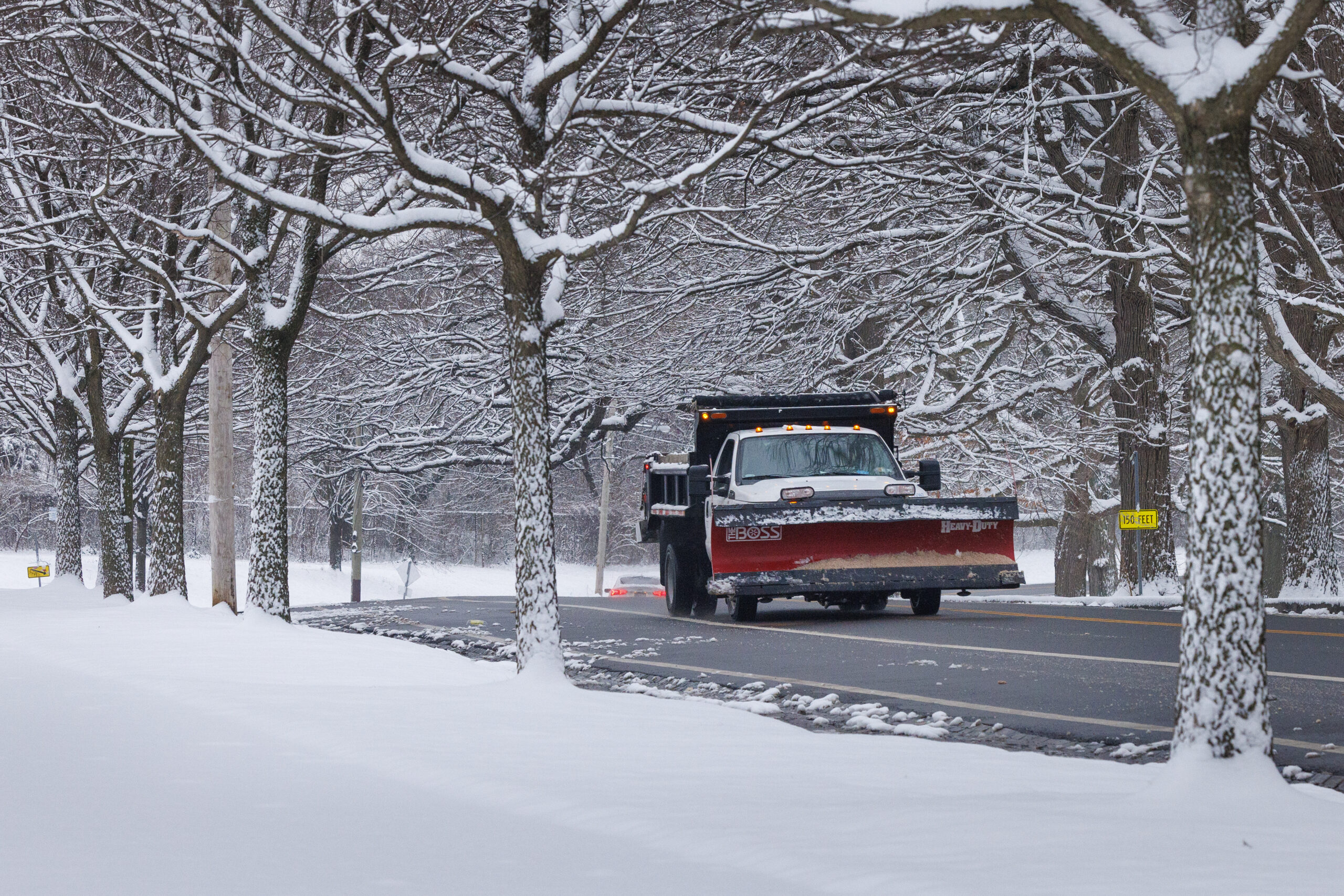
A Philadelphia Parks and Recreation plow truck heads along Reservoir Drive, Fairmount Park near Diamond Street, after overnight snowfall, Philadelphia, Wednesday morning Feb. 12, 2025.
What happens if I’m parked along a snow emergency route?
When a snowstorm hits, the city may declare a snow emergency. When that happens, the city plows 110 miles of snow emergency routes from curb to curb, which means vehicles and dumpsters within those areas must be moved or you face fines of up to $130. If you can’t get to your car, or if your car can’t be moved, it doesn’t matter. Your car will be towed and ticketed if you don’t move it.
You can view a list of snow emergency routes at bit.ly/3YSMeDm/.
If you live, own a business, or frequently park in these areas, you’re advised to plan ahead as winter weather approaches. Large signs reading “Snow Emergency Route” in white letters on a red background will be posted along the streets once a snow emergency is declared.
If your vehicle was towed from a snow emergency route, call 215-686-SNOW (7669) and be prepared to provide information to identify your vehicle.
What if I live in the suburbs?
If you live outside of the city, the rules vary by township. These include how quickly you have to remove snow and how wide the pathway must be.
In most towns, property owners and tenants can face fines if sidewalks aren’t cleared. Check with your township for specific details.