AJ Brown’s future…Sean Mannion’s hiring as offensive coordinator…Jeff Stoutland’s awkward exit…the Eagles’ strategy for free agency and the draft. These have been the dominant storylines of the Eagles’ offseason. More than a month after the team’s unceremonious exit from the playoffs, its top two decision makers finally weighed in publicly on these topics. Ahead of this week’s NFL combine, The Philadelphia Inquirer’s Jeff McLane and Olivia Reiner participated in beat reporters-only interview sessions with general manager Howie Roseman and head coach Nick Sirianni. With the embargo lifted, Jeff and Olivia discuss their main takeaways.
00:00 Roseman and Sirianni speak!
01:13 Roseman and Sirianni address the AJ Brown situation
10:26 Sirianni indicates that offense will be different under new coordinator Sean Mannion
20:15 Sirianni gives his side of the Jeff Stoutland story
26:34 How will coaching changes affect Howie Roseman’s offseason personnel strategy
unCovering the Birds is a production of The Philadelphia Inquirer and KYW Newsradio Original Podcasts. Look for new episodes throughout the season, including day-after-game reactions.
There shouldn’t be too much to worry about at Subaru Park on Thursday in a Concacaf Champions Cup game against Defence Force FC of Trinidad (7 p.m., FS1, TUDN), with the Union bringing a 5-0 aggregate lead into the second leg. But that doesn’t mean all is well.
Outside back Frankie Westfield, centerback Finn Sundstrom, and forward Agustín Anello are dealing with minor injuries at the moment. Westfield is the biggest concern, both because of how his absence impacts the starting lineup and because it’s a hamstring tweak.
“Frankie’s still working on the side, getting closer to the team day by day, and I think that’s his status: day by day,” manager Bradley Carnell said Wednesday. “It’s pretty much all day-to-day stuff [with the trio], and hope to have them back pretty soon.”
Although the Union have a commanding lead in the series, Carnell isn’t taking this game lightly, especially after a loss Saturday at D.C. United in the MLS opener. Another game also quickly follows this one, against rival New York City FC at Subaru Park on Sunday (4:30 p.m., Apple TV.)
“Tomorrow’s halftime of the series, and we have to be fully focused,” he said. “We have a lot of things that we need to work on, and we have a lot of things that we are still not really happy with right now, with our own performance and putting things in our own control. … Regardless of opponent now, we have to take the baton in the hand and really focus on ourselves right now.”
Milan Iloski, who sat next to Carnell on the podium, concurred.
“I think we’re never going to be where we want to be,” Iloski said. “We’re always going to be chasing perfection, but soccer’s a game where it’s never going to be perfect, I think we’re working every day to improve and to get better — of course, there’s still a lot of good faces, and we’re building chemistry and we’re building relationships every day.”
Carnell also said he has spoken with Ezekiel Alladoh about the striker’s red card on Saturday, and with officials who confirmed it was for “inappropriate language.”
She didn’t even like diamonds. That was the funny thing. Costume jewelry, yes. A pair of handmade earrings, certainly. Diamonds, well, she’d always found them a bit showy.
She liked this one, though, because it had been Jim’s.
It was a man’s ring, a 1.3-carat diamond, round cut, set on a simple gold band, and when her husband, Jim, passed away a few years ago, Cindy Ware made it hers.
Cindy Ware of Kennett Square with diamond inherited by her late husband, Jim. She lost it but it was discovered embedded in a neighbors shoe in Florida. Photograph taken at her home on Wednesday, Feb. 25, 2026.
She wore it everywhere — to the grocery store, to lunch with friends, to her morning water aerobics class. It brought her comfort. A few times a day, she would look down at it, think of Jim, and smile.
“I never took it off,” says Cindy, who is 82 and impossibly sweet and sometimes wears a sweatshirt that says I’m often mistaken for an adult because of my age.
So when the diamond went missing last December, shortly before Christmas, Cindy was devastated. She felt sick, like she’d let Jim down.
She thought to herself: “Cindy, you just lose everything that’s important.”
A 60-year love story
Cindy Ware met the man she would marry in Pinkie Patterson’s second-grade class. This was in Mount Holly, N.C., in 1951. On Valentine’s Day of that year, while out sick with the mumps, Cindy had been allowed to come to the school parking lot to collect her Valentines.
The teacher sent a little boy out to deliver a box of treats.
He had a buzzcut and a little cowlick and his name was Jim.
Childhood photograph of Jim Ware the late husband, Cindy Ware of Kennett Square. She lost the diamond he inherited but it was discovered embedded in a neighbors shoe in Florida. Photograph taken at her home on Wednesday, Feb. 25, 2026.
Well, Cindy’s mother thought Jim was about the most precious little boy she had ever seen. And Cindy — who until that point hadn’t given it much thought — soon decided that maybe she agreed.
By high school, they were an item — inseparable, Cindy explains, “except when we were mad at each other and dated other people.”
They got together for good during college, and theirs was a 60-year love story.
They married in 1965. They moved to New Jersey, then to Pennsylvania. They raised three boys. Their boys grew up and had children of their own. A few years ago, they settled into a retirement community in Kennett Square, where they liked to take morning walks and eat pizza with mushrooms and pepperoni.
“We never needed a lot of anything else,” Cindy says. “Just the two of us.”
Wedding photograph of Jim (late) and Cindy Ware of Kennett Square. She lost a diamond he inherited but it was discovered embedded in a neighbors shoe in Florida. Photograph taken at her home on Wednesday, Feb. 25, 2026.
When Jim got sick, in 2020, it was horrible.Months of doctor’s visits, then specialist visits. Then, finally, hospice.
“The worst year of my life,” Cindy says.
Not long after Jim passed, in 2023, Cindy was getting the family’s affairs in order. One day, at a local bank, she opened an old lockbox and discovered a diamond ring — an heirloom that had been passed down through generations of Jim’s family.
Back when she and Jim married, and they didn’t have much money, he had told her she could have her pick: a ring or a car. “That’s a no-brainer,” she had replied. “I want a car.”
Still, something about the diamond spoke to her.
She plucked it from the lockbox and slid it onto her middle finger, and that’s where it remained for the next three years.
The missing diamond
She was having lunch with a friend last December when she glanced down and realized it was gone.
The diamond had dislodged from the setting, and it was nowhere to be found.
“I was just bereft,” Cindy says.
It could have been anywhere. In her car. In the grass outside her home.
At one point, she wondered whether she had lost it during her water aerobics class at the retirement community’s swimming pool. Things could get a little intense with the arm exercises. Maybe it had jostled loose and sunk to the bottom.
But what could be done? Even if they drained the pool, the likelihood of them ever finding the diamond was minuscule.
Her sons urged her not to worry, assured her that it was OK. There was always the chance that it might still turn up.
But weeks passed, then months.
Eventually, she resigned herself to the fact that the diamond was never coming back.
‘That might be a diamond’
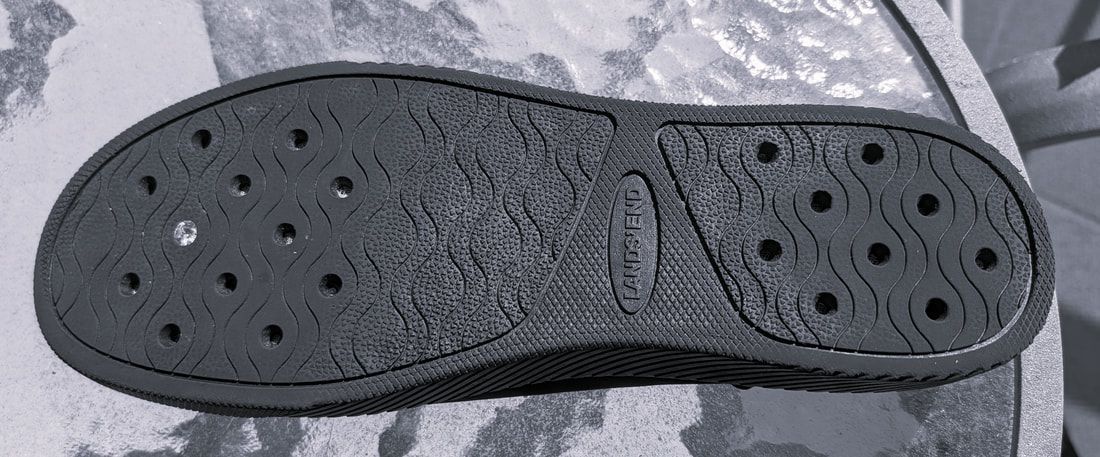
One afternoon a couple weeks ago — on a pool deck 1,100 miles from Kennett Square — a man named Coleman looked down and noticed, lodged in the tread of his Lands End pool shoe, what appeared to be a small piece of glass.
Or wait. Maybe it was some kind of gem.
At a pool in South Florida earlier this month, a Pennsylvania man looked down at his pool shoe and discovered what at first appeared to be a gem or piece of glass stuck in the tread.
For days he had been wearing the pool shoes — to the pool, through locker rooms. He had stuffed them into his gym bag, into a suitcase. Earlier that day, he had worn them on a walk in the gritty sand of a South Florida beach.
He also wore them back home in Kennett Square, where he lived in a retirement community. In the afternoons — after the ladies finished their morning water aerobics — Coleman’s group played pool volleyball. He always wore his pool shoes during games.
Now, sitting poolside in Florida, Coleman’s husband, John, examined the stone and said, “Uh, that might be a diamond.”
Intrigued, but not yet convinced, the couple went the following day to a Pompano Beach jeweler.
Nine times out of 10, the jeweler told them, when people think they’ve found a diamond, it turns out to be nothing.
This was not one of those times.
Yes, the jeweler said, it was a diamond, all right — 1.3 carats, nicely colored, likely from the 1950s or ’60s. Probably worth a bit of money.
Tickled, Coleman posted a photo of the diamond to Facebook.
A diamond in the sole of his shoe
Back in Pennsylvania, Cindy was on the phone with her good friend.
It was Valentine’s Day, and the two were chatting about this and that, and at the end of their conversation, in passing, her friend mentioned a man from their neighborhood, Coleman, who had just posted a photo from Florida.
Apparently, he had found a diamond lodged in his shoe.
As it happened, Cindy and Coleman knew each other well. They lived just a couple streets apart, worked out in the same pool. Once, when Jim was in hospice, Coleman and his husband had brought her flowers.
Cindy tracked down the photo. Saw the small gem lodged in her neighbor’s pool shoe.
Impossible, she thought.
She dialed Coleman’s number.
“Hello,” she said, “I think you have my diamond.”
The return
It was confirmed a day later.
Back from Florida, Coleman delivered the diamond to Cindy’s house, along with a collection of yellow roses. Neither of them could stop smiling.
Best they can tell, the diamond fell to the bottom of the community pool, where Coleman — while playing pool volleyball — happened to step on it, just right. How it had remained lodged in his shoe’s tread for days or weeks or months — across multiple states — was anyone’s guess.
“It could never happen in a million thousand years,” Cindy says.
Says Coleman, “It does make you sit back and think for a minute about what is going on here.”
As you might imagine, their story has been the talk of their retirement community. Everyone, it seems, wants to talk about the little diamond that traveled halfway across the country in a shoe.
As for the diamond itself, Cindy has decided that it‘s time to pass it on, to her oldest son.
“I can no longer be trusted,” she jokes.
In the meantime, she has stopped wearing it to water aerobics.
The dreaded courtesy-tow system, the bane of so many Philadelphia drivers, looks to be finally getting an overhaul, with the city promising — in writing — to use its “reasonable best efforts” to stop losing your cars.
If that happens, gone will be the days of parking a Hyundai on 15th Street, only to find it the following week in the middle of Washington Avenue with $120 worth of parking tickets on the windshield.
Who could forget the guy who was forced to pay nearly $1,000 to get his BMW off the auction block after it was courtesy towed into a loading zone, then impounded by the Philadelphia Parking Authority?
And the women who were pulled over by police in other states for driving their own “stolen” cars, even though they had actually been courtesy towed in Philly months earlier.
Now, a less infuriating system could be in the works.
After a protracted legal battle in federal court — and six years’ worth of Inquirer stories — lawyers for the city have tentatively agreed to fix the problem.
The city said in a settlement agreement filed in federal court last week that it will pay $750,000 to 36 courtesy-tow victims and start requiring tow truck drivers who participate in the city’s vehicle relocation program to keep track of where they unhook them. U.S. District Judge Joshua D. Wolson still has to sign off on the agreement.
“They will have a handheld device to record where they are deposited and that will go to a website,” said Joseph Kohn of Kohn, Swift & Graf, which represented the plaintiffs along with attorney David Rudovsky.
Under the terms of the agreement, the city is expected to partner with the Philadelphia Parking Authority (PPA), which already uses such technology, to create a citywide system similar to those in Chicago, Phoenix, and other cities that maintain online databases of towed vehicles.
What is a courtesy tow?
“Courtesy towing” is a Philly term to describe what the city formally calls “relocation towing.” It’s a notoriously dysfunctional process for moving legally parked vehicles to make room for things like special events, utility work, or construction.
Some cars go missing for days or weeks. Others disappear forever.
Example of a courtesy tow gone wrong (it often goes wrong):
You legally park at the curb near your home in an area covered by your parking permit. That block, unbeknownst to you, subsequently becomes a temporary no-parking zone, say, for a construction project. When you return a couple days later, your car is gone. No one at the police department or any other branch of city government has any idea where it is.
You’re on your own.
This happens because the city allows private towing companies to handle much of the work, and those companies either fail to notify the police department where they dropped off the vehicles, or the information gets lost somewhere within an antiquated system of handwritten logs and fax machines. There is little accountability.
To add insult to injury, some of the towing companies will drop off vehicles in no-parking zones. Then the PPA comes along and starts ticketing those vehicles, unaware that they had been courtesy-towed to that location.
Lastly, the coup de grâce: Drivers who appeal those tickets are typically unsuccessful because they can’t prove to a hearing officer or a judge that they hadn’t parked there.
Julia Sheppard, photographed in 2021 after she spent a month looking for her Mazda sedan, which had been “courtesy towed.” Then a Temple law student, Sheppard had to pay towing fees because she couldn’t document the city’s involvement.
The problem got so bad that Comedy Central’s The Daily Show dedicated a segment to it in 2024.
But Mary Henin wasn’t laughing when she had guns in her face during a trip to the New Jersey Shore in May 2020. Long Beach Island police ordered her and a friend out of her Nissan, claiming it had been stolen. She was handcuffed and sat by the side of the road for 45 minutes until police could determine that the car was hers.
“It was horrible,” Henin, a public defender, recalled on Monday. “We’re lucky we were only just detained at the end of the day.”
Turns out, Henin’s car had been courtesy-towed months earlier for tree trimming. When she was unable to find it, she reported it stolen, as police often advise drivers. Henin later found it a few blocks from her West Philadelphia home and reported that to police, but they never took it out of the stolen-vehicle database.
The same thing happened a year later to Julia Lipkis, another Philadelphia courtesy-tow victim. She was pulled over by police in Virginia and wrongly accused of driving a stolen car.
Mary Henin, a public defender in Philadelphia, was pulled over by police in New Jersey and ordered out of her car at gunpoint. She sat in handcuffs trying to explain to officers that her car wasn’t stolen, but was only in the stolen-car database because it had been courtesy towed in Philadelphia.
posed for a portrait near her car in Philadelphia, Pa. on Thursday, August 13, 2020. Henin’s car was courtesy towed and then reported stolen when it couldn’t be found. It was later found, but remained on the stolen vehicle list, leading to her being stopped and handcuffed until the issue was resolved.
Henin was one of the original plaintiffs in a federal lawsuit filed in 2021 alleging that the courtesy-tow process is a violation of the Fourth and Fourteenth Amendments.
“It’s a taking of property and a due-process violation,” said Kohn, the plaintiffs’ lawyer. He said he first learned of the problem in The Inquirer.
Under the proposed new system outlined in the settlement, the PPA would first put stickers on cars before they are courtesy towed, so its parking enforcement officers will know not to issue citations if a vehicle ends up in a no-parking or metered area.
Henin said she’s relieved that the city has finally moved forward with fixes to a system that has been broken for so long.“ I’m just hoping we can see them implemented quickly,” she said.
Ava Schwemler, a spokesperson for the city’s Law Department, declined on Wednesday to comment on the settlement.
“While the litigation has been settled, we remain at work finalizing all of the process changes that will follow,” Schwemler wrote by email. “The city will provide additional information in the near future about the changes that are occurring.”
PPA spokesperson Marty O’Rourke said the parking authority is willing to assist the city “in any way that it can.”
“At this point, there has been no formal operational agreement with the PPA,” O’Rourke said.
‘Bureaucratic nightmare’
It’s not clear when courtesy towing in Philadelphia got so bad. The Inquirerbegan reporting on drivers’ Kafkaesque experiences in January 2020, but the problem likely goes back much further.
City Hall has consistently ignored the problem, and, for years, refused to acknowledge that it even exists.
When Henin and three other vehicle owners filed their suit, the city tried to settle the case by offering them each $15,000, instead of fixing the systemic issues. Two plaintiffs took the money, but Henin and another driver moved forward with the suit.
Dozens more drivers with similar stories later came forward and filed a second lawsuit. They considered pursuing a class-action case.
Still, the city would not budge. In legal filings, lawyers for the city argued that it wasn’t responsible for the missing vehicles because they had been towed by private companies.
“[T]hey do not claim an injury that is fairly traceable to the city,” Anne Taylor, chief deputy city solicitor, wrote of the plaintiffs in 2023.
In the fall of 2024, there was a glimmer of hope. City Council passed a resolution to “hold hearings to investigate” the practice of courtesy-towing.
“Philadelphia drivers have been frustrated with the bureaucratic nightmare of getting their vehicles back, with some viewing courtesy-towing as little more than a money-making scheme,” read the resolution, which was introduced by Councilmember Jeffery Young.
Those hearings led to … nothing. They never even happened. No one has explained why.
In a pair of rulings in late 2024 and early 2025, U.S. District Judge Mitchell S. Goldberg rejected the city’s arguments to have the case thrown out. The two lawsuits were later consolidated.
Goldberg ruled that because the city distributes the temporary no-parking signs that precede most courtesy-tows, it has a duty to keep track of the vehicles, whether they are towed by the police department, the parking authority, or a private company.
“I just don’t understand how a big city can have this issue,” Danielle Ditommaso, 27, whose Volkswagen Jetta was courtesy-towed from the Ben Franklin Parkway in 2022, told The Inquirer last year.
She never saw the car again.
Aarthi Manohar, co-counsel on the federal lawsuit, said she couldn’t comment on negotiations with the city or what led to the settlement. She commended the drivers who brought the case for sticking it out for five years.
“They knew the city could and should do better,” Manohar said. “They were willing to wait nearly half a decade.”
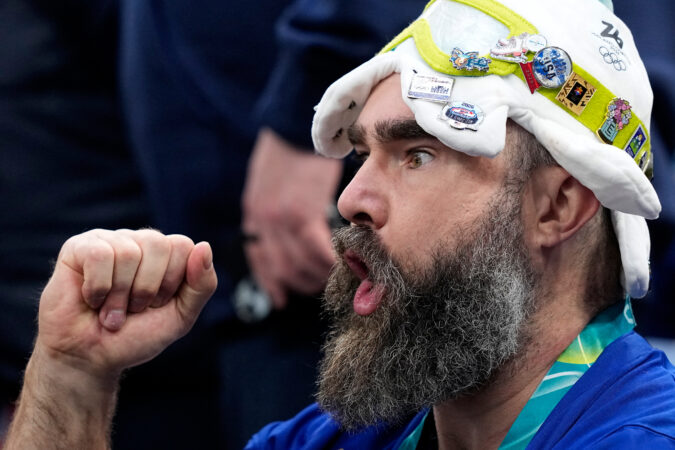
The Winter Olympics were full of exciting moments for Team USA — from the men’s and women’s hockey teams winning gold to Alysa Liu stunning fans every time she took the ice. And one man was there to witness it all: Jason Kelce.
The former Eagles center joined his wife, Kylie Kelce, who attended on behalf of NBC and YouTube. While Kylie was there on business, Jason enjoyed his time as a spectator and had no problem with CBC Olympics labeling him as Kylie Kelce’s husband.
“I really was just there to have fun and enjoy the Olympics,” Kelce said on the latest episode of New Heights. “So, I was 100% — this was the correct way to say it. I wanted to tell them I prefer ‘ball and chain.’”
During his time in Milan, Kelce got some bobsledding experience and attended four Olympic hockey games, the short program for figure skating and short-track speedskating. Here’s everything he had to say about his experience at the Winter Olympics:
Bobsledding experience
Ahead of the games, Kelce had the chance to get some hands-on experience with Team USA’s bobsledding team at their headquarters in Park City, Utah, where he learned about their training and got to see what it feels like going down the track with Team USA member Frank Del Duca.
“The ride itself, way more intense than I imagined,” Kelce said. “Like I thought it would be like a roller coaster. I really did. The energy that you are moving down this thing at over 80 mph. And when you go into these bank turns, it pushes you into the bottom of this thing.
“And on the bottom of the sled, there’s like these metal rails and my [expletive] is so [expletive] wide, they’re sitting on those metal rails. I’m being pinched down onto these metal beams. I’m trying to keep my head up so I can see. [Expletive] is flying by. I have no [expletive] idea how [Frank] was even knowing when to do the turns and everything. Like, you have to memorize it.”
‘The most fun sport to watch on the planet’
After the men’s U.S. hockey team made history, winning the gold medal for the first time in 46 years, Kelce went to social media to express his feelings with a simple, “Let’s [expletive] go!”
“There is just something about hockey, whether it’s playoff hockey or national hockey,” Kelce said. “When guys are like going all out, it’s just the most fun sport to watch on the planet. USA, hockey capital of the world. Men’s and women’s gold medal. Best country on the planet in hockey. I don’t want to hear any arguments.”
Kelce supported both teams in Milan, attending two women’s hockey games and two men’s games — including the men’s dominant 6-2 win over Slovakia in the semifinals, and the women’s gold medal victory over Canada.
“Canada got out to a quick lead and it made it very stressful,” Kelce said. “It was an electric game and then obviously we got to see USA men’s dismantle Slovakia. And I was sitting with the Tkachuk family. Keith Tkachuk was over there on the end of it. Got to shake the hand of a [expletive] legend … We were right by the Hughes family, too. Jack Hughes, who had the golden goal for the U.S. in the gold medal game.”
“After talking to her, you realize she is from the Heights,” Kelce said. “There’s just like this humbleness but also she’s a great person and it comes across very apparent when you speak to her. … They’re a great team, man. They’re tightknit. They’re playing jokes on one another. Just so proud for all of them. It’s an incredible moment to win a gold medal, especially in a team sport like that.”
Speed skating vs. figure skating
Kelce attended the short program for figure skating and he had just one recommendation when it comes to watching in the arena.
“I would have liked to have heard Tara Lipinski and Johnny Weir announcing it live,” Kelce said. “When you don’t have that, especially for someone newer to the sport, you like to hear the excitement in the announcer’s voice that they just did something difficult or they just nailed a routine or they just missed something.”
But when it came to speed skating, Kelce had no notes.
“In speed skating, it is a [expletive] party in that speed skating arena,” Kelce said. “There’s DJ’s playing music. It’s fast paced, there’s bells ringing, it is high-stakes action in the speed skating short track.”
Kelce even had the chance to meet Apolo Ohno, a speed skating legend and eight-time medalist.
“Apolo, we watched him all growing up,” Kelce said. “Unbelievable speed skater. … Speed skating was electric as [expletive]. … These things were fast paced, they were moving. They’re doing Tush Pushes because we saw the relay version where they get in there and push the [expletive] of the guy in front of them.”
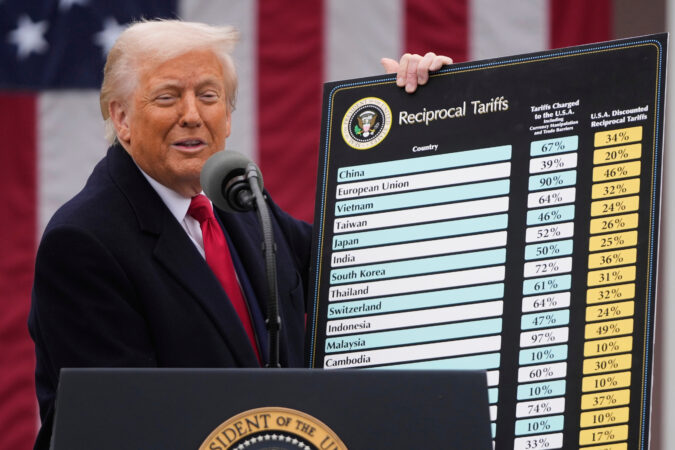
WASHINGTON — On inflation, immigration, tariffs, and matters of war and peace, President Donald Trump presented a frequently distorted account of the state of the nation Tuesday as he claimed a “turnaround for the ages” and myriad achievements that don’t pass scrutiny.
Trump has spent the last year boasting of his accomplishments while mocking the record of his predecessor, Joe Biden. But much of this bluster has been based on misinformation, which he again fell back on during his State of the Union address.
Here’s a closer look at the facts:
The economy
Claim: “When I last spoke in this chamber 12 months ago, I had just inherited a nation in crisis, with a stagnant economy.”
The facts: Not quite. Voters were unhappy with high inflation in the 2024 election, but the U.S. economy was far from stagnant. The U.S. gross domestic product rose 2.8% in 2024 after adjusting for inflation. That’s a stronger pace of growth than the 2.2% achieved last year during the start of Trump’s second term.
Trump: “Incomes are rising fast, the roaring economy is roaring like never before.”
The facts: Not so. After-tax incomes, adjusted for inflation, rose just 0.9% in 2025, down from 2.2% in 2024, Biden’s last year in office. The annual gain in Trump’s first year is the smallest since 2022, when inflation soared and caused Americans’ inflation-adjusted income to drop.
Wages and salaries are the largest component of incomes, and their growth has slowed as companies have sharply slowed hiring. Workers typically command smaller wage gains in such an environment.
Investment
Claim: “I secured commitments for more than $18 trillion pouring in from all over the globe.”
The facts: Trump has presented no evidence that he’s secured this much domestic or foreign investment in the U.S. Based on statements from various companies, foreign countries, and the White House’s own website, that figure appears to be exaggerated, highly speculative, and far higher than the actual sum. The White House website offers a far lower number, $9.6 trillion, and that figure appears to include some investment commitments made during the Biden administration.
A study published in January raised doubts about whether more than $5 trillion in investment commitments made last year by many of America’s biggest trading partners will actually materialize and questions how it would be spent if it did.
Jobs
Claim: “More Americans are working today than at any time in the history of our country.”
The facts: Yes, but the number of Americans with jobs always rises as the population grows. The relevant figure is the proportion of Americans with jobs, which has fallen significantly in the last quarter-century, partly because the workforce is aging and more people are retired. The proportion of Americans with jobs peaked at 64.7% in April 2000, and was 59.8% in January.
The unemployment rate is a low 4.3%, but was lower when Biden left office in January 2025, at 4%. During Biden’s presidency, the rate fell to a 50-year low of 3.4%.
Foreign wars
Claim: “My first 10 months I ended eight wars.”
The facts: This statistic, which Trump frequently cites, is highly exaggerated.
Although he has helped mediate relations among many nations, his impact isn’t as clear-cut as he makes it seem. In at least two instances of peace he claims credit for achieving, there were no wars to end: no fighting between Serbia and Kosovo, and friction rather than fighting between Egypt and Ethiopia over the Grand Ethiopian Renaissance Dam.
The other wars Trump counts as those that he has solved were between Israel and Hamas, Israel and Iran, India and Pakistan, Rwanda and Congo, Armenia, and Azerbaijan, and Cambodia and Thailand. His influence varied in those conflicts.
Tariffs
Claim: Tariff revenues are “saving our country, the kind of money we’re taking in.”
The facts: Though Trump has imposed massive tax hikes on imports, they’re not sizable enough to make a dent in the government’s annual budget deficits. Nor have the tariffs corresponded with manufacturing job gains.
Before the Supreme Court struck down Trump’s tariffs based on an emergency declaration, the Congressional Budget Office estimated that his new taxes would raise $3 trillion over 10 years, or $300 billion annually.
That’s not enough to cover the cost of his $4.7 trillion in tax cuts, including additional interest cuts, that favored companies and the wealthy. Nor is it enough to pay down an annual budget deficit that last year was $1.78 trillion.
Claim: “Tariffs paid for by foreign countries will, like in the past, substantially replace the modern day system of income tax.’’
The facts: Not likely. Under Trump, tariff revenues have swelled — to $195 billion in the budget year that ended Sept. 30 from $77 billion the year before. But the import taxes accounted for less than 4% of federal revenue. Income taxes and payroll taxes that finance Social Security and Medicare account for 84%.
Medicine
Claim: “I took prescription drugs, a very big part of healthcare, from the highest price in the entire world to the lowest. That’s a big achievement. The result is price differences of 300, 400, 500, 600% and more.”
The facts: This is impossible. Although the Trump administration has taken steps to lower drug prices, cutting them by more than 100% would theoretically mean that people are being paid to take medications.
Geoffrey Joyce, director of health policy at the University of Southern California’s Schaeffer Center, said in August that this claim is “total fiction” by the president. He agreed that it would amount to drug companies paying customers, rather than the other way around.
Crime
Claim: “Last year, the murder rate saw its single largest decline in recorded history. This is the biggest decline. Think of it in recorded history, the lowest number in over 125 years.”
The facts: Trump takes credit for a significant decrease in violent crime during 2025, claiming the murder rate in the U.S. dropped to its lowest in 125 years. But this is misleading. Crime had already been trending down in recent years.
A study released in January by the independent Council on Criminal Justice, which collected data from 35 U.S. cities on homicides, showed a 21% decrease in the homicide rate from 2024 to 2025.
The report noted that when nationwide data for jurisdictions of all sizes is reported by the FBI later this year, there is a strong possibility that homicides in 2025 will drop to about 4 per 100,000 residents. That would be the lowest rate ever recorded in law enforcement or public health data going back to 1900.
FBI reports for 2023 and 2024 show significant reductions in violent crimes.
Crime surged during the coronavirus pandemic, with homicides increasing nearly 30% in 2020 over the previous year, the largest one-year jump since the FBI began keeping records. But violent crime dropped to near pre-pandemic levels around 2022 when Biden was president.
Immigration
Claim: “We will always allow people to come in legally, people that will love our country and will work hard to maintain our country.”
The facts: Trump has actually taken steps to restrict who can emigrate to the U.S., often in the name of protecting national security.
He suspended the refugee program on his first day in office and in October resumed the program but only in limited numbers for white South Africans.
Trump has also placed restrictions on who can travel or emigrate to the U.S. from nearly 40 countries around the world. Many of those countries are in Africa.
Taxes
Claim: “With the great big beautiful bill, we gave you no tax on tips, no tax on overtime and no tax on Social Security.”
The facts: Though the president frequently says his big tax cut bill means no tax on Social Security, that’s not true for everyone. Not all Social Security beneficiaries will be able to claim the deduction, which lasts until 2029.
Those who won’t be able to do so include the lowest-income seniors who already don’t pay taxes on Social Security, those who choose to claim their benefits before they reach age 65 and those above a defined income threshold. The deductions also phase out as income increases.
Elections
Claim: “I’m asking you to approve the Save America Act to stop illegal aliens and other who are unpermitted persons from voting in our sacred American elections. The cheating is rampant in our elections.”
The facts: He and his allies have never produced evidence of rampant election cheating. Experts say voter fraud is extremely rare, and very few noncitizens ever slip through the cracks.
For example, a recent review in Michigan identified 15 people who appear to be noncitizens who voted in the 2024 general election, out of more than 5.7 million ballots cast in the state. Of those, 13 were referred to the attorney general for potential criminal charges. One involved a voter who has since died, and the final case remains under investigation.
1776
Claim: “The revolution that began in 1776 has not ended. It still continues because the flame of liberty and independence still burns in the heart of every American patriot.”
The facts: To be clear, the American Revolution started the previous year, on April 19, 1775. The colonies declared independence in 1776. It ended Sept. 3, 1783.
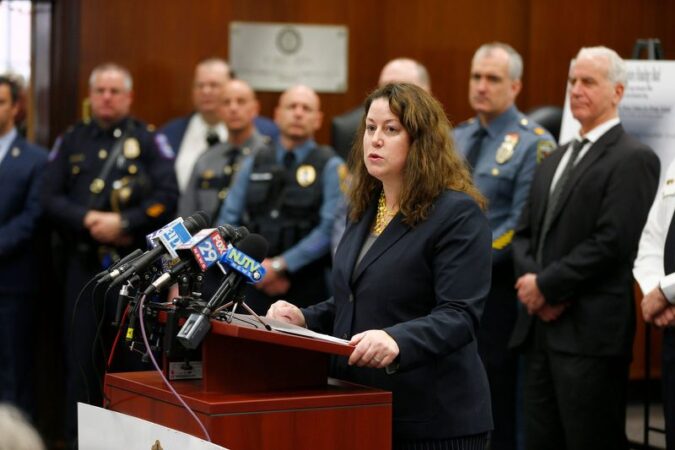
New Jersey Attorney General Jennifer Davenportmarked her first official day in the office Tuesday exchanging lawsuits with President Donald Trump’s administration.
Davenport, appointed by Gov. Mikie Sherrill, had already been waging legal battles against Trump as acting attorney general before her unanimous confirmation by the New Jersey Senate.
Thestate’s new top lawyer announced a lawsuit the same day against Trump’s Department of Health and Human Servicesover what she called its “rogue vaccine schedule that gambles with children’s health and lives.”
Trump’s administration also announced a lawsuit against New Jersey over a new immigration policy Davenport helped roll out that restricts ICE operations on state property.
She called the federal government’s suit a “pointless” waste of resources.
The two cases are a sign of more battles to come as Sherrill promises to fight Trump. Davenport will betasked with making sure the governor’s policies withstand a potential barrage of court battles in the months and years ahead.
DOJ sues Sherrill over her executive order limiting ICE
The Department of Justice announced Tuesday that it filed a lawsuit against Sherrill and the state over the Democratic governor’s recent executive order prohibiting ICE from conducting civil immigration enforcement without a judicial warrant in non-public areas of state-owned property, which she announced alongside Davenport.
The DOJ’s legal complaint repeatedly misspells Sherrill’s last name.
“Federal agents are risking their lives to keep New Jersey citizens safe, and yet New Jersey’s leaders are enacting policies designed to obstruct and endanger law enforcement,” U.S. Attorney General Pam Bondi said in a statement. “States may not deliberately interfere with our efforts to remove illegal aliens and arrest criminals — New Jersey’s sanctuary policies will not stand.”
Davenport said Tuesday that the DOJ lawsuit is a waste and that her team looks “forward to defending this executive order in court.”
“New Jersey will continue to ensure the safety of our state’s immigrant communities,” she said.
Davenport joins lawsuit against RFK Jr.
In a lawsuit going in the other direction, Davenport announced on Tuesday that New Jerseyis joining a multi-state lawsuit against HHS, the Centers for Disease Control and Prevention, and their leaders.
The suit challenges a January CDC memo that upended childhood vaccination recommendations. Vaccines for rotavirus, meningitis, hepatitis A, hepatitis B, influenza, COVID-19, and respiratory syncytial virus (RSV) were previously universally recommended, but are now only recommended for children under high risk of serious illness. (Parents of otherwise healthy children can still decide with their doctors to give their kids these vaccines.)
The lawsuit also focuses on HHS Secretary Robert F. Kennedy Jr.’s decision to replace members of the Advisory Committee on Immunization Practices.
“This radical and unlawful overhaul of the nation’s childhood vaccine schedule rests on fringe theories and ignores decades of science,” Davenport said.
Prior to her confirmation, Davenport as acting attorney general joined another multi-state lawsuit last week against the Trump administrationfor rescinding clean energy funding that had previously been appropriated by Congress.
In New Jersey, the federal Department of Energy ended two agreements with Rutgers University, according to Davenport’s office. One, a $3.2 million award, was for energy-efficiency upgrades that would result in potential energy savings between $3.8 billion and $15.4 billion over the course of five years. The other award of $1.7 million was for research for farmers to use their land for energy production and agricultural production at the same time.
Lowering energy costs and fighting Trump were hallmarks of Sherrill’s campaign for governor and are part of her continued messaging as the state’s executive.
Davenport also sued the Trump administration with New York earlier this monthover his halting of funding for the Gateway infrastructure project between New York and New Jersey. A federal judge ordered the Trump administration to release funding for the project, and construction is moving forward as the appeal process plays out.
She has also joined multi-state coalitions condemning the Trump administration over the DOJ asking Minnesota to hand over resident data in exchange for ending the violent ICE operations there, as well as Trump’s attempt to halt funding for natural disaster response.
Sherrill and Davenport have also worked together to create a portal for people to submit videos of ICE agents in New Jersey and share information for residents to know their rights when interacting with federal immigration agents.
Who is Jennifer Davenport?
Davenport has more than 15 years of state and federal law enforcement experience, with experience at the New Jersey Attorney General’s Office, United States Drug Enforcement Administration, and the U.S. Attorney’s Office in New Jersey, where she was colleagues with Sherrill for part of her time there.
She most recently worked as deputy general counsel and chief litigation counsel for the energy company PSEG.
Davenport worked in a top role at the New Jersey Attorney General’s office in 2018 when the state first implemented the Immigrant Trust Directive, the state’s sanctuary policy that limits law enforcement cooperation with ICE and has been upheld by federal judges.
The litigator, who grew up in Wildwoodand now lives in Monmouth County, has two daughters ages 11 and 14. She graduated from DeSales University in Pennsylvania and the Seton Hall University School of Law in New Jersey.
“I am grateful to Governor Sherrill and the Legislature for the trust placed in me,” she said in a statement Tuesday. “I will serve with fairness, independence, and integrity — the same values that have guided every step of my public service.”
On Wednesday, the James Beard Foundation announced six recipients of the award in the Restaurant and Chef category. The “America’s Classics” designation is given to local restaurants with “timeless appeal that serve quality food and are beloved by their communities” and “sustain and contribute to American food culture,” according to the foundation’s statement.
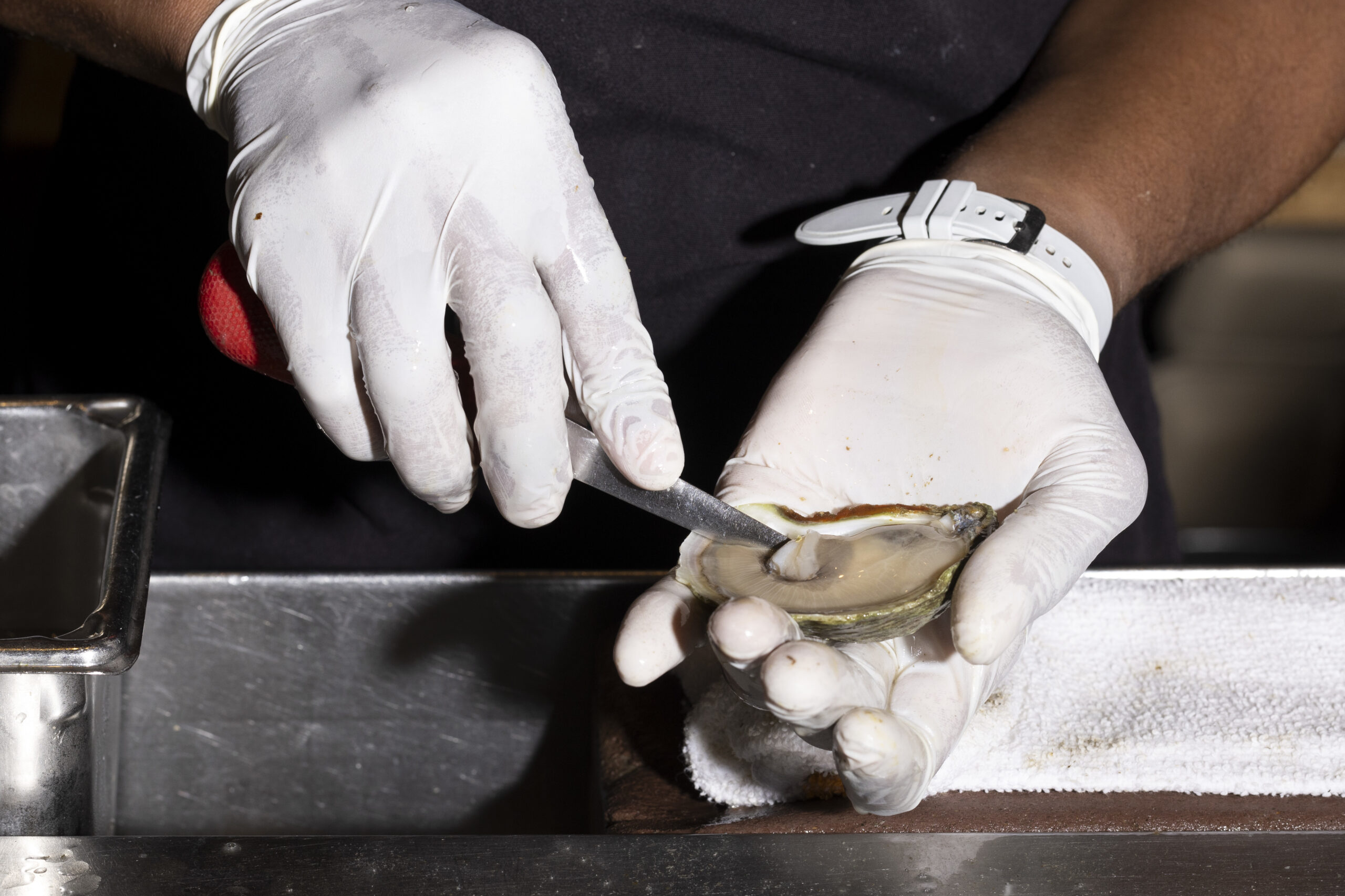
For the mid-Atlantic category, Oyster House was selected for its three-generation commitment to serving seafood traditions in Philadelphia. The foundation praised owner Sam Mink and his family for straddling multiple eras of Philadelphia’s restaurant history with specialties like sherried snapper soup and combinations like fried oysters and chicken salad, along with its willingness to evolve with creative modern seafood cookery like executive chef Joe Campoli’s crudos, grilled fish, and halibut glazed in black garlic over dashi.
“Oyster House is not just a venerable ambassador of Philadelphia food history — it remains one of the city’s most rewarding places to eat,” the statement noted.
People fill the bar during happy hour at Oyster House in Philadelphia on Thursday, July 11, 2024.
When Mink received the email announcing the restaurant’s win a week ago, he was surprised “because I really wanted this award.”
“I feel like we are such a classic institution for Philadelphia,” he said. “But to be honored on a national level … people in Philly know about us — we’ve been around for 50 years … that recognition means so much [and] just validates what we do day in and day out. We come to work trying to give Philadelphia the best seafood possible.”
The restaurant staff was abuzz with congratulations and excitement Wednesday morning. “I’ve got a great staff here, the managers, the chefs on down to the servers, bartenders, cooks — everyone just has a real smile on their face today and is really excited to be here.”
While Mink hasn’t had time to think about an immediate celebration for the good news, the Center City restaurant will celebrate its 50th anniversary with a big block party in the spring.
The Oyster House is one of The Inquirer’s 76 most vital restaurants in Philadelphia. This year’s other winners are the Serving Spoon in Inglewood, Calif., Johnny’s Cafe in Omaha, Neb., Eng’s in Kingston, N.Y., Figaretti’s Italian Restaurant in Wheeling, W.V., and Bob Taylor’s Ranch House in Las Vegas.
Gary McCready prepares a seafood tower at Oyster House in Philadelphia on Thursday, July 11, 2024.
Restaurants are recommended by the Restaurant and Chef Awards voting body and the public during an open call period from October to November, then considered and selected by the subcommittee. America’s Classics restaurants must be open for at least a decade to be eligible.
The winners will be celebrated at the James Beard Restaurant and Chef Awards ceremony on June 15 at the Lyric Opera of Chicago.
“Behind each of these cherished restaurants are people who show up day after day to nourish their communities — their powerful stories are ones of creativity, resilience, and tradition,” said Lauren Saria and Erinn Tucker-Oluwole, Restaurant and Chef Awards subcommittee cochairs. “On behalf of the Restaurant and Chef Awards subcommittee, we are honored to celebrate these unsung heroes of American food culture. We hope this recognition opens new doors for their continued success.”
Main Line Health had an $8.7 million operating profit in the six months that ended Dec. 31, the nonprofit health system reported to bond investors Wednesday.
Main Line’s swing from an $8.9 million loss in the same period of 2024 benefited from a change in accounting for depreciation that reduced expenses. Without that change, Main Line would have had another loss.
“We have been pleased with our continued improvement in fiscal performance year over year, which has been strong outside of the change in depreciation,” Main Line’s chief financial officer, Leigh Ehrlich, said in a statement.
Here are more details on Main Line’s results:
Revenue: Main Line reported $1.35 billion in patient revenue in the first six months of fiscal 2026, up 10.5% from $1.22 billion a year ago. Strong gains in hospital discharges, emergency department visits, and same-day surgeries contributed to the increase. Main Line’s Riddle Hospital near Media has seen a 36% increase in patients following the closure of Crozer Health’s hospitals last spring, contributing to revenue growth, Ehrlich said.
Expenses: Last year, Main Line changed how it accounts for investments in facilities and equipment, significantly reducing depreciation and amortization expenses. In the first two quarters of fiscal 2026, Main Line’s depreciation and amortization expense was $68.8 million, down from $84.5 million the year before. Excluding those expenses from both years, Main Line’s operating profit margin fell slightly, to 5.5% from 5.9%.
Notable: Main Line provides more detail than most systems on its patients’ health insurers. After just two years in Southeastern Pennsylvania, Pittsburgh insurance giant Highmark accounted for 12.5% for the business at Main Line Health. That is just 2 percentage points less than Aetna, which as been in the market for decades.
WASHINGTON — The Trump administration on Wednesday imposed another tranche of sanctions on people and companies accused of enabling Iran’s ballistic missile program, drone production, and illicit oil sales as the U.S. presses Tehran to make a deal ahead of nuclear talks this week.
The latest round of talks between U.S. officials, including envoy Steve Witkoff, and Iranian negotiators via mediator Oman are scheduled for Thursday in Geneva.
The new sanctions imposed by the Treasury Department’s Office of Foreign Assets Control include a list of ships accused of being part of Iran’s “shadow fleet,” which refers to rusting oil tankers that smuggle oil for countries facing stiff sanctions.
Also targeted are drone manufacturing firms, including Qods Aviation Industries, which has supplied drones “to all branches of the Iranian military and buyers in Africa and Latin America,” the Treasury Department said.
Among other things, sanctions deny the people and firms access to any property or financial assets held in the U.S. and prevent American companies and citizens from doing business with them. However, they are largely symbolic because many of them do not hold funds with U.S. institutions.
“Treasury will continue to put maximum pressure on Iran to target the regime’s weapons capabilities and support for terrorism, which it has prioritized over the lives of the Iranian people,” Treasury Secretary Scott Bessent said in a statement.
Trump and other top administration officials insist that Iran cannot be allowed to develop a nuclear weapon and ramped up pressure months after U.S. strikes in June on three Iranian nuclear sites.
Iran long has maintained its nuclear program is peaceful. It had been enriching uranium up to 60% purity before the June attack — a short, technical step away from weapons-grade levels of 90%.
“We wiped it out and they want to start all over again. And they’re at this moment again pursuing their sinister ambitions,” Trump said during his State of the Union speech Tuesday night. “We are in negotiations with them. They want to make a deal, but we haven’t heard those secret words: We will never have a nuclear weapon.”